This is about the ancient sites of West Penwith in Cornwall, where I live. It runs through the prehistory of this area from the Mesolithic, through the Neolithic and the Bronze Age to the Iron Age, featuring particularly the megalithic periods of the Neolithic and Bronze Age – the time of the quoits, menhirs and stone circles.
It will be of interest to locals in Cornwall, or people from elsewhere who visit our ancient sites, or people with a general interest in prehistory and megalithic times.
It’s in four episodes – and for binge-listeners there’s a three-hour omnibus edition. If you prefer reading, there’s a PDF version of this short book that can be read on-screen or printed out.
Originally it was part of my book Shining Land, about the ancient sites of West Penwith, but I took it out because it made Shining Land too long. It works well on its own.
Britain has had two periods of national greatness. One was the 250-year empire-building period in relatively recent times, and the other was the Bronze Age and a megalithic civilisation that lasted a thousand years. This is its story, as it happened in West Cornwall, one of the hubs of megalithic activity in NW Europe 4,000 years ago.
If this interests you, I hope you enjoy the book! It’s free to stream or download.
It’s funny how sometimes we fall into things unwittingly, then to find that they take up years of our lives. This is what happened with my research into the ancient sites of the area where I live, in West Penwith, Cornwall. It all started one day when I was sitting chatting with Cheryl Straffon, an archaeologist and goddess-oriented pagan who for decades has been a key person here, bringing together a full spectrum of prehistorians, from archaeologists to pagans, and editing Meyn Mamvro, a magazine about Cornish archaeology and earth mysteries.
We were talking about John Michell who, in the 1960s-70s, brought the idea of leylines, sacred landscapes and earth mysteries to wider attention in a seminal 1969 book The View over Atlantis. John came to Penwith, doing fieldwork here to demonstrate his point, producing a catalogue of ninetyish ancient site alignments in Penwith, about which he wrote in his 1974 book The Old Stones of Land’s End.
I asked Cheryl whether anyone had made a map of the alignments John had found. No, she said. Hmmm. In former times, I had made a map of the alignments around Glastonbury… “Would it help if I made an alignments map of Penwith?“. “Oooh, yes, it would.“
I thought at first that it might be easier than it turned out to be. It landed up being seven years of work, starting in 2014, and it still gets tweaks and updates now. I’d had one of those falling-into-things moments, just then.
Carn Galva, a classic Neolithic Tor and the axis mundi or world centre of Neolithic Penwith – as seen from Caer Brân
Things had changed since I did the Glastonbury map, hand-drawn in 1982 and revised around 2003. Aerial satellite mapping had arrived on internet. For alignment-oriented geomancers like me this greatly changed the equation, opening up many new possibilities and making alignments maps easily accessible online to the public.
At the beginning it came clear that a genuinely useful map would need to show all of the known ancient sites in Penwith. But there are more than 800 of them, big and small, surviving or destroyed, so this was no small job. They were listed in a variety of online databases which, to complicate things, sometimes gave differing or inaccurate information, so every single site had to be examined closely.[1] I spent months trawling through these sources and building up a base map on which later to mark alignments. Later on I continued the mapwork to cover Scilly and the whole of Cornwall.
Some sites were difficult to confirm, being disappeared, disputed or subject to discussion. Some were visible in the field and others, now destroyed, were beyond trace, though many are mentioned in antiquarians’ records from former times – especially those of one called Dr William Borlase, who tramped around Penwith in the mid-1700s.[2]
Eventually I completed a map of Penwith’s sites. Then it was a matter of working through John Michell’s list of ninetyish alignments, plus others found since his time and listed in Meyn Mamvro.
One can argue till the end of time about the validity of megalithic alignments and sceptics love to do so, claiming an assumed authority of scientific rationality when, to me, all that these complaints demonstrate is that sceptics have not properly researched the matter. There is a simple, evidential, inescapable fact: ancient sites are commonly located in exact alignment with each other. This can be seen and checked by anyone on maps and in the field.
That’s the evidence, whether or not we have an explanation. It happens too much, too exactly and with too many supporting details to be a case of chance or randomness. There are discernable patterns to the specific nature of differing alignments – some are made up solely of cairns or menhirs (standing stones), or they link sites of similar antiquity, or they make some sort of sense in a wide variety of ways. Some alignments are even parallel.
If you look at the online map of Penwith’s alignments [3] it looks like a meaningless jumble with only a modicum of order to it. There’s a ridiculously large number of alignments and it’s difficult figuring out how and why the megalith builders went to the trouble of setting things up like this.
But when you look closer at individual alignments and the sites they connect, they begin making more sense. It’s worth remembering that the ancients walked everywhere, so a lot more happened for them in the space of a mile than it does for us, speeding along in our cars and looking at overview maps.
What is most interesting is that alignments stretch not just between man-made sites, but they also involve natural sites such as hilltops, carns (outcrops) and cliff promontories. The whole system is based on these prominent points – I call them ‘base sites’. The pattern of ancient sites is draped over the three-dimensional canvas of the Penwith landscape and arranged around it. There are also astronomically-oriented alignments and other factors such as energy-vortices, underground and overground energy lines, site intervisibility and even geometry that are involved in the positioning of ancient sites. [For more on this, here’s a talk by me.]
Entering Michell’s ninety alignments on the map, I found that only two were inaccurate and implausible, and I removed them. He had done good, accurate work. While making the map and checking the alignments, I started finding new ones and, before long, the list of alignments grew bigger. Some were found logically, by examining a chosen site to check for alignments, and some were found intuitively, happening on them ‘by chance’. After visiting sites around the fields and moors of Penwith, I would come home to examine their location and possible alignments, sometimes adding a few that way.
Late one evening I had a Eureka moment. I was thinking about Cape Cornwall, a conical-shaped headland in a marine context, and St Michael’s Mount, a conical-shaped island in a marine context (though originally it stuck out of the forest on dry land). They are rather similar. I wondered whether there was a connection. I looked on the map and, lo behold, a line between them intersected a collection of four Bronze Age barrows on top of the hill on the farm where I live!
Gosh. I had sat many times on those barrows.[4] They are not well-known because, being on what’s now a boggy heather-moorland hill, they look unimpressive, but their 360-degree panoramic location is spectacular. In the Bronze Age they would have been far more attractive, situated on sweet hilltop meadows – the climate was more agreeable 4,000 years ago than it is now.
Then I started looking for further alignments emanating from St Michael’s Mount and Cape Cornwall. Within an hour I had found quite a few. This doesn’t happen very often – I’ve never had such a big discovery of new alignments before or since. These proved to be a new kind of alignment that John Michell and others had not seen.
John was looking at constructed Bronze Age sites such as stone circles, menhirs, cairns and barrows, which were built from around 2400 BCE onwards. The new alignments I had found involved Neolithic sites from a millennium earlier, and natural sites such as granite tors and cliff headlands. These alignments acted differently to Michell’s Bronze Age ones, covering longer distances and with fewer points on them. I called them ‘backbone alignments’ – alluding to the main system of fibre-optic cables that connects the internet globally. Connecting Neolithic and natural sites, these alignments were clearly far older than John’s Bronze Age ones.
The very first constructed sites in Penwith, Neolithic tor enclosures, were built around 3700 BCE – over a millennium before the stone circles. There were four – Carn Galva, Carn Kenidjack, Trencrom Hill and St Michael’s Mount – and one outside Penwith that features in its landscape, Carn Brea near Redruth.
Many of the newly-discovered backbone alignments also stretched to what I call cliff sanctuaries. Archaeologists call them cliff castles – a term that persuades many people to believe they were used for defensive purposes, which I would argue they were not. They are customarily dated to the Iron Age around 300 BCE, long after the megalithic period, because Iron Age remains are found on them. But the new alignments, associating them with Neolithic sites, suggest they were much older in the first use. Neolithic artifacts have been found at some cliff sanctuaries, but these have not caused them to be properly re-dated to this early time.
Then came the clincher. I found that Lanyon Quoit, one of the key Neolithic sites of Penwith, built around 3600 BCE, was located exactly at the intersection of three of these alignments. In other words, Lanyon Quoit could not have been placed where it is without these three alignments being known at the time – it was positioned to align with two cliff sanctuaries and three Neolithic tors. This definitely re-dates the cliff sanctuaries to the Neolithic, also making them far more important than they previously were understood to be.
Penwith’s four surviving stone circles are all located on backbone alignments. The Merry Maidens, for example, are located exactly on an alignment stretching between Carn Brea and St Michael’s Mount, both Neolithic tors, and Treryn Dinas, a cliff sanctuary. These three natural sites happen, strangely, to be aligned with each other (there are a number of such cases in Penwith). So the stone circle was located there to reinforce the alignment and to draw on the antiquity and earlier primacy of the three Neolithic sites, which came from what in the Bronze Age was a distant former time, some 1,500ish years before.
Eventually, the alignments map of Penwith became really busy with alignments – around 250 of them. They were all genuine alignments, accurate to within 10ft or 3 metres, checked and verified by three people – so this was not a product of sloppy mapping, wishful thinking or ley-hunting zeal.
Alignments are not energy-lines of the kind that is picked up by earth energy dowsers. They are different, even though overground energy lines, like alignments, are also straight. Some overgrounds coincide with alignments, but we yet need to find out the extent to which this is the case.
Trencrom Hill (foreground) and Carn Brea (background) – two Neolithic tors
I’m of the opinion that alignments are not actually lines that are detectable in the landscape. Some dowsers might disagree, but I think they might be picking up on overground energy-lines, or perhaps the thought that links the two sites involved. Instead, it seems that, when a new site was being built, it was simply aligned with other sites in order, presumably, to associate it with them. If you line up five or six objects on a table with gaps between them, aligning them nevertheless gives their distribution some order and coherence. Rendering order out of seeming chaos was important to the ancients. But aligned sites don’t seem to have a connecting current like overground energy-lines do.
It seems to me that aligned sites are instead programmed with the same algorithm, so that they pulsate and resonate with each other, as if tuned to each other. But there isn’t a ‘wire’ connecting them – it’s an internal, implicit connection. It works a bit like what physicists call ‘quantum entanglement’, and as an informational rather than an energetic relationship. An energetic relationship is created by energy-lines that dowsers identify, but alignments don’t do this. So we’re talking here about two different circuitries that each focused on the same ancient sites. And it’s the sites, not the lines, that matter most.
Many ancient sites are thus placed exactly where they are to align them with other sites, though there is no ‘pipe’ connection between them. Instead, they seem to be remotely associated, programmed with the same intent, frequency or behavioural patterns, so that they do similar things at similar times and in similar ways. But they aren’t necessarily directly connected, unless there is also an energy-line between them.
Thus, the Boscregan West cairn, a prominent clifftop cairn on Penwith’s west coast, is aligned with the Neolithic longbarrow on Chapel Carn Brea, and with the now-destroyed Tregurnow stone circle, which was part of the Merry Maidens complex. So these three sites, associated with each other, somehow co-resonated. Or, put another way, two Bronze Age sites, Boscregan cairn and Tregurnow stone circle, were plugged into a Neolithic site on Chapel Carn Brea.
The cliff sanctuaries, embracing the Radiant Land
Interesting, huh? The megalith-builders had quite sophisticated ideas. They weren’t building ancient sites just to decorate the landscape or because it was a nice thing to do. It was a lot of work. They can only have done it because they perceived a definite benefit.
Here’s a much bigger idea. The density of sites and alignments in Penwith, and the way they seem to be integrated into complex relationships with each other, suggest that they operate as one big system. The fundamental substructure is marked out by backbone alignments (yellow on the map), and while the profusion of local alignments (red on the map) seems chaotic to our eyes, it has a certain order of its own. They all seem to make up one big system.
This leads us to the idea that Penwith is an integrated and perhaps super-charged landscape with hundreds of constituent components to it, big and little. That’s the way we should think about it, and not as a disparate scatter of separate sites. After all, Penwith’s ancient name is Belerion – the radiant land – and a place doesn’t pick up a name like that without good reason.
While Penwith’s stone circles and other sites are each modest in size when compared with Stonehenge, Avebury or Callanish, together they make up an enormous system contained by a necklace of cliff sanctuaries and studded with many subsystems. They constitute what can be regarded as a single, big ancient site that is draped over the peninsula’s natural topography and energy-centres.
Each stone circle has a complex or constellation of lesser sites around it – mainly menhirs and barrows. These supporting sites and the surrounding landscape vista exist as an integral part of the stone circle to amplify its purpose – a stone circle doesn’t exist in isolation. In the case of Boscawen-ûn and the Merry Maidens the surrounding agricultural landscape of hedges and fields obscures their wider complexes, but at Tregeseal and the Nine Maidens, located in wilder landscapes, they are more visible.
Tregeseal, for example, sits in a perceptual bowl of hills with a westward vista featuring the Isles of Scilly – almost as if the sweep of hills collects energy from the cosmos to funnel it toward the Scillies. Each stone circle is associated with a hill or tor that is visible from it and a key part of its landscape setting. These complexes are whole systems. In turn, they are aligned with other sites further away, knitting the whole of Penwith into a wholeness.
The stone circles are located on backbone alignments plugged into Neolithic sites – tors and cliff sanctuaries which, in the heavy-forested Neolithic, were the only places where people could get out of the wildwoods. This changed in the Bronze Age, with far more cleared land, which enabled the building of stone circles, menhirs and cairns, but the stone circles, as the ‘cathedrals’ of the system, drew their primacy, authority or blessing from earlier Neolithic sites.
They are key nodes planted in a landscape energy-system with a natural, topographic, geological and subtle-energy foundation. The system fashioned itself around the lay of the land. Here we come to the idea of landscape temples, or whole landscapes that have been developed and consecrated by amping up the natural energies inherent in the land. This was done not only through ‘megalithic geoengineering’ at sacred sites but also through repeated, longterm consciousness-work by successive generations of people. This was an advanced deep-shamanic culture. They imprinted their sacred sites and landscape with repeated and reinforced psychic traces of the shamanic and spiritual practices they conducted over many centuries. They loved the land that gave them a life to live.
An approximate timeline for megalithic Penwith
There is a key aspect of ancient sites that archaeologists miss, and without it ancient sites cannot truly be understood: it concerns earth energy and its psychoactive effects, especially when they are focused and enhanced at man-made ancient sites. These effects cannot easily be detected scientifically, but any person with a modicum of awareness can feel them when visiting sites. We become changed in mood and spirit, sometimes feeling inspired, healed or as if our problems have evaporated. Some people are changed for life – for me, five decades of preoccupation with ancient sites began in 1970 in the Ring of Brogar, a stone circle in the Orkney Isles off Scotland.
These psychoactive effects are a key factor that should be considered ‘legitimate evidence’, regardless of whether or not it can be measured or slotted into existing scientific frameworks. You do not need a doctorate to feel these effects: simply note your feelings and state of being before you enter and after you leave a stone circle. There will be a real change of feeling. Fascinatingly, it can also be quite different in quality and effect each time you visit.
This, I suggest, is a key reason why the ancients went to so much trouble heaving stones around, digging and piling up earth, and doing regular, intentional, collective consciousness work at ancient sites. They spent centuries building up a sophisticated landscape-wide energy-system, and they must have perceived this massive infrastructure investment to be beneficial and worth the effort.
If they had been deluding themselves, it is unlikely that the Bronze Age megalithic period would have lasted 1,200 years. Delusions don’t tend to last that long. There was something very sensible and realistic about the megalithic geoengineering they developed. With our planetary problems of today, we might do well to learn more about what they were up to.
Here’s a final thought. Since right now the world is rather obsessed with warfare, we might also ask ourselves how and why West Penwith is one of the few parts of Britain that has never been invaded – not by Romans, Saxons, Vikings or Normans. In later times Penwith was quietly regarded as lying ‘beyond the reach of the king’s men’. We’ve had some medieval Corsair raids and in the last century or so a seasonal tourist invasion, but Penwith has never actually been invaded. But that, of course, is pure luck and chance, isn’t it?
NOTES:
The main sources were: Heritage Gateway, Historic England, Cornwall Council, Megalithic Portal, Modern Antiquarian, Meyn Mamvro, The Holy Wells of Cornwall map, The Atlas of Hillforts and snippets from other books and sources.
This is for people living in or near Cornwall. Audio recordings of the talk, with accompanying material, will appear online a week or so after the talk, for those who cannot attend.
In my talk in June about the ancient sites of West Penwith (worth a listen) I proposed that the whole of Penwith is one big ancient site – an enormous cliff sanctuary. It’s not just a scattering of stone circles, quoits, carns, menhirs and cairns. Why did ancient Penwithians bother to build so much of this ‘holy machinery’? What was their thinking and what did they seek to achieve?
I’ve been studying ancient sites since around 1970 in Britain, Scandinavia, Greece and Palestine. Since moving to Penwith in 2009, I’ve been working on mapping Penwith’s sites, researching their (John Michell-style) alignments, and divining some valuable psychic-intuitive clues concerning their possible meaning and function. These observations are outlined on the Ancient Penwith website and in my book Shining Land.
In the first half of this evening’s talk, I go further into the sacred energy-technology of Neolithic and Bronze Age Penwithians, and the patterns that suggest that they function as one big megalithic system. We’ll look into how it all took shape from the beginning, the functions of different kinds of ancient sites, and how it all fits together into one big geomantic system.
In the second half I propose what I feel needs to happen next, in terms of researching and working with Penwith’s ancient sites. We need to find out more about how they actually work, geomantically and energetically, and what we can do now to enhance and re-enliven their energy-fields and world-healing qualities – not just an hour-long ceremony now and then, but sustained energy-work, learning more about the specifics of how to do it.
Penwith is an ideal area for this kind of work because it is concise and contained, with plenty of ancient sites and people interested in them. Also, this is Cornwall, not England, and Oxbridge-style archaeological thinking is not the only way to understand megalithic civilisation – here in Penwith, out of sight and out of mind, we have an opportunity to frame things in a rather different way.
There is the possibility of starting a research project involving 10-20 people, in which (say) about forty local sites are surveyed, mapped and chronicled by dowsers and sensitives over (say) a three year period, for their subtle energy characteristics and place-memory. (See below for a shortlist of sites.)
Steadily and systematically, we can visit the sites and truly listen to what they want to say – not imposing our own ideas and predilections but letting the sites and the landscape speak, using methods such as pendulums, meditation, inner journeying and talking stick as research methodologies. Then a report (or a series of them) or a website can report on the findings uncovered by the project.
So I’m wondering out loud whether we need now to take things further, stepping beyond a ‘Wow’ stage to try realistically to penetrate the minds of the Neolithic and Bronze Age megalith builders, to uncover more about ancient sites’ energy-mechanics, their intention and usage, and what we can do about them now. That’s what this evening is all about and, if you can, you’re welcome to come and join in.
It’s funny. Having cancer has been a bit like a fast-track course in spiritual transformation. Well, on good days, and if I choose to see it that way. Perhaps it’s the down-payment for this course that makes a big difference: it’s not about paying money, it’s about giving up your life to a fate you have little control over. If you’re going to gain anything from the cancer process, you have to offer up your life because something greater is making the critical decisions and you are to an extent helpless. Higher powers are taking over. HP Source is placing a call.
Yet a gift can come with it: a certain strength underneath, arising from the fact that you could pop your clogs tomorrow. Or the next day. Or anytime. There’s little way of knowing. Which makes planning tricky: you have to have fallback strategies in case the preferred option – regularity and a longer life – doesn’t work. Every day plans B and C have to be treated as equally likely probabilities. Some good soul takes me out and, half-way through, I can’t handle it and need to lie down or go home, flaked out, batteries emptied. Plan B strikes again.
Recently we’ve had a lot of sea fog. West Penwith, right at the end of Cornwall, is where three sea-masses meet, from the English Channel, the Atlantic and the Celtic Sea, and their swirly interactions, plus humid air from the tropics, at times make for lots of fog. So we’ve had white-outs. The world disappears – recently, for days on end. It has been rather a struggle: I’ve been ‘under the weather’, literally. Stuck in my reality-bubble, rattling the bars of my cage. I’m obliged to deal with myself, and my shadow keeps following me around.
Yet where there’s fog, clarity can come. I found this a few years ago when I had two years of fatigue and brain-fog. Behind it was a gift, an imperceptible, emergent seepage of clarity. Things came back into focus after what seemed like a long time lost in space. Something similar happened this morning. I had a realisation, waking up at dawn to find that the fog had cleared and it was going to become a golden morning.
Neptune seems to be at work (I’m emerging from six years of Neptune transits), surreptitiously peeling off multiple layers to reveal things underneath that seem new and revelatory, yet they’ve been there all the time. It’s all a matter of seeing – and of curtains and the opening thereof. What’s behind the curtains was always there, yet it’s not there until we see it.
This is a key element in the building of the Great Illusion. We fail to see what’s actually there. Yet one of the strange gifts of life is that things such as serious or terminal illness, or other earth-shattering shocks, losses, disruptions and hard truths, reveal to us things that were always there – or perhaps visible if only we had looked ahead. We manifest them unconsciously.
Major illnesses and life’s hammer-blows derive from the unconscious, from the places we don’t see or want to see, and from the stuff we’ve tamped down or avoided. A lot of this is to do with memory – not just conscious memory of events and experiences, but emotional scars, body-armouring, touchy spots and no-go areas impressed on us through earlier-life traumas or repetitive experiences that we don’t want to remember, or we have needed to forget. But sooner or later they come up anyway.
This is what the Israelis fail to see, in their war with Gaza. By devastating the lives of Gazans they’re feeding gallons of trauma to over two million people, many of them young. This will produce a predictable crowd of new ‘terrorists’ (freedom fighters) in about 10-15 years’ time, though it will also yield a crowd of new saints – true peacemakers who have seen through the destruction game, even though they were on the losing side. Those saints could be more deeply confronting to future Israelis than fighters, because fighters are the same old thing while peacemakers in large numbers will not be easy for Israelis to deny or gainsay.
It’s exactly five years since my back cracked and my life changed in my former partner’s back garden, while clearing some tussocks and piling up logs. Three months later I was diagnosed with bone marrow cancer and, since then, life has been very different, in all sorts of ways. I used to be a night-owl and now I’m an earlybird. I used to have a really good stomach and now it’s a problem (Saturn in Virgo). I used to be a really good driver and now I cannot drive a car (Sagittarius rising and Moon in Gemini). I used to be fit and now I’m an old crock. The details are many. A lot has changed.
Something has been troubling me, and this morning I understood it, thanks partially to the clearing of the fog. I understood a contradiction in myself, and where its roots lie. It’s this: although my attitude to life has strengthened as I’ve got to grips with cancer, and it’s quite strong, and it protects me, I’m also much more vulnerable and affected by things, physically and emotionally, than I once was, and this weakens me, making me a bit like a leaf in the wind.
Many of my defences, insensitivities and fallbacks have disintegrated, and small things make a bigger impact than before. Several times a month, especially when out on walks or expeditions in the wider world, I have to go into ‘survival mode’ – a gritty ex-mountaineer’s approach to getting back home, regardless of how I feel or however worn out I am. I stagger on, running on two cylinders, totally focused on hanging in there, keeping my energy moving and getting home.
It’s an act of faith and against-the-odds, Mars-in-Scorpio determination – though in other contexts, some see this resoluteness as stubbornness. But it keeps me going and gets me home – or, at least, to the welcome car seat of whoever has taken me out adventuring.
It gets tricky, though. Quite a few people say I look really well when, underneath, I’m feeling like a turdy morass of aching, creaky detritus. I guess it’s one of the side-effects of handing my life over, to be propped up by spirit more than ever before. It can create a funny kind of deception since dealing with adversity can sharpen and brighten my spirits, even if adversity is grinding away and slowly eroding my sometimes tenuous grasp on life. Yet that vulnerability can cause a marshalling of energy that helps me through. It’s mind-control really.
The secret lies in activating levitational forces through staying focused and subscribing to positive thinking. Not the self-delusion or self-persuading wishful-thinking that denies pain and hardship, desperate to see things through rose-tinted glasses, but a deep conviction that all is well and it really is okay – even when you don’t know whether it is okay or when you don’t feel at all positive. This is not a conviction of the brain but a calm certainty of the cells and bones.
Psychologist Jean Piaget once said that intelligence is not about about what you know, it’s about what you do when you don’t know. So, when I’m faced with difficulty – I’m cold and wet, people are talking too long and my back is killing me – I’m faced with a choice. I can either have a hard time, grinding away through my pains and difficulties, or I can allow it to be as it is, accepting that the right thing is happening and it’s okay and I’ll get through it somehow. That’s the difference between gravitational and levitational thoughts and beliefs.
There are times when even this doesn’t work and I just need to lie down and give up, realising that I’ve lost the battle that day. But it’ll be okay in the long run, somehow. Inshallah, ‘if it is the will of the God’.
And if it isn’t, that’s okay too. Because everything comes for a reason. Seeing that reason can sometimes take time, but it’s quite safe to assume that it is something to do with the education of our souls. Now this is quite a belief-transformer. It changes good and bad, success and failure, ease and difficulty into something else. All experiences are fodder and vitamins for the soul, if we see them to be so.
Including dying – which all of us are irrevocably destined to do anyway, somehow, sometime. ‘Life’s a bitch, then you die‘. They didn’t quite tell you that when they called for volunteers for the Planet Earth experiment. However, they needed volunteers since, having gone along the path of overpopulation, we need to experience its consequences quickly so that we learn that lesson and get it over with. And the extra hands on deck might even persuade us to realise we are one planetary race, all stuck on the same boat and desperately needing not to rock it too much.
I realised this, about fodder for the soul, three years ago. I asked myself what I would be doing if I didn’t have cancer. The straight answer that came up was, “Just carrying on…“. I would be ticking over, continuing with everything I had been doing beforehand, and letting the clockwork of my life slowly run down. I would not be having the cancer experience which, despite the cost, the loss and the pain, had given me a new and completely changed chapter of life and a bizarre kind of spiritual boost that I hadn’t quite anticipated.
We all have to square with death sometime, and a cancer diagnosis (or similar) certainly brings that on. Many cancer patients avoid it, leaning on the medical profession to save them from facing death’s hungry jaws, and thereby delaying doing the spiritual spadework that will stay on their bucket list, whether or not they like it.
Our culture, believing we have only one life, regards death as a failure and an ending, repeatedly saying “Sorry for your loss” to the bereaved as a regret-laden default response. But actually such an attitude protects people from contemplating death, and it’s detrimental, and it costs our medical systems billions. As a culture, we’re shit scared of something that’s perfectly natural. We do this with birth too.
From clinical death onwards, a person is regarded to exist only as a memory, a reputation or a legacy, not as a person or a soul. Ashes to ashes and dust to dust – hmm, what a materialistic statement. In truth, home is what we on Earth, at a stretch, would call the Otherworld. Here on Earth we’re in foreign territory – we’re colonist occupiers, believing we own the place. Well, no, it’s not dust to dust but Heaven to Heaven, with a dusty, earthly interlude in between. During our waking hours, at least.
Earth is a dangerous place because it kills us eventually. Yet we can make the best of it. We live in parlous, vexing times, and the world coin is spinning in the air. We’re in a battle for the hearts and minds of humanity – or for what’s left of them, after all that people’s hearts and minds have gone through in recent times. We’re entering a phase that I wouldn’t exactly call decisive – that comes later, in the late 2040s – but I would call it informative, revelatory, creative and critically developmental. Laying the tracks for the next bit, up to 2050.
Informative in the sense that we’re entering a period of seeing, re-framing and discovery in the late 2020s, amidst a torrent of events that are placing many big questions on the line for us to confront and sort out. Critical developmentally because a lot of new stuff is likely to emerge, and many old realities will fade into obsolescence. We’re moving fast down some intensifying rapids, and it’s risky and dodgy. Yet by 2030 we’ll have moved a long way, probably without really realising it.
Astrologically this is something that doesn’t happen very often. The three major outer planets, Uranus, Neptune and Pluto will be co-thrumming for a few years, and the formation is shaping up now. When a thrum starts up, dead matter gets shaken out and new patterns take shape amongst the strengthened resonance fields. In the next few years Uranus in Gemini (shifts, flips and reversals of ideas) will sextile (60degs) Neptune in Aries (strong individuals and either inspired or mad initiatives), which is sextiling Pluto in Aquarius (crowds, masses, majorities, tribes and matters of belonging). A trine (120degs) links Uranus with Pluto, making a triangle.
This thrum and resonance, this signal-resolution, will shake many things through and sound the bell. It could be called ‘cultural florescence under distress’. It’s in its pre-rumbles now, and a lot is likely to happen in the next 5-6 years. Not so much dramatic events, though we’ll still get these because we do need shaking up, but a strong torrent of developments. Developments where we wake up one day to realise that a lot has suddenly changed, while we were busy doing other things.
As in ‘Life is what happens when you’re busy making other plans‘. I’m reminded of my aunt Hilary, who was closely involved with Alan Turing at Bletchley Park: they thought they were deciphering Hitler’s codes, and they were, but they’ll be remembered by history for playing a key part in the invention of the computer and the early conceptualisation of artificial intelligence. What we believe is happening and what is actually happening can be quite different things.
The last time we had something similar to this triangle was around 1771. A lot was happening in terms of new inventions (steam engines), social change (urbanisation and industrialisation), ideas (technology and the Rights of Man), empire-building (the taking of India) and the emergence of the modern world, but it hadn’t quite gone critical – it was progressing fast and heading toward a series of critical junctures that went from the American Revolution of the 1780s through to full-on industrial revolution by the 1820s. The modern world was emerging fast – with its dark satanic mills, globalising tendencies and humanity’s departure from its agricultural past.
So, unfasten your safety belts: they are attached to past knowns. Keep the anchors down and you won’t go with the tides.
I had a cricket for a teacher yesterday. It had hopped into my house the day before and I’d heard it rustling around all evening. I was unable to find it – they hide in corners and move only when you aren’t there. It went quiet next day and I thought it had died – I’d probably find its shrivelled corpse sometime. But, half way through the morning, it hopped staight onto my left shoulder! Having the sudden arrival of such a primeval critter, bright green, weird and three inches long, rather surprised me, making me jump. It hopped onto the head and shoulders of a nearby metal Healing Buddha who looks after my kitchen. And it looked at me, intently. And I looked at it.
The cricket was asking me to liberate it. It didn’t know how to get out. It addressed me personally, knowing I was probably its last resort. Now that’s intelligence. I have a jar for such occasions, since I get a number of insect and bird incursions. I managed to place the jar over the cricket and a card underneath, taking it out and depositing on a young oak tree I’m growing in a pot. Ah, freedom. Try not to do it again, Cricket!
It rather touched me that it had demonstrably asked for help. This had happened once before, a few years ago, but I didn’t quite believe it then. The cricket communicated well and got the help it needed, from an alien species – me. Thank you, Cricket, for your visit. You taught me about inter-species communication across language barriers, and ways to ask for help.
Weakness can lead to a new kind of strength. It’s the strength of despair, of dread, susceptibility and weariness. Some of the greatest of guiding intuitions can arise at such points. It’s a cards-on-the-table thing. There’s something to learn here from the people of Gaza. The poignant, painful paradox they present to the world is shifting global attitudes, deep down. They’re making a sacrifice for humanity. This kind of devastation – worst in Gaza but happening elsewhere too – is up on our screens presenting an important issue that needs sorting out. What lies beneath and behind this is an incremental shift of power from the rich minority to the world’s vast majority in Asia, Africa and South America.
It isn’t announcing itself as such, but this is what’s happening, and we’ll realise it after it has already happened. There’s further to go on this question but, before long, inshallah, it will no longer be possible for oligarchies and their armies to impose such destruction on the world and its people. That involves an historic change, affecting lots of things. And it’s the kind of surreptitious shift that’s happening in the next few years, methinks. And God bless the people of Gaza, for what they are doing for the world.
The cricket made a leap of faith onto my shoulder, and it found salvation. I’m learning more about leaps of faith. It seems to me that gifts of grace are the one of the fruits of leaps of faith.
And guess what. As I finish this blog there’s some rustling amongst the muesli packets on the shelf in my kitchen – it’s another cricket!
This is a recording of a talk I gave on Wednesday 19th in Penzance, here in Cornwall. It would interest anyone who knows and loves West Penwith, and also folks interested in geomancy and alternative prehistory.
It’s about energy-fields, ancient site alignments and the geomancy of ancient sites. I make a radical proposition that the hundreds of sites in Penwith all constituted components of one enormous ancient site covering the whole peninsula.
A collection of interesting maps is provided with the recording of the talk, which is 1hr 48mins long.
To follow in autumn in Penzance, there will be four monthly AHA classes, covering activism (changing the world), prehistory (more about Magic Penwith), power points in time (astrology and the way the tides of time move) and extraterrestrials (about life off and on Earth).
I’m speaking at the Glastonbury Symposium on Sunday July 28th, and I return to Glastonbury on my birthday on 5th September. The subject is ‘Sludging through the Void with Muddy Boots – and why ETs have spindly legs‘.
If you want a really special experience, you might consider coming to the Oak Dragon Camp, Friday 26th July to Sunday 4th August in Somerset. I’ll be there. www.oakdragon.org
On Sunday, Ba Miller and I shared the floor in Penzance, speaking to a lovely crowd, on the occasion of the late Hamish Miller’s 97th birthday.
Ba herself is 91 – though, with me at 73, a mere stripling, we’re both beat-up and still going strong!
Ba told some anecdotes of what happened when they were following the Apollo and Athena lines from Ireland to Israel, and some really valuable dowsing tips (since it was also World Dowsing Day).
I talked about the energy-landscape of West Penwith, about building megalithic structures for consciousness-engineering and how Penwith is one big ancient site with hundreds of components.
A big thank you to Rachel, Lucy and Lyndz for initiating and organising it, and for their rousing spirit.
To hear our talk (1h 15m), go to my Audio Archive and look for ‘2024 PodTalks’:
Also: my latest book, Blessings that Bones Bring – a spirited Myeloma patient tells his cancer story, is coming out soon in digital PDF format, and before long as an audio book. Whether it gets published in print remains to be seen.I’ll let you know when it’s available.
This 30 minute podcast is recorded while sitting in the remains of an Iron Age Courtyard House, up the hill on the farm where I live.
It doesn’t look very exciting nowadays, though it’s a nice place – but then, if you were 2,000 years old, you might be a bit worse for wear too!
This podcast is all about what life was like in the Iron Age in Cornwall, two millennia ago, and the way people saw things then.
Looking into the yard of the courtyard house. Behind are Sancreed Beacon (left) and Caer Brân (centre right), and far behind them is the hill on which the Merry Maidens stone circle sits.
This was the Celtic period – though the Celts shared a culture, and they were not one people. In West Cornwall many were descendants of the indigenals of the Bronze Age.
It’s about life and reality systems in our time, and in the Iron Age, and also in the Bronze Age and the Neolithic – how people saw life and the world in each of these periods, and how their technologies reflected that.
With some insights into what we can learn from them now. This is important. As elder dowser Sig Lonegren often used to say, quoting his Seneca teacher Twylah Nitsch, ‘We seek not to emulate the ancient ones – we seek what they sought‘.
Zarathrustra spake thus, all over the Isles of Scilly
The world was on tenterhooks. After the assassination of Trump’s vice-president by a white South African, America could no longer play off different groups of nations against each other. Netanyahu’s threat to drop nukes on Turkey had put NATO in an acutely difficult position, exposing its double standards. Trump was raging at Israel’s intransigence and Putin, looking haggard in his hospital bed, uttered boisterous words in support of him when everyone knew that, in his tenuous position, and now being undermined by the Moscow oligarchy, he could promise nothing.
The Israeli civil disturbances were brutal, with neither side willing to step back – the media were under strict instructions not to call it a civil war. The mowing down by the Judaean Settler Army of Palestinians trying to escape over the Jordan valley had variously dismayed the world, exposing the inevitable consequences of their inaction. Even Israelis were not allowed out of Israel – at Ben Gurion airport and the two remaining land crossing points, only approved Israelis could leave. There had been a full-scale call-up of reservists but they were taking different sides, taking their weaponry with them. India had at last withdrawn its support for Israel. China had remained silent, concerned as usual about its markets, oil sources and leverage in the newly denominated West Asia.
After the establishment of the Sahelian Dirham, the currency of the new Sahelian Alliance, other small countries flooded to join it, abandoning the Dollar and distancing also from the newly-minted Renminbi-Rouble bloc – after all, the Russians and Chinese were resource-gulping imperialists too. The resignation of the UN Secretary General, saying he had done his best but it had led only to this, was rejected by a uniquely united Security Council. Then Netanyahu, looking taut-faced and cornered, put the cat amongst the pigeons. He boldly declared in Hebrew that, if threats against Israel continued, he would detonate his country’s nukes and incinerate the country – by implication, a second, self-imposed holocaust, as if to prove his version of history to be correct. Chaos broke out not only in Israel but also in the steets of Damascus, Beirut, Amman and Cairo as crowds panicked.
Trump’s speech from Mar a Lago (since Washington DC had become too dangerous) had been surprisingly firm and calming – the invasion would be paused for now. Secretary Blinken, drafted from his thinktank job by Trump to deal with a situation he had played a large role in creating, was to be given a last chance to pacify the Israelis. Gaza, left with only stragglers and people unable to escape, already looked as if it had been nuked, though it hadn’t. Saudi Arabia had reluctantly opened its borders to Palestinians to relieve refugee pressure on UAE and Egypt – well, it swelled the numbers moving into Neom, the new desert city not too far from Sinai and Gaza. Meanwhile, UNHCR, backed by the first Polish and Swedish battallions in the new European army, had taken over refugee operations in Greece. Refugees were coming in big numbers. Now there was a new crowd from the Tashkent earthquake and nuclear disaster.
In the English Channel, disaster came when a container freighter and an oil tanker collided. An oil and chemical slick was spreading and most shipping through the busy Channel was blocked. Both ships had been trying to avoid refugee boats. The UK authorities were now running ferries to Calais to pick up refugees who were endangering shipping in yet another of the world’s maritime choke-points. This caused further supply-line disruptions in crisis-ridden Europe as shipping was diverted north of Scotland, exposing it to both Russian and American naval attentions. Europe was on its own, suddenly sandwiched between two big powers.
A wee visitor at my home, aspiring to do the washing up
Possible realities… Improbable, yet all the same possible.
A big problem we face is that the world approaches the future facing backwards. We see the future on the past’s terms, afraid to make a leap, afraid to acknowledge that we’re lost at sea, afraid that everything could go wrong – and in so doing, we’re making things even worse. Consequence-delivering chickens are coming home to roost, in waves. This might go on for a number of decades, because the world seems so determined to drag its feet through every single learning experience that comes to face it. Such global brinkmanship arises from a collective failure to own up to the full consequences of what we have done. A multipolar deadlock has unfolded. The powers that be are all busily making sure nothing really changes – not fundamentally.
But there is another kind of brink we’re slipping over. It started around 2012 or, further back, perhaps 1989. Or perhaps 1967-68. It’s this: even if the world decided tomorrow to mobilise humanity, wholeheartedly embracing fundamental change, we would tip into a new, anxious period of at least a few decades. Whatever we do, we would not know for some time whether and how much the solutions we attempt will actually bear fruit.
It takes time for a forest to grow, for an invention to be trialled, for society to change its values and for the fruits of systems-redesign to show themselves. Not all solutions will work, some might backfire, and the world is hamstrung, riddled with complexity, interdependence and conflicting interests. We’ve sidled into a minefield. This creates an underlyingly edgy and anxious atmosphere, stoking up an already insecure and volatile situation.
I’m happy to report that my little visitor did not lay a plonker on my bed while hopping around on it
I was reflecting on all this a few nights ago while lying in bed, listening to the owls hooting and screeching outside. It reminded me of my own cancer story. We all face an underlying, nagging issue, and cancer patients get it in a big, pressing dose, thrust in our faces.
When and how am I going to die?
And here’s the rub: you get no answer.
It could be anytime, anyhow.
Making plans gets difficult when you know there’s a good chance that anything can come along to scupper them. Whether or not you’re going to die soon, this still comes up, variously for everyone, when we’re scared enough to look at it. With cancer, I’ve found I’ve become much more sensitive to anything charged with any feeling at all. It’s not fear, exactly – it’s an insecure, creeping anticipation that hovers in the background. Worse, no one wants to talk about it.
In my own case, I’m rather surprised to be alive. I’m unsure what plans to make, and with what time-perspective. So I tend to keep my perspective open, but with the headlights shining on only the next three months, and anything beyond that is unanswerable. This has a remarkable effect on everything. It’s tenterhooky, no matter how philosophical or optimistic I might be, and no matter how much others encourage me to ‘get better’, not to dwell on morbid things – as if dying were a failure and living a success.
Sorry, dear Kate, Princess of Wales, while I understand your wish to assure everyone by saying you’re getting better, this is unwise. You do not know. It’s unwise to yield to that implicit social pressure to make everything look alright, because it isn’t alright.
When I lie in bed, drifting with fatigue, this is the view. On top of the hill in the left-hand window is an ancient site called Caer Brân (mentioned a couple of blogs back)
This is our world situation. We’ve stumbled into a mire of uncertainty and complexity. We have squads of scientists, super-forecasters and expert-texperts, and mega-millions of people with armchairs and opinions, yet we’ve become unable to accept the obvious – that the future is not as clear and fixable as we would like it to be. It’s left mostly to the young to point this out, while they’re still at an age where they are uncompromised by fear of loss and chaos.
Cancer patients, in my observation, divide into roughly three camps. Some are in denial – they take the pills, do the chemo, get the op, and do their best to appear and return to normal – it was just a bad dream and it’s over now. Some are heroic, fighting, striving to overcome and conquer cancer, and some of these will succeed while they have the willpower to do so, but it’s experienced as a fight, not a gift. And some come through to a level of acceptance and forgiveness that allows them to live and die in greater peace, whatever is to happen. To some extent all cancer patients hover between these three in different ways and proportions because cancer does indeed have a convincing way of putting the fear of God up you.
I have my struggles with this. I get fed up with all the pills, disciplines, diets and doctors’ appointments a valiant cancer patient is supposed to appreciate, to save their life and relieve others of the pain of loss, and sometimes I just want to say ‘fuckit’, to be normal, get my life, or even my ex-partner, back (fat chance). Other times I work on rising up within myself, trying to be a good human, in case God notices and gives me a reprieve – which won’t really happen since it’s a pointless, guilt-ridden belief.
Anyway, I’m doing quite well with my cancer, and I think it has something to do with full-on acceptance, yielding to The Force. I’ve lost control – yet, like a slalom skier, or when you first learn to ride a bike, or even like sex, by losing control you find a new balance.
In times of despair, hope sometimes stretches far further than it realistically should – like the vain hope that many Gazans entertain, that the decent people across the world will step in to save them. But just because something should happen, it doesn’t mean that it will.
At times I’m given deep truth-moments and gifts of spirit. I go down into the depths and up to the heaven-worlds, handing myself over in a humbled acceptance of my powerlessness and the overwhelming force of my circumstances, dependency and weakness – and the paradox is that, every time I drag myself through such a crunch-period, something in me is healed and reborn.
Here I still find myself, alive in a body and wondering what exactly for. Am I just here because I’m here? Or is there more to life? Yet my inner growth process has been ramped up to three times the speed, with a lot more depth, breath and height, and with a vulnerability that has amplified the emotional impacts, the feelingful fullness of being alive. That’s what I’ve been given.
My little house. It’s called The Lookout. That’s what you do there.
So it is with the world. The world has cancer, depression, anxiety, diabetes, fentanyl addiction, ME and a strange mixture of obesity and hunger. Part of us wants everything to return to normal, if only we could just buy an electric car, and part teeters on the edge of an abyss, flummoxed and hovering between lightbulb moments and flounderous resignation.
A nightmare is unfolding. However, while plenty of horror, injustice and destruction are going on, World War Three is now mainly a hearts-and-minds matter, not one of nuclear bombs or evil terrorists.
This is what we have been given. Or, collectively and unconsciously, it’s what we gave ourselves, to teach us something. We’ve created a situation where, kicking and screaming, we’re being arm-twisted into change. This is the great value of the Trumps, Putins, massacres, disasters and tragedies we face: they’re putting options before us. The stakes are rising until, sometime, we get it – we get the fundamental lesson, the lesson that will save us and redeem the damage and pain. So it is with cancer.
What none of the pundits in the commentariat mention is the spiritual crisis the world is in. Mental illness is not limited to those who are diagnosed with it, as if a certification of our woes would contain the crisis: it’s a disease of a psychotic world society, taking different forms in different places. All of it points to one core issue.
We have lost our way, lost our humanity. We’re deeply worried about what’s going on. We don’t know how to make it go away. Even the wisdom teachers, psychologists and solution-bringers are lost. As an astrologer I can often see when a wave is coming, but what will actually happen is at best qualified guesswork.
We’re faced with the Great Yawning Gap, like a black hole sucking us into some sort of final battle for the hearts and minds of humanity. Well, that’s what it feels like, sometimes. This presents heightened choices. These choices have been around for quite a time – I was one of those harping on about it when a Sixties teenager – but the stakes are rising with each year and decade.
It’s highly symbolic of the state of humanity, particularly for the global minority, for the one billion of us privileged to live in the rich world, that cancer has become a big issue. Because cancer hits you like a battering ram, with immediate life-changing consequences and a threat of imminent termination. Loss of control. Loss of everything. When you die you take nothing with you except what you have become.
The biggest, deepest choice we are faced with is this. Just because life doesn’t go the way we want, does this mean it’s going wrong? If we get faced with cancer or similar terminal or disabling ailments, or earth-shaking experiences such as war, disaster, loss, hardship or death, is this something going wrong or something going right?
But when I’m alive and kicking, this is where I spend a lot of my time. It’s the bane of being a pathological wordsmith.
This is a very deep question. But in it lies a solution that lies at the foundation of our situation, from personal to global.
With cancer, in my experience, the secret is to embrace it and make friends with it. I manifested it and, whether or not I understand why, it came for a reason, not by chance or bad luck, and it gives me a deep learning for the soul. It’s a life-changer of a high order. Something is going right. Similarly, it might be difficult to see this at present, what with all that’s going on around us, but something is going right in the world.
To see this, it is necessary to step out of life somewhat, out of the mill and the grindstone, to see things from another viewpoint – the viewpoint of a soul visiting Earth. We came into life to do something with it – not only to learn but also to make a contribution. Society doesn’t think that way – it encourages us to snap out of it – but in the cultural, institutional and societal mass-avoidance of our time we miss something crucial about life.
Have we each made our contribution?
In Western culture we even believe that we get only one life, and that when we die we cease existing. This belief is unthought through, ideological and deeply problematic. It’s a key part of the world’s problem today – a way of blanking out the longterm and avoiding taking responsibility for anything much more than ourselves, those close to us, our properties, concerns and beliefs, and only for the next three years.
We’ve become hyper-privatised, socially atomised. The world is crowded but we don’t even know our neighbours. It’s crowded, yet loneliness is at its historic zenith.
The world we omit to save now is the same world that many of us will wish to return to in another life – after all, we have the best chocolate in the universe, and in most worlds getting rich, being a star or a tall poppy is distasteful and antisocial – that’s best done here, if you want it. Even if we don’t come back here, it still matters – after all, once we’ve ascended to the fifth dimension, Andromeda, heaven or wherever, it’ll still be necessary to account for ourselves, to explain the incomprehensible to the souls we meet there.
Sleeping seals at Godrevy Head
Why did you lot screw up your planetary home? After all, being a distinctly desirable residence, billions of souls want to live there. And, (you might have to take my word for this) most worlds in this universe don’t host souls in billions. If I remember rightly, the Nine once said that the optimum population of planet Earth is around two hundred million.
It is a planet of amplified choice – we are each and all given a capacity to create our lives as we feel best. This isn’t just a choice between Toyotas and Mitsubishis, or between Copenhagen and Buenos Aires. It’s deeper, and when we are confronted with earth-shaking crises, we’re given the gift of amplified choice. We’re dragged into fundamentals.
Disaster – which means ‘out of sync with the stars’ – is a gift. This is what we need to get straight about. We need to meet the future facing forwards.
Me too, with my cancer, which will inevitably kill me sometime. It’s alright. My bones could disintegrate, my stomach could block up, an infection could floor me. I could die alone with nobody noticing, nobody here to hold my hand. I could be floored by a blast of phone radiation given to me by someone who loves me and didn’t mean to be so generous. If such is the case, so be it – it’s all for the learning. Soul-learning, about the true and full nature of existence as a human.
I’ll be going home. Done. Cooked. But even then, it doesn’t stop there.
I’m tempted to quote the lyrics of a song, ‘I just wanna be there’, by a late, great soul-friend, John Cartwright, and it went:
“I just wanna be there / When we all start to re-pair / All the damage to our Mother / And our sisters and our brothers / All deserving to be fed / In the spirit and the body… / It is doing in my head / There is nothing to be said / Time is running out… “Seeds bursting to grow / Dying of hunger, under the snow / My need, bursting my heart… / Where do we wander? Where do we start? / “My soul… silently smiles / Laughs as the water falls from my eyes. / Each tear, spelling it out… / Rise or go under… Rise here and now!“
[Glastonbury friends will know John and Jaki’s band, Court of Miracles – ‘the best band you never heard of’, to quote the late Justin Credible. I couldn’t find an online version of this song, but here’s one of their uplifting albums from the 1980s, called International Times.]
Peace, brothers and sisters. Despite everything, it’s okay – just remember that.
Geomantic secrets. This is a telephoto shot of Carn Kenidjack, a Neolithic tor, seen from atop a barrow five miles away at Carn Les Boel, a cliff sanctuary. Here’s the rub: step off that barrow and you can no longer see Carn Kenidjack. That sightline is important.
Over the last month I’ve been doing a complete revision and rewrite of the Ancient Penwith website and, with relief, this morning, on the Piscean new moon, I uploaded it all.
This is the key map that illustrates my main point in this work: that Penwith was an integrated ancient site and cliff sanctuary covering the whole landscape. That integrated system was pegged out between the cliff sanctuaries and Neolithic tors of the peninsula.
I built the site in 2015-19 in connection with my researches into Penwith’s ancient sites and geomancy, leading out of the ancient sites and alignments maps I was also making at the time. Initially the maps covered West Penwith though, by 2019, I had extended it across the whole of Cornwall. The maps, together with fieldwork, were the basis of the research.
It’s a resource site focused on the alternative archaeology and geomancy of West Penwith, as I understand it. In a way it’s a bit like the course on that subject that I never taught. It’s now around 100 pages in size and quite comprehensive.
There will be tweaks and amendments in coming weeks. If you find glitches, errors or dead links, please tell me their page and location! Thanks.
I’m not sure how much longer I have to live (being a cancer patient) and God usually doesn’t tell you when your bucket-kicking initiation will come – so this rendering of the site might be a parting shot. Whatever is the case, do enjoy trawling through it. It’s for you.
Whether or not you agree with this kind of stuff, there are gems there for the finding, and archaeologists will definitely miss something if they omit to give it a trawl and a good think – and a feel too. It’s all a matter of what we consider to be viable and useful evidence, and what conclusions we draw from it.
Near-parallel alignments across West Cornwall
This work is probably incorrect in some details, but the overall points made suggest that this peninsular landscape was built over many centuries into a single large, integrated ancient site and cliff sanctuary. One symptomatic outcome of this is that it has never been forcibly invaded. Well, except perhaps by tourists during summertime.
Have fun! With love, Palden
Archaeoastronomy. The summer solstice sun setting between Trink Hill, left, and Rosewall Hill, right, as seen from the top of Trencrom Hill, a Neolithic tor. This isn’t man-made – this is natural. Think about it…
St Michael’s Mount from Botrea Barrows (telephoto shot)
One of the strange gifts that cancer gives is the prospect of dying soon. It’s is a motivator. You can’t leave things till later or leave them incomplete. So I’ve been moved to bring things to completion as much as I can – with success in some areas and less in others. One area I’m focusing on wrapping up now is my study of the Megalithic period of the Neolithic and Bronze Ages.
For the last ten years I’ve been researching ancient sites in West Penwith, where I live, drawing on fifty years of study and experiences in Britain, Scandinavia, Greece, Jordan and Palestine. Having done an alignments map of Glastonbury twenty years ago,[1] in 2014 I started making a map of the ancient sites and alignments in Penwith.[2]
West Penwith, the shining land of Belerion, has more ancient sites per square mile than anywhere in Europe. It’s the far promontory at the very end of the long southwestern peninsula of Britain. Surrounded by cliffs on three sides, it has a distinct energy-boundary on the landward, eastern side, made up of three hills lying in a straight line – St Michael’s Mount, Trencrom Hill and St Ives’ Head. On the A30 to Penzance it crosses the road by the shop in the village of Crowlas.
Alignments in Penwith have been studied over the decades by John Michell and a number of other researchers. John wrote the 1974 book ‘The Old Stones of Land’s End’, identifying around ninety alignments involving mainly Bronze Age and early Christian sites. Checking these alignments with online satellite mapping, not available in John’s day, I found that only two of the ninety were inaccurate and questionable.
Cape Cornwall or Kilgooth Ust, with the Brisons Rocks behind
Then late one night came a Eureka moment, after an evening working on the Penwith map. I was tired yet unready to go to bed. I sat there musing about St Michael’s Mount, a roughly conical hill in a marine setting, and then about Cape Cornwall, a prominent headland near me, with a similar character. Both were prominent ancient sites on either side of the peninsula.
Spontaneously I got out a ruler, placing it between the two sites to see if an alignment was there. Lo behold, indeed there was. It passed through a set a four barrows up on the top of the hill on our farm, not far from my house. Gosh, that was a surprise.
One of the Botrea Barrows
I spend a lot of time up at Botrea Barrows and, though they don’t look impressive, they have a remarkable panorama and they certainly have that distinct feeling you get at an ancient site that is still energy-alive. It’s a feeling of being changed in mood and perspective, energy-bathed, both calmed and energised.[3]
A lightbulb lit up. I started checking to see whether there were further alignments like this. The Mount and Cape Cornwall are both cliff sanctuaries. They form a necklace of magic headlands around Penwith, and also much of Cornwall and parts of Devon (there’s a big one in Somerset called Brean Down). So I started checking other cliff sanctuaries and suddenly a lot of new alignments appeared. Normally called cliff castles, they aren’t defensive, and they’re not just beautiful places but also they have a special feeling of being consecrated, so I call them cliff sanctuaries.
I found about eight alignments in twenty minutes – a record never again repeated, since usually they don’t come easily. Not only this, but many of the alignments connected with Neolithic tors, the very first dedicated ancient sites in Penwith, Cornwall and Dartmoor. There are five in this area: Carn Brea, the Mount, Trencrom Hill, Carn Kenidjack and Carn Galva.
Something interesting emerged. Three of these newfound alignments crossed exactly at Lanyon Quoit. One came from Carn Brea near Redruth (a Neolithic tor), through Trencrom Hill (a Neolithic tor), Mulfra Quoit and Lanyon Quoit (Neolithic quoits or cromlechs). It continues to the Tregeseal stone circle complex and eventually to the Brisons Rocks off Cape Cornwall. This implies that, when it was built in the Bronze Age, Tregeseal was deliberately placed on this alignment, or that the site was known in the Neolithic even if it took a millennium to build a stone circle on it.
Another alignment went from St Michael’s Mount (a Neolithic tor) through Lanyon Quoit to Pendeen Watch (a cliff sanctuary). A third alignment went from Treryn Dinas (a cliff sanctuary) through Boscawen-ûn stone circle and Lanyon Quoit to Bosiliack Barrow and a proxy menhir at the Nine Maidens stone circle. Thus, the location of stone circles is significantly determined by these alignments (though multiple interlocking factors are usually involved).
Lanyon Quoit, with Carn Galva behind. Lanyon Quoit is not in its original shape – it fell down in Victorian times and was incorrectly re-erected.
That sounds straightforward, but the implications are quite big.
Lanyon Quoit was built around 3700-3500 BCE, as were the enclosures built to encircle the Neolithic tors. Since the quoit’s precise position is fixed by these three alignments, each aligning with tors or cliff sanctuaries, it means that cliff sanctuaries date back in their first us to at least that time. In one fell swoop, the number of Neolithic sites in Penwith doubled.
Cliff sanctuaries are not usually regarded as major ancient sites.[4] This discovery changes that. Archaeologists ascribe them to the Iron Age around 2,500-2,000 years ago. But we now have geomantic evidence that they were far older in first use and far more important. They were consecrated – you can feel this when you visit them, since they don’t have the same feeling as other headlands. To test this, visit Zennor Head, an ordinary headland, and then neighbouring Bosigran Castle and Gurnard’s Head, both cliff sanctuaries. They’re special. The discovery of Neolithic archaeological remains at some of them hasn’t caused archaeologists to drop their attachment to Iron Age fortresses though.
These new alignments I call ‘backbone alignments’. They are different from the alignments John Michell and most ley-hunters studied, involving Bronze Age sites such as stone circles, cairns and menhirs. In Penwith, what’s special about the backbones is that they represent a more coherent order than the Bronze Age alignments. I’m surprised no one has discovered them before.
More implications… The backbones reveal a coherent structure to the 600 ancient sites of West Penwith. They hint at a master plan – a plan to make Penwith into one big landscape temple, one big cliff sanctuary. This idea hasn’t caught on down here, except with one archaeologist (David Giddings) who struck upon it independently, using a different logic and terminology from me.
We aren’t looking at a random collection of ancient sites splattered across Penwith wherever anyone fancied. We’re looking at a planned, integrated network and system of ancient sites.
It evolved according to basic protocols but not a rigid plan. Here’s an analogy. The Internet was not planned, and what has emerged in recent decades is not what was foreseen and intended early on. However, it evolved according to consistent protocols – a bundle of coding that operates internet networks in a coherent, expandable, adaptable way. Although it grew organically, there was system to it.
Similar applies to the principles established in the Neolithic 3000s – principles first developed in Iberia and brought to Britain around 3700 BCE with a wave of incoming migrants at that time. (They spoke a language related to Basque.) Later, in the Early-to-Mid Bronze Age (2500ish to 1200ish) the Brits took these principles further than anyone, to high degrees of astronomical, mathematical, geomantic and cosmological sophistication.
According to Knight and Lomas [1] even the Egyptians are likely to have learned some mathematical tricks from the Brits concerning the curvature and size of the Earth and the precession of the equinoxes. The Bronzies were doing Pythagorean and Euclidean mathematics two millennia before Pythagoras and Euclid, and they understood the astronomical Metonic cycle two millennia before Meton, another Greek philosopher, wrote it down and got the kudos for it.
This gets bigger when we look at the reasons why the megalith-builders went to so much trouble building megaliths. Here we go right outside the scope and beliefs of archaeologists into the wilder territory of geomancers. When the Neolithics and Bronzies built ancient sites, they plugged them into astronomical variables, underground water, networks of energy-lines, networks of alignments (those are two different things), and they built them using advanced mathematical and astronomical systems. They locked time into space through the designs, orientations, proportions and alignments of ancient sites, particularly stone circles, the ‘cathedrals of the Bronze Age’. Why?
The Nine Maidens stone circle
Well, go to an ancient site and spend time there. You’re entering a multidimensional energy field. The evidence lies in observing our feelings, registering those feelings and taking them seriously. The depth and significance of experience is magnified at ancient sites. When you leave, it’s worth noting what’s different in your state, mood and optic. It’s far more than the uplift you might gain from a walk in the countryside. Test it out.
The character and feeling of this experience depends on several factors, contingent on the time you visit, your motivation and respect, how openly you and the place interact with one another, how the place itself is feeling at the time, what you do, what you don’t do, and also there’s a mysterious ‘factor X’, a magical concatenation of conditions that makes some visits extra memorable, even transformative. These variables influence the character of our experience of ancient sites when we visit them – and their experience of us.
This is a consciousness effect. We don’t understand how it works, but it does, and there are hints of proof in neuroscience and parapsychological research. You don’t have to take my word for it: simply visit ancient sites and try it for yourself. The principle here is that containing, fixing and enhancing energy fields seems to be the key reason why ancient sites were built, and why they were placed and designed as they were. This was a technology of consciousness.
It isn’t difficult to feel or sense subtle energy, at least instinctually or semi-consciously. If you’re capable of feeling love, you’re capable of feeling energy, and this is a capability we are born with. But it is more difficult to square this with our overlaid, educated rationality which, together with fears, conditioning, insecurities and emotional armouring, tends to edit, dull, obstruct, corrupt or suppress our sensitivities.
To many people, what I’ve written about consciousness effects makes little or no sense – it’s imagination, woo-woo and hocus-pocus. ‘No evidence’ – though actually, there is. Academics and archaeologists are missing something really big here.
Boscawen-ûn stone circle
The consciousness effect was valued because these people worked magically – shamanically. This matter lay at the heart of their culture. They worked with the inner components of reality, knowing that what happens within us is entirely connected with what happens around us (called non-dualism). Ancient sites of different kinds were built to exploit various opportunities of consciousness.
Some sites train our awareness upwards, some out to the landscape, some to the earth-sky relationship, some downwards (such as wells) and some inwards (such as chambered cairns and fogous). Stone circles, the reactors, telescopes and laboratories of megalithic times, create a palpable and measurable energy-intensity within their enclosed space.
This would be used at auspicious times for high-pressure magical-ceremonial workings. A few hundred people would surround the circle, fasting, chanting, dancing and visualising, probably with the help of mind medicines, while inside it ‘proto-Druids’ would perform the specifics of the work. They did this to create an intensified energy-field to perform healings, balance the etheric bioelectronics of land and sky (affecting fertility and climate), carry out ceremonial consciousness work in connection with the environment and the welfare of the people, make decisions through an oracle, communicate over long distances, protect the land and keep the spirits of land and sky happy.
But this is not all, since West Penwith is one big ancient site made up of hills, tors and headlands, stone circles, menhirs, cairns and barrows, quoits, enclosures, holy wells and other sacred spaces. These represent a significant buildup of geomantic infrastructure designed around the landscape itself, using subtle energy technologies. It took until the peak of the Bronze Age around 2000-1800 BCE for the infrastructure to take full shape.
However there are signs of a trial run in the Neolithic 3000s in the northern highlands of the peninsula, where most people then lived: the quoits were arranged in a structure involving astronomical and parallel alignments, suggesting that the quoits were built to a coordinated plan. They might all have been built around the same time.[5]
Recently I’ve been studying landscape temples in Penwith. These are areas that hang together in terms of the psycho-geographical, perceptual and magical lie of the land and its features. It is likely that these roughly coincided with the social subgroups or tribes of Penwith. Everyone was related somehow, but social subgroups occupied certain areas, calling them ‘home’. These were not days of territorial frictions, and what mattered most was heartlands more than boundaries.
Based on my knowledge of the area, I’ve drawn a map of what I think those landscape temples and tribal areas might be, as they might have been seen in the Bronze Age, around its zenith. It is hypothetical with little backup, but it’s an interesting thought-experiment and it makes some sense in terms of the lie of the land and the way ancient sites are arrayed.
Here’s an example. On the west coast of Penwith, between Mayon Cliff near Sennen in the south and Cape Kenidjack in the north, a landscape temple is marked out by a series of clifftop cairns.[6] They all face the sea, toward the setting sun and the Isles of Scilly, with the Longships Rocks and Chapel Carn Brea acting as focal points of attention. From every one of these cairns you can see Chapel Carn Brea, the first and last hill in Britain – it has a Neolithic longbarrow and Bronze Age cairns on top. Sennen was the main landing beach for Scilly boats, and the people of this area will have been involved with Scillonians and probably related to them.
Caer Brân from above
I live in another landscape temple made of four hill sites and a valley between them, at the centre of the peninsula. Bartinney Castle is a high, convex, rounded hill with a circular enclosure, eight cairns and a well on top, probably used for quite high-level magical purposes. Caer Brân is a circular enclosure on a hillbrow with a remarkable panorama – I think it was the parliament site for the whole of Penwith and, within its magic circle, a neutral space. Sancreed Beacon feels to me as if it was a ceremonial centre and seat of power for the local tribe. Botrea Hill has four large platform barrows on it, likely to have been used for ceremonial-magical purposes. All four hills are within view of each other, part of the same perceptual landscape and complementing each other in character.[7]
Caer Brân (pronounced ‘care brain’) as seen from Botrea Hill
Penwith was one large landscape temple with a variety of localised areas within it, each with its own character and geomantic facility.
Gradually I’ve been building a picture of life in Penwith in the Neolithic 3000s and the Bronze Age. These periods were quite different, not least in population numbers, which were much bigger in the Bronze Age. But what many people miss is the esoteric depth of the culture of the megalithic period. The bottom-line issue is that megalithic sites cannot be understood without appreciating the crucial role of subtle earth energy in their construction, location and reason for being.
It’s also important to acknowledge the role of shamanic consciousness work in the way the people of the time managed their affairs. This was a theocratic, magical civilisation and, while it didn’t build cities, roads and empires, its thinking was advanced.
This is not just a captivating fascination with the past: it has something to do with our future and the healing of our world. My work in West Penwith has led me to this.
Mulfra Quoit, with St Michael’s Mount behind. I think Mulfra Quoit and Zennor Quoit were both intentionally decommissioned.
This year I wish to bring this work to completion so that I can drop it and pass it on, while I can. It’s not just about completing a body of work. It’s about resolving something inside myself. With others like me, I’ve lived in a time where people like us are not believed – the tide of convention and groupthink has gone the other way. When I was young I knew it would take time but I believed that, by the end of my life, the tide would have turned. Astrology would be accepted, geomancers respected, healers would be accepted as a mainstream medical option, war would be going or gone, the world would be changing and oddbods like me would be seen and heard. This hasn’t happened, so completion now involves leaving clues for others to pick up in future.
For me, it’s also about resolving and healing personal pain. The pain of having ideas rejected because they don’t fit with the prevailing ideology of our time. Things aren’t properly discussed or peer-reviewed, people like me get rubbished, discredited, sidelined, we don’t get the grants and we’re kept off the BBC. Being a vegetarian, meditatator, aged hippy, astrologer, crop circle researcher, social healer and Palestine activist has not been popular with the mainstream. Some things I’ve done have even been illegal – talking to terrorists, delivering babies or using mind medicines – and it is disgraceful that these are still considered crimes.
The pain of being misjudged and discriminated against is a big learning experience for a sensitive soul, and since getting cancer I’ve become more aware of how it has affected me throughout life. I’m working on it by rattling away on my computer, creating an online archive of material which I hope people will find and make use of after I’ve gone.
But it’s a forgiveness process too, because ultimately the weight of unforgiveness rests most heavily on our own shoulders. Time is a healer, and what goes around, comes around. To quote Bhavabhuti, an Indian mathematician and philosopher of the 700s CE: “If learned critics do deride my work, then let them. Not for them I wrought. One day a soul shall live to share my thought, for time is endless and the world is wide.” Until he came along, in mathematics the number Zero did not exist.

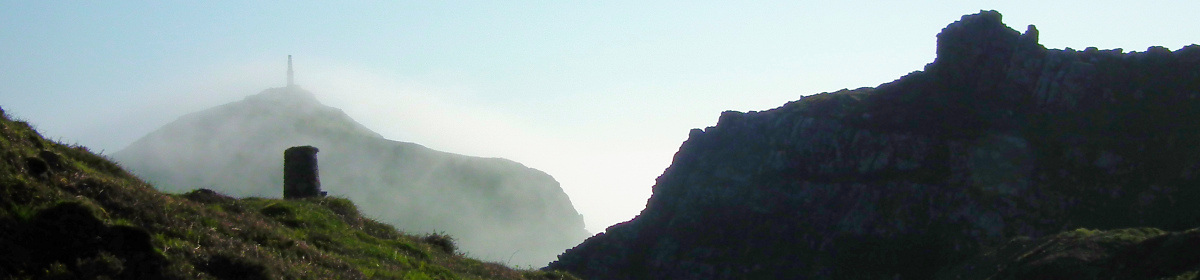


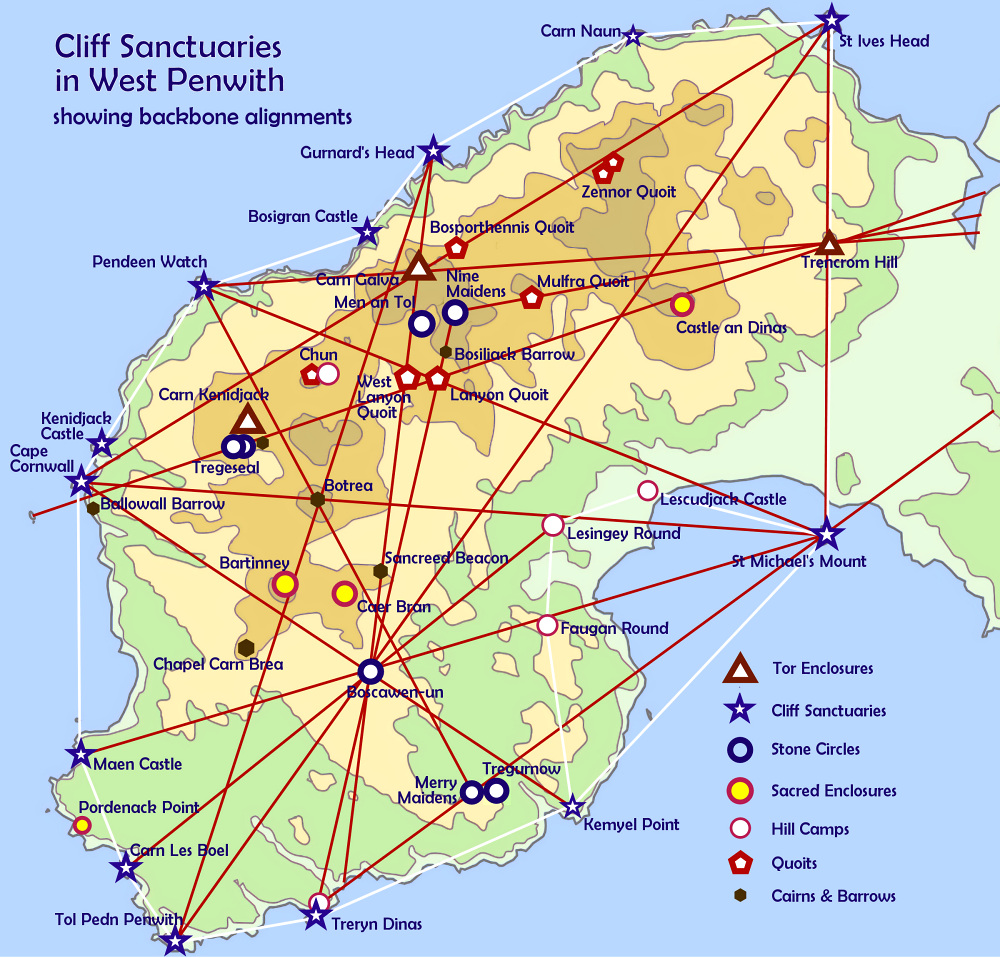


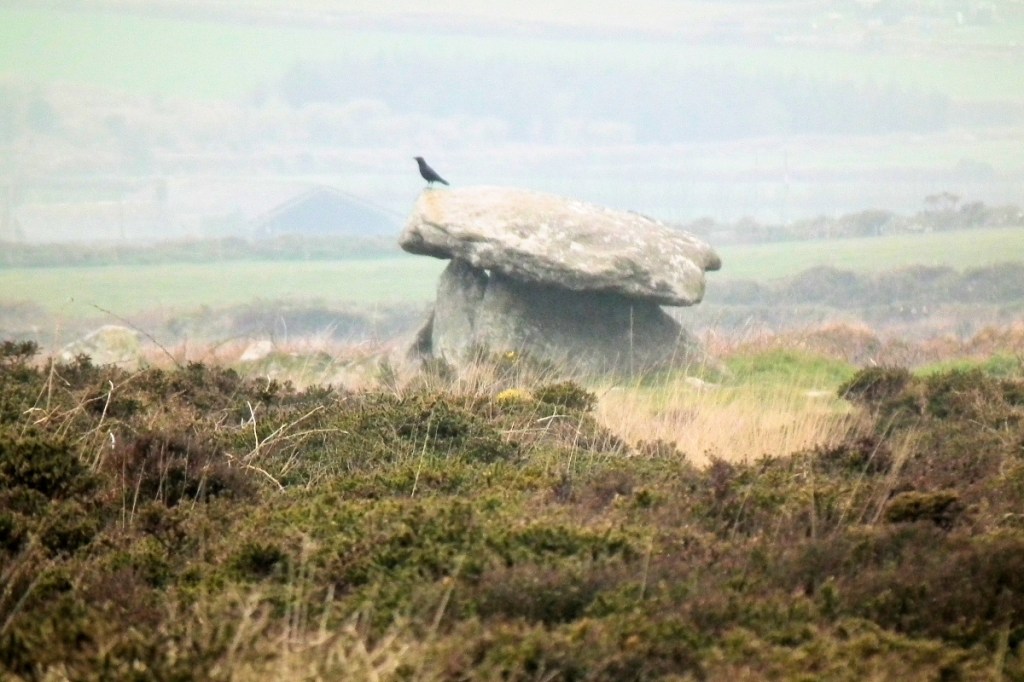


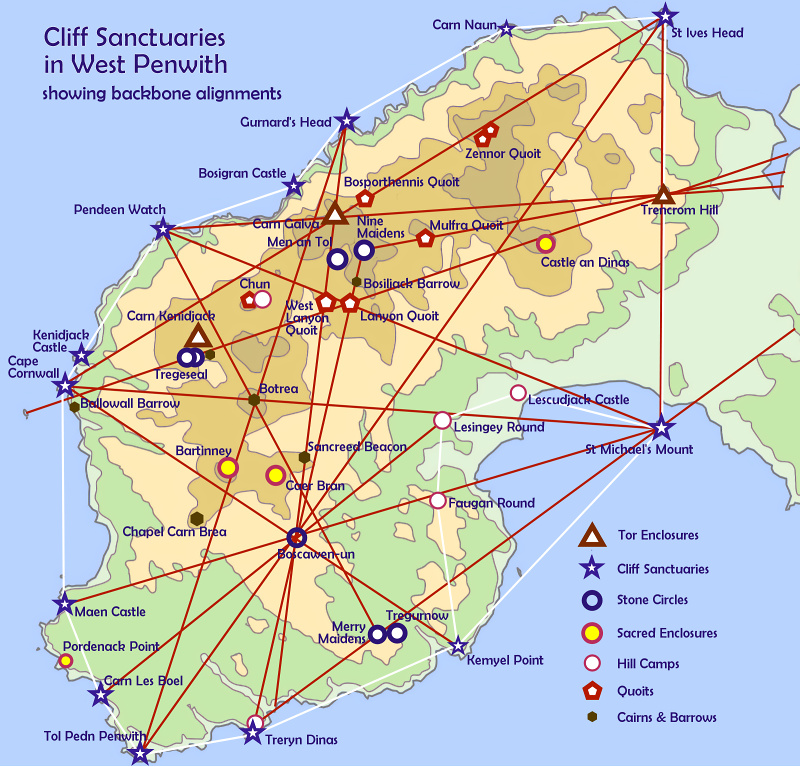



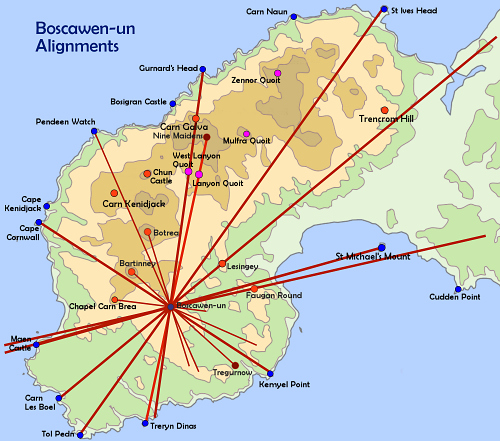
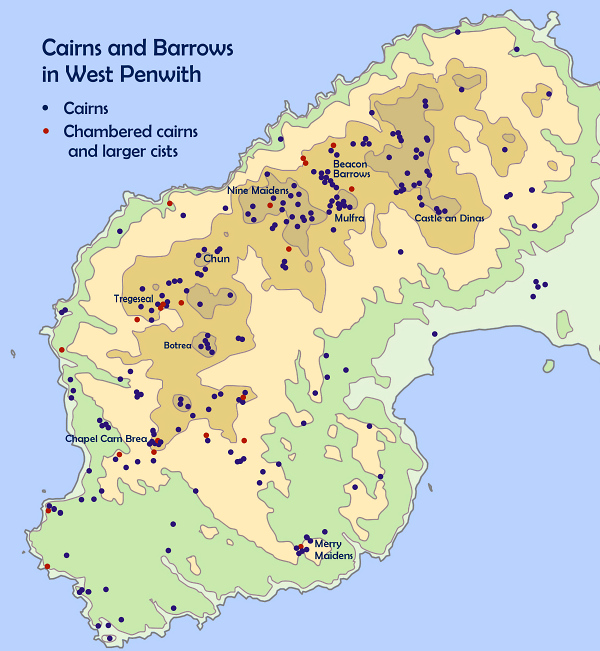
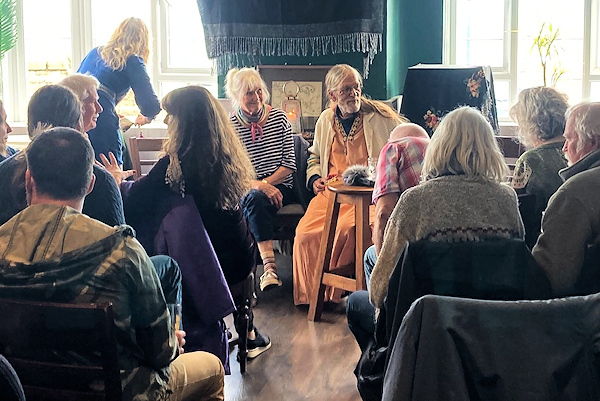






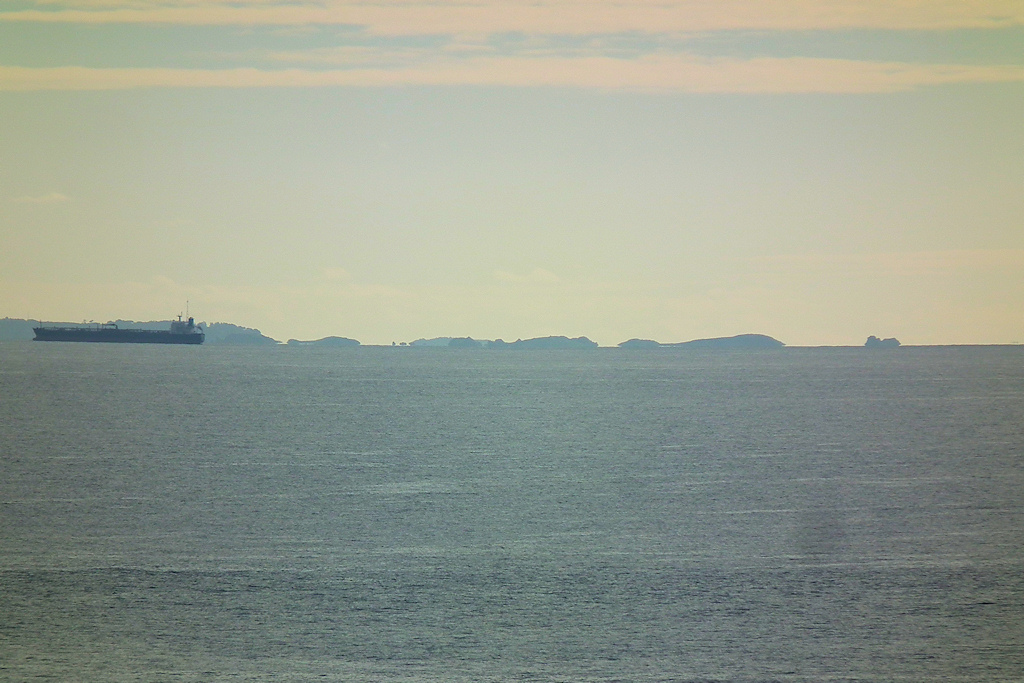


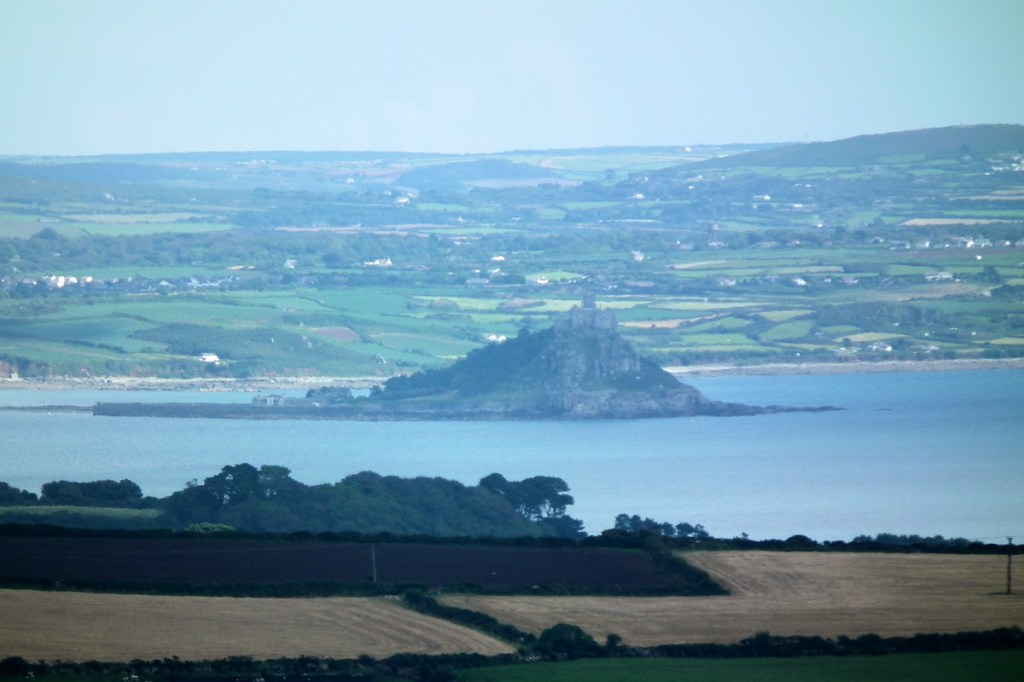


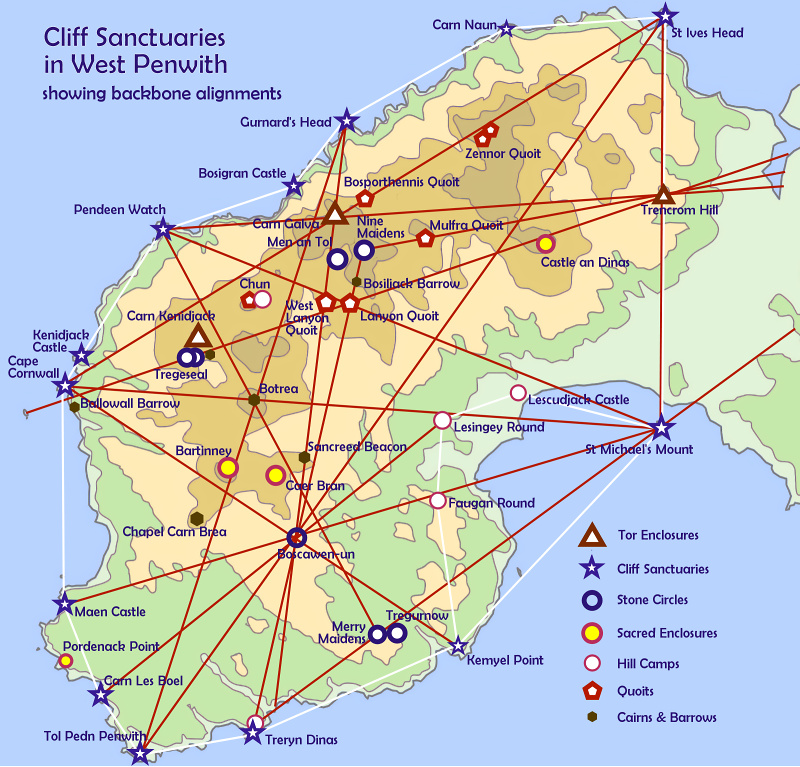
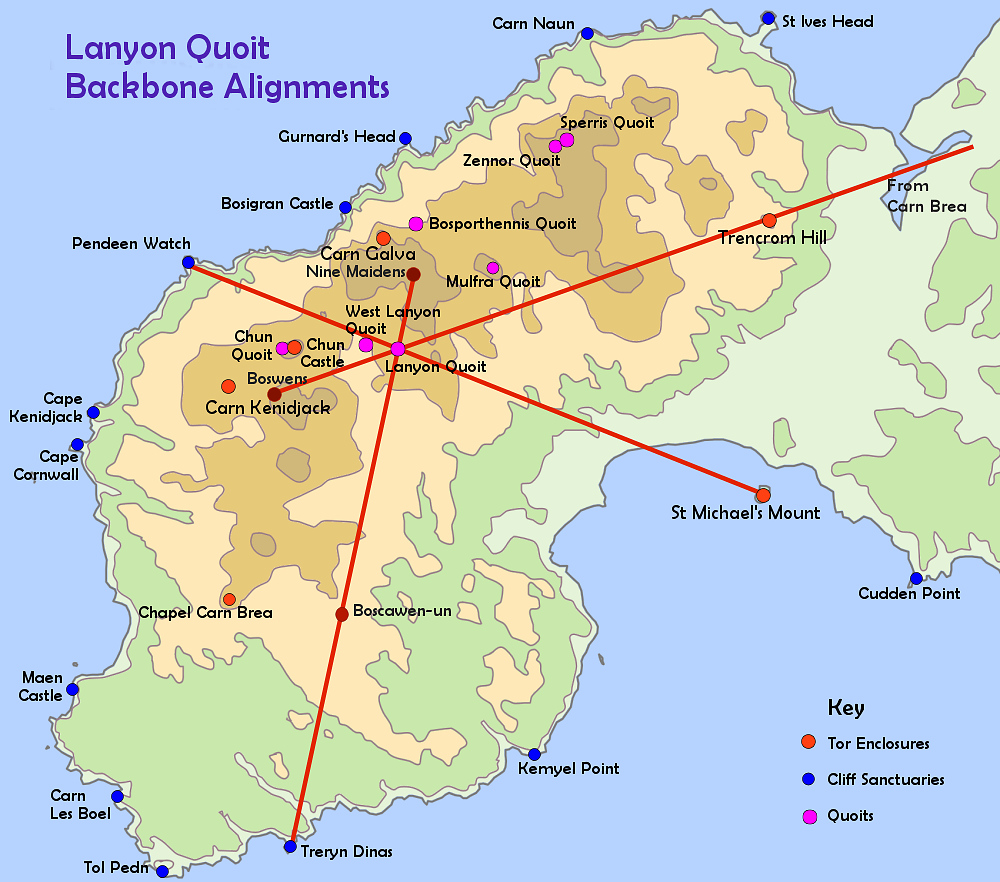
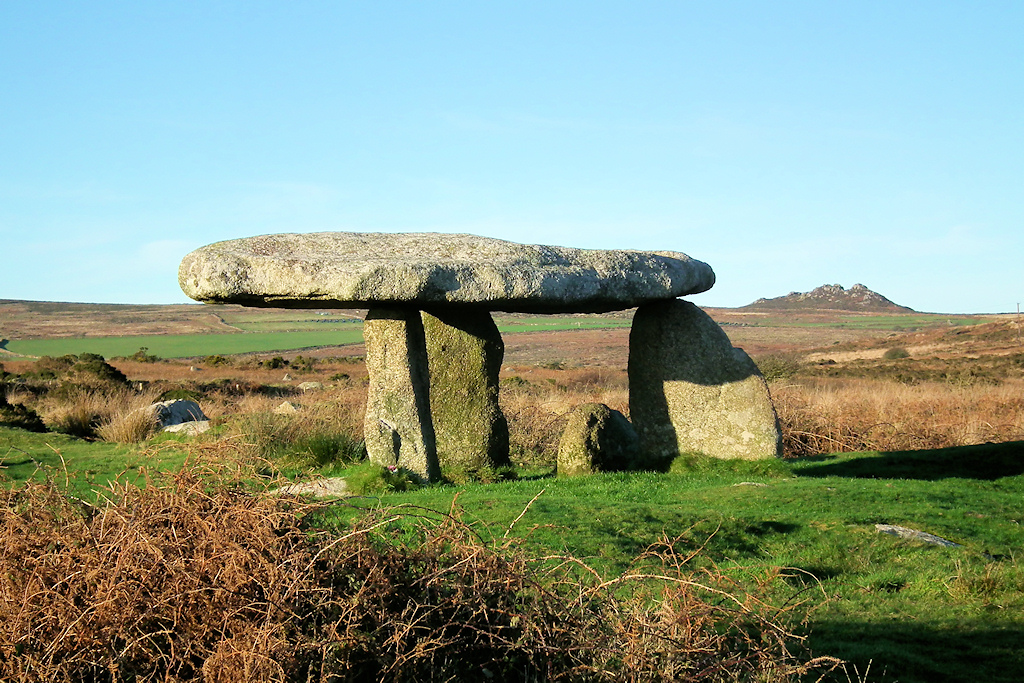
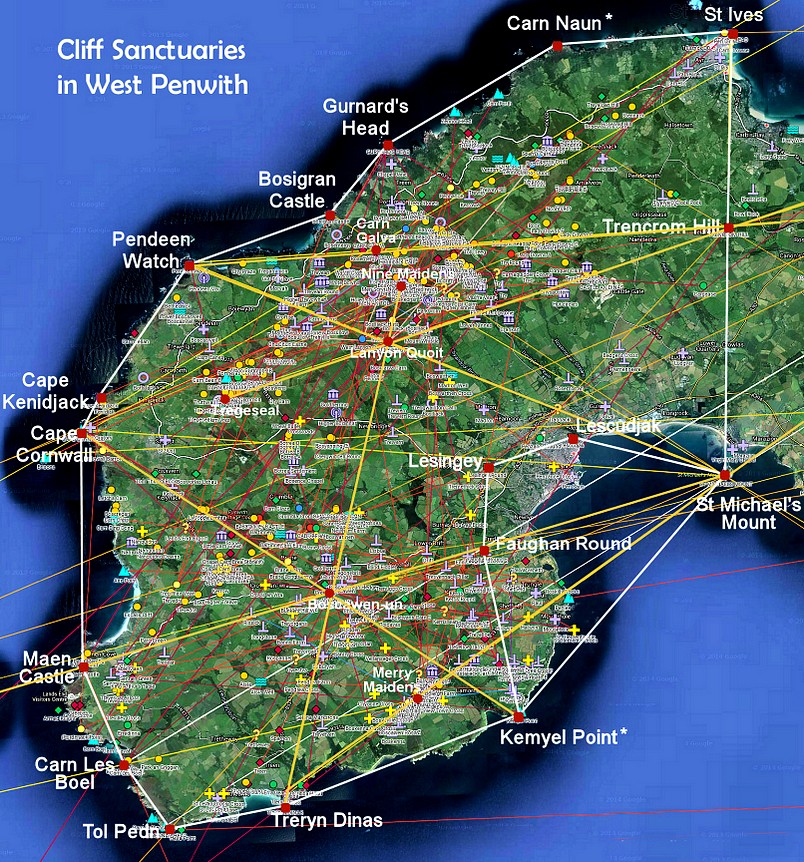


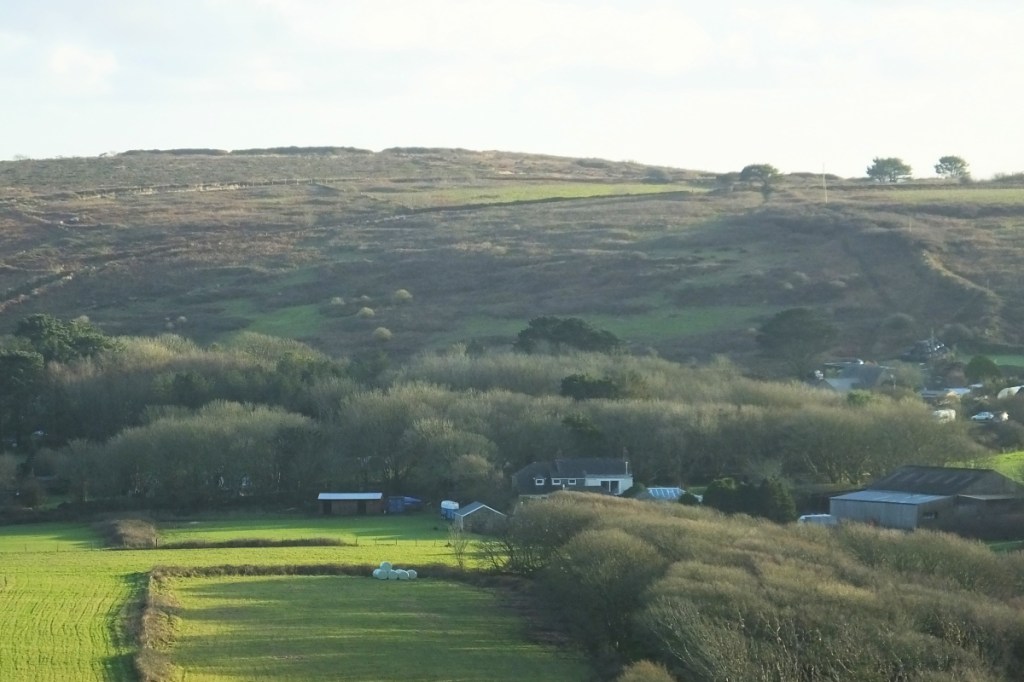
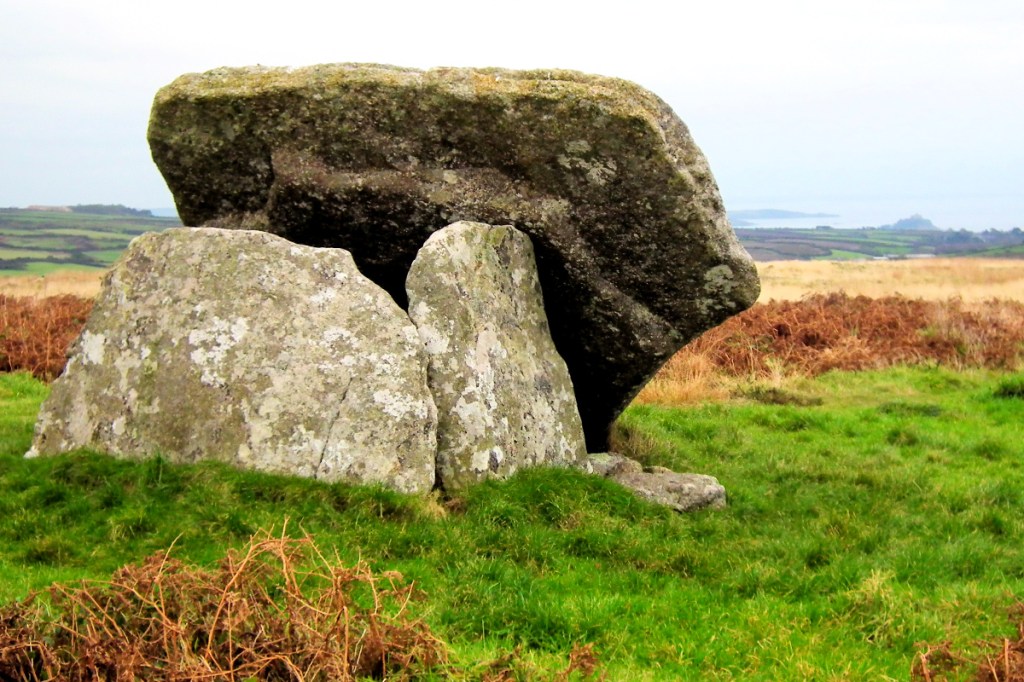


You must be logged in to post a comment.