

A while ago, a dear peacemaker friend of mine in Israel got triggered about some comments on one of my posts on Facebook, concerning Israel. It’s been bugging me ever since. His reaction was understandable. I’ve been wondering how to heal it. This new post might or might not help, but it’s a statement of where I stand.
One of the advantages of being a long-distance author is that I’ve often written stuff before – and there is little point writing it all out again. Especially when it’s a delicate subject that can evoke lots of reactions, many of them heading in very different directions. And if I am accused of anti-semitism, all I can say is “Yes, if that’s what you want me to be“. Please form your own judgements.
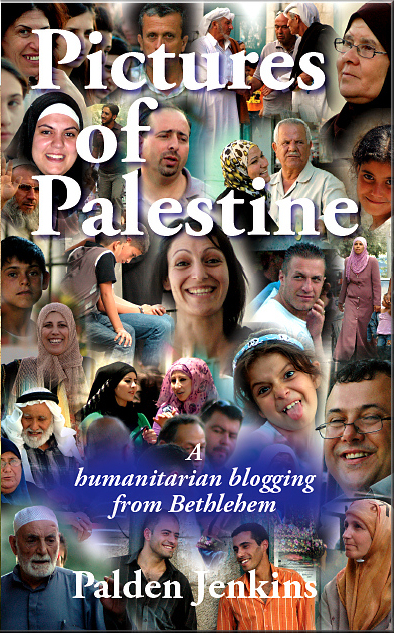
Below is a chapter from my 2011 book Pictures of Palestine – a humanitarian blogging from Bethlehem. What I wrote then still holds for me now.
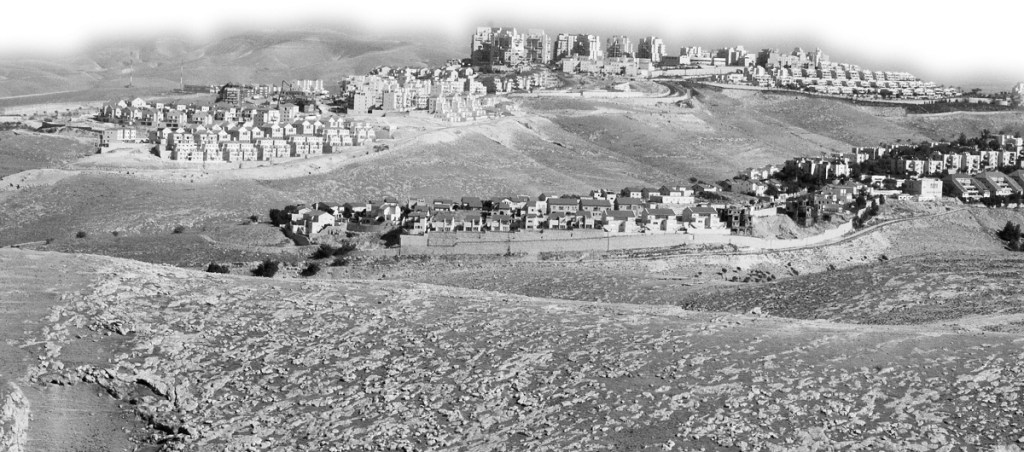
One of my daughters wrote me an e-mail asking whether the blog I was writing, on which this book is based, would be biased. Well, yes, I was portraying a Palestinian perspective, if that’s what ‘biased’ means. Yet I care about the survival and future of Israel too, and Palestine’s success doesn’t have to mean Israel’s failure. Many people don’t get this.
‘If you’re not with us, you’re against us’. Crossing that gulf is a difficult aspect of working with both sides – you can get the splitz. The two sides aren’t just arguing about different aspects of the same debate – they’re not even in the same conflict. There aren’t just two sides, and it’s not a straight black-and-white issue – it involves lots of variegated nuances and complexities. To be for one lot doesn’t have to mean you’re against the other lot. The real battle lies between those who encourage polarisation and violence and those on the receiving end of them. Both sides can live together, and they shall. They do live together, even though they are strangely divided.
Palestinians aren’t angels and they’ve made mistakes but the power and the burden of error weighs heavily on the Israeli side. Israel has long had superiority in weapons, money, connections, PR, foreign backers, chutzpah and forcefulness. Israelis don’t see things this way, seeing themselves as endangered victims, thus explaining the hardship, punishment and violence they assert on others in self-defence. This is not unique amongst nations, but for Israel it’s extreme and the effects impact heavily on their victims and on the wider world.
The Israeli project – to provide a safe haven for Jews where they may live by their own norms – is a noble thing. Historically, Jews have suffered immensely, especially from the actions of Europeans. But this doesn’t justify their oppressing or punishing Arabs today or doing to others many of the things that once were done to them. Israelis don’t see themselves as oppressors – they are the oppressed, busy protecting themselves. They don’t see themselves as colonisers but as a people with an entitlement to what they feel is theirs.
Israelis have a lot to be proud of. They built a nation in six decades. From their perspective, Arabs have attacked and menaced them and Israelis have bravely held off such threats. This was the narrative I learned as a teenager in 1967 at the time of the Six Day War, during which the Israelis occupied the Palestinian territories as if by accident, pre-emptively defending themselves. In later life, I discovered that this invasion, like the previous one of 1948, involved severe ethnic cleansing and uprooting of Palestinians, razing and occupying villages and parts of towns and killing of thousands of largely defenceless people. The awful fate visited on Jews by Europeans was visited by Jews on Palestinians.
Only some Jews were perpetrators. Many were accomplices who shut their eyes, went along with things or obeyed orders, to an extent tricked by their leaders. Some protested but didn’t get far; others felt that the ills taking place were regrettable but unavoidable, believing Israel to be in mortal danger when Arab armies, somewhat incompetently, solely sought to protect Palestinians against overwhelming Israeli force.
The Israeli project was driven by a caucus of Zionists who branded Palestinians as barbarians. Zionists drove the occupation in ways which decisively defined Israel’s character and future as a state locked in a military vortex.
It could have been done differently. As they immigrated to Ottoman and then British Palestine in the first half of the 20th Century, Jews could have integrated much more with Palestinians – there would have been difficulties, certainly, though arguably fewer difficulties than actually arose.
The British administration of the 1920s-1940s could have exercised less of a divide-and-rule approach, driving people against one another.
When the UN partitioned Palestine, favouring Jews in the process, the Israelis could have made do with the territory they were allocated, without such rabid ethnic cleansing of the land.
They could have traded land for peace in the 1970s or 1990s.
None of these options would have been perfect, but some sort of peaceful and productive coexistence could have arisen, leading to a sounder long term future for Israelis. But the path Israel has chosen is, I believe, deeply flawed, and the results are coming back to haunt them.
Israeli feelings of existential threat arose from deep-seated and justified feelings of vulnerability following the Jews’ terrible history in Europe. But the threat from Palestinians and other Arabs has been less a conquering aggression, more an ineffective response to Israeli force and expansion. A sense of threat does not have to be the case now, even in these days of Arab revolutions [this was written in 2011]. When Israel upsets its neighbours, causing great loss and damage, or when during negotiations it refuses to budge on issues crucial to Palestinians and neighbouring Arabs, it naturally creates an unhappy response.
Thus, Israel becomes its own worst enemy: while intending to reinforce Israeli security, it generates ill-feeling and threats instead, undermining that security. The ethnic cleansing of 1948 would be consigned to history if such cleansing didn’t continue today. Hezbollah in Lebanon would be no threat if Israel hadn’t invaded and bombarded Lebanon so devastatingly on several occasions in the last 40 years. Hamas and other militias in Gaza would not fire rockets if Israel let up on its siege of Gaza. Action creates a reaction.
Zionism sees Israel’s own interests and expansion as paramount. Whatever means are used toward this end, and whatever costs are incurred or imposed, Israel’s growth must go on. Zionists like to reinforce the belief that the world stands against the Jewish people. The notion that Israelis’ needs and security could be helped by acknowledging the needs and security of others doesn’t enter the equation, except amongst a much-dwindled Israeli peace camp.
In the long term, if anything weakens Israel, it is Zionism, since it undermines the sympathy the world might have toward Jews. Only a proportion of Israelis actively subscribe to Zionist sentiments, though acquiescence to such sentiments increases when Israel feels threatened, and this happens regularly, and Zionism is a norm drummed into Israelis from an early age. Tragically, war has been used as a way of keeping Israelis united.
This strong-minded agenda doesn’t even really accord with Judaism’s core tenets: Judaism is one thing and Zionism another. The laws of Moses’ Ten Commandments – not to kill, not to steal – aren’t being followed, and the nobler, more tolerant aspects of the Jewish faith are sidestepped. It’s considered heretical to say this. The Zionist mentality builds concrete walls and fences around Israelis in self-protection, and in so doing they become separated from the world and increasingly fail to see the wider world’s viewpoint. Zionists accuse critics of anti-Semitism (though Arabs are Semites too) and it labels Jewish detractors as ‘self-hating Jews’.
But here comes a key proposition. If Israelis saw things another way, opening up to the notion that their fellow humans sit in the same boat as they, and if Israel ramped down its military expansionism and permitted some restitution of the ills which have occurred since 1948, then, over time, threats to Israel would subside, and the country and its population would become more safe and secure.
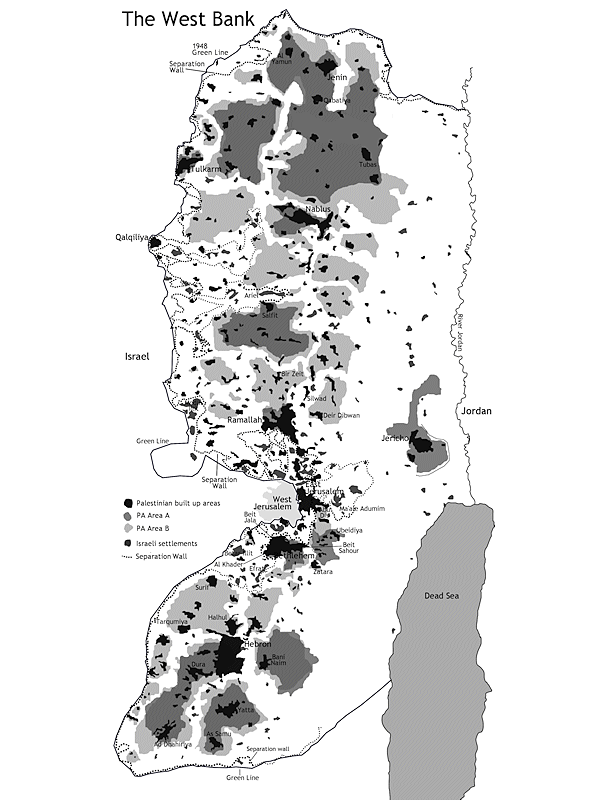
One Jewish extremist I know is so way-out that he’s right off the political map. Menachem Froman is an ‘ultra-orthodox’ (strictly observant) rabbi. [He is now dead.] He regards the state of Israel as scripturally premature and illegitimate, since the arising of such a state is prophesied to follow the coming of the Messiah. To him, the founding of Israel is supposed to make manifest a Holy Israel, a state of divine perfection and peace – what Christians call Heaven on Earth. To Jews the Messiah hasn’t yet come, and in Froman’s view Israel is thus manifestly unholy, both theologically and in everyday life. He’s the rabbi of an illegal West Bank settlement south-east of Bethlehem, and he’s also a member of Jerusalem Peacemakers [an organisation I was involved with founding].
But, get this. He hobnobs with sheikhs, imams, bishops, Tibetan lamas, Native Americans and oddbods like me. He also makes friends with ‘the enemy’. When Yasser Arafat was holed up under bombardment by the Israelis in Ramallah in 2002, during the second intifada, Froman walked through the lines, using his rabbinical authority to confound the Israeli troops seeking to stop him, and he visited Arafat repeatedly, becoming a close personal friend. Later, he walked into Gaza to make friends with Ismael Haniyeh, the Hamas prime minister. Israeli troops can’t quite shoot a rabbi if he breaks the rules since rabbis are by definition ordained by Jewish tradition to define the rules.
Palestinians like him: he’s the kind of Jew they can talk with. He considers Jews no more nor less special than anyone else. He doesn’t mind living under an Israeli or a Palestinian administration as long as he can live in Eretz Yisrael, the holy realm of Israel, where he was born. His own proposed peace settlement states simply that if Arabs can live in Israel (which they do) then Jews can live in Palestine, so let’s just divide it up and get on with life, or live equally under one single government and shared land. But Froman, a memorable, charismatic character, does not represent mainstream Israel.
Most Palestinians and Arabs don’t want to fight. The idea that they want to destroy Israel is nowadays a myth, or voiced by Arabs only when tempers are hot. [This was the situation in 2011 and it will eventually return.] Arab extremists say they want to eliminate Israel and, equally, Israeli extremists want all Palestinians to be driven out of the land, but neither kind of extremist represents a majority, and such exclusion would charge a heavy price to the victorious who are left behind. Germany, for example, has paid heavily in compensation and guilt for its exclusion of Jews 60-80 years ago.
Most Palestinians and Arabs accept the existence of an Israel within the pre-1967 borders – an enormous concession that they signed up to in the 1993 Oslo Accords. Even Hamas, which Israelis perceive as the arch-enemy, has stated that it will recognise Israel within such boundaries. Palestinians just want a fair deal and a decent life. Peace will never be a perfect deal for everyone, but it will be better than the current situation.
Israel cannot afford to remain militarised forever: it has poor people and social problems of its own, enormous water-shortages, a risk of coastal flooding, toxicity, pollution and all the kinds of problems that pervade most modern countries. It also shares the West’s dwindling prestige and power. And it is isolated.
Even if Israel won every war it undertakes, this doesn’t make for a happy, healthy nation. Israel needs to make friends with its neighbours because it needs them, and they need Israel. Israelis can’t drive to Damascus, Beirut or Amman for the weekend – they are hemmed into their own country. Arabs can’t visit Tel Aviv for business or shopping or easily visit Jerusalem to pray in its holy places. It’s crazy. They all have a lot to offer each other. They share Middle Eastern space.
Israelis need a safe and peaceful future. Many are not fully aware of what’s going on in their name, or they shruggingly accept the ‘security reasons’ they are given when their army tramples on Palestinians. Many feel powerless, or they maintain an indifference by ‘living inside the bubble’. Others adopt extreme, partisan views, as if everyone is against them and deserves a strident response. Since the late 1990s, the centre of gravity of Israeli politics has headed toward the hard right, and a harsh minority nowadays dominates the public dialogue. Zionist minority interests place their priorities above those of the nation. The rule of dominant interests, while not unique to Israel, maintains a perpetual state of near-conflict.
I support a neighbourly Israel and its gradual integration into the Middle East. But I have difficulty going along with the way this nation behaves today. I know plenty of remarkable Israelis whose humanity and conduct of character are impressive, but these people’s voices do not prevail.
Sadly, Israel acts against its own longterm best interests and could come to regret many aspects of the last sixty years. It soils its nest by pushing its case uncompromisingly, thus creating enemies and the opposite longterm effects to what it genuinely seeks. Its reliance on force, bombing, assassinations, land-grabs, ill-treatment and dehumanisation of Arabs builds up new, avoidable problems, fostering new generations of opponents. We need a new habit of peaceful coexistence. This will take a generation and more, but it is important.
Israel’s great danger is the risk of truth breaking out amongst its own Jewish inhabitants, causing the Zionist world-view to be deconstructed. Disillusionment and uncertainty could one day cause many Israelis to decide that other countries offer greater peace and security. There’s even a risk of fighting breaking out between dissonant Israeli communities, or between ‘Israel proper’ (Israel) and ‘Israel of the settlements’ (Judaea).
Palestinians don’t have to fight Israelis – they just need to stand firm. Gradually, they will simply out-populate Israelis, and changing wider-world circumstances will redefine the situation in Palestine and Israel. Palestinians want dialogue and a fair deal. They’re remarkably patient but they still need a sense of progress. So do many Israelis, living in a small, walled-in country with an army that’s slowly losing its mojo and a government dominated by minority interests.
The Holy Land is a multi-ethnic, multifaith land and a fascinating place. Sanctity is elusive and faiths define it differently, but it’s safe to say that ongoing conflict is not one of its characteristics. Positive change matters for the whole world – Israel and Palestine form a bottleneck in the world’s process of change.
Security is developed by building up a nation’s internal feelings of alrightness, community and integrity. It is built by cultivating collective happiness and creativity, giving people a sense of a positive, mutually-beneficial future. This is the real national interest, the true guarantee of Israel’s future.
That was an excerpt from Pictures of Palestine. Its website is here. This book can be ordered online in print.
The sequel, Blogging in Bethlehem, is available as an audiobook, here. The other sequel, O Little Town of Bethlehem – Christmas in God’s Holy Land, is available in PDF text format, onscreen, here.







You must be logged in to post a comment.