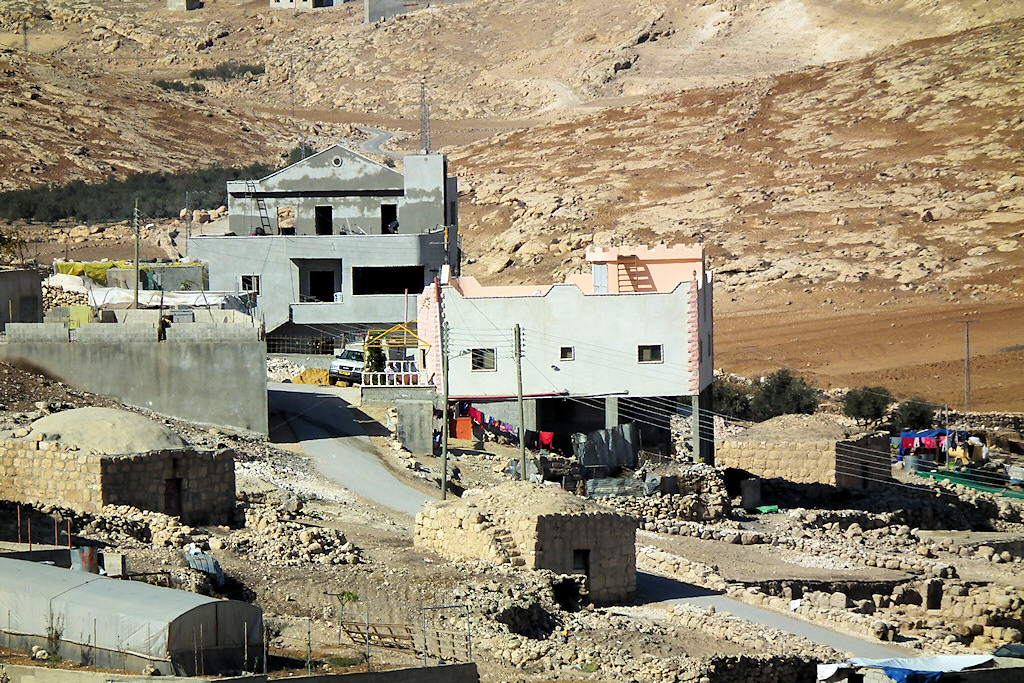
Israel’s Situation

A while ago, a dear peacemaker friend of mine in Israel got triggered about some comments on one of my posts on Facebook, concerning Israel. It’s been bugging me ever since. His reaction was understandable. I’ve been wondering how to heal it. This new post might or might not help, but it’s a statement of where I stand.

One of the advantages of being a long-distance author is that I’ve often written stuff before – and there is little point writing it all out again. Especially when it’s a delicate subject that can evoke lots of reactions, many of them heading in very different directions. And if I am accused of anti-semitism, all I can say is “Yes, if that’s what you want me to be“. Please form your own judgements.

Below is a chapter from my 2011 book Pictures of Palestine – a humanitarian blogging from Bethlehem. What I wrote then still holds for me now.
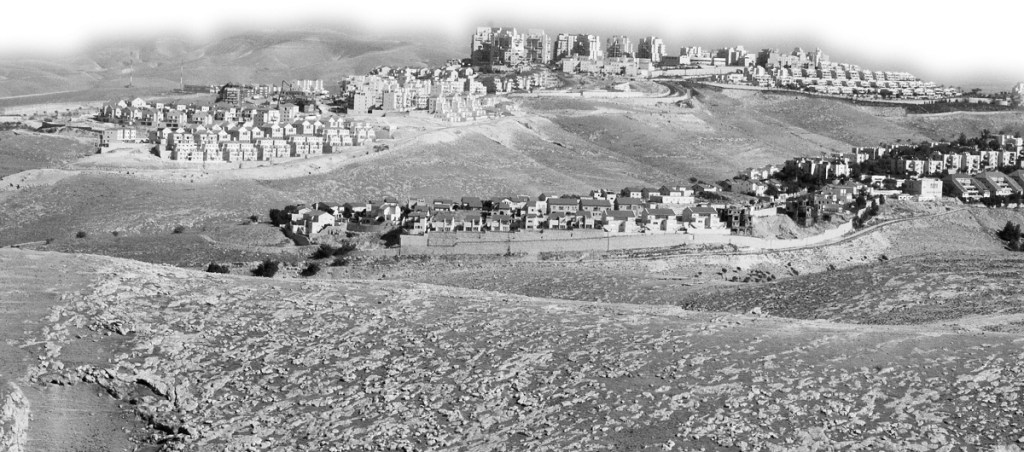
Ma’ale Adumim, an Israeli settlement on the West Bank, east of Jerusalem. It splits the Palestinian West Bank into two halves, making the West Bank less viable as a nation.

One of my daughters wrote me an e-mail asking whether the blog I was writing, on which this book is based, would be biased. Well, yes, I was portraying a Palestinian perspective, if that’s what ‘biased’ means. Yet I care about the survival and future of Israel too, and Palestine’s success doesn’t have to mean Israel’s failure. Many people don’t get this.

If you’re not with us, you’re against us’. Crossing that gulf is a difficult aspect of working with both sides – you can get the splitz. The two sides aren’t just arguing about different aspects of the same debate – they’re not even in the same conflict. There aren’t just two sides, and it’s not a straight black-and-white issue – it involves lots of variegated nuances and complexities. To be for one lot doesn’t have to mean you’re against the other lot. The real battle lies between those who encourage polarisation and violence and those on the receiving end of them. Both sides can live together, and they shall. They do live together, even though they are strangely divided.

Palestinians aren’t angels and they’ve made mistakes but the power and the burden of error weighs heavily on the Israeli side. Israel has long had superiority in weapons, money, connections, PR, foreign backers, chutzpah and forcefulness. Israelis don’t see things this way, seeing themselves as endangered victims, thus explaining the hardship, punishment and violence they assert on others in self-defence. This is not unique amongst nations, but for Israel it’s extreme and the effects impact heavily on their victims and on the wider world.

The Israeli project – to provide a safe haven for Jews where they may live by their own norms – is a noble thing. Historically, Jews have suffered immensely, especially from the actions of Europeans. But this doesn’t justify their oppressing or punishing Arabs today or doing to others many of the things that once were done to them. Israelis don’t see themselves as oppressors – they are the oppressed, busy protecting themselves. They don’t see themselves as colonisers but as a people with an entitlement to what they feel is theirs.

Israelis have a lot to be proud of. They built a nation in six decades. From their perspective, Arabs have attacked and menaced them and Israelis have bravely held off such threats. This was the narrative I learned as a teenager in 1967 at the time of the Six Day War, during which the Israelis occupied the Palestinian territories as if by accident, pre-emptively defending themselves. In later life, I discovered that this invasion, like the previous one of 1948, involved severe ethnic cleansing and uprooting of Palestinians, razing and occupying villages and parts of towns and killing of thousands of largely defenceless people. The awful fate visited on Jews by Europeans was visited by Jews on Palestinians.

Only some Jews were perpetrators. Many were accomplices who shut their eyes, went along with things or obeyed orders, to an extent tricked by their leaders. Some protested but didn’t get far; others felt that the ills taking place were regrettable but unavoidable, believing Israel to be in mortal danger when Arab armies, somewhat incompetently, solely sought to protect Palestinians against overwhelming Israeli force.

The Israeli project was driven by a caucus of Zionists who branded Palestinians as barbarians. Zionists drove the occupation in ways which decisively defined Israel’s character and future as a state locked in a military vortex.
It could have been done differently. As they immigrated to Ottoman and then British Palestine in the first half of the 20th Century, Jews could have integrated much more with Palestinians – there would have been difficulties, certainly, though arguably fewer difficulties than actually arose.

The British administration of the 1920s-1940s could have exercised less of a divide-and-rule approach, driving people against one another.

When the UN partitioned Palestine, favouring Jews in the process, the Israelis could have made do with the territory they were allocated, without such rabid ethnic cleansing of the land.

They could have traded land for peace in the 1970s or 1990s.

None of these options would have been perfect, but some sort of peaceful and productive coexistence could have arisen, leading to a sounder long term future for Israelis. But the path Israel has chosen is, I believe, deeply flawed, and the results are coming back to haunt them.

Israeli feelings of existential threat arose from deep-seated and justified feelings of vulnerability following the Jews’ terrible history in Europe. But the threat from Palestinians and other Arabs has been less a conquering aggression, more an ineffective response to Israeli force and expansion. A sense of threat does not have to be the case now, even in these days of Arab revolutions [this was written in 2011]. When Israel upsets its neighbours, causing great loss and damage, or when during negotiations it refuses to budge on issues crucial to Palestinians and neighbouring Arabs, it naturally creates an unhappy response.

Thus, Israel becomes its own worst enemy: while intending to reinforce Israeli security, it generates ill-feeling and threats instead, undermining that security. The ethnic cleansing of 1948 would be consigned to history if such cleansing didn’t continue today. Hezbollah in Lebanon would be no threat if Israel hadn’t invaded and bombarded Lebanon so devastatingly on several occasions in the last 40 years. Hamas and other militias in Gaza would not fire rockets if Israel let up on its siege of Gaza. Action creates a reaction.

Zionism sees Israel’s own interests and expansion as paramount. Whatever means are used toward this end, and whatever costs are incurred or imposed, Israel’s growth must go on. Zionists like to reinforce the belief that the world stands against the Jewish people. The notion that Israelis’ needs and security could be helped by acknowledging the needs and security of others doesn’t enter the equation, except amongst a much-dwindled Israeli peace camp.

In the long term, if anything weakens Israel, it is Zionism, since it undermines the sympathy the world might have toward Jews. Only a proportion of Israelis actively subscribe to Zionist sentiments, though acquiescence to such sentiments increases when Israel feels threatened, and this happens regularly, and Zionism is a norm drummed into Israelis from an early age. Tragically, war has been used as a way of keeping Israelis united.

This strong-minded agenda doesn’t even really accord with Judaism’s core tenets: Judaism is one thing and Zionism another. The laws of Moses’ Ten Commandments – not to kill, not to steal – aren’t being followed, and the nobler, more tolerant aspects of the Jewish faith are sidestepped. It’s considered heretical to say this. The Zionist mentality builds concrete walls and fences around Israelis in self-protection, and in so doing they become separated from the world and increasingly fail to see the wider world’s viewpoint. Zionists accuse critics of anti-Semitism (though Arabs are Semites too) and it labels Jewish detractors as ‘self-hating Jews’.
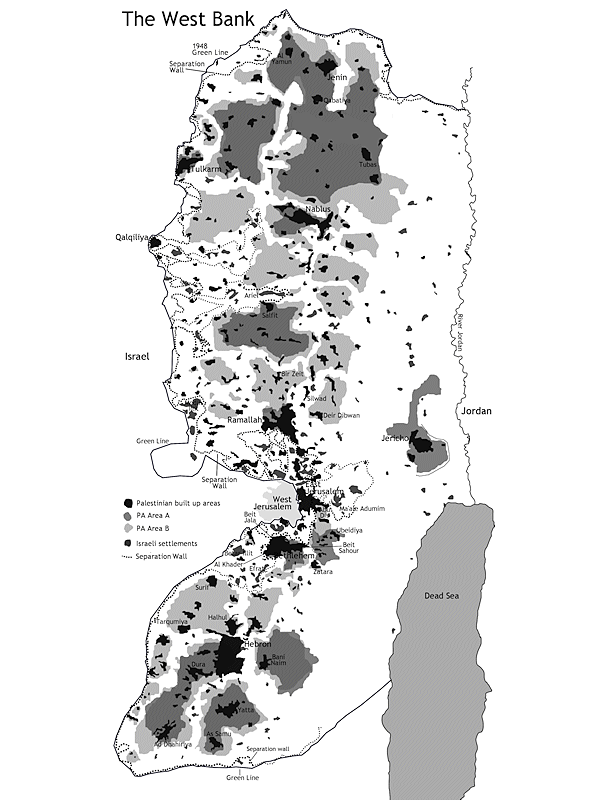
But here comes a key proposition. If Israelis saw things another way, opening up to the notion that their fellow humans sit in the same boat as they, and if Israel ramped down its military expansionism and permitted some restitution of the ills which have occurred since 1948, then, over time, threats to Israel would subside, and the country and its population would become more safe and secure.

One Jewish extremist I know is so way-out that he’s right off the political map. Menachem Froman is an ‘ultra-orthodox’ (strictly observant) rabbi. [He is now dead.] He regards the state of Israel as scripturally premature and illegitimate, since the arising of such a state is prophesied to follow the coming of the Messiah. To him, the founding of Israel is supposed to make manifest a Holy Israel, a state of divine perfection and peace – what Christians call Heaven on Earth. To Jews the Messiah hasn’t yet come, and in Froman’s view Israel is thus manifestly unholy, both theologically and in everyday life. He’s the rabbi of an illegal West Bank settlement south-east of Bethlehem, and he’s also a member of Jerusalem Peacemakers [an organisation I was involved with founding].

But, get this. He hobnobs with sheikhs, imams, bishops, Tibetan lamas, Native Americans and oddbods like me. He also makes friends with ‘the enemy’. When Yasser Arafat was holed up under bombardment by the Israelis in Ramallah in 2002, during the second intifada, Froman walked through the lines, using his rabbinical authority to confound the Israeli troops seeking to stop him, and he visited Arafat repeatedly, becoming a close personal friend. Later, he walked into Gaza to make friends with Ismael Haniyeh, the Hamas prime minister. Israeli troops can’t quite shoot a rabbi if he breaks the rules since rabbis are by definition ordained by Jewish tradition to define the rules.

Palestinians like him: he’s the kind of Jew they can talk with. He considers Jews no more nor less special than anyone else. He doesn’t mind living under an Israeli or a Palestinian administration as long as he can live in Eretz Yisrael, the holy realm of Israel, where he was born. His own proposed peace settlement states simply that if Arabs can live in Israel (which they do) then Jews can live in Palestine, so let’s just divide it up and get on with life, or live equally under one single government and shared land. But Froman, a memorable, charismatic character, does not represent mainstream Israel.

Most Palestinians and Arabs don’t want to fight. The idea that they want to destroy Israel is nowadays a myth, or voiced by Arabs only when tempers are hot. [This was the situation in 2011 and it will eventually return.] Arab extremists say they want to eliminate Israel and, equally, Israeli extremists want all Palestinians to be driven out of the land, but neither kind of extremist represents a majority, and such exclusion would charge a heavy price to the victorious who are left behind. Germany, for example, has paid heavily in compensation and guilt for its exclusion of Jews 60-80 years ago.

Most Palestinians and Arabs accept the existence of an Israel within the pre-1967 borders – an enormous concession that they signed up to in the 1993 Oslo Accords. Even Hamas, which Israelis perceive as the arch-enemy, has stated that it will recognise Israel within such boundaries. Palestinians just want a fair deal and a decent life. Peace will never be a perfect deal for everyone, but it will be better than the current situation.

Israel cannot afford to remain militarised forever: it has poor people and social problems of its own, enormous water-shortages, a risk of coastal flooding, toxicity, pollution and all the kinds of problems that pervade most modern countries. It also shares the West’s dwindling prestige and power. And it is isolated.

Even if Israel won every war it undertakes, this doesn’t make for a happy, healthy nation. Israel needs to make friends with its neighbours because it needs them, and they need Israel. Israelis can’t drive to Damascus, Beirut or Amman for the weekend – they are hemmed into their own country. Arabs can’t visit Tel Aviv for business or shopping or easily visit Jerusalem to pray in its holy places. It’s crazy. They all have a lot to offer each other. They share Middle Eastern space.
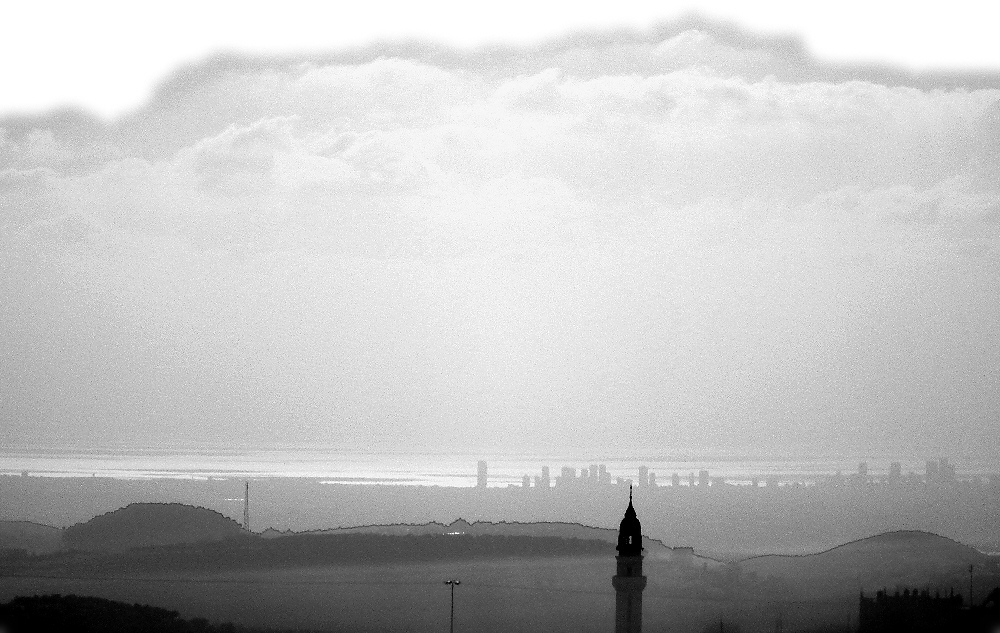
Looking down on Tel Aviv and the Mediterranean from up in the Palestinian West Bank, near Bir Zeit. Most West Bank Palestinians are not permitted to go there – they can see the Med but never bathe in it.

Israelis need a safe and peaceful future. Many are not fully aware of what’s going on in their name, or they shruggingly accept the ‘security reasons’ they are given when their army tramples on Palestinians. Many feel powerless, or they maintain an indifference by ‘living inside the bubble’. Others adopt extreme, partisan views, as if everyone is against them and deserves a strident response. Since the late 1990s, the centre of gravity of Israeli politics has headed toward the hard right, and a harsh minority nowadays dominates the public dialogue. Zionist minority interests place their priorities above those of the nation. The rule of dominant interests, while not unique to Israel, maintains a perpetual state of near-conflict.

I support a neighbourly Israel and its gradual integration into the Middle East. But I have difficulty going along with the way this nation behaves today. I know plenty of remarkable Israelis whose humanity and conduct of character are impressive, but these people’s voices do not prevail.

Sadly, Israel acts against its own longterm best interests and could come to regret many aspects of the last sixty years. It soils its nest by pushing its case uncompromisingly, thus creating enemies and the opposite longterm effects to what it genuinely seeks. Its reliance on force, bombing, assassinations, land-grabs, ill-treatment and dehumanisation of Arabs builds up new, avoidable problems, fostering new generations of opponents. We need a new habit of peaceful coexistence. This will take a generation and more, but it is important.

Israel’s great danger is the risk of truth breaking out amongst its own Jewish inhabitants, causing the Zionist world-view to be deconstructed. Disillusionment and uncertainty could one day cause many Israelis to decide that other countries offer greater peace and security. There’s even a risk of fighting breaking out between dissonant Israeli communities, or between ‘Israel proper’ (Israel) and ‘Israel of the settlements’ (Judaea).

Palestinians don’t have to fight Israelis – they just need to stand firm. Gradually, they will simply out-populate Israelis, and changing wider-world circumstances will redefine the situation in Palestine and Israel. Palestinians want dialogue and a fair deal. They’re remarkably patient but they still need a sense of progress. So do many Israelis, living in a small, walled-in country with an army that’s slowly losing its mojo and a government dominated by minority interests.

The Holy Land is a multi-ethnic, multifaith land and a fascinating place. Sanctity is elusive and faiths define it differently, but it’s safe to say that ongoing conflict is not one of its characteristics. Positive change matters for the whole world – Israel and Palestine form a bottleneck in the world’s process of change.

Security is developed by building up a nation’s internal feelings of alrightness, community and integrity. It is built by cultivating collective happiness and creativity, giving people a sense of a positive, mutually-beneficial future. This is the real national interest, the true guarantee of Israel’s future.


That was an excerpt from Pictures of Palestine. Its website is here. This book can be ordered online in print.
The sequel, Blogging in Bethlehem, is available as an audiobook, here. The other sequel, O Little Town of Bethlehem – Christmas in God’s Holy Land, is available in PDF text format, onscreen, here.
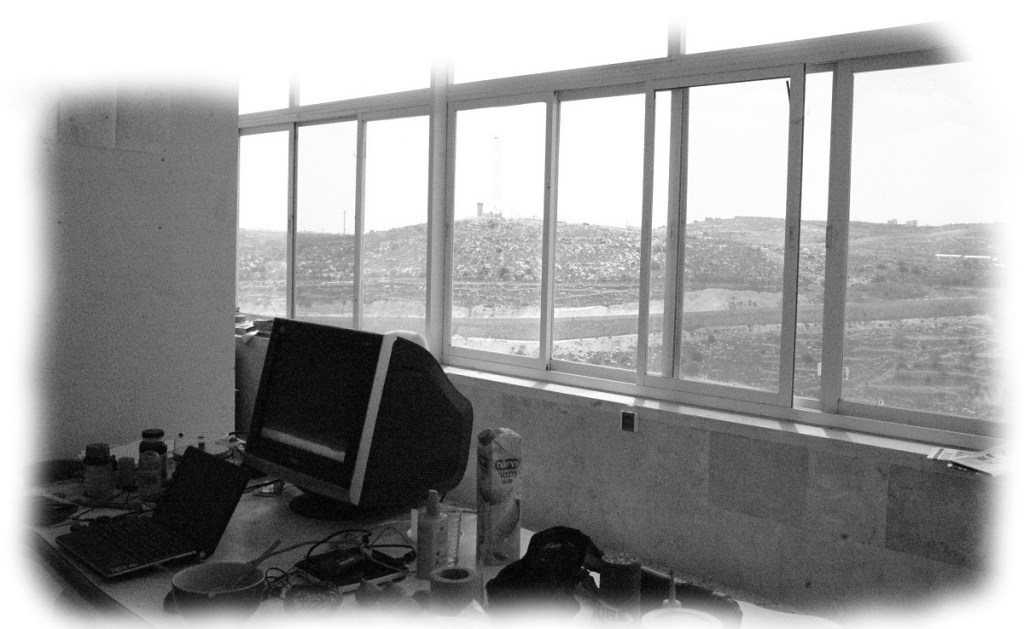
This was the view from my apartment in Al Khader, Bethlehem. Over the valley was an Israeli watchtower. They had their binoculars and listening devices, but I had psychic antennae. I knew what they were up to. Most of them were bored shitless. But I wasn’t.

It is Necessary only that Good People do Nothing

I’ve always been an optimist, deep down inside – a Jupiter in Pisces type. I’ve felt this underlying optimism ever since I was young – not rigidly, but because I keep coming back to it after periodic times of despair over the state of the world, to which, for my growth, I’ve been karmically tied all my adult life. It’s over fifty years since John Lennon sang, outrageously at the time, that we should give peace a chance. I cannot say there has been a lot of visible progress.

However, underneath, something has changed. Many of the ideals of 50-60 years ago are in fits and starts becoming pragmatic policy strategies, and the balance of opinion at street and village level across the world has over the years quietly tilted against war. The strength and clarity of this consensus is yet to be tested, but hints of it are visible in world opinion over Gaza. We’re approaching that test.

Hair-raising world situations and crises have a way of arousing public feeling to a sufficient extent that a mountain of inertia, of helpless addiction to conflict, could actually start moving before long. Ukraine and Gaza have jogged us that way and there’s further to go. Trouble is, a consensus often takes shape in the background while vested interests act more quickly. This formula worked when Pluto was in Capricorn, from 2008 until now, but things are changing. With Pluto in Aquarius, we’re likely to have situations arising where vested interests find themselves encircled.

Polarisation, demonisation and dehumanisation are pre-requisites for conflict, and here the media and social media play an outsize role. If we truly believe in peace, then these three issues need tackling inside ourselves.

The information war is now as important as the military war. Since social media appeared, Palestinians have had more of a level playing-field. In the last conflict, young Gazans won the info-war on points, and this is one reason why Gazan phone networks are disabled now. Israel meanwhile fails to realise that, apart from military overkill, its determined, uncompromising certainty in pursuing its cause undermines it in the eyes of much of the world.

We’re getting too accustomed to witnessing blood sacrifices. We live in a thoroughly amoral world system and, collectively, by omission, we have failed to stop them happening. The system is rigged in such a way that, though we might choose peace, justice and ecological priorities, we undermine them simply by shopping at supermarkets, driving cars and using phones and computers.

I keep repeating Edmund Burke’s 250 year old quote: “For the triumph of evil it is necessary only that good people do nothing“. It’s true.

So we get the cruel destruction of people, cities and landscapes in ‘theatres’ such as Syria, Ukraine and Gaza – hellish nightmares that everyone hoped we’d left behind long ago. We’ll get more of this unless there’s a fundamental change. Such a change might start happening in the second half of this decade.[1] But, as with many of the world’s key issues, it won’t just happen. It has to be pushed, firmly and consistently.

It’s important that this pressure for change doesn’t become a new social conflict, a new cause for social and political polarisation. Battling over it will lead to delays and complications we can’t afford. The movement for peace needs to avoid adopting the methods of war and confrontation: success comes through building a rising tide of solidarity, consensus and cooperation. It needs longterm commitment and mass momentum, and if it is to succeed, the people of Earth need to get behind the project of saving our world. Global peacebuilding is a key part of that.

In relation to the current conflict in Is-Pal, taking sides is understandable, yet it is part of the problem. The problem arises from polarisation itself, not from the perceived goodness or badness of either side. What is under-reported here is an indistinct but nevertheless a majority global consensus tilting against war and devastation, by anyone, against anyone and for whatever reason.

The destruction we’ve seen in Gaza, Mariupol (Ukraine) and Kobani (Syria) in recent years have nudged this sleepy consensus along. Humane empathy is bubbling up in collective consciousness, especially amongst the young, the power-holders of future decades. But is it strong enough to overcome the resigned belief that conflicts are an unavoidable yet necessary evil?

Behind this lies a bigger problem. Governments of all kinds are out of step with their people. Defence and international relations, even in democracies, are managed by godfathers who decide the ‘national interest’ on our behalf. So, in future, matters of war and peace boil down to a bigger question: who decides?

Majorities in the Global South and also the Global North are proving to be pro-people in attitude. Current wars have taken on a people-against-the-Megamachine optic: we see high-tech war machines ranged against crowds and communities of people, mowing them down. With Pluto entering Aquarius for the next 15 years, this meme is strengthening – we’re watching it happen in Gaza.

Here’s an astrologer’s warning. From 2025-6 until 2038 Neptune is in Aries, an awkward period in which we’ll be faced with a key cause of war: big guys and strongmen who take it upon themselves to determine our future, often at the expense of majorities.

In Sudan we see a country being wrecked by two competing military leaders and their oligarchies. In Ukraine we see two very different kinds of strongman ranged against one another – Putin and Zelensky. In Israel we see a remarkably cynical prime minister taking on the whole world, convinced of his own rightness. In Gaza, Hamas is a resistance movement which, though it has its prominent leaders, is more horizontal than a hierarchy – more like a cooperative and rather like the Jewish terror organisations of the 1940s, Haganah, Lehi and Irgun.

Hamas will never remove the state of Israel, and they know it (they aren’t fools): Israel is here to stay. So are the Palestinians – here to stay. Israel will not eliminate Hamas because, even if it kills most of the current Hamas leadership, its actions generate new supporters and fighters willing to continue, whatever the cost, now and in twenty years’ time. That is, unless something big changes to make Palestinian lives better.

Big leaders and strongmen… Like that of war, this question has been allowed to drift because we were all too busy doing other things. This is one of the big challenges we must face globally if we are to avoid becoming a failed planet. However, here’s some good news: in the late 2020s and the 2030s we’re likely also to see a new crop of benign, altruistic leaders – of whom there have been too few in recent times. We could also see leaders who look as if they have solutions but they don’t, and visionary leaders with good solutions and a good way of asking people to face the music and grasp the nettle.

Palestinians are in a terrible mess. They have a strange mixture of social unity and political disunity, and they’re at a diplomatic disadvantage, poorly represented. ‘Palestine’s Mandela’, Marwan Barghouti, has sat in Israel jail for twenty years. The future of Gaza is now likely to be decided by outsiders. One sad fact here (many will disagree) is that the future governance of Gaza is best left in the hands of Hamas. The Palestine Authority, Israelis or international bodies are unlikely to get things right since they will simply perpetuate Palestinians’ position as dissatisfied victims.

Israelis have got themselves into a thorough mess too. They have landed themselves in a war on five fronts – against Gazans, West Bank Palestinians, Arab Jerusalemites, Arab Israelis and Hezbollah in Lebanon. They have an enormous domestic disagreement over the future direction of their country, which risks civil war or a separation of the country into an Israel and a Judea. Peace-oriented Israelis are having a hard time right now.[2]

By destroying Gaza Israel has raised a big question: who will pay the necessary mega-billions for its reconstruction? If there’s a risk of further destruction, governments, NGOs and investors will have little interest in an insecure investment that won’t pay off. Construction contracts will be valuable to Israeli companies, and plenty of cheap labour is available, but since Israel’s economy is tanking it will rely on foreign investment, during a time when the international community has plenty of bills to pay. It makes Israel accountable – it must promise to avoid destroying Gaza again.

And where and how will Gazans survive and get a decent life? A strong minority in Israel wants Palestinians simply to disappear – to Egypt, Jordan or anywhere – and this has been a hidden agenda for some interests in Israel since the late 1940s. But if this were possible, it would already have happened. Palestinians are good at standing their ground, whatever Israelis and the world throw at them.

Even if all Palestinians obligingly left, Israel would not be safe and secure – it would still be at war with itself, it would have unhappy neighbours and a further two million unhappy Palestinian refugees staring at it, and it would be internationally isolated (since USA is a fitful partner). Meanwhile the world is tired of holding its nose, paying Israel’s bills and accepting Palestinian refugees. Seen from outside, peace and security for Israelis have been destroyed by Israel’s own actions.

For Israel to feel safe and secure it must play its part in creating the right conditions. Palestinians need a decent life where they can be happy, make progress, do well, feel free and feel safe. The threat to Israel will then diminish – not without problems and crunch-points, but in the course of a generation of calming, it will happen.

This conflict exposes a key global issue we consistently fail to address. Who decides things at the global level? Gaza has now gone global. Perhaps this was Hamas’ hidden strategic aim: to put the cat amongst the pigeons internationally. It has exposed Israeli dependency on support and cover from abroad, and it has dragged neighbouring countries and the UN system into the debate over the future of Gaza. In effect it has made Israel lose its control of Gaza and even of itself. Confusing self-defence with revenge, Israel has alienated the world, lost its Middle Eastern neighbours’ trust and come under USA’s thumb. Even though Hamas’ strategy and actions are highly questionable, Israel has outclassed it in the badness stakes.

Who decides? This is a big, awkward international problem. Our haphazard, under-powered system of international decision-making is inadequate. The UN, the only international body we have for dealing with global affairs, is hamstrung by its incapacity to act independently. There is a growing need, though no capacity, for international bodies to overrule the decisions and actions of individual countries if they harm the wider world.

This is a minefield, but it’s a question we must sort out in coming decades. Gaza has become a nexus-point in a bigger argument between the Global South and North. However much Hamas intended it, this is what it has achieved.

The solution doesn’t lie in the past, in differing historic narratives and arguments about who did what, who suffers more and what God thinks about land-distribution. It lies in the future, and on the capacity of two peoples to live together sharing the same small space. Actually, we aren’t talking about two peoples, but more like seven or eight. Conflicts like this hold back the rest of the world and, if the world is to progress, disagreements must in future be resolved by means other than war.

The Middle East, the historic crossing-place of Eurasia, is filled with multiple ethnic groups, all with a history. For millennia it has been ruled by single systems – empires – where ethnic groups lived alongside each other in neighbouring villages and city quarters, each having quite distinct identities, laws and customs, without dividing the region into the separate territorial nations we have now. Today’s countries, introduced by the British and French around 1920, have had multiple nightmares ever since. As the hydrocarbon age ends, if it is sensible the Middle East will pull together, led probably by the Gulf States, and conflicts will tend to dwindle because its natural state is to be united in one multicultural system where everyone has rights and no one is excluded.

For that to happen, peace in Is-Pal must come first – it’s critical. It’s also difficult, after the damage that has been done. Peace is at root a consensual, emotional, people-scale thing, not just a diplomatic, business solution. It requires forgiveness, trust-building and a calming period of at least a generation. Hatchets must be buried. Lives reconstructed. Justice restored. Pain dealt with in another way. People need the space and calm to experience the advantages of peaceful coexistence.

It’s the same with the wider world: everyone needs to get a clear feeling that, whatever the costs and disruptions of change, change is better than non-change. In all departments of life. It won’t be easy, but it’s easier than the alternative.

Israel and Palestine act as a microcosm of the world. When peace comes to this small, benighted and strangely holy land, it will be because the world is itself coming to peace. The Is-Pal conflict is a key conflict, locally and worldwide, acting as a focus-point for a much-needed process of global peacebuilding. Without global peace we are unlikely to survive – Earth will become like Gaza.

Even so, I’m still an optimist. Optimism might be a sad pathology, but don’t bank on it. Just because things are bad and disillusionment is rife, this doesn’t mean this sad state of affairs will continue forever. Bizarrely – and this is a tragic point – the worse it gets, the more likely we might be to make fundamental changes. Perhaps this is the hidden psychology of the Israelis and Palestinians: unconsciously both sides feel out of control, driven by deep feelings and a kind of self-destructive despair, crying out for help and support.

Also, this is a gift they are giving the world, highlighting our helplessness in dealing with conflict and its causes. The extent of the current tragedy takes Israelis and Palestinians close to a brink, an epiphany point. People on both sides need somehow to realise that their existing strategies aren’t working.

So my prayer is that current momentous events in and around Gaza become a catalyst, a turning point, a tidal shift, both in Is-Pal and globally. A turnaround that seeds conditions in which a more lasting, true peace may come. Not just a ceasefire but a comprehensive solution. Actually it’s about justice, a correction of extreme imbalances, which will lay the foundations for peaceful coexistence. It is possible to do this by mid-century. It falls on a younger generation to do it since, sadly, my generation hasn’t succeeded. And they will succeed, since war is now obsolete as a way of settling our differences, and we need simply to accept that.

With love, Palden

————-

My next blog will be on more personal matters. Also, I’ve been quiet because I’ve been assembling a book for cancer patients and their helpers, drawn from my blog over the last four years. Thanks to those of you who have encouraged me to do this. Called Bones, it’ll be ready in due course (in Cornwall we say ‘dreckly’) as a free online PDF and possibly later as an audiobook. It’s in consultation stage at present with two special soul-sisters, Sian and Faith (thank you), and awaiting a final editorial trawl. Definitely dreckly.

NOTES:
[1] I explain my astrological thoughts on the later 2020s here: https://penwithbeyond.blog/2020s/
[2] Here’s an article by Gershon Baskin, an Israeli peacemaker, about Marwan Barghouti, widely regarded as ‘Palestine’s Mandela’ – and the telling point is the comment below it, accusing him of being a traitor. https://blogs.timesofisrael.com/to-the-one-who-could-be-the-next-leader-of-palestine/

I’ve written a trilogy of books about Palestine – the West Bank. I wrote them in 2009-2012 and not much has changed since then except people getting older. I feared the books would go out of date but they haven’t, really, apart from details. One is available in print and all are available free as online PDFs. www.palden.co.uk/pop/

These are Palestine Authority soldiers, not Israelis

At Tuwani

Here’s something I wrote 12 years ago in a book I did about Palestine which was never published. A short interesting read from that time…

An Eclipse and a visit to At Tuwani, 16th June 2011

I discovered a setting on my camera that I didn’t know existed until the very end of the lunar eclipse. Eclipses can be times of revelation! It removed the problem, classic for digital cameras, where the contrast between the light and the dark sides of the moon is too emphasised for the subtle details of the moon’s pocked surface to be seen. Even so, witnessing the eclipse from my eyrie at the top of the school was a privilege.

When it started there was a full-scale racket going on in Al Khader – loud music and the customary summer evening pandemonium of this town, spiced with the barking of dogs and the croaking of geckos. But as a slice began to be cut from the moon, gracefully arching over the Israeli watchtower, the area fell silent. Traffic disappeared, the dogs went quiet and all became still. Except for the shutter of my camera. It was late by the time it was over.

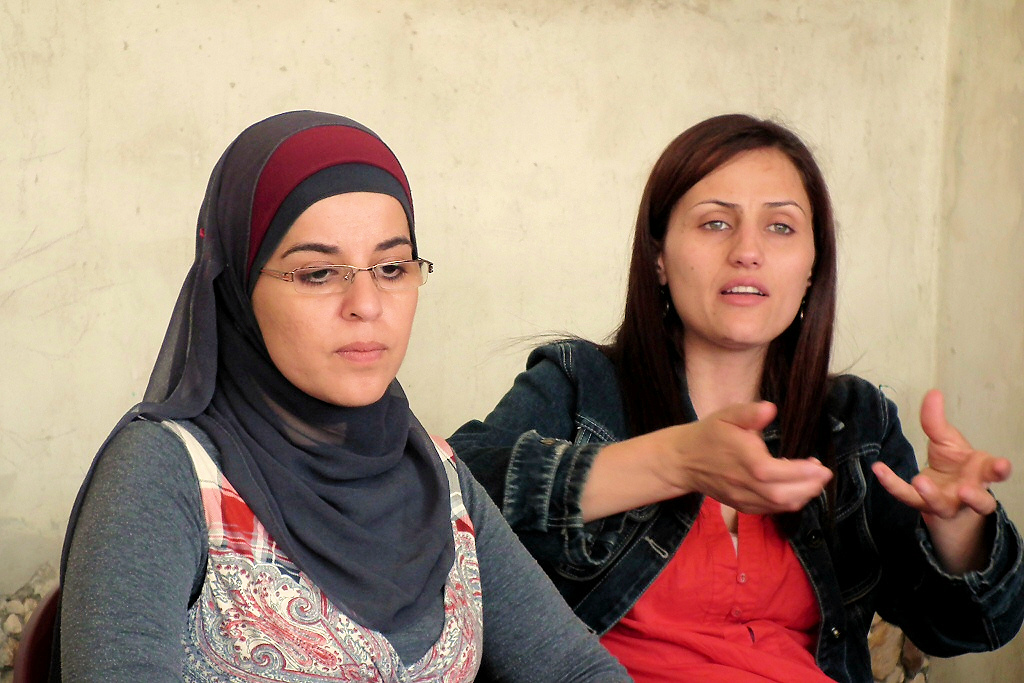
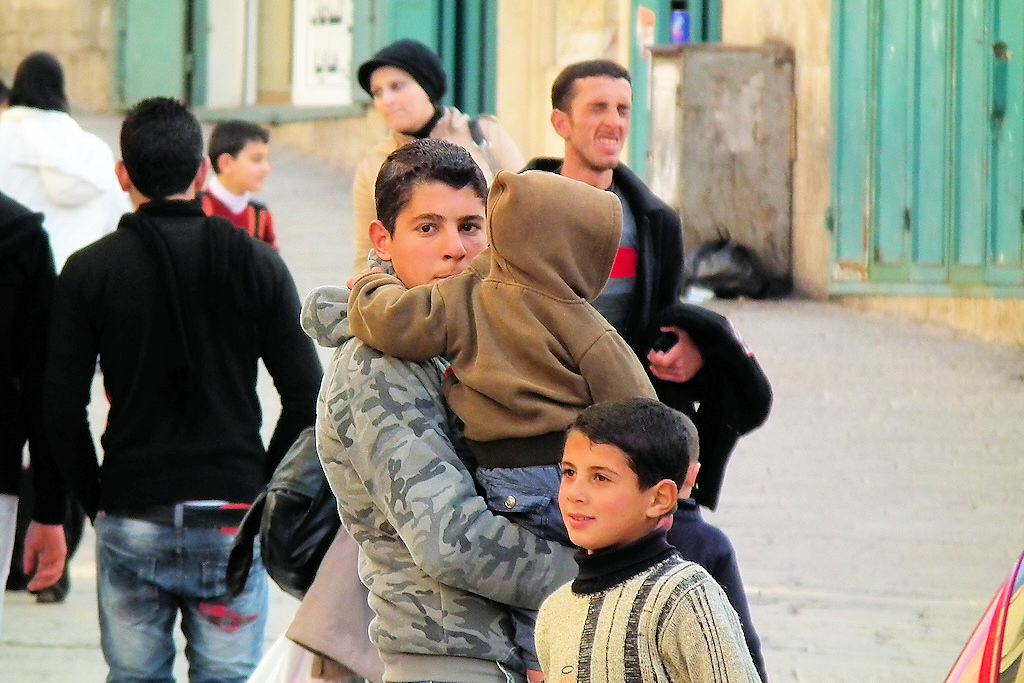
Maram Issa (right)

That didn’t stop me waking up at 6.30 the next morning. I’m not sure why I’m waking up so early at present. But it permitted me to rise and process my photos, posting them on Facebook – and the ‘likes’ started rolling in. I had breakfast and waited for Maram, who was picking me up at nine. By ten, having filled time and had a conversation with Mohammed, the school’s educational director, I rang Maram. Oh dear, car troubles. A taxi arrived to pick me up, then a call came to say hold on to the taxi and stay there – we’re coming. Ibrahim’s car soon arrived and Maram and I bundled into the taxi while Ibrahim went into the school, lugging his laptop, bag and bundles of files.

Off we went down the main road toward Hebron. The area south of Bethlehem is interesting because Israelis and Palestinians live quite intermixed with each other, unseparated by the separation wall. This area lies inside the Green Line, the official boundary between Israel and Palestine. This is a collection of Israeli settlements called the Etzion Bloc, interspersed with old Palestinian villages. Or perhaps the other way round, since the Palestinian villages have been there far longer. It’s quite a green, agricultural area.

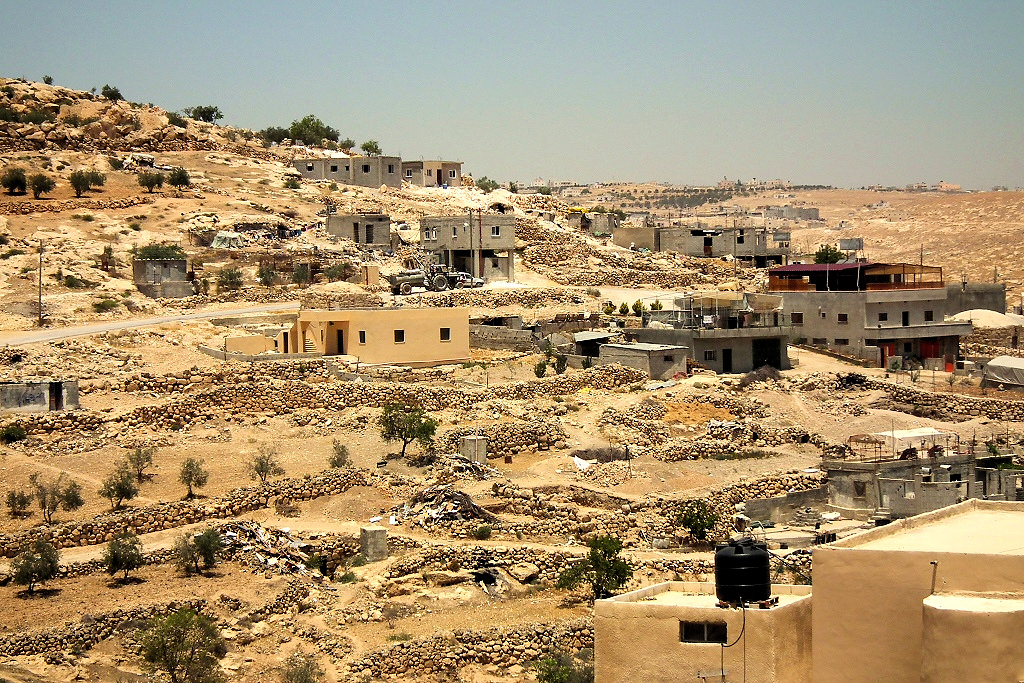
At Tuwani

We proceeded around Hebron, the third largest Palestinian city after East Jerusalem and Gaza City and the biggest in the West Bank, past Qiryat Arba, an Israeli settlement outside Hebron, into a hilly, rocky district that turned browner as we drove south. This much-disputed area is where the most assertive wing of the Israeli settler movement is, stage by stage, staking out its claim, and where many of the most outrageous settler atrocities take place. We were heading for a village, At Tuwani, where resistance to settlers is strongest. It’s also the place where the women’s embroidery project is located.

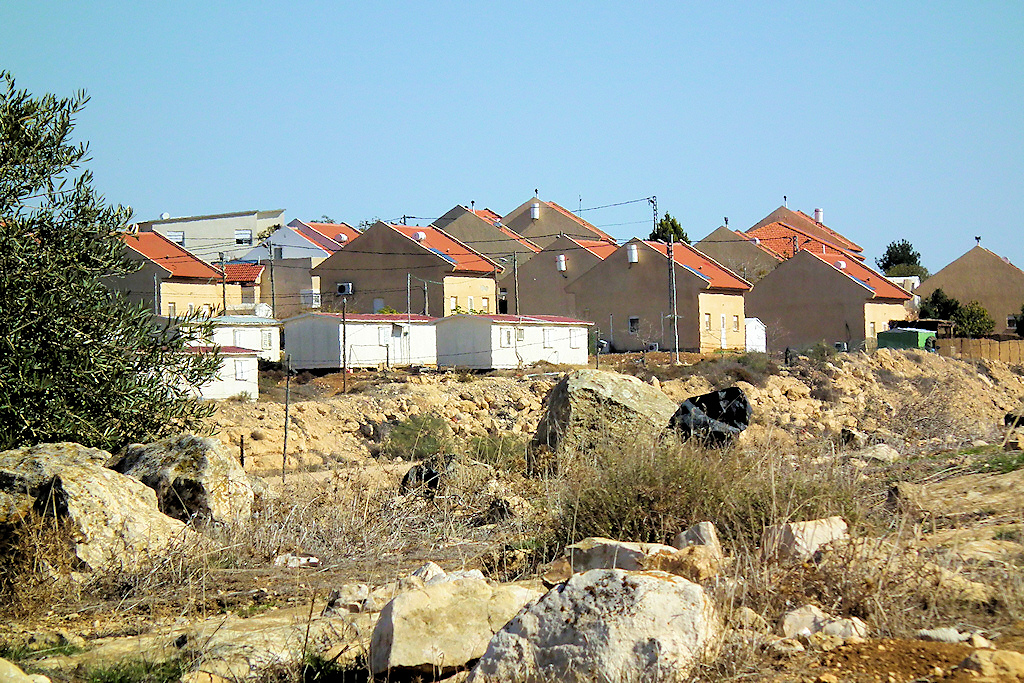
The settlement of Ma’on

As we neared the village Maram pointed out several Israeli settlements, such as Karmel and Ma’on, which periodically crop up in the news, home to some of the most assertive settlers that exist. They’re so aggressive that many Israelis disown them, and the Knesset (Israeli parliament) uncharacteristically declared these settlements illegal. That made no difference. This said, a schizoid situation holds sway whereby the Israeli government pays for the building of the settlements (with American money), and the army makes symbolic gestures to clear them, to respond to foreign pressures, while actually reinforcing them and doing donkey-work for them – such as clearing Palestinians off land the settlers want, helping destroy trees and farmland, and ‘defending’ settlers whenever Palestinians push back.

There’s a double American involvement here. American money supports these frontline settlements, and many of the settlers are of American origin. But on the other side, Americans like Whit help the Palestinians, as also do American humanitarians such as the Christian Peacemaker Teams, who accompany and protect Palestinians in risky situations. America fighting against itself in foreign lands? The West plays a strange double game, advocating peace and supplying weapons at the same time.

Whit

We attended a meeting of the women. Whit and Paula were with some of the women from Jaffa and the Israeli production organiser – a nice lady who sits in the more enlightened and principled sector of Israeli society. Whit spoke, various of the ladies spoke, I added my bit and a Palestinian activist spoke.

Then the activist took us on a tour. He first explained the situation. This was tragic stuff. These are old villages going back centuries. The people of Tuwani are simple folk, many of them illiterate. For the last twenty or more years they have been under pressure from the settlers, who have been chopping down olive trees, burning farmland, demolishing the local mosque and quite a few houses, beating up farmers and children, blockading the village and generally making life hell for the villagers so that they leave. The Israeli army has played its part: army units down here are filled with nationalist settlers, opting to be posted here to reinforce the settler incursions.

But the villagers aren’t budging, even though they have put up with a lot over the years. One of the things that makes the settlers pressure the villagers of Tuwani and equally makes the villagers resist them is that two mountain tracks lead through Tuwani to a number of other villages. If the settlers close down Tuwani, those other villages die too.

The men of Tuwani

We were taken up a rocky, dry hill – the trees had been burned down and uprooted by settlers – to see the settlement of Ma’on just over on the other side, a half mile from the village. This settlement was planted on the villagers’ own land. An outpost of caravans in the trees, away from the settlers, was pointed out – apparently these settlers were so radical and insistent that even the settlers of Ma’on had thrown them out.

Whit asked the Palestinian activist how he had got involved. The activist explained how, when he was young, he had witnessed his mother being beaten up by soldiers. Running to rescue her, he was peppered with bullets from settlers and troops, who shot around his legs as he ran. Later he got his mother to hospital. She told him not to be angry and fight back because she would then lose him – he would lose his life or freedom. He asked her what he then should do. She said she didn’t know, but please find another way.

So he studied and adopted non-violent direct action, eventually moving down here once his mother died. He was joined by the Christian Peacemakers and some Italian Catholic activists. I met one Italian who had been here two years, with whom I discussed the stresses and strains of regularly going back and forth between Palestine and Europe and interfacing two very different worlds. It was a brotherly sharing.

He said his time in Palestine was coming to an end because he wanted to get out before he was blacklisted and thrown out forever – and he needed to go home to earn money. As it was, he was here on three-month tourist visas, leaving every three months, returning to Italy for a month and then coming back – but this ploy wasn’t going to last much longer. He was sad about that. We commiserated about how we both had fallen in love with our friends in Palestine, missing them when we were away, yet neither of us could move here.

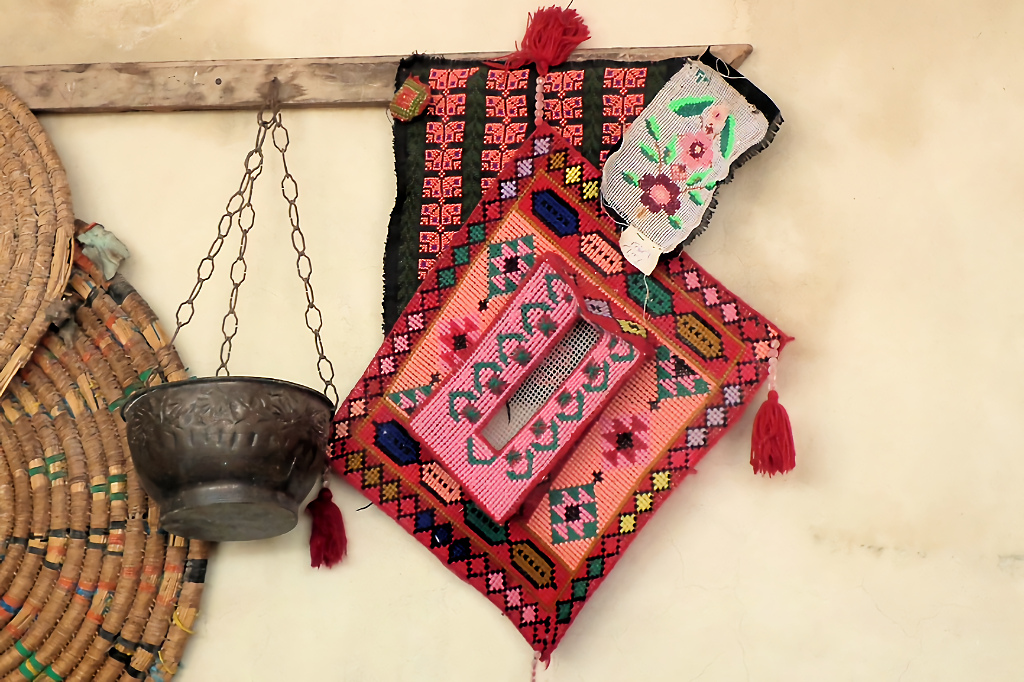
The villagers gave us lunch – far more than we could eat – and showed us other items of their work. Lovely embroidered dresses, bags, belts and other things. I bought a dress for each of my three grown-up daughters, crossing my fingers that the dresses would fit them and suit their tastes (in the end, I’m not sure they did). They weren’t suitable for ordinary wear – they require a graceful style of moving that doesn’t work in the West – or for party wear, but they’re useful for pottering around the house in a relaxed, off-duty kind of way. All of the money would go to the village women: as a foreigner, one must do judicious spending with a view to helping people stay alive.

I would have liked to stay longer, but by mid-afternoon it was time to go – Ibrahim had come to pick us up. I was sad to leave these people – they need reinforcement, interaction and solidarity. But my duties lay back in Bethlehem with Hope Flowers. So we cannonaded up the road past Hebron and I was dropped at the school. I took a break in the late-afternoon sun on the flat roof of the school, reading. Then back to work.

I was nearly half-way through my month-long stay. It was going to be challenging to finish everything. There were friends to visit too, in Hebron, Jerusalem and Jenin. Ah, time: I was reminded of its passing by the outbreak of the calling to prayers from the local mosques. This isn’t just a religious thing: it’s the way Muslims section up their day. Even I, an infidel Westerner, time my day by the muezzins’ amplified chanting – the calling to prayers divides the day into periods which, in this climate, work well.

The previous night, as the eclipse gathered strength and the world went quiet, one muezzin was chanting the ninety-nine names of God. I guess it’s ninety-nine because the hundredth is beyond expression. These ninety-nine names describe divinity in all its aspects. There is, to Muslims, but one God, with no other complications – no sons, holy ghosts, angels or cherubim – just Allah, with ninety-nine facets. By the way, Arab Christians, the very earliest of Christians, use the term Allah as well as Muslims – it’s not uniquely a Muslim term. And it is pronounced Al-Lah. The God.

As I concluded writing this piece, a donkey called out in accidental synchrony with the muezzin, croaking plaintively, reminding people it was there. Or perhaps this was Allah’s ninety-nine names elucidated in donkeyese. Great Spirit expresses itself in remarkable ways.

I wrote this piece while working at the Hope Flowers School in Bethlehem in the West Bank 12 years ago. Here’s the school’s website and here’s a piece I wrote about Hope Flowers and its history and background. For my 2012 book Pictures of Palestine – a humanitarian blogging from Bethlehem, go here.