Ancestors

and taxiing toward the runway

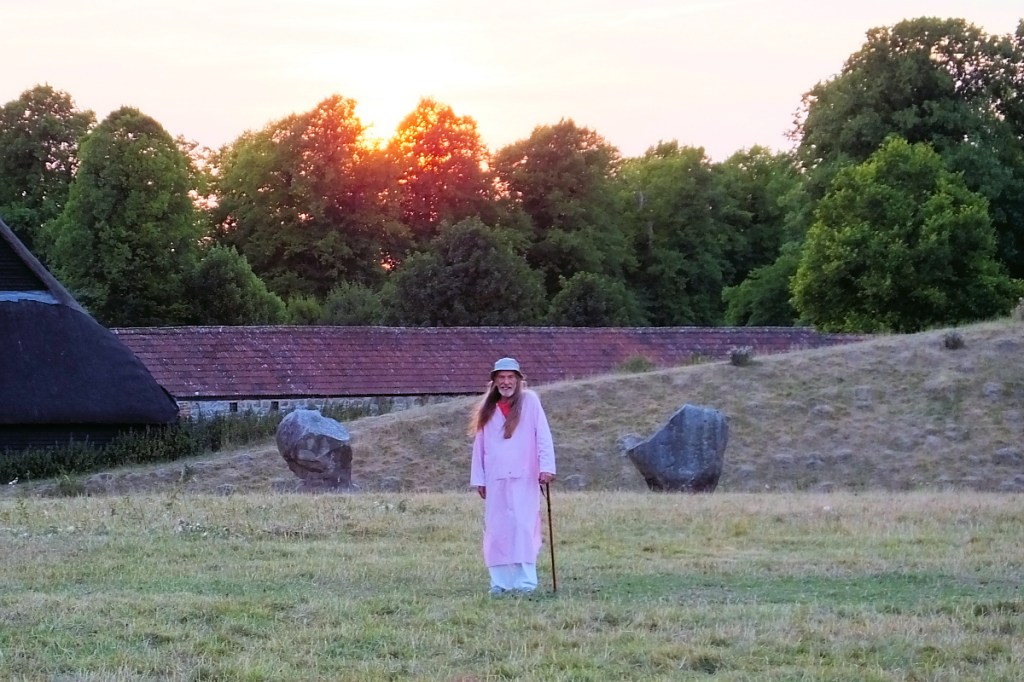
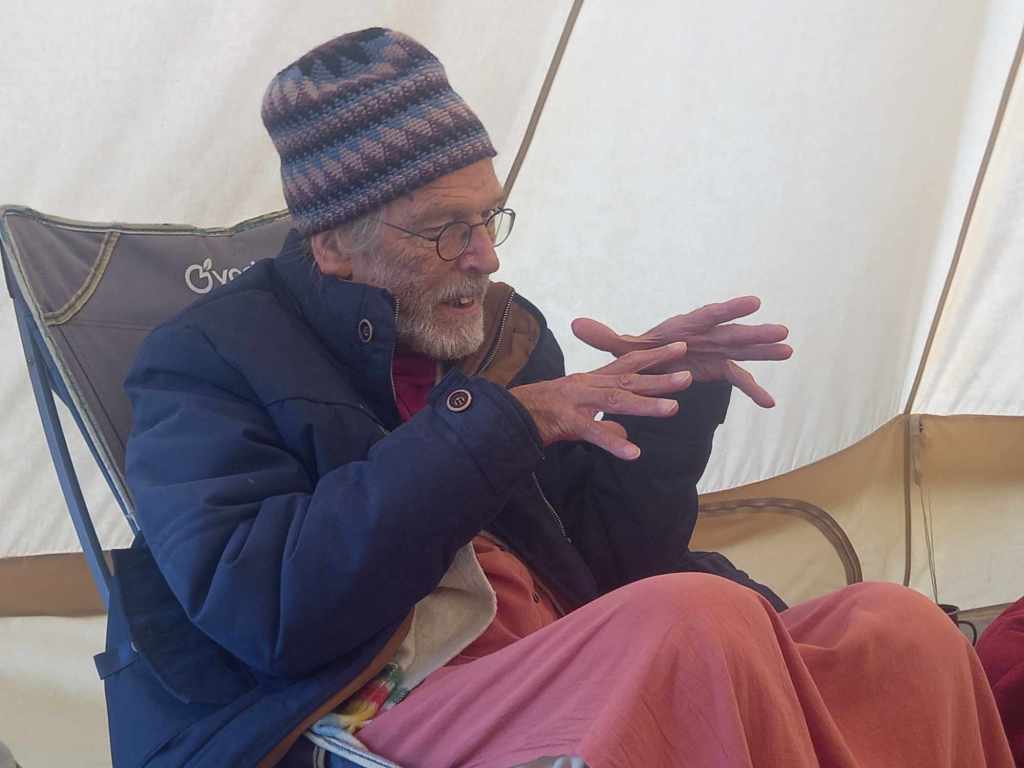
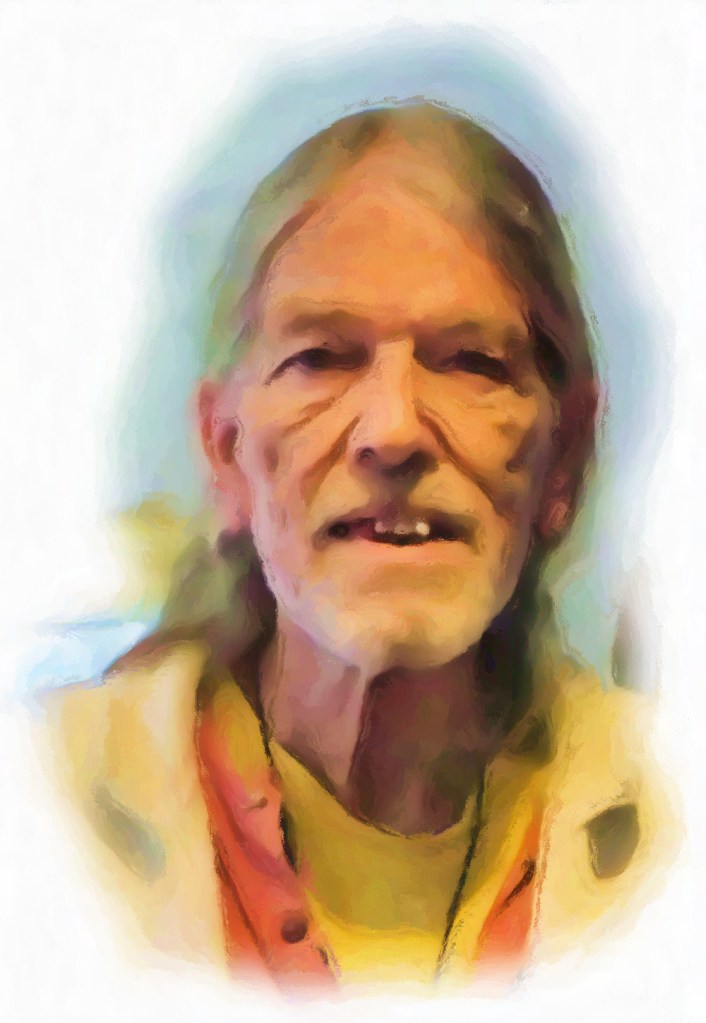
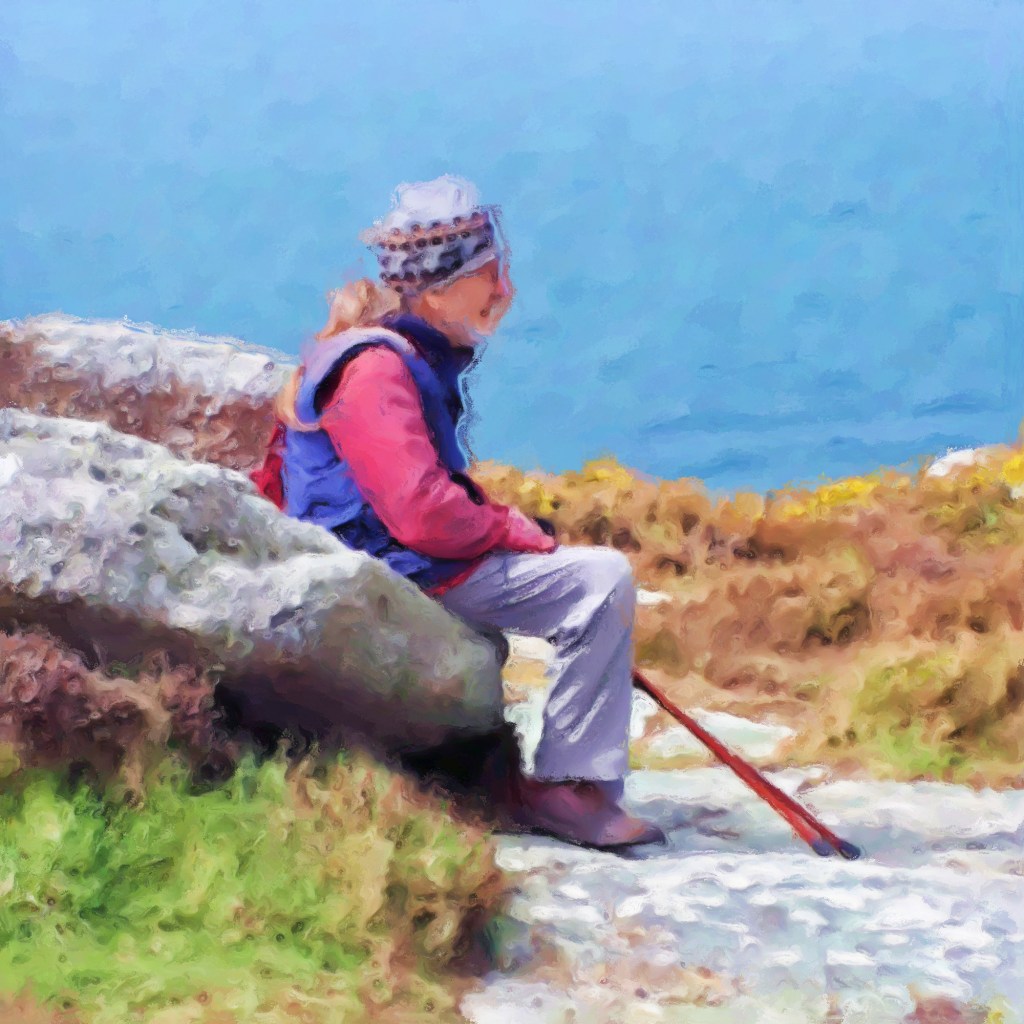
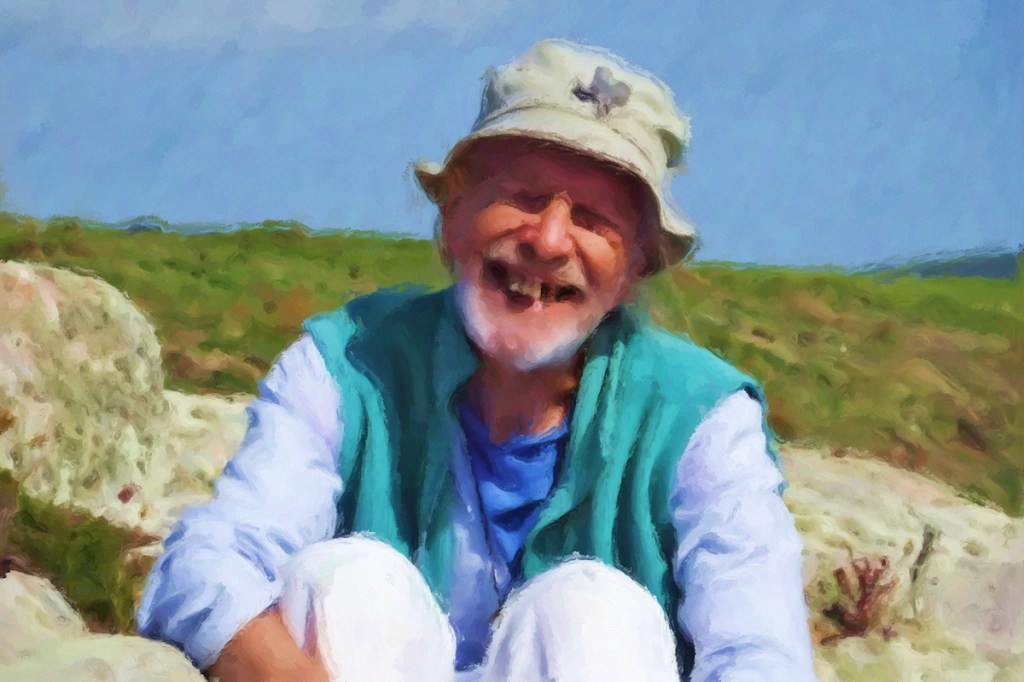
Pics in this blog are of my father, Julian Jenkins – no longer on this Earth. Here he is, noble at his wife’s, my mother Ruth’s, funeral

I’m getting a feeling that, unless something changes or I’m getting things wrong, it might not be too long before I join the ancestors. That’s not a heavy feeling – there’s a dawning sense of relief to it. Of course, you never get to know when and how death will come, until it actually happens. So I’m faced with rather a strange choice: is it best to talk about this while I can, in case I keel over quite soon, or am I overdramatising something that is not actually imminent?

There is indeed a feeling of migration going on, a gradual shifting from here to there which, at some point, will mean that my heart stops pumping. The time will have come to go over to the otherworld – whatever that lands up truly meaning.

But the otherworld doesn’t start there. I want to return to a thought I shared a couple of years ago, about dying. Dying is a gradual psycho-spiritual process, and every one of us is dead to some extent, at this very moment. You might be only 10% dead, but part of you is over there. I’d estimate myself to be 80ish percent dead at present, up from the 70ish percent of a few months ago – though it’s a non-measurable perception.

Whether or not you’re aware of it, your psyche is much more bendy, pulsating, edgeless, multilevel, imaginal, transdimensional and empathic than you think. We’re addicted to the idea and the feeling of individuality, as if there is a clear boundary between what is me and what is not me, when actually there isn’t.

Julian at Castle Rigg stone circle, Cumbria, in his final years

Part of our deeper psyche oozes over to the other side, and on a more regular basis than we might think. This happens especially when a loved one, or a person who is important to us, dies. Part of us goes over with them, and it’s important to give time and space to experience that. It’s a blessed, spacious feeling, and a great gift. That feeling of inner connection with a deceased soul can be quite strong in the first few weeks. Over the course of a year, that emigrant soul will come back clearly at times. You get a flash of them – if only a glimpse – and you feel them and their vibe quite distinctly. So listen and talk back – this is important.

That’s how it works with ancestors. Early in human history, when we lived in genetically-defined tribes, souls would tend to recycle within the tribe’s psycho-spiritual field. We modern people have now burst out of our tribes, seeking experiential variety and following a multiplicity of possibilities. Both genetically and as souls we have become remarkably mixed and mongrelised. We’ve been at it for millennia.

But there are also specific threads that pertain to our own personal life-stories and interpersonal histories. People in our past have acted as beacons of light, rescuers, enemies, teachers, harmers, questioners and friends to us, and they live within us now, and it’s a personal thing. Or it might be a tribal or group-soul thing – a concatenation of souls with a shared identity and purpose.

Ancestors continue to live through us. They watch and witness from another place, sometimes lending a hand or dropping thoughts into our heads, or acting as an element of memory, as a model of how to do things, or how not to do things, that helps us shape the lives we live now.

One of my key guiding ancestors was a man who was alive in the mid-19th Century in South Wales, where he was well-known as a healer of last resort. Doctors would refer patients to him if they felt they could do no more. Apparently he was a curmudgeonly, difficult old git, with a big, white, Karl Marx beard, though he had a glint in his eye too. At times he would disappear up into the mountains on his horse, leaving the world behind, to collect herbs and spend time on his own. Yet he was gifted with a wondrous ability. He would reappear, back from the mountains, and people would come to him.

I first met him, inside myself, when I was young, during an inner journey on my third acid trip, in 1967. Over time he has returned, as if watching me, especially at critical points in life. It took some years of questioning relatives to find out who he was. He had been an embarrassment to the family, so he was not well remembered. But he was well-known and he did apparently save a lot of lives. He still turns up on the movie-screen of my psyche every now and then, and he’s both a genetic and a spirit-ancestor to me. And I am a bit like him too.

In this life I’ve been involved with large numbers of people, organising events, running groups, standing on stages, muttering down microphones, writing books and building websites, connecting deeply with many amazing souls. I’m aware that, having played a catalytic, key-turning role in many people’s lives, that makes me a kind of spirit-ancestor to at least some of them – once I’ve popped my clogs, that is.

So, after I’ve gone from this life, please do remember to check me out every now and then. Or if you find me checking you out, please do say hello. See whether there’s a message in it for you. I’ll pop up in your thoughts for a micro-second, and you’ll get a distinct feeling of me that comes with it.

Adventuring

But it’s not just that. This is a two-way thing. Being up in ‘heaven’, lacking an earthly body, it means that, if we ancestors want to get stuff done on Earth, we need to get people to do it on our behalf. This gets tricky. Modern humans suffer doubt, thinking that such thoughts are ‘just imagination’, and setting them aside. This can be frustrating for a soul on the other side: try talking to someone on Earth and they just ignore you and walk away! However, we can meet you in your dreams, and sometimes such interactions percolate through into waking-life – into what we call consciousness.

One of the things I am glad about is that, throughout life, I have often followed these promptings. I wake up with a feeling, an inspiration or a compulsion to do something, big or small (this blog about ancestors being one example), and I feel driven to do it. There’s a certain magic that comes with such downloads, a feeling that the prompting points towards something that is genuinely supposed to be. The outcomes from prompts like this can be much bigger than anticipated too.

Acting as an ancestor is rather a choice and a commitment. It’s a resolution to be available and of service to souls who remain in the land of the living, and service to the universe’s wider agendas. You don’t automatically become an ancestor just by dying: it’s a choice to be present, accessible and involved.

It also depends on how others see you, as a sort of role model or example. On some level, and whether or not people are conscious of it, you become a star in their inner firmament. You become a watcher. You cannot interfere, though you can lay seeds of possibility and simply be there for people.

Here’s the main reason I’m dwelling on this. From an earthly viewpoint, my health and condition have been deteriorating in recent months. I find I’m becoming less focused on, and interested in, the world around me. More often, I find myself floating off and disengaging, interiorised and seeing the world more like an outsider, once-removed.

I remember this when my Sagittarian father was in his nineties. I’d take him on adventures – he liked that. He would fall asleep during the journey but, when the engine stopped and he awoke, there before us would be a panorama over the mountains or the sea. We’d sit there sharing a flask of tea, sometimes going for a slow walk. Or I would go for a walk and he’d fall asleep. I was giving him a last look at the world, and we’d visit some of his favourite places. He died over a decade ago, but we still nod and wink to each other across the dimensions. Those were valuable moments.

We certainly are multidimensional intelligences, and this becomes more and more apparent as we approach death. Except, as intelligences, we don’t always use our full intelligence. Jean Piaget, a sociologist, once said, ‘Intelligence is not about what you know, it’s about what you do when you don’t know’.

Indeed. This is the story of life on Earth. It’s a life filled with paradox and improvisation, and we each have a different instruction manual and a unique experiential path to follow, just to complicate things.

I’ve just begun revising my cancer book, Blessings that Bones Bring – it needs to be shortened and sharpened. The book is a distillation of relevant material from my cancer-and-life blog, Notes from the Far Beyond. It’s in both digital and audiobook formats.

Next there is a question of how to end the book, since a cancer story, in my case at least, ends when I die. However, I’m not dead yet and, after death, I won’t be able to write the final chapter. That’s one of those paradoxes. I haven’t figured out what to do about ending the book, but something will work out.

So that’s my project for the next few weeks – apart from getting through each day. At this late-life stage, it’s a matter of completing what I can of the flapping threads of my life, while I still can, even though existence is twice as difficult as it used to be before cancer along.

I hope this rather rambling blog makes some sense. Perhaps I’ll return to this ancestor theme another time. I might be losing the plot, going off at tangents, but something else is dawning inside. In the land of the living it looks as if things are going wrong and I am deteriorating, but in the land of the soul something new is starting up. Or perhaps I’m getting a re-training in how to function in the rather rarefied consciousness-realm where ancestors spend much of their timeless time. I wonder if they serve good tea there?

This doesn’t really feel like a journey into the Great Unknown: instead, it feels like going home. It was this life that was all about the Great Unknown – a life in a world where we drive bulldozers through the laws of the universe. We flail around in the choppy seas of earthly experience, bumping up against things and people, struggling to make sense of a pervasive fiction that we call ‘reality’. However, at the end of it we are permitted to go home, and our bruises and wounds are attended to – if, that is, we allow it. If we don’t allow it, we start our next life carrying the baggage, hurt and aberrations of the life or the lives we had before.

Meanwhile, if you’re in the mood for some seriously moving rock’n’roll, here’s a remarkable musical rendering of the dying process, in a Christian cultural context: Gabriel Fauré’s Requiem
https://www.youtube.com/watch?v=aPI3E0Sxs0E

Love from me, Palden

————————

Interesting click-clacks:
+ Cancer book, Blessings that Bones Bring (original 2024 version): https://www.palden.co.uk/boneblessings.html
+ Blog, Notes from the Far Beyond:  https://penwithbeyond.blog
+ From the AHA Class, a talk: Getting Dead, and What Happens Afterwards: https://www.palden.co.uk/ahanotes-dying.html

Gone, gone to the far beyond

An Insight

I’ve been a geopolitics buff all my life. And up came an insight last night, to share with you. It’s this…

My adopted Akan granddaughter, Adjoa Kenobi Otoo.

Forget China. Yes, it is taking over from the industrial countries of the Global North but this is because, after its Century of Humiliation, it needs to return to its proper historic status – as the Middle Kingdom.

There are things that Europe and America have failed to do, as a result of our own limitations, materialism and vested interests. China is taking them over, to take them to their conclusion.

We in the West have lost our vision and seek now only to hang on to what we’ve got – and that’s no vision.

Such a transfer happened before, around 1890-1920 when the impetus transferred from Europe to USA. It is now transferring to China and the Far East, but this is temporary. It will last a few decades only, since they too have their limitations and, like us, they’re getting old.

For genuinely new things to arise, young people are needed. In large enough numbers to turn the tide and overcome the resistances of oldsters.

This is what happened in Euro-America in the 1960s, when an enormous cultural change became possible, because of the sheer numbers of young ‘boomers’ – but it was suppressed, and the West ran back to material and military security.

Where are these young people now? Africa.

By the end of this century, Africa will be the place that defines the world’s direction. This will not be about technology and economics. That’s the old stuff, which China is bringing to its proper conclusion. But China is growing old too.

The African future is cultural, ethical and it concerns people. It will address a problem that the West could not solve:

Do people exist to serve the System, or does the System exist to serve people?

It is likely that Africans might be able to bring planet Earth to the state where it becomes a ‘light-space vehicle’, falling into line with what The Nine were alluding to in my recent posting titled ‘Imitating Mountains‘, a few days ago.

We need to take ourselves and our planet in hand. We need to become truly human.

This might just be so, with Africa: it is a glimmer of possibility. However, the future is not written, since we humans are the authors of it, and we’re a capricious and thoughtless lot, as a whole.

“Take me to your Leader.”
“Um, no thanks – that’s no solution.”
“It’s okay, we know.”

Don’t get caught up in the urgent stream of daily events. Step back and look at what’s happening behind and underneath. Listen more closely to Things than to people. Think less about yourself and yours, and more about all of us, and ours.

Forget World War Three too: don’t buy into the logic of destruction. It will destroy you. Stay tuned to the logic of reconstruction and rebirth. There lies a future.

Think about it.

With love, Palden

Imitating Mountains

Last week I was ready rather early for the meditation, so I took down a tatty old copy of The Only Planet of Choice, opening it at a random page, and this is what emerged. This is Tom, the spokesbeing for The Nine.

And, a note: in this piece from the 1990s, the Nine are not talking about this year or next year – they see human history as a wide sweep of time and experience. And we live in historically critical times of global inflection.

————————————–

TOM: Now we are moving into the period that begins the solidification and cleansing. In times past souls upon your planet Earth refused to leave it, and through your conflicts they continued to recycle, as you recycle your trees. Your recycled trees have usefulness, but the soul-recycling of humankind does not create usefulness – it creates a bottlenecking of forwardness.

You now have come to a time in which those who make transition [die] – those who do not fulfil what they have come to fulfil, such as those who make transition in accident and in war, or those that create their own transition through suicide, or through a form of devastation by accident or tragedy – those live now in a different realm.

Souls who have now transitioned from war and from accidents and tragedies have now been taken into other, higher evolutionary states for releasing of that anger and despair. Therefore there will not come a recycling of souls of this kind, that have kept planet Earth in bondage, through their hurt. This has come about because of the awakening of humankind to the reality of where it has come to. You are at the beginning of finding your divinity within.

Humankind is now moving forward in increased unification, and in bringing about the ending of conflict and aggression – the world conditions that create the situation of bondage. That does not mean that there is instant change, but change has begun its great movement forward. This is shown by the unification of nations that now understand that the destruction of one nation is in reality the destruction of all others, and the beginning of all destruction: the destruction of vital elements upon your planet Earth affects all. It is a time to be in great joy.

There are times when one would feel despair that there is not forwardness: what is necessary now upon your planet Earth is for each of you to understand that you contain within you that element, that cell, that atom, that molecule, that soul-part of you that is a part of the Creation and the whole. You in your evolution can create the energies necessary, by yourself and with others, to stop further destructiveness.

In times past it was religion which led planet Earth, and religion served its purpose, but now it is you, the peoples of planet Earth, that speak. Be joyful for this and do not feel burdened with it, as some of you seem to do. It is not a perfect time, but it is a time of greatness, and we are in gratefulness to you humans who are positive – for it is necessary for the fulfilment of planet Earth for us to be in partnership with you.

We find great joy for the youth that are coming to Earth in this time, and who have come in the recent past. They are coming with the full understanding that they serve a purpose. Those who came and did not understand their purpose, it is now being revealed to them.

Most people have been upon planet Earth in times past for learning. In this time many people have come to benefit planet Earth in conjunction with us, in service. Many of you come from higher evolutionary levels of other civilisations that work in total peace and harmony with each other. The civilisations have enjoined with all who are bringing planet Earth to its rightful direction.

Each of you humans contains the essence of what you term a star. You have existed in all eternity and will continue to exist in all eternity.

Understand this, and the responsibility that goes with it, but understand it in joy, not with fear or despair. Do not flagellate yourself when you make an error, but move beyond it, and remove and peel off that shell and let another light of yourself come through.

When you are in the presence of others you emanate an energy of light that touches and begins their awakening also. When you create jello [laughter] in the universe, you create great energy and the release of what you term ‘darkness’, and the removal of what sticks in holes in darkness. Each of you humans is like a jellobean. Is there a jellobean?

LARK: Jellybean. TOM: Is it wobbleness? LARK: It’s very sweet too.

TOM: Then people like you are sweet. Yes. Believing that darkness rules you is an escape from responsibility. It is the way it is because humankind created errors.

It is time for humankind to begin to understand who you are. You affect the universe. The days of destruction and of saying ‘that is their problem’ must end, for it is not a responsible way to think.

Bring the beginning of elimination of human accidents that entrap the soul in a non-functional vehicle [disabled or injured]. Do you understand?

JOHN: Could you elaborate on that please? What is it that entraps human beings?

TOM: If there be embattlement [war] and one is entrapped in a body that is injured, then that spirit-soul becomes angry. Then it serves not the purpose it came for. If there be entrapment in the mind through ingestion [of drink or drugs], if it be deliberate or an accident, then that mind cannot fulfil its desired function. Then that energy of despair is like an out-of-beat note. It then needs special love and energy, and to begin the elimination of what causes that. We have confused you now?

JOHN: I think you’re talking about those people who are damaged either at their own hand or for other reasons that are out of their hands. And that those problems must be eliminated so that the soul can live its purpose.

TOM: Yes. And they need help to remove anger. It must be in your meditation that you wish for this. Also include the intention of permitting nations and each group of entity-souls to be allowed to be who they are, without being forced by another nation that would wish to control them. Then will peace really begin to come to your planet Earth, and it will begin to be the paradise for which it was created. Yes.

It is important for humankind to understand its responsibility, and what responsibility is.

Your humankind, in all aspects of its religious life – which has not supplied the understanding – is searching for the elements of its beginning and its purpose, the strength of its connection and who its people truly are, in their being.

We are on a path of upwardness. What now is important is the elimination of involvement with terror and violence, and the non-permitting of them, so that planet Earth may begin to emerge in balance. If you concentrate on the removal of terror [whether by terrorists or by states], then you will also see that the peoples of planet Earth will not tolerate corruption and other means of harming others. In eventuality humanity will become correct. Therefore it is the time of the beginning of this emergence. Yes. Is it not joyful?

Tom is reporting an underlying upward longterm trend. There is something we can do to help, and it relies on us to keep this movement going. We cannot rely on others doing it for us. This is an important time to be alive. Light can be seen at the end of the tunnel. Change is happening in our time. In a few centuries, when looking back at this time, we might well feel honoured to have been a part of it.

———————–

Then, propped up in bed, I did the meditation, or it did me, and all was well.

If you’re wondering what this Sunday Meditation thing is, the times are below and the details are found by click-clacking here:
https://www.palden.co.uk/meditations.html

Love, Palden

For more about The Nine, try here: https://www.palden.co.uk/nine.html

———————

Current meditation times, on Sundays:
UK, Iceland, Ireland & Portugal: 8-8.30pm Sunday
W Europe: 9-9.30pm
E Europe, Turkiye, the Levant, Egypt: 10-10.30pm
Iran: 10.30-11pm
UAE: 11-11.30pm
Pakistan: midnight-00.30 Monday
India: 00.30-01.00 Monday
Oz: AEST 5-5.30am Monday
NZ: 8-8.30am Monday
Greenland: 5-5.30pm Sunday
Brazil, Argentina, Chile: 4-4.30pm
EST, Venezuela, Bolivia: 3-3.30pm
CST, Colombia, Cuba, Jamaica: 2-2.30pm
MST, Mexico: 1-1.30pm
PST, West Coast North America 12noon-12.30pm Sunday

A seal at Porthgwarra, Cornwall

Funny How Things Go…

Early in 2020 I wrote this prognosis, about the 2020s and subsequent decades…

The 2020s. Here we see a social turning-point brought on by weaknesses in the economic system, and by environmental and social pressures. It will be a decade of people, crowds and society, where human principles rise and profitability considerations decline as primary determinants of events (Pluto moves into Aquarius for 16 years in 2024).

The big issue will be people and social control, migration, social movements, progressives versus resisters, and a battle of ideas. The broad consequences of inequality, globally and domestically, will be critical.

Behind this a new mindset will grow that is both idealistic and pragmatic, local and global, driven particularly by younger people – in much of the world the majority generation. Ideas that once were left-wing become pragmatic.

The 2020s will see waves of crisis emerging, of which Covid and its wider cascading effects was the first. By 2025-29 this is likely to reach what seem at the time like avalanche proportions, forcing increasing unpremeditated systems change.

Astrologically, it’s a triangle, Uranus sextile Neptune sextile Pluto, from Gemini to Aries to Aquarius, all about ideas, communication, innovation, principles, multiplicity, pluralism, throngs of people – and the data and surveillance powers of digital corporations, governments and background operators.

It will be a challenging, struggly and also exciting time, with a full panoply of global issues coming at us – feeling at times like an overload. A time of creativity, change, emergence and acceleration. Busy, noisy, a happening time. Astrologically, the time of Elizabeth I and Akbar the Great provide an historic precedent, another being the decade leading up to the American and French revolutions.

How this plays out depends on the world’s responses – resisting or adapting to change. Both will be the case, but which of these predominates will be a critical issue. Amidst this, a florescence of ideas, solutions, innovations and discoveries is likely. The Millennial generation will be taking power – a big issue in the developing world, which will increasingly determine the world agenda.

China will be counterbalanced by alliances of mid-sized powers and continental blocs (Africa, Latin America, SE Asia, Middle East, India, etc) and a geopolitically confusing period is likely.

There is a risk for conflict and other hazards (‘mad dictators’, tech breakdowns, social chaos, mass migration, economic pressures, climatic events, environmental criticals), but there is an equal risk of positive breakthroughs (enlightened leaders or social movements, social breakthroughs, new ideas, reorientation of resources, etc) – and we could see both.

It’s an eruption of a new landscape, a new realism. The momentum of change will accelerate, though this will likely lead to several decades of insecurity, complexity, shifting socio-economic patterns, disruption and systems problems, with positive changes emerging rapidly too, crisis-pushed.

The whole article is here: https://penwithbeyond.blog/2020s/

and if this subject interests you, you’ll find details and charts here, in the Historical Ephemeris: https://www.palden.co.uk/ephem/6-global.html

Love, Palden

Rock Sea

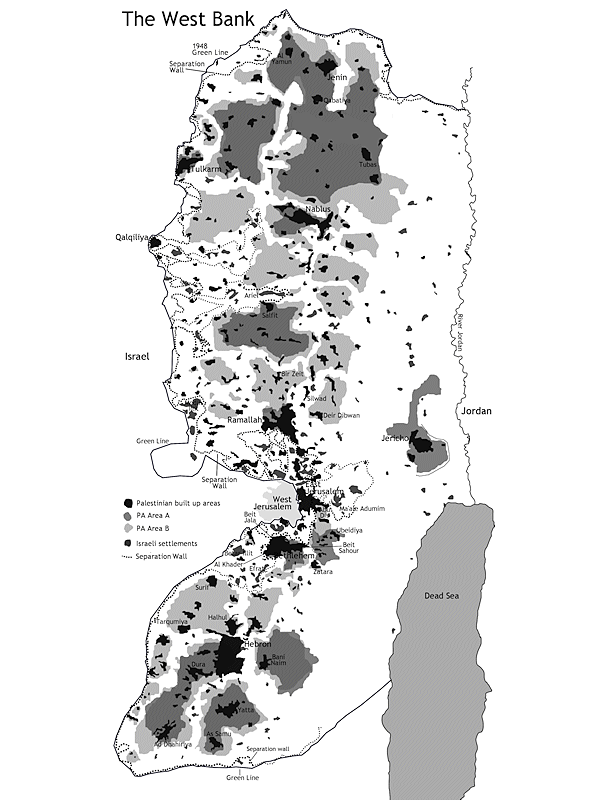
Back in 2012 I was doing a tour of duty in Palestine. I didn’t know it at the time, but it was to be my last. After that I was visiting Palestinian refugees in Syria, who were in an awkward situation regarding the Assad family’s ultimately self-destructive habit of shooting at their own people.

Rock Sea Camp, near Nuweiba, Egypt

The Assads had been good to the Palestinians, but the Palestinians could not accept what the Syrian regime was doing. That put them in a politically awkward situation. So, at the request of some Palestinians in Bethlehem, who could not visit their relatives in Syria, I went from Amman in Jordan to Yarmouk refugee camp near Damascus to help with some awkward issues they were facing.

This was early on in the Syrian civil war in 2013-4, when there were about 5-6 parties slugging it out. You couldn’t tell who was shooting, or who the next checkpoint belonged to – it was a nightmare. It was a matter of staying calm, being friendly and hoping for the best – it worked. I’m good at that and, as proof, I’m still alive.

Anyway, while in Palestine I had to leave after three months because I had only a three month tourist visa. I had to leave and then re-enter – a rather dodgy business. So I caught a bus to Eilat in the far south of Israel, over the prickly border into Egypt (the Israelis give you a harder time when you’re leaving than when you’re entering), and then I hitched a ride in a Bedouin taxi down to the Rock Sea Camp.

While there, I wrote this blog entry, called ‘Lost in Arabiyya’:

https://www.palden.co.uk/pop/arabiyya.html

Rock Sea was a camp by the side of Red Sea, not far from Nuweiba, filled mostly with Europeans. https://www.rocksea.net They mostly flew in from Europe via Sharm el Sheikh – Egypt’s big tourist resort on the Sinai peninsula.

I went there to decompress, to think things over, and then to return to Bethlehem for another two months in the rather hot frying pan that is Palestine.

I needed this thinking time because I had been involved in some rather hair-raising events in Bethlehem, and there was a chance that certain people might have been watching me. Not very nice people. The story (as much as I can safely tell it) is here, as an audiobook called Blogging in Bethlehem:

https://www.palden.co.uk/bethlehemblog.html

So this is the short story of what went on for me at Rock Sea, extracted from my third Palestine book, called O Little Town of Bethlehem – Christmas in God’s Holy Land, available online here, for free: https://www.palden.co.uk/pop/order.html

Love, Abu Balden

Arabs can’t say ‘p’ – instead they say ‘b’. Hence that, there, I’m called Balden. ‘Abu’ is an honorific meaning ‘father figure’.

The Slow Demise

of a new age pontificator

I’m moving towards the end of six decades of public speaking and teaching. I feel it in my aching bones and sluggish brains – what’s left of them. My synapses have run almost enough marathons for this lifetime. But I think I’ll last until the end of this year, inshallah. So I’m going to do a few talks and classes during the rest of 2026. That is, if people invite me, and if it’s doable.

I was thinking recently about my capacity earlier in life to hold and convey vastnesses of information and big, wide perspectives. In my audio archive there are talks from thirtyish years ago, and some of that stuff surprises me now. Gosh, was that me? Was it in this life or another? The audio archive is here: https://www.palden.co.uk/audio-archive.html

I’ve always been rather a polymath, covering a range of subjects. A typical hyper-focused Aspergers type, I became a veritable expert in each subject I took on, and subject to occasional bursts of genius. But that’s what I did in mid-life, and now I’m rather a worn out, ponderous old hippy veteran who’s seeing things in more of a reflective way. More transdimensional. But I still have a few more things to share.

I’m doing a talk in Penzance as part of the Golowan Festival around summer solstice, courtesy of an old friend and neighbour, Na Nook. (Info: The Cornish Sacred Landscape.) I’ll be holding forth on the prehistoric society of West Penwith in the Neolithic and Bronze Ages.

This is about the ancients’ worldview, their optic, their magic and their society, as demonstrated in the ancient sites they left behind. That’s fascinating, though what’s most important is that we need to learn from the ancients – it’s growing in relevance today. I’m really happy with the discoveries I’ve made about Penwith’s ancient sites in the last fifteen years. This is a kind of final statement of where I’ve come to on that matter.

As usual for me, it’ll take 20-30 years for people to really get what I’m talking about – being ahead of the times has been both a blessing and a bane in life. Hence, I’m leaving an extensive online archive which, I hope, will stay intact and available for at least thirty years! Perhaps its time will come. In the archive there’s some interesting stuff from the 1990s – some of you might enjoy Paldywan Kenobi’s Millennial Master Class from 1995.

At the JustLiveCamp at Morvah, in Penwith, Cornwall, 23–29 May, a community camp in sacred Cornwall, I’ll be giving a talk about quoits, stone circles and cliff sanctuaries. Chun Quoit is just up the hill from the camp, and I’ll happily transport those who are present on a journey into the Neolithic, 5,000 years ago, to connect with those times – the much-forested times when Chun Quoit and Chun Castle were first built.

If I can, I hope to make a trip around parts of Britain during this year, to see old friends and haunts. As you might gather, my health and mental acuity are approaching a stage where making coherent talks is becoming less possible, but if there are invitations to speak, and if it’s doable (I have to be brought by a driver-minder) then I’ll do my best!

I hope to be able to keep on with podcasts – they’re still doable. Blogs are more difficult because my fingers no longer work well. A lot of people think voice recognition programmes are a solution but, no, they take so much re-editing and correction work that I find they don’t necessarily help. Besides, written English is a little different from spoken English.

Perhaps I need a digital assistant – someone living nearby with networking and literacy skills who would like to manage my online process as I pass away. To the right person this could be really interesting, since I have a large archive of material which can easily be recycled. We shall see. Magic happens – and sometimes it doesn’t, and something else happens instead!

Anyway, here’s a new podcast about ancient sites. I pose the simple question, why do people like visiting ancient sites? We need to look at this question. We need to be honest about a few things. I believe we need to get a bit more serious about ancient sites and what they mean for us now. It’s here:

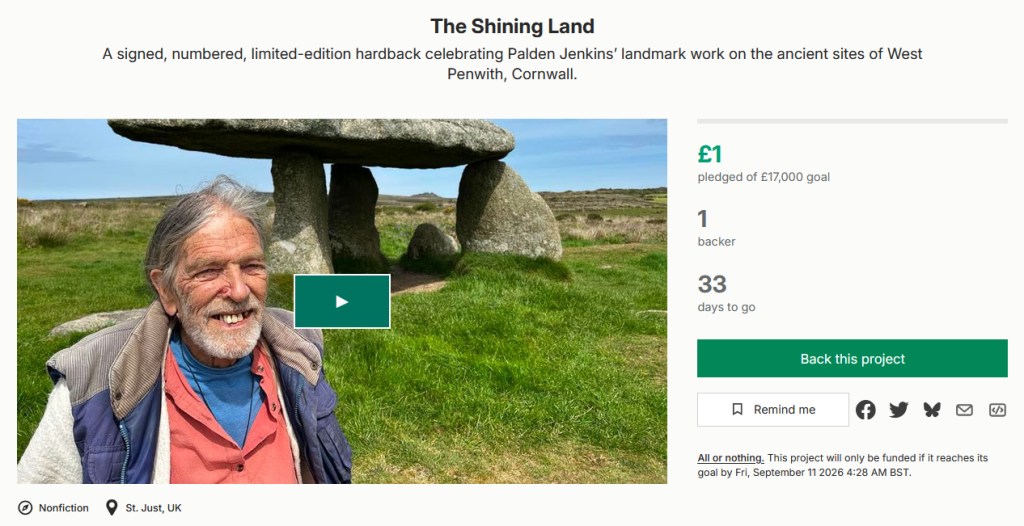
All things being well, my penultimate book, Shining Land – the ancient sites of West Penwith and what they say about megalithic civilisation, might come out in printed form before long. It already exists in digital and audiobook format, and it’s here: https://www.palden.co.uk/shiningland/

My final book, Blessings that Bones Bring, is going through a review and hopefully will emerge as a second edition by the end of the year. Or sometime – in Cornwall we say ‘dreckly‘. Clare, one of my helper-angels, is assisting with that. It’s made up of re-edited cancer-related extracts from my cancer blog.

It gives the inside story about being a spiritually-oriented cancer patient, and about cancer as a spiritual path and process – a path of awakening, acceptance and completion. As I say somewhere in the book, doctors saved my life and healers gave me a new life – and this is how it has been.

Everything that begins and is born eventually comes to an end. This is the nature of life. This is our learning. We come here to master this. It’s all in the grand scheme of things and, guess what, it’s a training for a greater life. Yes, folks, there’s further to go.

Just remember: you are on a journey, and this life in a physical body, on a dense, spinning and rather troubled planet, is but a stage along that path.

Oh, and while we’re here, I invite you to join me and a widely-spread group of shining souls in the Sunday Meditation, any and every Sunday. Come and waste half an hour with us, for a homoeopathic dose of infinity.

Whether or not you do so, please put in a prayer for all those people round the world whose lives are being devastated by the military actions of fucking assholes who believe they can bend people to their will and their geopolitical delusions by bombing hell out of them. Both the bombers and the bombed are to be pitied, each for their own reasons, and may the 21st Century be the final century in which this kind of insanity is permitted to happen.

Yes, permitted. You can go on as much as you like about Illuminati, Reptilians, Bilderbergers, Oligarchs or any Them you can name, but, in the end, it is we, humanity, who permit all this madness to happen. It is in our hands. We can do it. It has to be done.

With love, Palden

BTW: I was given the nickname Paldywan Kenobi in 1986 by a boy, then aged about eight, in a rather deep, hot and heavy talking-stick sharing circle at the time of Chernobyl, and the name kinda stuck. He stood there with the stick before him like knight holding a medieval standard, uttering words of power that I can’t remember but I’ll never forget. He’s William Cartwright, nowadays a rock musician in Glastonbury. This is where children become our teachers. And our parents.

Helpers

If you ever get a serious late life illness such as cancer (and there’s a good chance you will, even if you’ve looked after yourself, as I had), or simply if you’re growing older and more decrepit, you come to a stage where you need help. You just can’t do all the things you used to be able to do.

When I was younger I could open every jar, reach things down from high places, safely drive everyone home after a party when they were tired and stoned, and overcome many challenges that now are well beyond my scope. Nowadays I don’t have the strength to open stuck jars, some logs I can’t chop, and if I took the lead of my neighbour’s sweet dog it would pull me over. Sometimes I’m really useless. I can’t drive any more either – what, me, a traveller-soul with Gemini Moon and Sagittarius rising?

Yesterday was like that. I’m on a new drug which is supposed to help with peripheral neuropathy – it’s called Amitriptyline and I’m not getting on well with it. It’s draining my energy, my head is befogged, I’m losing my balance and I’m just sitting here in an armchair like a sackful of manglewurzels.

On days like that I really appreciate some help, often just with small things – things to make life a bit easier because, in my situation, life is twice as difficult as it once was, and more painful too. Just standing upright is strenuous, and going for a walk for half a mile takes a lot of focus and willpower.

People often ask, “Anything I can get you?” This doesn’t work – my brain blanks out. Writing a shopping list isn’t easy: that’s left-brained stuff that I’m no longer good at. So, often, I’ll say No, when actually I should say Yes, but I can’t in that moment think of anything I need. Five minutes later, my intuitive right-brain will start working, and I’ll remember. But it’s already too late. That’s tricky.

Managing this process can at first be quite confronting, because it requires opening up to the generosity of others. You can’t complain if they get the wrong thing or turn up late when you’re stuck in a rainstorm – after all, they’re doing this out of the goodness of their hearts. The secret is to hold your silence and appreciate the gifts you’ve been given, even if it’s raining – then you mention it diplomatically at a later moment. Don’t complain.

There are different kinds of help, and it’s necessary to clarify this. Some people try too hard to help and fuss too much, or they might not have the right skills, or they might not be emotionally sensitive, or they might be a dodgy driver – so it’s important to find the right kinds of people, and sometimes one must be frank with people about this.

You get quite close to your helpers. I have a new helper who has been with me for a few weeks, and it’s working well, but it is still taking her time to figure out where everything is in my little house, and how I like things to be. She’s attentive to that, and that’s good, and we have interesting discussions too, because part of the benefit she brings me is some company (since I spend most of my time alone).

But it’s not just that. I have a wider group of friends, FoP – Friends of Palden. They help me in all sorts of big and little ways. But most of them don’t see me very often. So the first thing they do, and sincerely, is to ask me “How are you?”. That’s not the right thing to do. I need you to look at me, watch and witness me and tell me what you observe. If you ask me “How are you?” at different times of day, I will give quite different answers too.

Besides, it’s not easy being asked how I am five or six times a day. I have to assess myself and give some sort of answer, and there are times when that works fine and other times when it’s actually rather difficult. Instead, you could tell me how you are. So, sometimes, when someone asks me “How are you?”, I just say, “I’m like this!”, opening out my arms. I invite you to make your own assessment, because your observations of me are more useful than my own observations of me.

Special qualities… well, one key quality is reliability. You see, if someone rings me up just before they’re due to come, saying “Oh, sorry, I’m too busy, can we make it next Tuesday instead?”, that can be tricky too. Well, yes, we can, and that’s kinda okay, but actually it makes quite a big difference, even if I can’t at this very moment say why, or give a list of things that needed doing. So it is good to have people coming along reasonably regularly. Not least because the number of e-mails and messages that can otherwise be generated can be staggering, when things lapse into ball-juggling flexi-territory.

Also, there’s the matter of the computer and phone. If I don’t respond, what does this mean? Am I in bed, gone out, sitting on the toilet or dead? Should someone check me out? Or perhaps they decide not to bother me. A helper who knows me well, with a little intuition on top, can usually figure this out. But if I am dead, then it helps to discover this before I start smelling too much.

Regularity also helps because of memory issues. It can be quite challenging and complicated managing a group of four, five or six people who are all in changeable states. So recently I’ve managed to sort things out rather differently. I’ve now got two ‘reliable regulars’ and then a number of occasionals and reservists, and that works well.

The two regulars cover me three days a week – they come for an hour or two on Tuesdays, Thursdays and Saturdays – and then the occasionals come when they can, or drive me to Treliske hospital (thirtyish miles), or take me out somewhere… or things like that, on a more flexible basis.

The funny thing is that one of my reliable regulars is called Claire, and the other is called Clare – just to confuse things! Perhaps my Anima is telling me something, though I’m not sure what.

But actually, for it to really work, it’s necessary for a person to get to know me more closely than they normally would. This includes seeing me in my weak states, at times when I’m quite helpless, and I might need tenderness of a kind that wouldn’t usually happen with friends who come to socialise. Other times, I’m quite bright, cheerful and able, and there isn’t much for my helper to do, so we sit, drink tea and chat, and that’s really good too.

There’s something nice about this because I’m no longer seeking one-to-one relationship (been there, done that), which in this era of toxic maleness, makes me a reasonably safe bet. I’m not going to try it on. There’s also a difference between depending on help and emotional dependency – something that can get confused and tangly in close relationships.

Claire, who has worked with me for eighteen months now, has really got me sussed. When we go shopping she knows what I’m looking for, so she wanders off, comes back and puts things in the basket, with a knowing smile, and that’s really useful. She points things out to me and helps with the most difficult part at the end when we’re checking out.

She packs the bags and keeps the cashier entertained while I fumble around with cards, lists and last-minute memory-eruptions. I find that last bit really exhausting. Then she drives me home, puts stuff in the fridge, unpacks the bags, makes some tea and leaves me to rest and defragment. I’m happy with that. But that arises from the fact that she’s got to know me. She can read me off.

This matters a lot because my brains have been affected by chemotherapy – they call it chemo-brain. My executive functions – the left-brain stuff – are a lot weaker now. So although I’m quite brainy, I have difficulty figuring out certain things. It helps to have someone around who’s like a second brain, who will remind me to take my pills, or to be ready to go, or to remember to take something with me, or perhaps to tell me that my complexion is not very good today, or making useful observations and suggestions.

So if you’re in a situation rather like mine, as a net recipient of help, it’s worth giving some thought to the different kinds of help you might need, and the different kinds of people who will be good at giving it – and enjoying doing so. One male friend of mine, Kai, loves going shopping for me and he’s really good at it, and I can say to him, “Oh, just use your commonsense…” when he asks whether I’d prefer this or that, because I know he’ll get the right thing and, if he doesn’t, that’ll be interesting and useful too. On the other hand, he’s not so good at making tea, so I don’t expect it of him – I enjoy making tea for him instead. After all, this is about energy-exchange. I only get to see him occasionally (he’s a Gemini, travelling a lot), but this works well because both of us have identified how we slot into each other, given the circumstances we each have.

There’s a big sociological problem going on here. It’s this. Everyone is busy rushing around, racing timetables and to-do lists. They are time-poor. It’s a deep cultural and psychological thing in our society. This time-poverty sometimes makes things difficult. Occasionally I need a person to slow down to my speed, and at times it’s really good for them to do that, and they are grateful for it – it’s something I can give.

But people who are just fitting me into their busy timetable… well, that can be difficult. I remember, I did this once to a soul-sister with breast cancer – I’m sorry, Lily, but I was up to my neck in stuff and felt unable to stretch into your space. I realised this only when I got cancer and experienced others doing it to me. Us men, it can take us a while to realise these things, but we do get there in the end. Well, a lot of us do: toxic males make a lot of noise, but new men are more numerous than we appear to be.

This is to do with the way our society is today. We have become alienated and atomised as a society, and many of our family and community energy-saving mechanisms have deteriorated or disappeared. My own family is a case in point. I have four grown up children and seven grandchildren, and they’re all lovely people, and they do care, and they’ve got busy lives to pursue, and we live quite a long distance from each other and in two different countries. In truth, that’s mainly my fault, not theirs, since it was I who chose to live at the far end of Cornwall, a long way from everyone else!

Living and working in Palestine taught me a lot. I’d been brought up in a NW European Protestant environment, where you’re supposed to pay for all that you receive and deserve all that you get. If you go to any Muslim country (including Iran), you quickly find out that it is offensive to try to pay for other people’s generosity or to return the favour. You are depriving them of the right to give. To them, everything comes from God and returns to God, so they’re just channelling the infinite beneficence of Allah. Hindus do this too. So you have to develop other ways of circulating the energy, and this has nothing to do with returning the favour or paying your way.

These are guilt-driven, obsolete Christian beliefs – all about indebtedness and original sin. The result is that we live in a mean-hearted, capitalist society made up of a few winners and lots of losers, which doesn’t really care for the weak and needy, because everyone is busy pursuing our own paths through life and, in the end, we don’t have enough time for each other!

Arabs taught me how to receive. This opens up channels of sharing and mutuality. It creates an inherently supportive society, a generosity economy where there is little need for professional carers or babysitters because the extended family or the community can handle it. I learned something about the Christian virtue of giving without counting the cost – a practice that works well in a society where everyone does it. But it’s more difficult in a society where only some do.

I might need help, but even in my needy condition, it’s also a matter of what I can offer. Support is a two-way thing. I can’t do a lot now, but the funny thing is that some of my helpers simply enjoy coming to sit in my nice, warm, radiation-free cabin, drinking tea, chatting and doing nothing much at all. They can slow down for a while before they have to return to the madding crowd or to shepherd their elusive teenagers around.

On a good day they might also have a lightbulb moment, arising from a conversation that we have over tea and biscuits. Yes, one thing that useless old codgers like me can still deliver is the occasional gem of insight and perspective, helping people remember that this is not the end of the world and that everything turns full circle in the course of time. It’s all alright, really, even when you don’t quite know why or how.

There’s some sort of energy-circulation going on with FoP and with friends and acquaintances further afield. I have soul-sister, Jo, in Oz, and we haven’t seen each other for thirty years, yet we’re still close. In some respects I feel a bit like a cosmic-energy server, operating in a psychic network of souls near and far that functions of its own accord, on a mysterious level where we get only faint intimations of what’s really going on between us.

Perhaps that’s why I spend a lot of time alone nowadays, to give space to tune in to all those people, dead or alive, who resonate on a similar soul-network to the one I’m on. Twenty years ago I lived at the bottom of Glastonbury Tor – a distinctly noisier kind of energy-place in comparison with West Penwith, where I live now, sitting on a granitic pile of crystals in the wild Atlantic.

I’ve said enough. I might return to this theme another time. There’s more to say, but I can’t think what it might be. Except for this…

At age fifty I realised that I had no capital or savings. So I chose to trust in building up my social and spiritual capital, and to work at it. I decided to make it as easy, pleasant and rewarding as I could for people to help me, when the time came that I would need help, and to stay useful right to the very end. Us Virgos, we need to feel useful. I’ve screwed up a good few times with this but, since cancer came to me in 2019, I’ve been much blessed with fine helpers and minders, and I’m really grateful for that. Including Lynne. I mean, really, really grateful, and thank you all for that. And the funny thing is that it all ends with a funeral!

Love, Palden

Sunday Vegetation

The good news is that most of the world is not at war – despite exaggerated claims by some talking heads that this is WW3. Catastrophising things doesn’t help, since it gives power to fear.

When meditating in times of war and polarisation, it is important not to take sides. If you find yourself on one side, one thing to do in meditation is empathically to explore what it is like being on the other side – whether as an ordinary person or as a combatant. Experience it, within you. Know that, despite media-driven appearances, people on the other side will not themselves be of one mind and in agreement – they will have a variety of reactions to their situation.

It’s also important not to judge things or take firm positions – such as wanting peace or cease-fires after a conflict has started. It is already too late, and often such a wish is premature, not doable.

There’s an honest question to ask yourself too. Is your wish for peace genuine and deep, or does it reflect a wish to stay inside a comfort zone of indifference?

I’d suggest two approaches that can help give focus to neutrality and peacebuilding. The first is humanitarian – working to understand and ease the suffering of people and environments on both sides, and to note your feelings when working with people on the other side, since this involves bridgebuilding, forgiveness and healing.

The second is to look for opportunities amidst disaster. Wars and the events that take place in them change many things, changing people’s lives and those of neighbourhoods and localities, in many cases permanently. Wars are crucibles of change, however cruel that may be, and such changes are not always negative. So meditate on those glimmers of light and possibility – on the longterm and the future. The past is being burned up, and not all of that destruction is regrettable.

So focus on possibilities, on lessons actually being learned – some of them really fundamental – and on planting seeds of healing and forwardness in the devastation of the moment. Infuse the collective psyche of humanity with these thoughts and visions.

While warfare as a whole is something that needs to end during the 21st Century – it is a tragic distraction from the main issues before us – it does shake things up and change things, and here lie opportunities. In our time, we need to make good use of the lessons that Life presents us with, because the main problem on Planet Earth is not change but ‘business as usual’. Normality is destroying our world, leading humanity down a path that will not solve the problems that it faces.

Bless the soldiers, fighters, terrorists and advocates of war and remember this: every act of violence arises from an unhealed wound. So we need to heal the wounds that lead humans to fight. These are personal, ancestral and collective.

Try to free up your thoughts and beliefs at times like this. Humanity needs to do this. We have a habit of entering the future facing backwards but, that way, we fall over more easily.

I hope this useful. I was part of a group, the Flying Squad, working with issues such as this, and we learned a lot about approaches to meditation. We disbanded the group in 2017 after twenty years of working together (it was shrinking numbers and ageing, mainly) but, as individuals, we all still do the weekly Sunday meditation. It’s a good thing to do. We left a website behind, for the record: https://www.flyingsquad.org.uk

If you need details about the Sunday meditation, go here:

https://www.palden.co.uk/meditations.html

Next week, in UK and Europe, the clocks change. So, from next weekend onwards, the meditation starts an hour later in UK and EU. In other words, the meditation stays at the same actual time when the clocks change. So, if it’s 7pm this weekend, next weekend it is 8pm. Times this weekend are below.

Love from a sunny Cornwall, Palden

———————

Current meditation times, on Sundays:
GMT: UK, Iceland, Ireland & Portugal: 7-7.30pm
W Europe: 8-8.30pm
E Europe, Turkiye, Israel, Palestine, Egypt: 9-9.30pm
Jordan, Syria, Iraq, Iran, UAE: 10-10.30pm
Pakistan: midnight-00.30 Monday
India: 00.30-01.00 Monday
Oz: AEST 5-5.30am Monday
NZ: 8-8.30am Monday
Greenland: 5-5.30pm
Brazil, Argentina, Chile: 4-4.30pm
EST, Venezuela, Bolivia: 3-3.30pm
CST, Colombia, Cuba, Jamaica: 2-2.30pm
MST, Mexico: 1-1.30pm
PST, West Coast North America 12noon-12.30pm

Seal meditation at Godrevy

Uninspiration

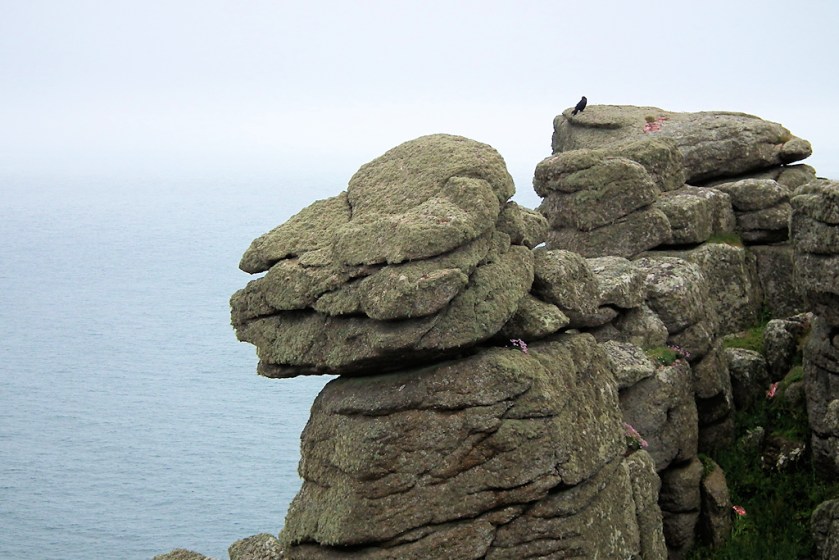
I can’t remember who gave me this pic, but thanks anyway! It is taken on the coast path from Land’s End to Pordenack Point – one of my favourite haunts.

Recently I’ve been feeling rather uninspired. Saturn and Neptune are in opposition to my natal Mercury, and I’m feeling it. Mercury is a key planet in my chart and, since the age of fourteen, for better and for worse, I’ve been a big communicator, and the struggle to clarify my ideas and make myself understood has been a key part of my growth. When I was a boy I was quiet and shy – would you believe? – and it took until my teenage years to find my voice and until age 36 to become good enough as a writer.

It’s kind of like drying up, this uninspiration. It’s a feeling that I’ve said all that I can say – and I’m not one for repeating myself. I’ve also been wondering how much people are interested – though this is often solved by spending time with someone to find out what’s going on for them.

And so I took another tack – after all I’m rather a workaholic, continually looking for new things to do to keep myself occupied. Nowadays, although I’m reasonably noisy online, I spend most of my life alone and quiet. In another world.

This is the farm where I live, in the far west of Cornwall

Over the last few years I’ve been turning my website into an archive. After all, it’s thirty years old now (started in 1994), and I’ve been adding bits to it every few years which, with a bit of tweaking has been gradually turned into an archive over the last two years. I don’t have money or property to leave to my descendants but, for what it’s worth, they are getting a digital estate, and I’ve often had the feeling that a few of my seven grandchildren might find some treasure there.

A while ago, I was tooling through some old radio programmes which I made twenty years ago, when I lived in Glastonbury, and they were surprisingly good. Especially since, in comparison to many of the talking-heads podcasts which are pouring out now online, the content was really rich, good, original and quite unique. This is partially because Glastonbury is a place which is a source of new ideas and initiatives, and some of the people living there are true originators in their fields.

It was not difficult to bring in old friends to provide interesting material for this programme. I called it This is the Light Programme. That’s a bit of an older generation joke: it refers to a time before about 1970 when BBC Radio had just three channels – the Home Service, the World Service and the Light Programme.

So I have been reviving many of the interviews in those programmes and creating a new section of my archive called Recycling Light – this was the Light Programme. The first few programmes will be coming out soon on the new moon, and I shall continue reworking more of them, making them ready to add to the list of Recycled Light programmes.

This is my kitchen

And yes, on the whole, when I post a blog or a podcast, I do it at astrologically auspicious moments – this matter of timing is more important than most people think. So this blog was uploaded with Jupiter rising, Mercury on the Midheaven and lots of planets in the tenth house. That’ll do.

I’m recycling these programmes because of the quality of the ideas coming through them. The first is the story of two Glastonbury characters who had been involved in the Middle East – one, Colette Barnard, was in Tehran at the time of the ayatollahs’ revolution in the late 1970s, and the other, Tom Clark, has been involved with funding and supporting progressive projects in the Middle East, particularly women’s and backchannel diplomacy projects. So the first programme is a really interesting interview with these two characters.

The second programme is an interview with Peter Taylor, a critical scientist, ecologist and shaman. He and I have been dialoguing for decades, cousins of the soul, sharing a political-spiritual activist approach to our respective areas of work. He used to be a scientific adviser to Greenpeace in the 1980s and also to government and United Nations bodies on ecological matters, and he is a detractor in the climate question and also one of the inventors and early advocates of the concept of rewilding, a concept which is now accepted but, thirty years ago, it was an entirely new idea and quite radical. What? Wolves? Beavers? Weeds and scrub? Well, yes.

The third programme involves two old friends who, like me, have been involved in researching alternative archaeology and prehistory. One, Sig Lonegren, is a dowser, who can find information about ancient sites which the majority of us have no access to at all. Now in his eighties, he has been a major contributor to the field of earth mysteries. The second, Bruce Garrard, has been doing a lot of thinking about the early origins of human society – particularly of the question of gender and the historic formation of gender roles. So they have interesting things to say.

That’s where I rest and sleep. When resting I can watch the swallows, buzzards and jackdaws outside.

It was a great privilege to make that programme. It was weekly, and we did it for a year. Each programme was three hours long. Unfortunately I have had to take the music out, for rights reasons, and to rework it into a new format, but it turned out that this was a good thing to do. My son Tulki, who was then eleven years old, was the studio manager – he used to run the controls. He and I work well together. Now he’s turning thirty. Time moves on.

So in a few days time, I’m coming out with something new on my website. It’s become a really big site over the years, as I have added bits and chunks to it every couple of years. Partially it’s a manifestation of the story of my life, of being one who has advocated ideas which, in general, are right for the world, but which the world is not ready for or interested in accepting.

This has been the story of my life and that of many other people of my generation – particularly the drop-outs. We’ve had to live and work as ‘alternative types’, playing our part in society from the periphery, not from the centre.

When I was lying in a hospital bed with cancer six years ago, being eyeballed by Death and reviewing my life, I realised that I needed to leave as much as I could online, just in case it becomes relevant and useful in the future. Because the need can arise to refer back to the original people who first thought up the ideas which have become commonplace as time has gone on.

Many of the things that I’ve believed in and advocated have been roughly twenty to thirty years ahead of their mainstream adoption – or at least the beginning of it. So I’m leaving this archive in the hope that it becomes useful to someone in the future.

So when the new moon comes along I’ll be launching this new segment of my website called Recycling Light, and I hope you find it useful and interesting.

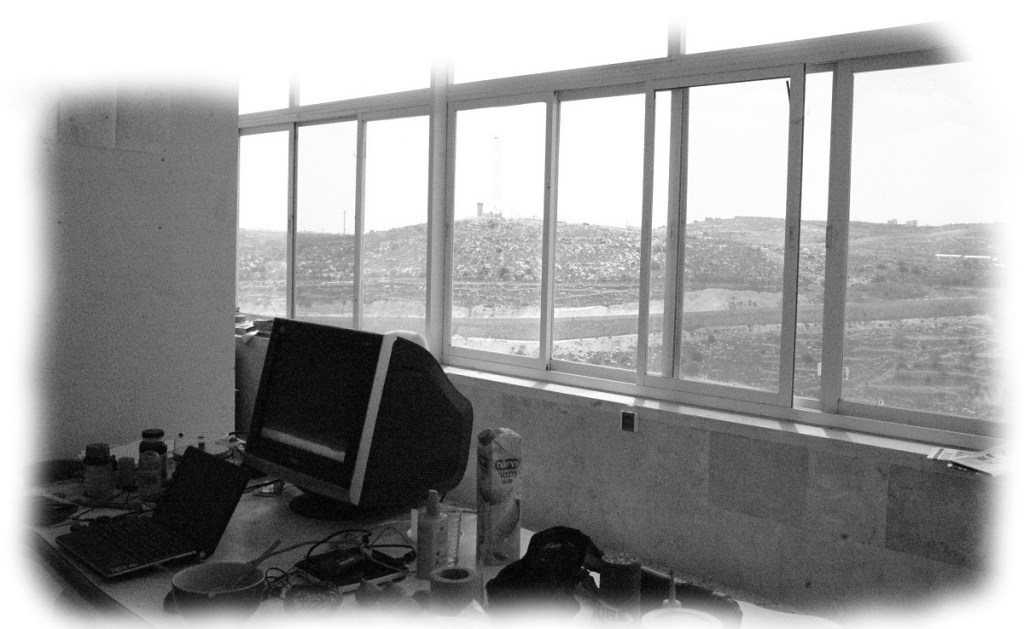
That’s the view from my bed. On that hill is an ancient site called Caer Bran – around 3,500 years ago it was the parliament site for the clans of Belerion, or West Penwith.

Now it’s time to have breakfast – before it’s lunchtime. And I have to work out what pills to take this morning. As a cancer patient I am given lots of pills, but if you adopt a holistic approach to cancer treatment, then it’s double trouble because there are loads of supplements and other therapies to take pills for too! Groan.

(Though if you follow this route, I recommend keeping the pharma drugs and the holistics separate – taking them at different times of day, with food between them – since they operate according to different principles and in some cases can conflict.)

There’s a gift in everything. A state of uninspiration has led to a state of audio-recycling.

With love, Palden
www.palden.co.uk

This is why my wee hoose is called The Lookout. On the right is my desk, where I do much of my work – such as this blog.

Amidst the Chaos and Dismay

The International Community, drooping

Bombs  are falling, strongmen are flouncing their stuff and the Megamachine happily strafes another family. It looks as if everything is going  wrong.

In a way, it is, though not quite. These are the growing pains of the global community. We are learning how not to do it. And there’s more going on underneath.

Perhaps you could call this psycho-spiritual geopolitics. Or parapolitics.

I  wrote this piece in 2003 on the buildup to the Iraq War and it’s pertinent to give it another spin as the Iran War unfolds. It’s an extract from my 2003 book ‘Healing the Hurts of Nations‘.

That’s  what this is about. The unconscious pain, guilt and shadows in the psyches of nations, which cause them to act as they do. And what we need to do to deal with our divisiveness and wars.

With sound collected from the birds of Grumbla in Cornwall, on an early February morning this year, 2026.

Love, Palden

It’s here:

https://www.palden.co.uk/podcasts.html

or here on Spotify (also on Apple and Google):