Just a Thought…

The world is in such a parlous state, and we’ve seen so much mindless devastation and tragedy recently.

Below is a chapter extracted from my 2012 book Pictures of Palestine. It’s about the amazing creative contributions that some people make, with a view to re-heartening downhearted people.

This might not be a thought for you now, but it might become relevant in perhaps a few years’ time. The agenda here is to help people rebuild, once the horrors have stopped. There are plenty of countries to choose from.

It can be done for (say) two months each year. If you’re in your 20s or 30s, or approaching retirement, it’s a chance to do something really meaningful. This extracted chapter will give a taste of it.

Or, regardless, it’s a good read!

Love, Palden

https://www.palden.co.uk/pop

———————–

Fun in Beit Lahem

bagpipes and saxes in the Old Town

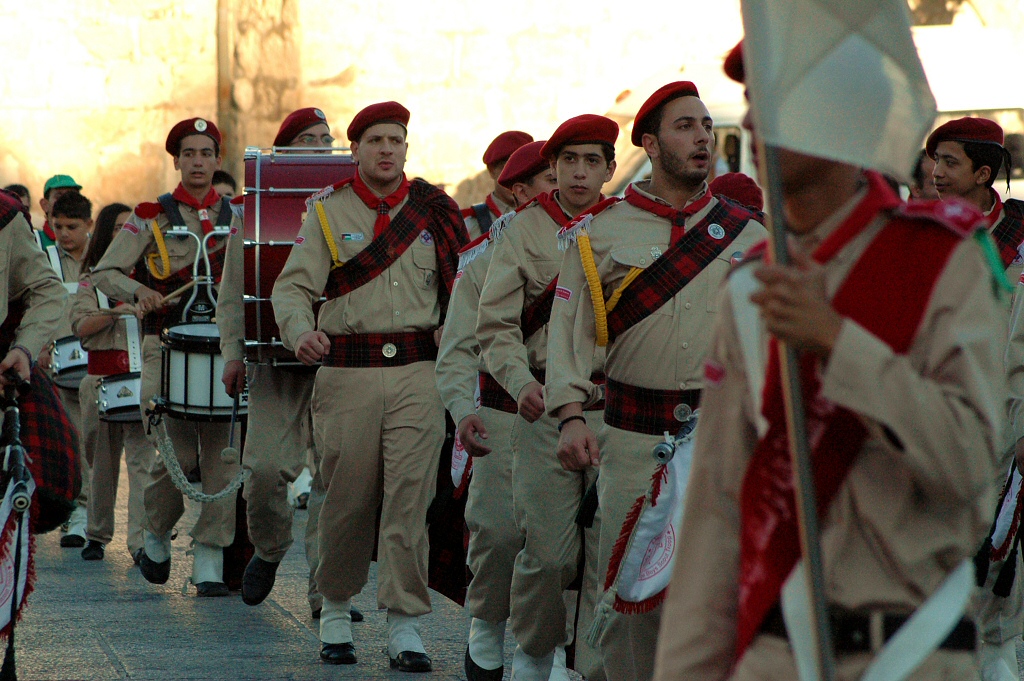
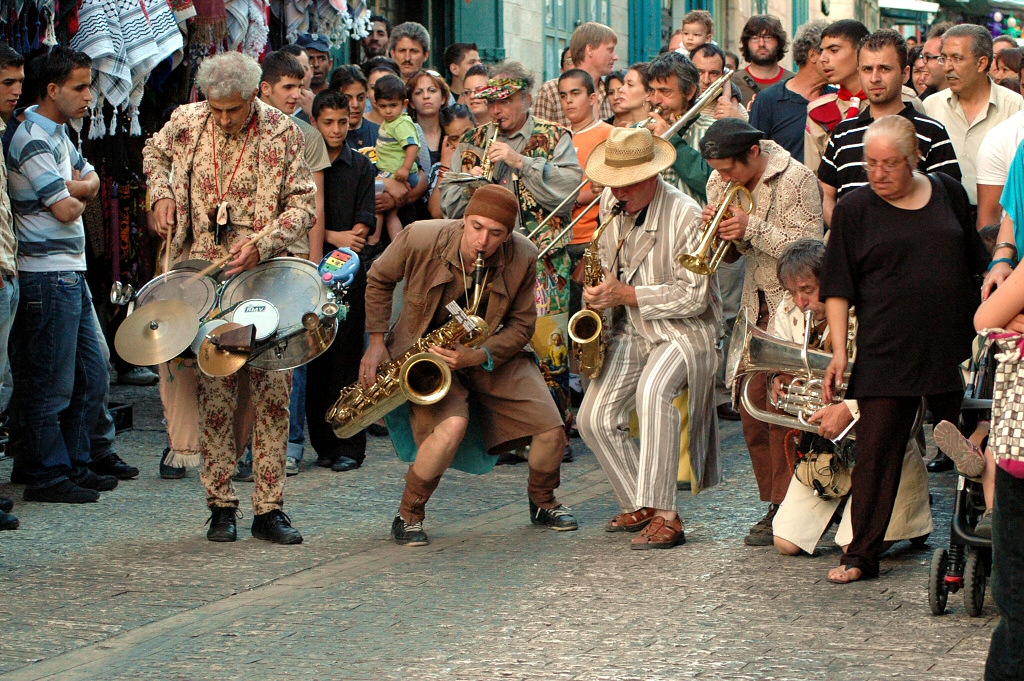
Arriving back in Bethlehem from Ramallah, I went to Adnan’s shop to sit down. But then something else happened: music started playing down in Manger Square. It turned out to be a Palestinian Christian marching band playing, to my surprise, Scots bagpipes and drums. The shutter on my camera was busy for a while.

This was a throwback to the days of the British Mandate. The band, clothed in smart uniforms with red berets, marched around Manger Square, then up Al-Najmah Street into the Old Town. It was rousing music, yet coloured with a wry sense of historic tragedy, a hint of wishful thinking of former days. It faded into the distance, there was a pause and then they came back down again, with gaggles of people in tow and others hanging out of the windows watching. The band marched around the square again and then stopped. People hung around, chatting and the atmosphere on the square was sociable and upbeat.
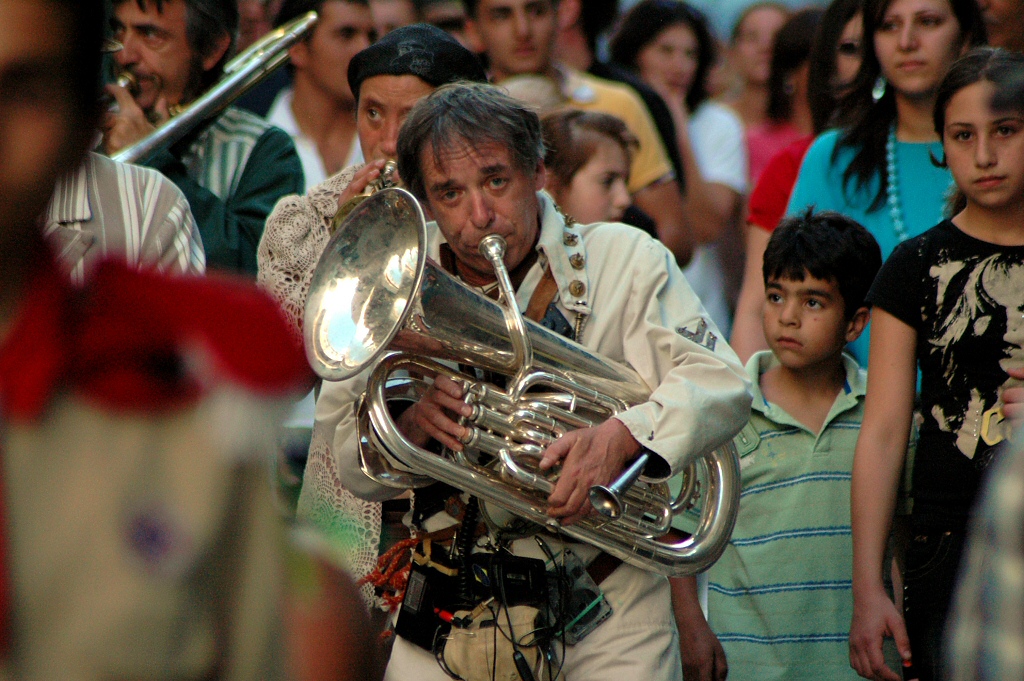
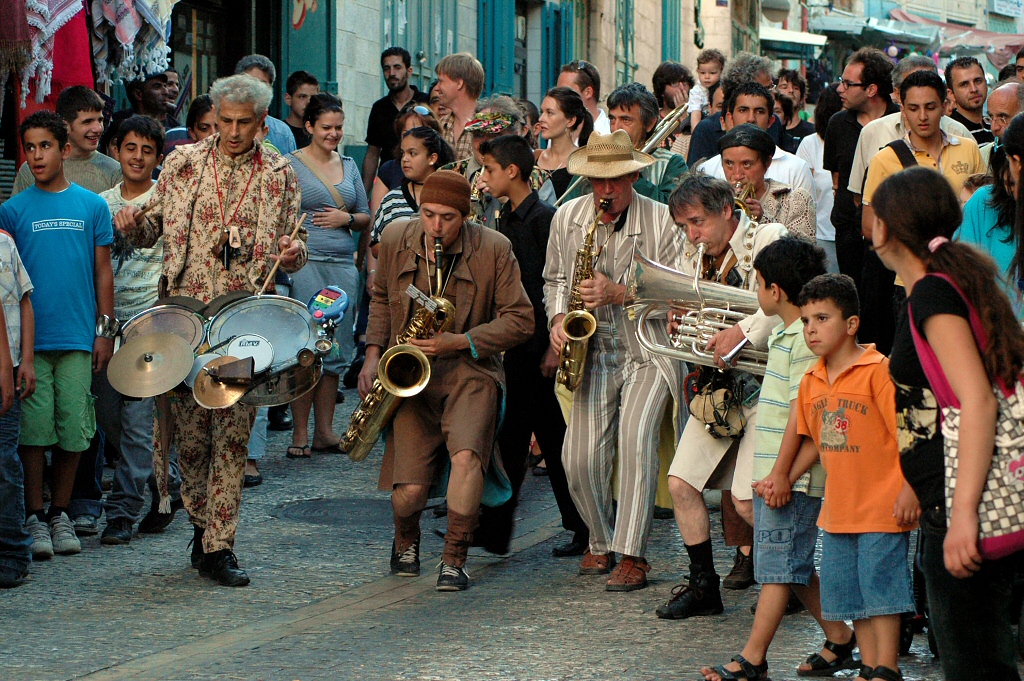
Then something else started up: the unmistakeable sound of ragtime jazz, coming closer down Al-Najmah Street. As I went down to see, seven Austrian musicians appeared, dressed in comical clothing and followed by a happy crowd of kids and adults, all now entering the square. Everything and everyone perked up and people flooded into the square from all directions. Eventually hundreds were gathered, young and old. The jazz band stood in a semi-circle, striking funny poses, eyeballing people as they played, taking turns to do solos, and people gathered around, taken with the witty ragtime music. It was good music, skilfully played.

Bravo to them. The group had come to Palestine to entertain, and they were succeeding spectacularly. Their crazy humour connected well with Bethlehemites, everyone smiling and chuckling. Christian monks in their habits hung around, chatting with the remnants of the marching band; boys on bikes weaved around them, and families, old ladies, kids and sundry foreigners all were drawn in by the happy din.

My eyes were becoming moist – the scene was so poignant. Here was an imprisoned people chattering, laughing, hanging out. This musical intervention is real aid and development, providing an ignition-spark to raise people’s spirits, give youngsters ideas, remind oldsters of happier times and simply to exorcise all current gloom. Bethlehem broke out into a smile and tapped its feet while the trombone, clarinet, cornet, trumpet and drums blasted out jazztime ditties and the Austrians sweated in their funny costumes.

A number of private initiatives like this do happen in Palestine – people come here bringing spirited cultural and human input. They bravely contribute what they’re good at to a remarkably grateful and responsive audience. Carrying a trombone through security checks can’t be the easiest thing to explain to a sceptical Israeli officer.

I heard of a project by a Dutch rock band, half of them working in Israel, half in Palestine. They held drumming workshops on both sides to train people up for the main event. They got loads of people drumming on anything they could find, all ages joining the training. Then one day everyone trooped upstairs through the buildings on each side of the separation wall on to the flat rooftops, where they played together for hours, across the concrete curtain of the security wall. Apparently it was quite a gig.

Some years ago a German installation artist came to Palestine, mobilising people to assemble junk, wrecks and bits of old metal, of which there is plenty. Then he set to welding them into massive statues outside various Palestinian towns. After completing one junk-sculpture, he would move to another town, leaving a series of sculptures which are mostly still there.

There was also a woman from Switzerland, whom I helped to get fixed up, carrying out her own aid initiative. She taught the European Computer Driving Licence, a certificate course in computer and software use. Her aim was to teach five Palestinians whom she would then set loose to teach others, and she would return later to supervise developments. She had discovered the Hope Flowers Centre in Deheisheh as a place to help facilitate this process – they had a newly kitted-out computer room funded by a European charitable trust.

I talked her through a few facts of the game, and she was receptive. This was a good sign: many Westerners have difficulty encompassing the differences between Palestine and the West. I told her that the basic efficiency standards we take for granted in the West were unlikely to work here – people turning up on time and things happening as planned. She wouldn’t achieve her teaching task in just a few days, as she first had anticipated. I advised her to give it a few weeks, and she’d probably need to do more supervision and follow-up than intended, but her students would be intelligent and motivated. She would also make many friends and might even fall in love with the place – these are the truly human spin-offs that can arise. She got the message and I think it rather excited her.
This kind of thing can be problematic though. As Hope Flowers’ webmaster, people e-mail me with offers of help, but they don’t necessarily understand the realities involved. There’s an expectation that Palestinians will jump to attention and accommodate their generosity, and it’s not quite like that.

One lady from New York City wished to teach cartoon-drawing to the children, to help them deal with their trauma by externalising their life-stories in cartoon format. A very good idea! Except that she wanted to have everything lined up so that she could do it in just one day. This was just not doable: it’s not possible to move everything around to accommodate the urgent timetables of a visiting Westerner. People wouldn’t be convinced of the value of cartooning until they tried it. To succeed in her mission, she would have to adapt to the situation, give it time and take things as they come. I had to decline her offer and regretted that.

A charity in California wanted to send vitamin pills for the school kids, another wonderful idea. Usually they sent them to Africa or to disaster areas, so they didn’t quite understand the unique political circumstances here: the Israelis would not allow such a consignment through. The charity could not believe this – after all, Israel is an ally of USA, isn’t it? Well, that makes no difference.

There’s an extra twist to this. It’s not just a question of straight, oppressive restrictions. If the charity gave the school money to buy the vitamins from abroad, then the business would go through an Israeli importer who would profit from the transaction and, eventually, inshallah, the vitamins would probably get through. The fact that this was an aid donation made it different, since Israeli policy firmly has it that there is no humanitarian problem in the West Bank, so no aid is needed. The charity got upset with us because they thought we were being ungrateful and obstructive.

Such ungratefulness also happened with a charity seeking to send Christmas gifts. Theoretically a good idea, except that Muslims don’t do Christmas. A consignment of gifts was sent but Israeli customs got hold of them, so Ibrahim worked hard to release the gifts. Eventually they arrived long after Christmas, with most gifts removed and distributed to poor Orthodox Jewish families, whose parents don’t work for a living.

Disappointingly, only the boxes and a few leftover gifts were allowed through. Ibrahim told the charity not to send more gifts the following year but they couldn’t believe that the Israelis would block such a donation. Surely corrupt Palestinians had embezzled the gifts instead?

There’s another issue here: cultural sensitivity. Palestinian children don’t need Santa socks. As for cake with brandy in, books with Bible stories or plastic toys that break on day two, forget it. So, the thought is nice, but it’s necessary to find out what’s actually needed or to send some money, or to come over to visit and find out what will work and why. We might ask for art materials or photocopier spare parts, or even money to cover the accountants’ and auditors’ services that Western organisations often require, to prove that we’re not embezzling funds. Westerners’ generosity is sincere but it doesn’t always have the intended effect and the hassles incurred can be immense. Or the aid that is sent mainly benefits educated, well-connected Palestinians who need it less than the underprivileged. Complications that are encountered can cause charities and well-wishers to withhold support, which in turn increases Palestinians’ feelings of abandonment.

The street-level aid and support ventures that individual people think up and carry out are heart-warming, imaginative and, at times, genuinely helpful – often in different ways than first conceived. Healers, artists and all sorts of people come here, and the locals appreciate it. Fancy taking an initiative yourself? Someone might fix you a piano, a room or a crowd of people. If not, something else will happen. But it’s probably best to make a reconnaissance trip first, to find out what reality looks like in Palestine.
Blessings that Book-Writing Brought

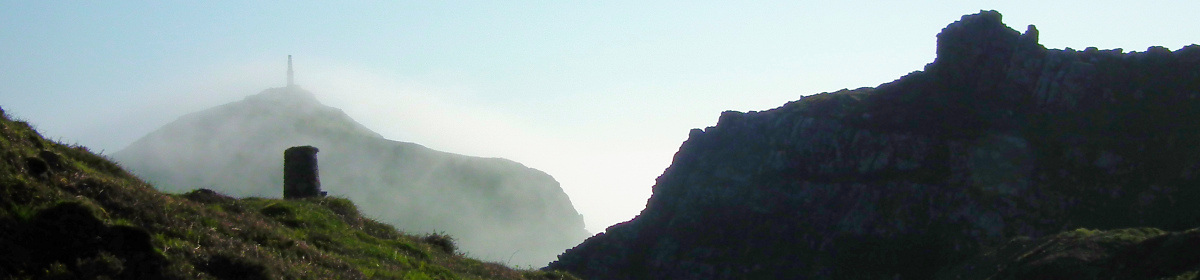
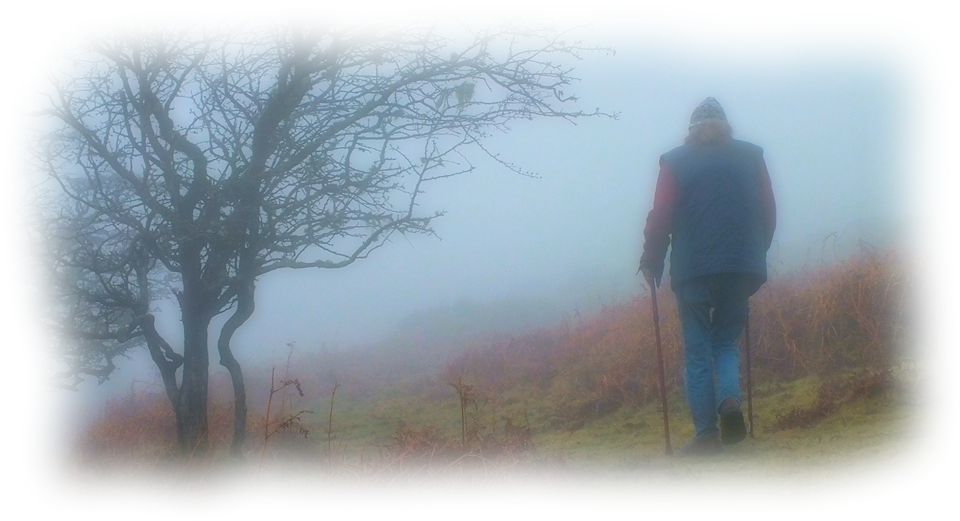
Silent Blessings on Dartmoor. Photo: Lynne Speight

I’ve just finished working on the audiobook version of my latest book, Blessings that Bones Bring. It’s done and uploaded to my site, in thirteen instalments of 40ish minutes each. Each audio instalment took around six hours to make. It’s culled from my blog over a four-year period. It’s not a how-to book but the story of a journey.

I cried at the end of it today, after doing a final listen to the last instalment – tears of relief, of discharge, of handing something over. It’s an emotional experience finishing a book, with some parallels to giving birth.

Every second of speech I listened to 4-5 times over, during the editing process – it’s strange listening to myself, but that’s the way the cookie crumbles nowadays, if you want to get something out into the public domain. The theme music is great – from a Ukrainian group called Orangery.

Whether or not ‘Blessings’ is widely read or heard, I’m happy to have done it. I’ve always had such an attitude. At the front of my book Shining Land I quote the 7th Century Indian philosopher-mathematician Bhavabhuti – the guy who conceived the number Zero – and it means a lot to me. It’s the story of my life as an author. “If learned critics publicly deride my work, then let them. Not for them I wrought. One day a soul shall live to share my thought, for time is endless and the world is wide.

This isn’t a book for everyone, or for any or every cancer patient. But for those with whom it chimes, who are willing to dive into deeper water, it could be significant. It makes me happy to be able to say that. It’s about the psycho-spiritual side of cancer, and the stuff we can grind through not only in a cancer crisis but in life too, during any experience of earth-shaking intensity. It looks at adversity, illness and dying in a different way, and without shame or reservation. I’m not quoting current groupthink but speaking from my own observations.

With those books that have been significant to us, it’s not just the book itself but the timing of its arrival in our life that makes the big difference. This will be the case here. For some people it could be a life-changer if they’re at a critical point in their lives, seeking answers, cracks in the wall and glimmers of light. While this is a cancer patient’s recounting, it’s relevant to anyone experiencing crisis – and cancer is a crisis that is falling upon ever-increasing numbers of people.

That’s partly because we’re living longer and something has to fell us, and partly because of pollution, radiation and the crazy, screwed-up nature of the civilisation we live in, and partly because of things we’ve done to ourselves and choices we’ve made (or failed to make), and partly because the world is in the midst of a spiritual crisis where cancer has become a catalyst for a great awakening.

We don’t stop for rain at Oak Dragon! Pic by Chrissie Ferngrove.

There’s more to this. In my own case, the particular cancer I received, and the effect it has had on me, was tailor-made for me, karmically. It was somehow designed to hit me on all the right buttons, to force me to get to grips with issues that I, as a soul, need to grapple with. Stuff that stretches beyond the present, beyond lives. Including issues I didn’t know I had.

It has brought a wide swathe of things into new focus. But you have to choose to do the course – and it’s not a punishment but a strange kind of gift. You have to have some big honesty sessions with yourself, with your watching soul, and with ‘God’ (however you see her).

It’s not difficult when it comes down to it – when in the middle of a crater, it’s the easiest option available. What’s difficult is our resistances – our fears, guilt, shame, denial, avoidances, inhibitions and ghosts. The more willing we are to turn around and face these, when they present themselves, the easier it gets. Cancer is a crash course in this – if you choose to treat it that way.

Self-forgiveness is deep and difficult in one sense and dead easy and straightforward in another sense. It needs to be wholehearted, final and without reservation, and we need to be happy to live with the consequences.

For there is a consequence to everything. In the end this is neither good nor bad: it just is as it is. Everything creates consequences. Not doing things is no escape route because that creates consequences too. Many of the ills of our world boil down to things that were not done that needed to be done.

In my case, one of the gifts cancer has given has been an increased mindfulness of the effects of anything I do – because my energy-batteries are weak, my body is fucked, my defences are permeable and, theoretically, you could push me over quite easily.

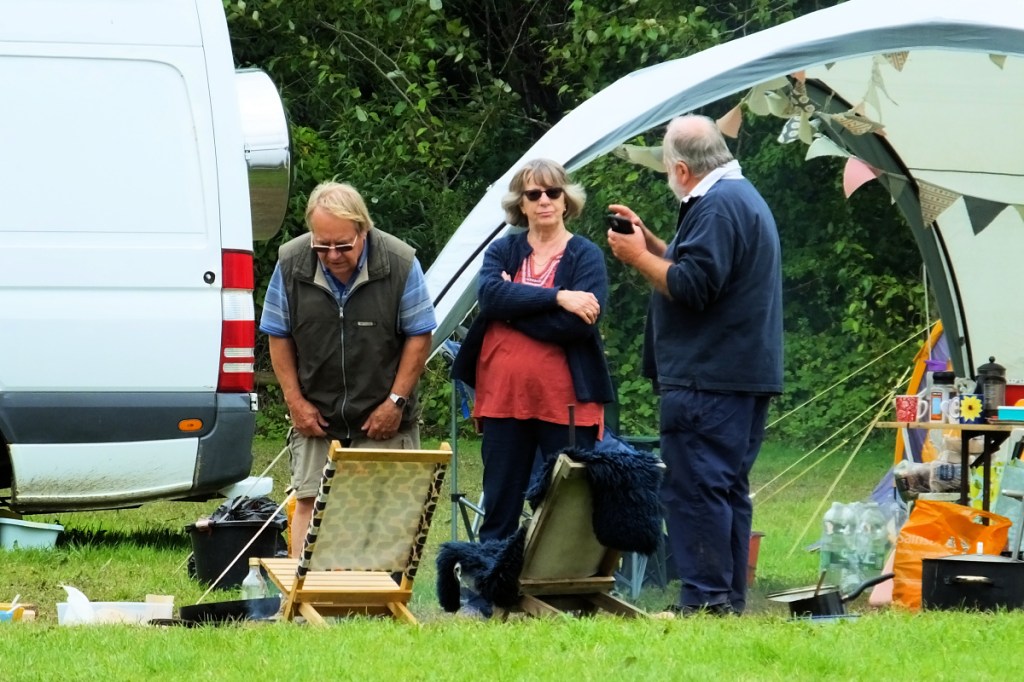
Some talk, and others get the kettle on – that’s called ‘community’.

But there’s something funny about this too. Another strength has come up underneath, and it’s spirit-fired. I might be vulnerable but I’m not defenceless. Right now I am (still) involved with Maa Ayensuwaa in a serious altercation with a big Australian bank and, alive or dead, we’re not going to let them get away with it – and they know it. It’s about justice, and recognition by the bank that they have caused and been party to terrible consequences to which they need to own up.

Maa now has cancer too, so the bank is up against two cancer patients. Maa is a bit like Kali and I’m a bit like Obi-Wan Kenobi, and we’ve become rather a team.

The worst thing that can happen is that she or I could die. But we’re going to die before long anyway, so not a lot is lost. That gives a kind of relentless strength – something Palestinians are pretty good at.

The bottom line is that, in any show-down, winning or losing is not the primary issue. In the end things bounce back on victors and turn around for losers, and ever thus shall it be. So the objective is to make a battle yield a bigger outcome: truth, resolution and healing. That can involve taking a coolly fierce Zelensky approach, but the price might be higher if we don’t.

That is to say, it will not do the Russians good to take over Ukraine, and it will not help the Israelis to take over Palestine – there’s no victory available and chickens will sooner or later come home to roost. History doesn’t allow it, nowadays, and things have changed – though the world is yet to catch up with this small fact.

Maa Ayensuwaa and I seek justice and resolution. We want rightness to prevail. It’s two rather magical cancer patients up against an Austalian bank. Hehe, a bit like the Taliban and NATO, really.

But we do stuff too

When I started writing this blog I intended to go on about my new book. What I’ve written above is not included in the book, but it’s not a diversion either (even if I do have the Moon in Gemini). It’s part of my cancer process and the resolution of threads in my life. Other issues crop up in the book though – both blessings and challenges.

The great thing with cancer is that vulnerability makes me experience things far more fully. Life is more impactful – both the pains and the pleasures – and I feel the underlying feelings within and behind things much more than before. In a half-dead kinda way, I’m more alive.

There are quite a few cancer books around at present, and the majority of people and cancer organisations will prefer more mainstream accounts that don’t mention the virtues of inner travelling, stone circles, ETs, astrology, cannabis or colloidal silver – career-killers for most writers. However, since I don’t have a career to kill, and killing me off would probably raise my profile, it’s okay. It’s a learning experience for the soul – and not only for my soul. So all is well.

It’s the most personal book I’ve ever written. I’ve always had rather an allergy to writing an autobiography – not least because I can’t remember much about my life unless I recorded it at the time. This said, I have written a short autobiography on my site. Blogs have been useful ways of accumulating creative iterations of whatever has been going on, and this has yielded books and audiobooks on cancer and on Palestine (called Blogging in Bethlehem).

Re-editing a blog into a book does me good, since it helps me review my life. This might sound strange or perhaps narcissistic, but I have little memory of my life except what I have deliberately logged and imprinted as ‘personal history’ – and blogging has helped this. I went through big brain-changes when I had a near-death experience in 1974, when in my mid-twenties – one change involved loss of capacity to remember many but not all events in my life, and another was a rebalancing of my left and right brains to amplify the intuitive, emotional, imaginal right-brained side.

It’s nearly five years since my back cracked and my life changed – this was the first sign of cancer, though it took thee months to be diagnosed with it. It has been a very long and full five years. Not full of events – much of the time I’ve been completely alone, and I live on a farm at one of the far corners of Britain – but my life is full of life, even though I’d estimate myself to be around 70% dead.

Early morning at Oak Dragon. Pic by Chrissie Ferngrove.

So it has been cathartic to produce this book, and now I’m turning it over – for free, though donations are welcome.

It’s specifically of interest to people encountering cancer who choose an integrated medical route – conventional and complentary medicines together – and who have a spirited approach to life. Or people for whom cancer has taken away the blinkers, who want to try out new ideas. Or for people facing death and wondering what to do about it.

I’m not into giving answers, I’m no cancer expert, and I speak for myself alone, yet there’s a load of food for thought there, with a few golden nuggets hidden in and between the lines.

Phew. That’s over. Now I’ll have a few days pacing around, feeling redundant, wondering what to do next. Well, I’m off camping with a load of dragons before long, and perhaps I need to give my dear readers and listeners a break! Now that’s a thought…

With love, Palden

Blessings that Bones Bring: http://www.palden.co.uk/boneblessings.html


Palestine Audiobook: http://www.palden.co.uk/bethlehemblog.html
Short autobiography: http://www.palden.co.uk/autobiography.html
Oak Dragon Camps: https://oakdragon.org

With Brian Oliver at Oak Dragon – sorting out the ways of the universe, of course. It’s another Chrissie Ferngrove pic.