The Green Intifada and the Witches of Beit Sahour

Looking over the Judaean desert, with the Dead Sea and the montains of Jordan behind

I’m busy re-editing two of the three books I’ve written about Palestine (the first is here). Here’s a clip from the third, written in January 2012 when I was in Bethlehem on a five-month stint, and it might interest some of you. I’ll publish the second and third books online at some point soon.

On Saturday I went to a talk at the Alternative Information Centre in Beit Sahour (part of Bethlehem) about the Green Intifada. This was given by a British woman, Alice, who helps run a permaculture farm down below Beit Sahour called Bustan Qaraaqa. Here is one arena where the British and European alternative movement plays a significant role in Palestine and Jordan.
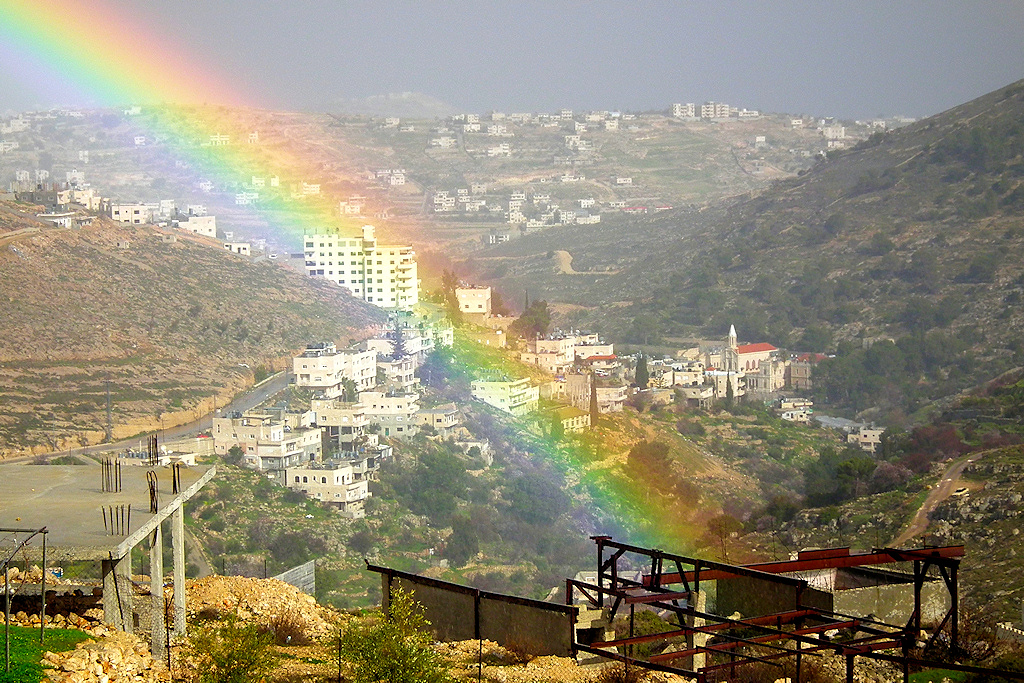
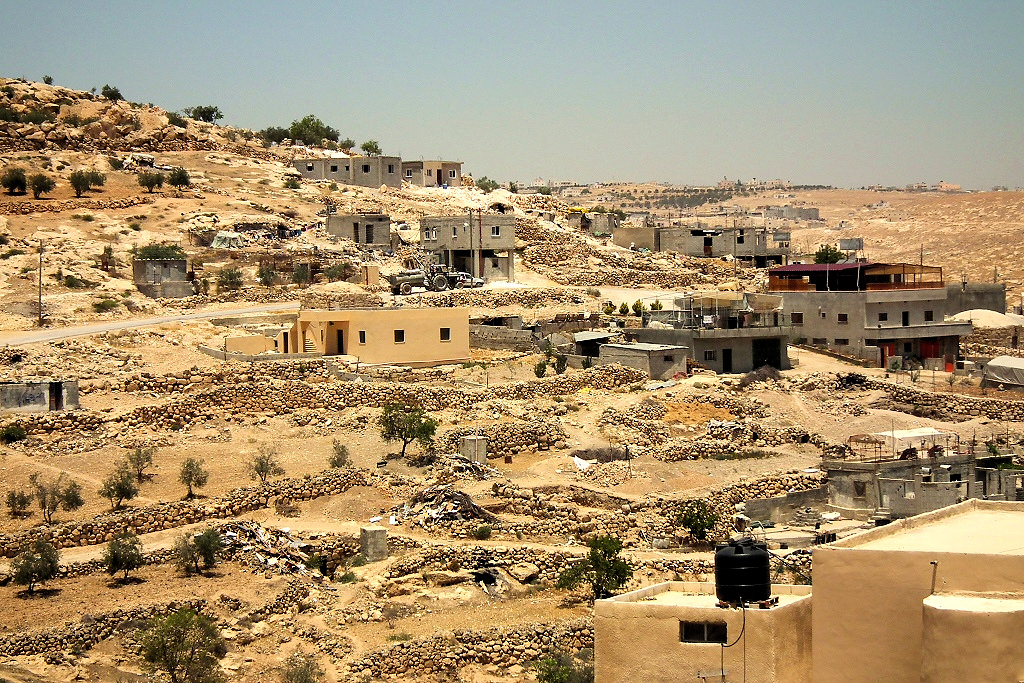
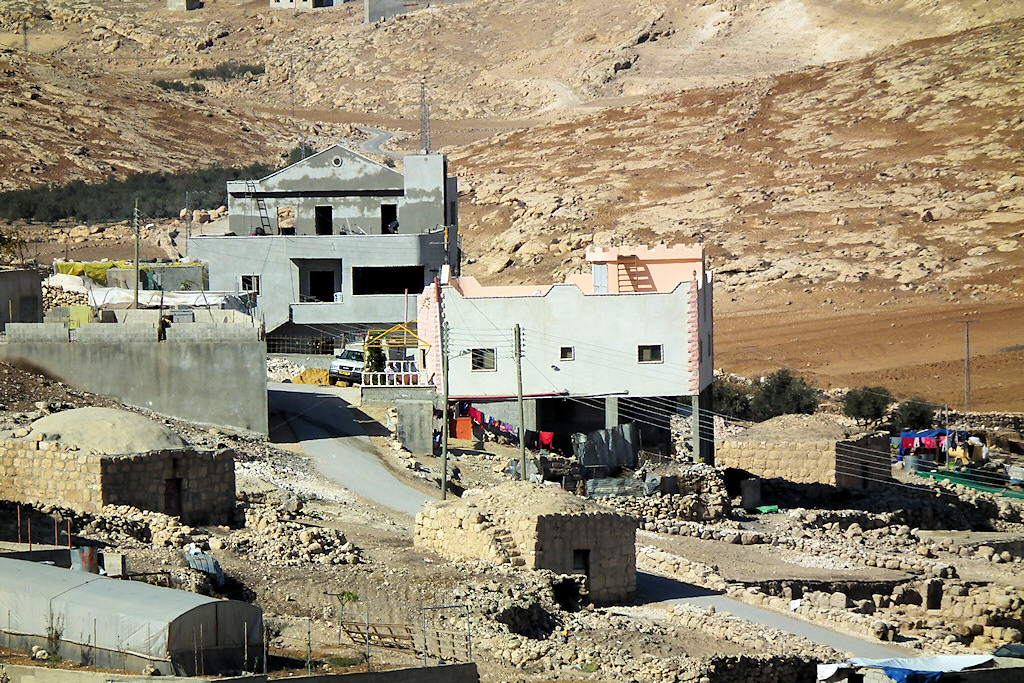
The village of Irtas, as seen from my kitchen window

Alice talked about the historic deforestation of the Middle East. It was recorded even in the Epic of Gilgamesh of 300 BCE, but it has been seriously rampant in recent times. Jordan’s forests were decimated a century ago to build the Hejaz railway from Damascus to Mecca, and Israel has focused on disabling Palestinians’ farming and food security for decades. Israel’s strategy has been to drive people off the land, especially in Area C, which is 62% of the West Bank, into the cities, ripping Palestinians away from their rural birthright.

This is happening right now in the Negev area of Israel, where Bedouin villages and lands are being destroyed and appropriated, and they’re being herded into townships to ‘civilise’ them and rip them away from their cultural roots. One Bedouin village has been destroyed by the Israelis and rebuilt by the Bedouin, helped by Israeli and international supporters, thirty times.

Palestine’s natural forests included oak, olive, cedar, pistachio, almond, fig, pine and moringa trees (moringa is both nutritional and medicinal). Many trees were domesticated and farmed long ago – figs in 9000 BCE, olives in 4000 and almonds in 3000. Sylvicultural products included frankincense, balsam and other medicinal extracts, and woodland-dependent herbs. The rise and fall of cultures in the Middle East has been intimately connected by historians with the health of forests.
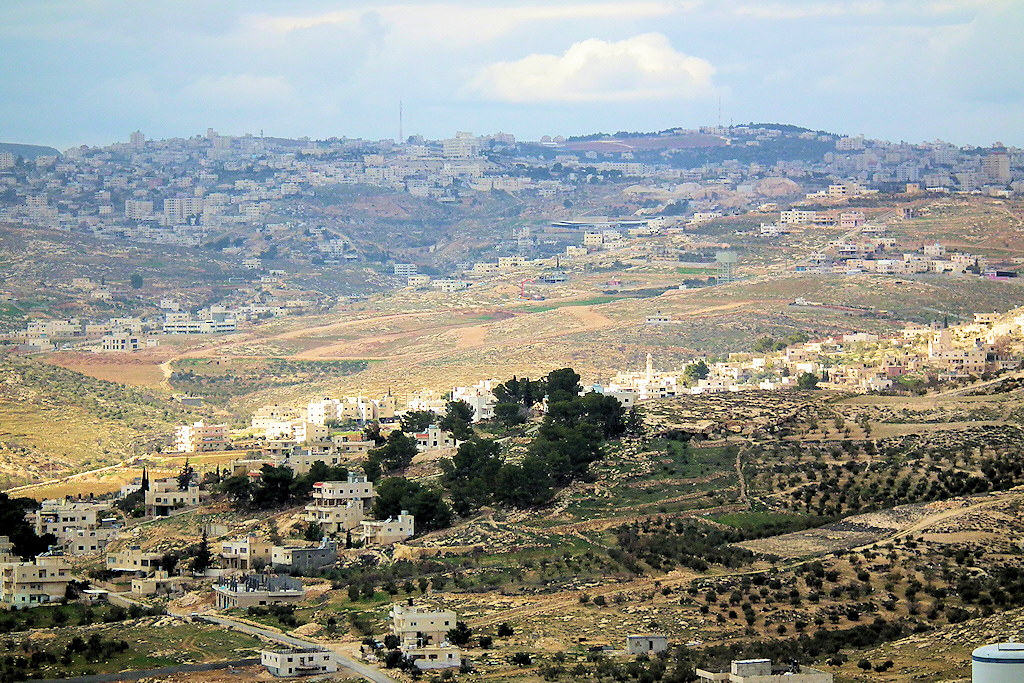
Looking toward Bethlehem from the Herodeon

What’s necessary is not just a revival of farmed trees but also a propagation of shade-inducing, humus-building, land-regenerating, soil-fixing un-farmed trees. This is difficult because the Israelis deliberately oppose and destroy such work – they often plant pine and eucalyptus plantations over old Palestinian villages and farmlands to judaise and ‘redeem’ the land. In doing so they also kill the sub-soil and render land useless to further farming by Palestinians.

When forests disappear, the water table sinks and rainfall declines, increasing desertification. Israeli settlement-building, often on hilltops, many of which were previously wooded, destroys water-sources, leading to rapid run-off and soil erosion lower down and causing rain to fail to infiltrate the ground and the water table.

They take water from the West Bank highland aquifers for irrigation and modern urban water-usage, charging Palestinians high rates when the sell it back to them and using the money to subsidise water prices for Israeli settlers. The Israeli offensive focuses systematically on disabling farmers and driving them off the land into towns or, preferably, out of the country.

Irtas is Arabic, taken from the Greek word Hortas, which has the same root as ‘horticulture’. Irtas is a market-gardening village, founded 7,000 years ago.

Deforestation thus represents dispossession. But it started long ago, and one problem has been that, when armies have rampaged over the land – as in Roman times or during the Crusades – wrecking the land and destroying farming and village security, people stop investing effort in the longterm. They stop practising sylvicultural methods that would sustain the forests and farmland. Much of the hilly West Bank is festooned with ancient terracing which, if not maintained, falls apart, leading to soil erosion, land-defertilisation, loss of trees, lowering of water tables and agricultural decline.

So the revival of Palestine is intimately connected with a green intifada, a new kind of resistance movement that builds sustainability and re-fertilises the land. Except there’s a problem: Palestinians are hardly aware of the need for it. [I think this has changed quite a lot since I wrote this in 2012, especially amongst the young.] They tend to think that ecological action is superfluous to their more pressing human rights and material problems.

Ecology is something Westerners go on about which is irrelevant to them, or it’s a luxury consideration. Yet they suffer cancer from toxins, dense urban populations, land-loss, dependency on imported food, psychological damage arising from loss of emotional contact with wilderness and open space, a preponderance of litter and rubbish and a general social disempowerment which re-ruralisation could ameliorate.
So, somehow, it’s necessary to spark a new green awareness in Palestine, an awareness which gets incorporated into the resistance movement. By resistance I don’t mean warfare and polarisation but social-cultural revival amongst the Palestinian people, a strengthening of society such that, whatever is done to them, they have an increased resilience, adaptability and survival power.

Ecological revival is a core, not a peripheral issue: the whole world needs to understand this, but Palestinians in particular, with their special problem as an occupied, colonised people, need really to become leaders in this field. It is a strange yet karmic fact that both British people and Palestinians who have lived abroad and returned home become crucial catalysts of this.

This is the next level of the resistance movement in Palestine, the agenda for the coming generation. So good on you, Alice, for articulating this issue so clearly and doing your bit to spread the word – not least through the exemplary work they’re doing down at Bustan Qaraaqa.

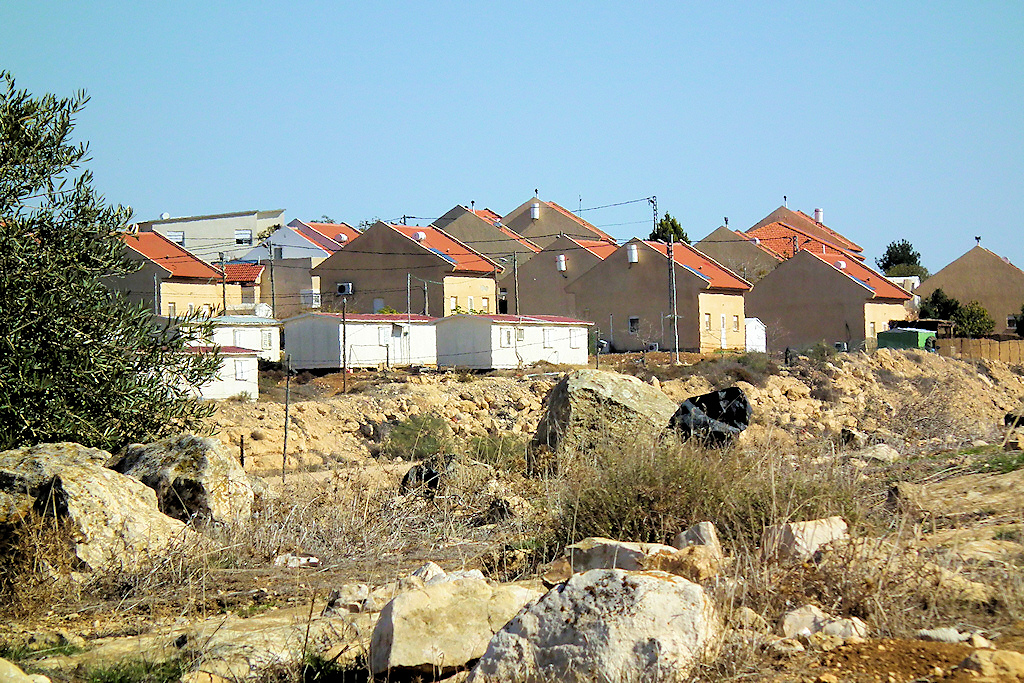
Irtas. On the hill on the left is a Catholic monastery and in the distance on a hill is the illegal Israeli settlement of Efrat. Hope Flowers School is up the hill on the right, just outside the picture.

Before and after the lecture I met two delightful English ladies, ‘the witches of Beit Sahour’ – and Alice, a ‘green witch’ from North Wales, made a third. This was great, because suddenly I was with people with whom I could be open about things I usually remain quiet about.

Most Westerners and nearly all Palestinians don’t want to hear about my psychic work, about my being an astrologer, healer and political mystic, a dissident powered by vegetarian food, meditation and holistic attitudes, with a pedigree and a bunch of perspectives that are right off most people’s map. Not to mention the curled-copper, phi-ratio, anti-gravitational energy-harmoniser I wear round my neck, tucked under my shirt!

One of the witches asked me how I had started my involvement with Palestine. I thought a bit before answering and then came out with it. It was ETs and cosmic beings, the Council of Nine to be precise, in the early 1990s, that started the process. They put the situation on planet Earth into clear perspective, also clearly stating that I had an appointment with this land which I should follow up.

This was followed in the late 1990s by the late Pam Perry, a disabled Glastonbury astrologer, Pisces, who campaigned for Palestine by phone and laptop from her bed, who benignly tricked me into pursuing this sometimes-futile game, bless her. Together with Sheikh Bukhari, a Palestinian, and Eliyahu McLean, an observant Jew, we founded Jerusalem Peacemakers in 2002.

It was also a calling from at least three former lives involved in this region, always a as foreigner (as a Sumerian, a Nubian and a Kurd) yet playing a part in the history of the Jewish people, a jiggling of the soul and a grinding process in my heart which caused me to cut out of the bill-paying, treadmill-treading duties of a typical Westerner and to get involved with this mess. Well, my maternal grandfather was in General Allenby’s army of invasion in WW1, and my father fought in Egypt, so it’s in my genes too.

The ancient holy well at Irtas

They lit up when I told them this, and suddenly they came out with their own secrets about the consciousness and healing work they do. One of them is married to a Palestinian (a nice chap) and the other works as a legal advisor and researcher for a rights organisation in Bethlehem called Badil – but even there they keep quiet about their core beliefs. Their activities and beliefs are not deemed credible, whether from a Western-rationalist viewpoint, from a Muslim viewpoint or from a modernist-Palestinian viewpoint. So people like us keep quiet. But we had a profound sharing together, like a secret cabal, and it was refreshing.

We had a fine time in our corner at the AIC until it was time to go home – Bethlehem closes down early, and the chances of finding a taxi back to Al Khader decrease rapidly after 10pm. Nevertheless, as I wandered out, steeling myself for a long and chilly wait, a taxi drove past and stopped for me. It turned out, as is nowadays increasingly the case, this taxi-driver had carried me before in a former year, and we chattered on the way back, he in his broken English and me in my patchy Arabic, until we reached the school. The lift to the top floor was defunct, thanks to the recent electricity cuts, so I climbed the stairs. There was another electricity cut while I was writing this piece, and I gave thanks for being on a laptop with a good battery!

Hot water bottle time, and the customary shivering as my bed warmed up. Ah, I love living on Planet Earth – well, sometimes, at least. Other times, my guardian angels watch me, fascinated, as I struggle and persevere through the facts of worldly existence, and wondering what’s to come next.

Well, inshallah, I have a visitor from Glastonbury (Liz Pearson) coming to stay, and a report to write, and a load of other issues to get to grips with. Now it’s time to put the kettle on – classically bloody British behaviour. Would you care for a cup of tea in Bethlehem?

Ooops, the lights have just gone out again. The mobile phone network goes down too, at the same time. Well, one thing is for sure: it’s probably not the Israelis – it’s crummy power equipment, suffering a hangover after the wind and rain. A funny consequence of this is that many of my neighbours emerge from their houses when this happens, because their electric heaters and TVs have gone off! We really do need a green intifada, and PDQ.

Sunday Meditation

You’re welcome to join the weekly Sunday meditation this week.
It’s at 8pm UK time, 7pm GMT, 8pm in Western Europe, and for other places, plus more details, check out times lower down this page: www.palden.co.uk/meditations.html

This week I’m going to pay attention to Israel-Palestine and also to Sudan – in both places the virus of violence is running rampage. It’s as if, as Syria and Yemen die down as conflicts, the virus has shifted. The earthquake in Syria tapped and released the conflicted feelings of people in the Syrian civil wars, taking the fire out of the conflict. Yemen, meanwhile, has demonstrated one of the most regular causes of peace – sheer exhaustion.

It’s important not just to try to impose peace – this doesn’t necessarily heal the causes of conflict. What’s important is to seek to transform the sheer expression of violence and resentment into something that does something – something to address the fundamental causes of the problem. This requires some imagination and exploration.

Palestinians in Manger Square, Bethlehem

It means that people might suffer or die, which is tragic. But if hardship and death lead us toward a realisation that resolution must happen, this is more valuable suffering – a soul-sacrifice, in a way, which might save lives and hardship further on in the future. What is most important is the collective learning experiences that build a basis for resolution.

The Elders, Mary Robinson and Ban Ki Moon, have made a strong statement about this which is worth a read (link below). What they say about the demise of the two-state solution between Palestine and Israel isn’t new – it was visible 15 years ago at least. But at least they are acknowledging that the two-state framework is now obsolete, and a more fundamental rethink is necessary – this is back now as an international issue (itself an important development).

In Sudan, the eruption of wild violence is such a sorry thing. Sudan has so many unhealed wounds, from recent decades but also it goes way back. It is by nature a mature nation which could have a steadying effect on the Middle East, where an experiment in people power had been thriving until this dual coup d’etat fomented by two fighting generals and their men, overriding the people’s movement – and this, globally, is a worrying sign of our times.

So, if you’d like to join in, please consider the thoughts above. Praying for peace can work before a conflict erupts but, once it has started, it’s necessary to make use of what is happening, seeking to turn it to a more positive direction, to create situations and openings where positive developments may emerge. Sometimes a showdown or even a tragedy is necessary in order to turn around the local and the global consensus. Sometimes a ray of light needs to come into the situation in an unexpected way.

With love, Palden.

Here’s the Elders link: https://theelders.org/news/elders-warn-consequences-one-state-reality-israel-and-palestine

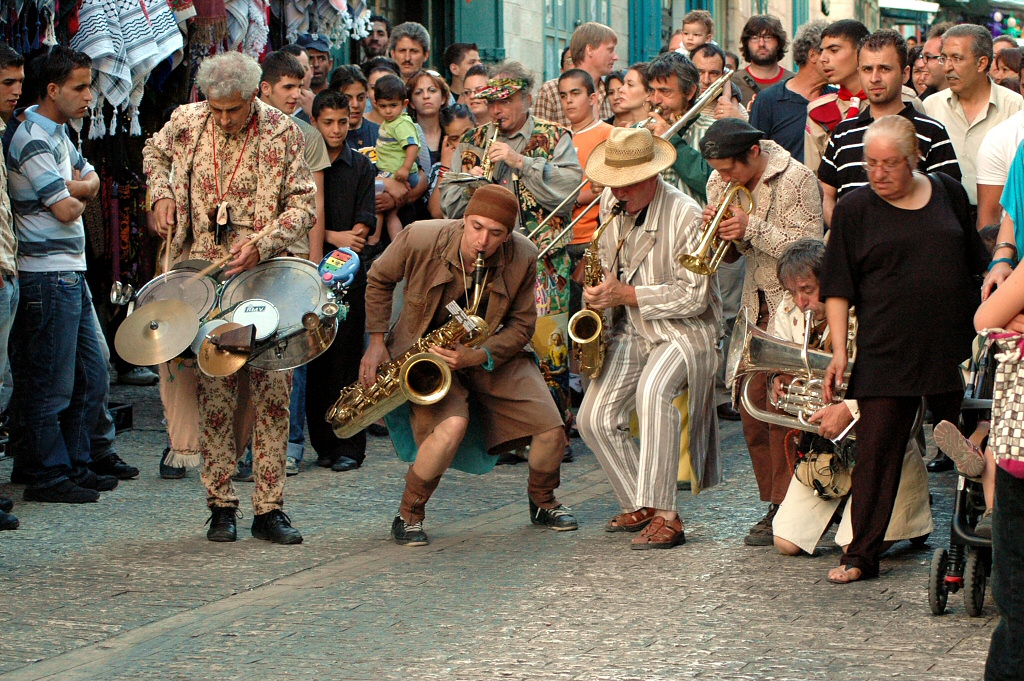
Some Austrian musicians who once came to Palestine to entertain and uplift the locals in Bethlehem – and the locals loved it.

Women’s Empowerment

A number of people liked my previous blog about Palestine, and here’s a related one from the same unpublished 2011 book Blogging in Bethlehem. It’s about women’s empowerment courses at the Hope Flowers adult education centre in Deheisheh, Bethlehem.

Monday 6th June 2011, Bethlehem, Palestine

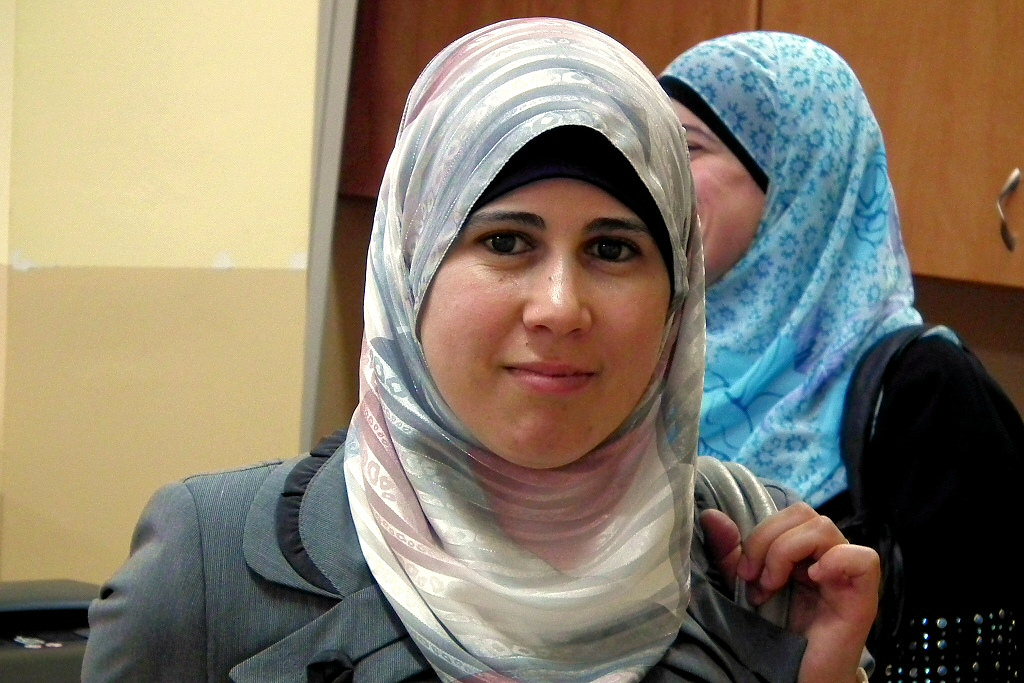
“Where is your wife?” I was being asked this by a lively young lady of about eighteen who wore the full niqab. Not many women in Palestine wear them (Palestinians don’t like religious extremism), and most of them are young. “Er, I have no wife…”. It was tricky to explain further. “Oh, I am sorry.” I guess she assumed I was a widower. It was one of those situations where cultures scrape against one another, and there was no opportunity right then to reconcile the dysjunction.

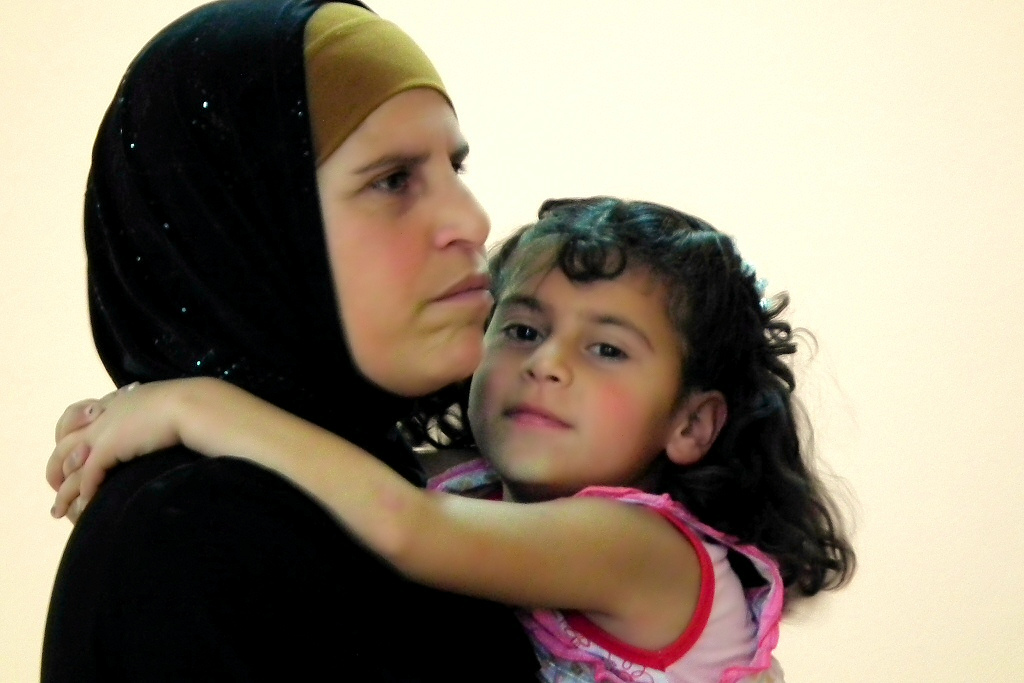
Niqab and hijab – daughter and mother

She liked me and spoke good English – a thoroughly modern young woman. Her sparkly eyes shone through the narrow gap in her niqab. Her mother, wearing a normal headscarf or hijab, came up, visibly proud of her rather intelligent daughter, who was busy explaining to me how Islam is the only truth and how I ought to become a Muslim. She pointed out some verses in the Qur’an (though it was in Arabic, so I pretended to understand) and, rather touchingly, she gave me her own pocket Qur’an. This was an honour, a gift from the heart, I could tell.

In an Islamic kind of way, this young lady is a feminist. Wearing the niqab demonstrates her reservations about modern ways and the sexual and psychological pressures modern women experience. She wasn’t doing it for her parents (I checked later) – it was her own teenage life-choice. This movement of young Islamic women has some parallels to the bra-burning feminists of my generation many years ago, declaring that they are not just the appurtenances of men.

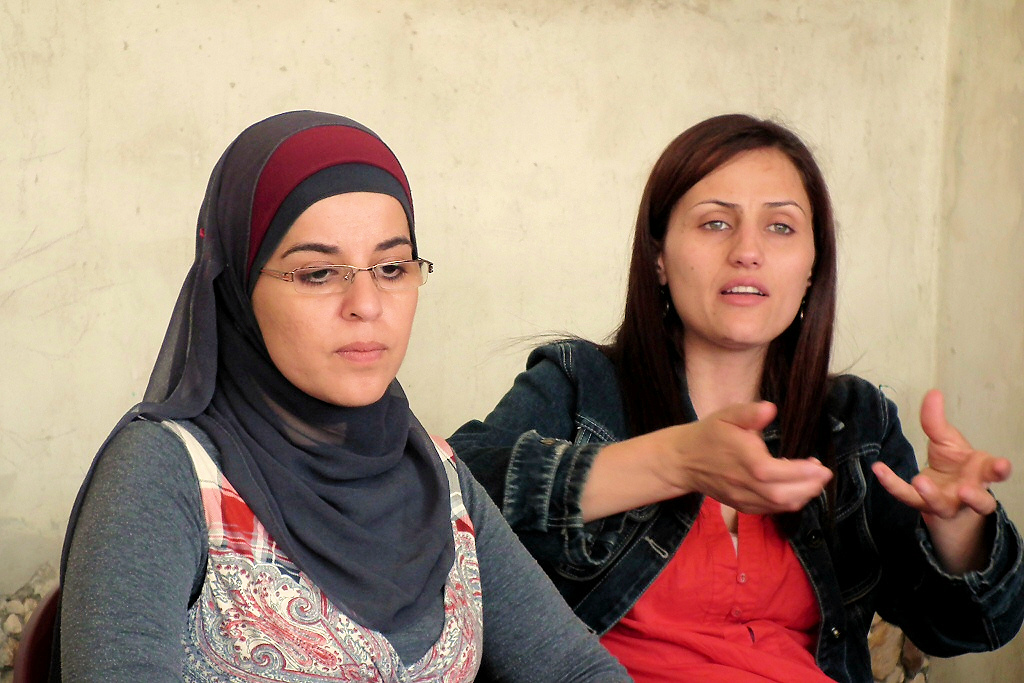
I had been at a women’s empowerment course at the Hope Flowers Centre for adult education at Deheisheh. Deheisheh is a part of greater Bethlehem (population 100,000), dominated by a large refugee camp, a community for the underprivileged. The Issa family had once lived there and worked their way out of it, and they deliberately put the centre there. The thirtyish women on the course came mainly from surrounding villages, with some from refugee camps and a number of educated women from Bethlehem. Some were illiterate and some had degrees, and Hope Flowers intentionally mixes them so that they can share the relative merits of both education and the lack of it. Apparently the educated ones initially had reservations, but these soon disappeared.

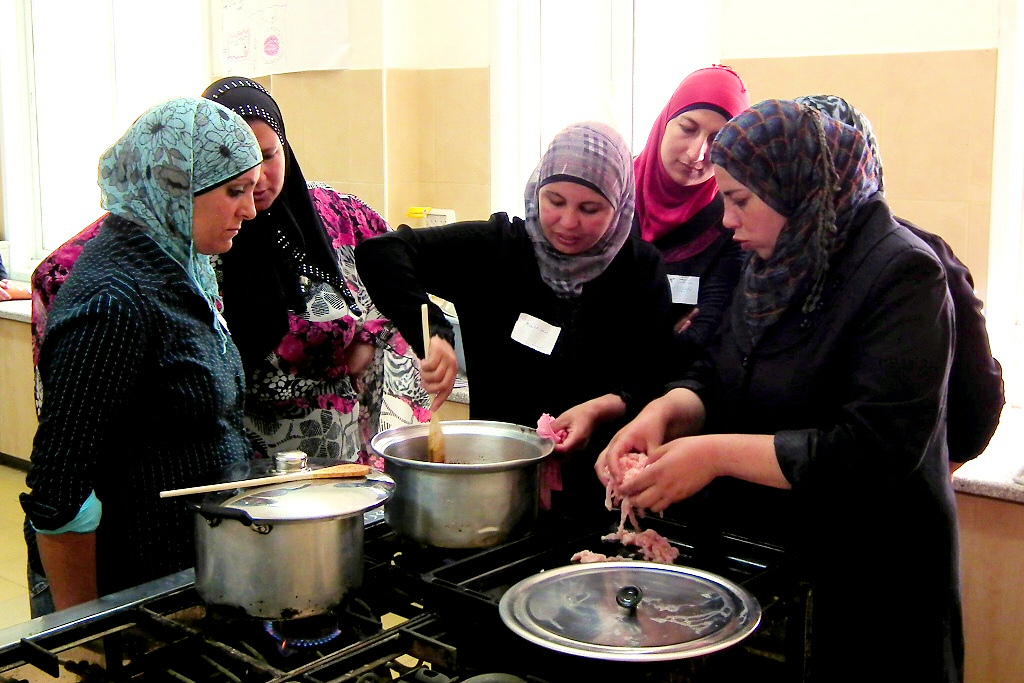
Today the subject was food hygiene. The purpose is to give women the necessary training to start cooperatives and create work for themselves. They were studying microbes, hygiene and infections, as well as nutritional issues, proteins, carbohydrates and balanced diets. They discussed the E. coli
outbreak in Europe at that time, fascinated that even in hygienic, chlorinated Germany and Britain such infections could occur. I told them that this is one of the consequences of industrial-scale food production.

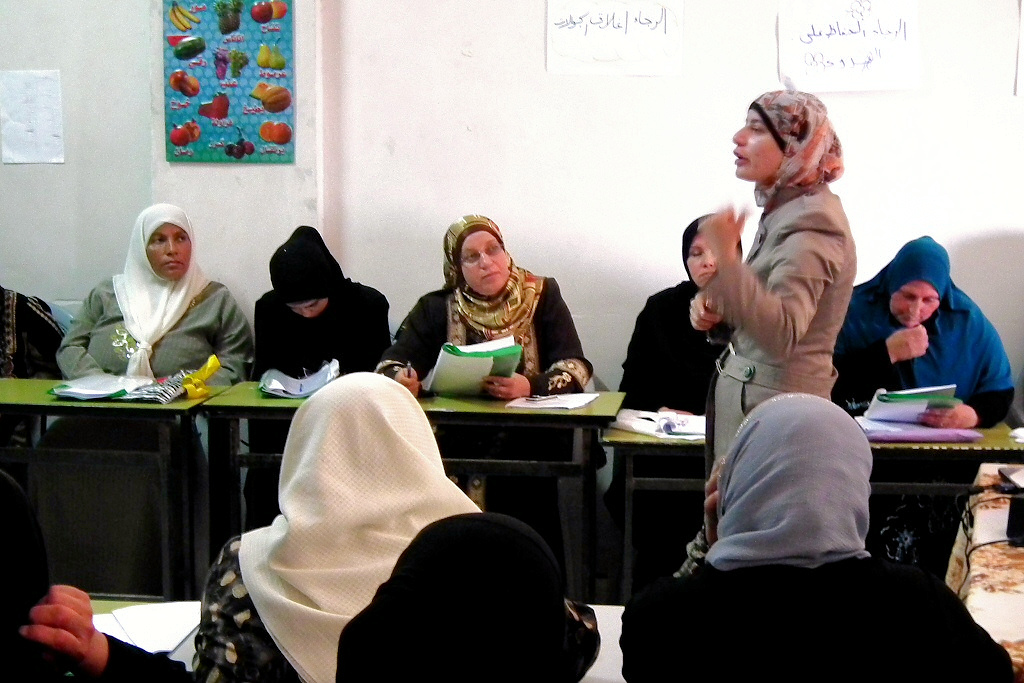
The lecturer, Ibrahim Afaneh, who had done his doctorate in Belfast in the late 1990s, was brilliant. He had them enthused. He knew his stuff about good practice and quality control in food production, and he had good teaching technique, eliciting the ladies’ engagement and existing knowledge, getting various of them to teach what they knew to the others. When someone made a good contribution, everyone would clap.

This is only one segment of the women’s course. Another concerns group counselling, family therapy and self-development. Tomorrow, Tuesday, I’m also going down to Yatta, south of Hebron, with Ibrahim Afaneh, to watch another course in progress. Many of these women are so poor that providing for their transport is a vital ingredient in guaranteeing attendance. But enthusiasm levels are so high that it strikes me the women don’t need much incentive, only help getting there.

Ibrahim Afaneh invited me to speak and, though I had reservations as a man about teaching on a women’s empowerment course, it was clear that, to them, this was a unique opportunity because I was behaviourally non-sexist, and they loved having me around. Ibrahim, who had lived some years in Britain and also had it in his nature, as many of the more liberal Palestinian men do, was pretty good at non-oppressive male behaviour too. He was training women to do his job.

I shared some of my knowhow acquired from being a longstanding wholefood vegetarian. They didn’t know that the best source of protein is nuts (plenteous in Palestine), or that sesame seeds and tahini, a dietary standard here, provide the full range of amino acids which themselves facilitate the absorption of other proteins. At one point I asked them what the most important ingredient in cooking is. They suggested quality sources of foodstuffs, hygiene in kitchens, balanced diets… and then, after a pause, one of the illiterate women said, in Arabic, immediately translated, “The whole of your being”. Yes! She was closest to the point I was making: love. “If you cook with love, you bring Allah into the food, you heal people and it’s just like painting a picture or making music.” They all laughed, nodded and clapped.

We had a great time. I took lots of photos. I shall write a report for the course’s UK funders, who have thus far provided 80,000 GBP over three years. A Quaker trust connected with Clark’s, the shoemakers, they fund women’s empowerment projects throughout the Muslim world. They are one of the few funding sources for Hope Flowers who have been steady, understanding, progressive and non-neurotic in their approach to funding.

Here I could see what was really happening at this course. These women aren’t fools, and they are not dazzled or easily tricked: they have a large fund of commonsense, they’re highly motivated and, were there anything spurious about these courses, they would leave like a shot. But no, they were excited, bubbling, rapt, eager to engage – and clearly their acquired knowledge would spread around their communities, leveraging the educational effect of the courses. Which is precisely what Hope Flowers sets out to do: it has a social philosophy of setting out to strengthen society.

Several women had turned up late, wanting to join, following reports from their friends. Maram (Ibrahim Issa’s wife), who runs the courses, told them the course was ending so there was no point, but they insisted and joined in. The young lady in the niqab and her mother were two of them, and later they emerged inspired. What I read from this was that observant Muslim women, while their ideas about self-development might not accord with those in the West, nevertheless are taking the modern world by the horns and striving to make something of it, but within their own context and way of seeing things. Modernity doesn’t involve just emulating the West.

Ibrahim Afaneh invited me to introduce myself. I told them I had started out in my adult life in the revolutions of the late Sixties, that I understood and supported the recent revolutions in the Arab world and, though I was British, I did not on the whole agree with the government and conventions of my own country. They loved that. So did I! I must confess that it is good to be welcomed and respected for this since, in Britain, being a dissident brings disadvantage, it’s a disqualifier and a source of disrespect. Being a dissenter here is seen as the sign of respect. But I felt duty-bound to bring them some tougher truths too.

Talking about proteins and nutrition, I mentioned how meat production uses up far more resources and land than what is involved in production of vegetable proteins. The seas are being fished out too. This is unsustainable. Something must change with protein consumption worldwide. Throughout history, most people have been 90% vegetarian and 10% meat-eating – meat and fish are dietary supplements, and their over-use today ruins the Earth. During my lifetime the world’s population had swollen from three to (in 2011) seven billion, and industrial meat-production and fishing cannot continue as they do if humanity is to survive in peace, justice and decency.

Much nodding: they knew this, but I think they appreciated someone articulating it clearly. I added that I had no stomach hanging out in front of me because of my chosen diet. Immediately there was excitement: it turned out that one-third of the women had lost weight in the last two months as a result
of dietary changes they had made in connection with the course. One woman said, “Look, the happy in me!”. She had lost twelve kilos. This training had significant consequences for the ladies – and other segments of the course included counselling, family therapy and open discussion of women’s issues which, for many, was the first time they had encountered this. This was a liberation course, tailored to them.

Yatta. Here the women are generally older, re-starting their lives after being thrown off their land by settlers and army

Finally I said that they will know that peace and justice have come when men do a lot of the cooking and raising of families. This raised the roof! As a Western eccentric I can get away with saying things like this, but I’ve also been privileged to be part of an historic change in gender balances in the West, even though it has at times been hard, and men like me, only 25 years ago, were still branded as failures and wimps.

Tomorrow I go with Ibrahim Afaneh to Yatta, south of Hebron, to witness the women’s empowerment course there. Yatta is an area where there are many illegal land-appropriations by Israeli settlers, and Palestinians there feel ignored and marginalised, out of the world’s sight. The area has many Bedouin, who sit at the very bottom of the apartheid pile in this segmented land. Many of their villages are unrecognised and deemed illegal, especially when they stand in the way of Israeli expansion.

This afternoon, having only just arrived back in Bethlehem, I went around town buying pots, pans, utensils, a lamp and other bits for the apartment where I am staying. I had done this two years ago too, but they are all gone – dispersed no doubt around the building or down some community black hole. This is one of the challenges of operating in Palestine – it’s a high-level chaos zone, and if you like order, you’ve got problems. It’s partially to do with Arabic cultural elasticism, to put it politely, and partially to do with living under occupation. Conflict has thrown Palestinians into a mindset of perpetual firefighting, living quite spontaneously without plans, systems and rules. So, when someone walked into my apartment while it was empty, seeing something useful, they ‘just borrowed’ it – and perhaps someone else just borrowed it from them, and off it went and was put, no doubt, to good use somewhere else. I hope the kit that I have just bought stays in the apartment in future. I’m going to get a Bedouin rug too – make the place more comfortable.

Later I had another challenge. Arriving back home tired, it took me fifteen minutes to realise that the reason the kettle wouldn’t work was that the electric trip-switch had killed the power. Then, later, with cuppa in hand, I fired up my computer to start uploading my blog entry and found the internet router downstairs was dysfunctional too. Of course, predictably I had no key to access the router. Another exercise in existential flexibility. Hopefully I can do the uploading tomorrow morning before heading off to Yatta.

Trainee women’s empowerment teacher, Sana

We have internet apartheid here. Israel has hot fibre optics linking it with the West. But Palestinian internet goes by slower microwave transmission to Jordan – the Israelis won’t permit fibre optics or anything more than 3G mobile connectivity – then down to Dubai, where a big fibre-optic ‘pipe’ leads through Saudi Arabia to Egypt, under the Mediterranean and into Europe. Actually, it later passes just 2km from my home in Cornwall before heading out over the Atlantic to America. When President Mubarak, in his last days, shut down the Egyptian internet, you can bet there were high-level phone calls from Riyadh, Brussels and Washington DC instructing him not to shut down that pipe. Had he done so, the world could have pitched into another serious financial crisis. The Palestinians would probably have survived it better than most – survival is one of their acquired skills.

At Tuwani

Here’s something I wrote 12 years ago in a book I did about Palestine which was never published. A short interesting read from that time…

An Eclipse and a visit to At Tuwani, 16th June 2011

I discovered a setting on my camera that I didn’t know existed until the very end of the lunar eclipse. Eclipses can be times of revelation! It removed the problem, classic for digital cameras, where the contrast between the light and the dark sides of the moon is too emphasised for the subtle details of the moon’s pocked surface to be seen. Even so, witnessing the eclipse from my eyrie at the top of the school was a privilege.

When it started there was a full-scale racket going on in Al Khader – loud music and the customary summer evening pandemonium of this town, spiced with the barking of dogs and the croaking of geckos. But as a slice began to be cut from the moon, gracefully arching over the Israeli watchtower, the area fell silent. Traffic disappeared, the dogs went quiet and all became still. Except for the shutter of my camera. It was late by the time it was over.

Maram Issa (right)

That didn’t stop me waking up at 6.30 the next morning. I’m not sure why I’m waking up so early at present. But it permitted me to rise and process my photos, posting them on Facebook – and the ‘likes’ started rolling in. I had breakfast and waited for Maram, who was picking me up at nine. By ten, having filled time and had a conversation with Mohammed, the school’s educational director, I rang Maram. Oh dear, car troubles. A taxi arrived to pick me up, then a call came to say hold on to the taxi and stay there – we’re coming. Ibrahim’s car soon arrived and Maram and I bundled into the taxi while Ibrahim went into the school, lugging his laptop, bag and bundles of files.

Off we went down the main road toward Hebron. The area south of Bethlehem is interesting because Israelis and Palestinians live quite intermixed with each other, unseparated by the separation wall. This area lies inside the Green Line, the official boundary between Israel and Palestine. This is a collection of Israeli settlements called the Etzion Bloc, interspersed with old Palestinian villages. Or perhaps the other way round, since the Palestinian villages have been there far longer. It’s quite a green, agricultural area.

At Tuwani

We proceeded around Hebron, the third largest Palestinian city after East Jerusalem and Gaza City and the biggest in the West Bank, past Qiryat Arba, an Israeli settlement outside Hebron, into a hilly, rocky district that turned browner as we drove south. This much-disputed area is where the most assertive wing of the Israeli settler movement is, stage by stage, staking out its claim, and where many of the most outrageous settler atrocities take place. We were heading for a village, At Tuwani, where resistance to settlers is strongest. It’s also the place where the women’s embroidery project is located.

The settlement of Ma’on

As we neared the village Maram pointed out several Israeli settlements, such as Karmel and Ma’on, which periodically crop up in the news, home to some of the most assertive settlers that exist. They’re so aggressive that many Israelis disown them, and the Knesset (Israeli parliament) uncharacteristically declared these settlements illegal. That made no difference. This said, a schizoid situation holds sway whereby the Israeli government pays for the building of the settlements (with American money), and the army makes symbolic gestures to clear them, to respond to foreign pressures, while actually reinforcing them and doing donkey-work for them – such as clearing Palestinians off land the settlers want, helping destroy trees and farmland, and ‘defending’ settlers whenever Palestinians push back.

There’s a double American involvement here. American money supports these frontline settlements, and many of the settlers are of American origin. But on the other side, Americans like Whit help the Palestinians, as also do American humanitarians such as the Christian Peacemaker Teams, who accompany and protect Palestinians in risky situations. America fighting against itself in foreign lands? The West plays a strange double game, advocating peace and supplying weapons at the same time.

Whit

We attended a meeting of the women. Whit and Paula were with some of the women from Jaffa and the Israeli production organiser – a nice lady who sits in the more enlightened and principled sector of Israeli society. Whit spoke, various of the ladies spoke, I added my bit and a Palestinian activist spoke.

Then the activist took us on a tour. He first explained the situation. This was tragic stuff. These are old villages going back centuries. The people of Tuwani are simple folk, many of them illiterate. For the last twenty or more years they have been under pressure from the settlers, who have been chopping down olive trees, burning farmland, demolishing the local mosque and quite a few houses, beating up farmers and children, blockading the village and generally making life hell for the villagers so that they leave. The Israeli army has played its part: army units down here are filled with nationalist settlers, opting to be posted here to reinforce the settler incursions.

But the villagers aren’t budging, even though they have put up with a lot over the years. One of the things that makes the settlers pressure the villagers of Tuwani and equally makes the villagers resist them is that two mountain tracks lead through Tuwani to a number of other villages. If the settlers close down Tuwani, those other villages die too.

The men of Tuwani

We were taken up a rocky, dry hill – the trees had been burned down and uprooted by settlers – to see the settlement of Ma’on just over on the other side, a half mile from the village. This settlement was planted on the villagers’ own land. An outpost of caravans in the trees, away from the settlers, was pointed out – apparently these settlers were so radical and insistent that even the settlers of Ma’on had thrown them out.

Whit asked the Palestinian activist how he had got involved. The activist explained how, when he was young, he had witnessed his mother being beaten up by soldiers. Running to rescue her, he was peppered with bullets from settlers and troops, who shot around his legs as he ran. Later he got his mother to hospital. She told him not to be angry and fight back because she would then lose him – he would lose his life or freedom. He asked her what he then should do. She said she didn’t know, but please find another way.

So he studied and adopted non-violent direct action, eventually moving down here once his mother died. He was joined by the Christian Peacemakers and some Italian Catholic activists. I met one Italian who had been here two years, with whom I discussed the stresses and strains of regularly going back and forth between Palestine and Europe and interfacing two very different worlds. It was a brotherly sharing.

He said his time in Palestine was coming to an end because he wanted to get out before he was blacklisted and thrown out forever – and he needed to go home to earn money. As it was, he was here on three-month tourist visas, leaving every three months, returning to Italy for a month and then coming back – but this ploy wasn’t going to last much longer. He was sad about that. We commiserated about how we both had fallen in love with our friends in Palestine, missing them when we were away, yet neither of us could move here.

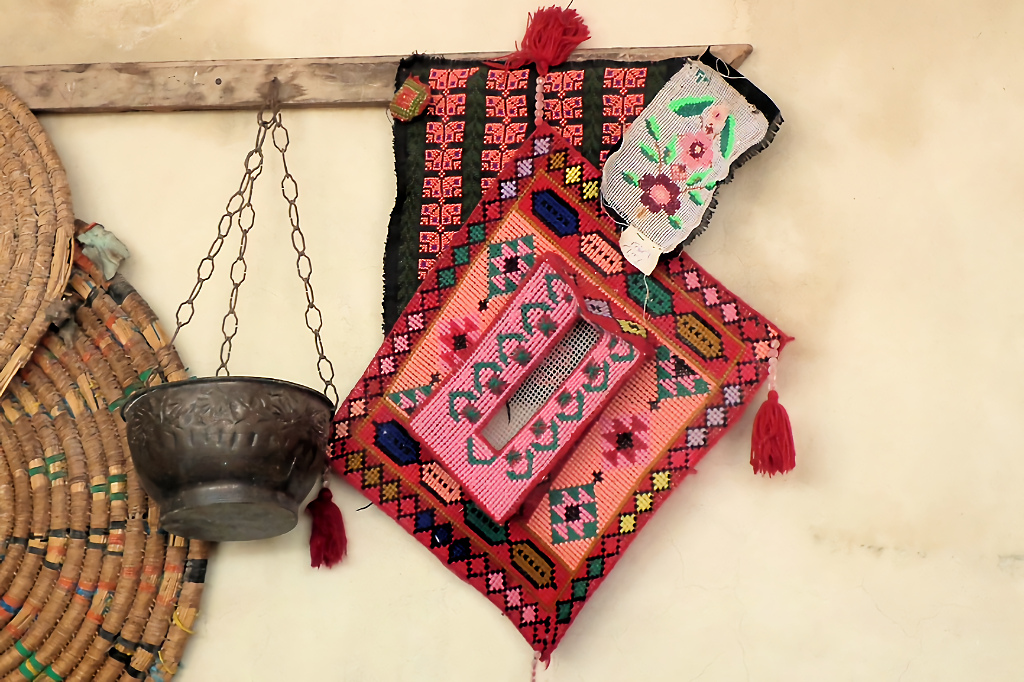
The villagers gave us lunch – far more than we could eat – and showed us other items of their work. Lovely embroidered dresses, bags, belts and other things. I bought a dress for each of my three grown-up daughters, crossing my fingers that the dresses would fit them and suit their tastes (in the end, I’m not sure they did). They weren’t suitable for ordinary wear – they require a graceful style of moving that doesn’t work in the West – or for party wear, but they’re useful for pottering around the house in a relaxed, off-duty kind of way. All of the money would go to the village women: as a foreigner, one must do judicious spending with a view to helping people stay alive.

I would have liked to stay longer, but by mid-afternoon it was time to go – Ibrahim had come to pick us up. I was sad to leave these people – they need reinforcement, interaction and solidarity. But my duties lay back in Bethlehem with Hope Flowers. So we cannonaded up the road past Hebron and I was dropped at the school. I took a break in the late-afternoon sun on the flat roof of the school, reading. Then back to work.

I was nearly half-way through my month-long stay. It was going to be challenging to finish everything. There were friends to visit too, in Hebron, Jerusalem and Jenin. Ah, time: I was reminded of its passing by the outbreak of the calling to prayers from the local mosques. This isn’t just a religious thing: it’s the way Muslims section up their day. Even I, an infidel Westerner, time my day by the muezzins’ amplified chanting – the calling to prayers divides the day into periods which, in this climate, work well.

The previous night, as the eclipse gathered strength and the world went quiet, one muezzin was chanting the ninety-nine names of God. I guess it’s ninety-nine because the hundredth is beyond expression. These ninety-nine names describe divinity in all its aspects. There is, to Muslims, but one God, with no other complications – no sons, holy ghosts, angels or cherubim – just Allah, with ninety-nine facets. By the way, Arab Christians, the very earliest of Christians, use the term Allah as well as Muslims – it’s not uniquely a Muslim term. And it is pronounced Al-Lah. The God.

As I concluded writing this piece, a donkey called out in accidental synchrony with the muezzin, croaking plaintively, reminding people it was there. Or perhaps this was Allah’s ninety-nine names elucidated in donkeyese. Great Spirit expresses itself in remarkable ways.

I wrote this piece while working at the Hope Flowers School in Bethlehem in the West Bank 12 years ago. Here’s the school’s website and here’s a piece I wrote about Hope Flowers and its history and background. For my 2012 book Pictures of Palestine – a humanitarian blogging from Bethlehem, go here.

Conspiracy

for the perplexed

Well, this episode could lose me a few friends… though in the interests of free thinking, the contents of this podcast might deserve a listen.

Either that, or perhaps you’re feeling a bit confused by all this conspiracy malarky, and this podcast might help put things in a little perspective.

We  need to get this matter of conspiracy into proportion. It’s a polarised, zero-sum issue for  most people – we believe in conspiracy theories or we don’t, black or white, but we need to look at the space in between, the shades of grey.

The answers aren’t straight and simple. There’s truth and falsehood  in the conspiracy game, and it’s important not to gobble up ideas because they sound plausible, they fit your picture or they look like a  conspiracy.

But don’t reject it all either, just because it’s smoke and  mirrors, it makes you feel uncomfortable, others disapprove or authoritative voices pass it all off.

Here, I give my own considered assessment, in thirty minutes.

Intro and outro with the springtime birds of Botrea, offstage noises from Betsy the farm dog, and music by Galen Hefferman in Oregon.  34 mins.

Go to: Palden’s Podcast Page

With love from me, Paldywan Kenobi.

Photos below by Claudia Caolin

Quacking Fakery

It rained. It’s strange for this to be important in a customarily wet country like Britain. But it rained down’ere in Cornwall.

We’ve had the best sunny weather in Britain in recent weeks, and we got the first rain – it came north from Brittany. I had been away for a few days in East Cornwall and, as the train home neared Penwith, the landscape changed colour and smell. It had rained.

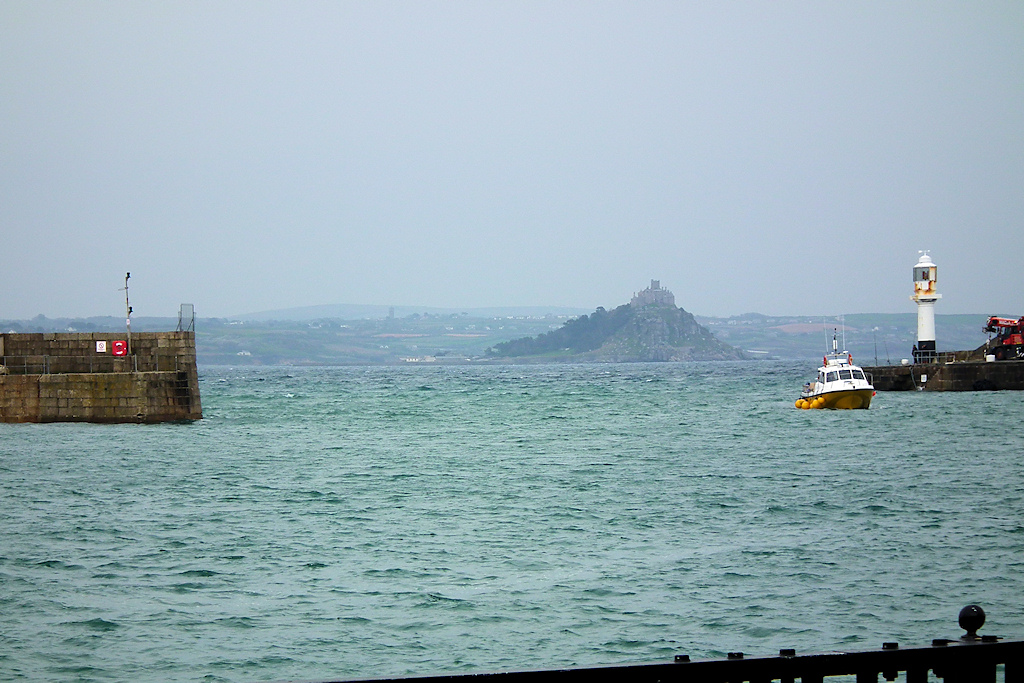
The last two miles of the trip, pulling into Penzance station, is the best bit – cruising alongside the waves of Mount’s Bay, with St Michael’s Mount standing there majestically like a mythic castle transplanted from Gondor… When you return on the train from London (takes 5-6 hours), it’s like the real world opens up before you, bathed in the light of Penwith.

It was good to get away from home, to see things from another viewpoint. I seem to have been facing a variety of adversities for a really long time, and feeling rather locked into a loop where seemingly I had to accept a lot and couldn’t do a lot to change it. So going away was good, to spend time with an old friend I’ve known for forty years. It really helps to be in the company of someone who’s seen me through various chapters of life – there’s a mutual understanding there that I appreciate. Being a rather incomprehensible and inscrutable one-off oddball, it can mean a lot.

Regarding adversities, one thing I give thanks for is that it has really pushed me. With reduced capacities to handle things in the way I used to, instead I can draw on a tankfull of experience. That’s a blessing of old age – you’ve done it all before. Well, kind of.

Each day, spending a lot of time alone, I have rather a lot of available time, so I can go gradually though things to get them right. Takes ages. On the whole I think I’ve dealt with it all quite well – with a few errors and misjudgements thrown in. Could have done a lot worse.

The tide might even be turning, you never know, and the various nightmares I’ve been through might turn around. Perhaps I was being tested. After all, it is always the case that there is more to life than this, even in late life. Or perhaps life just gets like that sometimes, and it needs no reasons for doing so. Now that’s a thought.

Going down with cancer in late 2019 (or up, depending on your viewpoint), I decided to try to resolve as many as possible of the patterns of my life before I died. Actually, some of them have moved much further from resolution since then, becoming more complex and irresolvable. This has been disconcerting. Part of the reason for this is my own reduced capacity to remember, manage and handle things. They call it ‘chemo-brain’ but I find it’s ‘chemo-psyche’, since my capacity to process emotional and profounder things has changed too – it’s not just about brains.

But I’m being taught something here as well. Life’s been throwing googlies. I had a strange one recently. The cancer drugs I’ve been on produce funny neurological symptoms – funny feelings around my body. Well, some weeks ago I thought I had nits. But a few examinations and treatments have shown nothing at all there. It’s another of those funny neurological things. But the interesting thing is what this phenomenon put me through, in terms of self-esteem, feelings of failure and no-goodness, and all the stuff I’ve been carrying all my life that, only in late life, is coming clearer and visible. And I didn’t have nits!

I’ve written earlier (somewhere in this blog) that, as we come close to dying, we go through a progressive loss of control. When we are actually at the point of dying, there is absolutely nothing more we can do. It’s over. It’s all about what we truly have become – not what we aim, try, aspire or pretend to be, or avoid being, but what we have actually become. Not where your eyes are looking, but where your ass truly is at. I’ve wondered whether this escalating disarray is a kind of overload-lesson, to teach me to disengage further from at least some of life’s complexities.

For I am slowly deteriorating. My back is weakening, and I have a physical stomach issue and osteo-necrosis, and these are consequences of my cancer but having a worse effect on me than the cancer itself (I’m doing well with that). As I get worse I shall need real support (not just advice, which I get lots of), and I’m not currently managing to manifest it. So this might cause me to cut out earlier than otherwise I might. For me, the point of death is not exactly a medical thing – it’s more to do with willpower and how much I’m motivated to carry on.

You see, if you see your death as a home-going, it’s rather different. Most people see death as a loss or a departure, with little sense of what they’re heading towards. I’m rather looking forward to it, to be honest. So I’m not gnashing my teeth over dying – it’s living that’s more troubling. It isn’t about being on planet Earth – I quite like it here – but it’s more about living in the particular kind of civilisation we find ourselves living in at this moment in time. I’ve always felt a misfit. This might be the case for you too.

But there’s a job to do first. I’m not quite finished. After all, it’s a bit of a waste of time leaving before you’ve done what you came for. Earth is important for the progress of the rest of the universe, and many of us came because of that. Most people don’t realise Earth’s importance. This problem arises from the strange belief that we’re the only intelligent beings in this universe, and that Earth is a godawful provincial planet that we somehow got stuck on… and look at the mess we made of it. Well, there’s a larger story than that. I can’t relate it here, but I’ve done so in a few of my podcasts and podtalks (see notes below).

So these adversities have faced me with some quite big questions. One that I was facing during the winter was this (regarding the Africa mission I’ve been on): do I prioritise my own financial position and security, or do I let a person that I know and like die? That’s been quite a sharp question, often with only minutes to answer it. I had to face it several times, and it was difficult. But I’ve made my choices and stand by them, for better or worse.

Sometimes I find it really demanding to turn a problem into an asset and advantage, but that’s what I try to do. At this point in time it feels as if a coin is spinning in the air, in slow-mo, regarding all the various show-stopper questions coming up in life right now.

In a way, we all came here to get ground down, between rocks and hard places. We’re here to get burnished by struggling through impossible conditions. We enter life naked and helpless, and that’s how we leave it, and everything that happened in between is quickly blown away in the winds of time, well and truly forgotten and gone. We all have multi-generations of ancestors, hardly any of whom we know or remember – and, like them, you’ll be forgotten too. Even those who go down in history are often remembered for things they themselves might not want remembering for.

I became aware of this once on the Isle of Iona in Scotland. I ‘met’ Saint Columba, and he was troubled. In his view, everyone remembered him for the wrong reasons. He’s fondly regarded as a saint, but in his view he was a murderer, doing penance for his sins. This is what can happen for people who make a mark on history: what they’re seen as and remembered for doesn’t necessarily correspond with their own experiences and their own assessments of life.

I write this for the person who not long ago accused me of being a complete fake. Well, there’s truth in everything, dear sister, and you’re right. And also, as it happens, you’re incorrect. Fakes tend not to stake their lives on the kinds of things I’ve been foolish enough to stake mine on. Though you’re entitled to your opinion. It’s all in how we see things, really.

Talking of how we see things, it’s meditation time again on Sunday (and every Sunday). 8pm UK time, 7pm GMT. All the details are here. You are welcome to use up a precious half hour ‘doing nothing’ with us, if you so wish!

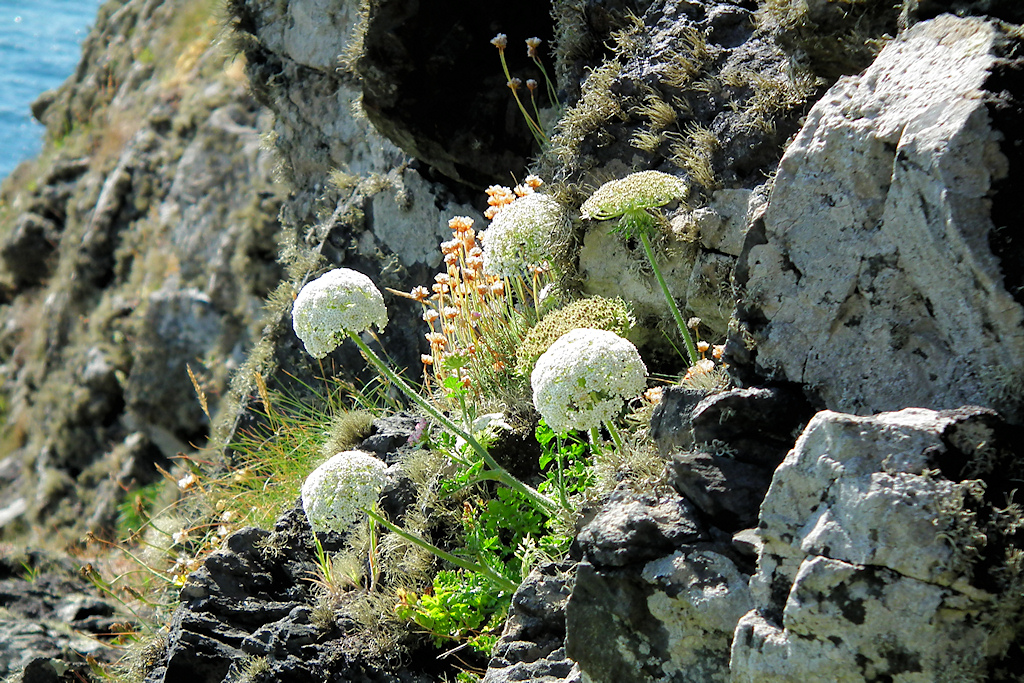
The photos from a lovely place in East Cornwall that I forget the name of, in the Lynher valley on the side of Bodmin Moor, near Rilla Mill.

Oh, and I’ve made a new soul-friend. The funny thing is, I’ve never seen a picture of her, and we might never meet in person, but we have done a lot of psychic and rescue work together since December, and it has been remarkable for us both. Maa Ayensuwaa, queen priestess of the Ayensu River in Ghana, wishes to send her greetings to you. She is a healer and priestess of the Akan or Ashanti people, who have deep roots stretching back to the same roots as ancient Egypt, and their cosmology resembles the Jewish Tree of Life.

Greetings to all of you from me too, across the void. Paldywan loves you. Don’t go away… because, inshallah, there’s more to come.

Palden

A podtalk about the significance of Earth (1h 17mins):
www.palden.co.uk/podcasts/PPArchive-Millnm3-LifeOnEarth.mp3

Further podtalks are here:
www.palden.co.uk/podtalks.html

Website and archive:
www.palden.co.uk

Conundratisms

Carn Gloose, Penwith

One who Speaks does not Know.
One who Knows does not Speak.

Discuss. This issue has been rather a preoccupation for me throughout life. Not least because I’m articulate and reasonably persuasive. It took until my mid-thirties though for that articulateness to really come out.

Over the decades I’ve created yardages of verbiage in writing and sound, onstage, radio and video and in groups, so does this make me someone who does not know? Well, it could be true. I could, after all, be twisting your brains in a very nifty way, so that you don’t notice. I might be manipulating you, deluding you.

And there would be truth in it. Not the whole truth, mercifully.

Besides, I find I can’t just rattle off stuff just to fill column inches, sell something or meet a deadline. So I didn’t become a journalist or copywriter, even though I could – I can’t just write stuff to fill space. I find I have to wait until something meaningful and creative comes up, something to really write about. It has to come up and out.

Gurnard’s Head, West Penwith

One gift cancer gave me is reduced concern about my career path – a release from the ties of what I believe other people believe about me. Or, as a blogger, a compulsion to write stuff just to retain eyeballs, for fear of losing readers if I don’t. There are times when I go silent. My feeling is that, without originality, my work is second rate – and I’m a Saturnine Virgo and relentlessly self-critical in these things.

But the funny thing is, the more I’ve got used to this, the fewer the quiet times have become – what some call ‘writer’s block’.

There’s an advantage to self-criticism, in the long term – as long as you relax about it as you mature. Since self-critical people set high standards for themselves, they do actually rise to some pretty high standards. Even if, when they get there, they’re still digging away at themselves and running themselves down.

With some of my writing, I go over and over it again and again. And again. Neurotic. What often shocks me, positively, is that I post stuff online that I think is, well, good enough, when readers enjoy and appreciate it in no uncertain terms and it seems to be far better than I’d have guessed! Phew.

I have a retrograde Mercury in Libra that mulls things over a lot, attempting to reach a balanced view. So I go though periods of quietness, mulling and cogitating. Sometimes I might be having an Aspie meltdown, where everything gets terrible tangled, to the point where I’m short-circuited and go into a space of aghast inner blankitude, like a rabbit caught in headlights, a sort of void space out of which, at some point, there suddenly springs a guiding light of an idea and… ping, I’m back – I got it.

Then I’m off again. One of the little gladnesses I’ve had is that I’m a good reserve speaker – someone who can be called in last minute because another speaker dropped out. Give me ten minutes, a mug of tea, and tell me how much time I have, and I’m off. Mercifully, as rather a polymath, I have a number of subjects up my sleeve that I can rattle on about in quite a fired-up way.

I had to learn how to do that, and it broke through when I was about 32. I discovered that, no matter how much I planned my talks, the best were those where, at the beginning, I found I had no idea at all about what to say, even if I’d prepared something. I just had to set aside my fear, take three deep breaths, take in the audience, and start with the first thing that came into my head. Nowadays, it just comes naturally.

St Michael’s Mount from Penzance harbour

I wouldn’t call that channelling. It draws on my own knowledge, experience and character. But there’s something where, if Friends Upstairs want to drop something in, it’s easy for them to do so. Sometimes I get nudged, occasionally jolted. Sometimes they pull the plug on what I thought I was about to talk about, and I launch in deep, straight away, into something that feels like it’s coming out specially for the particular people in the audience. I’m always amazed that, when people tell me the clincher for them, it’s a really wide variety of my utterances that they mention. It’s fascinating.

But at the end of a talk I can feel a bit bereft because I can’t remember what happened – I’m the one that missed it.

So I’m fine about being filmed or recorded, because it helps me know what I’m actually saying to people! Not only this but, sometimes, when I’ve heard a recording afterwards, it’s as if some of the stuff I said was precisely for me – me teaching myself out loud, in public. Other people seem to like it too, which is a relief. So it balances out – Mercury in Libra.

I’m not one who repeats myself too much, and working from notes doesn’t work for me. I often have three or four talking points in reserve, and I cycle around those, but that process is still spontaneous, a wandering, a looping and a returning back to base. These anchor points kinda keep me on track amidst a wide ocean – a Gemini Mooner like me can go off sideways and add too many footnotes, so that people can’t remember what on earth I was talking about.

Gurnard’s Head again

Part of the reason for this is that it wasn’t on earth. But I have had to learn how to anchor to a few key points, to give my poor audiences a few memorable nuggets to lodge in their brains. Judging by the ramblingness of this piece, I still need to learn it, even at my age.

As a Gemini Mooner, one of the issues I had to learn was this. People remember three things. Repeat: people remember three things. In any talk, book or radio programme, I always try to look for three core points that need bringing through. I might not know how I’ll do it, but I kinda flag them up in my back-brain for covering. If I don’t do this, I go into too much intricacy and people can lose track. It was an interesting talk but they can’t remember what it was about.

What’s changed, since I had cancer 3-4 years ago, is that, more and more, I find myself anchoring back spontaneously to a wellspring inside. I clear my psyche, the process starts up, something comes up and off we go.

This very blog is an example. I was sitting there drinking rose congou tea, contemplating Lao Tzu’s saying: One who Speaks does not Know, and One who Knows does not Speak.

Well, that’s true. But there’s a way round it. The resolution of this dilemma comes spontaneously. Part of the deal is that, when it comes, it’s necessary to get down on it and write it there and then. Because that creative streak doesn’t stay. It’s a momentary thing, and part of the creative process of the universe. It speaks for that moment. If you don’t catch it, like a sailor with the wind, it comes and it’s gone.

So Lao Tzu’s statement is true. I as a voluble person need to take note, repeatedly. Yet it has something to do with the message and the vibe that’s concealed between the lines. It’s that direct mind-to-mind and heart-to-heart communication that hides behind the clattering of expressed words. Something that AI will have difficulty falsifying since AI is imitative, not originative. It doesn’t come from that wellspring.

Up to the 18th-19th Century, it was part of an author’s remit even to use flexible spellings, even on the same page – and that was part of the poesy of prose.

True authors are here to authorise authoritative authenticity. I didn’t go on a creative writing class – I just did the however-many thousand hours and years needed to gain a certain mastery in the craft of wordsmithery. That where those aspects of life that we habitually consider to be problems can become assets in disguise. I’ve been complaining of aloneness in the last two years and, well, it has given me space to create. To do so, it’s necessary to be alone and ‘antisocial’. Life has its strange compensations.

That’s a realisation that particularly comes toward the end of life. Everything has its compensations, its reason for being as it is, or was. Often it’s not at all easy to see how this is, when we’re busy struggling through life’s relentlessly tangled web of attention-seeking demands that present themselves for free on a daily basis. Until, that is, you die.

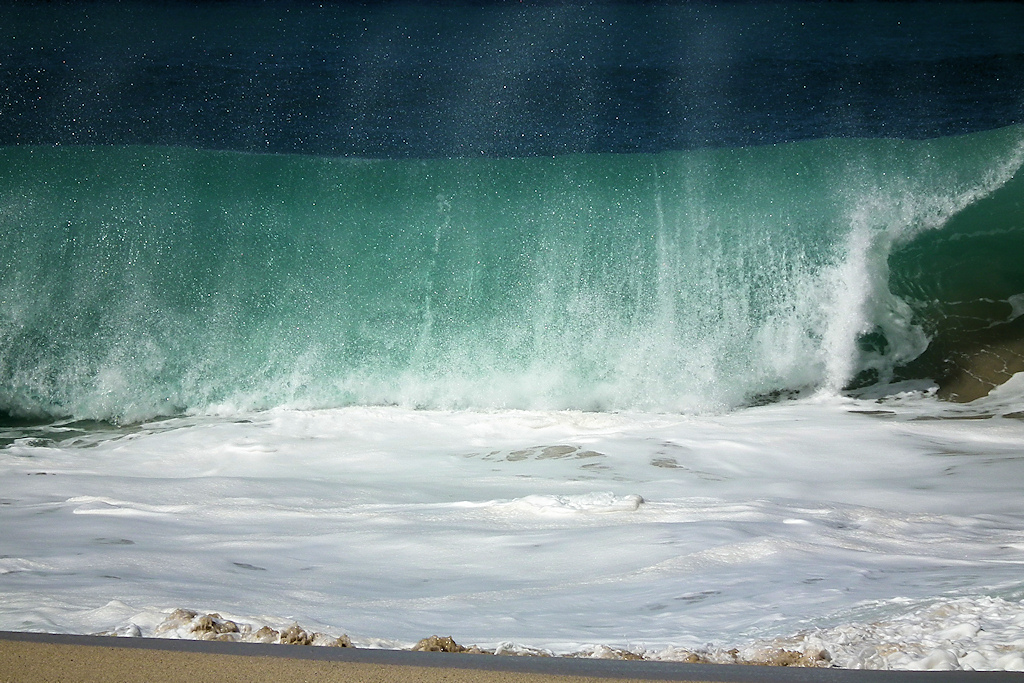
Atlantic storm at Carn Les Boel

Then other stuff starts happening and, with luck, you begin to see the real, full, all-round reasons why life needed to be the way it was. Going through this process allows us then to pass through the gate and move on.

Not going through that process tends to make us take a left turn, a quick road back to incarnate familiarity – the hope for chocolate and the fact of blizzards and droughts. We have a strange addiction to being stuck between rocks and hard places. The Council of Nine called this ‘bottlenecking’. It’s the primary reason why Earth’s population has swelled so quickly to, now, over eight billion.

Many of us have repeatedly been forgetting why we came, recycling back into life again without fully working things out. We’ve forgotten that this is a training, an initiation into dense physicality, for the deepening and broadening of the scope of our souls.

But there is the option to go on to other realms and worlds – some familiar, a few of them ‘home territory’, and a lot more that we become ready to encounter by dint of what we have already become.

The Road goes ever on and on. Out from the door where it began. Now far ahead the Road has gone. Let others follow, if they can.

There was a cuckoo on the farmhouse roof just now, making quite a cuckoo racket. But the swallows have gone to bed – busy day tomorrow. The crows and jackdaws have mostly dispersed around Penwith for the summer. And a nightjar sometimes haunts my roof late in the night, after the bats have disappeared into the dark.

Paldywan sends love from The Lookout – especially to YOU. Yes, you.

———————

https://penwithbeyond.blog

– if you sign up as a ‘follower’, my blog posts will be sent to you by e-mail, whenever they come out

www.palden.co.uk

———————

If you wish to find out more about bottlenecking, here’s a podcast: www.palden.co.uk/podcasts/PFB13-210906-SoulEducation.mp3

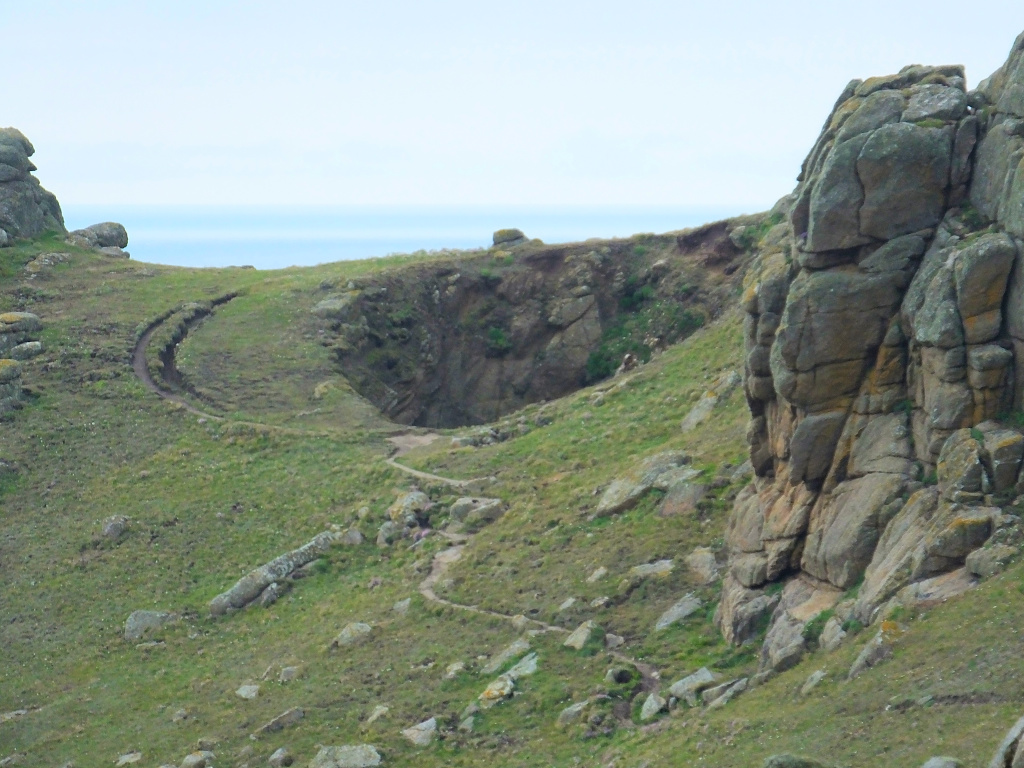
Tol Pedn Penwith – the hole at the end of Penwith

Punch Cards and Power Points

A website goes archaeological

My website has just gone through its Saturn Return – 28 years old. Erk.

Born in the antediluvian days of the ‘information superhighway’, when John Major was prime minister…

Every coupla years I’ve added an extra bit to it, and it’s like a new age minefield now. Tread carefully.

Unless I suddenly earn a million between now and the time I pop my clogs (with Jupiter in Pisces, such things can sometimes happen, as a kinda cosmic joke!), this is the legacy I’m leaving.

Wurdz. Bl**dy loadsa them.

Perhaps you might now understand why, in late life, I’ve developed a slight allergy to sitting at my computer to chat with people… (‘cos computer keyboard=work, for me).

It started with pink and green punchcards on tea trolleys in 1971. I was on the world’s fourth largest computer at the time (London Univ), and it had a memory of 56k – hot shit! We had the latest tech too – dot-matrix printers! But no keyboards or screens – they came later.

It was my dear old friend Sig Lonegren who nudged me to get on internet in 1994. Initially I had reservations. Perhaps part of me knew this would be a life-changer. I’d been in printing and publishing for some time, but this… well, I had to get ready for it.

Actually, I was on my Saturn opposition, at age 44. This was a step-change. And then… whoosh… egged on my whizz Avalonian programmer friend Barry Hoon, before long, with him, I was creating www.isleofavalon.co.uk which, by 2002, was getting a million visitors per year. (Apart from the content, people liked it because it had zero advertising – no estate agents or shop adverts in sight, and it worked, for the town as a whole.)

One thing I’m looking forward to when I die is the possibility of returning to direct mind-to-mind and heart-to-heart communication. Paper, print, messages and web-pages, well, they have their virtues, but when we’re talking about ‘sharing’, internet just doesn’t measure up.

As an early adopter of internet, one thing that disappoints me about the way things have gone is that too many people, imho, quote and re-post other people’s stuff and media stuff, and too few actually speak for themselves and create from themselves.

I get five-ish friend requests every day, and I look at everyone’s FB page. If you speak for yourself, you interest me more, and you’re more likely to become my friend. People who hide behind re-posted material or blankish pages… well, please come out and give us a sign of who you actually are!

I do have a way of making uncomfortable statements (a bit like Martin Amis, wordsmith, my age, who’s just died)…

One of them is that withholding is a crime against humanity.

I submit this for your consideration.

Having lived through a remarkable slice of time (1950 to now), I’ve been privileged to be surrounded by and adding to a pool of emergent knowledge that lays foundations for the future. My website’s Saturn Return is significant (at least to me) because it marks a transition from a website to an archive.

An archive of an old codger who saw some stuff and did some things to add to what’s changing in this world. This, on the offchance that, like William Blake, my stuff might be valued more after my passing than during my life!

But then, a Saturnine soul like me has to accept that time makes its own decisions, and his Jupiter in Pisces speaks from the Void, and it can take time for time to catch up with Voidness.

www.palden.co.uk

If you wish, join me and us in meditation this evening (Sunday) at 8-8.30pm UK time (7-7.30pm GMT). Let’s give this world a push to get through the rather dangerous Mars-Jupiter-Pluto triangle that’s been firing off for the last few days. Angry stuff – facing the music – grasping the nettle – time to be brave.

Love, Paldywan

Healing the World 2

Wolf Rock lighthouse, 12 miles away

Here’s a new podcast from me…

Second in a series of thoughts and observations about world healing. For people interested in helping the world evolve and break through, by using meditation and innerwork.

When I was organising gatherings and camps in the 1980s, some quite remarkable things took place that demonstrated the capacity of innerwork to change things. Here’s a quote, about something that happened in 1983:

The high point of the weekend came when we spent twenty minutes sending meditative support to forty or so Glastonbury women who, that weekend, were at Greenham Common USAF base near Newbury on a major protest action against cruise missiles. The meditation seemed profound – we all were quite stirred by it. Later that day, Lydia, one of the women at Greenham, returned to report that the Glastonbury women had instigated a tearing down of the perimeter fence of the base. “We did it!”, she exclaimed. It turned out they had started doing this spontaneously at the very same time that we had sent our meditative support, earlier in the day.

I’ll always remember that look on Lydia Lyte‘s face….

In the early 1990s I was asked to write a book on behalf of the Council of Nine, some cosmic beings, not of this Earth, who had a lot to say about world healing, and this set me off on a path.

This later developed into two innerwork projects – the Hundredth Monkey Project and the Flying Squad. In these we developed a bundle of techniques and a body of experience, building up a momentum over a twenty year period and working with all sorts of issues during that time.

Now, in late life, and while I can, I’m bringing together my thoughts on world healing in writing and podcasts, to leave to posterity. This is part two (there might be five-ish).

32 minutes long, with bumbly evensong from our farm, and music by my friend Galen in Oregon.

With love from me, Paldywan Kenobi.

Get it on Spotify or on my website:

http://www.palden.co.uk/podcasts.html

A seal at Porthgwarra, West Penwith, Cornwall

The Viral Infection of War

It’s Sunday evening meditation again. 8pm UK time, 7pm GMT, 9pm in W Europe and 2pm EST. For half an hour.

Wherever you are, you’re welcome to join us.

All the details are here: www.palden.co.uk/meditations.html

And here’s a thought. I’m not certain about this, but it’s worth contemplating. In the world’s collective psyche, there’s a certain amount of infection with the psychological thought-virus of war. On the whole, it cannot spread and grow any more than the host body, humanity, will allow – the extent to which it is susceptible. But this thought-virus does not decrease unless humanity as a whole shifts its values to build increased immunity to it.

I’m not talking about conscious thoughts or thought-through policies or actions. It’s on an unconscious level. But I’ve sometimes noticed how, when a conflict subsides in one area, another conflict will come up elsewhere, as if the virus hops from an arena where people have developed immunity (often exhaustion and a desire for normality), to an area where the population is susceptible. It will be vulnerable because of divisive politics, ethnic tensions, oligarchic manipulation, outside intervention and proxy-warring, and sometimes outright madness.

I first noticed this in 1990, when the long Lebanese civil war ended and the multiple wars that broke out as the former Yugoslavia disintegrated.

This dynamic happens in other ways too, and we’ve recently had an example. It’s as if the outbreak of war in Sudan has vacuumed up some of the available violence energy, draining some of it away from Ukraine, where a much talked-about escalation of conflict isn’t really happening – some of its motivating energy has been siphoned off by Sudan.

Sometimes the grief that is experienced in conflicts can be overridden by other forms of grief. This we see in eastern Congo at pesent, where recent flooding has sucked much of the energy out of the complex conflict there. it has shifted the emotional focus.

The recent earthquake in Syria came at a time when the Syrian civil war was subsiding, converting the sump of conflict-grief in Syria into another kind of tragedy. On the other hand, in 1999, earthquakes in both Turkiye and Greece brought a simmering longterm conflict between them to an end.

So if we look at humanity’s collective psyche as an enormous, seething ball of blobs, representing mindsets, and interweaving threads, representing themes and issues, all in perpetual motion, then on the whole there will be a fluctuating balance over time between different forces at work.

This includes positive and multifaceted beliefs too – at times there can be outbursts of negativity or positivity which, over time, balance out. Though despite this, there will also be a slow net shift of values happening underneath. In the last century or so, deaths and injuries from conflict, seen in proportion to the size of population, have actually been decreasing significantly.

It’s useful looking at things this way. This isn’t about Russians and Ukrainians, Democrats or Republicans or the people and the regime: it’s about conflict and polarisation, whoever the current puppets and victims are, and whatever they’re in conflict over – which, to confuse things, might not even be the same issue for each side. It affects all of us variously.

So when we look at current events, it’s important to step back, looking behind and underneath those reported events at the underlying dynamics prompting them. One interesting polarity which I have been personally experiencing is this: strangely, as world population has risen (and dramatically so in recent decades) so too has social isolation and loneliness. That is, with much of the world feeling crowded out with other people, a compensating grouping of isolated people has been growing too.

Even so, those with busy lives and lots of people to relate to will often have a shallowness of relationship leading to an underlying loneliness, even if well-distracted, while those with lots of time tend to be factually isolated, left behind in distant villages or shut in unknown rooms, and they feel it in a different way.

We live also in a world where there are hunger and obesity, and extremes of wealth and poverty, advantage and disadvantage. The issue here is that these polarities have become more extreme, and the natural relationship between them has dwindled – and they live in different worlds.

Same planet, different worlds. Yet even though New York City and the Tian Shan mountains are like different worlds, and though our current obsession with identity obscures our common ground, we are all unwitting participants in one planetary group psyche.

All the world’s a stage, and all the men and women merely players; they have their exits and their entrances, and one man in his time plays many parts, his acts being seven ages.

Thought for the day.

Love, Paldywan.