Planet Earth – quite worth a visit (this is down in our woods).
Down here in Penwith we get a lot of wind – we’re stuck out in the ocean and it loves blowing us away with its power and glory. So it’s a breezy start and finish to this podcast.
It’s one of those things that happen in parts of Planet Earth. And that’s what this podcast is about. Conditions on Earth as seen from the outside.
In coming months I’ll tell you more about things I learned from the Council of Nine – this is the first of a few. What they taught was so multidimensional that it’s difficult to cover it all briefly. In this podcast I present one aspect of it, for your consideration.
It’s all about how our planet was set up and the larger picture on our current global situation. It is the consequence of the application throughout history of human free will. People might legitimately ask, ‘How can the Universe be benign, and how can God be Love when we see things like the disaster in Gaza happening?’, but there is a simple answer.
It is a product of human free will. And collectively as a planetary race we need to apply our free will to deconstruct such tragedies and make them obsolete.
Recorded in May 2024, down in the bluebell woods below our farm. The wind sounds like a powerful gale, but actually it was simply a brisk Cornish ocean breeze rattling in the leaves of the trees. 37 mins long.
This is interesting. It’s written by an old friend who is himself involved with helping out in a freelance-humanitarian sense with Gaza. But this is something that anyone involved in conflict resolution, or in any kind of change-bringing commitment, needs to ask themselves: what is it that drives me to do this?
It came up for me too. In my case, my maternal grandfather was in General Allenby’s British invasion force in Palestine in WW1, my father was in Egypt in WW2, and I have Roma and German (though not Jewish) ancestry – Holocaust stuff. That’s what I’ve identified in myself that hooked me into it.
But also, growing up in a polarised and violent city, Liverpool, in the 1960s, played its part – overcoming the effects in myself of being bullied in early life. We teach best what we ourselves have had to learn.
If you have a bee in your bonnet about particular issues, driving you into activism, it’s worth looking into your ancestral background and your history. It can help make it all more conscious.
Many Palestine and other activists would do well to look at the emotional source in themselves of their despair, anger and commitment, because this will help them become more effective, tactical and compassionate in pursuing their vision.
It’s important because issues like this will not be resolved overnight. Yes, a ceasefire has been needed and is still needed, but a ceasefire without resolution of fundamentals might not be the best thing. Sad to say, sometimes the horror has to get worse, until a point comes where peace and resolution are the only options left.
We need to own up to the perverse fact that many of us worry about Gaza and similar places only when blood and horror happen, impinging on our comfort-zones. But actually, the reason why blood and horror happen rests on causes that are brewed and fermented during quieter times. If we’re going to succeed in a mission such as peacemaking of conflicts that have deep roots, it has to be sustained in the longterm.
And here’s an awkward truth. If campaigning for our beliefs polarises society, then we shall fail. Because if others have different beliefs, thinking of them as nasty ‘them’ people itself lies at the root of conflict. People who are anti-anything, who wish to ban things or people, and who dehumanise people with different viewpoints, become part of the problem they’re sincerely trying to resolve.
We really are all in this together, if we wish to resolve the fundamental issues that the world faces today. Peace will not come, and ecological and societal issues will not be resolved, unless we all work together.
This is not idealistic thinking. It is a very real socio-political issue. If we don’t get through this in the coming decades – global consensus-forming – then we’re fucked, really. War arises from polarisation, and there is little value in trying to stop war or save our world by polarising society.
Working to overcome polarisation and build bridges makes things more difficult. It means we must work longer and harder on this. It means we are challenged to walk our talk more consistently and for longer.
When the shooting and dismay stop, if everyone just goes home, back to normality, then peace will not come, because the matter is not sorted. And in this century we really need to sort things out, changing and ending the patterns of centuries and millennia.
That’s my thought for the day. However, there’s something else too – a new podcast.
ARTIFICIAL INTELLIGENCE | HUMAN INTELLIGENCE
I recorded this in January and completely forgot about it! That was a memory question. And that’s why it’s coming out now. I remembered.
Jean Piaget once said that intelligence is not about what we know, but what we do when we don’t know. How we figure things out when we’re in new territory or out of our depth.
The problem with AI is that it works by drawing on data and on what is known, on memory, and on the way things have happened thus far.
That’s not true intelligence. Human intelligence is better at dealing with the unknown. That is, if we humans act intelligently – which we do only occasionally.
So AI is unlikely to be as wondrous in its problem-solving capacities as tech-bedazzled AI cultists would like us to believe.
And there’s a hidden twist here concerning human intelligence – it’s in the podcast! Recorded in January 2024, down by an old silted-up millpond in the stream below our farm. 27 mins long.
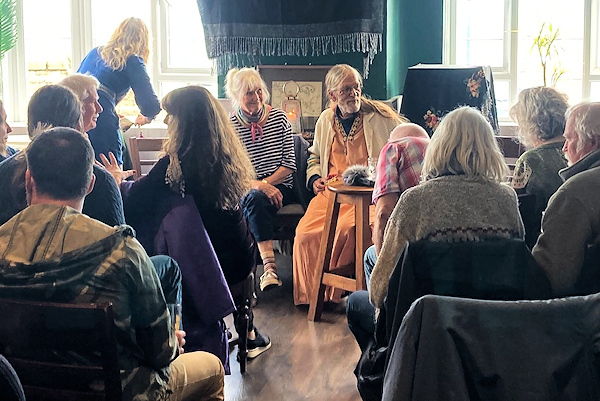
On Sunday, Ba Miller and I shared the floor in Penzance, speaking to a lovely crowd, on the occasion of the late Hamish Miller’s 97th birthday.
Ba herself is 91 – though, with me at 73, a mere stripling, we’re both beat-up and still going strong!
Ba told some anecdotes of what happened when they were following the Apollo and Athena lines from Ireland to Israel, and some really valuable dowsing tips (since it was also World Dowsing Day).
I talked about the energy-landscape of West Penwith, about building megalithic structures for consciousness-engineering and how Penwith is one big ancient site with hundreds of components.
A big thank you to Rachel, Lucy and Lyndz for initiating and organising it, and for their rousing spirit.
To hear our talk (1h 15m), go to my Audio Archive and look for ‘2024 PodTalks’:
Also: my latest book, Blessings that Bones Bring – a spirited Myeloma patient tells his cancer story, is coming out soon in digital PDF format, and before long as an audio book. Whether it gets published in print remains to be seen.I’ll let you know when it’s available.
This 30 minute podcast is recorded while sitting in the remains of an Iron Age Courtyard House, up the hill on the farm where I live.
It doesn’t look very exciting nowadays, though it’s a nice place – but then, if you were 2,000 years old, you might be a bit worse for wear too!
This podcast is all about what life was like in the Iron Age in Cornwall, two millennia ago, and the way people saw things then.
Looking into the yard of the courtyard house. Behind are Sancreed Beacon (left) and Caer Brân (centre right), and far behind them is the hill on which the Merry Maidens stone circle sits.
This was the Celtic period – though the Celts shared a culture, and they were not one people. In West Cornwall many were descendants of the indigenals of the Bronze Age.
It’s about life and reality systems in our time, and in the Iron Age, and also in the Bronze Age and the Neolithic – how people saw life and the world in each of these periods, and how their technologies reflected that.
With some insights into what we can learn from them now. This is important. As elder dowser Sig Lonegren often used to say, quoting his Seneca teacher Twylah Nitsch, ‘We seek not to emulate the ancient ones – we seek what they sought‘.
This is about pitying the winners, social healing and walking our talk.
The core issue is this: ascension and the birth of a new world will take place only when we are truly ready for it.
We wish for peace, ecological restoration, socio-economic justice and change in every sector of life that we can think of.
But the big question is whether and how much we’re ready and willing to do what’s necessary to allow such things to happen.
Until we become ready and willing, we’re holding back progress on planet Earth. As philosopher Edmund Burke put it: ‘For the triumph of evil it is necessary only that good people do nothing‘.
37 mins. Recorded while sitting in the ruins of a 2,000 year old Iron Age courtyard house, down’ere on the farm.
CONSCIENCE AND WORLD CHANGE – a podtalk from 2007. It came out then on Glastonbury Radio.
Many people have been vexed over Gaza, Ukraine, Sudan and the parlous state of the world. It can give a really discouraging, hand-tied feeling of not being able to do anything about it.
This podtalk addresses the matters of conscience and moral sensitivity – personal and also across society and the world. It was broadcast during the Iraq war, when similar feelings were afoot for many people. It’s taken from a book of mine, Healing the Hurts of Nations.
It might hold some answers and put things in perspective, concerning these rather vexatious issues.
Originally it was a radio programme with a really good choice of music woven into it, but for copyright reasons I can’t publish the full version – and that was a two-hour listen, while the talk alone is one hour long.
Leave it for a time when you have some space for something thought-provoking. Because it is. It has some real gems in it.
Every Sunday at 7-7.30pm GMT I and a morphing collection of people meditate together at the same time, wherever we live. The different times in different countries are below.
You’re welcome to join us. There’s no prescribed method or mantra: just do the kind of meditation, innerwork, prayer or mindfulness you usually do.
What connects us us that we’re doing it together and we’re all motivated to contribute to raising the energy and awareness level of our world, to aid in resolution of its compound issues.
Should it interest you, I’ve recently done a 30-min podcast sharing some thoughts on meditation, and that’s found here.
Come and join us, from a sitting place in your world, to be together in the zone. It happens once a week without fail, same time, same space. Join us whenever you can, and if you’re able to do it regularly you’ll find that something starts lifting off…
Saturn is currently in Pisces for two years – it returns here once every 28 years. The last times were 1965-66 and 1994-5. At these times terrible wars were going on (Vietnam and Bosnia) yet these were also times for the seeding of new things. Similar is the case today. These wars show humanity how not to do things, and they oblige deep-level decisions of principle.
In the Mid-1960s, today’s modern ‘global village’ period started, and in the Mid-90s was born the digital era and mass travel. Now we stand on the edge of another cycle taking us to 2053-54, when the Millennials will be old and today’s teenagers will be running around being busily middle-aged.
Pisces concerns the vision and the principles by which future developments will unfold. Saturn in Pisces is about doing the prep work before the action starts. It’s about seeds and their pre-germination arousing. It’s also about the matter of war and peace.
It’s a time for firming up the possibilities and groundrules for the next phase.
Perhaps the international figure who at present gives the most valuable running commentary on the state of the world and its prospects is Antonio Guterres, the UN Secretary General. His pleas frequently fall on closed ears, but he’s the one who is spelling it out globally, speaking for Saturn in Pisces.
With love, Palden.
Current meditation times, on Sundays: UK 7-7.30pm GMT W Europe 8-8.30pm E Europe and the Levant 9-9.30pm Brazil-Argentina 4-4.30pm EST, Cuba, Jamaica, Colombia 2-2.30pm PST North America 11-11.30am
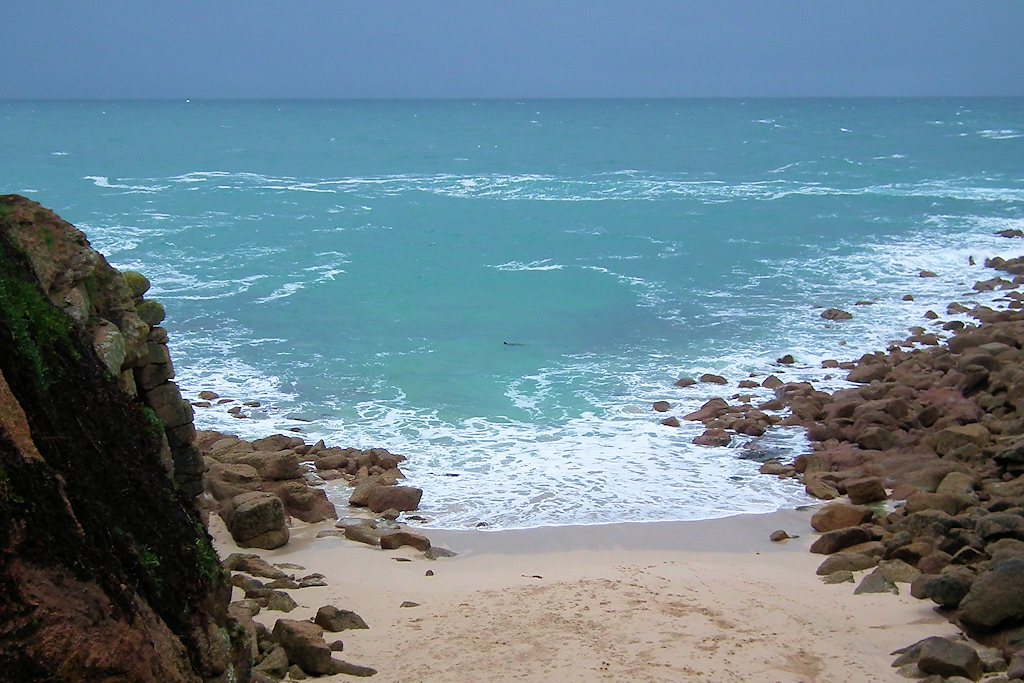
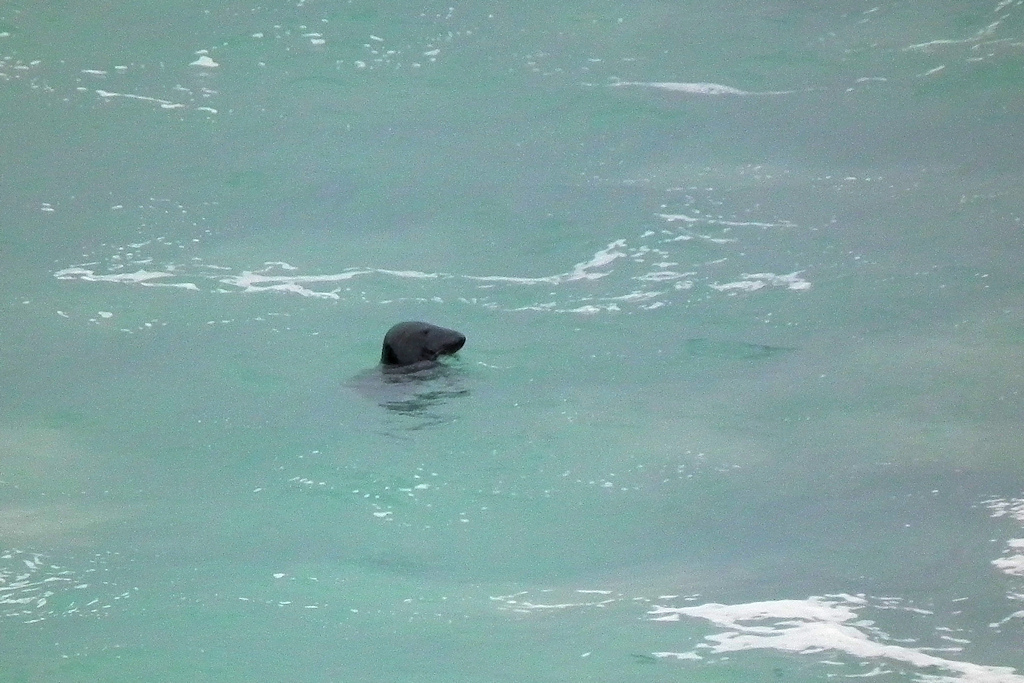
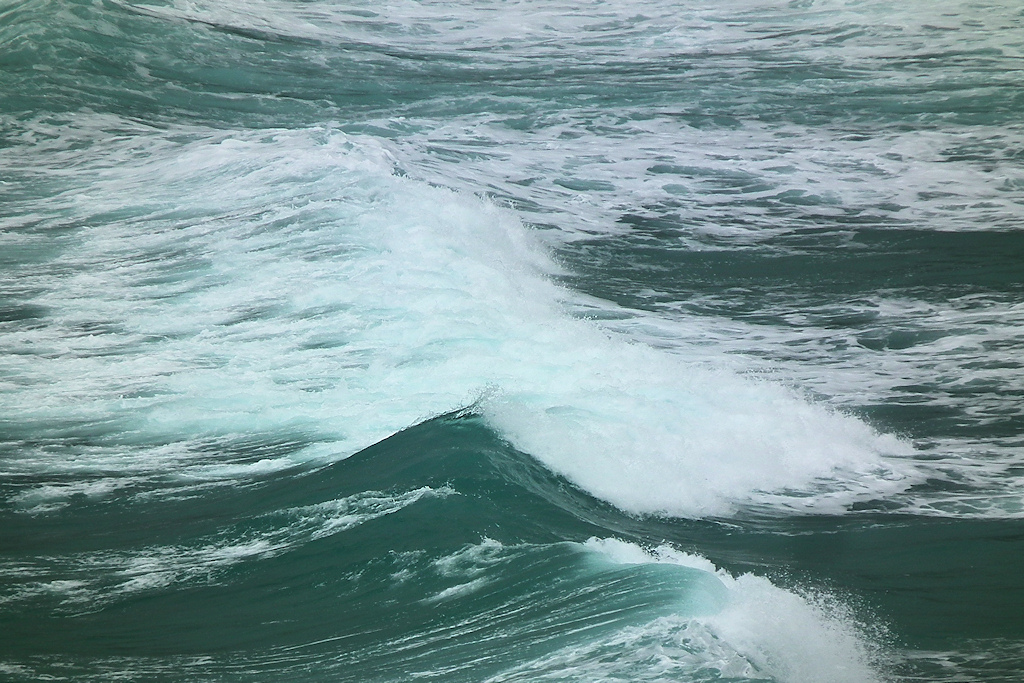
Pictures: looking out into the void from safe territory. Porthgwarra, West Penwith, Cornwall, looking out into the Atlantic. Look closely in the top picture, and you’ll see a seal there, and here it is, below.
SUNDAY MEDITATION 7pm GMT every Sunday and… a new podcast
The meditation gives a chance to pay some attention to matters way beyond ourselves, to do a little volunteering at the spiritual frontline, a little world-maintenance. You can do it wherever you are. All you need is a decent place to park your body while you go within.
There’s a zone, a field, that’s open from 7-7.30pm GMT every Sunday (see below for different times in different lands). After a while you’ll probably feel it, as you tune in to it and it tunes in to you.
It’s a benign encouragement-beam or carrier wave, amplifying the meditations and prayers of all who enter and sit within it, like an uplift-field. It helps us in the underlying resolution of issues in our lives, yet the emphasis is on the world.
There’s no sign-up, no method, no mantra, no fee, and people of all paths are welcome: do your own meditation-prayer-journeying as you usually do it. We are connected by doing it at the same time and by a simple shared intent to raise the world’s level an inch, to help it progress on its evolutionary path. And by being friends in spirit.
On the fullmoon on Saturday it came upon me to do a podcast about meditation, and I recorded it down in the woods, sitting by the stream, editing it together back home this evening. It’s 34 mins long. It’s available online…
The fullmoon has brought a shift of perspective (Virgo-Pisces). Nothing much has changed, but suddenly and rather surreptitiously we’re seeing things differently. Looking back, so what was all that really about? And where does it leave us now? The world is settling into a more resonant, steady thrum for a short while. Even so, there’s an underlying acceleration going on over the next three-four years – the waves are progressively getting bigger and coming in clumps.
So we’re in an in-between-waves period. The bad news is that we have more crunches and crises coming, and the good news is that solutions are growing too, shared consensuses are forming and whatever is standing in the way is likely to come under pressure.
The sign of this is the crazy acts of resistance to change that are going on right now – it always happens as a change approaches. It’s a digging in of heels. Except such as strategy doesn’t work in tsunamis – you just gotta run. Metaphorically speaking. It’s not here yet, but we’re getting advance waves.
With love from me Palden
Current meditation times, on Sundays: UK 7-7.30pm GMT W Europe 8-8.30pm E Europe and the Levant 9-9.30pm Brazil-Argentina 4-4.30pm EST, Cuba, Jamaica, Colombia 2-2.30pm PST North America 11-11.30am
I’m at it again. Here’s my latest podcast, of interest to anyone thinking a bit further than their nose about the current conflicts in the world.
Wars happen because of failed relationships between nations and peoples (and oligarchs). This concerns parapolitics – the politics of planetary evolution.
It’s taken from my 2003 book Healing the Hurts of Nations, written on the buildup to the Iraq war. All about the psyche of the world, the collective unconscious and the psyches of nations – and their unconsciousness as well.
That’s what causes big problems – projection onto others to escape taking responsibility for what we ourselves are doing or have done, or secretly intend to do.
Nations fail to see ourselves as others see us, and to own up to our own shadowy, smelly, dishonest side in our relationships with other nations.
This material is 20 years old and recycled, yet it doesn’t need re-working for 2023-24 – it’s all thoroughly relevant now in our current situation.
Without solving the problem of war and international cooperation, we won’t get through the major crises ahead of us – climate, population, ecology, resources… This podcast suggests how the world can move forward – by a shift of attitude and approach.
This is about time. Time is what stops everything happening all at once.
It stretches us out across a kaleidoscopic storyboard of life-experiences. But in the end, the seemingly lengthy sequence of days and daily life experiences melts into relative insignificance.
It’s what we have become by going through life that matters most. It’s the burnishing and polishing effect of pleasure and pain. Our inner evolution is not something that is hooked directly into time: the progress we make depends more on willingness and openness than on time.
If we devote much of our energy avoiding experiential intensity in our lives, we evolve more slowly. Our experience and usage of the time we have is very much a matter of deep choice. Living life to the full. Not just the comfortable, pleasant stuff but the grindstone, the fire and the soulquake too.
It’s 37 minutes long. This time the recording studio is a field on our farm, with an appearance from the migrating geese of Grumbla.









You must be logged in to post a comment.