It is Necessary only that Good People do Nothing

I’ve always been an optimist, deep down inside – a Jupiter in Pisces type. I’ve felt this underlying optimism ever since I was young – not rigidly, but because I keep coming back to it after periodic times of despair over the state of the world, to which, for my growth, I’ve been karmically tied all my adult life. It’s over fifty years since John Lennon sang, outrageously at the time, that we should give peace a chance. I cannot say there has been a lot of visible progress.

However, underneath, something has changed. Many of the ideals of 50-60 years ago are in fits and starts becoming pragmatic policy strategies, and the balance of opinion at street and village level across the world has over the years quietly tilted against war. The strength and clarity of this consensus is yet to be tested, but hints of it are visible in world opinion over Gaza. We’re approaching that test.

Hair-raising world situations and crises have a way of arousing public feeling to a sufficient extent that a mountain of inertia, of helpless addiction to conflict, could actually start moving before long. Ukraine and Gaza have jogged us that way and there’s further to go. Trouble is, a consensus often takes shape in the background while vested interests act more quickly. This formula worked when Pluto was in Capricorn, from 2008 until now, but things are changing. With Pluto in Aquarius, we’re likely to have situations arising where vested interests find themselves encircled.

Polarisation, demonisation and dehumanisation are pre-requisites for conflict, and here the media and social media play an outsize role. If we truly believe in peace, then these three issues need tackling inside ourselves.

The information war is now as important as the military war. Since social media appeared, Palestinians have had more of a level playing-field. In the last conflict, young Gazans won the info-war on points, and this is one reason why Gazan phone networks are disabled now. Israel meanwhile fails to realise that, apart from military overkill, its determined, uncompromising certainty in pursuing its cause undermines it in the eyes of much of the world.

We’re getting too accustomed to witnessing blood sacrifices. We live in a thoroughly amoral world system and, collectively, by omission, we have failed to stop them happening. The system is rigged in such a way that, though we might choose peace, justice and ecological priorities, we undermine them simply by shopping at supermarkets, driving cars and using phones and computers.

I keep repeating Edmund Burke’s 250 year old quote: “For the triumph of evil it is necessary only that good people do nothing“. It’s true.

So we get the cruel destruction of people, cities and landscapes in ‘theatres’ such as Syria, Ukraine and Gaza – hellish nightmares that everyone hoped we’d left behind long ago. We’ll get more of this unless there’s a fundamental change. Such a change might start happening in the second half of this decade.[1] But, as with many of the world’s key issues, it won’t just happen. It has to be pushed, firmly and consistently.

It’s important that this pressure for change doesn’t become a new social conflict, a new cause for social and political polarisation. Battling over it will lead to delays and complications we can’t afford. The movement for peace needs to avoid adopting the methods of war and confrontation: success comes through building a rising tide of solidarity, consensus and cooperation. It needs longterm commitment and mass momentum, and if it is to succeed, the people of Earth need to get behind the project of saving our world. Global peacebuilding is a key part of that.

In relation to the current conflict in Is-Pal, taking sides is understandable, yet it is part of the problem. The problem arises from polarisation itself, not from the perceived goodness or badness of either side. What is under-reported here is an indistinct but nevertheless a majority global consensus tilting against war and devastation, by anyone, against anyone and for whatever reason.

The destruction we’ve seen in Gaza, Mariupol (Ukraine) and Kobani (Syria) in recent years have nudged this sleepy consensus along. Humane empathy is bubbling up in collective consciousness, especially amongst the young, the power-holders of future decades. But is it strong enough to overcome the resigned belief that conflicts are an unavoidable yet necessary evil?

Behind this lies a bigger problem. Governments of all kinds are out of step with their people. Defence and international relations, even in democracies, are managed by godfathers who decide the ‘national interest’ on our behalf. So, in future, matters of war and peace boil down to a bigger question: who decides?

Majorities in the Global South and also the Global North are proving to be pro-people in attitude. Current wars have taken on a people-against-the-Megamachine optic: we see high-tech war machines ranged against crowds and communities of people, mowing them down. With Pluto entering Aquarius for the next 15 years, this meme is strengthening – we’re watching it happen in Gaza.
Here’s an astrologer’s warning. From 2025-6 until 2038 Neptune is in Aries, an awkward period in which we’ll be faced with a key cause of war: big guys and strongmen who take it upon themselves to determine our future, often at the expense of majorities.

In Sudan we see a country being wrecked by two competing military leaders and their oligarchies. In Ukraine we see two very different kinds of strongman ranged against one another – Putin and Zelensky. In Israel we see a remarkably cynical prime minister taking on the whole world, convinced of his own rightness. In Gaza, Hamas is a resistance movement which, though it has its prominent leaders, is more horizontal than a hierarchy – more like a cooperative and rather like the Jewish terror organisations of the 1940s, Haganah, Lehi and Irgun.

Hamas will never remove the state of Israel, and they know it (they aren’t fools): Israel is here to stay. So are the Palestinians – here to stay. Israel will not eliminate Hamas because, even if it kills most of the current Hamas leadership, its actions generate new supporters and fighters willing to continue, whatever the cost, now and in twenty years’ time. That is, unless something big changes to make Palestinian lives better.
Big leaders and strongmen… Like that of war, this question has been allowed to drift because we were all too busy doing other things. This is one of the big challenges we must face globally if we are to avoid becoming a failed planet. However, here’s some good news: in the late 2020s and the 2030s we’re likely also to see a new crop of benign, altruistic leaders – of whom there have been too few in recent times. We could also see leaders who look as if they have solutions but they don’t, and visionary leaders with good solutions and a good way of asking people to face the music and grasp the nettle.

Palestinians are in a terrible mess. They have a strange mixture of social unity and political disunity, and they’re at a diplomatic disadvantage, poorly represented. ‘Palestine’s Mandela’, Marwan Barghouti, has sat in Israel jail for twenty years. The future of Gaza is now likely to be decided by outsiders. One sad fact here (many will disagree) is that the future governance of Gaza is best left in the hands of Hamas. The Palestine Authority, Israelis or international bodies are unlikely to get things right since they will simply perpetuate Palestinians’ position as dissatisfied victims.

Israelis have got themselves into a thorough mess too. They have landed themselves in a war on five fronts – against Gazans, West Bank Palestinians, Arab Jerusalemites, Arab Israelis and Hezbollah in Lebanon. They have an enormous domestic disagreement over the future direction of their country, which risks civil war or a separation of the country into an Israel and a Judea. Peace-oriented Israelis are having a hard time right now.[2]
By destroying Gaza Israel has raised a big question: who will pay the necessary mega-billions for its reconstruction? If there’s a risk of further destruction, governments, NGOs and investors will have little interest in an insecure investment that won’t pay off. Construction contracts will be valuable to Israeli companies, and plenty of cheap labour is available, but since Israel’s economy is tanking it will rely on foreign investment, during a time when the international community has plenty of bills to pay. It makes Israel accountable – it must promise to avoid destroying Gaza again.

And where and how will Gazans survive and get a decent life? A strong minority in Israel wants Palestinians simply to disappear – to Egypt, Jordan or anywhere – and this has been a hidden agenda for some interests in Israel since the late 1940s. But if this were possible, it would already have happened. Palestinians are good at standing their ground, whatever Israelis and the world throw at them.

Even if all Palestinians obligingly left, Israel would not be safe and secure – it would still be at war with itself, it would have unhappy neighbours and a further two million unhappy Palestinian refugees staring at it, and it would be internationally isolated (since USA is a fitful partner). Meanwhile the world is tired of holding its nose, paying Israel’s bills and accepting Palestinian refugees. Seen from outside, peace and security for Israelis have been destroyed by Israel’s own actions.

For Israel to feel safe and secure it must play its part in creating the right conditions. Palestinians need a decent life where they can be happy, make progress, do well, feel free and feel safe. The threat to Israel will then diminish – not without problems and crunch-points, but in the course of a generation of calming, it will happen.

This conflict exposes a key global issue we consistently fail to address. Who decides things at the global level? Gaza has now gone global. Perhaps this was Hamas’ hidden strategic aim: to put the cat amongst the pigeons internationally. It has exposed Israeli dependency on support and cover from abroad, and it has dragged neighbouring countries and the UN system into the debate over the future of Gaza. In effect it has made Israel lose its control of Gaza and even of itself. Confusing self-defence with revenge, Israel has alienated the world, lost its Middle Eastern neighbours’ trust and come under USA’s thumb. Even though Hamas’ strategy and actions are highly questionable, Israel has outclassed it in the badness stakes.

Who decides? This is a big, awkward international problem. Our haphazard, under-powered system of international decision-making is inadequate. The UN, the only international body we have for dealing with global affairs, is hamstrung by its incapacity to act independently. There is a growing need, though no capacity, for international bodies to overrule the decisions and actions of individual countries if they harm the wider world.

This is a minefield, but it’s a question we must sort out in coming decades. Gaza has become a nexus-point in a bigger argument between the Global South and North. However much Hamas intended it, this is what it has achieved.

The solution doesn’t lie in the past, in differing historic narratives and arguments about who did what, who suffers more and what God thinks about land-distribution. It lies in the future, and on the capacity of two peoples to live together sharing the same small space. Actually, we aren’t talking about two peoples, but more like seven or eight. Conflicts like this hold back the rest of the world and, if the world is to progress, disagreements must in future be resolved by means other than war.

The Middle East, the historic crossing-place of Eurasia, is filled with multiple ethnic groups, all with a history. For millennia it has been ruled by single systems – empires – where ethnic groups lived alongside each other in neighbouring villages and city quarters, each having quite distinct identities, laws and customs, without dividing the region into the separate territorial nations we have now. Today’s countries, introduced by the British and French around 1920, have had multiple nightmares ever since. As the hydrocarbon age ends, if it is sensible the Middle East will pull together, led probably by the Gulf States, and conflicts will tend to dwindle because its natural state is to be united in one multicultural system where everyone has rights and no one is excluded.

For that to happen, peace in Is-Pal must come first – it’s critical. It’s also difficult, after the damage that has been done. Peace is at root a consensual, emotional, people-scale thing, not just a diplomatic, business solution. It requires forgiveness, trust-building and a calming period of at least a generation. Hatchets must be buried. Lives reconstructed. Justice restored. Pain dealt with in another way. People need the space and calm to experience the advantages of peaceful coexistence.

It’s the same with the wider world: everyone needs to get a clear feeling that, whatever the costs and disruptions of change, change is better than non-change. In all departments of life. It won’t be easy, but it’s easier than the alternative.
Israel and Palestine act as a microcosm of the world. When peace comes to this small, benighted and strangely holy land, it will be because the world is itself coming to peace. The Is-Pal conflict is a key conflict, locally and worldwide, acting as a focus-point for a much-needed process of global peacebuilding. Without global peace we are unlikely to survive – Earth will become like Gaza.

Even so, I’m still an optimist. Optimism might be a sad pathology, but don’t bank on it. Just because things are bad and disillusionment is rife, this doesn’t mean this sad state of affairs will continue forever. Bizarrely – and this is a tragic point – the worse it gets, the more likely we might be to make fundamental changes. Perhaps this is the hidden psychology of the Israelis and Palestinians: unconsciously both sides feel out of control, driven by deep feelings and a kind of self-destructive despair, crying out for help and support.

Also, this is a gift they are giving the world, highlighting our helplessness in dealing with conflict and its causes. The extent of the current tragedy takes Israelis and Palestinians close to a brink, an epiphany point. People on both sides need somehow to realise that their existing strategies aren’t working.

So my prayer is that current momentous events in and around Gaza become a catalyst, a turning point, a tidal shift, both in Is-Pal and globally. A turnaround that seeds conditions in which a more lasting, true peace may come. Not just a ceasefire but a comprehensive solution. Actually it’s about justice, a correction of extreme imbalances, which will lay the foundations for peaceful coexistence. It is possible to do this by mid-century. It falls on a younger generation to do it since, sadly, my generation hasn’t succeeded. And they will succeed, since war is now obsolete as a way of settling our differences, and we need simply to accept that.

With love, Palden

————-

My next blog will be on more personal matters. Also, I’ve been quiet because I’ve been assembling a book for cancer patients and their helpers, drawn from my blog over the last four years. Thanks to those of you who have encouraged me to do this. Called Bones, it’ll be ready in due course (in Cornwall we say ‘dreckly’) as a free online PDF and possibly later as an audiobook. It’s in consultation stage at present with two special soul-sisters, Sian and Faith (thank you), and awaiting a final editorial trawl. Definitely dreckly.

NOTES:
[1] I explain my astrological thoughts on the later 2020s here: https://penwithbeyond.blog/2020s/
[2] Here’s an article by Gershon Baskin, an Israeli peacemaker, about Marwan Barghouti, widely regarded as ‘Palestine’s Mandela’ – and the telling point is the comment below it, accusing him of being a traitor. https://blogs.timesofisrael.com/to-the-one-who-could-be-the-next-leader-of-palestine/

I’ve written a trilogy of books about Palestine – the West Bank. I wrote them in 2009-2012 and not much has changed since then except people getting older. I feared the books would go out of date but they haven’t, really, apart from details. One is available in print and all are available free as online PDFs. www.palden.co.uk/pop/

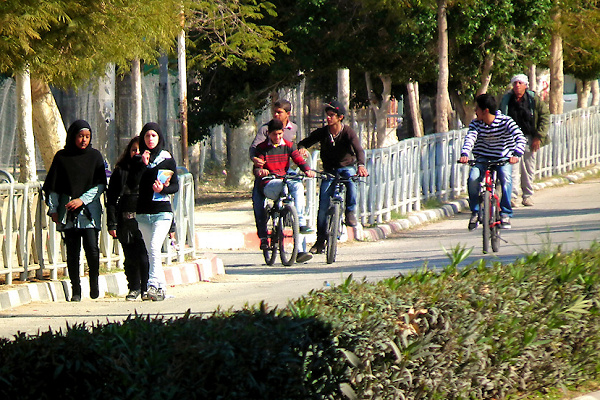
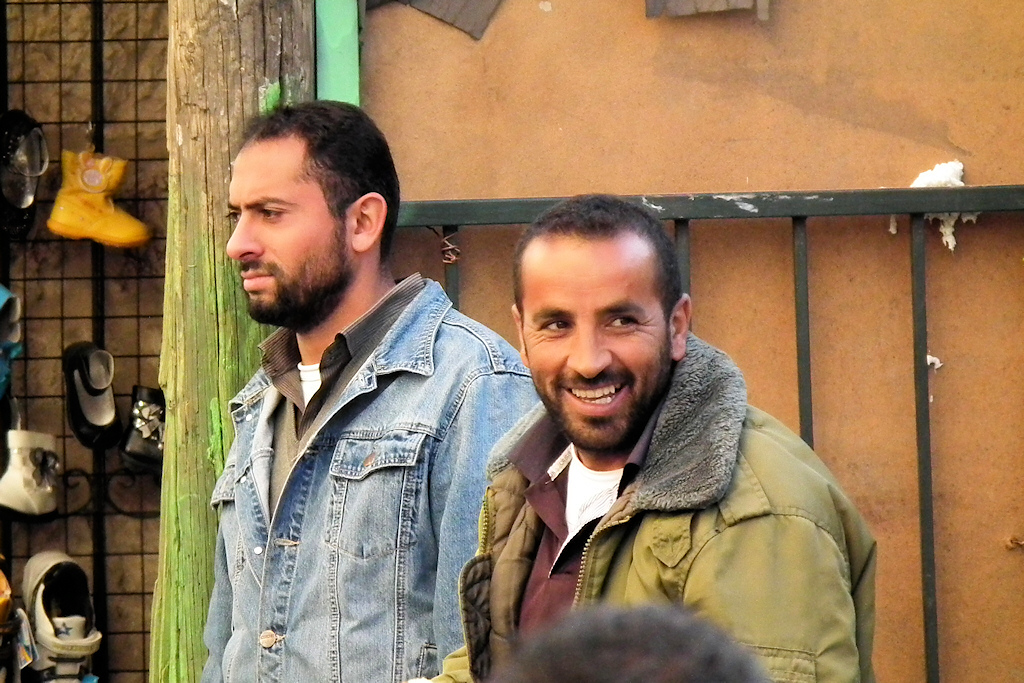
These are Palestine Authority soldiers, not Israelis

Explaining

The Judaean Desert near Jericho

and Stone Walls

If you wish to understand the psy-ops and propaganda war that’s going on, it’s worth reflecting on the word hasbara, a Hebrew word often translated as ‘explaining’, but it means a lot more than that. The hidden agenda behind hasbara is to say things that are the opposite to the way they actually are, and to project on the other side qualities that actually are your own, blaming them for what is happening and thus justifying any actions that are taken in response.

A classic hasbara word is ‘defence’, as in ‘defence forces’, which is only part of the truth, concealing the less popular aspect of it. Israelis ascribe ‘defence’ to themselves and ‘attack’ to its neighbours, when actually, for both, it cuts both ways.

This shadow-stuff is common in international relations – creation of often unfair images of other countries or peoples in order to bolster one’s own projected image. They are the bad guys and we are the good guys. It gets exaggerated during times of conflict – and the basis of conflict is a sundering of consensus and a dangerous polarisation between sectors of society, nations or blocs. It can be used to justify actions that otherwise are unacceptable or atrocious. Every nation does it in some way, though Israelis are really good at it, as are Americans and British.

So if you look at what you read and hear with this in mind, you’ll understand things in a new way. Sides in a conflict project negatively on each other, demonising and dehumanising each other, to justify their own offensive or outrageous actions.

An ordinary day in peacetime Jericho

If Israel, Hamas and the ‘international community’ truly seek peace and a fulfilment of their needs, the dialogue needs to change. The terminology, the attitudes, the dehumanisation, the unreasonableness, the accusations and the anger. It starts with a change of heart. This is at present slimly possible though highly unlikely – there are too many vested interests and set agendas involved, of many kinds. So the current Gaza conflict will likely remain unresolved, as have previous conflicts. Not that it is easy or quick to resolve – incrementally, it will take generations. Recent events could serve as a turning-point, but I do not detect a necessary will to change.

However, the people with the biggest cards, regarding peacemaking, are Israel and the American bloc, closely followed by the Middle Eastern nations. It starts with a realisation amongst Israelis that they will fail to create longterm security while they are damaging new generations of Arabs and thus creating new enemies for the future. They cannot eliminate Hamas or the constituency it reflects and, in Gaza, there is no one capable of replacing Hamas as a government.

Also, Hamas have not actually been bad as a government (given that people in most countries have problems with their governments), and it needs recognising that they are an Islamist social reform party with a military wing, not a military force with an appended political wing.

A crow at Tel-es-Sultan, the remains of ancient Jericho, going back 7,000 years

But both sides need to change their views – their whole optic.

Palestinians are not extremists, though they are in an extreme situation and thus they react extremely. But they dislike Muslim fundamentalism, ISIS, Al Qaeda or even the wearing by women of the full face-covering. Most Israelis are not extremists either but, when they feel under attack, they can be overwhelmed with insecurity, fury and vengeance. This has deep historical roots and, while it’s understandable, it doesn’t help the future. It makes Israel overreact, with the longterm effect of perpetuating the insecurity that Israelis so much want to be free of.

It makes Arabs overreact too. Most Arabs accept that Israel is there, wishing it to withdraw to the 1948 borders (perhaps with a few trade-offs) and to become a good neighbour. But when they see Israel’s military actions, they become emotionally reactive and the rather over-worn and unworkable idea of driving the Israelis into the sea is reborn.

So somehow there needs to be a massive act of mutual trust and respect of a kind that very few Israelis, Palestinians or neighbouring Arabs could accept. Things are so touchy that it could break down over the slightest incident. And there are interest groups, both high-up in the geopolitical sphere and on the ground, who are dead set on perpetuating and enforcing the existing mindset they already hold.

The ancient spring at Jericho – the reason why the town is there and has been there for 10,000 years. It’s the oldest continually inhabited town in the world

At present I see only two possibilities: calming and exhaustion.

Calming means an incremental stepping back and reduction of conflict, by agreement. This could be achieved either on the ground, through the upwelling of a suppressed aspect of public sentiment on both sides, particularly amongst women, to apply deconfliction pressure from within each society. Or it could be achieved diplomatically, but this would require all those countries that matter to agree on one strategy, applying strongly both to Israel and the Palestinians. Don’t hope too hard for this, but it is always possible. As Sir Steven O’Brien, a diplomat, said on the radio (Saturday 4th Nov), “Diplomacy always fails until it succeeds“.

Then there is exhaustion. A conflict ends when there is an equalisation between forces, such that both sides perceive that they cannot win. This can happen militarily, but neither side in this conflict is likely to be able to win clearly, and there is a high price-tag to it.

Here the Palestinians have a slight advantage since their attitude of ‘sumud’ – perseverance and hanging in there – has more lasting power than Israeli rage. They lose every conflict, trying to draw down the world’s sympathy by suffering massive damage – a kind of collective martyrdom – but they also stop the Israelis from winning, every time. Meanwhile, the international community watches, fruitlessly spluttering and wringing its hands.

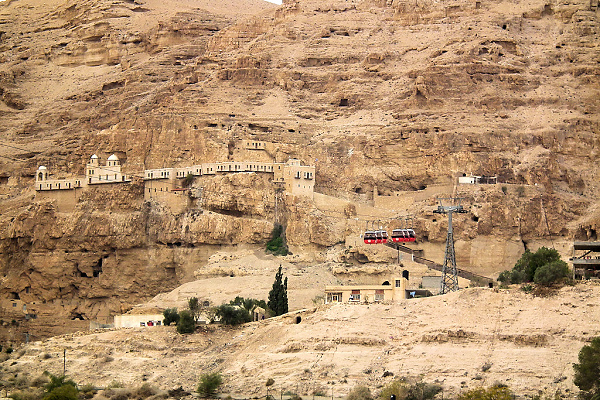
The Greek Orthodox monastery at the Mount of Temptation, Jericho (where Jesus did his forty days and forty nights).

It’s all nicely complex, and there is a counter-argument to every argument, and there are no easy answers. But it looks like we’re following the exhaustion track. This is also what’s happening in Ukraine.

The real battle lies between those who encourage polarisation and violence and those on the receiving end of them. Both sides can live together, and they shall. They do live together, even though they are strangely divided.

Palestinians aren’t angels and they’ve made mistakes but the burden of power and error weighs heavily on the Israeli side. Israel has long had superiority in weapons, money, connections, PR, chutzpah and forcefulness. Israelis don’t see things this way, seeing themselves as endangered victims. This is not unique amongst nations, but for Israel it’s extreme and the effects impact heavily on their victims and the wider world.

The Israeli project – to provide a safe haven for Jews – is a noble thing. Historically, Jews have suffered immensely, especially from the actions of Europeans. This doesn’t justify their oppressing Arabs today or doing to others many of the things that once were done to them. Israelis don’t see themselves as oppressors – they are the oppressed, busy protecting themselves.

Israelis have a lot to be proud of. They built a nation in decades. From their perspective, Arabs have attacked and menaced them and Israelis have bravely held off such threats – this was the narrative I learned as a teenager in 1967 at the time of the Six Day War, during which the Israelis occupied the Palestinian territories as if by accident, pre-emptively defending themselves (we were told).

Westerners fail to understand that this is where the power really lies in Middle Eastern society

In later life, I discovered that this, like the previous one of 1948, involved severe ethnic cleansing and uprooting of Palestinians, razing and occupying villages and parts of towns, and the killing of thousands of largely defenceless people. The awful fate visited on Jews by Europeans was visited by Jews on Palestinians. In the long arc of Jewish history this is tragic.

Only some early Israelis were perpetrators. Many were accomplices who shut their eyes, went along with things or obeyed orders, to an extent tricked by their leaders. Or they felt unable to encompass the situation, complain or do anything about it – they were simply thankful to be in Israel. Some protested but didn’t get far, others felt that the ills taking place were regrettable but unavoidable, while others just didn’t look. Zionists defined Israel’s character and future as a state, locked into an endless military vortex.

It could have been done differently. As they immigrated in the earlier 20th Century, Jews could have been integrated more with Palestinians – there would have been difficulties, though arguably fewer difficulties than actually arose. The British administration of the 1920s-1940s could have exercised less of a divide-and-rule approach. When the UN partitioned Palestine, favouring Jews, the Israelis could have made do with the territory they were allocated – they were given 56% and took 78%. They could have traded land for peace in the 1970s or 1990s.

None of these options would have been perfect, but some sort of peaceful and productive coexistence could have arisen, leading to a sounder long term future for everyone. But the path Israel chose lacks foresight, and the results come back to haunt them today.

Israeli feelings of existential threat arose from deep-seated vulnerabilities following the Jews’ terrible history in Europe. But the threat from Palestinians and other Arabs has been less a conquering aggression, more a largely ineffective response to Israeli force and expansion. A sense of threat does not have to be the case now. When Israel upsets its neighbours, or when it refuses to budge on issues crucial to Arabs, it naturally creates an unhappy response.

Thus, Israel becomes its own worst enemy: while intending to reinforce Israeli security, it generates antipathy and threats instead, undermining that security. The ethnic cleansing of 1948 would be consigned to history if it didn’t continue today. Hezbollah would be no threat if Israel hadn’t invaded Lebanon so devastatingly, not long ago. Israeli actions caused the founding of both Hamas and Hezbollah. Hamas and other militias in Gaza would not fire rockets if Israel let up on its siege of Gaza.

Zionism sees Israel’s own interests and expansion as paramount. Whatever means are used, whatever the wisdom of it, and whatever costs are incurred, Israel’s growth must go on. The notion that Israelis’ needs and security could be helped by acknowledging the needs and security of others doesn’t enter the equation, except amongst a dedicated but much shrivelled Israeli peace camp.

In the long term, if anything weakens Israel, it is Zionism, since it undermines the sympathy the world has toward Jews. Only a proportion of Israelis actively subscribe to Zionist sentiments, though acquiescence to them increases when Israel feels threatened, which happens regularly. Zionism is a norm drummed into Israelis from an early age.

Judaism is one thing and Zionism another. The Zionist mentality builds concrete walls and fences around Israel in self-protection, and in so doing Israelis become separated from the world, increasingly failing to see the wider world’s viewpoint. Zionists accuse critics of anti-Semitism, labelling Jewish detractors as ‘self-hating Jews’. Thereby, balanced dialogue is blocked.

But here comes a key proposition. If both Israelis and Arabs saw things another way, opening up to the notion that their fellow humans sit in the same boat as they, and if Israel ramped down its military expansionism, permitting some restitution of the ills which have occurred since 1948, then, over time, threats to Israel will subside, and the country and its population will become more safe and secure.

Most Palestinians and Arabs don’t want to fight. The idea that they want to destroy Israel is nowadays somewhere between a myth and an expletive uttered by Arabs when tempers are hot. Similarly, in Britain in WW2, it was the case that ‘the only good German is a dead German’.

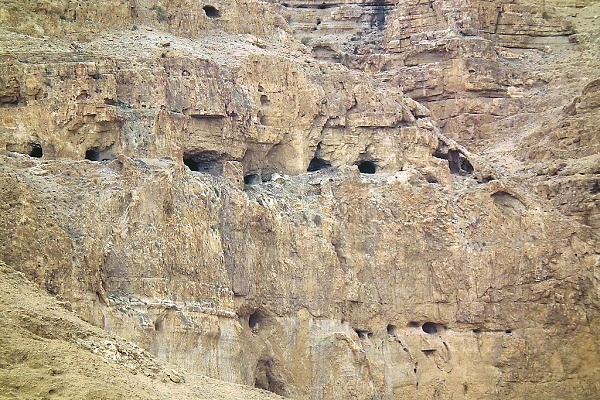
Early Christian hermits’ caves at the Mount of Temptation

Most Palestinians and Arabs accept the existence of an Israel within the pre-1967 borders – an enormous concession they signed up to thirty years ago in the 1993 Oslo Accords. Even Hamas has stated that it will recognise Israel within such boundaries. Palestinians just want a fair deal and a decent life. Peace will never be a perfect deal, but it will be better than the current situation.

Israel cannot afford to remain militarised forever: it has poor people, social problems, enormous water-shortages, a risk of coastal flooding, toxicity, pollution and all the kinds of problems that pervade most modern countries.

It claims to be the only democracy in the Middle East (that’s hasbara) yet the nation is riven with disagreement over the nature of democracy, the constitution and the purpose of the nation, reflected in a succession of demonstrations and indecisive elections. It also shares the Global North’s dwindling prestige and power. After all, Israel’s population is only one third of the Egyptian city of Cairo.

Even if Israel won every war it undertakes, this doesn’t make for a happy, healthy nation. It needs to make friends with its neighbours because it needs them, and they need Israel. They have a lot to offer each other. They share Middle Eastern space. It’s a multicultural space.

Israelis need a safe and peaceful future. Many are not fully aware of what goes on in their name, or they shruggingly accept the ‘security reasons’ they are given. Many feel powerless, or they maintain a comfortable indifference ‘living inside the bubble’. Others adopt extreme, partisan views, as if everyone is against Jews and a strident, hammer response is always needed.

Since the late 1990s, the centre of gravity of Israeli politics has headed rightwards, and a harsh minority dominates the public discourse. The rule of dominant interests, while not unique to Israel, maintains a perpetual state of near-conflict.

Israel could come to regret many aspects of the years since its founding. It soils its nest by pushing its case uncompromisingly, thus creating enemies and the opposite longterm effects to what it genuinely seeks. Its reliance on force, bombing, assassinations, land-grabs and ill-treatment of Arabs builds up new, avoidable problems, fostering new generations of opponents.

We need a new habit of peaceful coexistence. This will take a generation or even seven, but it is important.

The Holy Land is a multi-ethnic, multi-faith land and a fascinating place. Sanctity is elusive and each faith defines sanctity differently, but it’s safe to say that ongoing conflict is not one of its characteristics. Positive change matters for the whole world – Israel and Palestine form a bottleneck in the world’s process of change.

Security is developed by building up a nation’s internal feelings of alrightness, community and integrity. It is built by cultivating collective happiness and creativity, giving people a sense of a positive, mutually-beneficial future. This is the real national interest, the guarantee of Israel’s future.

Once there was an old rabbi who had been praying for peace daily at the Western (Wailing) Wall in Jerusalem, for decades. When asked by an admiring journalist what it was like, he simply replied, “It’s like talking to a stone wall“.

With love, Palden

For better or worse, written using HI (human intelligence, aka brainz)


Site: palden.co.uk
Podcasts: www.palden.co.uk/podcasts.html
Pictures of Palestine: www.palden.co.uk/pop/

Looking from the Mount of Temptation over Jericho, toward the Dead Sea and the mountains of Jordan

Times of Intensity

…and not the last.

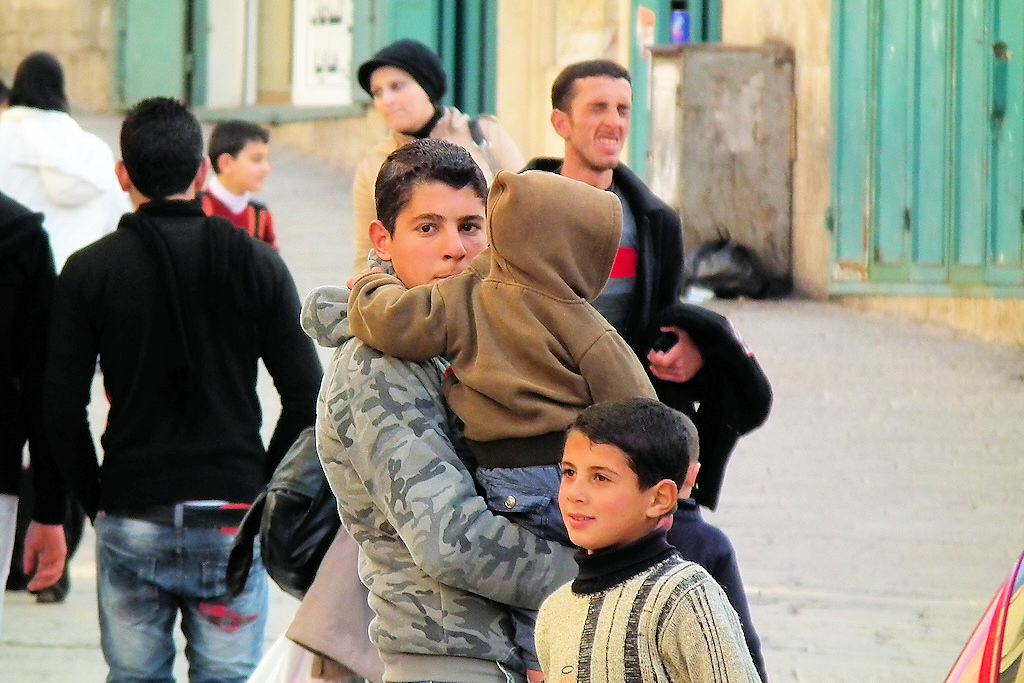
Hebron, Palestine, but it could be anywhere

I grew up in what in the 1960s was a violent and polarised city, Liverpool, learning in my teens that, in any conflict, it always, always takes two to tango – even when one side is the victim and another the oppressor. This can be a difficult issue to see and to own, whether or not one is involved in a conflict, and especially when people suffer horribly. There’s a natural tendency to take sides – and taking sides is important because issues and principles are involved in situations like Ukraine today, or in any conflict, big or small.

It is possible to take sides, or to stand up for one’s own interests, while also acknowledging that it takes two to tango. This is a key element in war strategy too: right now it is not good strategy for Russia and NATO to provoke each other too far, since they risk starting an action-reaction escalation reaching levels that fundamentally self-harm each side and everyone.

This has a restraining influence – deterrence. It can happen in the personal sphere too, in our own arguments, even with ourselves. It is a key element in peacemaking: both sides are in some way responsible – even if the balance is 80-20 or 70-30. We can support one side for entirely valid reasons, while ‘tango’ holds true nonetheless. War is filled with paradoxes.

There’s an ugly reality getting acted out in Ukraine, the ‘theatre of war’ for today: to quote Bertrand Russell, ‘War is not about who is right, it’s about who is left‘. This looks likely to prove true in coming months or years. So a miracle solution is needed here.

Talking of viruses, have you noticed how, when one war (such as Afghanistan) comes to an end, another seemingly unconnected war (such as Ukraine) can quickly start up? The issue here is that we have allowed the war virus to be firmly rooted in the human psyche, such that it becomes default behaviour. When the host population is worn out, the virus hops to another vulnerable population, until we change the default pattern.

So, immunologically, by addressing the factors that feed the war virus and the vectors of its transmission, and giving extra support to ‘medical interventions’ such as peacebuilding, diplomacy, de-traumatisation and citizen contact across the lines over a period of time, so that a new immunity can be built up. But to do this the media need to focus on peacemaking, not the excitement of conflict, and at least half of negotiators and peacemakers should be women, and the voices of the young should be heard.

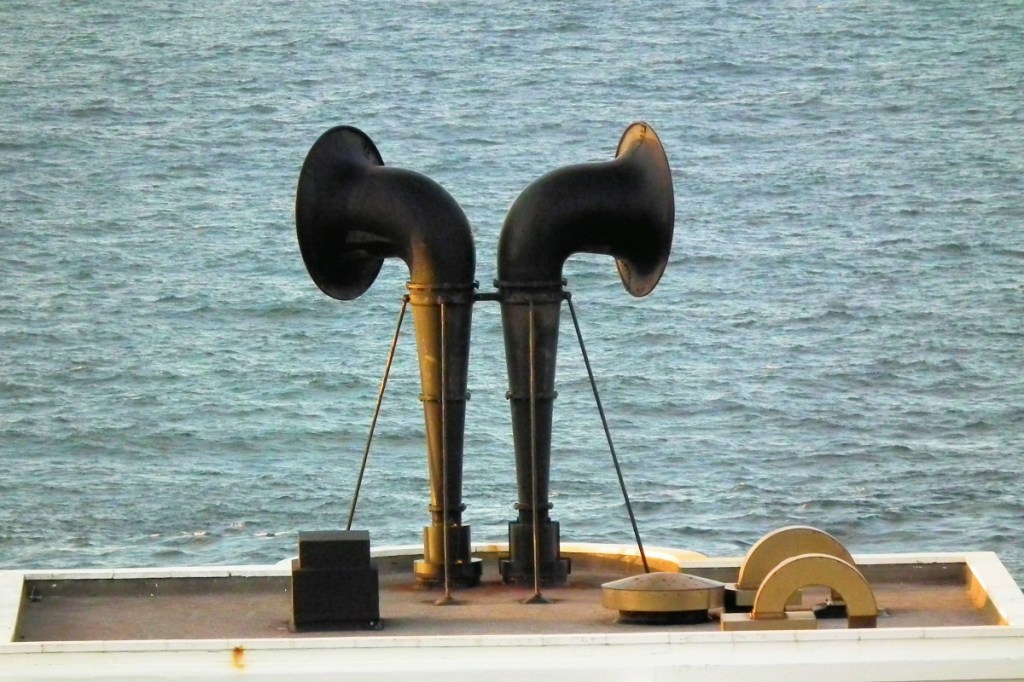
Foghorns at Pendeen Watch, Cornwall

One of the most dangerous things in our time is polarisation, during a time when, to address the main issues in the world, cooperation is more necessary now than ever – globally and, despite Brexit, Europe-wide. Social consensus, cooperation and human care are so much needed – this was demonstrated during the Covid lockdowns. Environmental, climatic, population, social and justice issues will make little progress without care, pluralism and inclusivity. This means consensus not only amongst our lot, but also with that lot over there – even with banksters, extremists and other demons.

There’s a further thing: when people and nations are getting on with explosions and atrocities, they are not getting on with the essential questions that, in the end, harm us all. They are blasting out the subtle, tender, human aspects of life with noise and violence. War is a tragic diversion, a terrible habit of humanity that is used unconsciously, and by elites, as a way of evading the big questions. It’s ingrained in all of us.

This applies in our personal relationships: each party in an argument might consider the other wrong or flawed, feeling justified in standing up for itself, yet both parties together fail to fulfil the core purpose of their relationship unless their argument progresses toward resolution. This doesn’t mean everything has to be peaceful and smoothed over: differences of position need sorting out at an earlier stage, before they get complex and damaging, in the knowledge that fighting charges a higher price to both parties than reconciliation. Fighting rarely sorts out the fundamental causes of conflict, instead laying down further historic pain and trauma for future eruption and processing. It goes on and on.

Teenagers get used to it quickly

This said, I honour, respect and support the choice of Ukrainians to resist, now that we are where we are. I would too, in their situation. I’ve spent years working with Palestinians, and I feel their resistance is justified, not because I believe Israelis are wrong but because, ultimately, what the Israeli state has been doing is not right for Palestinians, Israelis or anyone. If I were in Ukraine, I’d be in the resistance – in my case, doing furtive and dangerous things in the background (I have Mars in Scorpio).

Would you keep your head down, be a refugee or join the resistance? It’s quite important to be honest with ourselves about questions like this, at this time.

One strange thing about war situations is this: it gives people a tremendous, if tragic, opportunity to discover their true gifts. It’s a free-for-all in many different senses, and some of the acts of humanity I’ve seen in conflict situations are unforgettable. And people quickly find out what they’re really good at.

Polarisation, a virus of the psyche, has no simple vaccination. It oversimplifies things when a conflict escalates and breaks out, even if it is but a conflict of ideas or values. Conflicts are a complex calculus, often going way back into histories and threads that otherwise have been forgotten. When they break out, the rules change drastically and damage and pain escalate horrendously as a result. Referring to the past to justify one’s position becomes less and less relevant because, in war, the past few days’ damaging events can override them.

In the end, apart from fighting to exhaustion, the only way to resolve a conflict is to focus on the present and future needs of all concerned parties, because that’s what’s being forged and the outcome is longterm or permanent. To some extent, everyone is right and everyone is wrong, and this needs recognising. If we cannot establish these as global norms, we will not really resolve the bigger issues we face in the 21st Century. It’s that simple.

Ideas and sentiments replicate virally and, although some folk, and some countries like Britain, see themselves as scions of freedom, they can also be obedient carriers and sufferers of the polarisation virus without really knowing or owning up to it. The same applies to people who buy into conventional public groupthink, which settles so easily around simple catchphrases, formulae, heroes or villains, denying wider perspectives, tending to see things one-sidedly and seeking to pre-decide issues. Driven by an urge for comfort in numbers, individuals can suspend consideration, subscribing instead to verified and authorised rationales made official by the loudest pundits, or by convention, or by authorities or corporates with the power to persuade or control, both in the foreground or the background.

When social control mechanisms rear their heads, as we’ve seen in recent years, we tend to blame governments, corporations, Big Brother, Reptilians, foreigners or whatever, yet thereby we confirm our own infection by the virus, helping to replicate it. People accused of wrongs are too easily demonised, stripping them of humanity, so that others can feel they’re right. Poor thinking, often befogged by reverberating public sentiment, is so easily captured and trained, and our media and social media excel in it.

The virus arises from a kind of separation trauma deep in the heart of humanity. It emerged as competitiveness, warlordism, stratified social power, a sense that others are a threat and that nature is there for conquest, accompanied by an increasingly cultish elevation of self-interest. In Britain I think it took hold around 1200 BCE, at the end of the megalithic era. Different people are differently affected by the polarisation and groupthink, and to step outside their thralldom can be quite traumatic because all our beliefs, our world, can disintegrate – which is why many people don’t do it. Best done in youth, though it’s a struggle then, too.

Bedouin women in Sinai, Egypt

In this respect, I recommend spending time outside the developed world, not as a tourist but in the villages and streets, and not just for a week, and running on economy – things look and feel very different. Learn how to sleep on the ground, cook with one pan on a fire or how to accept the generosity of quite poor people.

I’m writing all this not only as a geopolitics and history buff, but because I’m personally in a deep and moving conflict of my own in my life right now, and the challenge is to remember all the above in my dealings. This is difficult – stepping outside myself sufficiently to be as objective and fair as possible, yet standing up for and successfully communicating my own position and terms at the same time. It’s a matter of feeling my pain, guilt and fear while, as much as possible, not being dominated by them. Sometimes I succeed, sometimes I don’t, and when I fail it adds to the hurt I cause.

It’s strange too since, as a cancer patient, I have to be more attentive to my needs and interests than ever before, and I’m in new territory. It presents a dilemma. I need others’ support like never before, though I’m not up for playing the victim cancer sufferer either – an attitude that has a downward bearing on my health and spirits. I have no right to expect others to make sacrifices for me, only a hope. I’m at risk of getting mashed even by others’ often quite normal, acceptable actions and ways, bless them, and particularly by their non-actions or omissions. Yet, up to the right level at least, I do need my minimum needs met, without lapsing into a stuck constellation of relationships where I’m asking favours and demanding support of a time-pressed circle of rushed helpers, neighbours, friends and family, most of whom are doing their very best, and for whose inputs I’m genuinely grateful.

Yet in our society helping others is seen as a choice, carried out when we have time or inclination, when in many societies it is a natural obligation and priority. In war, it’s all hands on deck or get out of the way. Indeed, it’s likely to be all hands on deck in coming decades, though not necessarily because of war. Evolving a balance between freedom and obligation is one of the great tasks of coming decades: the balance of private preference and wider benefit, local and global, and human needs and ecosystem priorities. And it has to work, otherwise it’s hard times.

So in my heart, the war in Ukraine (also in Sahel and Palestine) and the difficult personal conflict I am in, are digging over similar ground. It’s literally heart-rending. In moments of despair, part of me even wants to go to Ukraine, not to fight, but to weigh in on making people happier and doing some backchannel work – I have the experience, and an old cripple on sticks like me is quite good cover when hobbling through checkpoints and handling scrapes. I’m likely to die before too long anyway, which means that, though I do have fear, it doesn’t impact quite the same as it usually would – and you gotta go somehow.

But I don’t have it in me to go, really, physically and financially. My time for that is past, and sometimes I go through pangs about that. So, I’m doing what I can from here, re-engaging in a new level of psychic work, from my eyrie here on the farm, and from occasional hilltops and headlands in West Penwith. I find the Kremlin is psychically not as well guarded as the White House or even Number Ten.

This confluence of personal feeling and war in Ukraine is interesting because, while currently experiencing my own pain and loss patterns, my geopolitical inner efforts are able to come from a more deep and feelingful place, and both are somehow inwardly connected. Many Ukrainians, like cancer patients, have death hovering close to them, and there’s a deep vulnerability and a bizarre openness to that. This is what part of me has deeply sought, in my involvement in conflicts in the past – a sensitivity and emotional permeability that makes me more human, and it comes up in risky, edgy situations.

I’ve sought this in loving and caring relationships too, only to come up against my own limitations, pain and switched-downness. I’ve made some progress, but in truth I can’t say I’ve resolved the matter at all. I look and sound pretty sussed out, but really, I’m both happy and unhappy with the way I’ve handled life and its ins and outs. I haven’t fitted easily into the world. It’s good to be honest about that because, when we come to dying, the whole story of our lives show themselves in a new and different way, and it’s better facing awkward truths beforehand. It’s not self-pity, it’s straight old reality-as-it-is being revealed, and ultimately that’s relieving, helping with karmic untangling.

And life goes on. In health I am kinda okay, with room for improvement and a few problem issues that trouble me, but I’ll get there. In spirits I am soldiering on and holding up, and I’ve been having some lovely adventures out in nature – and I keep looking for the gift in situations. Astrologically I’m on a few big Saturn transits, so whaddya expect?

Springtime is coming here in Cornwall, and some bonny days have appeared since newmoon, and the plants are yawning open, and the geese will probably head north soon, and the tweety birds are chomping birdseed and fatballs at a rate of knots, and it’s no longer dark when I wake up, and Saturday was the first day I didn’t light my woodstove in the morning. And I enjoy blueberry porage for breakfast.

Amidst the hurricane of flying crap happening now, above all hold steady – and I shall too. This is the second of quite a few big crises in the 2020s, and it’s best to forget ‘normal’ and to develop new ways to find our ground. Here’s a re-tweet: I sense that the future is having an increasingly causative effect on the present – the past is getting wiped away faster than we would like. We’re getting sucked forward into successive cliffhanger situations where we, as humans, are obliged to make bottom-line decisions – kinda last-chance saloon stuff. Perhaps this applies to my personal affairs too, or perhaps to yours. Such brinkmanship is a way to prepare us for change, because guaranteeing the future involves making a quantum leap where absolutely everything is up for review and change, and we’re all involved. It’s hair-raising and gives no security, and it’s what we’re being confronted with now, in the 2020s.

Love from me, down’ere in Cornwall. Palden.

My podcasts are at www.palden.co.uk/podcasts.html
And all my stuff can be found here: www.palden.co.uk