Bridging Gaps

Chapel Carn Brea, the last hill in Britain, topped by bronze age and neolithic cairns

I’ve just started a job that I’ve been putting off for six months. I wasn’t clear about what I needed to do, and it’s a lot of work. And I’m supposed to be retired. But it came clear a few days ago, amidst a down-time when I was sitting here alone, feeling rather rudderless and wondering what to do. I decided to do a complete revision of a rather big website I wrote and created 6-9 years ago, Ancient Penwith. It’s about the ancient sites of West Penwith, here in Cornwall.

In some respects it’s more difficult to revise a website than to create a new one, because you have to take the existing material and re-shape it along completely new lines. But there’s a tendency to simply recycle the old stuff and stay in the same mind-frame as before. So each page is taking time for me to revise – one a day, and forty to go. I’m going to make the site briefer, more to-the-point, with more maps, pics and straight statements about the geomantic issues my research of the last ten years has aroused.

The detailed stuff has gone into a book, written and not yet published, called Shining Land. I can’t self-publish it – brain issues, and I want it to stay available after I die. So I’ll try finding a publisher when I get brain-space to focus on it.

That’s what it’s like. My psyche doesn’t process stuff like it once did. I can’t multitask and hop from thing to thing any more. When faced with memory issues I have to give myself full permission to utilise and trust my intuitive brain – intuition works by faster, more direct neural pathways than logic does, and that matters in ageing brains.

In this sense, being an educated Westerner is one of the causes of many old peoples’ brain-processing issues: we have been trained to disable and constrain a significant part of our brains, in order to fit into the requirements of the system we live in. Though, frankly, many people with dementia and Alzheimer’s are simply brain-tired, worn out, and we ought to recognise this instead of deluding ourselves that we can extend our busy lives forever.

It’s not just about slow brainz. It’s about a slowing psyche – the whole lot. It’s part of the life-cycle and a wonderful way of rounding out a life. Instead of facts and figures, you get understanding and you see things in a different light.

Here’s the summit cairn on the top of Chapel Carn Brea, a chambered cairn about 4,000 years old, for retreat, conscious dying and the energy-treatment of seeds and other items (many archaeologists would probably disagree)

Right now I am celebrating the second anniversary of the sudden separation of my partner and me, after six years together. I’ve been surprised how slowly I’ve moved through the stages of coming back to myself. It has been a struggle. On the other hand, since in a late-life context I’m in the last-chance zone, there has been far more stuff to get through, for this concerns all my relationships. My very first girlfriend, Jane, is dying too, in Northumberland. It’s all about finalising a life in which I’ve been involved with some amazing women and we’ve shared remarkable experiences. But I’m happy to say that, though I regret what happened two years ago, I made it through and I live to see another day.

I’m rather surprised I got through that. But then, that’s another gift of a lapsing memory: life and its experiences become more of a surprise. Well, I’ve got through 90% of releasing my partner and seem to have crossed a critical threshold in the last month or so. When a person refuses to talk and to debrief openly after a major life-crunch together, it opens up a new level of soul-searching, understanding, guesswork and forgiveness. It’s necessary to understand and release, regardless of whether the other person responds, helps or cares – otherwise it’s a weight around your own neck and emotionally a killer. It has been painful getting through this stuff but, in the end, something has cleared and a weight of bereavement has lifted. I’m happy about that, and I hope it’s happening for her too.

When a single issue such as relationship breakdown comes up, it widens out into other areas of life – those areas that remain unreconciled and which perhaps cannot be reconciled. One recent example, for me, has been watching much of my work in Palestine come to pretty much nothing. There’s something of it still there, but really it’s a matter of writing off this chunk of life and its efforts – letting it be. It’s in the ‘life’s a bitch, then you die’ department of reality.

In a way, all our big ideas, our plans, ambitions and efforts, come to nothing. It’s a fart in the void. This is not entirely true, but it’s an aspect of life that we do need to face. We’re locked in a groove of exaggerated, self-generated meaningfulness, desperate to explain our lives and justify our existences, when often the true meaning of our lives is completely different from what we believe. Quite often our track record is better than we ourselves tend to judge. After all, we’re all useless, error-prone shits, really, and it has taken us thousands of years to get to this point – and look where we’ve got to! We humans are the kinds of people our parents warned us about – or they should have done.

Fifty years ago I might have become a professor, but I became an independent polymath instead, covering quite a wide range of seemingly disparate subjects. I mean, what’s the connection between humanitarian work in Palestine and the geomancy of stone circles? What’s the connection between astrology and geopolitics, between ETs and the history of the Crusades, or between group circle-working and leylines?

For me, it’s all about reaching across rather large gaps and seemingly irreconcilable contradictions. I guess that’s one thing that drew me toward Israelis and Palestinians – if your aim is to bring peace to these poor people, that’s noble, but it’s highly unlikely to happen in your lifetime, so get used to it and soldier on anyway. That’s what I needed to learn. It took a few years, and my work out there lifted off as soon as I learned it.

Boscawen-ûn stone circle, around 4,300ish years old

Even so, things haven’t been working out well for me in recent years. Life has been an uphill struggle and I’ve had some rather earth-shaking experiences. In the last year, quite a few people under my care have died and I’ve faced some ridiculous challenges. Some think I ought to avoid such things but, in a way, for better or worse, this is my chosen life-path. It all hangs around the question of how deep into the water you’re prepared to go, and whether you trust that you can swim. Once you go deeper, you find out that you survive, so you go a bit deeper next time, and on it goes. Having someone shoot at you for the third time is not the same as the first.

Since October 2022 I’ve been involved in another irreconcilable problem that has weighed heavily. Recent news about the Post Office scandal here in UK has been heartening because I’ve been caught in a smaller but similar scandal. It’s a bank in Australia which, through corporate negligence, has caused the deaths of at least twelve people under my care. It is in denial of its responsibilities and has broken its promises. Like the PO scandal, the story sounds improbable and incredible. Even the consultant the bank brought in to help them with this problem recommended in our favour.

The short story is that, in October 2022, I got involved in a rescue operation in Ghana to save one of the company’s men, a Scotsman whom I knew. At the time I agreed to do it, it should have lasted 2-3 weeks. The anti-fraud security arm of the bank he worked for promised to pay all expenses if I acted as handler for this part of a larger operation – for them it was a confrontation with a large multinational crime gang. I have the right skills and experience, so I did it, in good faith.

In a crisis, there’s no time for written agreements: you either trust or you don’t trust the person, make a handshake deal and get on with it, since minutes matter. Despite repeated assurances of payment over twelve months up to September 2023, the bank has not paid. Twelve people have died as a result – some of you will remember Felicia and her child Phyllis, who died a year ago. And I am financially down. They owe Maa Ayensuwaa, me and a number of others £40,000 to help compensate all the damage done – not a vast amount.

During this time I met up with Maa Ayensuwaa, a native healer in Ghana with whom I’ve been working for the last year. Since December 2022 she and I have been alone on this, working to rescue people and both of us paying a high price for it. But we’re topping out now – the company has not managed to kill us, and neither has the crime gang.

The bank might not have intended to kill anyone, but its lack of integrity and its corporate dishonesty have killed people, and they’re continuing to err in this way even now, when a simple settle-up would not be difficult. Had they paid up as agreed at an early stage, many bad things would not have needed to happen – including Felicia’s and Phyllis’ deaths and the circumstances leading up to them.

Maa Ayensuwaa is now in Kumasi, Ghana, slowly reviving from a series of hospital operations for fibroids. Papa Nkum, her former student, and I are at present trying to find funds to get her home to her shrine at Nzema, to recuperate (£150). I’ve grown tired of fundraising. We need to get her home. It has been a long grind, keeping her alive, but we’ve done it. Gods bless her, she’s a tough cookie who seems to be able to hover around in the near-death state quite well without dying, and she’s made it through. If you feel any kind of connection with her, please send her supportive, healing vibes.

We’ve got through a crisis that neither Papa Nkum nor I reckoned we’d get through. He’s a good man. He has stood by her when others didn’t care – West Africans can be hard toward one another. But we’re quite a team, she, him and I, grossly underfunded yet resourceful and enduring. It’s quite an interaction too, between two native healers and one aged hippy – an esoteric bridge across cultures. We’ve learned a lot from each other.

The Mên an Tol, the Stone with the Hole

The issue here is about crossing gaps, reaching across cultural chasms and bridgebuilding between disparate realities that talk different languages and see things in fundamentally different ways.

The connection between humanitarian work in Palestine and the geomancy of stone circles is this. It’s about bridging gulfs. When you’re in a stone circle, you are communicating with an intelligence, genius loci, the spirit of the place. It has a very different viewpoint from you, and it’s a whole lot bigger and older than you. It’s a stretch, but the interaction is really helpful in both directions. Meanwhile, in Palestine: when in quick succession you find yourself in the company of a right-wing Israeli settler and a Muslim radical, you’re straddling a gap where the two live in very different worlds, even if living only a mile apart. It’s the same thing. It’s the vulnerability of doing the splitz.

What’s the connection between astrology and geopolitics? Well, astrology provides a way of seeing things that sheds light on the course of events, and it’s a source of hidden intelligence on the trends, tracks and timings that such events are likely to follow. It helps us understand the threads that move through history and the way they move and evolve. If astrology were used in international relations and intel gathering, diplomacy would work far better.

What’s the connection between ETs and the history of the Crusades? Well, the Crusades, for Europe, were a pattern-setting colonial adventure that have defined the history of the last thousand years, and we’re watching the latest round in Gaza and the West Bank right now. At the time of the Crusades, there was a choice between cultural interchange or cultural rivalry between the Muslim and Christian worlds, and rivalry and misunderstanding were chosen. If one person were responsible for that, it was Richard the Lionheart.

It created a gap not only between Muslims and Christians but a separatist mindset in Europeans. That is, we choose to call Hamas terrorists rather than freedom fighters. We call ETs ‘aliens’, with the expectation that they are hostile. We again say the word ‘Russia’ with an intonation and undertone that portrays Russians as ‘them’ – it’s a return to the safe hostile territory of the Cold War. Having an enemy helps us feel better about ourselves.

There’s another connection too, observed by none other than Ronald Reagan in Reykjavik nearly 40 years ago: if ETs suddenly presented themselves to us, our differences here on Earth would quickly dissolve. We’d have to change our mindset overnight. If we put up a fight, we’d lose, instantaneously – they wouldn’t even allow us to get to that point. Because it’s not about a winning-and-losing, threat-based mindset or expectation. At that very moment we as Earthlings would be challenged to do what we’ve long needed to do – cooperate and stand together. Standing against things is not the way to go.

I’ll say that again. Standing against things is not the way to go.

What’s the connection between group circle-working and leylines? Well, leylines constitute a subtle energy-system spanning the world, concentrated in certain areas (Britain and Palestine being two) and they act as network channels that pump up energy-centres dotted around the world. Group circle-working involves people sitting in a circle, using a talking stick and other methods of entering into a synergistic group-mind state. It is ancient, archetypal and very modern, the basis of deep, para-political democracy. In such a situation, a group can generate an amplified energy-field which can at times have pattern-changing effects around the world, somehow aiding or influencing events to turn in certain directions.

This is a shamanic principle that is a key principle today in the resolution of the world’s multiplex ills. ‘When three or more people are gathered in my name, there shall I be‘ – that’s ‘God’ talking in the Bible, and it’s true, and every single reader of this blog will have experienced this in some way, however you perceive divinity. This is what people did at power-centres, and that’s why they were built – to enter into advanced mass-consciousness states, to go into deep thought and to engage with the core intelligence of nature and the universe.

Spirit operates beyond the framework of time, space and dimension. We all have sisters and brothers of the soul, dotted around the world and the universe, with whom we are in regular communication on an inner level. We’re part of networks, lineages and soul-families and, consciously or not, energy passes through these connections. That’s one reason I like to run the Sunday Meditations – it’s not necessary even to do anything in the meditation. It’s more a matter of making ourselves meditatively available for whatever need there is, and much of it operates on a very deep level, of which sometimes we only get glimmers.

On Earth, we’re at a critical time where we need to understand that we really are all one. Sounds easy, but it involves a painful, drawn-out transition. We’re one human family living on one small world. We face a big emotional transition in which we shall have to learn to trust and agree more than ever before. Or, at least, we need to find ways of disagreeing and cooperating at the same time, and feeling good about each other. This concerns identities, nations, cultures and also species.
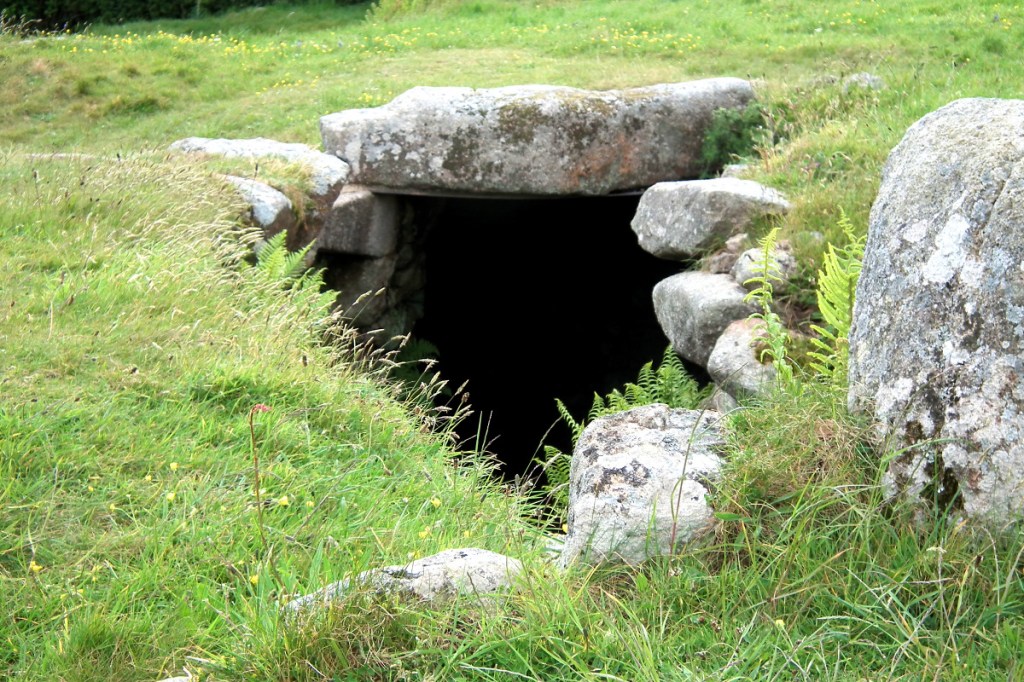
The iron age fogou at Carn Euny – a women’s space inside the heart of the village

It’s the bridging of gaps. Not only seeing and understanding those gaps, but stepping over them. We people in the rich world hold back more than is wise for us. We stay in our comfort zone, where we won’t be confronted with big moral issues that actually we need to confront, for the good of our souls. That’s why people are sailing to our shores on flimsy boats, sacrificing their lives to bring us this question.

I’ve repeatedly been faced with a question like this: “Is it better to give my last money to save a person’s life, or should I play safe and side-step the issue (and let them suffer or die)?”. The fear that causes us to turn away from facing such a question turns out to be unjustified, in my experience. It’s a question of undertaken risk and commitment – and such heat-of-the-moment choices introduce a new magic that is otherwise unavailable. I’ve found that, having faced this edgy question quite a few times over the years, I’ve managed intuitively to make good decisions, with but a few mistakes, and while it has involved making personal sacrifices, I survived – and so did they. And that’s the main thing.

It’s not what we get for doing things. It’s what we become by doing them.
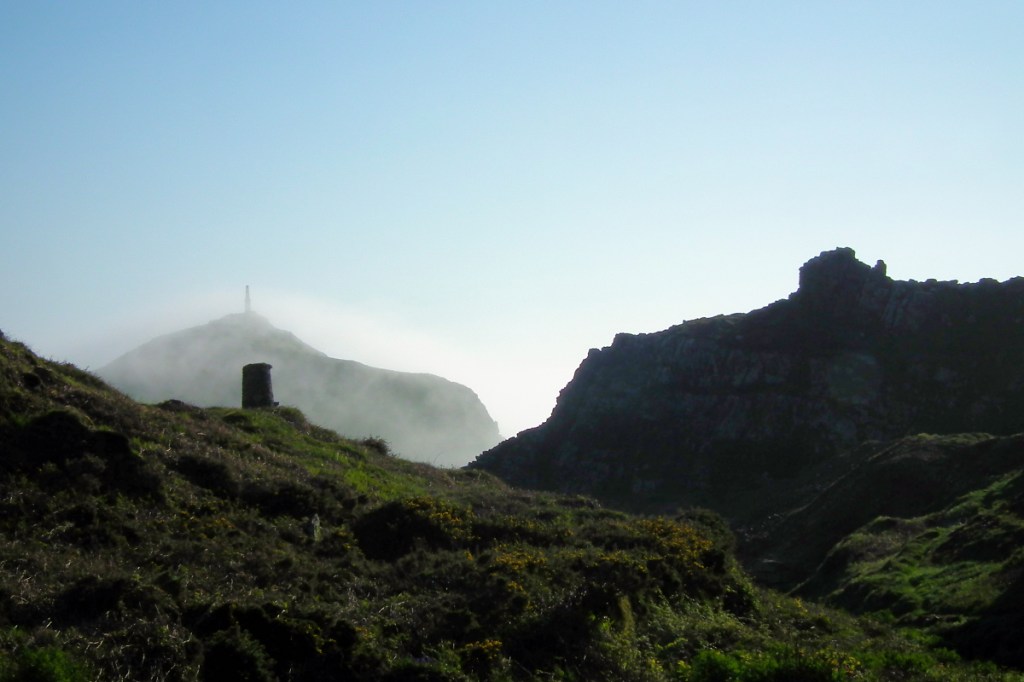
Kilgooth Ust or Cape Cornwall, a neolithic cliff sanctuary

Wednesday was a bad-news day. I cried myself to sleep afterwards. I’m crossing a threshold. My cancer readings are beginning to rise. My medication is going to be changed. There are five options available, and this is the third. Part of me wants my Mummy to hold my hand while I go through the next stage. I shall lose my four-weekly nurses’ visits – the next phase involves pills, Lenidalomide (a form of Thalidomide). I lasted well for three years on the last form of medication, Dara, but it’s now losing efficacy.

I’ll have to go to hospital in Truro once a month. There will be medical side-effects, apparently. I’m feeling similar warning signs to those I had ten months before I was diagnosed with cancer – a feeling of being up against it, drizzled with feelings of hopelessness and garnished with a creeping tiredness – and a strange manic drivenness to work on creative projects. I’m doing Reishi, Astragalus, Vits C, D3, multivits, blueberries, cider vinegar, grapefruit seed extract, beansprouts and my friend Kellie’s multicoloured carrots, and took a break from blogging for some sun-medicine too.

This is the life of an eccentric cancer patient. Who knows how the next stage will develop? This year I would certainly love resolution of the bank issue and the ex-partner issue. It’s time, and life doesn’t have to be so difficult. I would love to help Maa Ayensuwaa to get back on her feet and do something for the Tuareg too (I need to find people to replace me). The Tuareg have had to send their young and their old people to a refugee camp over the border, since they are under threat from government troops, Wagner Group mercenaries and Jihadis. This isn’t the World War Three that some people seem to want, but things are escalating. Need is rising.

And here’s my quote of the day. It cropped up on a new friend’s FB page (shukran, Selina). It’s by Austrian psychologist Carl Jung. It applies to the whole of humanity as well as to individuals or nation peoples.

“Nobody can fall so low unless they have a great depth. If such a thing can happen to a person, it challenges their best and highest on the other side; that is to say, this depth corresponds to a potential height, and the blackest darkness to a hidden light.”

With love, Palden

Site: www.palden.co.uk
Blog: https://penwithbeyond.blog
Audiobook: www.palden.co.uk/audiobook.html
Podcasts: www.palden.co.uk/podcasts.html

Written using Human Intelligence (what’s left of it)
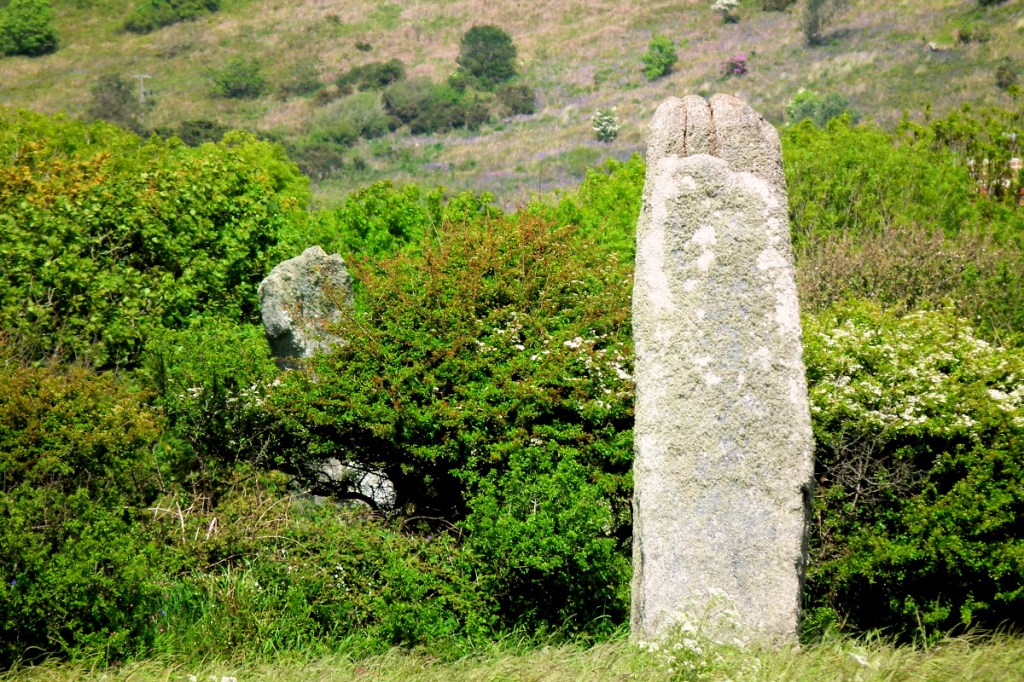
The Pipers menhirs at the Merry Maidens stone circle complex

Blogging in Bethlehem

An audiobook about life in the West Bank of Palestine
www.palden.co.uk/audiobook.html

The first two audio instalments of my 2011 book Blogging in Bethlehem are now available, and the remaining five will come out once a week over winter (inshallah). The written version is available too.

I hope you enjoy them. It’s free, no strings.

Well, that lot took 20 hours to make, but I got through it quite quickly. That’s one advantage of hyperfocus and living alone. Rain drumming on the roof has stopped play for now. Just as well, really – I had my cancer treatment yesterday/Weds and I’m all floppy and wobbly.

I’m enjoying doing it though. The story comes from better times in Palestine in 2011, but it gives a sense of real life and some of the positive things happening there, and the social and cultural strengths of Palestinians. I miss friends there and would love to go back, but this is beyond my physical scope and financial ability now. So this is a way to be with them in spirit.

With love, Palden

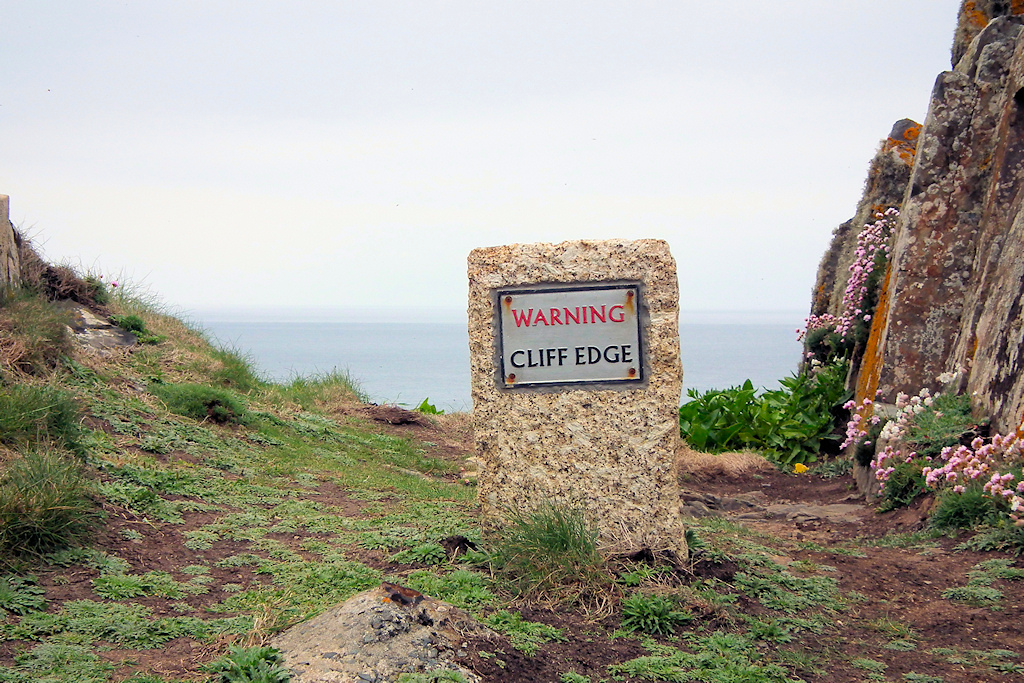
Cliff Edge

Gurnard’s Head, Cornwall. You were warned!

We live in a strange world where its inhabitants, called humans, have a weird tendency to believe that other humans are fundamentally different to them and opposed to them. Don’t go to Planet Earth – the inhabitants there are dangerous, mainly to themselves. This is a bizarre aspect of this particular world.

That’s a paragraph from my book Blogging in Bethlehem. I woke up this morning with the idea to serialise it as an audio book.

But then I wondered whether enough people would be interested to justify the effort. It’s not a very long book (unusually for me). At a guess it would land up as three hours of listening, sectioned into 30ish minute segments.

So I’m wondering about that. Any views?

I can’t start today anyway, because the wind is rattling around too much for sound recording! But I have my cancer treatment tomorrow/Weds – a nurse comes round and it takes just 45 mins. I might well be buzzing on that sufficiently in the following two days to start recording – you never know. Depends on the winds.

My life goes in four-week cycles and treatment affects my psyche, stomach and daily life for around a week. That’s weird for an astrologer who has lived life attuned to natural cycles of a more elastic kind, rather than to a calendrically-regularised grinding cog of time, with a periodicity determined by medication.

Down’ere at the end of Cornwall, stuck out in the Atlantic, we’re getting a lot of high wind and storming. It’s a bit reminiscent of the stormy winter of 2014. The birds are lying low.

Dolphins playing the waves at Nanjizal Bay, Cornwall

And talking of calendars – specifically Gregorian ones – may the rest of your year remain happy. In the end, happiness is a decision of the heart, not an ideal set of circumstances that only occasionally crop up – then they go again. Happy times.

Rather like Greenwich Mean Time, the Gregorian calendar is a vestige of European imperialism. Nowadays it’s neatly called the ‘Common Era’, as if to conceal its origins, and GMT is re-named UT, or ‘universal time’ – except the universe doesn’t follow it.

It might be one of those post-colonial vestiges that stick around for some time. Perhaps the only situation to change this will come when we finally adjust our lives on Earth to the wider universe.

Watching intently. Portheras Cove, West Penwith, Cornwall

Until such a time, since we’re dangerous, we’re under a form of quarantine. Dangerous to the universe and dangerous to ourselves. Most strange.

It sounds simple, but the solution is happiness (as a decision of the heart). The way things are now, though, it looks really complex. Especially with vexatious warring and all manner of dissonances going on.

It needs modelling and shoving through supercomputers because we believe we can sort things out mentally, if only we have enough data. But mentality simply sorts data, even if intelligently. Decisions are made in the heart, the womb and the gut – the parts that AI can only imitate, though it cannot reach.

At this juncture of history, we have a lot of rather big decisions to make. We humans need to get more happy and become less dangerous. Less dissonance, more resonance.

It will affect climate change in a big way, with instantaneous results.

Think about it. But not too much. And I won’t either.

With love, Palden

Blogging in Bethlehem’ is available free to download as a PDF here:
www.palden.co.uk/pop/order.html

The National Interest

Pods from the Far Beyond with Palden Jenkins

I’m at it again. Here’s my latest podcast, of interest to anyone thinking a bit further than their nose about the current conflicts in the world.

Wars happen because of failed relationships between nations and peoples (and oligarchs). This concerns parapolitics – the politics of planetary evolution.

It’s taken from my 2003 book Healing the Hurts of Nations, written on the buildup to the Iraq war. All about the psyche of the world, the collective unconscious and the psyches of nations – and their unconsciousness as well.

That’s what causes big problems – projection onto others to escape taking responsibility for what we ourselves are doing or have done, or secretly intend to do.

Nations fail to see ourselves as others see us, and to own up to our own shadowy, smelly, dishonest side in our relationships with other nations.

This material is 20 years old and recycled, yet it doesn’t need re-working for 2023-24 – it’s all thoroughly relevant now in our current situation.

Without solving the problem of war and international cooperation, we won’t get through the major crises ahead of us – climate, population, ecology, resources… This podcast suggests how the world can move forward – by a shift of attitude and approach.

You can find it on Spotify, here:
https://podcasters.spotify.com/pod/show/palden-jenkins3/episodes/The-National-Interest-e2drin4/a-aaptonf
…or on Apple or Google Podcasts

Or you can find this and all of my podcasts here:
http://www.palden.co.uk/podcasts.html

With love, Palden

Arrive without Travelling

The long and winding road (near Falmouth, Cornwall)

I’ve been rather quiet recently. My energy has been under par. Nowadays I’m not good at doing winter. I’m often told that I look well, and part of me indeed is well, though this is more a matter of a grin-and-bear-it attitude than a medical reality. Since getting cancer I’ve found I give off an unintentionally deceptive appearance, looking better than I actually am, or feel. Sagittarius rising with Venus trine to it (the grin bit) and Saturn square it (the bear it bit). I’m not sure what to do about this.

Oh yes, I forgot… a health warning: beware of smatterings of astrology.

Though I’ve been relatively quiet, I’ve been at it, extracting parts of my blog from the last four years that tell my cancer story, turning them into a book for patients with cancer and other serious conditions, and their helpers – at least, for those interested in my approach. It will come out dreckly (sometime) as a free online PDF book, and possibly as an audiobook later on. I’m pleased with the way it’s developing.

In my birth chart I have Jupiter in Pisces – a dreamer perhaps, but for me the challenge has been to make dreams manifest. There’s fantasy and there’s vision, and there are doable and impossible dreams. The difference is a matter of discernment and not always clear, even if, like me, you have a forensic Saturn in Virgo, a dreadfully factual place for it. I’ve had successes and failures in this manifestation business, though a lot of things wouldn’t have happened if I hadn’t tried. Jupiter, in my case, is the handle to a bucket formation of planets – so it’s an energy-focus in my being. A bucket is a pattern where all but one of the planets in a chart are located in half of the zodiac, with a singleton on the other side acting as a handle.

In my chart the bucket tips so that it pours or perhaps spills out – all of my planets except one, Jupiter, are above the horizon (the horizontal line across the chart), in the social and public domain. But the key to that array is Jupiter, down below, in the personal, local-neighbourhood sphere. In my case it allows a certain privileged access to inner wealth – though I had to make a progression of big, sometimes difficult choices to unlock it. The Tibetans gave me the name ‘radiant merit’ and the Bedouin called me ‘always giving’, and these have been a challenge to live up to and live with. Had I oriented my life another way, I might have been a senior civil servant or an ambassador serving Tony Blair’s government. But I didn’t.

Pendower Cove, Land’s End

Life as it stands today is rather peculiar: I’m out there with my writings and podcasts, with a public presence, while in real life I’m very much on my own. That’s Jupiter in Pisces and Saturn in Virgo again. I live in an uplifting, ancient landscape, peppered with geomantic technology from millennia ago, surrounded by high granite cliffs and the wide ocean. Here lies the taproot of my being – the sense of space here nourishes my soul. Jupiter in Pisces needs a spiritual anchorage. Before this, I’ve lived under Glastonbury Tor, in Bethlehem, in the Swedish forests and the mountains of Eryri, Snowdonia.

Yet ‘No man is an island, entire of itself; every man is a piece of the continent, a part of the main‘, wrote John Donne in 1624. For me, solitude is a way of sourcing original experiences and perceptions which then I can bring to the wider world. I’m not one of those authors who can write a book for three hours a day while doing other things – instead I go into a hyperfocused voluntary lockdown for months, totally immersing myself in it.

I’ve even manifested electrosensitivity in my life, which is very isolating. I live in furthest Cornwall to be as far away as possible from the dense cloud of radiation that England emits. I’m close to other emitters instead – humpback and minke whales, dolphins, basking sharks and seals. And buzzards, geese and owls. The construction of our realities, both intentional and unconscious, has so much to do with what we tune into.

Dolphins playing in Nanjizal Bay

The funny thing is that, although West Penwith is relatively isolated, in my psychic work I find it’s easy here to reach around the whole globe. It’s geographically peripheral and psychically quite central, relatively free of etheric noise. I have Neptune in the ninth house (an eclectic spiritualist) and Chiron in Sag in the twelfth (a penchant for behind-the-scenes stuff). As George Harrison, lifting words from Lao Tzu, once sang: “Without going out of my door I can know all things on earth; without looking out of my window I can see the ways of heaven; the farther one travels, the less one knows… Arrive without travelling, see all without looking, do all without doing…” [1] This is certainly true for me now, though I’ve travelled and done plenty of things before, and this makes it easier to accept my current confinement. If cancer had come in my thirties or forties it would have been a very different story.

Currently, transiting Saturn has been sitting on my Jupiter. Normally I’d interpret this as a crisis of faith. Well, my faith is more or less intact but circumstances are having a good go at eroding it, with many disappointments, big and small. Singlehanded, I’m not keeping up with everything that’s involved in staying alive – at times the ‘to do’ list overwhelms me, and I need help with critical things like transport, shopping, laundry, lifting, specific tasks and particularly companionship. And a PA for online assistance and organising things, and a minder for travels. Ideally.

But reality is something else. No one covers my back or keeps their eye on me, and that’s the lesson of my life. Or perhaps I deserve it, or perhaps it’s a gift in disguise. One of the gifts you get when you die is that you see all these facts and nuances from an entirely objective viewpoint, and the end-chapter in life is, if we so choose, a time of revelation and release as insights like this trickle up. Life is, after all, not only about what we tell ourselves is happening.

On the other hand, I’m kinda managing, keeping many things together, as long as it doesn’t get too complex and demanding. My task pile is increasing though, not shrinking. Even so, a strange kind of peace and acceptance has settled on me. Last year I was lonely while this year I’m alone – circumstances haven’t changed though my feelings about them have.

Godrevy Head, East Penwith, Cornwall

Ironically, one issue that’s stretching me a lot is that, although I need help, quite a few people nowadays seek help from me. I even need help explaining to many of them why I can’t help them – this requires careful diplomacy. The world’s needs are rising and people from the past naturally come back hoping I can wave a magic wand once again. Mostly not, in concrete terms, though occasionally I can given them a magic key. But the human contact between us is important – it helps them plug into some sanity, perspective and encouragement, with a feeling that someone is bearing witness and feeling their pain.

It’s heart-wrenching too. I’m talking to Bashar, a young doctor in Gaza, when he can get messages through to me. I haven’t heard from him for over a week now – might have lost him. Some years ago I helped him write articles about life in Gaza, under the auspices of We Are Not Numbers.[2] It’s an NGO that trains young Gazans in writing, photography, video and social media outreach, to help them speak for themselves. One of its founders, Prof Refaat al Areer, has recently been killed in bombing.[3]

Bashar graduated as a doctor in August this year after six years study at the Islamic University in Gaza City and was plunged straight into working at Al Shifa hospital – the big one recently in the news. I asked if he could write something about it but I haven’t heard from him. He wished he could come and work in Britain, where a doctor can have the resources, drugs and equipment they need for their work – well, much more than they have in Gaza. He doesn’t want money or to immigrate here permanently – he wants to get experience and raise his game so that he can return home, where people like him are much needed.

Another friend, Aminha, had a baby a few weeks ago. I’m relieved that she and her child are still alive – well, they were, last time I heard. What a life to be born into, stuck in a devastated concentration camp with little food or security and no escape.[4] Her brother had been a nurse in Gaza – he managed to escape in 2016, got to Europe, was talent-spotted by the Belgian health service and later died of Covid while working in a frontline intensive care unit. Poor chap. Some years ago I asked him what was the most difficult job he had had to do as a nurse in Gaza. He said, “Holding down patients during surgery without anaesthetics“.

One of the reasons I’ve had a strange peoccupation with conflict zones is this. Kahlil Gibran puts it well: “Out of suffering have emerged the strongest souls; the most massive characters are seared with scars“. In conflict zones I’ve met some of the most impressive people I’ve ever met.

Sakyamuni Buddha put it another way: “The path to enlightenment begins with the experience of suffering“. That is, if shit happens, it might be a gift in disguise. It’s not fair to say that to a person in Gaza right now, but there’s truth in it – a truth better confronted in retrospect for the deepening of our understanding, at a time when we’re not actually being bombed.

Gurnard’s Head, West Penwith

I’ve been facing facts recently, regarding my health. I’m doing alright with cancer, though my current treatment, Daratumamab, is slowly losing its efficacy. So in the coming year I might have to change to Lenidalomide, which intuitively I feel nervous about. My anticipation is that I might not get on so well with it as I have with Dara. I’ll lose the visits by the nurses too, since it involves a daily pill rather than a four-weekly injection.

But my real concern is the peripheral side-effects of cancer. I have two critical issues – osteonecrosis of the jaw (my jaw is dying) and a compressed stomach (leading to difficulties digesting and eliminating food). The stomach is Virgo’s place in the body, while the jaw is critical for scrunching up the stuff of life. Experience is food too, so there’s symbolism in this. The stomach is where we assimilate the nutritional experiences that life gives us.
The osteonecrosis gives me anticipations. A specialist at the Royal Cornwall Hospital was concerned about it recently. We like each other, and he can see I’m very much alive, but the disintegration of my jaw, possibly in a year or two, could be a critical issue heralding my end – not a very happy ending either. Either this or the stomach issue are more likely to kill me than the cancer itself.

I’m not one who will struggle and fight to stay alive just for the sake of it. If I can, I’ll stick around until living becomes too difficult, but no longer. I’m okay about passing on, and I’ve had a full life. Over the last four years with cancer I’ve done my best to release regrets, accept facts, forgive and be forgiven, and to stay happy. However, without adequate support and with no one close to me in daily life, I’m concerned about what happens when I start deteriorating. I need someone who’s tuned in, an alternative type with some health knowledge and a good heart, with time available and willingness stand by me to the end – funnily, rather like my former partner, with qualities akin to hers.

She was into David Bowie and I was into John Lennon (having grown up in 1960s Liverpool). Lennon’s recent song, ‘Now and Then’, says it for me exactly.[5] Now and then I really do miss her. Nearly two years have passed and I’m moving on, gradually opening to other options. Not that options are here, but I’m opening up to them.

However, if I get close to someone or move house or join a new situation – a family or group, perhaps – this will be the last time, baby the last time, and I won’t be able to do another big change. If this can’t be the case, then it might be better to stay alone and handle things myself. This involves a promise to myself to pull out of life quickly and go home when the time comes to do so, and no later. I’ve spent my life pushing against the wind, and there’s no point doing it in death.

Life always has its compensations and our prayers are always answered – not necessarily when or how we might want them, but they’re certainly answered. When I was in the depths of cancer four years ago I was concerned about my humanitarian work. I could continue as an author and thinker, and my post-cancer blogs, podcasts and webwork are some of the best output I’ve done, but the humanitarian work died right then – I couldn’t travel and I’d be more of a liability than an asset at the frontline. Or so I thought.

But in the last two years I’ve worked with the Akan priestess Maa Ayensuwaa to disable a violent, Nigerian-led, drug-addled criminal gang, I’ve had involvement with the Tuareg in Mali, and recently I’ve been back with the Palestinians. It all happens from my desk here in Cornwall – online stuff – and in bed, or sometimes up on the bronze age barrows behind our farm – psychic stuff.

Something in me has been strangely calm about getting involved in human wrongs, death and devastation once again, even though at times it has been grief-filled and rather a strain. I’ve been given grace-time and opportunity to do it – a prayer answered. Which goes to show, there’s a gift in everything, even in disability, and even when it seems that all the wrong things possible are happening. But then, to quote a peacemaking Ulster vicar from some time back, ‘Better to fail in something that eventually succeeds than to succeed in something that ultimately fails’.

Treviscoe, West Penwith

When it comes to popping clogs, I think I might be able to fold myself up and pop out voluntarily, if necessary – though I’ll find out only when I get there. It’s a matter of shifting away from the apparent difficulty of letting go of life, toward being reborn into a new world with a sense of relief and homecoming. We don’t stop being ourselves when we die, but the location changes, you wave goodbye to your old, damaged, tired, physical self and body, and you say hello to welcoming souls who await your arrival. You get processed through a decompression, a debriefing and a healing of wounds, a few truth sessions, some re-education and recuperation, and then other options come before you.

So, I’m getting used to the possibility that my time might be shorter than otherwise it might be. My current state isn’t going to last forever. However, the conundrum is that, when you’re kept alive by spirit, anything can happen.

But I do need friends to quit trying to oblige me to stay alive for their own convenience. I’m here now, alive in incarnation, in physical form. If you wish, you may invite me places, get me to do a holy gig or two, join us at the Oak Dragon Camp in summer [6] or visit me here in Cornwall. But please don’t leave it too late. When it’s time to go, I’ll need to go, whatever anyone thinks and whether or not I fit their timetable.

After that, I’m in the hands of two Geminis – Tulki, my son, looking after my remaining affairs, bless him, and a dear soul sister, Rebecca, looking after my funeral. I’m pretty Mercurial (Sun in Virgo and Moon in Gemini) and, as you may have discovered, rather effusive with words – miles and gallons of the effing things – so being sent off by two Geminis somehow fits, and thank you, you two.

My Mum, also with a Moon in Gemini, was a prizewinning shorthand typist in the 1940s-70s and she got arthritic fingers in the end. I’ve managed to bypass that, thankfully. Instead, my fingers are losing their keyboard-accuracy and I have to go over and over everything multiple times until it’s right! We each have served the bane of being a compulsive scribe.

I’m Saturnine – it’s central in the array of my planets – and my cancer, Myeloma, is about bones (Saturn). Without treatment my bones would hollow out, crumble and break. Bones hold us up, enabling us to live in a functional planetary body with a humanoid architecture. They give us a frame to hang our body on, counteracting gravitation and the heaviness of physicality. When my energy is up, I’m more or less upright, looking bright, and when it’s down I’m stooped, dragging myself around like a corpse on double gravity, and I need putting to bed with a cuppa, some music, a hot water bottle and a cuddle – therapy for a saturnine old crock with a limited shelf life.

So it feels a bit like I’m poised at the top of a slalom slope and it could be downhill from here. We shall see – I don’t have a sense of the future right now, the gods like keeping me on tenterhooks and it’s a scary-ish seat-of-the-pants matter. Goes to show, I do get fear, in case anyone wondered. But I’m usually alright on the night – fear is more about anticipation than factual realities. One of the great things about being a senior is that, having got through many scrapes over the previous seven decades, I know that, live or die, I’ll get through the next lot too, somehow. It all lies in attitude, really. Only in certain respects can we genuinely control the circumstances of our lives, but we have much more influence over the way we respond to the circumstances we face. That’s what free will is all about.

Love from me, Happy New Moon and Happy Everythings. Palden


The next blog is half-written, and it’s a ‘Paldywan’s top tips for cancer patients’ blog. It’ll also form the final chapter of the book ‘Bones’.

NOTES:
[1]. The Inner Light, by the Beatles: https://open.spotify.com/track/379hxtlY5LvbPQa5LL6dPo
[2]. We Are Not Numbers: http://www.wearenotnumbers.org
[3]. Refaat Al Areer: https://www.aljazeera.com/program/newsfeed/2023/12/8/poet-professor-and-writer-refaat-alareer-killed-in-israeli-strike
[4]. An article about Aminha by an old friend, Mike Scialom: https://mike-scialom.medium.com/just-a-miracle-from-god-would-end-this-insane-war-gaza-city-resident-s-plea-under-attack-from-082af6b32586
[5]. Now and Then, the Beatles: https://youtu.be/AW55J2zE3N4
[6]. Oak Dragon Camps: http://www.oakdragon.org – if news of their 2024 camp is not online when you look, it’s coming soon.

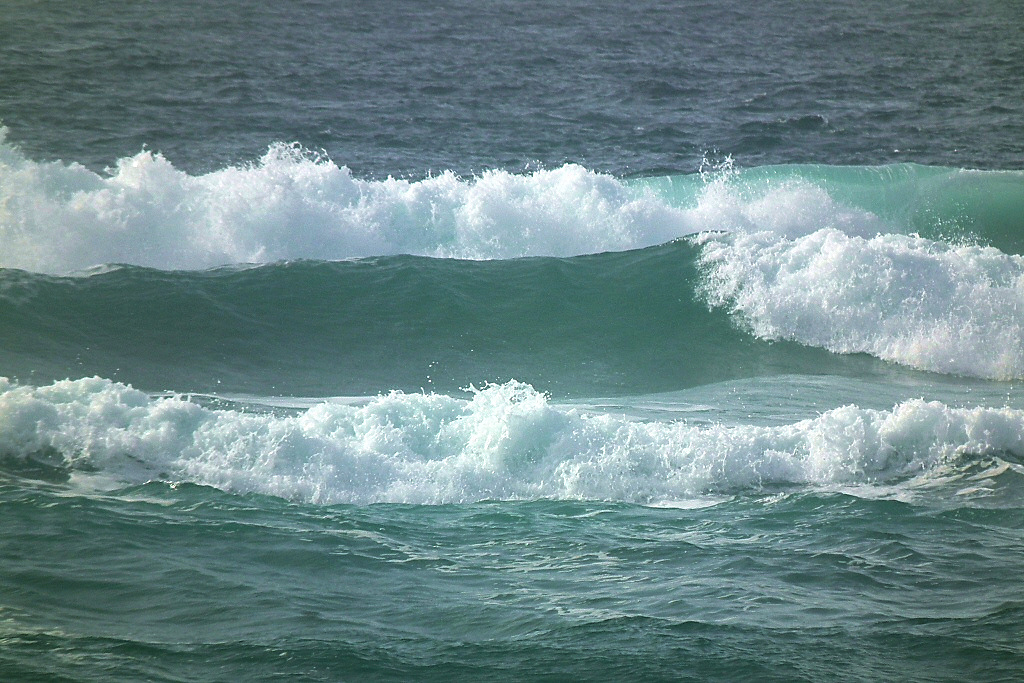
Rollers in Nanjizal Bay, Land’s End

It is Necessary only that Good People do Nothing

I’ve always been an optimist, deep down inside – a Jupiter in Pisces type. I’ve felt this underlying optimism ever since I was young – not rigidly, but because I keep coming back to it after periodic times of despair over the state of the world, to which, for my growth, I’ve been karmically tied all my adult life. It’s over fifty years since John Lennon sang, outrageously at the time, that we should give peace a chance. I cannot say there has been a lot of visible progress.

However, underneath, something has changed. Many of the ideals of 50-60 years ago are in fits and starts becoming pragmatic policy strategies, and the balance of opinion at street and village level across the world has over the years quietly tilted against war. The strength and clarity of this consensus is yet to be tested, but hints of it are visible in world opinion over Gaza. We’re approaching that test.

Hair-raising world situations and crises have a way of arousing public feeling to a sufficient extent that a mountain of inertia, of helpless addiction to conflict, could actually start moving before long. Ukraine and Gaza have jogged us that way and there’s further to go. Trouble is, a consensus often takes shape in the background while vested interests act more quickly. This formula worked when Pluto was in Capricorn, from 2008 until now, but things are changing. With Pluto in Aquarius, we’re likely to have situations arising where vested interests find themselves encircled.

Polarisation, demonisation and dehumanisation are pre-requisites for conflict, and here the media and social media play an outsize role. If we truly believe in peace, then these three issues need tackling inside ourselves.

The information war is now as important as the military war. Since social media appeared, Palestinians have had more of a level playing-field. In the last conflict, young Gazans won the info-war on points, and this is one reason why Gazan phone networks are disabled now. Israel meanwhile fails to realise that, apart from military overkill, its determined, uncompromising certainty in pursuing its cause undermines it in the eyes of much of the world.

We’re getting too accustomed to witnessing blood sacrifices. We live in a thoroughly amoral world system and, collectively, by omission, we have failed to stop them happening. The system is rigged in such a way that, though we might choose peace, justice and ecological priorities, we undermine them simply by shopping at supermarkets, driving cars and using phones and computers.

I keep repeating Edmund Burke’s 250 year old quote: “For the triumph of evil it is necessary only that good people do nothing“. It’s true.

So we get the cruel destruction of people, cities and landscapes in ‘theatres’ such as Syria, Ukraine and Gaza – hellish nightmares that everyone hoped we’d left behind long ago. We’ll get more of this unless there’s a fundamental change. Such a change might start happening in the second half of this decade.[1] But, as with many of the world’s key issues, it won’t just happen. It has to be pushed, firmly and consistently.

It’s important that this pressure for change doesn’t become a new social conflict, a new cause for social and political polarisation. Battling over it will lead to delays and complications we can’t afford. The movement for peace needs to avoid adopting the methods of war and confrontation: success comes through building a rising tide of solidarity, consensus and cooperation. It needs longterm commitment and mass momentum, and if it is to succeed, the people of Earth need to get behind the project of saving our world. Global peacebuilding is a key part of that.

In relation to the current conflict in Is-Pal, taking sides is understandable, yet it is part of the problem. The problem arises from polarisation itself, not from the perceived goodness or badness of either side. What is under-reported here is an indistinct but nevertheless a majority global consensus tilting against war and devastation, by anyone, against anyone and for whatever reason.

The destruction we’ve seen in Gaza, Mariupol (Ukraine) and Kobani (Syria) in recent years have nudged this sleepy consensus along. Humane empathy is bubbling up in collective consciousness, especially amongst the young, the power-holders of future decades. But is it strong enough to overcome the resigned belief that conflicts are an unavoidable yet necessary evil?

Behind this lies a bigger problem. Governments of all kinds are out of step with their people. Defence and international relations, even in democracies, are managed by godfathers who decide the ‘national interest’ on our behalf. So, in future, matters of war and peace boil down to a bigger question: who decides?

Majorities in the Global South and also the Global North are proving to be pro-people in attitude. Current wars have taken on a people-against-the-Megamachine optic: we see high-tech war machines ranged against crowds and communities of people, mowing them down. With Pluto entering Aquarius for the next 15 years, this meme is strengthening – we’re watching it happen in Gaza.

Here’s an astrologer’s warning. From 2025-6 until 2038 Neptune is in Aries, an awkward period in which we’ll be faced with a key cause of war: big guys and strongmen who take it upon themselves to determine our future, often at the expense of majorities.

In Sudan we see a country being wrecked by two competing military leaders and their oligarchies. In Ukraine we see two very different kinds of strongman ranged against one another – Putin and Zelensky. In Israel we see a remarkably cynical prime minister taking on the whole world, convinced of his own rightness. In Gaza, Hamas is a resistance movement which, though it has its prominent leaders, is more horizontal than a hierarchy – more like a cooperative and rather like the Jewish terror organisations of the 1940s, Haganah, Lehi and Irgun.

Hamas will never remove the state of Israel, and they know it (they aren’t fools): Israel is here to stay. So are the Palestinians – here to stay. Israel will not eliminate Hamas because, even if it kills most of the current Hamas leadership, its actions generate new supporters and fighters willing to continue, whatever the cost, now and in twenty years’ time. That is, unless something big changes to make Palestinian lives better.

Big leaders and strongmen… Like that of war, this question has been allowed to drift because we were all too busy doing other things. This is one of the big challenges we must face globally if we are to avoid becoming a failed planet. However, here’s some good news: in the late 2020s and the 2030s we’re likely also to see a new crop of benign, altruistic leaders – of whom there have been too few in recent times. We could also see leaders who look as if they have solutions but they don’t, and visionary leaders with good solutions and a good way of asking people to face the music and grasp the nettle.

Palestinians are in a terrible mess. They have a strange mixture of social unity and political disunity, and they’re at a diplomatic disadvantage, poorly represented. ‘Palestine’s Mandela’, Marwan Barghouti, has sat in Israel jail for twenty years. The future of Gaza is now likely to be decided by outsiders. One sad fact here (many will disagree) is that the future governance of Gaza is best left in the hands of Hamas. The Palestine Authority, Israelis or international bodies are unlikely to get things right since they will simply perpetuate Palestinians’ position as dissatisfied victims.

Israelis have got themselves into a thorough mess too. They have landed themselves in a war on five fronts – against Gazans, West Bank Palestinians, Arab Jerusalemites, Arab Israelis and Hezbollah in Lebanon. They have an enormous domestic disagreement over the future direction of their country, which risks civil war or a separation of the country into an Israel and a Judea. Peace-oriented Israelis are having a hard time right now.[2]

By destroying Gaza Israel has raised a big question: who will pay the necessary mega-billions for its reconstruction? If there’s a risk of further destruction, governments, NGOs and investors will have little interest in an insecure investment that won’t pay off. Construction contracts will be valuable to Israeli companies, and plenty of cheap labour is available, but since Israel’s economy is tanking it will rely on foreign investment, during a time when the international community has plenty of bills to pay. It makes Israel accountable – it must promise to avoid destroying Gaza again.

And where and how will Gazans survive and get a decent life? A strong minority in Israel wants Palestinians simply to disappear – to Egypt, Jordan or anywhere – and this has been a hidden agenda for some interests in Israel since the late 1940s. But if this were possible, it would already have happened. Palestinians are good at standing their ground, whatever Israelis and the world throw at them.

Even if all Palestinians obligingly left, Israel would not be safe and secure – it would still be at war with itself, it would have unhappy neighbours and a further two million unhappy Palestinian refugees staring at it, and it would be internationally isolated (since USA is a fitful partner). Meanwhile the world is tired of holding its nose, paying Israel’s bills and accepting Palestinian refugees. Seen from outside, peace and security for Israelis have been destroyed by Israel’s own actions.

For Israel to feel safe and secure it must play its part in creating the right conditions. Palestinians need a decent life where they can be happy, make progress, do well, feel free and feel safe. The threat to Israel will then diminish – not without problems and crunch-points, but in the course of a generation of calming, it will happen.

This conflict exposes a key global issue we consistently fail to address. Who decides things at the global level? Gaza has now gone global. Perhaps this was Hamas’ hidden strategic aim: to put the cat amongst the pigeons internationally. It has exposed Israeli dependency on support and cover from abroad, and it has dragged neighbouring countries and the UN system into the debate over the future of Gaza. In effect it has made Israel lose its control of Gaza and even of itself. Confusing self-defence with revenge, Israel has alienated the world, lost its Middle Eastern neighbours’ trust and come under USA’s thumb. Even though Hamas’ strategy and actions are highly questionable, Israel has outclassed it in the badness stakes.

Who decides? This is a big, awkward international problem. Our haphazard, under-powered system of international decision-making is inadequate. The UN, the only international body we have for dealing with global affairs, is hamstrung by its incapacity to act independently. There is a growing need, though no capacity, for international bodies to overrule the decisions and actions of individual countries if they harm the wider world.

This is a minefield, but it’s a question we must sort out in coming decades. Gaza has become a nexus-point in a bigger argument between the Global South and North. However much Hamas intended it, this is what it has achieved.

The solution doesn’t lie in the past, in differing historic narratives and arguments about who did what, who suffers more and what God thinks about land-distribution. It lies in the future, and on the capacity of two peoples to live together sharing the same small space. Actually, we aren’t talking about two peoples, but more like seven or eight. Conflicts like this hold back the rest of the world and, if the world is to progress, disagreements must in future be resolved by means other than war.

The Middle East, the historic crossing-place of Eurasia, is filled with multiple ethnic groups, all with a history. For millennia it has been ruled by single systems – empires – where ethnic groups lived alongside each other in neighbouring villages and city quarters, each having quite distinct identities, laws and customs, without dividing the region into the separate territorial nations we have now. Today’s countries, introduced by the British and French around 1920, have had multiple nightmares ever since. As the hydrocarbon age ends, if it is sensible the Middle East will pull together, led probably by the Gulf States, and conflicts will tend to dwindle because its natural state is to be united in one multicultural system where everyone has rights and no one is excluded.

For that to happen, peace in Is-Pal must come first – it’s critical. It’s also difficult, after the damage that has been done. Peace is at root a consensual, emotional, people-scale thing, not just a diplomatic, business solution. It requires forgiveness, trust-building and a calming period of at least a generation. Hatchets must be buried. Lives reconstructed. Justice restored. Pain dealt with in another way. People need the space and calm to experience the advantages of peaceful coexistence.

It’s the same with the wider world: everyone needs to get a clear feeling that, whatever the costs and disruptions of change, change is better than non-change. In all departments of life. It won’t be easy, but it’s easier than the alternative.

Israel and Palestine act as a microcosm of the world. When peace comes to this small, benighted and strangely holy land, it will be because the world is itself coming to peace. The Is-Pal conflict is a key conflict, locally and worldwide, acting as a focus-point for a much-needed process of global peacebuilding. Without global peace we are unlikely to survive – Earth will become like Gaza.

Even so, I’m still an optimist. Optimism might be a sad pathology, but don’t bank on it. Just because things are bad and disillusionment is rife, this doesn’t mean this sad state of affairs will continue forever. Bizarrely – and this is a tragic point – the worse it gets, the more likely we might be to make fundamental changes. Perhaps this is the hidden psychology of the Israelis and Palestinians: unconsciously both sides feel out of control, driven by deep feelings and a kind of self-destructive despair, crying out for help and support.

Also, this is a gift they are giving the world, highlighting our helplessness in dealing with conflict and its causes. The extent of the current tragedy takes Israelis and Palestinians close to a brink, an epiphany point. People on both sides need somehow to realise that their existing strategies aren’t working.

So my prayer is that current momentous events in and around Gaza become a catalyst, a turning point, a tidal shift, both in Is-Pal and globally. A turnaround that seeds conditions in which a more lasting, true peace may come. Not just a ceasefire but a comprehensive solution. Actually it’s about justice, a correction of extreme imbalances, which will lay the foundations for peaceful coexistence. It is possible to do this by mid-century. It falls on a younger generation to do it since, sadly, my generation hasn’t succeeded. And they will succeed, since war is now obsolete as a way of settling our differences, and we need simply to accept that.

With love, Palden

————-

My next blog will be on more personal matters. Also, I’ve been quiet because I’ve been assembling a book for cancer patients and their helpers, drawn from my blog over the last four years. Thanks to those of you who have encouraged me to do this. Called Bones, it’ll be ready in due course (in Cornwall we say ‘dreckly’) as a free online PDF and possibly later as an audiobook. It’s in consultation stage at present with two special soul-sisters, Sian and Faith (thank you), and awaiting a final editorial trawl. Definitely dreckly.

NOTES:
[1] I explain my astrological thoughts on the later 2020s here: https://penwithbeyond.blog/2020s/
[2] Here’s an article by Gershon Baskin, an Israeli peacemaker, about Marwan Barghouti, widely regarded as ‘Palestine’s Mandela’ – and the telling point is the comment below it, accusing him of being a traitor. https://blogs.timesofisrael.com/to-the-one-who-could-be-the-next-leader-of-palestine/

I’ve written a trilogy of books about Palestine – the West Bank. I wrote them in 2009-2012 and not much has changed since then except people getting older. I feared the books would go out of date but they haven’t, really, apart from details. One is available in print and all are available free as online PDFs. www.palden.co.uk/pop/

These are Palestine Authority soldiers, not Israelis

Meditation


MEDITATION today, Sunday.
And every Sunday, regardless, whether or not announced.

We’re in a deep time when the hidden and not-so-hidden feelings of humanity are coming up in all sorts of ways – not just around Gaza, though it does symbolise the world’s situation.

The Scorpio newmoon comes at 9.30am GMT on Monday morning. This is an angry, restive, frustrated, oppositional time (Sun, Moon, Mars, Uranus), yet underneath it there’s an exposure of human truths and motivations, powered by pain and memory from the past and a need to make a big step into a new future.

A future where humans and our heart-sensitivities prevail over horror, disaster and grief, the cruelty of explosions and the bulldozing facelessness of the Megamachine.

‘Disaster’ means ‘out of tune with the stars’. A sustainable future involves tuning back into the stars, to nature and toward our fellow humans. A harmonisation of human feeling that incorporates uncomfortable truths, healing them and bringing a turn-around in the deepest corners of the human heart.

One member of our group is close to the volcanic eruption in Iceland – even the Earth is speaking.

There will be more of this in coming times, as we face the uncomfortable truths that stand in the way of progress on our shrinking, quaking planet.

Peace is not just about cease-fires – it’s far bigger, deeper and wider.

You’re welcome to join us for half an hour (times below). Thanks for being with.

More information: www.palden.co.uk/meditations.html

Current times, on Sundays:
UK | GMT 7-7.30pm
W Europe 8-8.30pm
E Europe and the Levant 9-9.30pm
Brazil-Argentina 4-4.30pm
EST, Cuba, Jamaica, Colombia 2-2.30pm
PST North America 11-11.30am

Explaining

The Judaean Desert near Jericho

and Stone Walls

If you wish to understand the psy-ops and propaganda war that’s going on, it’s worth reflecting on the word hasbara, a Hebrew word often translated as ‘explaining’, but it means a lot more than that. The hidden agenda behind hasbara is to say things that are the opposite to the way they actually are, and to project on the other side qualities that actually are your own, blaming them for what is happening and thus justifying any actions that are taken in response.

A classic hasbara word is ‘defence’, as in ‘defence forces’, which is only part of the truth, concealing the less popular aspect of it. Israelis ascribe ‘defence’ to themselves and ‘attack’ to its neighbours, when actually, for both, it cuts both ways.

This shadow-stuff is common in international relations – creation of often unfair images of other countries or peoples in order to bolster one’s own projected image. They are the bad guys and we are the good guys. It gets exaggerated during times of conflict – and the basis of conflict is a sundering of consensus and a dangerous polarisation between sectors of society, nations or blocs. It can be used to justify actions that otherwise are unacceptable or atrocious. Every nation does it in some way, though Israelis are really good at it, as are Americans and British.

So if you look at what you read and hear with this in mind, you’ll understand things in a new way. Sides in a conflict project negatively on each other, demonising and dehumanising each other, to justify their own offensive or outrageous actions.

An ordinary day in peacetime Jericho

If Israel, Hamas and the ‘international community’ truly seek peace and a fulfilment of their needs, the dialogue needs to change. The terminology, the attitudes, the dehumanisation, the unreasonableness, the accusations and the anger. It starts with a change of heart. This is at present slimly possible though highly unlikely – there are too many vested interests and set agendas involved, of many kinds. So the current Gaza conflict will likely remain unresolved, as have previous conflicts. Not that it is easy or quick to resolve – incrementally, it will take generations. Recent events could serve as a turning-point, but I do not detect a necessary will to change.

However, the people with the biggest cards, regarding peacemaking, are Israel and the American bloc, closely followed by the Middle Eastern nations. It starts with a realisation amongst Israelis that they will fail to create longterm security while they are damaging new generations of Arabs and thus creating new enemies for the future. They cannot eliminate Hamas or the constituency it reflects and, in Gaza, there is no one capable of replacing Hamas as a government.

Also, Hamas have not actually been bad as a government (given that people in most countries have problems with their governments), and it needs recognising that they are an Islamist social reform party with a military wing, not a military force with an appended political wing.

A crow at Tel-es-Sultan, the remains of ancient Jericho, going back 7,000 years

But both sides need to change their views – their whole optic.

Palestinians are not extremists, though they are in an extreme situation and thus they react extremely. But they dislike Muslim fundamentalism, ISIS, Al Qaeda or even the wearing by women of the full face-covering. Most Israelis are not extremists either but, when they feel under attack, they can be overwhelmed with insecurity, fury and vengeance. This has deep historical roots and, while it’s understandable, it doesn’t help the future. It makes Israel overreact, with the longterm effect of perpetuating the insecurity that Israelis so much want to be free of.

It makes Arabs overreact too. Most Arabs accept that Israel is there, wishing it to withdraw to the 1948 borders (perhaps with a few trade-offs) and to become a good neighbour. But when they see Israel’s military actions, they become emotionally reactive and the rather over-worn and unworkable idea of driving the Israelis into the sea is reborn.

So somehow there needs to be a massive act of mutual trust and respect of a kind that very few Israelis, Palestinians or neighbouring Arabs could accept. Things are so touchy that it could break down over the slightest incident. And there are interest groups, both high-up in the geopolitical sphere and on the ground, who are dead set on perpetuating and enforcing the existing mindset they already hold.

The ancient spring at Jericho – the reason why the town is there and has been there for 10,000 years. It’s the oldest continually inhabited town in the world

At present I see only two possibilities: calming and exhaustion.

Calming means an incremental stepping back and reduction of conflict, by agreement. This could be achieved either on the ground, through the upwelling of a suppressed aspect of public sentiment on both sides, particularly amongst women, to apply deconfliction pressure from within each society. Or it could be achieved diplomatically, but this would require all those countries that matter to agree on one strategy, applying strongly both to Israel and the Palestinians. Don’t hope too hard for this, but it is always possible. As Sir Steven O’Brien, a diplomat, said on the radio (Saturday 4th Nov), “Diplomacy always fails until it succeeds“.

Then there is exhaustion. A conflict ends when there is an equalisation between forces, such that both sides perceive that they cannot win. This can happen militarily, but neither side in this conflict is likely to be able to win clearly, and there is a high price-tag to it.

Here the Palestinians have a slight advantage since their attitude of ‘sumud’ – perseverance and hanging in there – has more lasting power than Israeli rage. They lose every conflict, trying to draw down the world’s sympathy by suffering massive damage – a kind of collective martyrdom – but they also stop the Israelis from winning, every time. Meanwhile, the international community watches, fruitlessly spluttering and wringing its hands.

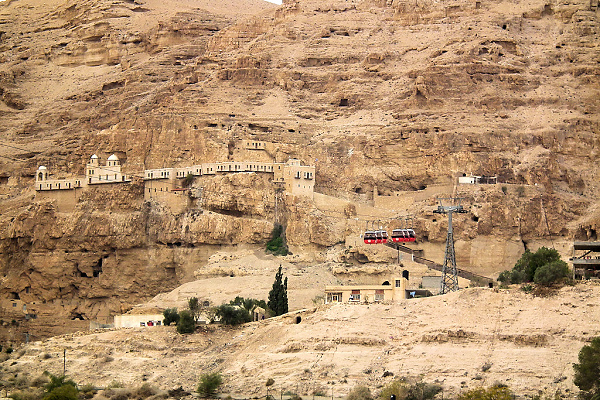
The Greek Orthodox monastery at the Mount of Temptation, Jericho (where Jesus did his forty days and forty nights).

It’s all nicely complex, and there is a counter-argument to every argument, and there are no easy answers. But it looks like we’re following the exhaustion track. This is also what’s happening in Ukraine.

The real battle lies between those who encourage polarisation and violence and those on the receiving end of them. Both sides can live together, and they shall. They do live together, even though they are strangely divided.

Palestinians aren’t angels and they’ve made mistakes but the burden of power and error weighs heavily on the Israeli side. Israel has long had superiority in weapons, money, connections, PR, chutzpah and forcefulness. Israelis don’t see things this way, seeing themselves as endangered victims. This is not unique amongst nations, but for Israel it’s extreme and the effects impact heavily on their victims and the wider world.

The Israeli project – to provide a safe haven for Jews – is a noble thing. Historically, Jews have suffered immensely, especially from the actions of Europeans. This doesn’t justify their oppressing Arabs today or doing to others many of the things that once were done to them. Israelis don’t see themselves as oppressors – they are the oppressed, busy protecting themselves.

Israelis have a lot to be proud of. They built a nation in decades. From their perspective, Arabs have attacked and menaced them and Israelis have bravely held off such threats – this was the narrative I learned as a teenager in 1967 at the time of the Six Day War, during which the Israelis occupied the Palestinian territories as if by accident, pre-emptively defending themselves (we were told).

Westerners fail to understand that this is where the power really lies in Middle Eastern society

In later life, I discovered that this, like the previous one of 1948, involved severe ethnic cleansing and uprooting of Palestinians, razing and occupying villages and parts of towns, and the killing of thousands of largely defenceless people. The awful fate visited on Jews by Europeans was visited by Jews on Palestinians. In the long arc of Jewish history this is tragic.

Only some early Israelis were perpetrators. Many were accomplices who shut their eyes, went along with things or obeyed orders, to an extent tricked by their leaders. Or they felt unable to encompass the situation, complain or do anything about it – they were simply thankful to be in Israel. Some protested but didn’t get far, others felt that the ills taking place were regrettable but unavoidable, while others just didn’t look. Zionists defined Israel’s character and future as a state, locked into an endless military vortex.

It could have been done differently. As they immigrated in the earlier 20th Century, Jews could have been integrated more with Palestinians – there would have been difficulties, though arguably fewer difficulties than actually arose. The British administration of the 1920s-1940s could have exercised less of a divide-and-rule approach. When the UN partitioned Palestine, favouring Jews, the Israelis could have made do with the territory they were allocated – they were given 56% and took 78%. They could have traded land for peace in the 1970s or 1990s.

None of these options would have been perfect, but some sort of peaceful and productive coexistence could have arisen, leading to a sounder long term future for everyone. But the path Israel chose lacks foresight, and the results come back to haunt them today.

Israeli feelings of existential threat arose from deep-seated vulnerabilities following the Jews’ terrible history in Europe. But the threat from Palestinians and other Arabs has been less a conquering aggression, more a largely ineffective response to Israeli force and expansion. A sense of threat does not have to be the case now. When Israel upsets its neighbours, or when it refuses to budge on issues crucial to Arabs, it naturally creates an unhappy response.

Thus, Israel becomes its own worst enemy: while intending to reinforce Israeli security, it generates antipathy and threats instead, undermining that security. The ethnic cleansing of 1948 would be consigned to history if it didn’t continue today. Hezbollah would be no threat if Israel hadn’t invaded Lebanon so devastatingly, not long ago. Israeli actions caused the founding of both Hamas and Hezbollah. Hamas and other militias in Gaza would not fire rockets if Israel let up on its siege of Gaza.

Zionism sees Israel’s own interests and expansion as paramount. Whatever means are used, whatever the wisdom of it, and whatever costs are incurred, Israel’s growth must go on. The notion that Israelis’ needs and security could be helped by acknowledging the needs and security of others doesn’t enter the equation, except amongst a dedicated but much shrivelled Israeli peace camp.

In the long term, if anything weakens Israel, it is Zionism, since it undermines the sympathy the world has toward Jews. Only a proportion of Israelis actively subscribe to Zionist sentiments, though acquiescence to them increases when Israel feels threatened, which happens regularly. Zionism is a norm drummed into Israelis from an early age.

Judaism is one thing and Zionism another. The Zionist mentality builds concrete walls and fences around Israel in self-protection, and in so doing Israelis become separated from the world, increasingly failing to see the wider world’s viewpoint. Zionists accuse critics of anti-Semitism, labelling Jewish detractors as ‘self-hating Jews’. Thereby, balanced dialogue is blocked.

But here comes a key proposition. If both Israelis and Arabs saw things another way, opening up to the notion that their fellow humans sit in the same boat as they, and if Israel ramped down its military expansionism, permitting some restitution of the ills which have occurred since 1948, then, over time, threats to Israel will subside, and the country and its population will become more safe and secure.

Most Palestinians and Arabs don’t want to fight. The idea that they want to destroy Israel is nowadays somewhere between a myth and an expletive uttered by Arabs when tempers are hot. Similarly, in Britain in WW2, it was the case that ‘the only good German is a dead German’.

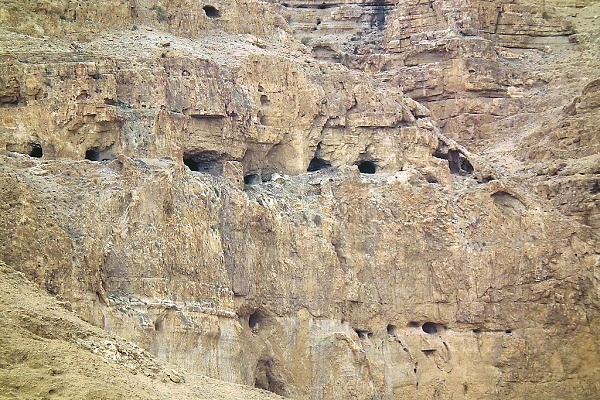
Early Christian hermits’ caves at the Mount of Temptation

Most Palestinians and Arabs accept the existence of an Israel within the pre-1967 borders – an enormous concession they signed up to thirty years ago in the 1993 Oslo Accords. Even Hamas has stated that it will recognise Israel within such boundaries. Palestinians just want a fair deal and a decent life. Peace will never be a perfect deal, but it will be better than the current situation.

Israel cannot afford to remain militarised forever: it has poor people, social problems, enormous water-shortages, a risk of coastal flooding, toxicity, pollution and all the kinds of problems that pervade most modern countries.

It claims to be the only democracy in the Middle East (that’s hasbara) yet the nation is riven with disagreement over the nature of democracy, the constitution and the purpose of the nation, reflected in a succession of demonstrations and indecisive elections. It also shares the Global North’s dwindling prestige and power. After all, Israel’s population is only one third of the Egyptian city of Cairo.

Even if Israel won every war it undertakes, this doesn’t make for a happy, healthy nation. It needs to make friends with its neighbours because it needs them, and they need Israel. They have a lot to offer each other. They share Middle Eastern space. It’s a multicultural space.

Israelis need a safe and peaceful future. Many are not fully aware of what goes on in their name, or they shruggingly accept the ‘security reasons’ they are given. Many feel powerless, or they maintain a comfortable indifference ‘living inside the bubble’. Others adopt extreme, partisan views, as if everyone is against Jews and a strident, hammer response is always needed.

Since the late 1990s, the centre of gravity of Israeli politics has headed rightwards, and a harsh minority dominates the public discourse. The rule of dominant interests, while not unique to Israel, maintains a perpetual state of near-conflict.

Israel could come to regret many aspects of the years since its founding. It soils its nest by pushing its case uncompromisingly, thus creating enemies and the opposite longterm effects to what it genuinely seeks. Its reliance on force, bombing, assassinations, land-grabs and ill-treatment of Arabs builds up new, avoidable problems, fostering new generations of opponents.

We need a new habit of peaceful coexistence. This will take a generation or even seven, but it is important.

The Holy Land is a multi-ethnic, multi-faith land and a fascinating place. Sanctity is elusive and each faith defines sanctity differently, but it’s safe to say that ongoing conflict is not one of its characteristics. Positive change matters for the whole world – Israel and Palestine form a bottleneck in the world’s process of change.

Security is developed by building up a nation’s internal feelings of alrightness, community and integrity. It is built by cultivating collective happiness and creativity, giving people a sense of a positive, mutually-beneficial future. This is the real national interest, the guarantee of Israel’s future.

Once there was an old rabbi who had been praying for peace daily at the Western (Wailing) Wall in Jerusalem, for decades. When asked by an admiring journalist what it was like, he simply replied, “It’s like talking to a stone wall“.

With love, Palden

For better or worse, written using HI (human intelligence, aka brainz)


Site: palden.co.uk
Podcasts: www.palden.co.uk/podcasts.html
Pictures of Palestine: www.palden.co.uk/pop/

Looking from the Mount of Temptation over Jericho, toward the Dead Sea and the mountains of Jordan

Maa Ayensuwaa

Okomfo Akua Ayensuwaa, Queen Priestess of the Ayensu River, West Africa

Those of you who know me well and have been following my story for the last year will have heard me mention the Okomfo Akua Ayensuwaa (Maa Ayensuwaa). An Okomfo is a priestess or priest. This is her.

She is a native healer in Ghana who has been working with me to save lives of people in Ghana, Togo and Niger who have been under attack from an international crime gang, since October 2022. The gang do drugs and people-smuggling over the Sahara, for the British-European market – hard, ruthless men who care little about rape, violence and crime.

She has been in hospital with fibroids, which are spreading. This arises from the privations she’s put herself through during this year – she tends to put others first and is a real heroine. I have not been able to finance her hospital treatment and aftercare (£500). So it looks as if she will die before long.

I am really sad about this. Our meeting last December was very special and, between us, we’ve pulled off some amazing miracles. The problem we have had is that the security/anti-fraud wing of the ANZ Bank in Australia, promising to pay all the expenses for this operation, have failed to fulfil their promise and pay up. Perversely, the bank has turned out to be a bigger problem than the crime gang, whom we have disabled considerably.

This debt from the bank now amounts to some £40k, for the repaying of debts incurred (£15k) and for compensation (£25k) to those ‘good samaritans’ who have sought to help and who have paid a high price as a result. This whole story started when I saved one of their men, Andrew, a Scotsman, whom I knew, from attack by the gang – and the crime gang was uncovered in the pursuit of the bank’s anti-fraud business in West Africa.

As a result of this failure to pay, I cannot pay the fees to save Maa Ayensuwaa now. In circumstances like that, hospitals simply dump people outside, since they do not want liability for them. The bank is in a state of corporate denial, yet they are indirectly responsible for the deaths of at least ten people. They owe the Okomfo and me a lot of money.

I am not appealing to you for money, and I do not like to. The best I can do is to fix for some good-hearted person in Ghana to take care of the Okomfo, so that she can at least have a noble and peaceful death, which she deserves. She is currently semi-conscious and about to be dumped. (The doctor I have been dealing with is a good man, and regrets this himself, but he is bound by the rules.)

I do however ask for prayers and inner support for her. May she manifest the support she needs and deserves, and may her likely end be filled with light and with grace. May she be blessed by the angels, gods and spirits. If she is to live, may she find healing and revival – whichever way the Universe chooses. Please surround her in love. She has given so much to so many people, risking her life for them, and she is a true heroine – rather saintly, actually.

I am working on writing the full story, for the time is now coming to tell it in public and expose the bank. Sometimes the pen is mightier than the sword.

For now, may I ask you to put in a prayer for Maa Ayensuwaa? She is 53 years old, a Gemini, and she is Queen Priestess of the Ayensu River in western Ghana. Her magic and her considerable healing powers are rare. She is is one of the most remarkable psychics I have ever met – and I’ve met a good few. She is a sincere woman who gives freely of herself and her abilities, and she is deeply committed to truth and justice. The photo of her here is the only one I have – our contact has been psychic and online only.

I am really sad that it comes to this and I shall miss her. But we shall continue communicating whether she is alive or dead, and we shall meet again. I was aware that she and I could have done so much together in the area of world healing. Whether this is to be or not to be, may the Universe make the best choice, and may Maa Ayensuwaa go well on her journey and be truly blessed. She is one of the most remarkable women I have ever known.

Thank you. Love, Palden

Time


Latest podcast

This is about time. Time is what stops everything happening all at once.

It stretches us out across a kaleidoscopic storyboard of life-experiences. But in the end, the seemingly lengthy sequence of days and daily life experiences melts into relative insignificance.

It’s what we have become by going through life that matters most. It’s the burnishing and polishing effect of pleasure and pain. Our inner evolution is not something that is hooked directly into time: the progress we make depends more on willingness and openness than on time.

If we devote much of our energy avoiding experiential intensity in our lives, we evolve more slowly. Our experience and usage of the time we have is very much a matter of deep choice. Living life to the full. Not just the comfortable, pleasant stuff but the grindstone, the fire and the soulquake too.

It’s 37 minutes long. This time the recording studio is a field on our farm, with an appearance from the migrating geese of Grumbla.

With love from me, Paldywan Kenobi.

Get it on Spotify (you can also find it on Google and Apple Podcasts):
https://podcasters.spotify.com/pod/show/palden-jenkins/episodes/Time-e2b4taq

Or hear it on my website:
www.palden.co.uk/podcasts.htm
l