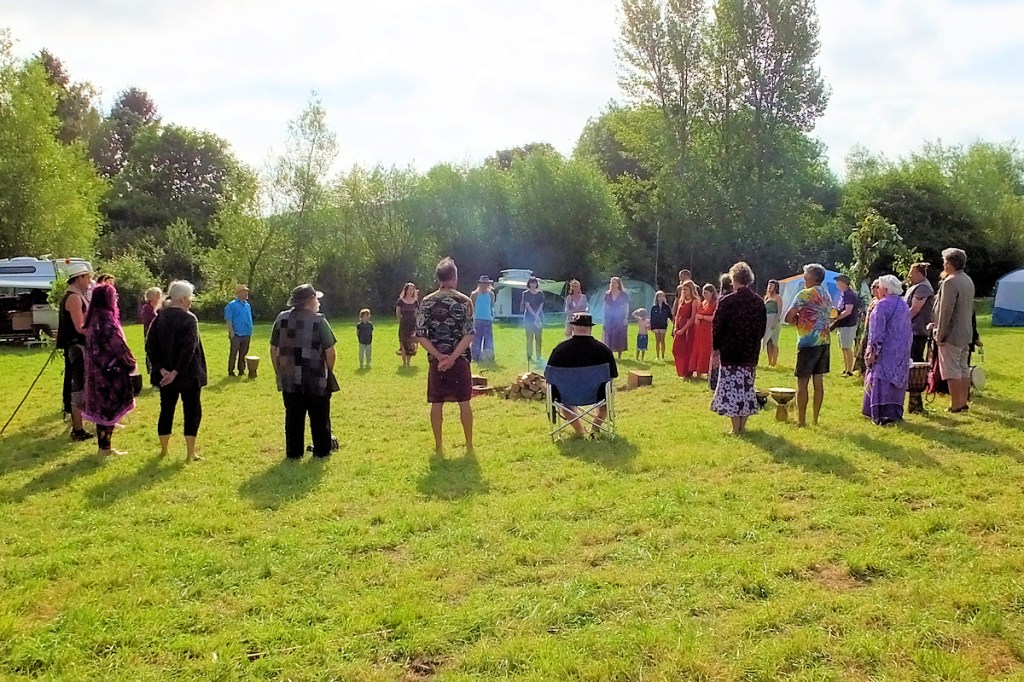
The seventh Aha Class, in Penzance, Cornwall Weds 12th March, 6.30pm, at The Hive
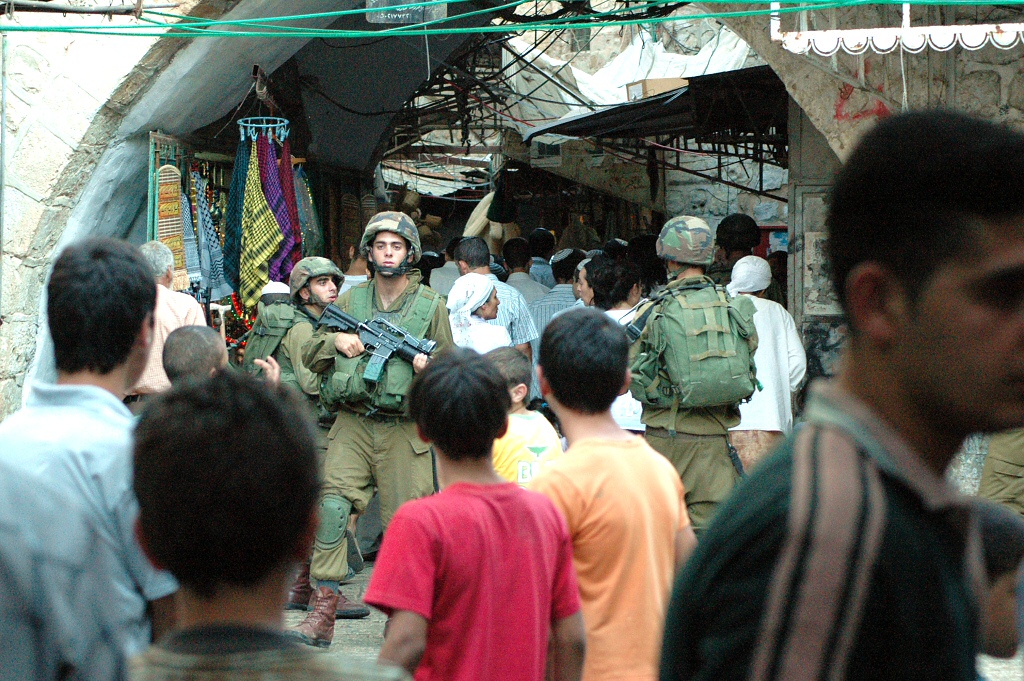
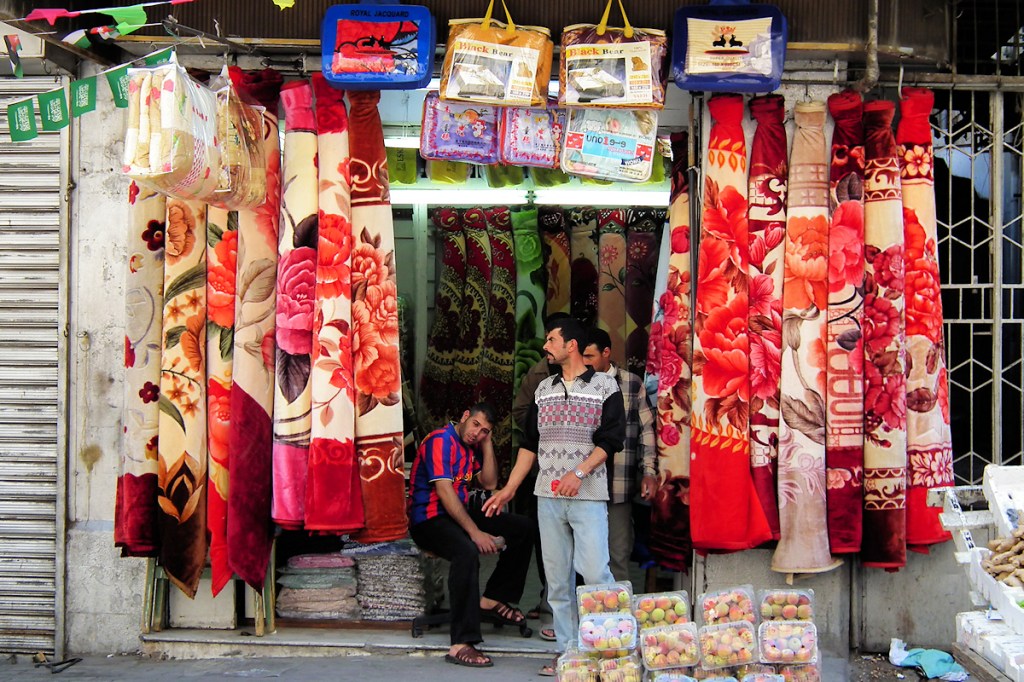
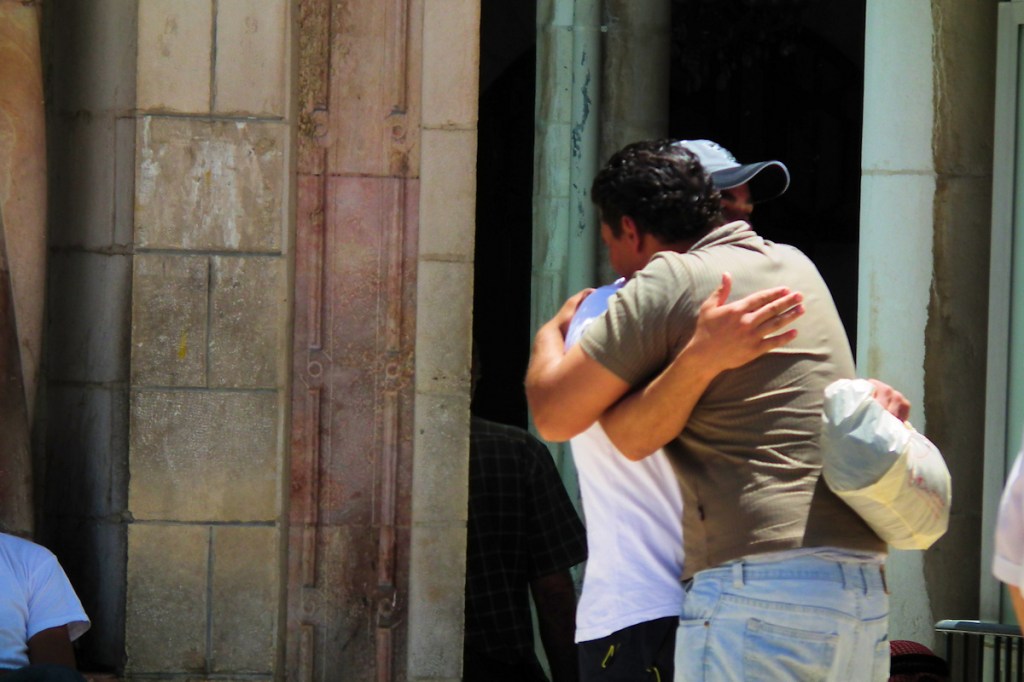
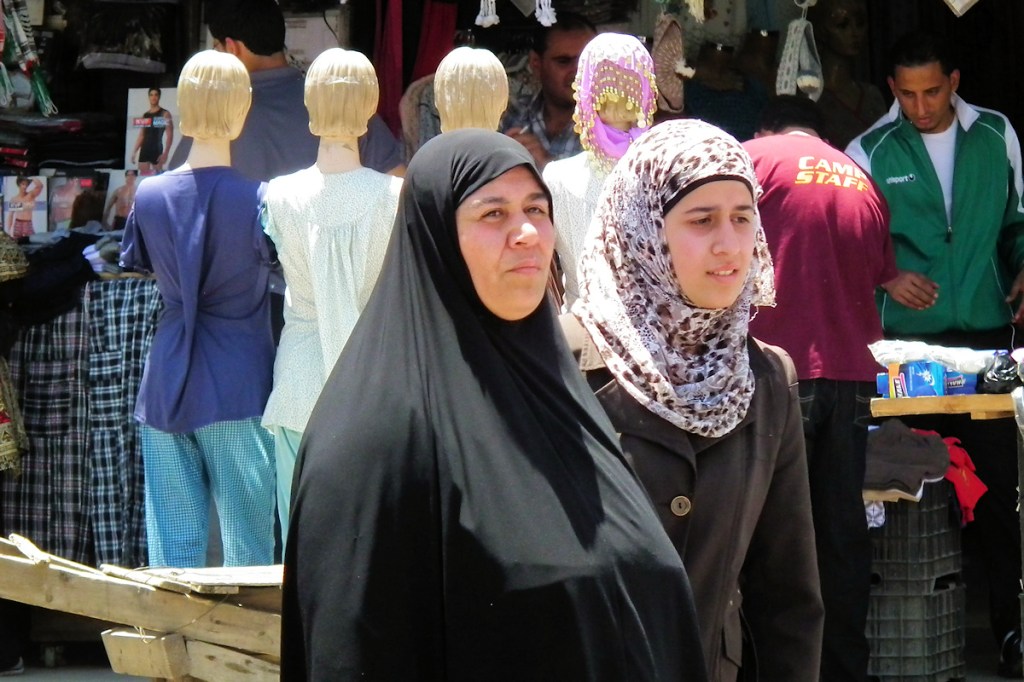
A settler incursion and tricky situation in the historic souk in Hebron, Palestine
Inner journeying, meditation, remote healing and peace-building. Doing our bit toward tackling the world’s problems – instead of wringing hands and feeling helpless.
In recent times many of us have been moved to join meditations, prayers and link-ups when major crises break out. Waves of mass empathy and concern over such crises can have a wide and deep psycho-spiritual influence – it goes deeper than mere ‘public opinion’.
Praying for peace or showering light over a benighted area are good, though often they are of a generalised nature. They can affect the collective psyche and sometimes help swing things.
But it’s possible to get closer in. It’s possible to penetrate actual situations and play a more targeted part in them – literally rescuing people or souls, or participating in situations, meetings and crux-points at the frontline of human experience.
That’s what this evening is about. This might be a valuable inner tool to add to your repertory. This is not ‘lightworking’ but spiritual humanitarian work – bringing in truckloads of spirit, rescue and healing.
This is not simple. It carries responsibilities, and it’s not a matter of imposing our wishes – benign or biased – on world situations. The key issue is to help humanity learn, to become more aware in making the choices it makes, for the longterm resolution of what are often deep-seated problems.
In the first half of this evening, I’ll outline considerations and issues involved in such work, how we choose issues and crises and work with them, and the blessings, delusions and dangers involved and what it’s all for.
In the second half we’ll go on an inner journey to work with a particular area of focus that is currently afoot in the world. (And, first time round, we won’t be working with polarised Trump-related issues!)
You might or might not wish to go into this kind of work but, even if you don’t, world situations do come up at times, touching our hearts, to which we respond, and inner journeying (conscious dreaming) is one way we can play a part in world affairs as situations arise. Once you get the gist of it, it can be applied in areas that interest you – socio-cultural, ecological, geopolitical or simply encouraging forward-moving change.
If you’ve done this kind of thing before, this class might help you clarify a few things and take it a step further. If it’s new territory, it’s a good place to start.
Since most of you will not be able to come, audio recordings will be posted online within days after the class (no charge) – just follow the link below. Recordings of all of the Aha Classes can be found here.If geopolitical healing interests you, you might find this site useful: The Flying Squad.
Some days I have days where inspiration-levels droop, so I rattle off a podcast or a blog, if I can muster up a gem to start with – a starting thought. It’s a way of getting inspiration-channels moving, and sometimes something good comes out. Not always – I have quite a few rejects.
A few days ago I was feeling a bit like that – the cancer drugs were affecting me, I’d been on my own too much, it was raining and foggy, and I was casting around for a spark to give me some ignition. Oldies sometimes need a bit of that – ignition. And going to rest in bed isn’t that inspiring once you’ve done it for some years. Yes, even with the amazing view I have out of the window from my bed.
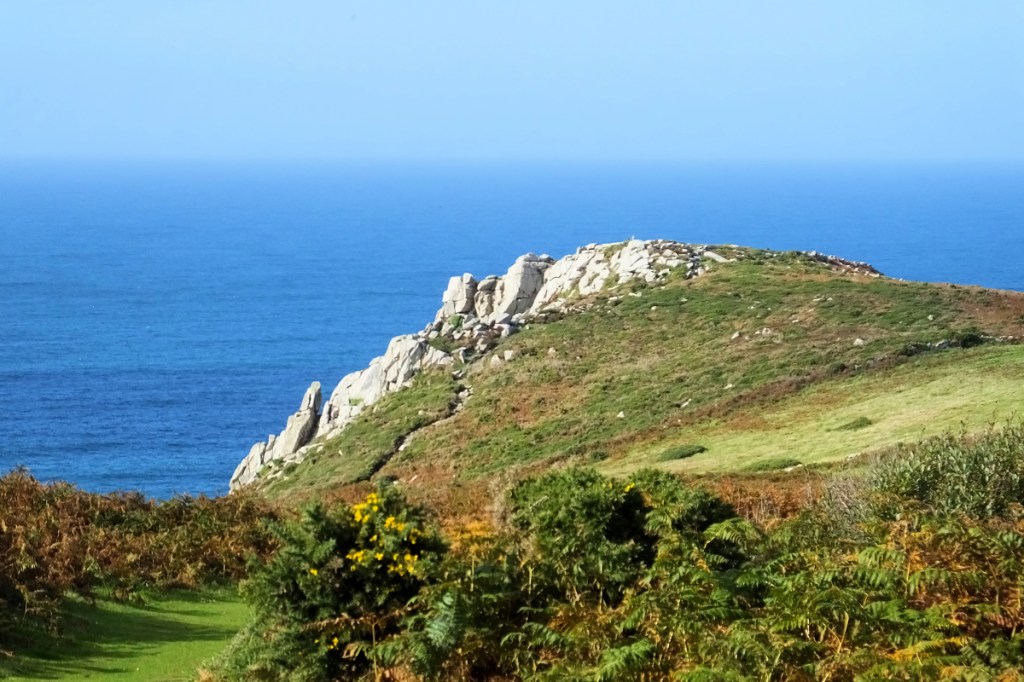
Bosigran Castle, a cliff sanctuary, West Penwith, Cornwall
It has been one of my pathologies in life – a wee ability to ignite people and things, providing a spark that sets things in motion. This is part of the role of an astrologer, but I’m one of those who has got his fingers in various pies over the decades, for all sorts of reasons. Some of these spark-moments I hear about or see the results of, often years later, and some I hope have happened anyway, somewhere, sometime, whether or not Schroeder’s Cat was watching, and unbeknownst to me. I’m happy about that. It has been a privilege to participate in people’s lives in that way.
I’m still at it – helping our proud nation raise, widen and deepen its true productivity levels, the true GDP of our people, through helping people fix their souls, and periodically managing to pass them occasional keys that open doors. Except nowadays I’m doddering around like an old fogey on sticks, wondering when the next seat is likely to appear. I go at about one-third of the pace of most people. I’ve passed my best-before date, so at times I have to work at finding a spark to ignite the old creativity-plugs.
I made a deep, bone-level decision during this winter. I’d been building up for it ever since getting stricken with cancer in late 2019. Perhaps it wasn’t a decision, more a confirmation or full acceptance of something I knew was the case but perhaps didn’t have the confidence to really go the whole way. It was like a conversion.
I decided that I shall not die for medical reasons.
Before you start overthinking and wondering what I mean, I mean this… I’ll die because it’s time and I’ve had enough, I’ve done what I came to do and to be (well, more or less), and because the angels no longer need to prop me up, and because I’m ready and cooked. Whenever that happens, I imagine I’ll go out quite quickly – y’know, an armchair job, or in my sleep, or a quick illness.
We shall see. Or perhaps tha angels might pull another trick and give me another lesson to learn. Sorry, mate, you don’t always get what you want! And what do you mean by ‘a good death’ anyway? Are you kidding?
Anyway, there’s not far to go – it’s months or a few years, as far as I can tell. But this isn’t to do with time. It’s to do with the fulfilment of all that needs fulfilling. Or a decent enough amount of it to lay it all to rest and hand in my cards.
There’s another thing too: dying is a part of life, not different from it, or a disjunction. It’s not ‘things going wrong’. It’s a continuity, a transition into another state, and the bits need to be in place for that, ideally. But once the bits are in place, you need to do it, to give permission for the tide to lift you up and take you away.
However, as you might already have found, our ideals often lead us along trackways that lead us all over the place – life on Earth is really complex and easy to get lost in. The path is rarely as straight and simple as it looked on the map. Or perhaps ideals trick us into doing things we’d run away from otherwise.
Who knows when I’ll drop off my perch? Do you know when or how you’ll drop, yourself? Probably not. I’ve been an astrologer for fifty years and I can’t answer that one. I don’t even try.
We don’t exist as individual selves as much as we would like to believe. We Westerners value ourselves very highly – y’know, it’s 400 Palestinians exchanged for six Israelis. And we make a big deal when people pop their clogs and remind us of our own impermanence, frailty and helplessness. We make stone memorials to them, as if to keep them pinned down in our world. We think of dying as a loss, as things going wrong, as loved ones leaving us.
In life we’re supposed to be on top of things – clearing that list, keeping to the timetable, doing what’s required, being responsible. But in the other world, well, that’s irrelevant. It’s necessary to allow ourselves to immerse and drown in the void and float through the vortex, to that far-off place where you no longer need to pay bills or fill in forms.
Ah, correction… unless you create that reality for yourself up there too! This can arise out of the illusion that, as long as we’re doing something, we must be alive. So we keep trying to do things, even when death is busy netting us.
But the big secret is, when you get there, to that expanded moment when your heart stops, there is nothing more you can do about all that, about that life you had. It’s over. Kaputt. Gesloten. Finito. Gone.
Then you’re in another world.
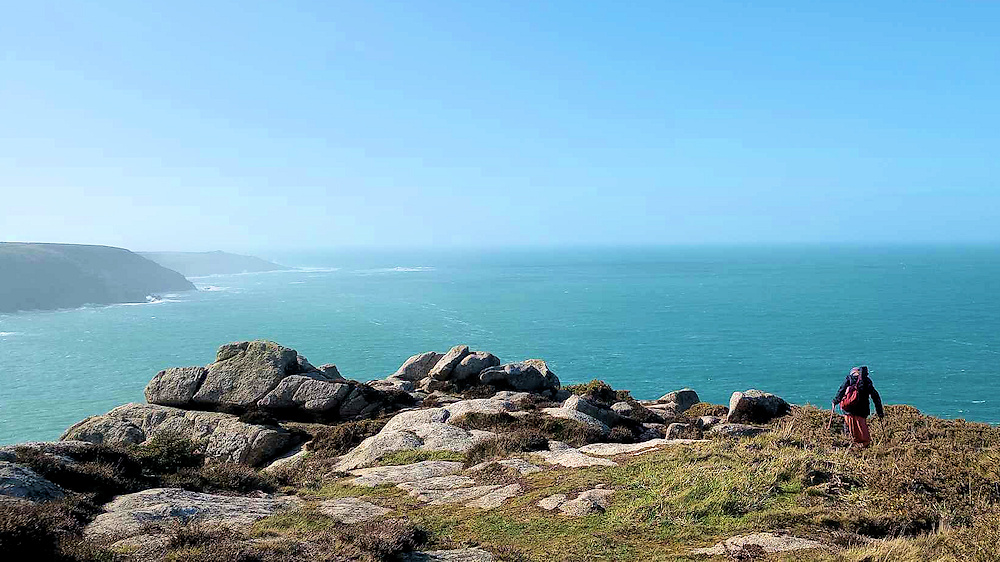
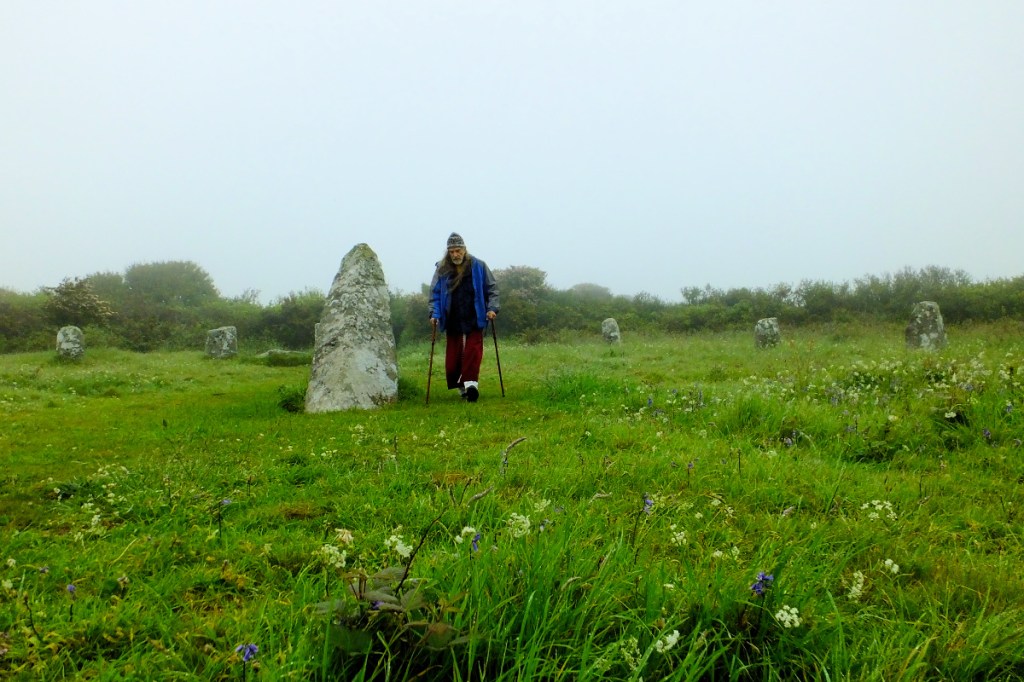
Palden at Bosigran, recently. Photo by Selina al-Mukhtar.
The fascinating thing is that we have karmic threads that permeate our lives and crop up in all sorts of ways in those lives. Since the soul does not exist within the experiential and sequential narratives of time, it lives all of its lives, from its viewpoint, at the same time. No time. Therefore, there is interchange and multilogue going on between our different lives, both on Earth and off it, and continually.
Think about it for a while… that’s rather a big thought.
For me, one of those karmic threads over several lives has been about calling together groups, clans, armies and throngs. This is a bit weird, because I’m quite a hermit too, or I prefer beavering away in the background. I’m not always doing that pulling-people-together trip, but in certain lives I’ve had that (shall we call it) calling or duty. In the life I’m now speaking from, it was called ‘The Camps’, and a number of readers will have been at them in former decades. And they still progress whether I’m there or not. Loads of other gatherings, groups, circles and networks too, and not only in this lifetime.
Some good people were key souls in making the camps happen – sister and brother souls who formed a constellation of energy and logistics to pull off a miracle. I dropped in the seed-idea, which was quietly formulated with a small number of people in our kitchen at the time, bless their souls, who ended up ‘holding the energy’ at the camps. A few are dead now, and others ageing. I get the feeling we’ll find ourselves meeting up again upstairs though.
In unconscious anticipation of this, the name of the cafe at the very first three seasons of camps around Glastonbury in the mid-eighties was called ‘Pie in the Sky’. Precisely. You’re welcome to come along, when you get to heaven.
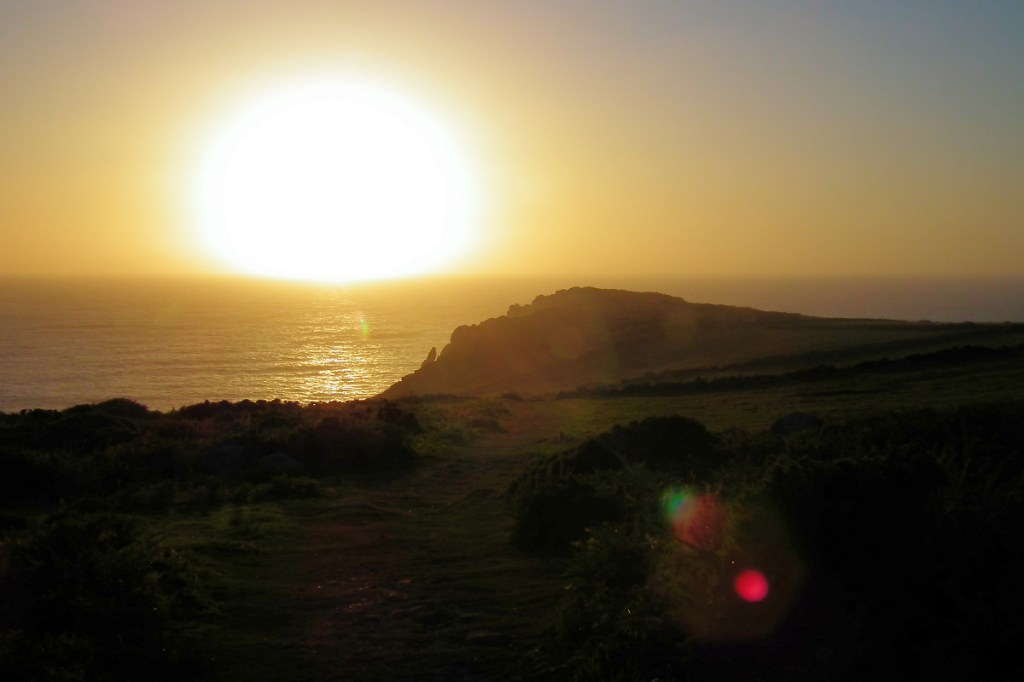
Bosigran Castle as seen from Pendeen Watch direction
Anyway, when I started writing this it was intended to be a few paragraphs. As you see, it turned into more than that. But then, with loads of planets in Pisces right now, whaddya expect except slippery, bouncy dollops of the Great Unknown? So you got this diatribe. Apologies – I’ll go away in a moment. Nevertheless, it’s AI-free and much better than just re-posting neat memes with someone else’s pictures in the background. I hope.
The idea was to tell you about a new podcast. Recently I’ve been going on a bit about other worlds, other millennia, flying souls and random outbursts of imagineering and, this time, I thought I’d say a few things about life on Earth. If you’ve been there, or if you find yourself there now, it might give you a few interesting perspectives, while you’re busy doing the ironing or trying to figure out how to fix your car.
Or not, as the case may be. Who knows? Eitherwhichway, the pod is what came out of my brainbox and voicebox one rainy day when no one was looking. Except for the robin who sits outside eyeballing me expectantly and wondering what I’m doing.
Oh, and by the way, remember the Sunday meditations. They happen every Sunday on a cushion near you. Follow the link below if you need details. Keep it simple. Just do it.
Love from me. Paldywan.
The found sounds at the beginning and end are from recent early mornings on the farm in West Penwith, Cornwall.
This is particularly for people affected by cancer or any other serious or terminal illness.
I’ve been a member of the Honourable Company of Cancer Patients for over five years now and, amazingly, I’m still alive, and against the odds. I have a blood cancer, Multiple Myeloma, and I didn’t expect to live this long.
I waded through the tough grind of chemotherapy and dealing with physical disablement. I went down, nearly fell through the cracks, and found myself emerging from a dark tunnel around three years ago.
I found myself starting a new life – well, kind of. I have no idea how long I am to live – it could be next month or five years. But I found a reason to be alive.
This podcast is not about the medical stuff: it’s about the experience of cancer and what it can do to us. Deep in our soul.
This is my fiftieth podcast from the far beyond. The birds in the intro and outro were recorded here on the farm early in the morning on 19th February 2025. To me, they’re medicine birds – especially the geese, who overwinter here.
Yes, you’ve probably done it before -getting dead, that is. While this involves falling into the Great Unknown, swimming in the Vastness, it’s in your personal bundle of knowhow, somewhere deep down.
This February 2025 Aha Class was about the process of dying and what happens afterwards. The talk comes in two parts. They’re here:
I’m drawing on personal experience. This is what it’s like from the inside – at least, as I have experienced it, and the way I see it.
The range of possible dying experiences is vast, actually, and tailor-made for every soul according to our karmic dispositions and where we have got to in the lifetime we’ve just had.
The audio recordings of this two-part talk are ready and out now. Save them for a good moment – this is a special one.
Next month’s Aha Class is about geopolitical healing – working inwardly with wars, disasters and the deeper levels of the issues at stake on our planet at present.
This is another of my Palestine tales from 12-15 years ago, from a book called O Little Town of Bethlehem, which recorded a five-month stay in 2011-12. In my writings and photos at the time my aim was to humanise Palestinians. Because, like you and me, they’re real humans with real human lives to live.
———————
As the sun went down, a wonderful atmosphere settled upon Bethlehem. The town was in a genial mood – people chatting and hanging out in the streets. At Cinema, a busy intersection with taxis and taxi-vans, I saw a six year old girl standing on some steps simply singing out loud to the street. This was not only touching but also rather refreshing because, for some reason, Palestinians tend not to sing.
Aisha, an English friend who teaches English at the Hope Flowers Centre and stays at my place one night a week, uses the large, empty, echoey conference room in the school for practising opera – she’s an accomplished singer but, living in Ramallah and surrounded with people who would find opera rather strange, doing her scales and practicing her arias doesn’t quite work easily. So she loves practising at the school, where she won’t be heard – and the conference room echoes quite nicely too.
Nevertheless, a neighbour discretely enquired of me what was happening. I explained and he smiled. He’d seen opera on TV, and was interested when I said that operas were like plays sung out loud, with stories to them. I asked him why Palestinians tend not to sing, and he said back, “Since the Nakba we haven’t had much to sing about”. Well, true, but I know that’s not the real answer, which I am yet to find out.
The Nakba, by the way, was ‘The Disaster’, the 1948 war during which the Israelis staked out their nation militarily, by ethnically cleansing and killing the Arabic inhabitants of hundreds of villages and towns in what became Israel. In the space of a few months, the population of Bethlehem quadrupled with refugees and they have never gone home – there’s no home to go back to. As a symbolic act, refugee families keep the keys to their old, lost houses, like a family totem, proof of having torn-up roots in their own land.
This afternoon was one of those times when people set their cares aside and enjoy the moment. That’s one thing I like in Palestine: people do their best to keep their spirits up and enjoy life. There is no alternative. Or at least, the alternative, dwelling on your problems, is far worse.
As my friend Ghada once put it, at a time when she was feeling pessimistic a few years ago, “In Palestine we don’t have up days and down days, we have down days and worse days”. She was at that moment manifesting symptoms of the strange collective bipolarity Palestinians live by, thanks to their circumstances: generally they keep their mood positive in spite of everything, but when they lose their strength and fortitude, they plummet into deep despond. That was where she was when she said this.
Palestinians wear their emotions inside out: love and sadness, friendship and disgust, humour and anger, they share them openly, men perhaps more than women. Their feelings spill out liberally. Mercifully it’s their positive emotions they show most. I have never seen a sign of violence except on a couple of occasions when Israeli soldiers are around, acting provocatively, but even then Palestinians suppress it because they usually don’t feel like getting shot, beaten up, arrested or hounded. They got tired of that ten years ago, and it doesn’t achieve much.
But on a lovely, tranquil afternoon like today, there was still a problem. On the way home, passing through Deheisheh and Duha, there was smoke everywhere. People were setting fire to the skips in which they put their rubbish. They do this because civic rubbish disposal is patchy at the best of times, and the skips were full. It’s not only smoky but dangerous, since so much of their rubbish contains plastics and other toxic materials, and the slow smoulder of the rubbish means that it doesn’t even burn properly. They have a blind spot around this issue. When Westerners like me raise the matter, they shrug it off as if it is no problem. But it is a problem and a big one.
Before you disapprove of these apparently backward people, let me remind you that we in the West started seriously addressing issues such as this only 20-30 years ago, when it was already too late for us. Before that, we trusted in modernity and slavishly paid the price in smog, toxicity, fumes and ugliness. Even today, when I speak to Westerners of the dangers of mobile phones, microwave ovens, wireless internet and electro-smog, people smirk or frown, as if to say “Oh no, he’s one of them”, since this is a current blind spot. One day an enormous scandal will erupt about it and people will yell “Why weren’t we told? Who is responsible for all this?”. We are responsible. We know. But we don’t want to face it.
So blind-spots – areas of life that people deliberately ignore, ultimately to our own cost – are not unique to Arabs. In fact, Arabs look on Westerners as backward because we turn our backs on God – Europeans by becoming increasingly secular and Americans by turning God into a heavily-armed, consumptive patriot with conservative politics.
Every race and nationality covers its insecurities by looking on others as inherently deficient. The less contact they have with other kinds of people, the stronger the negative projection on outsiders – this is one reason for the separation wall, so that each side can project its fantasies about the other onto a concrete screen untainted by reality. This is why Iran is currently a bogeyman – no one goes there to meet the people, so it’s easy to dehumanise them.
This said, Palestinians must still address the issue of rubbish – creating less of it and disposing of it properly. Battery recycling, vegetable waste composting and plastics disposal? Forget it, it doesn’t exist here. But probably it will exist in 10-20 years’ time – Palestine is at a similar stage to the West in the early 1970s. Yet regarding social values, sharing and human warmth, Palestinians are advanced, at a stage that I hope the West will reach in a few decades’ time.
I went into town to do my shopping. I’ve been sitting slogging away at the computer for the last week, so I don’t have many events to report. The trouble with computers is that people hardly see the results of your work because it’s digitally concealed, distinctly not in your face. Much of the work is for people far and wide, so that people around you see little significance in what you’re doing – you’re just sitting at a computer, twiddling fingers and looking serious. I’ve been building a website, dealing with issues for Hope Flowers, doing bits of work and answering questions online – many questions, from many people.
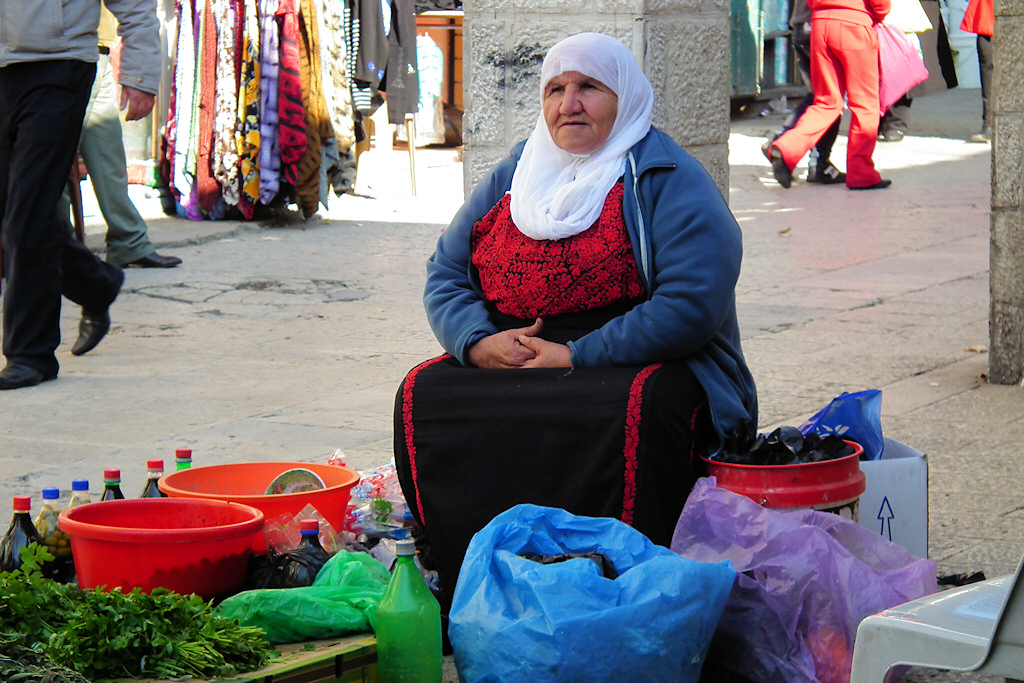
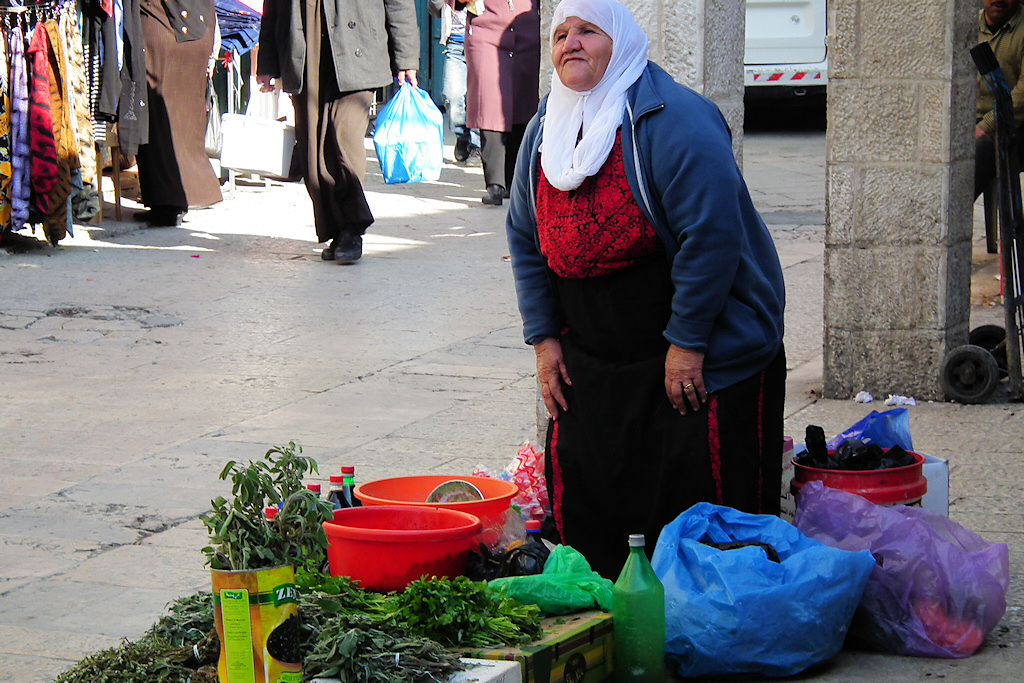
When shopping I went to an old lady I visit regularly. She has a small stall on the streetside in the Old Town. By stall, I mean a stool and a few boxes and bags. She sells herbs and figs. She’s a lovely old lady, clad in her embroidered traditional dress. She walks into town daily with her husband, who leads their donkey, which carries the herbs – then he returns home to work on the land, and he comes back to pick her up later.
Palestinians are big on herbs – they have mint or thyme in their tea and they eat parsley, sage, coriander, spinach and chillies copiously. I buy my herbs from her – big bunches of them, far too big to use on my own, for 1-2 shekels per bunch (20-40p in British money). She likes her pet Englishman. She eyes me closely when she thinks I’m not looking. I think she knows intuitively that I’m roughly the same age as she is, except she’s an old woman and I look younger – apart from a rather wrinkly face which has clearly seen some things. She hasn’t figured me out yet. Life wears out Palestinians.
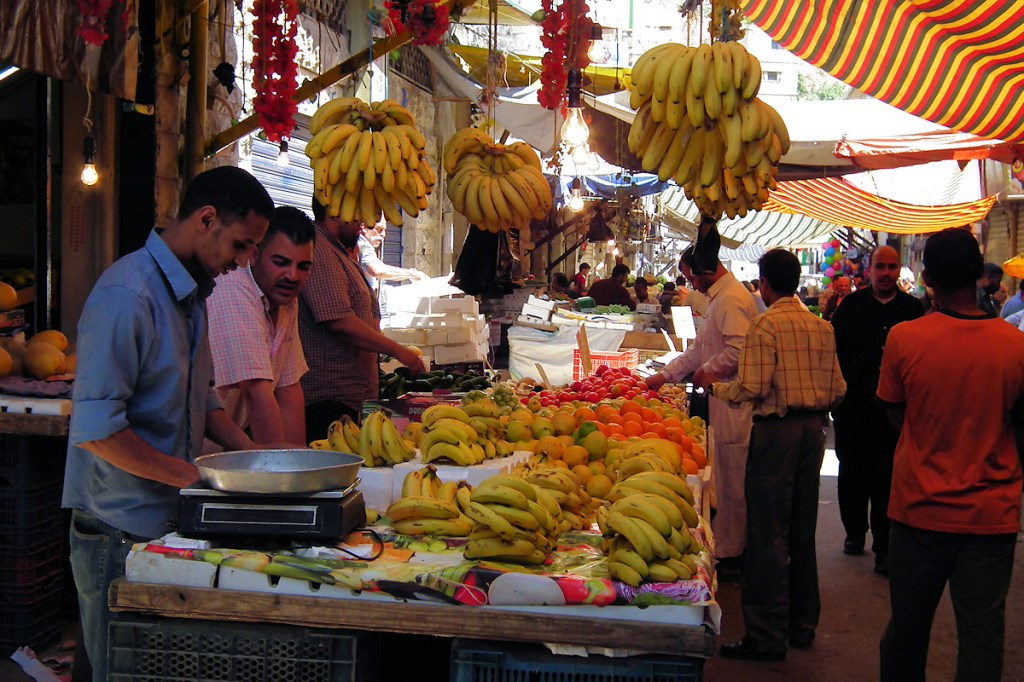
Then I went down to the market to get vegetables. Two stallholders were trying to steal me off the stallholder I usually go to, but he has the best vegetables. One thing many Palestinians don’t quite understand is this. They tend to think one is obliged to shop with them out of a duty to support them – after all, fair’s fair, isn’t it? Well no, I’m a Westerner, and I go for the best stuff and the best deal. Sorry about that. Also, annoyingly, I buy things only when I need them.
The souvenir shopkeepers down in town think similarly. I’m a Westerner, therefore I have money, therefore I ought to buy from them. Not so. I buy presents only because there are people I know and love to whom I wish to give things, and I buy specifically for them. There’s also the question of how to get it back to England, so I cannot buy much. I’m not a buying machine – well, at least, not in my own head.
Dear reader, this might seem elementary, but it’s not so for Palestinians. This is a walled-off cooperation and mutual-support economy, an economy where everyone depends on everyone else for keeping each other alive, so the emphasis here is on supporting your fellow citizens by trading with them, to some extent whether or not you need what they’re selling.
Nevertheless, when one of the traders, a young chap of seventeen who helps his elder brother run a shop, moaned to me today about having no money to buy schoolbooks, I took pity on him. He had said there had been no business today, and he needed 50 Jordanian Dinars (250 shekels or £50) for the books tomorrow. He was worried and depressed. So I wandered off to do other chores, including raiding a bank machine, and slipped him 50 JDs on the way back. He lit up and hugged me, shedding a tear. Now he could get his books.
I told him that this is a life-lesson we all need to learn: solutions often come when you’ve given up. When you give up, it means you’re opening up to Allah, handing over your problems since you couldn’t solve them yourself. This money is a gift from Allah, through a random Englishman. So give thanks to Allah.
“You are a good man, Mr Balden. I pray that Allah, he will pick you up when you have a need.” Well thanks, I might need your prayer to come true one day. This young Palestinian, poor yet intelligent, has better English than some of the 17-year old Brits I know. Good luck to you, mate – I sincerely hope you get a future.
————————–
My three Palestine books are: – Pictures of Palestine (in print and as a downloadable PDF) – Blogging in Bethlehem (an audiobook and PDF) – O Little Town of Bethlehem (PDF only) Available here: http://www.palden.co.uk/pop/order.html
Yes, that’s the drug I’m on today, together with Lenidalomide, Dexamethasone, Apixaban and Aciclovir – it’s enough to make pharma-paranoiacs run a mile. Many have been the messages I’ve had which recommend all sorts of alternative means of staying alive. No doubt well intentioned, I nevertheless find myself writing back to ask whether they have actual experience of what they recommend – which has mostly not been the case. Most seem to think I have a ‘normal’ cancer, without actually knowing I have Multiple Myeloma, an incurable blood cancer and definitely not normal.
I’ve listed all the holistic supplements, remedies and methods that I use in my cancer treatment in my book and audiobook ‘Blessings that Bones Bring‘. With a philosophy of counting my blessings, I’m doing both pharma and holistics, and it works, and the ideological contradiction between them that many people set up for themselves is something I gladly omit to subscribe to.
Just as well really – I’m alive against the odds. But the biggest medicine of all is this. If you are practicing your life-purpose, the reason why you came here to Earth, as a priority, then you’re likely to stay alive until it’s reasonably complete – whatever that means. However, here’s the rub: for some people, dying and the manner of their death can also be part of that life-purpose. Princess Di was an example.
It’s an initiation. You might be a smart-arse with a masters or a doctorate, but they will not qualify you for this. What’s needed is every single cubic inch of humanity you have in you. It comes at you, takes away your control and takes you off, out of your body to another place.
Or perhaps you believe it all goes dark and the you that is you somehow suddenly stops being you – you’ve become a useless pile of dust returning to the dust. Well, good luck with that, though you might be heading for a few surprises. In my experience, the journey doesn’t stop there. Just as well really.
I do have a strange tendency to believe that there’s more to existence than that. The last five years, since cancer gave itself to me, have reinforced that belief. If indeed it is a belief. After all, do I believe in breakfast? Do I believe in trees, rain and sunshine? I’ve been really close to dying, several times. Actually, I shouldn’t be alive – and that’s not a medical opinion but my own observation. I’ve made it through thanks to a series of miracles, a few acts of faith and a strange capacity to rebirth myself. Plus the prayers and goodwill of friends, the blessings of guardian angels, and… work. Yes, work. Working at the reason why I came, and whether I’ve done enough of it to feel satsified with a job well enough done.
Much to my surprise. I wasn’t expecting to be alive after five years, and it leaves me in rather an open space. I thought that at most I had three years, and now I’m on extra time. It’s a matter of figuring out how to make plans while knowing that I’m vulnerable enough, and my grip on life is tenuous enough, to pop my clogs tomorrow or the next day.
For me, it’s a matter of taking charge of my death. It’s my decision – not anyone else’s. Except perhaps for those angels. A year ago, my haematological specialist at the Royal Cornwall hospital said to me, “Well, Mr Jenkins, I don’t know what you do, and I don’t want to know but, whatever you’re doing, keep on doing it“. Indeed, I did, and I’m still here. I’m an easy customer for her – I get few complications, I’m uncomplaining though I’m also calm and clear about certain issues, and she leaves me to my own devices. No, not toxic digital devices, but devices such as intuition… and inner doctors.
Yes, I’ve got some inner doctors. I called them in at an early stage. My angels shunted a few in, too. Once a week, I have a session with them (and at no charge). I go into myself, breathing myself down into a deep state, and I open myself up to them, and there they are. They examine and scan me – using psychospiritual technologies that make Startrek look primitive. I feel them umming and aaahing over things, and consulting, and sometimes I’m flooded with light, or they insert a light-tube into me, or they focus on an organ, and often I’m not at all sure what they’re doing but I can feel them doing it.
At times they raise me up to their level and it feels so friendly, inclusive and welcoming there. I kinda hover there, on my back, held in the middle of their energy-field and jiggled, poked, massaged and blessed by invisible forces. After a while they drop me back down again.
It’s funny how it works. The doctors at Treliske have been worrying about the fact that I’ve been a lifelong smoker – it helps my brains and, as a psychic, also helps me stay on Earth – since I am not a foodie, which is the other way many psychics stay on Earth. So I was to go in for a lung scan. But during my last session with the inner doctors, I did two things. One was to ask for their help in cleaning out my lungs and removing anything that’s unhelpful, and the second was to offer myself up and release all hopes, fears and expectations, to get to a state of full acceptance that, whatever is to happen will happen, and it will be good.
So they flooded my lungs with light and I felt them doing something there. I continued with this in the days that followed but, the day before the scan, the thought came, “Hmmm, this needs more time…“. Claire, a trusty helper from over the hill, took me for the scan. I walked into chaos – the power had gone off – but eventually, on the second interview, the nurse said, “Ah, Mr Jenkins, I’m sorry to say that we can’t scan you because you had a PET scan last August and we cannot scan you more than once a year“. I quietly chuckled. Yes indeed, this needs more time, and I’d just been given it. The nurse didn’t notice me looking upwards and smiling. This is how it sometimes works.
I thanked her for her consideration, saying I am electrosensitive and it matters to me. “Ah, that’s interesting“, said she, proceeding to ask questions as if she knew about it. This was refreshing: in the last five years only one doctor has indicated interest. He showed me a paper in The Lancet which correlated incidences of Multiple Myeloma with proximity to nuke stations. Since then I’ve met other Myeloma patients who have worked operating radar systems, driving nuclear-waste trains from Sellafield, working as high-tension power cable or mobile phone engineers, or as programmers who’ve used a lot of wi-fi…
Once information about EM-radiation is finally made public, everyone will no doubt bleat, “But why weren’t we told?”. To which the answer is: “Why didn’t you feel it and use your commonsense? Did you think it would be alright to irradiate yourself all day and every day without consequence?”.
Well, we humans… we find quite intricate ways of limiting our possibilities and making life difficult. The same applies to me. However, while I have my own self-immolating patterns, I’ve also looked after myself and now find myself still alive as a result – if proof be needed. I’m definitely glad that, at an early age (21) I went vegetarian and changed my life – it has paid off. Yes, I got cancer, but my capacity to deal with it is far greater than most people’s, because on the whole I’ve had a good diet and lifestyle, having built up a good reserve stock of resilience.
But here’s what in the end is the key bit: I’ve been following a growth path, with fewer diversions and denials than most ‘average’ people. If you live on purpose and in purpose, it gives you distinct reasons for staying alive.
But even then, the stories of our lives are multiplex and not limited to being alive in a body. Many of us aren’t even fully installed in our bodies, even when emotionally attached and afraid of losing them. The Council of Nine put it quite well…
“Your Planet Earth is the most beautiful that exists in the universe. It has a physical variety that no other planet has. It has a varied climate that no other planet has. In all the universe there is no planet in existence that has the physical characteristics of Planet Earth. It is the rarest of beauties, and it does attract souls which, once they have come, would like to come back again. This has created a bottleneck of souls recycling on Earth.
“It is of a different nature from any other planet. It has aspects of all planets: it is like a composite of the Universe, with all the positive and all the negative aspects, and all in between, and this is what attracts souls.
“It has with it a gravitational pull that is different from other planets, and because of this a soul begins to feel a physicalness. Souls become adapted to their physical bodies, and they forget the freedom and pleasures they have without it.
“The Earth was created to be a paradise. When souls achieve harmony it will become a paradise again. Planet Earth is the only one of its kind, the only planet of free [individualised] choice in the entire universe, the planet created for the balancing of the spiritual with the physical – in other words, the creating of paradise.“
To some extent this ‘paradise’ business is an attitude of mind. In a funny sort of way, since getting cancer and becoming partially disabled I’ve been happier than before. It’s all to do with how we deal with the life we’ve been given. Nowadays, a lot of people do a lot of complaining about life, as if it’s all someone or something else’s fault. But my best recommendation is, just go to Gaza, Yemen, Sudan, Belarus, Syria, Ukraine, Xinjiang or Myanmar – there are plenty of options – and do a full-spectrum re-assessment. You might find that you come to feel differently about things. That’s what happened to me.
Yeah, life’s a bitch, then you die. However, here’s another gem from the Nine: no one is here by accident.
So, you see, even on pharmaceutical cancer drugs, you can do something with it to make it good. That’s where that free, individualised choice truly lies. It’s on us, not anyone or anything else.
If you have cancer or any longterm, life-changing ‘condition’, this might interest you. Or if you’re a friend, family member or helper. It’s an audiobook about my cancer process and what I’ve experienced and learned through it. There’s also a text version if you prefer reading.
I have a blood cancer called Multiple Myeloma – typically for me, it’s not one of the common cancers. It has particularly affected my bones, leading to a clutch of other issues too, partially disabling me. Hence ‘multiple’.
This book is for you who might seek a different, deeper, wider approach toward cancer, not so much medically as attitudinally. Here I simply share my experiences, which have worked for me, and it might well give you a few lightbulb moments.
Medically, I have done both chemotherapy and holistic remedies and helpers – a middle path – and my results are good thus far. But the main focus of this account is psycho-spiritual. Yet very real too.
It starts in September 2019, before diagnosis, shortly after my back cracked and my life changed. It covers four years. I guess the story ends whenever I leave my body and life behind. If I am able, I’ll keep writing until I no longer can, and a later edition might take the story to its end. We shall see.
Distilled from a blog, this book more or less retains its blog format, with adaptations and improvements. In a blog of this kind you write whatever comes up on the day, and it doesn’t have to follow from what you wrote before or lead on to what you write next. So that’s how this book unfolds – a bit diary-like, with thoughts and observations that came up as life went on.
As an avid, lifelong communicator, I have always sought to stimulate people’s own thinking, not simply to persuade them to adopt what I say or write. Some readers might find some of the ideas expressed here difficult to accept. If that is so, I hope these writings help you clarify your own way of seeing things. These are my perceptions and experiences, submitted to you for your consideration.
In a way I went down with cancer. In another way I went up with it. It is very much a matter of how we see things. This profound issue affects our experience of being alive with cancer or any other serious terminal illness. It affects the way we create our future, even if we’re seriously ill. Yes, you and I might be dying, but there still is a future, and not just in this body. At least, that’s what I’ve found.
So this is the story of my cancer journey. It’s free, with an option to donate. Gratitude to all of you who have been part of it and helped it along.
This is for people living in or near Cornwall. Audio recordings of the talk, with accompanying material, will appear online a week or so after the talk, for those who cannot attend.
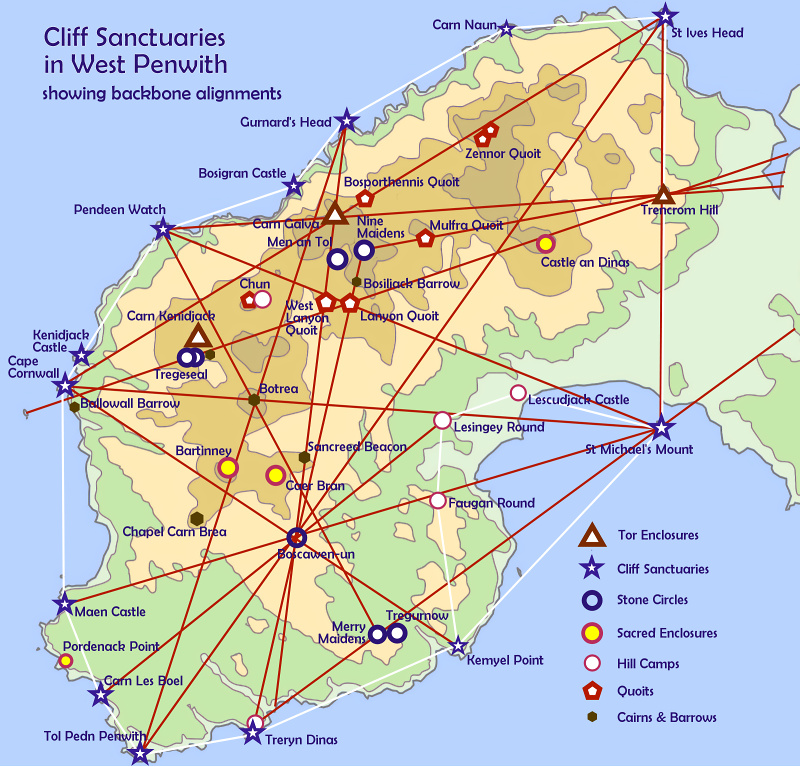
In my talk in June about the ancient sites of West Penwith (worth a listen) I proposed that the whole of Penwith is one big ancient site – an enormous cliff sanctuary. It’s not just a scattering of stone circles, quoits, carns, menhirs and cairns. Why did ancient Penwithians bother to build so much of this ‘holy machinery’? What was their thinking and what did they seek to achieve?
I’ve been studying ancient sites since around 1970 in Britain, Scandinavia, Greece and Palestine. Since moving to Penwith in 2009, I’ve been working on mapping Penwith’s sites, researching their (John Michell-style) alignments, and divining some valuable psychic-intuitive clues concerning their possible meaning and function. These observations are outlined on the Ancient Penwith website and in my book Shining Land.
In the first half of this evening’s talk, I go further into the sacred energy-technology of Neolithic and Bronze Age Penwithians, and the patterns that suggest that they function as one big megalithic system. We’ll look into how it all took shape from the beginning, the functions of different kinds of ancient sites, and how it all fits together into one big geomantic system.
In the second half I propose what I feel needs to happen next, in terms of researching and working with Penwith’s ancient sites. We need to find out more about how they actually work, geomantically and energetically, and what we can do now to enhance and re-enliven their energy-fields and world-healing qualities – not just an hour-long ceremony now and then, but sustained energy-work, learning more about the specifics of how to do it.
Penwith is an ideal area for this kind of work because it is concise and contained, with plenty of ancient sites and people interested in them. Also, this is Cornwall, not England, and Oxbridge-style archaeological thinking is not the only way to understand megalithic civilisation – here in Penwith, out of sight and out of mind, we have an opportunity to frame things in a rather different way.
There is the possibility of starting a research project involving 10-20 people, in which (say) about forty local sites are surveyed, mapped and chronicled by dowsers and sensitives over (say) a three year period, for their subtle energy characteristics and place-memory. (See below for a shortlist of sites.)
Steadily and systematically, we can visit the sites and truly listen to what they want to say – not imposing our own ideas and predilections but letting the sites and the landscape speak, using methods such as pendulums, meditation, inner journeying and talking stick as research methodologies. Then a report (or a series of them) or a website can report on the findings uncovered by the project.
So I’m wondering out loud whether we need now to take things further, stepping beyond a ‘Wow’ stage to try realistically to penetrate the minds of the Neolithic and Bronze Age megalith builders, to uncover more about ancient sites’ energy-mechanics, their intention and usage, and what we can do about them now. That’s what this evening is all about and, if you can, you’re welcome to come and join in.
It’s amazing to be part of a revolution – even if it’s temporary. The relief of getting rid of an oppressive regime creates an expanded nowness, a special moment of intensified significance, before the serious stuff that follows inevitably sets in. There’s a shedding of a deep sense of social burden and self-suppression, of unwilling, shoulder-shrugging complicity with something that few were happy with. In Syria, those who took the regime’s side did so because they saw it as the lesser of two evils, or they made a living or gained advantage through it.
But when the cork pops, a deep collective-emotional eruption bursts out, spreading like wildfire around the country, even spreading around the world. It reminds people everywhere, on a deep, hardly-conscious level, that it is possible to change things from the bottom up, that society has power.
It’s also emotionally tragic to be part of a failed revolution – a dashing of hope and faith, a reimposition of fear and oppression, a paroxysm of despair. It can crush spirits. It nearly did so with me – I was part of flower power and a student uprising at the LSE in London – but after a lot of pain and process the experience ended up making me more resilient.
Forty years later in 2011 in Amman, Jordan, I met some Egyptians and Syrians, fresh from their uprisings, proud and uplifted to have been part of them, yet fearful. They were in Amman because they had been chased out of their own countries, regarded as dangerous. The repression of both uprisings had polluted the joy and impetus of revolution, and these guys were vexed about what to do.
I told them that, in the case of the uprising I had been a part of, though we were beaten and broken, the flowering of issues and dynamics that emerged during that short yet long time had withered but not died. It re-emerged slowly over the years, filtering in through society’s back door. Those of us committed to change had continued quietly, developing our green ideas, healing methods, lifestyle changes, music, feminism, back-to-nature instincts and our psycho-spiritual transformations, and it was a all matter of time before these infiltrated wider society – and it still is. Here I was, four decades later, still here, still working for the change I believed in.
I reminded them that change is deep and it is not truly fulfilled by a revolution, which merely clears the way for whatever happens next. It would take time and it would be difficult, but the lava-streams of change would work under the surface, seeping out or erupting over time and over the generations. What makes the spirit of revolution survive, like a dormant seed buried in the soil? Well, whatever its faults, it was essentially right, and it constituted the direction that humanity needs to follow. History takes time to unfold, but time is on the side of change. The issues that bubble up in such change-moments are bigger and more historically-transformative than we often see at the time, and this process takes time. For me, in late life I’ve come to accept that it can take longer than a lifetime.
Now, in Syria, here we have it – the consequences of 2011. The Syrians of the Arab Spring are 12 years older and a new generation has grown into adulthood. Media outlets round the world are wrong to harp on about terrorism and Al Qaeda – they don’t see where the true roots of this lie. They suspect Islamism of malign, threatening things, when Islamism itself is simply a philosophy and social reform movement, the behaviour of which depends very much on the people doing it.
The Taliban in Afghanistan, while dominated by old Muhajedin fighters from former decades, is also stocked with thoughtful, pragmatic, younger and more travelled people who will inherit the reins. Hamas in Gaza was far more (as it goes) progressive, liberal and socially competent than outside commentators and their paymasters wish to see, and the Israeli killing of Ishmael Haniyeh a few months ago, Hamas’ leader, meant the loss of one of the world’s better political leaders. In my humble opinion.
When so-called terrorists have a constituency of local support, and when they are fighting on their own turf for the liberation of their land and people, they are freedom fighters. Terrorists lack empathy, caring little for the people they live amongst, their agenda is geopolitical and ideological and their method is to use violently dramatic actions to create fear and terror, to scoop up media attention. One well-executed bombing can set the world on edge.
HTS is not a terrorist organisation and neither are most of the other militias in Syria (though one or two might be). Other countries would be wise not to oppose or obstruct the new regime – though perhaps it will need moderating with sweeteners. The uprising in Syria is locally-driven, in distinction to the ongoing conflict in Syria since 2011, which has been a viper’s nest of external intervening powers, influencers and financiers. Now their influence is weakened, withdrawn or undermined.
When I went there in 2014 there were about seven sides to the conflict and it was terribly confusing. I went briefly to Deraa and Yarmouk Palestinian refugee camp outside Damascus. Since it was likely that I’d be thrown out of Palestine by the Israelis, under suspicion, and banned for at least ten years, I felt a need to do something else. When asked to visit Yarmouk by a Palestinian tribe with refugee relatives in Syria, I decided to help them, as a kind of courier and emissary.
But it finished me off. Things happened that deeply affected me. Perhaps also I was in denial,lready feeling burned out, with elements of PTSD accumulated over previous years. But this finished me off. I lost my hope and patience in Syria, afterward feeling lost in a smothering cloud of dismay and disappointment. It was the last humanitarian mission I did. I wasn’t happy about that. But life had other designs.
I spent the following years on a self-healing path in Cornwall, doing remote humanitarian work (such as with the Tuareg in Mali), prehistoric research and walking the cliffs and moors. A loving relationship from 2016 to 2022 brought me back to life. Only when I went down with cancer in 2019 was I healed of the clamping shadows I had been struggling with – they were subsumed by the prospect of death, which prompted an enormous inner let-go of all and everything, bringing something of a spiritual breakthrough and a rapid process of forgiveness of myself, others and life.[1]
This is deep stuff. When, as an individual, you ‘lose your fear’ and come out into the streets in an uprising, you align with a collective tidal surge of vision, emotion, ideas and spirit that feels truly like a springtime, a release. All sorts of amazing things happen. People come alive, emerging out of the woodwork, progressing a long way and finding a new mission in life. People’s lives change in bulk, and a rising tide of hope lifts up even those people who normally are sunk in a life of drudge, stuck in a state of reluctant complicity. The splintered social dissonance that allows oppressive regimes to gain and hold power melts away, and there’s an eruption of resonance, mass concurrence and shared wishes. This resonance-field fizzes and sparkles, motivating people to do quite remarkable things.
But it all depends on what happens next. It depends on the new leaderships that take power and, even more, on the wisdom, patience and fortitude of crowds. Once the change happens, eveyone wants normality to be restored – the economy, public services, reconstruction, and freedom from excessive and unnecessary obstructions in daily life – though this is not simple and fast. After the joy of change, there’s a lot of hard work to be done.
The wisdom of crowds… this is a delicate matter. After regime change in Sudan, the democratic movement did quite well for a time. There was a maturity to the way that people dealt with their tender democratising situation after a long period of dictatorship. But it was delicate, involving a lot of mutual trust, and there are people who manipulate unstable, transitional situations to their own advantage – they can act quicker and more decisively than collectivities of people. They have a contrarian need to break the magic ring of mutualised social power, aiming to restore public dissonance at any cost. In Sudan, it became a slugging match between two oligrchies, each headed by generals, each supported by different outside powers and financing. The democratic movement was killed off, tragedy ensued, and it continues today. Most of the world isn’t interested. Hope is not currently available in Sudan.
Ten years ago I was involved with a small group called the Flying Squad.[2] We did geopolitical healing work and, by 2014, the group had been working together for sixteen years – so we had some experience. It involved a weekly group meditation, wherever we were, and three or four weekend meetings each year – and membership involved committing to 100% presence and involvement in all meditations and meetings, to take group synergy to a higher level.
We did a lot of work with Syria and its uprising and civil war, even travelling to Greece to get closer. There were times when we felt we were getting somewhere in our efforts, but each time a new set of events would re-ignite the situation and make things worse – often prompted by outside intervention by state and non-state actors. Were we getting things wrong? Or was this simply an intractable situation?
This was a big learning. As a planetary healer, you have to learn and accept that sometimes it doesn’t work. There was a point where, in our inner investigations, we discovered an enormous ancient telluric ‘worm’ or dragon in the Euphrates valley in Syria and Iraq, and it was deeply upset. We tried to ease its concerns and help it clarify its aims – it was deeply unhappy about the fighting, oppression and oil extraction in its patch. After we did this work there was indeed a brief pause in events, providing a glimmer of hope, but it soon was dashed by new developments.
We had to learn that there are some things you cannot help. The reasons often emerge later, even years later. Sometimes we can be too restless, short-termist and attached to immediate outcomes. It’s unwise and even egocentric to expect results, just because you feel you’ve put your heart and soul into it and, by rights, it should work. But there can be reasons why it doesn’t work. The idea of creating a ceasefire in Gaza, for example, while desirable, doesn’t actually resolve the problem and its causes, and it might not bring a fundamental healing of a bad situation.
Deep down, countries like Syria and its neighbours are developing a social immunity to conflict and oppression. This is at street-and-village level, and it’s a semi-conscious thing fermenting underneath. The key mechanism is that a society must reach a level of exhaustion with war and oppression, to the extent that it firmly and behaviourally no longer permits it. Society stops responding to the methods that oppressors and warring factions use to divide people and set them in fear. This is pretty much the case in Lebanon nowadays – they’ve had enough of strife, havig been through many decades of it.
The seat of such social power rests a lot with women: if women collectively no longer accept a bad situation and are tired of going along with what men are doing, the violence ends, sooner or later. It’s a buildup of firm and settled emotional consensus. This was one of the key dynamics of the peace that came to Northern Ireland in the 1990s – women put pressure on men to make a change. They just stopped making sandwiches for them and washing their underpants.
There’s another force at work that generates this immunity. After a while, everyone just wants to go home, sleep in their own bed, be with their family and feel safe. This is another rather feminine feeling. When fighters get tired, conflict ends, somehow. It’s a deep tiredness with the privations and dangers of war and oppression. It’s what made the Syrian soldiers recently melt away as the militias advanced – they were fed up. They’d lost the sense of purpose that soldiers need to have if they are to put themselves in the way of danger.
So we now have a full-on situation in Syria. A lot hangs around the international community and the way it responds. A lot hangs on leaderships and their behaviour. A lot hangs on social solidarity, forgiveness of the past, de-corruption and a buildup of trust and integrity in society.
We’ve had a lot of failed uprisings in recent times – in Myanmar, Belarus, Hong Kong, Iran, Venezuela and Sudan – but something has recently changed. Astrologically, Pluto has moved from spending 16 years in Capricorn – a sign that generally hangs on to stability and convention and doesn’t like change – to spending 20 years in Aquarius. The emphasis has shifted from the prevalence of governments and institutions to the prevalence of crowds and public attitudes.
There is a possibility here of a real turning of the page. Not just the replacement of a Captagon-driven, oppressive narco-regime with an Islamist one, but also a change in Islamism itself, and a change in the behaviour of the public. All over the world, the style of governance of countries has come into focus – both democratic systems and authoritarian regimes are in trouble, and people at the top no longer sit securely in their seats. We shall see.
I’m wondering how the Palestinians in Syria (around 450,000 of them) feel about all this. Assad had treated them well, in comparison to many other countries, so they were grateful for that, but the Palestinians could not accept his violent response to the 2011 uprising, and this put them in a difficult situation. Palestinians do not like Muslim extremists either – Al Qaeda or the Islamic State – and in the last twelve years of instability they have come under attack from various directions. I hope they’re feeling some relief today.
This has stirred me quite deeply and personally – helped by the winds and storms raging here in Cornwall in the last two days. It’s a glimmer of hope. It reminds me of the Iranian Revolution of 1979. At that time I was contemplating suicide – the only time I’ve ever felt that feeling. I felt blocked by life from every direction. Everything seemed to be going wrong. But, on the weekend when I might have done it, the Iranian Revolution happened, and this suddenly gave me a spark of hope. It went bad soon after, but on that weekend it looked as if something quite big was changing. I forgot suicide. For me, amidst a dark night of the soul, it was a turning-point: my soul was asking me to make a big and deep commitment to my life’s work. It involved the end of a marriage, the loss of my children and a return to Britain after a time of exile in Sweden.
It was the beginning of a new path in life that brought me to where I am now, affecting thousands of people along the way. For better or worse, that is, since there are times when I’ve screwed up too. However, the posterity-perspective of late life seems to be telling me that it was, on balance, positive. Just above my desk is a Healing Buddha with a little sign at its feet which says ‘Time is a Healer’. Well, yes, though it’s also a decider, an accounting, a process of judgement by posterity. We ourselves can only make an accounting, but time, the wider world and other people judge the balance of benefit our lives have brought.
The same goes for revolutions and regime changes. The Assad and Makhlouf families and the deposed Syrian oligarchy have a lot of accounting to do, and history is unlikely to be sympathetic – as with Saddam Hussein, Ghaddafi and possibly, in future, Netanyahu. Together with many others, too many to name. But, in our own smaller lives, we face an accounting too since many of us are guilty of a shared crime that also needs to end: to quote 18th Century philosopher Edmund Burke, ‘For the triumph of evil it is necessary only that good people do nothing‘. That is a crime we all variously have a stake in.
However, here’s something. We need to be careful about the way we label some people as goodguys and others as badguys. We get dictators because we didn’t stop them coming. So, instead of focusing all the blame on them – or all the Trumps and Al Fayyads of the world – we ned to remember to look at our own part in the equation. As old Jesus once said: ‘Let the one who is without guilt cast the first stone‘.
The building of social capital and the amassing of power to the people involves a lot of deep forgiveness.






















 Notes from the Far Beyond
You must be logged in to post a comment.