How Many Worlds can a Planet contain?

Thirtysomething years ago I had the privilege of working with a bunch of (for want of a better term) cosmic beings called the Council of Nine, compiling and editing a book for them, ‘The Only Planet of Choice‘. They dropped in loads of remarkable insights and here’s a bundle or two of them. Some readers might think this stuff far too way out, or utter garbage – so use your freedom of thought and intuitive discernment here.

Planet Earth is very different from other worlds. One factor affecting this is its gravitational density and the intense physicality of our lives on Earth. This has had a troublesome, diversionary and downward-pulling effect on human consciousness, with the result that we tend to forget why we came and what we are here for. We get lost in the daily round and in our psycho-emotional stuff, losing our connection with spirit. It has made human history into something we can be proud of and also we ought to be ashamed of it.

Over the centuries and millennia we have institutionalised this situation, making it our default behaviour, such that waking up to the heart of the matter has become an exceptional, dissenting thing to do, with difficulties and sanctions attached. This is further exacerbated by historical factors such as the control agendas of dominant elements in society and the compromised submissiveness and conformity of the majority. We’ve given power to fear, guilt and shame, clamping our spirits and clipping our wings.

There’s another issue too. As a planetary race, we did not start our evolutionary journey together as one tribe or family, originating from one single source, as is the case (according to the Nine) with many worlds, cultures and civilisations throughout the universe. Humanity has physically evolved in a Darwinian sense, with periodic non-Darwinian seedings and tweaks from outside, as part of a hybridisation project. Such discreet interventions have helped us evolve in consciousness, culture and technology too, though in quirky and sometimes dangerous ways.

The aim was to breed a new kind of conscious being that could be at home in denser and more experientially-diverse conditions than ever before. The idea was to draw influences and souls from throughout the universe, throwing us together on one planet, in the hope that we might co-create something new, different and never done before. We were to become a new kind of individualised, enspirited, dense-physical, humanoid-type being.

So Earth has become rather like a New York or a Singapore in experiential terms – naturally and intentionally multicultural. Living in different cultural realities and localised mini-worlds, we have been bumping up against one another throughout history, becoming changed in the process. The end-game of the modern phase of Earth’s history is to get all these cultures and individuals to come together as one planetary race – a race that is capable of managing its own world and making something of it.

So now, by 2025, we have created a world system, criss-crossed with cables, shipping and air lanes, and humanity now needs to catch up with all that this means. Nationalist and isolationist feelings are a symptom of a stop-the-world reaction to this historic mega-trend. As usual, we walk into the future facing backwards, more concerned about what we’re losing than what we’re gaining.

Also, life on Earth is always a mixed bag, and experiencing this is part of the grinding process that hones the soul. It faces us with choices – sometimes big and deep ones – and that’s what we came for.
They called for volunteers – this wasn’t conscription – saying that living on Earth would be difficult though potentially rewarding – a fast-track way of honing the soul. We would be given individualised free-will – a capacity to do whatever each of us feels best. As incoming souls, we felt that we could maintain consciousness sufficiently to fulfil our purposes in signing up for this project. At first we had that kind of clarity about life that you sometimes get when you’ve been on holiday, done ayahuasca or been on a meditation retreat – but then, when you get home, the pressures and complications start, and the main agenda gets set aside for another day, when there’s time… and we get lost again.

Over time, more and more souls came, as individuals and as groups, creating a population explosion in modern times. It has become a mass-migration, rising into billions, and fresh souls are still coming. (At one point the Nine said that Earth’s optimum population is around 200 million, not 8-10 billion, though they also reckoned we could manage such high numbers if we did it right.)

We now have a situation where we have billion of souls on one planet, yet in very different worlds. Multiplicities of them. This diversity happens on the same street, even within families. Diversity doesn’t have to mean dissonance yet currently dissonance is strong, and this matter is going critical. Not least because, on a deep psycho-spiritual level, dissonance makes divide-and-rule easier, and arguing has become pandemic in scale.

The consequences of dissonance have been highlighted in Gaza. Palestine/Israel is a microcosm of the whole world – divided, and not just two ways. This microcosm business is a key reason why this conflict matters so much to so many people. It holds the world down. Around 12 million people are holding 8,300 million back. Yet equally, if it is resolved, it could lift up the whole world. And this isn’t really just about Israelis and Palestinians – at root it’s about people and the Megamachine.

Neither is it a simple equation of one side as badguys and the other side as goodguys – it’s far more subtle and convoluted. Yet it polarises around Israelis and Palestinians because we have a habit of dehumanising others, lumping them together into a mass of horrible, fundamentally different people who threaten our happiness or our very existence.

Israelis and Palestinians, bless them, live in very different worlds, to the extent that people on either side just cannot see what it’s like being on the other side – except for some brave souls on both sides who are willing to step outside the confines of groupthink. We all variously do this dehumanising thing, justifying ourselves by making others wrong, but Israelis and Palestinians have an acute and persistent case of it.

They aren’t even in the same conflict, though they live close together in one small ‘holy’ land. It all boils down to the way we see things – especially when we get het up, losing our patience and tolerance.

This is why, in peacemaking, it isn’t possible to propose nice, sensible diplomatic solutions to which everyone can easily agree and comply, point by point, so that we can all go home and forget it. They’re fighting different wars, committing different suicides. This stuff, this shadow, goes so much deeper.

Plenty of shadows lurk in the collective psyche of virtually every country and social grouping worldwide – some of these ghosts are dormant, some simmer and some are heating up.

At present, globally there are few encouraging signs of mass healings and breakthroughs, and this leads to a creeping sense of disillusionment and disappointment across humanity.

If anything, the main factor currently pacifying conflicts seems to be exhaustion – sheer weariness. That’s not resolution and healing, but it can allow feelings to cool to manageable levels. Social-cultural healing can take decades, but there comes a point where both sides see that healing is cheaper than the price of continued conflict.

So it’s all a matter of what happens after open conflict ends, and whether a momentum of progress can be built up. It requires a time of confidence-building where each side has to restrain itself, even during touchy moments. In some respects this demands more bravery than in times of war, since there’s a courageously resilient madness to warfare that subsides with peace, once people get used to sleeping safely in their own beds.

Deep down, many Palestinians understand the pain Israelis feel over the pogroms and the Holocaust, but it was Europeans who did this, yet Arabs are being punished. The Arabs of Gaza, the West Bank, Jerusalem and Israel are divided by circumstance, permits and walls. There’s a tug-of-war between negotiators (Fateh) and resistance fighters (Hamas), and neither is winning or compromising. Recent events have stumped the negotiators and decimated the resisters, and many Palestinians feel rudderless and stuck in a tightening vice of diminishing options. Top to bottom, Palestinians are hurt, dismayed, upset, unsure what to do next.

Meanwhile, Israelis feel deeply hurt and shocked, and for entirely different reasons. Zionists, centred in Jerusalem, are hurt and angry since their God-given right to the land of ‘Greater Israel’ is being obstructed by an interfering world filled with Jew-haters – and Arabs ought to get out of the way. Meanwhile the ‘peace camp’ centred in Tel Aviv, themselves hurt, diminished and stumped, have lost much of their trust in everything and everyone, preferring life inside a missile-protected beachside bubble.

Historic Jewish insecurities have genuinely been reawakened, with some Israelis lashing out, others recoiling in dread and many stuck, confused and afraid. Something fundamental has dislodged in the Israeli and the international Jewish psyche, and something ill-judged and disproportionate has welled up in the attitudes of non-Jews toward Jews.

Israelis and Palestinians sit in fundamentally different worlds, each with different ways of dehumanising the other. As do those who support either side, around the world. Palestine activists need to stop belly-aching about genocide and rights and actually support real-life Palestinians directly with friendship, money and contact. Meanwhile, those who bang on about anti-Semitism need to forget it, and those who deny or ignore it need to remember it, deep in their hearts.

It’s a reality-conflict, projected on others yet reflecting what’s going on inside all of us. It’s about far more than just Palestinians and Israelis.

But there’s a flipside. Conflict and hardship can be so crazy, tough and senseless that it leads to a kind of rapid de-traumatisation, an epiphany, a deeper change of heart and optic. This happened after WW2, with the founding of the UN, the EU, the welfare state, the beginning of decolonialisation and of the urbanised modernity we now take for granted.

That ‘rules-based order’ is now getting shaken up and we have entered a slippery phase in which things are accelerating to a point where none of us really knows where we stand any more. We’re being forced to let go of past structures, habits, heroes and normalities. We’re being ground down.

The key issue is that we need to get on with each other.

Otherwise nothing else can get resolved. So, from a planetary-evolutionary viewpoint we’re at a really critical tipping point in history. We have come from very different worlds across the universe, developing very different cultures here on Earth, and we now have urbanised ourselves into multicultural melting-pots – 60% of humanity lives in artificial cities over half a million in size. This, plus increasing global migration, is humanity meeting up with itself.

The whole universe is watching, and it means a lot to them – not least because we’re their relatives. They will not intervene unless it is absolutely necessary (think of the ‘prime directive’) because intervention will override the purpose of the whole planetary project – to find out what happens in a dense-physical world run according to free-will rules.

Besides, I don’t think they really know what to do with us. They really need us to sort ourselves out.

We humans have become hyper-reactive, complex and dangerous – we even fight over toilet rolls. When they give us prompts, gifts and clues – subtle interventions – as a whole we tend to ignore, corrupt or misuse them. Or we resist. Or we create complex diversions and avoidances.

It’s all to do with seeing beyond our own little worlds, stretching ourselves and seeing things from another viewpoint. This is difficult right now, since our divisiveness has gone viral. Every society has a kind of concussion, dogged by past trauma and by the intensity of change happening now in these times. All societies have a consensus problem, a solidarity problem and a leadership problem. Old answers aren’t working, even though we keep grasping for them. Yet, strangely, this parlous situation is a necessary part of the change process – and there’s further to go.

We no longer need a rules-based order. We need an integrity-based order.

Some are moved to weaken and destroy the old rules-based order, but on the whole they do not know how to create a system based in integrity. Meanwhile, oligarchies cannot reform systems from which they themselves benefit, and which protects them from a latently angry world public.

So change needs to start from bottom up, and increasingly, fitfully, valiantly this is happening more and more. But to do so, ‘the mass of humanity’ needs to develop a certain maturity, forgiveness and a set of basic common standards. The Hindu rule of ahimsa or non-harming is one such standard.

This is why the imagery of devastation emanating from Gaza stirs so many people worldwide. Such devastation has been seen before but Gaza hits a nerve in the global psyche – especially in the Global South. Gazans have hit bottom. A fuse is close to blowing in the world psyche and in the geopolitical arena. Gaza is like a magnifying glass, exposing all sorts of agendas, shadows and cobwebs underneath.

At present there’s even a possibility of a sudden, house-of-cards tectonic change in world geopolitics – as a pragmatic and rapid adaptation to an avalanche of facts. This might lead to coffee and toilet roll shortages: it will affect everyone and force changes that, if truth be known, really need to happen.

We humans are up against the consequences of letting things pass when we know we should have drawn a line, many times throughout history. The ‘war to end all wars’ should have been like it said on the tin. We’ve got ourselves into a global-scale historic mess, imprisoned in self-created default behaviours, laws, regulations, systems and self-defeating patterns.

This has framed itself around Israel-Palestine because it’s not just about Palestinians and Israelis. It’s about the world’s capacity to decide what’s best. This hundred-year conflict would not exist without the interventions and manipulations of foreign powers that have fuelled it and failed repeatedly to address it. Too many bombs, too little wisdom.

It boils down to a touchy geopolitical question that we face in coming decades: the capacity of nations and the ‘international community’ to interfere in the sovereign affairs of individual nations, when necessary. And who decides?

Take this a level deeper, and it concerns our capacity as a planetary race to run and organise our planet. Doing so involves facing all of the big and small problems we have – an enormous task, yet it’s unavoidable. This would be a critical step in human evolution – a rite of passage and a triumph of global solidarity, based in disagreeing agreeably, bridging differences and staying focused on the main priority – getting the world back on track and making it a safe, fair and happy enough place to be.

There is a solution to all of this that the Nine mentioned quite often, and it isn’t new. It’s a simple, easy-to-understand yet profound method for achieving an integrity-based order, and it applies to everyone, at all levels of the human pyramid.

Treat other people as you wish to be treated yourself.

If we did just this, Earth would be a very different place.

With love, Paldywan
www.palden.co.uk

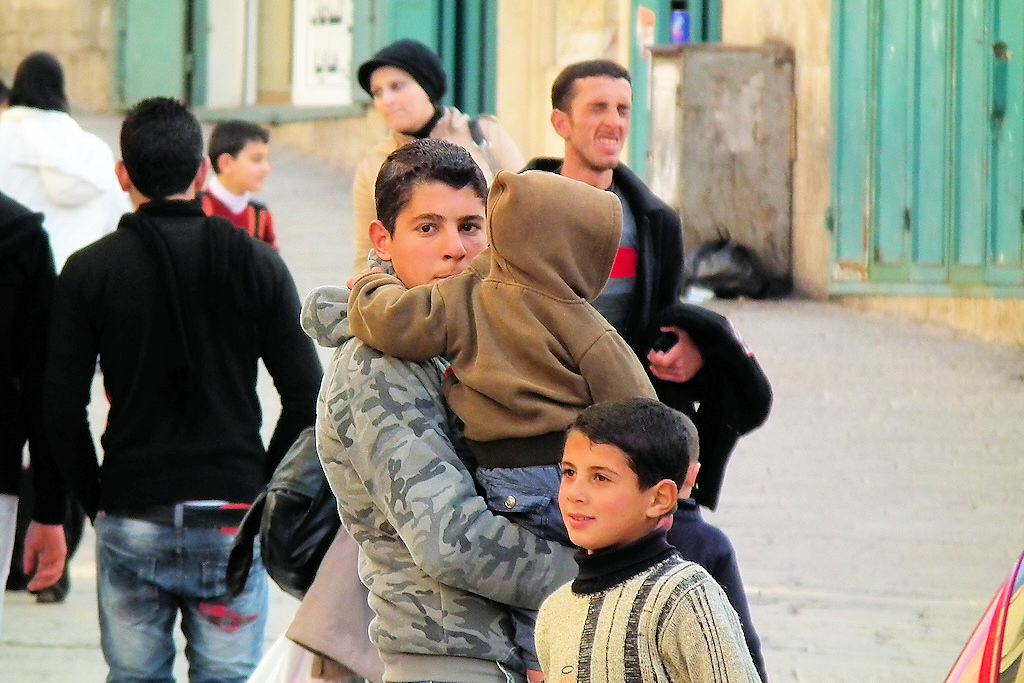
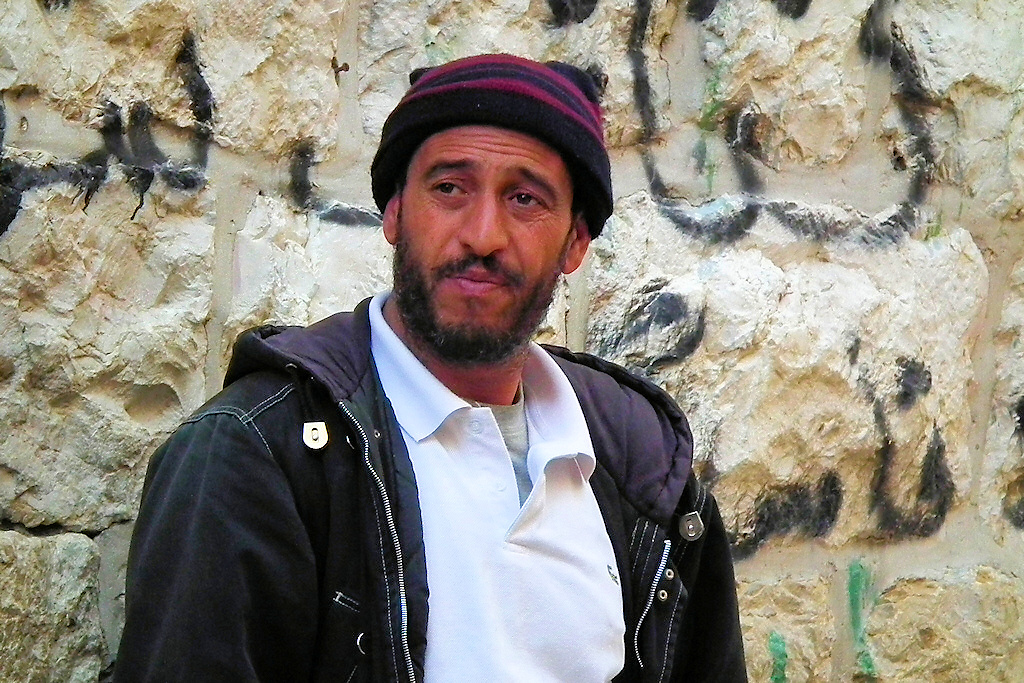
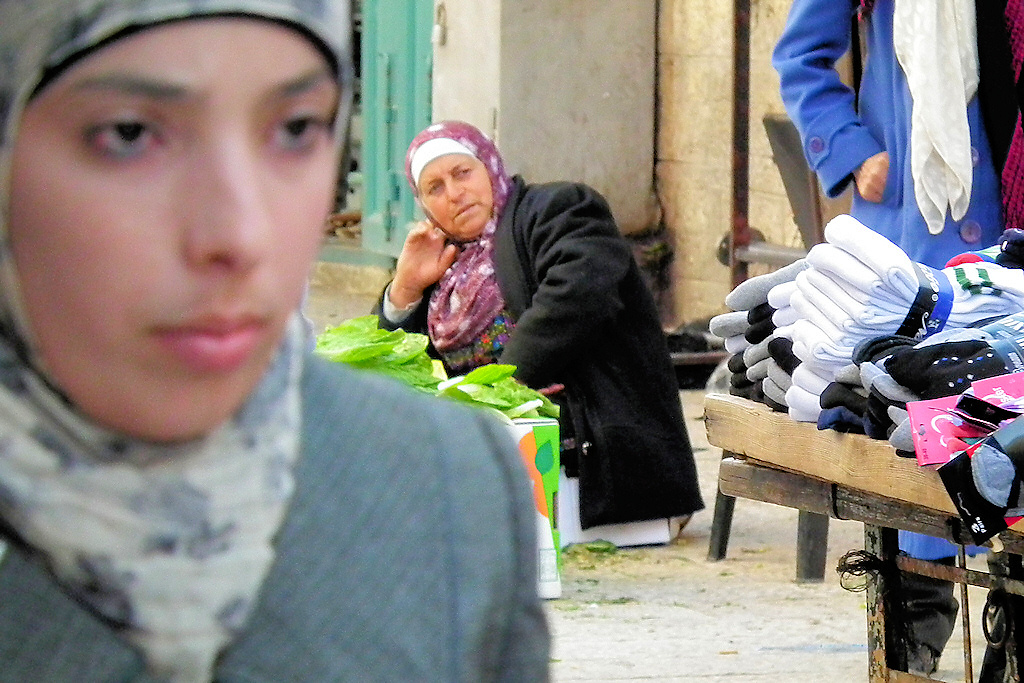
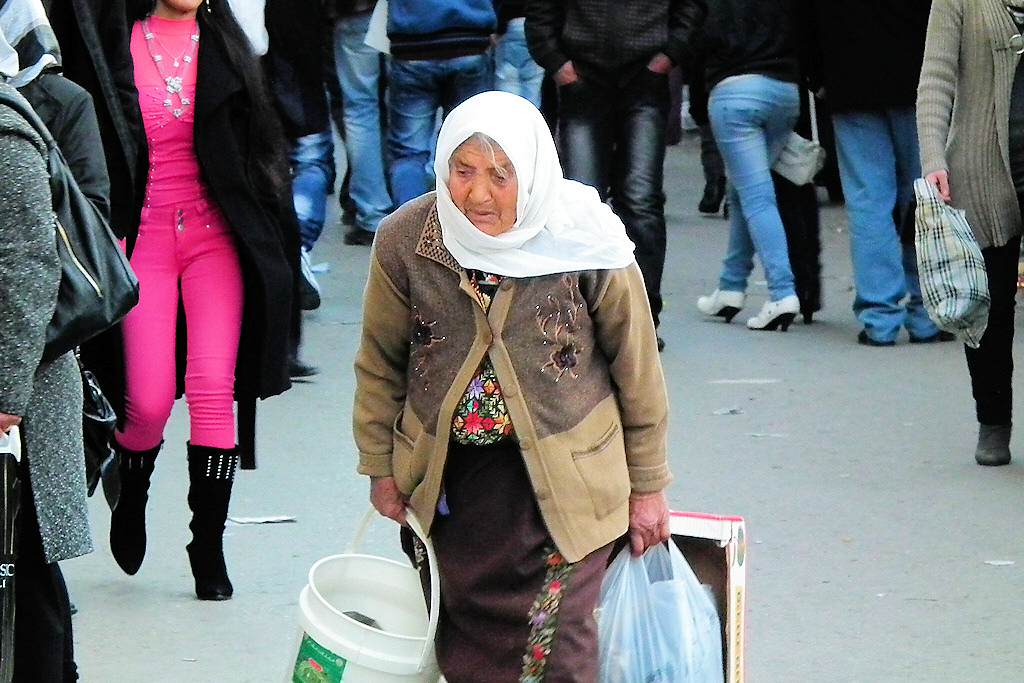
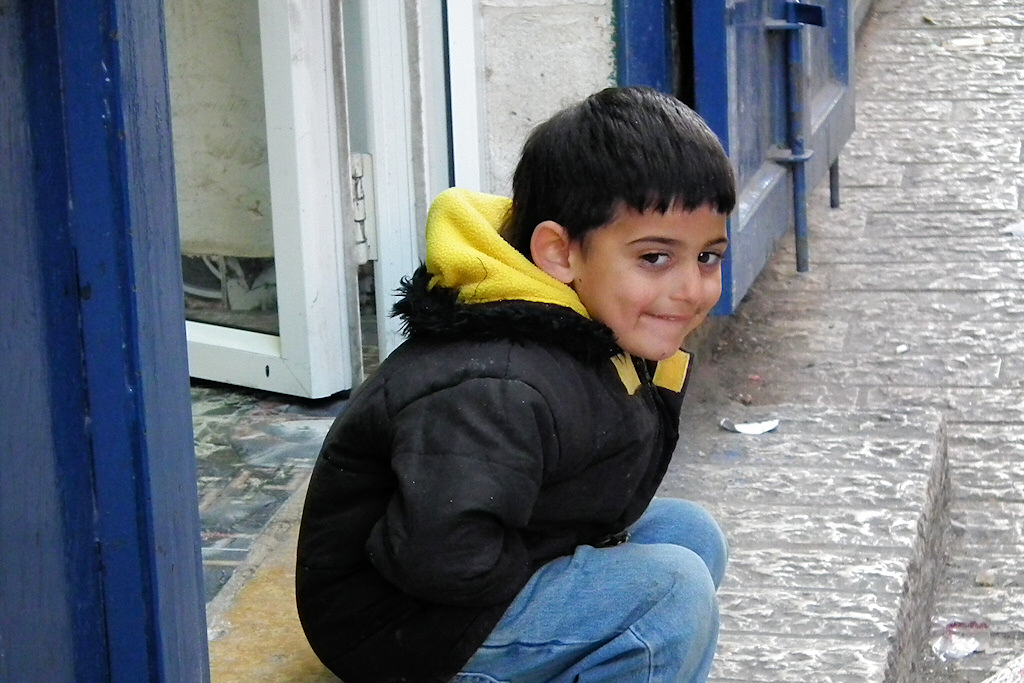
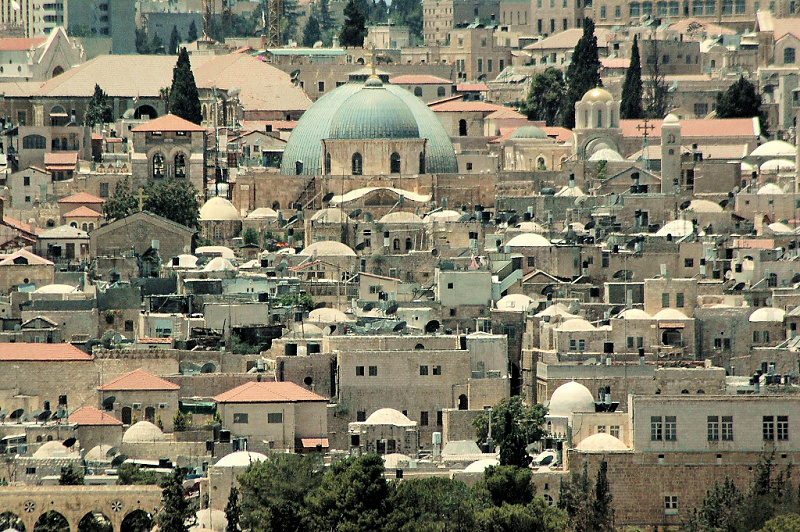
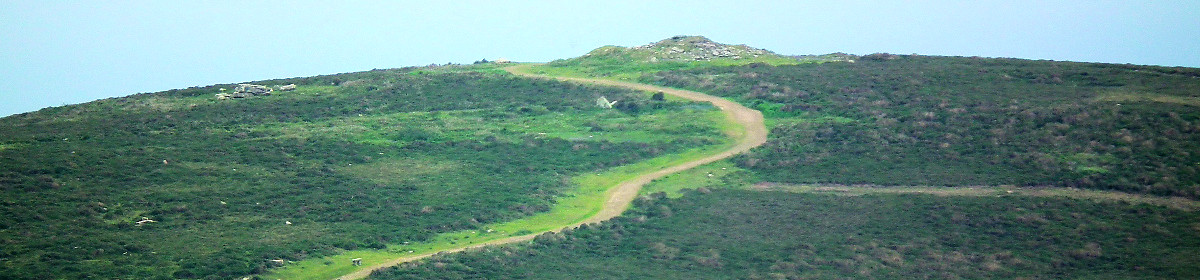
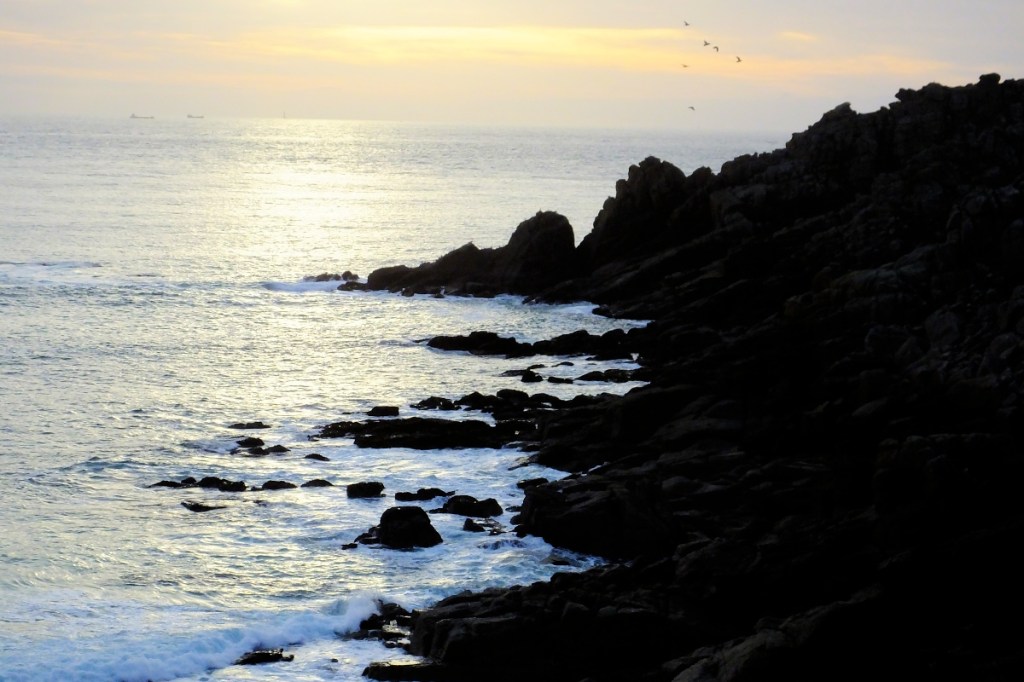
The pictures are from Planet Earth. Quite a remarkable place. Worth a visit.

Antipathy

This started out as my usual weekly posting about the Sunday Meditation, but it turned into something else…

A Palestinian bagpipe band in Manger Square, Bethlehem – a leftover from British Mandate days

In Britain we currently have a kerfuffle about an anti-Semitic murder outbreak in Manchester, one of the most multicultural cities in our country. Though I’ve worked a lot with Palestinians, mercifully I’ve never been accused of anti-Semitism. Throughout my time working in the West Bank I had a lot to do with Israelis too – particularly former soldiers. A few of them helped me smuggle tofu from Tel Aviv through Checkpoint 500 outside Bethlehem – packaged tofu looks rather like Semtex, you see.

My grandfather was part of General Allenby’s British invasion force in Iraq and Palestine in WW1, and my father was in Egypt and Palestine in WW2. Some of my German ancestors were executed for opposing Hitler, probably at Sachsenhausen concentration camp for dissenters, and some of my Roma ancestors went down in the Holocaust. Jews have played a key part in my awakening, in this life and others. So I have some threads of personal involvement here.

But what matters is that all this concerns humans and the way we treat each other. We’ve reached a global-scale impasse where our mistreatment and exploitation really need to change – particularly, to start with, humanity’s self-destructive tendencies toward war and violence.

Early on in life, as I was beginning to awaken in my late teens, though I was then oriented toward ecological issues, I realised that we will not make significant progress with eco-stuff while we are committing acts of violation and warfare against each other. Such atrocities put the brakes on human and planetary evolution. Since then I have trodden a path with one foot in the spiritual sphere and one in the political – an awkward dualism if ever there was one, with deep and conflicting moral and human issues involved.

One basic thing holds universally for all people of all faiths, beliefs and inclinations, including seculars. It’s necessary to understand and to feel what it’s like being on the other side. That’s one reason I’ve been involved with Palestinians: they’re on the other side from me – or at least, from where I started in life. Stepping over that gulf has been one of the most rewarding aspects of my life. Stepping over not just in belief and viewpoint, but in practical terms and, on a few occasions, putting my life on the line.

It was Tibetans, another bunch of apparent perpetual losers, who shoe-horned me into this. They presented me with the option to take the Bodhisattva Vow, a vow to dedicate my life to the benefit of all sentient biengs. In this I cannot claim to have succeeded and I’ve made loads of errors, hurting people and getting things wrong in the process, though the centre of gravity of my life has tilted toward service as a result of taking the vow. And I’m really glad about that.

For me, there is a connection between the blood-and-thunder stuff of politics and what many might consider fluffy, useless, unrealistic stuff such as spiritual beings and extraterrestrials. It’s all about stepping over gulfs. Mentally and emotionally. Crossing that divide. ‘Going native’. Setting selfhood aside in order to open up sufficiently to empathise with those others over there, on the other side. In this, a statement by a Christian minister in Northern Ireland has had a big effect on me. It’s this…

It’s better to fail in something that ultimately will succeed, than to succeed in something that ultimately will fail.

It’s pretty profound, that. Write it on your toilet wall.

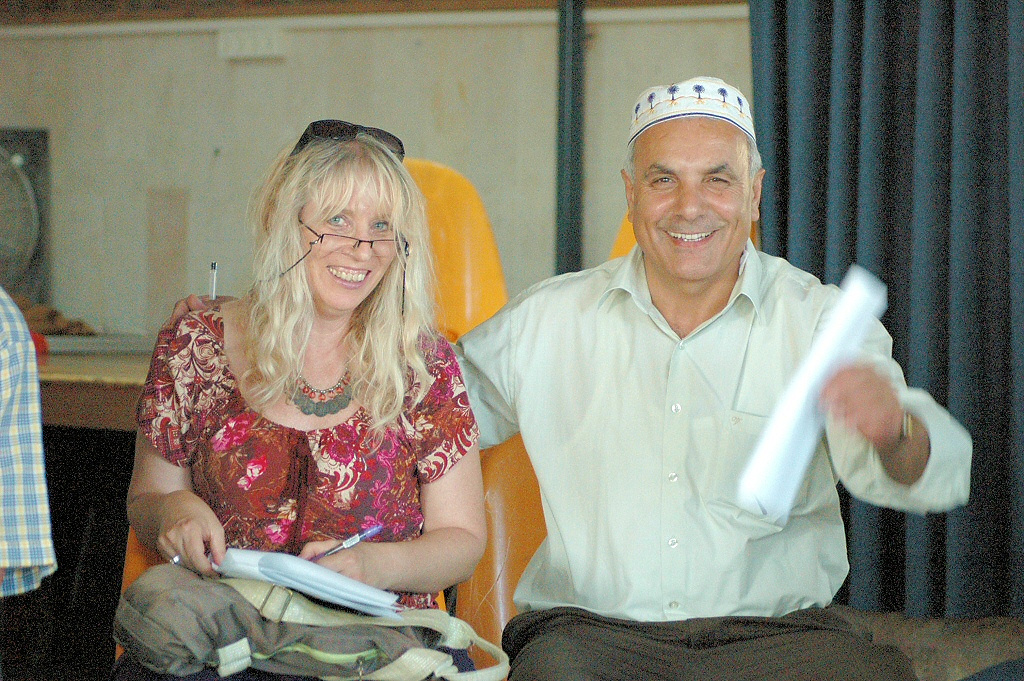
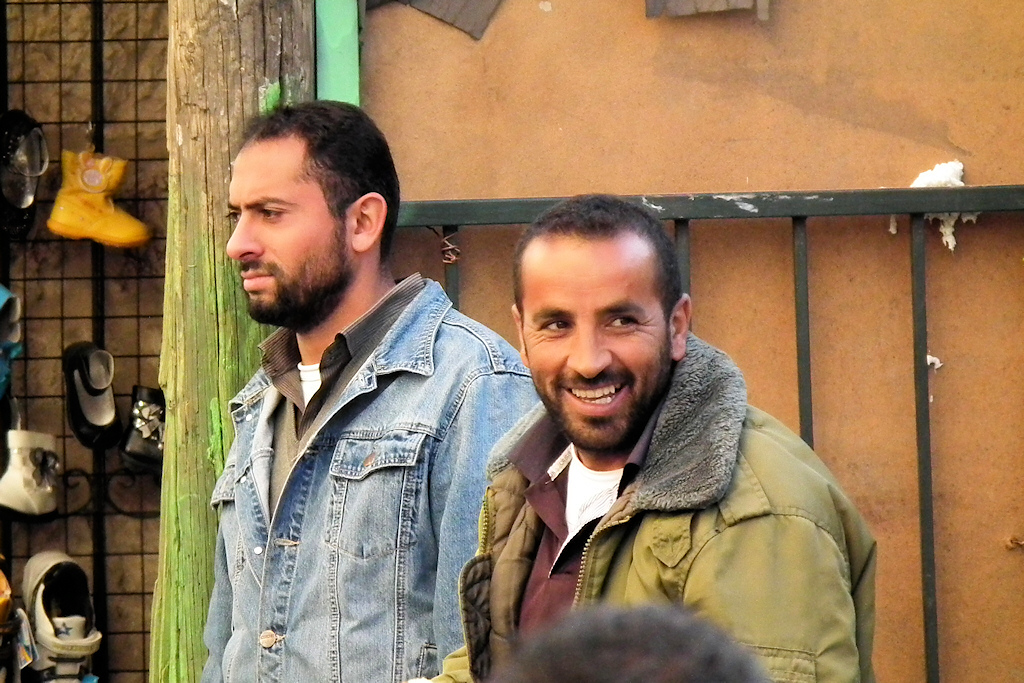
Two West Bank Palestinians chatting with an Israeli settler

Back to anti-Semitism. So, in your thoughts and beliefs and the way you structure and apply them, use your discernment. When your finger is on the trigger, you have a choice. You can kill or harm that person (even if only in your private thoughts), but the memory will stay with you forever, no matter how much you repress it. That’s an example of something that succeeds in the short term though it will fail in the longterm.
Or you can spare them and turn the occasion into a massive, pattern-changing mutual learning-situation for both of you. That’s your choice. And there are consequences to everything that we do. And there are consequences also to those things we avoid and deny, or we fail or omit to do.

We live our lives on each other’s behalf. Humanity is one being, and we are micro-cells within that being. Humankind is on a path of accelerated growth, both in population and in spirit. We’re now being faced with the future and with a choice to carry on as before, or to step over a threshold into a rather wide-open and at times scary space. This comes to a crunch when we face the Other, the person or the people over there – the people we don’t like. They test our capacity to understand, accept and forgive – and to see ourselves more clearly.

Compassion means ‘with-feeling’, standing in others’ sandals and boots and feeling what it’s like. Agreement or sympathy are not required. Just feel what it’s like.

This isn’t about giving way, losing your precious sovereignty or getting guiltily floppy. It’s about a new kind of strength that requires discernment. There are things in our world that are wrong, regrettable and ultimately flawed, and we are challenged to stand up and do something about correcting those. Not just to wring hands and grind our angst over them, but actually to do something about it – at least within our own sphere of possibilities.

And there are situations where we need to stop, look and listen – we need to be willing to review our position, our habits, preferences and patterns, and make a change. If a stranger knocks on our door seeking help and refuge, what is our choice?

Israelis and Palestinians can and do have fun with each other

So, if you are pro-Palestinian in inclination, make a stretch and put yourself in the shoes of a variety of Israelis and international Jews. Feel what it’s like being them and being in the situation they find themselves in. And if you are pro-Israeli or Jewish, stretch over to feel what it’s like being a variety of Palestinians, whether in Historic Palestine or in the diaspora. And if you’re not bothered, feel what it’s like being bothered.

Because it’s good for you. It broadens your horizons. This is about humans – and you are one of this crazy, self-immolating species. Would you like being shot at or bombed? Would you like being hungry, having your home destroyed or seeing your father carted away at gunpoint?

Discernment is tricky to work with. Quite often I am approached for help, and I have to say No. That’s because helping them will overload my capacities and harm the people and things I am already working to help. Better to do small things well than big things badly. Guilt does not work in this context: if guilt is involved in altruism or political activism, things will go wrong. Guilt distorts true giving and sharing.

The world is polarising right now, more and more. We’re each and all faced with a question: are we ourselves adding to it, or are we bridging gulfs, whether with a smile or by giving our lives to something that builds bridges?

Jews have been victimised and persecuted for many centuries – particularly by Europeans claiming to be Christians and followers of that Jew called Jesus. Secretly, we Brits, though we righteously fought Hitler, we were quite happy to get rid of Jews and send them to Palestine, one of our colonies – though we’d have preferred them to go to Uganda. We taught those Jews all the means of oppression that we now see imposed by Israelis on their neighbours.

This doesn’t mean we should guiltily go along with what the Israeli state – Netanyahu and the Judaeans – currently do. Because this is about People and the Megamachine, and Israelis suffer this problem as much as anyone. There are young IDF soldiers who, today, are eating their hearts out over serving in Gaza or the West Bank. There are Israelis and diaspora Jews who are in a deep moral confusion and pain over this. It’s Christian fundamentalism more than Jewish extremism that is really driving the Gaza catastrophe.

John, a Palestinian Christian, outside his souvenir shop in Bethlehem, now closed by Israeli soldiers. I wonder how and where he is now?

In the West Bank, one thing that impressed me was that the majority of Palestinians didn’t dislike Israelis as such. Only a few Israeli friends would dare to visit me in the West Bank – the rest feared for their lives, and largely incorrectly. I forget the Arabic word for it, but what Arabs feel strongly about is not Jews, but assholes. They have a strong sense of the difference between a good person and an asshole. As a Brit, by rights I should have attracted the anger of some Arabs, because of history and what we were at that time doing in Iraq and Afghanistan, but I did not.

People would ask me whether I was a Christian, a Jew or a Muslim and, when I said No, they couldn’t figure out how I could be ‘a good man’. Well, the Hand of God moves in strange ways. But they were willing to rise up and stretch beyond their customary social judgements. That was a big teaching for me.

One Palestinian Christian, John, said to me that he felt pity for Israelis, despite all the wrongs they had done to him and his family, because many were Europeans, Americans and Russians who had gone through so much. “As a result, they are individuals, on their own, and they even question and defy God, while we Arabs have each other and we love Allah in ways you Europeans do not understand. We fight them because of our current pain, not because of the pain of the past – their pogroms and Holocaust. So, when the pain stops, we’ll stop. But they find it difficult stopping. If we stop, I fear that they will fight each other. So perhaps it is better they fight us.

It’s also true that in times of bloodshed and violence, Palestinians polarise against Israelis, and those who don’t polarise have to keep their heads down. But when times of relative calm come along, Arabic attitudes tend to be more forgiving.

This is the secret that many Israelis fail to understand. If they let Palestinians get on with their lives and have a decent life, all will be well, and eventually Israelis and international Jews will have the safety and security they deserve. This will take time (perhaps three generations), and there will be mishaps, but this is how endless war and jeopardy will turn into mutual appreciation and cooperation, even if it takes time.

The Manchester killings happened on the Day of Atonement, giving them extra poignancy. It’s a day of recognition, understanding and forgiveness. A day of consciousness, awareness of options. The Council of Nine, a bunch of non-earthly cosmic beings I had the priviledge of working for, thirty years ago, put it very well. They said that Jews are not the Chosen People – they are People of the Choice. The choice to ‘obey the laws of God’ and the covenant that we as humans have with God or the world of spirit, or of nature.

They also said something else. Although Jews can be clannish, separative and exceptionalist, throughout history the vast majority have melted into the wider world population, through exile, intermarriage, conversion or change over the centuries. This means that you could have Jewish genes, even if you don’t know it. Think about it. I’m part-Welsh, and the Welsh claim historic connections with Jews, going back millennia.

So, if you have strong feelings about Israel and Jews, just remember, there’s something inside you that might need facing. All the things we blame Israel for now, well… actually we all do them and we and our ancestors have all done them in the past – so own up. It helps not to carry those patterns into the future. Because this concerns humans and the future of our planet.

Thus endeth today’s sermon!

As for the Sunday Meditation, you’re welcome to join. There is no mantra, no scripture, no method, no sign-up and no obligation – it’s just a group of us in various countries meditating together for half an hour on Sundays (times below), and doing it each in our own way, together. If needed, further details are here: www.palden.co.uk/meditations.html

May all beings be blessed, whether they are upstanding citizens or horrendous terrorists, on the right or the wrong side, and whether or not they have a right or an ability to defend themselves. For we all are here on Earth anyway and, in the end, we all seek happiness. And that’s the main thing. Oh, and, if you really want to find a cure for cancer, it’s forgiveness.

Love from me, Palden


If you seek further reading, try these:

  • The Problem of Israel. (I wrote this article in 2008 for a Bangladeshi newspaper.)
  • Brinkmanship. (An extract from Healing the Hurts of Nations, a book I wrote in 2003 at the time of the Iraq war.)
  • A Palestine historic timeline. (The pages that follow it might interest you if you seek insights into Palestine’s history).

Current meditation times, on Sundays:
UK, Ireland & Portugal 8-8.30pm
W Europe 9-9.30pm
E Europe, Turkiye and the Levant 10-10.30pm
Brazil-Argentina 4-4.30pm
CST, Mexico, Jamaica, Colombia 2-2.30pm
EST, Cuba 3-3.30pm
PST North America 12noon-12.30pm

PS. In my last podcast I mentioned how I’m finding writing more difficult now, and this is still true. Normally I’d write a piece like this in 1-2 hours but this took six. But I did it. Or it did me.

On Wings and Prayers

This is another of my Palestine tales from 12-15 years ago, from a book called O Little Town of Bethlehem, which recorded a five-month stay in 2011-12. In my writings and photos at the time my aim was to humanise Palestinians. Because, like you and me, they’re real humans with real human lives to live.

———————

As the sun went down, a wonderful atmosphere settled upon Bethlehem. The town was in a genial mood – people chatting and hanging out in the streets. At Cinema, a busy intersection with taxis and taxi-vans, I saw a six year old girl standing on some steps simply singing out loud to the street. This was not only touching but also rather refreshing because, for some reason, Palestinians tend not to sing.

Aisha, an English friend who teaches English at the Hope Flowers Centre and stays at my place one night a week, uses the large, empty, echoey conference room in the school for practising opera – she’s an accomplished singer but, living in Ramallah and surrounded with people who would find opera rather strange, doing her scales and practicing her arias doesn’t quite work easily. So she loves practising at the school, where she won’t be heard – and the conference room echoes quite nicely too.

Nevertheless, a neighbour discretely enquired of me what was happening. I explained and he smiled. He’d seen opera on TV, and was interested when I said that operas were like plays sung out loud, with stories to them. I asked him why Palestinians tend not to sing, and he said back, “Since the Nakba we haven’t had much to sing about”. Well, true, but I know that’s not the real answer, which I am yet to find out.

The Nakba, by the way, was ‘The Disaster’, the 1948 war during which the Israelis staked out their nation militarily, by ethnically cleansing and killing the Arabic inhabitants of hundreds of villages and towns in what became Israel. In the space of a few months, the population of Bethlehem quadrupled with refugees and they have never gone home – there’s no home to go back to. As a symbolic act, refugee families keep the keys to their old, lost houses, like a family totem, proof of having torn-up roots in their own land.

This afternoon was one of those times when people set their cares aside and enjoy the moment. That’s one thing I like in Palestine: people do their best to keep their spirits up and enjoy life. There is no alternative. Or at least, the alternative, dwelling on your problems, is far worse.

As my friend Ghada once put it, at a time when she was feeling pessimistic a few years ago, “In Palestine we don’t have up days and down days, we have down days and worse days”. She was at that moment manifesting symptoms of the strange collective bipolarity Palestinians live by, thanks to their circumstances: generally they keep their mood positive in spite of everything, but when they lose their strength and fortitude, they plummet into deep despond. That was where she was when she said this.

Palestinians wear their emotions inside out: love and sadness, friendship and disgust, humour and anger, they share them openly, men perhaps more than women. Their feelings spill out liberally. Mercifully it’s their positive emotions they show most. I have never seen a sign of violence except on a couple of occasions when Israeli soldiers are around, acting provocatively, but even then Palestinians suppress it because they usually don’t feel like getting shot, beaten up, arrested or hounded. They got tired of that ten years ago, and it doesn’t achieve much.

But on a lovely, tranquil afternoon like today, there was still a problem. On the way home, passing through Deheisheh and Duha, there was smoke everywhere. People were setting fire to the skips in which they put their rubbish. They do this because civic rubbish disposal is patchy at the best of times, and the skips were full. It’s not only smoky but dangerous, since so much of their rubbish contains plastics and other toxic materials, and the slow smoulder of the rubbish means that it doesn’t even burn properly. They have a blind spot around this issue. When Westerners like me raise the matter, they shrug it off as if it is no problem. But it is a problem and a big one.

Before you disapprove of these apparently backward people, let me remind you that we in the West started seriously addressing issues such as this only 20-30 years ago, when it was already too late for us. Before that, we trusted in modernity and slavishly paid the price in smog, toxicity, fumes and ugliness. Even today, when I speak to Westerners of the dangers of mobile phones, microwave ovens, wireless internet and electro-smog, people smirk or frown, as if to say “Oh no, he’s one of them”, since this is a current blind spot. One day an enormous scandal will erupt about it and people will yell “Why weren’t we told? Who is responsible for all this?”. We are responsible. We know. But we don’t want to face it.

So blind-spots – areas of life that people deliberately ignore, ultimately to our own cost – are not unique to Arabs. In fact, Arabs look on Westerners as backward because we turn our backs on God – Europeans by becoming increasingly secular and Americans by turning God into a heavily-armed, consumptive patriot with conservative politics.

Every race and nationality covers its insecurities by looking on others as inherently deficient. The less contact they have with other kinds of people, the stronger the negative projection on outsiders – this is one reason for the separation wall, so that each side can project its fantasies about the other onto a concrete screen untainted by reality. This is why Iran is currently a bogeyman – no one goes there to meet the people, so it’s easy to dehumanise them.

This said, Palestinians must still address the issue of rubbish – creating less of it and disposing of it properly. Battery recycling, vegetable waste composting and plastics disposal? Forget it, it doesn’t exist here. But probably it will exist in 10-20 years’ time – Palestine is at a similar stage to the West in the early 1970s. Yet regarding social values, sharing and human warmth, Palestinians are advanced, at a stage that I hope the West will reach in a few decades’ time.

I went into town to do my shopping. I’ve been sitting slogging away at the computer for the last week, so I don’t have many events to report. The trouble with computers is that people hardly see the results of your work because it’s digitally concealed, distinctly not in your face. Much of the work is for people far and wide, so that people around you see little significance in what you’re doing – you’re just sitting at a computer, twiddling fingers and looking serious. I’ve been building a website, dealing with issues for Hope Flowers, doing bits of work and answering questions online – many questions, from many people.

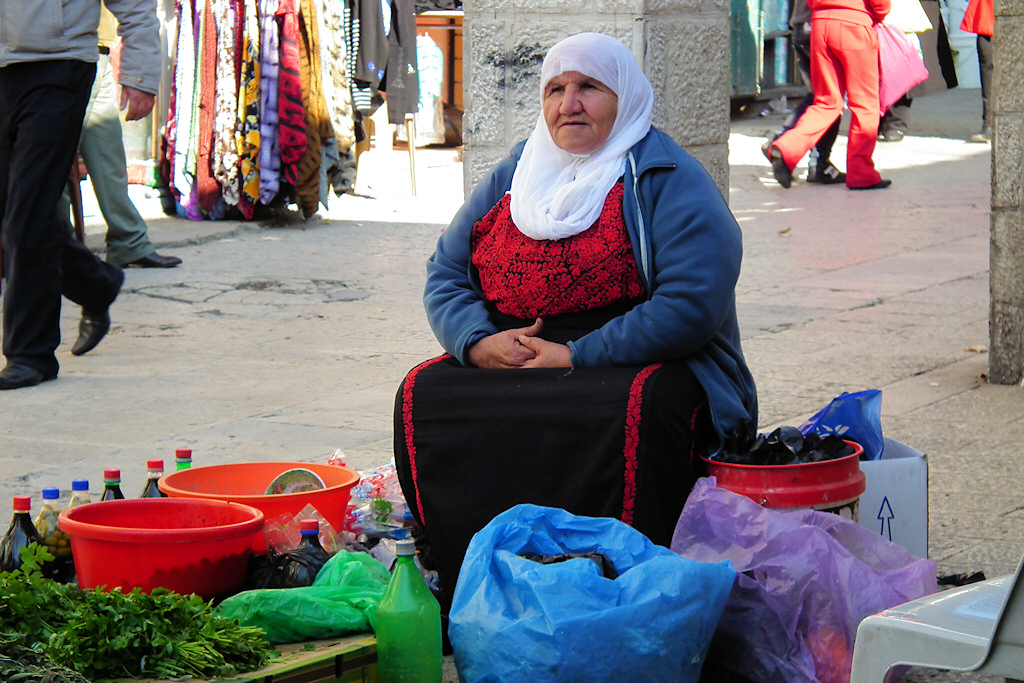
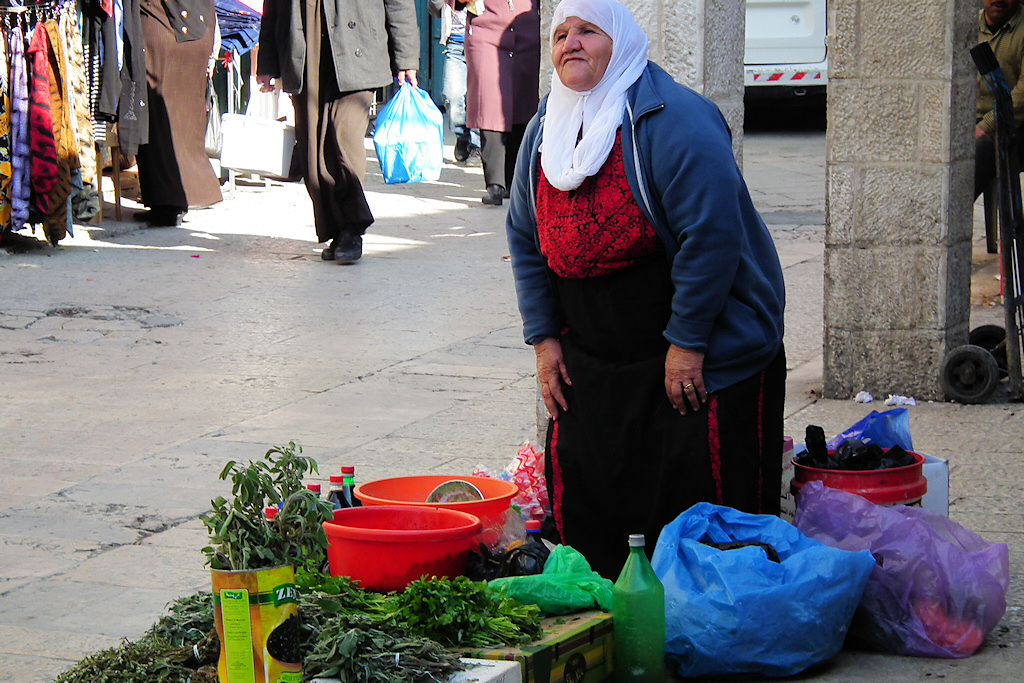
When shopping I went to an old lady I visit regularly. She has a small stall on the streetside in the Old Town. By stall, I mean a stool and a few boxes and bags. She sells herbs and figs. She’s a lovely old lady, clad in her embroidered traditional dress. She walks into town daily with her husband, who leads their donkey, which carries the herbs – then he returns home to work on the land, and he comes back to pick her up later.

Palestinians are big on herbs – they have mint or thyme in their tea and they eat parsley, sage, coriander, spinach and chillies copiously. I buy my herbs from her – big bunches of them, far too big to use on my own, for 1-2 shekels per bunch (20-40p in British money). She likes her pet Englishman. She eyes me closely when she thinks I’m not looking. I think she knows intuitively that I’m roughly the same age as she is, except she’s an old woman and I look younger – apart from a rather wrinkly face which has clearly seen some things. She hasn’t figured me out yet. Life wears out Palestinians.

Then I went down to the market to get vegetables. Two stallholders were trying to steal me off the stallholder I usually go to, but he has the best vegetables. One thing many Palestinians don’t quite understand is this. They tend to think one is obliged to shop with them out of a duty to support them – after all, fair’s fair, isn’t it? Well no, I’m a Westerner, and I go for the best stuff and the best deal. Sorry about that. Also, annoyingly, I buy things only when I need them.

The souvenir shopkeepers down in town think similarly. I’m a Westerner, therefore I have money, therefore I ought to buy from them. Not so. I buy presents only because there are people I know and love to whom I wish to give things, and I buy specifically for them. There’s also the question of how to get it back to England, so I cannot buy much. I’m not a buying machine – well, at least, not in my own head.

Dear reader, this might seem elementary, but it’s not so for Palestinians. This is a walled-off cooperation and mutual-support economy, an economy where everyone depends on everyone else for keeping each other alive, so the emphasis here is on supporting your fellow citizens by trading with them, to some extent whether or not you need what they’re selling.

Nevertheless, when one of the traders, a young chap of seventeen who helps his elder brother run a shop, moaned to me today about having no money to buy schoolbooks, I took pity on him. He had said there had been no business today, and he needed 50 Jordanian Dinars (250 shekels or £50) for the books tomorrow. He was worried and depressed. So I wandered off to do other chores, including raiding a bank machine, and slipped him 50 JDs on the way back. He lit up and hugged me, shedding a tear. Now he could get his books.

I told him that this is a life-lesson we all need to learn: solutions often come when you’ve given up. When you give up, it means you’re opening up to Allah, handing over your problems since you couldn’t solve them yourself. This money is a gift from Allah, through a random Englishman. So give thanks to Allah.

You are a good man, Mr Balden. I pray that Allah, he will pick you up when you have a need.” Well thanks, I might need your prayer to come true one day. This young Palestinian, poor yet intelligent, has better English than some of the 17-year old Brits I know. Good luck to you, mate – I sincerely hope you get a future.

————————–

My three Palestine books are:
Pictures of Palestine (in print and as a downloadable PDF)
Blogging in Bethlehem (an audiobook and PDF)
O Little Town of Bethlehem (PDF only)
Available here: http://www.palden.co.uk/pop/order.html

Social Capital

Photos from trips I made to Geneva 12-14 years ago. These are The Dispossessed

If you’re in your forties or fifties this is for you. Oh, and by the way, this is what’s nowadays called a ‘long read’, and, guess what, no AI was involved.

It’s about the care crisis and what needs to happen before you yourself grow old. I’m not going to harp on about pensions and savings, or the rights or wrongs of privileged old people currently being relatively prosperous at the expense of younger people. Neither will I repeat the implicit message that says ‘Look after yourself because no one else will’. There’s much more to it than that.

Nowadays I’m a net recipient of care and support, as a creaky old cancer patient. Similar things will probably happen to you. For Millennials and today’s younger people, it looks like you have a problem building up for when you get old, and that’s daunting. But there’s time to prepare, and magic solutions are available.

We’ve got to get real about the future. My own postwar generation has avoided much of this, and our behaviour has not necessarily matched our beliefs and ideologies. There’s a lot of hot air about growing old gracefully, but my generation still hangs on to our independence, sovereignty and property, and we have difficulty letting go (Pluto in Leo, and the Pluto in Virgos of the Sixties can be pretty control-freaky too). When we were young we had big visions of community (we have Neptune in Libra), and it hasn’t happened – not in a way that works in our old age. We have omitted to pool our financial and social capital. Here’s a tip: try not to do the same as you lot grow older!

Many of my generation have landed up on our own, stowed away in our centrally-heated, often over-sized houses or isolated in some godforsaken room somewhere. Society, in a perpetual hurry, quietly elbows us and dependents like us to the side. People largely don’t mean to do this, but they just don’t have time to be human – and this creates a social crisis. It’s the human aspect that, to children, to the chronically ill, the disabled and the old, becomes critically important: we humans have a bizarre need to feel that somebody loves and cares about us, that we matter to someone.

Geneva

Palestinians used to ask me, ‘How can you talk about human rights when you stuff your grandparents away in front of a TV in a padded prison?‘ – and they have a point.

This is a Pluto in Aquarius question – a key issue for the next twenty years. In the West we’ve gone through a period of (arguably) excessive prosperity, enabling us to venture into possibilities that otherwise wouldn’t have happened. One of these is lengthened lives – it’s now reasonable to expect reaching our eighties while, when I was young, it was the sixties or seventies. If I had contracted cancer 30-40 years ago I’d soon have been decisively dead – but not now.

Along the way we have professionalised and medicalised social care, and this is unsustainable, clunky, expensive and without limits. There’s a shortage of carers, nurses, teachers, cleaners, cooks and midwives, and we neither pay them well nor honour them properly, even though they hold up society. It’s all costing more than we are able or willing to pay, and we’re going deeper into debt, trying to maintain a lifestyle that’s already past its time. We’ve reached the end of a period in which the West got rich off everyone else, and now that we’re in an historic downward-curve, we need to get focused on a soft landing.

We’ve lapsed into a rather decadent kind of denialism: “I’m all in favour of change as long as it doesn’t affect me“. Thus we’re heading toward a likely crash landing… shock, horror… only to realise that we can’t continue living as we have lived, and our precious lifestyle has become unserviceable. Why didn’t someone warn us? Well, they did, decades ago, and no one wanted to listen.

Well, we’ll get what we get, though there are options.

Geneva has never been an imperial capital or the capital of anything, but it has a certain style to it…

In the rich world we’ve become materially wealthy while becoming socially and spiritually poorer. We’ve set aside social and community matters, even our humanness, in favour of wealth-generation and consumption, as if happiness comes from material plenty and security. But it does so only up to a point, and above that we hit diminishing happiness-returns. Just enough is good for us, and too much is definitely not. Treats are not a substitute for happiness.

This dilemma revealed itself to us during the Covid lockdowns. We became a tad more human for a month or two before grudgingly restoring normality. Meanwhile, having lectured the world about democracy in recent decades, we whiteys (or pinkies?) now find we’re an ethnic minority in a big, wide world where we’re far outnumbered and outclassed. We British think we’re different from Hungarians, but to the rest of the world we’re all Europeans and pretty much similar. Over half of the world’s population is Asian. Things are moving on.

I learned a lot when working with Palestinians – they are socially wealthier while being materially and circumstantially poorer. Their families, clans and communities pretty much hold together, even under extreme duress – and that’s what social wealth looks like. From the late 1960s to the 1990s they lived virtually without government, organising themselves so that everybody was provided for and most essential social functions were catered for from the ground up. A simple consensual rule held sway: help, support and do no harm to fellow Palestinians. Or, for that matter, to anyone deemed a ‘good person’. This included ‘good’ Jews. It’s not about ethnicity or religion – it concerns content of character. Guess what? There was little crime, pretty good road safety and a woman could walk down the street alone at night and feel safe.

A ‘generosity economy’ survives through mutual support and collective adaptation. You need no qualifications to participate or to benefit richly – you just need to do your bit, whatever you can do. It’s not perfect, but in another way it is exemplary. Even in Gaza we have not seen the kind of destitution and social disarray that we sometimes see in other places that plunge into crisis. While Palestinians are always the losers, they are not beaten.

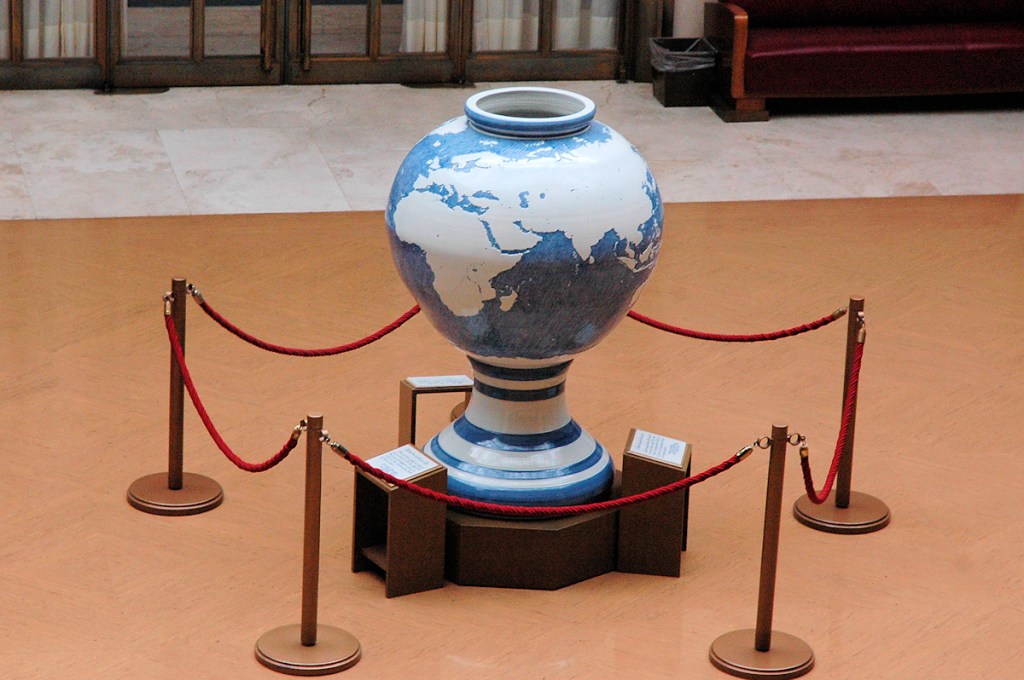
The world – the work of some famous artist whose name escapes me.

From this I learned a big lesson. It wasn’t a case of me, a well-meaning Westerner, a ‘humanitarian’, going out to Palestine to help these poor benighted folk in their dire circumstances. No, I had to get over that one. All I needed to do was to be amongst them, to add my bit when appropriate, to listen a lot and learn from these people. Being fully present was sufficient. Their generosity and sincerity was, at first, button-pressing to me as a European – we’re programmed with a neurotic need to pay for everything. But in Palestine you should never offer to pay if something is ofered or given, because you will deprive a good Muslim of giving you a gift of God – even if they’re poor, with nothing for tomorrow.

Instead, you learn to enter the cycle of mutually-circulatory social generosity and you play an active part in it – keep the benefits moving around. As a relatively rich outsider, you spend thoughtfully and you quietly drop people occasional monetary gifts of God, to help them on their way, simply because it’s good to do so.

However, I had further advantages I could offer. As a European, it was easier for me to level with an Israeli soldier than it was for a Palestinian. I could use my privileged position in the apartheid system to eyeball an Israeli, practice street-level diplomacy and improve the overall outcomes – you see, in a roughly nine-level apartheid system, foreign visitors come in third, just below Ashkenazi and Sephardic Jews, but above the Druze, four kinds of Palestinians and the Bedouin. It’s complex.

Often, the poor soldier was 30-40 years younger than me anyway, doing his or her conscription-slavery, and I pulled age on them. I used my influence as a Westerner to turn round the interaction and calmly hold the power, even though the soldier had the gun. Exploiting the hidden rules of apartheid, I projected an image of a politely self-confident, imperialistic Brit visiting one of his country’s former colonies.

After all, my grandfather was in General Allenby’s invasion force in WW1 when we took Palestine from the Ottomans, and my father fought in Egypt in WW2, and my aunt was a periodic Jew-rescuer – so it could be construed that Israel owes my family a favour, if truth be known. My ruse was that I was an historian interested in studying early Christian fonts. Yeah, me, a Christian – but it worked. Israeli border guards tend to regard Christians as rather stupid, sometimes awkward, but largely harmless.

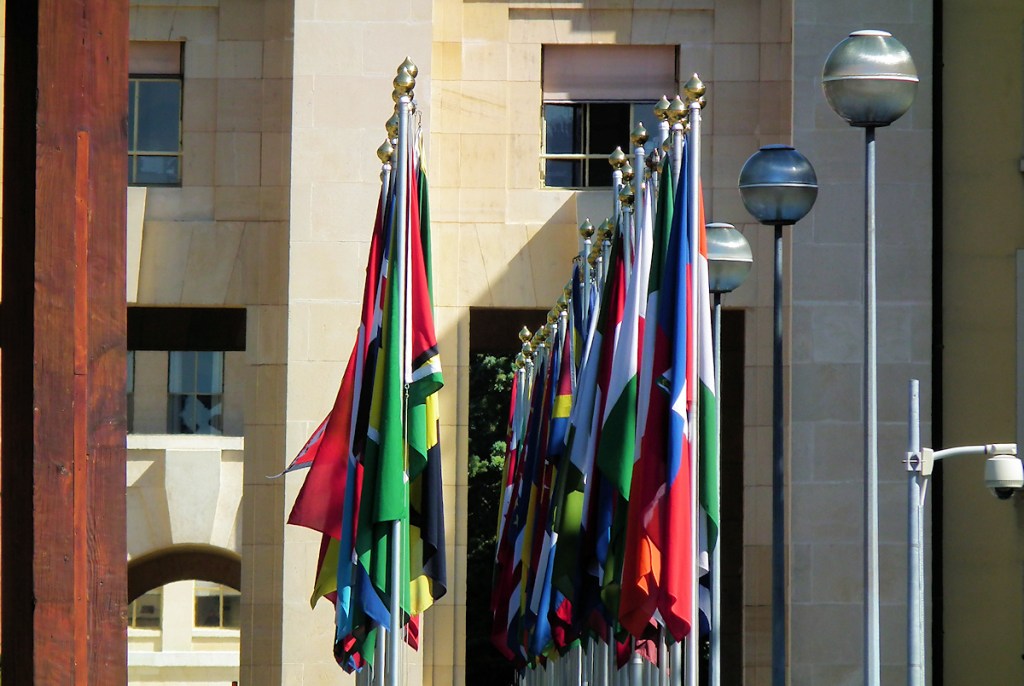
Of course, to see many of the UN buildings, you have to go on a tour. But there are security issues they do need to stay on top of.

At times these interactions were rather comical. When searching my bags once, they found some plastic-wrapped tofu I’d bought in a healthfood store in Tel Aviv, suspecting it was Semtex… well, it took a few minutes to sort that out (such as reading the Hebrew labelling) and we all landed up chuckling… and, in a better mood, they let me through, waving a load more people through after me. Bingo.

It’s all about societal energy-exchange. In that instance I used my strengths as a Brit to give both the Israelis and the Palestinians what they needed. It works best when there’s some sort of balance of benefit that can equalise both parties – however that benefit is perceived. A change of mood and spirit can make the whole situation flip quite quickly, and the all-round benefit gained often grows greater than the sum of all the individual benefits.

After all, the soldiers at Checkpoint 500 were bored shitless, and the Palestinians standing in line were equally bored, and it just needed the right thing to happen. The magic catalyst was tofu – Romanian-style and marinated. But if I’d reacted to those soldiers as ‘the enemy’, tightening up my body-language and doing oppo, trouble would have ensued and I’d have given away my power – since they did have the guns – and the Palestinians would have got home from work even later than they did.

So, here am I, older and more decrepit, in need of a few hours of help a week, and also for times of company, love and tenderness. These three matter a lot in late life – you might get hugged but real cuddles can be rare. I’m quite self-sufficient, though there are times when I go downhill and I need more intensive help and attention. In recent months a lot has come together on the support front and I am really happy about it: a group of lovely people has come together, and it’s working. Friends of Palden (FoP) – thank you all and bless you. It was a health crisis I had in September that precipitated the change.

For my part, what needed to happen was an opening of my own heart – and the illness and physical pain cracked me open. I had been in a state of emotional recoil for two years, after the sudden and, for me, reluctant end of a loving relationship early in 2022. After that, I wasn’t interested in opening up to others. I’d lost my trust and felt stuck in my hermit-like Saturnine isolation pattern – the ‘anti-social’ thinker and writer with one foot in society and the other in the mountains.

There was something I needed to face – a big and rather final, late-life change – and it took two years to adjust to it emotionally. I’d realised that this was the last close one-to-one relationship I would have in this lifetime. That sounds a bit sad, or dramatic, but no, it isn’t. It’s quite a settled feeling. I’ve had some good relationships over the last half-century, and there’s more to life too. Things have changed. Actually, don’t tell anyone, but it was Ayahuasca wot did it. The focus of my love extends now to a wider circle of people, and I’m playing a new and different role in their lives, and they in mine, whether they’re near or far.

Geneva is in a rather idyllic setting.

Here we come to energy-exchange. Caring for an new age codger like me can at times be hard work. So I’m working at making it good for everyone, if and however I can. I can’t run around servicing relationships in the way I used to in pre-cancer days, but I can do certain things. I can give a listening ear and sometimes a few astute observations – as a wizzened old retired astrologer who’s figured a few things out. I can give them an hour’s break in a warm, calm, phone-free cabin on a farm in a magical place, with springwater tea and an oakwood fire, so that they can draw a line between the last thing and the next thing, departing a little clearer and more ‘sorted’ than when they came.

There’s something deep to this. It’s about being there for people – it’s the grandfather or patriarch archetype. I don’t have to do anything, and they don’t even need to be with me to benefit from it. It’s just that I’m here, and that in itself is perceived to add something to others’ lives. Spending a lot of time on my own, I range around in my mind, pastorally thinking of people as they pop into my attention, I monitor their souls and pick up on them when they’re unconsciously signalling. They themselves feel supported, deep down. This motivates them to do things that benefit me.

This sounds terribly transactional but, actually, if you keel over with cancer or something similar, or with misfortune, you do have to think transactionally and make sure you’re getting enough of what you need. Otherwise, you won’t get it. You have to be carefully selfish, yet also understanding of others since you’re relying on their goodwill and generosity.

For what it’s worth, ‘elderhood’ is where I now find myself. I’m something of a natural at it, though I’m also somewhat reluctant (I prefer thinking of myself as a veteran). Perhaps I’ve been here and done this before in other lives. It’s all about quietly standing behind people and being there for them. It gives them a certain security whereby, if they feel they’re out of their depth, or fucked off with life, or at their wits’ end, they can anchor back to someone like me, even just in their thoughts.

To which my response is, Yes, that happens, it’s life, it’s okay, hang in there, and the world isn’t ending… though I’d put it more subtly, and much of it lies in the vibe I give out. The fact that I’m standing there is living proof that you can and do survive life’s hard knocks. Or at least, I have, thus far, and perhaps you can too.

It’s not about having opinions and telling people what’s best. There’s a challenge to overcome the reactive, self-satisfied conservatism of age and, from a rather more transcendent, slightly dementia-liberated viewpoint, to think afresh, seeing things from a new place, contributing not opinions but perspectives. But even then, only when asked. Be pleasantly surprised if younger people actually do take heed. Besides, they’re the ones making the decisions now.

So, although I depend on the help, support and company of friends, there’s something I can offer, and this is important. This is ‘social capital’ and if, like me, you haven’t been focusing on building up financial capital, then you need to work on building up social capital, on cultivating your assets, your character and transferable skills. This means that, when you too become relatively useless, with luck you’ll be liked, valued and a little bit useful, even then.

It’s him.

In my life I’ve had phases of organising volunteers to help me run projects I’ve started. While they liked doing it and it brought them benefit, it was also hard work, with a fair measure of wind and rain thrown in. I tried to help them gain a growth-payoff, a soul-payoff, from it. That is, something in them would progress, and some started a new life from that time on. There’s a certain joy in being part of something that works well and is good to be part of.

My father taught me that. He had been in industrial relations in the 1960s-80s and his philosophy was that, if your workers are happy working with you, they’ll be motivated to work well and and everyone will benefit. He’d encourage the directors to eat lunch in the canteen rather than at the golf club, and to avoid driving their Jaguar to work. Sounds obvious, and it’s true, but it was not what was happening in British workplaces at the time, and it does so only for some workers now. It’s how a generosity economy works, in which everyone is a stakeholder and beneficiary, together.

It’s about ‘we‘, not ‘I‘. However, while the relationship of ‘I’ to ‘we’ is still important, in the end ‘we’ are the overriding priority, and each of us needs to learn to do the best we can with that, as individuals.

Pluto is now in Aquarius. We need now to focus on strengthening society. Not the economy, not technology, not government, not business, but society and the mechanisms by which it works.

Do people exist to serve the system, or does the system exist to serve the people?

Pluto likes to dig out the bottom-line hard truths of things, and this is the big question for at least the next twenty years.

There’s something substructural going on. In richer countries, our time is done, our economies are subsiding and we’ve got to get real about this. It is a necessary historic adjustment of economic levels. For Britain, Europe and America real wealth-generation is sinking, overall costs, complications and debts are rising, and things are approaching a crunchpoint.

We in rich countries are not enjoying treading the mill of work and consumption as we once did. We’re supposed to be excited about the latest gizmo, scientific discovery or tech advance, but many of them arouse mainly a yawn. We’ve reached a certain level of satiation. There’s now a deep-level exhaustion, a declining motivation to bust a gut for what might anyway prove to be dubious outcomes. There’s an element of laziness and decadence to this, yes, but it’s also genuine, deep down. We’re discovering a need to become more human and for society to become more humane.

This historic shift will affect Millennials and currently younger people as you grow old. Compared with my (Pluto in Leo) postwar generation, you have more inherent social wealth than we, with a greater sense of implicit togetherness, and this is driving a deep reconstitution of society that is only now gaining momentum.

There is a fundamental law of economics that few mention, yet it’s abidingly true: when the economy goes up, society goes down, and when the economy goes down, society goes up. We’re at an inflection point in this oscillatory equation.

When you yourselves are old, there might be care-bots to help you, and there will still be people who hold society together by acting as committed care-givers, but there’s unlikely to be the capacity to finance the full care and medical facilities that we have today. So this needs tackling another way, especially by building up social wealth.

Here we return to people like Palestininans with their family survival mechanisms – and most Mediterranean cultures are (or were) like this. They have families often of fortyish people, young and old, which are part of a larger clan that can number hundreds or thousands. The old people and the kids spend a lot of time together, often at the centre of the compound where everyone lives, freeing up middle-aged people to do their daily duties. The older kids look after the younger kids, both look after the old people, and the old people oversee the kids. People come and sit for a chat and a cup of tea, then to continue on their way. It’s an integrated system with the oldsters and the youngsters at the centre. Everyone does something toward the family, to the extent that they can, and someome is usually available to step in with a solution if there is a need.

Western researchers would come to Palestine, finding unemployment levels standing at 20-30%, yet no one was hanging around looking unemployed. This was simply the generosity economy at work – lots of people had no paid job, but they had a place in the family and community economy – and it doesn’t show up in the statistics. Everyone is catered for and everyone contributes. In Bethlehem, a little boy would help me with runaround tasks and occasionally I’d give him some loose change, and he’d run home to give it to his Mum because it was more important to him to contribute to his family than to sneak off to the sweetshop to feed his face.

This is the way to go. It lies in social values. So teach your children well. To get through the future, countries like Britain need to work on social wealth and resilience. Social love and solidarity. Hanging together. Making life easier for each other. Sharing lifts. Keeping an eye out for each other.

That’s not as easy as it sounds, because it involves dealing with disagreement – what’s politely called ‘diversity’. In the 2020s we’re pretty good at arguing, disagreeing and detracting, pretty unwilling to hear others’ viewpoints, or even to acknowledge that they’re actually real, valid people, just like us. We have issues about who’s in and who’s out. There’s a lot of shadow stuff lurking in the social psyche – trust issues, historic pain and resentment, unresolved questions, pending problems.

Migration is one of those issues we have to face because it is happening anyway, and we have to get sensible about it. It is changing our societies and we need to do this well. We can’t evade the facts, pretending that we can stop it or send people home – it’s happening, and we in rich countries have been a substantial part of the cause. We cannot supply munitions to Israel and expect Palestinians to stay at home without seeking refuge in Manchester – sorry, that’s two-faced, narrow, poor thinking, and if such thinking were applied to you, you’d hate it. Yet, on the other hand, we need to take in numbers that we can realistically absorb, so that there are enough housing, teachers, facilities and space to cater for them, to give them what they need and to get what we need too – and this is a very real issue without easy answers. It brings up quite primal emotions – it’s not solely socio-logical.

My generation failed, when it reached its sixties, to pool its capital and engage in creating mutual support systems for late life. We didn’t think we would actually get old. Those of us who have done well financially do what we can to enjoy our position, and the rest of us get by as best we can. Our sense of generational fairness and equality has been compromised by incentives and bonuses that have successfully splintered us. We might disapprove of businessmen getting stinking rich, though strangely we nevertheless believe it’s kinda okay for a rock musician to own five houses, a stack of glossy, carbon-belching sports cars and an art portfolio for which the insurance can cost a quarter million. [Even so, here’s a perceptive song from one of them, Roger Waters: Is this the Life We Really Want?]

This kind of thing is not really good for the future – unless of course we permit it, allowing an oligarchy to burn up resources while we dutifully catch the battery-bus to save energy. World circumstances are changing, and if the excesses of the past are to continue into the future, then you Millennials have a problem before you. And here’s an awkward question (sorry): do you want to leave this problem to your children, as my generation has done with you? Or will changing circumstances and shifting values perhaps force the issue before you reach that point?

Strengthening society – from the bottom up. To face the future we need to build social resilience. This means looking after each other and sharing what’s available and what we have. It means pitching in together when there are floods, pandemics, economic downturns, supply-line blockages, power-brownouts and gaps on the supermarket shelves. Governments and institutions can certainly facilitate the process, but it needs to come from ordinary people.

In 2025 Neptune enters Aries for 14 years. This is about Big Men and our neurotic need, during insecure times, for leaders who will fix things for us and keep control. This is why we have Putins, Trumps, Modis and Xis dominating the world and holding it to ransom. We need to overcome this illusion. However, the real issue here is not about getting rid of leaders – that’s something we’re generations away from, realistically.

It’s about right leadership and – more important – astute, intelligent, thoughtful citizens who think a bit further than our noses, and who don’t allow populists and pranksters to capture our support and run off with the agenda. Perhaps we also need to support and respect our leaders a bit more, holding them to account but with more empathy and understanding – it’s a lonely and shitty job, with plenty of holes to fall into and minefields to navigate. The worst bit is that, even if you’re a great reformer, someone, somewhere, gets hurt and loses out.

During this Neptune in Aries period we might also see some exemplary, Mandela-esque leaders. To quote Georges Pompidou, a French politician of the 1970s (in old sexist language): “A statesman is a politician who places himself at the service of the nation. A politician is a statesman who places the nation at his service“.

One such leader I’m watching at present is the prime minister of Barbados, Mia Mottley – she’s lucid, justice-seeking, solid, with a good sense of proportion, likeable, and she’s the sort of person who, with luck, will leave a good track record behind her. [Click here to see her recent UN General Assembly speech.]

Leaders can catalyse helpful social processes – at least for their first ten years in office – but it is not for them to determine our future. Society needs to take control of itself. We need to train ourselves to form, develop and hold to social consensus, to make fair deals between competing interests, to stand back from sectoral disagreements and responsibly to keep hold of the power and influence that society itself should hold. Government is important as a coordinating influence, but placing responsibility for fixing society on government and institutions inevitably leads to a disjunction of values and aims between oligarchies and ordinary people.

Since the demographic pyramid currently favours the old, weighing quite heavily on the young, we oldies need to pull together to look after each other to lighten the load. We have resources. We don’t need a paid carer to come in to make a cup of tea and hold our hand when a friend, a neighbour or a grandchild is far better. We need professional help only in those things that we cannot do ourselves – I can keep my house in good shape on a daily basis, but I find vacuum-cleaning physically difficult. I can mostly cook for myself, but there are occasions when I’m worn out and really appreciate the application of someone else’s culinary gifts.

Being rendered into a passive recipient of care – especially in old people’s homes – is disempowering, dispiriting and it costs a bomb. It’s healthy to keep going with the daily tasks that we can do – and it’s far more healing to do it with and for others, not just for ourselves. And a single oldie doesn’t need a whole house to live in – I live in a one-room cabin where it’s just five steps from my bed to my kitchen, and it’s great! Let’s liberate our oversized homes for people who truly need them.

Social capital. The strongest social bonding force is crisis. When a society goes through a crisis, triumphing over the odds by sharing and cooperating, the social ring of power gains strength. It’s a transpersonal feeling, a feeling of being in it together and being mutually reliant and reinforcing. It is in the interests of oligarchies meanwhile to keep society splintered, dissonant and competitive. The social ring of power is activated when collective resonance and solidarity rise and hold firm – and this is why organisations like Hamas and Hezbollah are unbeatable, since you can bomb them out as much as you like but the need for such movements doesn’t go away. So they remain and revive, even when shot to pieces.

But solidarity can be dangerous if social blindness or denial is tangled up in it. When at war, Israelis have remarkable national solidarity, but the big question is, toward what ultimate end? Israelis need a safe homeland where they can pursue their lives in peace. Yet, feeling the world to be against them, they do tend to create conflict around themselves – and this is an example of the way a people can be captured by an oligarchy which harnesses and exploits their solidarity for narrow, ultimately unwise ends – in this case, it’s Zionism, but Israel is not the only place where such things happen. But for Israelis, subservience to Zionist aims and values leads to a situation where war is needed as a way of generating solidarity – national unity in an otherwise rather culturally-argumentative country. Here herd mentality fails to serve the true and lasting interests of the whole herd. Israelis will find peace when they become friends with their neighbours. Period. And so it is worldwide.

The initiative lies with people at ground level. It concerns cultivating the wisdom of crowds. Often this happens through encountering nexus-points of occasion and crisis where there are opportunities for social healing, for the airing and resolution of unprocessed social issues. In Britain we’ve just had a rumpus over ‘assisted dying’ – a rumpus because we have a cultural fear of death and an unwillingness to even think about it, so we start panicking when we’re forced to.

There’s also the possibility of a future characterised by the madness of crowds and a lack of societal connectedness, leading amongst other things to the marginalisation of the old and the unwell by the fit and the healthy. The solution to the ‘problem’ of the old and infirm is a fundamental reconstitution of society. And perhaps this escalating social crisis is a gift in disguise. The crunch will come when our economies can no longer support the standards we have become used to.

Good luck, you lot, in addressing a problem I don’t think my own generation has cracked. We need to look after each other a lot more, and to get into proportion what’s really abidingly important in life. Because, believe me, at the end of my life it’s not the pounds, shillings and pence that I earned and spent that I remember – it’s the closenesses I’ve had with fellow humans, the magic moments and the rustling of the leaves in the trees.

With love from me, Palden


http://www.palden.co.uk
https://penwithbeyond.blog
http://www.palden.co.uk/podcasts.html

The pictures are from trips I made to Geneva in Switzerland (an incredibly expensive place) 12-14 years ago – one of the UN capitals. As you might gather, I’m distinctly internationalist in my geopolitics!

AND… the Sunday Meditation continues every week… details are here: www.palden.co.uk/meditations.html

A Blog about a Blog

This is interesting. It’s written by an old friend who is himself involved with helping out in a freelance-humanitarian sense with Gaza. But this is something that anyone involved in conflict resolution, or in any kind of change-bringing commitment, needs to ask themselves: what is it that drives me to do this?

https://mike-scialom.medium.com/born-and-raised-in-egypt…

It came up for me too. In my case, my maternal grandfather was in General Allenby’s British invasion force in Palestine in WW1, my father was in Egypt in WW2, and I have Roma and German (though not Jewish) ancestry – Holocaust stuff. That’s what I’ve identified in myself that hooked me into it.

But also, growing up in a polarised and violent city, Liverpool, in the 1960s, played its part – overcoming the effects in myself of being bullied in early life. We teach best what we ourselves have had to learn.

If you have a bee in your bonnet about particular issues, driving you into activism, it’s worth looking into your ancestral background and your history. It can help make it all more conscious.

Many Palestine and other activists would do well to look at the emotional source in themselves of their despair, anger and commitment, because this will help them become more effective, tactical and compassionate in pursuing their vision.

It’s important because issues like this will not be resolved overnight. Yes, a ceasefire has been needed and is still needed, but a ceasefire without resolution of fundamentals might not be the best thing. Sad to say, sometimes the horror has to get worse, until a point comes where peace and resolution are the only options left.

We need to own up to the perverse fact that many of us worry about Gaza and similar places only when blood and horror happen, impinging on our comfort-zones. But actually, the reason why blood and horror happen rests on causes that are brewed and fermented during quieter times. If we’re going to succeed in a mission such as peacemaking of conflicts that have deep roots, it has to be sustained in the longterm.

And here’s an awkward truth. If campaigning for our beliefs polarises society, then we shall fail. Because if others have different beliefs, thinking of them as nasty ‘them’ people itself lies at the root of conflict. People who are anti-anything, who wish to ban things or people, and who dehumanise people with different viewpoints, become part of the problem they’re sincerely trying to resolve.

We really are all in this together, if we wish to resolve the fundamental issues that the world faces today. Peace will not come, and ecological and societal issues will not be resolved, unless we all work together.

This is not idealistic thinking. It is a very real socio-political issue. If we don’t get through this in the coming decades – global consensus-forming – then we’re fucked, really. War arises from polarisation, and there is little value in trying to stop war or save our world by polarising society.

Working to overcome polarisation and build bridges makes things more difficult. It means we must work longer and harder on this. It means we are challenged to walk our talk more consistently and for longer.

When the shooting and dismay stop, if everyone just goes home, back to normality, then peace will not come, because the matter is not sorted. And in this century we really need to sort things out, changing and ending the patterns of centuries and millennia.

That’s my thought for the day. However, there’s something else too – a new podcast.

ARTIFICIAL INTELLIGENCE | HUMAN INTELLIGENCE

I recorded this in January and completely forgot about it! That was a memory question. And that’s why it’s coming out now. I remembered.

Jean Piaget once said that intelligence is not about what we know, but what we do when we don’t know. How we figure things out when we’re in new territory or out of our depth.

The problem with AI is that it works by drawing on data and on what is known, on memory, and on the way things have happened thus far.

That’s not true intelligence. Human intelligence is better at dealing with the unknown. That is, if we humans act intelligently – which we do only occasionally.

So AI is unlikely to be as wondrous in its problem-solving capacities as tech-bedazzled AI cultists would like us to believe.

And there’s a hidden twist here concerning human intelligence – it’s in the podcast! Recorded in January 2024, down by an old silted-up millpond in the stream below our farm. 27 mins long.

With love, Palden.

Listen to it here:
https://spotifyanchor-web.app.link/e/vSPHJFc1FJb

or go to my podcast page here:
www.palden.co.uk/podcasts.html

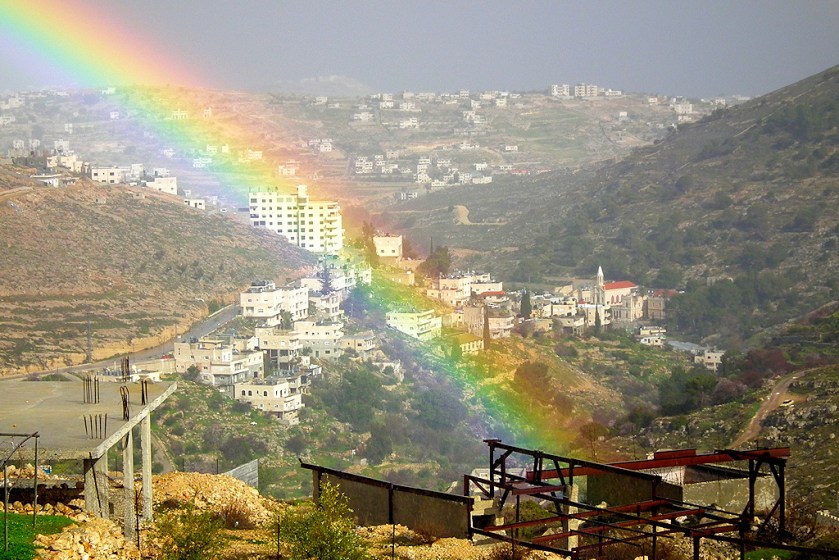
Irtas, Bethlehem, in the West Bank of Palestine

It is Necessary only that Good People do Nothing

I’ve always been an optimist, deep down inside – a Jupiter in Pisces type. I’ve felt this underlying optimism ever since I was young – not rigidly, but because I keep coming back to it after periodic times of despair over the state of the world, to which, for my growth, I’ve been karmically tied all my adult life. It’s over fifty years since John Lennon sang, outrageously at the time, that we should give peace a chance. I cannot say there has been a lot of visible progress.

However, underneath, something has changed. Many of the ideals of 50-60 years ago are in fits and starts becoming pragmatic policy strategies, and the balance of opinion at street and village level across the world has over the years quietly tilted against war. The strength and clarity of this consensus is yet to be tested, but hints of it are visible in world opinion over Gaza. We’re approaching that test.

Hair-raising world situations and crises have a way of arousing public feeling to a sufficient extent that a mountain of inertia, of helpless addiction to conflict, could actually start moving before long. Ukraine and Gaza have jogged us that way and there’s further to go. Trouble is, a consensus often takes shape in the background while vested interests act more quickly. This formula worked when Pluto was in Capricorn, from 2008 until now, but things are changing. With Pluto in Aquarius, we’re likely to have situations arising where vested interests find themselves encircled.

Polarisation, demonisation and dehumanisation are pre-requisites for conflict, and here the media and social media play an outsize role. If we truly believe in peace, then these three issues need tackling inside ourselves.

The information war is now as important as the military war. Since social media appeared, Palestinians have had more of a level playing-field. In the last conflict, young Gazans won the info-war on points, and this is one reason why Gazan phone networks are disabled now. Israel meanwhile fails to realise that, apart from military overkill, its determined, uncompromising certainty in pursuing its cause undermines it in the eyes of much of the world.

We’re getting too accustomed to witnessing blood sacrifices. We live in a thoroughly amoral world system and, collectively, by omission, we have failed to stop them happening. The system is rigged in such a way that, though we might choose peace, justice and ecological priorities, we undermine them simply by shopping at supermarkets, driving cars and using phones and computers.

I keep repeating Edmund Burke’s 250 year old quote: “For the triumph of evil it is necessary only that good people do nothing“. It’s true.

So we get the cruel destruction of people, cities and landscapes in ‘theatres’ such as Syria, Ukraine and Gaza – hellish nightmares that everyone hoped we’d left behind long ago. We’ll get more of this unless there’s a fundamental change. Such a change might start happening in the second half of this decade.[1] But, as with many of the world’s key issues, it won’t just happen. It has to be pushed, firmly and consistently.

It’s important that this pressure for change doesn’t become a new social conflict, a new cause for social and political polarisation. Battling over it will lead to delays and complications we can’t afford. The movement for peace needs to avoid adopting the methods of war and confrontation: success comes through building a rising tide of solidarity, consensus and cooperation. It needs longterm commitment and mass momentum, and if it is to succeed, the people of Earth need to get behind the project of saving our world. Global peacebuilding is a key part of that.

In relation to the current conflict in Is-Pal, taking sides is understandable, yet it is part of the problem. The problem arises from polarisation itself, not from the perceived goodness or badness of either side. What is under-reported here is an indistinct but nevertheless a majority global consensus tilting against war and devastation, by anyone, against anyone and for whatever reason.

The destruction we’ve seen in Gaza, Mariupol (Ukraine) and Kobani (Syria) in recent years have nudged this sleepy consensus along. Humane empathy is bubbling up in collective consciousness, especially amongst the young, the power-holders of future decades. But is it strong enough to overcome the resigned belief that conflicts are an unavoidable yet necessary evil?

Behind this lies a bigger problem. Governments of all kinds are out of step with their people. Defence and international relations, even in democracies, are managed by godfathers who decide the ‘national interest’ on our behalf. So, in future, matters of war and peace boil down to a bigger question: who decides?

Majorities in the Global South and also the Global North are proving to be pro-people in attitude. Current wars have taken on a people-against-the-Megamachine optic: we see high-tech war machines ranged against crowds and communities of people, mowing them down. With Pluto entering Aquarius for the next 15 years, this meme is strengthening – we’re watching it happen in Gaza.

Here’s an astrologer’s warning. From 2025-6 until 2038 Neptune is in Aries, an awkward period in which we’ll be faced with a key cause of war: big guys and strongmen who take it upon themselves to determine our future, often at the expense of majorities.

In Sudan we see a country being wrecked by two competing military leaders and their oligarchies. In Ukraine we see two very different kinds of strongman ranged against one another – Putin and Zelensky. In Israel we see a remarkably cynical prime minister taking on the whole world, convinced of his own rightness. In Gaza, Hamas is a resistance movement which, though it has its prominent leaders, is more horizontal than a hierarchy – more like a cooperative and rather like the Jewish terror organisations of the 1940s, Haganah, Lehi and Irgun.

Hamas will never remove the state of Israel, and they know it (they aren’t fools): Israel is here to stay. So are the Palestinians – here to stay. Israel will not eliminate Hamas because, even if it kills most of the current Hamas leadership, its actions generate new supporters and fighters willing to continue, whatever the cost, now and in twenty years’ time. That is, unless something big changes to make Palestinian lives better.

Big leaders and strongmen… Like that of war, this question has been allowed to drift because we were all too busy doing other things. This is one of the big challenges we must face globally if we are to avoid becoming a failed planet. However, here’s some good news: in the late 2020s and the 2030s we’re likely also to see a new crop of benign, altruistic leaders – of whom there have been too few in recent times. We could also see leaders who look as if they have solutions but they don’t, and visionary leaders with good solutions and a good way of asking people to face the music and grasp the nettle.

Palestinians are in a terrible mess. They have a strange mixture of social unity and political disunity, and they’re at a diplomatic disadvantage, poorly represented. ‘Palestine’s Mandela’, Marwan Barghouti, has sat in Israel jail for twenty years. The future of Gaza is now likely to be decided by outsiders. One sad fact here (many will disagree) is that the future governance of Gaza is best left in the hands of Hamas. The Palestine Authority, Israelis or international bodies are unlikely to get things right since they will simply perpetuate Palestinians’ position as dissatisfied victims.

Israelis have got themselves into a thorough mess too. They have landed themselves in a war on five fronts – against Gazans, West Bank Palestinians, Arab Jerusalemites, Arab Israelis and Hezbollah in Lebanon. They have an enormous domestic disagreement over the future direction of their country, which risks civil war or a separation of the country into an Israel and a Judea. Peace-oriented Israelis are having a hard time right now.[2]

By destroying Gaza Israel has raised a big question: who will pay the necessary mega-billions for its reconstruction? If there’s a risk of further destruction, governments, NGOs and investors will have little interest in an insecure investment that won’t pay off. Construction contracts will be valuable to Israeli companies, and plenty of cheap labour is available, but since Israel’s economy is tanking it will rely on foreign investment, during a time when the international community has plenty of bills to pay. It makes Israel accountable – it must promise to avoid destroying Gaza again.

And where and how will Gazans survive and get a decent life? A strong minority in Israel wants Palestinians simply to disappear – to Egypt, Jordan or anywhere – and this has been a hidden agenda for some interests in Israel since the late 1940s. But if this were possible, it would already have happened. Palestinians are good at standing their ground, whatever Israelis and the world throw at them.

Even if all Palestinians obligingly left, Israel would not be safe and secure – it would still be at war with itself, it would have unhappy neighbours and a further two million unhappy Palestinian refugees staring at it, and it would be internationally isolated (since USA is a fitful partner). Meanwhile the world is tired of holding its nose, paying Israel’s bills and accepting Palestinian refugees. Seen from outside, peace and security for Israelis have been destroyed by Israel’s own actions.

For Israel to feel safe and secure it must play its part in creating the right conditions. Palestinians need a decent life where they can be happy, make progress, do well, feel free and feel safe. The threat to Israel will then diminish – not without problems and crunch-points, but in the course of a generation of calming, it will happen.

This conflict exposes a key global issue we consistently fail to address. Who decides things at the global level? Gaza has now gone global. Perhaps this was Hamas’ hidden strategic aim: to put the cat amongst the pigeons internationally. It has exposed Israeli dependency on support and cover from abroad, and it has dragged neighbouring countries and the UN system into the debate over the future of Gaza. In effect it has made Israel lose its control of Gaza and even of itself. Confusing self-defence with revenge, Israel has alienated the world, lost its Middle Eastern neighbours’ trust and come under USA’s thumb. Even though Hamas’ strategy and actions are highly questionable, Israel has outclassed it in the badness stakes.

Who decides? This is a big, awkward international problem. Our haphazard, under-powered system of international decision-making is inadequate. The UN, the only international body we have for dealing with global affairs, is hamstrung by its incapacity to act independently. There is a growing need, though no capacity, for international bodies to overrule the decisions and actions of individual countries if they harm the wider world.

This is a minefield, but it’s a question we must sort out in coming decades. Gaza has become a nexus-point in a bigger argument between the Global South and North. However much Hamas intended it, this is what it has achieved.

The solution doesn’t lie in the past, in differing historic narratives and arguments about who did what, who suffers more and what God thinks about land-distribution. It lies in the future, and on the capacity of two peoples to live together sharing the same small space. Actually, we aren’t talking about two peoples, but more like seven or eight. Conflicts like this hold back the rest of the world and, if the world is to progress, disagreements must in future be resolved by means other than war.

The Middle East, the historic crossing-place of Eurasia, is filled with multiple ethnic groups, all with a history. For millennia it has been ruled by single systems – empires – where ethnic groups lived alongside each other in neighbouring villages and city quarters, each having quite distinct identities, laws and customs, without dividing the region into the separate territorial nations we have now. Today’s countries, introduced by the British and French around 1920, have had multiple nightmares ever since. As the hydrocarbon age ends, if it is sensible the Middle East will pull together, led probably by the Gulf States, and conflicts will tend to dwindle because its natural state is to be united in one multicultural system where everyone has rights and no one is excluded.

For that to happen, peace in Is-Pal must come first – it’s critical. It’s also difficult, after the damage that has been done. Peace is at root a consensual, emotional, people-scale thing, not just a diplomatic, business solution. It requires forgiveness, trust-building and a calming period of at least a generation. Hatchets must be buried. Lives reconstructed. Justice restored. Pain dealt with in another way. People need the space and calm to experience the advantages of peaceful coexistence.

It’s the same with the wider world: everyone needs to get a clear feeling that, whatever the costs and disruptions of change, change is better than non-change. In all departments of life. It won’t be easy, but it’s easier than the alternative.

Israel and Palestine act as a microcosm of the world. When peace comes to this small, benighted and strangely holy land, it will be because the world is itself coming to peace. The Is-Pal conflict is a key conflict, locally and worldwide, acting as a focus-point for a much-needed process of global peacebuilding. Without global peace we are unlikely to survive – Earth will become like Gaza.

Even so, I’m still an optimist. Optimism might be a sad pathology, but don’t bank on it. Just because things are bad and disillusionment is rife, this doesn’t mean this sad state of affairs will continue forever. Bizarrely – and this is a tragic point – the worse it gets, the more likely we might be to make fundamental changes. Perhaps this is the hidden psychology of the Israelis and Palestinians: unconsciously both sides feel out of control, driven by deep feelings and a kind of self-destructive despair, crying out for help and support.

Also, this is a gift they are giving the world, highlighting our helplessness in dealing with conflict and its causes. The extent of the current tragedy takes Israelis and Palestinians close to a brink, an epiphany point. People on both sides need somehow to realise that their existing strategies aren’t working.

So my prayer is that current momentous events in and around Gaza become a catalyst, a turning point, a tidal shift, both in Is-Pal and globally. A turnaround that seeds conditions in which a more lasting, true peace may come. Not just a ceasefire but a comprehensive solution. Actually it’s about justice, a correction of extreme imbalances, which will lay the foundations for peaceful coexistence. It is possible to do this by mid-century. It falls on a younger generation to do it since, sadly, my generation hasn’t succeeded. And they will succeed, since war is now obsolete as a way of settling our differences, and we need simply to accept that.

With love, Palden

————-

My next blog will be on more personal matters. Also, I’ve been quiet because I’ve been assembling a book for cancer patients and their helpers, drawn from my blog over the last four years. Thanks to those of you who have encouraged me to do this. Called Bones, it’ll be ready in due course (in Cornwall we say ‘dreckly’) as a free online PDF and possibly later as an audiobook. It’s in consultation stage at present with two special soul-sisters, Sian and Faith (thank you), and awaiting a final editorial trawl. Definitely dreckly.

NOTES:
[1] I explain my astrological thoughts on the later 2020s here: https://penwithbeyond.blog/2020s/
[2] Here’s an article by Gershon Baskin, an Israeli peacemaker, about Marwan Barghouti, widely regarded as ‘Palestine’s Mandela’ – and the telling point is the comment below it, accusing him of being a traitor. https://blogs.timesofisrael.com/to-the-one-who-could-be-the-next-leader-of-palestine/

I’ve written a trilogy of books about Palestine – the West Bank. I wrote them in 2009-2012 and not much has changed since then except people getting older. I feared the books would go out of date but they haven’t, really, apart from details. One is available in print and all are available free as online PDFs. www.palden.co.uk/pop/

These are Palestine Authority soldiers, not Israelis

Explaining

The Judaean Desert near Jericho

and Stone Walls

If you wish to understand the psy-ops and propaganda war that’s going on, it’s worth reflecting on the word hasbara, a Hebrew word often translated as ‘explaining’, but it means a lot more than that. The hidden agenda behind hasbara is to say things that are the opposite to the way they actually are, and to project on the other side qualities that actually are your own, blaming them for what is happening and thus justifying any actions that are taken in response.

A classic hasbara word is ‘defence’, as in ‘defence forces’, which is only part of the truth, concealing the less popular aspect of it. Israelis ascribe ‘defence’ to themselves and ‘attack’ to its neighbours, when actually, for both, it cuts both ways.

This shadow-stuff is common in international relations – creation of often unfair images of other countries or peoples in order to bolster one’s own projected image. They are the bad guys and we are the good guys. It gets exaggerated during times of conflict – and the basis of conflict is a sundering of consensus and a dangerous polarisation between sectors of society, nations or blocs. It can be used to justify actions that otherwise are unacceptable or atrocious. Every nation does it in some way, though Israelis are really good at it, as are Americans and British.

So if you look at what you read and hear with this in mind, you’ll understand things in a new way. Sides in a conflict project negatively on each other, demonising and dehumanising each other, to justify their own offensive or outrageous actions.

An ordinary day in peacetime Jericho

If Israel, Hamas and the ‘international community’ truly seek peace and a fulfilment of their needs, the dialogue needs to change. The terminology, the attitudes, the dehumanisation, the unreasonableness, the accusations and the anger. It starts with a change of heart. This is at present slimly possible though highly unlikely – there are too many vested interests and set agendas involved, of many kinds. So the current Gaza conflict will likely remain unresolved, as have previous conflicts. Not that it is easy or quick to resolve – incrementally, it will take generations. Recent events could serve as a turning-point, but I do not detect a necessary will to change.

However, the people with the biggest cards, regarding peacemaking, are Israel and the American bloc, closely followed by the Middle Eastern nations. It starts with a realisation amongst Israelis that they will fail to create longterm security while they are damaging new generations of Arabs and thus creating new enemies for the future. They cannot eliminate Hamas or the constituency it reflects and, in Gaza, there is no one capable of replacing Hamas as a government.

Also, Hamas have not actually been bad as a government (given that people in most countries have problems with their governments), and it needs recognising that they are an Islamist social reform party with a military wing, not a military force with an appended political wing.

A crow at Tel-es-Sultan, the remains of ancient Jericho, going back 7,000 years

But both sides need to change their views – their whole optic.

Palestinians are not extremists, though they are in an extreme situation and thus they react extremely. But they dislike Muslim fundamentalism, ISIS, Al Qaeda or even the wearing by women of the full face-covering. Most Israelis are not extremists either but, when they feel under attack, they can be overwhelmed with insecurity, fury and vengeance. This has deep historical roots and, while it’s understandable, it doesn’t help the future. It makes Israel overreact, with the longterm effect of perpetuating the insecurity that Israelis so much want to be free of.

It makes Arabs overreact too. Most Arabs accept that Israel is there, wishing it to withdraw to the 1948 borders (perhaps with a few trade-offs) and to become a good neighbour. But when they see Israel’s military actions, they become emotionally reactive and the rather over-worn and unworkable idea of driving the Israelis into the sea is reborn.

So somehow there needs to be a massive act of mutual trust and respect of a kind that very few Israelis, Palestinians or neighbouring Arabs could accept. Things are so touchy that it could break down over the slightest incident. And there are interest groups, both high-up in the geopolitical sphere and on the ground, who are dead set on perpetuating and enforcing the existing mindset they already hold.

The ancient spring at Jericho – the reason why the town is there and has been there for 10,000 years. It’s the oldest continually inhabited town in the world

At present I see only two possibilities: calming and exhaustion.

Calming means an incremental stepping back and reduction of conflict, by agreement. This could be achieved either on the ground, through the upwelling of a suppressed aspect of public sentiment on both sides, particularly amongst women, to apply deconfliction pressure from within each society. Or it could be achieved diplomatically, but this would require all those countries that matter to agree on one strategy, applying strongly both to Israel and the Palestinians. Don’t hope too hard for this, but it is always possible. As Sir Steven O’Brien, a diplomat, said on the radio (Saturday 4th Nov), “Diplomacy always fails until it succeeds“.

Then there is exhaustion. A conflict ends when there is an equalisation between forces, such that both sides perceive that they cannot win. This can happen militarily, but neither side in this conflict is likely to be able to win clearly, and there is a high price-tag to it.

Here the Palestinians have a slight advantage since their attitude of ‘sumud’ – perseverance and hanging in there – has more lasting power than Israeli rage. They lose every conflict, trying to draw down the world’s sympathy by suffering massive damage – a kind of collective martyrdom – but they also stop the Israelis from winning, every time. Meanwhile, the international community watches, fruitlessly spluttering and wringing its hands.

The Greek Orthodox monastery at the Mount of Temptation, Jericho (where Jesus did his forty days and forty nights).

It’s all nicely complex, and there is a counter-argument to every argument, and there are no easy answers. But it looks like we’re following the exhaustion track. This is also what’s happening in Ukraine.

The real battle lies between those who encourage polarisation and violence and those on the receiving end of them. Both sides can live together, and they shall. They do live together, even though they are strangely divided.

Palestinians aren’t angels and they’ve made mistakes but the burden of power and error weighs heavily on the Israeli side. Israel has long had superiority in weapons, money, connections, PR, chutzpah and forcefulness. Israelis don’t see things this way, seeing themselves as endangered victims. This is not unique amongst nations, but for Israel it’s extreme and the effects impact heavily on their victims and the wider world.

The Israeli project – to provide a safe haven for Jews – is a noble thing. Historically, Jews have suffered immensely, especially from the actions of Europeans. This doesn’t justify their oppressing Arabs today or doing to others many of the things that once were done to them. Israelis don’t see themselves as oppressors – they are the oppressed, busy protecting themselves.

Israelis have a lot to be proud of. They built a nation in decades. From their perspective, Arabs have attacked and menaced them and Israelis have bravely held off such threats – this was the narrative I learned as a teenager in 1967 at the time of the Six Day War, during which the Israelis occupied the Palestinian territories as if by accident, pre-emptively defending themselves (we were told).

Westerners fail to understand that this is where the power really lies in Middle Eastern society

In later life, I discovered that this, like the previous one of 1948, involved severe ethnic cleansing and uprooting of Palestinians, razing and occupying villages and parts of towns, and the killing of thousands of largely defenceless people. The awful fate visited on Jews by Europeans was visited by Jews on Palestinians. In the long arc of Jewish history this is tragic.

Only some early Israelis were perpetrators. Many were accomplices who shut their eyes, went along with things or obeyed orders, to an extent tricked by their leaders. Or they felt unable to encompass the situation, complain or do anything about it – they were simply thankful to be in Israel. Some protested but didn’t get far, others felt that the ills taking place were regrettable but unavoidable, while others just didn’t look. Zionists defined Israel’s character and future as a state, locked into an endless military vortex.

It could have been done differently. As they immigrated in the earlier 20th Century, Jews could have been integrated more with Palestinians – there would have been difficulties, though arguably fewer difficulties than actually arose. The British administration of the 1920s-1940s could have exercised less of a divide-and-rule approach. When the UN partitioned Palestine, favouring Jews, the Israelis could have made do with the territory they were allocated – they were given 56% and took 78%. They could have traded land for peace in the 1970s or 1990s.

None of these options would have been perfect, but some sort of peaceful and productive coexistence could have arisen, leading to a sounder long term future for everyone. But the path Israel chose lacks foresight, and the results come back to haunt them today.

Israeli feelings of existential threat arose from deep-seated vulnerabilities following the Jews’ terrible history in Europe. But the threat from Palestinians and other Arabs has been less a conquering aggression, more a largely ineffective response to Israeli force and expansion. A sense of threat does not have to be the case now. When Israel upsets its neighbours, or when it refuses to budge on issues crucial to Arabs, it naturally creates an unhappy response.

Thus, Israel becomes its own worst enemy: while intending to reinforce Israeli security, it generates antipathy and threats instead, undermining that security. The ethnic cleansing of 1948 would be consigned to history if it didn’t continue today. Hezbollah would be no threat if Israel hadn’t invaded Lebanon so devastatingly, not long ago. Israeli actions caused the founding of both Hamas and Hezbollah. Hamas and other militias in Gaza would not fire rockets if Israel let up on its siege of Gaza.

Zionism sees Israel’s own interests and expansion as paramount. Whatever means are used, whatever the wisdom of it, and whatever costs are incurred, Israel’s growth must go on. The notion that Israelis’ needs and security could be helped by acknowledging the needs and security of others doesn’t enter the equation, except amongst a dedicated but much shrivelled Israeli peace camp.

In the long term, if anything weakens Israel, it is Zionism, since it undermines the sympathy the world has toward Jews. Only a proportion of Israelis actively subscribe to Zionist sentiments, though acquiescence to them increases when Israel feels threatened, which happens regularly. Zionism is a norm drummed into Israelis from an early age.

Judaism is one thing and Zionism another. The Zionist mentality builds concrete walls and fences around Israel in self-protection, and in so doing Israelis become separated from the world, increasingly failing to see the wider world’s viewpoint. Zionists accuse critics of anti-Semitism, labelling Jewish detractors as ‘self-hating Jews’. Thereby, balanced dialogue is blocked.

But here comes a key proposition. If both Israelis and Arabs saw things another way, opening up to the notion that their fellow humans sit in the same boat as they, and if Israel ramped down its military expansionism, permitting some restitution of the ills which have occurred since 1948, then, over time, threats to Israel will subside, and the country and its population will become more safe and secure.

Most Palestinians and Arabs don’t want to fight. The idea that they want to destroy Israel is nowadays somewhere between a myth and an expletive uttered by Arabs when tempers are hot. Similarly, in Britain in WW2, it was the case that ‘the only good German is a dead German’.

Early Christian hermits’ caves at the Mount of Temptation

Most Palestinians and Arabs accept the existence of an Israel within the pre-1967 borders – an enormous concession they signed up to thirty years ago in the 1993 Oslo Accords. Even Hamas has stated that it will recognise Israel within such boundaries. Palestinians just want a fair deal and a decent life. Peace will never be a perfect deal, but it will be better than the current situation.

Israel cannot afford to remain militarised forever: it has poor people, social problems, enormous water-shortages, a risk of coastal flooding, toxicity, pollution and all the kinds of problems that pervade most modern countries.

It claims to be the only democracy in the Middle East (that’s hasbara) yet the nation is riven with disagreement over the nature of democracy, the constitution and the purpose of the nation, reflected in a succession of demonstrations and indecisive elections. It also shares the Global North’s dwindling prestige and power. After all, Israel’s population is only one third of the Egyptian city of Cairo.

Even if Israel won every war it undertakes, this doesn’t make for a happy, healthy nation. It needs to make friends with its neighbours because it needs them, and they need Israel. They have a lot to offer each other. They share Middle Eastern space. It’s a multicultural space.

Israelis need a safe and peaceful future. Many are not fully aware of what goes on in their name, or they shruggingly accept the ‘security reasons’ they are given. Many feel powerless, or they maintain a comfortable indifference ‘living inside the bubble’. Others adopt extreme, partisan views, as if everyone is against Jews and a strident, hammer response is always needed.

Since the late 1990s, the centre of gravity of Israeli politics has headed rightwards, and a harsh minority dominates the public discourse. The rule of dominant interests, while not unique to Israel, maintains a perpetual state of near-conflict.

Israel could come to regret many aspects of the years since its founding. It soils its nest by pushing its case uncompromisingly, thus creating enemies and the opposite longterm effects to what it genuinely seeks. Its reliance on force, bombing, assassinations, land-grabs and ill-treatment of Arabs builds up new, avoidable problems, fostering new generations of opponents.

We need a new habit of peaceful coexistence. This will take a generation or even seven, but it is important.

The Holy Land is a multi-ethnic, multi-faith land and a fascinating place. Sanctity is elusive and each faith defines sanctity differently, but it’s safe to say that ongoing conflict is not one of its characteristics. Positive change matters for the whole world – Israel and Palestine form a bottleneck in the world’s process of change.

Security is developed by building up a nation’s internal feelings of alrightness, community and integrity. It is built by cultivating collective happiness and creativity, giving people a sense of a positive, mutually-beneficial future. This is the real national interest, the guarantee of Israel’s future.

Once there was an old rabbi who had been praying for peace daily at the Western (Wailing) Wall in Jerusalem, for decades. When asked by an admiring journalist what it was like, he simply replied, “It’s like talking to a stone wall“.

With love, Palden

For better or worse, written using HI (human intelligence, aka brainz)


Site: palden.co.uk
Podcasts: www.palden.co.uk/podcasts.html
Pictures of Palestine: www.palden.co.uk/pop/

Looking from the Mount of Temptation over Jericho, toward the Dead Sea and the mountains of Jordan

Holy Land

Jeez woz ‘ere. Looking over the Judaean Desert toward the Dead Sea and Jordan

Last night (Sunday 22nd October) I had a very profound meditation, more like trance – I was carried away and ‘out of it’, surfacing far later than the usual time, after more than an hour. I felt quite at peace. This morning I feel quite changed – a bit wobbly yet feeling alright too. A few thoughts came up this morning that might be of interest or value.

It’s important to remember that those who are killed in disasters like this are well dealt with. They are withdrawn before pain or horror cloud their passing. They are pulled out in micro-seconds and instantly taken into care, as appropriate to each soul. They don’t seem to experience the impact of whatever hits them or whatever is the cause of their death. If they do experience it, they are detached from it, without accruing psycho-emotional damage. They witness it (for the soul-learning therefrom) but they are put into a kind of state of grace and objectivity where they are not damaged by it. It’s a kind of fast-tracking transitional process.

I’m more concerned about the living and what they are going through.

A Palestinian dove

There are Christians in Gaza as well as Muslims – and also seculars, who are often forgotten. Many of the Christians belong to ancient pre-Catholic, pre-Orthodox churches. (By the way, Arab Christians also call God Allah – which means ‘the God’, to distinguish it from a pantheon of gods.)

Yet I find Christians can have more difficulty passing over – more of a struggle – than Muslims, who seem to have a clearer sense of returning to Allah. Perhaps Christians and Jews have more of a feeling of distance and separation from God, involving more striving, more doubt, more questioning, while Muslims seem to have more inner confidence in their relationship with Allah. Not totally, yet they seem inherently more inclined that way. Hence, perhaps it is the case that they manage dying a bit more easily. In my observation. Speaking as an aged-hippy esotericist with Buddhist inclinations.

If you’re tracking Gaza inwardly, remember the people of the West Bank and the Palestinians in Israel and Jerusalem. ‘Arab Israelis’ are 20% of the population of ‘Israel proper’ and 40% of the population of Jerusalem. Some are Christians and many are Muslims – and they’re both friendly to each other. Arab Israelis aren’t dying in numbers, but they’re going through extreme discrimination and insecurity. Meanwhile, the West Bank is simmering and in danger of boiling over.

However, as an individual, while being aware of the complexity of this situation, it’s better to do small things well than big things badly, so give attention to those aspects of this situation that you are drawn to. Between us, we’ll cover a variety of things.

A boy in Jenin. He knows the sound of flying bullets.

This is big – a paroxysm of human madness where the heat gets high and the light grows dim. Negative influences are having a field day and, to some extent, we cannot stop this and must let the fire burn out. We cannot really affect what actually happens (the forces at play are big and complex), but the secret lies in seeing if we can flip, ease or assist the way it happens, so that there are glimmers of light, more opportunities for redemptive things to happen amidst a disaster.

There’s a lot of opinion and propaganda flying around. Well, in the ‘fog of war’, everyone is right and everyone is wrong. So take note of what people say and understand what lies behind it for them, while also observing your own responses, biases and predilections. Don’t necessarily block off from it, but try to avoid buying into the frenzy. Form judgements slowly. This is a battle of thoughts and feelings, intermixed with anger, and it’s good to try to hold that perspective.

It is possible to hold such a perspective while still having your own personal leanings – if, for example, you are Jewish, or you empathise with Arabs, or you have friends on one or both sides, or whatever. It is possible to run these in parallel, at least for the duration of this madness-epidemic. It’s an awareness exercise.

Barr al-Khalil or the Judaean Desert

This part of the world is often called ‘the Holy Land’. Yet holiness manifests itself there in emphatically unholy, paradoxical terms. It is a magnified microcosm of the whole planet, like a crucible, and Earth’s core issues are all present there. It’s a very small patch of land, the same size as Wales, Albania or New Jersey, in which there is immense complexity, intensity and confusion.

Still, there’s a lot of light there, and the contrast makes the issues so much starker. As a microcosm, what happens there affects everywhere else far more than its size and population would otherwise suggest. It has a similar population to Tajikistan, Togo, Sierra Leone, Laos, Austria, Portugal and Greece, Virginia or Washington state.

The situation in Is-Pal is very much affected by influences from elsewhere – not just military and economic but much deeper, more profound and hidden.

This includes positive influences too: there has been no shortage of Native American medicine wheels, Tibetan pujas, Bah’ai prayers and interfaith ‘encounters’ in this land, and while I was there I met amazing people from all over – even Siberia, Indonesia and the Amazonas. Amongst Israelis and Palestinians there are amazing people. Do not fall for the idea that this is just a simple two-sided battle of hearts and minds – it is multiplex, and the quality of souls in the ‘holy land’ is surprisingly high.

Young peacemakers from a variety of countries, with the mayor of Al Aqaba (who was injured in the first intifada in the late 1980s – he spent ten years in Israeli jail too)

To some extent we must let it play out, and to some extent we can bring some relief, space and blessing to this conflagration. This is a classic high-magnitude soulquake. Above all, stay steady. Keep returning to centre. Stay benign and well-wishing. If you get steamed up and in a mess, go take a walk, get some space and let the knots within you unravel – and take that relieving walk on behalf of those who cannot.

As Pluto enters Aquarius, we’re entering at least 15 years of ‘the battle for the hearts and minds of humanity’. This conflict is one such situation and there will be more, so get used to it and try to work with it. Because it is necessary. As is the case with Is-Pal right now, many of the world’s problems arise from issues we have not tackled and sorted out before. Chickens are coming home to roost in droves, in every department of life and every country. Issues are being brought to our awareness through the events manifesting in our time. These are the material through which we work out these issues.

There will come a point in coming decades when we get to The Big Issue. In this sense we are being given a gift, a collective training, through being given escalating waves of crisis to face. We’re being loosened up and forced to think, to see things in different ways from before, and from a larger perspective.

Palestinian kids on the whole have good fathers

In this sense, something right is happening here – we’re at a ‘never again’ point. This isn’t about cease-fires: this is about ending war and oppression, historically, and events like this will repeat until we get it and do it.

Oh, and by the way, put in a prayer for people in the UN and NGO sectors, from all over the world, who represent a neutral, global viewpoint in the conflict, and who take the strain in very practical ways. For some of them, it’s at great risk to themselves and, for others, it’s round the clock, every hour of the day and night. Stressful and often unthanked – they’re holy warriors.

With love, Palden.

Marwan Barghouti, regarded as Palestine’s Mandela. He’s been in Israeli jail for the last 20 years and they’re likely to keep him there. A mural on the separation wall at Qalandia, West Bank

In the 1990s I ran some meditation camping retreats called the Hundredth Monkey Project (M100). We worked in a circle of 70-80 people with world issues. We didn’t prescribe meditative methods but, to help people get oriented and give them ideas, a method was suggested as a basis to work with. If this interests you, it’s here: www.palden.co.uk/cs06-m100meditation.html

If you’re a member of a group working with issues such as these, then you might be interested in this material about talking-stick processes: www.palden.co.uk/cs07-talkingstick.html

Site: www.palden.co.uk
Podcasts: https://podcasters.spotify.com/pod/show/palden-jenkins

Book Pictures of Palestine: www.palden.co.uk/pop/

Altruismics

Space. Near Falmouth, Cornwall

I woke up this morning with ‘philanthropist‘ going round my head. So I decided to look up how it was defined.

A person who seeks to promote the welfare of others, especially by the generous donation of money to good causes.” Oxford University Press. Interestingly, they found that the greatest use of the word in Britain was in the 1850s, the peak of the Victorian era and the industrial revolution, declining gradually until it sank a lot during WW1 and afterwards, and it started slightly picking up only since 2005ish.

A philanthropist is someone who donates substantial resources, often including time and expertise but always including substantial financial resource, to a particular cause, area or social issue.” That’s the Charities Aid Foundation in UK.

Anyone can be a philanthropist and be more effective at making a difference. Here’s how. A philanthropist is a person who donates time, money, experience, skills or talent to help create a better world. Anyone can be a philanthropist, regardless of status or net worth.” That’s a bit closer to where I stand. It comes from an American organisation called Fidelity Charitable.

Another source defines three types of philanthropy: relief, improvement and social reform. In my work in places like Palestine, I’ve focused mainly on social reform – a longer term perspective that builds conditions leading to improvement. This is trans-generational when it comes to questions of mass trauma-healing – which is the approach taken by the Hope Flowers School that I worked with in Bethlehem. Their motto is, ‘every act of violence begins with an unhealed wound‘ – so the task is to make progress on healing those wounds. The school originally had Muslim, Christian and Jewish children but, in 2001, during the intifada, the Jews withdrew, largely for safety reasons – understandable, though regrettable.

According to the Borgen Project, “Philanthropic people show selfless concern for the welfare of others and venture to alleviate the struggles of others without seeking anything for their own personal benefit. Truly philanthropic acts are done without expectation of compensation or recognition of one’s efforts.” This might be so, but this ‘without expectation’ bit doesn’t cover the expenses incurred, and covering my expenses has always been problematic. When in the Middle East, I still had to pay my rent and bills back home, as well as covering travel, living costs and helping needy people. I still do this with the remote work I do now from my desk at home.

I met this guy in Bethlehem. He’s now 20ish. I wonder what he thinks right now?

In this life I have not been a financial philanthropist. Many people believe that donating money is the only form of philanthropy, but also, out in places where there is need, everyone tends to drive, elbow and oblige me to raise, funnel or fix money. They perceive this as their primary need, and that’s true in the short term and not necessarily true for the longterm background conditions I’m best at working with.

This has tended to smother and detract from what I’m best at doing – human and spiritual input and multilevel intelligence. The thinking needed for fundraising and admin is very different from that of healing and magical-spiritual work, and I cannot do everything. This has been an ongoing dilemma.

It hasn’t helped me support myself either. People tend to think that, since such work is a chosen vocation, I needed no support or already had the funds. The prevailing thinking is that, if you’re doing well financially, this enables you then to act philanthropically – and only then. For many people this point never arrives, so they don’t do it. But it needs to come from a deeper place, from a sense of calling. That’s what was the case for me and, in late life, I’m really glad I did it, even though I’m quite poor now as a result.

Carn Barra, West Penwith, Cornwall.

When in Palestine and Israel, there were two main age-groups of volunteers and activists from abroad, most of them self-financing. One group was around age 25-35 (and 60% female) and one was around sixty (and 60% male). The thirtysomethings were doing it out of principle, setting aside career progress for what they believed in – though for some it was a voluntary internship to help a career in the NGO sector. Some had law, business and accountancy degrees, working in ‘lawfare’ – legal improvement of the rights of Palestinians and helping Palestinian NGOs function.

The sixtysomethings were good-hearted types, often retired from careers in education, social work or healthcare, who had raised and despatched their kids, perhaps they were newly divorced, and they had the resources and long-accumulated wish to at last pursue their calling in a place like Palestine. Both of these age-groups were committed, brave and valuable people, nevertheless driven by slightly different motivations. Many of the older ones contributed to the relief and improvement areas, while many of the younger ones contributed to reform.

There’s an innate philanthropy built into Palestinian society. It’s an attitude. It’s shared by some but not all Israelis – particularly those brought up in kibbutzim or living in settlements. It’s a kind of generosity economy, where everyone is brought up with an ethic of mutual help and contribution. This is social resilience, and when society is under duress it really works. This is something we in Europe need to learn – it’s in our group memory but it has lapsed.

When a young person thinks about their future career, they don’t think of personal ambition as much as the contribution they can make, and the likely slots that will appear in their clan or neighbourhood in future – whether as a dentist, embroiderer, car mechanic or even a professor. If the local midwife is growing older, a younger one will be thinking of replacing her in ten years’ time.

The holy well on Trencrom Hill, guardian hill of West Penwith

Over the decades I’ve banged on a lot about life-purpose, helping and empowering people to identify and pursue it. Here comes a repeat quote, but it’s important. The Council of Nine (who thirty years ago jogged me into working with Israel-Palestine) were asked whether there was one thing that could change and transform the world. They simply said, “If everyone pursues their life purpose“.

This gets bigger. They didn’t say this but, by extension, omitting to pursue our life-purpose, or withholding it, for whatever reason, is a soft version of a current major concern: crimes against humanity. It is the indifferent, inherently self-serving ethic of Western and, increasingly, global culture, that permits situations such as Gaza to happen. Because we don’t stop it.

People expressed surprise and horror at the precipitate actions of the Gazans when they broke out and violated so many Israelis, starting off the current round of trouble. Anyone who actually watches anything more than the urgent splutterings of the headlines knew something like this would come. It continues a long, long story and it didn’t happen out of the blue.

The surprise arises from global indifference, which prefers stuff like this would just go away. To be fair though, there’s also a surfeit of other events, tragedies and concerns competing for attention. Israeli hubris was caught napping. The main surprise here was the strategy and audacity of it. I do not encourage violence and have been a lifelong peace-freak, but are we really to believe that the Palestinians, generally unheard, blocked and disregarded, are supposed to act like polite gentlefolk, shrugging shoulders and nobly accepting their lot without a whimper? How would you like to be a 20 year old in Gaza, with no future? Or his or her parents?

Palestinians. They’re terrorists, as you can see

Today, the Gazans are so hungry, thirsty, desperate and traumatised that it would not surprise me if there were another mass breakout, into Israel or Egypt – of mothers, families, grandparents and youngsters seeking food, water and safety. Later, Europeans will duly complain when another wave of refugees comes to our shores, but our endemic indifference has caused much of this. Refugees arrive in Europe and America to give us a gift, a gift of humanness, empathy and philanthropy. Amazingly, it has even been found scientifically that it makes us happier. Indeed, there’s more to life than comfort and security.

I am not saying ‘admit anyone who claims asylum’, but I am saying we need to be more philanthropic, to understand that changes are happening even to us, and to act longterm to deal with the sources of the problem. In the case of Gaza it concerns the historic and current issues arising for the locals from the arrival and behaviour of the state of Israel, and the wider global issues that allowed this to happen the way it did. In Britain, two key fomenters of this problem are the Foreign Office and the media.

So, life-purpose. Are we here simply to pay our bills, tread our mills, keep investors happy and, at the end, collect our pensions? This is a personal question for every single soul. We need to ask ourselves, ‘Am I rising to my full potential as a human philanthropist? Or a human anything, for that matter?’. The answer is both yes and no, and the yes bit needs acknowledging and the no bit needs some attention. [For an audio talk by me, try this.]

Here’s something interesting that I discovered. I have long known I have healing abilities but in Britain I have chosen not to work as a healer, except as an astrologer (a perceptual healer) and a community activist (a social healer). But when I went to Palestine, witnessing the needs of people there, I suddenly started doing healing work – spiritual healing, mainly, and remote healing. On people’s backs, stomachs, wounds, hearts and spirits. What surprised me was that my abilities were dramatically amplified – people were genuinely and visibly healed, and deeply so. They’d approach me later to say so, and I was much moved, rather shocked by that. It was as if the scale of need pulled out almost miraculous superpowers.

But there’s a difference. In Britain, when I’ve done such work, while people do benefit, they tend to continue with the life-patterns that caused the problem. From a healer’s viewpoint, that’s not very satisfying. But in a crisis zone, where despair, danger and dire need are big drivers, I found people really did take on board whatever I said or did, and they were so grateful, and they helped me back. Also, it was liberating to work without charging.

Sitting on the wind. Godrevy, Cornwall

I’ve never liked charging for healing or transformative work – how do you value the fixing of a major issue or the saving of a life? Twenty years ago, as an astrologer I charged £60-70 for a two-hour session but I needed £250. I did a lot for free or underpriced, because there was a need. I’d have felt happier with a salary, like a doctor, so that charging didn’t enter the equation. The ethics and politics of our time did not allow it – after all, astrologers are charlatans, aren’t we?

If you were a Palestinian in Gaza right now, you’d be enacting your life-purpose – whatever you’re best at. The same is happening for some Israelis. That’s how people survive. When the chips are down, you do what’s needed, regardless. If you can clear rubble, cook, minister to people or mind the kids, that’s what you do. No qualifications or vetting needed – just do it, if necessary till you drop.

Saturn is in Pisces: this concerns philanthropy. Without it, the world would be a much sorrier place. Philanthropy is not an option: it is a necessity, like sewage disposal. Crises such as Gaza – and they’re coming at us quite a lot nowadays, and it won’t slow down – shine a light on our life-purposes, for each and every one of us.

What am I here for, really? What am I doing about it? Our calling is programmed in us from the beginning. We know it. It is inherent, not learned in courses or demanding a qualification – it’s a natural, inbuilt gift and skill. It comes easily. Yes, we are all innately talented. If we let it out.

With love, Palden

A young Bethlehemite friend, now in his twenties

PS. I’m blogging a lot at present and it’s not really planned. It’ll die down again! If something comes up, I start blogging and, typical Aspie, I don’t stop until I’m done. There’s stuff going on in places where parts of my heart lie and, since I can’t get to Is-Pal (or West Africa), this is how I let it out. Together with psychic-spiritual work and handholding certain individuals in the thick of it.

At present, I am ‘holding’ Maa Ayensuwaa (on the right), a native healer in Ghana, who is lying in hospital, lacking painkillers and hoping money will come along to pay for an operation for fibroids – it’s wear and tear from helping people and going without. I can help her only in spirit, though our connection is such that (I hope) it works.

Site: www.palden.co.uk
Blog: https://penwithbeyond.blog
Podcasts: https://podcasters.spotify.com/pod/show/palden-jenkins

Brinkmanship

The Old City of Jerusalem

A good friend of mine rang up this morning. She’s Jewish – some Zionists might call her a self-hating Jew – who shares the collective feelings and pathos of Jewry while having grave reservations about the behaviour of the state of Israel. She’s one of those thoughtful Jews who is brave enough to talk to someone like me, who has worked a lot with Arabs.

She comes round for tea and we have great discussions, both of us enjoying the contrasting insider knowledge we each have. Of course, what we face now, in and around Gaza, puts her in a really difficult position. She struggles with it inside herself and she talks with me about that struggle. If you have any empathy and conscience as a human, whatever position you take, it’s really difficult, this stuff.

A few days ago she was with a bunch of eco-activists with whom she’d worked for ages. They were vehemently pro-Palestinian in a way that she found difficult, because they were anti-Israeli. She’s not paranoid about anti-semitism, but it still hurts when people vehemently disapprove of your own people. Her friends had taken sides.

Fifteenish years ago in Palestine, I had a similar problem: I worked with Palestinians but I’m not anti-Israeli – I’m fundamentally pro-people. To me, helping Palestinians doesn’t mean opposing Israel – actually, I felt I was helping Israelis by helping Palestinians, but only a few Israelis would get what I mean by that. Seeing everything in a polarised, partisan way is, dare I say it, inherently hypocritical – it makes Them bad and Us good, as also does the current over-use and misuse of the term ‘terrorist’.

It’s a cover-up, a denial of responsibility, a projection. In my reckoning, it’s part of the problem. The partisan approach taken by the governments of UK, Europe and USA, which they believe to be a show of strength, is undermining the remaining, sagging respect that the Global South – the world’s majority – has for us, and this will lead to difficulties further down the line. We need to stop politicking and act like mature nations.

Citizen peacemakers from both sides, meeting at the All Nations Cafe. This photo was 12 years ago, but it’s still going, led by a brave former Israeli soldier

When working in Palestine I had some difficulty with zealous Palestine activists from abroad who commonly adopted a partisan position: within themselves they had declared war on Israel, even if expressing it only in the form of olive-picking and visiting frontline towns like Tulkarm, Hebron, Jenin or Nablus to witness the damage and the pain. I respect such people for their humane feelings, empathy and commitment but also I felt they needed to do more homework, to go a bit further in their understanding and feelings.

They made life more difficult for people like me – amongst other things driving Israelis against humanitarians. Many activists didn’t really like me, and my book Pictures of Palestine hasn’t been popular with many of them. In my teens in Liverpool I was wedged between Protestants and Catholics, and Mods and Rockers – I started my peacemaker education early! So this issue isn’t new.

The Matrix of Control. There are hundreds of these things around the West Bank

If we take sides, we start projecting a subjective and emotive image on the Other, upon which subsequent actions and atrocities are then justified. It makes Us right and Them wrong, so that We claim legitimacy in questionably punishing Them for their crimes. In and around Israel-Palestine, as soon as conflict breaks out, most people lock into this charged mentality, setting all other considerations aside.

It’s a form of psycho-emotional slavery, and the puppet-master controlling the strings is the Lord of Division. It’s an endemic mass-psychology that needs to polarise, dehumanise and denigrate the other side so that we can overcome the guilt and shame of performing wrongs in the furtherance of our own beliefs – even when those beliefs do not support committing such wrongs.

This mentality leads to consequences. As I write, Israeli forces are poised to start a ground invasion of Gaza. From the Israeli viewpoint, I can see why they are taking this approach: they need to eliminate Hamas, and they’re driven by a ‘never again’ feeling – never again do they want to be threatened and harmed in this way. Fair enough. Except there’s a problem. It’s unlikely to work.

Israelis may kill as many people as they like but they won’t be rid of the problem, because those who are left behind will be hurt. The pain passes down the generations. The cycle of uprisings has repeated itself roughly every twenty years since the 1930s, as each generation has grown up and sought to change things.

The damage done to people and to land is tragic – a ground invasion of Gaza will cost both sides very high. Innocent Palestinians will be mown down, and committed freedom-fighters will sacrifice their lives. Israeli troops will die, one by one, hit by snipers, booby-traps and innovative Gazan devices. Jewish and Palestinian mothers will rue the loss of their sons and daughters.

Israelis will not and cannot eliminate Hamas, even if, improbably, they eliminate all of its fighters and the main characters who head it up. They have not managed to do this before, and they are unlikely to achieve it now. All they can achieve is a costly delay until the next flare-up happens. The reason is this: every time Israel fires a bullet, it creates several new fighters taking up a gun – frustrated young men who seek a future and cannot have it.

The Matrix of Control: a flying checkpoint (upper left), imposed randomly and causing long queues on the roads.

Instead of getting depressed and committing suicide quietly to themselves, they join one of the militias, with the idea that their sacrifice might benefit their people. This isn’t so strange: my own father did this in WW2, volunteering his life for King and Country (except he survived, minus a leg).

Hamas was founded in the first intifada of the 1980s. Ironically, Israel secretly funded its founding, to counteract the Yasser Arafat’s PLO and divide Palestinians against each other. Well, that backfired. Hamas speaks for the embattled feelings of Palestinians and, if there were an election instead of a war, Hamas would most likely win. They won in 2006, in a free and fair election, undermined and annulled by Israel and the West – and they would win now.

To many Palestinians, Hamas represents the best of a very bad set of options – not least because it is relatively free of corruption, it has principles, and Hamas is resolute and cannot be bribed or arm-twisted into submission.

There’s a lot of maleness being displayed on both sides – a resolute, despairing, ultimately self-destructive maleness. But behind this lies a deep feminine-rooted emotion too – the urge to protect women and children from the monstrous ogres on the other side.

An old friend, Ibrahim Abu el-Hawa, peacemaker extraordinaire – some of you might know him

Here I wish to introduce a constructive thought and prayer, or two.

The problem with males is that, when we get worked up, we tend not to stop until we’ve achieved our objectives. It’s sexual: a man seeks a climax, through which all can be resolved and he can forget all his troubles. Except, when this orgiastic urge is driven by short-sighted urges such as control or revenge, it gets really destructive. In war and competition, masculinity doesn’t think much about the damage it might create while seeking that climax, and while we usually focus on winners, in competition most people lose.

There’s a secret here about males, to do with brinkmanship and danger. When it comes to the crunch, sometimes men go more crazy, and sometimes, when genuinely threatened, we start calculating our situation and seeing sense. Unless there is a miraculous and unusual philosophical change of heart, it needs to go up to the brink for us to get there.

Speaking astrologically, this is about the planet Mars. The lowest aspect of Mars fights to destroy – as with the Stalingrad-like scenes we’ve seen in recent decades. The default aspect of Mars fights to win – even though both sides ultimately lose, since victory is never as sweet as expected. The highest aspect of Mars is about coming to the crunch and realising there is no virtue in fighting and no enemy, because we’re all ultimately on the same side. The skillful playing of a game is more important than the winning of it. We suddenly realise we are all our own enemies, beating ourselves up.

So here’s a prayer and something to visualise. As I write we stand at a choice-point, before an expected ground invasion of Gaza. The urge to go to the brink is there, and no one will be dissuaded. This is a point of vulnerability and choice. Consequences will follow, whichever choice is made.

So visualise this crunch point as a potential breakthrough point and hold that thought, that feeling. Don’t be overcome with depression and helplessness, or get stuck on what you think ought to happen. These are of no use right now. If you were in a war zone, you’d get shot.

In war, one must take advantage of whatever situation that arises, as it arises. So apply your prayers to the situation as it stands, to help the universe twist events in a direction that somehow changes flow of the tide.

The Dome of the Rock and the Old City of Jerusalem, with Israeli West Jerusalem behind

We’re at a brief point of realisation that there actually are options. Fighting it out is unlikely to achieve the objectives either side has, and the costs will probably outweigh the benefits. The pain each side experiences will not be soothed.

Here’s another thought. Even if the warring parties do fight it out – and the above prayer will thus be seen to have failed – it’s a matter of stoking up positive energy for the longterm, to build up the potential for the pattern to change. Store it up in humanity’s collective psyche, so that this option is more available next time round, even if it doesn’t work this time round.

Building up the energy-potential for de-confliction is best done by making use of actual circumstances where these issues are acutely at stake. Brinkmanship-points like today’s are junctures where the collective psyche of humanity is at its most vulnerable. It’s under pressure and surprisingly open to making a change.

The seemingly irrevocable rush to conflict sets in motion forces and consequences that seemingly cannot be stopped, and this is the pattern that needs to change. We need a new, transitional pattern where, when the risk of conflict comes close, everyone gets it that there is or must somehow be another way. It’s all to do with agreeing to disagree, and doing something to reduce the intensity of disagreement.

I say transitional because, whatever dreamers might dream, we aren’t suddenly going to have world peace tomorrow. We have to deconstruct the patterns that make for conflict, generation by generation, building new replacement habits. We can do this over the coming decades by facing high-risk situations where our true will gets tested and we are forced to get clear – if necessary, under duress.

In Israel and Palestine, repeated conflicts have not achieved either side’s objectives. This one won’t either. If nothing changes, the next conflict comes in about four years’ time. So let’s get real here. There’s another way. It does require guts to pursue it – the guts to change the pattern and step back from disaster.

Al Aqsa Mosque in Jerusalem – Islam’s third-holiest place

Here’s the awkward bit: though both sides are responsible for their actions, in my estimation, Israel holds around 70% of the power, with greater freedom of action than the Palestinians. Saying this doesn’t make me anti-Israeli. Palestinians hold 30%, and Hamas have recently shown how they also have power to shift the agenda. But 70-30ish is the way the odds are stacked. This makes it more difficult to flip the pattern because ceasefires come when there’s some kind of equalisation of force and influence.

Firing munitions, however impressive, is no longer manly. We need to protect women, children, and also our rights, needs and fortunes, by thinking further and bigger and wider. It’s an emotional choice, made with extra power when we stand on the brink of disaster.

What’s important here is that, whatever happens, humanity learns. Even if the worst happens, this needs to be the last time. Something has to shift – the world is fed up with this, and we have other concerns.

This means that lessons need learning now, today, in these circumstances – emotionally, in the heart, womb and gut. Lives have been lost and are being lost, and the only way to redeem those deaths and make them more meaningful is to learn from them and change things. Only then do they serve a positive purpose in the long run. If people’s sacrifices on both sides are sufficient to build up a head of energy-potential for change, then may this be so. May that change come about.

Changing history takes time. Yet it happens in intense situations like this.

With love, Palden.

Site: www.palden.co.uk
Blog: https://penwithbeyond.blog
Podcasts: https://podcasters.spotify.com/pod/show/palden-jenkins

Three Palestinian Christians playing Arabic classic music