So here am I, a lifelong author and communicator, and I’ve been sitting here in recent weeks with nothing much to say. That’s unusual. It isn’t ‘writer’s block’: it’s a funny feeling of little to say. In my birth chart, Neptune and Saturn are opposing Mercury right now, so I guess this blog is expressing the essence of what that double transit is bringing.
I’m one of those authors who, if I have little that is meaningful to say, I don’t just rattle off material just to fill space, stay regular, fulfil expectations or contractual requirements. I go quiet instead. The best of my writing has always come when there’s a need. I wake up with it, and out it comes.
In life this has given rather uncanny gift which has been both a blessing and a bane: a strange capacity to articulate ideas and perspectives that other people were about to get, but they hadn’t got there yet. As if speaking to people from the future, pointing to how it’s going to be. Or might be. Or could be.
I haven’t always got this right, though there have been times I’ve got things very right. Sometimes I’ve perceived a possible reality that just didn’t happen that way, or I underestimated the influence of obstructors, or got my facts wrong, or suffered wishful thinking or over-optimism, or simply mis-estimated things.
Yet at times I’ve hit the nail right on the head, and it has sparked outcomes or affected people and situations far more than anticipated – sometimes going into the magical-miracle zone. Cosmic catalysis.
It’s a question of whether the benefits from things I got right have outweighed the misfires and problematicals. It feels as if this question is on the weighing scales at present. And, perhaps to prove the point, recently I’ve had little to say. It’s a pause for rumination. Or perhaps a reality-flip is going on. Or a reassessment.
A winding lane in Grumbla, Cornwall
My ongoing cancer saga continues. A new symptom has appeared in recent months: I’m losing the use of my legs. That’s what it feels like, though diagnosis is yet to come, following an imminent MRI scan of my pelvis and a diagnosis in the coming week. My legs are exhausted after a hundred yards, as if I’d just hiked forty miles. Even when just standing still, they turn to rubber, as if they’re about to give way.
It varies on whether it’s an Up day or a Down day. Down days have increased, when I have little energy, drive or inspiration. So something is going on.
It reminds me of six years ago when no distinct symptoms of cancer had yet appeared, but something wasn’t right. It wasn’t possible to put a finger on anything until my back suddenly gave way in August 2019. This was the first concrete symptom of a rapidly developing blood cancer, Multiple Myeloma. It’s ‘multiple’ because it has a range of disparate effects that vary greatly from person to person. This makes it difficult to diagnose.
So it took twelve long weeks to progress from a back-breakage to a cancer diagnosis, though this process was helped by a series of three inspired acts of intuition by, in succession, a cranial osteopath, a GP and a hospital specialist. Bless them all.
I can’t put my finger on what’s happening now, but something is happening. Astrologically, it concerns Mercury, and I’m a Mercurial person (a Virgo with a Gemini Moon). This feels neurological. There’s that ‘nothing to say’ syndrome too. And there’s more.
Rock art, Morvah, Penwith
It concerns ‘growing down’ – losing our powers. This demands a lot of acceptance – getting used to the fact that something is ending. Really ending. In the past I’ve been a cross-country runner and mountaineer, and I find loss of leg-power to be confronting.
Also, as an author, many people are retreating from their phones and social media habits and, thus, many of my readers are simply disappearing. The default answer is to spread into new online media and engage in networking and marketisation strategies. I’m getting loads of e-mails from online promoters who want to marketise my podcasts.
I’d love to reach more of the kinds of people who might benefit from my blogs and podcasts, but I’m not interested in all that promo stuff. My abilities are waning and I can’t manage the work that’s involved. I’m not seeking to set up a business or build my career. This lifelong content creator is sharing his end-of-life process, that’s all.
By nature I am, or was, an integrity-marketer, studiously avoiding falsities, glamours, competitiveness and deceptions in my approach. I used to be a whizzo at this, but not now – my time was 20-40 years ago. Nowadays, online media are changing so much – I can’t keep up, and get my head around all the details. Meanwhile, digital costs and charges are rising, and this obliges monetisation. I can’t do this any more, I don’t have what it takes to crank up a business and I don’t want to leave too many complexities for my son to sort out when I pop my clogs.
So where this goes is anyone’s guess. Anything that increases my workload or demands feats of memory and micro-management will simply not work. Anything I do needs to serve my health and wellbeing without weighing me down, and I’m already going at the maximum pace I can handle. So there’s a dilemma here.
Fresh sets of eyes peer out on the great wide world. In a few weeks they will fly thousands of miles.
Anyway, there’s something to learn from all this. It’s a matter of looking at what’s underneath. It’s about acceptance of What Is. It’s a reduction of options. This happens to those of us who experience a gradual, stepwise end-of-life decline instead of a sudden, drastic one – things narrow and shut down, bit by bit. It’s simply a matter of doing our best with what is, and what we’re capable of doing – there’s little or no option. It can be difficult and rather final, though there’s a joy and fulfilment in it too, if we choose to see the gift in it.
Earlier in my cancer saga I used to measure my condition in terms of perceived age. My physical age is currently 74, and normally I hover around 80-85 in perceived age, but in the last few days I’ve felt like 95 – energyless, wan, off-balance, needing someone to hold my hand, and wondering whether the latest rewrite of my will makes sense.
Yet I’m also transported into the eternal present, propped up in bed, hearing the singing of birds in a crisp, microsecond, sonorous, meaning-rich way, as if they’re teaching me something. Which they are.
They’re teaching me a very special something. A something that words cannot truly encompass because words reduce it. It’s a silence between each frame of life’s movie. A moment of seeing, a shifting of optic, a moment of existential tranquillity. It’s very quiet. It’s momentary yet vast. A glimpse of the Void. A taste of the Silence. A Neptunian slippage of consciousness into a temporary eternity.
So perhaps having little to say has its virtues. After all, I’ve managed to say something about it, so something must be happening right! It just goes to show, there is indeed a gift in everything.
This is mainly for my generational peers – if you’re in your 70s, 80s or 90s, your bones are getting creaky and your mind is getting sluggish.
In the life-cycle we’re given, we grow up and later we grow down. In steps.
It’s also about karma-clearance. Sorting out our stuff at the end of life, so that we don’t carry all of it with us when we go over to the other side – to the realm of the Ancestors.
I’ve been involved in humanitarian work, and recently I’ve needed to work on my patterns around givingness and compassion fatigue. Commitment. Success and failure in helping people. Deep heart stuff.
And it’s about acceptance. That’s one of the biggest learning experiences life ever gives us.
47 mins long. Introduced and outroduced by the birds of Grumbla in the Far Beyond, down’ere in Cornwall.
Bosigran Castle, a cliff sanctuary in West Penwith
I wasn’t expecting to be alive now. Just over five years ago, it genuinely felt as if it was ‘game over’. But after a year or two I was still here and marginally improving – as it goes with the blood cancer I have, Multiple Myeloma. I’d become partially disabled, ageing ten or more years (it felt different on different days), and squeezed through a big change with no going back. Many elements of my old life were now outside my range of physical and mental possibilities – though, to compensate, my spirits went through a big boost.
This boost was partially a ‘gift of God’ and partially I chose to take it that way. Though perhaps there was only one option. It was a choiceless choice, really. Gifts of God can be like that.
Even so, after two years, early in 2022 I sank into a deep, dark, muddy, wintertime crisis. Hm, this gift was grinding me down, squeezing and pushing me to see how far I could go. Astrologically, Neptune was opposing my Saturn – a revelation of uncomfortable truths, old shadows, limitations, inhibitions and self-sabotaging patterns. Again, I got used to the idea that I might be approaching ‘game over’. There I was, deteriorating, 90% dead and hovering. Part of me was withdrawing from life, giving up, feeling worn out. My hope account was overdrawn.
Then something started happening which, again, wasn’t on my roadmap. By springtime 2022 I started emerging from the shadowlands and reviving. Not back to where I’d been before, but to a new place. I wasn’t ‘better’, yet something in me was lighting up. Something was slotting into place.
Looking back from here, I was going through an archetypal, deep-self change. It necessitated a systems-reboot – a slough of despond trip. Archetype-change is a deep thing, hardly conscious, though clues come through at odd moments. I had no sense of the archetypal identity I was receiving or adopting, yet I could feel the change. There was a feeling of lostness, a lack of anchorage, together with an as yet shapeless feeling of new-foundness. I was switching tracks.
At different phases of our lives, deep down, we live out a succession of selfhoods and archetypes. An archetype is universal, but archetypes of a more personal kind mould themselves around us, our characters and our trans-life storylines. Through these selfhoods we plug into more universal archetypes, acting them out in the context of our lives and our available life-possibilities. These change and develop over time. That is, we learn – sometimes whether we like it or not!
In my experience, one selfhood can be dominant for a period of life while others operate as sub-threads or sub-personalities. Then, at critical points, major life-changes come and a rearrangement can occur. This, for me, is connected with other lives I’ve had, or am yet to have.
In Jungian psychology they talk of twelve classic archetypes: everyman, the innocent, the hero, outlaw, explorer, creator, ruler, magician, lover, caregiver, jester and sage. Well, that’s not a bad attempt, though such classifications of higher-dimensional forms can be rather limiting.
What was slotting into place was perhaps a variant of the sage, spiced with a dash of the creator and the ruler. Deep down, I’ve always been rather old in character, an inbuilt patriarch and natural leader, but something didn’t quite fit when I was younger. I didn’t handle it well and, though a lot was achieved, I came in for painful criticism. As an older soul in a younger body and personality, there was a disjunction. There was guilt hiding in there too, with impostor syndrome and a feeling I wasn’t good enough.
I managed to step out of that around age 42 – helped, no less, by a bunch of ETs. When I asked them whether I was the right person to work with them, they simply said I was the first person they’d encountered for a long time who needed no preparation. Boom – that rather changed things. I’d been kinda talent-spotted by them.
But there’s an advantage to self-doubt, as long as you don’t loiter too long in its shadows: it makes you work hard at life and become good at whatever you’re attempting to do. During my forties I was getting things more right.
Later in life, this ‘old soul’ thing suddenly began making more sense. Cancer came along, inducing a rapid ageing, physically and psychologically. I was in my early seventies and cancer pushed me into my eighties. Suddenly, ‘old soul’ started to fit.
I was starting on a new path. Which was strange, because I had thought I’d reached the end! People were beginning to call me an elder, though I had reservations – especially when standing alongside my friend Ba Miller, who is a sprightly 92. Certainly I was a veteran, having been through stuff that ‘sensible’ people wouldn’t touch. But in true Aspie fashion, I tend not to do fashionable things, and elderhood was becoming fashionable and I didn’t want to sit in that box.
However, in 2022, when I had to work hard at staggering five metres from my bed to the kitchen, I realised something about elderhood. If you’re wizened with experience and advancing in age, and getting to a disabled stage where you just can’t do things and participate in things as you once did, you start moving from veteran to elder. But if you’re still involved in all sorts of concerns and rushing around fixing the world, you might be a veteran but something hasn’t happened yet.
It has to do with dependency and helplessness. Worldly reality and our involvement with it change bigtime. There’s a lot you can no longer do, and death’s hollow eyes are eyeballing you. On the approach to death you acquire a growing incapacity to control things. Ultimately, death is pretty much the most out-of-control thing we ever encounter in life – though birth, sex and life’s rollercoaster do at times come close.
This helplessness forces levels of acceptance that are deeply transformative. Acceptance leads to revelations about the true nature of things. At death, the money you earned and spent is of little relevance – and if it is, perhaps you have a problem. What’s important is what you’ve reallydone – and what you’ve not done and might have done. It’s about the balance of goodness and harm you’ve brought, the lessons you’ve learned and taught, and the net effect and the underlying meaning of it all – and how it all ended up.
I had an earlier archetypal change at age fifty on the year of the Millennium – astrologically, on a Pluto square Sun and Chiron Return. It was a dark-night-of-the-soul year when I was obliged to question everything I’d done thus far, after thirty years ‘on the campaign trail’. Had I got it all wrong? Was the world going down the tube?
Two deep messages came through: head for the heart of darkness, and do only those things that people ask you to do. Not long after, Palestinians asked me, and I found myself getting involved more and more with them. It was a risky decision but it had an overwhelming feeling of rightness and inevitability to it – it was a classic choiceless choice.[1]
Archetypally, this represented a transition from the imprint of a medieval Muslim holy warrior during my life in the 1980s-90s, to that of an early 20th Century Austrian aristocratic philanthropist in the early 2000s. With the first, I was running camps, editing books and playing a prominent role in Glastonbury, working in the ‘new age’ sphere, and with the second I was involved in humanitarian and geopolitical issues, particularly with Palestine and Syria.
As for the aristocrat, our dynasty, the Habsburgs, had fallen when I was twentyish and I’d spent my twenties and thirties in that life campaigning with other Habsburgs for the uniting of Europe. In WW2 I was a diplomat, involved in discreet manoeuvrings and string-pulling.
And guess what? In this life, when I was sixteen in 1966, I won a schools’ public speaking championship giving a notes-free talk on, of all things… why we should join theEuropean Community (as it was called then). That’s an example of the way that stuff leaks over from other lives into our current life – whether or not we’re aware of it.
In that early 20th Century life, it all ended suddenly at age 46 in a bombing or fire, at the end of WW2. I died with a painful feeling that demanded deep self-forgiveness: despite my efforts as a philanthropist and diplomat, people’s needs in WW2 were so great that I and others like me just couldn’t do enough to help. I felt that responsibility heavily. For every person I could save, ten or a hundred would die. It was an enormous, tragic challenge riddled with oversized moral dilemmas.
Many things suddenly ended in this life too when, in 2019, I keeled over with cancer. Except the chop didn’t come down fully. Instead I was shoved through the mill and squeezed into a different shape – literally. One day, as I was emerging from the 2022 crisis, a rather loud voice within said, in no uncertain terms: “Ah, before you go, there’s something more we’d like you to do”. Part of me groaned and part of me lit up – that’s my pattern.
So now I’m sitting in a new archetypal selfhood. I’ve got the gist of it and am sitting in it, and it’s playing itself out as life goes on each day. In character it’s aged, wizened, megalithic British, fragile and yet strangely strong and lively in spirit.
The Oracle’s Chair
I did a regression with my friend Jen.[2] When she counted me down I was immediately there, in that version of me, in that time – perhaps the early Bronze Age around 2200 BCE. I was at Bosigran Castle, here in Penwith, at a summertime gathering of our people – a few hundred of them. I was sitting in what I call the ‘druid’s chair’ – people who know Bosigran will easily guess the place. As Jen was counting me down I sank into the granite, melding with it. Despite its solidity, something in me was expanding and extending toward infinity. I realised this wasn’t the ‘druid’s chair’, it was the ‘oracle’s chair’. I wasn’t the oracle, though I was permitted to sit in the chair.
There was an emotional twist to this. As a Bronze Age druid I was peripatetic – I had renounced my home as part of my druidic vows. Here at Bosigran I felt as if I was amongst ‘my people’, except they weren’t my people, though they were welcoming and I stayed with them when I could. I was in charge of the longterm festivals in the isles of Britain – the ones that happened once every twelve or sixty or 500 years. I was at home here in Penwith, but I had to move on – the next stop was in the Glastonbury direction. That’s my story: I’ve always been part of many tribes, always having to move on.
Archetypal shifts come to us all at certain times, though it depends greatly on how much we tune into them and act them out, in the context of our lives and possibilities. Or do we conceal ourselves, playing safe and hanging back from the callings of our souls? This is where free-will comes into play, though ultimately there is only one answer and we know what it is.
Spirit has a plan. When I was younger, I feared disability more than death. The idea of landing up in a wheelchair put the shits up me. Well, the soul delivers specially customised lessons. Eventually I was indeed given disability, though it came later in life so that I could do other things first. It was tailor-made for me – a partial disability, carefully designed to confront me on issues that were specifically mine and even give me a few benefits. The disability was enough to change my life but not too much to completely incapacitate me. It has opened up a new, strangely different chapter of life, with some lenience and mercy to it. Brilliant. Just enough, and not too much.
Seeing things this way has been really useful. What I like about working with past-life regression is this: it isn’t just a matter of gaining information about other lives. That’s useful, but it’s not the whole deal. For me, regression connects me up with those lives more consciously and kinetically – an energy-exchange is set up. The interactive circuitry between me and my other lives has been more fully activated, and they’re cooperating far more.
Inputs from other lives into this life can happen unconsciously, or they can be permitted more consciously – that’s our choice. Bringing them to greater consciousness tends to make them less problematic and more of an asset. Besides, they are there anyway, operating as aspects or sub-personalities of ourselves that sometimes jostle to express themselves.
In a few of my lives I’ve been a public figure – known by large numbers of people, for all sorts of reasons – and, in this life it has helped greatly to understand things in these terms. That’s quite complex. Old lieutenants, friends, wives, foes, fathers, rivals and followers have reappeared and, while this is the stuff of life, it’s also an enactment of bigger narratives on a deeper level. Some of these narratives we can tap into, and others remain a mystery – something that we will perhaps only see and understand in the fullness of time.
Photo by Selina al-Mukhtar. (The rest are by me.)
For this is not really about time, about the linear passage of the future through the present to the past. We are all extensions of the soul, and each of our lives is a bit like an arm of an octopus. Soul exists in a ‘quantum’ realm where time and space do not exist. It extends and inserts itself into time and space through the different lives we live. These are lived in differing situations and historical periods, each acting out amazing variations of a basic, core story that threads through all of our lives.
But, from the viewpoint of soul, all of these lives are being lived and experienced simultaneously. Not exactly at the same time, because there is no time when you’re outside time. But the same soul experiences and computes the whole lot. It doesn’t get involved in the day-to-day details, but it does attend to the overall story.
In these day-to-day, year-to-year details we have a lot of free-will, if we exercise it. This involves aligning a multiplicity of day-to-day details with the wider, deeper story – at least to the extent that we can do it in each life. But equally we can choose to resist, divert or screw up the narrative – and the consequences go into a pile of learnings and corrections we sooner or later will need to go through.
Looking uphill from Bosigran. Carn Galva, a Neolithic Tor, is on the left
Going back to the starting theme of this blog… I still have no idea how long I’m supposed to be here. Many people blithely instruct me to think positively and have a determinedly long life, as if to protect them from facing the facts of death. But then, once in a while, I’ll have a choking fit or a sudden dangerous wobble to remind me that my account could be terminated at any moment. Sorry, but we don’t choose in advance the moment and manner of our passing. It’s possible to feel it coming, but the time and circumstance are unknowns.
This is the case for everybody, but it’s rather different when cancer or another terminal illness comes along. It becomes an acute question that can’t be set aside. Before cancer came, I assumed life would go on and I didn’t have to think about it. But cancer placed a yawning gap in front of me, demanding a fundamental change in attitude. Life became a very temporary thing.
This unpredictability seems to have been a necessary precondition for the emergence of the new archetype that has been surfacing over the last three years. I seem to be on a new mission, though the duration and extent of it remains a mystery. It’s all a matter of making provisional plans based on contingencies and possible realities.
I mean, what on Earth am I doing starting (with others) a new project, when my life’s going down the drain? But there’s something about the approaches to death that accentuates remaining, outstanding issues – things that need to come to some sort of completion before we go.
At present I’m involved with starting the Belerion Project, researching the ancient sites of West Penwith.[3] I cannot be its leader because the clock is ticking on me, so I need to render myself expendable from the beginning. That’s a happy challenge and a refreshing change, for a rather reluctant and jaded leader-type like me.
This project means a lot to me on a deep level – something to do with connecting with the deep memory of an ancient British selfhood. A selfhood who sat in the Oracle Chair at Bosigran, shrinking into the quartz to probe the depths. A man of knowledge who had realised that – as my Tibetan teacher Gyalwa Karmapa once put it – it’s all just like a fart in the Void.
The whole lot… a pile of crap. Life is a surprisingly rapid foray into a very strange world. And here we all are, doing a funny dance on Planet Earth. But remember, the idea behind educational courses is to graduate and then move on, readied for service.
Some days I have days where inspiration-levels droop, so I rattle off a podcast or a blog, if I can muster up a gem to start with – a starting thought. It’s a way of getting inspiration-channels moving, and sometimes something good comes out. Not always – I have quite a few rejects.
A few days ago I was feeling a bit like that – the cancer drugs were affecting me, I’d been on my own too much, it was raining and foggy, and I was casting around for a spark to give me some ignition. Oldies sometimes need a bit of that – ignition. And going to rest in bed isn’t that inspiring once you’ve done it for some years. Yes, even with the amazing view I have out of the window from my bed.
Bosigran Castle, a cliff sanctuary, West Penwith, Cornwall
It has been one of my pathologies in life – a wee ability to ignite people and things, providing a spark that sets things in motion. This is part of the role of an astrologer, but I’m one of those who has got his fingers in various pies over the decades, for all sorts of reasons. Some of these spark-moments I hear about or see the results of, often years later, and some I hope have happened anyway, somewhere, sometime, whether or not Schroeder’s Cat was watching, and unbeknownst to me. I’m happy about that. It has been a privilege to participate in people’s lives in that way.
I’m still at it – helping our proud nation raise, widen and deepen its true productivity levels, the true GDP of our people, through helping people fix their souls, and periodically managing to pass them occasional keys that open doors. Except nowadays I’m doddering around like an old fogey on sticks, wondering when the next seat is likely to appear. I go at about one-third of the pace of most people. I’ve passed my best-before date, so at times I have to work at finding a spark to ignite the old creativity-plugs.
I made a deep, bone-level decision during this winter. I’d been building up for it ever since getting stricken with cancer in late 2019. Perhaps it wasn’t a decision, more a confirmation or full acceptance of something I knew was the case but perhaps didn’t have the confidence to really go the whole way. It was like a conversion.
I decided that I shall not die for medical reasons.
Before you start overthinking and wondering what I mean, I mean this… I’ll die because it’s time and I’ve had enough, I’ve done what I came to do and to be (well, more or less), and because the angels no longer need to prop me up, and because I’m ready and cooked. Whenever that happens, I imagine I’ll go out quite quickly – y’know, an armchair job, or in my sleep, or a quick illness.
We shall see. Or perhaps tha angels might pull another trick and give me another lesson to learn. Sorry, mate, you don’t always get what you want! And what do you mean by ‘a good death’ anyway? Are you kidding?
Anyway, there’s not far to go – it’s months or a few years, as far as I can tell. But this isn’t to do with time. It’s to do with the fulfilment of all that needs fulfilling. Or a decent enough amount of it to lay it all to rest and hand in my cards.
There’s another thing too: dying is a part of life, not different from it, or a disjunction. It’s not ‘things going wrong’. It’s a continuity, a transition into another state, and the bits need to be in place for that, ideally. But once the bits are in place, you need to do it, to give permission for the tide to lift you up and take you away.
However, as you might already have found, our ideals often lead us along trackways that lead us all over the place – life on Earth is really complex and easy to get lost in. The path is rarely as straight and simple as it looked on the map. Or perhaps ideals trick us into doing things we’d run away from otherwise.
Who knows when I’ll drop off my perch? Do you know when or how you’ll drop, yourself? Probably not. I’ve been an astrologer for fifty years and I can’t answer that one. I don’t even try.
We don’t exist as individual selves as much as we would like to believe. We Westerners value ourselves very highly – y’know, it’s 400 Palestinians exchanged for six Israelis. And we make a big deal when people pop their clogs and remind us of our own impermanence, frailty and helplessness. We make stone memorials to them, as if to keep them pinned down in our world. We think of dying as a loss, as things going wrong, as loved ones leaving us.
In life we’re supposed to be on top of things – clearing that list, keeping to the timetable, doing what’s required, being responsible. But in the other world, well, that’s irrelevant. It’s necessary to allow ourselves to immerse and drown in the void and float through the vortex, to that far-off place where you no longer need to pay bills or fill in forms.
Ah, correction… unless you create that reality for yourself up there too! This can arise out of the illusion that, as long as we’re doing something, we must be alive. So we keep trying to do things, even when death is busy netting us.
But the big secret is, when you get there, to that expanded moment when your heart stops, there is nothing more you can do about all that, about that life you had. It’s over. Kaputt. Gesloten. Finito. Gone.
Then you’re in another world.
Palden at Bosigran, recently. Photo by Selina al-Mukhtar.
The fascinating thing is that we have karmic threads that permeate our lives and crop up in all sorts of ways in those lives. Since the soul does not exist within the experiential and sequential narratives of time, it lives all of its lives, from its viewpoint, at the same time. No time. Therefore, there is interchange and multilogue going on between our different lives, both on Earth and off it, and continually.
Think about it for a while… that’s rather a big thought.
For me, one of those karmic threads over several lives has been about calling together groups, clans, armies and throngs. This is a bit weird, because I’m quite a hermit too, or I prefer beavering away in the background. I’m not always doing that pulling-people-together trip, but in certain lives I’ve had that (shall we call it) calling or duty. In the life I’m now speaking from, it was called ‘The Camps’, and a number of readers will have been at them in former decades. And they still progress whether I’m there or not. Loads of other gatherings, groups, circles and networks too, and not only in this lifetime.
Some good people were key souls in making the camps happen – sister and brother souls who formed a constellation of energy and logistics to pull off a miracle. I dropped in the seed-idea, which was quietly formulated with a small number of people in our kitchen at the time, bless their souls, who ended up ‘holding the energy’ at the camps. A few are dead now, and others ageing. I get the feeling we’ll find ourselves meeting up again upstairs though.
In unconscious anticipation of this, the name of the cafe at the very first three seasons of camps around Glastonbury in the mid-eighties was called ‘Pie in the Sky’. Precisely. You’re welcome to come along, when you get to heaven.
Bosigran Castle as seen from Pendeen Watch direction
Anyway, when I started writing this it was intended to be a few paragraphs. As you see, it turned into more than that. But then, with loads of planets in Pisces right now, whaddya expect except slippery, bouncy dollops of the Great Unknown? So you got this diatribe. Apologies – I’ll go away in a moment. Nevertheless, it’s AI-free and much better than just re-posting neat memes with someone else’s pictures in the background. I hope.
The idea was to tell you about a new podcast. Recently I’ve been going on a bit about other worlds, other millennia, flying souls and random outbursts of imagineering and, this time, I thought I’d say a few things about life on Earth. If you’ve been there, or if you find yourself there now, it might give you a few interesting perspectives, while you’re busy doing the ironing or trying to figure out how to fix your car.
Or not, as the case may be. Who knows? Eitherwhichway, the pod is what came out of my brainbox and voicebox one rainy day when no one was looking. Except for the robin who sits outside eyeballing me expectantly and wondering what I’m doing.
Oh, and by the way, remember the Sunday meditations. They happen every Sunday on a cushion near you. Follow the link below if you need details. Keep it simple. Just do it.
Love from me. Paldywan.
The found sounds at the beginning and end are from recent early mornings on the farm in West Penwith, Cornwall.
This is particularly for people affected by cancer or any other serious or terminal illness.
I’ve been a member of the Honourable Company of Cancer Patients for over five years now and, amazingly, I’m still alive, and against the odds. I have a blood cancer, Multiple Myeloma, and I didn’t expect to live this long.
I waded through the tough grind of chemotherapy and dealing with physical disablement. I went down, nearly fell through the cracks, and found myself emerging from a dark tunnel around three years ago.
I found myself starting a new life – well, kind of. I have no idea how long I am to live – it could be next month or five years. But I found a reason to be alive.
This podcast is not about the medical stuff: it’s about the experience of cancer and what it can do to us. Deep in our soul.
This is my fiftieth podcast from the far beyond. The birds in the intro and outro were recorded here on the farm early in the morning on 19th February 2025. To me, they’re medicine birds – especially the geese, who overwinter here.
Yes, you’ve probably done it before -getting dead, that is. While this involves falling into the Great Unknown, swimming in the Vastness, it’s in your personal bundle of knowhow, somewhere deep down.
This February 2025 Aha Class was about the process of dying and what happens afterwards. The talk comes in two parts. They’re here:
I’m drawing on personal experience. This is what it’s like from the inside – at least, as I have experienced it, and the way I see it.
The range of possible dying experiences is vast, actually, and tailor-made for every soul according to our karmic dispositions and where we have got to in the lifetime we’ve just had.
The audio recordings of this two-part talk are ready and out now. Save them for a good moment – this is a special one.
Next month’s Aha Class is about geopolitical healing – working inwardly with wars, disasters and the deeper levels of the issues at stake on our planet at present.
The next Aha Class on Weds 12th Feb 2025 at The Hive, Penzance, Cornwall.
Receiving cancer into my life five years ago, I’ve looked in the face of death several times, and quite experientially. In fact, at present I’m surprised, even rather disoriented, to be alive. But it didn’t start there – this has been an evolving theme of my life. So in this Aha Class I’ll be sharing some insights and perceptions I’ve picked up along the way.
I had a life-changing near-death experience at age 24 – accidental food poisoning (hemlock, actually). I was unconscious for nine days, awakening with much of my memory wiped clean. Not long afterwards I met up with Tibetan Lamas, who taught their perceptions of life and death, about the bardos, the differing realms of existence, of which life is but one. Frankly, their blessings and kindness kept me on the rails during a very difficult time.
Then I became involved with campaigning for home-birth, following the births of two of my daughters. To me, a good natural birth made inherent sense with no need for rational explanation. Later in life I was even able to communicate with a soul before his birth, and he talked to me about what it was like being in his (to us) little world.
Later, from the 1990s onwards, I found myself working psychically with dying people, helping them over to the other side. Some were people I knew, and others were in conflict zones experiencing tricky deaths. Having been to the edge of death myself, I was able to help them transition – holding their hand and going over with them. It was remarkable how variable their experiences were. I was also part of a group (the Flying Squad) in which amongst other things we did psychic soul-rescue work in earthquake and disaster zones.
Since getting cancer five years ago, I’ve been hovering close to the threshold myself a few times. This has been a true education. Hovering on the boundaries really made me aware of the contrasting issues in both worlds. I feel reasonably comfortable about dying: in my way of seeing things, I’ll be going home. Well, at least for a while. I’m a bit beat-up and in need of deep healing.
I see things from the viewpoint of reincarnation. Looking at things this way, getting born, being alive and getting dead take on a new light. There’s something of us that continues through all of this. A newborn baby is not a blank slate devoid of character, and a person who dies doesn’t just stop existing – it’s a journey of the soul. Not only this but, as many of you might have found, being a witness to a birth or a death can be a wondrous and spirit-showered experience in its own right.
Dying is like an assessment of where we’ve actually got to after living a life. In the end it’s our own assessment, though it might take the shape of St Peter, or a wrathful deity, or a wise old angel. It comes from a place of truth, perspective and far-seeing that dawns in us during the dying process. This dawning can happen before, during or after clinical death, depending on where we are at – in terms of what we have truly become. This sounds serious, though it can also be joyful and a relief. It all depends on what we have done with our lives and where we have come to with it all.
This isn’t about judgements like ‘right’ and ‘wrong’. It’s about seeing the true and full range of causes and consequences arising from all that we have been part of – what we have done and not done during those defining moments, those periods of time and those dramas we were in. There’s an understanding, a forgiveness, a grace and mercy to it. We come to understand why things went that way.
Dying before we die: this can make the dying transition easier, decongesting the process. Getting stuff sorted before we go – and not just writing our will, but clarifying things in our heart and soul, in truth and ‘before God’. We all need to do a reckoning, a forgiveness, a resolution and a releasing, with ourselves, people and the world.
It was as it was. What have I learned from it and what have I become? I’ve made mistakes and done things I’m not happy about, and it’s a process of owning up and squaring with it. In some cases I’ve done things to rebalance or rectify things, and in others I have not. Even with unresolved issues, it’s necessary to accept their unresolution.
There’s also a balancing factor – the things we’ve done that we can be happy with, that brought forwardness to others and the world, some of which we did precisely to redeem our own shadows, to pass through a karmic gateway. Part of this reckoning involves acknowledging our strong points and things we are glad about.
So this talk is for anyone facing death, or witnessing it in a person close to them, or feeling bereaved, or working with dying people, or preoccupied with the deep-seated questions that life and death raise. Actually, if truth be known, that’s everyone, but we have room for thirty-fiveish people at the Aha Class! It will be recorded and posted online afterwards.
I take a rather left-field and spiritualistic approach to all this. Whether or not you agree, I hope this talk might help get you into the zone, elasticise some ideas and set some things in motion. In our modern Western culture we have a big taboo around questions of birth and death, and this is very strange and not to our advantage. Even so, every one of us got born (well done) and every one of us is heading for the exit (good luck). So perhaps it’s worth giving this matter a little attention.
Do come if you can. If you can’t, the audio recording is posted online about a week afterwards.
Yes, that’s the drug I’m on today, together with Lenidalomide, Dexamethasone, Apixaban and Aciclovir – it’s enough to make pharma-paranoiacs run a mile. Many have been the messages I’ve had which recommend all sorts of alternative means of staying alive. No doubt well intentioned, I nevertheless find myself writing back to ask whether they have actual experience of what they recommend – which has mostly not been the case. Most seem to think I have a ‘normal’ cancer, without actually knowing I have Multiple Myeloma, an incurable blood cancer and definitely not normal.
I’ve listed all the holistic supplements, remedies and methods that I use in my cancer treatment in my book and audiobook ‘Blessings that Bones Bring‘. With a philosophy of counting my blessings, I’m doing both pharma and holistics, and it works, and the ideological contradiction between them that many people set up for themselves is something I gladly omit to subscribe to.
Just as well really – I’m alive against the odds. But the biggest medicine of all is this. If you are practicing your life-purpose, the reason why you came here to Earth, as a priority, then you’re likely to stay alive until it’s reasonably complete – whatever that means. However, here’s the rub: for some people, dying and the manner of their death can also be part of that life-purpose. Princess Di was an example.
It’s an initiation. You might be a smart-arse with a masters or a doctorate, but they will not qualify you for this. What’s needed is every single cubic inch of humanity you have in you. It comes at you, takes away your control and takes you off, out of your body to another place.
Or perhaps you believe it all goes dark and the you that is you somehow suddenly stops being you – you’ve become a useless pile of dust returning to the dust. Well, good luck with that, though you might be heading for a few surprises. In my experience, the journey doesn’t stop there. Just as well really.
I do have a strange tendency to believe that there’s more to existence than that. The last five years, since cancer gave itself to me, have reinforced that belief. If indeed it is a belief. After all, do I believe in breakfast? Do I believe in trees, rain and sunshine? I’ve been really close to dying, several times. Actually, I shouldn’t be alive – and that’s not a medical opinion but my own observation. I’ve made it through thanks to a series of miracles, a few acts of faith and a strange capacity to rebirth myself. Plus the prayers and goodwill of friends, the blessings of guardian angels, and… work. Yes, work. Working at the reason why I came, and whether I’ve done enough of it to feel satsified with a job well enough done.
Much to my surprise. I wasn’t expecting to be alive after five years, and it leaves me in rather an open space. I thought that at most I had three years, and now I’m on extra time. It’s a matter of figuring out how to make plans while knowing that I’m vulnerable enough, and my grip on life is tenuous enough, to pop my clogs tomorrow or the next day.
For me, it’s a matter of taking charge of my death. It’s my decision – not anyone else’s. Except perhaps for those angels. A year ago, my haematological specialist at the Royal Cornwall hospital said to me, “Well, Mr Jenkins, I don’t know what you do, and I don’t want to know but, whatever you’re doing, keep on doing it“. Indeed, I did, and I’m still here. I’m an easy customer for her – I get few complications, I’m uncomplaining though I’m also calm and clear about certain issues, and she leaves me to my own devices. No, not toxic digital devices, but devices such as intuition… and inner doctors.
Yes, I’ve got some inner doctors. I called them in at an early stage. My angels shunted a few in, too. Once a week, I have a session with them (and at no charge). I go into myself, breathing myself down into a deep state, and I open myself up to them, and there they are. They examine and scan me – using psychospiritual technologies that make Startrek look primitive. I feel them umming and aaahing over things, and consulting, and sometimes I’m flooded with light, or they insert a light-tube into me, or they focus on an organ, and often I’m not at all sure what they’re doing but I can feel them doing it.
At times they raise me up to their level and it feels so friendly, inclusive and welcoming there. I kinda hover there, on my back, held in the middle of their energy-field and jiggled, poked, massaged and blessed by invisible forces. After a while they drop me back down again.
It’s funny how it works. The doctors at Treliske have been worrying about the fact that I’ve been a lifelong smoker – it helps my brains and, as a psychic, also helps me stay on Earth – since I am not a foodie, which is the other way many psychics stay on Earth. So I was to go in for a lung scan. But during my last session with the inner doctors, I did two things. One was to ask for their help in cleaning out my lungs and removing anything that’s unhelpful, and the second was to offer myself up and release all hopes, fears and expectations, to get to a state of full acceptance that, whatever is to happen will happen, and it will be good.
So they flooded my lungs with light and I felt them doing something there. I continued with this in the days that followed but, the day before the scan, the thought came, “Hmmm, this needs more time…“. Claire, a trusty helper from over the hill, took me for the scan. I walked into chaos – the power had gone off – but eventually, on the second interview, the nurse said, “Ah, Mr Jenkins, I’m sorry to say that we can’t scan you because you had a PET scan last August and we cannot scan you more than once a year“. I quietly chuckled. Yes indeed, this needs more time, and I’d just been given it. The nurse didn’t notice me looking upwards and smiling. This is how it sometimes works.
I thanked her for her consideration, saying I am electrosensitive and it matters to me. “Ah, that’s interesting“, said she, proceeding to ask questions as if she knew about it. This was refreshing: in the last five years only one doctor has indicated interest. He showed me a paper in The Lancet which correlated incidences of Multiple Myeloma with proximity to nuke stations. Since then I’ve met other Myeloma patients who have worked operating radar systems, driving nuclear-waste trains from Sellafield, working as high-tension power cable or mobile phone engineers, or as programmers who’ve used a lot of wi-fi…
Once information about EM-radiation is finally made public, everyone will no doubt bleat, “But why weren’t we told?”. To which the answer is: “Why didn’t you feel it and use your commonsense? Did you think it would be alright to irradiate yourself all day and every day without consequence?”.
Well, we humans… we find quite intricate ways of limiting our possibilities and making life difficult. The same applies to me. However, while I have my own self-immolating patterns, I’ve also looked after myself and now find myself still alive as a result – if proof be needed. I’m definitely glad that, at an early age (21) I went vegetarian and changed my life – it has paid off. Yes, I got cancer, but my capacity to deal with it is far greater than most people’s, because on the whole I’ve had a good diet and lifestyle, having built up a good reserve stock of resilience.
But here’s what in the end is the key bit: I’ve been following a growth path, with fewer diversions and denials than most ‘average’ people. If you live on purpose and in purpose, it gives you distinct reasons for staying alive.
But even then, the stories of our lives are multiplex and not limited to being alive in a body. Many of us aren’t even fully installed in our bodies, even when emotionally attached and afraid of losing them. The Council of Nine put it quite well…
“Your Planet Earth is the most beautiful that exists in the universe. It has a physical variety that no other planet has. It has a varied climate that no other planet has. In all the universe there is no planet in existence that has the physical characteristics of Planet Earth. It is the rarest of beauties, and it does attract souls which, once they have come, would like to come back again. This has created a bottleneck of souls recycling on Earth.
“It is of a different nature from any other planet. It has aspects of all planets: it is like a composite of the Universe, with all the positive and all the negative aspects, and all in between, and this is what attracts souls.
“It has with it a gravitational pull that is different from other planets, and because of this a soul begins to feel a physicalness. Souls become adapted to their physical bodies, and they forget the freedom and pleasures they have without it.
“The Earth was created to be a paradise. When souls achieve harmony it will become a paradise again. Planet Earth is the only one of its kind, the only planet of free [individualised] choice in the entire universe, the planet created for the balancing of the spiritual with the physical – in other words, the creating of paradise.“
To some extent this ‘paradise’ business is an attitude of mind. In a funny sort of way, since getting cancer and becoming partially disabled I’ve been happier than before. It’s all to do with how we deal with the life we’ve been given. Nowadays, a lot of people do a lot of complaining about life, as if it’s all someone or something else’s fault. But my best recommendation is, just go to Gaza, Yemen, Sudan, Belarus, Syria, Ukraine, Xinjiang or Myanmar – there are plenty of options – and do a full-spectrum re-assessment. You might find that you come to feel differently about things. That’s what happened to me.
Yeah, life’s a bitch, then you die. However, here’s another gem from the Nine: no one is here by accident.
So, you see, even on pharmaceutical cancer drugs, you can do something with it to make it good. That’s where that free, individualised choice truly lies. It’s on us, not anyone or anything else.
I didn’t expect to be alive today. Yet here I am and here we are, and this is it. We’re a quarter of the way through the 21st Century.
Born mid-century in 1950, it’s rather an age-marker for me. In my twenties in the 1970s, I didn’t really expect that the world would still exist in 2025 – it seemed an age away, and back then the world’s prospects seemed very much at risk. They still are.
It feels as if I’ve lived several lives since then. A new one started in 2019. As a cancer patient since then, I haven’t expected to be alive now either. Five years ago it felt like I’d reached the end, with just one year left. My body was on its last legs, wrung out with pain, I felt like a ninety-something and it seemed as if my angels were close, eyeing me and laying the tracks to receive me.
Or perhaps they were hovering there discussing what to do with me next. Two years later, reviving from a crisis, I woke up one morning with a voice in my head, saying, “Ah, there’s something more that we’d like you to do…”.
Here I am, wondering what’s next. Life is still very provisional. I have a form of blood cancer that can’t be holistically melted away, medically cut out or irradiated. It has permanently changed my body, giving me partial disablement and about 7-8 different side-issues. It’s called Multiple Myeloma because it shows itself in many diverse forms in different people, though it particularly affects the bones – it’s also called Bone Marrow Cancer.
Things indeed are provisional: recently I took on a booking to speak at a conference in May and I wondered what state I’d be in then. However, I’m accustomed to performing in whatever state I find myself in, and if I’m wobbly and unwell I’ve found that, onstage, I can nevertheless be right on form, with my thinking, planning mind already nudged to the side. So unless I’m actually dead, the conference talk should be alright.
But I still get anticipations and, over Christmas, I worked through a good few of them – one being a fear that my cancer might be spreading and becoming something else, something more. I’m having tests later in January.
To be honest, the fear comes from a creeping feeling that whatever happens next might be too big for me, that I can’t handle it. It’s precipice-fear, ‘little me’ stuff, and the kind of fear a little boy gets when looking up at the big, wide world, feeling overwhelmed by the prospect of getting to grips with it all. I spent a few days grinding through this stuff. Then I started emerging from the other side as the newmoon came.
In life, having been through quite a lot of grinding and scraping, I seem to have made it through. So there’s a good chance I’ll make it through the next lot, somehow. They call that resilience. Though, for me, it’s as if that resilience is rooted in a strange mixture of wobbly vulnerability and an accumulated knowing that I’ve done it before and I can do it again.
If I work through my fear in advance, I tend to unmanifest whatever I fear because I’ve already faced it – or at least I start facing it and showing willing. Or it becomes changed, turning out differently and easier than it looked. Or it becomes advantageous to feel the fear and do it anyway, since it then becomes a nexus of breakthrough. I learned this in conflict zones: I’d shit bricks before I went and often I’d be dead calm and on form when I was in the middle of crunchy situations. There were only some cases of bullets flying (I was quite good at not being in places where trouble happened), but there’s a lot of chaos, tension, mess, pathos, pain and complication in conflict situations, and the psycho-emotional aspect of war was very much there.
Right now, I’m not as close to dying as I have been at various times in the last five years. Cancer came during 2019 with no detectable warning, so I didn’t have to go through anticipatory tremors about cancer beforehand, like some people have to when they’re given a diagnosis. I hadn’t felt good in the preceding six months, though it had seemed like a classic down-time that I would hopefully pull out of. But then one day my back cracked while I was gardening. The four lowest back-vertebrae had softened, and in that moment they collapsed. From that moment my life was irreversibly changed. Even after that, for two months it seemed like I had a very bad back problem, though eventually a brilliant specialist in hospital identified Myeloma. Already half-dead, the news hit me really hard – also hitting my then-partner and son, who were involved too.
But when disasters strike, I tend to be quickish to adjust, crashing through the gears of my psyche and getting really real – I don’t waste time fighting it once I realise it’s a full-on crisis. There I was, in total pain, hardly able to move, feeling wretched, and the doctors were saying I had perhaps a year or, if I was lucky, I might survive – they couldn’t tell. I wasn’t expecting this.
There’s something rather special about coming close to death. Everything simplifies dramatically, and many of life’s normal details and concerns evaporate. You’re faced with the simple, straight question of surviving or dying – and the meaning of life. Is this it? Is this the end?
This simplification is a necessary part of the dying process. Many of life’s details that we believe to be important are not actually so. On the other hand, certain experiences and life-issues come to the fore – things we’re glad about, things we regret, things we missed, things we sidelined, things we got right and things we screwed up.
Many of the things that people and society judged to be wrong, bad or inadequate… well, these are the judgements, narrownesses and prejudices of the time and the social environment we’ve lived in. Things that conventional society considers good – money, success, status, property, fame – become diminished, or they flip, turning inside out so that the price we paid for them reveals itself. We might have had a million, but were we wealthy in spirit? We might have a doctorate, but did we really understand? We might have taught a thousand people, but where have they gone?
It depends on how we respond to the arrival of death, and a key part of this is forgiveness of others and of the world, for what they did and didn’t do. There’s also self-forgiveness for all, or at least most, of the ways we have let ourselves down, got our hands dirty or avoided the main issues and the bottom-line truths. Forgiveness lets new, non-judgemental perspectives come through – seeing how things actually were, from all sides, as seen in front of the backdrop of posterity. This deep simplification and clarification is a necessary part of the dying process, and the more we can accept it and make it our own, the better things tend to go.
The more we have faced the music during our lives and amidst our life-crises, the easier this gets at death. Dying is a gradual, cumulative process for many of us, unless we pass away suddenly – it’s not just about our last breath. There’s the matter of dying before we die – going through at least some of those squeezy, grindy processes that we’ll meet at death while we’re still alive. It shortens the queue of issues that can come up around the moment of death.
When I was younger I thought that my growth would slow down in old age – this is not so. It’s going like the clappers. My capacity to process emotions and profound issues has slowed, though it has also deepened to compensate. Nowadays, when faced with a crunchy issue, I need more time to process it through. But there’s a cathartic element to it that makes it easier – a bit like writing a resignation letter and having done with the whole thing. So the big let-go and the forgiveness process seem to accelerate inner growth in the final chapter of life.
Strangely, in late life, recent memory fades relatively and longterm memory comes forward. The recent and the more distant past rearrange themselves, taking on a different perspective. I’ve found myself working through issues deriving from decades ago, together with lifelong patterns that are exposed by things happening now, and sometimes by feelings or memories that blurt up from the hidden recesses of my psyche. In late life we’re strongly encased in our patterns, laid down, routinised and reinforced over the decades, like clothing we can’t quite peel off.
After all, if you are, say, 72 years old, you’ve eaten over 26,000 breakfasts. There’s not a lot we can change because it’s already done. The consequences are with us and there’s no Undo button. But that stuckness in our karmic patterns can be repaired too, if we let it.
We can change our feelings, our standpoint, by learning from the lessons that life has thrust at us – the deeper, more abiding, more all-round lessons. In the end, there is no right or wrong to what has happened in life, though there certainly are consequences – and that’s where our choice and options lay. But it was done, time has moved on and the page has turned.
It was as it was, and now there’s the future, and whether we actually change our behaviours, beliefs and befallings. We need to sort it out with ourselves and with others, if that’s necessary and possible, or accept it, or change the way we feel about it, or own it, or drop it – or do whatever brings some sort of forwardness. That’s a key aspect of life on Earth: living in a perpetually-changing dimension of time and creating forwardness out of the situations we encounter along the way.
If only it were that simple. It’s so easy to forget and lose our way. We get brought back to it when we get to the end of our lives. What was all that for – that life? Am I happy with what happened? Have I become something more than what I was when I started? Did I do what I came here to do?
I’ve been a good boy and a bad boy. I’ve done things I feel happy about and things I regret. I’ve helped a lot of people and hurt a good few. Some things I got right and some things I misjudged. My feelings around all sorts of things have changed as life has progressed. Mercifully, it seems to get lighter as I sift through the piles of detritus left over from a life that has been lived, committing it to posterity one spoon-load at a time.
Though I’ve had a few close runs with dying since getting cancer, a funny thing has happened. I’ve gone through an unexpected inner rebirth – not ‘getting better’ but, as Evangelicals would put it, being born again. The consequence is that, as my spirit-propped condition has improved, life has become more complicated. Part of me seeks that, because I’m not one who can easily sit around weighing down seats, acting like a passive old crock with his head plugged into a TV. Being a passive care-recipient doesn’t turn me on at all.
Partially the complexity comes at me from the world around, even though it’s me unconsciously manifesting it – recently I’ve been getting five friend requests a day on Facebook, presumably because an algorithm decided I’m a somebody. Oh, thanks. I do like friends, but keeping track of it all is beyond me now. To me, a friend is someone who mutually brightens up my life like I might theirs. (Please ‘follow’ me instead!).
I’ve even been setting a few things in motion. Whether they will work is another matter, since I cannot organise them myself as I used to. The three main ones concern the Tuareg, the Sunday Meditation and the ancient sites of West Penwith.[1] My likely short shelf-life, being unpredictable, and the dysfunctions of my brains, make me thoroughly unreliable in organising things.
Also, there’s not a lot of point starting something if it subsides when I pop my clogs. So I’m scattering some seeds of possibility for other people to take care of, if they will, to see whether or not they take root. Which they might, or they might not, and that’s okay. As a reserve option I’m leaving a biggish archive of work online in case someone picks it up, sometime in the vastness of the future. There’s a remarkable loss of control that accompanies dying, and this is one aspect of it.
So dealing with complexities has been quite a big one. I’m asked “How are you?” seven times a day. The answer is, “Well, I’m like THIS, really!” Do you yourself do a systems-check seven times a day to monitor your condition, and can you articulate it in words each time? Even so, I appreciate your concern and good wishes, and I write these periodic blogs to let you know how I am. When they stop, you’ll know I’ve gone, or I’m on my way.
I’ve written before about dying being a gradual process, and I’d call myself seventy-ish percent dead at present, and stable (as it goes) – I go up and down each day. Today (Wednesday 1st January) I’m working myself up for a hospital visit tomorrow for a three-monthly check-up, and a generally friendly but virologically-dangerous period of waiting for it in waiting rooms. Meanwhile, my stalwart friend Claire will sit outside in her car, reading books and twiddling thumbs in a shopping-mall car park – very exciting. I have to work myself up for events like this, and the day after I’m often rather wiped out.
It’s worth thinking about this continuum. Yes, part of you is already dead. That is, part of you is in the otherworld, where your soul, in the timeless zone, is closer to eternity than you currently feel yourself to be. This is of course an illusion – it’s more a matter of where we place our awareness and what we give attention to while we’re alive. That’s one reason I do the Sunday Meditations: to give busy people a manageable, uncomplicated, regular time-slot in which to give the soul a little attention. Do it for a year and you’ll have done it fifty times. It’s like a weekly shot of cozmickle multivitamins. Good for helping face life and its rigours.
Oh, and by the way… lots of people use funny ways of talking about dying, as if not wanting to mention or face it. Like, ‘passing’. Be honest: it’s called ‘dying’. It happens to all of us, inescapably, and you’ve done it before. Even Elon Musk won’t be able to buy himself out of it, on Earth or on Mars. It’s an integral part of our life-cycle, just like getting born. In the Tibetan way of seeing things, the whole of our waking lives are equal in experiential magnitude to the apparently much shorter processes of getting born or getting dead. It’s all about experiential intensity.
During life, moments of crisis that come up can be rather like dying. They’re moments when time stretches in duration while compressing in intensity, when everything comes to a head, crunching together – and these climactic experiences are our training for the expanded moment of death, when we transit, float or squeeze ourselves into another world, whether in peace or struggling with it. How we deal with our crises in life has a big effect on how we deal with our dying. We can make it easier or we can make it harder. The funny thing is that, though dying involves a complete loss of control, it involves possibly the biggest choice and free-will opportunity of our lives since we got born.
My Mum did that. At the end of her life, at age 92, she just could not handle more hospital stays, medications, discomforts and indignities. She made a big decision to stop taking her medication, and she was gone in a few days. Good on you, Mum: you made that choice. It was a big choice, and you did it. Believe me, my Mum wasn’t into meditation and cosmic stuff at all but, in the end, she exercised her choice, a soul-choice. I have a feeling she has flowered in the otherworld.
Photos from trips I made to Geneva 12-14 years ago. These are The Dispossessed
If you’re in your forties or fifties this is for you. Oh, and by the way, this is what’s nowadays called a ‘long read’, and, guess what, no AI was involved.
It’s about the care crisis and what needs to happen before you yourself grow old. I’m not going to harp on about pensions and savings, or the rights or wrongs of privileged old people currently being relatively prosperous at the expense of younger people. Neither will I repeat the implicit message that says ‘Look after yourself because no one else will’. There’s much more to it than that.
Nowadays I’m a net recipient of care and support, as a creaky old cancer patient. Similar things will probably happen to you. For Millennials and today’s younger people, it looks like you have a problem building up for when you get old, and that’s daunting. But there’s time to prepare, and magic solutions are available.
We’ve got to get real about the future. My own postwar generation has avoided much of this, and our behaviour has not necessarily matched our beliefs and ideologies. There’s a lot of hot air about growing old gracefully, but my generation still hangs on to our independence, sovereignty and property, and we have difficulty letting go (Pluto in Leo, and the Pluto in Virgos of the Sixties can be pretty control-freaky too). When we were young we had big visions of community (we have Neptune in Libra), and it hasn’t happened – not in a way that works in our old age. We have omitted to pool our financial and social capital. Here’s a tip: try not to do the same as you lot grow older!
Many of my generation have landed up on our own, stowed away in our centrally-heated, often over-sized houses or isolated in some godforsaken room somewhere. Society, in a perpetual hurry, quietly elbows us and dependents like us to the side. People largely don’t mean to do this, but they just don’t have time to be human – and this creates a social crisis. It’s the human aspect that, to children, to the chronically ill, the disabled and the old, becomes critically important: we humans have a bizarre need to feel that somebody loves and cares about us, that we matter to someone.
Geneva
Palestinians used to ask me, ‘How can you talk about human rights when you stuff your grandparents away in front of a TV in a padded prison?‘ – and they have a point.
This is a Pluto in Aquarius question – a key issue for the next twenty years. In the West we’ve gone through a period of (arguably) excessive prosperity, enabling us to venture into possibilities that otherwise wouldn’t have happened. One of these is lengthened lives – it’s now reasonable to expect reaching our eighties while, when I was young, it was the sixties or seventies. If I had contracted cancer 30-40 years ago I’d soon have been decisively dead – but not now.
Along the way we have professionalised and medicalised social care, and this is unsustainable, clunky, expensive and without limits. There’s a shortage of carers, nurses, teachers, cleaners, cooks and midwives, and we neither pay them well nor honour them properly, even though they hold up society. It’s all costing more than we are able or willing to pay, and we’re going deeper into debt, trying to maintain a lifestyle that’s already past its time. We’ve reached the end of a period in which the West got rich off everyone else, and now that we’re in an historic downward-curve, we need to get focused on a soft landing.
We’ve lapsed into a rather decadent kind of denialism: “I’m all in favour of change as long as it doesn’t affect me“. Thus we’re heading toward a likely crash landing… shock, horror… only to realise that we can’t continue living as we have lived, and our precious lifestyle has become unserviceable. Why didn’t someone warn us? Well, they did, decades ago, and no one wanted to listen.
Well, we’ll get what we get, though there are options.
Geneva has never been an imperial capital or the capital of anything, but it has a certain style to it…
In the rich world we’ve become materially wealthy while becoming socially and spiritually poorer. We’ve set aside social and community matters, even our humanness, in favour of wealth-generation and consumption, as if happiness comes from material plenty and security. But it does so only up to a point, and above that we hit diminishing happiness-returns. Just enough is good for us, and too much is definitely not. Treats are not a substitute for happiness.
This dilemma revealed itself to us during the Covid lockdowns. We became a tad more human for a month or two before grudgingly restoring normality. Meanwhile, having lectured the world about democracy in recent decades, we whiteys (or pinkies?) now find we’re an ethnic minority in a big, wide world where we’re far outnumbered and outclassed. We British think we’re different from Hungarians, but to the rest of the world we’re all Europeans and pretty much similar. Over half of the world’s population is Asian. Things are moving on.
I learned a lot when working with Palestinians – they are socially wealthier while being materially and circumstantially poorer. Their families, clans and communities pretty much hold together, even under extreme duress – and that’s what social wealth looks like. From the late 1960s to the 1990s they lived virtually without government, organising themselves so that everybody was provided for and most essential social functions were catered for from the ground up. A simple consensual rule held sway: help, support and do no harm to fellow Palestinians. Or, for that matter, to anyone deemed a ‘good person’. This included ‘good’ Jews. It’s not about ethnicity or religion – it concerns content of character. Guess what? There was little crime, pretty good road safety and a woman could walk down the street alone at night and feel safe.
A ‘generosity economy’ survives through mutual support and collective adaptation. You need no qualifications to participate or to benefit richly – you just need to do your bit, whatever you can do. It’s not perfect, but in another way it is exemplary. Even in Gaza we have not seen the kind of destitution and social disarray that we sometimes see in other places that plunge into crisis. While Palestinians are always the losers, they are not beaten.
The world – the work of some famous artist whose name escapes me.
From this I learned a big lesson. It wasn’t a case of me, a well-meaning Westerner, a ‘humanitarian’, going out to Palestine to help these poor benighted folk in their dire circumstances. No, I had to get over that one. All I needed to do was to be amongst them, to add my bit when appropriate, to listen a lot and learn from these people. Being fully present was sufficient. Their generosity and sincerity was, at first, button-pressing to me as a European – we’re programmed with a neurotic need to pay for everything. But in Palestine you should never offer to pay if something is ofered or given, because you will deprive a good Muslim of giving you a gift of God – even if they’re poor, with nothing for tomorrow.
Instead, you learn to enter the cycle of mutually-circulatory social generosity and you play an active part in it – keep the benefits moving around. As a relatively rich outsider, you spend thoughtfully and you quietly drop people occasional monetary gifts of God, to help them on their way, simply because it’s good to do so.
However, I had further advantages I could offer. As a European, it was easier for me to level with an Israeli soldier than it was for a Palestinian. I could use my privileged position in the apartheid system to eyeball an Israeli, practice street-level diplomacy and improve the overall outcomes – you see, in a roughly nine-level apartheid system, foreign visitors come in third, just below Ashkenazi and Sephardic Jews, but above the Druze, four kinds of Palestinians and the Bedouin. It’s complex.
Often, the poor soldier was 30-40 years younger than me anyway, doing his or her conscription-slavery, and I pulled age on them. I used my influence as a Westerner to turn round the interaction and calmly hold the power, even though the soldier had the gun. Exploiting the hidden rules of apartheid, I projected an image of a politely self-confident, imperialistic Brit visiting one of his country’s former colonies.
After all, my grandfather was in General Allenby’s invasion force in WW1 when we took Palestine from the Ottomans, and my father fought in Egypt in WW2, and my aunt was a periodic Jew-rescuer – so it could be construed that Israel owes my family a favour, if truth be known. My ruse was that I was an historian interested in studying early Christian fonts. Yeah, me, a Christian – but it worked. Israeli border guards tend to regard Christians as rather stupid, sometimes awkward, but largely harmless.
Of course, to see many of the UN buildings, you have to go on a tour. But there are security issues they do need to stay on top of.
At times these interactions were rather comical. When searching my bags once, they found some plastic-wrapped tofu I’d bought in a healthfood store in Tel Aviv, suspecting it was Semtex… well, it took a few minutes to sort that out (such as reading the Hebrew labelling) and we all landed up chuckling… and, in a better mood, they let me through, waving a load more people through after me. Bingo.
It’s all about societal energy-exchange. In that instance I used my strengths as a Brit to give both the Israelis and the Palestinians what they needed. It works best when there’s some sort of balance of benefit that can equalise both parties – however that benefit is perceived. A change of mood and spirit can make the whole situation flip quite quickly, and the all-round benefit gained often grows greater than the sum of all the individual benefits.
After all, the soldiers at Checkpoint 500 were bored shitless, and the Palestinians standing in line were equally bored, and it just needed the right thing to happen. The magic catalyst was tofu – Romanian-style and marinated. But if I’d reacted to those soldiers as ‘the enemy’, tightening up my body-language and doing oppo, trouble would have ensued and I’d have given away my power – since they did have the guns – and the Palestinians would have got home from work even later than they did.
So, here am I, older and more decrepit, in need of a few hours of help a week, and also for times of company, love and tenderness. These three matter a lot in late life – you might get hugged but real cuddles can be rare. I’m quite self-sufficient, though there are times when I go downhill and I need more intensive help and attention. In recent months a lot has come together on the support front and I am really happy about it: a group of lovely people has come together, and it’s working. Friends of Palden (FoP) – thank you all and bless you. It was a health crisis I had in September that precipitated the change.
For my part, what needed to happen was an opening of my own heart – and the illness and physical pain cracked me open. I had been in a state of emotional recoil for two years, after the sudden and, for me, reluctant end of a loving relationship early in 2022. After that, I wasn’t interested in opening up to others. I’d lost my trust and felt stuck in my hermit-like Saturnine isolation pattern – the ‘anti-social’ thinker and writer with one foot in society and the other in the mountains.
There was something I needed to face – a big and rather final, late-life change – and it took two years to adjust to it emotionally. I’d realised that this was the last close one-to-one relationship I would have in this lifetime. That sounds a bit sad, or dramatic, but no, it isn’t. It’s quite a settled feeling. I’ve had some good relationships over the last half-century, and there’s more to life too. Things have changed. Actually, don’t tell anyone, but it was Ayahuasca wot did it. The focus of my love extends now to a wider circle of people, and I’m playing a new and different role in their lives, and they in mine, whether they’re near or far.
Geneva is in a rather idyllic setting.
Here we come to energy-exchange. Caring for an new age codger like me can at times be hard work. So I’m working at making it good for everyone, if and however I can. I can’t run around servicing relationships in the way I used to in pre-cancer days, but I can do certain things. I can give a listening ear and sometimes a few astute observations – as a wizzened old retired astrologer who’s figured a few things out. I can give them an hour’s break in a warm, calm, phone-free cabin on a farm in a magical place, with springwater tea and an oakwood fire, so that they can draw a line between the last thing and the next thing, departing a little clearer and more ‘sorted’ than when they came.
There’s something deep to this. It’s about being there for people – it’s the grandfather or patriarch archetype. I don’t have to do anything, and they don’t even need to be with me to benefit from it. It’s just that I’m here, and that in itself is perceived to add something to others’ lives. Spending a lot of time on my own, I range around in my mind, pastorally thinking of people as they pop into my attention, I monitor their souls and pick up on them when they’re unconsciously signalling. They themselves feel supported, deep down. This motivates them to do things that benefit me.
This sounds terribly transactional but, actually, if you keel over with cancer or something similar, or with misfortune, you do have to think transactionally and make sure you’re getting enough of what you need. Otherwise, you won’t get it. You have to be carefully selfish, yet also understanding of others since you’re relying on their goodwill and generosity.
For what it’s worth, ‘elderhood’ is where I now find myself. I’m something of a natural at it, though I’m also somewhat reluctant (I prefer thinking of myself as a veteran). Perhaps I’ve been here and done this before in other lives. It’s all about quietly standing behind people and being there for them. It gives them a certain security whereby, if they feel they’re out of their depth, or fucked off with life, or at their wits’ end, they can anchor back to someone like me, even just in their thoughts.
To which my response is, Yes, that happens, it’s life, it’s okay, hang in there, and the world isn’t ending… though I’d put it more subtly, and much of it lies in the vibe I give out. The fact that I’m standing there is living proof that you can and do survive life’s hard knocks. Or at least, I have, thus far, and perhaps you can too.
It’s not about having opinions and telling people what’s best. There’s a challenge to overcome the reactive, self-satisfied conservatism of age and, from a rather more transcendent, slightly dementia-liberated viewpoint, to think afresh, seeing things from a new place, contributing not opinions but perspectives. But even then, only when asked. Be pleasantly surprised if younger people actually do take heed. Besides, they’re the ones making the decisions now.
So, although I depend on the help, support and company of friends, there’s something I can offer, and this is important. This is ‘social capital’ and if, like me, you haven’t been focusing on building up financial capital, then you need to work on building up social capital, on cultivating your assets, your character and transferable skills. This means that, when you too become relatively useless, with luck you’ll be liked, valued and a little bit useful, even then.
It’s him.
In my life I’ve had phases of organising volunteers to help me run projects I’ve started. While they liked doing it and it brought them benefit, it was also hard work, with a fair measure of wind and rain thrown in. I tried to help them gain a growth-payoff, a soul-payoff, from it. That is, something in them would progress, and some started a new life from that time on. There’s a certain joy in being part of something that works well and is good to be part of.
My father taught me that. He had been in industrial relations in the 1960s-80s and his philosophy was that, if your workers are happy working with you, they’ll be motivated to work well and and everyone will benefit. He’d encourage the directors to eat lunch in the canteen rather than at the golf club, and to avoid driving their Jaguar to work. Sounds obvious, and it’s true, but it was not what was happening in British workplaces at the time, and it does so only for some workers now. It’s how a generosity economy works, in which everyone is a stakeholder and beneficiary, together.
It’s about ‘we‘, not ‘I‘. However, while the relationship of ‘I’ to ‘we’ is still important, in the end ‘we’ are the overriding priority, and each of us needs to learn to do the best we can with that, as individuals.
Pluto is now in Aquarius. We need now to focus on strengthening society. Not the economy, not technology, not government, not business, but society and the mechanisms by which it works.
Do people exist to serve the system, or does the system exist to serve the people?
Pluto likes to dig out the bottom-line hard truths of things, and this is the big question for at least the next twenty years.
There’s something substructural going on. In richer countries, our time is done, our economies are subsiding and we’ve got to get real about this. It is a necessary historic adjustment of economic levels. For Britain, Europe and America real wealth-generation is sinking, overall costs, complications and debts are rising, and things are approaching a crunchpoint.
We in rich countries are not enjoying treading the mill of work and consumption as we once did. We’re supposed to be excited about the latest gizmo, scientific discovery or tech advance, but many of them arouse mainly a yawn. We’ve reached a certain level of satiation. There’s now a deep-level exhaustion, a declining motivation to bust a gut for what might anyway prove to be dubious outcomes. There’s an element of laziness and decadence to this, yes, but it’s also genuine, deep down. We’re discovering a need to become more human and for society to become more humane.
This historic shift will affect Millennials and currently younger people as you grow old. Compared with my (Pluto in Leo) postwar generation, you have more inherent social wealth than we, with a greater sense of implicit togetherness, and this is driving a deep reconstitution of society that is only now gaining momentum.
There is a fundamental law of economics that few mention, yet it’s abidingly true: when the economy goes up, society goes down, and when the economy goes down, society goes up. We’re at an inflection point in this oscillatory equation.
When you yourselves are old, there might be care-bots to help you, and there will still be people who hold society together by acting as committed care-givers, but there’s unlikely to be the capacity to finance the full care and medical facilities that we have today. So this needs tackling another way, especially by building up social wealth.
Here we return to people like Palestininans with their family survival mechanisms – and most Mediterranean cultures are (or were) like this. They have families often of fortyish people, young and old, which are part of a larger clan that can number hundreds or thousands. The old people and the kids spend a lot of time together, often at the centre of the compound where everyone lives, freeing up middle-aged people to do their daily duties. The older kids look after the younger kids, both look after the old people, and the old people oversee the kids. People come and sit for a chat and a cup of tea, then to continue on their way. It’s an integrated system with the oldsters and the youngsters at the centre. Everyone does something toward the family, to the extent that they can, and someome is usually available to step in with a solution if there is a need.
Western researchers would come to Palestine, finding unemployment levels standing at 20-30%, yet no one was hanging around looking unemployed. This was simply the generosity economy at work – lots of people had no paid job, but they had a place in the family and community economy – and it doesn’t show up in the statistics. Everyone is catered for and everyone contributes. In Bethlehem, a little boy would help me with runaround tasks and occasionally I’d give him some loose change, and he’d run home to give it to his Mum because it was more important to him to contribute to his family than to sneak off to the sweetshop to feed his face.
This is the way to go. It lies in social values. So teach your children well. To get through the future, countries like Britain need to work on social wealth and resilience. Social love and solidarity. Hanging together. Making life easier for each other. Sharing lifts. Keeping an eye out for each other.
That’s not as easy as it sounds, because it involves dealing with disagreement – what’s politely called ‘diversity’. In the 2020s we’re pretty good at arguing, disagreeing and detracting, pretty unwilling to hear others’ viewpoints, or even to acknowledge that they’re actually real, valid people, just like us. We have issues about who’s in and who’s out. There’s a lot of shadow stuff lurking in the social psyche – trust issues, historic pain and resentment, unresolved questions, pending problems.
Migration is one of those issues we have to face because it is happening anyway, and we have to get sensible about it. It is changing our societies and we need to do this well. We can’t evade the facts, pretending that we can stop it or send people home – it’s happening, and we in rich countries have been a substantial part of the cause. We cannot supply munitions to Israel and expect Palestinians to stay at home without seeking refuge in Manchester – sorry, that’s two-faced, narrow, poor thinking, and if such thinking were applied to you, you’d hate it. Yet, on the other hand, we need to take in numbers that we can realistically absorb, so that there are enough housing, teachers, facilities and space to cater for them, to give them what they need and to get what we need too – and this is a very real issue without easy answers. It brings up quite primal emotions – it’s not solely socio-logical.
My generation failed, when it reached its sixties, to pool its capital and engage in creating mutual support systems for late life. We didn’t think we would actually get old. Those of us who have done well financially do what we can to enjoy our position, and the rest of us get by as best we can. Our sense of generational fairness and equality has been compromised by incentives and bonuses that have successfully splintered us. We might disapprove of businessmen getting stinking rich, though strangely we nevertheless believe it’s kinda okay for a rock musician to own five houses, a stack of glossy, carbon-belching sports cars and an art portfolio for which the insurance can cost a quarter million. [Even so, here’s a perceptive song from one of them, Roger Waters: Is this the Life We Really Want?]
This kind of thing is not really good for the future – unless of course we permit it, allowing an oligarchy to burn up resources while we dutifully catch the battery-bus to save energy. World circumstances are changing, and if the excesses of the past are to continue into the future, then you Millennials have a problem before you. And here’s an awkward question (sorry): do you want to leave this problem to your children, as my generation has done with you? Or will changing circumstances and shifting values perhaps force the issue before you reach that point?
Strengthening society – from the bottom up. To face the future we need to build social resilience. This means looking after each other and sharing what’s available and what we have. It means pitching in together when there are floods, pandemics, economic downturns, supply-line blockages, power-brownouts and gaps on the supermarket shelves. Governments and institutions can certainly facilitate the process, but it needs to come from ordinary people.
In 2025 Neptune enters Aries for 14 years. This is about Big Men and our neurotic need, during insecure times, for leaders who will fix things for us and keep control. This is why we have Putins, Trumps, Modis and Xis dominating the world and holding it to ransom. We need to overcome this illusion. However, the real issue here is not about getting rid of leaders – that’s something we’re generations away from, realistically.
It’s about right leadership and – more important – astute, intelligent, thoughtful citizens who think a bit further than our noses, and who don’t allow populists and pranksters to capture our support and run off with the agenda. Perhaps we also need to support and respect our leaders a bit more, holding them to account but with more empathy and understanding – it’s a lonely and shitty job, with plenty of holes to fall into and minefields to navigate. The worst bit is that, even if you’re a great reformer, someone, somewhere, gets hurt and loses out.
During this Neptune in Aries period we might also see some exemplary, Mandela-esque leaders. To quote Georges Pompidou, a French politician of the 1970s (in old sexist language): “A statesman is a politician who places himself at the service of the nation. A politician is a statesman who places the nation at his service“.
One such leader I’m watching at present is the prime minister of Barbados, Mia Mottley – she’s lucid, justice-seeking, solid, with a good sense of proportion, likeable, and she’s the sort of person who, with luck, will leave a good track record behind her. [Click here to see her recent UN General Assembly speech.]
Leaders can catalyse helpful social processes – at least for their first ten years in office – but it is not for them to determine our future. Society needs to take control of itself. We need to train ourselves to form, develop and hold to social consensus, to make fair deals between competing interests, to stand back from sectoral disagreements and responsibly to keep hold of the power and influence that society itself should hold. Government is important as a coordinating influence, but placing responsibility for fixing society on government and institutions inevitably leads to a disjunction of values and aims between oligarchies and ordinary people.
Since the demographic pyramid currently favours the old, weighing quite heavily on the young, we oldies need to pull together to look after each other to lighten the load. We have resources. We don’t need a paid carer to come in to make a cup of tea and hold our hand when a friend, a neighbour or a grandchild is far better. We need professional help only in those things that we cannot do ourselves – I can keep my house in good shape on a daily basis, but I find vacuum-cleaning physically difficult. I can mostly cook for myself, but there are occasions when I’m worn out and really appreciate the application of someone else’s culinary gifts.
Being rendered into a passive recipient of care – especially in old people’s homes – is disempowering, dispiriting and it costs a bomb. It’s healthy to keep going with the daily tasks that we can do – and it’s far more healing to do it with and for others, not just for ourselves. And a single oldie doesn’t need a whole house to live in – I live in a one-room cabin where it’s just five steps from my bed to my kitchen, and it’s great! Let’s liberate our oversized homes for people who truly need them.
Social capital. The strongest social bonding force is crisis. When a society goes through a crisis, triumphing over the odds by sharing and cooperating, the social ring of power gains strength. It’s a transpersonal feeling, a feeling of being in it together and being mutually reliant and reinforcing. It is in the interests of oligarchies meanwhile to keep society splintered, dissonant and competitive. The social ring of power is activated when collective resonance and solidarity rise and hold firm – and this is why organisations like Hamas and Hezbollah are unbeatable, since you can bomb them out as much as you like but the need for such movements doesn’t go away. So they remain and revive, even when shot to pieces.
But solidarity can be dangerous if social blindness or denial is tangled up in it. When at war, Israelis have remarkable national solidarity, but the big question is, toward what ultimate end? Israelis need a safe homeland where they can pursue their lives in peace. Yet, feeling the world to be against them, they do tend to create conflict around themselves – and this is an example of the way a people can be captured by an oligarchy which harnesses and exploits their solidarity for narrow, ultimately unwise ends – in this case, it’s Zionism, but Israel is not the only place where such things happen. But for Israelis, subservience to Zionist aims and values leads to a situation where war is needed as a way of generating solidarity – national unity in an otherwise rather culturally-argumentative country. Here herd mentality fails to serve the true and lasting interests of the whole herd. Israelis will find peace when they become friends with their neighbours. Period. And so it is worldwide.
The initiative lies with people at ground level. It concerns cultivating the wisdom of crowds. Often this happens through encountering nexus-points of occasion and crisis where there are opportunities for social healing, for the airing and resolution of unprocessed social issues. In Britain we’ve just had a rumpus over ‘assisted dying’ – a rumpus because we have a cultural fear of death and an unwillingness to even think about it, so we start panicking when we’re forced to.
There’s also the possibility of a future characterised by the madness of crowds and a lack of societal connectedness, leading amongst other things to the marginalisation of the old and the unwell by the fit and the healthy. The solution to the ‘problem’ of the old and infirm is a fundamental reconstitution of society. And perhaps this escalating social crisis is a gift in disguise. The crunch will come when our economies can no longer support the standards we have become used to.
Good luck, you lot, in addressing a problem I don’t think my own generation has cracked. We need to look after each other a lot more, and to get into proportion what’s really abidingly important in life. Because, believe me, at the end of my life it’s not the pounds, shillings and pence that I earned and spent that I remember – it’s the closenesses I’ve had with fellow humans, the magic moments and the rustling of the leaves in the trees.
The pictures are from trips I made to Geneva in Switzerland (an incredibly expensive place) 12-14 years ago – one of the UN capitals. As you might gather, I’m distinctly internationalist in my geopolitics!




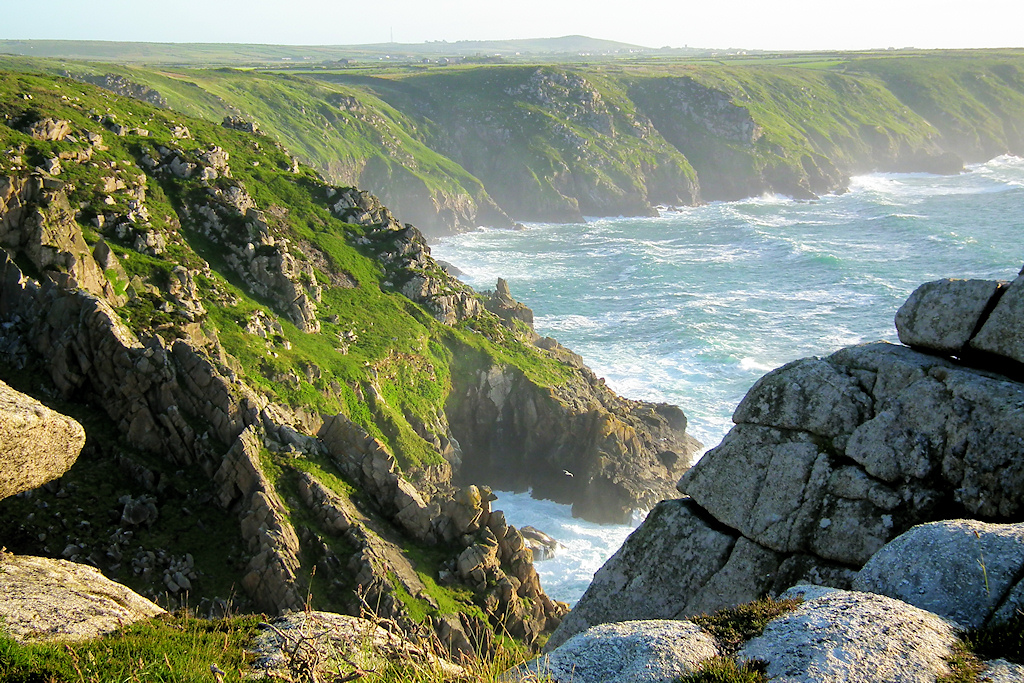


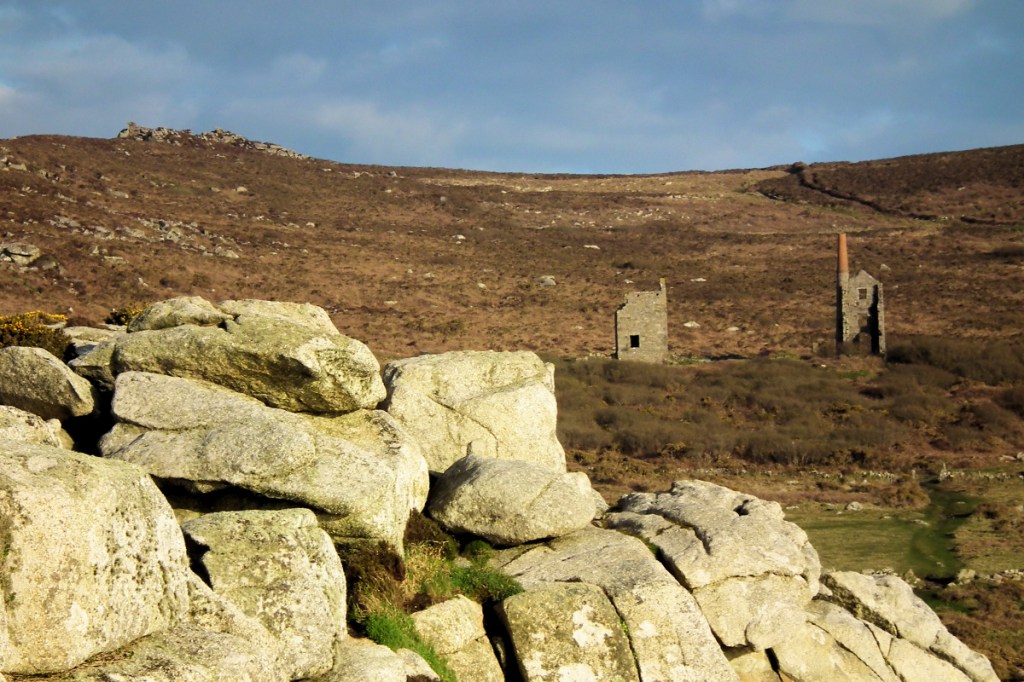


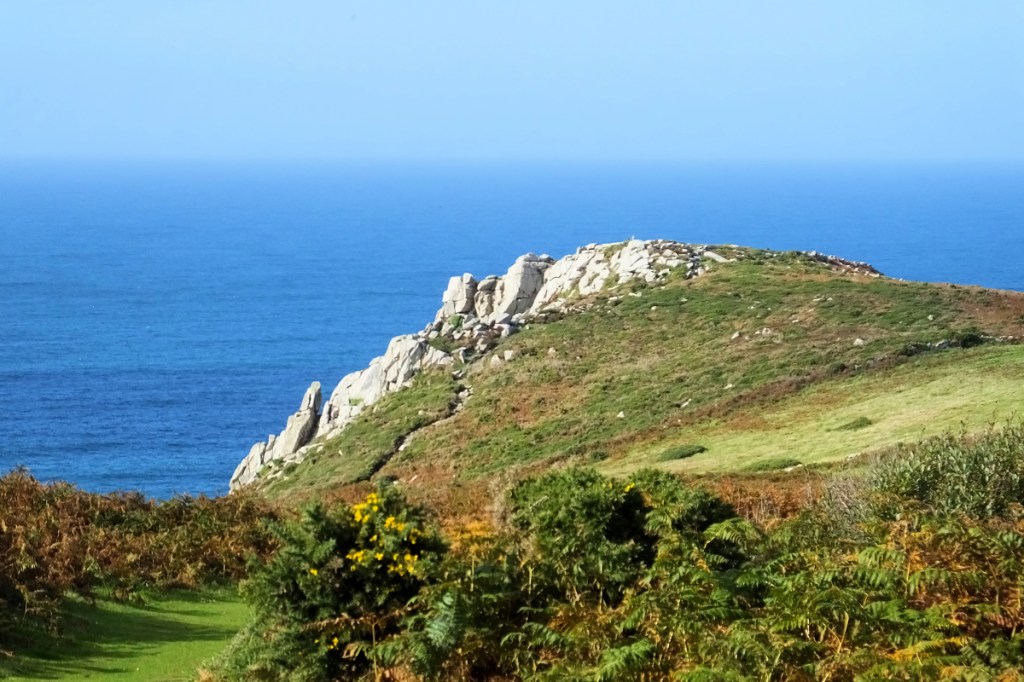

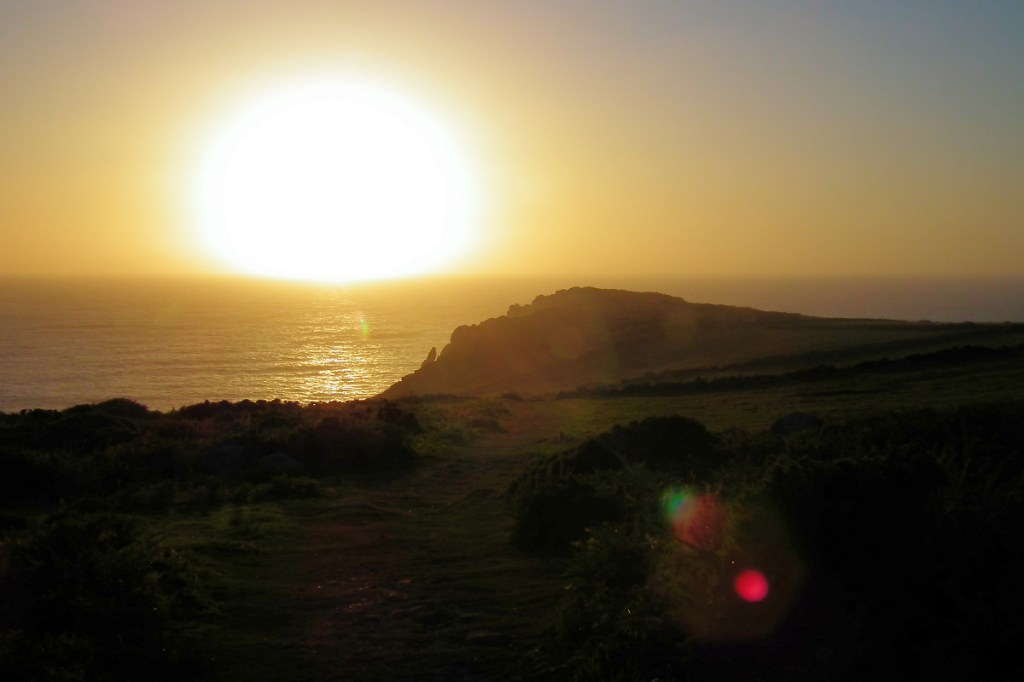
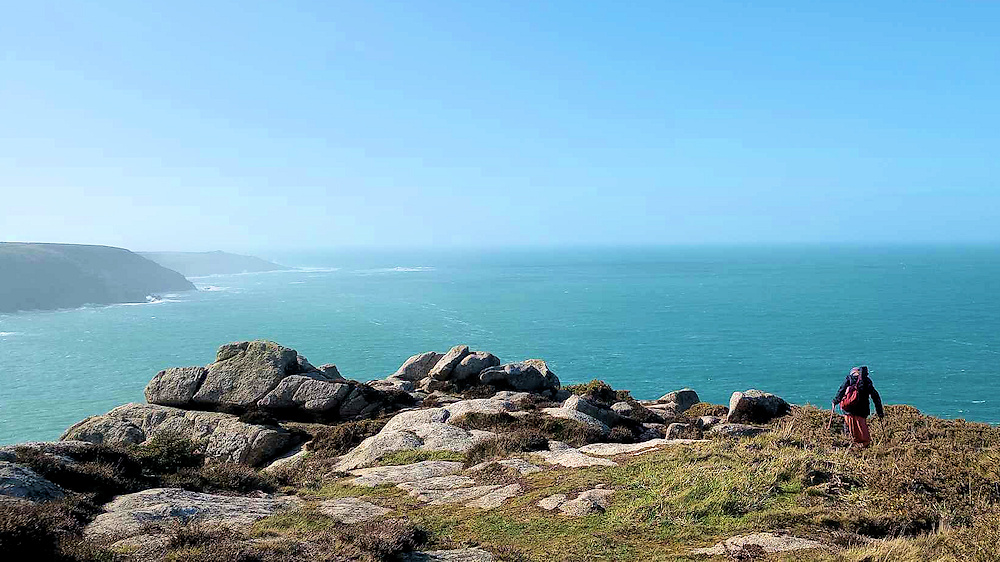


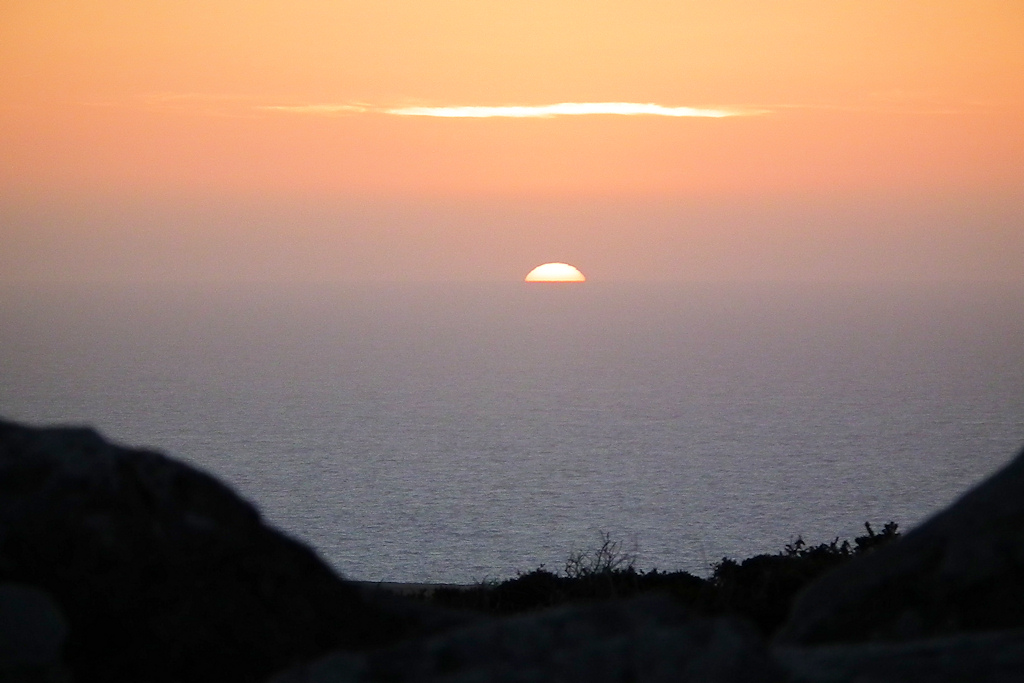


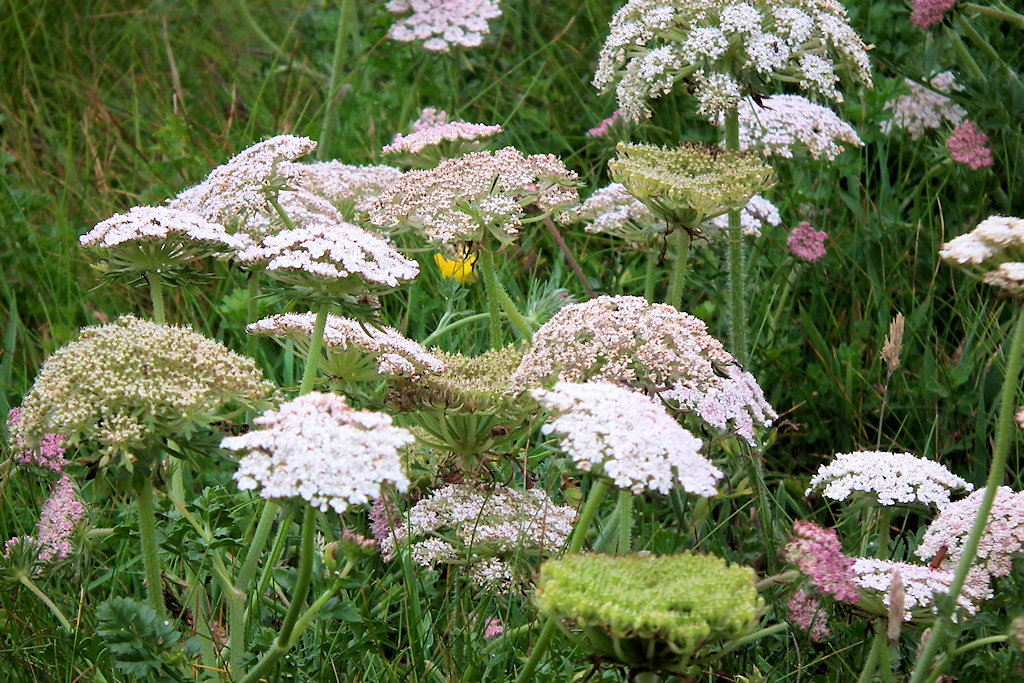


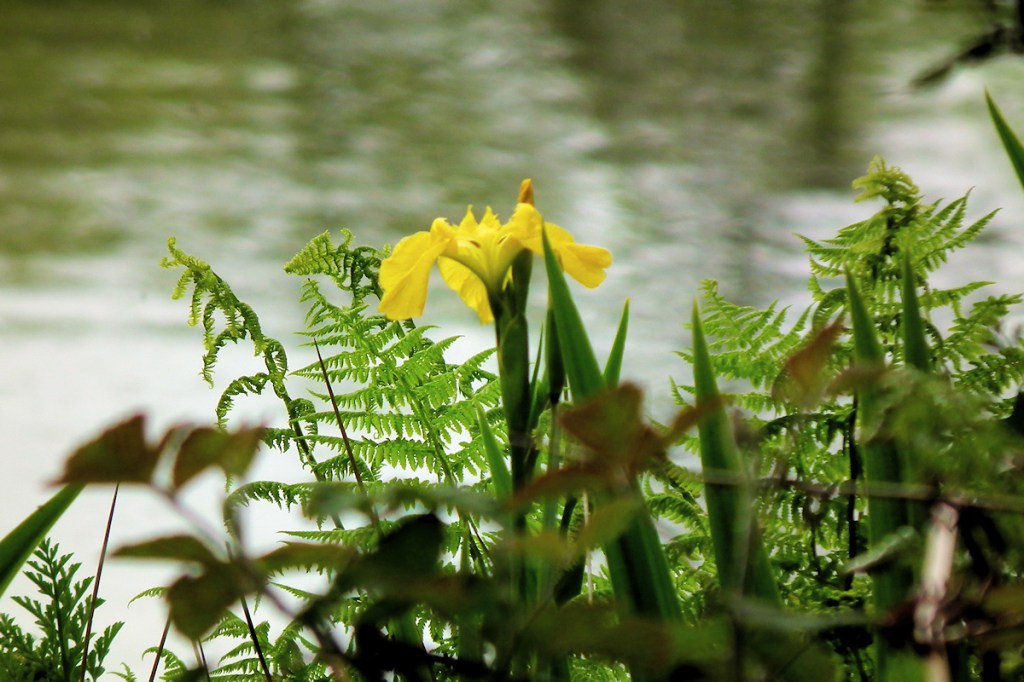

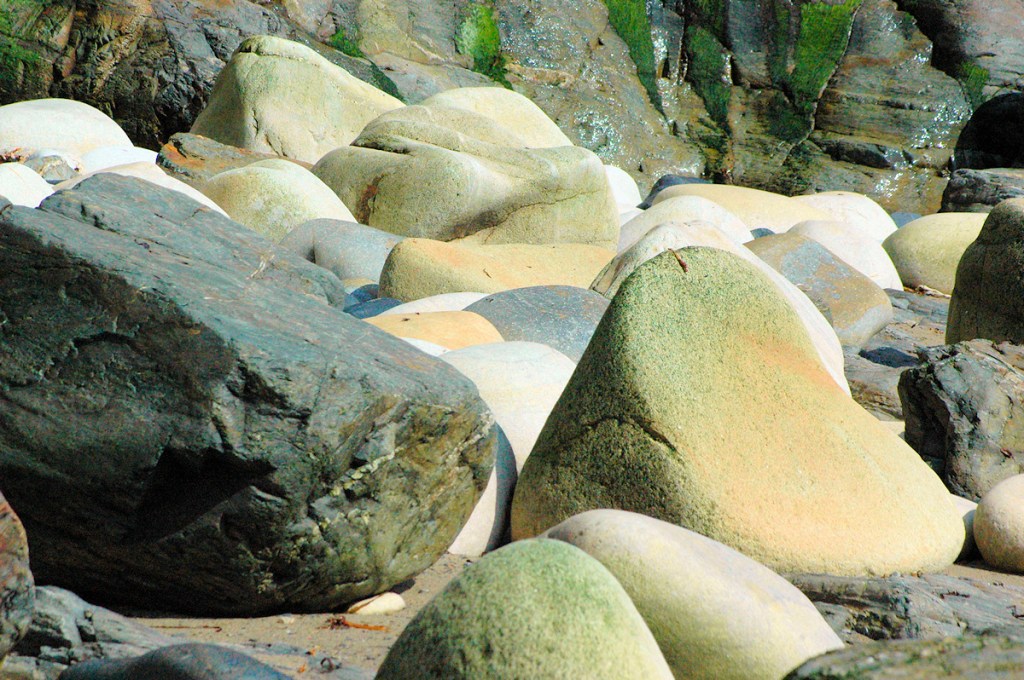


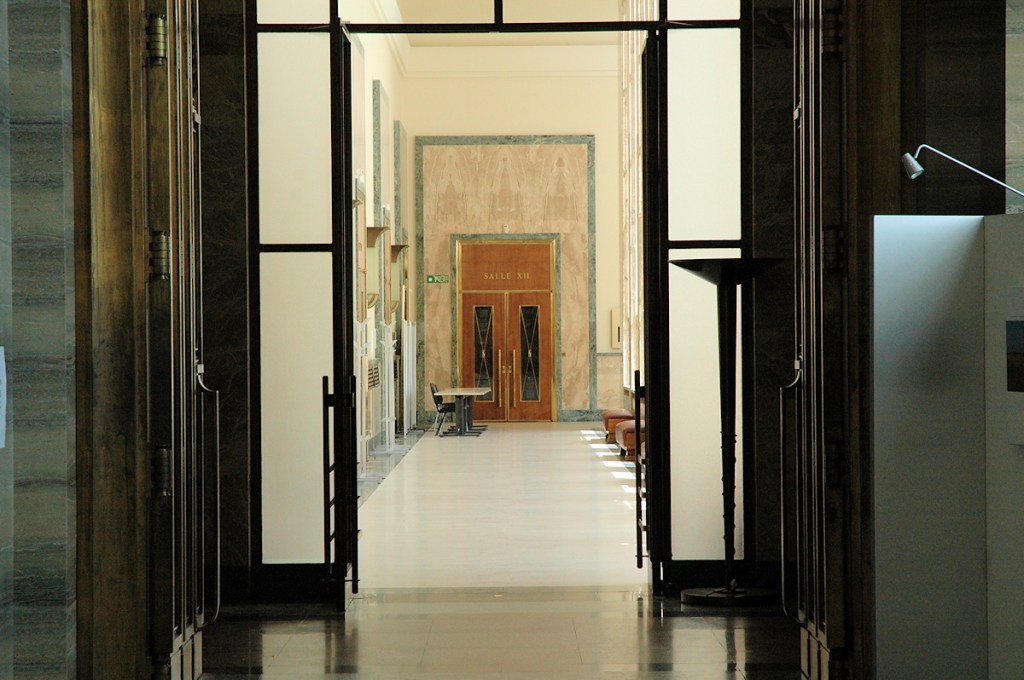
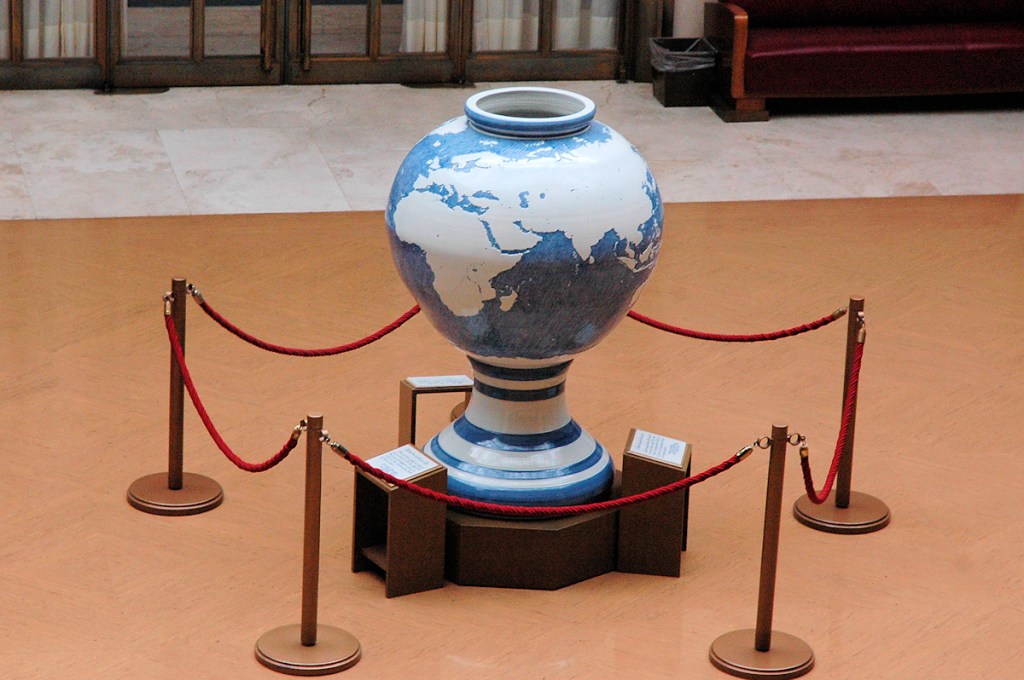


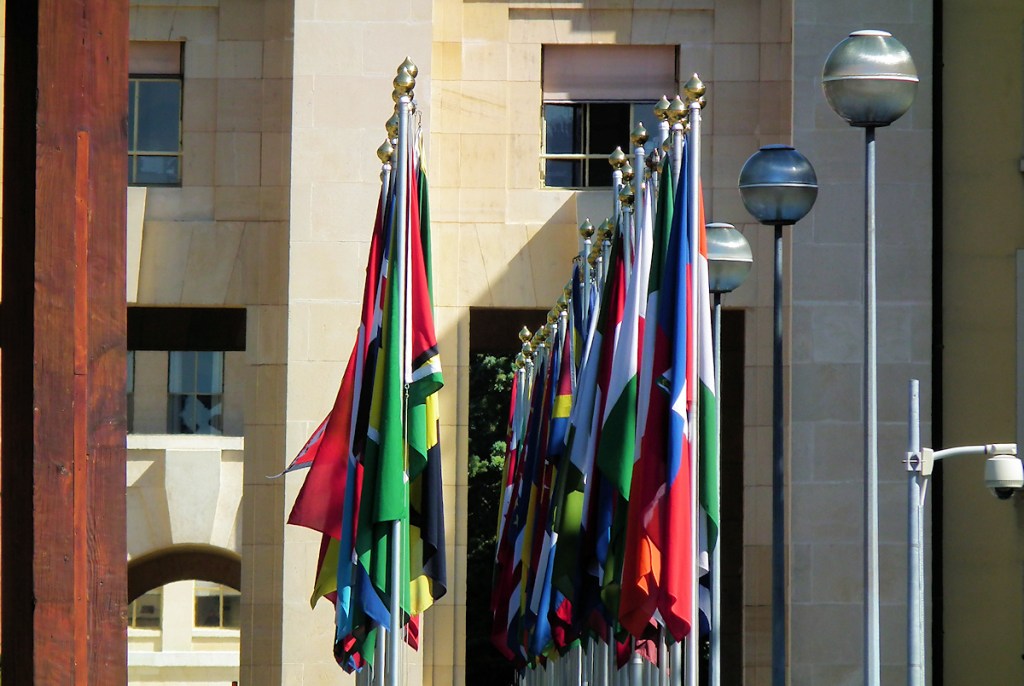


 Notes from the Far Beyond
You must be logged in to post a comment.