It happens again this week, on a cushion just under your bum – and the times in different countries are below. Do it your way: there’s no prescribed method, faith or mantra – just a bunch of good souls scattered around, meditating together. No need to sign up, be online or subscribe – just be there, wherever you are.
This meditation was started in 1994 in response to a request from the Council of Nine that we humans do so. It’s at a fixed time so that The Nine can create a field that surrounds us, for that half hour. You’ll feel it, and it begins and shuts off bang on time. To find out more about The Nine: www.palden.co.uk/nine.html
They do not seek followers. Follow your spirit, soul, heart, mind and intuitions and, together, we’ll get there.
I’ve been working through the book I compiled for them thirtyish years ago, ‘The Only Planet of Choice‘, as a kind of revision course. It’s good to re-learn things I learned earlier in life. Or was that another life? They had a big influence on me.
I found some interesting lines from them…
——————–
You must understand that your thoughts are a living reality. If you do not monitor and guard your thoughts, exchange joy for dissension, exchange compassion for disdain, then it is difficult for planet Earth to move forward. We mean planet Earth collectively. If you have gathered but a small understanding of the importance in your moving forward, to benefit the elevation of planet Earth, then you have attained a great step forward for humankind.
It is not necessarily a path of great difficulty, for it is a joyful path, if you understand the truth of who you are. It is a path of happiness, for when you find the essence within yourself, then fear, which creates conflict, cannot completely control you. It is also true that on your path there will seem to be times of trailing backward. What is important is always to understand who you truly are, for you will then move forward. This is your planet, and you have not come here in error.
Every human being who is upon planet Earth has come here by choice. At this time in particular there are many who have come for the purpose of service to planet Earth. Because of the variety and the beauty of planet Earth, and also because of the density that has come into being through unbalanced-negative influences, many souls are now stuck on planet Earth. For these influences try to be in competition with Creation, not understanding that in reality they are of Creation itself – and yet they choose to be in competition, not in obedience, and not in forwardness.
When we talk about obedience, we do not mean that obedience should be blind, not in the way used in your world. We mean that you need to be conscious and aligned to the forward evolution of the universe.
At this time we wish you to appreciate that planet Earth is congested and bottlenecked, since many have chosen to reincarnate here when they could have gone on to other experiences. They became entrapped in what they believed to be reality. It is now time to transcend that.
There are many upon Earth who are trapped in their addictions – if it be addiction to power, addiction to ingestion of substances, addiction to physical sexuality, and to habits, or addiction to attempting to find one’s self in others – and humankind has desecrated planet Earth because of lack of understanding, when in reality it is undoubtedly the most beautiful planet available to experience.
It is important that you not give your free will away: you do it when you permit yourself to lose control of yourself, whether it be with ingestion of addictive substances, or in anger, or other things. You are always responsible: that cannot be removed. This does not mean that you should not have joy in dancing and singing, and all those wonderful attributes that are generated in humankind, for we wish only joy upon planet Earth, and we wish you to enjoy all that has been provided for you. For variety in experience of this kind does not exist in any physical civilisation in the universe.
Always walk in gentleness, in kindness, in joy, and remember this: when you are laughing, the universe is also in laughter and joy. Many of you humans have lived before on planet Earth, as you have all lived in other places of existence. This time you have come here to help planet Earth transform itself. You will continue in future to live also in other planetary civilisation systems, but that does not mean you can escape the responsibility of this existence.
You are a universe within yourself, and your universe affects all universes. As you generate love and kindness, you touch other universes and infuse them. As you generate despair and anger, you also do that to others, for you each are powerful individuals within yourselves.
Some would say that when they die, when they make the transition, they are transformed. But that is not what we mean by transformation. For if in their transition they take with them their problems which they maintained upon planet Earth, then they have created a transformation that is heavier than what transformation truly is on planet Earth.
We wish them to know the importance of transforming who they are during their life on Earth, their direction and their understanding of their responsibility for planet Earth, its inhabitants, its life in all forms, including the seas and the minerals within the Earth – to have respect and to bring about the transformation of planet Earth by elevating it out of darkness. That begins with the individual. Is that explanatory enough?
———————
With love, Palden
———————
Current meditation times, on Sundays: UK, Ireland & Portugal 7-7.30pm W Europe 8-8.30pm E Europe, Turkiye and the Levant 9-9.30pm Brazil-Argentina 4-4.30pm EST, Cuba 2-2.30pm CST, Mexico, Jamaica, Colombia 1-1.30pm PST, West Coast North America 11am-11.30am
I’ve been working with a village of Tuareg for ten years, in a small people-sized support operation. They live in the Sahara desert, a day away from the historic city of Timbuktu in Mali.
We restocked their goats and camels after a terrible drought, helped them dig a new well and build a small village school.
But now I need to pull out – I can’t continue with things I used to be able to do. But I don’t want to abandon them.
So this pod tells the story, and about the dilemma of a humanitarian with a need to pass this on.
With love, Palden
Thanks to Constanze Küppers in Germany for prompting me to make this pod
A talk given by Ba Miller and Palden Jenkins, sharing our thoughts, anecdotes and experiences in dowsing, geomancy, earth mysteries and consciousness.
It happened on Sunday afternoon, 7th December 2025, at The Hive in Penzance, Cornwall, and it’s for you.
It’s ‘limited edition’, with love from both of us. Gratitude to the organiser, Rachel Smart, presenter Lucy Cooper, songstress Lyndz Liquidlight and Hive hostess Maria Stay.
Ba Miller was involved with Hamish Miller and Paul Broadhurst in their research into the Michael Line and the Apollo Line, as detailed in their books ‘The Sun and the Serpent’ and ‘Dance of the Dragon’. Palden Jenkins is an astrologer and geomancer, author of ‘Shining Land’ and of www.ancientpenwith.org
It’s two hours. No charge, no strings. Hope you enjoy it.
This might interest those of you who are interested!
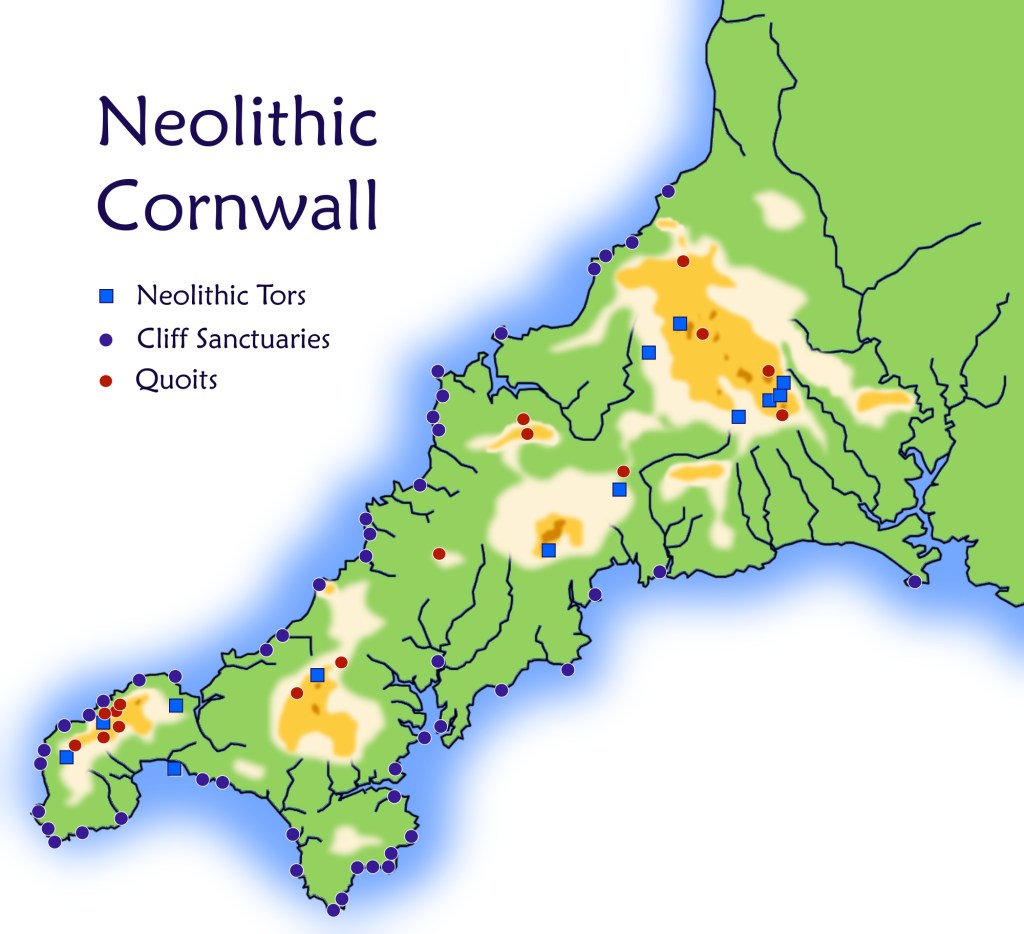
These are two chapters from my book about Penwith’s ancient sites, called Shining Land – except these two are about the whole of Cornwall.
From an alternative archaeologist’s viewpoint. With a few speculations thrown in for consideration. Food for thought. With love from the far end in (currently) wind-blown Penwith.
It’s a 20ish minute read (goes well with a mug of tea). I might do an audio version sometime – you never know.
I find that, as I’m growing down, I’m going into transitional phases where things change and I have to review and revise what I can do and can’t do, and all sorts of other things in between. This get tricky when the abilities I’m losing are a deep part of my identity.
So, as a writer and communicator I’ve spent bazillions of hours, days and weeks banging away on typewriter and computer keyboards. But my fingers are losing their accuracy, and I can’t do it like I used to be able to.
It’s called peripheral neuropathy in medical speak – loss of feeling and coordination in the fingers and feet. It’s a funny sensation of non-feeling where feeling ought to be, a bit like music that’s turned down too low.
I’m getting an impression my blogs are too long for some readers – they’re a 15-minute read – and they tend to stretch synapses quite a bit.
So I think I’m going to do more podcasts. Or, in some cases, both.
Here’s my last blog, about pain, as a podcast, and you can find it on Spotify, Google and Apple Podcasts, such as here:
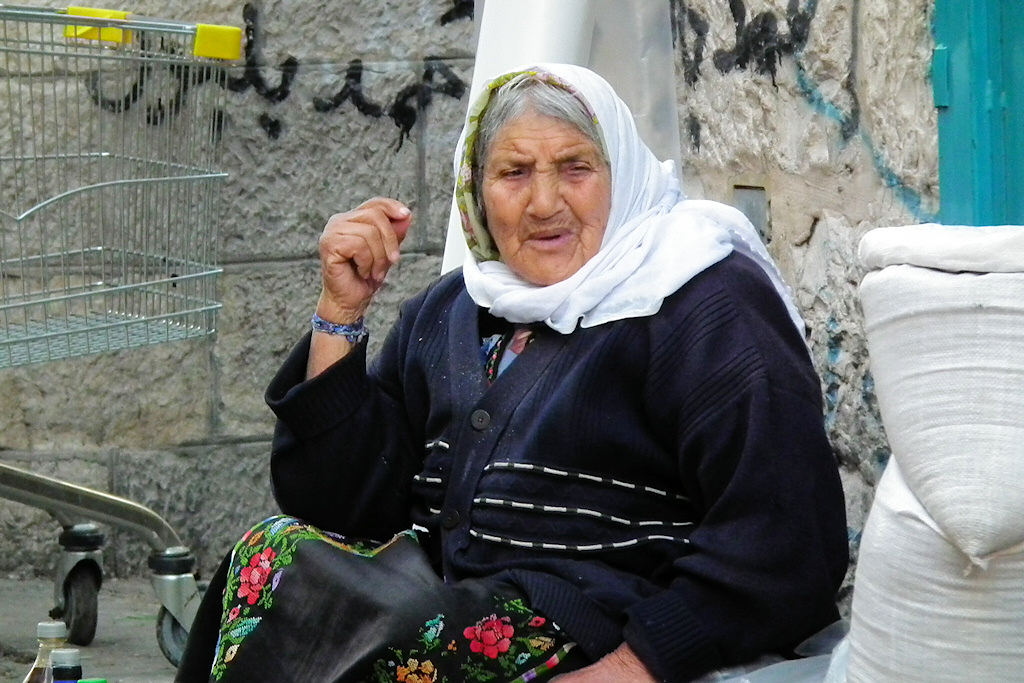
This and the pics below were taken in Bethlehem, Palestine, in Dec 2012
I was talking to a friend about our different illnesses and she said, “You must be suffering more than I”. This made me think, because suffering cannot be quantified and I can’t really say ‘I am suffering more than you’. Or at least, if I do, I’m making judgements about that person and about me that don’t really hold up. With pain, it’s really difficult being objective – it all hangs around our capacity to accept, tolerate and handle it.
Pain is partially to do with what is happening and partially to do with how we’re perceiving and experiencing it. I knew this before cancer came my way, but I’ve found since then that it is more true than I thought. I don’t instantly reach for the painkillers – avoidance of pain charges its price too. I use them only when I’m worn down, needing a break, to stop myself going into a self-fulfilling pain loop.
It’s not easy. But we do make things more difficult than they need to be. We create more friction inside ourselves than we need to have. We take difficulty and pain as negative experiences, something bad, something wrong – often according to beliefs and predispositions that aren’t very good for us.
Yet pain isn’t wrong – there’s something strangely right about it, if we can but change our perspective and suspend judgement enough to see how this might be so. Too often we compare our pain with how we feel things ought to be, how they used to be or how they could be, and this has a way of increasing the pain. Because it turns us away from facing it.
It comes down to attitude. Attitude might or might not change our circumstances or their causes, but certainly it can change how we experience and handle it all.
I’ve learned a lot from people in conflict zones, especially Palestinians, who have developed such attitude over the generations, in both the personal and the social spheres. They’ve got tragically used to dealing with hardship and they’ve developed ways and means of surviving in situations where levels of hardship and suffering are high – such as sharing what they have and looking after each other. They aren’t angels and they make mistakes, but they’re better than we at protecting and helping each other, and making the best out of a bad set of circumstances.
Many people in the comfortable countries can get really upset over issues that are relatively small, such as a power blackout, a shortage, a traffic jam, or someone not doing what they said they would do. Tolerance levels are low, tight and sharp-edged. We have an unhelpful sense of entitlement to a problem-free life. So when the shit hits the fan we catastrophise it, mishandling it and often creating more problems than were needed.
In all of life’s situations there is a degree of choice, either to make a big deal over something or to square with it, accept it and do the best we can. The choice lies around the friction we put up. It’s an honesty process, and with pain we’re forced to face stuff we don’t like facing.
Spiritually, a key issue is this: we come to Earth to learn, get experience, go through it, learn from it and hone the soul. Because at the end of life, all you take with you is what you have become as a result of having lived a life. Pain is an intense kind of experience that has a way of grinding at us, drilling holes in us, attempting a takeover of our psyche and giving us a truth-and-reality experience.
It’s the price we pay for the pleasure of being in a body and the experiential access that it gives us to the wonders of the world. Without a body we cannot stuff chocolate, have orgasms, go on holiday or bliss out in a field of bluebells. Pleasure and pain, whether emotional or physical, are two ends of the same experiential spectrum, and you don’t get one without the other.
I had a remarkable experience six years ago when first stricken with cancer – a blood cancer called Multiple Myeloma, which erodes the bones and creates all sorts of trouble and pain. Since then I’ve had treatment, though there is no remission from Myeloma, and am now on a maintenance regime of medication, supplements and working on myself. I’m surprised to be alive, actually, though clearly there are reasons to be here.
The cancer came on quickly over a few months and I deteriorated rapidly. At times I was in extreme, 150% pain, immobilised, helpless, rendered into a wreck of a man, at death’s door. One day the pain was so intense that I couldn’t even raise my head from the pillow to drink – moving a millimetre made my bones grind and grate. But I had to drink anyway and tried moving.
The pain was so overwhelming that something in me popped out of my body and I saw myself from above – as a soul having an experience on Earth, lying there, all crippled and useless. There was something strangely comical about this. Something in me could see the poignant humour in it – here I was, suffering, more than I had ever experienced, and it was bizarre. I started chuckling. It really hurt to laugh. My then partner, looking on, thought I was losing my marbles.
The funny thing was that my experience of pain suddenly changed. It seemed to become more distant. I became more at peace with it. I was able to face it and accept it, from more of a distance – it was simply a fact, a situation. Something profound had shifted in the space of several minutes.
Over the next few weeks it decreased further and within a couple of months my pain levels were around 30%. Also, my boundaries had shifted. Previously, I could handle 20% pain without it getting to me too much, but afterwards I could handle 40-50% – my pain threshold had moved and it has stayed there since.
Over the last six years I’ve hovered around 10%, with a permanent, steady and stiff ache. I hardly notice it, having become used to it. Most of the time I accept it – except perhaps in the late afternoon when Sir Isaac Newton seems to switch up the Law of Gravity. But there are times when I do notice the pain and it gets to me, deep down – especially in winter. Usually these are times when my spirits are low and I’m feeling worn out with life.
So there’s something here about being spirit-propped. The pain, disability and precarity of a cancer patient have somehow thinned the membrane between me and spirit – a membrane that I used to try so hard to cross, while now it comes more naturally. There’s something to this about the perspective of experiencing life as a soul in a body, visiting Earth.
Pain hits us all, in all sorts of ways and degrees, and at various times. It can go deep, and we each have our crosses to bear.
For example, throughout my adult life I’ve experienced ‘political pain’ – the pain of being misunderstood and misjudged in public, and paying a high price for it (as a dissident and an Aspie-Autistic). It has impacted me immensely. It’s the pain of being wronged in the social and political sphere – sometimes by evolving facts and sometimes by the wrongdoings and micro-harms of others, or by the madnesses of crowds. Even so, this pain forced me to come to terms with the reality of it, to understand what was going on underneath and to forgive the people involved, and to understand and forgive myself too – and in late life, forgiveness has been a gift to the soul and a lightening of a burden.
The world’s pain levels are escalating in the 2020s, partially because so many souls are alive today having a human experience, and partially because life is getting tougher for everyone, everywhere. Outrageously tough situations such as we have seen recently in Gaza are just the tip of a very big iceberg.
And here’s the rub: no one is exempt. Hence, a generous and charitable attitude toward others in need is wise since the tables can turn. We might one day be glad to receive others’ help.
It’s our choice as to whether or not the future is going to bring hard times. We can make a big deal about things ‘going wrong’, or we can accept things and get on with it. In the end, many problems are not as big as we think they are. What might to one person be a disastrous crisis, to another person is just another boring night of bombing.
We create sufferings simply by complaining, being angry, feeling hurt, self-victimisation, or by doing things which are not the wisest. So the level of actual hardship and difficulty we face is a different matter to the way we handle it, and in the latter lies our choice.
Even so, for some on our planet, life is really hard and, in the short term, they don’t have many options – if, that is, they survive. This is not ‘their karma’: this is the world’s collective karma spilling over onto them.
One of the things I’ve noticed in my peacemaking work is that many of the peoples most beset by longterm war – Bosnia, Ireland, Afghanistan, Vietnam, Lebanon, Sudan, Palestine – can be the nicest people around, and it does not seem fair that such ‘karma’ should fall on them. The people most affected by climate change are mostly not the ones who created it, and the world’s poor are losers in a system steered by others. But even they are faced with occasions when choice becomes available.
If we follow a deeper path through life, over time it changes our emotional responses, perspective and priorities. We don’t need to consume as much, we don’t need to ricochet through life, we don’t need to deny ourselves tender moments with loved ones, and we don’t need to create as much waste and damage as we do.
Because something changes inside. It’s a slowly-distilling sense of basic trust, a simple knowing that, somehow, things are going to work out. Especially if we allow it. The issue isn’t about being perfect – it’s about learning from life’s lessons and making good outcomes out of difficult situations.
So this matter of hardship and suffering depends so much on where we’re looking from. While I have a blood cancer, I’m partially disabled and life is difficult, it doesn’t mean I’m sitting here suffering all the time. Though I must admit there are times when I do.
Sometimes, in down times my spirits seem lost in a fog of fatigue, but even then it’s a matter of being patient and letting it be. I can struggle against it, feeling as if I ought to be doing this or I wish I could do that, when in fact it’s okay to take it as it comes, to flop down in a dull state and let it be. I tend then to revive more easily next day. It’s just that I’ve have been given yet another cameo experience of being on planet Earth.
Thirtysomething years ago I had the privilege of working with a bunch of (for want of a better term) cosmic beings called the Council of Nine, compiling and editing a book for them, ‘The Only Planet of Choice‘. They dropped in loads of remarkable insights and here’s a bundle or two of them. Some readers might think this stuff far too way out, or utter garbage – so use your freedom of thought and intuitive discernment here.
Planet Earth is very different from other worlds. One factor affecting this is its gravitational density and the intense physicality of our lives on Earth. This has had a troublesome, diversionary and downward-pulling effect on human consciousness, with the result that we tend to forget why we came and what we are here for. We get lost in the daily round and in our psycho-emotional stuff, losing our connection with spirit. It has made human history into something we can be proud of and also we ought to be ashamed of it.
Over the centuries and millennia we have institutionalised this situation, making it our default behaviour, such that waking up to the heart of the matter has become an exceptional, dissenting thing to do, with difficulties and sanctions attached. This is further exacerbated by historical factors such as the control agendas of dominant elements in society and the compromised submissiveness and conformity of the majority. We’ve given power to fear, guilt and shame, clamping our spirits and clipping our wings.
There’s another issue too. As a planetary race, we did not start our evolutionary journey together as one tribe or family, originating from one single source, as is the case (according to the Nine) with many worlds, cultures and civilisations throughout the universe. Humanity has physically evolved in a Darwinian sense, with periodic non-Darwinian seedings and tweaks from outside, as part of a hybridisation project. Such discreet interventions have helped us evolve in consciousness, culture and technology too, though in quirky and sometimes dangerous ways.
The aim was to breed a new kind of conscious being that could be at home in denser and more experientially-diverse conditions than ever before. The idea was to draw influences and souls from throughout the universe, throwing us together on one planet, in the hope that we might co-create something new, different and never done before. We were to become a new kind of individualised, enspirited, dense-physical, humanoid-type being.
So Earth has become rather like a New York or a Singapore in experiential terms – naturally and intentionally multicultural. Living in different cultural realities and localised mini-worlds, we have been bumping up against one another throughout history, becoming changed in the process. The end-game of the modern phase of Earth’s history is to get all these cultures and individuals to come together as one planetary race – a race that is capable of managing its own world and making something of it.
So now, by 2025, we have created a world system, criss-crossed with cables, shipping and air lanes, and humanity now needs to catch up with all that this means. Nationalist and isolationist feelings are a symptom of a stop-the-world reaction to this historic mega-trend. As usual, we walk into the future facing backwards, more concerned about what we’re losing than what we’re gaining.
Also, life on Earth is always a mixed bag, and experiencing this is part of the grinding process that hones the soul. It faces us with choices – sometimes big and deep ones – and that’s what we came for.
They called for volunteers – this wasn’t conscription – saying that living on Earth would be difficult though potentially rewarding – a fast-track way of honing the soul. We would be given individualised free-will – a capacity to do whatever each of us feels best. As incoming souls, we felt that we could maintain consciousness sufficiently to fulfil our purposes in signing up for this project. At first we had that kind of clarity about life that you sometimes get when you’ve been on holiday, done ayahuasca or been on a meditation retreat – but then, when you get home, the pressures and complications start, and the main agenda gets set aside for another day, when there’s time… and we get lost again.
Over time, more and more souls came, as individuals and as groups, creating a population explosion in modern times. It has become a mass-migration, rising into billions, and fresh souls are still coming. (At one point the Nine said that Earth’s optimum population is around 200 million, not 8-10 billion, though they also reckoned we could manage such high numbers if we did it right.)
We now have a situation where we have billion of souls on one planet, yet in very different worlds. Multiplicities of them. This diversity happens on the same street, even within families. Diversity doesn’t have to mean dissonance yet currently dissonance is strong, and this matter is going critical. Not least because, on a deep psycho-spiritual level, dissonance makes divide-and-rule easier, and arguing has become pandemic in scale.
The consequences of dissonance have been highlighted in Gaza. Palestine/Israel is a microcosm of the whole world – divided, and not just two ways. This microcosm business is a key reason why this conflict matters so much to so many people. It holds the world down. Around 12 million people are holding 8,300 million back. Yet equally, if it is resolved, it could lift up the whole world. And this isn’t really just about Israelis and Palestinians – at root it’s about people and the Megamachine.
Neither is it a simple equation of one side as badguys and the other side as goodguys – it’s far more subtle and convoluted. Yet it polarises around Israelis and Palestinians because we have a habit of dehumanising others, lumping them together into a mass of horrible, fundamentally different people who threaten our happiness or our very existence.
Israelis and Palestinians, bless them, live in very different worlds, to the extent that people on either side just cannot see what it’s like being on the other side – except for some brave souls on both sides who are willing to step outside the confines of groupthink. We all variously do this dehumanising thing, justifying ourselves by making others wrong, but Israelis and Palestinians have an acute and persistent case of it.
They aren’t even in the same conflict, though they live close together in one small ‘holy’ land. It all boils down to the way we see things – especially when we get het up, losing our patience and tolerance.
This is why, in peacemaking, it isn’t possible to propose nice, sensible diplomatic solutions to which everyone can easily agree and comply, point by point, so that we can all go home and forget it. They’re fighting different wars, committing different suicides. This stuff, this shadow, goes so much deeper.
Plenty of shadows lurk in the collective psyche of virtually every country and social grouping worldwide – some of these ghosts are dormant, some simmer and some are heating up.
At present, globally there are few encouraging signs of mass healings and breakthroughs, and this leads to a creeping sense of disillusionment and disappointment across humanity.
If anything, the main factor currently pacifying conflicts seems to be exhaustion – sheer weariness. That’s not resolution and healing, but it can allow feelings to cool to manageable levels. Social-cultural healing can take decades, but there comes a point where both sides see that healing is cheaper than the price of continued conflict.
So it’s all a matter of what happens after open conflict ends, and whether a momentum of progress can be built up. It requires a time of confidence-building where each side has to restrain itself, even during touchy moments. In some respects this demands more bravery than in times of war, since there’s a courageously resilient madness to warfare that subsides with peace, once people get used to sleeping safely in their own beds.
Deep down, many Palestinians understand the pain Israelis feel over the pogroms and the Holocaust, but it was Europeans who did this, yet Arabs are being punished. The Arabs of Gaza, the West Bank, Jerusalem and Israel are divided by circumstance, permits and walls. There’s a tug-of-war between negotiators (Fateh) and resistance fighters (Hamas), and neither is winning or compromising. Recent events have stumped the negotiators and decimated the resisters, and many Palestinians feel rudderless and stuck in a tightening vice of diminishing options. Top to bottom, Palestinians are hurt, dismayed, upset, unsure what to do next.
Meanwhile, Israelis feel deeply hurt and shocked, and for entirely different reasons. Zionists, centred in Jerusalem, are hurt and angry since their God-given right to the land of ‘Greater Israel’ is being obstructed by an interfering world filled with Jew-haters – and Arabs ought to get out of the way. Meanwhile the ‘peace camp’ centred in Tel Aviv, themselves hurt, diminished and stumped, have lost much of their trust in everything and everyone, preferring life inside a missile-protected beachside bubble.
Historic Jewish insecurities have genuinely been reawakened, with some Israelis lashing out, others recoiling in dread and many stuck, confused and afraid. Something fundamental has dislodged in the Israeli and the international Jewish psyche, and something ill-judged and disproportionate has welled up in the attitudes of non-Jews toward Jews.
Israelis and Palestinians sit in fundamentally different worlds, each with different ways of dehumanising the other. As do those who support either side, around the world. Palestine activists need to stop belly-aching about genocide and rights and actually support real-life Palestinians directly with friendship, money and contact. Meanwhile, those who bang on about anti-Semitism need to forget it, and those who deny or ignore it need to remember it, deep in their hearts.
It’s a reality-conflict, projected on others yet reflecting what’s going on inside all of us. It’s about far more than just Palestinians and Israelis.
But there’s a flipside. Conflict and hardship can be so crazy, tough and senseless that it leads to a kind of rapid de-traumatisation, an epiphany, a deeper change of heart and optic. This happened after WW2, with the founding of the UN, the EU, the welfare state, the beginning of decolonialisation and of the urbanised modernity we now take for granted.
That ‘rules-based order’ is now getting shaken up and we have entered a slippery phase in which things are accelerating to a point where none of us really knows where we stand any more. We’re being forced to let go of past structures, habits, heroes and normalities. We’re being ground down.
The key issue is that we need to get on with each other.
Otherwise nothing else can get resolved. So, from a planetary-evolutionary viewpoint we’re at a really critical tipping point in history. We have come from very different worlds across the universe, developing very different cultures here on Earth, and we now have urbanised ourselves into multicultural melting-pots – 60% of humanity lives in artificial cities over half a million in size. This, plus increasing global migration, is humanity meeting up with itself.
The whole universe is watching, and it means a lot to them – not least because we’re their relatives. They will not intervene unless it is absolutely necessary (think of the ‘prime directive’) because intervention will override the purpose of the whole planetary project – to find out what happens in a dense-physical world run according to free-will rules.
Besides, I don’t think they really know what to do with us. They really need us to sort ourselves out.
We humans have become hyper-reactive, complex and dangerous – we even fight over toilet rolls. When they give us prompts, gifts and clues – subtle interventions – as a whole we tend to ignore, corrupt or misuse them. Or we resist. Or we create complex diversions and avoidances.
It’s all to do with seeing beyond our own little worlds, stretching ourselves and seeing things from another viewpoint. This is difficult right now, since our divisiveness has gone viral. Every society has a kind of concussion, dogged by past trauma and by the intensity of change happening now in these times. All societies have a consensus problem, a solidarity problem and a leadership problem. Old answers aren’t working, even though we keep grasping for them. Yet, strangely, this parlous situation is a necessary part of the change process – and there’s further to go.
We no longer need a rules-based order. We need an integrity-based order.
Some are moved to weaken and destroy the old rules-based order, but on the whole they do not know how to create a system based in integrity. Meanwhile, oligarchies cannot reform systems from which they themselves benefit, and which protects them from a latently angry world public.
So change needs to start from bottom up, and increasingly, fitfully, valiantly this is happening more and more. But to do so, ‘the mass of humanity’ needs to develop a certain maturity, forgiveness and a set of basic common standards. The Hindu rule of ahimsa or non-harming is one such standard.
This is why the imagery of devastation emanating from Gaza stirs so many people worldwide. Such devastation has been seen before but Gaza hits a nerve in the global psyche – especially in the Global South. Gazans have hit bottom. A fuse is close to blowing in the world psyche and in the geopolitical arena. Gaza is like a magnifying glass, exposing all sorts of agendas, shadows and cobwebs underneath.
At present there’s even a possibility of a sudden, house-of-cards tectonic change in world geopolitics – as a pragmatic and rapid adaptation to an avalanche of facts. This might lead to coffee and toilet roll shortages: it will affect everyone and force changes that, if truth be known, really need to happen.
We humans are up against the consequences of letting things pass when we know we should have drawn a line, many times throughout history. The ‘war to end all wars’ should have been like it said on the tin. We’ve got ourselves into a global-scale historic mess, imprisoned in self-created default behaviours, laws, regulations, systems and self-defeating patterns.
This has framed itself around Israel-Palestine because it’s not just about Palestinians and Israelis. It’s about the world’s capacity to decide what’s best. This hundred-year conflict would not exist without the interventions and manipulations of foreign powers that have fuelled it and failed repeatedly to address it. Too many bombs, too little wisdom.
It boils down to a touchy geopolitical question that we face in coming decades: the capacity of nations and the ‘international community’ to interfere in the sovereign affairs of individual nations, when necessary. And who decides?
Take this a level deeper, and it concerns our capacity as a planetary race to run and organise our planet. Doing so involves facing all of the big and small problems we have – an enormous task, yet it’s unavoidable. This would be a critical step in human evolution – a rite of passage and a triumph of global solidarity, based in disagreeing agreeably, bridging differences and staying focused on the main priority – getting the world back on track and making it a safe, fair and happy enough place to be.
There is a solution to all of this that the Nine mentioned quite often, and it isn’t new. It’s a simple, easy-to-understand yet profound method for achieving an integrity-based order, and it applies to everyone, at all levels of the human pyramid.
Treat other people as you wish to be treated yourself.
If we did just this, Earth would be a very different place.
Here’s my latest podcast. It’s all about why the ancients built their sacred sites. Well, my perception of it.
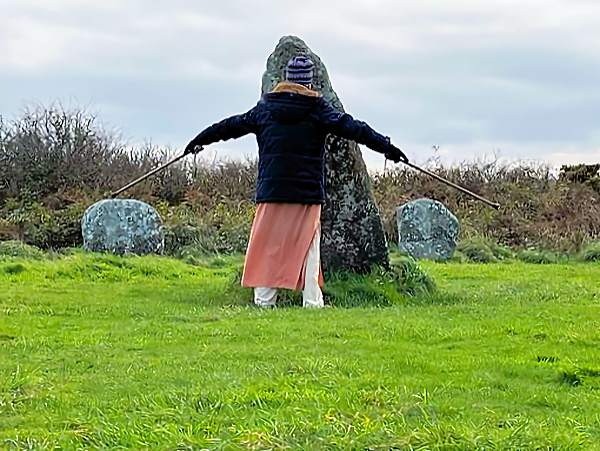
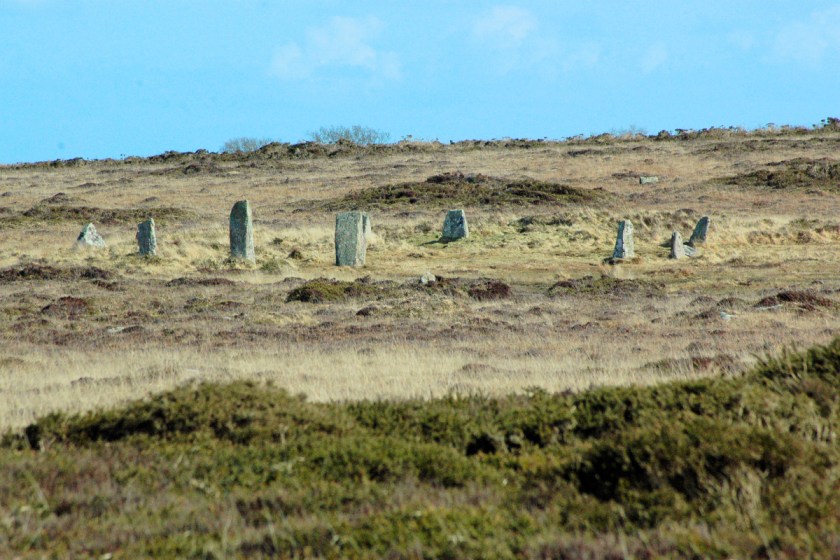
The Nine Maidens, West Penwith, Cornwall
There are thousands of megalithic sites around Britain and in other lands. The ancients didn’t build them for frivolous reasons – it had to bring them definite benefit to make it worth it, however they saw that. It was a big investment with longterm payoffs, going on for many centuries.
It’s all to do with cranked-up consciousness fields and the possibilities that become available when we do focused consciousness work inside them – at power points in space and during power points in time.
Reality’s rules can change and remarkable things can be achieved, even with practical, real-life outcomes. That’s what this podcast is all about. It’s about the way reality can be changed through inner work – or inner work combined with outer work.
Also, we become changed by doing so – this helps solve problems in remarkable ways, also reducing impediments we ourselves create.
Those of us who like to do this meditation will be there in inner space at the usual time – times below. You’re welcome to join us – yes, you! Just do your meditation, contemplation, mindfulness, prayer, t’ai ch’i or whatever is your path, in your way, together with us.
As the Christian God once said, somewhere in the Bible, when several are gathered together, tuning into divinity, love and peace, there shall Divinity be. It’s true. The power of it skyrockets.
Times for the meditation will change with the clocks soon. Why? Because we’re staying with natural time – it’s humans’ clocks that change. We go with the birds, animals and the rising and setting of heavenly bodies. Natural time.
In UK and Europe the clocks change on Sunday 26th October and in North America it’s on Sunday 2nd November. Subtract one hour from the existing time, wherever you are – so, for example, in UK, it goes from 8pm to 7pm (20.00-19.00). Yet it’s the same time!
If thus far you’ve been working with Gazans in your meditations, please stay with them. Things are progressing, but it isn’t getting easier and, in some respects a postwar period can be more difficult than war itself. A few weeks ago I did a podcast with a guided humanitarian meditatation, which can also be applied in other places and contexts, and if that interests you, you can find it here: https://open.spotify.com/episode/0Dl3rJ46VJ7l2PLHIP5dsW?si=dyC2wwmKSHKPEEGVtGVIUw
Some weeks ago, on an eclipsoid newmoon, I wrote that we had just gone through a turning of the page in the wider world. We see this unfolding now. It simply makes everything look different – it’s a deep and fundamental change of optic.
Ultimately, this is how the world, or humanity at least, changes – and that affects the natural world and the wider universe greatly. Since optic is a psycho-spiritual matter, subtly affecting the perceptions, feelings and behaviour of eight billion souls, this is where meditation has quite a big influence.
Love from me, Palden
———————
Current meditation times, on Sundays: UK, Ireland & Portugal 8-8.30pm W Europe 9-9.30pm E Europe, Turkiye and the Levant 10-10.30pm Brazil-Argentina 4-4.30pm CST, Mexico, Jamaica, Colombia 2-2.30pm EST, Cuba 3-3.30pm PST North America 12noon-12.30pm These times will change by one hour in a few weeks. I’ll remind you.
This started out as my usual weekly posting about the Sunday Meditation, but it turned into something else…
A Palestinian bagpipe band in Manger Square, Bethlehem – a leftover from British Mandate days
In Britain we currently have a kerfuffle about an anti-Semitic murder outbreak in Manchester, one of the most multicultural cities in our country. Though I’ve worked a lot with Palestinians, mercifully I’ve never been accused of anti-Semitism. Throughout my time working in the West Bank I had a lot to do with Israelis too – particularly former soldiers. A few of them helped me smuggle tofu from Tel Aviv through Checkpoint 500 outside Bethlehem – packaged tofu looks rather like Semtex, you see.
My grandfather was part of General Allenby’s British invasion force in Iraq and Palestine in WW1, and my father was in Egypt and Palestine in WW2. Some of my German ancestors were executed for opposing Hitler, probably at Sachsenhausen concentration camp for dissenters, and some of my Roma ancestors went down in the Holocaust. Jews have played a key part in my awakening, in this life and others. So I have some threads of personal involvement here.
But what matters is that all this concerns humans and the way we treat each other. We’ve reached a global-scale impasse where our mistreatment and exploitation really need to change – particularly, to start with, humanity’s self-destructive tendencies toward war and violence.
Early on in life, as I was beginning to awaken in my late teens, though I was then oriented toward ecological issues, I realised that we will not make significant progress with eco-stuff while we are committing acts of violation and warfare against each other. Such atrocities put the brakes on human and planetary evolution. Since then I have trodden a path with one foot in the spiritual sphere and one in the political – an awkward dualism if ever there was one, with deep and conflicting moral and human issues involved.
One basic thing holds universally for all people of all faiths, beliefs and inclinations, including seculars. It’s necessary to understand and to feel what it’s like being on the other side. That’s one reason I’ve been involved with Palestinians: they’re on the other side from me – or at least, from where I started in life. Stepping over that gulf has been one of the most rewarding aspects of my life. Stepping over not just in belief and viewpoint, but in practical terms and, on a few occasions, putting my life on the line.
It was Tibetans, another bunch of apparent perpetual losers, who shoe-horned me into this. They presented me with the option to take the Bodhisattva Vow, a vow to dedicate my life to the benefit of all sentient biengs. In this I cannot claim to have succeeded and I’ve made loads of errors, hurting people and getting things wrong in the process, though the centre of gravity of my life has tilted toward service as a result of taking the vow. And I’m really glad about that.
For me, there is a connection between the blood-and-thunder stuff of politics and what many might consider fluffy, useless, unrealistic stuff such as spiritual beings and extraterrestrials. It’s all about stepping over gulfs. Mentally and emotionally. Crossing that divide. ‘Going native’. Setting selfhood aside in order to open up sufficiently to empathise with those others over there, on the other side. In this, a statement by a Christian minister in Northern Ireland has had a big effect on me. It’s this…
It’s better to fail in something that ultimately will succeed, than to succeed in something that ultimately will fail.
It’s pretty profound, that. Write it on your toilet wall.
Two West Bank Palestinians chatting with an Israeli settler
Back to anti-Semitism. So, in your thoughts and beliefs and the way you structure and apply them, use your discernment. When your finger is on the trigger, you have a choice. You can kill or harm that person (even if only in your private thoughts), but the memory will stay with you forever, no matter how much you repress it. That’s an example of something that succeeds in the short term though it will fail in the longterm.
Or you can spare them and turn the occasion into a massive, pattern-changing mutual learning-situation for both of you. That’s your choice. And there are consequences to everything that we do. And there are consequences also to those things we avoid and deny, or we fail or omit to do.
We live our lives on each other’s behalf. Humanity is one being, and we are micro-cells within that being. Humankind is on a path of accelerated growth, both in population and in spirit. We’re now being faced with the future and with a choice to carry on as before, or to step over a threshold into a rather wide-open and at times scary space. This comes to a crunch when we face the Other, the person or the people over there – the people we don’t like. They test our capacity to understand, accept and forgive – and to see ourselves more clearly.
Compassion means ‘with-feeling’, standing in others’ sandals and boots and feeling what it’s like. Agreement or sympathy are not required. Just feel what it’s like.
This isn’t about giving way, losing your precious sovereignty or getting guiltily floppy. It’s about a new kind of strength that requires discernment. There are things in our world that are wrong, regrettable and ultimately flawed, and we are challenged to stand up and do something about correcting those. Not just to wring hands and grind our angst over them, but actually to do something about it – at least within our own sphere of possibilities.
And there are situations where we need to stop, look and listen – we need to be willing to review our position, our habits, preferences and patterns, and make a change. If a stranger knocks on our door seeking help and refuge, what is our choice?
Israelis and Palestinians can and do have fun with each other
So, if you are pro-Palestinian in inclination, make a stretch and put yourself in the shoes of a variety of Israelis and international Jews. Feel what it’s like being them and being in the situation they find themselves in. And if you are pro-Israeli or Jewish, stretch over to feel what it’s like being a variety of Palestinians, whether in Historic Palestine or in the diaspora. And if you’re not bothered, feel what it’s like being bothered.
Because it’s good for you. It broadens your horizons. This is about humans – and you are one of this crazy, self-immolating species. Would you like being shot at or bombed? Would you like being hungry, having your home destroyed or seeing your father carted away at gunpoint?
Discernment is tricky to work with. Quite often I am approached for help, and I have to say No. That’s because helping them will overload my capacities and harm the people and things I am already working to help. Better to do small things well than big things badly. Guilt does not work in this context: if guilt is involved in altruism or political activism, things will go wrong. Guilt distorts true giving and sharing.
The world is polarising right now, more and more. We’re each and all faced with a question: are we ourselves adding to it, or are we bridging gulfs, whether with a smile or by giving our lives to something that builds bridges?
Jews have been victimised and persecuted for many centuries – particularly by Europeans claiming to be Christians and followers of that Jew called Jesus. Secretly, we Brits, though we righteously fought Hitler, we were quite happy to get rid of Jews and send them to Palestine, one of our colonies – though we’d have preferred them to go to Uganda. We taught those Jews all the means of oppression that we now see imposed by Israelis on their neighbours.
This doesn’t mean we should guiltily go along with what the Israeli state – Netanyahu and the Judaeans – currently do. Because this is about People and the Megamachine, and Israelis suffer this problem as much as anyone. There are young IDF soldiers who, today, are eating their hearts out over serving in Gaza or the West Bank. There are Israelis and diaspora Jews who are in a deep moral confusion and pain over this. It’s Christian fundamentalism more than Jewish extremism that is really driving the Gaza catastrophe.
John, a Palestinian Christian, outside his souvenir shop in Bethlehem, now closed by Israeli soldiers. I wonder how and where he is now?
In the West Bank, one thing that impressed me was that the majority of Palestinians didn’t dislike Israelis as such. Only a few Israeli friends would dare to visit me in the West Bank – the rest feared for their lives, and largely incorrectly. I forget the Arabic word for it, but what Arabs feel strongly about is not Jews, but assholes. They have a strong sense of the difference between a good person and an asshole. As a Brit, by rights I should have attracted the anger of some Arabs, because of history and what we were at that time doing in Iraq and Afghanistan, but I did not.
People would ask me whether I was a Christian, a Jew or a Muslim and, when I said No, they couldn’t figure out how I could be ‘a good man’. Well, the Hand of God moves in strange ways. But they were willing to rise up and stretch beyond their customary social judgements. That was a big teaching for me.
One Palestinian Christian, John, said to me that he felt pity for Israelis, despite all the wrongs they had done to him and his family, because many were Europeans, Americans and Russians who had gone through so much. “As a result, they are individuals, on their own, and they even question and defy God, while we Arabs have each other and we love Allah in ways you Europeans do not understand. We fight them because of our current pain, not because of the pain of the past – their pogroms and Holocaust. So, when the pain stops, we’ll stop. But they find it difficult stopping. If we stop, I fear that they will fight each other. So perhaps it is better they fight us.“
It’s also true that in times of bloodshed and violence, Palestinians polarise against Israelis, and those who don’t polarise have to keep their heads down. But when times of relative calm come along, Arabic attitudes tend to be more forgiving.
This is the secret that many Israelis fail to understand. If they let Palestinians get on with their lives and have a decent life, all will be well, and eventually Israelis and international Jews will have the safety and security they deserve. This will take time (perhaps three generations), and there will be mishaps, but this is how endless war and jeopardy will turn into mutual appreciation and cooperation, even if it takes time.
The Manchester killings happened on the Day of Atonement, giving them extra poignancy. It’s a day of recognition, understanding and forgiveness. A day of consciousness, awareness of options. The Council of Nine, a bunch of non-earthly cosmic beings I had the priviledge of working for, thirty years ago, put it very well. They said that Jews are not the Chosen People – they are People of the Choice. The choice to ‘obey the laws of God’ and the covenant that we as humans have with God or the world of spirit, or of nature.
They also said something else. Although Jews can be clannish, separative and exceptionalist, throughout history the vast majority have melted into the wider world population, through exile, intermarriage, conversion or change over the centuries. This means that you could have Jewish genes, even if you don’t know it. Think about it. I’m part-Welsh, and the Welsh claim historic connections with Jews, going back millennia.
So, if you have strong feelings about Israel and Jews, just remember, there’s something inside you that might need facing. All the things we blame Israel for now, well… actually we all do them and we and our ancestors have all done them in the past – so own up. It helps not to carry those patterns into the future. Because this concerns humans and the future of our planet.
Thus endeth today’s sermon!
As for the Sunday Meditation, you’re welcome to join. There is no mantra, no scripture, no method, no sign-up and no obligation – it’s just a group of us in various countries meditating together for half an hour on Sundays (times below), and doing it each in our own way, together. If needed, further details are here: www.palden.co.uk/meditations.html
May all beings be blessed, whether they are upstanding citizens or horrendous terrorists, on the right or the wrong side, and whether or not they have a right or an ability to defend themselves. For we all are here on Earth anyway and, in the end, we all seek happiness. And that’s the main thing. Oh, and, if you really want to find a cure for cancer, it’s forgiveness.
Brinkmanship. (An extract from Healing the Hurts of Nations, a book I wrote in 2003 at the time of the Iraq war.)
A Palestine historic timeline. (The pages that follow it might interest you if you seek insights into Palestine’s history).
Current meditation times, on Sundays: UK, Ireland & Portugal 8-8.30pm W Europe 9-9.30pm E Europe, Turkiye and the Levant 10-10.30pm Brazil-Argentina 4-4.30pm CST, Mexico, Jamaica, Colombia 2-2.30pm EST, Cuba 3-3.30pm PST North America 12noon-12.30pm
PS. In my last podcast I mentioned how I’m finding writing more difficult now, and this is still true. Normally I’d write a piece like this in 1-2 hours but this took six. But I did it. Or it did me.













You must be logged in to post a comment.