In the 1300s-1400s, when Europe was reeling and depressed after the Black Death, Mali was the richest place in the world – the source of much of the gold that eventually financed the rise of Europe (and eventually its takeover of Africa in the 1800s). It isn’t like that any more.
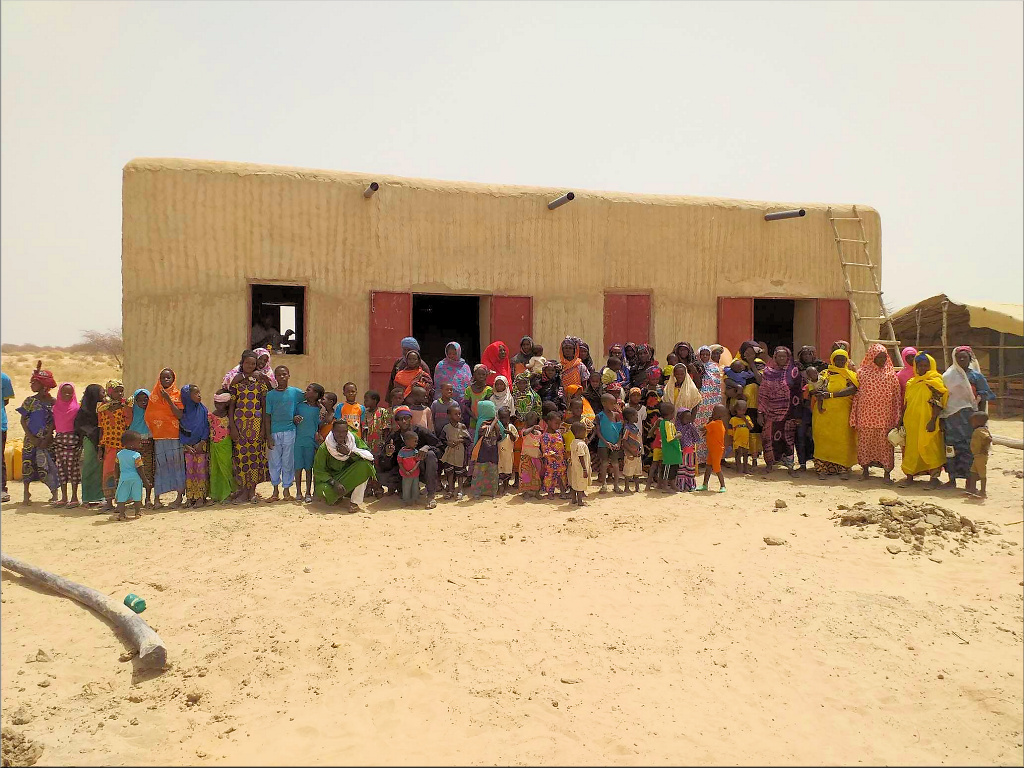
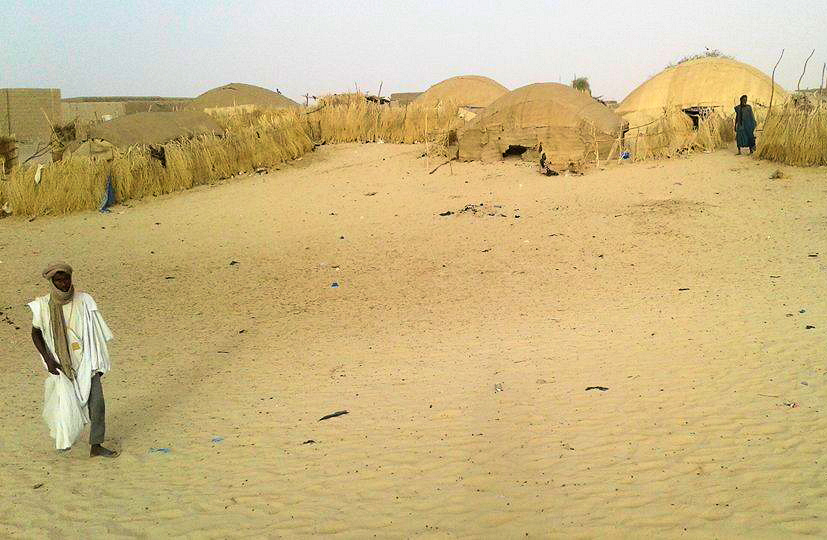
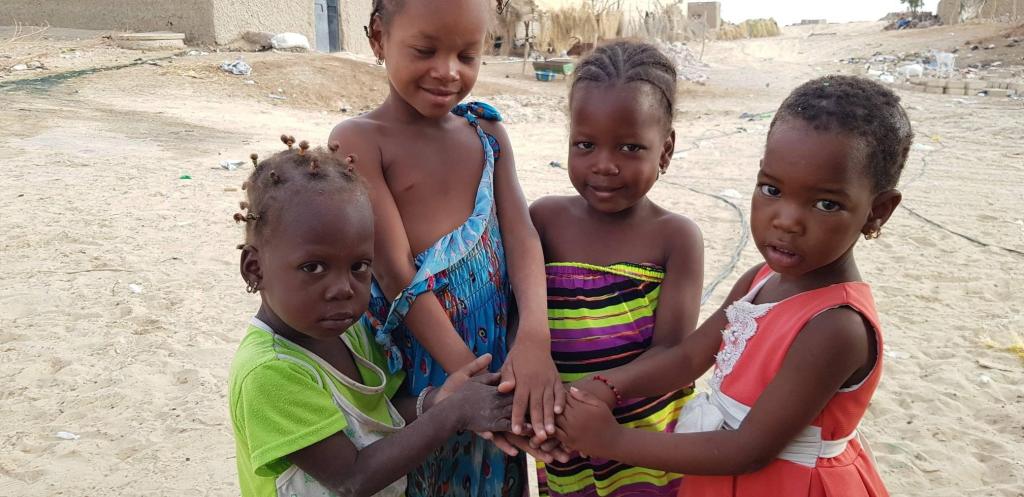
Those of you who have been following me for some years will be aware that I have been helping and supporting a small village of desert-dwelling Tuareg people called Tinzibitane. The village is roughly 60km west of the historic town of Timbuktu, in the desert.
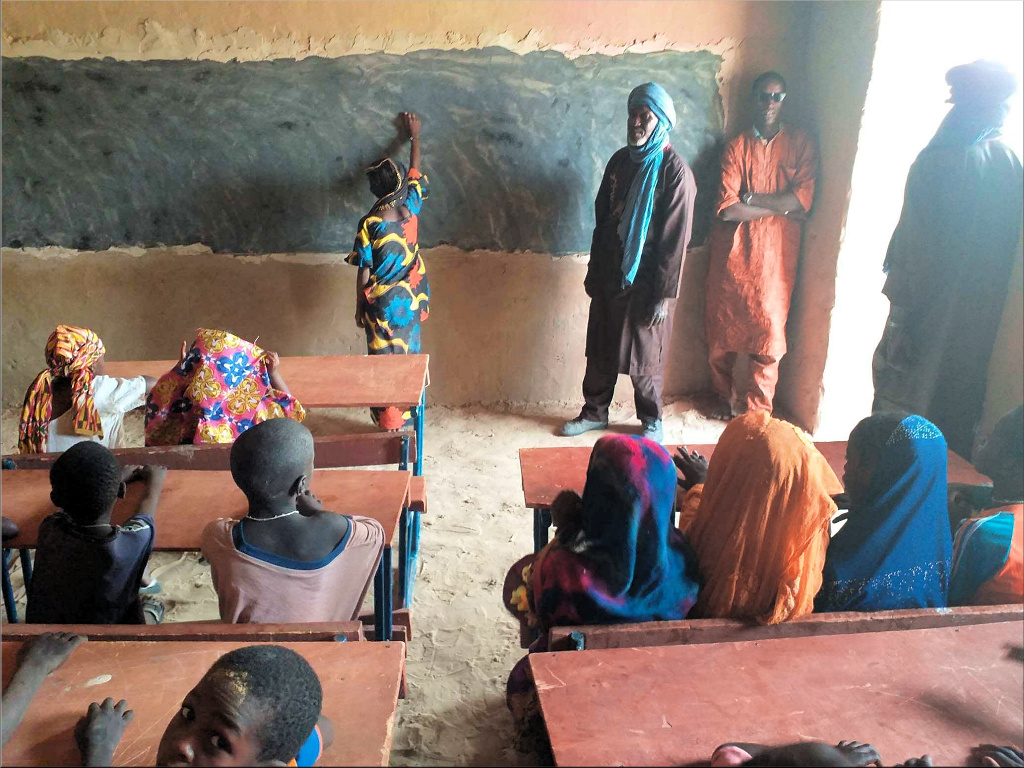
Lessons!
The Tuareg are an ancient people, formerly the camel-truckers of the Sahara. They’re different from other West Africans, and they aren’t treated well. They’re Muslims yet they have their own ancient traditions, with Goddess roots to them going back millennia. Some Tuareg have become jihadis, further north in the desert, but this village is not involved with that – and you’ll notice they’re educating girls and boys equally. The women of the village are strong.
In Tinzibitane they have a wise chief, around my age (71), and my contact, Anim Touareg, a Millennial in his thirties, is likely to become the next chief. He’s a good man, and a single father (his wife died some years ago in childbirth – we tried to save her but it came too late). In my illness, with cancer, the chief prays for me, and I pray for him too.
The village
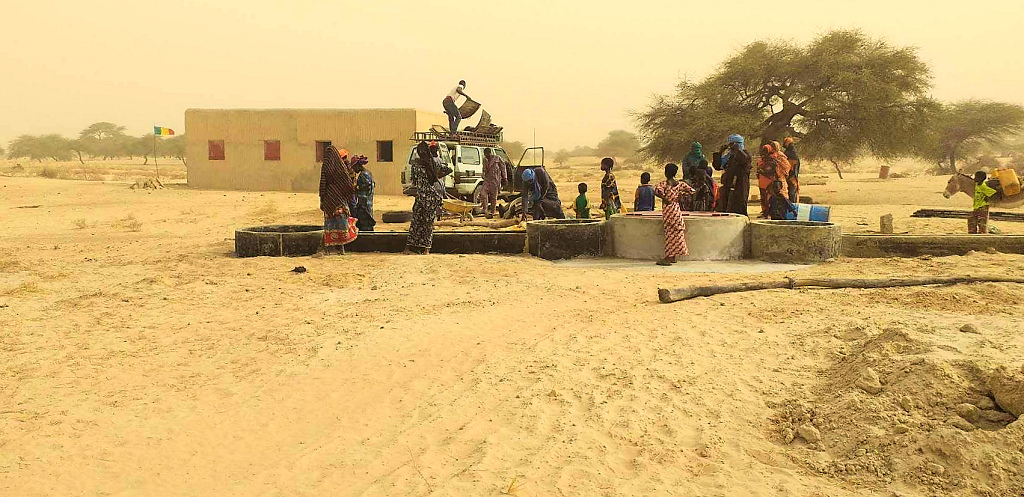
Over the years, various of us have been helping finance the re-stocking of their camels and goats, the sinking of a new well in the village, and the building of a school there, after a time of devastation (drought and war) around 2012. They are educating their kids in a Tuareg way. The alternative is to send the kids to the towns for education – and, this way, the young people are lost, heading for the cities and for Europe when they grow up. We are seeking to change this, to help the villagers meet the 21st Century while retaining their traditional desert life – and this means helping the kids stay in the village by educating them in a Tuareg way.
The new well, with the school behind
I am no longer able to run fundraising campaigns fully on their behalf and I need some help with crowdfunding and similar things. I’m good at writing material and liaising with the villagers but I can’t deal with the necessary details around crowdfunding and the necessary networking. I’m not fast enough and my memory for details isn’t as it was.
School dinner
So I am looking for one or two people who might help me with this, willing to do the necessaries that I cannot do and to stick with it for perhaps a few months, working online with me. It needs some focus, work and commitment, but not too much, plus some necessary support-raising skills. This is a really good cause. The aim is to raise money to pay the teachers, who come from other parts of Mali to stay in the village and teach the kids. They are dedicated teachers but they cannot keep their own families alive and happy without pay.
Tuareg women of the future
If anyone is interested, please contact me. This is a people-sized, small-scale enlightened-development project. The Tuareg of Tinzibitane are a self-sufficient people who don’t like to ask for help, but they do need support in dealing with money-interactions with modernity and the outside world. It has felt good working with them over the last seven or so years – they’re good people, with integrity, and they’re taking life in their own hands. I need some assistance in helping them.
Anyone interested? If so, please contact me. They also make remarkable handmade crafts, which you can see on Anim‘s FB page.
Recently I haven’t been in the best of health and spirits and I shall write a blog about that soon, when my energy is right. But if you want clues, listen to my last podcast Popping Clogs and Kicking Buckets.
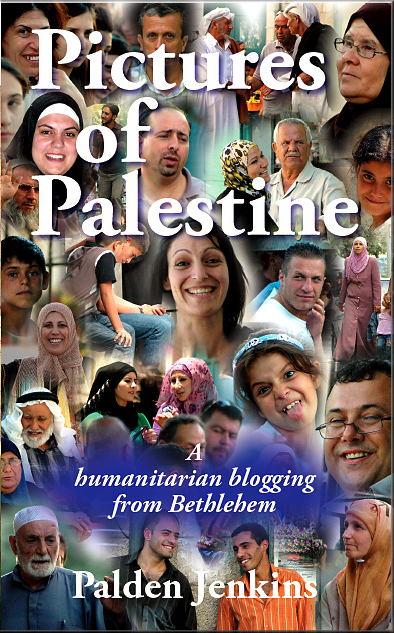
Meanwhile, I’ve begun a kind of preliminary goodbyeing process, and in the last 24 hours I’ve been wishing I could be back in Palestine, with friends and ‘family’ there. So I was moved this morning to post a chapter from Pictures of Palestine, to share this feeling with you.
(If you like this chapter, you can download a free PDF or e-book version on the site, or order the print version.)
It was written in 2009 but, while details in Palestine have changed, the situation has not, and this chapter in essence has not dated.
The Back-Roads of Palestine – arriving in Bethlehem
“Where you want go?” “Beit Lahem”.
“Where you from?” “Britaniyya.”
“Ah, my son, he in Leicester, doctor in hospital.” I’m never sure whether to be happy or sad when they say things like this, but most Palestinians seem quite happy that at least someone in the family is chasing a future abroad. It’s their family insurance policy.
I was the first to the yellow eight-seater VW service bus, so I would have to wait for more passengers to appear. That was fine – I wanted to assimilate being in Jericho again. Everyone was friendly. If ever you come to Palestine, be ready to be overwhelmed with hospitality – it’s quite moving and takes a while to get used to. It’s not a front. People come up and shake your hand, saying “Wilcome, wilcome to Falastin”, and they really mean it. They know it takes some resolve to get here.
I went off and found some Egyptian mango juice and Jericho springwater to guzzle. The dense Jordan valley heat was like an engulfing blanket but, being thin, I’m fine with that – it’s chilly, damp British weather I have a problem with! I went over to some guys standing around talking. The usual friendly questions. Where you from? What your name? Where you going? How many children you have? What you doing here? They’re often interested in my age, and eyebrows raise when I tell them – Palestinian men of my age often look older and more worn than I do.
I took photos of some of them – they seemed to love it. But some didn’t want it, gesticulating ‘No’ with a quick wave of the finger, and I knew why. It’s politics and security: they or their family have had trouble with the Israelis, or they supported Hamas or another faction, or they had a history, or their brother was in jail, or… Long ago I had been in similar straits and I know what it’s like: it’s not just that you want to avoid the gaze of the powers that be, but also that you don’t want to keep reminding your friends or even yourself that, rightly or wrongly, you’re toxic property.
Eventually the service taxi-van was full and we were off through the streets of Jericho, an ancient city with an 8,000 year history. We left the town, driving some miles up to the main Jerusalem highway and then turning right, following the road as it ascends through the Judean desert hills. It sweeps through the valleys, climbing up and up just to reach sea level, marked by a sign in Hebrew, Arabic and English. After making good progress, still uphill, we suddenly slowed down and pulled off near the Ma’ale Adumim interchange onto a bumpy, crowded road and into a scrappy Palestinian township near Al Azariya.
Ma’ale Adumim is one of the biggest Israeli West Bank settlements, a Jerusalem orbital town and an asset Israel is unlikely to abandon, whatever foreign politicians want. This new town and the roads servicing it, built on confiscated Palestinian land, split the West Bank into northern and southern halves, rendering Palestine territorially sub-functional as a nation.
But we were not going to Ma’ale Adumim. Instead, we hit a bumpy side-road which, for Palestinians, is a key trunk road linking the northern and southern West Bank. It weaves through a small town, then weaving along valleys and up and down the high hills, with sharp switchbacks, steep inclines and loads of traffic. In Britain we’d regard it as a back-country ‘B’ road, but actually it is ‘Palestine Route One’. Nowadays it is being modernised but in 2009 the only sign of its trunk road status was the density of traffic.
Some of the areas it drives through are poor and dilapidated, the houses quite scrappy, the land stony and dry. Garbage, wrecks and piles of rubble are heaped here and there – an alienated landscape where the locals have lost their care and pride. They’re probably rural refugees, thrown off land the Israelis have taken, such as at Ma’ale Adumim. It’s one of the tragic aspects of this country. But then, many Palestinians harbour little hope, so they’re unlikely to invest in longterm improvements. They half-expect the Israelis to come in some day, wreck everything again or drive them out, and they do have reason to anticipate that.
Yet there are some pretty nice houses along the road too, in other locations. Palestinians who are go-getters or beneficiaries of the PA or foreign agencies take great pride in their new-builds, many of which have a fine vista and attractive courtyards with flowering trees and bushes. It’s as if their optimism compensates for their others’ lack of it. It also reveals an emerging class divide between those who benefit from foreign subsidies and advantages and those who do not. Palestine has its haves and have-nots and they nowadays live in quite distinct economies.
The road is exciting to travel as it climbs up steep hills and tips into deep valleys, weaving through an impressive limestone upland landscape, passing through hilltop villages with prominent mosques and affording views stretching many miles. Yes, this is a trunk road – but it’s heartbreaking too. Privileged Israelis drive along their fast, wide highways while Palestinians have to heave up, down and around on side-roads like this: transportation apartheid. Although the West Bank is occupied by Israel, its cars have different number-plates from those of Israelis, conferring different driving and access rights. Go up the wrong road and you could, on a bad day, experience a sudden hail of bullets at worst, or interrogation at best.
It’s not easy, living under military occupation
We passed through only one checkpoint, which today was open. The Israeli soldiers leaned against their booths and bollards, talking to each other and idly gazing at passing traffic. Poor guys – what a job. There they stood sweating, posted in an unfriendly spot next to a Palestinian hilltop village, perpetually on guard against a foe who nowadays rarely materialises and might hardly exist.
In the distance I could see the Herodeon, near Bethlehem, a prominent conical hill and ancient site going back millennia. It looks like a volcano but it was shape-enhanced in ancient times and contains, allegedly, the tomb of Herod the king. Naturally, we didn’t head straight toward it – our route was still sinuous and tortuous. After another twenty minutes we pulled into Beit Sahour – Shepherds’ Fields, referring to the Christmas story – near Bethlehem. The family that made up most of the passengers in the bus was dropped off right outside their gate. The remaining woman asked me, on behalf of the driver, where I wanted to be dropped. I decided to go to Manger Square in central Bethlehem to catch some food, take a rest and ascertain where Ibrahim Issa was to be found.
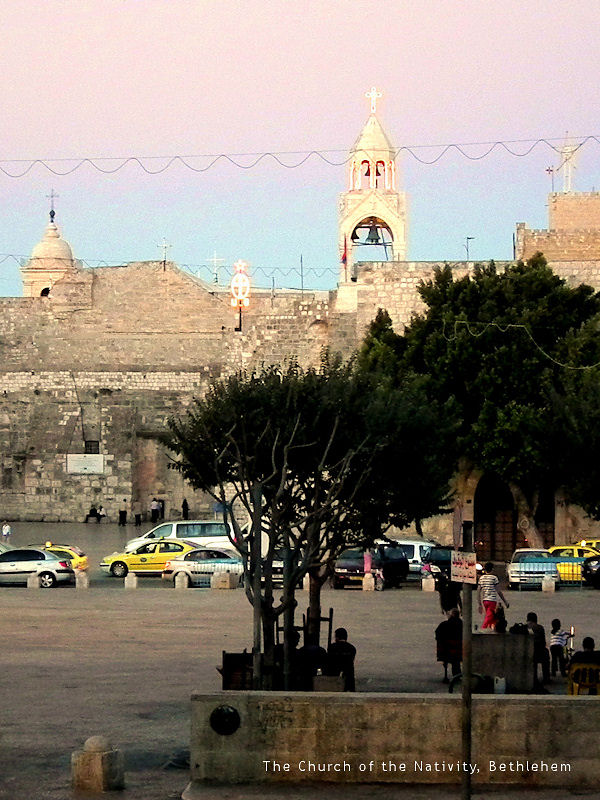
Church of the Nativity, Bethlehem
There I bundled out of the bus dragging my wheeled bag, my precious technology bag over my shoulder. Containing a netbook computer, camera and lenses, digital sound recording equipment, DVD and card readers, cables, plugs and adaptors, with room for travel papers, passport and a bottle of water, this technology bag is neat – but rather a wrench on the shoulder muscles.
The Christian taxi-drivers near the Nativity Church, seeing a Westerner – who of course must be rich – started hollering at me for my custom. You learn how to gesticulate ‘No’. One bright young driver with a pleasant face got my attention, though I still said no to him. I wanted to sit down and have something to eat. He shepherded me to a nearby café and within seconds a pitta stuffed with salad and falafel was set in front of me, along with fresh carrot juice. What a relief! All the taxi-drivers stood round asking questions and smiling, all very amiable once they’d realised I was no source of business for them right now.
I rang Ibrahim, but no answer. Did I have the right number? Hmmm, what next? Leaving my bag at the café, I went wandering. As I returned, the young taxi-driver signalled me: “I help you. What your name?”
He took me to the Hope Flowers School at the far end of Al Khader, west of Bethlehem, but it was locked and deserted. On the way I noticed that the town was in visibly better shape than on my last trip in 2005, just after the second intifada, during which the Israelis had wrecked Bethlehem and still then staged periodic incursions and searches. But now the separation wall had been built and Bethlehem, imprisoned behind it, was safer and more relaxed. The security wall protects Palestinians from Israelis as well as vice versa. This relaxation of tension was visible on the streets. Another sign of progress was the condition of the trees in the central reservation of the Hebron road leading to Al Khader.
These trees, planted in 2005 by the Earth Stewards, were all intact and growing! I had joined them – mostly Dutch, German and Austrian green activists – in a tree-planting project organised by Hope Flowers. Ibrahim had known the Earth Stewards when he lived in Holland in the 1990s and he had organised PeaceTrees as a joint project with them in Bethlehem, not just as an ecological but also as a social empowerment project. The trees’ continued existence showed that something had worked – the locals had got the message.
During the intifada people had lost hope. It had followed a period in the 1990s when peace and progress came close and then ebbed away, prompting the uprising, a mass expression of sheer frustration. Israeli measures taken against Palestinians were terrible and Bethlehem had been an epicentre of conflict – remember the shoot-out at the Church of the Nativity in 2002? By 2005, when the intifada had subsided, the locals needed jump-starting with initiatives to help them improve their lives and encourage them to invest energy in the future. The regular experience of seeing houses demolished, parts of town wrecked, buildings shelled and people carted off had given Bethlehemites a feeling of futility and pointlessness.
By planting a large number of trees in a very visible place – the main road’s central reservation – we caused mild fascination at first, followed by interest and questions. Then people joined in, then energy and enthusiasm grew. We wrapped up the project by saying, “If you don’t look after these trees, they will die, so it’s up to you” – and we left. The trees survived: someone had made sure they were watered and cared for. PeaceTrees had worked.
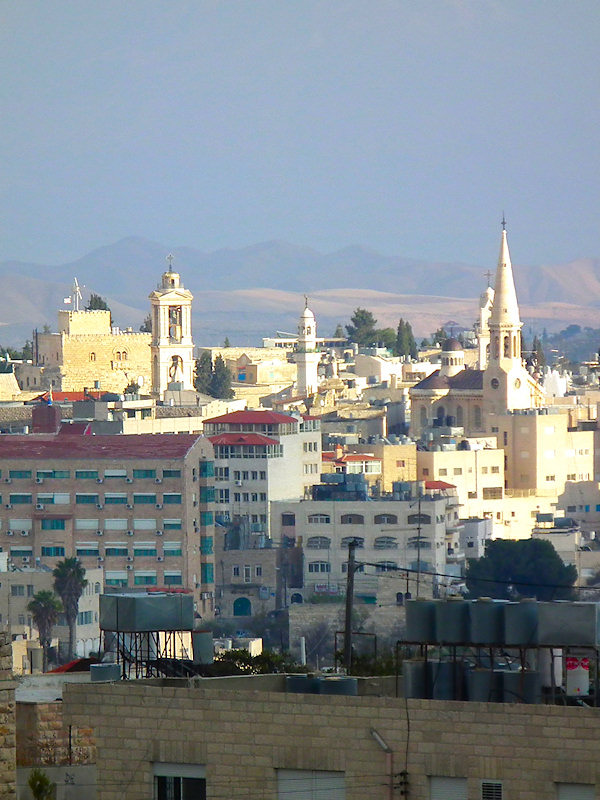
The Old Town of Bethlehem
As the young taxi-driver and I returned to central Bethlehem, he told me that he was a student of accountancy in Hebron and drove his uncle’s taxi to pay his way. He wanted to be my friend and I promised I would find him again. Subsequently I had a number of lifts with him, and only half the time did he charge me. He dropped me off and I headed up to Manger Square, standing there awhile, taking it all in. A wide, large square, milling with people.
A man approached, asking in quite good English whether he could help me. Adnan took me to his shop near the square, where he sold souvenirs – olive-wood religious objects, Arabic dresses, Bedouin rugs, decorative inlaid boxes and allsorts. Some of the woodwork was exquisitely carved and the rugs and clothing came in lovely colours, all with a very hand-made feel to them. Mint tea appeared and people came and went as we talked. Adnan discovered I was a webmaster and asked if I would help him make a website – I said I would consider it. He rang a friend who knew Ibrahim – an answer would come soon about where to find him.
I got out my computer and skyped my cousin, then my son and then my ladyfriend back in England, to tell them I’d got here. I wanted to share it with them. A small crowd gathered round, goggling at this visitor’s neat technology, and they said hello on Skype, all very thrilled. My son just said, “Cool”, and carried on tapping on his computer. Then he looked up and suddenly saw several faces looking at him through the screen.
“Who’re they?” “I’ve finally got to Bethlehem, and these are some of the kids here”. “Cool”, he repeated, in his perpetually unfazed way, still tapping keys.
My ladyfriend was dumbstruck at talking live to some real Palestinians. Palestinians are people you hear about on the news, you don’t expect to talk personally with them on Skype. Everyone helloed, and she helloed back. While I was talking to her, the calling to prayers started up – really loud, since we were right next to the Omar Mosque. She was visibly moved at the sound, as it hit her that I was really there. She and my cousin were serving as ‘ground control’ back in England, and it was fitting to share with them my first taste of returning.
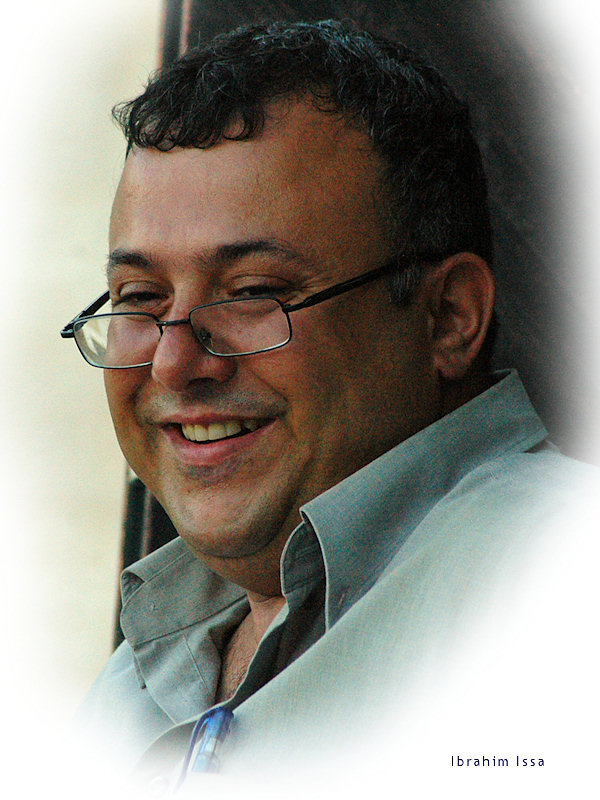
Eventually the grapevine worked and Ibrahim Issa came to fetch me. I’d last seen him five months earlier in England during one of his speaking tours. He had looked tired, not really wanting to stand on stages giving speeches, and I was concerned about him, wondering whether he was burning out. But today he was his sprightly self, at ease, smiling. He’s rotund, like a cuddly bear, with a character-filled face and a bright countenance.
I feel brotherly toward him, as if we had made some mutual contract way back in the mists of time, yet I’m old enough to be his father. We hugged in the middle of the street – much to the interest of onlookers – and looked at each other for a long moment. I knew he felt some relief that I was back and had probably wondered whether he would see me here again. Foreigners come and go, saying they will return, but only a few reappear.
Hope Flowers had started as a kindergarten in 1984 and by the late 1990s it was a school with 500 pupils. It shrank after 2000 during the second intifada, as the Palestinian economy tanked and hardship set in, but now the school is growing again and a community development centre was started in 2004. I’d been working with the school from Britain, running its website, writing and editing grant proposals, newsletters and outreach material. Now, one aim of my trip to the school was to re-work the website, then perhaps to edit some teacher-training manuals, possibly even help Ibrahim start writing a book about peace education. That was the idea.
The story of the Issa family and Hope Flowers is poignant. Ibrahim’s father Hussein, an advocate of non-violence, found himself in a dilemma some years ago when Ibrahim narrowly escaped paralysis, shot through the back by Israeli soldiers. Later, Ibrahim saw Palestinian radicals accuse his father of treason because of his commitment to reconciliation. The family was under attack from both Israeli troops and Palestinian radicals. Ibrahim knew the situation was complex but, to quote him, “The most painful thing for me as a child was that I couldn’t recognise the difference between a peace activist and a collaborator – it took years until I did. Palestinian radical groups also couldn’t recognise it. When I grew up I started to see the difference”. But some Palestinian radicals and Israeli Zionists still don’t see that difference, and this makes life risky for people who work for reconciliation.
In 1991 Ibrahim moved to Holland to get out of harm’s way. He studied engineering, got a job and became a permanent émigré. He attended courses on ecology, non-violence, community-building and psychotherapy too, mixing with interesting people, some of whom later came to do stints as volunteers at the school in Palestine. Then his father died unexpectedly in 1999 and Ibrahim was asked to return. This involved leaving a secure, promising Dutch life to jump back into the Palestinian frying pan, taking on a burden most sane people would turn down flat. I greatly admire his steadfastness.
Hope Flowers
Returning to Bethlehem in the midst of the second intifada, Ibrahim joined his sister and his mother in running the school. Later another sister, a teacher, joined them, as did Ibrahim’s new wife, once a kid at the kindergarten. They run the school with a remarkable team of teachers, managers and supporters. It felt right to work with these people – I like them all very much.
Now Ibrahim and I went to a café, had a drink and munched nuts, smoking apple-flavoured hubble-bubble from an ornate water pipe. We discussed what I would do during my three months’ stay. There was certainly a lot to be done and three months might not be long enough.
Ibrahim told me of difficulties he currently had with a faction in the Palestine Authority (PA). It was the product of an awkward public debate concerning the value of negotiating with the Israelis. Ibrahim, a committed peacemaker and bridge-builder who had had regular contact with peace-oriented Israelis, was under suspicion as a collaborator, and this was complex. The PA, seeking to establish control over an ungoverned non-country, had applied a mixture of Western regulations and Arabic bureaucracy, with not a few personal fiefdom issues thrown in, making life difficult for ordinary people. A peacemaker in a conflict-polarised society is susceptible to accusations of collaboration.
The discussion in Palestine about how to relate to the Israelis was heated and ongoing. Palestinians had bent over backwards to comply with international agreements as part of the 1990s peace process, and yet in Palestinians’ perception the Israelis hadn’t budged an inch on crucial issues such as settlement-building, land-seizures, Jerusalem or refugees. The result had been continued losses for Palestinians and a growing number of them were now convinced that negotiation and accommodation were pointless, even though very few wanted any return to conflict. Negotiation had been worth trying in the 1990s, but it had not delivered. It’s a tragic predicament: if you neither want to negotiate nor to fight, what do you do?
Hope Flowers had been teaching the kids Hebrew to help them understand the Israeli mindset. When the kids were older, this would help them deal with Israeli people and officials. The school set out to help the kids understand the perspectives of the very people who had killed or jailed their own fathers, uncles and relatives. This was not a matter of agreeing with or sucking up to the Israelis, as some suspected. It was a matter of following the old military adage, ‘know your enemy’. It was a key issue in preparing Palestinian children for a time when the nightmare of conflict ends – which it shall and must do one day. But in 2009 that day was receding and there was simmering frustration in the air.
Some Palestinian officials didn’t like what the school was doing and didn’t want Palestinians having connections with Israelis. Ibrahim, who had learned to be patient with Israeli arbitrariness and obstructionism, even having been arrested by them for allegedly harbouring terrorists, understood this viewpoint well. But as an educationalist and peace-builder, he stood up for dialogue with people on the other side just as his father had done.
Westerners, with a tendency to see things in black-and-white terms, oversimplify the intricacies of this situation, failing to understand such sharp dilemmas. “Why don’t Israelis and Palestinians just make peace?” Well, as Rabbi Lerner, a Jewish-American thinker, once pointed out, both sides suffer from PTSD, post-traumatic stress disorder – they’re super-touchy, super-reactive and suspicious – and untangling this mess isn’t as simple as outsiders would like it to be.
It had taken me some 20 years to understand the intricacies of the Israel-Palestine situation, and only visiting the place had brought better comprehension. I started as a peacemaker working on both sides, with the best of neutral intents, but found myself gravitating to the Palestinian cause. I was not turning against Israel, but I felt that they shot themselves in the foot by the hostile attitude they took toward Palestinians. I work where I can most assist, and while Palestinians seemed to appreciate my input many Israelis didn’t seem to think there was a need for me to be there. So I ended up working with Hope Flowers.
That’s also why I had sobbed from the soul when I arrived in Jericho earlier that day – there was something personal and emotional about all this. As a British dissident, I had had nonsensical and painful experiences that would shock many people, so I could empathise with the Palestinians’ dilemma. I saw Ibrahim’s dilemma too – that of a peace-bringer whose work is regularly screwed up, not just by Israelis but also by the double-standards of Westerners and the militancy of some Palestinians.
Perhaps Palestinians embody something that exists within many of us when we are repeatedly let down by forces beyond our control, when Murphy’s Law applies itself over and over, or when the narrow interests of the powerful few prevail incessantly over the needs of the majority. It’s a futile feeling that, whatever one does, nothing will really progress. This kind of thing happens everywhere but, in Palestine, people have internalised it and adapted to it more than is healthy for them.
I stayed at the Issa family’s place that night and next day Ibrahim took me to the school, where I was to stay in the volunteers’ accommodation on the top floor. Back again – and now to work.
Things don’t change a lot in Palestine, but one good thing that has changed is that Hope Flowers’ methods and philosophy is now being replicated across the Palestinian school system in the West Bank – this was a major breakthrough a few years ago. However, the school still struggles on financially under, as always, difficult constraints.
One of life’s big lessons is that what we anticipate and what we get can be very different things
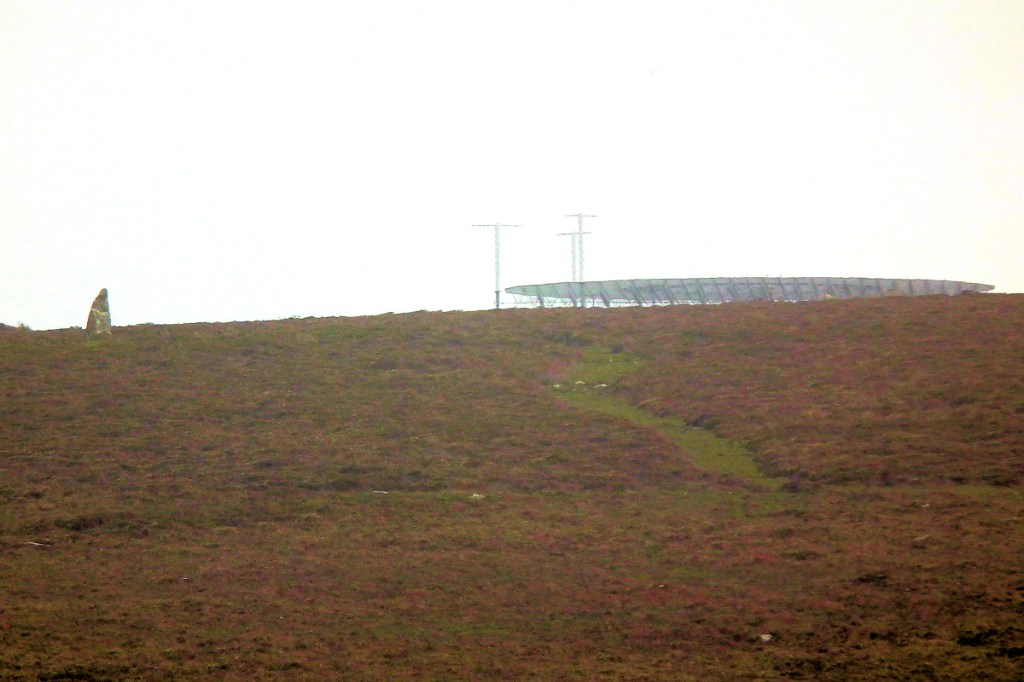
Two kinds of power: a 4,000 year old menhir or standing stone, and one of the main air traffic control beacons for the eastern Atlantic. Guess which one will last longer into the future.
This podcast was prompted by an e-mail from a good friend of mine, concerned about the climate crisis.
Here are my current thoughts on the climate and environmental crisis. I have reservations about the current climate picture: it’s not wrong, but it isn’t quite right either.
And this issue isn’t primarily environmental, it’s social, psychospiritual and about the nature of planetary civilisation.
Each and every one of us has to get behind this for it to succeed – form a world consensus that everyone can buy. That’s tricky. The breakthrough point on climate will come alongside a breakthrough point in humanity.
Portheras Cove
As a forecaster – working mainly along social and geopolitical lines – I’ve learned a few things about predicting the future: what we currently visualise for the future and what actually happens when the future actually comes can be quite different things.
Introduced by the waves at Portheras Cove, a few miles from where I live, here in Cornwall.
And if you’re mulling over the world’s future, try this. It’s the concluding page from a report I did in 2018 about the world in 2050, called Possibilities 2050. In the report I outlined four possible scenarios: manageable, difficult, disastrous and transformative. Here I map out what could be likely.
PS. My podcasts are now available on Spotify, Apple and Google Podcasts. If you have any technical difficulties with finding and hearing the podcast, please let me know.
A podcast about building global consensus for change and survival
Here’s my latest podcast, and it’s about….
US TOGETHER.
About the collective unconscious, beliefs and fundamental questions, and the mechanics of the way that deep change happens in real life.
The ‘official line’ – what we must subscribe to and replicate if we wish to succeed in the existing socio-economic system – is flawed and unsustainable, and the deeper psyche of humanity understands something rather different.
Coming Decades | where we stand and where we’re heading. An astrologer speaks.
Here’s my next podcast from the far beyond. Coming Decades.
This is Paldywan the astrologer-historian placing our current time in a larger context – going back to 1892 – and giving some clues about future issues and developments in coming times – up to the 2060s.
With some interesting news about the late 2020s – only a few years’ time.
Latest podcast: all about level shift and the planetarisation of consciousness
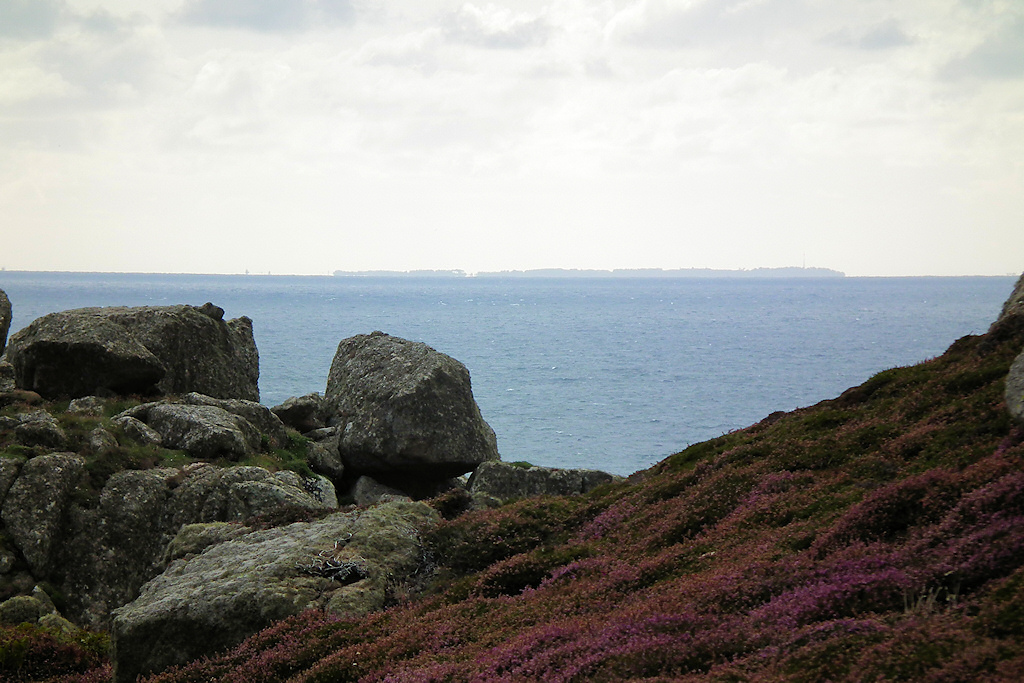
Looking toward Scilly from Land’s End
Here’s my latest podcast: Level Shift.
This is a subject close to my heart, about the shift of consciousness in humanity that is necessary if we are to survive and thrive on earth.
It has preoccupied me since I was in the student revolutions of the late 1960s when, as a young man I discovered that political revolution wasn’t going to work: the change needed to be much deeper. It’s no good replacing Tsars with Stalins.
Today we’re in a parlous time and the prospects aren’t good for planet earth. It isn’t too difficult to get depressed about it. Yet we live in times of paradox and the darkest hour is just before dawn. Yes indeed.
So this podcast is a late night rap about the planeratisation of consciousness and the psychosocial mechanisms by which I believe breakthrough will come.
Though of course, we shall see. We’re in an enormous planetary experiment to see whether it’s going to work and whether we humans are really up to it. We came here for this.
Paldywan shares his thoughts about living on an organic farm
Here’s my next podcast from the Far Beyond. This time it’s about farming, happy cattle, feeding the badgers, self-fertilising fields resilience and… well, you know, I usually range around loads of things…
Don’t worry, it takes only 16 minutes. Free, no strings, no ads, no sign-up. Phew.
Recently I’ve been circumambulating around ancient mysteries, though later I’ll be getting all geopolitical. Might even get astronomical, just to bring things closer to home.
Here’s my latest podcast, recorded on Botrea Barrows (above), on the hill above our farm here in Cornwall. It’s all about the magic the ancients worked with, and about the G7 summit held a few miles away from me, and about influencing. Not in the internet that sense most people mean, but on the airwaves. It’s 20 mins long, and this time you get some pics and maps to look at too!
A new series of occasional podcasts from down’ere in Cornwall
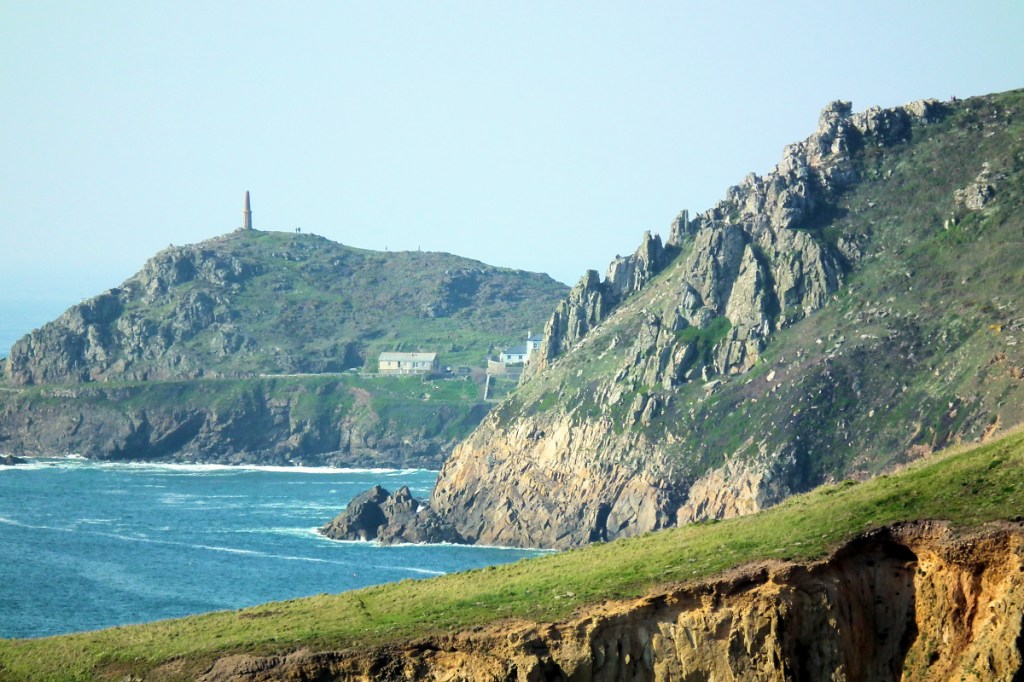
The Longships Rocks as seen from Bartinney Castle
It has taken a while, but I’ve just completed the first of an occasional series of podcasts, and you’re welcome to use up eighteen minutes lending it your ears!
This blog will remain my cancer-and-life blog, while the podcasts will cover interesting things that come up as the zeitgeist rolls on, my antennae twitch and the right day comes for putting together another podcast.
The first pod is all about an ancient trackway and what it means for the future.
We have to get lost. This means that things aren’t going to happen as we expect, as they should. We’re going to get other stuff instead. We’re going to go out of our depth.
Kilgooth Ust (in English, Cape Cornwall)
The bigger implications of the Covid outbreak are now beginning to unfold. As I mentioned a few months ago, this isn’t about Covid – it’s a deeper and bigger change. Covid was the catalyst, bringing a cascade of events to force a change in the human psyche, globally. Covid itself will be forgotten, in time – it was just the trigger.
In a sense, this qualifies as a classic case of ‘divine intervention’. Imagine you’re an archangel, trying to help the people of planet Earth with their self-created problem. Previous attempts to trigger fundamental change – say, the fall of the Berlin Wall or the horrors of Syria – have not worked sufficiently. The challenge therefore is to create a trigger situation where it hits home hard enough to upend and shake out the foregoing human mindset that creates the problem, but not so hard that it knocks people back fundamentally, rendering them incapable of change, because they’re suffering, struggling and dying too much.
Et voila. It took the form of Covid 19 – a brilliant creation, sophisticated enough to outfox the brainiest of people and the most controlling of authoritarians and bureaucrats. It creates enough damage to rock things, but not enough (yet) to fundamentally disable us.
Carn Les Boel
There’s something much deeper going on than this – it’s a reality-reconfiguration. It’s so fundamental that even those of us with the loosest, widest, deepest thinking are rather lost. Yes, lost. Thoroughly disoriented.
A sure sign of this is the way that we’re all trying to map a certain vision onto the future, to restore something of the way things were before. For some people it’s all about where and when to go on holiday, and for others it’s all about who controls the world, and why, and what we ought to do about it. But the problem is that reality has shifted more than that. Even the most visionary, progressive ideas use assumptions and concepts from the past. We don’t really know what has shifted, or how exactly it happened. It’s just that we’re waking up in the morning suddenly realising that things already look very different. We’re rather lost, and getting more lost.
I’m one of the more visionary types around here. I’m well-versed in history and geopolitics, I’ve been on this path since the Sixties and have had time to think things through, I’m articulate, brainy and, guess what, to be entirely honest, I don’t have answers. Here’s the rub: anyone who proposes that they do have answers doesn’t really have them – they are projecting onto the future a framework, an understanding, that seeks to restore the past. I’d put myself amongst them: I too am doing this, in my way.
There are a lot of experts and pundits out there, advocating explanations, and recently we’ve entered a new phase in the battle of ideas and viewpoints and it’s very complicated and shifting. No one really knows what to think any more, so some of us suspend judgement or cop out, while others grasp on to sure-fire analyses of what’s happening and what happens next, megaphoning them at everyone else. As if reality is created through majoritarian agreement. No, it isn’t. Life is what happens when you’re busy making other plans. Especially now.
Treryn Dinas
This gets problematic, because it’s not just a simple question of right and wrong. Take conspiracy theories, a classic example of reality-projection, born out of a need to control the uncontrollable and to see the world as Big Brother’s plaything – a father complex. Well, problem is, much of the analysis that constructs this mindset is ill-interpreted and ill-founded, but there is also a lot of truth in it and some conspiratorialists are pointing at something really important. Unfortunately, their insights are obscured by a lot of loud noise, sensationalism, sales, over-analysis, misjudgement and right-wing politics. So, including in the world of smoke and mirrors, we’re lost.
Guess what, the great manipulators – those much-vaunted Illuminati, Trilaterals, Bilderbergers and Reptilians – are lost too, and we don’t have just one Big Brother – we’re also witnessing a war of the titans at the top of society. Eitherwhichway, this is an example of how it’s working at present – we’re obsessed with grasping at explanations, whether scientific, ethnic, religious or conspiratorial, or anything, as long as it sounds good and makes us feel safe.
Everything, somehow, is partially true, and ‘right’ and ‘wrong’ are obsolete concepts. There is no right or wrong: there are simply outcomes. This is one of the operational rules of the 21st Century.
Now this gets interesting. A few years ago I wrote a report about the world in 2050. I sought to map out the issues and the scope of the complete planetary problem. I did quite a good job, as it goes, given the size and scope of the situation. It was reasonably clear what needed to be done – the social, ecological and other mega-issues we all know so well by now. But how to fit them all together and how to get there was the big issue, and today we’re faced with an enormous dysjunction.
Problem is, there’s the goal. That’s one thing. Then there’s where we stand today. That’s another. The two neither match nor connect. Given where we stand today and what we’re doing, we won’t reach the goal. Yes, we’re making big changes, but electric cars are not enough. It’s our inner grasp of things that needs to change. We’re faced with cosmological change. But we’re still in a phase of trying to restore the past. This includes the visionaries, the progressives, the leading-edge people – it doesn’t only concern those un-wokes who are perceived by progressives as needing to get real and catch up.
Gurnard’s Head
To get from here to there, which we cannot do with our existing sense of reality, that reality has to get shaken out in such a way that we get totally lost and disoriented. So that our fixities and structures get shaken out, on all levels. This would be a crisis and a catastrophe in one sense – a serious global mental health and organisational challenge – but the idea here is that it’s a way in which we might avoid actual, total catastrophe – such as the still-unresolved possibility of blowing up the world with nukes, or a systems breakdown or climate event so large that the majority of humans suffer and die horribly.
We have to get lost. This means that things aren’t going to happen as we expect, as they should. We’re going to get other stuff instead. We’re going to go out of our depth. It started happening last year, when we suddenly fell over a cliff we didn’t quite know was there, and we still haven’t grasped how high the cliff is. This falling sensation applies to every single one of us.
We’re falling, tipping over an edge, not sure what we’re falling into, but we’ve already lost balance. Arguably, this tipping phase began around 2008-2012, but it cracked and went critical in 2020, and now we’re on a slippery slope.
I don’t know what happens next, but here’s a key clue. We have a vastness of issues to sort out, and it all hangs around society, social choices, social justice, social power and societal healing. If these are not progressed in the next few decades, we will not handle the climatic, ecological, biosecurity, geopolitical and other issues before us. It all hangs around collective willingness, consensus, belief, consent, acceptance and cooperation. Human community. This has been put before us during the Covid crisis and this is what stands before us now.
But it isn’t about persuasion, leadership and followership, and it isn’t about recreating and replicating the past. Then comes the question: well, what should we believe? There’s an answer to this, quite well summed up by a chunk of wisdom from our old friend Jesus: by their works shall you know them.
Pendeen Watch
In other words, look at the people who are doing things. And help them. I keep quoting a Xhosa saying: listen more closely to things than to people. Don’t give so much attention to ideas, beliefs and viewpoints. Try to do today whatever is best in this situation, as it stands, using your instincts, acting creatively and moving things forward from here, in big and little ways. Because this is about spreading our wings and learning to fly. Birds don’t see the air that supports them when they fly – they feel it and sense it. They fly by trusting in the air. That’s the way to go, and there’s much more to go.
But don’t just believe me because (I hope) I sound convincing. People like me, the ones pumping ideas into the collective psyche, are part of the problem. Ideas are a problem. That’s not an anti-intellectual rant: it’s just that, the way our ideas are configured, they’ve become a problem. We do need to use our heads, but differently.
Here’s a tip: get more happy and okay about not knowing what the fuck is going on. You’re unlikely to find out.
Bosigran Castle
So, if you were an archangel, seeking to effect a Great Reset even on those who believe they are doing the resetting and in control of the process, you’d spin everyone round and cause them to get thoroughly lost. So that the cards get reshuffled quicker. So that solutions can come without having to drag through a lengthy processes of change and resistance to change. So that the constraints of the past can be freed, and the assets of the past can more truly be harvested – the brilliant, amazing aspects of human history, genius and hard work that have also characterised our current civilisation. So that we actually survive, without excessive, irreparable damage done.
Here at my place, there has just been a lovely fly-past of five hooting geese. They’re off to spend the day at the pools just by Tregeseal stone circle, two miles away.
















You must be logged in to post a comment.