Life has been quite a grind and a test recently. Living as a partially disabled cancer patient makes wading through life twice as difficult, and sometimes I get deeply weary with it. That’s been happening recently.
But there’s a weird psychological program in me that has meant that some of the best work I’ve ever done has been done during such periods, when my Saturnine tough-it-out programming gets activated by life and its grinding difficulties. I tend to tough it out by engaging myself in doing something. A project.
It’s an Aspie hyperfocus thing: if you can’t change your circumstances, change your mood by doing something creative and ultimately useful – even if it yields no immediate benefits. That’s how the program goes – for me, at least. Except there is one big benefit: it changes my mood. And, bit by bit, that can change everything.
That’s how, somehow, over the last forty years, I’ve managed to write fifteen or so books on quite a variety of subjects. Many were written amidst difficult circumstances, or arising out of them. The gratifying thing is that I still agree with pretty much everything I’ve written – or spoken about, broadcast or taught. I have few regrets about it. Which is quite remarkable, really.
Just recently I’ve been at it again. I had a crisis a month ago where I felt uninspired, feeling that I’d said everything I needed to say, and were people interested anyway? Well, as such crises do, it represented a deeper fermentation process going on in the nether recesses of my psyche, and an inner repositioning was going on, unbeknownst to me. I started looking at ‘outstanding issues’ and ‘unfinished bits’ in what I have done. After all, as a disabled oldie who spends more time alone than I would prefer, I do have lots of time.
Just yesterday, my friend Brian Charlton was here. He’s another Glastonbury defector now living in West Penwith – there’s a little secret cabal of us, actually. He lives the other side of St Just, our local village, and he is part a local support group, the ‘Friends of Palden’, that is a blessing in my life. He was on his weekly visit, and benignly badgering me about these unfinished bits. Very perceptive. I realised he was right. I needed to beaver away at clarifying and finalising the signals I’ve been putting out, and there are unfinished bits, and bits yet to evolve further, if life allows.
But there was more: I realised was already instinctively doing it, though I hadn’t realised it until then. It had started with two podcasts, both of which came up spontaneously, about Inner Doctors and Intuition. That got me flowing again, unblocking the logjam that had scrangled up my psyche. That’s one secret that many creators need to understand: if you get blocked up, do something, anything, to get yourself unblocked. And it’s best to forget what you think you ought to be doing, and to be spontaneous and creative instead – because that’s where the taproot of creativity lies.
Then suddenly I found myself starting doing a revision of one of my books, Shining Land, about the ancient sites of West Penwith. Well, there were some typos, readability issues and tweaks to attend to. So I thought. But as things progressed, I realised that new work I have done in the last few years, since I wrote the book, needed adding. I’d gained some new perspectives too, blessed as I am with lots of thinking time.
Most of the book has just needed tweaks and small improvements, but the chapter on Hill Camps has had a rewrite, adding my thoughts on Bronze Age circular enclosures such as Caer Brân, built around the 1800s BCE for tribal gatherings, and their significance. Also, I’ve added new material to the final part of the book, about Megalithic Geoengineering, breaking the last chapter into two and adding new work to both, about landscape temples, wildwood cover in the Bronze Age and ancient trackways in Penwith. And there are some new maps and pictures. I’ve worked on the indexing too (it’s rather tedious).
But here’s the rub. I can’t write books any more. My brains can’t do it. I can do blogs, podcasts and small projects, because they are done and dusted in a day or two. But books? No, they’re big projects. Even so, I can revise books I’ve written before, and the great virtue of revising a book is that the big thinking has already been done. So I can focus on style, details, text-flow, images, maps and new ideas. I can make it a better read.
I discovered this ten years ago when revising an astrology book first published in 1987, Living in Time. It was a good book but it had dated, with out-of-date examples in it from the 1960s to the 1980s. It also needed another spin, since times had changed and many more people were aware of what the book writes about. This is how Google’s AI assesses it:
“Power Points in Time is the title of a book by Palden Jenkins that explores the concept of time and its influence on various aspects of life, drawing on astrology and other cyclical patterns. It examines how understanding these patterns can provide insights into events, decisions, and even the meaning of life. The book uses examples like lunar phases, planetary alignments, and ancient festivals to illustrate how time can be understood as more than just a linear progression.“
Actually, that’s a pretty good summary. That’s the first time I’ve used AI in any of my writings, and it’s likely to be one of the last, since I am decidedly AI-free and Patreon-free in my outpourings. And, for better or worse, I prioritise eyeballs and ideas over monetisation too.
Gurnard’s Head
So I revised Living in Time and it came out in 2015 as Power Points in Time. I really enjoyed doing that revision, precisely because the big thinking had been done, so I could focus on other things. But there was another matter too: in 1987 I had pitched the book to people interested in astrology, though later I found that it was most popular with people interested in ancient sites – a different circle of readers. Meanwhile, over the quarter century that followed, I had developed a clearer idea of the combined importance of power points in space (ancient sites) and power points in time (peak periods). So I re-pitched the book toward this ‘power points’ idea.
Then a few years passed, and a big change came to my life – getting cancer and becoming disabled – and, reviewing my life, I realised I hadn’t written a book about ancient sites, even though, on and off, I had studied the matter for fifty years and had done a lot of research in Cornwall for ten years. So along came Shining Land – the ancient sites of West Penwith and what they say about megalithic civilisation. My core proposition was that ancient sites were built for conducting shamanic consciousness work, and that the 600ish ancient sites of West Penwith actually constituted one big, integrated ancient site.
By making a ‘landscape temple’ out of the whole cliff-bound Penwith peninsula, it was possible to raise this consciousness work to a higher level, to benefit not only the local area and its people but the whole planet. The planet is one being, that we have come to know as Gaia, and if the ancients got themselves into enough of an elevated state to do so, they could commune with Gaia, adding a human touch to her work as a planet-being.
They were practicing what I’ve come to call Megalithic Geoengineering. Big stuff. Planetary stuff. And, of course, there’s something to learn from this today.
Lesingey Round
So, you see, in health and life circumstances I have been labouring somewhat, though in other respects I’ve been quietly chiselling away at generating uplift and raising my spirits by doing those things that I can do, and being creative with it. It fires up my circuitry. Meanwhile I’m de-focusing on those things I can’t do and can’t have – things that weigh me down. As a result, a new, 2025 version of Shining Land will come out shortly as an online book. So there are results to this. Results germinated out of a time of hardship.
Two things happened to help turn things around. One was the spontaneous eruption of the ‘Inner Doctors’ podcast, which revived my creative spirits, and the other was a session with a homoeopath, my neighbour Anna Jenkins (no relation – we Jenkinses are a big Welsh clan). I think the remedies she prescribed have dislodged some fixities and rigidities within me. Well, to be honest, I cannot tell yet, because the last week has been low, lonely and dark and I cannot tell whether my cancer and demise are getting worse or whether this is what homoeopaths call a ‘healing crisis’. But I think I’ll opt for the latter.
It has more hope in it. And hope and belief are motivators. Not as an imposition on evolving reality, but as a way of intersecting fruitfully with it. Hopefully.
Changing the way we see things: inside every problem lies a solution, as long as we allow ourselves to see it.
Sometimes I struggle with that. So, in case you thought you were the only one in this vast universe who struggles with it, think again, for you are not alone.
A bronze age chambered cairn at Treen, near Morvah, in Penwith. I think these were used for, amongst other things, conscious dying.
Dying consciously isn’t something to leave for the future. It starts now. Yes, even when we’re young. It’s about our lives now. Let me explain.
Dying is a process, a continuum. All of us are part-dead already, at least psychologically, even if we’re in good health. Most people are only 10-20% dead, and most are unconscious of it, except when we schmooze into the otherworld in our dreams or when we’re ill or facing overwhelming circumstances in which we are obliged to ‘die into the moment’, to let go of all of all that went before, as if this is our last moment or it is soon to be so.
It’s all to do with our relationship with the otherworld and how comfortably we function in it. This depends on the extent to which we trust our ‘subjective’ perceptions. When a close loved one pops their clogs, part of us goes with them as if by osmosis, and we can be in quite an altered state thereafter (for at least a month though also up to a year).
This is a form of privileged access to the otherworld, empathically piggybacking the loved one who has died. It’s a gift from them to you. If we indulge in loss, buying into the mindframe that causes people to say, for want of something better, “Sorry for your loss“, we’re missing the point. Is it a loss or a gain? Here lies a choice.
If it’s a loss, then you’re afraid of dying. Go on, be honest. You’re afraid, and you see it to be a negative thing. But wait, when it’s 150 Palestinians who pop their clogs in one night, in some respects I’m happier for the people who died than for those who survive. Bloody hellsbells, that’s a version of earthly life that it’s quite good to get out of, if that is the fate that befalls you.
If it’s a gain, something in you is open to dying. And, as it happens, you’ll tend to be more open to living too. Living fully, and switching up the risk factor to a healthier level. It means you are likely to die more easily, when your time comes, because this isn’t just a goodbye. It’s a hello. It’s an entry into a new world. You’re going home.
Some people will relax into it and float off when they come to the point of passing over – when they come to the medically critical point of taking a last breath. But even then, this is but a stage on an intensely transitional dying path. Death starts long before and continues afterwards. Even with a sudden or unexpected death there are often signs, which can be seen in retrospect, of foreknowledge of death – something was fixed in preparation, on some level.
Sometimes I’m told of someone’s death and I’m not surprised at all – I didn’t expect it, but once it came, it made sense in some way. Then there are some deaths where it doesn’t feel right. I’ve felt that about quite a few of the deaths that have occurred around me in the last year or more – not only were they avoidable, but also, in my judgement, it was not right that they happened. I felt that about a family, the Gaza branch of the Issa family in Bethlehem, who died en masse, over thirty of them, in October. My first response was, no, that shouldn’t have happened. There was something bad about that. But then, ‘the hand of God moves in strange ways’.
How you feel at the bucket-kicking critical point is greatly affected by your readiness for it. Some people experience it a bit like falling off a cliff – scary at first, but then you discover that you can fly. Some people can’t handle it at all, going off at a tangent, or to sleep, or they fight like hell. Some people relax into it, floating over the threshold with a gentle, sighing smile of recognition, release and relief. Then of course, there’s the question of what you choose to do next.
Well, the general rule is, if you’ve done reasonably well thus far, you’ll manage with the next bit. It depends a lot on how you’ve set this up, how ready you are. This might not take a vastness of preparation: it’s mainly about forgiveness and releasing, and how easily we do it. Letting things be.
Summer sunset over the Isles of Scilly, as seen from Tregeseal stone circle
Recently I’ve been finding out about things in my own life that I haven’t found easy to let go of. So it isn’t easy, even for one who is quite used to it.
One gift I’ve had from cancer has been the advance notice I’ve been given. I’ve been given time to pre-process dying. I’m willing to do so – and that makes a difference. Becoming disabled and debilitated started me on a change-process, and I’m grateful for having been given a time of debriefing and unwinding from life. At times it has been lonely and bleak, but that’s a necessary part of the process, part of the full spectrum of life-experience. Especially for someone who has had quite a public life.
One aspect of this is that, as an author and broadcaster, a communicator, I’ve been very productive since getting cancer. Being given notice of death gave me impetus to write and record things I haven’t said, to finalise and bring to completion many of the different threads I’ve followed in my work. It’s all going up on my growing online archive.
Completion is important because, to die consciously, we need to be reasonably at peace with things. Successful dying involves letting letting ourselves float off, and that requires that we feel okay doing so. We need to feel finished and done, with no major regrets that divert our energy and attention at death, making us struggle when it’s already too late. There will be regrets, but they need to have been dug over and sifted through, to uncover the abiding truth of them. Often these regrets come from judgements, tropes and memes of the time we’ve lived in and, ‘in the eyes of God’, they tend to look a bit different.
In recent years, as part of a self-forgiveness process, I’ve become aware of guilt and shame I have carried for things that quite often were other people’s projections – projections I had taken on – and they were not quite as big and real and bad as they had been made out to be. In some cases, though I was deemed to be wrong, I was right, or at least more right than I was judged to be – though sometimes it takes decades. I realised that my own responsibility for what happened was different from the responsibility people had laid on me – often to cover their own asses. Even so, I am responsible inasmuch as I manifested these experiences, and they’re my responsibility and creation. And it always, always, always takes two to tango.
When you die, you can’t do anything more about life – you’ve had it, and that was it. You can’t fix anything, correct anything, re-run the movie or click the ‘undo’ button. Not that you could do so earlier in life, but at least you could delude yourself you could. You can do so to some extent while you have some life left, since there are things you can correct, reconcile, heal or re-work. But as you approach death, especially if disablement and disability are involved, your capacity to do things reduces, your world grows smaller and it becomes too late to do anything. You just have to accept that that is that. Bombs that were thrown cannot be unthrown, even when the craters are covered over.
It’s still possible to come to peace about things inwardly, without reconciliation having to come from outside. We have to accept what we did and what we omitted to do – especially the latter – and own up, examine our regrets, say sorry at least within ourselves, accept that we could have done things differently, understand what it was like being affected by the things we did or omitted to do, look at the true, enduring outcomes, engage in self-forgiveness and forgiving others, and then let things be. It was as it was, and that’s that.
My old friend Charley Barley, roaming around Carn Kenidjack. We dropped out of university together, fifty years ago.
There are wider and greater significances to things, and it helps to start seeing them. A friend, Mike, died of despair, drugs and alcohol and, of course, everyone deemed that this was not good. Well, from the viewpoint of the living and the default judgements of society, this might be so. But I followed him over to the other side to check him out, and he was happy, radiant, relieved to have died and actually having a lot of fun – and I was happy for him when I found out. Those who prefer to stay with the default judgement of his seemingly regrettable death see his death as a sad thing, and I do not. I’m glad for him. It’s all in how we see and judge things.
I’m sure we’ll meet again, upstairs, Mike and I. As is the case with a good soul-brother, Terry, who unexpectedly blipped out during a hernia operation – he was the caterer at the Hundredth Monkey Camps in the mid-1990s. At the very first of the Glastonbury Camps in the mid-1980s, the camp cafe was called ‘Pie in the Sky’ and, guess what, we’ll revive it on the other side, and you’re welcome to come along when your time comes. It’s free. For the good souls who ran it back then – people like Diana and Bron – the good news is that no washing up will be needed and the food will be self-cooking!
I’ve come to the end of my ‘second line’ cancer treatment (of five). I’m receiving no more treatment of Dara, the immunotherapy drug that has kept me alive for three years. It has worked well and now it’s losing efficacy and my readings are rising. Right now, I’m on nothing – this is an eight-week ‘wait and watch’ phase, to see what happens, before I start a new treatment called Lenidalomide, or Len. This is probably what will happen, though it depends on further blood samples and observations. I’m in rather a limbo.
I can feel the cancer right now. My bones are beginning to twinge with stripes of pain. My spirits are sagging. I feel the dying process accelerate.
However, I’m better off than before because I’ve learned a lot in the last four years about living with a blood cancer. (It’s Myeloma, a form of radiation sickness). In the six-ish months before my first clear symptoms appeared (my lower back collapsed), technically I was in good health, but something was not right. A dark cloud was settling on me. I was feeling constrained, tied and weighed down. My hope and light were fading. Something in me felt desperate, despairing, as if something was wrong, though I couldn’t put my finger on what it was.
Well, right now I’m getting those feelings again. Except the difference is that, this time, I can recognise the feeling and I know more about what to do, and not to do. I’m not pushing against it or trying to ‘get better’, or trying to prove that everything is alright and normal when it isn’t. I’m not anxiously looking for remedies and escape routes (though actually I’m on some new holistics), because I’ll die at the right time, in the right way, if I have anything to do with it, and that’s the way it’s going to be. The angels will take me out at the right time. It’s necessary to entrust myself to this process. It’s an act of will.
So yesterday I went to bed with my hot water bottle, a mug of tea and some munchies and I lay there, out of my head, unable to marshall myself, feeling wan and weepy, missing company and watching the jackdaws sitting on the wind.
I was stuck in a loop. Problem is, people say to me, “Just give me a ring if there’s a need”. But then, when I ring, I have to explain how I’m feeling, discussing the matter at some length, then to have to make more calls when I find out that they’re not available right now, though please feel free to ring me if ever there’s a need – which I just did.
I’ve instituted a new rule of dropping it when I’ve made three attempts. Sometimes I just have to look after myself. Problem is, nowadays, everyone is so busy, and since they’re volunteering to help out of the goodness of their hearts, I cannot complain about the quality of service! I tend to get lots of advice, and sometimes I have to say, “But I need actual help!“. “Oh, perhaps you ought to ring social services…”. The tricky bit here is that I’m often in a state of mind where due diplomacy and tact are not easy, and I cannot talk at length or discuss grand philosophisms, miracle cures or lists of things I should do.
“Would it work if I came next Thursday?“. Well, the way I’m going, I have no idea what next Thursday will be like, and life doesn’t go according to plan when your body-mind are shutting down and you’re heading for a big, yawning chasm of unwellness. The best remedy is a hot water bottle, a bit of ‘there there’ and someone to sit with you. Just the sound of those knitting needles clacking away can be very comforting when you’re in a highly altered state and hovering on the edge.
Anyway, the feeling I have right now is a bit like that point in an airplane flight where, 200 miles from landing, the pilot powers down the engines and you go into a long glide. It feels like that. There’s something rather relaxing about it. It’s a bit more effortless. Internally, it has caused me to lapse into greater levels of forgiveness and acceptance, to accelerate the flow of letting-go.
Yet something else in me wants to do a few things before I go. I want to share a few outstanding issues, to complete the story. One of these is local to me: I’ve proposed a series of three workshops on the ancient sites of West Penwith. We shall see whether the venue I’ve approached is interested. But something is different now: if someone says to me, ‘not this year, but perhaps next year’ they’re not getting it. I’m unsure I shall be on good form, or even alive, next year. People say, “Oh, don’t be pessimistic – of course you’ll be around, and besides, we need you!“. Well, perhaps, but if you need me, please get me while I’m here – and that could well mean this year.
Alternatively, please do not express regret and loss when I pop my clogs, because I was indeed here and then the angels took me out. I think I’ll manage one more Oak Dragon camp, this year, and one reason I’m inviting friends to come to the camp is not just because I want to bring the Oak Dragon tribe (a lovely bunch) a few new members. It’s because we can be together for a week in the same magic space, and it could well be the last time this is possible. This is why I invite you to consider coming.
If you can’t, then a second option is that I’ll be speaking at the Glastonbury Symposium (in Glastonbury Town Hall) on Sunday 28th July. With luck I’ll be doing a few, but not many, gigs in Glastonbury and elsewhere – this year, while I still can, and if there are organisers for it. Next year, 2025 – that’s in the lap of the gods and I don’t get the feeling my head, heart and soul will be good for it. We’ll have to wait and see. But it’s not so cool if I forget my lines half way through a talk, staring blankly at you, as if to ask, “Where am I? And why am I standing here?“.
The Pathless Path to the Gateless Gate. Near Zennor, Penwith.
This kind of stuff is important. When I ‘went up’ with cancer, I made a prayer. At the time it looked like I might have one year to live. I was a ragged pile of bones. I prayed that I might be able to bring as many things to completion as I could. In my last blog I told of how one issue – my unfinished humanitarian work – bugged me at the time, and I made a prayer for resolution. Well, BAM, it came to me in Sept-Oct 2022 and afterwards – the Ghana mission I wrote about last time, the Tuareg, about whom I’ve also written, and then in October 2023, the Palestine disaster. I can’t say I’ve resolved those issues, and none are looking good for the future. But something has been happening inside. A cleansing and releasing.
For it’s not the specific worldly issues that need completing – they can’t, and each of these three missions will resolve themselves after, not before, my death. But it’s the inner stuff. It’s not just about the worldly outcomes of the work I’ve done – much of which has on the surface been undone in recent months – but it’s the inner process of engagement with these issues, and the pain and the satisfaction, the dilemmas and truths and the intensity and pathos of it all, which is the important stuff. How to forgive myself and release it when someone in my care dies.
Just before she died, a year ago, Felicia Otoo thanked me deeply for all I had done for her and for her child Phyllis. We cried together, thousands of miles apart. She was dead the next day. Two months earlier I had adopted Phyllis, to give Felicia a sense that at least someone cared. Phyllis was renamed Phyllis Kenobi Otoo. I had saved their lives at least four times in the preceding months. I told her that I shall be joining them soon. And I shall.
There are two former students in Gaza from whom I have not heard for over two months. They’re now in the ‘missing, presumed dead’ category. I’ve been talking to them inwardly. There’s a great gift here that wasn’t there before. I can assure these dying people that I shall be joining them soon – and this gives them some comfort. Yes, a dead (psychic) humanitarian worker can still be useful, even after death!
Life always has its compensations. To be honest, though I can feel death creeping closer – I’d estimate myself to be 75% dead and rising – there’s some relief that comes with it. I’ve found the last few years difficult, facing much of it alone, and while this has had worthy rewards and I’m not complaining, I shall also be relieved when it ends, when I can drop it all, consign these matters to history and go home.
Cloud beings at Praa Sands
I’m finding life in the 2020s to be more complex than I can handle. I got scammed by an Indian guy online in December. He was part of a really neat scamming operation, pretending to be a BT engineer. Usually I’m really astute with things like this and rumble them quickly, but this time I was tired and not thinking clearly. I found my PayPal account quickly being raided for £300, sent to some address in China – but I got there just in time to stop another £1,200 following after it. Though I managed to save the day, it was costly and I can’t handle this kind of stuff any more. I was a tech pioneer thirty years ago, and look at me now.
Even so, this spacing-out process has its virtues. It causes me to pull back, excluding increasing swathes of things from my life – things that are too much to handle. Such as train journeys where I can’t trust whether the train will actually come. Or shopping trips in busy supermarkets where I have to stand in a queue with ten mobile phones around me, killing me slowly. Or long conversations where I can’t keep up with long-winded diversions, footnotes and appendices when I just need to get to the punchline while I still remember what the story was all about.
This pulling back is part of the conscious dying process. It starts now. It’s a winding-down process, and I feel I’m somewhere around the age of seven, growing down. I can still stand though!
It involves setting up circumstances, if I can, where I won’t be plagued with people asking favours of me when I just need to go to bed and be left in peace. It involves setting up head-spaces where I’m feeling reconciled even with people who don’t want to reconcile (or they don’t have time, or they’re afraid, or they’re leaving it till a ‘later’ that never comes).
It involves laying things to rest, applying the ‘Fuck-it‘ mantra, putting stuff down and letting things be. Dropping the burdens. Forgetting my fucking pills. Making a mandala of the life that I have had. Enjoying the semi-weightlessness of lying on my back in bed, listening to the Desert Dwellers and the raindrops on the skylight.
Usually, today I’d be buzzing on steroids and cancer drugs, and quite often I would write a blog or record a podcast on that day – it channels the buzzing into something productive. But I’m not buzzing on steroids any more. Instead, two friends over in Botallack took me to the Dog and Rabbit in St Just and I had coffee and pear cake, and that set me buzzing instead. That, and what we talked about there, is what produced this sudden, unpremeditated blog.
Penwith is bathed in sea fog. The woodstove is burning aromatic silver birch. Dinner is warming up on the stove. And the Atlantic winds are whooshing through the bare tree branches to the occasional hooting of owls.
Thanks for reading. With love, Palden.
PS. For those of you who listened to my audiobook, remember the allegations of corruption that were used to discredit the school where I worked, leading to the withdrawal of foreign funding at exactly the wrong moment? And remember what I wrote some blogs back about hasbarah – the telling of stories that are the opposite to what is actually happening? Well, in the recent accusations against UNRWA, which has 30,000 employees, exactly the same tactic is being used again, twelve years later. This is classic dirty hasbarah. The nations that have withdrawn funding should be ashamed of themselves – and my own nation, Britain, is one of them.
An eclipse over Penwith. The Earth and Moon are a co-orbiting double planet. The only other one in our solar system is Pluto-Charon.
This is not a christmas card. This is Kvikkjokk in the north of Sweden, north of the polar circle, last year. It’s where my daughter Maya lives. It was -30C there last night.
There’s one robin that comes from the thicket above my cabin, and another who lives in the brambles down below the barn.
Problem is, being male robins, and with breeding season coming, they’re doing their territoriality trip – much to the consternation of the tits and the blackie, who also want to get to the feeder just outside my door.
When you spend much of your time alone, issues like this do matter! But it’s a welcome diversion too because, as you might imagine, my thumbs haven’t exactly been twiddling very much recently, and I’ll welcome an off-duty break one day.
It hasn’t snowed here in Penwith, though it went sub-zero and icy in the last few nights. Stuck out in the Atlantic and bathed in water that not too long ago passed Miami Beach, we’ve been about 5 degrees warmer than most of Britain. But then, though Brits love to complain, whatever the weather, up where my daughter Maya lives, north of the polar circle in northern Sweden, it was -30C last night – and the sun won’t rise until mid-January. Welcome to Planet Earth, dear friends – this is what you get on this world, and this is what you chose when you decided to come here.
I get cold feet. I’ve got this weird thing called Peripheral Neuropathy – a side-effect of chemo drugs where your nerve-endings die off. So I can feel the inner feelings in my feet but not the outer ones – and I never knew there was a difference until the Good Lord (or whoever) gave me cancer. This also means I don’t feel the cold in my feet very much – which goes to show how, in life, you win some and you lose some, and that’s the deal. I still have warm double socks on though.
An Indonesian Christian rock band in Bethlehem
One of the narratives of my life has been about dealing with paradox. My mother did love and care for me but she didn’t have the time and presence to mother me in the way I needed – that kind of thing. But that’s alright: it gave me some mother patterns to work with. Or this: my Tibetan name means ‘radiant merit’, my Arabic name ‘servant of the light’ and my Brahmin name is god of the sun, but there’s a shady side to me too, who gets involved in gritty, underworldy, heavy stuff. I’ve been exposing this side of me in the last month, with the strange thriller I’ve found myself in.
It goes to show, I’m not a holyholy meditation teacher at all, but a lawbreaking aged hippy charlatan who does nasty things, corrupts dishy young ladies, leads people astray and ought to be locked up forthwith – a danger to civilised society. Be warned.
I’ve been breaking the law recently, paying bribes. In West Africa, if you don’t pay enablement payments, nothing gets done. However, as my late senior barrister friend Keith used to say, in his endearingly bombastic Leo kind of way, “I, dear boy, am a purveyor of the Law of Man, but you, sir, are a purveyor of the Law of God”. Well, that’s a bit over the top, but there’s truth in it too, and sometimes divine will does need to prevail, whatever anyone thinks. So I’ve paid some bribes because, actually, it’s usually just to pay the guy’s phone bill or taxi fare so that he can do what you’re asking for and perhaps take a few bob home to his missus.
Well, if they want to arrest me for that, I’m over here. It’s a professional expense, and not the least of the sins I’ve committed. I’ve been a traitor, consorted with terrorists, smuggled tofu though Israeli checkpoints (they think it’s Semtex), taken on false guises and a few other things I’d better not mention.
But on the other hand, bad as I am, my life-saving stats measure well against any doctor or paramedic, and I’ve had the pleasure of uplifting thousands of people, and many of the bad things I once did, or decidedly didn’t do, are now, a few decades later, strangely approved of. It took a while. Some people think I’m brave, though my rather naive Aspie response is simply, ‘But why is that unusual?’.
Manger Square, Bethlehem, full of people
I have another weird Aspie thing too. I have an aversion to Christmas. I don’t do it. I’ve always felt unhappy feeling obligated to be happy and congenial when, at the time, I’m feeling contemplative and quiet. So I have a no-compromise approach that, before Xmas, is frowned on and, after Xmas, is envied.
On Xmas Day, if the weather allows, I’ll be out on the moors or the cliffs with a flask and a pie, attending to the top of my head and a few related matters, and if the weather is bad I’ll be huddled round the woodstove, propped in my chair or inner journeying in bed, busy not drinking sherry. Unless I find another person who would delight in an utter non-Xmas with me, I’ll be on my own, and that’ll be alright. You might wonder why.
Well, it’s a time for wrapping up the past and looking toward the future, and I have rather a lot of both at present. That’s solstice, the turning of a tide.
But it’s also a time when, rarely, the Christian and Westernised elements in the world suddenly get excited about peace and goodwill for a day or two. This is really good. My only reservation is that it suddenly ends around lunchtime on Xmas Day, when everyone starts blotting themselves out with food and booze, only to regret it afterwards.
Manger Square, Bethlehem, Palestine, at Christmas
Nevertheless, as a guerrilla planet-fixer with an esoteric style, I find it’s worth scooping up some of this goodwill for good use. After all, there are at least a billion people on Earth who really need some peace and goodwill to be shoved their way right now. If not, truth be told, the whole eight billion of us.
So I spend my solstice-to-Xmas doing consciousness work. It’s secret – don’t tell anyone. It’s a good time for doing some gentle infiltration of the collective psyche, to strengthen that thought: goodwill. If you’re on your own this Christmas, then, wherever you are, stick up your antennae and see whether you can find me in that ‘reality-field’ and come join me. Try 11am and 2pm GMT, Xmas Day.
I’m always there on Sunday evenings at 7pm GMT too, for half an hour.
Ten years ago I was in Bethlehem at Christmas. The slightly sad thing is that Christian numbers for the Christmas Pilgrimage are much diminished nowadays, so Muslims make up the numbers – Palestinians do appreciate Bethlehem’s global name-recognition in such a forgotten land, and Jesus is also one of the prophets of Islam.
The Catholic Xmas is a bit like ours in NW Europe, with a lot of the jingle-jangle, and big concerts in Manger Square with Christian singers and bands from Germany, Indonesia and Nigeria, and a few Papal delegates thrown in. And why on earth do they import Father Christmas to Bethlehem, already replete with Christ Mass primacy, when most Palestinians have no idea where Estonia is or what slieghbells are?
Then comes the Orthodox Xmas, which is a bit more sedate, very ornate and quite delightful to a jaded old heathen like me. The chanting is done with deep faith and mystique, and the archangels and cherubim really do seem to hover around.
Then in mid-January comes the Armenian Xmas, which actually, if I were Christian, is the kind of Christmas I’d prefer – ruminative and richly calm. Either way, they’re all resplendent with candles, incense, chant and reverence – that’s very different to the mosques, where there’s nearly no ceremony or pizazz, just quiet prayer. They both have their virtues, but give me an ocean clifftop or a desert outcrop anyday, and I’ll be happy.
It looks like I’ll still be on duty over Christmas, monitoring the West Africa situation daily. Here’s the latest news from there.
Phyllis, now three, some time ago
Phyllis, the child, is happy and in good shape. She underwent an amazing turnaround last week, going from fever and coughing blood to wanting an ice cream in two days flat. I think you lot, with your prayers, played a key part in that. She is now staying with Dr Isaac and his family. Phyllis seems to be a great kid, easy to have around, and everyone loves her. I’m so happy about that. She’s special, that one.
Felicia… well, she’s improving, but we hit a setback two days ago. She has been reviving, and three days ago we moved her out of hospital into accommodation near the doctor and his wife. She was awake and becoming able to function, but she fell over, and it was bad. She needed two blood transfusions, a drip and medication. I’ve managed to finance that. So, it’s tenuous with her at present.
Those of you who have been giving your prayers, healing and positive thoughts to Felicia… may I ask for another round? Please hold her and raise her up. She has brain injuries from the ‘accident’ two weeks ago (they were rammed, actually). We think she’ll be alright, and she’s in good care, though she isn’t out of danger yet.
I want to put in a word for Dr Isaac and his partner Millicent and their children. They have taken in Felicia and Phyllis. They live simply and have their own family concerns, but they care a lot, and they’re definitely not in it for the money.
One of the greatest benefits I’ve had from my humanitarian work has been meeting simple, good-hearted folk like these who are the real saviours of our planet. They just get on with it and hold the world up. They do so much of the mopping up of the world’s mess.
Here’s Dr Isaac
The people I’m involved with in West Africa, and also my handler with the fraud investigation company, are all good and remarkable people. In this business, you develop ways of finding out who you can and cannot trust, and everyone depends on each other, and there’s a certain implicit code of behaviour, and you bond closely with people you encounter when sharing intense situations with them.
The Syrian Orthodox church, Bethlehem, Palestine
In something like this, to use an old sexist term, it sorts out the men from the boys. The people who hang with you through thick and thin are often amazing people. Dr Isaac is like that. He lost his job for us (though I think he’ll get it back). He risked his and his family’s lives. He’s gone several extra miles. He’s a man of faith and a good doctor who deserves more than a one-room home for his family.
I’ve met many remarkable people, and he ranks high, a true server, a doctor of whom Hippocrates would be proud. We’ve known each other for three rather long weeks. God bless you, Isaac. People like you convince me that this world will survive. My daughters, son and grandchildren do that too.
I guess I’m a sucker for crisis situations because it brings out the best in many people, and I like working with them, and it brings out the best in me. I’m not good at normality, you see. I’ve always felt I’m there to help the helpers, the social healers and the frontline people, and it’s an area of deep late-life satisfaction now.
Here’s the Mosque of Omar on the other side of the square. Sensibly, when they invaded, the Muslims under Caliph Omar didn’t take over and convert the church. Bethlehem has had very good Christian-Muslim relations throughout history. I wonder why?
As an independent ‘freelance humanitarian’, for want of a better term, I’ve held to certain principles I feel are important such as: ‘don’t give a person a fish, but teach them how to fish’, and ‘teach a man and you teach a man, but teach a woman and you teach a generation’. There’s even William Blake’s statement: ‘the path of excess leads to the palace of wisdom’ – and war is excess to human need, in my judgement.
I feel also that, as an educated, white, male, privileged Brit whose ancestors built the empire and kept it going, and living through its downfall and seeing its very mixed outcomes, I have a bit of an urge to complete the job. I’m not a great believer in reparations, guilt or sorrow – I just like to get in there and do something to help people have a better life and rise to their full potential. To the extent I can.
People have asked who or what I work with. To my surprise, at present it’s for a big bank – though that’s not my style. One of my PodTalks, The Only Planet of Choosing, gives clues. I’ve worked with all sorts of people, but the bottom line for me is their humanity, and progressing humanity’s evolution. My focus has been community-building, conflicts and crises, and helping social leaders stay on the rails.
You have to have your wits about you. This is strange because, as an Aspie, I can be at times apparently naively open but it’s not exactly that – it’s because I sense people’s hidden motives and agendas, and I often get delayed-action clarity on what’s really happening. So I look blank for a while. Then it all comes. So I’m best working with others, inputting what I’m good at. Such as total attention, hyper-focus. When I’m on form, I’m brilliant, and when I’m not, I’m best back here in Cornwall, out of everyone’s way.
Which is where I am now, on the farm, and it’s a dark and rainy pre-solstice night, and the owls and crows are all tucked under their wings down in the woods and hiding from the feather-ruffly wind. Wherever you are, may all be well with you.
Don’t worry too much about your circumstances, even if they’re tough at present – look at your attitude, and be innovative. Find simple ways to be happy. We all get inner friction and pain, but these are things we can reduce, even if we can’t reduce the adversity. That’s what’ll get us all through.
The Church of the Nativity began as a goddess temple (hence the Virgin Mary came here), then a Greek Apollo temple, and only then did it become a Christian Church. The front entrance is really low and you have to duck to go through – this is to force Crusaders to dismount and it stopped their hunky stallions from entering the church. But the Israelis just roll bombs in. Interestingly, in Bethlehem, I don’t get a feeling of Jesus – it’s Mother Mary’s or Mariam’s town, and the matriarchs there definitely let you know it
When I was doing the design work for these podcasts, this one came close but didn’t quite make it.
This podcast is all about… Aloneness.
I had rather a debate and struggle about what to blog or podcast about next. So I decided to drop it and go up the hill on our farm to sit on the bronze age barrows up there and have a good think. Or a non-think. Those barrows have energy and I go there for an energy-bath.
On the way up I had an encounter with our big thumping bull. He’s great – he’s not a threat, but he’s definitely worthy of respect.
The whole of his herd of wives and children was spread across the field. Often they’re mainly to one side, so I go up the other side. But today it wasn’t possible, and the bull was right in the middle, staring at me.
We eyeballed each other. I let him hear the sound of my voice. Since we both have low voices we can read each other quite well. He grunted. We both wondered what to do. It took a while but we weren’t in a hurry. This was contemplation of the scene rather than anxious concern, for both of us. I decided to take an initiative, slowly heading uphill toward the left and, fascinatingly, as soon as I started moving he lumbered off to the right. We had both had the same thought.
As soon as he starts moving the whole herd starts moving. Belted Galloways, they’re a real herd, this lot, socially as well as genetically. So they shambled over into the next field. They have a big ranging ground all over Botrea Hill, with organic pasture and wild moor. I staggered uphill on my sticks toward the badger sett – a big, old and mature sett that apparently has been there for centuries.
On top of Botrea Hill. One of the barrows is in the background – low, wide and rather rain-eroded now. It’s not exactly exciting up there, but 4,000 years ago this would have been pleasant grassland, with a fantastic all-round view.
Further on, up on the barrows, I lay there absorbing the sun, connecting my heart and solar plexus into the earth and letting my psyche float free. Then I turned over and opened up my aura to the heavens, drifting off somewhere. Came to, had a drink, fired up my sound recorder (a Japanese Zoom H4N Pro) and suddenly realised I was going to talk about aloneness and loneliness. Out it came. This is it.
I have a feeling some Far Beyond listeners will relate to this podcast quite personally. Loneliness falls on all of us at times in life, but it falls heavily nowadays on certain people – it’s a hole you can fall into and get stuck in, getting so accustomed to your own company that you start losing interest in normal social interactions. It’s insidious.
That’s weird, considering the world’s population is at its highest ever. That’s about social isolation, even alienation.
But we have a new issue today: you can be physically alone for much of the time but well-connected remotely over internet with loads of people. Online home-workers can get isolated – not just grannies and the disabled. As a book editor, I would take 2-3-4 weeks over each book, with little need to talk to anyone for that time – I specialised in tricky, intricate books that demanded a lot of editorial thought. This online connectivity is both a blessing and a sad symptom of the way we moderns have adopted a surrogate digital life.
I too use this medium as a way of overcoming isolation, and this podcast is an example. Though this highlights one of the points I make in the podcast: it’s possible to turn even loneliness to good use.
This is an old part of the badger sett. Top-left you can see the runway into a new hole they’ve dug out. Badgers are very clean, and they keep their property spruce and tidy.
It’s amazing what we humans do to justify our existences. This is my fiftieth blog entry, would you believe.
It takes a few hours to do a blog but it takes days beforehand, churning through ideas and possibilities… and then, one day, I wake up, forget all that, and just start writing. That’s what happened here. I was refilling my tea mug, having just got up – vanilla tea with a dash of coconut. It came. I had to get it down before it was lost in the side-alleys of lapsed memory. It’s all to do with opening up a space inside where creativity erupts, as if out of nowhere. Though actually it comes from the compost fermented in the preceding few days.
Sometimes, as a writer, you can plan things out, but sometimes you just have to start – start with anything. Well, something interesting. It’s all about having something to say, and creating it using words that draw in readers regardless of what you’re actually saying, and the combination makes for good writing. Plus a shot of inspiration – something sparky that comes out of nowhere, oozing out between the lines. We humans communicate in far more frequencies than words, and gifted writers can say more than words.
This might surprise you, but in my own life it took a long time to find my words. It came in stages – ages 14-16, 20ish, 30ish and 36 – having written five unpublished manuscripts. Before that, as an Aspie with a rather complex brain, I was in a kind of deep, silent confusion. The world was telling me things that didn’t accord with my experience. It told me things about myself I couldn’t identify with. It made me into a ‘strange boy’ who would sit in the corner, while everyone else did normal things. At school, I just didn’t understand what we were there for. I was an autodidact, just waiting to go home to get on with my studies and projects.
The Council Chamber at Bosigran Castle, West Penwith
Why should A + B = C? Will someone explain? Why should children suffer to go unto Jesus? If God is Love, why should we fear Him? (And why use capital letters)? Why do cars pump exhaust at you? Why should God specifically save the Queen? With Jupiter in Pisces and Moon in Gemini, these kinds of questions irked the young me.
I was the boy with glasses who got picked on and beaten up. But around age fourteen something clicked. I remember two things (my memory is shot, so this is remarkable in itself). Feeling inadequate and holding back, I was nevertheless pushed into speaking at the school debating society. Some kids were getting ready to laugh at me. I won hands down, completely forgetting my notes and holding forth fluently. I found my voice and, well, from then on I was good on-stage. But I still had a struggly quandary going on in myself, especially with understanding my personal position in life and how to work relationships.
The other thing was cross-country running. In Liverpool, football was everything, and speccy-foureyes was no good at it. But when we started long-distance running, Mars in Scorpio found his power. I delighted in hanging round mid-field for the first half of the run, and then accelerating just as the big football heroes were flagging – and I’d love passing them, heading for the front, hehe. That was great! It taught me that anything is possible if I have the will. This lesson applies just as much now, going through a cancer-induced endurance test. Out of this come a second strength and miracle possibilities.
Stone of the Hole, Men an Tol, West Penwith
It was LSD that changed everything. Age 16 (it was legal in 1966), I was given some California acid by a Scouse poet and we tripped out on the dockside in Liverpool. Suddenly I slotted into myself. I had a clue – saw the light, the beginnings of a calling. Uranus and Pluto were conjuncting over the Sun in my astrological chart (historic in itself), and my life changed, on that day. It was a ‘turning in the deepest seat of consciousness’. The strange boy went stranger, and something snapped together. It was okay to be me, as I was. From then on I was on a search for truth.
Well, I found some, only some, though it was worth the journey and it continues today, even in late life. Truth is big and deep and wide. So big that you can’t actually fully get it, and there’s no final answer – though we humans have indeed tried. Anyone claiming The Truth is missing something. When I was involved with the Council of Nine, they’d always refer to ‘What you call God’. Yet it’s here within us, a kind of deep knowing, a feeling of alignment, integration, anchoredness and vastness that reveals itself to each and every one of us at certain moments in life. What we do with that – many people reach for the next can of beer or stand in queues at airports – is entirely up to us, and some of us do say Yes. Hello, you.
But even then, over the decades, for me it has been an ongoing battle between saying Yes and saying No – and also I’ve studiously avoided the question, as we all do. It’s criminal, really – the crime of avoiding doing what we’re really here to do. The crime of retraction. It’s kinda easier to ‘settle down’, get a job and get drunk at Christmas – there’s so much pressure to join the Great Turning-Away. We must conform to some extent, even if you’re a weirdo like me, because we’re all here amongst humanity and, unless you close yourself away somewhere, way away in the Siberian taiga, or even attempt a compromise version like me at the far end of Cornwall, our fellow humans are all around us and we live in the civilisation and time of history that we live in. And we chose to come here.
Aspies call our so-called syndrome ‘Wrong Planet Syndrome’. Problem is, it’s tricky looking at the world from the viewpoint of a stranger. Sometimes you even look at your own mother or your lover and think Who is this?. It’s double-tricky, because most people around you think you have a programming error – a mental health issue – when actually it’s simply that an Aspie is programmed up with a different operating system (like Apple and Android). But Aspies are in a minority, and now we’ve been lumped into an autistic spectrum that some wisecracker with a doctorate thought was a nifty way of reclassifying everyone. And other neurotypical thinkers thought, yay, that’s useful, that explains things… and now we’re stuck in a new, more padded, box. Well, fuckit, I’m not having any of it.
I’ve been a victim many times over, yet something in me deeply believes that victimhood doesn’t really exist. Even if I’m ‘mentally ill’ – and that depends on your viewpoint – it’s still my prerogative to rise up. With some success and quite a lot of failures, I’ve made some progress. It’s about fully occupying one’s space and knowing, deep down, that you’re up to it – you embody it, it’s yours and you can do it. Even when you get beaten down, you can rise up, resist, turn the tables, make things good, move forward. Some of the most exemplary people I’ve known have been through the jaws of total disaster. From this viewpoint, Ukraine is now a crucible of accelerated soul evolution.
Though it can be hard, I prefer being unusual than normal, even when I’m misunderstood today and pay a high price, even charged by close loved ones. For loved ones it’s difficult too, and I really recognise that. I’m a strange mixture of a hermit and a public figure – and it’s the bit in between where I screw up, in personal and closer relationships. I fail to meet up with expectations and behavioural norms, or to deal well with some aspects of human guile and complexity.
Psycho-normals see Aspies as complex beings, but to ourselves we’re simple and straight-up and the rest of the world is complex. It becomes more complicated because most neurotypicals regard themselves as normal when they’re far more way-out and human than they allow themselves to be.
Boscawen-un stone circle, from Creeg Tol
It’s like French and English: both peoples think they stand at the centre of reality in comparison to the others over there – and all sorts of trouble arises as a result, even though we’re related. My reality is better than yours. We’re doing this to Russians and Chinese at present, reducing and dehumanising them in order to justify things we do to them – and they do the same back, and look at the mess we’re in.
Yes, I’m a victim, so that entitles me either to droop in self-pity or to strike back hard, and to feel fully justified in either. That’s a really complex syndrome, and it affects individuals, social groups and nations. I’m one of the downtrodden, so let’s fuck the banksters, the toxic males or the rich whiteys because there’s not a single human amongst them, and they deserve it.
But there’s something very, very real to victimhood too, and you definitely feel it when you’re locked up in jail, refused your fortieth job application or looking down the barrel of a gun. We should indeed support victims, and injustice is a key issue in today’s world. But just because we were victims earlier in life, or even in another life, it doesn’t make us victims now.
The ancient power of Boswens menhir and the modern power of a major air traffic control beacon. Where truly lies the power?
Just because I have elements of PTSD from seeing a few too many really bad and wrong things, it doesn’t justify my being hard-hearted toward my friends and loved ones – and I’m so sorry to those who have had this from me. I really mean it. (I’ve been on a Neptune opposition Saturn over the last year, and that’s why this confessional stuff is important just now.)
It’s complex though, and nothing exists in a vacuum. Palestinians often say, ‘Why do Jews give us such a hard time, when it was Europeans who gave them a hard time?’. (Also, a wide-eyed, naive Aspie might ask, why do some Palestinians give Israelis a hard time back?) This is the kind of thing we must resolve, and Ukraine is its current nexus of attention, but there will be more horrors until we stop. Please don’t act shocked and surprised when the next round breaks out. This goes deeper than diplomacy: this concerns mass psycho-spiritual, social and cultural change. We just gotta do it, if we are to survive. As much in our own lives as in war zones.
I have been party to this crap too – I have dirty hands, and I’m not unique. It’s important to feel the responsibility and consequence but not to shut ourselves down with guilt and shame. I did it, yes. It’s time for me to forgive everyone who has done similar to me. The past cannot be undone, and it all hangs around what we learn and what we do from now on. Stepping over the craters to hug our adversaries is a really crucial thing to do. Because we’re all in this mess together.
You might wonder why I’m writing this stuff on a cancer blog. Well, these kinds of thoughts are part of my healing, the resolution of my own story. I’m trying to work on this stuff so that I can be a bit more at peace when I pop my clogs. Hopefully. That’s the idea. Not that this kind of cancer (myeloma) or my disabilities can be undone, but it’s all to do with happiness. Basic happiness is the greatest healer around. If you’re underlyingly happy you can make something good of anything. The happiness of opening up, unburdening, forgiveness, understanding, acceptance. And of having some food in your belly and a roof over your head. And the happiness of togetherness.
Here’s something. I’m cooking up tentative plans – yes, plans, for the first time in nearly three years, since going down with cancer. If I can muster the energy and some people to help set it up, I’m thinking of doing a ‘magic tour’ of a few places in Britain, to create an opportunity to meet up. One might be round Glastonbury. I don’t know if it’ll work yet, but this idea has quickened my heart. I want to bring something to you. It’s early stages, and much hangs around finding a good local organiser in each place. I’m in process of writing a proposal and blurb. So watch this space. One of my podcasts sums it all up: the one called Soul Evolution.
Here in my faraway eyrie, I think of you all – I really do. I’ve been alone, feeling rather desolate, for what feels like a long time, and something has come from it. Since I can welcome guests at my home only in ones or twos, I want to create some temporary magic spaces, perhaps round campfires, for friends and soul-relations elsewhere in larger numbers, for a few hours of time-travel, close encounters and lightbulb moments. Would that interest you? I have a strange gift of frail strength, love and tears to share, and I have a few friends upstairs. But I’ll need a good armchair. And you’ll need to switch off your phones if you want me at my best.
Bless you all, and bless everyone. Bless even the world’s worst assholes. The swallows outside my window have just burst into tuneful twittering, as if to agree. And it’s now lunchtime and I forgot my breakfast and pills, so I’d better stop…
I was in hospital yesterday, Monday. I’ve been ill for two weeks, and four days ago it got a lot worse. I was exhausted, in pain, fatigued and raked out. My stalwart helper Penny took me down to Penzance hospital on Sunday evening where, after the customary endurance test of waiting too long, a rather brilliant young doctor prescribed me antibiotics. Although I really dislike antibiotics, and have had to rebuild my biotic system over the last year since the last load, I knew I was in real danger, and it would be necessary to nuke it. Modern medicine is good in crises.
For me, it’s a matter of strength of spirit too. Recently I’ve been getting worn out, and my survival capacity has been flagging. In recent months I’ve been struggling somewhat with circumstances around me, and when the illness started I wasn’t strong. As the two weeks of illness progressed, I was getting exhausted. As it happened, Lynne was ill at her home too (much from overwork, and if there were a proper allowance for family and friend carers, such as £500 per month, down from the £1,500 that professional care would cost, it would make such a difference for her and for me).
In post-lockdown Britain we’ve gone back to the ‘no time’ syndrome – the basic psychosocial cause of the care crisis – which, for many people needing care and support, means we just have to sort ourselves out quite a lot, whether or not we actually can or should.
I am still shielding – being on immunosuppressants, I have to avoid infection. Some people don’t respect this, and one person who is most likely to have given me the infection is one of those. But, on the other hand, people who are more mindful of infection tend not to visit at all. Then, some people over-care and want to help too much, and this is awkward, when all I need is friendship – and if I need anything I shall say so. Some people chatter too much, and when they see me get tired they suddenly leave – when really I just need them to slow down, accept my different states of being, and simply be here with me, or even bring their knitting. Much of the time I don’t need fixing, healing or helping – I’d just like some company.
But as an astrologer, I know this is part of my deeper process too. Those of you who are astrologically literate will probably chuckle when you hear the major transit I’m on: Neptune opposition Saturn. It’s a test of spirit, a state of adversity, a loss of control, an uphill grind, and… you’re on your own with it, whether you like it or not. The fascinating thing is that, even though I was quite well set up in my life circumstances, in the end, and at the time I needed help, circumstances had it that I had to go through it alone. And here’s the rub: on a deep level, I manifested this. It’s me, my pattern. Realising this instead of complaining about it, I began to make a turn-around.
Hebron
Within a day I was in the hands of the young doctor in Penzance, probably Indian, who referred me to the Royal Cornwall hospital at Treliske, Truro, 45 miles away. Yesterday, when I told the doctors at Treliske (one Irish and one Russian) what he had prescribed for me, their eyebrows rose, and they said he’d done exactly the right thing. This is the other side of the Neptune transit: my guardian angels were with me.
Although it was hard (mostly involving waiting, again) at Treliske, some quite remarkable things happened. In hospitals, there are a lot of people in pain or an altered state, and to some extent they are helpless. Some of the conversations I had were remarkable, and I was able to bring some people something to think about, or a smile, or a shift of mood – and they to me. The nurses and doctors were amazing too. The Nigerian x-ray technician was surprised when I asked where in Nigeria he came from. “No one ever asks me that”, he said, pensively, “They just think, ‘Ah, he comes from Africa'”. He came from Kano in the north, so I greeted him in the Islamic way. Here’s this lovely black guy in Cornwall, an overwhelmingly white region, and his face lit up.
There was a guy in the A&E waiting room who was under guard of two police. They’d brought him in for a post-arrest injury check. The guy couldn’t handle it – he was a laddish guy, physically quite powerful, who solves every issue with a fag and a can of beer, or a flailing fist. He was really in difficulty – he couldn’t face himself and his situation. Others moved away but I didn’t. Eventually, after an outburst, I eyeballed him with my rather penetrating eyes and said, “I’m a smoker too”. He was surprised. I had him nailed. “And I’d like a smoke too. But it’s not going to happen.” He went quiet.
Then I said: “I sat in jail once and it was a real shock. But, d’you know what? It was a turning point in my life. It made me make promises to myself about how my future was going to be.” Pause. “And good luck, matey, and I really hope this is a turning point for you.” At that very moment a nurse came out, calling my name, and I hobbled off with her for a walk down a few endless corridors.
Later, one of the police asked me, “So what have you been doing in your life to be able to do that?”. I told him this guy was easy compared to some Israeli settlers. I also said that meditators like me would say this guy had a restless monkey-mind – he couldn’t face himself, couldn’t just sit. So I addressed his monkey-mind and the guy was stunned that this stranger was giving him attention and speaking to him sympathetically. It changes the agenda and shifts the monkey-mind into a different gear. “My wife says things like that – she does yoga”, said the policeman.
Tuwani, a settler-harassed village south of Hebron
So, I’ve been going through another chapter of soul-education. On the one side, life has been really hard, and my batteries were getting low, and I was in danger. On the other, I was being given some really meaningful interactions that lit me up. Particularly concerning one thing: I’m an inbuilt social activist and humanitarian and I’ve been really missing it. I miss the engagement, the interactions, the risks, the full-on challenges. But now I cannot mix with people easily and I cannot travel. I’ve been crying tears over this recently. Yet here I was being reminded that, although in recent years I’ve been focused on Palestine and the Tuareg in Mali, humanity is everywhere in need. In our society, hospitals, police and first-responder situations form the frontline. And from a soul-education viewpoint, the people involved, as victims or as rescuers, are at the deep end of human experience.
And here’s another rub: we all have our stories, but every one of us will visit this frontline personally, sooner or later. This place of vulnerability and dependency. How we deal with it very much affects our experience of it and what we gain from it as an evolving soul. Ultimately, it concerns dying. It concerns facing our stuff. It’s best to do this ahead of need. But if we don’t, when we’re faced with it, it’s good to roll with it and use the experience to clarify something deep and profound – life-secrets that we often don’t get until we’re really flat on our backs and helpless.
So today I am back home, still fatigued, still quite unwell, though something is turning round. I must return to Treliske next Monday for an assessment. The last two weeks have been really hard. You’ll get a sense of this in my next podcast, recorded from bed in the depths of this crisis a few days ago. My hope and intention is to keep blogging and podding until I no longer can. After that, it will depend either on your psychic capacities or on someone doing some blogging and podding for me.
Two old Bedouin meet a Palestinian Christian, Bethlehem
But there’s more life to be lived first. I’ve been reminded that I’m in the lap of the gods, and all plans and statements about the future are provisional. Lynne and I have both been floored and bedded, 100 miles from each other – a strange solidarity of such kindred souls. And Penny has been a star: driving to Truro twice in one day is not the greatest of pleasures. As for me, I seem to have got through another crunch – though there were times I began to wonder.
God bless the doctors and nurses: they’re overstretched and they handle it well, but once they get to your case they can be brilliant. I really liked the Irish doctor. Once he’d done his doctoring duties he voiced concerns over Brexit. I told him that, on behalf of my fellow countrypeople, I wished to apologise to him and his fellow Irishfolk for the way we have seriously let them down. Again. He took it with a smile.
One thing I found interesting was that, though they all practiced due diligence, the doctors and nurses did not seem anxious about Covid. In fact, as I was leaving in the late afternoon, I was asked, almost in passing, whether I’d had the jab or not, and the nurse who asked seemed quite unworried when I said I hadn’t.
As I say in my podcasts: thanks for being with – there’s more to come.
I’m on an astrological transit called Neptune opposition Saturn, and one symptom of this is aloneness. This is a life-pattern of mine, both a blessing and a bane. Much of my greatest work, in terms of studies and writing, has emerged during times of isolation and adversity – as if I’ve been given a perverse gift of extended time in which the only thing I can do is the work.
Kinda serving time – but there’s a double-entendre to that term. I’m a saturnine type, and that’s what it’s about – fulfilling the agreement, the covenant, as best I can. And Saturn says to each and every one of us, each in our own way: you can do it now and there will be consequences, or you can do it later with other consequences, but you will do it – and the easier path is to take what appears to be the harder path (though it isn’t harder in the end).
Writing a book, building a website or doing research… most other options become mysteriously unavailable when it’s time to do one of these. But not forever, and the window shuts if I don’t seize the time, even when I just have potatoes to eat.
But then, that’s one of my best contributions and people benefit from it, and if I sat around chatting, socialising or treading the money-mill I wouldn’t be doing it and it wouldn’t happen. Cos it takes hours, days, months and years, and a life’s work takes a life to do (sometimes longer).
So the current fiddly operation I’m on right now is tweaks to the ancient sites maps of Cornwall that I’ve been doing for the last six years. This time I’m looking at ancient site alignments coming from Dartmoor and Exmoor in Devon into Cornwall. Bodmin Moor acts as a kind of hub for incoming alignments, though some pass through it. It’s amazing, the accuracy with which these alignments cross quite long distances of up to 100km, hitting ancient sites within just a few metres.
One remarkable thing is this. I was reluctant to get involved with Devon (too much work), but I chose a few sites, such as Berry Head and Start Point, and found some amazing alignments. More recently I decided (after procrastinating) to add key sites in Dartmoor to the map (takes about 5-10 minutes per site) – and fascinatingly, some of those sites appeared exactly on the alignments I had already found. Amazing. How they did this without satellites, I do not know (though I have a few theories).
That’s Bartinney, as seen from the 2,000 year old iron age courtyard house up on Botrea Hill
It’s in gradual progress – but (if you wish) check out those alignments from Berry Head, Torbay, and Start Point – one goes all the way to Bartinney Castle, just on the other side of the valley and visible when I look up from my desk. As I write in my forthcoming book, if you wanted to land a mothership in West Penwith, that’d be the place.
I have to do the uploads from a non-public ‘sandbox’ map of Cornwall to the public maps late at night, since many people will (hopefully) be in bed, and their visits to the maps won’t get disrupted as the maps blink on and off, one layer at a time as each layer is replaced, tweaked and twooked. Well, that’s how it gets late at night… it takes about three hours.
The latest upload happened last night. I was buzzing on Dexamethasone at the time – a legal and free cancer drug, just like meditation, but fundamentally different and prescribed by different sources). But Dex helps me get a few things done, in the two days I’m taking it.
So you’ll find the current stage of this research here:
There’s one more thing… no one can take away your life’s work from you. If you feel they are doing that, then you have a short-term, not a longterm problem and the value of the experience is to confirm that it’s right to get on with it somehow, and to oblige you to get right behind it.
Whatever is going on in your life, your life’s work goes with you on a somewhat separate track, fed by and feeding through to things that happen to you, or books you read, or people who deliver prompts and clues. Withholding and hanging back on our life’s work is one of the great causes of the global problems we have today. It’s also a cause of future illness.
I’m not a great withholder, but cancer put the cards on the table and told me: there’s more, and it’s time. Part of me doesn’t care so much about how my ideas and initiatives are received any more – though of course I do care a lot, but not for the same reasons as before. So I’m getting down many of the threads I’ve pursued in life, for the record, because I’ve been privileged to live through a pretty exciting and edgy time, and I’ve shared this with so many good people. It’s worth leaving tracks, whether or not future generations know or care whose shoulders they’re standing on. Because human history and the passing of the generations simply eats us for breakfast and dissolves us into nothingness.
Even those of whom history thinks well are often remembered for weird and often incorrect reasons. Once upon a time, on Iona, I had an inner dialogue with the soul of St Columba, a founder of monasteries and evangelist for the faith, looked on as a shining light of former times. Not so – he was a murderer and completely screwed up in Ulster, got out, saw the light, and did all that from guilt and a sense of penance. He disliked the way he is remembered.
Similarly with Salah-ad-Din, regarded as a great and just Kurdish ruler of Syria and Egypt. He had offered a power-sharing arrangement in Palestine that would have changed future history, and the Crusaders (Richard the Lionheart) didn’t take it. (It wasn’t helped by the fact that his son and a rich European lady, who would be required to marry to guarantee the treaty, didn’t want to.) He didn’t like that. He got the Crusaders out of Jerusalem and penned them up in Acre, but then, tired of campaigning against assholes and wanting to complete the job, he made a fatal error, causing many deaths. He died, heartbroken, not long after. What he remembers of that life is not the same as what many remember today.
I grew up into a teenager who looked at my dad, who had fought in Egypt for our freedom and lost a leg in the process, telling him we weren’t free. We were living in a totalitarian society where, at least for us but not for the Commies over there or for the starving children in Africa, our chains had been coated with carrots and cream.
Eclipse of the Moon in Bethlehem, Palestine, during the 2011 Arab revolutions of 2011
It’s strange. Everyone is busy angsting about Covid and here am I, as usual focused on something else entirely – in this case, right now, cancer. Or, more precisely, chemotherapy. I feel like I’ve aged ten years in the last week. Dragging myself around, feeling the gravitational weight of living on a dense-gravitational planet, holding up my weak back and gasping at shooting pains in my bones, feeling a deep tiredness with life, a tiredness with its daily routines, with yet another breakfast, yet another day. OMG, not again.
Throughout life I’ve always sought to light up the lives of others around me, with varying degrees of success, sometimes getting confused with the dark shadows in my heart, always picking myself up for another round, another try, another angle… and sometimes, burned out, drooping and flopping into life’s mudbath, the slough of despond, to go down, down into the murky depths of human struggle, the jihad, the holy war of inner conflict, the war with the axis of evil in the human heart… and for what?
Lying in bed in the semi-delerium of chemotherapeutic drudgery, with the BBC World Service bringing the heroic crowds of Yangon, Minsk, Santiago and all stops to Hong Kong to my bedside, ringing around in my night-bedarkened cranium… lying there hearing the complaints of my fellow countrypeople over the time spent queueing to get inoculated against a virus that is too intelligent, too agile to tamp down so that we can all return to normal, return to a comfortable purgatory, a purgatory that all makes perfect sense, expressed in dollars and cents, pounds, shillings and pence…
The normality of democratic freedom, a freedom to choose our own washing powder to dissolve the persistent criminal stains of omission, commission and perpetration that permit us our apparent freedom. A freedom to supply munitions for the bombing of faraway Yemenis so that we can pump up the employment statistics, share values and the great god GDP, just because those Yemenis are less than us, somehow less deserving of the certified serving of chocolate and tax bills that make up our cherished freedom.
I had an extended moment of revelation. One of those moments when you see something you’ve long been perfectly aware of but didn’t really dare to look at. I saw how lonely I’d been throughout my life. I was born in 1950 in a baby-boom maternity home that was about to close – the last baby to be born there. All the staff was there, watching. I wasn’t too sure I wanted to be born, to start that long trajectory of landing procedures leading into the tangly web of life and its involvements.
Up in heaven I had known I could do it, but now I was not so sure. There were all these people waiting to celebrate my birth, not because it was me but because I was the last, the last before they all got transferred somewhere else or had to find new jobs. It was the back end of a tragic baby boom when our parents tried so hard to replace the devastation of war with new hope and a constant stream of dirty nappies (diapers). Someone probably had some postwar rationing-busting plonk and munchies for that moment and they celebrated the last baby while I lay there wondering what was to happen next.
Yet I grew up into a teenager who looked at my dad, who had fought in Egypt for our freedom and lost a leg in the process, telling him we weren’t free. We were living in a totalitarian society where, at least for us but not for the Commies over there or for the starving children in Africa, our chains had been coated with carrots and cream. My parents thought something was wrong with me – after all, if I listened to that raucous, long-haired noise of 1960s pop music there must be something wrong. No, Commies weren’t like us, and any sympathy felt for them just showed what betrayal and subversion these youngsters were capable of – perhaps they were enemies in our midst, traitors to the cause, undermining freedom when, really, they ought to be grateful and get a proper job.
Like many in my time and like so many right now, I was struggling for truth. Now, half a century later, here am I, churning in bed with a war in my heart, struggling to plumb the depths of truth. Oh why, oh why do we fail to see? We’d prefer to destroy our planetary nest than to do without the security of chocolate, tax-bills and easy answers – it’s safer, it’s normal. If some dictator, some oligarchy, turns down the screws on another few million people, well, that’s life, and it all makes perfect sense, expressed in dollars and cents, pounds, shillings and pence.
Yes, struggling in a war against cancer that is being fought in the muddy battlefield of my being, in midst of that soup of fears, doubts and shadows that make me human. In that moment of seeing it became so clear how I had created this aloneness pattern myself: my pattern, my incrementally-repeated choice. In the pursuit of my percieved calling, my struggle to help humanity and shift society’s tiller in a new direction, I had walked away from so many. I had shrugged shoulders, let go and moved on. They had paid their price and I had paid mine. I’d shared so much redemptive love, care and awakening with so many people yet, in another way, I’d engaged in a life of struggle to reach across the light-years of distance, to try to reach to another human star-soul in the vastness.
Here I was, an ageing man churning in bed, wading through his demons, missing loved ones near and far, blessed with a seeing, a revelation of fact-sodden truth, a statement of futility, an audit of the enormity of the task of generating light in the muddy morass of earthly life. It’s a light that struggles even now to illuminate the stone walls of that prison of the soul that is me.
Before you rush to assure me it’s alright, send me reiki and pray for me to ‘get better’ – whatever that really is – and before you lapse into the belief that I’m indulging in negativity, please stop. Please sit and look at the phantasmagorical disaster-zone of your heart: sit with it. It’s there, it’s uncomfortable, yet here lies a key, a lost chord, a lump of gold sitting between the dragon’s paws. It invites you take a deep breath, let go of fear and pick up your birthright. It’s lonely and dark down there, but here lies the key.
Today I go into Treliske hospital for another round of pumping up with drugs. As a denizen of a rich country I am privileged to receive this, as if it’s a birthright. The Dara is already giving me the shits and the Dex is dragging me into a place where nightmares transmogrify into explosions of light and back again with bewildering rapidity. This treatment feels foreign to me, but these are times where my own vision of reality fails to accord with that which apparently is believed by the majority. What’s important to me in my own manner of perceiving is not what’s important to the medical system I have resorted – it doesn’t understand it. But this is the dilemma of being on Earth – no, of being in this civilisation at this time on Earth. We all share it. Stuck between a rock and a hard place – all of us. Serving our time. Doing what we feel is best yet making a pig’s ear of it, drowning in the disappointing pointlessness of constructed belief.
But this grinding action, this grating and milling, it generates light. Awakening before dawn, before the crows did their morningtime auditory armada of swoopy crawing in the dawny gloaming out over the farm where I live, and my demons were irking me. But now dawn has come and the sun is up, shining through the big windows of my hovelly palace – it’s called The Lookout because that’s what you do here, look out. The demons are scarpering in the dawning light. Vacating space until they can come again on another haunting mission. Perhaps it all was a nightmare. Or perhaps it’s the truth of my being. At this moment I cannot judge.
But when I was sitting there shivering, having just lit the woodstove, listening to a robin on the dog-rose outside, perkily tweeting hello, I realised, well, better to grind this stuff now than to leave it until the moment of my deathly transitioning. Better to grow while I can, to see clearly without the grey-tinted glasses of daily routine – the one that looks at the clock, telling me to get ready to be picked up for the journey to the cancer unit at Treliske. Yes, it’s now time to get normalised, to keep to the timetable no matter what. Get plugged back in to the matrix. Get ready. Take your pills. Do the business. Be responsible.
For those of you who are familiar with that quackish charlatanry called astrology, you’ve just read an unpremeditated description of a transit called Neptune opposition Saturn. For those of you who aren’t familiar with it, well, that was your choice, and that’s okay too – we all have to live with the consequences of our choices, with the particular way we arrange the furniture and wall-hangings in the prison-cell of our souls. We all share this dilemma.
Paradoxically, nearly eight billion people are alive today yet we all face an aloneness that has never in human history been achieved before. We all have our demons, believing they’re unique to us without realising that they are but minuscule variants of the demons we all share – demons to which we give power, with which we’re fully capable of polluting and destroying our planetary home. For the demons out there are demons within us and the redemption of both go hand in hand.
It’s okay, really. Everything is okay in the end, and if it’s not okay, it’s not the end. Some people tell me they’re so sorry I have cancer, but I find myself wondering why truly they feel this, or whether I should be sorry for them instead. It doesn’t matter. In the end it’s all an enormous phantasmagorical Youtube video, an epic production of illusions showing in five dimensions on the custom-made cinema-screen of our psyches. Who needs a subsription to Netflix when we have this? It’s free and it’s right here, with no need for shipping in from China.
Ee, there’s now’t so strange as folk. God must be amazed at us, at the imaginings that we in our billions can cook up. It must be distressing for him to see how we blame the Chinese for what they’re doing to the Uighurs when it is we ourselves who are doing it whenever we buy yet another packaged product in our supermarkets. Or perhaps he laughs when he sees us languishing in our beliefs, including those that construct him into a God that, as John Lennon in one of his own moments of despair, identified as a concept by which we measure our pain.
Now it’s time to put the kettle on, shower my creaky body, dress up in my togs and get my ass to Treliske, for another round of the never-ending Youtube movie that is life. Chemotherapy, sometimes a high, sometimes a low, provided for free on ‘our NHS’ so that we can spend a little more time on Earth struggling with that darkness and light. Is this the life we came for?
Don’t fall for the idea that I’m suffering more than you. This is the life. This is the playground in which we are playing it out. Here’s the ketchup to squirt over it. And there’s the kettle, ready to disgorge its contents into my teapot. Here we are. The oldies amongst us will remember this, from the back of the Whole Earth Catalog: we can’t get it together – it is together. Perfectly together. This is where we stand. All will be well. But to reach that point of calm certainty in your heart, it’s necessary to dig down in the deeps, make love with those demons and live to see another day.
Now for the next bit. Peace, sisters and brothers. Palden.
The picture above is of a lunar eclipse over Bethlehem, Palestine, in 2011 at the time of the Arab revolutions. The Youtube video is a song by Roger Waters called Perfect Sense, from his 1990s album Amused to Death.
This is for people who are alone or feel themselves to be alone. This issue is frequently framed in the terms and perspective of the peopled, while many of the alone tend to be outblasted on this subject by the beliefs of the peopled – the idea that aloneness is something to be rescued from.
Here’s the rub: being alone is not a bad thing. Feeling lonely is difficult, though it also has its gifts. Aloneness and loneliness are two different things: one is a fact and one is a feeling.
Part of me has always been a hermit (the other part public), so I’ve been here, in that aloneness place, many times throughout life, sometimes willingly, sometimes not, and loss has been a big life-issue for me. At present I am alone for about two-thirds of the time and I live in an isolated place, remote from the madding crowd, a place of buzzards, jackdaws and gulls.
Loneliness has various components. One is the feeling of lack of company and closeness – missing people. This is exacerbated when it’s unwilling (as with refugees, people separated by fate or by difficult choices, and the bereaved or alienated). But it can be hard even when chosen. When I moved to the far end of Cornwall I knew that old friends were unlikely to visit me and I miss them, but it was my choice – instead I talk to them in my thoughts or online.
The issue is not just to look at the hard side and judge aloneness in terms of what is lost. Everything in life has its compensations. Sometimes it’s difficult figuring out what we’re gaining from adversity, but it’s important to look at it. A lot of the hardship that we feel involves judgements we impose on ourselves and others’ judgements we take on our shoulders. This has been my story and one consequence is that now, in late life, my backbone has literally given way (as a result of bone marrow cancer) yet this experience has really helped me shed a lot of that psychological load.
I’ve long been an author, editor and online content-creator. To do what I feel called to do, I’ve had to put myself under lockdown many times. When I wrote The Only Planet of Choice in 1992 I was out of sight for 20 months – some people thought I’d moved away! Generally, my self-imposed lockdowns have been regarded as anti-social – as if I’m uninterested in and don’t care about people. But no, if I don’t lock down, how can I do what I’m here for, that people like me for and seem to benefit from? The funny thing is that, writing another book in 2020, suddenly I haven’t been anti-social but doing exactly the right thing! My 2020 lockdown started in October 2019, due to cancer, not Covid.
There’s another aspect to aloneness. Lack of stimulus and interaction can lead to a literal slowing of the psyche. This helps if one needs to unwind from a busy life, but after a longer period it leads to a crisis of energy and orientation. This is happening for many aloners, and it affects the old particularly, and those with long-Covid and fatigue – and prisoners too. I’ve noticed it in myself. I’m pretty creative, and I don’t just sit there, yet I’ve been drying up recently. By degrees. Talking to myself too much.
I overcome this in three main ways: inner journeying, pursuing an interest and going out in nature. Recently I’ve been wading through history books about the Ottomans and the conflicts of the Britons with the Saxons 1,500 years ago – that’s how I get through long hours in bed.
I think inner journeying is important for people who are bedridden or fatigued – and we do it anyway, in our woozy inner meanderings. But it can be done more proactively, and there are methods and ways to encourage it. Make it into a project. You have been given a gift of aloneness that gives you space to do this, and for much of your life you have not had such opportunities. Make a project of your inner musings and wanderings – put it to use.
When you’re alone, it’s really good to get on with activity projects too. I usually have some things that demand thought and focus and some things that are easier or more druderous, some that are creative and some that need some discipline. This is something you can do with your life that has little or nothing to do with other people: it’s yours, and no one can change that.
A solitary time can be the birthplace of something new. All of the big projects I’ve set in motion throughout my life have been conceived when I’m alone. The quiet isolation has given me vision time, inspiration space, healing, resolution, exploration and enrichment of the human in me. This is a choice – a personal one. It’s what Buddhists call a turning in the deepest seat of consciousness.
It often involves coming to peace over many issues. We need to stop beating ourselves up, running ourselves down, diverting ourselves with fear, guilt, shame and self-doubt. These blockers cause us to withhold our talents and gifts. Get this: if you care about this planet and about humanity, then activating your talents and gifts is not a choice but a duty. It’s what you’re here for, to rise to the best of your potential and to make a contribution. Forget should. Do what you can, and creatively, and your way. Whatever that is. That can include things that society or the people around you don’t necessarily deem productive or advisable.
Even if accepting aloneness doesn’t lead to dramatic outcomes, or even if we’re slowly dying, there’s something profound here about coming to peace. We all have regrets, painful memories, shadows from the past. I do too. We need to recognise them, even cherish them, and release them. They do little good, except to teach us what not to do again. Sometimes we can act to redeem these issues with the people concerned and sometimes we cannot.
Even if we cannot, releasing them still, in a funny and mysterious way, relieves the situation with people we no longer even have contact with, or we cannot face, or they might even be dead. In all interactions and conflicts it always, always, takes two to tango, and we can do something about our bit – the emotional tangles within ourselves that have complicated the issue for us and for them. Shed that load. Forgive and be forgiven. Move on.
Then there’s the fear of madness, deep in the Western psyche. Fear that you’re losing the plot, disengaging too much from groupthink and from that safe set of deeply embedded, culturally-defined judgements that were hammered into us as we grew up, about what’s right and wrong. Well, here’s a thought: in my life I have led and been part of hundreds of sharing circles, and it has been clear that many of the most insightful contributions in such circles have come from the quiet ones, the ones who struggle to articulate themselves. The ones who anticipated that they’d be misjudged or they’d say it wrong. But they can bring forth gems that they’ve mulled over very carefully, and sometimes quiet people hold the ace cards.
Quietness and disengagement are not madness, and just because society harps on endlessly about ‘mental health’, it doesn’t mean you ‘have a condition’. You see, society is mad, absolutely insane, and everything is seriously upside-down. Madness simply means that you differ from a mad consensus. You might be on your own with that, except for people who understand you, but that’s not the main issue. The main issue is that our world today is steered by people who are so busy and peopled that they don’t know themselves well enough. They don’t have time and space to look at what’s really going on. There’s something in aloneness that allows us to anchor to deeper verities, and the majority or the dominant consensus in society can be based more in hearsay than in reality. This is a global problem. And rural areas (most of the world) are being governed by people in big city buildings.
There’s more to say on all this, but I’ll stop here (my brains are giving out). But here’s a message from old Paldywan Kenobi to friends and strangers out there who are on their own: be alone well. Do your best with it. Exploit its possibilities. This transforms loneliness into an aloneness that is at peace with itself.
Oh, and one more thing. Absence makes the heart grow fonder. Lynne, my partner, and I, are together about one-third of the time (she lives two hours’ drive away), and sometimes we miss each other. Yet, sincethis is so, we have an amazing relationship that works really well. For me, aloneness makes those relationships that I do have so much more meaningful. You can be close to people even when you’re far apart, even when you don’t know where they are and what they’re doing.
Sometimes I find myself thinking of a faraway or long-lost friend, having good inner discussions with them, and then, later, I find out they’re already dead! So, with people you love, even if distant or gone, listen, and talk to them inside yourself, because you are together at that time. If anyone accuses you of being mad, just remember, they’re afraid. Afraid of their aloneness, afraid of getting caught out, exiled to the far-off realms of ‘mental illness’.
For the truth is, together or apart, there are light years between all of us. Yet we’re all here together, and this is it. No one is here by accident, and this is what we came for. So if you find yourself alone nowadays, remember, do it well. There are probably a billion souls on Earth who are alone, whether stuffed away in a high-rise or hidden away up a mountain, so you’re in good company.
Okay, I’ll leave you alone now. Time to put the kettle on. Love, Palden.


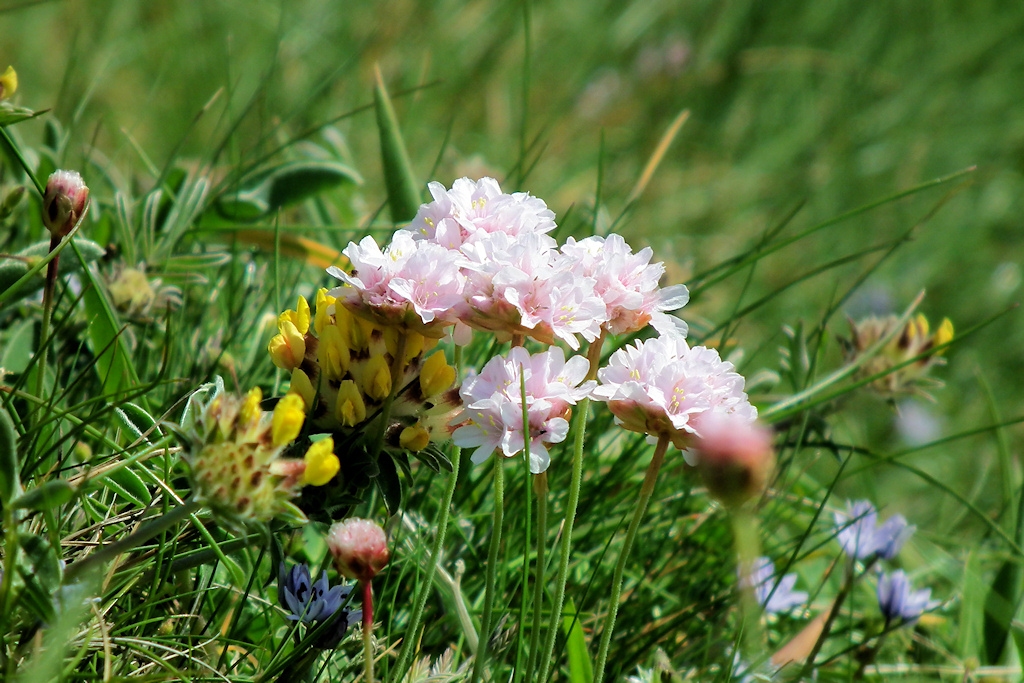


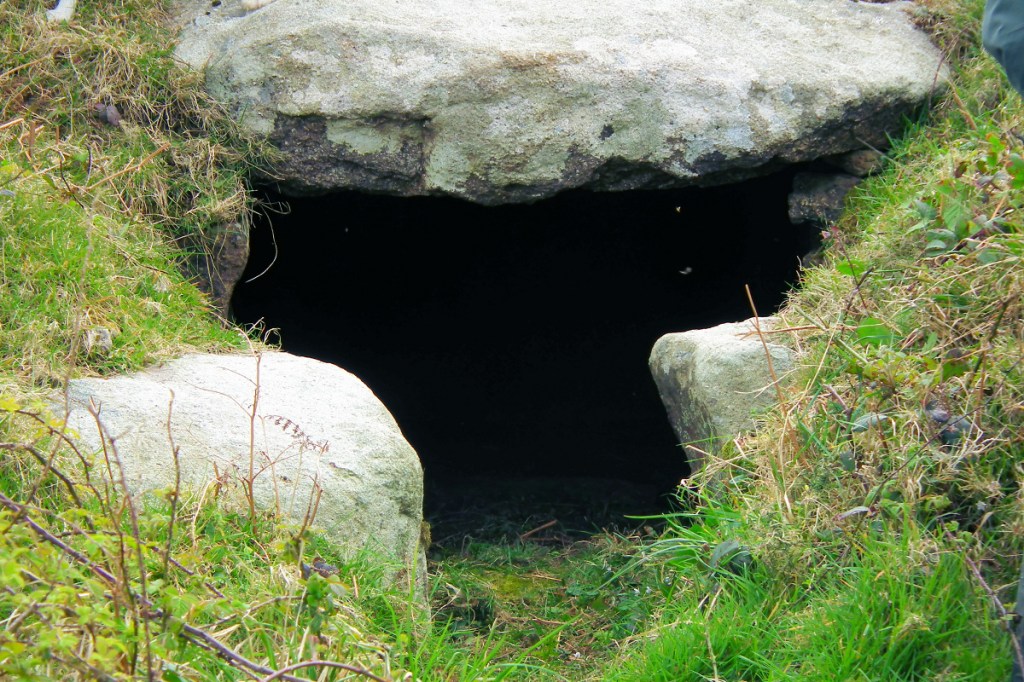
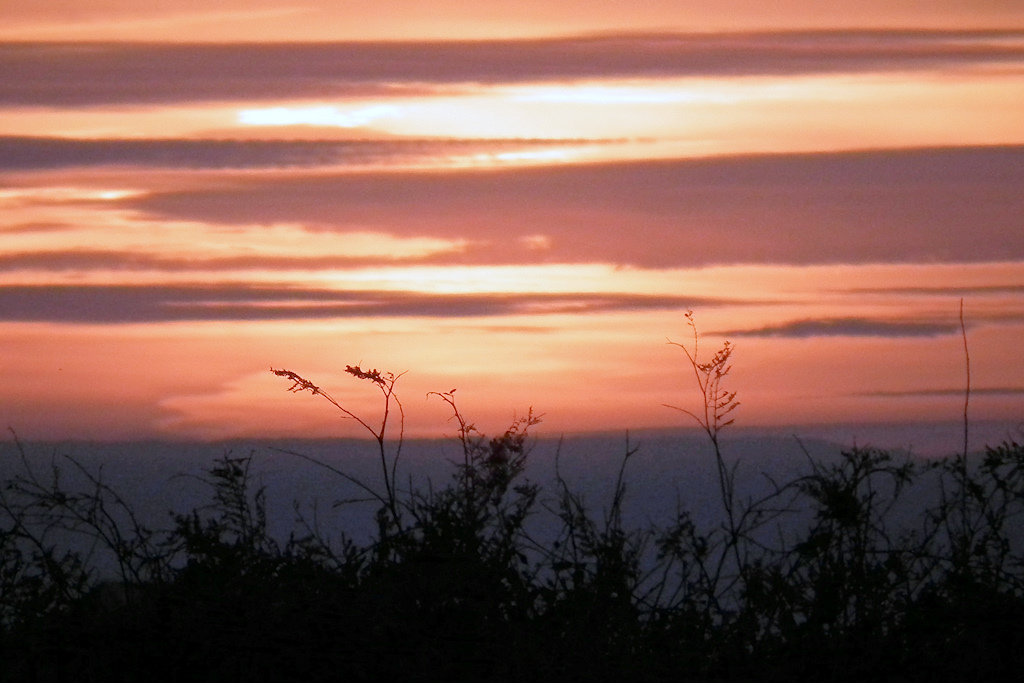

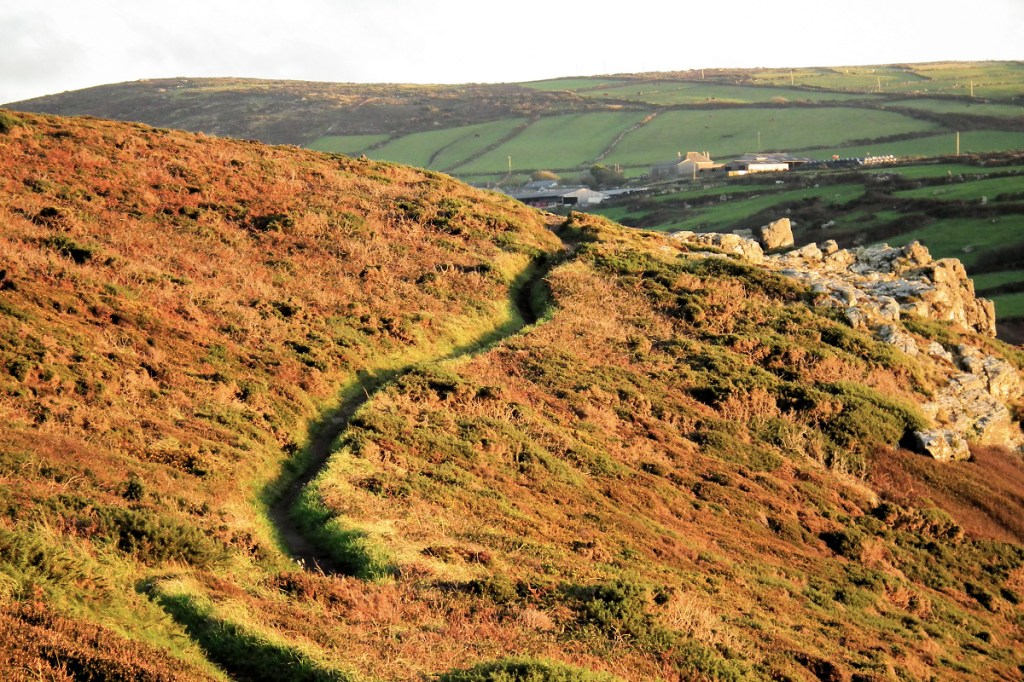


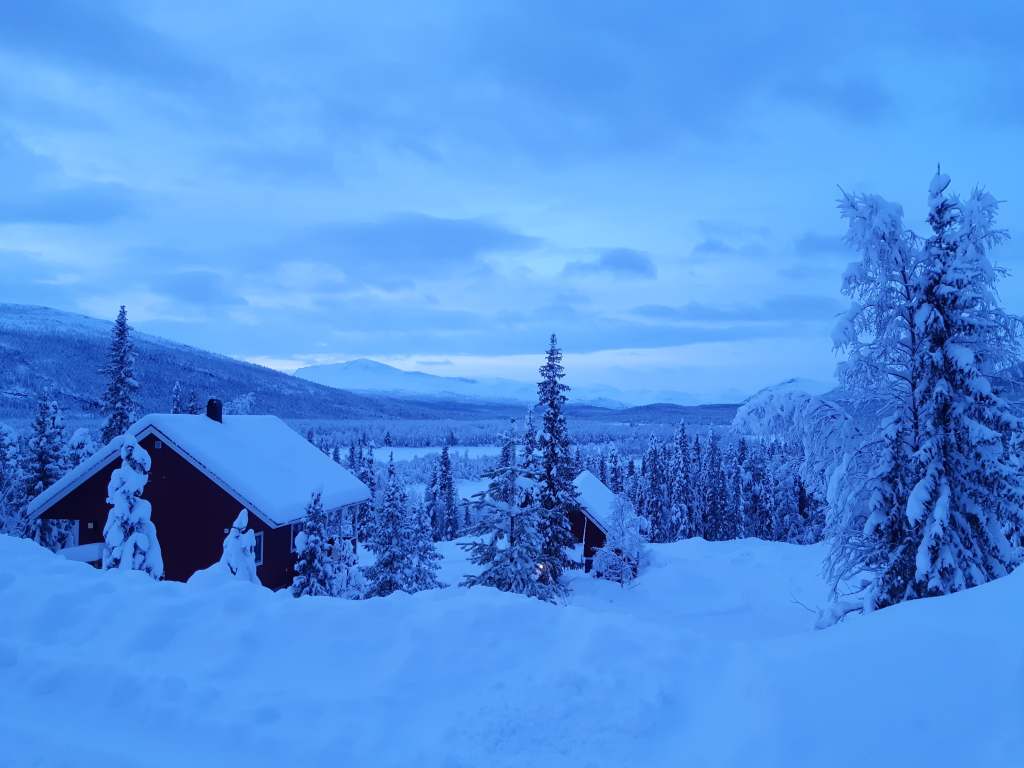

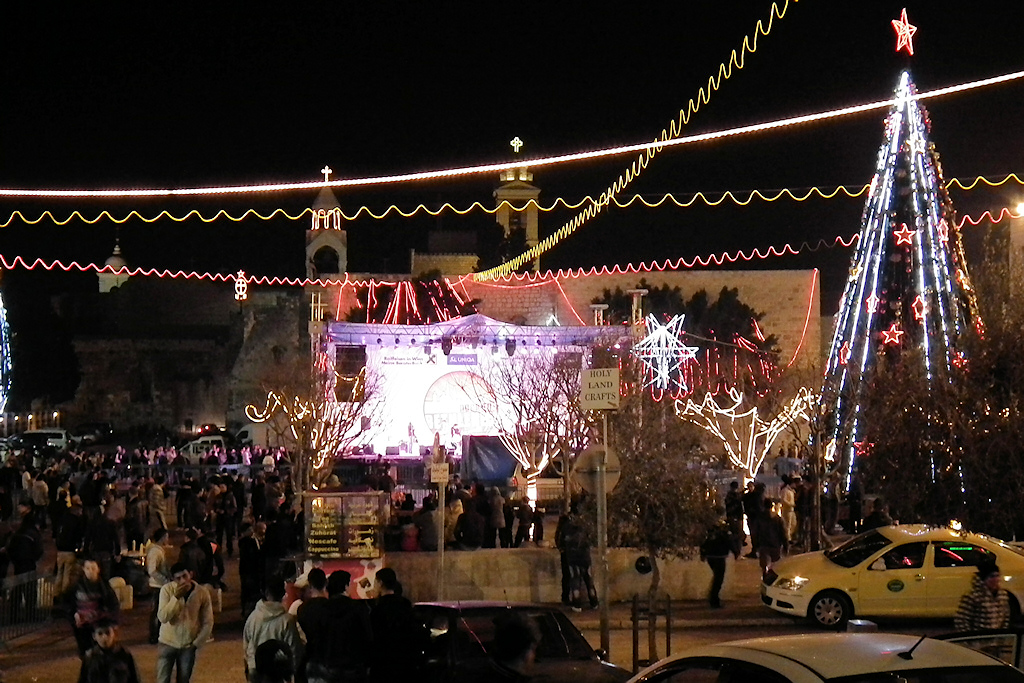




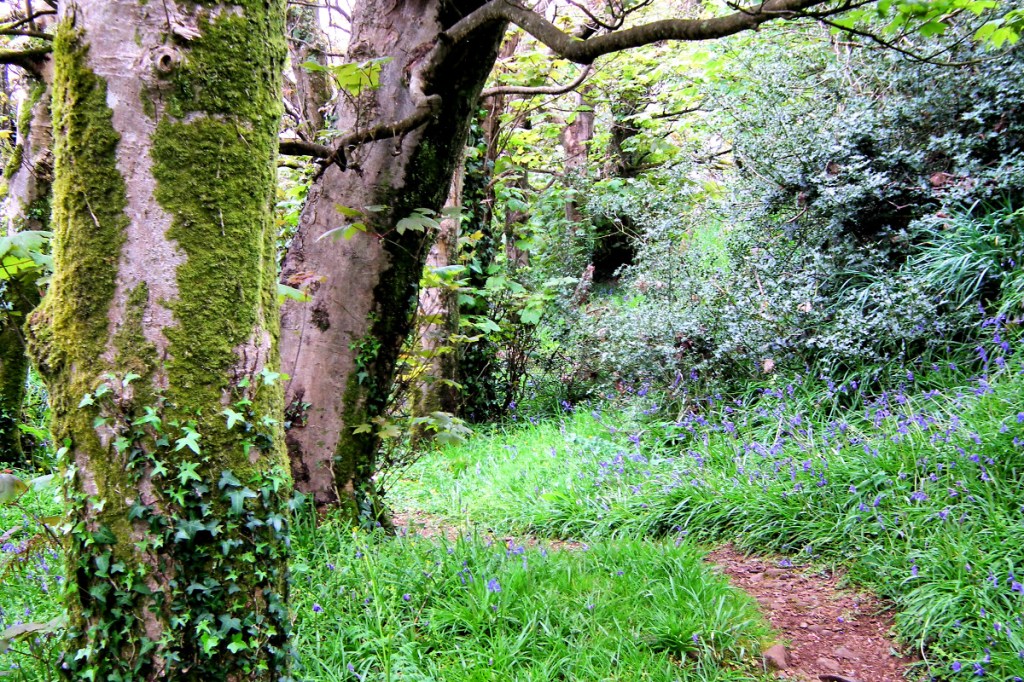


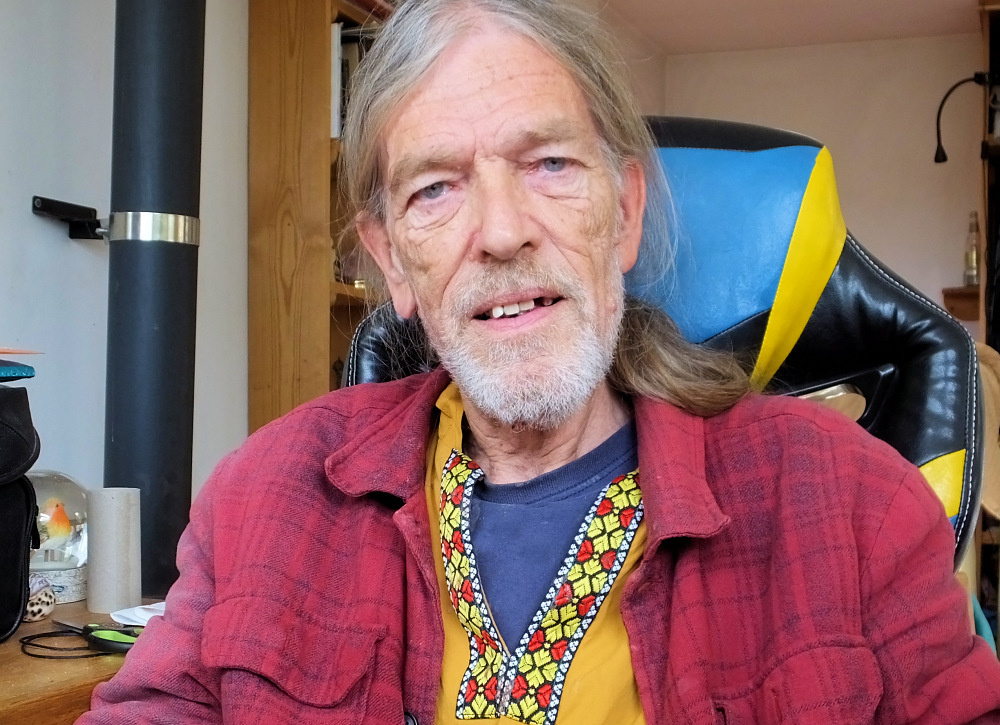
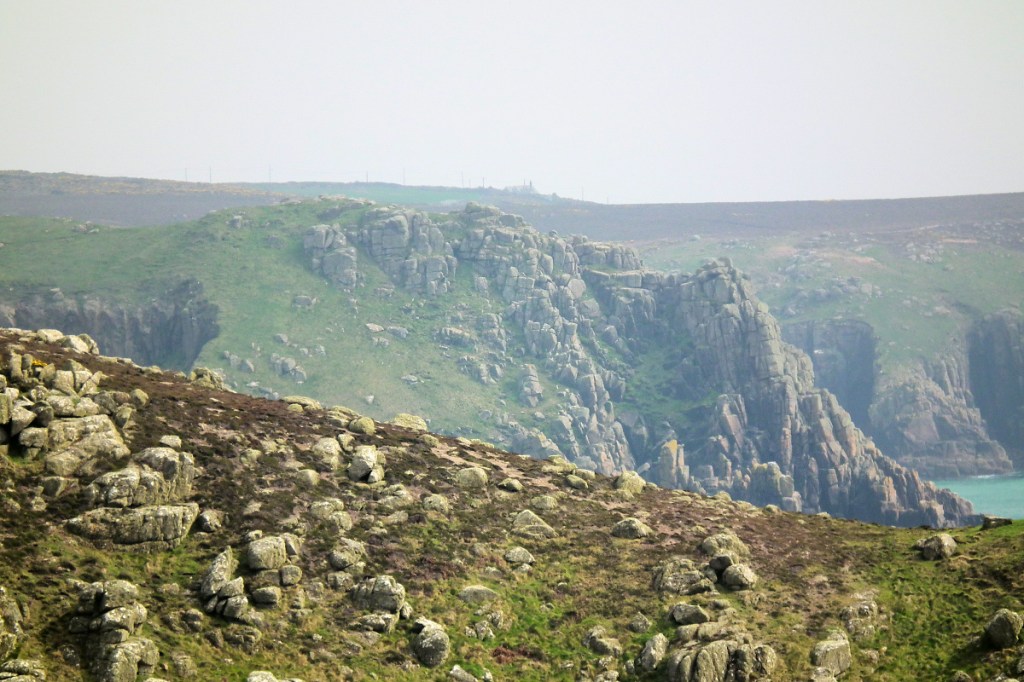
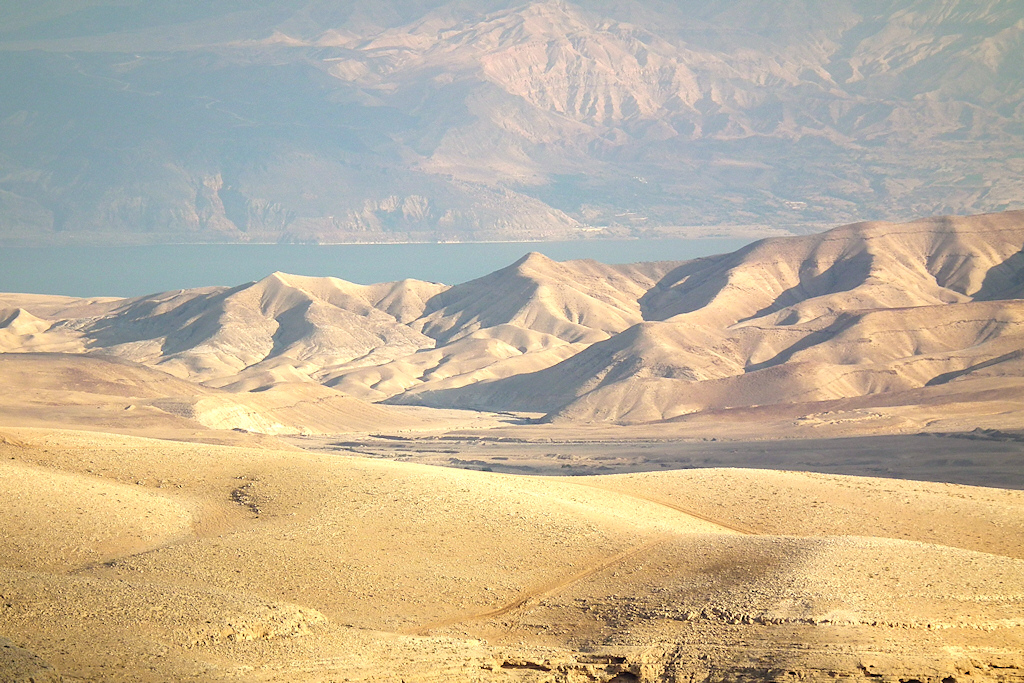


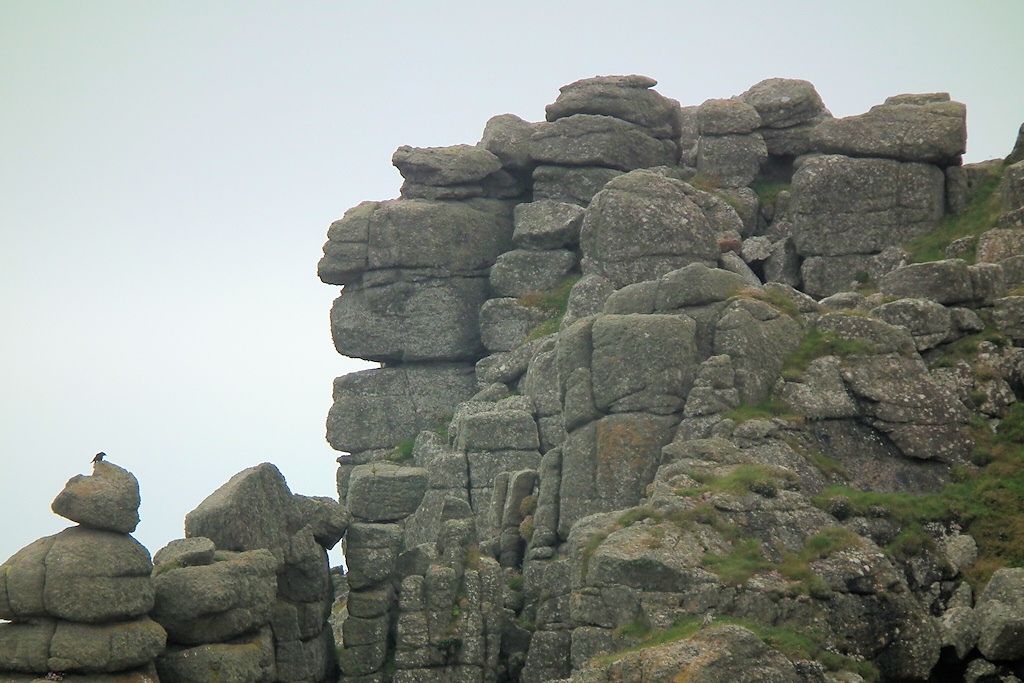
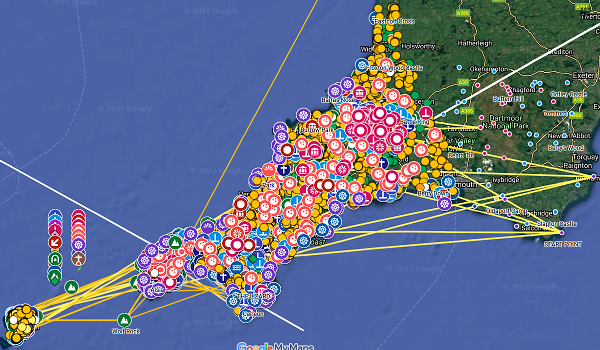


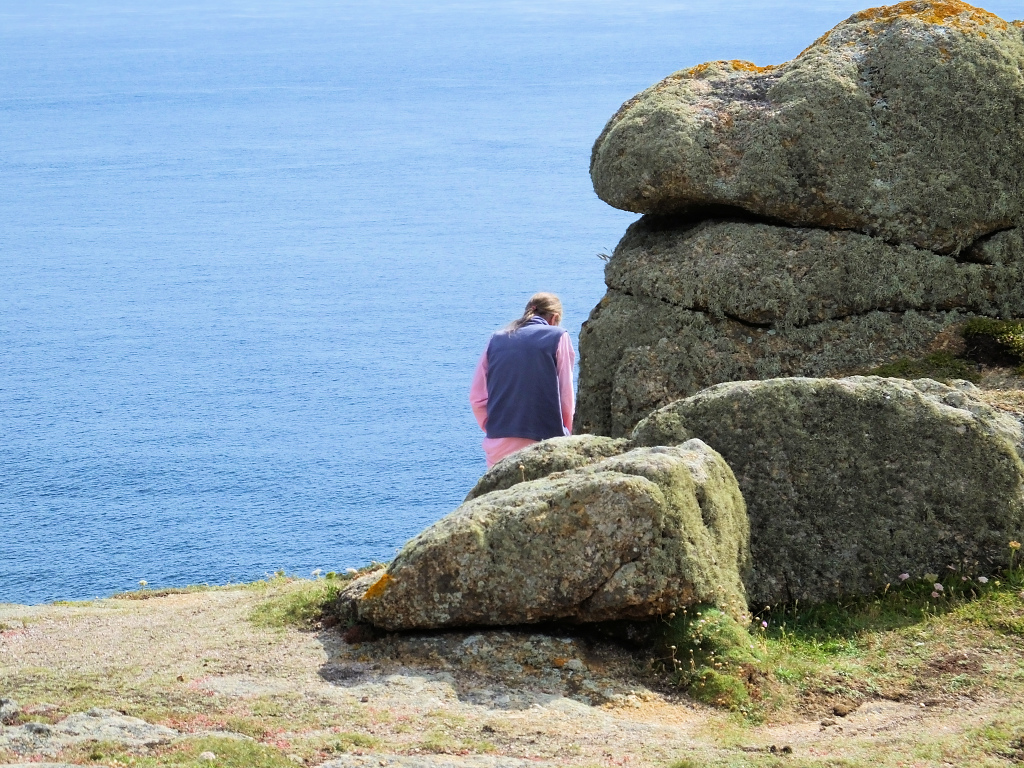
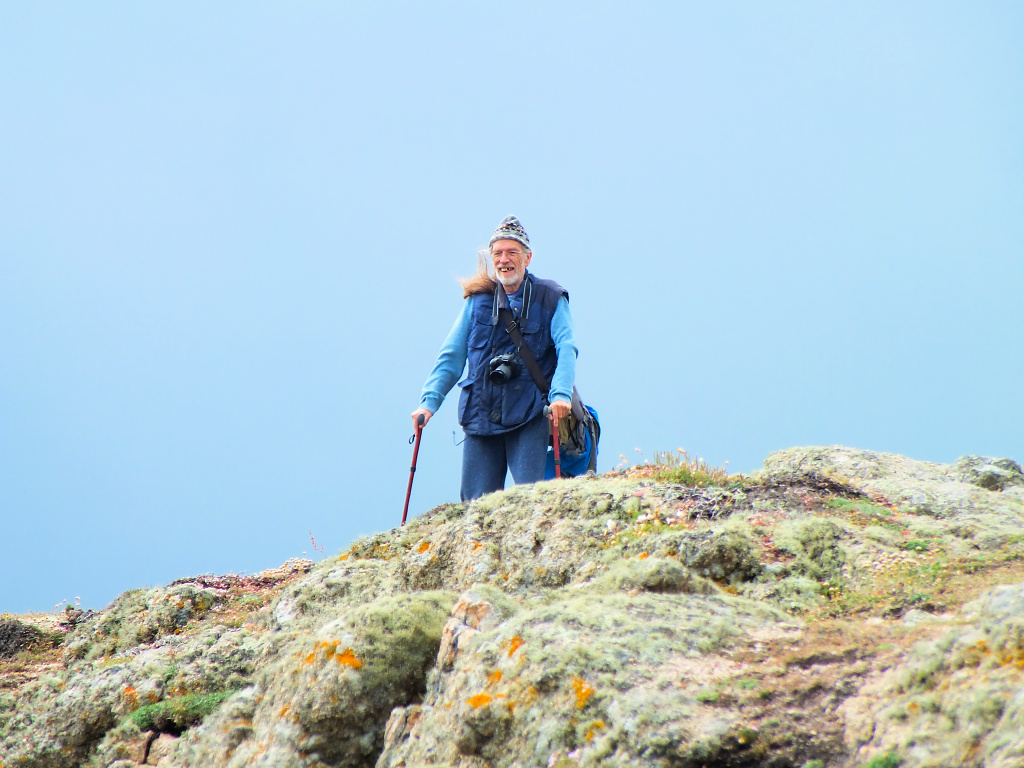

 Notes from the Far Beyond
You must be logged in to post a comment.