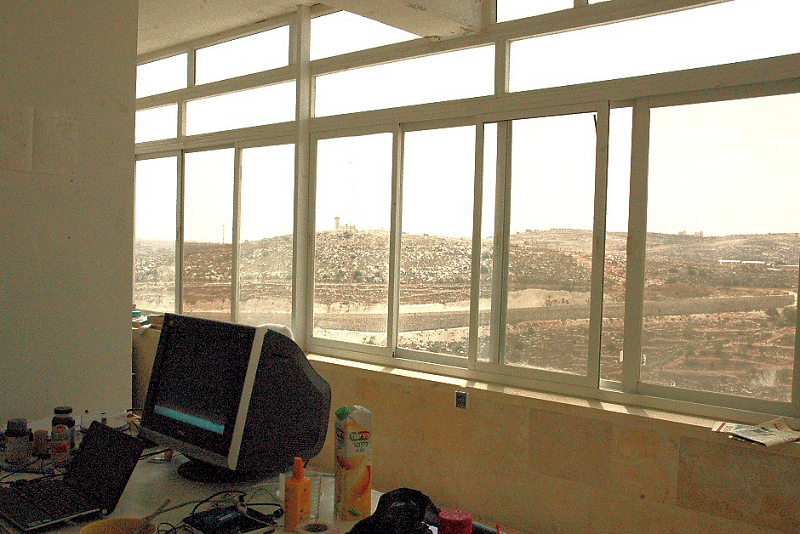
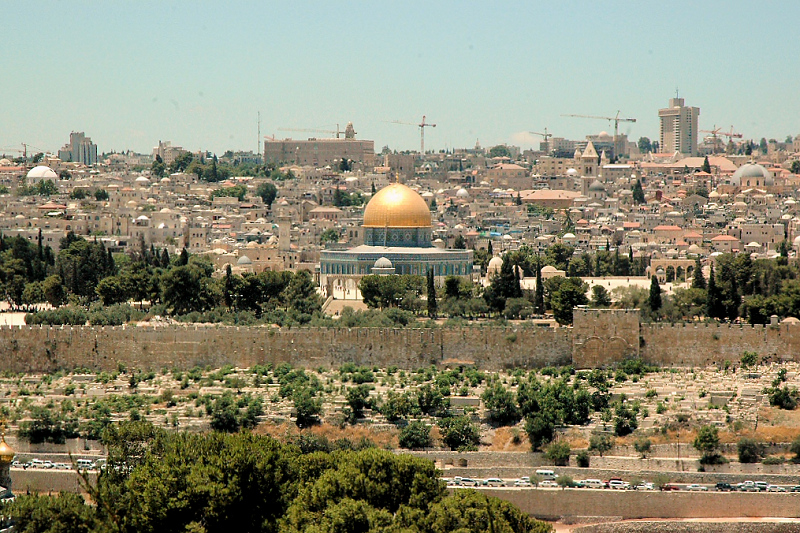
How Many Worlds can a Planet contain?

Thirtysomething years ago I had the privilege of working with a bunch of (for want of a better term) cosmic beings called the Council of Nine, compiling and editing a book for them, ‘The Only Planet of Choice‘. They dropped in loads of remarkable insights and here’s a bundle or two of them. Some readers might think this stuff far too way out, or utter garbage – so use your freedom of thought and intuitive discernment here.

Planet Earth is very different from other worlds. One factor affecting this is its gravitational density and the intense physicality of our lives on Earth. This has had a troublesome, diversionary and downward-pulling effect on human consciousness, with the result that we tend to forget why we came and what we are here for. We get lost in the daily round and in our psycho-emotional stuff, losing our connection with spirit. It has made human history into something we can be proud of and also we ought to be ashamed of it.

Over the centuries and millennia we have institutionalised this situation, making it our default behaviour, such that waking up to the heart of the matter has become an exceptional, dissenting thing to do, with difficulties and sanctions attached. This is further exacerbated by historical factors such as the control agendas of dominant elements in society and the compromised submissiveness and conformity of the majority. We’ve given power to fear, guilt and shame, clamping our spirits and clipping our wings.

There’s another issue too. As a planetary race, we did not start our evolutionary journey together as one tribe or family, originating from one single source, as is the case (according to the Nine) with many worlds, cultures and civilisations throughout the universe. Humanity has physically evolved in a Darwinian sense, with periodic non-Darwinian seedings and tweaks from outside, as part of a hybridisation project. Such discreet interventions have helped us evolve in consciousness, culture and technology too, though in quirky and sometimes dangerous ways.

The aim was to breed a new kind of conscious being that could be at home in denser and more experientially-diverse conditions than ever before. The idea was to draw influences and souls from throughout the universe, throwing us together on one planet, in the hope that we might co-create something new, different and never done before. We were to become a new kind of individualised, enspirited, dense-physical, humanoid-type being.

So Earth has become rather like a New York or a Singapore in experiential terms – naturally and intentionally multicultural. Living in different cultural realities and localised mini-worlds, we have been bumping up against one another throughout history, becoming changed in the process. The end-game of the modern phase of Earth’s history is to get all these cultures and individuals to come together as one planetary race – a race that is capable of managing its own world and making something of it.

So now, by 2025, we have created a world system, criss-crossed with cables, shipping and air lanes, and humanity now needs to catch up with all that this means. Nationalist and isolationist feelings are a symptom of a stop-the-world reaction to this historic mega-trend. As usual, we walk into the future facing backwards, more concerned about what we’re losing than what we’re gaining.

Also, life on Earth is always a mixed bag, and experiencing this is part of the grinding process that hones the soul. It faces us with choices – sometimes big and deep ones – and that’s what we came for.
They called for volunteers – this wasn’t conscription – saying that living on Earth would be difficult though potentially rewarding – a fast-track way of honing the soul. We would be given individualised free-will – a capacity to do whatever each of us feels best. As incoming souls, we felt that we could maintain consciousness sufficiently to fulfil our purposes in signing up for this project. At first we had that kind of clarity about life that you sometimes get when you’ve been on holiday, done ayahuasca or been on a meditation retreat – but then, when you get home, the pressures and complications start, and the main agenda gets set aside for another day, when there’s time… and we get lost again.

Over time, more and more souls came, as individuals and as groups, creating a population explosion in modern times. It has become a mass-migration, rising into billions, and fresh souls are still coming. (At one point the Nine said that Earth’s optimum population is around 200 million, not 8-10 billion, though they also reckoned we could manage such high numbers if we did it right.)

We now have a situation where we have billion of souls on one planet, yet in very different worlds. Multiplicities of them. This diversity happens on the same street, even within families. Diversity doesn’t have to mean dissonance yet currently dissonance is strong, and this matter is going critical. Not least because, on a deep psycho-spiritual level, dissonance makes divide-and-rule easier, and arguing has become pandemic in scale.

The consequences of dissonance have been highlighted in Gaza. Palestine/Israel is a microcosm of the whole world – divided, and not just two ways. This microcosm business is a key reason why this conflict matters so much to so many people. It holds the world down. Around 12 million people are holding 8,300 million back. Yet equally, if it is resolved, it could lift up the whole world. And this isn’t really just about Israelis and Palestinians – at root it’s about people and the Megamachine.

Neither is it a simple equation of one side as badguys and the other side as goodguys – it’s far more subtle and convoluted. Yet it polarises around Israelis and Palestinians because we have a habit of dehumanising others, lumping them together into a mass of horrible, fundamentally different people who threaten our happiness or our very existence.

Israelis and Palestinians, bless them, live in very different worlds, to the extent that people on either side just cannot see what it’s like being on the other side – except for some brave souls on both sides who are willing to step outside the confines of groupthink. We all variously do this dehumanising thing, justifying ourselves by making others wrong, but Israelis and Palestinians have an acute and persistent case of it.

They aren’t even in the same conflict, though they live close together in one small ‘holy’ land. It all boils down to the way we see things – especially when we get het up, losing our patience and tolerance.

This is why, in peacemaking, it isn’t possible to propose nice, sensible diplomatic solutions to which everyone can easily agree and comply, point by point, so that we can all go home and forget it. They’re fighting different wars, committing different suicides. This stuff, this shadow, goes so much deeper.

Plenty of shadows lurk in the collective psyche of virtually every country and social grouping worldwide – some of these ghosts are dormant, some simmer and some are heating up.

At present, globally there are few encouraging signs of mass healings and breakthroughs, and this leads to a creeping sense of disillusionment and disappointment across humanity.

If anything, the main factor currently pacifying conflicts seems to be exhaustion – sheer weariness. That’s not resolution and healing, but it can allow feelings to cool to manageable levels. Social-cultural healing can take decades, but there comes a point where both sides see that healing is cheaper than the price of continued conflict.

So it’s all a matter of what happens after open conflict ends, and whether a momentum of progress can be built up. It requires a time of confidence-building where each side has to restrain itself, even during touchy moments. In some respects this demands more bravery than in times of war, since there’s a courageously resilient madness to warfare that subsides with peace, once people get used to sleeping safely in their own beds.

Deep down, many Palestinians understand the pain Israelis feel over the pogroms and the Holocaust, but it was Europeans who did this, yet Arabs are being punished. The Arabs of Gaza, the West Bank, Jerusalem and Israel are divided by circumstance, permits and walls. There’s a tug-of-war between negotiators (Fateh) and resistance fighters (Hamas), and neither is winning or compromising. Recent events have stumped the negotiators and decimated the resisters, and many Palestinians feel rudderless and stuck in a tightening vice of diminishing options. Top to bottom, Palestinians are hurt, dismayed, upset, unsure what to do next.

Meanwhile, Israelis feel deeply hurt and shocked, and for entirely different reasons. Zionists, centred in Jerusalem, are hurt and angry since their God-given right to the land of ‘Greater Israel’ is being obstructed by an interfering world filled with Jew-haters – and Arabs ought to get out of the way. Meanwhile the ‘peace camp’ centred in Tel Aviv, themselves hurt, diminished and stumped, have lost much of their trust in everything and everyone, preferring life inside a missile-protected beachside bubble.

Historic Jewish insecurities have genuinely been reawakened, with some Israelis lashing out, others recoiling in dread and many stuck, confused and afraid. Something fundamental has dislodged in the Israeli and the international Jewish psyche, and something ill-judged and disproportionate has welled up in the attitudes of non-Jews toward Jews.

Israelis and Palestinians sit in fundamentally different worlds, each with different ways of dehumanising the other. As do those who support either side, around the world. Palestine activists need to stop belly-aching about genocide and rights and actually support real-life Palestinians directly with friendship, money and contact. Meanwhile, those who bang on about anti-Semitism need to forget it, and those who deny or ignore it need to remember it, deep in their hearts.

It’s a reality-conflict, projected on others yet reflecting what’s going on inside all of us. It’s about far more than just Palestinians and Israelis.

But there’s a flipside. Conflict and hardship can be so crazy, tough and senseless that it leads to a kind of rapid de-traumatisation, an epiphany, a deeper change of heart and optic. This happened after WW2, with the founding of the UN, the EU, the welfare state, the beginning of decolonialisation and of the urbanised modernity we now take for granted.

That ‘rules-based order’ is now getting shaken up and we have entered a slippery phase in which things are accelerating to a point where none of us really knows where we stand any more. We’re being forced to let go of past structures, habits, heroes and normalities. We’re being ground down.

The key issue is that we need to get on with each other.

Otherwise nothing else can get resolved. So, from a planetary-evolutionary viewpoint we’re at a really critical tipping point in history. We have come from very different worlds across the universe, developing very different cultures here on Earth, and we now have urbanised ourselves into multicultural melting-pots – 60% of humanity lives in artificial cities over half a million in size. This, plus increasing global migration, is humanity meeting up with itself.

The whole universe is watching, and it means a lot to them – not least because we’re their relatives. They will not intervene unless it is absolutely necessary (think of the ‘prime directive’) because intervention will override the purpose of the whole planetary project – to find out what happens in a dense-physical world run according to free-will rules.

Besides, I don’t think they really know what to do with us. They really need us to sort ourselves out.

We humans have become hyper-reactive, complex and dangerous – we even fight over toilet rolls. When they give us prompts, gifts and clues – subtle interventions – as a whole we tend to ignore, corrupt or misuse them. Or we resist. Or we create complex diversions and avoidances.

It’s all to do with seeing beyond our own little worlds, stretching ourselves and seeing things from another viewpoint. This is difficult right now, since our divisiveness has gone viral. Every society has a kind of concussion, dogged by past trauma and by the intensity of change happening now in these times. All societies have a consensus problem, a solidarity problem and a leadership problem. Old answers aren’t working, even though we keep grasping for them. Yet, strangely, this parlous situation is a necessary part of the change process – and there’s further to go.

We no longer need a rules-based order. We need an integrity-based order.

Some are moved to weaken and destroy the old rules-based order, but on the whole they do not know how to create a system based in integrity. Meanwhile, oligarchies cannot reform systems from which they themselves benefit, and which protects them from a latently angry world public.

So change needs to start from bottom up, and increasingly, fitfully, valiantly this is happening more and more. But to do so, ‘the mass of humanity’ needs to develop a certain maturity, forgiveness and a set of basic common standards. The Hindu rule of ahimsa or non-harming is one such standard.

This is why the imagery of devastation emanating from Gaza stirs so many people worldwide. Such devastation has been seen before but Gaza hits a nerve in the global psyche – especially in the Global South. Gazans have hit bottom. A fuse is close to blowing in the world psyche and in the geopolitical arena. Gaza is like a magnifying glass, exposing all sorts of agendas, shadows and cobwebs underneath.

At present there’s even a possibility of a sudden, house-of-cards tectonic change in world geopolitics – as a pragmatic and rapid adaptation to an avalanche of facts. This might lead to coffee and toilet roll shortages: it will affect everyone and force changes that, if truth be known, really need to happen.

We humans are up against the consequences of letting things pass when we know we should have drawn a line, many times throughout history. The ‘war to end all wars’ should have been like it said on the tin. We’ve got ourselves into a global-scale historic mess, imprisoned in self-created default behaviours, laws, regulations, systems and self-defeating patterns.

This has framed itself around Israel-Palestine because it’s not just about Palestinians and Israelis. It’s about the world’s capacity to decide what’s best. This hundred-year conflict would not exist without the interventions and manipulations of foreign powers that have fuelled it and failed repeatedly to address it. Too many bombs, too little wisdom.

It boils down to a touchy geopolitical question that we face in coming decades: the capacity of nations and the ‘international community’ to interfere in the sovereign affairs of individual nations, when necessary. And who decides?

Take this a level deeper, and it concerns our capacity as a planetary race to run and organise our planet. Doing so involves facing all of the big and small problems we have – an enormous task, yet it’s unavoidable. This would be a critical step in human evolution – a rite of passage and a triumph of global solidarity, based in disagreeing agreeably, bridging differences and staying focused on the main priority – getting the world back on track and making it a safe, fair and happy enough place to be.

There is a solution to all of this that the Nine mentioned quite often, and it isn’t new. It’s a simple, easy-to-understand yet profound method for achieving an integrity-based order, and it applies to everyone, at all levels of the human pyramid.

Treat other people as you wish to be treated yourself.

If we did just this, Earth would be a very different place.

With love, Paldywan
www.palden.co.uk

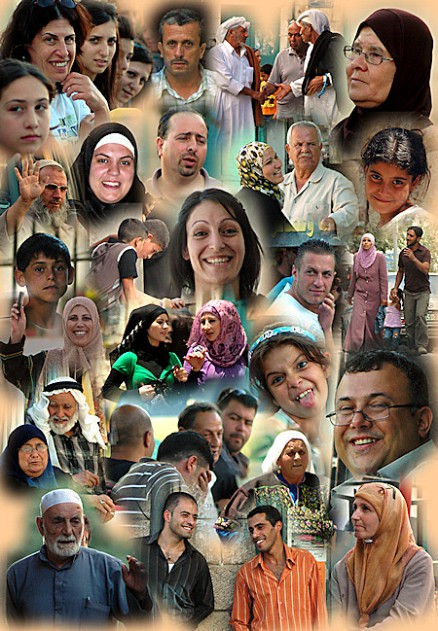
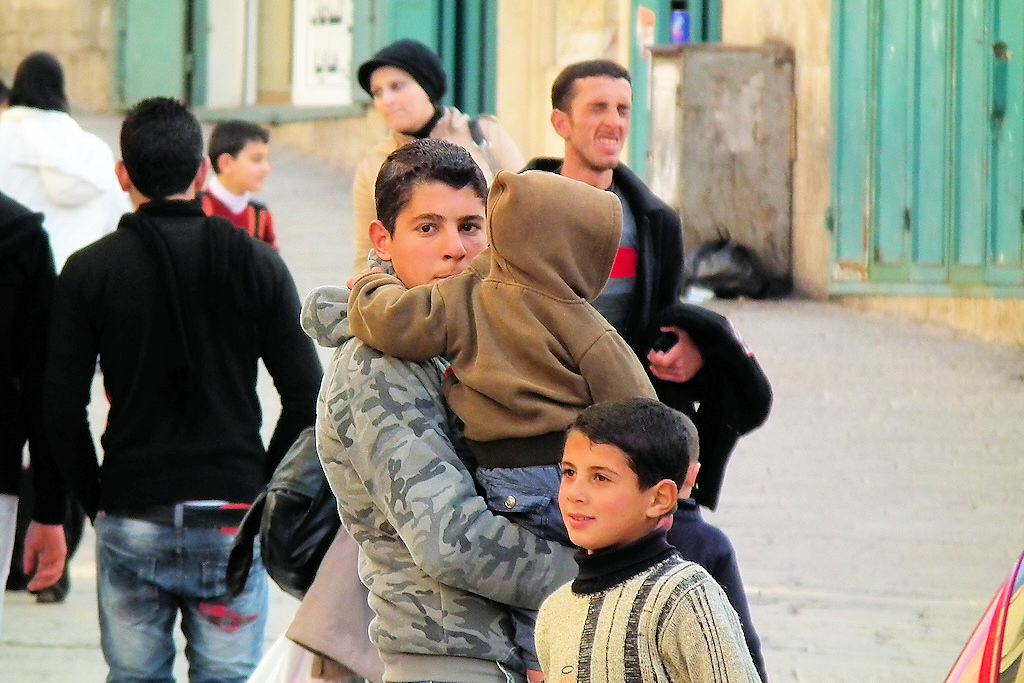
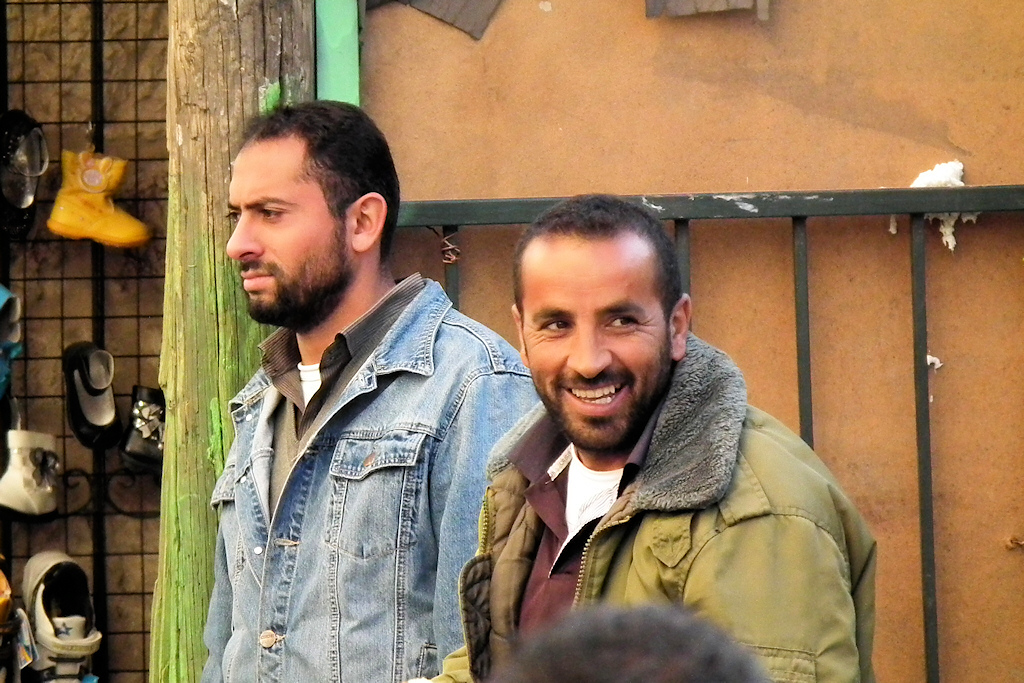
The pictures are from Planet Earth. Quite a remarkable place. Worth a visit.

Antipathy

This started out as my usual weekly posting about the Sunday Meditation, but it turned into something else…

A Palestinian bagpipe band in Manger Square, Bethlehem – a leftover from British Mandate days

In Britain we currently have a kerfuffle about an anti-Semitic murder outbreak in Manchester, one of the most multicultural cities in our country. Though I’ve worked a lot with Palestinians, mercifully I’ve never been accused of anti-Semitism. Throughout my time working in the West Bank I had a lot to do with Israelis too – particularly former soldiers. A few of them helped me smuggle tofu from Tel Aviv through Checkpoint 500 outside Bethlehem – packaged tofu looks rather like Semtex, you see.

My grandfather was part of General Allenby’s British invasion force in Iraq and Palestine in WW1, and my father was in Egypt and Palestine in WW2. Some of my German ancestors were executed for opposing Hitler, probably at Sachsenhausen concentration camp for dissenters, and some of my Roma ancestors went down in the Holocaust. Jews have played a key part in my awakening, in this life and others. So I have some threads of personal involvement here.

But what matters is that all this concerns humans and the way we treat each other. We’ve reached a global-scale impasse where our mistreatment and exploitation really need to change – particularly, to start with, humanity’s self-destructive tendencies toward war and violence.

Early on in life, as I was beginning to awaken in my late teens, though I was then oriented toward ecological issues, I realised that we will not make significant progress with eco-stuff while we are committing acts of violation and warfare against each other. Such atrocities put the brakes on human and planetary evolution. Since then I have trodden a path with one foot in the spiritual sphere and one in the political – an awkward dualism if ever there was one, with deep and conflicting moral and human issues involved.

One basic thing holds universally for all people of all faiths, beliefs and inclinations, including seculars. It’s necessary to understand and to feel what it’s like being on the other side. That’s one reason I’ve been involved with Palestinians: they’re on the other side from me – or at least, from where I started in life. Stepping over that gulf has been one of the most rewarding aspects of my life. Stepping over not just in belief and viewpoint, but in practical terms and, on a few occasions, putting my life on the line.

It was Tibetans, another bunch of apparent perpetual losers, who shoe-horned me into this. They presented me with the option to take the Bodhisattva Vow, a vow to dedicate my life to the benefit of all sentient biengs. In this I cannot claim to have succeeded and I’ve made loads of errors, hurting people and getting things wrong in the process, though the centre of gravity of my life has tilted toward service as a result of taking the vow. And I’m really glad about that.

For me, there is a connection between the blood-and-thunder stuff of politics and what many might consider fluffy, useless, unrealistic stuff such as spiritual beings and extraterrestrials. It’s all about stepping over gulfs. Mentally and emotionally. Crossing that divide. ‘Going native’. Setting selfhood aside in order to open up sufficiently to empathise with those others over there, on the other side. In this, a statement by a Christian minister in Northern Ireland has had a big effect on me. It’s this…

It’s better to fail in something that ultimately will succeed, than to succeed in something that ultimately will fail.

It’s pretty profound, that. Write it on your toilet wall.

Two West Bank Palestinians chatting with an Israeli settler

Back to anti-Semitism. So, in your thoughts and beliefs and the way you structure and apply them, use your discernment. When your finger is on the trigger, you have a choice. You can kill or harm that person (even if only in your private thoughts), but the memory will stay with you forever, no matter how much you repress it. That’s an example of something that succeeds in the short term though it will fail in the longterm.

Or you can spare them and turn the occasion into a massive, pattern-changing mutual learning-situation for both of you. That’s your choice. And there are consequences to everything that we do. And there are consequences also to those things we avoid and deny, or we fail or omit to do.

We live our lives on each other’s behalf. Humanity is one being, and we are micro-cells within that being. Humankind is on a path of accelerated growth, both in population and in spirit. We’re now being faced with the future and with a choice to carry on as before, or to step over a threshold into a rather wide-open and at times scary space. This comes to a crunch when we face the Other, the person or the people over there – the people we don’t like. They test our capacity to understand, accept and forgive – and to see ourselves more clearly.
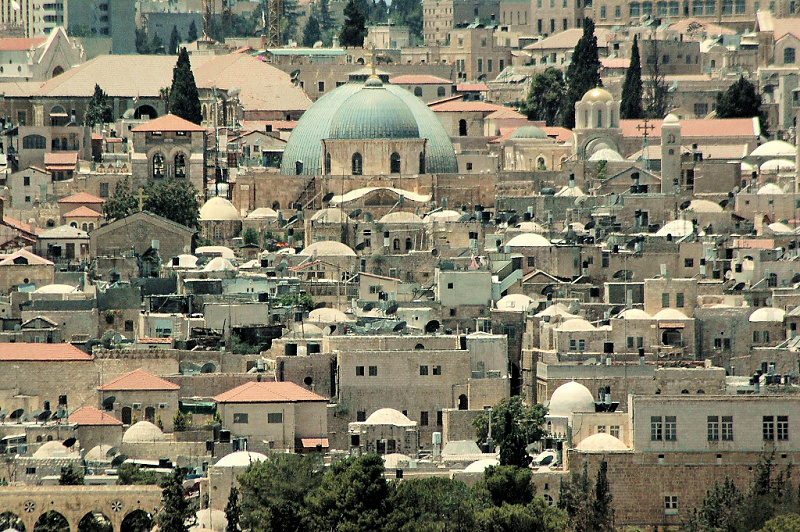
Compassion means ‘with-feeling’, standing in others’ sandals and boots and feeling what it’s like. Agreement or sympathy are not required. Just feel what it’s like.

This isn’t about giving way, losing your precious sovereignty or getting guiltily floppy. It’s about a new kind of strength that requires discernment. There are things in our world that are wrong, regrettable and ultimately flawed, and we are challenged to stand up and do something about correcting those. Not just to wring hands and grind our angst over them, but actually to do something about it – at least within our own sphere of possibilities.

And there are situations where we need to stop, look and listen – we need to be willing to review our position, our habits, preferences and patterns, and make a change. If a stranger knocks on our door seeking help and refuge, what is our choice?

Israelis and Palestinians can and do have fun with each other

So, if you are pro-Palestinian in inclination, make a stretch and put yourself in the shoes of a variety of Israelis and international Jews. Feel what it’s like being them and being in the situation they find themselves in. And if you are pro-Israeli or Jewish, stretch over to feel what it’s like being a variety of Palestinians, whether in Historic Palestine or in the diaspora. And if you’re not bothered, feel what it’s like being bothered.

Because it’s good for you. It broadens your horizons. This is about humans – and you are one of this crazy, self-immolating species. Would you like being shot at or bombed? Would you like being hungry, having your home destroyed or seeing your father carted away at gunpoint?

Discernment is tricky to work with. Quite often I am approached for help, and I have to say No. That’s because helping them will overload my capacities and harm the people and things I am already working to help. Better to do small things well than big things badly. Guilt does not work in this context: if guilt is involved in altruism or political activism, things will go wrong. Guilt distorts true giving and sharing.

The world is polarising right now, more and more. We’re each and all faced with a question: are we ourselves adding to it, or are we bridging gulfs, whether with a smile or by giving our lives to something that builds bridges?

Jews have been victimised and persecuted for many centuries – particularly by Europeans claiming to be Christians and followers of that Jew called Jesus. Secretly, we Brits, though we righteously fought Hitler, we were quite happy to get rid of Jews and send them to Palestine, one of our colonies – though we’d have preferred them to go to Uganda. We taught those Jews all the means of oppression that we now see imposed by Israelis on their neighbours.

This doesn’t mean we should guiltily go along with what the Israeli state – Netanyahu and the Judaeans – currently do. Because this is about People and the Megamachine, and Israelis suffer this problem as much as anyone. There are young IDF soldiers who, today, are eating their hearts out over serving in Gaza or the West Bank. There are Israelis and diaspora Jews who are in a deep moral confusion and pain over this. It’s Christian fundamentalism more than Jewish extremism that is really driving the Gaza catastrophe.

John, a Palestinian Christian, outside his souvenir shop in Bethlehem, now closed by Israeli soldiers. I wonder how and where he is now?

In the West Bank, one thing that impressed me was that the majority of Palestinians didn’t dislike Israelis as such. Only a few Israeli friends would dare to visit me in the West Bank – the rest feared for their lives, and largely incorrectly. I forget the Arabic word for it, but what Arabs feel strongly about is not Jews, but assholes. They have a strong sense of the difference between a good person and an asshole. As a Brit, by rights I should have attracted the anger of some Arabs, because of history and what we were at that time doing in Iraq and Afghanistan, but I did not.

People would ask me whether I was a Christian, a Jew or a Muslim and, when I said No, they couldn’t figure out how I could be ‘a good man’. Well, the Hand of God moves in strange ways. But they were willing to rise up and stretch beyond their customary social judgements. That was a big teaching for me.

One Palestinian Christian, John, said to me that he felt pity for Israelis, despite all the wrongs they had done to him and his family, because many were Europeans, Americans and Russians who had gone through so much. “As a result, they are individuals, on their own, and they even question and defy God, while we Arabs have each other and we love Allah in ways you Europeans do not understand. We fight them because of our current pain, not because of the pain of the past – their pogroms and Holocaust. So, when the pain stops, we’ll stop. But they find it difficult stopping. If we stop, I fear that they will fight each other. So perhaps it is better they fight us.

It’s also true that in times of bloodshed and violence, Palestinians polarise against Israelis, and those who don’t polarise have to keep their heads down. But when times of relative calm come along, Arabic attitudes tend to be more forgiving.

This is the secret that many Israelis fail to understand. If they let Palestinians get on with their lives and have a decent life, all will be well, and eventually Israelis and international Jews will have the safety and security they deserve. This will take time (perhaps three generations), and there will be mishaps, but this is how endless war and jeopardy will turn into mutual appreciation and cooperation, even if it takes time.

The Manchester killings happened on the Day of Atonement, giving them extra poignancy. It’s a day of recognition, understanding and forgiveness. A day of consciousness, awareness of options. The Council of Nine, a bunch of non-earthly cosmic beings I had the priviledge of working for, thirty years ago, put it very well. They said that Jews are not the Chosen People – they are People of the Choice. The choice to ‘obey the laws of God’ and the covenant that we as humans have with God or the world of spirit, or of nature.

They also said something else. Although Jews can be clannish, separative and exceptionalist, throughout history the vast majority have melted into the wider world population, through exile, intermarriage, conversion or change over the centuries. This means that you could have Jewish genes, even if you don’t know it. Think about it. I’m part-Welsh, and the Welsh claim historic connections with Jews, going back millennia.

So, if you have strong feelings about Israel and Jews, just remember, there’s something inside you that might need facing. All the things we blame Israel for now, well… actually we all do them and we and our ancestors have all done them in the past – so own up. It helps not to carry those patterns into the future. Because this concerns humans and the future of our planet.

Thus endeth today’s sermon!

As for the Sunday Meditation, you’re welcome to join. There is no mantra, no scripture, no method, no sign-up and no obligation – it’s just a group of us in various countries meditating together for half an hour on Sundays (times below), and doing it each in our own way, together. If needed, further details are here: www.palden.co.uk/meditations.html

May all beings be blessed, whether they are upstanding citizens or horrendous terrorists, on the right or the wrong side, and whether or not they have a right or an ability to defend themselves. For we all are here on Earth anyway and, in the end, we all seek happiness. And that’s the main thing. Oh, and, if you really want to find a cure for cancer, it’s forgiveness.

Love from me, Palden


If you seek further reading, try these:

  • The Problem of Israel. (I wrote this article in 2008 for a Bangladeshi newspaper.)
  • Brinkmanship. (An extract from Healing the Hurts of Nations, a book I wrote in 2003 at the time of the Iraq war.)
  • A Palestine historic timeline. (The pages that follow it might interest you if you seek insights into Palestine’s history).

Current meditation times, on Sundays:
UK, Ireland & Portugal 8-8.30pm
W Europe 9-9.30pm
E Europe, Turkiye and the Levant 10-10.30pm
Brazil-Argentina 4-4.30pm
CST, Mexico, Jamaica, Colombia 2-2.30pm
EST, Cuba 3-3.30pm
PST North America 12noon-12.30pm

PS. In my last podcast I mentioned how I’m finding writing more difficult now, and this is still true. Normally I’d write a piece like this in 1-2 hours but this took six. But I did it. Or it did me.

Tipping into the Future

A new podcast

Here are some thoughts on the current vexatious world situation and some of the threads that lie behind it. It’s all about the incremental North-to-South shift of world power, about people against the Megamachine, and Gaza and Israel, the decline of the West, and a few things like that.

Are we entering the future facing forwards or facing backwards? This is a key question in our time.

Listen on Spotify (it’s also on Apple and Google Podcasts):

or go to my podcast page: https://palden.co.uk/podcasts.html

Should it interest you, here are two relevant articles I’ve written in former times:
+ An astrological article I wrote about the 2020s, written back in 2020:
https://penwithbeyond.blog/2020s/
+ And here’s something I wrote in 2011 when in Bethlehem during the Arab Revolutions, about Hamas and its relationship with Fateh (the Palestine Authority in the West Bank). It’s pertinent now, for those of you who are into more in-depth thinking around Palestine.
www.palden.co.uk/pop/hamas-and-fatah.html⁠

With love, Palden

Lord Balfour’s Blooper

Bethlehem

Twelve years ago I wrote a piece in one of my Palestine blogs about the British period of occupation of Palestine. For some of you, it might throw some light and perspective on how this mess in the East Mediterranean all started.

This morning I fell upon it and it struck me that it might be useful re-posting it now.

So, if it interests you, try this (it’s a five minute read):

http://www.palden.co.uk/pop/balfour.html

It’s a chapter from one of the three Palestine books I wrote back then. This chapter is from ‘O Little Town of Bethlehem‘, a book that hasn’t been published in print but it’s available as a PDF, as is ‘Blogging in Bethlehem‘. ‘Pictures of Palestine‘ was published in print though. They’re all available through the PoP site.

With love, Palden

Palestinians in happier times than now

It is Necessary only that Good People do Nothing

I’ve always been an optimist, deep down inside – a Jupiter in Pisces type. I’ve felt this underlying optimism ever since I was young – not rigidly, but because I keep coming back to it after periodic times of despair over the state of the world, to which, for my growth, I’ve been karmically tied all my adult life. It’s over fifty years since John Lennon sang, outrageously at the time, that we should give peace a chance. I cannot say there has been a lot of visible progress.

However, underneath, something has changed. Many of the ideals of 50-60 years ago are in fits and starts becoming pragmatic policy strategies, and the balance of opinion at street and village level across the world has over the years quietly tilted against war. The strength and clarity of this consensus is yet to be tested, but hints of it are visible in world opinion over Gaza. We’re approaching that test.

Hair-raising world situations and crises have a way of arousing public feeling to a sufficient extent that a mountain of inertia, of helpless addiction to conflict, could actually start moving before long. Ukraine and Gaza have jogged us that way and there’s further to go. Trouble is, a consensus often takes shape in the background while vested interests act more quickly. This formula worked when Pluto was in Capricorn, from 2008 until now, but things are changing. With Pluto in Aquarius, we’re likely to have situations arising where vested interests find themselves encircled.

Polarisation, demonisation and dehumanisation are pre-requisites for conflict, and here the media and social media play an outsize role. If we truly believe in peace, then these three issues need tackling inside ourselves.

The information war is now as important as the military war. Since social media appeared, Palestinians have had more of a level playing-field. In the last conflict, young Gazans won the info-war on points, and this is one reason why Gazan phone networks are disabled now. Israel meanwhile fails to realise that, apart from military overkill, its determined, uncompromising certainty in pursuing its cause undermines it in the eyes of much of the world.

We’re getting too accustomed to witnessing blood sacrifices. We live in a thoroughly amoral world system and, collectively, by omission, we have failed to stop them happening. The system is rigged in such a way that, though we might choose peace, justice and ecological priorities, we undermine them simply by shopping at supermarkets, driving cars and using phones and computers.

I keep repeating Edmund Burke’s 250 year old quote: “For the triumph of evil it is necessary only that good people do nothing“. It’s true.

So we get the cruel destruction of people, cities and landscapes in ‘theatres’ such as Syria, Ukraine and Gaza – hellish nightmares that everyone hoped we’d left behind long ago. We’ll get more of this unless there’s a fundamental change. Such a change might start happening in the second half of this decade.[1] But, as with many of the world’s key issues, it won’t just happen. It has to be pushed, firmly and consistently.

It’s important that this pressure for change doesn’t become a new social conflict, a new cause for social and political polarisation. Battling over it will lead to delays and complications we can’t afford. The movement for peace needs to avoid adopting the methods of war and confrontation: success comes through building a rising tide of solidarity, consensus and cooperation. It needs longterm commitment and mass momentum, and if it is to succeed, the people of Earth need to get behind the project of saving our world. Global peacebuilding is a key part of that.

In relation to the current conflict in Is-Pal, taking sides is understandable, yet it is part of the problem. The problem arises from polarisation itself, not from the perceived goodness or badness of either side. What is under-reported here is an indistinct but nevertheless a majority global consensus tilting against war and devastation, by anyone, against anyone and for whatever reason.

The destruction we’ve seen in Gaza, Mariupol (Ukraine) and Kobani (Syria) in recent years have nudged this sleepy consensus along. Humane empathy is bubbling up in collective consciousness, especially amongst the young, the power-holders of future decades. But is it strong enough to overcome the resigned belief that conflicts are an unavoidable yet necessary evil?

Behind this lies a bigger problem. Governments of all kinds are out of step with their people. Defence and international relations, even in democracies, are managed by godfathers who decide the ‘national interest’ on our behalf. So, in future, matters of war and peace boil down to a bigger question: who decides?

Majorities in the Global South and also the Global North are proving to be pro-people in attitude. Current wars have taken on a people-against-the-Megamachine optic: we see high-tech war machines ranged against crowds and communities of people, mowing them down. With Pluto entering Aquarius for the next 15 years, this meme is strengthening – we’re watching it happen in Gaza.

Here’s an astrologer’s warning. From 2025-6 until 2038 Neptune is in Aries, an awkward period in which we’ll be faced with a key cause of war: big guys and strongmen who take it upon themselves to determine our future, often at the expense of majorities.

In Sudan we see a country being wrecked by two competing military leaders and their oligarchies. In Ukraine we see two very different kinds of strongman ranged against one another – Putin and Zelensky. In Israel we see a remarkably cynical prime minister taking on the whole world, convinced of his own rightness. In Gaza, Hamas is a resistance movement which, though it has its prominent leaders, is more horizontal than a hierarchy – more like a cooperative and rather like the Jewish terror organisations of the 1940s, Haganah, Lehi and Irgun.

Hamas will never remove the state of Israel, and they know it (they aren’t fools): Israel is here to stay. So are the Palestinians – here to stay. Israel will not eliminate Hamas because, even if it kills most of the current Hamas leadership, its actions generate new supporters and fighters willing to continue, whatever the cost, now and in twenty years’ time. That is, unless something big changes to make Palestinian lives better.

Big leaders and strongmen… Like that of war, this question has been allowed to drift because we were all too busy doing other things. This is one of the big challenges we must face globally if we are to avoid becoming a failed planet. However, here’s some good news: in the late 2020s and the 2030s we’re likely also to see a new crop of benign, altruistic leaders – of whom there have been too few in recent times. We could also see leaders who look as if they have solutions but they don’t, and visionary leaders with good solutions and a good way of asking people to face the music and grasp the nettle.

Palestinians are in a terrible mess. They have a strange mixture of social unity and political disunity, and they’re at a diplomatic disadvantage, poorly represented. ‘Palestine’s Mandela’, Marwan Barghouti, has sat in Israel jail for twenty years. The future of Gaza is now likely to be decided by outsiders. One sad fact here (many will disagree) is that the future governance of Gaza is best left in the hands of Hamas. The Palestine Authority, Israelis or international bodies are unlikely to get things right since they will simply perpetuate Palestinians’ position as dissatisfied victims.

Israelis have got themselves into a thorough mess too. They have landed themselves in a war on five fronts – against Gazans, West Bank Palestinians, Arab Jerusalemites, Arab Israelis and Hezbollah in Lebanon. They have an enormous domestic disagreement over the future direction of their country, which risks civil war or a separation of the country into an Israel and a Judea. Peace-oriented Israelis are having a hard time right now.[2]

By destroying Gaza Israel has raised a big question: who will pay the necessary mega-billions for its reconstruction? If there’s a risk of further destruction, governments, NGOs and investors will have little interest in an insecure investment that won’t pay off. Construction contracts will be valuable to Israeli companies, and plenty of cheap labour is available, but since Israel’s economy is tanking it will rely on foreign investment, during a time when the international community has plenty of bills to pay. It makes Israel accountable – it must promise to avoid destroying Gaza again.

And where and how will Gazans survive and get a decent life? A strong minority in Israel wants Palestinians simply to disappear – to Egypt, Jordan or anywhere – and this has been a hidden agenda for some interests in Israel since the late 1940s. But if this were possible, it would already have happened. Palestinians are good at standing their ground, whatever Israelis and the world throw at them.

Even if all Palestinians obligingly left, Israel would not be safe and secure – it would still be at war with itself, it would have unhappy neighbours and a further two million unhappy Palestinian refugees staring at it, and it would be internationally isolated (since USA is a fitful partner). Meanwhile the world is tired of holding its nose, paying Israel’s bills and accepting Palestinian refugees. Seen from outside, peace and security for Israelis have been destroyed by Israel’s own actions.

For Israel to feel safe and secure it must play its part in creating the right conditions. Palestinians need a decent life where they can be happy, make progress, do well, feel free and feel safe. The threat to Israel will then diminish – not without problems and crunch-points, but in the course of a generation of calming, it will happen.

This conflict exposes a key global issue we consistently fail to address. Who decides things at the global level? Gaza has now gone global. Perhaps this was Hamas’ hidden strategic aim: to put the cat amongst the pigeons internationally. It has exposed Israeli dependency on support and cover from abroad, and it has dragged neighbouring countries and the UN system into the debate over the future of Gaza. In effect it has made Israel lose its control of Gaza and even of itself. Confusing self-defence with revenge, Israel has alienated the world, lost its Middle Eastern neighbours’ trust and come under USA’s thumb. Even though Hamas’ strategy and actions are highly questionable, Israel has outclassed it in the badness stakes.

Who decides? This is a big, awkward international problem. Our haphazard, under-powered system of international decision-making is inadequate. The UN, the only international body we have for dealing with global affairs, is hamstrung by its incapacity to act independently. There is a growing need, though no capacity, for international bodies to overrule the decisions and actions of individual countries if they harm the wider world.

This is a minefield, but it’s a question we must sort out in coming decades. Gaza has become a nexus-point in a bigger argument between the Global South and North. However much Hamas intended it, this is what it has achieved.

The solution doesn’t lie in the past, in differing historic narratives and arguments about who did what, who suffers more and what God thinks about land-distribution. It lies in the future, and on the capacity of two peoples to live together sharing the same small space. Actually, we aren’t talking about two peoples, but more like seven or eight. Conflicts like this hold back the rest of the world and, if the world is to progress, disagreements must in future be resolved by means other than war.

The Middle East, the historic crossing-place of Eurasia, is filled with multiple ethnic groups, all with a history. For millennia it has been ruled by single systems – empires – where ethnic groups lived alongside each other in neighbouring villages and city quarters, each having quite distinct identities, laws and customs, without dividing the region into the separate territorial nations we have now. Today’s countries, introduced by the British and French around 1920, have had multiple nightmares ever since. As the hydrocarbon age ends, if it is sensible the Middle East will pull together, led probably by the Gulf States, and conflicts will tend to dwindle because its natural state is to be united in one multicultural system where everyone has rights and no one is excluded.

For that to happen, peace in Is-Pal must come first – it’s critical. It’s also difficult, after the damage that has been done. Peace is at root a consensual, emotional, people-scale thing, not just a diplomatic, business solution. It requires forgiveness, trust-building and a calming period of at least a generation. Hatchets must be buried. Lives reconstructed. Justice restored. Pain dealt with in another way. People need the space and calm to experience the advantages of peaceful coexistence.

It’s the same with the wider world: everyone needs to get a clear feeling that, whatever the costs and disruptions of change, change is better than non-change. In all departments of life. It won’t be easy, but it’s easier than the alternative.

Israel and Palestine act as a microcosm of the world. When peace comes to this small, benighted and strangely holy land, it will be because the world is itself coming to peace. The Is-Pal conflict is a key conflict, locally and worldwide, acting as a focus-point for a much-needed process of global peacebuilding. Without global peace we are unlikely to survive – Earth will become like Gaza.

Even so, I’m still an optimist. Optimism might be a sad pathology, but don’t bank on it. Just because things are bad and disillusionment is rife, this doesn’t mean this sad state of affairs will continue forever. Bizarrely – and this is a tragic point – the worse it gets, the more likely we might be to make fundamental changes. Perhaps this is the hidden psychology of the Israelis and Palestinians: unconsciously both sides feel out of control, driven by deep feelings and a kind of self-destructive despair, crying out for help and support.

Also, this is a gift they are giving the world, highlighting our helplessness in dealing with conflict and its causes. The extent of the current tragedy takes Israelis and Palestinians close to a brink, an epiphany point. People on both sides need somehow to realise that their existing strategies aren’t working.

So my prayer is that current momentous events in and around Gaza become a catalyst, a turning point, a tidal shift, both in Is-Pal and globally. A turnaround that seeds conditions in which a more lasting, true peace may come. Not just a ceasefire but a comprehensive solution. Actually it’s about justice, a correction of extreme imbalances, which will lay the foundations for peaceful coexistence. It is possible to do this by mid-century. It falls on a younger generation to do it since, sadly, my generation hasn’t succeeded. And they will succeed, since war is now obsolete as a way of settling our differences, and we need simply to accept that.

With love, Palden

————-

My next blog will be on more personal matters. Also, I’ve been quiet because I’ve been assembling a book for cancer patients and their helpers, drawn from my blog over the last four years. Thanks to those of you who have encouraged me to do this. Called Bones, it’ll be ready in due course (in Cornwall we say ‘dreckly’) as a free online PDF and possibly later as an audiobook. It’s in consultation stage at present with two special soul-sisters, Sian and Faith (thank you), and awaiting a final editorial trawl. Definitely dreckly.

NOTES:
[1] I explain my astrological thoughts on the later 2020s here: https://penwithbeyond.blog/2020s/
[2] Here’s an article by Gershon Baskin, an Israeli peacemaker, about Marwan Barghouti, widely regarded as ‘Palestine’s Mandela’ – and the telling point is the comment below it, accusing him of being a traitor. https://blogs.timesofisrael.com/to-the-one-who-could-be-the-next-leader-of-palestine/

I’ve written a trilogy of books about Palestine – the West Bank. I wrote them in 2009-2012 and not much has changed since then except people getting older. I feared the books would go out of date but they haven’t, really, apart from details. One is available in print and all are available free as online PDFs. www.palden.co.uk/pop/

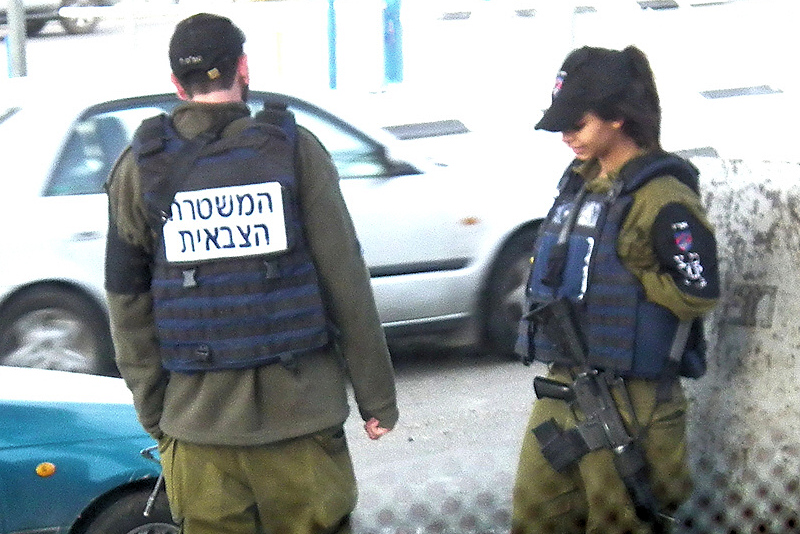
These are Palestine Authority soldiers, not Israelis

Explaining

The Judaean Desert near Jericho

and Stone Walls

If you wish to understand the psy-ops and propaganda war that’s going on, it’s worth reflecting on the word hasbara, a Hebrew word often translated as ‘explaining’, but it means a lot more than that. The hidden agenda behind hasbara is to say things that are the opposite to the way they actually are, and to project on the other side qualities that actually are your own, blaming them for what is happening and thus justifying any actions that are taken in response.

A classic hasbara word is ‘defence’, as in ‘defence forces’, which is only part of the truth, concealing the less popular aspect of it. Israelis ascribe ‘defence’ to themselves and ‘attack’ to its neighbours, when actually, for both, it cuts both ways.

This shadow-stuff is common in international relations – creation of often unfair images of other countries or peoples in order to bolster one’s own projected image. They are the bad guys and we are the good guys. It gets exaggerated during times of conflict – and the basis of conflict is a sundering of consensus and a dangerous polarisation between sectors of society, nations or blocs. It can be used to justify actions that otherwise are unacceptable or atrocious. Every nation does it in some way, though Israelis are really good at it, as are Americans and British.

So if you look at what you read and hear with this in mind, you’ll understand things in a new way. Sides in a conflict project negatively on each other, demonising and dehumanising each other, to justify their own offensive or outrageous actions.

An ordinary day in peacetime Jericho

If Israel, Hamas and the ‘international community’ truly seek peace and a fulfilment of their needs, the dialogue needs to change. The terminology, the attitudes, the dehumanisation, the unreasonableness, the accusations and the anger. It starts with a change of heart. This is at present slimly possible though highly unlikely – there are too many vested interests and set agendas involved, of many kinds. So the current Gaza conflict will likely remain unresolved, as have previous conflicts. Not that it is easy or quick to resolve – incrementally, it will take generations. Recent events could serve as a turning-point, but I do not detect a necessary will to change.

However, the people with the biggest cards, regarding peacemaking, are Israel and the American bloc, closely followed by the Middle Eastern nations. It starts with a realisation amongst Israelis that they will fail to create longterm security while they are damaging new generations of Arabs and thus creating new enemies for the future. They cannot eliminate Hamas or the constituency it reflects and, in Gaza, there is no one capable of replacing Hamas as a government.

Also, Hamas have not actually been bad as a government (given that people in most countries have problems with their governments), and it needs recognising that they are an Islamist social reform party with a military wing, not a military force with an appended political wing.

A crow at Tel-es-Sultan, the remains of ancient Jericho, going back 7,000 years

But both sides need to change their views – their whole optic.

Palestinians are not extremists, though they are in an extreme situation and thus they react extremely. But they dislike Muslim fundamentalism, ISIS, Al Qaeda or even the wearing by women of the full face-covering. Most Israelis are not extremists either but, when they feel under attack, they can be overwhelmed with insecurity, fury and vengeance. This has deep historical roots and, while it’s understandable, it doesn’t help the future. It makes Israel overreact, with the longterm effect of perpetuating the insecurity that Israelis so much want to be free of.

It makes Arabs overreact too. Most Arabs accept that Israel is there, wishing it to withdraw to the 1948 borders (perhaps with a few trade-offs) and to become a good neighbour. But when they see Israel’s military actions, they become emotionally reactive and the rather over-worn and unworkable idea of driving the Israelis into the sea is reborn.

So somehow there needs to be a massive act of mutual trust and respect of a kind that very few Israelis, Palestinians or neighbouring Arabs could accept. Things are so touchy that it could break down over the slightest incident. And there are interest groups, both high-up in the geopolitical sphere and on the ground, who are dead set on perpetuating and enforcing the existing mindset they already hold.

The ancient spring at Jericho – the reason why the town is there and has been there for 10,000 years. It’s the oldest continually inhabited town in the world

At present I see only two possibilities: calming and exhaustion.

Calming means an incremental stepping back and reduction of conflict, by agreement. This could be achieved either on the ground, through the upwelling of a suppressed aspect of public sentiment on both sides, particularly amongst women, to apply deconfliction pressure from within each society. Or it could be achieved diplomatically, but this would require all those countries that matter to agree on one strategy, applying strongly both to Israel and the Palestinians. Don’t hope too hard for this, but it is always possible. As Sir Steven O’Brien, a diplomat, said on the radio (Saturday 4th Nov), “Diplomacy always fails until it succeeds“.

Then there is exhaustion. A conflict ends when there is an equalisation between forces, such that both sides perceive that they cannot win. This can happen militarily, but neither side in this conflict is likely to be able to win clearly, and there is a high price-tag to it.

Here the Palestinians have a slight advantage since their attitude of ‘sumud’ – perseverance and hanging in there – has more lasting power than Israeli rage. They lose every conflict, trying to draw down the world’s sympathy by suffering massive damage – a kind of collective martyrdom – but they also stop the Israelis from winning, every time. Meanwhile, the international community watches, fruitlessly spluttering and wringing its hands.

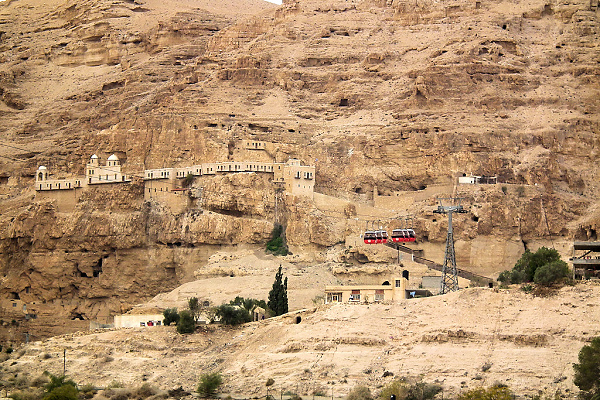
The Greek Orthodox monastery at the Mount of Temptation, Jericho (where Jesus did his forty days and forty nights).

It’s all nicely complex, and there is a counter-argument to every argument, and there are no easy answers. But it looks like we’re following the exhaustion track. This is also what’s happening in Ukraine.

The real battle lies between those who encourage polarisation and violence and those on the receiving end of them. Both sides can live together, and they shall. They do live together, even though they are strangely divided.

Palestinians aren’t angels and they’ve made mistakes but the burden of power and error weighs heavily on the Israeli side. Israel has long had superiority in weapons, money, connections, PR, chutzpah and forcefulness. Israelis don’t see things this way, seeing themselves as endangered victims. This is not unique amongst nations, but for Israel it’s extreme and the effects impact heavily on their victims and the wider world.

The Israeli project – to provide a safe haven for Jews – is a noble thing. Historically, Jews have suffered immensely, especially from the actions of Europeans. This doesn’t justify their oppressing Arabs today or doing to others many of the things that once were done to them. Israelis don’t see themselves as oppressors – they are the oppressed, busy protecting themselves.

Israelis have a lot to be proud of. They built a nation in decades. From their perspective, Arabs have attacked and menaced them and Israelis have bravely held off such threats – this was the narrative I learned as a teenager in 1967 at the time of the Six Day War, during which the Israelis occupied the Palestinian territories as if by accident, pre-emptively defending themselves (we were told).

Westerners fail to understand that this is where the power really lies in Middle Eastern society

In later life, I discovered that this, like the previous one of 1948, involved severe ethnic cleansing and uprooting of Palestinians, razing and occupying villages and parts of towns, and the killing of thousands of largely defenceless people. The awful fate visited on Jews by Europeans was visited by Jews on Palestinians. In the long arc of Jewish history this is tragic.

Only some early Israelis were perpetrators. Many were accomplices who shut their eyes, went along with things or obeyed orders, to an extent tricked by their leaders. Or they felt unable to encompass the situation, complain or do anything about it – they were simply thankful to be in Israel. Some protested but didn’t get far, others felt that the ills taking place were regrettable but unavoidable, while others just didn’t look. Zionists defined Israel’s character and future as a state, locked into an endless military vortex.

It could have been done differently. As they immigrated in the earlier 20th Century, Jews could have been integrated more with Palestinians – there would have been difficulties, though arguably fewer difficulties than actually arose. The British administration of the 1920s-1940s could have exercised less of a divide-and-rule approach. When the UN partitioned Palestine, favouring Jews, the Israelis could have made do with the territory they were allocated – they were given 56% and took 78%. They could have traded land for peace in the 1970s or 1990s.

None of these options would have been perfect, but some sort of peaceful and productive coexistence could have arisen, leading to a sounder long term future for everyone. But the path Israel chose lacks foresight, and the results come back to haunt them today.

Israeli feelings of existential threat arose from deep-seated vulnerabilities following the Jews’ terrible history in Europe. But the threat from Palestinians and other Arabs has been less a conquering aggression, more a largely ineffective response to Israeli force and expansion. A sense of threat does not have to be the case now. When Israel upsets its neighbours, or when it refuses to budge on issues crucial to Arabs, it naturally creates an unhappy response.

Thus, Israel becomes its own worst enemy: while intending to reinforce Israeli security, it generates antipathy and threats instead, undermining that security. The ethnic cleansing of 1948 would be consigned to history if it didn’t continue today. Hezbollah would be no threat if Israel hadn’t invaded Lebanon so devastatingly, not long ago. Israeli actions caused the founding of both Hamas and Hezbollah. Hamas and other militias in Gaza would not fire rockets if Israel let up on its siege of Gaza.

Zionism sees Israel’s own interests and expansion as paramount. Whatever means are used, whatever the wisdom of it, and whatever costs are incurred, Israel’s growth must go on. The notion that Israelis’ needs and security could be helped by acknowledging the needs and security of others doesn’t enter the equation, except amongst a dedicated but much shrivelled Israeli peace camp.

In the long term, if anything weakens Israel, it is Zionism, since it undermines the sympathy the world has toward Jews. Only a proportion of Israelis actively subscribe to Zionist sentiments, though acquiescence to them increases when Israel feels threatened, which happens regularly. Zionism is a norm drummed into Israelis from an early age.

Judaism is one thing and Zionism another. The Zionist mentality builds concrete walls and fences around Israel in self-protection, and in so doing Israelis become separated from the world, increasingly failing to see the wider world’s viewpoint. Zionists accuse critics of anti-Semitism, labelling Jewish detractors as ‘self-hating Jews’. Thereby, balanced dialogue is blocked.

But here comes a key proposition. If both Israelis and Arabs saw things another way, opening up to the notion that their fellow humans sit in the same boat as they, and if Israel ramped down its military expansionism, permitting some restitution of the ills which have occurred since 1948, then, over time, threats to Israel will subside, and the country and its population will become more safe and secure.

Most Palestinians and Arabs don’t want to fight. The idea that they want to destroy Israel is nowadays somewhere between a myth and an expletive uttered by Arabs when tempers are hot. Similarly, in Britain in WW2, it was the case that ‘the only good German is a dead German’.

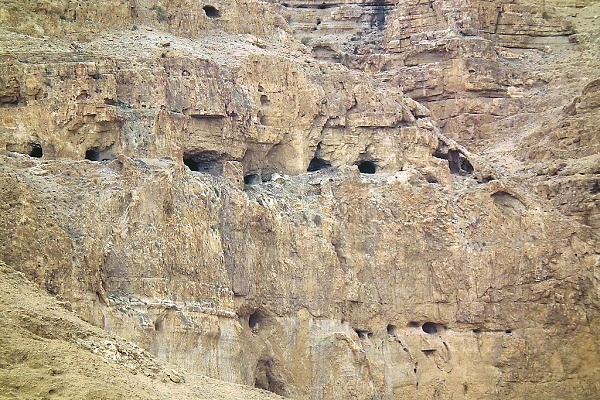
Early Christian hermits’ caves at the Mount of Temptation

Most Palestinians and Arabs accept the existence of an Israel within the pre-1967 borders – an enormous concession they signed up to thirty years ago in the 1993 Oslo Accords. Even Hamas has stated that it will recognise Israel within such boundaries. Palestinians just want a fair deal and a decent life. Peace will never be a perfect deal, but it will be better than the current situation.

Israel cannot afford to remain militarised forever: it has poor people, social problems, enormous water-shortages, a risk of coastal flooding, toxicity, pollution and all the kinds of problems that pervade most modern countries.

It claims to be the only democracy in the Middle East (that’s hasbara) yet the nation is riven with disagreement over the nature of democracy, the constitution and the purpose of the nation, reflected in a succession of demonstrations and indecisive elections. It also shares the Global North’s dwindling prestige and power. After all, Israel’s population is only one third of the Egyptian city of Cairo.

Even if Israel won every war it undertakes, this doesn’t make for a happy, healthy nation. It needs to make friends with its neighbours because it needs them, and they need Israel. They have a lot to offer each other. They share Middle Eastern space. It’s a multicultural space.

Israelis need a safe and peaceful future. Many are not fully aware of what goes on in their name, or they shruggingly accept the ‘security reasons’ they are given. Many feel powerless, or they maintain a comfortable indifference ‘living inside the bubble’. Others adopt extreme, partisan views, as if everyone is against Jews and a strident, hammer response is always needed.

Since the late 1990s, the centre of gravity of Israeli politics has headed rightwards, and a harsh minority dominates the public discourse. The rule of dominant interests, while not unique to Israel, maintains a perpetual state of near-conflict.

Israel could come to regret many aspects of the years since its founding. It soils its nest by pushing its case uncompromisingly, thus creating enemies and the opposite longterm effects to what it genuinely seeks. Its reliance on force, bombing, assassinations, land-grabs and ill-treatment of Arabs builds up new, avoidable problems, fostering new generations of opponents.

We need a new habit of peaceful coexistence. This will take a generation or even seven, but it is important.

The Holy Land is a multi-ethnic, multi-faith land and a fascinating place. Sanctity is elusive and each faith defines sanctity differently, but it’s safe to say that ongoing conflict is not one of its characteristics. Positive change matters for the whole world – Israel and Palestine form a bottleneck in the world’s process of change.

Security is developed by building up a nation’s internal feelings of alrightness, community and integrity. It is built by cultivating collective happiness and creativity, giving people a sense of a positive, mutually-beneficial future. This is the real national interest, the guarantee of Israel’s future.

Once there was an old rabbi who had been praying for peace daily at the Western (Wailing) Wall in Jerusalem, for decades. When asked by an admiring journalist what it was like, he simply replied, “It’s like talking to a stone wall“.

With love, Palden

For better or worse, written using HI (human intelligence, aka brainz)


Site: palden.co.uk
Podcasts: www.palden.co.uk/podcasts.html
Pictures of Palestine: www.palden.co.uk/pop/

Looking from the Mount of Temptation over Jericho, toward the Dead Sea and the mountains of Jordan

Holy Land

Jeez woz ‘ere. Looking over the Judaean Desert toward the Dead Sea and Jordan

Last night (Sunday 22nd October) I had a very profound meditation, more like trance – I was carried away and ‘out of it’, surfacing far later than the usual time, after more than an hour. I felt quite at peace. This morning I feel quite changed – a bit wobbly yet feeling alright too. A few thoughts came up this morning that might be of interest or value.

It’s important to remember that those who are killed in disasters like this are well dealt with. They are withdrawn before pain or horror cloud their passing. They are pulled out in micro-seconds and instantly taken into care, as appropriate to each soul. They don’t seem to experience the impact of whatever hits them or whatever is the cause of their death. If they do experience it, they are detached from it, without accruing psycho-emotional damage. They witness it (for the soul-learning therefrom) but they are put into a kind of state of grace and objectivity where they are not damaged by it. It’s a kind of fast-tracking transitional process.

I’m more concerned about the living and what they are going through.

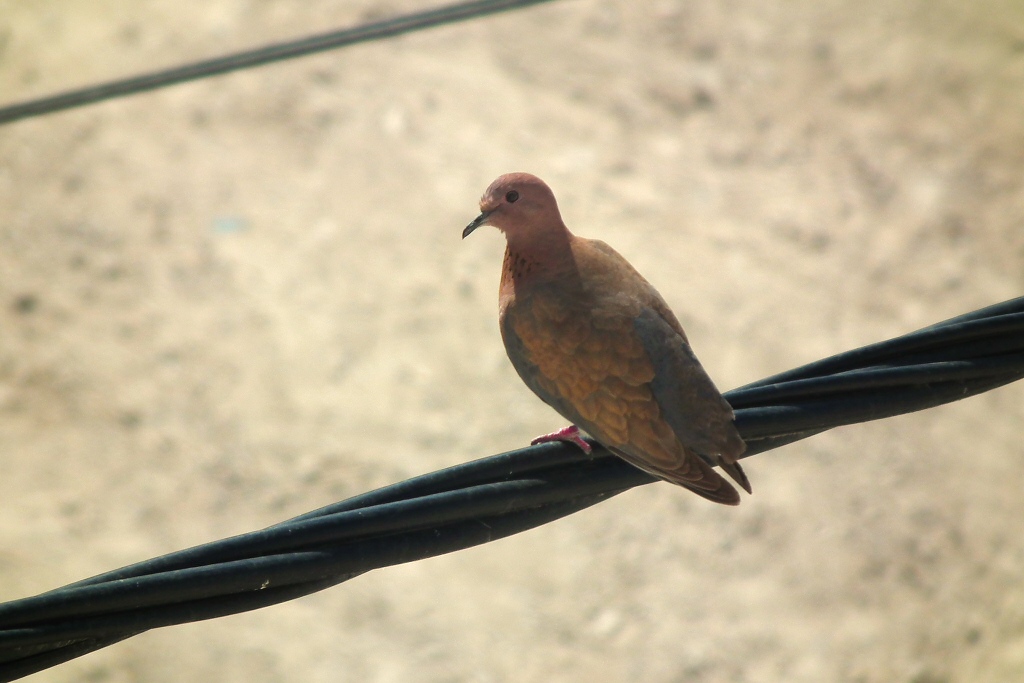
A Palestinian dove

There are Christians in Gaza as well as Muslims – and also seculars, who are often forgotten. Many of the Christians belong to ancient pre-Catholic, pre-Orthodox churches. (By the way, Arab Christians also call God Allah – which means ‘the God’, to distinguish it from a pantheon of gods.)

Yet I find Christians can have more difficulty passing over – more of a struggle – than Muslims, who seem to have a clearer sense of returning to Allah. Perhaps Christians and Jews have more of a feeling of distance and separation from God, involving more striving, more doubt, more questioning, while Muslims seem to have more inner confidence in their relationship with Allah. Not totally, yet they seem inherently more inclined that way. Hence, perhaps it is the case that they manage dying a bit more easily. In my observation. Speaking as an aged-hippy esotericist with Buddhist inclinations.

If you’re tracking Gaza inwardly, remember the people of the West Bank and the Palestinians in Israel and Jerusalem. ‘Arab Israelis’ are 20% of the population of ‘Israel proper’ and 40% of the population of Jerusalem. Some are Christians and many are Muslims – and they’re both friendly to each other. Arab Israelis aren’t dying in numbers, but they’re going through extreme discrimination and insecurity. Meanwhile, the West Bank is simmering and in danger of boiling over.

However, as an individual, while being aware of the complexity of this situation, it’s better to do small things well than big things badly, so give attention to those aspects of this situation that you are drawn to. Between us, we’ll cover a variety of things.

A boy in Jenin. He knows the sound of flying bullets.

This is big – a paroxysm of human madness where the heat gets high and the light grows dim. Negative influences are having a field day and, to some extent, we cannot stop this and must let the fire burn out. We cannot really affect what actually happens (the forces at play are big and complex), but the secret lies in seeing if we can flip, ease or assist the way it happens, so that there are glimmers of light, more opportunities for redemptive things to happen amidst a disaster.

There’s a lot of opinion and propaganda flying around. Well, in the ‘fog of war’, everyone is right and everyone is wrong. So take note of what people say and understand what lies behind it for them, while also observing your own responses, biases and predilections. Don’t necessarily block off from it, but try to avoid buying into the frenzy. Form judgements slowly. This is a battle of thoughts and feelings, intermixed with anger, and it’s good to try to hold that perspective.

It is possible to hold such a perspective while still having your own personal leanings – if, for example, you are Jewish, or you empathise with Arabs, or you have friends on one or both sides, or whatever. It is possible to run these in parallel, at least for the duration of this madness-epidemic. It’s an awareness exercise.

Barr al-Khalil or the Judaean Desert

This part of the world is often called ‘the Holy Land’. Yet holiness manifests itself there in emphatically unholy, paradoxical terms. It is a magnified microcosm of the whole planet, like a crucible, and Earth’s core issues are all present there. It’s a very small patch of land, the same size as Wales, Albania or New Jersey, in which there is immense complexity, intensity and confusion.

Still, there’s a lot of light there, and the contrast makes the issues so much starker. As a microcosm, what happens there affects everywhere else far more than its size and population would otherwise suggest. It has a similar population to Tajikistan, Togo, Sierra Leone, Laos, Austria, Portugal and Greece, Virginia or Washington state.

The situation in Is-Pal is very much affected by influences from elsewhere – not just military and economic but much deeper, more profound and hidden.

This includes positive influences too: there has been no shortage of Native American medicine wheels, Tibetan pujas, Bah’ai prayers and interfaith ‘encounters’ in this land, and while I was there I met amazing people from all over – even Siberia, Indonesia and the Amazonas. Amongst Israelis and Palestinians there are amazing people. Do not fall for the idea that this is just a simple two-sided battle of hearts and minds – it is multiplex, and the quality of souls in the ‘holy land’ is surprisingly high.

Young peacemakers from a variety of countries, with the mayor of Al Aqaba (who was injured in the first intifada in the late 1980s – he spent ten years in Israeli jail too)

To some extent we must let it play out, and to some extent we can bring some relief, space and blessing to this conflagration. This is a classic high-magnitude soulquake. Above all, stay steady. Keep returning to centre. Stay benign and well-wishing. If you get steamed up and in a mess, go take a walk, get some space and let the knots within you unravel – and take that relieving walk on behalf of those who cannot.

As Pluto enters Aquarius, we’re entering at least 15 years of ‘the battle for the hearts and minds of humanity’. This conflict is one such situation and there will be more, so get used to it and try to work with it. Because it is necessary. As is the case with Is-Pal right now, many of the world’s problems arise from issues we have not tackled and sorted out before. Chickens are coming home to roost in droves, in every department of life and every country. Issues are being brought to our awareness through the events manifesting in our time. These are the material through which we work out these issues.

There will come a point in coming decades when we get to The Big Issue. In this sense we are being given a gift, a collective training, through being given escalating waves of crisis to face. We’re being loosened up and forced to think, to see things in different ways from before, and from a larger perspective.

Palestinian kids on the whole have good fathers

In this sense, something right is happening here – we’re at a ‘never again’ point. This isn’t about cease-fires: this is about ending war and oppression, historically, and events like this will repeat until we get it and do it.

Oh, and by the way, put in a prayer for people in the UN and NGO sectors, from all over the world, who represent a neutral, global viewpoint in the conflict, and who take the strain in very practical ways. For some of them, it’s at great risk to themselves and, for others, it’s round the clock, every hour of the day and night. Stressful and often unthanked – they’re holy warriors.

With love, Palden.

Marwan Barghouti, regarded as Palestine’s Mandela. He’s been in Israeli jail for the last 20 years and they’re likely to keep him there. A mural on the separation wall at Qalandia, West Bank

In the 1990s I ran some meditation camping retreats called the Hundredth Monkey Project (M100). We worked in a circle of 70-80 people with world issues. We didn’t prescribe meditative methods but, to help people get oriented and give them ideas, a method was suggested as a basis to work with. If this interests you, it’s here: www.palden.co.uk/cs06-m100meditation.html

If you’re a member of a group working with issues such as these, then you might be interested in this material about talking-stick processes: www.palden.co.uk/cs07-talkingstick.html

Site: www.palden.co.uk
Podcasts: https://podcasters.spotify.com/pod/show/palden-jenkins

Book Pictures of Palestine: www.palden.co.uk/pop/

Brinkmanship

The Old City of Jerusalem

A good friend of mine rang up this morning. She’s Jewish – some Zionists might call her a self-hating Jew – who shares the collective feelings and pathos of Jewry while having grave reservations about the behaviour of the state of Israel. She’s one of those thoughtful Jews who is brave enough to talk to someone like me, who has worked a lot with Arabs.

She comes round for tea and we have great discussions, both of us enjoying the contrasting insider knowledge we each have. Of course, what we face now, in and around Gaza, puts her in a really difficult position. She struggles with it inside herself and she talks with me about that struggle. If you have any empathy and conscience as a human, whatever position you take, it’s really difficult, this stuff.

A few days ago she was with a bunch of eco-activists with whom she’d worked for ages. They were vehemently pro-Palestinian in a way that she found difficult, because they were anti-Israeli. She’s not paranoid about anti-semitism, but it still hurts when people vehemently disapprove of your own people. Her friends had taken sides.

Fifteenish years ago in Palestine, I had a similar problem: I worked with Palestinians but I’m not anti-Israeli – I’m fundamentally pro-people. To me, helping Palestinians doesn’t mean opposing Israel – actually, I felt I was helping Israelis by helping Palestinians, but only a few Israelis would get what I mean by that. Seeing everything in a polarised, partisan way is, dare I say it, inherently hypocritical – it makes Them bad and Us good, as also does the current over-use and misuse of the term ‘terrorist’.

It’s a cover-up, a denial of responsibility, a projection. In my reckoning, it’s part of the problem. The partisan approach taken by the governments of UK, Europe and USA, which they believe to be a show of strength, is undermining the remaining, sagging respect that the Global South – the world’s majority – has for us, and this will lead to difficulties further down the line. We need to stop politicking and act like mature nations.

Citizen peacemakers from both sides, meeting at the All Nations Cafe. This photo was 12 years ago, but it’s still going, led by a brave former Israeli soldier

When working in Palestine I had some difficulty with zealous Palestine activists from abroad who commonly adopted a partisan position: within themselves they had declared war on Israel, even if expressing it only in the form of olive-picking and visiting frontline towns like Tulkarm, Hebron, Jenin or Nablus to witness the damage and the pain. I respect such people for their humane feelings, empathy and commitment but also I felt they needed to do more homework, to go a bit further in their understanding and feelings.

They made life more difficult for people like me – amongst other things driving Israelis against humanitarians. Many activists didn’t really like me, and my book Pictures of Palestine hasn’t been popular with many of them. In my teens in Liverpool I was wedged between Protestants and Catholics, and Mods and Rockers – I started my peacemaker education early! So this issue isn’t new.

The Matrix of Control. There are hundreds of these things around the West Bank

If we take sides, we start projecting a subjective and emotive image on the Other, upon which subsequent actions and atrocities are then justified. It makes Us right and Them wrong, so that We claim legitimacy in questionably punishing Them for their crimes. In and around Israel-Palestine, as soon as conflict breaks out, most people lock into this charged mentality, setting all other considerations aside.

It’s a form of psycho-emotional slavery, and the puppet-master controlling the strings is the Lord of Division. It’s an endemic mass-psychology that needs to polarise, dehumanise and denigrate the other side so that we can overcome the guilt and shame of performing wrongs in the furtherance of our own beliefs – even when those beliefs do not support committing such wrongs.

This mentality leads to consequences. As I write, Israeli forces are poised to start a ground invasion of Gaza. From the Israeli viewpoint, I can see why they are taking this approach: they need to eliminate Hamas, and they’re driven by a ‘never again’ feeling – never again do they want to be threatened and harmed in this way. Fair enough. Except there’s a problem. It’s unlikely to work.

Israelis may kill as many people as they like but they won’t be rid of the problem, because those who are left behind will be hurt. The pain passes down the generations. The cycle of uprisings has repeated itself roughly every twenty years since the 1930s, as each generation has grown up and sought to change things.

The damage done to people and to land is tragic – a ground invasion of Gaza will cost both sides very high. Innocent Palestinians will be mown down, and committed freedom-fighters will sacrifice their lives. Israeli troops will die, one by one, hit by snipers, booby-traps and innovative Gazan devices. Jewish and Palestinian mothers will rue the loss of their sons and daughters.

Israelis will not and cannot eliminate Hamas, even if, improbably, they eliminate all of its fighters and the main characters who head it up. They have not managed to do this before, and they are unlikely to achieve it now. All they can achieve is a costly delay until the next flare-up happens. The reason is this: every time Israel fires a bullet, it creates several new fighters taking up a gun – frustrated young men who seek a future and cannot have it.

The Matrix of Control: a flying checkpoint (upper left), imposed randomly and causing long queues on the roads.

Instead of getting depressed and committing suicide quietly to themselves, they join one of the militias, with the idea that their sacrifice might benefit their people. This isn’t so strange: my own father did this in WW2, volunteering his life for King and Country (except he survived, minus a leg).

Hamas was founded in the first intifada of the 1980s. Ironically, Israel secretly funded its founding, to counteract the Yasser Arafat’s PLO and divide Palestinians against each other. Well, that backfired. Hamas speaks for the embattled feelings of Palestinians and, if there were an election instead of a war, Hamas would most likely win. They won in 2006, in a free and fair election, undermined and annulled by Israel and the West – and they would win now.

To many Palestinians, Hamas represents the best of a very bad set of options – not least because it is relatively free of corruption, it has principles, and Hamas is resolute and cannot be bribed or arm-twisted into submission.

There’s a lot of maleness being displayed on both sides – a resolute, despairing, ultimately self-destructive maleness. But behind this lies a deep feminine-rooted emotion too – the urge to protect women and children from the monstrous ogres on the other side.

An old friend, Ibrahim Abu el-Hawa, peacemaker extraordinaire – some of you might know him

Here I wish to introduce a constructive thought and prayer, or two.

The problem with males is that, when we get worked up, we tend not to stop until we’ve achieved our objectives. It’s sexual: a man seeks a climax, through which all can be resolved and he can forget all his troubles. Except, when this orgiastic urge is driven by short-sighted urges such as control or revenge, it gets really destructive. In war and competition, masculinity doesn’t think much about the damage it might create while seeking that climax, and while we usually focus on winners, in competition most people lose.

There’s a secret here about males, to do with brinkmanship and danger. When it comes to the crunch, sometimes men go more crazy, and sometimes, when genuinely threatened, we start calculating our situation and seeing sense. Unless there is a miraculous and unusual philosophical change of heart, it needs to go up to the brink for us to get there.

Speaking astrologically, this is about the planet Mars. The lowest aspect of Mars fights to destroy – as with the Stalingrad-like scenes we’ve seen in recent decades. The default aspect of Mars fights to win – even though both sides ultimately lose, since victory is never as sweet as expected. The highest aspect of Mars is about coming to the crunch and realising there is no virtue in fighting and no enemy, because we’re all ultimately on the same side. The skillful playing of a game is more important than the winning of it. We suddenly realise we are all our own enemies, beating ourselves up.

So here’s a prayer and something to visualise. As I write we stand at a choice-point, before an expected ground invasion of Gaza. The urge to go to the brink is there, and no one will be dissuaded. This is a point of vulnerability and choice. Consequences will follow, whichever choice is made.

So visualise this crunch point as a potential breakthrough point and hold that thought, that feeling. Don’t be overcome with depression and helplessness, or get stuck on what you think ought to happen. These are of no use right now. If you were in a war zone, you’d get shot.

In war, one must take advantage of whatever situation that arises, as it arises. So apply your prayers to the situation as it stands, to help the universe twist events in a direction that somehow changes flow of the tide.

The Dome of the Rock and the Old City of Jerusalem, with Israeli West Jerusalem behind

We’re at a brief point of realisation that there actually are options. Fighting it out is unlikely to achieve the objectives either side has, and the costs will probably outweigh the benefits. The pain each side experiences will not be soothed.

Here’s another thought. Even if the warring parties do fight it out – and the above prayer will thus be seen to have failed – it’s a matter of stoking up positive energy for the longterm, to build up the potential for the pattern to change. Store it up in humanity’s collective psyche, so that this option is more available next time round, even if it doesn’t work this time round.

Building up the energy-potential for de-confliction is best done by making use of actual circumstances where these issues are acutely at stake. Brinkmanship-points like today’s are junctures where the collective psyche of humanity is at its most vulnerable. It’s under pressure and surprisingly open to making a change.

The seemingly irrevocable rush to conflict sets in motion forces and consequences that seemingly cannot be stopped, and this is the pattern that needs to change. We need a new, transitional pattern where, when the risk of conflict comes close, everyone gets it that there is or must somehow be another way. It’s all to do with agreeing to disagree, and doing something to reduce the intensity of disagreement.

I say transitional because, whatever dreamers might dream, we aren’t suddenly going to have world peace tomorrow. We have to deconstruct the patterns that make for conflict, generation by generation, building new replacement habits. We can do this over the coming decades by facing high-risk situations where our true will gets tested and we are forced to get clear – if necessary, under duress.

In Israel and Palestine, repeated conflicts have not achieved either side’s objectives. This one won’t either. If nothing changes, the next conflict comes in about four years’ time. So let’s get real here. There’s another way. It does require guts to pursue it – the guts to change the pattern and step back from disaster.

Al Aqsa Mosque in Jerusalem – Islam’s third-holiest place

Here’s the awkward bit: though both sides are responsible for their actions, in my estimation, Israel holds around 70% of the power, with greater freedom of action than the Palestinians. Saying this doesn’t make me anti-Israeli. Palestinians hold 30%, and Hamas have recently shown how they also have power to shift the agenda. But 70-30ish is the way the odds are stacked. This makes it more difficult to flip the pattern because ceasefires come when there’s some kind of equalisation of force and influence.

Firing munitions, however impressive, is no longer manly. We need to protect women, children, and also our rights, needs and fortunes, by thinking further and bigger and wider. It’s an emotional choice, made with extra power when we stand on the brink of disaster.

What’s important here is that, whatever happens, humanity learns. Even if the worst happens, this needs to be the last time. Something has to shift – the world is fed up with this, and we have other concerns.

This means that lessons need learning now, today, in these circumstances – emotionally, in the heart, womb and gut. Lives have been lost and are being lost, and the only way to redeem those deaths and make them more meaningful is to learn from them and change things. Only then do they serve a positive purpose in the long run. If people’s sacrifices on both sides are sufficient to build up a head of energy-potential for change, then may this be so. May that change come about.

Changing history takes time. Yet it happens in intense situations like this.

With love, Palden.

Site: www.palden.co.uk
Blog: https://penwithbeyond.blog
Podcasts: https://podcasters.spotify.com/pod/show/palden-jenkins

Three Palestinian Christians playing Arabic classic music

Fences and Walls

Tel Aviv, from Jaffa

We Brits straddle a strange hypocrisy. In Ukraine our government supports the people (Ukrainians) against the Megamachine (Russia, as we currently perceive it). In Israel it supports the Megamachine, the Israeli government, against the people, the Palestinians (as many of us see it).

Though it’s not as simple as that, since there are real people on both sides of both conflicts. And while the British support for Ukrainians is pretty solid, our support for Israelis and Palestinians is equivocal, mixed and changeable – when people bother to pay attention. For most Brits, sympathies currently extend to people on both sides, with only a degree of rigid partisanship on either side of the spectrum.

Such partisanship is largely because of personal connections. Or it depends on which media people follow. Older people tend to sympathise with Israel (their reference point goes back to WW2 and the 1967 Six Day War), while younger people tend toward sympathising with Palestinians (their reference point goes back to the intifadas and repeated Gaza bombings).

My prayer is that the vengeful aspect of the Israeli psyche does not exceed itself. Israelis need to understand how to create peace and security around them without feeling a need for an iron wall mentality – those days are going, and painfully slowly. Actually, we all need to learn that lesson, but in Israel the iron wall mentality is exemplified.

Many Israeli soldiers are quite okay people – and they like rock festivals too

The trouble is that, in a country surrounded with walls, fences and missile defences, supposedly to keep enemies and threats out, it imprisons Israelis themselves, inside their own bubble. Pretty much the only way out of the country is through Ben Gurion airport near Tel Aviv. It’s built on land owned up to 1948 by the Issa family, a refugee family who now run the Hope Flowers School in Bethlehem.

Regarding that, here’s a report from Ibrahim Issa, the school director, where I lived and worked in Bethlehem. Though in the West Bank, it is only about 45 miles from Gaza – three minutes in a warplane. In Bethlehem they can probably hear and even smell what’s going on over in Gaza.

Here’s Ibrahim (he’s around 40 in age now)…


AROUND THE SCHOOL
It is extremely sad to see this escalation of violence and associated human suffering on both sides. We are safe until now, despite escalation in the area. Two days ago we had to evacuate the school. Hope Flowers School is located in Area C, which is Palestinian land under Israeli control – in the southwest part of Bethlehem. The school is located about 150 meters away from [the edges of] an Israeli settlement (Efrat).

One of the Palestinian rockets fired from Gaza fell about 50 meters from the school building and injured two boys from the neighborhood. One of them is already declared dead. Yesterday, Israeli settlers have been attacking Palestinians near the school. This situation is extremely scary for children at Hope Flowers, for teachers and certainly for families.

IN OUR FAMILY
Fourteen members of my extended family have been killed today in Gaza. The grandparents, sons, daughters and grandsons are all killed in an airstrike.

ON THE WESTBANK
Most schools have turned to online education. Hope Flowers School is doing that also for children who cannot reach the building anymore. Bethlehem is a totally closed-off area. We do not have fuel coming in; we do not have diesel to operate the school buses. I think it is a matter of days before everything stops totally, unless Israelis release the siege on Palestinian areas here in the West Bank. Food is also running out in the supermarkets. No food supplies are coming. It may be just a few days before people start to feel the shortage.

The view from my apartment at the school – over the valley you can see the security wall, an observation tower and, to the right, an ‘outpost’ that has now become a settlement

Palestinians are regrettably accustomed to adversity and crisis – that’s why a squad of Palestinians is advising the Ukraine government on social resilience and resistance. Over the decades many Palestinians went to university in Ukraine and Russia, so they know the deal there – about 6,000 Palestinians were in Ukraine at the outbreak of war in 2021.

MY OWN INNER CONNECTION

My Palestinian journey has been one where I have had to examine my biases and the contradictions in my viewpoints. They are very mixed.

My maternal grandfather was in Allenby’s invading force in WW1 in Iraq and Palestine, and my father fought in Egypt in WW2. I have Roma ancestry, and the Roma experienced holocaust tragedy as much as the Jews. I also have German (and Welsh) ancestry, and when my father was younger, ‘the only good German was a dead German’, according to the mad logic of war-thinking at that time. It’s not that long ago that towns and cities this country were blitzed like Gaza – my mother hid under the table nightly in Walthamstow, East London. So it’s in my genes and those of many of us.

Amidst the damage of urban war, ordinary life goes on. This is Hebron.

Here’s comes a seriously woo-woo bit, which some readers might not like. It’s something you can take either literally or metaphorically since, whether or not it’s true, I carry similar issues to those of a similar character to me, back in history. It is a past-life thing, going back to the time when I was working for the Council of Nine in 1991-93. At one stage, I asked them why they called me ‘Paladin Saladin’ – I had thought it was a kind of jocular rhyming name. They did after all crack jokes! They simply said, “You were he“.

This was like a bolt of lightning. As a historian I immediately knew what they were throwing at me. For some years afterwards I had a resistance to the idea. I recounted this to a close friend, Jean Gardner, a Glaswegian aged hippy, now in heaven, who had been a friend of R D Laing in the Sixties. She looked at me intently, got up, went to the bookshelf, leafed through a history book and gave it to me, pointing at a picture.

“Palden, you sit exactly like this. And look at the simple diet he had – exactly like yours, minus the tofu… and how he could be tough and also show mercy… and the way he was always giving away the money he had to people in need, and he was personally perpetually broke, even though he was the Sultan of Egypt and Syria.” When Jean spoke like this, her words had that deep, no-bullshit Glaswegian firmness. Woo. I had to acknowledge this and take it on.

The Nine also said I had been the slave to Abraham’s pagan father, Terach, back in Ur, around 1900 BCE. Abraham had a big argument with his father and smashed all his idols, at the time when he was adopting the idea of a One God – and presumably I was in on that moment. Servants are often privy to all sorts of stuff.

Then, they said I was a Nubian slave to Moses – yes, I waited for him at the bottom of the mountain. They finished by saying, “You have been involved with the Jews three times, always as a foreigner, and this is your fourth”. In this they were implying, ‘And what are you going to do now?‘. Five years later I was getting involved with Israel and Palestine, starting by being a co-founder of Jerusalem Peacemakers.

On my first visit to Jerusalem in 1991 I cried my eyes out in the back of a taxi driving along under the medieval city walls. I’d been here before, and I was all stirred up. We had walked out of the Church of the Holy Sepulchre, entranced by the strong atmosphere there, straight into a soldier situation – and that’s what’s really weird and intense in Jerusalem. The best and the worst in human experience can come at you in quick succession. Actually, Glastonbury is a bit like that, minus the guns. Both holy places are somehow deeply connected as places where light meets dark. You have to get used to the extreme ups and downs. Glastonbury trained me for Jerusalem.

The Old City of Jerusalem

THE NINE’S THOUGHTS ON ISRAEL

Here’s a simple quote from the Nine [1]: “Do you have the understanding that Abraham was the father of two nations?” Biblical and Quranic tradition have it that the Arabs were descended from Ishmael and the Jews from Isaac, both sons of Ibrahim/Abraham. “Then you also understand that Allah is what those of Israel call Yehovah.

The Nine didn’t regard the Jews as ‘the Chosen People’. They saw them as the People of a (big) Choice.

“They [as souls] came from a planet of strength. They came from [another world called] Hoova. They had strength within their character, and also the planet from which they came was a warlike planet – and in their seeding here [on Earth], they were asked to be at peace. But they have factors of doubt and questioning, which cause us difficulty. They have doubt, suspicion and deception – because of the place they come from [Hoova]. Part of the reason for their existence on this planet was to overcome that factor.

“It began when they left Ur [heading to Palestine]. Before that, they listened. But the descendants of Abraham lost their internal knowledge: they only kept the knowledge of who they were. In their need for survival, they did not accept total obedience [to the Covenant]. They were always making deals. Where one group would be in awe of Creation, the Hoovids would look at Creation as something to be utilised.

“The nation is fierce with pride, and from this grew the desire to help their own nation only – in the times before the man Jesus. So in effect our plan [the Covenant] was turned around. The people of Israel will eventually accept their responsibility. And yet in effect this is their salvation, because it shows the nations of planet Earth that they are a nation that will not be conquered. Also, even though they made an error, every nation has made an error.

“There were only two commandments for the nation of Hoova. Those two are: Thou shalt not worship false gods; Do unto others as you want others to do unto you. Those are the only two commandments given to the nation of Hoova.

“The nation of Israel has forgotten its heritage, its choosing and its Covenant. Abraham was told to go and spread his seed through all the planet Earth. Abraham was told to populate and to go forth, and yet this Covenant was not kept. The Hebrews did not go forth and mingle. If this nation had gone forth and mingled with the peoples of the world, then this the planet Earth would not be in such a serious state as it is at this time.”

There are peace-freaks in Israel too – many have done military service and know what they’re talking about when it comes to peace-building

In one of the interviews I had with the Nine, I asked this:

“The people of the north of Israel, the lost tribes, were taken away and dispersed by invaders. Were these people eliminated, or did they mix with the peoples of other lands?”

“They are all over the world and, as examples, some are in Afghanistan. There are some in Ethiopia, in the Phoenicians [Lebanese and Tunisians], in the people of the musical language written of by Caesar [the Celts], and in the Orientals [such as Kashmiris and Uighurs].”

I then asked, “You have said that the Hoovids came in order to mix with the people of planet Earth.”

“That is a truism, but they that stayed together did so because the others had been dispersed. If I would have a word of my own to say, would you like to hear? I will ask the Council if I may say it. They said I may say, but you may not be pleased with it. It is this. We would have one warning to people who are working with higher consciousness, to be very cautious about your attitudes toward the Hoovids: for it may very well be that you are a Hoovid also, yes. What we are attempting to say is that the majority of people that are involved in spiritual elevation contain the genes of Hoovids – so look upon what I say. How do you then place yourself in that?

“Look at all the world, in every nation, and see which negative characteristics developed that made that nation feel different to others. In your nation [Britain] you believed you were superior to other nations, and that your rightness was the rightness of rightness. And as you have now evolved beyond that, you give to others that same understanding [of seeing beyond tribal perspectives]. When people come to gather as many, and the clapping goes all around the world [across borders], all will be free of the bondage of their bringing forth [of their tribes, nationalities and cultures].

“The people of the nations of Ishmael [Arabs] are brothers and sisters with the nation of Israel. It is important that brothers not fight brothers, but in your world it seems to be your system. It is important for this message to be given to the nation of Israel, for they need to have the understanding that the powers of their mind create trouble when mixed with their fears. Your mind brings to you not what you want – it brings to you what you fear.

“The nation of Israel must look closely at what they fear. They want peace, but may we ask why they do not have peace? For what are their fears? It is what is in the hearts of the men and women of the nation of Israel that is most important. When the nation of Israel begins to fear less, then also it will begin to change.”

It’s really boring, spening a long shift inside one of those spy towers

HISTORY AND THE FUTURE: NOT A STRAIGHT LINE

Arabs have a different history to Jews. Arabs are not one people – they are mixed in origin, encompassing thousands of years, and some Palestinians are of Jewish origin. Multi-cultural and multi-ethnic by nature, they are united by speaking Arabic and sharing certian core beliefs. But after the diasporas, the Jews, having been decimated, dispersed and, in medieval-to-modern Europe, persecuted, have different shadows to contend with to Arabs. It even goes into depth-psychology: Arabs suffer shame while Jews suffer guilt. As do Europeans. And all of us suffer fear – big doses of it.

The Middle East has always been a crossing-point of the Old World, between Africa, Asia and Europe. Many peoples of the Old World have ranged across it over the millennia (even the Roma, coming from India). Nations with borders do not suit the region – it has usually come under large empires. It was the Europeans – the Brits and French – who sectioned up the Middle East around 1920, setting in motion much of the trouble that is happening today.

To solve the endemic insecurity and power problems of Israel, Egypt, Lebanon, Syria and Iraq, the whole region needs reuniting as a community of peoples without borders. This process is slowly, painfully starting, as the oil industry and its over-powered oligarchies begin to decline. A sign of this was the pan-Arabic revolutions around 2011 – suppressed, essentially, by oil money and the vested interests invested in it. The ‘Arab Street’ made its voice heard – sparked by a young vegetable-seller in Tunisia. The voice of The Street will return.

Middle Eastern administrative tradition involves ‘Millets’, a multicultural interlocking of peoples, each with their own customs and laws, who all lived in neighbouring communities across the same wide territory – in city quarters, villages and local areas. So the Jews, the Druze, Maronites, Copts, Kurds, Armenians, Alawites, Turkmen, Yazidis, the Shi’a and the Sunnis all rubbed shoulders, living within their own communities under their own laws. To some extent, whenever a new invader arrived, these millets survived and, as long as everyone paid their taxes, the imperialists left things that way. Until the British and French came along.

We British carry much historic responsibility for what’s happening in Palestine and Israel today.[2] I am rather disappointed that His Majesty’s Government has opted to side with Netanyahu’s Israeli government rather than taking a more humane, humanitarian approach, pressurising not only for a cease-fire but for a longterm resolution, backed with some muscle and sticking power.

The issue is the future, not the past. The core issue is the future of planet Earth and the global challenges before us. A crux issue amongst these is an end to war all over the world. That’s the only likely way the Israeli wars will end. War is no longer an appropriate way to settle our many differences. It’s swords to ploughshares time. Otherwise, there’s trouble. Speaking as an astrologer, probably that trouble comes in the 2030s.

If I’ve pressed anyone’s buttons by writing this stuff, please forgive me. I don’t insist on your believing either me or the Nine. I submit it for your consideration. It might give a few helpful perspectives.

With love. Palden

NOTES:
[1] The Only Planet of Choice – essential briefings from deep space. Various editions from 1993. www.palden.co.uk/nine.html
[2] The British Mandate – the inter-war years, written by me, from Pictures of Palestine. www.palden.co.uk/pop/british-mandate.html

Paldywan’s website: www.palden.co.uk
Blog: https://penwithbeyond.blog (‘follow’ it to get blogs delivered by e-mail, hot off the keyboard)
Podcasts: https://podcasters.spotify.com/pod/show/palden-jenkins