Here’s the audio recording of my recent Aha Class in Penzance, about participating in changing the world. It’s my thoughts on the realities of being a ‘world server’, about rattling the bars of our cages and contributing to furthering what we believe to be right.
It’s in two 50 minute parts, with some (I hope) interesting anecdotes thrown in, about the dilemmas, tests, magic moments and benefits we can encounter along the way.
Free to listen and download – no strings. You’ll find it here:
Sunday has crept up and, here I am, reminding you of the Sunday meditation. (Usually I do it weekly on Facebook, but I don’t have the capacity to post it on multiple platforms – sorry).
It’s the same as before. You’re welcome to join. Times in different countries are below, and further details are here: www.palden.co.uk/meditations.html
I woke up early this morning, remembering a series of four dreams I had around age 27 on my Saturn Return in the late 1970s. It might or might not be apposite to mention them here, but I’m moved to do so anyway. You see, quite a few people think I’m brave. But that’s not my perception – actually, I get shit scared over things, like anyone, and currently I’m biting nails over the next stage of my cancer treatment or, more specifically, about facing it alone. So I’m needing to be brave anyway, whether I like it or not, since there isn’t much option. That’s the way the cookie sometimes crumbles.
In the first dream I was standing on a hill with some others, looking over a grand panorama. Yet down there, there were enormous nuclear explosions going on, with amazing mushroom clouds (this was in the time of the Cold War). What was bizarre was that this was a beautiful scene, and the explosions were crystal-clear and radiant – really, like wow, amazing. Then came the fizzing, and I could feel a wind coming from the direction of the explosions, and my body was beginning to fry. I could feel it sizzling, though it wasn’t actually painful. Gradually I was dissolving and dying. The scene went blank, and then suddenly I was in a kind of loft or attic, on my knees on the floor, reaching down through a trapdoor and hauling people up. The feeling was beatific, almost blessed, and peaceful, and the people coming up were relieved, awakening from a nightmare as they emerged through the trapdoor.
That was that. In the next dream, I was at home and They came for me, to take me away (a kind of forced conscription). I was really scared. Somehow I managed to evade them, and they went away. I awoke in the morning feeling really stirred and upset. In the next dream, they came, saying that if I didn’t come with them they would take my children. This really got me. Again, I awoke feeling disturbed, anxious, traumatised.
In the fourth dream I was being chased down a street by some gun-toting thugs from the security forces. I managed to get into a big building and into an apartment where there were people I knew. I shut and locked the door behind me and we hid. There was battering on the door and eventually they got in. It was really scary. Suddenly, there was a machine gun, right there. Now, at this time I was going through my training with Tibetan Lamas, and taking hold of a machine gun was totally incongruous and out of keeping for me. But I levelled it at them and killed them all! The others looked at me with a sense of both shock and relief. I woke up next morning feeling wonderful, on top of things and irradiated with light and a can-do attitude.
My soul was clearly teaching me something. Within five years I was to take on a strong leadership role, and one thing you must get over, to take on such a role, is your self-doubt over your worth as a leader, and your fear of standing alone against what can sometimes be seemingly overwhelming opposition (this is an issue for dear Donald and Kamala right now!). Within a few decades I was to stand amidst gunfire, and with no machine gun (or blue helmet), and a surprising calm-headedness.
On occasional hot moments in Palestine I used to say out loud, and totally neutrally, “Ah, we have a situation“. This at first was regarded by Palestinian friends as a strange yet forgiveable thing, yet after a while they started cracking up with it because it would completely dissolve their panic and insert them solidly into the present moment, so that they would be less reactive and more aware of what they were doing and what their options were. Some years later, I heard that this had become something of a meme that had gone around, and even Abu Mazen had used it in a speech.
But I think the main teaching was this. When you receive the call you need to swallow hard, muster your energies, stand up and do it. Because there are also big and frightening consequences to not doing it. Most of the world’s ills arise from what has not been done, at the time when it was necessary. And it’s probably what you’re here for yourself – to stand up, within the sphere of your own reality-bubble. Most people don’t get seemingly dramatic callings like the ones I’ve recounted – it’s just the story of my karma unfolding – but we all get called in some direction or other, even if it is ‘just’ growing cabbages, planting trees, or ‘just’ raising kids, or caring for the old lady down the road. It’s often quite specific, even designed for us – or we were designed for it.
In 2015 I supported a young Gazan male nurse in escaping Gaza. He was one of the boat people crossing from Turkiye to Greece at that time. He managed to get to Belgium and, discovering a Gazan nurse, they snapped him up quickly. Fast-forward to 2022 and he died, working in a Covid ICU ward in Brussels, far from home. Yet, tragic as this was, he was doing what he was here to do, and he was good at it. He had followed his calling. I think Allah will have looked after him and he’ll have done well in heaven. He might well have achieved far more for the progress of his soul than staying in Gaza or having a comfortable life of freedom in Belgium. We cannot know, but it’s likely. I hope we’ll meet again.
So that’s what came up for me today. See you at the meditation.
Love from me. Palden.
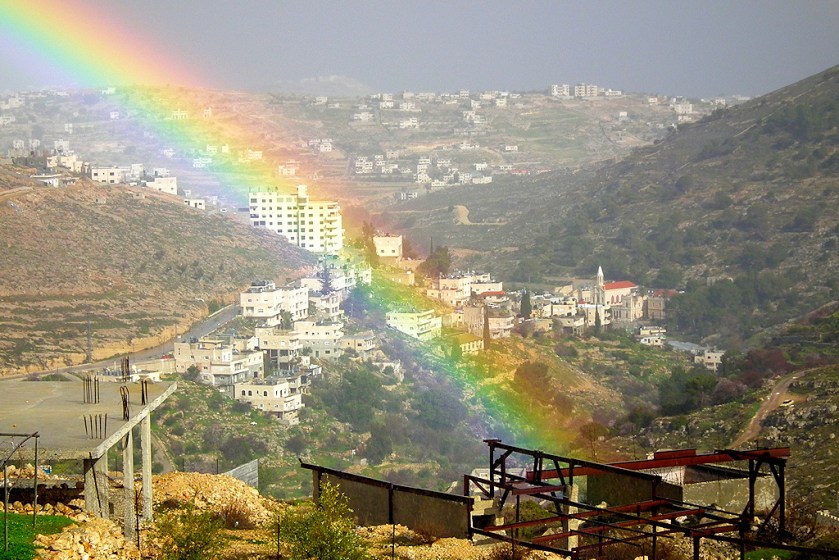
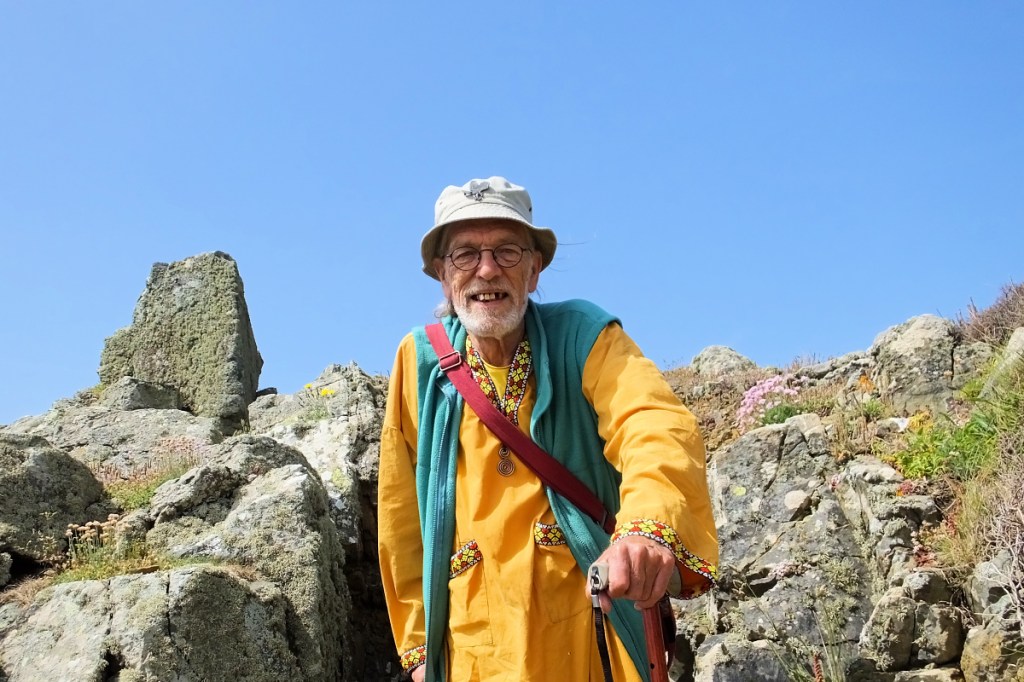
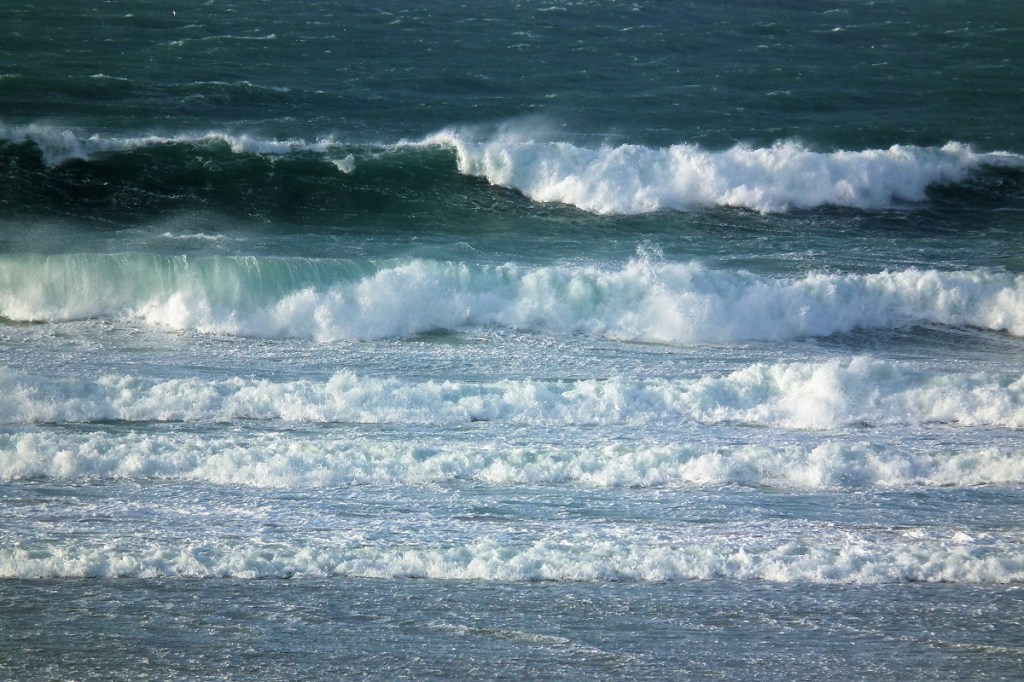
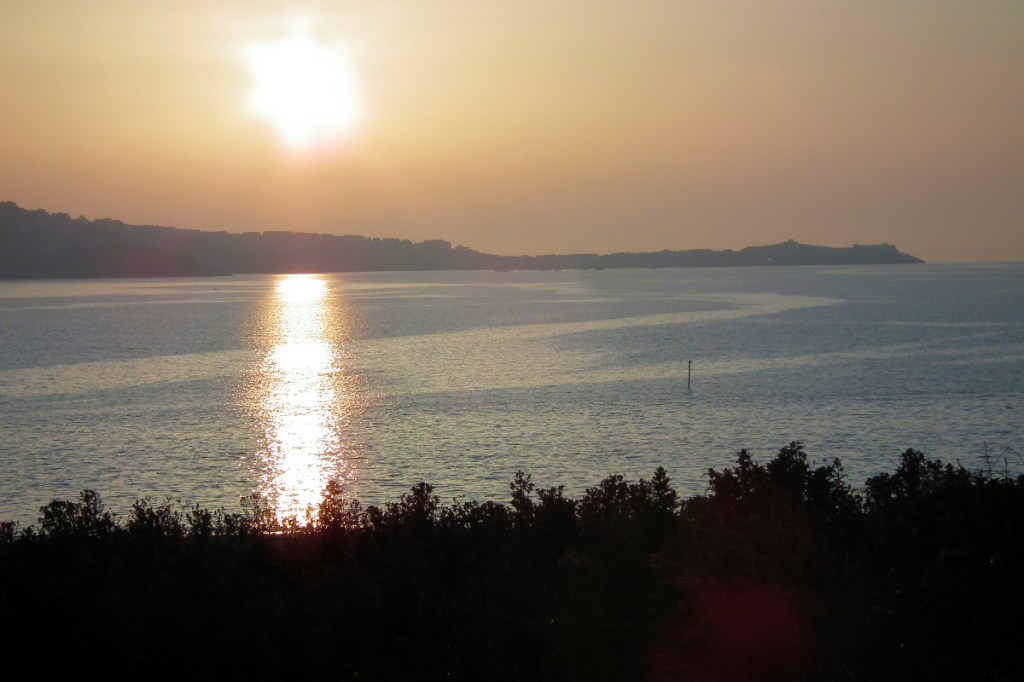
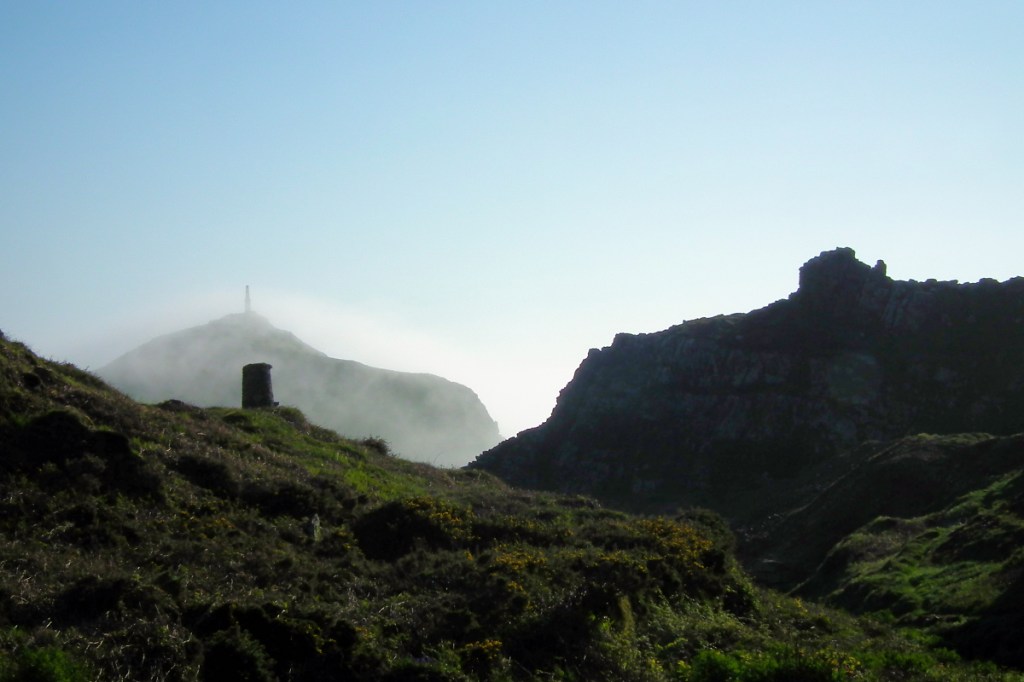
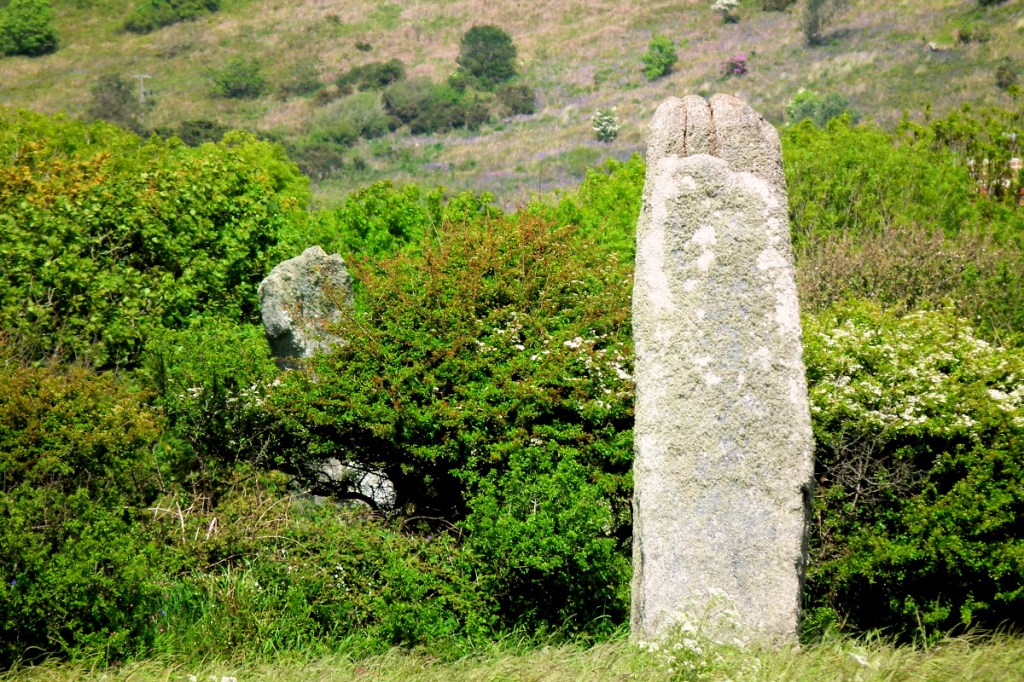
The photos are from Bannau Brycheiniog or the Brecon Beacons in Wales.
Current meditation times, on Sundays: UK 7-7.30pm GMT W Europe 8-8.30pm E Europe and the Levant 9-9.30pm Brazil-Argentina 4-4.30pm EST, Cuba, Jamaica, Colombia 2-2.30pm PST North America 11-11.30am
I quite recommend not being a retired humanitarian. Or, for that matter, trying to retire from many other helping and caring roles and professions. Because people come back for more, often for very good reasons, even if they’d prefer not to, and levels of genuine need in the world are rising sharply. So pulling out isn’t as easy as in a normal job. And when it comes to helping a person find food or pay an emergency hospital bill, it’s not a matter that can wait. “Is there a doctor on board?“, “Granny’s had a fall…” and “Could you just…?“.
This presents a dilemma, because the world needs people who help. Not advisers but actual helpers – people who do things. While some people are called to do it since they are by nature server-souls, it’s often foisted and dumped on them by a society that lacks time for being human, and server souls are not remembered and honoured very often.
Capitalism is not geared to accommodate compassion and empathy: you’re supposed to look after your own interests and, if you don’t, that’s your responsibility, and tough luck. The tragedy of this is that genocides happen and we as a society regret it yet we implicitly permit them, always busy with other things. That’s one of the great tragedies of our day, and we tend to worry more about Donald Trump than people in Gaza.
It’s not that enormous sacrifices are necessary, since £10 from a thousand people does make £10,000. Theoretically, many hands make light work. But it’s easier raising money for pussycats than for humans who live far away. Part of our problem is that our societies are so privatised – everyone’s supposed to look after themselves, and that’s the way the world is supposed to work.
But it doesn’t – there are too many things such an approach fails to cover. We have delegated caring to professionals, leaving it to them, yet there aren’t enough professionals, and many are under-supported. Also it’s personal closeness and family and community involvement that often are most needed, not regulated care administered according to official guidelines, done by stressed-out, underpaid people in uniforms.
We all get genuinely overloaded with issues and concerns… another war, another famine, another hurricane, another vexatious issue, another person needing concern. Compassion and empathy grate with the heartless pressures of staying alive in a capitalist system.
One of the frustrating issues I’ve faced in my humanitarian work is that I was always pressured to raise money, and that’s not my strong point. Philanthropists are regarded as rich gits who are there to disburse money, but my wealth is rooted in healing, reconciliation, communication and concocting occasional bursts of sheer magic. Even so, money needs are critical for many people, and often these needs are urgent. So it often defaults to money.
On Monday night I attended an all-night spiritual ceremony, processing this kind of thing in my heart through the night. It was a chance to step outside such concerns and look at them from a soul level, getting focused on inner healing. At present I have a friend in Gaza, with baby, who needs rescuing, plus a village of Tuareg people who need help (they’re under attack), plus a spirit-granddaughter, Phyllis, aged about six, whom I thought was dead. She has recently been found, rescued from Niamey in Niger and has now contracted malaria while in transit. So she’s in hospital in Ghana, in a country where, if you don’t have funds to pay, they dump you outside and leave you to your fate. That’s because of privatisations that rich countries imposed on developing countries in the 1990s, as a requirement for lending them money.
But we have achieved one thing: she’s safe in Ghana with Maa Ayensuwaa, who will look after her. I always suspected Phyllis was one of those rather special kids – her dead mother Felicia was a special soul too. Eighteen months ago, Phyllis had the fingers of one hand chopped off by a drug-crazed, murderous criminal, all because her mother refused to hand over a memory-stick that his gang wanted. I hard-talked with him just before he did it but I could not dissuade him. Perhaps Maa Ayensuwaa will train her as an Okomfo, a traditional healer – she needs to pass her remarkable knowledge and gifts on to someone, and perhaps that’s why Phyllis is still alive today, to inherit the secrets of Maa Ayensuwaa’s line of healers and bring their heritage of knowledge into the future.
Lo behold, as soon as I returned from the ceremony, tired yet in good spirits, in comes an urgent request from a hospital doctor for £100 for medication for Phyllis. Which, of course, I do not have, since I’ve already paid for her rescue and that emptied me out. The doctor cares about Phyllis but, if he breaks the rules, he loses his job. Telling them to seek support elsewhere is no help at all since they have already done so (and it’s rather callous and discouraging a response too).
So I’m back in the loop, begging people for money, yet again. I used to be much better in a team, when working with my old soul-sister Pam Perry – she could get on the phone and rustle up funds and action much better than me. With only one lung, she’d sit in bed with her oxygen tank, phone and laptop, raising money for Jerusalem Peacemakers and the Hope Flowers School in Bethlehem, Palestine. We were a dynamite pair because I gave her brains, backing, online outreach and magical input, and she was great at what she did.
In magical operations I work best as a battery-backup, a reserve warrior for heavyweight situations, a standard-holder and a protector and minder for those at the frontline. Or, at least, that used to be the case – but cancer went for my lower back and bones, and I cannot carry the same weight I used to bear.
Still, as one with a conscience and a heart that some regard as too soft, and with the involvements I’ve had over the years, I’m still at it, scrabbling for money to save someone yet again. In one sense it brings gladness to my heart and meaning to what remains of my life, and in another sense it’s a weighty bane. It’s difficult finding people to replace me. I have personal relationships with the people I work with in Palestine, Mali and Ghana – I’m unhappy about just dropping them during a time when it’s getting harder for them.
So that’s the story for today: raising money for a rather special child who’s struggling to stay alive.
In September I’ll be doing an AHA workshop on this issue, in Penzance, called ‘Changing the World’. It’s for helpers, activists, meditators and change-agents of any kind, and it will cover real-life questions concerning personal risk, life-purpose, commitment, psycho-emotional issues, burn-out, energy-management, holding true to your core beliefs, staying with it despite everything, and tricks for getting through. And planetary healing too.
Not that I’m the world’s greatest expert on this (is anyone?), but I do have some real-life experience. I’m still accumulating it, even as an old crock, and today it concerns one of those small yet big hurdles you come upon: how to create a miracle and raise £100 out of thin air when you don’t feel like it and you’re already worn out.
If you’d like to contribute even just a fiver to help Phyllis get better, that’d be really welcome. Drop me a message and I’ll give details about a bank transfer in UK or PayPal from elsewhere. Alternatively, please send her and Maa Ayensuwaa a healing, supportive prayer. Thank you, and bless you.
From a personal growth viewpoint it’s common to talk about boundaries. Well, yes, that’s true, but that’s not really the goal: after all, most wars and disagreements concern boundaries and we can go on forever being anxious about what separates us. It’s really about sharing and how to do it well, for sharing is a healing thing – personal, societal and global.
We too can become refugees, fall through the net and need help – too often we forget that. Giving is a concept with problems around it – it’s sharing that is really the big issue. It’s always an energy-exchange. It’s in our mutual interests to share what we have. Recipients share too, what they have – if it’s only their humanity and efforts.
However, even then, sometimes we’re tested, especially when we seek to treat others as we would have them treat us and they don’t return it. In such a situation I just try to keep going forward in faith without giving up.
There’s a level deeper too. To survive in this game I’ve really had to learn it in my cells. As a mantra of perseverance it gets me through the difficult stuff, and I’ve quoted it before…
It’s alright in the end, and if it’s not alright, it’s not the end.
This is interesting. It’s written by an old friend who is himself involved with helping out in a freelance-humanitarian sense with Gaza. But this is something that anyone involved in conflict resolution, or in any kind of change-bringing commitment, needs to ask themselves: what is it that drives me to do this?
It came up for me too. In my case, my maternal grandfather was in General Allenby’s British invasion force in Palestine in WW1, my father was in Egypt in WW2, and I have Roma and German (though not Jewish) ancestry – Holocaust stuff. That’s what I’ve identified in myself that hooked me into it.
But also, growing up in a polarised and violent city, Liverpool, in the 1960s, played its part – overcoming the effects in myself of being bullied in early life. We teach best what we ourselves have had to learn.
If you have a bee in your bonnet about particular issues, driving you into activism, it’s worth looking into your ancestral background and your history. It can help make it all more conscious.
Many Palestine and other activists would do well to look at the emotional source in themselves of their despair, anger and commitment, because this will help them become more effective, tactical and compassionate in pursuing their vision.
It’s important because issues like this will not be resolved overnight. Yes, a ceasefire has been needed and is still needed, but a ceasefire without resolution of fundamentals might not be the best thing. Sad to say, sometimes the horror has to get worse, until a point comes where peace and resolution are the only options left.
We need to own up to the perverse fact that many of us worry about Gaza and similar places only when blood and horror happen, impinging on our comfort-zones. But actually, the reason why blood and horror happen rests on causes that are brewed and fermented during quieter times. If we’re going to succeed in a mission such as peacemaking of conflicts that have deep roots, it has to be sustained in the longterm.
And here’s an awkward truth. If campaigning for our beliefs polarises society, then we shall fail. Because if others have different beliefs, thinking of them as nasty ‘them’ people itself lies at the root of conflict. People who are anti-anything, who wish to ban things or people, and who dehumanise people with different viewpoints, become part of the problem they’re sincerely trying to resolve.
We really are all in this together, if we wish to resolve the fundamental issues that the world faces today. Peace will not come, and ecological and societal issues will not be resolved, unless we all work together.
This is not idealistic thinking. It is a very real socio-political issue. If we don’t get through this in the coming decades – global consensus-forming – then we’re fucked, really. War arises from polarisation, and there is little value in trying to stop war or save our world by polarising society.
Working to overcome polarisation and build bridges makes things more difficult. It means we must work longer and harder on this. It means we are challenged to walk our talk more consistently and for longer.
When the shooting and dismay stop, if everyone just goes home, back to normality, then peace will not come, because the matter is not sorted. And in this century we really need to sort things out, changing and ending the patterns of centuries and millennia.
That’s my thought for the day. However, there’s something else too – a new podcast.
ARTIFICIAL INTELLIGENCE | HUMAN INTELLIGENCE
I recorded this in January and completely forgot about it! That was a memory question. And that’s why it’s coming out now. I remembered.
Jean Piaget once said that intelligence is not about what we know, but what we do when we don’t know. How we figure things out when we’re in new territory or out of our depth.
The problem with AI is that it works by drawing on data and on what is known, on memory, and on the way things have happened thus far.
That’s not true intelligence. Human intelligence is better at dealing with the unknown. That is, if we humans act intelligently – which we do only occasionally.
So AI is unlikely to be as wondrous in its problem-solving capacities as tech-bedazzled AI cultists would like us to believe.
And there’s a hidden twist here concerning human intelligence – it’s in the podcast! Recorded in January 2024, down by an old silted-up millpond in the stream below our farm. 27 mins long.
CONSCIENCE AND WORLD CHANGE – a podtalk from 2007. It came out then on Glastonbury Radio.
Many people have been vexed over Gaza, Ukraine, Sudan and the parlous state of the world. It can give a really discouraging, hand-tied feeling of not being able to do anything about it.
This podtalk addresses the matters of conscience and moral sensitivity – personal and also across society and the world. It was broadcast during the Iraq war, when similar feelings were afoot for many people. It’s taken from a book of mine, Healing the Hurts of Nations.
It might hold some answers and put things in perspective, concerning these rather vexatious issues.
Originally it was a radio programme with a really good choice of music woven into it, but for copyright reasons I can’t publish the full version – and that was a two-hour listen, while the talk alone is one hour long.
Leave it for a time when you have some space for something thought-provoking. Because it is. It has some real gems in it.
One of the themes of my life has been social healing – stimulating social and community psycho-spiritual growth. This took shape through the camps of the 1980s and 1990s, community events and early online social networking in Glastonbury and working at the Hope Flowers School in Bethlehem – it was, and still is, focused on trauma recovery and social reconstruction in the militarily occupied West Bank of Palestine.
Modernity has brought individualism with it – the development of an urban-industrial society required the breakdown of community bonds and social sharing. Nowadays so individuated, each responsible for our own lives whether or not we like it, we tend to over-personalise our hurts, complexes and issues. Some of us take more personal responsibility than is due too, out of compassion, guilt or charitable activism.
But this individualism arises from a social-cultural pressure, like an endemic viral infection that is well embedded in the rich world, though in some societies it has only recently hit them, not least through the medium of the mobile phone. Such societies start breaking down when the brainiest and most enterprising of their members start leaving, heading for cities, jobs and universities.
Many of our difficulties arise from being part of a society, a culture, and their institutions, values and customs – and their webs of power. So if, for example, you grow spiritually or in terms of human potential, people and situations can frequently obstruct or resist these changes in you, or cause you disadvantage, and it gets difficult, and profound choices arise.
One of them is: should I pursue my own path or should I stay in this situation to try to improve things over time? This is not easily answered – it’s not just a matter of selfishness, and it goes much deeper. Nowadays many people leave their communities in order to work in cities or abroad, and to send remittances back home to help the family, and they perceive it as their only option. Many people in Gaza would like to leave, but also they don’t want to leave their families (and the Egyptians charge $5,000 per person to get out of Gaza).
This is a dilemma that all of us variously face at times – a conflict between fitting in or doing your own thing that is a big factor in social churn, divorce, family and community breakup – and it has very mixed outcomes. This inner struggle is a side-effect of intense change.
Nelson Mandela, who took a big destiny on his shoulders, once wrote that he felt he had failed to resolve key dimension of this question: for him it was a conflict between duty to his family and duty to his people. I’ve faced this question quite a few times and, looking back, I still have mixed feelings about it.
But in recent decades, those of us who are more awake than most people have been faced with a barrage of cultural, social and institutional opposition to or rejection of the kind of beliefs we hold. These beliefs have a lot of variety, colour, contradiction and value to them, but in the end they all boil down to a key issue: whether or how much to prioritise either personal or collective benefit.
Another issue lurks behind this, summed up in Jesus’ words, ‘by their works shall you know them‘. Not ideas, advocacy, explanations, disinformation or ideology but actual actions and the way we walk our talk.
The future is not just about economics, resources, AI, ecosystems, carbon sequestering or even space travel. At the heart of all these issues lies the small matter of social healing. For me, it started off during ‘the Troubles’, a student uprising at the London School of Economics, where I was a student. [For a 15-min video about it, try this.] We got squelched. As I experienced this, feeling the impact of suppression of our movement for change, I saw also how we ourselves had screwed up our own cause. People had slipped into endless argument, disagreement and a confrontative approach to protest, and there were regrettable scenes mixed in amongst the brilliance, excitement and flowering that went on at the heart of our attempted revolution.
It wasn’t at the time clear to me exactly why and how this had happened, but it set me on a path. During the 1970s, in my twenties, I went through a lot of inner growth, learning more about awareness, psychotherapy and social dynamics. I went through my own process, where I found myself screwing up even when I didn’t mean to, and faced with a mountain of young person’s acute dilemmas that sometimes felt too big to handle.
At one stage, during my Saturn Return around age 29, I contemplated suicide. Actually it was a ruthless truth process and soul-searching, and it led me to committing to my calling. That calling wasn’t clear and distinct, but I had to make myself available and willing to be given a task. The shape and expression of it surfaced within a few years.
I had accumulated a bundle of experiences during my teens and twenties that made me feel like a jack of all trades and a master of none, but the fascinating thing was that when my mission did take shape, all of those skills and abilities gelled together, suddenly making sense. I had the full range of skills needed. It was as if life had been preparing me for it without my knowing.
Looking across St Ives Bay toward Godrevy lighthouse
Fast-forward to the 1980s, and something drove me to start the camps movement, as well as a stream of conferences and gatherings in Glastonbury that developed thereafter. I didn’t know this was going to happen – I was just driven, or shoe-horned, even to some extent tricked into it. The Great Cosmic Trickster has greater designs than we can see, and sometimes we must be thrown into things and presented with a choiceless choice.
It was an old friend, Jamie George, who did it. He asked me to help him organise a gathering in the Assembly Rooms in 1983. At the time they were threatened with demolition, and several of us set about creating events there, to bring energy into it and stop the demolition. One late-summer’s evening Jamie and I sat in his garden brainstorming it and coming up with an innovative formula for running the gathering. It’s what came to be called circle-working. Though it’s as old as the hills, ancient and archetypal, circle-working was not at that time practiced in our society, whether alternative or ‘straight’.
Time went on, Jamie beetled off, leaving me to it and, before long, I and a squad of Glastonbury friends I brought together were organising week-long holistic educational camps, usually for 100-500 people. Each had a theme (Astrology, Earth Mysteries, Music and Dance and, later, Arts and Crafts, Healing, Ceremony), with transformative intent, group process and a foundation of circle-working – mainly use of the talking stick.[3] We were improvising and innovating in a seat-of-the-pants kind of way, but it was dynamite.
In the 1990s I took this further with the Hundredth Monkey Project – consciousness-work camps specifically addressing world problems of the time, where we applied to world issues methods and ways drawn from the personal-growth sphere. Again, it was based on circle-working.
One of the big unexpected discoveries we made was this: by focusing on ‘world work’, personal growth was vastly accelerated as a by-product. The idea was to set aside our personal growth, to serve a greater sphere – the wider world. But for participants the personal growth implications were enormous. In fact, this led to an unforeseen problem, because each summer camp had such a transformative effect on participants that they tended not to return in later years – it had had such big consequences for them that they were already ‘cooked’ and busy getting on with what had started for them as a result of the camp.
But there was more. Here we come to the social healing bit. For me, it was a big learning. The idea with camps was to create an accelerated growth environment in which people could truly step back into themselves and flower as souls. In this we were very successful. It wasn’t just some people who experienced breakthroughs: it was everyone, without exception. Together, through social bonding and working at it together, we had lifted each other up – we had risen together.
Some of the best camps were those that were the most challenged. We had no shortage of weather events hitting us, and also, in 1986, we had the Chernobyl meltdown, which started on the very day that one of the camps began. Yet these experiences pulled us together by shoving us through the grinder. They forced everyone to become really sure why they were there. It generated commitment and group focus, hundred-percentness.
There was a classic moment in 1987, the morning after a Force Eight gale had ripped through on the very first night of a camp in Wales. We had downed all marquees and tents and crammed into the geodesic domes we had, since these were the only safe structures in a gale and monsoon. For some people this was a nightmarish experience – one of those dark, threatening nights with lashing rain and furious winds that can go on forever, bringing up loads of fear and desolation.
Next morning, the storm had gone. All was still, the sun was breaking through and everything was dripping and remarkably colourful, in a sopping, late-summer way. I was standing there outside, blinking and assessing the scene, having hosted fourteen people in my two-person dome. A new camper was standing with me, looking wan and pale, telling me she couldn’t handle this and she was going to go home.
I was quiet, wondering how to respond when, suddenly, from upfield, came a shout, “Tea, anyone?“, and one of the site crew processed down the field like a butler, with a big tray of mugs of tea. It was a poignant moment. The lady just broke down, crying her eyes out. And she loved her tea, and she stayed with us. And her life changed. She made a growth choice there and then – the atmosphere of the camp had prised her open. That’s just one story of many such epiphanies. Another camper once said, “This is what I have always dreamed of, but never thought it could actually happen“.
St Ives, from Hayle Towans
Though the success of the camps was very much teamwork, resting on the qualities and experience of our camp crews and the innate wisdom of participants, as the key instigator of all this I was going through big epiphanies too. Not just personal, but concerning this matter of social healing.
At every camp there would be a crunch-and-breakthrough point. At the early camps it often took about five days but later on it came after three or so, as the group atmosphere of the camps evolved. There was a point where people had settled into camping, been through a few days of it, and they were lighting up, feeling part of each other’s lives and gaining momentum. There was a rising feeling of this is it, that we were in the right place at the right time, doing the right thing. As if this was meant to be happening. As if this was a model for a future society, where everyone got on, worked together, served each other and enjoyed each other’s presence. The guards came down, shared trust rose, and a brightness started shining in people’s eyes.
And then, something would happen. Often it would come out of nowhere.
It could have been someone snoring through the night and disturbing others (a tolerance issue). One year, a person slept around and spread a sexual disease – a big controversy bringing up loads of stuff. Or it could be someone suffering withdrawal symptoms from meat – the food was vegetarian only. Or tents leaked in the night. Or kids got into a scrap. Or, one year, the Hippy Convoy arrived at the gate, pursued from Savernake Forest by police, demanding that we rescue them and give them a place to camp.
Of course, this fell on me and key members of the crew and facilitators to sort out – to deal with people placing blame or getting upset, and quite often it involved complex, reverberating community situations. But there was enough love and care around for these societal explosions to work through. We turned it into a group process to turn problems into assets. It wasn’t one person’s problem – it was our problem, and all of us were stakeholders, together.
I’m glad to say that, on the whole, we succeeded in this – especially by the 1990s at the M100 camps. This arose from a buildup of collective skill and experience that could contain and channel social energy in all sorts of ways. Also most participants were willing to go that way, contributing their own gifts and inputs, while the rest gave it a try, going along with it and soon realising that this was something amazing to be part of. It became a cauldron of mutualised contribution – powerful sharings and dynamics during talking-stick sessions, or in afternoon workshops, or around campfires.
This is how social healing works. It works particularly through the medium of crisis and shock, precipitated particularly by unforeseen things against which we have few defences. A recent example, in the news recently, was a ship that destroyed a bridge, killed people and blocked a major port in Baltimore, USA – something no one was prepared for. It’s the kind of event that says something. No doubt people will apportion blame for this disaster but, if we’re honest, if we want to have the fruits and luxuries of a developed civilisation, this is what will happen, no matter who actually does it.
It’s not them – it’s us. This truth lies at the nub of social healing. This is a key issue today in the collective psyche (with Pluto in Aquarius for two decades from 2023 to 2043): there are those who opt toward collective, mutually-empathetic solutions and those who resort to self-interest or sectoral interest. Both options have their costs and benefits. But the costs of self-interest are nowadays outweighing their benefits – so historically we’re heading toward more collective awareness.
Human society as a whole has an endemic case of PTSD. History has been traumatic, pretty much everywhere. The pain and behavioural aberrations that arise from this are rooted not just in past events that we know and remember, but also in collective experiences that are long forgotten.
I have written before about a time in Britain around 1200 BCE, over three millennia ago, when the people of Britain underwent a mass trauma which then played a large part in all that happened afterwards, including four invasions of our country over a thousand year period. This trauma happened at the end of the megalithic period around 1200. The megalithic period had stretched back 2,500 years up to that point. A spell was broken, a mainly-sustainable, cooperative, enspirited society fell, and it was replaced by insecurity, social decline, warlords, weaponry, territorialism and grief (also climate change). That’s big.
Today, many young people today won’t remember or care a lot about what happened in WW1 and WW2 – they’re consigned to history – but these two traumas are programmed deeply in their own genes, contributing to their current preoccupations and anxieties – they are descendants of survivors who went through a very hard time. In my own case, my mother spent two years under the Blitz in London and Swansea, my father lost a leg in Egypt, and my grandfathers were in the Battle of the Somme and the British invasion of Iraq and Palestine.
Yet the addictive consumerism that many young activists point out today was induced by trauma, horror and shortage, and the consequent urge, emerging in the 1950s-60s, to cover it all over with food, security, holidays and overconsumption.
So solving a major component of the ecological-climatic crisis involves deep social healing – the healing of trauma and its effects. Not just trauma, but cultural beliefs, intolerances and insecurities, identity and diversity issues and many more.
This healing process won’t happen overnight – it’s multi-generational. But we need to start it, and somehow keep it manageable by building up social processing mechanisms and a body of experience in all sectors of society which can ‘hold the energy’ and help it work through in ways that don’t turn destructive.
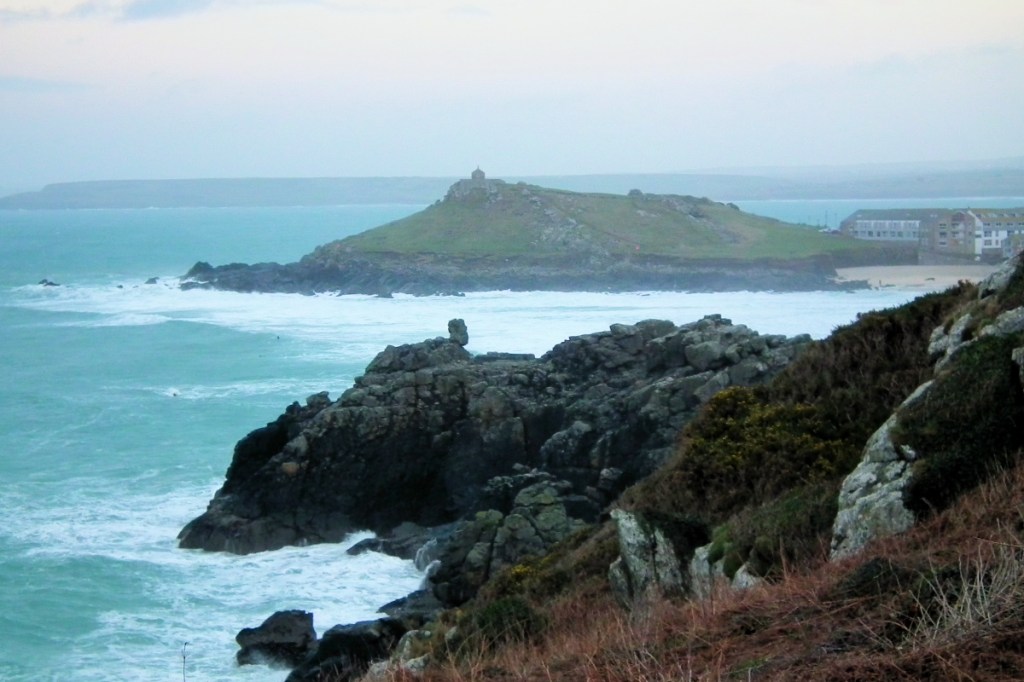
St Ives Head, a Neolithic and Iron Age cliff sanctuary
War is a critical issue, as part of this. I read recently that a study had shown that over 90% of Hamas fighters had experienced their fathers being killed. Little explanation is needed – it’s all about pain and how we respond to it. And, take note: if that had been you, you’d probably land up being such a fighter too. Either that, or you might become an exceptionally brave and driven peacemaker if you so chose – one of those who are rarely mentioned in the news.
The world teeters on an edge where a very big collective decision is needed, regarding war. While explosions and horrors go on, other big world issues cannot progress. The world’s sensitivities are dulled. Resources are misdirected into ‘defence’ and wasted in both destruction and reconstruction. Our moral compunction is overlaid with anger and dismay. Our capacity to see that we all sail in the same boat is obscured. We fall for the belief that other people and nations are against us and a danger to us. This is a mass-psychological complex.
There are elements in this world who wish to crank up this belief too – not heal it. Such a belief does have substance, but there are other ways of dealing with it. It’s not just a matter of diplomacy but one of deep social change. Some people deliberately stoke up division and conflict – our good friend Benjamin Natanyahu is a classic case, but he’s by no means unique. Such people have a vengeance to carry out on a world that has mistreated them. Or they’re on a power trip, though this often arises from past pain too. Or they and their oligarch-team are struggling to stay on top. Or they can’t drop the addiction to conflict (or the money).
The majority of people have grudgingly fallen for the habit of accepting division, conflict and war – they regret seeing their children die, but they still fall into this pattern of belief, even financing their own children’s deaths through their work and taxes. Some nations rely on a psychology of fear and division to justify their existence. Some oligarchies cannot exist without it.
In Britain, divide and rule, a power-imposition pattern taught to us a long time ago by our conquerors the Romans and the Normans and nowadays embodied in the ethics of the Conservative party, is a pattern arising from trauma. It’s not uncommon that imperialistic nations – Britain, Russia, China, Turkey, USA, Netherlands, France, Israel and others – generated the historic urge to conquer as a result of being conquered or oppressed themselves, further back in time.
But this is not the only option: Canada, Sweden, Norway, Denmark, Costa Rica, and to some extent Germany and Japan, tend the other way. None of these nations are angels, but they see things differently. Peacebuilding is not an impossible task.
Godrevy lighthouse
We don’t commit acts of warfare only militarily – nowadays economic and psychological warfare are big things.
On the economic front, we smug Brits, we run a neat string of offshore banking centres for the sequestering of wealth and the unaccounted processing of enormous transactions. That’s one of our specialisms – clean, kinda legal and smart corruption. Around one third of all the world’s money goes there. We have straight-laced, official, smart, seemingly law-abiding banks in the City of London, though those same banks have shadow subsidiaries in the Caymans, Belize, Virgin Islands, Singapore, Isle of Man or Jersey to handle the unaccounted stuff (everything from Apple profits to drug barons’ billions to Nigerian oligarchs’ money-stashes to corporate mega-transactions). Good business. However, not good for people and planet (or national government tax-takes).
These kinds of obstructions are not insurmountable: it requires people to hang together, clarify and state our collective wisdom and preference, and vote with our feet (or even fingers). It requires electoral swings, mass consumer choices, campaigns and also – this is the critical one that leads to real action and change – the right kind of response to events and defining moments.
We’ve had one recently with Gaza. All of the demos and campaigns of recent months have not really paid off in terms of ceasefires. But in terms of historic swings and consensual tiltings, Gaza represents a turning-point. The failure of popular will, globally, has consolidated a deeper shift underneath which is far more firm and solid. It’s not specifically about Gaza, though Gaza, following on from Mariupol and Aleppo, has triggered it. It’s about large-scale destruction itself, and people as victims of it. It comes at the same time as the film Oppenheimer and a range of other events that make this a defining moment or period. Doing blanket devastation of this kind will not be so easy in future.
A tide is turning, even if it takes a generation to do so. When tides are turning, nothing much happens except for powerful undercurrents and a buildup of potential for a full-flux tidal flow to follow. That’s what could be happening here. It depends on the world public to carry this through without sitting back, believing the job is done, or forgetting because of the pressure of other concerns.
Hence, in the Sunday meditations, I’ve sometimes suggested building and consolidating a certain thought or image, since strengthening such thoughts in collective consciousness – such as reconciliation or justice – is a key part of this process. It’s all a matter of where the centre of gravity, where the tilting point in the collective psyche, stands. Gaza has shifted it. The sacrifice Gazans are making is not entirely fruitless.
Forty years ago the Greenham Women surrounded the USAF cruise missile base at Greenham Common. They made a really strong point that hit home in the hearts and minds of many people. The base didn’t close right then because something larger was happening – the end of the Cold War, an historic process that came pretty quickly once it came. The base closed during the 1990s. The women’s action worked, even though most scepto-pundits continue to believe there was no relationship between the women’s protests and the geopolitical change that followed around seven years later. Or perhaps it was just chance. Yeah, sure. But there was a connection: the women put in the work on a psycho-spiritual level which gave a big shove of momentum, alongside the efforts of Solidarinosz in Poland and other movements bringing about the Velvet Revolutions. The Iron Curtain just so happened to come down – and in history, seven years is a blink of an eye.
This is how it works. It’s in the psyche of humanity, the collective unconscious. That’s how change comes. A strange twist might also be this: when the moment comes, the actual ignition-event that catalyses such a shift could be quite small and unexpected, in a place and from a source that most people don’t anticipate until it pops. Then suddenly a widlfire starts.
Remember the young Tunisian street seller, Mohamed Bouazizi, who set himself alight and sparked the Arab Revolutions? Martyrdom worked for him and he set alight a tidal surge across the Muslim world that has been tamped down for now but it has not gone out. It’s an historic process, and many threads and factors are involved.
Newton’s third law applies to the course of history: to every action there is an equal and opposite reaction. Yet, while the wheel turns round and round there is a net movement in a prevailing direction. This is one reason why we need to give thanks for the assholes and badguys of this world: they prompt us to pull our fingers out. Because if we don’t, they’ll carry on. They exist because we allow them to exist. They embody the ghouls and devils within the collective psyches of nations and the world, and it is here that, at root, change and immunity need to develop.
Historic processes can be accelerated, and one day in the coming decades (my astrologer’s guess is around 2048-65), we’re heading for a time of intensity, of going through the mangle. We’re already going through it, but there’s more to come, and it’ll get bigger. We can make this easier or more difficult – that’s the main option available. It depends how much we Earth humanoids decide to agree. Or at least to agree to disagree while cooperating over the essentials.
The big historic change we’re going through this century involves addressing issues that go back centuries and millennia. In essence, it’s a transformation from a competitive to a cooperative collective mindset, society and civilisation. Because we’re all in the same boat, and the boat is now rather crowded and unstable.
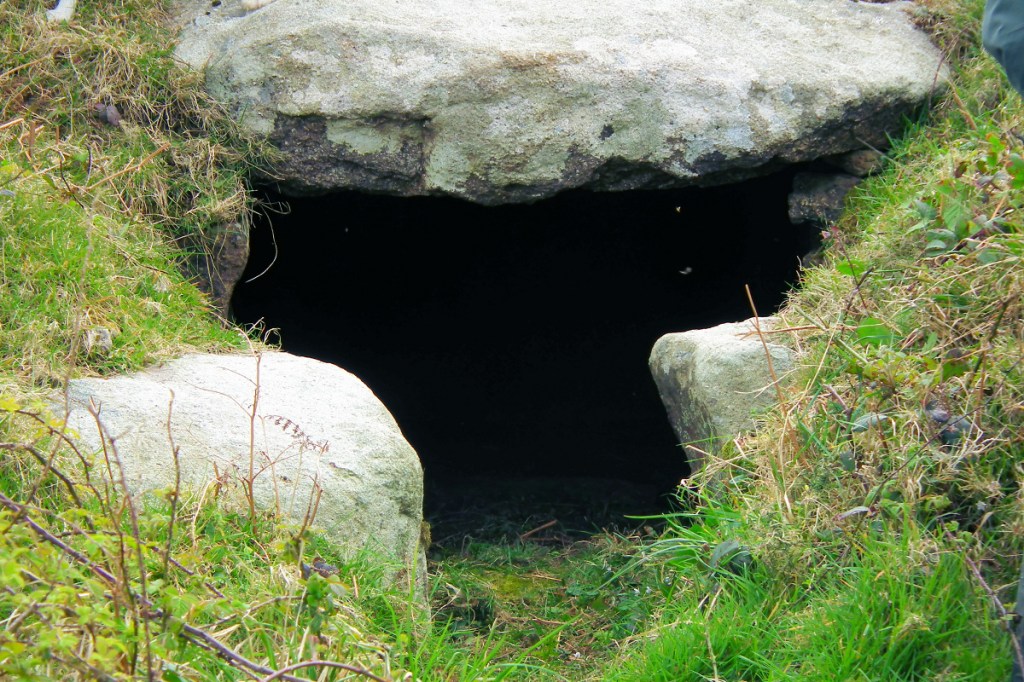
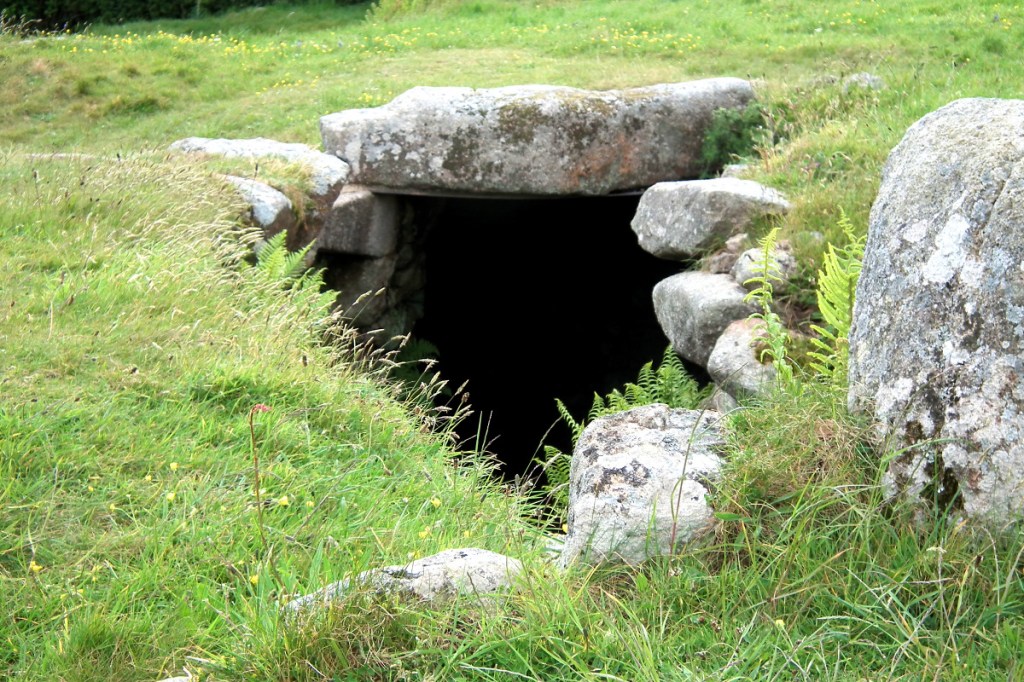
A bronze age chambered cairn at Treen, near Morvah, in Penwith. I think these were used for, amongst other things, conscious dying.
Dying consciously isn’t something to leave for the future. It starts now. Yes, even when we’re young. It’s about our lives now. Let me explain.
Dying is a process, a continuum. All of us are part-dead already, at least psychologically, even if we’re in good health. Most people are only 10-20% dead, and most are unconscious of it, except when we schmooze into the otherworld in our dreams or when we’re ill or facing overwhelming circumstances in which we are obliged to ‘die into the moment’, to let go of all of all that went before, as if this is our last moment or it is soon to be so.
It’s all to do with our relationship with the otherworld and how comfortably we function in it. This depends on the extent to which we trust our ‘subjective’ perceptions. When a close loved one pops their clogs, part of us goes with them as if by osmosis, and we can be in quite an altered state thereafter (for at least a month though also up to a year).
This is a form of privileged access to the otherworld, empathically piggybacking the loved one who has died. It’s a gift from them to you. If we indulge in loss, buying into the mindframe that causes people to say, for want of something better, “Sorry for your loss“, we’re missing the point. Is it a loss or a gain? Here lies a choice.
If it’s a loss, then you’re afraid of dying. Go on, be honest. You’re afraid, and you see it to be a negative thing. But wait, when it’s 150 Palestinians who pop their clogs in one night, in some respects I’m happier for the people who died than for those who survive. Bloody hellsbells, that’s a version of earthly life that it’s quite good to get out of, if that is the fate that befalls you.
If it’s a gain, something in you is open to dying. And, as it happens, you’ll tend to be more open to living too. Living fully, and switching up the risk factor to a healthier level. It means you are likely to die more easily, when your time comes, because this isn’t just a goodbye. It’s a hello. It’s an entry into a new world. You’re going home.
Some people will relax into it and float off when they come to the point of passing over – when they come to the medically critical point of taking a last breath. But even then, this is but a stage on an intensely transitional dying path. Death starts long before and continues afterwards. Even with a sudden or unexpected death there are often signs, which can be seen in retrospect, of foreknowledge of death – something was fixed in preparation, on some level.
Sometimes I’m told of someone’s death and I’m not surprised at all – I didn’t expect it, but once it came, it made sense in some way. Then there are some deaths where it doesn’t feel right. I’ve felt that about quite a few of the deaths that have occurred around me in the last year or more – not only were they avoidable, but also, in my judgement, it was not right that they happened. I felt that about a family, the Gaza branch of the Issa family in Bethlehem, who died en masse, over thirty of them, in October. My first response was, no, that shouldn’t have happened. There was something bad about that. But then, ‘the hand of God moves in strange ways’.
How you feel at the bucket-kicking critical point is greatly affected by your readiness for it. Some people experience it a bit like falling off a cliff – scary at first, but then you discover that you can fly. Some people can’t handle it at all, going off at a tangent, or to sleep, or they fight like hell. Some people relax into it, floating over the threshold with a gentle, sighing smile of recognition, release and relief. Then of course, there’s the question of what you choose to do next.
Well, the general rule is, if you’ve done reasonably well thus far, you’ll manage with the next bit. It depends a lot on how you’ve set this up, how ready you are. This might not take a vastness of preparation: it’s mainly about forgiveness and releasing, and how easily we do it. Letting things be.
Summer sunset over the Isles of Scilly, as seen from Tregeseal stone circle
Recently I’ve been finding out about things in my own life that I haven’t found easy to let go of. So it isn’t easy, even for one who is quite used to it.
One gift I’ve had from cancer has been the advance notice I’ve been given. I’ve been given time to pre-process dying. I’m willing to do so – and that makes a difference. Becoming disabled and debilitated started me on a change-process, and I’m grateful for having been given a time of debriefing and unwinding from life. At times it has been lonely and bleak, but that’s a necessary part of the process, part of the full spectrum of life-experience. Especially for someone who has had quite a public life.
One aspect of this is that, as an author and broadcaster, a communicator, I’ve been very productive since getting cancer. Being given notice of death gave me impetus to write and record things I haven’t said, to finalise and bring to completion many of the different threads I’ve followed in my work. It’s all going up on my growing online archive.
Completion is important because, to die consciously, we need to be reasonably at peace with things. Successful dying involves letting letting ourselves float off, and that requires that we feel okay doing so. We need to feel finished and done, with no major regrets that divert our energy and attention at death, making us struggle when it’s already too late. There will be regrets, but they need to have been dug over and sifted through, to uncover the abiding truth of them. Often these regrets come from judgements, tropes and memes of the time we’ve lived in and, ‘in the eyes of God’, they tend to look a bit different.
In recent years, as part of a self-forgiveness process, I’ve become aware of guilt and shame I have carried for things that quite often were other people’s projections – projections I had taken on – and they were not quite as big and real and bad as they had been made out to be. In some cases, though I was deemed to be wrong, I was right, or at least more right than I was judged to be – though sometimes it takes decades. I realised that my own responsibility for what happened was different from the responsibility people had laid on me – often to cover their own asses. Even so, I am responsible inasmuch as I manifested these experiences, and they’re my responsibility and creation. And it always, always, always takes two to tango.
When you die, you can’t do anything more about life – you’ve had it, and that was it. You can’t fix anything, correct anything, re-run the movie or click the ‘undo’ button. Not that you could do so earlier in life, but at least you could delude yourself you could. You can do so to some extent while you have some life left, since there are things you can correct, reconcile, heal or re-work. But as you approach death, especially if disablement and disability are involved, your capacity to do things reduces, your world grows smaller and it becomes too late to do anything. You just have to accept that that is that. Bombs that were thrown cannot be unthrown, even when the craters are covered over.
It’s still possible to come to peace about things inwardly, without reconciliation having to come from outside. We have to accept what we did and what we omitted to do – especially the latter – and own up, examine our regrets, say sorry at least within ourselves, accept that we could have done things differently, understand what it was like being affected by the things we did or omitted to do, look at the true, enduring outcomes, engage in self-forgiveness and forgiving others, and then let things be. It was as it was, and that’s that.
My old friend Charley Barley, roaming around Carn Kenidjack. We dropped out of university together, fifty years ago.
There are wider and greater significances to things, and it helps to start seeing them. A friend, Mike, died of despair, drugs and alcohol and, of course, everyone deemed that this was not good. Well, from the viewpoint of the living and the default judgements of society, this might be so. But I followed him over to the other side to check him out, and he was happy, radiant, relieved to have died and actually having a lot of fun – and I was happy for him when I found out. Those who prefer to stay with the default judgement of his seemingly regrettable death see his death as a sad thing, and I do not. I’m glad for him. It’s all in how we see and judge things.
I’m sure we’ll meet again, upstairs, Mike and I. As is the case with a good soul-brother, Terry, who unexpectedly blipped out during a hernia operation – he was the caterer at the Hundredth Monkey Camps in the mid-1990s. At the very first of the Glastonbury Camps in the mid-1980s, the camp cafe was called ‘Pie in the Sky’ and, guess what, we’ll revive it on the other side, and you’re welcome to come along when your time comes. It’s free. For the good souls who ran it back then – people like Diana and Bron – the good news is that no washing up will be needed and the food will be self-cooking!
I’ve come to the end of my ‘second line’ cancer treatment (of five). I’m receiving no more treatment of Dara, the immunotherapy drug that has kept me alive for three years. It has worked well and now it’s losing efficacy and my readings are rising. Right now, I’m on nothing – this is an eight-week ‘wait and watch’ phase, to see what happens, before I start a new treatment called Lenidalomide, or Len. This is probably what will happen, though it depends on further blood samples and observations. I’m in rather a limbo.
I can feel the cancer right now. My bones are beginning to twinge with stripes of pain. My spirits are sagging. I feel the dying process accelerate.
However, I’m better off than before because I’ve learned a lot in the last four years about living with a blood cancer. (It’s Myeloma, a form of radiation sickness). In the six-ish months before my first clear symptoms appeared (my lower back collapsed), technically I was in good health, but something was not right. A dark cloud was settling on me. I was feeling constrained, tied and weighed down. My hope and light were fading. Something in me felt desperate, despairing, as if something was wrong, though I couldn’t put my finger on what it was.
Well, right now I’m getting those feelings again. Except the difference is that, this time, I can recognise the feeling and I know more about what to do, and not to do. I’m not pushing against it or trying to ‘get better’, or trying to prove that everything is alright and normal when it isn’t. I’m not anxiously looking for remedies and escape routes (though actually I’m on some new holistics), because I’ll die at the right time, in the right way, if I have anything to do with it, and that’s the way it’s going to be. The angels will take me out at the right time. It’s necessary to entrust myself to this process. It’s an act of will.
So yesterday I went to bed with my hot water bottle, a mug of tea and some munchies and I lay there, out of my head, unable to marshall myself, feeling wan and weepy, missing company and watching the jackdaws sitting on the wind.
I was stuck in a loop. Problem is, people say to me, “Just give me a ring if there’s a need”. But then, when I ring, I have to explain how I’m feeling, discussing the matter at some length, then to have to make more calls when I find out that they’re not available right now, though please feel free to ring me if ever there’s a need – which I just did.
I’ve instituted a new rule of dropping it when I’ve made three attempts. Sometimes I just have to look after myself. Problem is, nowadays, everyone is so busy, and since they’re volunteering to help out of the goodness of their hearts, I cannot complain about the quality of service! I tend to get lots of advice, and sometimes I have to say, “But I need actual help!“. “Oh, perhaps you ought to ring social services…”. The tricky bit here is that I’m often in a state of mind where due diplomacy and tact are not easy, and I cannot talk at length or discuss grand philosophisms, miracle cures or lists of things I should do.
“Would it work if I came next Thursday?“. Well, the way I’m going, I have no idea what next Thursday will be like, and life doesn’t go according to plan when your body-mind are shutting down and you’re heading for a big, yawning chasm of unwellness. The best remedy is a hot water bottle, a bit of ‘there there’ and someone to sit with you. Just the sound of those knitting needles clacking away can be very comforting when you’re in a highly altered state and hovering on the edge.
Anyway, the feeling I have right now is a bit like that point in an airplane flight where, 200 miles from landing, the pilot powers down the engines and you go into a long glide. It feels like that. There’s something rather relaxing about it. It’s a bit more effortless. Internally, it has caused me to lapse into greater levels of forgiveness and acceptance, to accelerate the flow of letting-go.
Yet something else in me wants to do a few things before I go. I want to share a few outstanding issues, to complete the story. One of these is local to me: I’ve proposed a series of three workshops on the ancient sites of West Penwith. We shall see whether the venue I’ve approached is interested. But something is different now: if someone says to me, ‘not this year, but perhaps next year’ they’re not getting it. I’m unsure I shall be on good form, or even alive, next year. People say, “Oh, don’t be pessimistic – of course you’ll be around, and besides, we need you!“. Well, perhaps, but if you need me, please get me while I’m here – and that could well mean this year.
Alternatively, please do not express regret and loss when I pop my clogs, because I was indeed here and then the angels took me out. I think I’ll manage one more Oak Dragon camp, this year, and one reason I’m inviting friends to come to the camp is not just because I want to bring the Oak Dragon tribe (a lovely bunch) a few new members. It’s because we can be together for a week in the same magic space, and it could well be the last time this is possible. This is why I invite you to consider coming.
If you can’t, then a second option is that I’ll be speaking at the Glastonbury Symposium (in Glastonbury Town Hall) on Sunday 28th July. With luck I’ll be doing a few, but not many, gigs in Glastonbury and elsewhere – this year, while I still can, and if there are organisers for it. Next year, 2025 – that’s in the lap of the gods and I don’t get the feeling my head, heart and soul will be good for it. We’ll have to wait and see. But it’s not so cool if I forget my lines half way through a talk, staring blankly at you, as if to ask, “Where am I? And why am I standing here?“.
The Pathless Path to the Gateless Gate. Near Zennor, Penwith.
This kind of stuff is important. When I ‘went up’ with cancer, I made a prayer. At the time it looked like I might have one year to live. I was a ragged pile of bones. I prayed that I might be able to bring as many things to completion as I could. In my last blog I told of how one issue – my unfinished humanitarian work – bugged me at the time, and I made a prayer for resolution. Well, BAM, it came to me in Sept-Oct 2022 and afterwards – the Ghana mission I wrote about last time, the Tuareg, about whom I’ve also written, and then in October 2023, the Palestine disaster. I can’t say I’ve resolved those issues, and none are looking good for the future. But something has been happening inside. A cleansing and releasing.
For it’s not the specific worldly issues that need completing – they can’t, and each of these three missions will resolve themselves after, not before, my death. But it’s the inner stuff. It’s not just about the worldly outcomes of the work I’ve done – much of which has on the surface been undone in recent months – but it’s the inner process of engagement with these issues, and the pain and the satisfaction, the dilemmas and truths and the intensity and pathos of it all, which is the important stuff. How to forgive myself and release it when someone in my care dies.
Just before she died, a year ago, Felicia Otoo thanked me deeply for all I had done for her and for her child Phyllis. We cried together, thousands of miles apart. She was dead the next day. Two months earlier I had adopted Phyllis, to give Felicia a sense that at least someone cared. Phyllis was renamed Phyllis Kenobi Otoo. I had saved their lives at least four times in the preceding months. I told her that I shall be joining them soon. And I shall.
There are two former students in Gaza from whom I have not heard for over two months. They’re now in the ‘missing, presumed dead’ category. I’ve been talking to them inwardly. There’s a great gift here that wasn’t there before. I can assure these dying people that I shall be joining them soon – and this gives them some comfort. Yes, a dead (psychic) humanitarian worker can still be useful, even after death!
Life always has its compensations. To be honest, though I can feel death creeping closer – I’d estimate myself to be 75% dead and rising – there’s some relief that comes with it. I’ve found the last few years difficult, facing much of it alone, and while this has had worthy rewards and I’m not complaining, I shall also be relieved when it ends, when I can drop it all, consign these matters to history and go home.
Cloud beings at Praa Sands
I’m finding life in the 2020s to be more complex than I can handle. I got scammed by an Indian guy online in December. He was part of a really neat scamming operation, pretending to be a BT engineer. Usually I’m really astute with things like this and rumble them quickly, but this time I was tired and not thinking clearly. I found my PayPal account quickly being raided for £300, sent to some address in China – but I got there just in time to stop another £1,200 following after it. Though I managed to save the day, it was costly and I can’t handle this kind of stuff any more. I was a tech pioneer thirty years ago, and look at me now.
Even so, this spacing-out process has its virtues. It causes me to pull back, excluding increasing swathes of things from my life – things that are too much to handle. Such as train journeys where I can’t trust whether the train will actually come. Or shopping trips in busy supermarkets where I have to stand in a queue with ten mobile phones around me, killing me slowly. Or long conversations where I can’t keep up with long-winded diversions, footnotes and appendices when I just need to get to the punchline while I still remember what the story was all about.
This pulling back is part of the conscious dying process. It starts now. It’s a winding-down process, and I feel I’m somewhere around the age of seven, growing down. I can still stand though!
It involves setting up circumstances, if I can, where I won’t be plagued with people asking favours of me when I just need to go to bed and be left in peace. It involves setting up head-spaces where I’m feeling reconciled even with people who don’t want to reconcile (or they don’t have time, or they’re afraid, or they’re leaving it till a ‘later’ that never comes).
It involves laying things to rest, applying the ‘Fuck-it‘ mantra, putting stuff down and letting things be. Dropping the burdens. Forgetting my fucking pills. Making a mandala of the life that I have had. Enjoying the semi-weightlessness of lying on my back in bed, listening to the Desert Dwellers and the raindrops on the skylight.
Usually, today I’d be buzzing on steroids and cancer drugs, and quite often I would write a blog or record a podcast on that day – it channels the buzzing into something productive. But I’m not buzzing on steroids any more. Instead, two friends over in Botallack took me to the Dog and Rabbit in St Just and I had coffee and pear cake, and that set me buzzing instead. That, and what we talked about there, is what produced this sudden, unpremeditated blog.
Penwith is bathed in sea fog. The woodstove is burning aromatic silver birch. Dinner is warming up on the stove. And the Atlantic winds are whooshing through the bare tree branches to the occasional hooting of owls.
Thanks for reading. With love, Palden.
PS. For those of you who listened to my audiobook, remember the allegations of corruption that were used to discredit the school where I worked, leading to the withdrawal of foreign funding at exactly the wrong moment? And remember what I wrote some blogs back about hasbarah – the telling of stories that are the opposite to what is actually happening? Well, in the recent accusations against UNRWA, which has 30,000 employees, exactly the same tactic is being used again, twelve years later. This is classic dirty hasbarah. The nations that have withdrawn funding should be ashamed of themselves – and my own nation, Britain, is one of them.
An eclipse over Penwith. The Earth and Moon are a co-orbiting double planet. The only other one in our solar system is Pluto-Charon.
Chapel Carn Brea, the last hill in Britain, topped by bronze age and neolithic cairns
I’ve just started a job that I’ve been putting off for six months. I wasn’t clear about what I needed to do, and it’s a lot of work. And I’m supposed to be retired. But it came clear a few days ago, amidst a down-time when I was sitting here alone, feeling rather rudderless and wondering what to do. I decided to do a complete revision of a rather big website I wrote and created 6-9 years ago, Ancient Penwith. It’s about the ancient sites of West Penwith, here in Cornwall.
In some respects it’s more difficult to revise a website than to create a new one, because you have to take the existing material and re-shape it along completely new lines. But there’s a tendency to simply recycle the old stuff and stay in the same mind-frame as before. So each page is taking time for me to revise – one a day, and forty to go. I’m going to make the site briefer, more to-the-point, with more maps, pics and straight statements about the geomantic issues my research of the last ten years has aroused.
The detailed stuff has gone into a book, written and not yet published, called Shining Land. I can’t self-publish it – brain issues, and I want it to stay available after I die. So I’ll try finding a publisher when I get brain-space to focus on it.
That’s what it’s like. My psyche doesn’t process stuff like it once did. I can’t multitask and hop from thing to thing any more. When faced with memory issues I have to give myself full permission to utilise and trust my intuitive brain – intuition works by faster, more direct neural pathways than logic does, and that matters in ageing brains.
In this sense, being an educated Westerner is one of the causes of many old peoples’ brain-processing issues: we have been trained to disable and constrain a significant part of our brains, in order to fit into the requirements of the system we live in. Though, frankly, many people with dementia and Alzheimer’s are simply brain-tired, worn out, and we ought to recognise this instead of deluding ourselves that we can extend our busy lives forever.
It’s not just about slow brainz. It’s about a slowing psyche – the whole lot. It’s part of the life-cycle and a wonderful way of rounding out a life. Instead of facts and figures, you get understanding and you see things in a different light.
Here’s the summit cairn on the top of Chapel Carn Brea, a chambered cairn about 4,000 years old, for retreat, conscious dying and the energy-treatment of seeds and other items (many archaeologists would probably disagree)
Right now I am celebrating the second anniversary of the sudden separation of my partner and me, after six years together. I’ve been surprised how slowly I’ve moved through the stages of coming back to myself. It has been a struggle. On the other hand, since in a late-life context I’m in the last-chance zone, there has been far more stuff to get through, for this concerns all my relationships. My very first girlfriend, Jane, is dying too, in Northumberland. It’s all about finalising a life in which I’ve been involved with some amazing women and we’ve shared remarkable experiences. But I’m happy to say that, though I regret what happened two years ago, I made it through and I live to see another day.
I’m rather surprised I got through that. But then, that’s another gift of a lapsing memory: life and its experiences become more of a surprise. Well, I’ve got through 90% of releasing my partner and seem to have crossed a critical threshold in the last month or so. When a person refuses to talk and to debrief openly after a major life-crunch together, it opens up a new level of soul-searching, understanding, guesswork and forgiveness. It’s necessary to understand and release, regardless of whether the other person responds, helps or cares – otherwise it’s a weight around your own neck and emotionally a killer. It has been painful getting through this stuff but, in the end, something has cleared and a weight of bereavement has lifted. I’m happy about that, and I hope it’s happening for her too.
When a single issue such as relationship breakdown comes up, it widens out into other areas of life – those areas that remain unreconciled and which perhaps cannot be reconciled. One recent example, for me, has been watching much of my work in Palestine come to pretty much nothing. There’s something of it still there, but really it’s a matter of writing off this chunk of life and its efforts – letting it be. It’s in the ‘life’s a bitch, then you die’ department of reality.
In a way, all our big ideas, our plans, ambitions and efforts, come to nothing. It’s a fart in the void. This is not entirely true, but it’s an aspect of life that we do need to face. We’re locked in a groove of exaggerated, self-generated meaningfulness, desperate to explain our lives and justify our existences, when often the true meaning of our lives is completely different from what we believe. Quite often our track record is better than we ourselves tend to judge. After all, we’re all useless, error-prone shits, really, and it has taken us thousands of years to get to this point – and look where we’ve got to! We humans are the kinds of people our parents warned us about – or they should have done.
Fifty years ago I might have become a professor, but I became an independent polymath instead, covering quite a wide range of seemingly disparate subjects. I mean, what’s the connection between humanitarian work in Palestine and the geomancy of stone circles? What’s the connection between astrology and geopolitics, between ETs and the history of the Crusades, or between group circle-working and leylines?
For me, it’s all about reaching across rather large gaps and seemingly irreconcilable contradictions. I guess that’s one thing that drew me toward Israelis and Palestinians – if your aim is to bring peace to these poor people, that’s noble, but it’s highly unlikely to happen in your lifetime, so get used to it and soldier on anyway. That’s what I needed to learn. It took a few years, and my work out there lifted off as soon as I learned it.
Even so, things haven’t been working out well for me in recent years. Life has been an uphill struggle and I’ve had some rather earth-shaking experiences. In the last year, quite a few people under my care have died and I’ve faced some ridiculous challenges. Some think I ought to avoid such things but, in a way, for better or worse, this is my chosen life-path. It all hangs around the question of how deep into the water you’re prepared to go, and whether you trust that you can swim. Once you go deeper, you find out that you survive, so you go a bit deeper next time, and on it goes. Having someone shoot at you for the third time is not the same as the first.
Since October 2022 I’ve been involved in another irreconcilable problem that has weighed heavily. Recent news about the Post Office scandal here in UK has been heartening because I’ve been caught in a smaller but similar scandal. It’s a bank in Australia which, through corporate negligence, has caused the deaths of at least twelve people under my care. It is in denial of its responsibilities and has broken its promises. Like the PO scandal, the story sounds improbable and incredible. Even the consultant the bank brought in to help them with this problem recommended in our favour.
The short story is that, in October 2022, I got involved in a rescue operation in Ghana to save one of the company’s men, a Scotsman whom I knew. At the time I agreed to do it, it should have lasted 2-3 weeks. The anti-fraud security arm of the bank he worked for promised to pay all expenses if I acted as handler for this part of a larger operation – for them it was a confrontation with a large multinational crime gang. I have the right skills and experience, so I did it, in good faith.
In a crisis, there’s no time for written agreements: you either trust or you don’t trust the person, make a handshake deal and get on with it, since minutes matter. Despite repeated assurances of payment over twelve months up to September 2023, the bank has not paid. Twelve people have died as a result – some of you will remember Felicia and her child Phyllis, who died a year ago. And I am financially down. They owe Maa Ayensuwaa, me and a number of others £40,000 to help compensate all the damage done – not a vast amount.
During this time I met up with Maa Ayensuwaa, a native healer in Ghana with whom I’ve been working for the last year. Since December 2022 she and I have been alone on this, working to rescue people and both of us paying a high price for it. But we’re topping out now – the company has not managed to kill us, and neither has the crime gang.
The bank might not have intended to kill anyone, but its lack of integrity and its corporate dishonesty have killed people, and they’re continuing to err in this way even now, when a simple settle-up would not be difficult. Had they paid up as agreed at an early stage, many bad things would not have needed to happen – including Felicia’s and Phyllis’ deaths and the circumstances leading up to them.
Maa Ayensuwaa is now in Kumasi, Ghana, slowly reviving from a series of hospital operations for fibroids. Papa Nkum, her former student, and I are at present trying to find funds to get her home to her shrine at Nzema, to recuperate (£150). I’ve grown tired of fundraising. We need to get her home. It has been a long grind, keeping her alive, but we’ve done it. Gods bless her, she’s a tough cookie who seems to be able to hover around in the near-death state quite well without dying, and she’s made it through. If you feel any kind of connection with her, please send her supportive, healing vibes.
We’ve got through a crisis that neither Papa Nkum nor I reckoned we’d get through. He’s a good man. He has stood by her when others didn’t care – West Africans can be hard toward one another. But we’re quite a team, she, him and I, grossly underfunded yet resourceful and enduring. It’s quite an interaction too, between two native healers and one aged hippy – an esoteric bridge across cultures. We’ve learned a lot from each other.
The Mên an Tol, the Stone with the Hole
The issue here is about crossing gaps, reaching across cultural chasms and bridgebuilding between disparate realities that talk different languages and see things in fundamentally different ways.
The connection between humanitarian work in Palestine and the geomancy of stone circles is this. It’s about bridging gulfs. When you’re in a stone circle, you are communicating with an intelligence, genius loci, the spirit of the place. It has a very different viewpoint from you, and it’s a whole lot bigger and older than you. It’s a stretch, but the interaction is really helpful in both directions. Meanwhile, in Palestine: when in quick succession you find yourself in the company of a right-wing Israeli settler and a Muslim radical, you’re straddling a gap where the two live in very different worlds, even if living only a mile apart. It’s the same thing. It’s the vulnerability of doing the splitz.
What’s the connection between astrology and geopolitics? Well, astrology provides a way of seeing things that sheds light on the course of events, and it’s a source of hidden intelligence on the trends, tracks and timings that such events are likely to follow. It helps us understand the threads that move through history and the way they move and evolve. If astrology were used in international relations and intel gathering, diplomacy would work far better.
What’s the connection between ETs and the history of the Crusades? Well, the Crusades, for Europe, were a pattern-setting colonial adventure that have defined the history of the last thousand years, and we’re watching the latest round in Gaza and the West Bank right now. At the time of the Crusades, there was a choice between cultural interchange or cultural rivalry between the Muslim and Christian worlds, and rivalry and misunderstanding were chosen. If one person were responsible for that, it was Richard the Lionheart.
It created a gap not only between Muslims and Christians but a separatist mindset in Europeans. That is, we choose to call Hamas terrorists rather than freedom fighters. We call ETs ‘aliens’, with the expectation that they are hostile. We again say the word ‘Russia’ with an intonation and undertone that portrays Russians as ‘them’ – it’s a return to the safe hostile territory of the Cold War. Having an enemy helps us feel better about ourselves.
There’s another connection too, observed by none other than Ronald Reagan in Reykjavik nearly 40 years ago: if ETs suddenly presented themselves to us, our differences here on Earth would quickly dissolve. We’d have to change our mindset overnight. If we put up a fight, we’d lose, instantaneously – they wouldn’t even allow us to get to that point. Because it’s not about a winning-and-losing, threat-based mindset or expectation. At that very moment we as Earthlings would be challenged to do what we’ve long needed to do – cooperate and stand together. Standing against things is not the way to go.
I’ll say that again. Standing against things is not the way to go.
What’s the connection between group circle-working and leylines? Well, leylines constitute a subtle energy-system spanning the world, concentrated in certain areas (Britain and Palestine being two) and they act as network channels that pump up energy-centres dotted around the world. Group circle-working involves people sitting in a circle, using a talking stick and other methods of entering into a synergistic group-mind state. It is ancient, archetypal and very modern, the basis of deep, para-political democracy. In such a situation, a group can generate an amplified energy-field which can at times have pattern-changing effects around the world, somehow aiding or influencing events to turn in certain directions.
This is a shamanic principle that is a key principle today in the resolution of the world’s multiplex ills. ‘When three or more people are gathered in my name, there shall I be‘ – that’s ‘God’ talking in the Bible, and it’s true, and every single reader of this blog will have experienced this in some way, however you perceive divinity. This is what people did at power-centres, and that’s why they were built – to enter into advanced mass-consciousness states, to go into deep thought and to engage with the core intelligence of nature and the universe.
Spirit operates beyond the framework of time, space and dimension. We all have sisters and brothers of the soul, dotted around the world and the universe, with whom we are in regular communication on an inner level. We’re part of networks, lineages and soul-families and, consciously or not, energy passes through these connections. That’s one reason I like to run the Sunday Meditations – it’s not necessary even to do anything in the meditation. It’s more a matter of making ourselves meditatively available for whatever need there is, and much of it operates on a very deep level, of which sometimes we only get glimmers.
On Earth, we’re at a critical time where we need to understand that we really are all one. Sounds easy, but it involves a painful, drawn-out transition. We’re one human family living on one small world. We face a big emotional transition in which we shall have to learn to trust and agree more than ever before. Or, at least, we need to find ways of disagreeing and cooperating at the same time, and feeling good about each other. This concerns identities, nations, cultures and also species.
The iron age fogou at Carn Euny – a women’s space inside the heart of the village
It’s the bridging of gaps. Not only seeing and understanding those gaps, but stepping over them. We people in the rich world hold back more than is wise for us. We stay in our comfort zone, where we won’t be confronted with big moral issues that actually we need to confront, for the good of our souls. That’s why people are sailing to our shores on flimsy boats, sacrificing their lives to bring us this question.
I’ve repeatedly been faced with a question like this: “Is it better to give my last money to save a person’s life, or should I play safe and side-step the issue (and let them suffer or die)?”. The fear that causes us to turn away from facing such a question turns out to be unjustified, in my experience. It’s a question of undertaken risk and commitment – and such heat-of-the-moment choices introduce a new magic that is otherwise unavailable. I’ve found that, having faced this edgy question quite a few times over the years, I’ve managed intuitively to make good decisions, with but a few mistakes, and while it has involved making personal sacrifices, I survived – and so did they. And that’s the main thing.
It’s not what we get for doing things. It’s what we become by doing them.
Kilgooth Ust or Cape Cornwall, a neolithic cliff sanctuary
Wednesday was a bad-news day. I cried myself to sleep afterwards. I’m crossing a threshold. My cancer readings are beginning to rise. My medication is going to be changed. There are five options available, and this is the third. Part of me wants my Mummy to hold my hand while I go through the next stage. I shall lose my four-weekly nurses’ visits – the next phase involves pills, Lenidalomide (a form of Thalidomide). I lasted well for three years on the last form of medication, Dara, but it’s now losing efficacy.
I’ll have to go to hospital in Truro once a month. There will be medical side-effects, apparently. I’m feeling similar warning signs to those I had ten months before I was diagnosed with cancer – a feeling of being up against it, drizzled with feelings of hopelessness and garnished with a creeping tiredness – and a strange manic drivenness to work on creative projects. I’m doing Reishi, Astragalus, Vits C, D3, multivits, blueberries, cider vinegar, grapefruit seed extract, beansprouts and my friend Kellie’s multicoloured carrots, and took a break from blogging for some sun-medicine too.
This is the life of an eccentric cancer patient. Who knows how the next stage will develop? This year I would certainly love resolution of the bank issue and the ex-partner issue. It’s time, and life doesn’t have to be so difficult. I would love to help Maa Ayensuwaa to get back on her feet and do something for the Tuareg too (I need to find people to replace me). The Tuareg have had to send their young and their old people to a refugee camp over the border, since they are under threat from government troops, Wagner Group mercenaries and Jihadis. This isn’t the World War Three that some people seem to want, but things are escalating. Need is rising.
And here’s my quote of the day. It cropped up on a new friend’s FB page (shukran, Selina). It’s by Austrian psychologist Carl Jung. It applies to the whole of humanity as well as to individuals or nation peoples.
“Nobody can fall so low unless they have a great depth. If such a thing can happen to a person, it challenges their best and highest on the other side; that is to say, this depth corresponds to a potential height, and the blackest darkness to a hidden light.”
I’ve always been an optimist, deep down inside – a Jupiter in Pisces type. I’ve felt this underlying optimism ever since I was young – not rigidly, but because I keep coming back to it after periodic times of despair over the state of the world, to which, for my growth, I’ve been karmically tied all my adult life. It’s over fifty years since John Lennon sang, outrageously at the time, that we should give peace a chance. I cannot say there has been a lot of visible progress.
However, underneath, something has changed. Many of the ideals of 50-60 years ago are in fits and starts becoming pragmatic policy strategies, and the balance of opinion at street and village level across the world has over the years quietly tilted against war. The strength and clarity of this consensus is yet to be tested, but hints of it are visible in world opinion over Gaza. We’re approaching that test.
Hair-raising world situations and crises have a way of arousing public feeling to a sufficient extent that a mountain of inertia, of helpless addiction to conflict, could actually start moving before long. Ukraine and Gaza have jogged us that way and there’s further to go. Trouble is, a consensus often takes shape in the background while vested interests act more quickly. This formula worked when Pluto was in Capricorn, from 2008 until now, but things are changing. With Pluto in Aquarius, we’re likely to have situations arising where vested interests find themselves encircled.
Polarisation, demonisation and dehumanisation are pre-requisites for conflict, and here the media and social media play an outsize role. If we truly believe in peace, then these three issues need tackling inside ourselves.
The information war is now as important as the military war. Since social media appeared, Palestinians have had more of a level playing-field. In the last conflict, young Gazans won the info-war on points, and this is one reason why Gazan phone networks are disabled now. Israel meanwhile fails to realise that, apart from military overkill, its determined, uncompromising certainty in pursuing its cause undermines it in the eyes of much of the world.
We’re getting too accustomed to witnessing blood sacrifices. We live in a thoroughly amoral world system and, collectively, by omission, we have failed to stop them happening. The system is rigged in such a way that, though we might choose peace, justice and ecological priorities, we undermine them simply by shopping at supermarkets, driving cars and using phones and computers.
I keep repeating Edmund Burke’s 250 year old quote: “For the triumph of evil it is necessary only that good people do nothing“. It’s true.
So we get the cruel destruction of people, cities and landscapes in ‘theatres’ such as Syria, Ukraine and Gaza – hellish nightmares that everyone hoped we’d left behind long ago. We’ll get more of this unless there’s a fundamental change. Such a change might start happening in the second half of this decade.[1] But, as with many of the world’s key issues, it won’t just happen. It has to be pushed, firmly and consistently.
It’s important that this pressure for change doesn’t become a new social conflict, a new cause for social and political polarisation. Battling over it will lead to delays and complications we can’t afford. The movement for peace needs to avoid adopting the methods of war and confrontation: success comes through building a rising tide of solidarity, consensus and cooperation. It needs longterm commitment and mass momentum, and if it is to succeed, the people of Earth need to get behind the project of saving our world. Global peacebuilding is a key part of that.
In relation to the current conflict in Is-Pal, taking sides is understandable, yet it is part of the problem. The problem arises from polarisation itself, not from the perceived goodness or badness of either side. What is under-reported here is an indistinct but nevertheless a majority global consensus tilting against war and devastation, by anyone, against anyone and for whatever reason.
The destruction we’ve seen in Gaza, Mariupol (Ukraine) and Kobani (Syria) in recent years have nudged this sleepy consensus along. Humane empathy is bubbling up in collective consciousness, especially amongst the young, the power-holders of future decades. But is it strong enough to overcome the resigned belief that conflicts are an unavoidable yet necessary evil?
Behind this lies a bigger problem. Governments of all kinds are out of step with their people. Defence and international relations, even in democracies, are managed by godfathers who decide the ‘national interest’ on our behalf. So, in future, matters of war and peace boil down to a bigger question: who decides?
Majorities in the Global South and also the Global North are proving to be pro-people in attitude. Current wars have taken on a people-against-the-Megamachine optic: we see high-tech war machines ranged against crowds and communities of people, mowing them down. With Pluto entering Aquarius for the next 15 years, this meme is strengthening – we’re watching it happen in Gaza.
Here’s an astrologer’s warning. From 2025-6 until 2038 Neptune is in Aries, an awkward period in which we’ll be faced with a key cause of war: big guys and strongmen who take it upon themselves to determine our future, often at the expense of majorities.
In Sudan we see a country being wrecked by two competing military leaders and their oligarchies. In Ukraine we see two very different kinds of strongman ranged against one another – Putin and Zelensky. In Israel we see a remarkably cynical prime minister taking on the whole world, convinced of his own rightness. In Gaza, Hamas is a resistance movement which, though it has its prominent leaders, is more horizontal than a hierarchy – more like a cooperative and rather like the Jewish terror organisations of the 1940s, Haganah, Lehi and Irgun.
Hamas will never remove the state of Israel, and they know it (they aren’t fools): Israel is here to stay. So are the Palestinians – here to stay. Israel will not eliminate Hamas because, even if it kills most of the current Hamas leadership, its actions generate new supporters and fighters willing to continue, whatever the cost, now and in twenty years’ time. That is, unless something big changes to make Palestinian lives better.
Big leaders and strongmen… Like that of war, this question has been allowed to drift because we were all too busy doing other things. This is one of the big challenges we must face globally if we are to avoid becoming a failed planet. However, here’s some good news: in the late 2020s and the 2030s we’re likely also to see a new crop of benign, altruistic leaders – of whom there have been too few in recent times. We could also see leaders who look as if they have solutions but they don’t, and visionary leaders with good solutions and a good way of asking people to face the music and grasp the nettle.
Palestinians are in a terrible mess. They have a strange mixture of social unity and political disunity, and they’re at a diplomatic disadvantage, poorly represented. ‘Palestine’s Mandela’, Marwan Barghouti, has sat in Israel jail for twenty years. The future of Gaza is now likely to be decided by outsiders. One sad fact here (many will disagree) is that the future governance of Gaza is best left in the hands of Hamas. The Palestine Authority, Israelis or international bodies are unlikely to get things right since they will simply perpetuate Palestinians’ position as dissatisfied victims.
Israelis have got themselves into a thorough mess too. They have landed themselves in a war on five fronts – against Gazans, West Bank Palestinians, Arab Jerusalemites, Arab Israelis and Hezbollah in Lebanon. They have an enormous domestic disagreement over the future direction of their country, which risks civil war or a separation of the country into an Israel and a Judea. Peace-oriented Israelis are having a hard time right now.[2]
By destroying Gaza Israel has raised a big question: who will pay the necessary mega-billions for its reconstruction? If there’s a risk of further destruction, governments, NGOs and investors will have little interest in an insecure investment that won’t pay off. Construction contracts will be valuable to Israeli companies, and plenty of cheap labour is available, but since Israel’s economy is tanking it will rely on foreign investment, during a time when the international community has plenty of bills to pay. It makes Israel accountable – it must promise to avoid destroying Gaza again.
And where and how will Gazans survive and get a decent life? A strong minority in Israel wants Palestinians simply to disappear – to Egypt, Jordan or anywhere – and this has been a hidden agenda for some interests in Israel since the late 1940s. But if this were possible, it would already have happened. Palestinians are good at standing their ground, whatever Israelis and the world throw at them.
Even if all Palestinians obligingly left, Israel would not be safe and secure – it would still be at war with itself, it would have unhappy neighbours and a further two million unhappy Palestinian refugees staring at it, and it would be internationally isolated (since USA is a fitful partner). Meanwhile the world is tired of holding its nose, paying Israel’s bills and accepting Palestinian refugees. Seen from outside, peace and security for Israelis have been destroyed by Israel’s own actions.
For Israel to feel safe and secure it must play its part in creating the right conditions. Palestinians need a decent life where they can be happy, make progress, do well, feel free and feel safe. The threat to Israel will then diminish – not without problems and crunch-points, but in the course of a generation of calming, it will happen.
This conflict exposes a key global issue we consistently fail to address. Who decides things at the global level? Gaza has now gone global. Perhaps this was Hamas’ hidden strategic aim: to put the cat amongst the pigeons internationally. It has exposed Israeli dependency on support and cover from abroad, and it has dragged neighbouring countries and the UN system into the debate over the future of Gaza. In effect it has made Israel lose its control of Gaza and even of itself. Confusing self-defence with revenge, Israel has alienated the world, lost its Middle Eastern neighbours’ trust and come under USA’s thumb. Even though Hamas’ strategy and actions are highly questionable, Israel has outclassed it in the badness stakes.
Who decides? This is a big, awkward international problem. Our haphazard, under-powered system of international decision-making is inadequate. The UN, the only international body we have for dealing with global affairs, is hamstrung by its incapacity to act independently. There is a growing need, though no capacity, for international bodies to overrule the decisions and actions of individual countries if they harm the wider world.
This is a minefield, but it’s a question we must sort out in coming decades. Gaza has become a nexus-point in a bigger argument between the Global South and North. However much Hamas intended it, this is what it has achieved.
The solution doesn’t lie in the past, in differing historic narratives and arguments about who did what, who suffers more and what God thinks about land-distribution. It lies in the future, and on the capacity of two peoples to live together sharing the same small space. Actually, we aren’t talking about two peoples, but more like seven or eight. Conflicts like this hold back the rest of the world and, if the world is to progress, disagreements must in future be resolved by means other than war.
The Middle East, the historic crossing-place of Eurasia, is filled with multiple ethnic groups, all with a history. For millennia it has been ruled by single systems – empires – where ethnic groups lived alongside each other in neighbouring villages and city quarters, each having quite distinct identities, laws and customs, without dividing the region into the separate territorial nations we have now. Today’s countries, introduced by the British and French around 1920, have had multiple nightmares ever since. As the hydrocarbon age ends, if it is sensible the Middle East will pull together, led probably by the Gulf States, and conflicts will tend to dwindle because its natural state is to be united in one multicultural system where everyone has rights and no one is excluded.
For that to happen, peace in Is-Pal must come first – it’s critical. It’s also difficult, after the damage that has been done. Peace is at root a consensual, emotional, people-scale thing, not just a diplomatic, business solution. It requires forgiveness, trust-building and a calming period of at least a generation. Hatchets must be buried. Lives reconstructed. Justice restored. Pain dealt with in another way. People need the space and calm to experience the advantages of peaceful coexistence.
It’s the same with the wider world: everyone needs to get a clear feeling that, whatever the costs and disruptions of change, change is better than non-change. In all departments of life. It won’t be easy, but it’s easier than the alternative.
Israel and Palestine act as a microcosm of the world. When peace comes to this small, benighted and strangely holy land, it will be because the world is itself coming to peace. The Is-Pal conflict is a key conflict, locally and worldwide, acting as a focus-point for a much-needed process of global peacebuilding. Without global peace we are unlikely to survive – Earth will become like Gaza.
Even so, I’m still an optimist. Optimism might be a sad pathology, but don’t bank on it. Just because things are bad and disillusionment is rife, this doesn’t mean this sad state of affairs will continue forever. Bizarrely – and this is a tragic point – the worse it gets, the more likely we might be to make fundamental changes. Perhaps this is the hidden psychology of the Israelis and Palestinians: unconsciously both sides feel out of control, driven by deep feelings and a kind of self-destructive despair, crying out for help and support.
Also, this is a gift they are giving the world, highlighting our helplessness in dealing with conflict and its causes. The extent of the current tragedy takes Israelis and Palestinians close to a brink, an epiphany point. People on both sides need somehow to realise that their existing strategies aren’t working.
So my prayer is that current momentous events in and around Gaza become a catalyst, a turning point, a tidal shift, both in Is-Pal and globally. A turnaround that seeds conditions in which a more lasting, true peace may come. Not just a ceasefire but a comprehensive solution. Actually it’s about justice, a correction of extreme imbalances, which will lay the foundations for peaceful coexistence. It is possible to do this by mid-century. It falls on a younger generation to do it since, sadly, my generation hasn’t succeeded. And they will succeed, since war is now obsolete as a way of settling our differences, and we need simply to accept that.
With love, Palden
————-
My next blog will be on more personal matters. Also, I’ve been quiet because I’ve been assembling a book for cancer patients and their helpers, drawn from my blog over the last four years. Thanks to those of you who have encouraged me to do this. Called Bones, it’ll be ready in due course (in Cornwall we say ‘dreckly’) as a free online PDF and possibly later as an audiobook. It’s in consultation stage at present with two special soul-sisters, Sian and Faith (thank you), and awaiting a final editorial trawl. Definitely dreckly.
I’ve written a trilogy of books about Palestine – the West Bank. I wrote them in 2009-2012 and not much has changed since then except people getting older. I feared the books would go out of date but they haven’t, really, apart from details. One is available in print and all are available free as online PDFs. www.palden.co.uk/pop/
These are Palestine Authority soldiers, not Israelis
You must be logged in to post a comment.