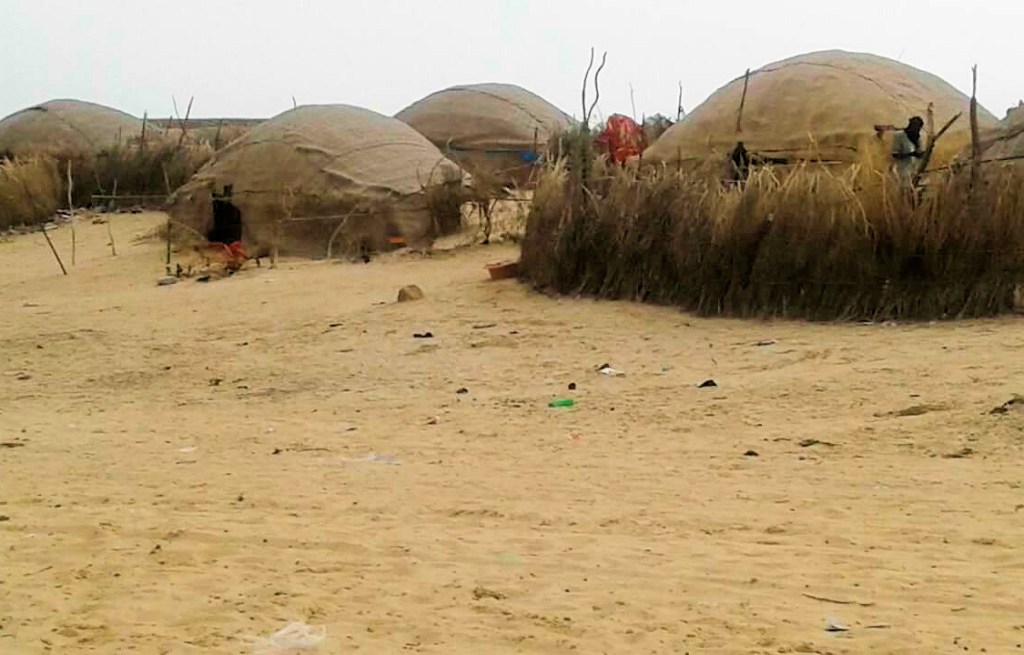
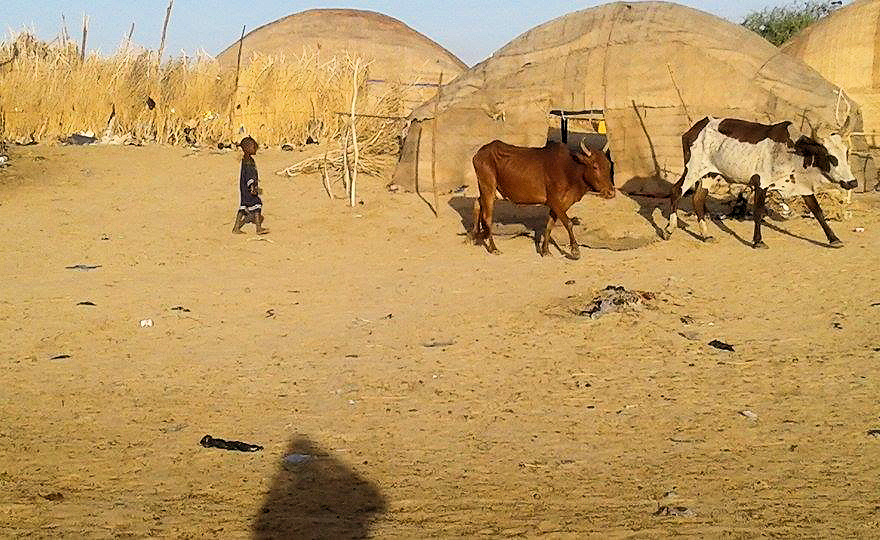
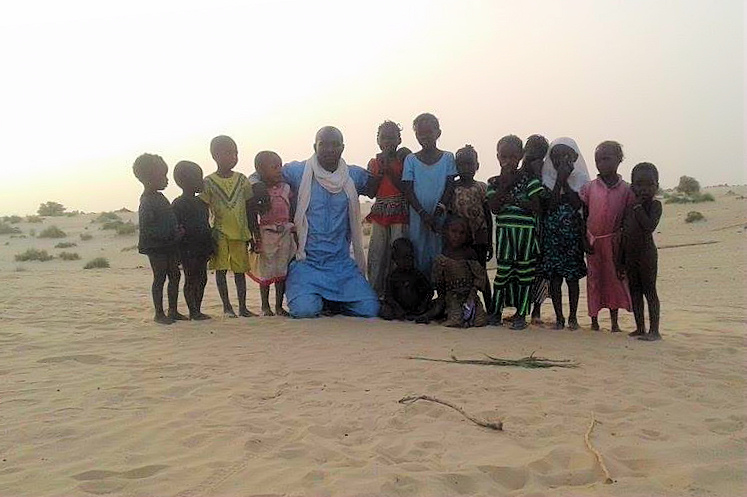
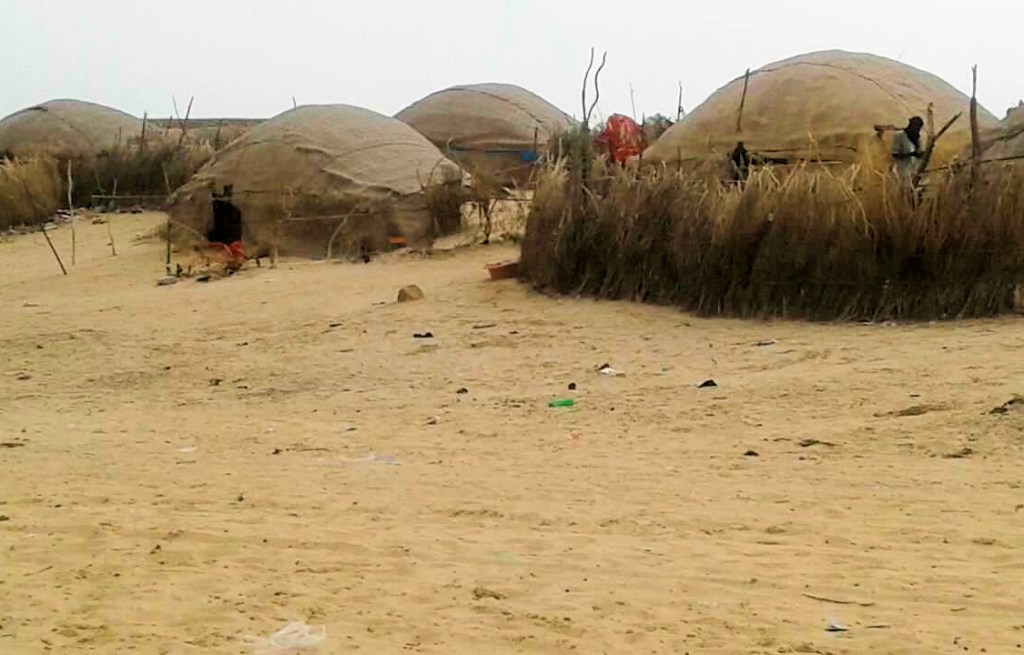
I’ve been working with a village of Tuareg for ten years, in a small people-sized support operation. They live in the Sahara desert, a day away from the historic city of Timbuktu in Mali.
We restocked their goats and camels after a terrible drought, helped them dig a new well and build a small village school.
But now I need to pull out – I can’t continue with things I used to be able to do. But I don’t want to abandon them.
So this pod tells the story, and about the dilemma of a humanitarian with a need to pass this on.
With love, Palden
Thanks to Constanze Küppers in Germany for prompting me to make this pod
When I was diagnosed with cancer in late 2019 it was at first like receiving a death sentence. I was indeed close. This has a way of changing and reorienting everything inside – or it did so for me.
When it looks like your life really could be ending, it makes you reassess everything, where everything stands, what can be dropped, what means a lot to you, and what is unresolved, regretted and incomplete. It’s a rapid, factual acceptance process, prompted by a loss of ability to act on life, owing to serious illness and malfunction.
So I looked at my life. Some things I could let go of easily, some needed attention, some presented hurdles to cross and some looked impossible. This process went on over a period of weeks while I was flat on my back, struggling to stay alive. As it happened, I made it through, with the loving help of my then partner and the ministrations of the staff at Torbay hospital.
After three months, I was gradually reviving. After six months I was more or less on my feet and functioning – enough to be able to go home to Cornwall and look after myself, with a little help from my friends – and the staff at Royal Cornwall hospital at Treliske. Lucky me. I survived.
Being a writer and communicator, there were still things I could do, and it became part of my cancer therapy. If I were younger, with a job and family, or if I were in engineering or farming, I’d have been in a catastrophic situation. But as a freelance writer and broadcaster, I could carry on. My brains and the creative process changed, and my fingers weren’t as keyboard-accurate as they once were, but it worked.
Even so, part of me was left hanging – the humanitarian part. So were the people in other countries who were affected by my loss of functionality. I could no longer travel long distances and my capacity to get through such a rigorous life had collapsed. If I went to Palestine or Mali now, it might well be a one-way journey. That remains an option, though I’d also be happy for my ashes to be buried under a tree on Botrea Hill.
I made a prayer for clues suggesting how to resolve this question. Three issues came up.
One was the growing needs of the people I’d been working with. This included Hope Flowers School in Bethlehem, all sorts of individuals in Palestine and Syria and in the Tuareg village of Tinzibitane, Mali. In the 2020s, need and crisis levels were rising, and this was vexing.
The second issue was me, since doing such work had meant so much. These people, whom I had grown so close to, were some of the most valuable people in my life – I had learned so much and become so much more of a real human as a result of working with them and finding my place amongst them.
The third was finding people to take over from me. That was the biggest question.
As my old friend Sheikh Bukhari once put it, “God has a staff shortage, with plenty of eligible employees who for some reason prefer to stay unemployed“. A kind of Sufi bishop with a deep Muslim heritage, he had emigrated from Jerusalem to America, landing up flipping burgers in a California burger joint. He returned home after a decade, back into the frying pan that is Jerusalem, to become a leader in a community of spiritual peacemakers in Israel-Palestine – then called Jerusalem Peacemakers, and now called the Abrahamic Reunion.
“I finally accepted Allah’s job offer“, he said. A good man, he was. He’s now in heaven, carrying on up there, and his widow Hala carries on down here. His son Izzedin Naqshband runs a Palestinian vegan restaurant in East Jerusalem, if you’re ever over that way.
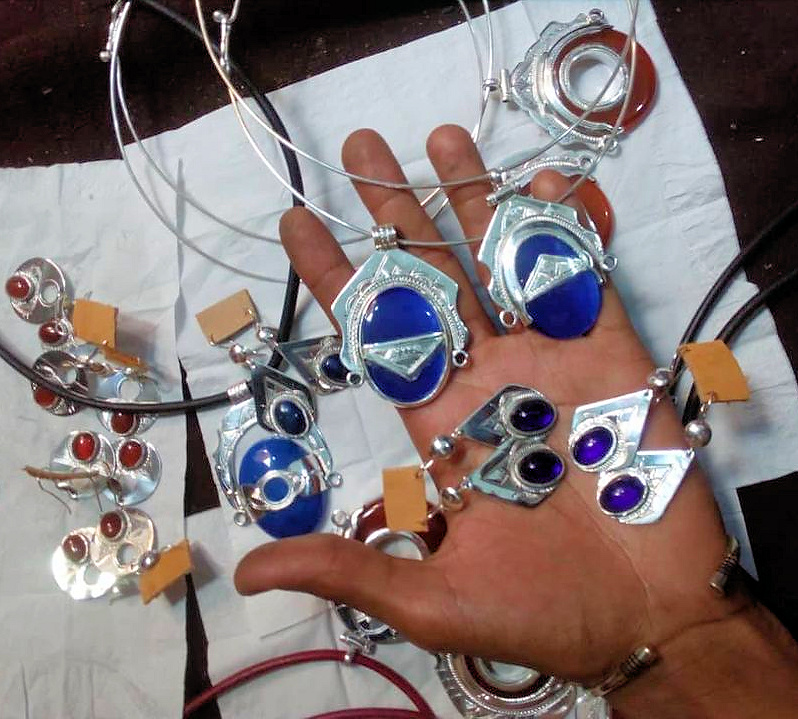
Finding people to take over helping Tinzibitane has been a challenge. The Tuareg don’t have as much PR power and experience as Palestinians do. However, they make amazing hand-made, trademark-free, talismanic jewellery and other crafts, and that’s their tradeable USP or ‘unique selling point’. Many Palestinians are educated, literate, competent, urbanised people, while the Tuareg live a simple life out in the desert, without being highly engaged in the modern world.
They are not tempted by modernity, tending to hold it at bay. From a humanitarian networking viewpoint, this is a good marketing tag to use – the Tuareg have a genuine mystique that charms and fascinates people. If it were lost, it would be a loss to the world. They don’t beg and bleat either.
The modern world comes at them anyway. In 2016 I managed to save the life of a baby, Zeinabou, whose mother died in childbirth. I helped with other survival issues by making Facebook appeals and raising a few hundred quid to help.
Mercifully, I was joined by two others, Eve and Jane, and we were able to fund social-reconstruction projects going into the thousands. Over a few years we restocked their camels and goats, sank a well and funded the building of a small village school, helping them regain confidence as a village after a devastating war and drought around 2011-12.
They hadn’t actively participated in the war, but it had affected them and they had been attacked by both sides – the Malian army and Al Qa’eda-related Jihadi militias spilling over into the Sahel from Libya and Syria. The Jihadis tried to establish an Islamic caliphate to lord it over the independent-minded Tuareg, and they’re still at it. I think they will blow out, get tired and go home eventually, but not anytime soon.
Testosterone does wear out after a while – and this is how many wars come to an end. Eventually, people just want to go home and sleep in a proper bed.
The Chief
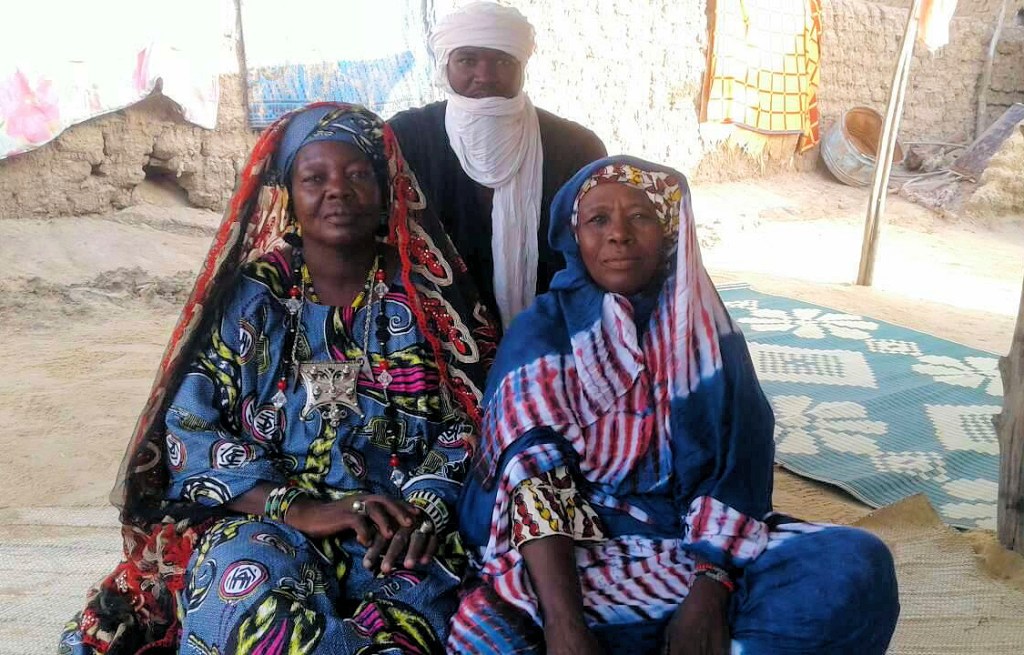
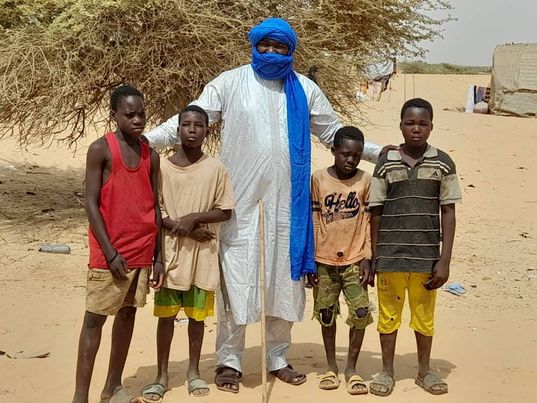
The desert village, some way west of Timbuktu, started coming together again. People returned from refugee camps in neighbouring Mauretania and new people joined from other villages, seeing how they were getting organised and taking life back into their own hands. The chief, a thoughtful man in his early seventies, with good intentions for his people, strengthened the social fabric of the village and gave it new hope, with our help.
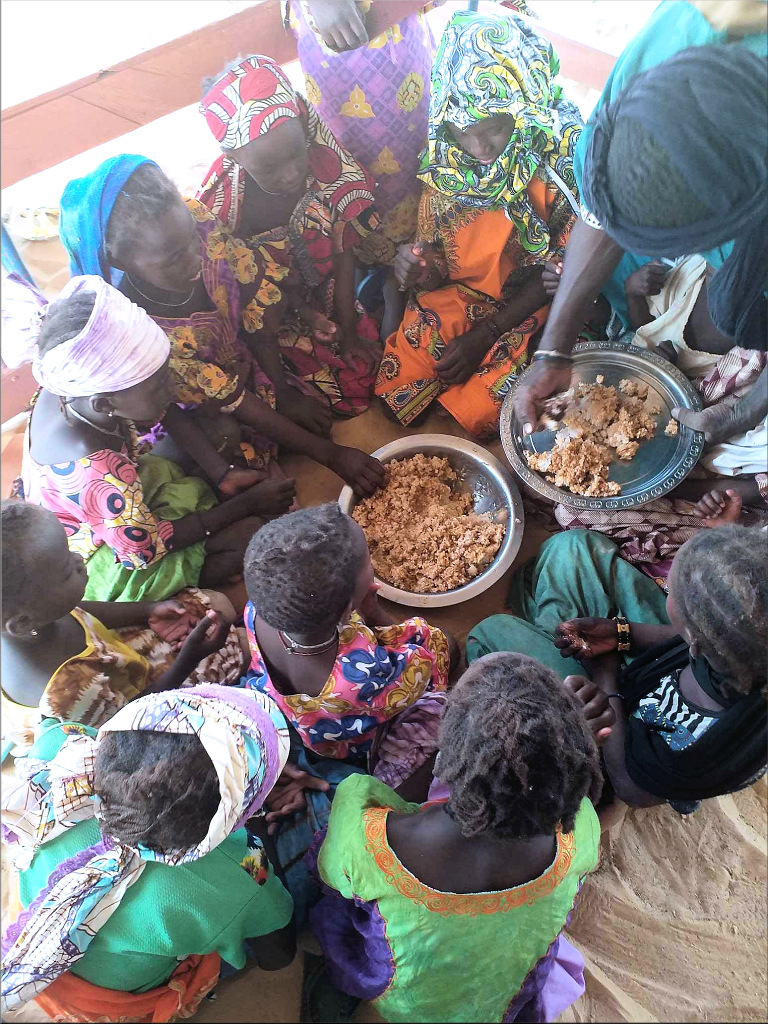
The Tuareg are a consensual people with deep traditions going way back before the arrival of Islam in medieval times. They are independent people, with significant gender equality and a strong sense of collective solidarity. I liked working with them, and they did the right things to help us help them.
They are a desert people. For centuries they have been the camel-truckers of the Sahara, carrying goods between south and north, inhabiting the southern edge of the desert, the Sahel. Gold, salt and high-value goods were their main cargoes, plus, in medieval times, slaves to Algeria and Egypt, which they stopped doing later. These goods and people were sold in the souks of the Arab world and forwarded to Europe, Ottoman Turkey and the Middle East.
One thing I like about them is their integrity, honesty and lack of corruption, and this makes it easier to work with them. They don’t like asking for help, and they budget and spend well, and money sent for a particular purpose is usually spent on that purpose, as arranged.
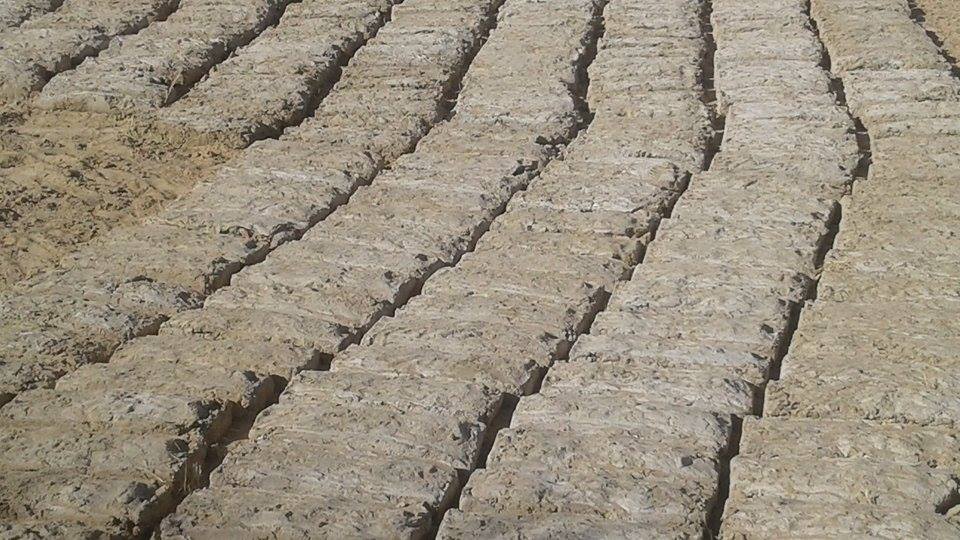
Home-made mud bricks for the school
In many crisis zones, money just gets spent on whatever urgent need comes up next – it’s understandable, a ‘firefighting’ approach, and that’s life there, but from a fundraising viewpoint in the rich world it’s difficult, because of our issues around accountability. Accountability is a polite word for post-Protestant tight-fisted control-freakery, a key quality that has made us whiteskins rich.
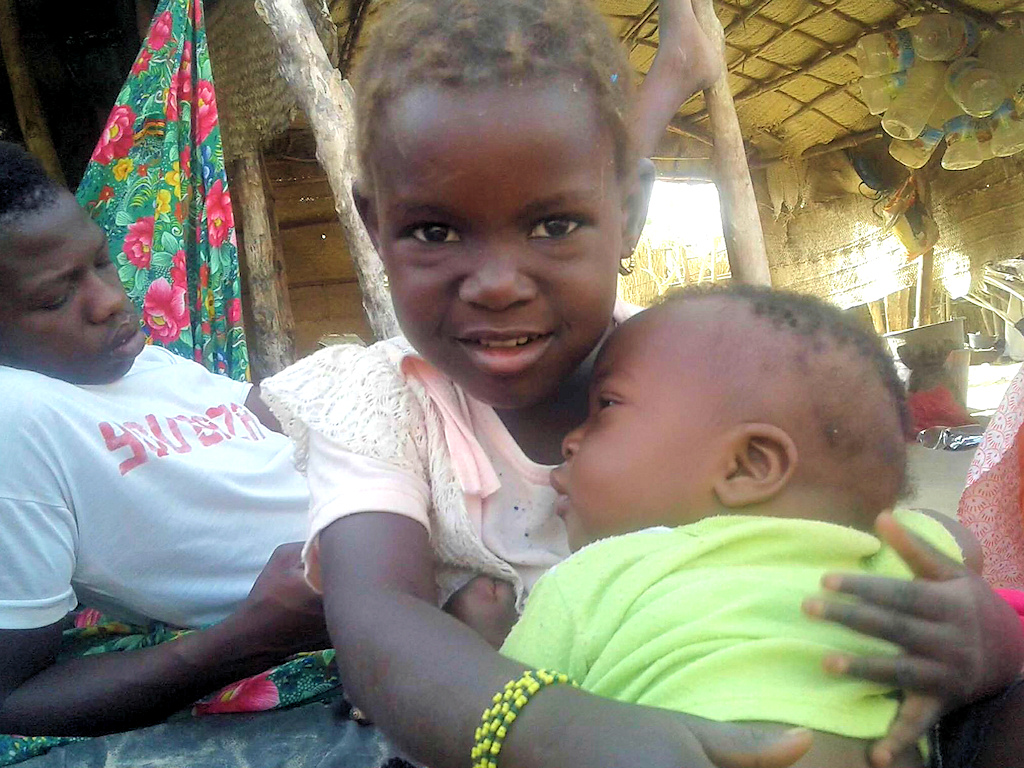
We communicated through Anim al Husseini, who first contacted me in 2015. It was his wife who had died in childbirth, and Zeinabou is now growing up in the village. Anim speaks Tamashek (the Tuareg language), Arabic, French and English, and he’s good at staying in touch and supplying information and photos – without these, support work gets difficult.
The chief has nominated Anim to be the next chief – though, whenever that happens, he will need the consensus of the villagers to step into that role. That’s the way it works amongst the Tuareg: their traditional systems of governance are consultative and confederal. As desert individualists with a self-help survival ethic, any family or tribe may take their leave and join other villages if they feel the need. Nominally the men make the decisions but, if the women disapprove, it simply doesn’t happen, and that’s that. So the women set the norms and the men do the business.
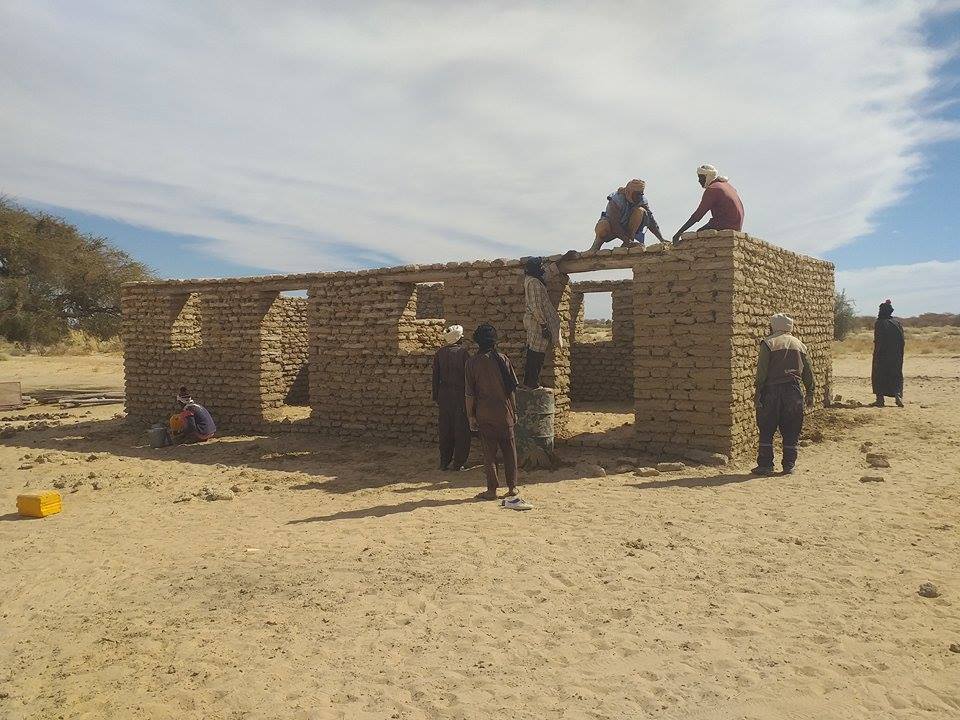
The school in construction
The village has hit new political difficulties. It’s a long story, going back to the 1880s-90s when the French took over the Sahara, dividing it into what are now Mali, Burkina Faso, Niger, Morocco, Algeria and Libya. They took the Tuaregs’ camels, goats and best lands, oppressing, conscripting and enslaving them and discouraging their nomadic lifestyle. Over time there were a few Tuareg revolts against this.
When independence came in the 1960s, power went to the Mandinka and Bambara majorities in the southern, greener part of Mali, who continued discriminating against the Tuareg, regarding them as a threat. Yes, there is black racism too, and the Tuareg are only partly black – they derive from ancient Saharan, Berber, Arabic, Nubian and West African stock.
The school in completion
By the 1990s some Tuareg wanted their own independent country of Azawad in the northern half of Mali – the desert region. The government wouldn’t have it and fought back. There were also frictions with other peoples in the area – the Dogon, Fulani, Songhai, Bambara, Soninka – as populations grew and the region became more desertified.
Recently, Anim Touareg wrote to me, and this is the first time he has ever expressed true fear over the future. This is what he wrote:
Salam Aleykoum dear Palden How are you ? All the people of the village greet you We are very scared about the situation and yes we hope everyone will be safe A lot of people already flee to Mauritania But in the village we discussed about it and we decided to stay in the village Because travelling will cost a lot of money and the last time we went to [refugee camps in] Mauritania, everybody get sick Here now the biggest problem we have is the provision [food] Things are getting very very expensive because of the war However if we get food for the people, we will stay in the village and continue education for the children The chief of the village is sending his worry and ask you to tell to your friends Because this is very emergency and we hope everything is gonna be alright Thank you so much for everything dear Palden Please receive greetings and prayers from all the village Ma’Assalam
And later he added this:
We don’t have access to a good and reliable internet connection these days I am happy to tell you we sent some families to the refugee camps In Mauritania We evacuated elder people first because they have a lot of health issues and can’t support big pressure For me I am still in the village with my family and some other families We will work hard to continue running the school so our children get educated It’s very important for us We are trying our best I know about your health issue dear friend and I don’t want you to work a lot also So take your time and share some Infos when you can Thank you so much for everything dear Palden Please take good care of you and keep in touch Maasalam Anim ❤🙏🙏🙏
Anim is a Capricorn in his early thirties – a Tuareg Millennial and single father, with camel.
The well in construction
I’m telling you this story partially for your interest and information, but also I’m sniffing around. We need about three people with a good mix of skills who would be happy and willing to work with this and – this is the important bit – stick with it. The good news is that this project is not a big one – it’s human-sized. The turnover of the Hope Flowers School in Bethlehem was over a million dollars a year, with which I could only tinker around the edges and do specific bits of hassle-busting but, with this village, our input has made a total, marked difference.
The well, completed
It’s a smaller-scale project, involving real people. We have no offices or international development degrees, though we’ve lived round campfires in tents and tipis. The involvement of an enlightened NGO might be welcome, yet there’s something special here about people-to-people, ground-to-ground connections – and not just handing it over to the charitable sector.
It feels best for there to be something like a small group of (say) three proactive energy-holders with 2-3 helpers. But it will take the shape it takes, around the people who turn up.
This isn’t about aid and development in the standard model. This is about helping the Tuareg stay Tuareg, and helping them interact constructively with the encroaching 21st Century world – and its guns, troublemakers, competing interests and geopolitics. A friend in Cornwall, Kellie Odgers-Brown, has come forward to market their jewellery here in Britain, and that’s a first step – the Tuareg want to generate their own income.
Now we need:
a good networker experienced in social media, crowdfunding and handling payments,
someone who understands cultural sensitivities and the politics of the region (who has also travelled outside the rich world without staying in hotels),
someone who is good at hustling, writing and organising,
plus a couple of people who are happy to pitch in when needed and handle special issues (such as cultivating a funder, running a website, starting a branch in another country or even going to Mali).
There’s a crisis going on in the Sahel and it is unlikely to end quickly. So this is not an easy mission, but it is doable by keeping an eye to the future. These people are a potential shining light in the post-conflict revival of the area. They stay politically neutral, focusing on their village and raising its game. By setting an example they give a model for other villages and tribes to emulate – this is a multiplier factor that is worth considering, and it’s already ‘case proven’.
But it needs resolute perseverance. It’s not full-time – it’s a spare-time thing that will go in waves and bursts. It might be good if there is one person in their 50s-60s, one in their 30s-40s and one in their teens-twenties, since each generation has its virtues. But those who turn up and make a difference are those who will run it and decide.
My dilemma is that I am no longer able to head this up and I have only a few years to live. The best I can do is advise, support and stand behind you. I no longer have what it takes to shoulder this operation. Think in terms of a minimum three-year commitment, with an added duty of finding someone to replace you if you wish to go.
If there is a gap in your life, if you seek engagement with something meaningful and out of the ordinary, and if it fits your ethical values to the extent that you can focus on it and become a trusty friend to these people, then this might be of interest to you.
If so, think about it for a few days, do some research, take a look at Anim’s Facebook page, contact him if you wish, and write to me with your thoughts (just a few paragraphs at first, please!). We’ll go on from there. Consider your realistically available time-space and your capacity to carry things through, and be clear about where your limits lie.
This is teamwork and others will rely on you to do whatever you take on. It’s unpaid, voluntary work, and it might or might not benefit your CV or resume, but it could benefit your mana – your standing as a soul. At the end of my life, I am so thankful for having been involved in this kind of work – it has been enriching in heart and soul.
That’s what this is about. To fulfil our missions on Earth, we need to get engaged with specific issues, activities and projects. We need to test ourselves with some gritty stuff, bringing light into the darkness. While this world has no shortage of crises and issues to worry about, getting involved with one thing like this is doable, and it can have wider implications longterm. It’s something where you as an individual can make an impact.
You form relationships with these people, and it’s about giving them some hope and backup, to make their lives better. They live in a very different world to us and, in our time, we need to learn to avoid imposing our ways on them and getting them to suck up to us. Instead we need to help them be themselves, stay themselves and develop themselves in their own way.
This is the way of the 21st Century. Leaders in this are the Palestinians – they are advising the Ukrainians in non-violent social survival and resistance skills. This is the stuff of the future – human, spirited aid.
It’s about building resilience, ecological, cultural and societal, about helping people face modern times, and bridgebuilding between cultures while honouring diversity. It isn’t only about helping them: it’s about an energy-exchange where they give what they are strong in, and we give what we are strong in, and it connects up, and everybody benefits.
For we, in the rich world, we need aid too. It’s just that we don’t fully know it yet. These people know a lot about survival and self-sufficiency. They understand the magic of life. They have a deep-rooted culture. They need friends, and so do we.
If this says something to you, or if you know someone who might be interested, or if you’d simply like to donate a tenner to the kitty (details from me), or rustle together tenners from your friends, or even take over the kitty, or make a prayer for protection of the village and the departed villagers, then please do. It would be great to give them some encouragement right now.
I’ve given you another long read, haven’t I? Well, congratulations in getting to the end. Happy newmoon. And Happy Birthday to Lynne too!











 Notes from the Far Beyond
You must be logged in to post a comment.