Helpers

If you ever get a serious late life illness such as cancer (and there’s a good chance you will, even if you’ve looked after yourself, as I had), or simply if you’re growing older and more decrepit, you come to a stage where you need help. You just can’t do all the things you used to be able to do.

When I was younger I could open every jar, reach things down from high places, safely drive everyone home after a party when they were tired and stoned, and overcome many challenges that now are well beyond my scope. Nowadays I don’t have the strength to open stuck jars, some logs I can’t chop, and if I took the lead of my neighbour’s sweet dog it would pull me over. Sometimes I’m really useless. I can’t drive any more either – what, me, a traveller-soul with Gemini Moon and Sagittarius rising?

Yesterday was like that. I’m on a new drug which is supposed to help with peripheral neuropathy – it’s called Amitriptyline and I’m not getting on well with it. It’s draining my energy, my head is befogged, I’m losing my balance and I’m just sitting here in an armchair like a sackful of manglewurzels.

On days like that I really appreciate some help, often just with small things – things to make life a bit easier because, in my situation, life is twice as difficult as it once was, and more painful too. Just standing upright is strenuous, and going for a walk for half a mile takes a lot of focus and willpower.

People often ask, “Anything I can get you?” This doesn’t work – my brain blanks out. Writing a shopping list isn’t easy: that’s left-brained stuff that I’m no longer good at. So, often, I’ll say No, when actually I should say Yes, but I can’t in that moment think of anything I need. Five minutes later, my intuitive right-brain will start working, and I’ll remember. But it’s already too late. That’s tricky.

Managing this process can at first be quite confronting, because it requires opening up to the generosity of others. You can’t complain if they get the wrong thing or turn up late when you’re stuck in a rainstorm – after all, they’re doing this out of the goodness of their hearts. The secret is to hold your silence and appreciate the gifts you’ve been given, even if it’s raining – then you mention it diplomatically at a later moment. Don’t complain.

There are different kinds of help, and it’s necessary to clarify this. Some people try too hard to help and fuss too much, or they might not have the right skills, or they might not be emotionally sensitive, or they might be a dodgy driver – so it’s important to find the right kinds of people, and sometimes one must be frank with people about this.
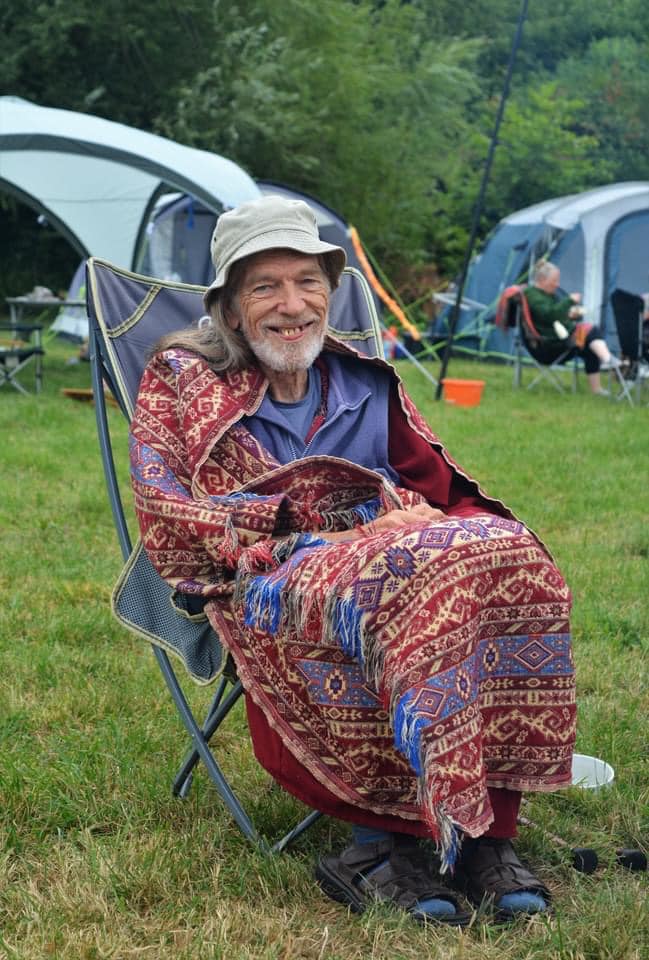
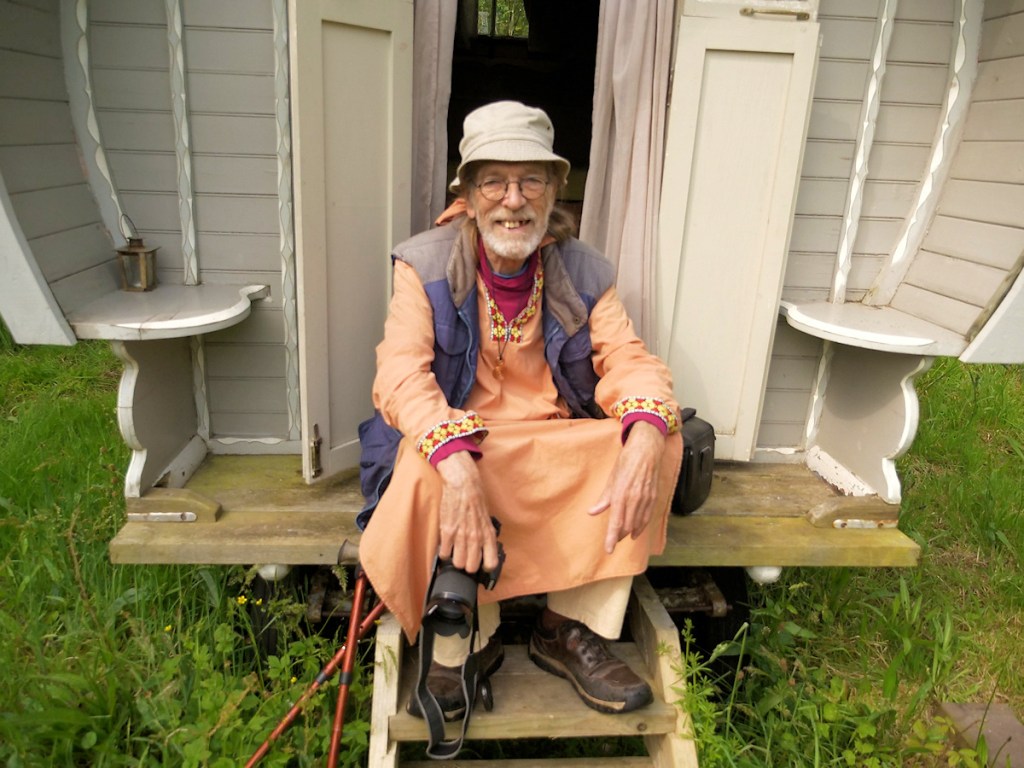
You get quite close to your helpers. I have a new helper who has been with me for a few weeks, and it’s working well, but it is still taking her time to figure out where everything is in my little house, and how I like things to be. She’s attentive to that, and that’s good, and we have interesting discussions too, because part of the benefit she brings me is some company (since I spend most of my time alone).

But it’s not just that. I have a wider group of friends, FoP – Friends of Palden. They help me in all sorts of big and little ways. But most of them don’t see me very often. So the first thing they do, and sincerely, is to ask me “How are you?”. That’s not the right thing to do. I need you to look at me, watch and witness me and tell me what you observe. If you ask me “How are you?” at different times of day, I will give quite different answers too.

Besides, it’s not easy being asked how I am five or six times a day. I have to assess myself and give some sort of answer, and there are times when that works fine and other times when it’s actually rather difficult. Instead, you could tell me how you are. So, sometimes, when someone asks me “How are you?”, I just say, “I’m like this!”, opening out my arms. I invite you to make your own assessment, because your observations of me are more useful than my own observations of me.

Special qualities… well, one key quality is reliability. You see, if someone rings me up just before they’re due to come, saying “Oh, sorry, I’m too busy, can we make it next Tuesday instead?”, that can be tricky too. Well, yes, we can, and that’s kinda okay, but actually it makes quite a big difference, even if I can’t at this very moment say why, or give a list of things that needed doing. So it is good to have people coming along reasonably regularly. Not least because the number of e-mails and messages that can otherwise be generated can be staggering, when things lapse into ball-juggling flexi-territory.

Also, there’s the matter of the computer and phone. If I don’t respond, what does this mean? Am I in bed, gone out, sitting on the toilet or dead? Should someone check me out? Or perhaps they decide not to bother me. A helper who knows me well, with a little intuition on top, can usually figure this out. But if I am dead, then it helps to discover this before I start smelling too much.

Regularity also helps because of memory issues. It can be quite challenging and complicated managing a group of four, five or six people who are all in changeable states. So recently I’ve managed to sort things out rather differently. I’ve now got two ‘reliable regulars’ and then a number of occasionals and reservists, and that works well.

The two regulars cover me three days a week – they come for an hour or two on Tuesdays, Thursdays and Saturdays – and then the occasionals come when they can, or drive me to Treliske hospital (thirtyish miles), or take me out somewhere… or things like that, on a more flexible basis.

The funny thing is that one of my reliable regulars is called Claire, and the other is called Clare – just to confuse things! Perhaps my Anima is telling me something, though I’m not sure what.
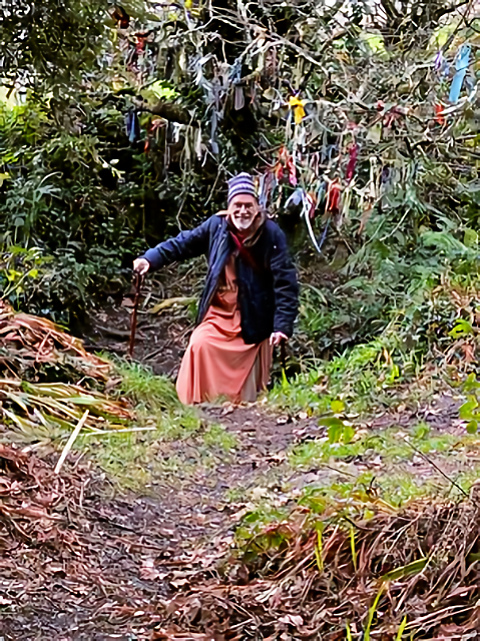
But actually, for it to really work, it’s necessary for a person to get to know me more closely than they normally would. This includes seeing me in my weak states, at times when I’m quite helpless, and I might need tenderness of a kind that wouldn’t usually happen with friends who come to socialise. Other times, I’m quite bright, cheerful and able, and there isn’t much for my helper to do, so we sit, drink tea and chat, and that’s really good too.

There’s something nice about this because I’m no longer seeking one-to-one relationship (been there, done that), which in this era of toxic maleness, makes me a reasonably safe bet. I’m not going to try it on. There’s also a difference between depending on help and emotional dependency – something that can get confused and tangly in close relationships.

Claire, who has worked with me for eighteen months now, has really got me sussed. When we go shopping she knows what I’m looking for, so she wanders off, comes back and puts things in the basket, with a knowing smile, and that’s really useful. She points things out to me and helps with the most difficult part at the end when we’re checking out.

She packs the bags and keeps the cashier entertained while I fumble around with cards, lists and last-minute memory-eruptions. I find that last bit really exhausting. Then she drives me home, puts stuff in the fridge, unpacks the bags, makes some tea and leaves me to rest and defragment. I’m happy with that. But that arises from the fact that she’s got to know me. She can read me off.

This matters a lot because my brains have been affected by chemotherapy – they call it chemo-brain. My executive functions – the left-brain stuff – are a lot weaker now. So although I’m quite brainy, I have difficulty figuring out certain things. It helps to have someone around who’s like a second brain, who will remind me to take my pills, or to be ready to go, or to remember to take something with me, or perhaps to tell me that my complexion is not very good today, or making useful observations and suggestions.

So if you’re in a situation rather like mine, as a net recipient of help, it’s worth giving some thought to the different kinds of help you might need, and the different kinds of people who will be good at giving it – and enjoying doing so. One male friend of mine, Kai, loves going shopping for me and he’s really good at it, and I can say to him, “Oh, just use your commonsense…” when he asks whether I’d prefer this or that, because I know he’ll get the right thing and, if he doesn’t, that’ll be interesting and useful too. On the other hand, he’s not so good at making tea, so I don’t expect it of him – I enjoy making tea for him instead. After all, this is about energy-exchange. I only get to see him occasionally (he’s a Gemini, travelling a lot), but this works well because both of us have identified how we slot into each other, given the circumstances we each have.
There’s a big sociological problem going on here. It’s this. Everyone is busy rushing around, racing timetables and to-do lists. They are time-poor. It’s a deep cultural and psychological thing in our society. This time-poverty sometimes makes things difficult. Occasionally I need a person to slow down to my speed, and at times it’s really good for them to do that, and they are grateful for it – it’s something I can give.

But people who are just fitting me into their busy timetable… well, that can be difficult. I remember, I did this once to a soul-sister with breast cancer – I’m sorry, Lily, but I was up to my neck in stuff and felt unable to stretch into your space. I realised this only when I got cancer and experienced others doing it to me. Us men, it can take us a while to realise these things, but we do get there in the end. Well, a lot of us do: toxic males make a lot of noise, but new men are more numerous than we appear to be.

This is to do with the way our society is today. We have become alienated and atomised as a society, and many of our family and community energy-saving mechanisms have deteriorated or disappeared. My own family is a case in point. I have four grown up children and seven grandchildren, and they’re all lovely people, and they do care, and they’ve got busy lives to pursue, and we live quite a long distance from each other and in two different countries. In truth, that’s mainly my fault, not theirs, since it was I who chose to live at the far end of Cornwall, a long way from everyone else!

Living and working in Palestine taught me a lot. I’d been brought up in a NW European Protestant environment, where you’re supposed to pay for all that you receive and deserve all that you get. If you go to any Muslim country (including Iran), you quickly find out that it is offensive to try to pay for other people’s generosity or to return the favour. You are depriving them of the right to give. To them, everything comes from God and returns to God, so they’re just channelling the infinite beneficence of Allah. Hindus do this too. So you have to develop other ways of circulating the energy, and this has nothing to do with returning the favour or paying your way.

These are guilt-driven, obsolete Christian beliefs – all about indebtedness and original sin. The result is that we live in a mean-hearted, capitalist society made up of a few winners and lots of losers, which doesn’t really care for the weak and needy, because everyone is busy pursuing our own paths through life and, in the end, we don’t have enough time for each other!

Arabs taught me how to receive. This opens up channels of sharing and mutuality. It creates an inherently supportive society, a generosity economy where there is little need for professional carers or babysitters because the extended family or the community can handle it. I learned something about the Christian virtue of giving without counting the cost – a practice that works well in a society where everyone does it. But it’s more difficult in a society where only some do.

I might need help, but even in my needy condition, it’s also a matter of what I can offer. Support is a two-way thing. I can’t do a lot now, but the funny thing is that some of my helpers simply enjoy coming to sit in my nice, warm, radiation-free cabin, drinking tea, chatting and doing nothing much at all. They can slow down for a while before they have to return to the madding crowd or to shepherd their elusive teenagers around.

On a good day they might also have a lightbulb moment, arising from a conversation that we have over tea and biscuits. Yes, one thing that useless old codgers like me can still deliver is the occasional gem of insight and perspective, helping people remember that this is not the end of the world and that everything turns full circle in the course of time. It’s all alright, really, even when you don’t quite know why or how.

There’s some sort of energy-circulation going on with FoP and with friends and acquaintances further afield. I have soul-sister, Jo, in Oz, and we haven’t seen each other for thirty years, yet we’re still close. In some respects I feel a bit like a cosmic-energy server, operating in a psychic network of souls near and far that functions of its own accord, on a mysterious level where we get only faint intimations of what’s really going on between us.

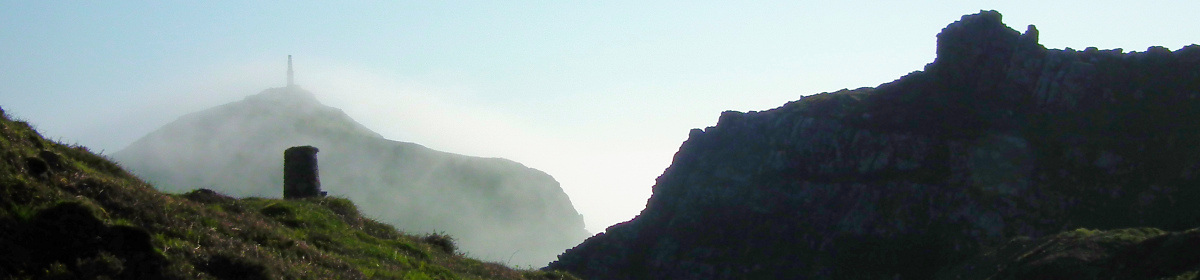
Perhaps that’s why I spend a lot of time alone nowadays, to give space to tune in to all those people, dead or alive, who resonate on a similar soul-network to the one I’m on. Twenty years ago I lived at the bottom of Glastonbury Tor – a distinctly noisier kind of energy-place in comparison with West Penwith, where I live now, sitting on a granitic pile of crystals in the wild Atlantic.

I’ve said enough. I might return to this theme another time. There’s more to say, but I can’t think what it might be. Except for this…

At age fifty I realised that I had no capital or savings. So I chose to trust in building up my social and spiritual capital, and to work at it. I decided to make it as easy, pleasant and rewarding as I could for people to help me, when the time came that I would need help, and to stay useful right to the very end. Us Virgos, we need to feel useful. I’ve screwed up a good few times with this but, since cancer came to me in 2019, I’ve been much blessed with fine helpers and minders, and I’m really grateful for that. Including Lynne. I mean, really, really grateful, and thank you all for that. And the funny thing is that it all ends with a funeral!

Love, Palden
Changing the World

Life-purpose and Activism

Here’s the audio recording of my recent Aha Class in Penzance, about participating in changing the world. It’s my thoughts on the realities of being a ‘world server’, about rattling the bars of our cages and contributing to furthering what we believe to be right.

It’s in two 50 minute parts, with some (I hope) interesting anecdotes thrown in, about the dilemmas, tests, magic moments and benefits we can encounter along the way.

Free to listen and download – no strings. You’ll find it here:

http://www.palden.co.uk/ahanotes-activism.html

The next Aha Class is about time, timing and power points in time.

With love from me, Palden.

What’s it all about?

A donkey in Bethlehem, Palestine – Jesustown.

What’s it all about?

2020 has brought us all a lot to think about and, for many, a lot of time to think about it. ‘What am I here for?’ and ‘What’s it all about?’. Some folks have had big reveals and pointers, others have had to dig deeper than ever before, and some have made little or no progress, and some have been run off their feet and burned out by it.

I’ve always been rather purpose-driven. When I was about ten I wanted to be prime minister. By 15 I won a big public speaking competition with a notes-free speech about why Britain should join the European Community – seven years before it happened. Does Brexit, 55 years later, mean I’ve failed? By 18 I realised that politics was too dirty for me. So I followed another path and you got Maggie Thatcher and Tony Blair instead.

It took until I was about 34 to acknowledge that I was at last on track (when I started the Glastonbury Camps). It just had that feeling. Before that I felt like a footloose jack of all trades and master of none. When ‘received my instructions’ I quaked and resisted, but then I realised that, if I didn’t do it, it would not happen. And it needed to happen.

God doesn’t come down and say ‘This is your life-purpose‘. It’s not like that. It’s just that, when you’re more or less on it or you’re heading towards it, you feel it – you’re in the right place at the right time doing the right thing, even if others disapprove, discourage or block you. If you aren’t on it, you feel stuck in a blind alley, getting nowhere, with a meaningless life, as if you’ll stay like that forever. Depression and feeling an unfulfilled calling are closely related.

Purpose is programmed within us. It’s already there. Before getting born, we had a discussion with our angels about the purpose, the motivation, for going to the trouble of birthing ourselves, growing up and living a life on earth. Incarnation is hard work, even for people born in privileged circumstances. Two key things were covered in that discussion: what you were to learn and master, and what you were to contribute. Then you signed a contract in your soul, and it still holds.

Quite often you get clues when you’re about 8-12 years of age – visions of what we want to be when we grow up. Then, during your teenage years, this vision can be clouded and lost (often not helped by parents and careers advisers). These early-life visions can be literal or symbolic. I wanted to be an airline pilot. When I was 15 they ruled that short-sighted ginks like me couldn’t be pilots (that changed back later on, but too late for me). So that door closed. But later in life I realised that I had taken thousands of people on long journeys, up into heaven-worlds and landed them safely at the other end. Mission kinda accomplished.

By 18 I was aiming to become a diplomat, but by 20 I was involved in a life-changing near-revolution at the LSE that ended all that – yet in my adult life I’ve scored some pretty good informal diplomatic hits. So the vision and intention were symbolically correct, but the way things panned out was very different.

As life goes on, our purpose reveals itself through situations that present themselves. We find ourselves doing things we hadn’t foreseen but, when doing it, we feel remarkably fired up, or we make a difference, or we do something really meaningful, sometimes without even realising it. Even washing the dishes or cleaning the toilets can make a big difference in some situations – the chef at a peace conference can save thousands of lives without even knowing it, just by cooking good food for the delegates. So note this and follow it, because there’s your clue – even if it doesn’t make money, look realistic or gain approval, if it fires you up, why aren’t you getting on with it?

We must be willing, if necessary, to tread that path alone. In the Arab revolutions ten years ago, a big issue for people was ‘losing our fear’. Sometimes we must stand up and be counted – and if we hold back we can regret it for the rest of our lives. Like the near-revolution I was a part of fortyish years before, the Arab revolutions failed in the short term yet they started deep changes that will outlast the dictators who tried to stop them.

Here’s an interesting truth: it’s better to fail in something that ultimately will succeed than to succeed in something that ultimately will fail. This concerns posterity and holding out for what is right – and taking a bet that it’ll work, even when you’re not sure, and everyone and everything are against you. Even if you have cerebral palsy. Even if, or perhaps because, you’ve been damaged, disadvantaged and traumatised.

Three things block this coming out process: fear, guilt and shame. Too many people take the safe route in life, to please their family or fit in with the rules, or for fear of loss of security, or fear of being singled out and blamed, or fear of being exposed as unworthy or unable. Human society is riddled with such fears. Our planetary disaster is happening because billions of people are withholding their gifts, setting aside their callings and playing safe. We cook up good reasons to justify this but, in doing so, we are choosing complicity in a collective crime against humanity.

Out of fear, we hold back. This becomes a habit and institution. Then we forget what our instructions were, what the agreement was. Instead, we eat, drink, entertain, worry or work ourselves to death – unless or until a crisis shakes it up, strips our defences, propels us into unknown territory and slams the door shut behind us.

This withholding is dead serious. It means we’re omitting to make our contribution. It’s ours to make, and someone else isn’t going to replace you. Since so many are withholding, there’s a shortage of active server-souls. People have questioned my humanitarian work, believing it is dangerous (yes, occasionally it is) and encouraging me to stop and ‘be responsible’. But then, when I ask them to take my place because the work still needs doing, they wander off.

Charity begins at home‘ – sorry, for me that’s only a half-truth. Charity truly begins where the need is greatest. Need pulls the brilliance out of you.

The world is short of active altruists, and the suffering that arises from that is tremendous. It’s all about that old lady down the road who is alone and unvisited, because everyone was too busy and no one thought, no one imagined what it might be like to be that old lady. The world has a crisis of caring, and it’s all to do with withholding our gifts, callings and missions. Playing safe is a very dangerous planetary neurosis.

This brings us to a key issue. It’s not just our option to pursue our life’s calling: it is our duty. It is an imperative. If we don’t do it now, it won’t go away. This is a choiceless choice. Especially in these parlous times.

This isn’t about great and dramatic things. If you’re gifted at embroidery, do it. If you’re good at ‘just’ raising kids, or ‘only’ growing cabbages, you’re here for that. If you can bring light into the life of a hungry or lonely person, do it. Because, when you’re on your deathbed, these are the things you will remember.

And it changes. Life-purpose presents tasks but it is not a job. You can’t resign. It takes on different shapes, progressing as life goes on. One of my big life-lessons and contributions has been in ‘right leadership’ – something I did better in my fifties than in my twenties. I’ve scored a few goals, brought some benefit and made mistakes too. But I learned. It has gone from home-birth campaigns to organising biggish events to helping burned-out Palestinian social activists.

There are paradoxes. Nelson Mandela once confessed that, in his life, he had faced a deep conflict between serving his family and serving his people. He could only do one of them. After all, if you’re doing things that can endanger your family, should you stop serving your people to protect them? Or will your family also benefit if you can improve things for your people?

One of my gifts has been a capacity to struggle for, uncover and articulate insights that other people don’t quite get. I’ve been a speaker, author, editor, broadcaster and a pretty good contributor to public discourse. It didn’t make me rich or famous but I’m really glad I did it and shall continue till I drop – even possibly afterwards. Since I’ve been about 30 years ahead of the times, my work has not succeeded as much as it otherwise might, but after I’m dead it might lift off – you never know – and I’m leaving an online archive of my work just in case.

But perhaps it doesn’t matter. We can never fully see the results of our work and the part it has played in others’ lives. ‘Non-attachment to the fruits of our labours’, is how Buddhists see it. The aim is not to have an impact – it is simply to do your best. Once, when I was in Palestine I confessed to a friend that I didn’t feel I was making much of a contribution on that trip, and I might go home and come back later. She looked at me straight and said, simply: “Balden, when you are here we feel safe“. That hit me hard: sometimes, you don’t even need to do anything. I learned that what I thought was happening didn’t match what actually was happening.

Here’s another thing. Often we think this is all about giving. No, it’s all about interchange. It’s arguable that the people I’ve helped have given me so much more. If you wish to experience true generosity, go to poor people’s houses and countries.

Life purpose has its ins and outs. I’m good at thinking clearly in wider situations but I’m useless at articulating personal feelings on my own behalf – though I’ve done decades of work on myself to change this, and I’ve only made a little progress. But there are things that each of us must accept too: in my case, it’s Asperger’s Syndrome (high-function autism), and that’s what Aspies are like and what we’re good for. Greta Thunberg is a good example – and society is more open to her directness than was the case for me and my kind fifty years ago.

I’ve been nailed and hammered by so many people to be different from the way I am, yet I’ve found that trying to be what I believe others want me to be does not end up well. This has been painful – to be judged as a bad father, a failure, a fascist dictator, a goodfornothing, a criminal and even traitor. “When are you going to get a proper job?”. Something in me, rightly or wrongly, has soldiered on. I have regrets, but I don’t regret it.

There is no right or wrong: there are simply outcomes. Write that on your toilet wall. We’re called to create the best outcomes we can, and for everyone. Become an expert in making something good out of disasters. Don’t indulge in your failings, inadequacies and wrongs – they go on forever – but throttle up your gifts, assets and contribution. Don’t leave it till later, because later means never.

In my life I’ve been a philanthropist without money. My wealth has been magical, not material. Sometimes I’ve thought of myself as a healer of perceptions. People outside the rich world see me coming and they think, ‘Ah, a European – he can raise funds for us’ (Christians do this more than Muslims). No, this is not what I’m here for, and I’m not good at it. I’m here to help with magic solutions, to raise people up, and it has been a challenge to hold to that because people and projects do indeed need money, often very legitimately so.

The worst bit is that some people get so fixated on the funding bit that they accuse me of being rich, mean and selfish, and they miss what I actually can contribute. It’s better to teach someone to fish than to give them a fish – a common saying in the humanitarian world. (Another is: teach a man and you teach a man, but teach a woman and you teach a generation.) I’ve had to learn to work for a good cause not just because it’s a good cause, but because it is run by people I can work with, and because it fires me up, providing a context in which to serve and contribute best.

So, if you’re struggling with life-purpose matters, here’s a recommendation. Do whatever lifts you up, and avoid whatever weighs you down. This is radical. It’s also far more practical than you might believe. When I was 50 I had a ‘dark night of the soul’ crisis and this truth emerged from it. It doesn’t mean taking the easy option – often you must take the scariest option. A lifelong peace activist, I realised that I had to head for the heart of darkness, so I committed to working in Palestine, sensing that justice for all, not exactly peace, is the main objective there. Justice brings peace, but peace doesn’t necessarily bring justice – so more conflict will follow. If Palestine and Israel can break through, the world’s conflicts will change – and wars and violence block world progress far more than we understand. So what lifted me up was the challenge to follow a difficult path.

Twenty years later, the Palestine problem continues and assholes still prevail, but this work hasn’t been a failure. Deep historic turn-arounds take time, often longer than a lifetime. Brian Eno once said, “I have a feeling I’m part of something that should be much bigger than it is“. Yes indeed – the last fifty years have been a frustrating time for change-agents. But many of the greatest breakthroughs in history were groundlaid by forgotten people you’ve never heard of – the people who prepared the way for those that history recognises. Without these forgotten heroes, you would not have the freedoms and blessings you have today.

Getting cancer and becoming physically disabled wasn’t part of my plan. But it has given me new purpose. I might live one year or ten, and this uncertainty is an awakener: what can I lay to rest and what am I still dissatisfied with? It has reminded me that, no matter how difficult things are, everything in life is a gift. If you choose to see things that way. So even if you feel you have no purpose or you can’t find it, that’s your gift, your resource, your background, and do your best with it. That’s where it starts.

Or perhaps you’re doing it but you downplay it, or you fail to see what’s happening as a result of your being there, or you feel you’re such a rotten, godforsaken shit that you’re a no-hoper.

When I was twenty I read a book by Alan Watts, a psychedelic guru, that deeply stirred me. It was called The Wisdom of Insecurity. Yes, the wisdom of insecurity. Sorry, folks, but in 2020, normality was suspended and this is what we’re being shown. It’s time to roll up our sleeves and pitch in. Make steps. Do it. And if you don’t do it, stop beating yourself up about it. Good luck.