For people of my generation this can be a shock – we weren’t prepared for this. You get creaky. You can’t handle things you used to be able to do.
Gravity gets heavier, bodily frailties set in, people forget you and doctors start taking over your life.
But there’s something special about this last stage of life – it’s a chance to complete the story of our lives and bring things to some sort of conclusion. If we ignore this, there can be quite a lot of baggage to carry into the afterlife.
This is about the deepest and potentially the richest time of our life-cycle, when we can advance psycho-spiritually in ways that, earlier in life, we used to pay large amounts for, going on courses and retreats and doing snazzy practices.
I can’t chop logs and climb hills like I used to, but another mobility has arisen instead, deep down inside.
Getting old is about growing wiser, not getting stiff, conservative and grumpy.
Once I encountered a paper bag, and on the side was printed, ‘Recycled materials – do come again’. Yes indeed, if that is your path. There’s also the option of going beyond.
But that depends a lot on what we do with the life we have, and the way we played our hand of cards.
This is one of the best blogs I’ve written and it’s time to give it another spin. It’s all about dying, and prepping for it while we’re alive.
It’s the Sunday meditation again, and I have revived sufficiently from an illness that floored me last week to be able to elbow you about it! That is, you’re welcome to join us in the zone – times for different countries are below. It’s an open meditation space lasting half an hour. To quote Van Morrison: no guru, no teacher, no method – just you and me in the garden… Follow your own path, together with us following ours. We shall be blessed.
The illness was a fluey thing. My energy was low, and I’d been pushing hard and under pressure in my remote humanitarian work. So when I got cold and wet during a trip to Falmouth, my soul pulled the plug and I went down through it. Next day I was semi-conscious, stiff and hurting, with sluggish brains, wobbly balance, burning feet (peripheral neuropathy) and I was right out of it, gone, hardly here.
A pertinent sign at Gurnard’s Head, in West Penwith
My predominant emotion was grief, over things that have happened, and particularly over moral dilemmas and painful moments in my humanitarian work over the years. I’ve seen people face hardship, suffer and die who, in my estimation, should not have died, and at times I’ve been unable to help – often quite simply I did not have the funds needed for medical treatment for an amputation or to save a life.
This is a deep dilemma being faced by many humanitarians now, as governments blithely withdraw funding and the public shrugs its shoulders. For me, in late life, it has left traces of regret, even though I know that the net value of my work was positive overall, and there’s a lot I’m glad about.
But the illness enabled me to go deep, deep down to a place where the hidden roots of life’s experiences and events ferment and bubble. This is one of the big virtues of illness that many people try their best to avoid – the consciousness changes it can bring about. Sometimes our soul needs to cut us down and render us helpless, to help us work through something – burn through something. Whether or not we actually do this is a life-choice and an exercise of profound free will.
Seals asleep at Godrevy
It is an act of free will to choose to go through a turning in the deepest seat of consciousness. You have to go over the edge and take the plunge. Getting into the habit of doing this throughout our lives sets us up for one of life’s greatest and most moving of experiences – dying.
As you approach death, life tends to take you down in stages – a series of crunch moments or crises where your worldly powers and agency are reduced, your world shrinks, and you bodily functions deteriorate. This incremental withdrawal yields the possibility of a new seeing, a new understanding, if we so choose it. Though it involves perceiving truths that can at first be uncomfortable. Yet facing and accepting these revealings becomes a relief too, an understanding, a forgiveness. For this life had simply been a short visit on an ongoing pathway. It begins and it ends.
Sir George, looking straight at you
Back in the 1990s I was privileged to help and spend quality time with Sir George Trevelyan, who was in effect the grandfather of the New Age movement in Britain. Very much a man of the Twentieth Century, born in 1906 and dying in 1996, he was an aristocratic philanthropist, thinker and educator, planting the seeds of the new age and the green movement in the 1940s-70s. He was a four-planet Scorpio. At the very end, he died by decision, announcing that he should not be disturbed or given any food or drinks. He was gone in 4-5 days.
Here’s a video of him talking in 1988, in his eighties. Thank you, Sir George, for being you, for what you did with and for so many people, and for pointing the way in my life too.
Meanwhile, if you care to join today’s meditation… see you there!
Love, Palden
Current meditation times, on Sundays: UK, Ireland & Portugal 8-8.30pm GMT W Europe 9-9.30pm E Europe, Turkiye and the Levant 10-10.30pm Brazil-Argentina 4-4.30pm CST, Mexico, Jamaica, Colombia 2-2.30pm EST, Cuba 3-3.30pm PST North America 12-12.30am
Yes, you’ve probably done it before -getting dead, that is. While this involves falling into the Great Unknown, swimming in the Vastness, it’s in your personal bundle of knowhow, somewhere deep down.
This February 2025 Aha Class was about the process of dying and what happens afterwards. The talk comes in two parts. They’re here:
I’m drawing on personal experience. This is what it’s like from the inside – at least, as I have experienced it, and the way I see it.
The range of possible dying experiences is vast, actually, and tailor-made for every soul according to our karmic dispositions and where we have got to in the lifetime we’ve just had.
The audio recordings of this two-part talk are ready and out now. Save them for a good moment – this is a special one.
Next month’s Aha Class is about geopolitical healing – working inwardly with wars, disasters and the deeper levels of the issues at stake on our planet at present.
The next Aha Class on Weds 12th Feb 2025 at The Hive, Penzance, Cornwall.
Receiving cancer into my life five years ago, I’ve looked in the face of death several times, and quite experientially. In fact, at present I’m surprised, even rather disoriented, to be alive. But it didn’t start there – this has been an evolving theme of my life. So in this Aha Class I’ll be sharing some insights and perceptions I’ve picked up along the way.
I had a life-changing near-death experience at age 24 – accidental food poisoning (hemlock, actually). I was unconscious for nine days, awakening with much of my memory wiped clean. Not long afterwards I met up with Tibetan Lamas, who taught their perceptions of life and death, about the bardos, the differing realms of existence, of which life is but one. Frankly, their blessings and kindness kept me on the rails during a very difficult time.
Then I became involved with campaigning for home-birth, following the births of two of my daughters. To me, a good natural birth made inherent sense with no need for rational explanation. Later in life I was even able to communicate with a soul before his birth, and he talked to me about what it was like being in his (to us) little world.
Later, from the 1990s onwards, I found myself working psychically with dying people, helping them over to the other side. Some were people I knew, and others were in conflict zones experiencing tricky deaths. Having been to the edge of death myself, I was able to help them transition – holding their hand and going over with them. It was remarkable how variable their experiences were. I was also part of a group (the Flying Squad) in which amongst other things we did psychic soul-rescue work in earthquake and disaster zones.
Since getting cancer five years ago, I’ve been hovering close to the threshold myself a few times. This has been a true education. Hovering on the boundaries really made me aware of the contrasting issues in both worlds. I feel reasonably comfortable about dying: in my way of seeing things, I’ll be going home. Well, at least for a while. I’m a bit beat-up and in need of deep healing.
I see things from the viewpoint of reincarnation. Looking at things this way, getting born, being alive and getting dead take on a new light. There’s something of us that continues through all of this. A newborn baby is not a blank slate devoid of character, and a person who dies doesn’t just stop existing – it’s a journey of the soul. Not only this but, as many of you might have found, being a witness to a birth or a death can be a wondrous and spirit-showered experience in its own right.
Dying is like an assessment of where we’ve actually got to after living a life. In the end it’s our own assessment, though it might take the shape of St Peter, or a wrathful deity, or a wise old angel. It comes from a place of truth, perspective and far-seeing that dawns in us during the dying process. This dawning can happen before, during or after clinical death, depending on where we are at – in terms of what we have truly become. This sounds serious, though it can also be joyful and a relief. It all depends on what we have done with our lives and where we have come to with it all.
This isn’t about judgements like ‘right’ and ‘wrong’. It’s about seeing the true and full range of causes and consequences arising from all that we have been part of – what we have done and not done during those defining moments, those periods of time and those dramas we were in. There’s an understanding, a forgiveness, a grace and mercy to it. We come to understand why things went that way.
Dying before we die: this can make the dying transition easier, decongesting the process. Getting stuff sorted before we go – and not just writing our will, but clarifying things in our heart and soul, in truth and ‘before God’. We all need to do a reckoning, a forgiveness, a resolution and a releasing, with ourselves, people and the world.
It was as it was. What have I learned from it and what have I become? I’ve made mistakes and done things I’m not happy about, and it’s a process of owning up and squaring with it. In some cases I’ve done things to rebalance or rectify things, and in others I have not. Even with unresolved issues, it’s necessary to accept their unresolution.
There’s also a balancing factor – the things we’ve done that we can be happy with, that brought forwardness to others and the world, some of which we did precisely to redeem our own shadows, to pass through a karmic gateway. Part of this reckoning involves acknowledging our strong points and things we are glad about.
So this talk is for anyone facing death, or witnessing it in a person close to them, or feeling bereaved, or working with dying people, or preoccupied with the deep-seated questions that life and death raise. Actually, if truth be known, that’s everyone, but we have room for thirty-fiveish people at the Aha Class! It will be recorded and posted online afterwards.
I take a rather left-field and spiritualistic approach to all this. Whether or not you agree, I hope this talk might help get you into the zone, elasticise some ideas and set some things in motion. In our modern Western culture we have a big taboo around questions of birth and death, and this is very strange and not to our advantage. Even so, every one of us got born (well done) and every one of us is heading for the exit (good luck). So perhaps it’s worth giving this matter a little attention.
Do come if you can. If you can’t, the audio recording is posted online about a week afterwards.
I didn’t expect to be alive today. Yet here I am and here we are, and this is it. We’re a quarter of the way through the 21st Century.
Born mid-century in 1950, it’s rather an age-marker for me. In my twenties in the 1970s, I didn’t really expect that the world would still exist in 2025 – it seemed an age away, and back then the world’s prospects seemed very much at risk. They still are.
It feels as if I’ve lived several lives since then. A new one started in 2019. As a cancer patient since then, I haven’t expected to be alive now either. Five years ago it felt like I’d reached the end, with just one year left. My body was on its last legs, wrung out with pain, I felt like a ninety-something and it seemed as if my angels were close, eyeing me and laying the tracks to receive me.
Or perhaps they were hovering there discussing what to do with me next. Two years later, reviving from a crisis, I woke up one morning with a voice in my head, saying, “Ah, there’s something more that we’d like you to do…”.
Here I am, wondering what’s next. Life is still very provisional. I have a form of blood cancer that can’t be holistically melted away, medically cut out or irradiated. It has permanently changed my body, giving me partial disablement and about 7-8 different side-issues. It’s called Multiple Myeloma because it shows itself in many diverse forms in different people, though it particularly affects the bones – it’s also called Bone Marrow Cancer.
Things indeed are provisional: recently I took on a booking to speak at a conference in May and I wondered what state I’d be in then. However, I’m accustomed to performing in whatever state I find myself in, and if I’m wobbly and unwell I’ve found that, onstage, I can nevertheless be right on form, with my thinking, planning mind already nudged to the side. So unless I’m actually dead, the conference talk should be alright.
But I still get anticipations and, over Christmas, I worked through a good few of them – one being a fear that my cancer might be spreading and becoming something else, something more. I’m having tests later in January.
To be honest, the fear comes from a creeping feeling that whatever happens next might be too big for me, that I can’t handle it. It’s precipice-fear, ‘little me’ stuff, and the kind of fear a little boy gets when looking up at the big, wide world, feeling overwhelmed by the prospect of getting to grips with it all. I spent a few days grinding through this stuff. Then I started emerging from the other side as the newmoon came.
In life, having been through quite a lot of grinding and scraping, I seem to have made it through. So there’s a good chance I’ll make it through the next lot, somehow. They call that resilience. Though, for me, it’s as if that resilience is rooted in a strange mixture of wobbly vulnerability and an accumulated knowing that I’ve done it before and I can do it again.
If I work through my fear in advance, I tend to unmanifest whatever I fear because I’ve already faced it – or at least I start facing it and showing willing. Or it becomes changed, turning out differently and easier than it looked. Or it becomes advantageous to feel the fear and do it anyway, since it then becomes a nexus of breakthrough. I learned this in conflict zones: I’d shit bricks before I went and often I’d be dead calm and on form when I was in the middle of crunchy situations. There were only some cases of bullets flying (I was quite good at not being in places where trouble happened), but there’s a lot of chaos, tension, mess, pathos, pain and complication in conflict situations, and the psycho-emotional aspect of war was very much there.
Right now, I’m not as close to dying as I have been at various times in the last five years. Cancer came during 2019 with no detectable warning, so I didn’t have to go through anticipatory tremors about cancer beforehand, like some people have to when they’re given a diagnosis. I hadn’t felt good in the preceding six months, though it had seemed like a classic down-time that I would hopefully pull out of. But then one day my back cracked while I was gardening. The four lowest back-vertebrae had softened, and in that moment they collapsed. From that moment my life was irreversibly changed. Even after that, for two months it seemed like I had a very bad back problem, though eventually a brilliant specialist in hospital identified Myeloma. Already half-dead, the news hit me really hard – also hitting my then-partner and son, who were involved too.
But when disasters strike, I tend to be quickish to adjust, crashing through the gears of my psyche and getting really real – I don’t waste time fighting it once I realise it’s a full-on crisis. There I was, in total pain, hardly able to move, feeling wretched, and the doctors were saying I had perhaps a year or, if I was lucky, I might survive – they couldn’t tell. I wasn’t expecting this.
There’s something rather special about coming close to death. Everything simplifies dramatically, and many of life’s normal details and concerns evaporate. You’re faced with the simple, straight question of surviving or dying – and the meaning of life. Is this it? Is this the end?
This simplification is a necessary part of the dying process. Many of life’s details that we believe to be important are not actually so. On the other hand, certain experiences and life-issues come to the fore – things we’re glad about, things we regret, things we missed, things we sidelined, things we got right and things we screwed up.
Many of the things that people and society judged to be wrong, bad or inadequate… well, these are the judgements, narrownesses and prejudices of the time and the social environment we’ve lived in. Things that conventional society considers good – money, success, status, property, fame – become diminished, or they flip, turning inside out so that the price we paid for them reveals itself. We might have had a million, but were we wealthy in spirit? We might have a doctorate, but did we really understand? We might have taught a thousand people, but where have they gone?
It depends on how we respond to the arrival of death, and a key part of this is forgiveness of others and of the world, for what they did and didn’t do. There’s also self-forgiveness for all, or at least most, of the ways we have let ourselves down, got our hands dirty or avoided the main issues and the bottom-line truths. Forgiveness lets new, non-judgemental perspectives come through – seeing how things actually were, from all sides, as seen in front of the backdrop of posterity. This deep simplification and clarification is a necessary part of the dying process, and the more we can accept it and make it our own, the better things tend to go.
The more we have faced the music during our lives and amidst our life-crises, the easier this gets at death. Dying is a gradual, cumulative process for many of us, unless we pass away suddenly – it’s not just about our last breath. There’s the matter of dying before we die – going through at least some of those squeezy, grindy processes that we’ll meet at death while we’re still alive. It shortens the queue of issues that can come up around the moment of death.
When I was younger I thought that my growth would slow down in old age – this is not so. It’s going like the clappers. My capacity to process emotions and profound issues has slowed, though it has also deepened to compensate. Nowadays, when faced with a crunchy issue, I need more time to process it through. But there’s a cathartic element to it that makes it easier – a bit like writing a resignation letter and having done with the whole thing. So the big let-go and the forgiveness process seem to accelerate inner growth in the final chapter of life.
Strangely, in late life, recent memory fades relatively and longterm memory comes forward. The recent and the more distant past rearrange themselves, taking on a different perspective. I’ve found myself working through issues deriving from decades ago, together with lifelong patterns that are exposed by things happening now, and sometimes by feelings or memories that blurt up from the hidden recesses of my psyche. In late life we’re strongly encased in our patterns, laid down, routinised and reinforced over the decades, like clothing we can’t quite peel off.
After all, if you are, say, 72 years old, you’ve eaten over 26,000 breakfasts. There’s not a lot we can change because it’s already done. The consequences are with us and there’s no Undo button. But that stuckness in our karmic patterns can be repaired too, if we let it.
We can change our feelings, our standpoint, by learning from the lessons that life has thrust at us – the deeper, more abiding, more all-round lessons. In the end, there is no right or wrong to what has happened in life, though there certainly are consequences – and that’s where our choice and options lay. But it was done, time has moved on and the page has turned.
It was as it was, and now there’s the future, and whether we actually change our behaviours, beliefs and befallings. We need to sort it out with ourselves and with others, if that’s necessary and possible, or accept it, or change the way we feel about it, or own it, or drop it – or do whatever brings some sort of forwardness. That’s a key aspect of life on Earth: living in a perpetually-changing dimension of time and creating forwardness out of the situations we encounter along the way.
If only it were that simple. It’s so easy to forget and lose our way. We get brought back to it when we get to the end of our lives. What was all that for – that life? Am I happy with what happened? Have I become something more than what I was when I started? Did I do what I came here to do?
I’ve been a good boy and a bad boy. I’ve done things I feel happy about and things I regret. I’ve helped a lot of people and hurt a good few. Some things I got right and some things I misjudged. My feelings around all sorts of things have changed as life has progressed. Mercifully, it seems to get lighter as I sift through the piles of detritus left over from a life that has been lived, committing it to posterity one spoon-load at a time.
Though I’ve had a few close runs with dying since getting cancer, a funny thing has happened. I’ve gone through an unexpected inner rebirth – not ‘getting better’ but, as Evangelicals would put it, being born again. The consequence is that, as my spirit-propped condition has improved, life has become more complicated. Part of me seeks that, because I’m not one who can easily sit around weighing down seats, acting like a passive old crock with his head plugged into a TV. Being a passive care-recipient doesn’t turn me on at all.
Partially the complexity comes at me from the world around, even though it’s me unconsciously manifesting it – recently I’ve been getting five friend requests a day on Facebook, presumably because an algorithm decided I’m a somebody. Oh, thanks. I do like friends, but keeping track of it all is beyond me now. To me, a friend is someone who mutually brightens up my life like I might theirs. (Please ‘follow’ me instead!).
I’ve even been setting a few things in motion. Whether they will work is another matter, since I cannot organise them myself as I used to. The three main ones concern the Tuareg, the Sunday Meditation and the ancient sites of West Penwith.[1] My likely short shelf-life, being unpredictable, and the dysfunctions of my brains, make me thoroughly unreliable in organising things.
Also, there’s not a lot of point starting something if it subsides when I pop my clogs. So I’m scattering some seeds of possibility for other people to take care of, if they will, to see whether or not they take root. Which they might, or they might not, and that’s okay. As a reserve option I’m leaving a biggish archive of work online in case someone picks it up, sometime in the vastness of the future. There’s a remarkable loss of control that accompanies dying, and this is one aspect of it.
So dealing with complexities has been quite a big one. I’m asked “How are you?” seven times a day. The answer is, “Well, I’m like THIS, really!” Do you yourself do a systems-check seven times a day to monitor your condition, and can you articulate it in words each time? Even so, I appreciate your concern and good wishes, and I write these periodic blogs to let you know how I am. When they stop, you’ll know I’ve gone, or I’m on my way.
I’ve written before about dying being a gradual process, and I’d call myself seventy-ish percent dead at present, and stable (as it goes) – I go up and down each day. Today (Wednesday 1st January) I’m working myself up for a hospital visit tomorrow for a three-monthly check-up, and a generally friendly but virologically-dangerous period of waiting for it in waiting rooms. Meanwhile, my stalwart friend Claire will sit outside in her car, reading books and twiddling thumbs in a shopping-mall car park – very exciting. I have to work myself up for events like this, and the day after I’m often rather wiped out.
It’s worth thinking about this continuum. Yes, part of you is already dead. That is, part of you is in the otherworld, where your soul, in the timeless zone, is closer to eternity than you currently feel yourself to be. This is of course an illusion – it’s more a matter of where we place our awareness and what we give attention to while we’re alive. That’s one reason I do the Sunday Meditations: to give busy people a manageable, uncomplicated, regular time-slot in which to give the soul a little attention. Do it for a year and you’ll have done it fifty times. It’s like a weekly shot of cozmickle multivitamins. Good for helping face life and its rigours.
Oh, and by the way… lots of people use funny ways of talking about dying, as if not wanting to mention or face it. Like, ‘passing’. Be honest: it’s called ‘dying’. It happens to all of us, inescapably, and you’ve done it before. Even Elon Musk won’t be able to buy himself out of it, on Earth or on Mars. It’s an integral part of our life-cycle, just like getting born. In the Tibetan way of seeing things, the whole of our waking lives are equal in experiential magnitude to the apparently much shorter processes of getting born or getting dead. It’s all about experiential intensity.
During life, moments of crisis that come up can be rather like dying. They’re moments when time stretches in duration while compressing in intensity, when everything comes to a head, crunching together – and these climactic experiences are our training for the expanded moment of death, when we transit, float or squeeze ourselves into another world, whether in peace or struggling with it. How we deal with our crises in life has a big effect on how we deal with our dying. We can make it easier or we can make it harder. The funny thing is that, though dying involves a complete loss of control, it involves possibly the biggest choice and free-will opportunity of our lives since we got born.
My Mum did that. At the end of her life, at age 92, she just could not handle more hospital stays, medications, discomforts and indignities. She made a big decision to stop taking her medication, and she was gone in a few days. Good on you, Mum: you made that choice. It was a big choice, and you did it. Believe me, my Mum wasn’t into meditation and cosmic stuff at all but, in the end, she exercised her choice, a soul-choice. I have a feeling she has flowered in the otherworld.
The long and winding road. Chapel Carn Brea, Penwith, Cornwall
“Suffer the little children to come unto me“, said That Man, the prophet Issa (Jesus). But the children didn’t suffer. They were suffered, or allowed, to visit Jesus, and it might have been a high-point in their lives, or even his.
For cancer ‘sufferers’ of today, it’s all a matter of how we define suffering and how we deal with it. I’ve harped on about this in my audiobook Blessings that Bones Bring, and in my blogs.
Permitting or even welcoming cancer isn’t easy. It involves a lot of inner struggle. You don’t have much option about what’s happening, yet there’s a big, yawning option about how to deal with it in your mind, heart and soul. For me, squaring with cancer has been a boundary-stretching exercise. I’ve also had to learn how to stretch myself manageably, neither overstretching nor understretching.
Though I’m rather frail and unable to handle life in the way I once did, there have been compensatory advantages. One was mentioned in my last blog – a tenuous strength that can come from weakness and from dealing with rapid successions of truths, crises and scrapes. Fragility has a way of focusing heart and mind. It’s a matter of keeping my head above water as the water gets deeper and more swirly. I’ve kinda succeeded thus far, since I’m still here, though at times I’ve felt out of my depth and overwhelmed.
Now, five years in, I’m at a turning point and rather surprised to be alive. A new line of cancer treatment starts on Friday 30th August. I decided to bring it forward and start, regardless of my fears and reservations. It’s time to get started and get it over with, instead of prevaricating, biting nails and suffering over it.
If I suffer and grind myself up too much, I just wear myself down, and it doesn’t help. I just can’t burn up energy resisting things. I do go through resistances – especially when it all feels too much and something in me wants to dig in my heels – but I seem to come out the other side. It’s all a process.
The prehistoric cairns atop Chapel Carn Brea
Since January 2024 I’ve taken no cancer medication. However, I’ve been on homoeopathic treatment and also Resveratrol, an extract of Japanese Knotweed (of all things). It’s an antioxidant that is specifically good for my kind of cancer, Multiple Myeloma, and it’s taken with Quercetin. Before that, the previous pharmaceutical treatment, an immunotherapy called Daratumamab (Dara), succeeded for three years (longer than for most patients, apparently) but its efficacy started declining.
The haematologist overseeing my case reckoned I’d done well with Dara and, six months ago, we chose to pause treatment to wait and see. She knew my results had been consistently good and that I have strange ways of handling things – even if she and her colleagues are singularly uninterested in what those strange ways are. So we waited until my blood tests started showing deterioration. This took a bit longer than expected.
But recently, my readings started rising. A key reading, paraproteins, stood at three a year ago and now it’s at 25. I was already feeling a downward droop in my condition, and these readings confirmed that feeling. It’s exactly five years since cancer suddenly changed my life, and I recognise the subtle buildup-symptoms that I experienced then.
The main, though rather indistinct buildup-symptom was low life-energy. I’m feeling that again now. Six months ago I would have three up-energy days and one down-energy day, and now it’s more like three down days to one up. I feel my bones getting weaker – they start hollowing out. Following a recent PET scan, the haematologist told me that this is happening in both ribs, in vertebrum T5 in my lower back, and in my pelvis and my thighbones.
A bronze age chambered cairn, Brane cairn. I think these were used for dying in, consciously, in ancient times (amongst other things).
Many people tell me how well I look, but my smile and shining eyes don’t necessarily mean I’m in the best of conditions. They simply show that soul is propping me up with light, focusing my energy, and adversity is brightening me. That luminosity says little about the downward direction my body is heading in – even if my soul is heading the other way.
Down-energy days are wearing. On these days I wish I didn’t live alone. I get low life-energy and lack of motivation, dull brains and droopy heart – and the best place to be is in bed or a comfortable chair, where I’ll read or drift off. I can stay slowly active during such a day if I have a mid-afternoon rest, though I have to give myself permission to do it and also I need to fend off external pressures to perform, socialise and answer messages. I have to stay abreast of chores, cooking and daily-life demands too. Taking rests means I fall behind on those demands. Sometimes I catch up on up-energy days and sometimes I don’t.
Up-energy days can be challenging because on those days there’s so much to do to catch up. I need to wash clothes, clean the house, do shopping, think things through, fire off requests for help, answer copious messages and, with luck, take a walk. The problem with that is that these days are when I’m in my best state for writing blogs and making podcasts, and it all gets a bit much.
This increase of down-energy days, plus a feeling of weakness in my bones, forced me to address my fears. I had anticipations about the next combination of cancer drugs I shall be taking, Lenalidomide (Len), Ixazomib and Dexamethasone (Dex). Len is a variant of Thalidomide. [If interested, details here.] My mother took Thalidomide for morning sickness when she was pregnant with me in 1950, and I was lucky to avoid serious deformity – thus I have an instinctive wariness over this drug. I have wondered whether Thalidomide activated the Asperger’s Syndrome I’ve lived with throughout life.
That’s okay, and that’s how life has been for me, but I noticed that, during initial cancer treatment 4-5 years ago, my Aspergers tendencies seemed to be amplified, particularly by Dex. This leads to difficulties managing my life and communicating my needs, without someone to speak for me or to talk to. No one covers my back and I have no reliable, close-by fallbacks. My son, who is good toward me, lives four hours away and is a busy man – and this kind of sociological issue affects many seniors.
Our communities and families have broken down. People like me are supposed to be given independence as a remedy for this. Well, yes, in a way that is good, but in another way it means loneliness and isolation.
There’s another side to Aspergers though – ‘Aspie genius’. It’s a heightened capacity to think outside the box, apply intense intelligence, to be amazingly creative and innovative and to find solutions in quirky ways. I’ve been very creative and a new spirit has settled upon me since getting cancer. Which goes to show that, to every apparent problem, there’s another side.
I have plenty of lovely friends who do small, occasional helpful things, and that’s great, but there’s no proper backup and it’s all rather haphazard and unreliable. That’s where my fear lay around the next line of cancer treatment. I felt unprotected.
After grinding through my stuff about it for some time, I came to a conclusion. It was simple. Palden, get over it, give thanks, take the plunge and all will be well, somehow. And if it isn’t, make that okay too.
It’s a choice of consciousness: to follow the fear path or the growth path.
The entrance to Treen chambered cairn, Penwith, for the outside
The alternative to taking the new cancer drugs I’ve been prescribed is to continue declining slowly, with increasing down-energy days, foggying brains and a likelihood that my bones start collapsing or breaking. There’s no alternative really – and I risk attracting multiple volleys of suggested miracle cures by saying so – yet I was hesitant to make the choice. It wasn’t exactly the treatment that bugged me. It was my background worry about vulnerability and facing the future alone. So, I decided to get over it. The issue isn’t resolved, but my fear around it has changed.
The haematologist said two more things. A new treatment is coming online in a year or so, which she thinks will be good for me. That sounded interesting, and a welcome glimmer of light for the future. The other was a big surprise. She reckoned that, unless something else happened, it looks as if I have five to seven years left. Gosh, it doesn’t feel like that – I’d have estimated three. But then, I estimated three years about four years ago, and here I still am!
‘Suffering’ cancer has involved floating in a kind of plan-less, timeless void, taking each day as it comes – and chemo-brain has put me in that space too. But now, having survived five years, and with a growing sense of having at least a few years left, I feel an unexpected need to make some plans.
I have to adopt a new balance-point. I stand between being locked in the here and now, never knowing how much time I have left, and the need to make plans and arrangements, because that’s the way the world works. After all, I really don’t know what I’ll be like in a month’s time, or even next Tuesday. But then, there’s more to do before I go, so some planning is necessary.
I’m going to do more public talks – these are what’s within my scope right now. I’m in Glastonbury on Wednesday 4th September, doing a talk called Sludging through the Void with Muddy Boots (and why ETs have spindly legs). [Info and tickets here.] It’s all about the ins and outs of being a conscious soul living in a dense-physical world like ours. And a few other mildly interesting things, hehe – I range wide. Let me take you on a journey.
In addition I’m starting a monthly series of talks in Penzance called the Aha Class – a kind of master-class from an old veteran, for those who need something more than the usual stuff. The first, on Wednesday September 11th, is about Changing the World, Life-purpose and Activism. [Info and tickets here.] It concerns the personal and wider issues around making a difference in the world, the things we need to get straight about in ourselves, and the soul-honing, magical and deep-political dimensions behind it. Later Aha Classes will go into the workings of time, extraterrestrial life, the ancient sites of West Penwith, and in 2025, world healing, the movements of history, talking-stick processes, the Shining Land of Belerion, and close encounters.
Nowadays I often wonder what state I’ll be in on the night, but it always works out somehow. That’s what comes of years of training myself to stand in front of people, inspirationally holding forth, whatever state I’m personally in. It lights me up and it heals me. I realised this in the 1990s when I was booked to do a speech and I was really quite ill and ‘out of it’. Guess what, I did one of the most brilliant talks I’ve done in my life and, not only that, but I started quickly getting better in the days that followed.
Doing what I’m here to do helps Spirit keep me alive, regardless of medical conditions and diagnoses. If there’s good reason to be alive, I’ll stay alive, and if those reasons dwindle or I’ve reached the end, then it’s time to go.
So I’m starting a new cancer treatment and a new series of talks at roughly the same time. Well, life is for the living, and that’s the way things panned out, and there is presumably something right about it – we shall see. Thus far, some of the altered states that cancer drugs have taken me into have been quite interesting and, since I’m a stream-of-consciousness kind of speaker, you might get some good streaming!
Also, having stood on stages and clutched microphones for more times than I can remember, I’ve trained myself to be alright on the night. But it’s still an energy-management thing. I might be on stage for 60-90 minutes, but the buildup and unwinding process takes about four days in energy-management terms.
Treen chambered cairn from the inside
Sludging through the Void. Our lives on Earth feel quite long but actually they’re rather short interludes on a much longer and rather winding path through many lives. The Tibetans have an interesting understanding of this. Our waking lives constitute one of six bardos or states of experience. Others are the dream state (when we’re asleep), meditative and altered states, the transitional period of death, pregnancy and the moment of birth, and the after-death state. The nature of the after-death state varies greatly in shape and form, depending on where each person is at. Each of these states is, from the viewpoint of the experience of the soul, equal in magnitude.
Yes, the process of getting born, or the process of dying, is as big in impact as the whole of the process of living life in the world (waking life). The duration of a birth process is measured in hours while a lifetime is measured in years and decades, but the scale and intensity of each of these experiences is pretty much the same. Also our inner dream states and our altered states are as great in magnitude as our waking lives. It’s the same soul experiencing them all.
If you’re on a magical ceremony or meditative retreat, or you’re tripped out on psychedelics, or you’re ill to the extent that you’re right out of it, such an experience might objectively last hours or days but in the psyche it can last an aeon, stretching to infinite proportions. The more you have such experiences, the longer your life will be in evolutionary terms, as measured not in years but in volume and meaning of experience. In this sense, although my 74th birthday soon approaches, I feel like 120 years old.
So even though our waking lives are locked in time, and for many of us our lives seem to last a long time, the magnitude of experience gained in waking life is only equal to that which happens in the roughly nine months that it takes to get born, from conception to birth. Anyone who has been present at a child’s birth will know how time and experience take on a different dimension during the birth process. The same is true at death.
We cherish and hang on to our lives so much. Yet, for every one of us, the story of our lives inevitably comes to an end and we return to another realm – a place where we’ve been before many times. Whether it feels like home, and how well we do with it, depends a lot on the extent to which we’re attached to the narrative and the mindset of the lives we’ve just left. If, during life, we have tended toward being open or being shut off, it makes a big difference.
Whatever prevails in our psyche during life tends to replicate itself after death – though there are possibilities during the dying process to shift tracks, forgive the past and move to a different level. It all hangs around the way we habituate ourselves to respond to momentous situations in daily waking life: do we follow the growth choice or the fear choice? Because that sets the patterns.
When you die, you lose control. Your available choices are minimal. It really does hang around the question of what you’ve done with your life and what you have become since you were born. What have you habituated yourself to do, regarding the growth or the fear choice? Did you predominantly open up or close down? That’s what you’ll face when you’re dying. Dying is a test of where you’re really at – not where you would like to be at. But also, what we fear about death generally doesn’t actually happen.
Dying is not something to attend to later. We’re all setting the tracks and patterns for the manner of our passing right now, today, in our waking lives, in dreams and altered states, and our death from this life is a rebirth into another world. The process is not fixed and immovable, and there are redemption opportunities at every stage, and that’s the way it works.
In our culture we do little to attend to these matters, and we tend to believe unthinkingly that everything just goes dark when you die, and that’s it, and it all just shuts down. If this is our belief, then dying can be a bit like being pushed over a scary precipice with no knowing what happens next. But if we have developed a strong sense of knowing and trust that there is something that follows after dying, then it’s more like a relieving float, following the current through a portal of light. Turn off your mind, relax and float downstream – it is not dying, it is not dying… Good old John Lennon – he came up with some good ones.
It’s funny. Having cancer has been a bit like a fast-track course in spiritual transformation. Well, on good days, and if I choose to see it that way. Perhaps it’s the down-payment for this course that makes a big difference: it’s not about paying money, it’s about giving up your life to a fate you have little control over. If you’re going to gain anything from the cancer process, you have to offer up your life because something greater is making the critical decisions and you are to an extent helpless. Higher powers are taking over. HP Source is placing a call.
Yet a gift can come with it: a certain strength underneath, arising from the fact that you could pop your clogs tomorrow. Or the next day. Or anytime. There’s little way of knowing. Which makes planning tricky: you have to have fallback strategies in case the preferred option – regularity and a longer life – doesn’t work. Every day plans B and C have to be treated as equally likely probabilities. Some good soul takes me out and, half-way through, I can’t handle it and need to lie down or go home, flaked out, batteries emptied. Plan B strikes again.
Recently we’ve had a lot of sea fog. West Penwith, right at the end of Cornwall, is where three sea-masses meet, from the English Channel, the Atlantic and the Celtic Sea, and their swirly interactions, plus humid air from the tropics, at times make for lots of fog. So we’ve had white-outs. The world disappears – recently, for days on end. It has been rather a struggle: I’ve been ‘under the weather’, literally. Stuck in my reality-bubble, rattling the bars of my cage. I’m obliged to deal with myself, and my shadow keeps following me around.
Yet where there’s fog, clarity can come. I found this a few years ago when I had two years of fatigue and brain-fog. Behind it was a gift, an imperceptible, emergent seepage of clarity. Things came back into focus after what seemed like a long time lost in space. Something similar happened this morning. I had a realisation, waking up at dawn to find that the fog had cleared and it was going to become a golden morning.
Neptune seems to be at work (I’m emerging from six years of Neptune transits), surreptitiously peeling off multiple layers to reveal things underneath that seem new and revelatory, yet they’ve been there all the time. It’s all a matter of seeing – and of curtains and the opening thereof. What’s behind the curtains was always there, yet it’s not there until we see it.
This is a key element in the building of the Great Illusion. We fail to see what’s actually there. Yet one of the strange gifts of life is that things such as serious or terminal illness, or other earth-shattering shocks, losses, disruptions and hard truths, reveal to us things that were always there – or perhaps visible if only we had looked ahead. We manifest them unconsciously.
Major illnesses and life’s hammer-blows derive from the unconscious, from the places we don’t see or want to see, and from the stuff we’ve tamped down or avoided. A lot of this is to do with memory – not just conscious memory of events and experiences, but emotional scars, body-armouring, touchy spots and no-go areas impressed on us through earlier-life traumas or repetitive experiences that we don’t want to remember, or we have needed to forget. But sooner or later they come up anyway.
This is what the Israelis fail to see, in their war with Gaza. By devastating the lives of Gazans they’re feeding gallons of trauma to over two million people, many of them young. This will produce a predictable crowd of new ‘terrorists’ (freedom fighters) in about 10-15 years’ time, though it will also yield a crowd of new saints – true peacemakers who have seen through the destruction game, even though they were on the losing side. Those saints could be more deeply confronting to future Israelis than fighters, because fighters are the same old thing while peacemakers in large numbers will not be easy for Israelis to deny or gainsay.
It’s exactly five years since my back cracked and my life changed in my former partner’s back garden, while clearing some tussocks and piling up logs. Three months later I was diagnosed with bone marrow cancer and, since then, life has been very different, in all sorts of ways. I used to be a night-owl and now I’m an earlybird. I used to have a really good stomach and now it’s a problem (Saturn in Virgo). I used to be a really good driver and now I cannot drive a car (Sagittarius rising and Moon in Gemini). I used to be fit and now I’m an old crock. The details are many. A lot has changed.
Something has been troubling me, and this morning I understood it, thanks partially to the clearing of the fog. I understood a contradiction in myself, and where its roots lie. It’s this: although my attitude to life has strengthened as I’ve got to grips with cancer, and it’s quite strong, and it protects me, I’m also much more vulnerable and affected by things, physically and emotionally, than I once was, and this weakens me, making me a bit like a leaf in the wind.
Many of my defences, insensitivities and fallbacks have disintegrated, and small things make a bigger impact than before. Several times a month, especially when out on walks or expeditions in the wider world, I have to go into ‘survival mode’ – a gritty ex-mountaineer’s approach to getting back home, regardless of how I feel or however worn out I am. I stagger on, running on two cylinders, totally focused on hanging in there, keeping my energy moving and getting home.
It’s an act of faith and against-the-odds, Mars-in-Scorpio determination – though in other contexts, some see this resoluteness as stubbornness. But it keeps me going and gets me home – or, at least, to the welcome car seat of whoever has taken me out adventuring.
It gets tricky, though. Quite a few people say I look really well when, underneath, I’m feeling like a turdy morass of aching, creaky detritus. I guess it’s one of the side-effects of handing my life over, to be propped up by spirit more than ever before. It can create a funny kind of deception since dealing with adversity can sharpen and brighten my spirits, even if adversity is grinding away and slowly eroding my sometimes tenuous grasp on life. Yet that vulnerability can cause a marshalling of energy that helps me through. It’s mind-control really.
The secret lies in activating levitational forces through staying focused and subscribing to positive thinking. Not the self-delusion or self-persuading wishful-thinking that denies pain and hardship, desperate to see things through rose-tinted glasses, but a deep conviction that all is well and it really is okay – even when you don’t know whether it is okay or when you don’t feel at all positive. This is not a conviction of the brain but a calm certainty of the cells and bones.
Psychologist Jean Piaget once said that intelligence is not about about what you know, it’s about what you do when you don’t know. So, when I’m faced with difficulty – I’m cold and wet, people are talking too long and my back is killing me – I’m faced with a choice. I can either have a hard time, grinding away through my pains and difficulties, or I can allow it to be as it is, accepting that the right thing is happening and it’s okay and I’ll get through it somehow. That’s the difference between gravitational and levitational thoughts and beliefs.
There are times when even this doesn’t work and I just need to lie down and give up, realising that I’ve lost the battle that day. But it’ll be okay in the long run, somehow. Inshallah, ‘if it is the will of the God’.
And if it isn’t, that’s okay too. Because everything comes for a reason. Seeing that reason can sometimes take time, but it’s quite safe to assume that it is something to do with the education of our souls. Now this is quite a belief-transformer. It changes good and bad, success and failure, ease and difficulty into something else. All experiences are fodder and vitamins for the soul, if we see them to be so.
Including dying – which all of us are irrevocably destined to do anyway, somehow, sometime. ‘Life’s a bitch, then you die‘. They didn’t quite tell you that when they called for volunteers for the Planet Earth experiment. However, they needed volunteers since, having gone along the path of overpopulation, we need to experience its consequences quickly so that we learn that lesson and get it over with. And the extra hands on deck might even persuade us to realise we are one planetary race, all stuck on the same boat and desperately needing not to rock it too much.
I realised this, about fodder for the soul, three years ago. I asked myself what I would be doing if I didn’t have cancer. The straight answer that came up was, “Just carrying on…“. I would be ticking over, continuing with everything I had been doing beforehand, and letting the clockwork of my life slowly run down. I would not be having the cancer experience which, despite the cost, the loss and the pain, had given me a new and completely changed chapter of life and a bizarre kind of spiritual boost that I hadn’t quite anticipated.
We all have to square with death sometime, and a cancer diagnosis (or similar) certainly brings that on. Many cancer patients avoid it, leaning on the medical profession to save them from facing death’s hungry jaws, and thereby delaying doing the spiritual spadework that will stay on their bucket list, whether or not they like it.
Our culture, believing we have only one life, regards death as a failure and an ending, repeatedly saying “Sorry for your loss” to the bereaved as a regret-laden default response. But actually such an attitude protects people from contemplating death, and it’s detrimental, and it costs our medical systems billions. As a culture, we’re shit scared of something that’s perfectly natural. We do this with birth too.
From clinical death onwards, a person is regarded to exist only as a memory, a reputation or a legacy, not as a person or a soul. Ashes to ashes and dust to dust – hmm, what a materialistic statement. In truth, home is what we on Earth, at a stretch, would call the Otherworld. Here on Earth we’re in foreign territory – we’re colonist occupiers, believing we own the place. Well, no, it’s not dust to dust but Heaven to Heaven, with a dusty, earthly interlude in between. During our waking hours, at least.
Earth is a dangerous place because it kills us eventually. Yet we can make the best of it. We live in parlous, vexing times, and the world coin is spinning in the air. We’re in a battle for the hearts and minds of humanity – or for what’s left of them, after all that people’s hearts and minds have gone through in recent times. We’re entering a phase that I wouldn’t exactly call decisive – that comes later, in the late 2040s – but I would call it informative, revelatory, creative and critically developmental. Laying the tracks for the next bit, up to 2050.
Informative in the sense that we’re entering a period of seeing, re-framing and discovery in the late 2020s, amidst a torrent of events that are placing many big questions on the line for us to confront and sort out. Critical developmentally because a lot of new stuff is likely to emerge, and many old realities will fade into obsolescence. We’re moving fast down some intensifying rapids, and it’s risky and dodgy. Yet by 2030 we’ll have moved a long way, probably without really realising it.
Astrologically this is something that doesn’t happen very often. The three major outer planets, Uranus, Neptune and Pluto will be co-thrumming for a few years, and the formation is shaping up now. When a thrum starts up, dead matter gets shaken out and new patterns take shape amongst the strengthened resonance fields. In the next few years Uranus in Gemini (shifts, flips and reversals of ideas) will sextile (60degs) Neptune in Aries (strong individuals and either inspired or mad initiatives), which is sextiling Pluto in Aquarius (crowds, masses, majorities, tribes and matters of belonging). A trine (120degs) links Uranus with Pluto, making a triangle.
This thrum and resonance, this signal-resolution, will shake many things through and sound the bell. It could be called ‘cultural florescence under distress’. It’s in its pre-rumbles now, and a lot is likely to happen in the next 5-6 years. Not so much dramatic events, though we’ll still get these because we do need shaking up, but a strong torrent of developments. Developments where we wake up one day to realise that a lot has suddenly changed, while we were busy doing other things.
As in ‘Life is what happens when you’re busy making other plans‘. I’m reminded of my aunt Hilary, who was closely involved with Alan Turing at Bletchley Park: they thought they were deciphering Hitler’s codes, and they were, but they’ll be remembered by history for playing a key part in the invention of the computer and the early conceptualisation of artificial intelligence. What we believe is happening and what is actually happening can be quite different things.
The last time we had something similar to this triangle was around 1771. A lot was happening in terms of new inventions (steam engines), social change (urbanisation and industrialisation), ideas (technology and the Rights of Man), empire-building (the taking of India) and the emergence of the modern world, but it hadn’t quite gone critical – it was progressing fast and heading toward a series of critical junctures that went from the American Revolution of the 1780s through to full-on industrial revolution by the 1820s. The modern world was emerging fast – with its dark satanic mills, globalising tendencies and humanity’s departure from its agricultural past.
So, unfasten your safety belts: they are attached to past knowns. Keep the anchors down and you won’t go with the tides.
I had a cricket for a teacher yesterday. It had hopped into my house the day before and I’d heard it rustling around all evening. I was unable to find it – they hide in corners and move only when you aren’t there. It went quiet next day and I thought it had died – I’d probably find its shrivelled corpse sometime. But, half way through the morning, it hopped staight onto my left shoulder! Having the sudden arrival of such a primeval critter, bright green, weird and three inches long, rather surprised me, making me jump. It hopped onto the head and shoulders of a nearby metal Healing Buddha who looks after my kitchen. And it looked at me, intently. And I looked at it.
The cricket was asking me to liberate it. It didn’t know how to get out. It addressed me personally, knowing I was probably its last resort. Now that’s intelligence. I have a jar for such occasions, since I get a number of insect and bird incursions. I managed to place the jar over the cricket and a card underneath, taking it out and depositing on a young oak tree I’m growing in a pot. Ah, freedom. Try not to do it again, Cricket!
It rather touched me that it had demonstrably asked for help. This had happened once before, a few years ago, but I didn’t quite believe it then. The cricket communicated well and got the help it needed, from an alien species – me. Thank you, Cricket, for your visit. You taught me about inter-species communication across language barriers, and ways to ask for help.
Weakness can lead to a new kind of strength. It’s the strength of despair, of dread, susceptibility and weariness. Some of the greatest of guiding intuitions can arise at such points. It’s a cards-on-the-table thing. There’s something to learn here from the people of Gaza. The poignant, painful paradox they present to the world is shifting global attitudes, deep down. They’re making a sacrifice for humanity. This kind of devastation – worst in Gaza but happening elsewhere too – is up on our screens presenting an important issue that needs sorting out. What lies beneath and behind this is an incremental shift of power from the rich minority to the world’s vast majority in Asia, Africa and South America.
It isn’t announcing itself as such, but this is what’s happening, and we’ll realise it after it has already happened. There’s further to go on this question but, before long, inshallah, it will no longer be possible for oligarchies and their armies to impose such destruction on the world and its people. That involves an historic change, affecting lots of things. And it’s the kind of surreptitious shift that’s happening in the next few years, methinks. And God bless the people of Gaza, for what they are doing for the world.
The cricket made a leap of faith onto my shoulder, and it found salvation. I’m learning more about leaps of faith. It seems to me that gifts of grace are the one of the fruits of leaps of faith.
And guess what. As I finish this blog there’s some rustling amongst the muesli packets on the shelf in my kitchen – it’s another cricket!
Pendeen Watch as seen from Bosigran Castle, Penwith, Cornwall
The amazing thing with dying is that it really is about setting sail into the Great Unknown. In aviation terms, it feels more like a landing procedure than a take-off procedure. Over the last twentyish years I’ve psychically tracked and handheld perhaps forty souls through the life-death transition – very interesting, rewarding and also wearing – and what has been striking has been the sheer variety of experiences people seem to have had while transitioning through death. For myself, the closer I come to dying, the more I find I’m needing to loosen up my preconceptions.
And my preconditions. Ultimately futile, they’re all about clinging on to the known. But it’s loss of control that is the key issue here, and it has already started. Dying is a challenge to go with the flow, to let be, to have done with it, to trust in the process and feel a way forward. Suddenly perspectives I harboured about life are changing and revealing themselves very differently. I have to ‘make a deal with God’ (as Kate Bush once sang).
It’s not binary. We aren’t either alive or dead. We’re all a mixture of both in varying proportions, all through life, and it changes slowly, sometimes in phases and sometimes suddenly. Medical thinking has it that death means clinical death, when your life-signs hit zero, but no, that’s a stage of dying. You still exist afterwards and you exist before, though you might be half-dead. When you’re on the other side, for a while you’ll see and hear people back in the land of the living whom you knew in life, though unless they are receptive to listening, they won’t see or hear you – and that can be tricky.
We’re all part-dead. I’m more dead than many of my readers, though there might be one or two who are more dead than me – hello! In February I think I went up to 95% dead – close – but by spring equinox I was down to 80%, and now I’d put myself at 70%. But only last week I had a lurch and drooped, getting older again for two days. This happens with cancer – you go up and down. Small things can have big effects.
Above Porthmoina Cove, Penwith
In the near-death experience I had at age 24 – I was unconscious for nine days – it permanently changed me. I was very different afterwards, having gone through substantial memory-loss and brain-changes. Some would call it a ‘walk-in’. When I first came to, I didn’t even recognise my parents, with no sense of where I was or the time we were in.
As I revived, the experience made me mission-driven, pushing me to do whatever it was that I had come here to do. It took about seven years after the NDE to ‘come back’ sufficiently, to be fully functional. After three more years, by 1983, my mission presented itself – I started the camps movement. Or it started through me.
The near brush I had with dying in February this year shook, squeezed and wrung me out. By April, to my surprise I was served new instructions. An astoundingly clear voice in my head said, “Ah, there’s something more we’d like you to do…” – and I both perked up and groaned at the same time. I crawled from the slough of despond in February to the beginnings of a new vision by May.
I have been presented with serving an emergent grandfather-type role in the lives of many people. Additionally, there’s something incomplete about the ‘world work’ – world healing-oriented group consciousness-work – I’ve been involved with since the 1980s. And my writing and podcasting are appreciated. So there are things to do. A few years ago I wouldn’t have anticipated this.
There’s something here about sinking into the deep dark and then reviving with an armful of light. Shaky as I am, I’m being given something new to do, even though time is not really on my side. Yet this fact is a motivator: it is urging me to do what I can do while I still can and to enjoy doing it.
It might be a swansong or the beginning of something – I cannot tell. I have osteonecrosis (a dying jawbone), peripheral neuropathy (feelingless feet), a deteriorating back, a troubled stomach, a low-level permanent ache, I’m sensitive to radiation and, even with my thin body, gravity weighs heavily. Oh, and I have a cancer of the blood and bones.
Life is hard in a way I’ve never encountered before, and sometimes it gets me down – this last six months I’ve had a bit too much of it. I nearly buckled. So, if this gets much worse, it could be a relief for me to go. Can you see how this might be a positive thing? Though it does look as if there are positive reasons to stay alive too.
If you want to meet me before I go, then I am still alive in a body and here I am – alone much of the time. I serve good tea. Leaving it to another time, another year, might not be the best thing. Yes, when I go a gap will be created by my absence, but another kind of presence is possible which, in the end, might be valuable too. After all, here on Earth time and geography keep us separate anyway. There comes a point where a soul has done enough for this lifetime. We need to be released. But we haven’t gone away.
Bosigran Castle
I had a good friend, Mike Blackwood, who died a seemingly sad death on booze, drugs and despair. Uncomfortable in this world, he was a spirited man, a solid part of our team in the camps of the 1980s – the site manager for many of them. When I heard of his death, I tracked him over to the other side and he was in the ‘holding bay’ – a buffer zone you go to initially, to process the life you’ve just left and make yourself ready to go further. In terms of Earth time, this often takes weeks, though it varies greatly. The funeral can be a key moment. But not always.
Well, in the holding bay, Mike was tripped out of his skull on acid and having a great time – he had loved happenings, festivals and raves during his life. He was blissfully happy, flowering, glowing, almost Buddha-like. This was a surprise, but that’s what you get in this game. I returned a day or two later and, unusually, he had completely gone beyond. He didn’t wait around for his funeral.
I guess he was relieved to end his life. I felt happy for him. It just goes to show how the judgements made of our behaviours and our lives on Earth don’t necessarily match who and how we actually, truly are, deep down. Sometimes, in the education of our souls, we need to plumb the depths and go where others fear to tread. Our judgements about the rightness or wrongness of others’ lives can clatter badly on the cobblestones of reality. Mike’s death was characteristic of him, and probably a relief for him. The manner of people’s deaths always seems to be true to character.
Ruth, my mother, couldn’t really handle death, even at age 92. Born during WW1, her generation trained themselves to survive, but it could not go on forever. Around death, she had that confusion many people have – an ill-considered mixture of Christian heaven-and-hell stuff and secular it-all-goes-blank stuff. Neither is very useful. She died and, not knowing how to handle it, went straight to sleep, curled up and unresponsive.
This felt okay at first because of what she’d been through, though after a while I got a feeling she wasn’t facing the fact of being dead. Her funeral was approaching and, since she was a popular figure, I wondered what to do. I wanted her to witness people’s love and regard for her. On the day of the funeral I tried waking her up but she wouldn’t surface. I made a prayer, feeling a bit clueless.
Then came a solution. Her little terrier Pepper, who had died some years earlier, came along, yapping at her. She woke up and my mother was able to witness her funeral, with Pepper on her lap. I think she was surprised at the gratitude and recognition that came her way from the crowd. Bless her, she hadn’t appreciated the value of the contribution she had made during life. “It’s only me”, she would say when she rang up or came through the door. Only you?
She and I had some leftover issues at the time she died, but the changes she went through after death allowed her to encompass her strange son and the person he was. All was forgiven between us. It happened one day when I was in Palestine. I experienced her strongly while at an ancient church at Burqin, near Jenin in the West Bank – the place where Jesus healed the lepers – and found myself deeply wishing I could have brought her there.
In her life she would never have entertained the idea of coming to Palestine, but she loved old churches. She came in spirit and I felt her there with me. I shed tears of release, and I think she did too. All that lay between us was made good and each of us came to fully understand why we had entered each other’s lives. Thank you, Jesus, for that. Ironically, it was a Muslim friend, Wael, who had brought me there to meet the Prophet Jesus – and my Mum.
What’s interesting here is that, today, I’m going through a lot of early-life patterns of vulnerability, unsupportedness and loss, and feeling like a five year old – mother stuff – while being completely at peace with my Mum. We smile to each other occasionally.
Going home. On the slopes above Bosigran Castle.
When my old philosopher friend Stanley Messenger died, he wasn’t interested in witnessing his funeral – as a mystic Christian, psychic and Anthroposophist, he didn’t like the conventional church funeral his family organised.
I sat there in a pew with Stanley gruffly urging me to take over the service, while the vicar was up there trotting out the usual stuff. I told Stanley to stay and watch, because the people present did care about him. Actually, when we were all sitting in the pub afterwards, he was happier because it was informal, and I sensed him around, communing with us.
In the weeks that followed he loitered in the ‘holding bay’, sitting enjoying a pleasant landscape and a blissful absence of worldly hassles, still looking frail. In the last few years of life he had dementia, which can dissipate a person’s selfhood, so I guess he lacked momentum to go further in the dying process. After a while I came along, took his hand and pulled him up what seemed like a lot of steps until we reached the ‘pearly gates’ – the full transition point into the after-death state. He was met by people who welcomed him and took him in – I think one was Rudolf Steiner himself, whom Stanley had known when he was a young man. Goodbye, Stanley, and thanks for being you – see you again.
My cousin Faith’s husband Albert was a good-hearted man, rather secular and empirical in viewpoint though gentlemanly and worldly-wise with it, and I think at first he thought me weird and extreme. Then he got prostate cancer and started changing, slowly becoming more open, doing tai chi and becoming more attuned to matters of spirit. Just before he died, he was clearly edging into the otherworld, far away and in a state of grace. I had been working with him remotely but came to visit in his last days.
At one point his eyes opened slightly, he saw me, and he gave me the thought, “You’re here?!” Then after a pause he thought, “But you were there”. I could sense him computing that. “Yes”, I thought back, “I went there to pull you over”.
He had seen me on the other side, and here was I on this side, with him at the hospice. That’s not supposed to happen, or is it? He had a peaceful death. My cousin Faith really did well with him – he expired with her hugging him. She felt his last breath. After a while she got up, went out into the hospice garden, and a heron flew in, did two loops round the garden and sailed off past the trees – heaven was signalling.
I had helped sort out his connection with the otherworld, making sure there was someone to meet him, and myself going over to give him a hand. Since his death we have nodded and smiled whenever he has popped up – he’s even done me a few favours that only someone on his side of reality can do.
Jaggedy granite at Bosigran
Often I’ve been able to say who will be there waiting. It melts the last doubts and resistances people might have. When I told my Dad that his brother Laurie, who died in WW2, would be there, he went quiet and a tear came to his eye. Something in him knew this was true. From that moment I sensed that he felt alright about going – his long lost brother would be there.
On the day before he died he was unconscious. I held his hand, telling him all I knew about what would next happen to him, and what to do. I knew he could hear me and took it in. A while after his death he and I had a psychic chat and he thought to me, “You’ve done your duty to your father by becoming my father”.
In my twenties he had felt I had let him down by making the dissident life-choices I made at the time. My parents had done their level best but they could never quite encompass me – their strange boy who became a hippy revolutionary, a disappointment and embarrassment. In my mother’s eyes the only sins I had failed to commit were running off with a black woman and being gay – such was the moral atmosphere of the late 1960s. Poor them, they must look down on me now and think, “OMG, is he still at it, getting himself into trouble, even at his age?”. But I think they now understand why I’m like that and why I had been their son.
What happens in death has a lot to do with how we deal with life. If during life we are willing to own up when necessary, then owning up in death gets a lot easier. Life on Earth is such a screwed-up and tacky thing that we’re all damaged, up to our eyeballs in karmic cobwebs. Living in a body on Earth isn’t and cannot be about being perfect – it’s about getting through. It’s about leaving the world a slightly better place than when we started – not only because it’s good and right to do so but also in case we need to come back. Or in case other members of our soul-tribe need to come here. Or for the sake of our grandchildren and everyone else who shares our world.
At death you can’t do anything more about anything. Life was as it was, and that’s that. The task is to come to peace, to hand in your resignation without reservation – well, as much as possible. There’s a good chance an emergent feeling of relief will help with this. It involves releasing and forgiving, letting be. It’s too late to do anything. So working on at least some of the issues we’re likely to meet at death is well worth doing before we get there.
There’s more. The better we’re able to get through our life-crises and make them good during life, the more we establish a pattern of dealing well with crisis. When death comes, it makes dying easier because the ‘growth choice’ has become a habit we can latch onto at the moment of death – instead of the ‘fear choice’. The more we are centred, flexible and okay about handling life, the more we will handle death and ride the wave.
At death it matters who we truly are and what we have become – no glosses or pretences are available any more. It’s an honesty process, yet also a relieving and healing process in which a weight is lifted off us – the weight of being who we were, with our character traits, habits, stuck bits and karmic patterns. A lot of forgiveness and understanding comes. But look at this another way…
When we die we’re entering a new world. As with this world, the way we are born into that world greatly affects what happens afterwards. When we sally forth to the other world, if we die well and do our best with it, we’ll start well on the next bit. By ‘dying well’ I don’t mean the right circumstances – it could even be a car crash – but the right approach when we encounter it. Even if it is a car-crash, or you get shot, time stretches immensely in that moment, and there can even be a surprising calmness about it. In such a circumstance, your soul pops out of your body before the impact hits you and you will feel no pain. People who die in wars, shocks or tragedies get scooped up by soul-paramedics and helped quickly.
Dying is like an examination to test what we’ve truly learned and worked out in life. It affects subsequent decisions about what we’ll take on next – our next incarnate life on Earth, if that is our path, or whatever happens instead, if that is our path.
Our soul-family, soul-tribe and angels help us get things sorted out. It’s a process, and it involves referencing all of our existences and their overall storyline and purpose. It concerns the role we play in our soul-tribe and the agenda, priorities and evolution of our tribe. We aren’t solely individuals but part of something much larger. There’s bliss, relief, healing, love, rest, fellowship, education and soul-melding to be had too, in the after-death state.
A deep choice is presented. The choice lies between opening up to such a path or walling ourselves into an imaginal reality that carries us off somewhere else – if perhaps we believe that we don’t deserve better, or if we can’t let go of the identity, feelings and attachments we had in life. Then we might well get another round of life, with a bleed-through of elements from the past that can be both helpful and difficult, until a turning in the deepest seat of consciousness redirects us to our true, core path.
Above Porthmoina Cove – rock climbers love it
Part of our reason for being here on Earth is to evolve and train ourselves as super-trooper souls – souls who’ve been through the mill, shed blood, sweat and tears and learned lessons from it – experiences that aren’t available elsewhere. It’s one helluva training – a ton of both difficult and joyous stuff is to be found here on Earth, and we have a profound option to become greater souls through wrestling with it.
There’s something many ancient peoples instinctively knew: the souls of the living and the souls of the dead walk alongside each other in parallel worlds, helping each other out. We’re in the same tribes and networks, all still here. You can talk to your Mum (not anytime, but sometimes). They knock on our heads every now and then. It’s important to take note, to listen within and to answer when the souls of the dead call.
After I’ve gone, if any of you feel me twiggling the top of your head, please acknowledge it and signal back. It depends on whether you pick me up sufficiently, giving it full credence, and whether it is in your scope and growth to respond.
It’s not uncommon for anyone with a dash of intuition and receptivity to pick up on the dead – go on, own up, you’ve experienced this yourself, actually. Search back in your memory and you’ll find it. So if you get a buzz from me after I’ve gone, please work on the basis that I am actually there.
In life, it’s not primarily what we do that matters – it’s how we do it, and how much we make it good in the end. As an astrologer, there’s one prediction I can safely make, for no charge: you are all going to die. The choice lies in how we do it. That involves the full and proper exercising of free will. Whatever your faults, you’re a fine person. Don’t you forget it. I’ll try not to either. As a Virgo, I’m so bloody self-critical that I have to remind myself.
With love, Palden
Crossing the divide
I have reposted this blog from two years ago, and it’s also part of my cancer book Blessings that Bones Bring. While reading out out loud for the audiobook version of the book, it struck me as a really good piece. So here it is again.
I’ve been a bit quiet on my blog recently. Lots going on, and I’ve been working on a new audiobook too, Blessings that Bones Bring – it’s my cancer story. However, here’s a new podcast, and a follow-up comes along soon.
Pordenack Point (it comes up in the podcast)
The Vine of Death – latest podcast
Well, it’s not that bad, but there’s meaning in the name. I’ve just been to an Ayahuasca ceremony, to seek some truth and resolution, and the Grandmother came to me, or I went to her, and I surfed a rather big, surging wave.
Ayahuasca, an Amazonian tree-vine, is called the Vine of Death because, while you don’t actually die, what happens resembles the experience of dying and it’s good practice for it. This, of course, is rather useful to me because, as a cancer patient, that journey is not far away. I got some practice.
The Grandmother is the spirit or goddess of ayahuasca, to whom we are challenged to yield, to receive her teaching and blessing. I met her – we all did – and she treated me gently, then to give me a shake-up.
The journey was very much about resolving and re-weaving some key threads in my life, shedding some baggage and opening to the future. Yes, a person at the end of their life does have a future – in a way, quite a big one.
Four men from four countries, plus a magic cat, travelled a light-year or two in the otherworld and returned, and this is the story as seen through my eyes.
It’s in two parts, covering the first and second days of the ceremony. This is a very personal story, with some tears and chuckles thrown in.
Those of you who know me or have been following me, or who have been listening to or reading my cancer story, Blessings that Bones Bring, might find this interesting. If you’re new to my blogs and podcasts, I really have no idea what you’ll think of this one, though I hope you enjoy the ride!
This is part one, and part two follows within days. 33 minutes.


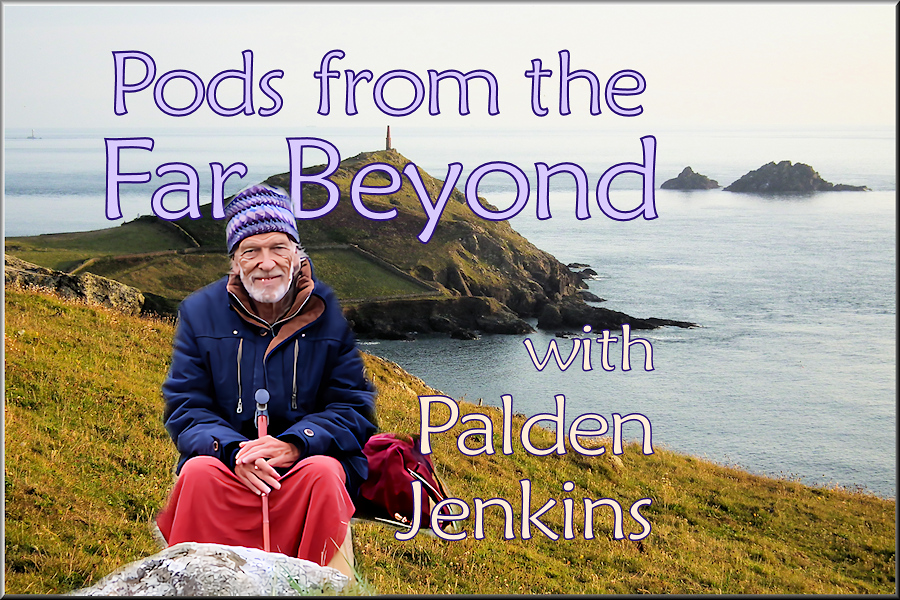






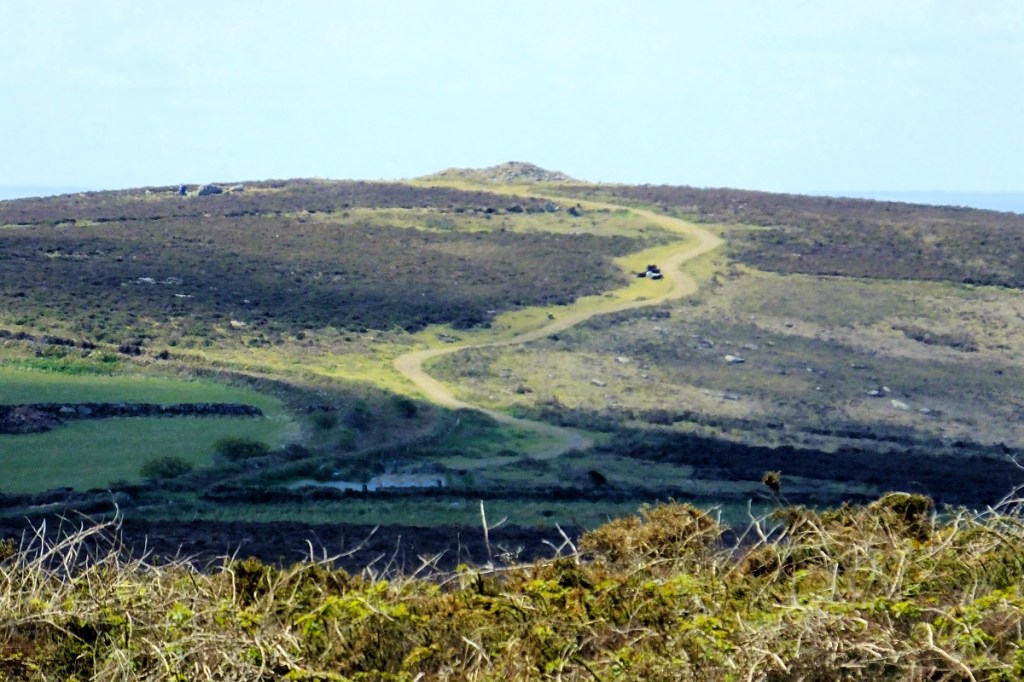


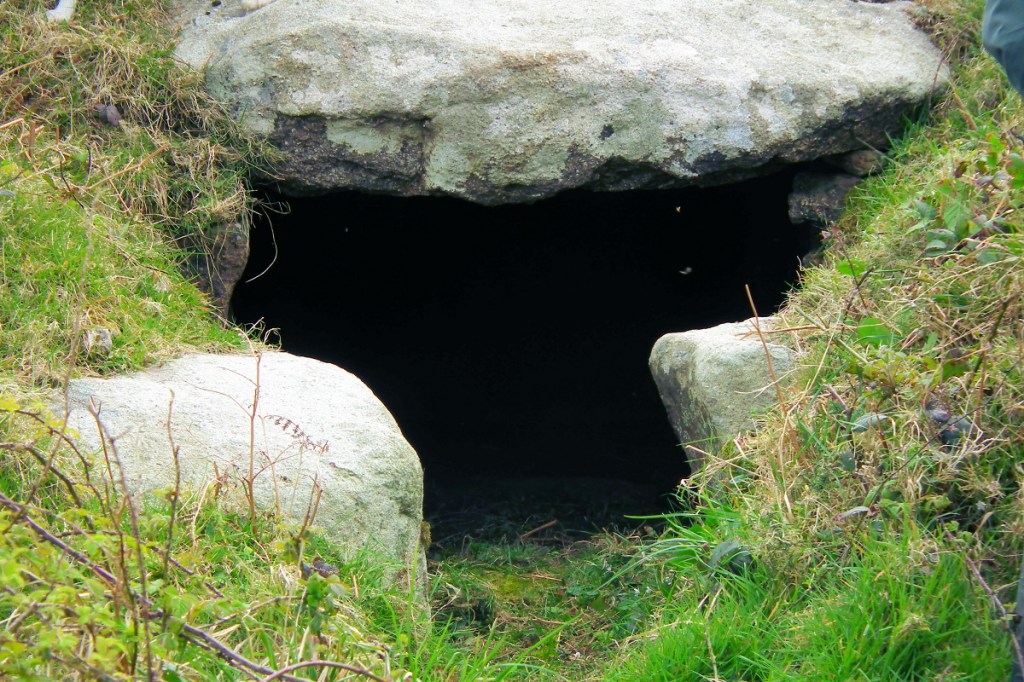


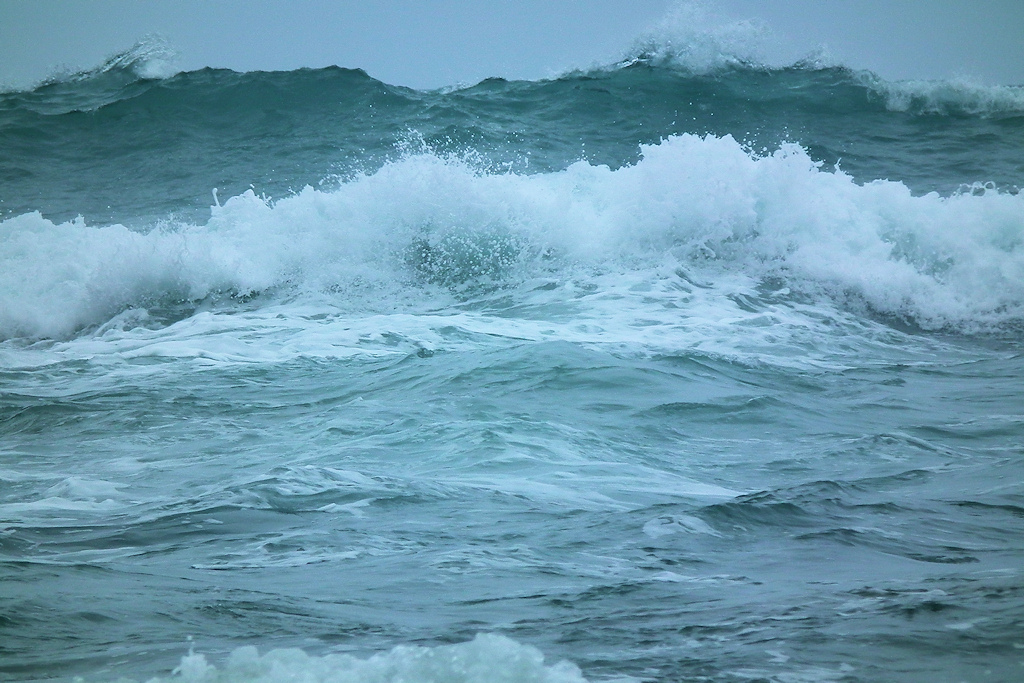


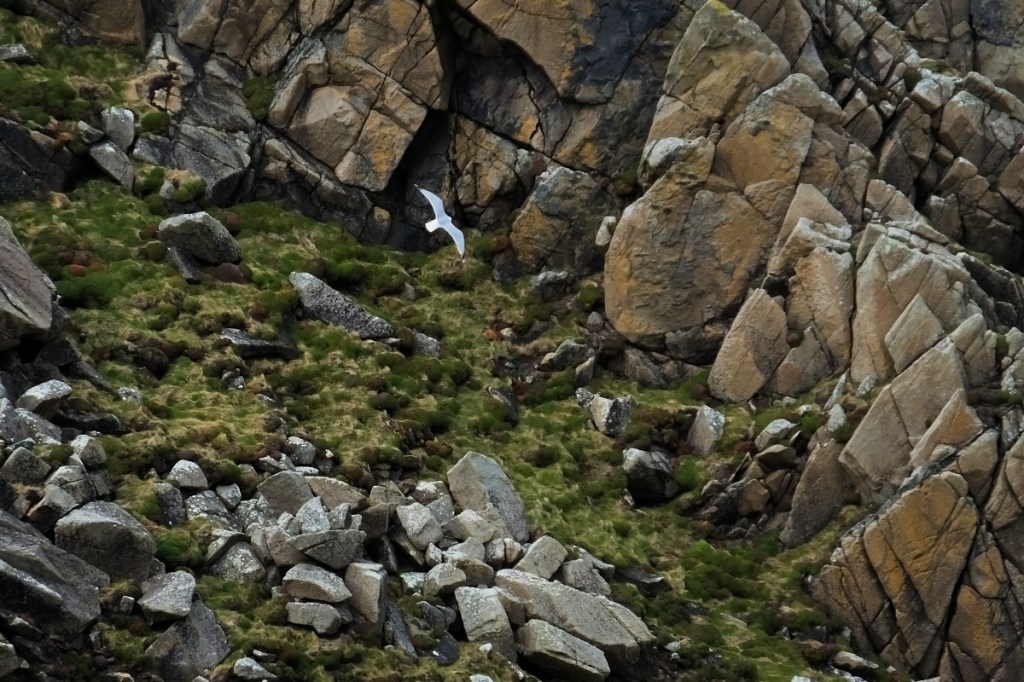


 Notes from the Far Beyond
You must be logged in to post a comment.