Here are some thoughts on the current vexatious world situation and some of the threads that lie behind it. It’s all about the incremental North-to-South shift of world power, about people against the Megamachine, and Gaza and Israel, the decline of the West, and a few things like that.
Are we entering the future facing forwards or facing backwards? This is a key question in our time.
Listen on Spotify (it’s also on Apple and Google Podcasts):
Should it interest you, here are two relevant articles I’ve written in former times: + An astrological article I wrote about the 2020s, written back in 2020: https://penwithbeyond.blog/2020s/ + And here’s something I wrote in 2011 when in Bethlehem during the Arab Revolutions, about Hamas and its relationship with Fateh (the Palestine Authority in the West Bank). It’s pertinent now, for those of you who are into more in-depth thinking around Palestine. www.palden.co.uk/pop/hamas-and-fatah.html
I’m deliberately making few statements at this time, even though people ask me what I think. There’s no point.
To re-quote Bertrand Russell: ‘War is not about who is right, it is about who is left‘. The coin is spinning in the air. It has already been flipped.
Corresponding with an old friend in Tel Aviv, who is Jewish, of Romanian origin, she told me this morning that she and her friends are standing together with Arabs in Jaffa (an ancient Arab town next door to Tel Aviv), and, for better or worse, I replied like this…
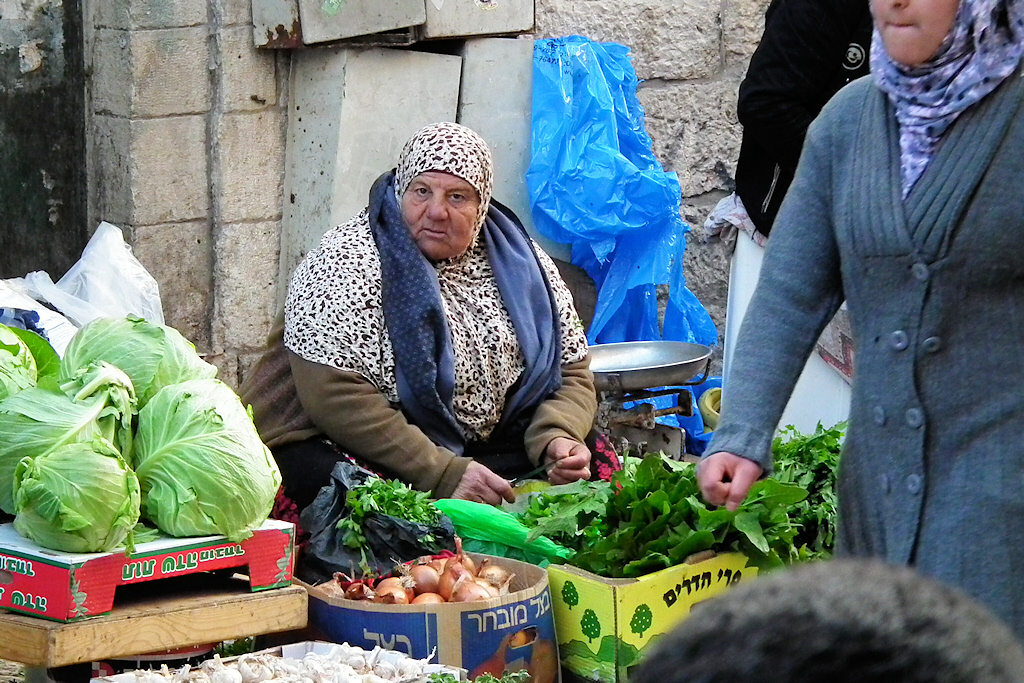
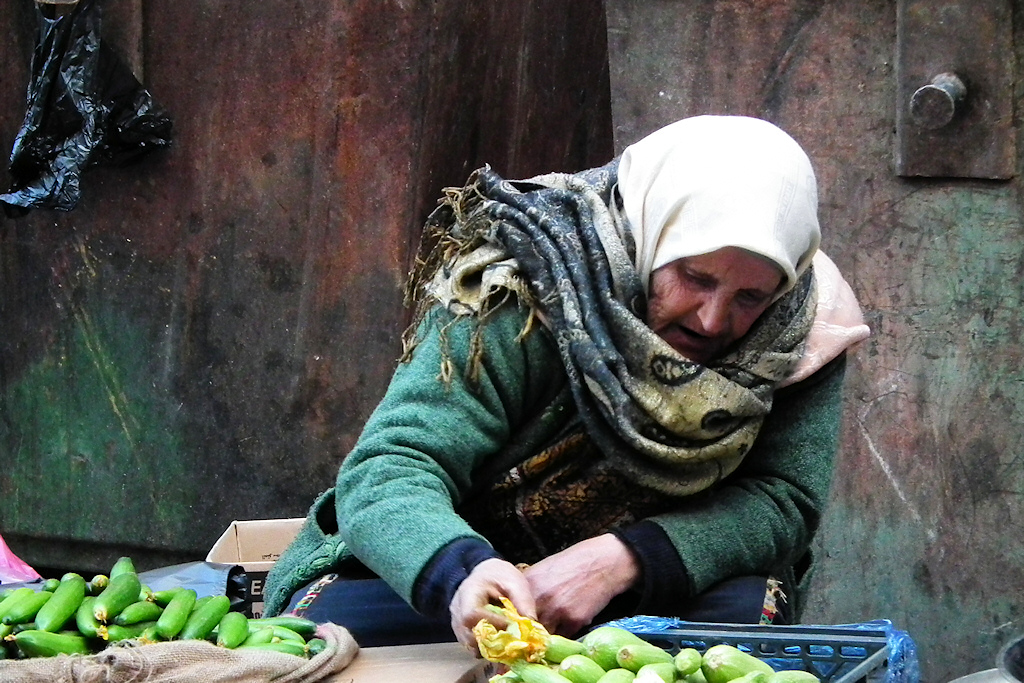
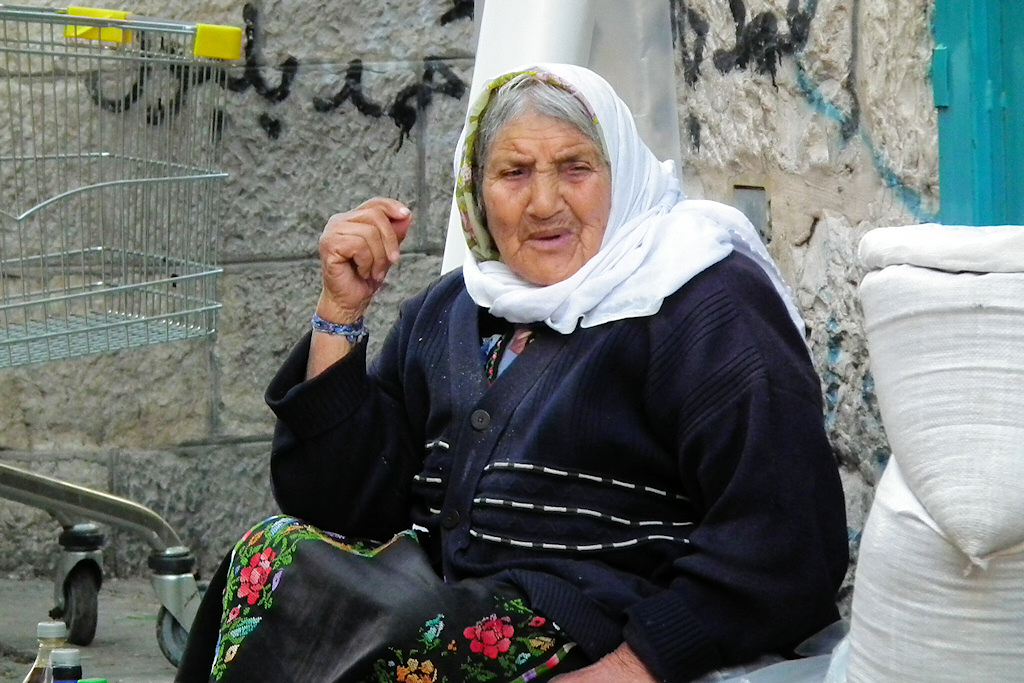
The pics are from Bethlehem in the West Bank, 2011
Stand together, sister. This is about humans and the Megamachine – Pluto in Aquarius, astrologically. I think it might eventually be a turning point.
I hope everyone on both sides thinks twice before acting. And I hope the Gazans treat their prisoners according to true sharia – in which case they will be as well cared for as possible, under the circumstances.
Indeed, God is great, though he makes his own decisions, and he doesn’t necessarily think what we humans want to think he thinks, and all of us are equally his little children.
I have a young friend in Gaza, Basma, who’s popping a baby in the next few days. Life on Earth becomes incredibly bizarre sometimes.
I have been doing some psychic work on the other side, working with people who have died, and here’s an interesting observation: the ‘angelic operation’ to deal with the influx of hurt, deceased souls is one operation, and the deceased are all being treated together.
And when you listen to the news propaganda, remember that there are plenty of good humans here in Britain and around the world who watch this, and who care, and who form their own conclusions.
This lady’s eyes have seen things humans shouldn’t witness
If I were fitter and had the funds, I wouldn’t go to Is-Pal right now. I would wait, because it’s the abiding damage, psycho-emotional and concrete, that matters. It’s what happens next, with those who are left, that matters.
Those who pass away, they will be cared for, and they will come to peace in their hearts. It’s those who remain who have an uphill climb ahead of them.
This outbreak of war is caused by the damage that has already been done. Every act of violence begins with an unhealed wound – this is the motto of the school where I used to work in Beit Lahem (Bethlehem).
Beware a rush to judge, and be aware of your tendency to take sides. Take both sides, and see each side’s viewpoint(s) – each ‘side’ has a range of viewpoints, actually. Because, strangely, each side is right. From its own adopted viewpoint. And each side is wrong.
Yet there is not right or wrong in this game: there are simply outcomes. And what exactly are the chosen outcomes?
Remember that, when war breaks out, there is a polisation of anger-driven awareness and attitudes into simplistic, black-and-white terms (‘terrorists’, ‘genocide’, etc) and this does no good at all.
Are you a victim of this mentality? This is the psychosis that drives war, and this kind of psychosis needs to end if we are to get through the 21st Century in one piece.
This is about humans against the Megamachine. It’s not really about humans against humans – that’s the psychosis.
I’ll come up with further observations in due course. But for now, silence works best. Bear witness. This is Planet Earth. This is humanity in action. Across the universe, we are frightening, dangerous beings.
True holy war, jihad, concerns the struggle and conflict within ourselves to find the bottom-line truth of our lives. To come to peace within ourselves. By doing this we come closer to what many humans call ‘God’. What arises from this is a deep urge to do good in the world, to make the world a place of justice, peace, safety and basic happiness. That’s what holy war is, and it needs no weapons.
And here’s a thought. I’m not certain about this, but it’s worth contemplating. In the world’s collective psyche, there’s a certain amount of infection with the psychological thought-virus of war. On the whole, it cannot spread and grow any more than the host body, humanity, will allow – the extent to which it is susceptible. But this thought-virus does not decrease unless humanity as a whole shifts its values to build increased immunity to it.
I’m not talking about conscious thoughts or thought-through policies or actions. It’s on an unconscious level. But I’ve sometimes noticed how, when a conflict subsides in one area, another conflict will come up elsewhere, as if the virus hops from an arena where people have developed immunity (often exhaustion and a desire for normality), to an area where the population is susceptible. It will be vulnerable because of divisive politics, ethnic tensions, oligarchic manipulation, outside intervention and proxy-warring, and sometimes outright madness.
I first noticed this in 1990, when the long Lebanese civil war ended and the multiple wars that broke out as the former Yugoslavia disintegrated.
This dynamic happens in other ways too, and we’ve recently had an example. It’s as if the outbreak of war in Sudan has vacuumed up some of the available violence energy, draining some of it away from Ukraine, where a much talked-about escalation of conflict isn’t really happening – some of its motivating energy has been siphoned off by Sudan.
Sometimes the grief that is experienced in conflicts can be overridden by other forms of grief. This we see in eastern Congo at pesent, where recent flooding has sucked much of the energy out of the complex conflict there. it has shifted the emotional focus.
The recent earthquake in Syria came at a time when the Syrian civil war was subsiding, converting the sump of conflict-grief in Syria into another kind of tragedy. On the other hand, in 1999, earthquakes in both Turkiye and Greece brought a simmering longterm conflict between them to an end.
So if we look at humanity’s collective psyche as an enormous, seething ball of blobs, representing mindsets, and interweaving threads, representing themes and issues, all in perpetual motion, then on the whole there will be a fluctuating balance over time between different forces at work.
This includes positive and multifaceted beliefs too – at times there can be outbursts of negativity or positivity which, over time, balance out. Though despite this, there will also be a slow net shift of values happening underneath. In the last century or so, deaths and injuries from conflict, seen in proportion to the size of population, have actually been decreasing significantly.
It’s useful looking at things this way. This isn’t about Russians and Ukrainians, Democrats or Republicans or the people and the regime: it’s about conflict and polarisation, whoever the current puppets and victims are, and whatever they’re in conflict over – which, to confuse things, might not even be the same issue for each side. It affects all of us variously.
So when we look at current events, it’s important to step back, looking behind and underneath those reported events at the underlying dynamics prompting them. One interesting polarity which I have been personally experiencing is this: strangely, as world population has risen (and dramatically so in recent decades) so too has social isolation and loneliness. That is, with much of the world feeling crowded out with other people, a compensating grouping of isolated people has been growing too.
Even so, those with busy lives and lots of people to relate to will often have a shallowness of relationship leading to an underlying loneliness, even if well-distracted, while those with lots of time tend to be factually isolated, left behind in distant villages or shut in unknown rooms, and they feel it in a different way.
We live also in a world where there are hunger and obesity, and extremes of wealth and poverty, advantage and disadvantage. The issue here is that these polarities have become more extreme, and the natural relationship between them has dwindled – and they live in different worlds.
Same planet, different worlds. Yet even though New York City and the Tian Shan mountains are like different worlds, and though our current obsession with identity obscures our common ground, we are all unwitting participants in one planetary group psyche.
All the world’s a stage, and all the men and women merely players; they have their exits and their entrances, and one man in his time plays many parts, his acts being seven ages.
Thinking of people living in places like Kharkhiv in Ukraine, and what it’s like to be on the receiving end of war, here’s an article by a young Gazan, called ‘Three Wars Old’, about her experiences as she grew up. What’s remarkable here is that people like the author, Samah, can be far more balanced and accepting of their benighted situation than we would expect, when we see things from our own viewpoint of living in a (largely) safe and comfortable country. Not that it’s easy for her. I’ve learned so much from people like her.
Some years ago I was involved with We Are Not Numbers, an NGO which trained young Gazans to write articles about their lives in English for worldwide consumption. It is so important for people in wars to know that other people round the world know what’s happening to them. They feel isolated, unseen, uncared about. One of the functions I’ve served in the Middle East has been the simple task of ‘witnessing’ – sharing people’s experiences, hearing their stories, letting them express their feelings and feel heard. This is a great healer in itself.
Later, the NGO started training young Gazans in working with video, supplying the necessary equipment and support (smuggled, probably). This bore fruit in the last Gaza war, when young Palestinians communicated freely online on Youtube, letting the world see fully what was happening to them. And the world got it. In a way, they won the propaganda war in that instance. That’s the amazing thing about Palestinians: they get beaten every time, yet they never lose. That’s called resistance.
You hardly ever hear of cholera, widespread starvation or absolute destitution in Gaza: whatever their situation, they act together to deal with whatever comes at them. They’re well organised and have the right attitude. Nevertheless, once upon a time I asked a young friend who had been a male nurse in Gaza, asking him what had been the most difficult thing about nursing there. He said: ‘Holding down a person while we operated on them without anaesthetics’.
This kind of thing is a personal matter too. Warfare arises from the deep belief that other people are different from us, a threat, and they’re hurting us. This happens in everyday life, in our own lives. In recent months, struggling with a deep emotional issue, I’ve been faced with my own self-defensive patterns of falling into this, of thinking badly of others, flailing around in aggrieved resentment and pain which rears its head and grinds around in my psyche when I’m wobbling and grinding my stuff. Then I get a battle between that side and the understanding, empathic, compassionate side of myself, which sees things completely differently. In a way, that’s even worse, with the contrasts of viewpoint and feeling grating and scraping against each other.
I grind and wrestle, sometimes getting lost, sometimes getting found, churning inside over and over, digging in the pain and feeling the pain of the other person or people too, lost in a confusion of exaggerated inner dramas. Yet, like spilt petrol on a wet road, there’s a beauty that emerges, a peace that dawns surreptitiously from underneath. It comes eventually. I come to a smiling peace again, worn out perhaps. So I’m at least making progress. But even then, when I feel I’ve laid something to rest, it can come back with a vengeance later on and I’m back to square one. It’s relentless.
Isn’t it strange? We humans, we make so much more difficulty for ourselves than we need to make. We externalise our grating struggles onto others – talk of crimes against humanity, we’re all at it. Confused mass murderers, us lot. Go on, own up. Look at what you’ve done. Don’t worry though, ‘cos I’m much worse than you, and you can take consolation from that! I’m the worst sinner around, hehe.
Well, that’s a part of us. But there’s another part too. It really is a matter of which part we choose, and how we then deal with the other part that got sidelined. This is what is at stake in wars. We humans create horror and destruction for each other – and even the winners never truly, fully, permanently win, and all that is won is eventually lost. It’s tragic. This seems to be in the nature of things on this planet. We share a home and threaten to blow it up, just to prove that it’s ours, not yours. We do it because we refuse to sort out our differences by other means.
Our fundamental interests are actually shared, and we sit in the same boat. It’s not about you and me, it’s about us. We have a dilemma, and something needs to be worked out.
It’s not just about diplomacy, treaties and cease-fires. It’s about that inner conflict, the feeling that others are out to get us and do us in, and that we’re the best. This will take generations to heal, and this is one of the key areas of focus in the coming decades. It’s a deep emotional issue and, in a way, the wars of today are, with tragic repetition, acting it out.
It’s difficult to believe, but over time there is progress. Regarding Kharkhiv or Gaza or Yemen or Mali, the devastation is exhausting us, taking us up to the fence where humanity has to choose. For, as a Bosnian said in the video from Sarajevo I posted on Facebook a few days ago, ‘In war, who loses? – everyone‘.
Samah in Gaza demonstrates how even those who have had the worst happening to them, grilled by the painful intensity of life, can become remarkable people. I think she has a future.
A podcast about something that’s becoming increasingly necessary
Following on from my last blog, I did manage to get up on a windy solstice morning to record the Massed Corvid Choir of Grumbla, Cornwall, and their melodic chants top and tail this podcast.
Experiences of the last two years have drawn us surreptitiously toward new values, a rehumanising of society – and there’s more to go on this process. Here are some insights on conflict, migration and dehumanisation, with a little on the Holy Land. And peace and goodwill.
With explosions and atrocities going on, the environmental, social and cultural issues of our time will not be resolved. This needs to change, for very practical reasons. It involves every one of us looking at our own conflicts. Planetary healing.
If you were interested in the first podcast on Intelligence, you can find the second one there too. This time it’s about psychic-intuitive antenna-twitching.





 Notes from the Far Beyond
You must be logged in to post a comment.