The seventh Aha Class, in Penzance, Cornwall Weds 12th March, 6.30pm, at The Hive
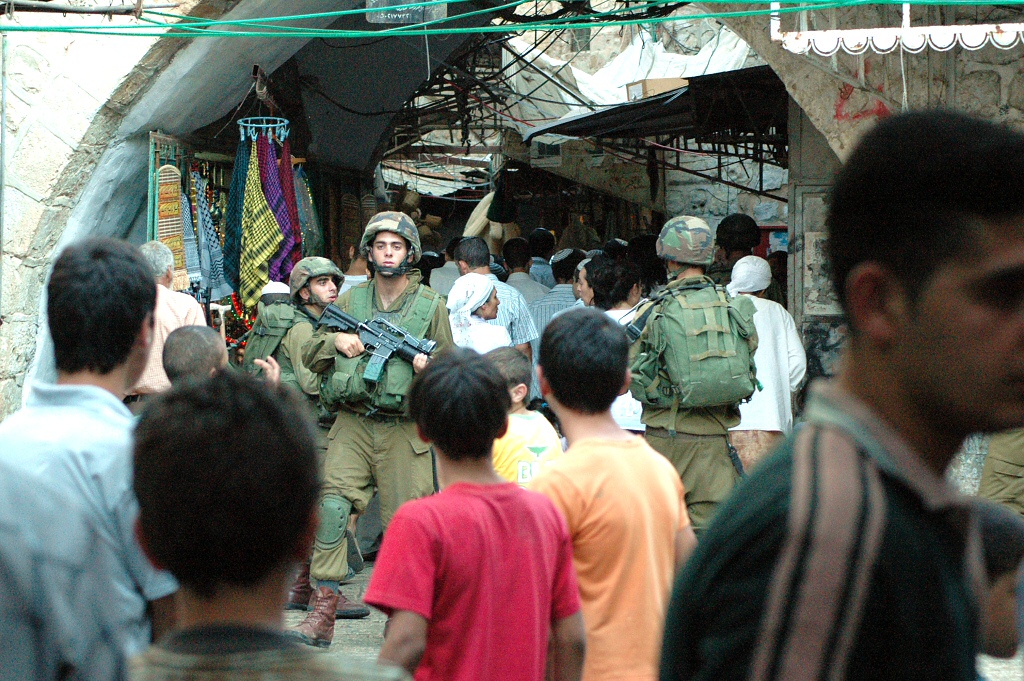
A settler incursion and tricky situation in the historic souk in Hebron, Palestine
Inner journeying, meditation, remote healing and peace-building. Doing our bit toward tackling the world’s problems – instead of wringing hands and feeling helpless.
In recent times many of us have been moved to join meditations, prayers and link-ups when major crises break out. Waves of mass empathy and concern over such crises can have a wide and deep psycho-spiritual influence – it goes deeper than mere ‘public opinion’.
Praying for peace or showering light over a benighted area are good, though often they are of a generalised nature. They can affect the collective psyche and sometimes help swing things.
But it’s possible to get closer in. It’s possible to penetrate actual situations and play a more targeted part in them – literally rescuing people or souls, or participating in situations, meetings and crux-points at the frontline of human experience.
That’s what this evening is about. This might be a valuable inner tool to add to your repertory. This is not ‘lightworking’ but spiritual humanitarian work – bringing in truckloads of spirit, rescue and healing.
This is not simple. It carries responsibilities, and it’s not a matter of imposing our wishes – benign or biased – on world situations. The key issue is to help humanity learn, to become more aware in making the choices it makes, for the longterm resolution of what are often deep-seated problems.
In the first half of this evening, I’ll outline considerations and issues involved in such work, how we choose issues and crises and work with them, and the blessings, delusions and dangers involved and what it’s all for.
In the second half we’ll go on an inner journey to work with a particular area of focus that is currently afoot in the world. (And, first time round, we won’t be working with polarised Trump-related issues!)
You might or might not wish to go into this kind of work but, even if you don’t, world situations do come up at times, touching our hearts, to which we respond, and inner journeying (conscious dreaming) is one way we can play a part in world affairs as situations arise. Once you get the gist of it, it can be applied in areas that interest you – socio-cultural, ecological, geopolitical or simply encouraging forward-moving change.
If you’ve done this kind of thing before, this class might help you clarify a few things and take it a step further. If it’s new territory, it’s a good place to start.
Since most of you will not be able to come, audio recordings will be posted online within days after the class (no charge) – just follow the link below. Recordings of all of the Aha Classes can be found here.If geopolitical healing interests you, you might find this site useful: The Flying Squad.
This is interesting. It’s written by an old friend who is himself involved with helping out in a freelance-humanitarian sense with Gaza. But this is something that anyone involved in conflict resolution, or in any kind of change-bringing commitment, needs to ask themselves: what is it that drives me to do this?
It came up for me too. In my case, my maternal grandfather was in General Allenby’s British invasion force in Palestine in WW1, my father was in Egypt in WW2, and I have Roma and German (though not Jewish) ancestry – Holocaust stuff. That’s what I’ve identified in myself that hooked me into it.
But also, growing up in a polarised and violent city, Liverpool, in the 1960s, played its part – overcoming the effects in myself of being bullied in early life. We teach best what we ourselves have had to learn.
If you have a bee in your bonnet about particular issues, driving you into activism, it’s worth looking into your ancestral background and your history. It can help make it all more conscious.
Many Palestine and other activists would do well to look at the emotional source in themselves of their despair, anger and commitment, because this will help them become more effective, tactical and compassionate in pursuing their vision.
It’s important because issues like this will not be resolved overnight. Yes, a ceasefire has been needed and is still needed, but a ceasefire without resolution of fundamentals might not be the best thing. Sad to say, sometimes the horror has to get worse, until a point comes where peace and resolution are the only options left.
We need to own up to the perverse fact that many of us worry about Gaza and similar places only when blood and horror happen, impinging on our comfort-zones. But actually, the reason why blood and horror happen rests on causes that are brewed and fermented during quieter times. If we’re going to succeed in a mission such as peacemaking of conflicts that have deep roots, it has to be sustained in the longterm.
And here’s an awkward truth. If campaigning for our beliefs polarises society, then we shall fail. Because if others have different beliefs, thinking of them as nasty ‘them’ people itself lies at the root of conflict. People who are anti-anything, who wish to ban things or people, and who dehumanise people with different viewpoints, become part of the problem they’re sincerely trying to resolve.
We really are all in this together, if we wish to resolve the fundamental issues that the world faces today. Peace will not come, and ecological and societal issues will not be resolved, unless we all work together.
This is not idealistic thinking. It is a very real socio-political issue. If we don’t get through this in the coming decades – global consensus-forming – then we’re fucked, really. War arises from polarisation, and there is little value in trying to stop war or save our world by polarising society.
Working to overcome polarisation and build bridges makes things more difficult. It means we must work longer and harder on this. It means we are challenged to walk our talk more consistently and for longer.
When the shooting and dismay stop, if everyone just goes home, back to normality, then peace will not come, because the matter is not sorted. And in this century we really need to sort things out, changing and ending the patterns of centuries and millennia.
That’s my thought for the day. However, there’s something else too – a new podcast.
ARTIFICIAL INTELLIGENCE | HUMAN INTELLIGENCE
I recorded this in January and completely forgot about it! That was a memory question. And that’s why it’s coming out now. I remembered.
Jean Piaget once said that intelligence is not about what we know, but what we do when we don’t know. How we figure things out when we’re in new territory or out of our depth.
The problem with AI is that it works by drawing on data and on what is known, on memory, and on the way things have happened thus far.
That’s not true intelligence. Human intelligence is better at dealing with the unknown. That is, if we humans act intelligently – which we do only occasionally.
So AI is unlikely to be as wondrous in its problem-solving capacities as tech-bedazzled AI cultists would like us to believe.
And there’s a hidden twist here concerning human intelligence – it’s in the podcast! Recorded in January 2024, down by an old silted-up millpond in the stream below our farm. 27 mins long.
Finally I’ve written an autobiography. It’s online and shortish, the equivalent of ten pages. I was reluctant to write an autobiography, partially because I feel it’s not greatly important and partially because my memory of past events is foggy. In it I explain why this is so. Lots of people have said I ought to write one. I dragged my feet. Standing on stages in front of people comes naturally to me, but I’m also a quietish, Saturnine Virgo who’s happy beavering away behind the scenes and not making a big deal about it.
Yet writing it has been therapeutic. I did it in two rounds. In the first, a year or so ago, I wrote down all I could remember. Letting time pass and recently reading it again, I remembered more events, details and issues. Though really, it’s not life’s events that matter: it’s what goes on inside, prompted partially by those events and partially by stuff coming up from within.
There are general, lifelong issues and patterns too, which are difficult to weave into a short autobiography without making it lengthy. Even so, while working on it I’ve been reminded of something that has been important throughout my life. I’m not sure what to call it. It’s all to do with working with contradiction and paradox. In a way I’m a radical extremist in my spiritual-political views and, to some people, I’m right off the map, not even a decently normal left-winger, conspiracy buff, new age glitteratum or a proper anything. But in another way I have always been measured, considered, anchored in lived experience and seeking balance in my thinking.
My politics – particularly in international relations – comes from my heart. Being with Tibetan Lamas in the 1970s clarified this. They showed me how everyone suffers, rich or poor, privileged or deprived, and that we need to practice compassion and loving kindness toward each and every person and living being. The secret here is to put ourselves in others’ shoes, to see what life looks like from where they stand. You don’t have to agree, just to bear witness and comprehend their situation. I firmly disagree over a lot of things, though I’m not into pointing fingers or demonising people. Such a non-polarised approach isn’t complacency but a way of seeing life that can unlock doors to effective activism or concrete action.
Revolution, to me, involves building the future while letting the past dwindle of its own accord and in its own time, perhaps with an occasional strategic shove. I’ve always been focused not so much with rousing people to rise up as with looking beyond the next perceived horizon and laying the ground for what happens afterwards.
Of course, everyone needs to do whatever they’re moved to do, and to do the best they can with it, preferably without harming others. In the end we all learn from what life has taught us. It’s all part of a bigger, wider movie with a cast encompassing the whole of humanity. If people die in war or by starvation, it is indeed tragic and wrong – one young friend in Gaza has just been killed – yet it is also a sad part of humanity’s learning process, its aversion therapy. It happens because we humans have not remembered the main agenda and what the endgame is.
It’s both a personal and a collective process and, today, the pendulum is swinging toward collective priorities. Our attention is being drawn to the collective dynamics involved in facing the future, which are incrementally overriding the personal preferences and envisionings we all variously might have. In the Global North there’s a lot of braying about personal rights and sovereignty, but much of this is the sad complaining of affluent Westerners, scared of losing the power, advantages and comforts we have had. The future no longer lies with us whiteskins, though we do have a place in it. Around 15% of the world’s population, having banged on about democracy and human rights for decades, to our surprise we’re faced with being but a minority, with equal, not superior, rights to everyone else.
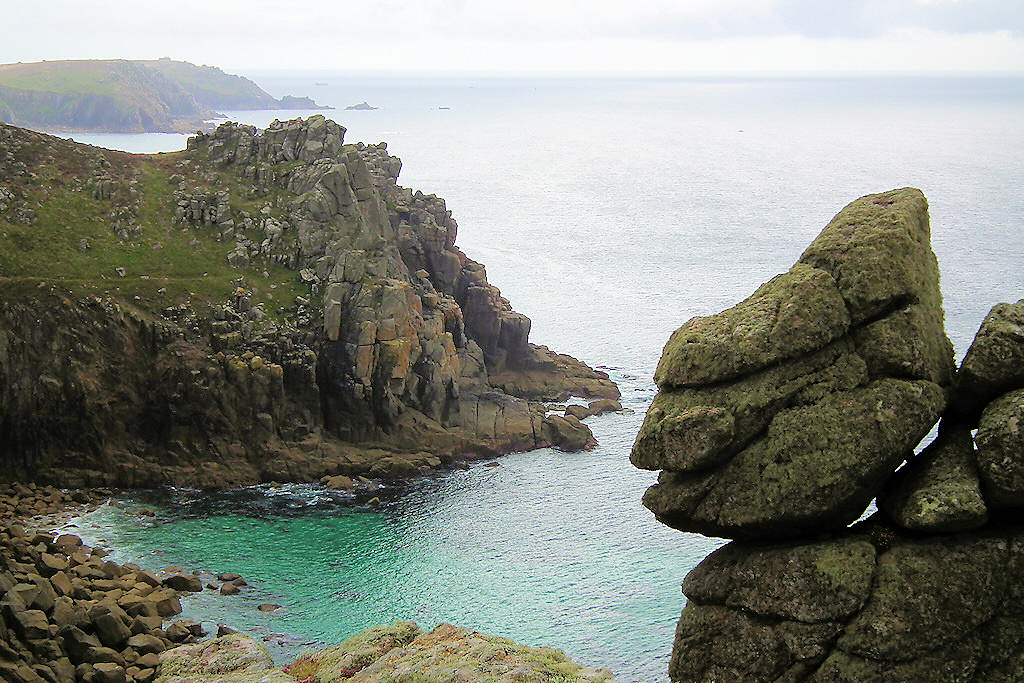
Porthmoina Cove, West Penwith
For better or worse, I’m seriously moderate. I regard Bilderbergers as humans. They do things that are beneficial and things that aren’t. They’re like you and me, really – thoroughly imperfect beings. Yes, they have a certain power to swing things their way, though not as much as some of their critics believe. We need to help them change their thinking, their hearts and their behaviour, since no system of social-political organisation will work well without people’s hearts being in the right place.
If we see those at the top of society as Them, by implication making Us into their underdogs, we tend to reinforce the masters-and-slaves mentality. Even so, we apparent slaves far outnumber them, and we aren’t always stupid sheeple who obey our masters, so ‘the Cabal’ doesn’t control everything. We are co-responsible.
It’s all to do with how we choose to see things. Personally, I see a transformation of the current system to be inevitable and unavoidable. It’s taking longer than many of us first thought, but it is happening. It’s up to us to do what we can to nurture and channel that inevitability, in order not to prolong the agony, since what’s really at stake is the amount, the depth and intensity of suffering and damage that people and the world must go through before we reach a breakthrough point.
Seen in this light, the latest outbreak of violence between Israelis and Palestinians, or between rival factions in Sudan, is a tragic saga of the thrashing of the tail of a slowly dying dragon. In WW2 we had an example of dying dragons: the greatest destruction in the war took place after 1942, when its course had already pretty much been decided at Stalingrad, Alamein and Midway – yet it took a lot of further destruction to confirm that inevitability. Mainly because of masculine bull-headedness. But the matter was eventually harrowingly resolved amongst the ruins of Berlin and Hiroshima.
Carn Kenidjack, West Penwith
In the last thirty years, on top of other projects and activities, I’ve worked with meditation and psychic work. Many political types and rationalists think this is woo-woo, a joke, or peripheral or impractical, and they may hold that view if they wish. The way I see things, a tide is turning, nothing is permanent and we’re working with the historic trends of centuries and millennia. We’re working with the underlying thoughts, feelings and beliefs of people, and that’s what shapes the future.
Those of us who elevate our individual freedoms as benchmarks upon which everything else should be judged are having to swim against a growing tide moving the other way. Individualised self-interest, though indeed relevant and part of life’s equation, is not actually in everyone’s best interest – and the endangered state of our world demonstrates that. Our world problem derives from self-interest. We’re at a stage in history where the survival and benefit of humanity and of the natural environment as a whole have become the top priority. Global circumstances push things this way, and the big question is how fast and fully we respond and adapt. The future is nowadays having a greater causative influence on the present than the past has. We’re being sucked toward the future.
So I don’t rail against the banksters, the billionaires and the secretive manipulators, though I do twiddle their knobs while they aren’t looking, when I can. I do my bit. In my innerwork I sometimes penetrate the backrooms of Davos, or tweak the energy-fields around certain cloud computers, or drop thoughts into prominent people from afar. This probably sounds like fantasy or even megalomania, and there’s truth in that observation too, but feeding and seeding the collective psyche with such perspectives is the beginning of change. All man-made change begins in the psyches of people.
I tend not to see things in black-and-white, good/bad, right/wrong terms – that, to me, is a prejudicial, blinkered comfort-zone allowing us to avoid seeing clearly. When working in Palestine I was not really like many of the other activists. I believed in staying in Palestine for long periods and participating personally in people’s lives, rather than visiting in an activist group for an exhausting and short week picking olives, doing conflict tours and leaning on the copious hospitality of Palestinians.
I wasn’t anti-Israeli either, even though I found some Israelis difficult to relate to, especially if politics came up. Also I don’t agree with the agendas of the state of Israel. But I don’t agree either with the minority of Palestinians who wish, at least in heated moments, to eliminate Israel or drive the Israelis out. To me, it’s not about Palestinians and Israelis – it’s about people, and I worked with those who sought my kind of input.
So when I went through Israeli checkpoints, I regarded the soldiers scrutinising me as real humans, and my behaviour and body-language reflected that – and I got through, often by simply brightening up their day and being a nice guy. I wasn’t there to do battle with the poor grunts on whose shoulders it fell to protect a screwed-up system.
It is easy, popular and sexy to bang on about the badguys at the top of the pile and to dish out neatly packaged certainties about the solution to the problems we face. It gets the hits, royalties and votes, but those who do it then become part of the psychosis of the divisive system that they oppose. Yes, it’s easy to regard Them as the reptilians, the child-molesters, the evil ones, the exploiters, and this neatly places Us in a position of being the pure, the innocent and deserving – and anyone who disagrees with this is clearly on the side of The Cabal.
Near Carn Boel, West Penwith
For me it all started at the London School of Economics in 1969, when I was a student. A situation was brewing where quite a few students were getting confrontative, hurt by the treatment the police and authorities were meting out to us. But I did not believe in confrontation or violence – this would not get the people of Britain on our side. Even if we, the goodguys, won, violence wouldn’t simply subside since it would already be baked into the character of the revolution itself, leading to new atrocities and the subsequent rise of Napoleons and Stalins. So I advocated working toward creating a new future rather than fighting the agents and symbols of the past – a fight we would not win, given the circumstances we were in. I and people like me lost that argument, and eventually the revolution sadly exhausted itself, mainly by tilting at windmills.
I’ve always held a gap-straddling line. Only as I grew older did I come to understand why. I came to see the situation on Earth as part of a larger, deeper, wider scenario. Here comes the button-pressing extremist in me: I fundamentally believe we are not alone and isolated here on Earth – though we are to an extent quarantined. Many people who are into ETs focus on galactic locals such as Pleiadians, Arcturians or Zetas, but it gets bigger, wider and deeper than that. [Here’s an audio talk of mine about this: Life on Earth, Life off Earth.] This has big implications for us on Earth. Bizarrely, the only public figure of recent times to mention this was Ronald Reagan, who once said, “I occasionally think how quickly our differences worldwide would vanish if we were facing an alien threat from outside this world“.
Beings from other worlds are mostly not ‘aliens’, and our origins as human-type souls lie amongst them. But we earthlings do like to see things in polarised terms, and we need to understand that we also are rather daunting to ETs since we’re fitful, unpredictable, inconsistent and we even have divided selves.
It’s a matter of how we choose to see things, and how much fear we weave into it. If you want to see lizard beings and regard them as dangerous, that’s what you’ll tend to see. The same goes for our relationships with all ‘others’, including foreigners, criminals or simply people who share our planet while living in different worlds. It applies also to creepy-crawlies and sharks, or cancer cells, Covid viruses, refugees or lightning strikes.
It’s time to step beyond the judgemental constraints of good and bad, right and wrong. There’s more to life than this. We need also to look carefully at the notion of ‘evil’, which is so easily bandied around – again, to make ourselves look like goodguys. I’ve been accused of being a criminal, traitor, toxic male, dictator and asshole myself, but that doesn’t make me so unless I buy into it. However, it’s still my duty as a human to work on those aspects of myself where I do fuck up.
The way I see things, evil doesn’t exist in itself – it is simply poisoned, blocked, polluted, diverted life and naturalness. The Tibetan story of Padmasambhava is instructive. When he took the Buddha-dharma to Tibet, he did not cast out the old gods and render them into evil entities, as Christians did over in Europe. He made friends and, as a teacher, he raised their perspective so that they could see beyond their situation. He co-opted them to become wrathful protectors of truth – scary, yes, but embodying the fears and defilements that we must face in the process of progressing spiritually. They were given a bigger, broader and deeper job.
This is similar to the legend of Lucifer, the angelic bringer of light, who sheds light on our darker sides, obliging us to learn through hard but necessary lessons. Except the notion of Lucifer got twisted, he was made into a badguy, the light and awareness bit was removed and his badness was made permanent. Poor chap, he’s misunderstood.
Yet there is always redemption, and we can do things to further it. I’m not at all perfect in this, and there are issues I need to sort out before I’m gone. But the main thing is to work at it. The Council of Nine were emphatic about this. [The Nine was a group of cosmic beings I compiled a book for thirty years ago and continue to work with.] They didn’t prescribe an ideal world or state of enlightenment that we should strive to attain – because there’s always further to go, and this is what evolution is all about. They spoke instead of simply creating forwardness and a feeling of progress, because the more it happens, the more it grows in momentum.
That in itself, in any situation big or small, is all that is needed. Whether it’s gardening your allotment, bringing up your kids, doing your work, being socially active or weighing in on large-scale issues, creating forwardness is what we’re here for, as souls. It all adds magnitude to a growing current. It’s about making Earth a good, safe and happy place to live.
In our time, our big advantage is this. Amidst darkness, one candle makes a big difference. In the sunshine, a candle is hardly noticed. We’re in a time when small things matter more than we tend to believe, even though it sometimes feels like the darkness is overwhelming. Yet keeping our eyes on an aged neighbour, changing nappies (diapers), fishing plastic from a river, cooking a nourishing meal for hungry people, or even joining a meditation once a week can make a difference in a beshadowed world.
On Pordenack Point, looking toward Carn Boel and, behind, Tol Pedn Penwith
I have not done well in terms of money or status, though toward the end of my life I’m happy about what I’ve done in other spheres. I’m aware also of times I’ve failed or omitted to step up, but the net balance is, I hope, positive. It feels that way, and in recent years this feeling has helped me deal with cancer: I chose to treat cancer as a crash course in being alive and making the best of what I’m given. Over many years I had gathered a quiverful of growth-tools that have served me well in my cancer journey, and I’m glad I did that. Because cancer and, later, dying, involve a loss of control, and our success in handling them rests on where we’re really at, not in what we’re trying to be. It’s our actual spiritual fitness and muscle-tone that matter here.
This gives us access to a miracle zone where it’s possible to bend, break or bypass the constraints of normality and expectation. Life is a strange dance and, if the one we are dancing with doesn’t dance to the same tune, or seems to oppress or constrain us, then the secret is to step out of the way, out of the set patterns and moulds in ourselves that render us into being victims. The degree to which we feel oppressed, and what we do about it, is something we can change. It can take time and it can be a struggle, but that’s the direction to go in.
A good friend wrote to me as I was writing this. She was concerned about the new outbreak of violence between Palestinians and Israelis. It’s happening yet again. It’s terrible, and it’s easy to get locked into hand-tied consternation about it. Peace will indeed come to the Holy Land, and many people there already subscribe to it. But the dragon’s tail is still thrashing, and it’s tragic and painful for those who are personally affected and involved. Sadly for Israelis, it’s also shutting down an enormous domestic dialogue about the future of their divided nation – predictably, that suppression will charge a high price later on. Yet step back from this conflict and look at it another way, and this is not a war between Israelis and Palestinians so much as a war between the dehumanising drivers of conflict on both sides and ordinary people of both sides.
We can do things about this. We can visit Palestine or Israel to add our bit, or we can make friends with an Israeli or a Palestinian online, or we can donate money, or in meditation we can work at creating a vibe where the people involved are raised up to see things another way, to see the futility of their situation and get a clearer sense of what is genuinely best for the future. It’s not for us to prescribe what that might be, but it is for us to help create a psychic field in which they might progress with what’s genuinely right for them.
Once a conflict starts, it’s not helpful simply to oppose it – it’s too late and, as is often the case, the opportunity for preventing conflict came earlier and we missed it. The trick is to take the situation as it stands, working to twist and weave it another way, to introduce new, unlocking factors, to help those who are suffering, to work with wider public awareness, and even to conduct direct dialogues with generals and fighters in our inner universe.
It’s not a matter of taking sides: we need to step beyond our preferences and biases. No matter how much we believe that past history is important in this or any conflict, it’s the future that really matters.
A young friend in Gaza, Basma, is going to have a baby any day now. What a way for a child to be born. Her brother Moh, a male nurse, escaped Gaza in 2015 and was one of the boat people crossing from Turkey to Greece. He landed up in Belgium, working as a nurse, and died of Covid in 2022. What a life these people have. He had been the hope of the family.
In this week’s meditation, if you join it, I encourage paying some attention to this issue. However, this world is full of worrying problems, and good-hearted people can get overwhelmed with it all. To deal with this, it’s advisable to do small things well rather than big things badly – that is, to focus on the particular issues that mean a lot to you, and to stay with them and proactively do something with them. If we all do that, we’ll cover things better.
It’s also true that everything is interrelated. What’s happening in the Holy Land affects other people and places. Each time something like this breaks out, the collective psyche of the world becomes more disappointed, dismayed and depressed. Explosions and bloodbaths make sensitive, delicate, human issues seem irrelevant, and the problem with this is that empathic sensitivity is a key ingredient in making the world a better place. Wars, meanwhile, are useful to the status quo – they suppress not only the people in war zones, but also the spirits and hopes of humanity as a whole. They make the public jaded, accepting conflict as a given, shrugging shoulders and turning away.
We’re faced with many paradoxes and knife-edge choices in our day. It isn’t simple. This has been the saga of my own life, and many of you might share a similar story. Yet it’s what we’re faced with, and we can fret and worry about it or we can do something, within the scope of our lives and possibilities, and at times beyond it. That is our choice.
Back in 2011 I gave a speech at a conference called ‘Will they still serve tea in 2023?‘. This was the moderate in me, speaking. Some people thought the world might end, or at least radically change, in 2012. Well, life went on after 2012 passed. So, apparently nothing happened. The catastrophists were proven wrong and the normality-freaks seemed to win. But this was a lot to do with the dramatic utterings of advocates who desperately wished to be the one who got a big prediction right. Things did happen. Discreetly, the tide turned. Before 2012 we had a future global problem and, after 2012, we had an actual problem, and as the decades roll on, we’re going deeper into it.
In Britain there’s a legend that King Knut (Canute) tried to demonstrate his power by turning back the tide – and he got wet feet. No, historians are now seeing this differently. He sought to demonstrate that even he, with all his worldly power, could not turn back the tide. He didn’t write an autobiography either.
Looking south from Carn Gloose, near St Just, Cornwall, toward Sennen
The ongoing battle for the hearts and minds of humanity now approaches a crunch point in human history. I’ll start with a little astrology to flesh out this thought, though you don’t have to understand it to get what I’m referring to: it’s visible in the underlying messages and impressions that current events convey.
This year (23rd March to 11th June 2023, to be precise) and next year (21st January to 1st Sept, and finally from 20th November 2024 onwards) the planet Pluto moves into Aquarius. It will then chug slowly through Aquarius until 2043-44, for twenty years. It has been in Capricorn since 2008-9, the time of the banking crisis and a deeply historic tilt in the world’s power and wealth away from the rich West or Global North, toward the majority world, the East and the Global South.
Why doesn’t Pluto move into Aquarius just once? The reason is this. Though the planets all orbit the Sun in roughly constant orbits, and in the same direction, we see them from a moving viewing platform, Earth. This leads to a two-steps-forward, one-step-back motion of these planets as seen from Earth, rather like moving trains where a faster train, overtaking a slower train, makes the slower train look as if it is going backwards. It isn’t – it’s just their relative motion.
So Earth, orbiting faster than planets further out in our solar system, makes them seem to go backwards, or retrograde, for periods. Hence the multiple dates given above. This year Pluto enters Aquarius, stops and retreats back into Capricorn, then it edges a bit further during 2024, again backing out slightly, until finally it stays in Aquarius from November 2024.
Pluto takes 250ish years to orbit the Sun. It deals with historic-scale stuff. It’s in the same position now as it was at the time of the American declaration of independence in 1776 (which is one reason why USA has a major constitutional problem right now). This was also the buildup to the French Revolution of 1789-92. It last entered Aquarius in 1778 and left it in 1798, after the French Revolution had turned bad and the progressive dictator Napoleon took over. The industrial revolution, with its dark, satanic mills, was also lifting off.
These weren’t just big events: they marked the beginning of a long cycle of development and dominance of Western culture – an age of urbanisation, industrialisation, mass movements, voters and consumers – that, by now, has hit the sandbanks.
Meanwhile, during this time, the world’s population swelled from one to eight billion. Paradoxically, as the crowds grew, with it came the breakdown of families and communities. And, guess what, an underlying theme of Aquarius is human collectivities, our individual involvements in them and our feelings of belongingness. Our sense of identity hangs around the social groupings we identify with.
Home. Near Pendeen Watch, West Penwith, Cornwall
Together with Uranus (85ish years) and Neptune (165ish years), Pluto tends to influence underlying, history-spanning issues – the rises, transitions and declines of megatrends, nations and peoples. Except during rare moments when we see current events in a more historic perspective, we tend to ignore such critical tilts in the drift of history. But these moments do hit us. The fall of the Berlin Wall was not just an isolated dramatic event – it marked the end of a chapter and the start of a new one, a key tipping point in the tilting of wealth and power from North to South and from West to the East.
We all thought it was about the capitalist and socialist worlds. Yes, it was, but it was also a power shift from the urban-industrial-materialistic North to the South, itself part of a still larger process, levelling up the Global South and levelling down the Global North. And this, wait for it, is a preparation for something even larger, which will be relevant by the latter half of this century – the eventual global integration of humanity into one planetary people.
Out of necessity: the big issues before us are global, and humanity’s divisions and inter-tribal frictions, though still relevant, are getting in the way. In this context, the conflicts between Russia and Ukraine, or the rivalry between China and America, are already rather obsolete as a way of solving our world’s current main pressing problems.
Pluto has been dragging through Capricorn for 16 years, and this also marks the end of a 35ish year Capricornian period, beginning in the 1980s-90s when Uranus and Neptune chugged through Capricorn. The transition to Aquarius marks a shift of focus. We’re emerging from a time of the Megamachine – finance, technology, institutions, corporations, regimes, oligarchies, laws and regulations – to a time of people and crowds, of very human and societal issues. It concerns the collective wisdom and madnesses of people in our millions.
Classic symptoms of this shift are the people scenes we’ve witnessed in the Turkiye-Syria earthquakes and the Ukrainian war. Two aspects of the Aquarian dilemma present themselves: in Ukraine we’ve seen the power of social solidarity in response to man-made threat, and in Syria and Turkiye we’ve seen social disintegration and helplessness, decreed by the full force of nature. Both provided suggestive images for the future, prompts that draw our attention to a basic hard fact of public and social life.
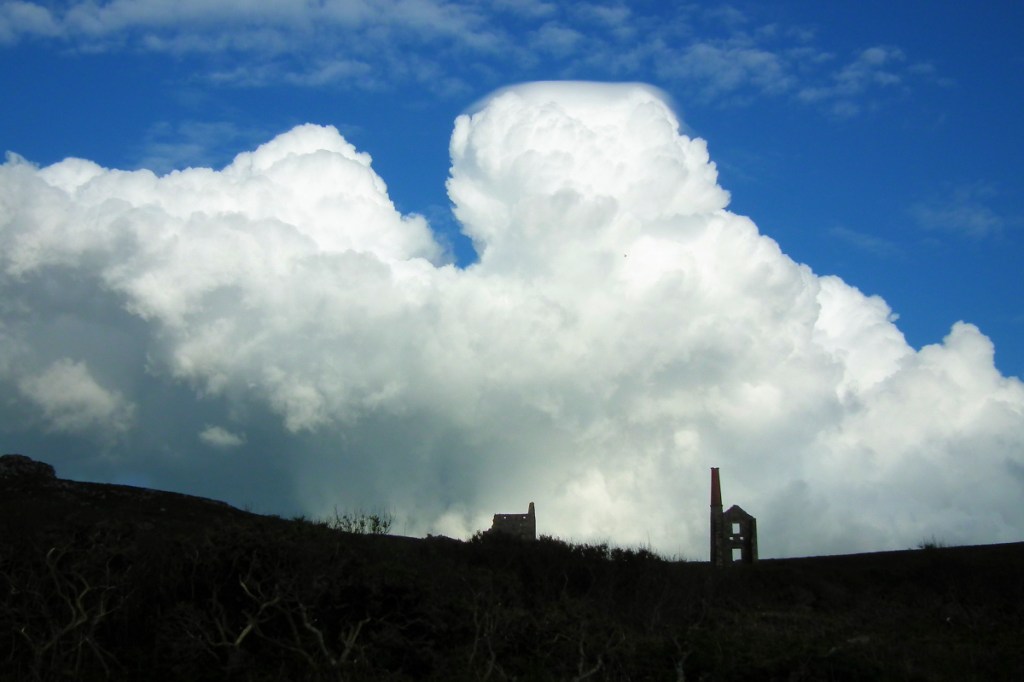
In our post-industrial age, it’s now all about a dratted cloud. Tin mines near Bosigran, Penwith.
That is: we hang together or we hang separately. The choice is ours.
It’s that simple. What matters more: shared interest or self-interest? Global or national-regional-local priorities? Where do we as sovereign individuals stand amidst an eight billion strong throng? Covid-19 and its lockdowns flagged up these issues for all to see, starting a process which will escalate over the coming decades.
The image of People-against-the-Megamachine has been symbolised in the many uprisings and protests of the last few decades, recently in Belarus, Myanmar, Hong Kong, Peru, Sudan, China and other places, and in the Arab revolutions. These were based not on high-faluting philosophies or beliefs: they were straight expressions of human need and preference. While Pluto was in Capricorn, the People lost.
But this is changing – and that change could be a mixed blessing, not only for those at the top of the Megamachine. This concerns the dynamics of public sentiment, opinion and collective action, which sometimes is inspired, sometimes brutal and unfair. We’ve seen a lot of polarisation in recent years – the opposite dynamic to what is needed right now. For in the 21st Century, together we stand and divided we fall.
Here we come to the battle for the hearts and minds of humanity. I’m not talking here about Russia against NATO, Iran against Saudi Arabia, Palestinians against Israelis or people on the streets against the army, or any other divisively oppositional scenarios that the media do love to exaggerate. It’s not about goodbuys and badguys, Us and Them, or right and wrong – though these, on a certain level, are nevertheless relevant. It goes much deeper.
It’s all to do with a deep-rooted condition that emerged millennia ago, a fundamental perception of threat – threat against which we must fight and defend ourselves. It is rooted in a belief that They, over there, are different from Us, and that We are more important, right and good than They are.
It’s a mindset, a projection, a mega-meme rooted largely in past pain and in fear. It’s a set of pre-programmed, knee-jerk reactions that can easily be manipulated by anyone with a neat narrative to spread around, if it hooks into a lurking public feeling bubbling up from underneath. It rests on a feeling of victimhood, which that lot, the badguys over there, are to blame for.
Israelis call this hasbarah – repeatedly accusing the other side of intentions and crimes that our side is itself doing. It provides cover and justification for many bad things to happen. It’s often aimed at the wrong targets too: Palestinians often say, “Why are Israelis having it out with us, when it was the Europeans who gave them such a hard time?“.
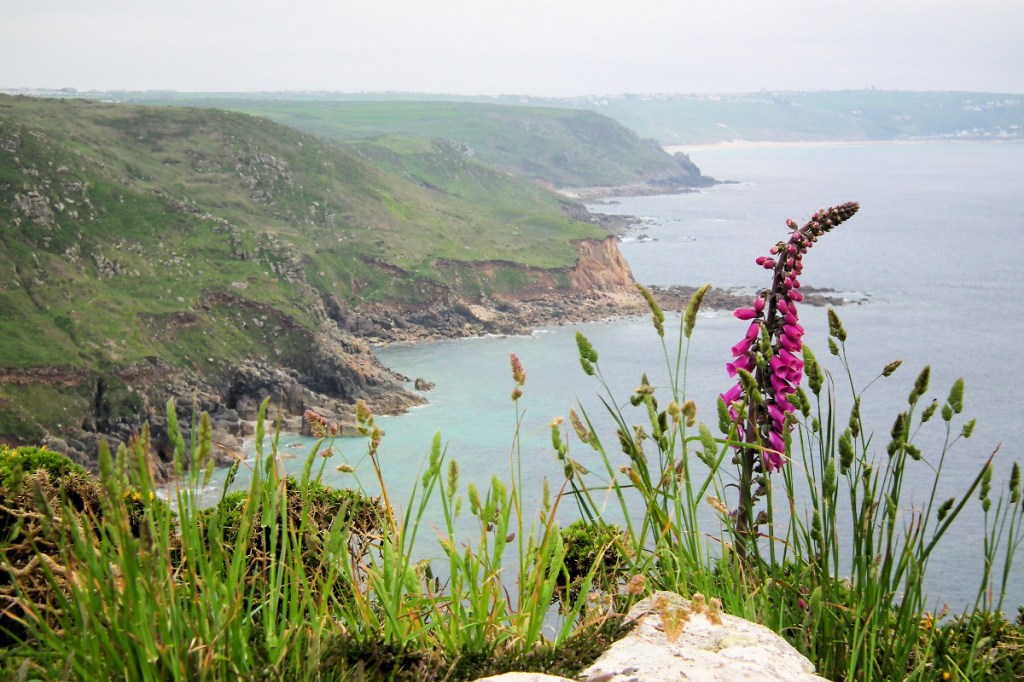
The coast between Bosigran and Pendeen Watch, West Penwith.
In any rivalry or conflict, both parties play a part in the same game. This doesn’t make them equal or relieve the primary perpetrator or the stronger party of its own responsibility. But both sides are in the same game. They see badness in the other side, believing that they themselves are not like that. But the trouble is that, at least to some extent, our side of the argument is always flawed. As Jesus said in his Sermon on the Mount: “Thou hypocrite, first cast the plank out of thine own eye, and then shalt thou see clearly to cast out the mote of dust from thy brother’s eye“.
Brits and Germans, though neighbours and of the same blood, still live under the lurking shadow of two world wars. It came up over the supply of tanks to Ukraine. The Brits were enthusiastic because we have a winners’ mentality and almost desperately want to keep it that way, to prove that we aren’t as small and insignificant as we actually are. Such victors’ bravado conveniently obscures the war crimes we committed in WW2 such as the systematic bombing of German cities – which, when the Russians are doing the same in Ukraine, we find to be abhorrent. Meanwhile, the Germans were understandably reluctant to enter another war, for historic reasons – some would say guilt, others would say a sense of responsibility.
These shadows from the past cloud our responses to real-life situations now. They are cover-ups and avoidances. International relations are riddled with this stuff.
Dig deeper down and, in Ukraine, we’re faced with a dilemma. Most people would prefer to avoid war but we don’t usually do the necessary work in advance to stop it happening. There is a current risk of civil war in USA, and not many people are doing anything about that – Reds and Blues simply think the other side is plain wrong, and that’s that.
Sting once sang, ‘The Russians love their children too‘, yet today we Brits, and NATO, are busy killing those very children, conveniently using Ukrainians as our proxies, and feeling somehow glad when lots of Russians die. Even so, there is good reason to support the Ukrainians in their plight. However, we didn’t pay attention to proper peace-building processes in the 1990s. We failed to see that NATO and EU encroachment on Russian security space would cause trouble – even though some observers, including me, raised this matter back then.
Many of us are thus caught in a dilemma: on the whole we support peace, but in this situation we support Ukrainians in fighting a war. This is problematic, but it highlights a key issue: if we wish to avoid wars, we all need to unsubscribe from the habit of projecting threat on the other side. And that lies at the core of the battle for the hearts and minds of humanity.
The underlying problem here is, to quote Mahatma Gandhi, ‘An eye for an eye turns the whole world blind‘. The end-product of most conflicts is not resolution of the issues at hand, but damage, devastation and consequences cascading from it – such as food shortages and economic disruption, in the case of the current war. Often I quote Bertrand Russell here: ‘War is not about who is right, it’s about who is left‘.
Cities can be rebuilt and battlefields can become farmland again, but the damage to people is worse and deeper. Dead people can’t be brought back, and the living bear the scars of trauma, shock, hardship, atrocity and the sheer ugliness and pain of conflict. It lasts generations, even after the memory fades.
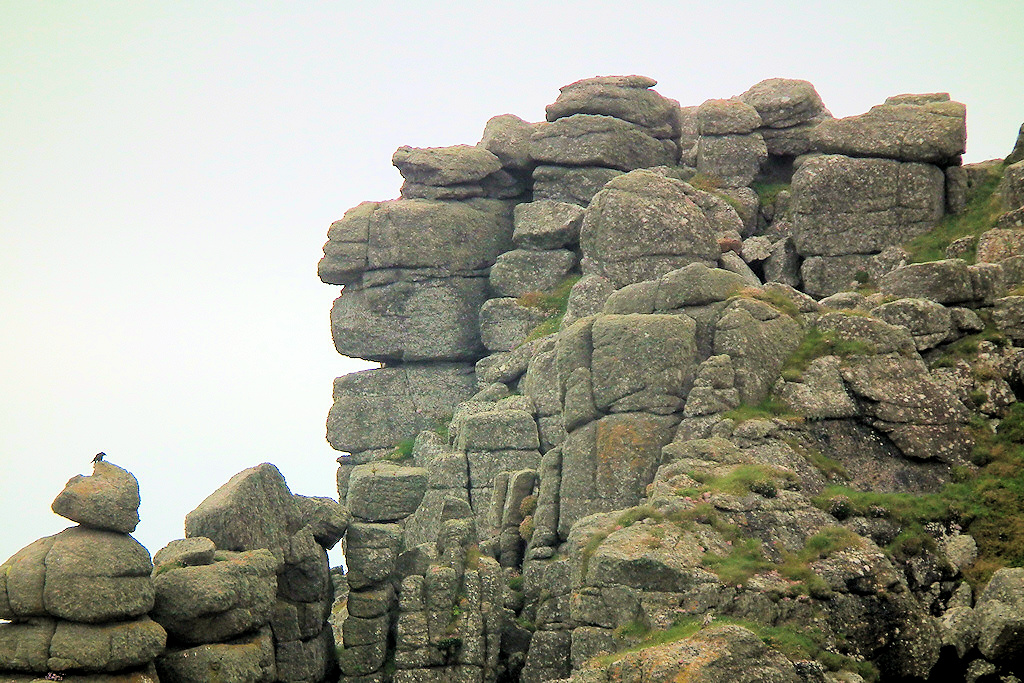
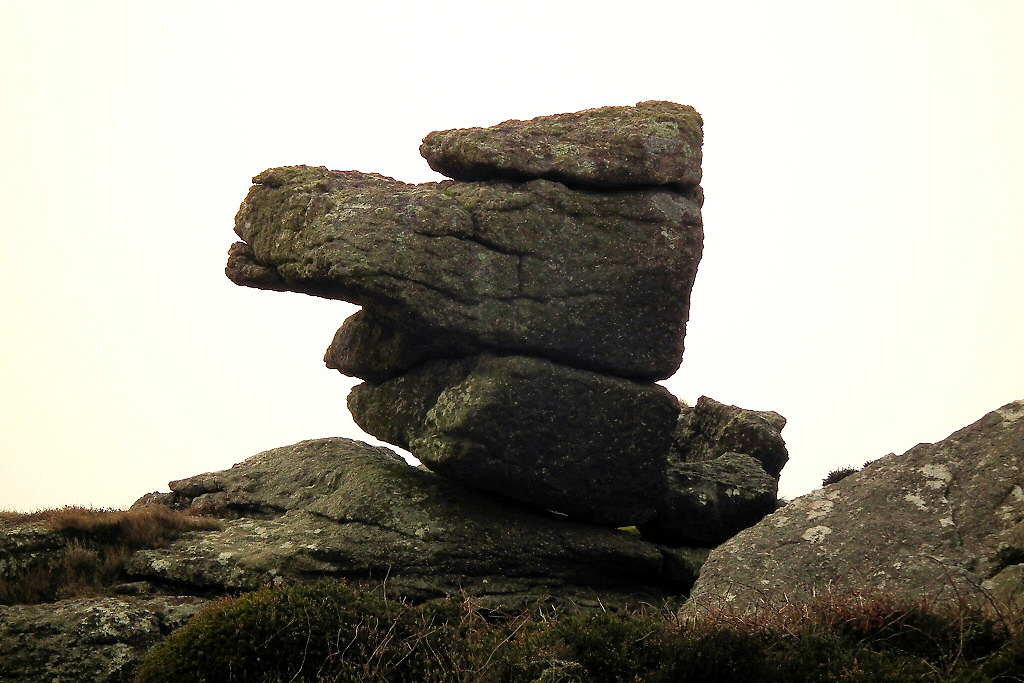
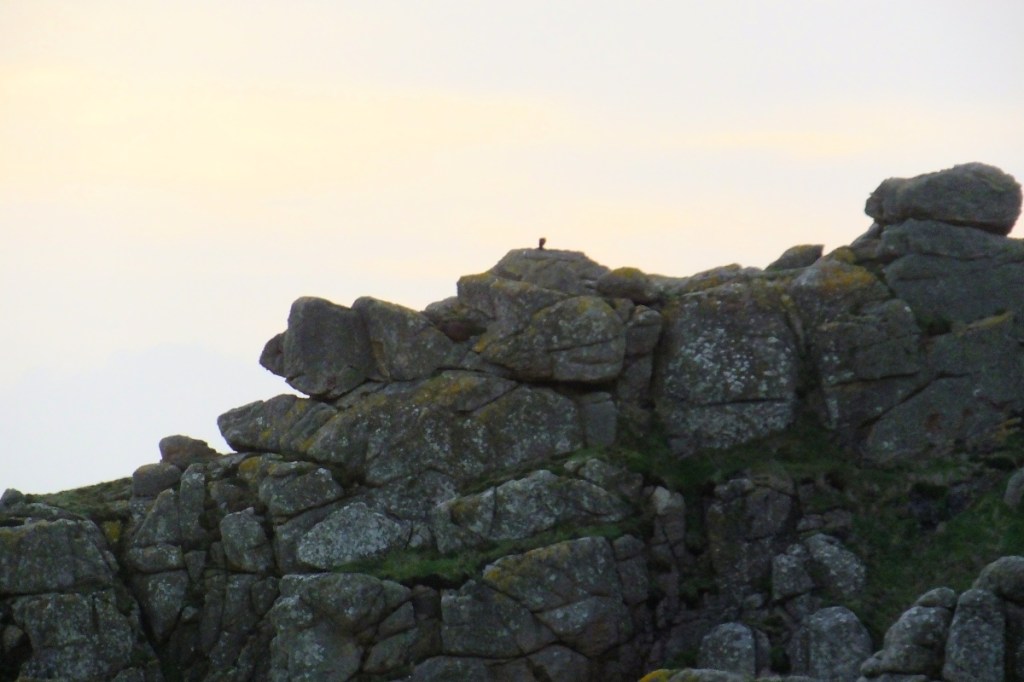
Granite, and the funny forms it takes
I’m not naively suggesting that everyone ought to just declare peace and go home – it just doesn’t work like that. Conflicts have their reasons, they can be complex, and both sides have a point. Conflicts end when both sides accept that there is no gain in carrying on. Half of all conflicts end simply because of weariness.
The main issue here is mindsets: are we against other people and their leaders, or are we all in the same boat? This same issue concerns the world’s ecological and climatic crisis. We won’t succeed with the 21st Century by continuing our ongoing war against nature, animals, enemies, competitors – and ourselves.
We’re stuck in a vortex of competitiveness, attack and defence. In our personal lives, the same mentality is cloaked in neatly ‘civilised’ ways like dressing up, pursuing careers, buying houses, insuring ourselves against risk or even, in my case, ‘fighting cancer’. It’s a mentality of us-against-the-world.
Yet it is destroying the world, making humanity even more unhappy and threatened. It’s a self-destructive momentum where, the rarer and more exhausted anything becomes, the higher its price and profitability – our economic system leads inexorably toward extinction. As natural environments are cleared and communities die off, young generations grow up without knowing they had even existed.
The emergent paradigm of the 21st Century is different. By necessity it’s one of cooperation, arising from the bottom-line observation that we are all in the same boat whether or not we like it, and we sink or swim together. This is a pragmatic, sensible, economic solution, no longer idealistic. This is being presented to us in the current drift of events. There is mighty resistance to this paradigm shift, taking the form of social and political polarisation, exceptionalism, populism and fear of being overcome by change.
In many countries we fear being flooded by migrants, whom we believe will change our societies and take away our privileges and comforts. Well, we did it to native Americans, Africans and Aboriginals, so, as Aussies would say, fair dinkum.
Such resistance can take softer forms in which we favour change as long as it doesn’t affect us. Or we make a big fuss over anything we might lose – the plenteous food and consumables, or the perceived right to assert our personal freedoms whatever the cost to others. We forget that only some of us have such privileges, while the rest pay the full price.
There’s more to this Aquarian question. It concerns social control and the capacity of masses of people to control ourselves. In the digital era new forms of social control have crept up on us while we have studiously avoided getting our heads round it.
The trouble here is that railing against people at the top is only half of the issue, and it’s rather an avoidance and escape. Collectively we permit them to do what they do by failing to stop it. The real issue here is social solidarity, vigilance and the behavioural changes we need to make if we really do believe in freedom and social-economic justice.
This issue arose in the Arab revolutions and in many uprisings since then. People come out onto the streets to protest over issues they face but, if or when the regime falls, people are often not organised to handle what follows. Or repression from above or intervention from outside squash, corrupt or divide the movement for change.
So this goes deep. Inevitably, the need for self-preservation can override the urge to sacrifice ourselves for the general good. Revolutionaries still need to pay their bills if they want a home or to support their family, unless they retreat to the jungle or escape the country, thereby marginalising themselves.
Portheras Cove
Meeting up with disillusioned young revolutionaries from Egypt and Syria twelve years ago, I found myself telling them my story. The uprising I was a part of, like theirs, didn’t succeed, and it led to a decade of pain and self-examination for its participants. Since then, to the extent I could, and with others, I’ve tried contributing toward a deeper, psycho-spiritual and behavioural change.
Standing on the top of a mountain at age 22, I made a commitment to give my life to helping the world tip into irreversible positive change. I had realised that a mass change of perception and consciousness is the key. Well, the world hasn’t tipped – yet. Now, near the end of my life, I’ve had to let go of that ‘in my lifetime’ bit, though I still believe we’ll get there. But I must still own up to a bottom-line truth: this is a belief, not a foregone conclusion, whatever I might hope for.
Yet in my life I’ve had multiple demonstrations that the new paradigm works – recently readers of this blog have shown that their remote healing efforts do indeed work. Or, larger-scale, I’ve been involved with circles of people where we have worked on a world issue, such as forest fires or the Bosnia war and, shortly afterwards, a fundamental change to such situations actually occurred. While we cannot definitely prove ‘we did that’, it nevertheless is the case that we did the consciousness work and the fires were doused and the war came to an end. Though it doesn’t happen every time.
It all boils down to a simple rule: together we stand and divided we fall. When people work together, acting with one mind, miracles can arise. A miracle is an event that no one thought possible until it happened. It’s one-mindedness that is crucial here.
Here’s the punchline. The pressure of crises, together with the Aquarian themes mentioned above, point to a likely existential crunchpoint, a time when our very existence on Earth comes into question – not just theoretically, but, like, now, this week. Even presidents and billionaires will share in such a fate. There is a possibility that such a sitation could catalyse a deep realisation, an emotionally-powered thought that, above all, and whatever it takes, we must survive and we must get through. Or we’ve all had it. Even if some people survive, it will not be a happy outcome for them.
That, ladies and gentlemen, represents a potential for a breakthrough and a miracle that no one thought possible: a global one-mindedness in which everyone everywhere – or at least, enough people – have one shared thought, and they think and feel it powerfully.
Which leads us to the bottom line. Whatever our disagreements, it is not a case of who is right and who is wrong, who will win and who will lose. For in the end we all lose. Or we all win. That’s the formula.
A little dog came to visit me.
In the last year I’ve had some crunches and battles in my own life – with cancer, with my ex-partner’s departure and with a few other issues, and in West Africa I’ve been caught between two parties battling each other and killing people in the process. A big lesson I’ve been re-learning is that true victory lies in everybody winning together. It’s a neat notion that’s not difficult to subscribe to, but carrying it out in real-life terms is another matter, and it’s taking all I’ve got to do that.
Because we do hang together, or we hang separately. That’s the way things are. So the battle for humanity’s minds and hearts goes really deep. It’s a button-presser, confronting all of us. It involves making friends with and profoundly understanding even the people that we don’t like or agree with. That’s how we’ll get through the 21st Century.
In my own life and in yours too, this is the issue. Events are shepherding us painfully in that direction. I can’t say I’ve succeeded with this in my own life but I still have thunder in my heart, running up that road, running up that hill. It’s quite a struggle, but then, that’s one reason we’re all here, isn’t it?
With love, Paldywan Kenobi.
If, like me, you have sufficient madness to be into astrology, try this chapter about the outer planets in history, from my 1987 book Living in Time. If you’re seriously mad, try my Historical Ephemeris, an astrological resource about the way planetary motions influence the tides of history.
Caught, bent over my work (photo by Penny Cornell)
A podcast about something that’s becoming increasingly necessary
Following on from my last blog, I did manage to get up on a windy solstice morning to record the Massed Corvid Choir of Grumbla, Cornwall, and their melodic chants top and tail this podcast.
Experiences of the last two years have drawn us surreptitiously toward new values, a rehumanising of society – and there’s more to go on this process. Here are some insights on conflict, migration and dehumanisation, with a little on the Holy Land. And peace and goodwill.
With explosions and atrocities going on, the environmental, social and cultural issues of our time will not be resolved. This needs to change, for very practical reasons. It involves every one of us looking at our own conflicts. Planetary healing.
If you were interested in the first podcast on Intelligence, you can find the second one there too. This time it’s about psychic-intuitive antenna-twitching.













 Notes from the Far Beyond
You must be logged in to post a comment.