These are kids at the Hope Flowers School in Bethlehem, West Bank, Palestine, and these pics were taken in the last few days.
They are orphans from Gaza, and refugee and special needs kids from the West Bank. Apart from giving a good education under difficult circumstances, the school gives kids the tools to process their anger, loss, fear and trauma, so that they grow up knowing there is another way. Another way from what has happened over the last hundred years in Palestine and Israel.
Note the performers. These look like visiting Europeans. They are independent humanitarians: they set about brightening up the lives of people in places like Palestine and they make a big difference. They often fund themselves to do so, and travel cheap and crash on sofas. Some are performers, some hairdressers, some are welders and some are law graduates, artists and retired professionals. Have you ever considered doing something like this?
Forget Trump and Natanyahu: this is the human frontline, where the real work of peacemaking happens. These children are, I hope, the generation who will see a big change across the Middle East. The times of war need to end now: we must do things another way. And these are the people who will do it. That is my prayer for them.
Here’s the translation of the text that came with the pics:
In an atmosphere filled with fun and positive energy, the professor of physical education, Mr. Mustafa, organized a special recreational day for the students of the school, in cooperation with the refugee center, where play, art, and laughter came together in an unforgettable day ✨
⭕ A variety of events between animated games that enhanced activity and interaction, face painting added colors of joy to the faces of children, alongside a theatrical circus that presented pleasant performances that brought joy to the hearts🎪😊
Our students also participated in playing with parschute and other group activities that contributed to promoting a spirit of cooperation, active discharge, and building self-confidence in a fun and safe way 🌟
⛔ This day was an open space for joy and expression, and an integrated recreational educational experience that emphasizes the importance of play in supporting our children’s physical and psychological development 💚
ـــــــــ🍂ــــــ We learn for human well-being ــــــ🍂ــــــــ
To make a donation to Hope Flowers, go to this page for links to Hope Flowers’ supporting organisations in different countries: https://hopeflowers.org/wp/support/
Here’s a readable story about the history and philosophy of the school. It’s from my book Pictures of Palestine, and it’s called ‘Korea meets Palestine’. (Korea and Palestine were both divided in the same year, 1948.) https://www.palden.co.uk/pop/korea-meets-palestine.html
Here’s a little astrology lesson, pertinent to what’s happening at present. Take a look at the chart here, for this morning, Thursday 7th August. Even non-astrologers will notice a pattern, a configuration, that is quite orderly and structured.
When this happens, the energy-fields of the planets of our solar system start syncing with each other and creating a mega-twang, a super-thrum, a chord, and in these energy-circumstances things start happening. They start shaking up and rattling loose.
What’s interesting here is that, astrologically, this is not exactly a crisis situation. This configuration is dominated by sextiles (30 degrees) and trines (120 degs), which are aspects (angles) of flow, movement, progression, slip-sliding, letting go and accelerating evolution. It’s not exactly about crunches, shocks, crises and disasters.
It’s about things simply progressing fast. It’s an avalanche of events that push things forward – with an element of overload that itself forces issues out, up and forward. There’s an element of inevitability to it too – that is, things happening now relate to things that happened or failed to happen before, and also (get this) things that are yet to become visible and come into being. This is a case of the future having a formative influence on the present.
If you look at the green lines in the chart, the core issue here is a triangle that is being formed by the slow-moving outer planets, Uranus (in Gemini), Neptune (in Aries) and Pluto (in Aquarius). This is rare, slow, and happening now and over the next few years. It has been building up since Covid-time and it is historic in effect.
A lot is going to change during the late 2020s, and the key issue here is overload. An overload that makes everyone think differently, choose their priorities, urgently seek fundamental solutions and juggle hard to keep everything going.
There’s a useful analogy in geology. The erosive power of a river increases as the square of its volume. In other words, if the volume of flow increases three times, the erosive power increases nine times. We’ve seen this in recent floods worldwide, though a flood is simply a dramatic increase of flow, a releasing of energy. Yes, it destroys a lot and is difficult or deadly for the poor people at the receiving end of it, but the river is constructing a new path by which things can flow better. It is preparing the future.
These three planets will shimmy in and out of exact aspect over the next few years, and they ard pretty exact right now. Since they move slowly, they influence slow-moving, historic processes and mega-trends. Often we don’t notice these except at critical junctures.
An example is Gaza: this is a longstanding issue spanning many decades, even centuries, but the recent famine and starvation event and the war before it made it into a global issue in the forefront of the world agenda. And it concerns bigger and wider global-scale issues than Gaza itself.
When faster-moving planets move into configuration with these three, we start getting a mega-twang. In this chart, Saturn, Mars and Mercury are involved. A day later (8th Aug), the Moon will swing into it too, just for half a day, cranking it up even more. In other words, events happen that precipitate the bigger issues that lie underneath.
This concerns not just world events, ‘out there’, but individuals too – depending on how your own astrological chart works. If you have planets in the first degrees of certain signs, then you might have quite a few planets aspecting one or more planets in your chart. Stuff happening. Make the best of it – seize the time.
How much this is a crisis depends a lot on you. Yes, it’s difficult when stuff is rattling and banging and it’s all too much, but this is also a mechanism by which things change, and you can make that change easier or more difficult.
And here’s something: the advantage of a crisis is that a lot of issues can get resolved at once, and pragmatically in response to real-life circumstances – instead of dragging out over a long period of time, or being avoided or sidelined. We are being given a future instead of simply trudging along through life living with the effects of the past.
This is a time of accelerating solutions hiding behind apparent problems. It depends how we see things, and how much we are willing to let go of old ways of seeing things. This is about the future, not the past.
There will be more of these configurations in the coming few years and it’s worth keeping an eye out for them. This isn’t the end of the world, or the beginning of the new age, but it is definitely a time of white-water canoeing through a fast and rough stretch on the river of life and of history. By 2030 more will have happened and progressed than we thought possible.
I’m not sure how many people join the Sunday meditations. In a way it doesn’t matter. I know and feel some people are there and joining in, including people doing it because of their own relationship with the same spiritual source as mine, the Nine.
Eitherwhichway, I’m always there, every single Sunday, whether or not I say so. Those of you who like to join in, whether often or occasionally, are welcome to continue. If you have no idea what I’m talking about, it’s all explained here:
and the meditation times for different countries are below.
As a cancer patient with my ups and downs, there are times when I cannot do my customary pep talk. However, even if I’m really unwell, I’ll still be there at the meditation. Even when I kick off my earthly clogs, you might even sense me there on the other side. It’s an inner commitment I made to the Council of Nine thirty years ago, and I just keep beavering away at it.
Whatever path you follow, it makes a difference if you stick with it for a long time, since nowadays there’s a spiritual commitment problem that itself is rather problematic for world transformation. We all need to step up, each in our own way, to contribute proactively to something much larger than ourselves – personal growth and fulfilment is only the start of the great pathless path through the gateless gate.
An ancient pathway on our farm, here in Cornwall
But that’s not what I wanted to write about. I want to give an astrologer’s insight. It’s all about Neptune in Aries, which started at the beginning of April 2025. It has been in Pisces since 2011 – a time of reality-slippage, geopolitical confusion, underlying transition, flailing beliefs, mental ill-health, tech dreams and military and climatic nightmares.
We have Neptune in Aries for 14-15 years until 2039. So this is a chapter, a phase, in which the world lives out Aries-type experiences, hopefully to progress them forward. On a 165 year cycle, Neptune last did this between 1861 and 1874 – the time of Abraham Lincoln, Gladstone and Disraeli, Bismarck, Queen Victoria, Karl Marx, and of roaring, steam-powered industrialisation, warfare, power battles, nationalism, early popular movements and Euro-American colonial expansion.
As Neptune trawls its way round the zodiac, chapter by chapter, it pushes us through periods of preoccupation with certain themes – the rise and fall of beliefs and perspectives which themselves influence the way the world sees things, acting out its anticipations, beliefs, fears and its light and its darkness. There’s a visionary side, a place where dreams and big ideas are born, of revelatory situations and realisations, and there’s an illusory and delusory side, mingled with fantasy, fakeness, projection, hypocrisy, glamour and horror. It’s all dreamstuff, yet it percolates into our reality, both helping and harming us and the wider world.
When Neptune is in Aries restlessness, impatience and frustration come up. Though there’s a lot of noise about freedom and identity, there’s a seeking for social-political-cultural examples to follow, align and identify with – it becomes a parade of leaders, public figures, accidental heroes/heroines (Florence Nightingale was one, last time round), who manifest the best and the worst of human possibility.
Some prominent people represent what is hoped for and dreamt of, or perhaps they represent integrity, genius or a human touch, with their finger on the pulse. Some represent what we most fear and dread, or they capture the hearts and minds of followers to promote or impose their own agenda. Either way, they have a lot of push, even of force – or also they reveal or portray themselves and their flock as victims, as the weak. This often gives rise to strong resistance and counter-measures – last time we had the rise of socialism and workers’ movements. It’s then a matter of how intelligent the wider public is in choosing what ideas and initiatives to subscribe to, and how clear their sight is to exert an influence on the strong.
I think you’ll be gtting the gist of this by now, and seeing how this is playing out round the world today. We’re seeing reformed terrorists gaining power as reformers, Popes calling out the status quo, dictators and billionaires acting out their fantasies, a massive generational change and an ongoing movie in which the best and the worst of human power-plays and moral choices process before us. This action-packed movie demands that we get off the fence to exert a moderating influence on those who lead the public discourse or precipitate evolving facts, whether helpful or harmful.
We’re getting an array of leaders and prominent figures who variously represent different aspects of these issues – and different people will see different facets of them, judging them differently. We’re getting a diversity of realities and viewpoints that partially clarifies things and partially adds confusion. It’s all a matter of perceptions and viewpoints, inspired sometimes with vision and purpose and sometimes with false hope or coloured by predisposition or prejudice. It’s a question of whether big ideas and beliefs attempt to override reality or whether reality clips them back to workable proportions.
There’s a conquering undertone to this – ranging from taking territory or power to overcoming obstacles and pioneering new possibilities. The bottom line is that, in the final analysis, there are no winners, and the idea of winning is inherently flawed. Victory is transitory, and everything turns to its opposite in the fullness of time.
Aries is ruled by Mars which, customarily seen as the God of War, in our time is showing itself also to be a God of Peace – a peace arising from stalemate and from the calculus that further conflict means that even the winner becomes a loser. There are limits to the extent to which the strong can push their agenda.
Each sign unconsciously faces its opposite – in this case, Libra, the sign of agreement-disagreement, values, fair-dinkum and relationship. Neptune was last in Libra in 1942-1956, leading to the formation of the United Nations and the ‘rules based’ order that is now disintegrating as the Global North loses its primacy and the Majority World accrues its true power in world affairs.
This has best been symbolised in Gaza, which in the end is a war between the People and the Megamachine, acting as a tipping point where the power of the Global North betrays itself and the Global South is challenged to find a unified position and agenda of its own, sufficient to replace the old order.
Thus spake Zarathrustra, looking over St Just toward Scilly
Underneath this lies a necessary historic tilting of all and everything, a slow and fundamental shifting from a competitive to a cooperative model in the very nature of society and civilisation. Multiplex issues are bound up with this, and we’re sliding into an avalanche of events that push those issues forward. This multiplicity of issues is pushing us out of our habits, avoidances and complacencies, demanding attention, backed up by the threat of unwanted consequences that will surely arise from inaction.
Historically, we’re surreptitiously entering a new chapter. Last year Pluto shifted into Aquarius and next year Uranus shifts into Gemini. Such shifts or ingresses create a change of themes, realities and atmospheres, which themselves indirectly prompt and colour events and developments. History moves slowly most of the time, though sometimes it moves really fast, and we’re entering such a period.
But it’s all in the way we see things and do things. We can make it easier or more difficult. Our problem is that we have a habit of entering the future facing backwards, of obeying fear, thereby complicating, undermining or blocking the very developments we deeply seek. Our own freedoms, benefits and rights can no longer impose themselves on the freedoms, benefits and rights of others or of nature, reality and the collective good. Change does not have to be as difficult as many people visualise. Its reward is eventual relief from the oppressions we already carry on our shoulders.
With love, Palden
PS. Here’s an example of a new leader who is taking on a big agenda and putting himself on the line. This man, part of the Megamachine and Old Order, is seriously acknowledging the agenda of a younger-generation military dictator who is playing a strong hand of cards. We’ll see more of these agenda-changers in coming years. https://www.youtube.com/watch?v=navBX2A37ls
———————
Current meditation times, on Sundays: UK, Ireland & Portugal 8-8.30pm GMT W Europe 9-9.30pm E Europe, Turkiye and the Levant 10-10.30pm Brazil-Argentina 4-4.30pm CST, Mexico, Jamaica, Colombia 2-2.30pm EST, Cuba 3-3.30pm PST North America 12-12.30am
It’s amazing to be part of a revolution – even if it’s temporary. The relief of getting rid of an oppressive regime creates an expanded nowness, a special moment of intensified significance, before the serious stuff that follows inevitably sets in. There’s a shedding of a deep sense of social burden and self-suppression, of unwilling, shoulder-shrugging complicity with something that few were happy with. In Syria, those who took the regime’s side did so because they saw it as the lesser of two evils, or they made a living or gained advantage through it.
But when the cork pops, a deep collective-emotional eruption bursts out, spreading like wildfire around the country, even spreading around the world. It reminds people everywhere, on a deep, hardly-conscious level, that it is possible to change things from the bottom up, that society has power.
It’s also emotionally tragic to be part of a failed revolution – a dashing of hope and faith, a reimposition of fear and oppression, a paroxysm of despair. It can crush spirits. It nearly did so with me – I was part of flower power and a student uprising at the LSE in London – but after a lot of pain and process the experience ended up making me more resilient.
Forty years later in 2011 in Amman, Jordan, I met some Egyptians and Syrians, fresh from their uprisings, proud and uplifted to have been part of them, yet fearful. They were in Amman because they had been chased out of their own countries, regarded as dangerous. The repression of both uprisings had polluted the joy and impetus of revolution, and these guys were vexed about what to do.
I told them that, in the case of the uprising I had been a part of, though we were beaten and broken, the flowering of issues and dynamics that emerged during that short yet long time had withered but not died. It re-emerged slowly over the years, filtering in through society’s back door. Those of us committed to change had continued quietly, developing our green ideas, healing methods, lifestyle changes, music, feminism, back-to-nature instincts and our psycho-spiritual transformations, and it was a all matter of time before these infiltrated wider society – and it still is. Here I was, four decades later, still here, still working for the change I believed in.
I reminded them that change is deep and it is not truly fulfilled by a revolution, which merely clears the way for whatever happens next. It would take time and it would be difficult, but the lava-streams of change would work under the surface, seeping out or erupting over time and over the generations. What makes the spirit of revolution survive, like a dormant seed buried in the soil? Well, whatever its faults, it was essentially right, and it constituted the direction that humanity needs to follow. History takes time to unfold, but time is on the side of change. The issues that bubble up in such change-moments are bigger and more historically-transformative than we often see at the time, and this process takes time. For me, in late life I’ve come to accept that it can take longer than a lifetime.
Now, in Syria, here we have it – the consequences of 2011. The Syrians of the Arab Spring are 12 years older and a new generation has grown into adulthood. Media outlets round the world are wrong to harp on about terrorism and Al Qaeda – they don’t see where the true roots of this lie. They suspect Islamism of malign, threatening things, when Islamism itself is simply a philosophy and social reform movement, the behaviour of which depends very much on the people doing it.
The Taliban in Afghanistan, while dominated by old Muhajedin fighters from former decades, is also stocked with thoughtful, pragmatic, younger and more travelled people who will inherit the reins. Hamas in Gaza was far more (as it goes) progressive, liberal and socially competent than outside commentators and their paymasters wish to see, and the Israeli killing of Ishmael Haniyeh a few months ago, Hamas’ leader, meant the loss of one of the world’s better political leaders. In my humble opinion.
When so-called terrorists have a constituency of local support, and when they are fighting on their own turf for the liberation of their land and people, they are freedom fighters. Terrorists lack empathy, caring little for the people they live amongst, their agenda is geopolitical and ideological and their method is to use violently dramatic actions to create fear and terror, to scoop up media attention. One well-executed bombing can set the world on edge.
HTS is not a terrorist organisation and neither are most of the other militias in Syria (though one or two might be). Other countries would be wise not to oppose or obstruct the new regime – though perhaps it will need moderating with sweeteners. The uprising in Syria is locally-driven, in distinction to the ongoing conflict in Syria since 2011, which has been a viper’s nest of external intervening powers, influencers and financiers. Now their influence is weakened, withdrawn or undermined.
When I went there in 2014 there were about seven sides to the conflict and it was terribly confusing. I went briefly to Deraa and Yarmouk Palestinian refugee camp outside Damascus. Since it was likely that I’d be thrown out of Palestine by the Israelis, under suspicion, and banned for at least ten years, I felt a need to do something else. When asked to visit Yarmouk by a Palestinian tribe with refugee relatives in Syria, I decided to help them, as a kind of courier and emissary.
But it finished me off. Things happened that deeply affected me. Perhaps also I was in denial,lready feeling burned out, with elements of PTSD accumulated over previous years. But this finished me off. I lost my hope and patience in Syria, afterward feeling lost in a smothering cloud of dismay and disappointment. It was the last humanitarian mission I did. I wasn’t happy about that. But life had other designs.
I spent the following years on a self-healing path in Cornwall, doing remote humanitarian work (such as with the Tuareg in Mali), prehistoric research and walking the cliffs and moors. A loving relationship from 2016 to 2022 brought me back to life. Only when I went down with cancer in 2019 was I healed of the clamping shadows I had been struggling with – they were subsumed by the prospect of death, which prompted an enormous inner let-go of all and everything, bringing something of a spiritual breakthrough and a rapid process of forgiveness of myself, others and life.[1]
This is deep stuff. When, as an individual, you ‘lose your fear’ and come out into the streets in an uprising, you align with a collective tidal surge of vision, emotion, ideas and spirit that feels truly like a springtime, a release. All sorts of amazing things happen. People come alive, emerging out of the woodwork, progressing a long way and finding a new mission in life. People’s lives change in bulk, and a rising tide of hope lifts up even those people who normally are sunk in a life of drudge, stuck in a state of reluctant complicity. The splintered social dissonance that allows oppressive regimes to gain and hold power melts away, and there’s an eruption of resonance, mass concurrence and shared wishes. This resonance-field fizzes and sparkles, motivating people to do quite remarkable things.
But it all depends on what happens next. It depends on the new leaderships that take power and, even more, on the wisdom, patience and fortitude of crowds. Once the change happens, eveyone wants normality to be restored – the economy, public services, reconstruction, and freedom from excessive and unnecessary obstructions in daily life – though this is not simple and fast. After the joy of change, there’s a lot of hard work to be done.
The wisdom of crowds… this is a delicate matter. After regime change in Sudan, the democratic movement did quite well for a time. There was a maturity to the way that people dealt with their tender democratising situation after a long period of dictatorship. But it was delicate, involving a lot of mutual trust, and there are people who manipulate unstable, transitional situations to their own advantage – they can act quicker and more decisively than collectivities of people. They have a contrarian need to break the magic ring of mutualised social power, aiming to restore public dissonance at any cost. In Sudan, it became a slugging match between two oligrchies, each headed by generals, each supported by different outside powers and financing. The democratic movement was killed off, tragedy ensued, and it continues today. Most of the world isn’t interested. Hope is not currently available in Sudan.
Ten years ago I was involved with a small group called the Flying Squad.[2] We did geopolitical healing work and, by 2014, the group had been working together for sixteen years – so we had some experience. It involved a weekly group meditation, wherever we were, and three or four weekend meetings each year – and membership involved committing to 100% presence and involvement in all meditations and meetings, to take group synergy to a higher level.
We did a lot of work with Syria and its uprising and civil war, even travelling to Greece to get closer. There were times when we felt we were getting somewhere in our efforts, but each time a new set of events would re-ignite the situation and make things worse – often prompted by outside intervention by state and non-state actors. Were we getting things wrong? Or was this simply an intractable situation?
This was a big learning. As a planetary healer, you have to learn and accept that sometimes it doesn’t work. There was a point where, in our inner investigations, we discovered an enormous ancient telluric ‘worm’ or dragon in the Euphrates valley in Syria and Iraq, and it was deeply upset. We tried to ease its concerns and help it clarify its aims – it was deeply unhappy about the fighting, oppression and oil extraction in its patch. After we did this work there was indeed a brief pause in events, providing a glimmer of hope, but it soon was dashed by new developments.
We had to learn that there are some things you cannot help. The reasons often emerge later, even years later. Sometimes we can be too restless, short-termist and attached to immediate outcomes. It’s unwise and even egocentric to expect results, just because you feel you’ve put your heart and soul into it and, by rights, it should work. But there can be reasons why it doesn’t work. The idea of creating a ceasefire in Gaza, for example, while desirable, doesn’t actually resolve the problem and its causes, and it might not bring a fundamental healing of a bad situation.
Deep down, countries like Syria and its neighbours are developing a social immunity to conflict and oppression. This is at street-and-village level, and it’s a semi-conscious thing fermenting underneath. The key mechanism is that a society must reach a level of exhaustion with war and oppression, to the extent that it firmly and behaviourally no longer permits it. Society stops responding to the methods that oppressors and warring factions use to divide people and set them in fear. This is pretty much the case in Lebanon nowadays – they’ve had enough of strife, havig been through many decades of it.
The seat of such social power rests a lot with women: if women collectively no longer accept a bad situation and are tired of going along with what men are doing, the violence ends, sooner or later. It’s a buildup of firm and settled emotional consensus. This was one of the key dynamics of the peace that came to Northern Ireland in the 1990s – women put pressure on men to make a change. They just stopped making sandwiches for them and washing their underpants.
There’s another force at work that generates this immunity. After a while, everyone just wants to go home, sleep in their own bed, be with their family and feel safe. This is another rather feminine feeling. When fighters get tired, conflict ends, somehow. It’s a deep tiredness with the privations and dangers of war and oppression. It’s what made the Syrian soldiers recently melt away as the militias advanced – they were fed up. They’d lost the sense of purpose that soldiers need to have if they are to put themselves in the way of danger.
So we now have a full-on situation in Syria. A lot hangs around the international community and the way it responds. A lot hangs on leaderships and their behaviour. A lot hangs on social solidarity, forgiveness of the past, de-corruption and a buildup of trust and integrity in society.
We’ve had a lot of failed uprisings in recent times – in Myanmar, Belarus, Hong Kong, Iran, Venezuela and Sudan – but something has recently changed. Astrologically, Pluto has moved from spending 16 years in Capricorn – a sign that generally hangs on to stability and convention and doesn’t like change – to spending 20 years in Aquarius. The emphasis has shifted from the prevalence of governments and institutions to the prevalence of crowds and public attitudes.
There is a possibility here of a real turning of the page. Not just the replacement of a Captagon-driven, oppressive narco-regime with an Islamist one, but also a change in Islamism itself, and a change in the behaviour of the public. All over the world, the style of governance of countries has come into focus – both democratic systems and authoritarian regimes are in trouble, and people at the top no longer sit securely in their seats. We shall see.
I’m wondering how the Palestinians in Syria (around 450,000 of them) feel about all this. Assad had treated them well, in comparison to many other countries, so they were grateful for that, but the Palestinians could not accept his violent response to the 2011 uprising, and this put them in a difficult situation. Palestinians do not like Muslim extremists either – Al Qaeda or the Islamic State – and in the last twelve years of instability they have come under attack from various directions. I hope they’re feeling some relief today.
This has stirred me quite deeply and personally – helped by the winds and storms raging here in Cornwall in the last two days. It’s a glimmer of hope. It reminds me of the Iranian Revolution of 1979. At that time I was contemplating suicide – the only time I’ve ever felt that feeling. I felt blocked by life from every direction. Everything seemed to be going wrong. But, on the weekend when I might have done it, the Iranian Revolution happened, and this suddenly gave me a spark of hope. It went bad soon after, but on that weekend it looked as if something quite big was changing. I forgot suicide. For me, amidst a dark night of the soul, it was a turning-point: my soul was asking me to make a big and deep commitment to my life’s work. It involved the end of a marriage, the loss of my children and a return to Britain after a time of exile in Sweden.
It was the beginning of a new path in life that brought me to where I am now, affecting thousands of people along the way. For better or worse, that is, since there are times when I’ve screwed up too. However, the posterity-perspective of late life seems to be telling me that it was, on balance, positive. Just above my desk is a Healing Buddha with a little sign at its feet which says ‘Time is a Healer’. Well, yes, though it’s also a decider, an accounting, a process of judgement by posterity. We ourselves can only make an accounting, but time, the wider world and other people judge the balance of benefit our lives have brought.
The same goes for revolutions and regime changes. The Assad and Makhlouf families and the deposed Syrian oligarchy have a lot of accounting to do, and history is unlikely to be sympathetic – as with Saddam Hussein, Ghaddafi and possibly, in future, Netanyahu. Together with many others, too many to name. But, in our own smaller lives, we face an accounting too since many of us are guilty of a shared crime that also needs to end: to quote 18th Century philosopher Edmund Burke, ‘For the triumph of evil it is necessary only that good people do nothing‘. That is a crime we all variously have a stake in.
However, here’s something. We need to be careful about the way we label some people as goodguys and others as badguys. We get dictators because we didn’t stop them coming. So, instead of focusing all the blame on them – or all the Trumps and Al Fayyads of the world – we ned to remember to look at our own part in the equation. As old Jesus once said: ‘Let the one who is without guilt cast the first stone‘.
The building of social capital and the amassing of power to the people involves a lot of deep forgiveness.
Here’s the audio recording of my recent Aha Class in Penzance, about participating in changing the world. It’s my thoughts on the realities of being a ‘world server’, about rattling the bars of our cages and contributing to furthering what we believe to be right.
It’s in two 50 minute parts, with some (I hope) interesting anecdotes thrown in, about the dilemmas, tests, magic moments and benefits we can encounter along the way.
Free to listen and download – no strings. You’ll find it here:
It’s funny how, even though I, with a small group of people, started the Oak Dragon family back in 1986-7, I find it really moving now, approaching forty years later and in my current rather decrepit state, to be part of this family.
It had started with the Glastonbury Camps that friends and I ran between 1984 and 1986, which were the prototype for the then-new camps model, which was to launch itself more properly in 1987, the year of the Harmonic Convergence, as the Oak Dragon Camps (Ddraig Dderw in Welsh).
I’d started Glastonbury Camps quite spontaneously, and many Glastafarians joined in, but by 1986 the whole team was burning out – the camps had been so momentous, moving and transformative that they couldn’t continue as they were. Some of the team came to me saying ‘We can’t continue – we have lives to live‘ and this was true. This was the Thatcher period in Britain, when there were pressures to be economically viable and to get organised. Charitable, good-hearted voluntarism was seen to be a mug’s game and there was ‘no such thing as society’ – thus spake Margaret, the handbagging thunderbolt witch.
Did someone take the kettle away?
So, wondering what to do next, I went to my hideaway of the time in Snowdonia, North Wales, to contemplate things and pray for an answer. One wet day I went up alone into the mountains, stripped naked and prayed from the bottom of my soul for an answer. Was it all over? Or was there a next step to make? I stood there, sopping wet and shivering by a rushing mountain stream, with the rain washing my tears down. I waited. And it came.
“Oak Dragon“. That’s what came up. Oak Dragon what? Oak Dragon Camps… Within a long-seeming hour I had it, a complete vision. I went back down to dry out by the fire, digest all this and write down the details that had erupted. Thus began the Oak Dragon, with our first season of seven camps in 1987. It was somehow wanted and needed. The very first camp was a Beltane Camp in West Penwith, Cornwall. Ironically, it was just one mile from where I now live, and hosted by the same farmer landlord that I have now – and he and I didn’t twig that until a few months after I’d moved onto the farm in 2012! Well, magic happens. Out of these early camps many other camps organisations started, some of which are dead and gone and some of which are nowadays quite big, taking different formats and serving different interest-groups.
I left Oak Dragon around 1990, myself rather burned out, returning to camps only in 1993 and 1999. I was getting on with other things (such as writing the book The Only Planet of Choice and starting the Hundredth Monkey Project). The Oak Dragon carried on, going through its highs and lows and a deeper bonding and group identity-forming process. A family is something that is bonded on a deeper level than an ordinary group or community of interest – it’s something you don’t leave.
Rite of Passage – emergence after a long night
Three years ago they invited me back. I’ve attended camps as a grateful recipient, not as an organiser. It’s great leaving all that to others and leaving the plans and decisions to their wisdom! But there’s something new about the camps that wasn’t present in the 1980s: there’s a core to this family of people that knows how to do it and what needs to be done, and it doesn’t need an organisational team as before. Not only this, but the younger ones are taking it on, giving it new life and pushing it forward – and the oldies are not foot-dragging either because this is regeneration.
At the camp we (mainly the women) did an overnight a Rite of Passage for two sixteen-year old women who had been formerly toddlers and children in earlier camps. These are people who will take things on into future times, as the Millennials grow older. The women took them through initiations and teachings in the evening, the two slept out alone in a neighbouring field, and they were welcomed back as women next day – dressed replendently in red and blessed by the whole family, young and old. Would that more youngsters could have such initiatory treatment.
Rite of Passage – welcoming
A camp isn’t just a camp – it’s a process and a journey. Short-term guests are allowed in on the first weekend and then the gates close. We are off-planet, out in space, switched off for the following six days, building the patterns for another world and being a family in its own space. You join the family by coming to a camp, and you may return whenever you wish. One couple, former regulars, hadn’t been to camp for eight years, and it was like coming home for them.
There was a forging workshop and a wood-bodging workshop throughout the camp, and other things too – workshops, ceremonies, group processes and campfire circles – evolved over the years and forming the particular character of the Oak Dragon. There’s no entertainment except what we create – even so, the cabaret at the end, put together by participants, is spontaneously comical.
Something really interesting happened. As the camp progressed, we were oblivious to what was going on around us in Britain – riots, dismay and dissension. I wrote the following observations to the Dragons after the camp…
I remember saying to a couple of people early on in the camp how harmonious and calm the camp was – and when would the trouble start? Often there’s something big that comes up – weather, a group issue, one or a few people going into a big process… but this camp just glided through, and we even had good weather in the take-down day!
I said to someone how the camp had started with the Sun in Leo and the Moon in Aries (both fire signs, not easygoing), and a few other potentially wobbly issues were hovering around (such as the buildup of a Mars-Jupiter conjunction in Gemini – good for arguments and polarisation). So I was half-expecting something erupting. Yet it didn’t hit us – in terms of friction, disruption or mega-wobbles.
Meanwhile, the rest of the country was catching fire. At the camp, I had no idea such a thing could be happening, and no one else seemed to either, to my knowledge.
There’s something interesting about this. Ages ago I picked up an interesting observation from somewhere. Speaking in terms of personal growth, it said that first you get problems to face within yourself. Then, when you’ve progressed with that you manifest people around you presenting problems for you to work through and resolve. Then, when you’ve harmonised your relationships to some degree, you manifest issues in the wider world (society, the environment, the state of the world).
Thought
I found myself wondering whether this is a commentary on Oak Dragon, as a beingness, a family and stream of consciousness in its own right, with a reality-bubble of its own that has some continuity and character to it. The growth levels at the camp were, in my observation, pretty good, and we weren’t particularly in denial about or blocking off the darker ways of the world around us.
Yet our nation had caught fire, while we seemed to be a pool of relative calm – and quite oblivious to what was happening around us. We had few quakey internal rumblings, few problems with the surrounding world, yet we manifested trouble around us in the wider world – and we were distinctly not part of it.
It says something about creating our reality. Also about reality-bubbles that all of us live in – we humans live on one planet yet in very different worlds. When those worlds fail to interact healthily, there’s trouble.
I also wondered whether, unwittingly, we were balancing out the collective psyche of Britain and the British. We were probably not the only ones who were unconsciously or semi-consciously doing this. Anger, oppo and polarisation were happening on the streets of the ‘United’ Kingdom while also calm, creative and harmonious realities were being experienced in the Oak Dragon world, on the same islands, at the same time. Perhaps the island reality-bubble of Britain as a whole fixed things so that such a balancing could occur.
Perhaps the collective psyche of the Brits was fixing a few things.
Mapping out the future
I was digging around in some old writings about the camps and found this description from thirty years ago. It described of one of the magical initiations we’ve done at Oak Dragon:
In 1994, at the Myth and Magic Camp, we planned a magical heist for the climax day of the camp. The idea was that the nine teachers at the camp would dress up and station themselves at different points along a pathway through a limestone gorge some miles away, presenting to unsuspecting campers on a magic journey a series of choices and situations representing stages along the spiritual path.
Luckily, we worked out a ‘plan B’, in case of inclement weather. Inclement weather indeed came, so we staged it at the camp site. Each teacher occupied a geodesic dome, dressed up. Campers were released in ones and twos at five-minute intervals, to follow a trail from dome to dome, meeting an archetypal encounter at each stage.
So there I was, acting as the last stage in the line. By the time they reached me, people had already met a fairy, a sky-god, a druid, a goddess, an oracle or two, and I was a wizard – Merlin to some, a Mongolian or a space-being to others. I was dressed in my Hungarian pointed hat and Chinese dragon robes, meditatively transmogrified into an archetype-rich, altered state of being.
On announcing themselves at the door and being invited in, they encountered me in my arcane state, addressing them. I said: ‘The road is long, and you have already travelled far. The journey through your many lives has seemed like an infinity. There have been many turns of the way, and there are many more turns yet to come. I am going to ask you a question, and the question is this: when you have completed your life, you are preparing to pass on and you are looking back over your life at all you have seen and all you have done, what is it that you most would like to have done before your days are over?‘. For youngsters, I asked them what they would like to do when they were adults.
In flight and going places
The pauses were sometimes long. One boy wanted to be a sky-diver, and another a good father. A girl wished to be a famous film-star and another wished to plant lots of trees. One grown-up wanted to resolve things with his father, and another wished to travel the world. Some wished to prove that they could truly be a good person, and others sought peace of mind. Another wished for a child.
They then, to their surprise, received a florid and fullsome blessing through me, giving them full permission to entertain and achieve their wish. ‘And when you are there and you have attained what you seek, just remember that you asked for it. And you received.‘ Already bowled over by their previous encounters, this one finished them off!
This kind of special fairytale occasion, a journey into dreamtime, changes the patterning of people’s lives. Even if, back in Manchester, Massachusetts or Milton Keynes, they bury the occasion in busy amnesia, the experience stays there, lodged beneficently in deeper consciousness, acting as a seed of future growth and awakening. It makes a difference. It doesn’t go away.
Nowadays we are rarely genuinely blessed or initiated into new realities. We often make do with the lives we get. We struggle on without encouragement, seeking to rise to our true greatness. Through experiences such as these people are deeply healed of woe, fear and self-limitation. And a splendid time is had by all – kids and adults, women and men, under the sun and moon, watched by trees.
Lord and Lady of the Dance, having a go, hehe.
I’m so happy to have been part of all this. I’m so grateful to return to Oak Dragon in the closing chapter of my life.
Whether physically I have what it takes to do another camp next year, I really do not know – it was hard on my bony body this year, though the spiritual compensations lifted me up. At the back end of life a growing number of ‘last occasions’ comes your way and there’s something poignant and beautiful about that – including the more sad and regretful last occasions. But it comes to the best of us, sooner or later.
And that, my good friends, is life. And we shall see. Life also gets compressed into an evolving nowness in the closing chapter, and everything becomes contingent on all sorts of other things – such as dropping off your perch. With a smile. Or living to see another day – sometimes with a pleasant sense of surprise.
PS: on Facebook, instead of sending a friend request, please ‘follow’ me. I’m at my friends maximum, needing to reserve the rest for people I know or am likely to meet, or unless you write to me to introduce yourself, or you live locally to me. Thanks.
I’m re-working a 2003 book, Healing the Hurts of Nations, as a short, thinking-points archive version, and here’s a chapter about the historic growth of globalisation.
————————–
In the Sahara with the Bedouin
Our time is the first in which it has been possible to take a literally universal view of human history, because this is the first time in which the whole human race around the globe has come within sight of coalescing into a single society. In the past, a number of empires, and a smaller number of missionary religions, have aimed at universality. None of them, so far, has ever attained to universality in the literal sense. – Arnold Toynbee, historian, 1967.
Healing the Hurts of Nations contains a few unusual underlying assumptions. One of them is that globalisation is historically inevitable. A bit like growing up. I am not suggesting that the once imperialistic and now corporate-style globalisation process we see today is the only way it could have happened – perhaps it took place this way because humanity rejected earlier-presented options. Nevertheless, globalisation was a pre-programmed potentiality from the early days of human history.
Saying that globalisation is inevitable does not mean that inevitably it should happen as it did, when it did, carried out by the people who did it and with the outcomes that resulted. But it suggests that there is an urge or secret aspiration deep in the human psyche, seeking to form a planetary civilisation, and that humans would therefore try, mostly unconsciously, to put into place the conditions to achieve it.
Humanity customarily walks into the future facing backwards, yet this does not exclude the possibility that, deep down, it secretly knows something more than it sees. Several attempts at globalisation are visible in history. Let’s look at a few.
Alexander the Great
Athens
Alexander, one of history’s finest megalomaniacs, did not invade all of Eurasia, but he made a good try. Had his conquests lasted, they could have been a platform for further extension at a later date, by the inheritors of his bequest to history. Starting from Greece in 334 BCE, he and his troops swept through Anatolia, Egypt and the Middle East, through Persia and Afghanistan to Turkestan and what is now Pakistan in eight years, by 325 BCE.
They established a capital at Babylon, Eurasia’s key meeting-place. He took on god-like status, gobbled up several major civilisations and then died prematurely in 323, aged 32. He had set in motion one of history’s biggest intentional genetic engineering experiments too – mating his men with women across his conquered territories.
His big idea was to seed Greek culture and, in his view, to upgrade humanity with Greek modernist internationalism. A flash in the pan, the social and political effects of his audacious feats all the same survived centuries after his time. Had he lived a longer life and run his affairs well, history today might look very different.
The Silk Roads
Three centuries later, in the time of the great classical empires, the world tentatively approached the possibility of unifying Eurasia. The Roman, Persian, Kushan and Han Chinese empires, between them, controlled most of the main axis of Eurasia, from Spain to Manchuria. The backbone of this civilisational axis was the Silk Road from China, through Turkestan to the Mediterranean, along which there was continual travel and trade, despite the distance. Few travelled the Silk Road in its entirety – instead, goods and ideas changed hands at caravanserais and trading cities, and trade between Rome and China reached significant levels for the time.
Chinese silks first reached the West in 500 BCE through Persian intermediaries. Chaotic forces put an end to this period of Eurasian stability: warrior nomads rampaging across Central Asia, together with the separate yet roughly synchronous collapses of imperial Rome and Han China, caused trans-Eurasian trade and interchange to collapse for some time.
The precedent of connecting civilisations and setting intercultural exchange in motion was now there, setting patterns for the future. It is suggested, with some plausibility, that Jesus, in his ‘lost years’, travelled as far east as Tibet and as far west as Britain. This sounds fantastic, yet significant international travel was not uncommon at the time. People had gained a taste for items and influences from faraway places. Imperial administrative structures also approached a scale which could, with a few more developmental steps, begin to manage global control – if subsequent human history had but followed this thread. Though this was perhaps premature.
The Muslim Ascendancy
Amman, Jordan
Then came the rapid Muslim expansion initiated by Muhammad the Prophet in 630 when he and his followers took Mecca, an ancient Arabic cult-centre. He died in 632, but his successors channelled the dynamism of their faith by invading the whole Middle East. By 670 the Islamic empire stretched from Tunisia to Afghanistan, spreading to Spain, Turkestan and northwest India by 720. They had a go at Europe too, but it was too muddy, cold and backward to bother with, and the Franks beat them back.
The Muslim empire’s success arose not only from the energy of the new Islamic dispensation, but also from the acquiescence of conquered peoples, many of whom thought the new dominators better than their predecessors. Muslims did not forcibly convert their subjects, and the relative doctrinal, social and legal clarity and coherence of Islam was attractive to many, whether or not they converted.
Political unity in the empire later broke down, but cultural unity continued, with a second zenith in the 1600s in the form of the Ottoman, Persian Safavid and Indian Mughal empires. Had Westerners not intervened, it is conceivable that a third wave might have occurred during the 20th Century. Despite the fact that globalisation is currently Western-driven, it is likely that the Muslim world will have a big influence in shaping the culture of the 21st Century world. Osama bin Laden and al Qaeda might even play a part in this: though their actions are questionable in a short-term context, the longterm effect of their impact on globalisation and its moral tone could be influential. Whether Muhammad the Prophet would approve of their actions is another question, but the fact that the centre of al Qaeda’s initiative has been Saudi Arabia, Muhammad’s home, is not insignificant.
The Crusades, Richard and Salah-ad-Din
Jerusalem
A further chance to build a proto-global fusion came during the Crusades of the 1090s-1290s – Europe’s first bout of overseas expansionism. The Crusaders made their mark with extreme courage and bravado, yet they blundered repeatedly. When they seized Jerusalem in 1099, they allegedly murdered virtually all Muslims and Jews as well as eastern Christians. The Crusaders were a strange mixture of religious visionaries and holy warriors, glory-and-booty seekers, power-maniacs, noble adventurers, outlaws and vagabonds.
Their unprincipled actions incited a pan-Arabic reaction, especially under Nureddin, Seljuk ruler of Syria 1146-74, and his successor Salah-ad-Din or Saladin, Sultan of Egypt and Syria, 1175-93. They took strong objection to Crusader atrocities and arrogance. This was a religious matter of righting wrongs rather than a purely territorial issue, since it was the stated duty of all Muslims to protect their fellows from oppression by the launching of jihad or holy war.
Nureddin and Saladin were not implacably opposed to the presence of foreigners in the Holy Land, as long as they behaved themselves. Saladin mooted the idea of sharing Palestine with the Europeans on a principle of mutual respect for each others’ people, faiths and holy places. This accorded with the highest of Muslim ideals. But he would not allow the Crusaders sole control, since they did not behave themselves and were over-ambitious. His diplomacy could have laid a basis for substantial cultural interchange between Europe and the Muslim world which, conceivably, could have created a vast world bloc with enormous potential.
The English king Richard Coeur de Lion was hesitantly partial to his proposition, tempted by Saladin’s chivalrous political challenge. Some Crusaders were relatively pacific and liberal, many of them born and living in Palestine, with Muslim friends and concubines and adopting some Middle Eastern ways. Muslim civilisation was, after all, culturally superior. But Richard was persuaded and outmanoeuvred by the belligerent lobby amongst Crusaders, mostly fresher to the Holy Land. They were backed by an unholy alliance of Papal, lordly and financial interests back in Europe, who preferred cultural separatism, booty and sole control of Palestine.
The mediating efforts of 1192 by Saladin’s brother were sabotaged. The possibility collapsed. This led to the eventual failure of the Crusades: after the collapse, Saladin knew the Crusaders must be ejected. It blew an historic opportunity to bring together two extensive cultures which, together, were potentially in a position to bring about a new international order. It was not to be.
European magnates became ever more bigoted and dogmatic during the Middle Ages: cultural cleansing and the imposition of control and uniformity were major trends underlying the period. Lordly church henchmen even sent Crusades against heretical and pagan Europeans in southwest France, Bosnia and Latvia. Islamic civilisation, which had matured by the 1100s, was multicultural, to the extent that its top level was taken over by Turkic peoples, the Seljuks, and later the Ottomans, without enormous disruption. It had little to gain from cooperation with Europeans, but the Christians nevertheless had their merits – a spunky and enterprising lot.
This failed meeting of cultures was but one entry in a catalogue of missed historic opportunities. In Israel and Lebanon to this day, much suffering might have been avoided, had this cultural hand-shaking taken place. It might have affected the many persecutions of Jews in Europe, the breaking up of the Middle East by the West in the 20th Century and the nature of European imperialism from the 1500s onwards.
The Mongols
Another window of opportunity arose under the Mongols in the 1200s. Invincible blitzkrieg warriors, they felled the Chin and Song dynasties of China and the great Abbasid Caliphate of Baghdad. They brought down the feared Assassin (Hashishiyun) Order of Syria, a Shi’a terrorist sect led by the legendary Old Man of the Mountain, whom even Saladin could not beat. But to do so they had to use massive force – this story slightly resembles America’s match with Osama bin Laden and al Qaeda.
The Mongols had an interesting style: they were herders by nature, setting themselves over their conquered lands and employing local administrations and institutions to run their empire. At first they did not take over the palaces and great cities, camping instead outside their walls. Genghiz Khan (c1167-1227) saw it as his and the Mongols’ divine destiny to rule the world, on behalf of the gods, who wanted it unified. This man had a global vision: any opposition was opposition to the will of the gods, worthy of instant death.
The Mongol empire, at its peak between the 1220s and the 1290s, stretched from China to the Middle East and Ukraine, embracing many ancient culture-areas. Rapid communications systems were developed and intercultural exchange was encouraged, knitting diverse cultures into an internationalist order controlled from Karakoram in Mongolia. They invited Buddhists, Taoists, Christians, Manichaeans, Muslims and pagans to their courts, bringing all under their umbrella. Many impressive potentials were there, but the essentially nomadic Mongols, who were not by nature civilisation-builders, only coordinators, gradually subsided in power.
Two of their biggest weaknesses related to democracy and delegation of power: whenever a Great Khan died, the hordes returned to Mongolia to elect a new one, meaning that their conquests lost momentum; additionally, regional power was delegated to khans who eventually pulled away from the centre, adopted the ways of China, Turkestan or Persia and loosened the ties of the empire. Yet the Mongols had brought a flourish of world integration. No empire was ever so extensive or all-embracing. But then, few empires created piles of skulls to the extent they did.
The Meeting of Civilisations
A further rumbling of global hegemony arose during the 1400s. Three powers were unwittingly positioning themselves for world domination, and not entirely consciously: imperial China, the Islamic bloc and the upstart Europeans, then in the early stages of their cheeky exploratory adventures led by the Portuguese. The smallest of these powers was the Europeans, a smelly, drunken, flea-ridden and voracious lot whose raucous bravado and booming cannons shocked the Muslims and sank their navy in a trice.
Civilised Islamic principles were the Muslims’ undoing when they met the Europeans – the Muslims were too gentlemanly. The Chinese had invented gunpowder, but they considered it immoral to use it in war, so they too had a problem with battle ethics – their philosophy was that it was ignoble to kill a warrior without looking them in the eyes. The Portuguese cared not a hoot about that.
The Chinese sent out embassies all over Asia during the reign of the Ming emperor Yung Lo in the early 1400s. His Chinese Muslim admiral Cheng Ho, from Yunnan in south China, led an enormous flotilla of ships to Indonesia, Australia, India, Arabia and east Africa (some say even the American west coast), furthering the grandiose interests of the Middle Kingdom. They sought ambassadorially to extend the hegemony of the Chinese emperor worldwide and render all other lands tributary – to the Chinese, the emperor was both a monarch and the embodiment on Earth of the gods.
This rare outburst of Chinese internationalism was courteous and diplomatic: Ming mandarins presumably dreamt of lording it over the world. Their big failing was that, since commerce was distasteful to the Chinese ruling class, their costly expeditions led to no significant profit. By 1433, there was a change of emperor and all embassies were called back. When Cheng Ho, who had sailed as far as Zanzibar, came home, he took giraffes and lions back with him for the imperial zoo. The succeeding emperor decided, for internal political reasons, to revert to traditional isolationism. This knocked the Chinese out of the game, by their own doing.
The Portuguese and the Muslims (the Ottomans, Safavid Persians and Indian Moghuls) met up at sea outside the Persian Gulf in 1509. The combined Islamic fleets, masters of the Indian Ocean, were quickly sunk and scattered by Portuguese cannons, giving the Europeans sudden dominance of the Indian Ocean and its trade. Muslim traders had for long plied the waves from the Red Sea and the Persian Gulf down the African coast, and past India to China and the Spice Islands (Indonesia).
The result of the European victory was that, of the three powers eligible to dominate the world at that time, the Europeans had suddenly gained the ascendancy. For the next four centuries, they were the prevalent world force, followed in the 20th Century by their successors, the Americans. The whiteskins, by force, trade and missionary activity, united the world – at least in terms of materialistic integration. By 2000 it was woven into a multi-channel telecommunications web which has turned the world into a buzzing network with a rapidly-diminishing need for a central dominating power. The conclusion of this story is yet to come.
Exploration
Cape St Vincent, Portugal
Exploration is not a European invention. Hanno the Carthaginian circumnavigated Africa around 2,500 years ago. Pytheas, a Greek, reached Britain, Iceland and the Baltic Sea around 2,300 years ago. Nearchos of Crete sailed to India, followed by Alexander the Great overland. Eudoxus of Rome visited India and East Africa around 120 BCE. Roman traders reached south China around 100 CE by boat. The monk Fa-hsien travelled from China to Afghanistan and India around 400 CE.
Much later, the Vikings sailed from Scandinavia to Baghdad and Byzantium down the rivers of Russia, over the North Sea to Britain and Ireland and across the Atlantic to Iceland and Canada between 800 and 1000. They had followed Irish monks over the Atlantic: the Irish settled Iceland around 795, themselves preceded by St Brendan, who was reputed to have reached Newfoundland in a leather and wood curragh around 550. The Polynesians canoed from the central Pacific to South America, Hawaii and New Zealand, sometimes in significant numbers. Two notable later explorers were the well-known Venetian Marco Polo, who travelled from Italy to Mongolia, China, SE Asia and India between 1271 and 1295, and the Moroccan ibn Battuta, who travelled 75,000 miles around Africa, Russia, India and China – perhaps history’s greatest traveller-chronicler.
When the Europeans started exploring the world, the globalisation process we know today truly began. One crucial person in this was Henry the Navigator, a Portuguese prince who set up a school in Algarve in 1419, teaching navigation, astronomy and cartography to selected sailors. Not long after, his sailors reached Madeira and the Azores, then travelling as far as Sierra Leone in West Africa. This set in motion a trend which led to Columbus’ voyages to the Caribbean from 1492 onwards – though he never landed on the American mainland.
By 1500, English fishermen from Bristol had reached Newfoundland, followed by an official expedition under John Cabot, and meanwhile the Portuguese Cabral reached Brazil and Vasco da Gama sailed around Africa to India. Magellan achieved the first world circumnavigation in 1519-22 – a tremendous and courageous feat and precedent, equivalent to sending a man to the Moon. Later, the pirate and naval terrorist, Francis Drake, who later achieved great honours, claimed California for the British and circumnavigated the world again in 1577-80. Also, Russian pioneers were pushing across the vastness of Siberia.
By the 1600s this period of exploration had immensely profited the Spaniards and Portuguese in South America. Overseas adventures became serious business – Spanish gold and silver from the Americas, followed by the slave trade, was instrumental in financing European economic growth. European hegemony was built on the sweat, blood and tears of many long-forgotten conquered and enslaved non-Europeans.
Trading posts, ports, depots, trade routes, plantations and towns were established worldwide; embassies were sent to exotic monarchs in India and the Far East; the slave trade was started, eventually transporting over ten million Africans to the Americas; lands and markets in Africa and Asia were penetrated; substantial European colonies and towns grew in South America, later in North America and South Africa, and later still in Australia and New Zealand; and hub port cities such as Bombay, Singapore, Jakarta and Shanghai in due course became major world cities.
In the 1700s the initial driving urge for exploration and commerce was supplemented by scientific exploration. An enormous collection and classification of species took place, together with documentation, charting and pushing out the edges of the known world. European maritime powers fought each other for control of India, the East Indies and the China trade. This was driven by the profit-seeking voyages of merchant adventurers and trading companies, and only later did governments take direct control.
The first multinational corporations were the Dutch, French and English East India Companies: the English company, chartered in 1600, came to rule much of India from the 1750s-1850s, with the British government taking control only in 1858, after the Indian Mutiny. The Dutch did similar in Indonesia.
Shanghai, Mumbai and Dubai
Uppsala, Sweden
Thus began European world domination, reaching its zenith by 1900. It laid the foundations for American corporate domination of the world in the 20th Century. The American period, accompanied by European decolonialisation of the 1940s-70s, laid the foundations of the global village. Then, from the 1960s onward, the momentum changed again: the initiative began slipping from America, Europe and USSR as the Japanese began to out-manufacture the West, exceeding it in quality of production from the 1980s onwards and itself becoming an inventor. In the 1990s the Asian tiger economies (Korea, Taiwan, Malaysia, Indonesia and Thailand), together with China and parts of Latin America, were growing too. They were not only cheap production sheds, but asserted a growing cultural influence.
As from 1990, Euro-American dominance began relatively to decline, though it still determines the nature of the game, while all the time losing influence. Guangdong province in south China is now the world’s biggest industrial park, and some of the world’s hottest computer programmers work in Bangalore, India. Brazil, Mexico, South Africa and Indonesia, despite uncertainties and growth-pangs, are new economic powers.
At a cost. In the colonial period, the blessings were mixed-to-catastrophic for recipient peoples. Cultures were destroyed or undermined. In some parts enormous populations were shamelessly decimated – especially in the Americas and Africa. Modernisation was thrust on disparate lands as fast as railways and telegraph wires could be laid down. Ethnic groups were played against one another, colonial puppet states were founded, resources were plundered, internal affairs interfered with, blood spilt and things were simply changed, totally, from what they had been before.
Some recipient peoples benefited by being released from the hold of ossifying traditional systems, but the balance of benefit is to this day debatable. This could have been done otherwise. Ultimately, things will go full-cycle when the cultures of the world, having absorbed Western and global ways, reach a new self-defined balance and individuality from that standpoint. Cultural variation is not dead – it is reconstituting.
The pain and consequences of Western imperialism sit with us now, expressed in various manifest forms of anti-Western feeling lurking under the surface and popping up in different contexts around the world. Around 1990 the moral pressure and tempo came from the ‘Confucian sphere’, around 2000 from the Muslim world. Africa, Central Asia and Latin America are yet to come. Antarctica speaks by jettisoning massive ice-shelves, threatening coastal areas worldwide with sea-level rise.
The former subjects of Euro-American domination have adopted the ways of the dominators, giving it their own twist, and the drive toward ‘development’ now covers the world and is no longer Western-driven. TV, cars and computers are everywhere, together with ubiquitous burger bars and all that goes with them. While Europeans and Americans clean up their cities, the smog of developing world cities grows ever thicker and more toxic. But the values driving this Western-led development are incrementally changing, and the West itself is experiencing bounce-back. There are sub-plots going on too, such as relations between China and Latin America, Indians in Africa and the Caribbean and Filipinos in Arabia. When the Dalai Lama visits the Pope, something quivers worldwide. There is much more going on than what the West thinks.
The 21st Century brings us a planetary civilisation. The means by which we got here is receding into the past. Many new problems face us – some a result of imperialism and some new. In the new global situation there lies an enormous historic opportunity, and today’s world is our starting place. We are now in a century of reassessment: everything is up for review. The true reason for which those intrepid world travellers risked life and limb is now approaching its fulfilment. We must not confuse how we got here with what happens next. This concerns global civilisation.
Here’s some food for thought about the future, extracted from my Possibilities 2050 report, which I wrote five years ago…
By 2050, people won’t judge things by today’s norms. Millennials and their children will decide the shape of mid-century reality, especially in the majority or ‘developing’ world where they are numerically the largest generation. Things we now consider remarkable, unimaginable or outrageous will become the new normal. New factors we haven’t considered will appear, and some anticipated probabilities will not happen at all, or not in the way we think they will, or leading to the consequences we currently expect. And life will go on.
Only part of the future will be forged by making thought-through, principled decisions. Much of it will arise from questionable choices, dodgy politics, ricocheting circumstances, evolving facts, luck, opportunism, profit perceptions, corruption, brilliance, incompetence, incidents and accidents. Black swans will be involved – events and developments that no one believed possible until they actually happen. Centuries ago, people thought that swans were white only, until black swans were found in Australia – hence the name.
Recent instances of black swan events have been the 1989 fall of the Berlin Wall, the 2008 Credit Crunch, the 2014 rise of the Islamic State, Brexit and Donald Trump in 2016, and Covid-19 in 2019. Go back a few years before each of these events and they were unforeseeable, improbable, to most people.
Afterwards we re-edit our mental maps to incorporate such events as if they had been expected, but they weren’t. Black swans will continue happening – this is guaranteed – though their nature, shape and size is the stuff of guesstimates. This makes forecasting difficult, but factoring in black swans is necessary. Airplanes, cars and computers were once impossible, and so too, before your birth, were you.
Events tend to evolve in pattern-setting jumps – periodic defining moments where the game-plan changes critically. The period from 2008 to 2014 was like that, beginning with the banking crisis, progressing to the Arab revolutions and leading to the barbarity displayed by the Islamic State. Once the pattern has been reset, developments tend to extrapolate from there.
Our sense of future possibilities tends to be defined by groupthink and received beliefs, a safe territory of knowns and expectations established by consensus or in the duly followed utterances of experts and authorities. But things can head in contrasting directions from this, and more and different things can happen than we bargain for. In a sense, events are not guided solely by the past – it is almost as if the future pulls the present forward, toward possibilities or inevitabilities we hadn’t quite reckoned on.
These shifts happen suddenly, sometimes surreptitiously. The tipping point in today’s shift of power from the West to Asia was the 2008 Credit Crunch – a defining moment that most people thought was a banking crisis, but its implications were bigger, deeper, further-reaching and historic. There will be further tipping and inflection points, each preceded by incremental shifts along a trajectory that suddenly goes critical and changes, and 2008 was such a moment. Expect more.
Even so, the after-effects of such shifts take time to emerge. In the late 2010s there has been a flurry of technological inventions and advances arising from ideas hatched around 2008-12 in hidden away labs, backrooms and meetings. It takes time for things to unfold, even when a tipping point has been crossed. Not only this, but the symptoms of a defining moment can appear in disguise, looking as if the wrong thing is happening when things are actually going strangely right.
Around 2008-12, Asia discovered that it had a serious pollution problem – smog and toxicity. Up to that point, nagging Westerners with their environmental concerns were not fully believed in Asia. This discovery marked a tipping point after which Asia became the leading source of momentum in a global clean-up that will unfold in future years. The West will contribute significantly since it has had a head start, but the leading impetus now comes from Asia. That wasn’t expected.
In surveying the future it is thus necessary to factor in defining moments, tipping points and black swans. By their very nature, and because of our normality bias, we don’t easily see them coming. But they come anyway. Talking of which, there is a possible future world scenario that we must mention here, an apocalyptic scenario – apocalypse meaning ‘revelation’, not catastrophe. There is the smallest of chances that the greatest of all black swans could occur, in the form of a global, simultaneous shift of public awareness or perception of manifest reality that brings a radical and wholesale shift of priorities worldwide.
In some cultures this would previously have been anticipated as a return of the Christ, or of the Mahdi, or of a sudden dawning of a new age, or some other such miracle cure for our woes. This possibility grates with the modern rationalist mindset, though for some people it is an article of faith. Although several end-of-the-world and redemption mega-events have been predicted in the last fifty years, none has happened – at least, noticeably.
If this report suggested that, by 2050, an apocalyptic scenario were to happen, it would quickly lose credibility. But it is wise not to completely exclude such remote possibilities, even when they confront our normality bias. They might look improbable, impossible or illogical, but it is also valid not to lock that door since, should it happen, we might be faced with very rapid choices to make, for which we might be unprepared. We should accommodate the slim possibility of enormous black swans in our future calculations. “Trust in Allah, and tether thy camel”, goes the Arabic proverb. Have faith in whatever you believe in, but do the sensible thing anyway.
Looking south from Carn Gloose, near St Just, Cornwall, toward Sennen
The ongoing battle for the hearts and minds of humanity now approaches a crunch point in human history. I’ll start with a little astrology to flesh out this thought, though you don’t have to understand it to get what I’m referring to: it’s visible in the underlying messages and impressions that current events convey.
This year (23rd March to 11th June 2023, to be precise) and next year (21st January to 1st Sept, and finally from 20th November 2024 onwards) the planet Pluto moves into Aquarius. It will then chug slowly through Aquarius until 2043-44, for twenty years. It has been in Capricorn since 2008-9, the time of the banking crisis and a deeply historic tilt in the world’s power and wealth away from the rich West or Global North, toward the majority world, the East and the Global South.
Why doesn’t Pluto move into Aquarius just once? The reason is this. Though the planets all orbit the Sun in roughly constant orbits, and in the same direction, we see them from a moving viewing platform, Earth. This leads to a two-steps-forward, one-step-back motion of these planets as seen from Earth, rather like moving trains where a faster train, overtaking a slower train, makes the slower train look as if it is going backwards. It isn’t – it’s just their relative motion.
So Earth, orbiting faster than planets further out in our solar system, makes them seem to go backwards, or retrograde, for periods. Hence the multiple dates given above. This year Pluto enters Aquarius, stops and retreats back into Capricorn, then it edges a bit further during 2024, again backing out slightly, until finally it stays in Aquarius from November 2024.
Pluto takes 250ish years to orbit the Sun. It deals with historic-scale stuff. It’s in the same position now as it was at the time of the American declaration of independence in 1776 (which is one reason why USA has a major constitutional problem right now). This was also the buildup to the French Revolution of 1789-92. It last entered Aquarius in 1778 and left it in 1798, after the French Revolution had turned bad and the progressive dictator Napoleon took over. The industrial revolution, with its dark, satanic mills, was also lifting off.
These weren’t just big events: they marked the beginning of a long cycle of development and dominance of Western culture – an age of urbanisation, industrialisation, mass movements, voters and consumers – that, by now, has hit the sandbanks.
Meanwhile, during this time, the world’s population swelled from one to eight billion. Paradoxically, as the crowds grew, with it came the breakdown of families and communities. And, guess what, an underlying theme of Aquarius is human collectivities, our individual involvements in them and our feelings of belongingness. Our sense of identity hangs around the social groupings we identify with.
Home. Near Pendeen Watch, West Penwith, Cornwall
Together with Uranus (85ish years) and Neptune (165ish years), Pluto tends to influence underlying, history-spanning issues – the rises, transitions and declines of megatrends, nations and peoples. Except during rare moments when we see current events in a more historic perspective, we tend to ignore such critical tilts in the drift of history. But these moments do hit us. The fall of the Berlin Wall was not just an isolated dramatic event – it marked the end of a chapter and the start of a new one, a key tipping point in the tilting of wealth and power from North to South and from West to the East.
We all thought it was about the capitalist and socialist worlds. Yes, it was, but it was also a power shift from the urban-industrial-materialistic North to the South, itself part of a still larger process, levelling up the Global South and levelling down the Global North. And this, wait for it, is a preparation for something even larger, which will be relevant by the latter half of this century – the eventual global integration of humanity into one planetary people.
Out of necessity: the big issues before us are global, and humanity’s divisions and inter-tribal frictions, though still relevant, are getting in the way. In this context, the conflicts between Russia and Ukraine, or the rivalry between China and America, are already rather obsolete as a way of solving our world’s current main pressing problems.
Pluto has been dragging through Capricorn for 16 years, and this also marks the end of a 35ish year Capricornian period, beginning in the 1980s-90s when Uranus and Neptune chugged through Capricorn. The transition to Aquarius marks a shift of focus. We’re emerging from a time of the Megamachine – finance, technology, institutions, corporations, regimes, oligarchies, laws and regulations – to a time of people and crowds, of very human and societal issues. It concerns the collective wisdom and madnesses of people in our millions.
Classic symptoms of this shift are the people scenes we’ve witnessed in the Turkiye-Syria earthquakes and the Ukrainian war. Two aspects of the Aquarian dilemma present themselves: in Ukraine we’ve seen the power of social solidarity in response to man-made threat, and in Syria and Turkiye we’ve seen social disintegration and helplessness, decreed by the full force of nature. Both provided suggestive images for the future, prompts that draw our attention to a basic hard fact of public and social life.
In our post-industrial age, it’s now all about a dratted cloud. Tin mines near Bosigran, Penwith.
That is: we hang together or we hang separately. The choice is ours.
It’s that simple. What matters more: shared interest or self-interest? Global or national-regional-local priorities? Where do we as sovereign individuals stand amidst an eight billion strong throng? Covid-19 and its lockdowns flagged up these issues for all to see, starting a process which will escalate over the coming decades.
The image of People-against-the-Megamachine has been symbolised in the many uprisings and protests of the last few decades, recently in Belarus, Myanmar, Hong Kong, Peru, Sudan, China and other places, and in the Arab revolutions. These were based not on high-faluting philosophies or beliefs: they were straight expressions of human need and preference. While Pluto was in Capricorn, the People lost.
But this is changing – and that change could be a mixed blessing, not only for those at the top of the Megamachine. This concerns the dynamics of public sentiment, opinion and collective action, which sometimes is inspired, sometimes brutal and unfair. We’ve seen a lot of polarisation in recent years – the opposite dynamic to what is needed right now. For in the 21st Century, together we stand and divided we fall.
Here we come to the battle for the hearts and minds of humanity. I’m not talking here about Russia against NATO, Iran against Saudi Arabia, Palestinians against Israelis or people on the streets against the army, or any other divisively oppositional scenarios that the media do love to exaggerate. It’s not about goodbuys and badguys, Us and Them, or right and wrong – though these, on a certain level, are nevertheless relevant. It goes much deeper.
It’s all to do with a deep-rooted condition that emerged millennia ago, a fundamental perception of threat – threat against which we must fight and defend ourselves. It is rooted in a belief that They, over there, are different from Us, and that We are more important, right and good than They are.
It’s a mindset, a projection, a mega-meme rooted largely in past pain and in fear. It’s a set of pre-programmed, knee-jerk reactions that can easily be manipulated by anyone with a neat narrative to spread around, if it hooks into a lurking public feeling bubbling up from underneath. It rests on a feeling of victimhood, which that lot, the badguys over there, are to blame for.
Israelis call this hasbarah – repeatedly accusing the other side of intentions and crimes that our side is itself doing. It provides cover and justification for many bad things to happen. It’s often aimed at the wrong targets too: Palestinians often say, “Why are Israelis having it out with us, when it was the Europeans who gave them such a hard time?“.
The coast between Bosigran and Pendeen Watch, West Penwith.
In any rivalry or conflict, both parties play a part in the same game. This doesn’t make them equal or relieve the primary perpetrator or the stronger party of its own responsibility. But both sides are in the same game. They see badness in the other side, believing that they themselves are not like that. But the trouble is that, at least to some extent, our side of the argument is always flawed. As Jesus said in his Sermon on the Mount: “Thou hypocrite, first cast the plank out of thine own eye, and then shalt thou see clearly to cast out the mote of dust from thy brother’s eye“.
Brits and Germans, though neighbours and of the same blood, still live under the lurking shadow of two world wars. It came up over the supply of tanks to Ukraine. The Brits were enthusiastic because we have a winners’ mentality and almost desperately want to keep it that way, to prove that we aren’t as small and insignificant as we actually are. Such victors’ bravado conveniently obscures the war crimes we committed in WW2 such as the systematic bombing of German cities – which, when the Russians are doing the same in Ukraine, we find to be abhorrent. Meanwhile, the Germans were understandably reluctant to enter another war, for historic reasons – some would say guilt, others would say a sense of responsibility.
These shadows from the past cloud our responses to real-life situations now. They are cover-ups and avoidances. International relations are riddled with this stuff.
Dig deeper down and, in Ukraine, we’re faced with a dilemma. Most people would prefer to avoid war but we don’t usually do the necessary work in advance to stop it happening. There is a current risk of civil war in USA, and not many people are doing anything about that – Reds and Blues simply think the other side is plain wrong, and that’s that.
Sting once sang, ‘The Russians love their children too‘, yet today we Brits, and NATO, are busy killing those very children, conveniently using Ukrainians as our proxies, and feeling somehow glad when lots of Russians die. Even so, there is good reason to support the Ukrainians in their plight. However, we didn’t pay attention to proper peace-building processes in the 1990s. We failed to see that NATO and EU encroachment on Russian security space would cause trouble – even though some observers, including me, raised this matter back then.
Many of us are thus caught in a dilemma: on the whole we support peace, but in this situation we support Ukrainians in fighting a war. This is problematic, but it highlights a key issue: if we wish to avoid wars, we all need to unsubscribe from the habit of projecting threat on the other side. And that lies at the core of the battle for the hearts and minds of humanity.
The underlying problem here is, to quote Mahatma Gandhi, ‘An eye for an eye turns the whole world blind‘. The end-product of most conflicts is not resolution of the issues at hand, but damage, devastation and consequences cascading from it – such as food shortages and economic disruption, in the case of the current war. Often I quote Bertrand Russell here: ‘War is not about who is right, it’s about who is left‘.
Cities can be rebuilt and battlefields can become farmland again, but the damage to people is worse and deeper. Dead people can’t be brought back, and the living bear the scars of trauma, shock, hardship, atrocity and the sheer ugliness and pain of conflict. It lasts generations, even after the memory fades.
Granite, and the funny forms it takes
I’m not naively suggesting that everyone ought to just declare peace and go home – it just doesn’t work like that. Conflicts have their reasons, they can be complex, and both sides have a point. Conflicts end when both sides accept that there is no gain in carrying on. Half of all conflicts end simply because of weariness.
The main issue here is mindsets: are we against other people and their leaders, or are we all in the same boat? This same issue concerns the world’s ecological and climatic crisis. We won’t succeed with the 21st Century by continuing our ongoing war against nature, animals, enemies, competitors – and ourselves.
We’re stuck in a vortex of competitiveness, attack and defence. In our personal lives, the same mentality is cloaked in neatly ‘civilised’ ways like dressing up, pursuing careers, buying houses, insuring ourselves against risk or even, in my case, ‘fighting cancer’. It’s a mentality of us-against-the-world.
Yet it is destroying the world, making humanity even more unhappy and threatened. It’s a self-destructive momentum where, the rarer and more exhausted anything becomes, the higher its price and profitability – our economic system leads inexorably toward extinction. As natural environments are cleared and communities die off, young generations grow up without knowing they had even existed.
The emergent paradigm of the 21st Century is different. By necessity it’s one of cooperation, arising from the bottom-line observation that we are all in the same boat whether or not we like it, and we sink or swim together. This is a pragmatic, sensible, economic solution, no longer idealistic. This is being presented to us in the current drift of events. There is mighty resistance to this paradigm shift, taking the form of social and political polarisation, exceptionalism, populism and fear of being overcome by change.
In many countries we fear being flooded by migrants, whom we believe will change our societies and take away our privileges and comforts. Well, we did it to native Americans, Africans and Aboriginals, so, as Aussies would say, fair dinkum.
Such resistance can take softer forms in which we favour change as long as it doesn’t affect us. Or we make a big fuss over anything we might lose – the plenteous food and consumables, or the perceived right to assert our personal freedoms whatever the cost to others. We forget that only some of us have such privileges, while the rest pay the full price.
There’s more to this Aquarian question. It concerns social control and the capacity of masses of people to control ourselves. In the digital era new forms of social control have crept up on us while we have studiously avoided getting our heads round it.
The trouble here is that railing against people at the top is only half of the issue, and it’s rather an avoidance and escape. Collectively we permit them to do what they do by failing to stop it. The real issue here is social solidarity, vigilance and the behavioural changes we need to make if we really do believe in freedom and social-economic justice.
This issue arose in the Arab revolutions and in many uprisings since then. People come out onto the streets to protest over issues they face but, if or when the regime falls, people are often not organised to handle what follows. Or repression from above or intervention from outside squash, corrupt or divide the movement for change.
So this goes deep. Inevitably, the need for self-preservation can override the urge to sacrifice ourselves for the general good. Revolutionaries still need to pay their bills if they want a home or to support their family, unless they retreat to the jungle or escape the country, thereby marginalising themselves.
Portheras Cove
Meeting up with disillusioned young revolutionaries from Egypt and Syria twelve years ago, I found myself telling them my story. The uprising I was a part of, like theirs, didn’t succeed, and it led to a decade of pain and self-examination for its participants. Since then, to the extent I could, and with others, I’ve tried contributing toward a deeper, psycho-spiritual and behavioural change.
Standing on the top of a mountain at age 22, I made a commitment to give my life to helping the world tip into irreversible positive change. I had realised that a mass change of perception and consciousness is the key. Well, the world hasn’t tipped – yet. Now, near the end of my life, I’ve had to let go of that ‘in my lifetime’ bit, though I still believe we’ll get there. But I must still own up to a bottom-line truth: this is a belief, not a foregone conclusion, whatever I might hope for.
Yet in my life I’ve had multiple demonstrations that the new paradigm works – recently readers of this blog have shown that their remote healing efforts do indeed work. Or, larger-scale, I’ve been involved with circles of people where we have worked on a world issue, such as forest fires or the Bosnia war and, shortly afterwards, a fundamental change to such situations actually occurred. While we cannot definitely prove ‘we did that’, it nevertheless is the case that we did the consciousness work and the fires were doused and the war came to an end. Though it doesn’t happen every time.
It all boils down to a simple rule: together we stand and divided we fall. When people work together, acting with one mind, miracles can arise. A miracle is an event that no one thought possible until it happened. It’s one-mindedness that is crucial here.
Here’s the punchline. The pressure of crises, together with the Aquarian themes mentioned above, point to a likely existential crunchpoint, a time when our very existence on Earth comes into question – not just theoretically, but, like, now, this week. Even presidents and billionaires will share in such a fate. There is a possibility that such a sitation could catalyse a deep realisation, an emotionally-powered thought that, above all, and whatever it takes, we must survive and we must get through. Or we’ve all had it. Even if some people survive, it will not be a happy outcome for them.
That, ladies and gentlemen, represents a potential for a breakthrough and a miracle that no one thought possible: a global one-mindedness in which everyone everywhere – or at least, enough people – have one shared thought, and they think and feel it powerfully.
Which leads us to the bottom line. Whatever our disagreements, it is not a case of who is right and who is wrong, who will win and who will lose. For in the end we all lose. Or we all win. That’s the formula.
A little dog came to visit me.
In the last year I’ve had some crunches and battles in my own life – with cancer, with my ex-partner’s departure and with a few other issues, and in West Africa I’ve been caught between two parties battling each other and killing people in the process. A big lesson I’ve been re-learning is that true victory lies in everybody winning together. It’s a neat notion that’s not difficult to subscribe to, but carrying it out in real-life terms is another matter, and it’s taking all I’ve got to do that.
Because we do hang together, or we hang separately. That’s the way things are. So the battle for humanity’s minds and hearts goes really deep. It’s a button-presser, confronting all of us. It involves making friends with and profoundly understanding even the people that we don’t like or agree with. That’s how we’ll get through the 21st Century.
In my own life and in yours too, this is the issue. Events are shepherding us painfully in that direction. I can’t say I’ve succeeded with this in my own life but I still have thunder in my heart, running up that road, running up that hill. It’s quite a struggle, but then, that’s one reason we’re all here, isn’t it?
With love, Paldywan Kenobi.
If, like me, you have sufficient madness to be into astrology, try this chapter about the outer planets in history, from my 1987 book Living in Time. If you’re seriously mad, try my Historical Ephemeris, an astrological resource about the way planetary motions influence the tides of history.
Caught, bent over my work (photo by Penny Cornell)
Rain falls on saints and sinners alike. That’s what it did down’ere in Cornwall on Saturday. The Atlantic wrapped its blustery rains around us and I lit my woodstove.
Classic weather for the time around my birthday, 5th September. Often it fell on the first day of the school year, when I was young – great, huh? Everyone is too busy doing other things around that date (and this is a pattern of mine too). I don’t go big on birthdays as a result. Instead I have a special day, a pilgrimage in nature, in inner space or with a special person. On my 50th, I went out on the Somerset Levels with philosopher and fellow crop circle researcher Stanley Messenger, then in his 80s, for some amazing encounters with otters and big waterfowl beings – it was a blessed day.
My 33rd was exceptional. All my friends came. It was the party of my life. Unbeknownst to anyone, including me, I was soon to start the camps movement, so it marked a departure on a journey I didn’t know I was about to make. The journey involved stepping over the line between looking after my own best interests and playing a part in a larger chessgame. Once you’re over that line, going back is difficult. There are times to step up to it and times to fall back, and it goes on through a progression of phases that seem to end only when you pop your clogs.
Two of the most special experiences we have in life are getting born and dying. There’s something hyper-magical about both, as if they’re stage-managed to set and then to release a particular pattern that is unique to each of us as individuals – the specific identity and face we adopt for the duration of a lifetime. What happens at our births and deaths is somehow meant to be. There’s a narrative, a riddle to it, a kind of cosmic punchline, personalised for us. It somehow sums up our story.
My friend Sophia, a gifted potter and sculptor, died unexpectedly in bed on the night before her big exhibition. On reflection I realised this was classic for the kind of soul she was: perhaps she needed simply to get there and to leave an artistic legacy behind, which she did, and the rewards of success might not have suited her. In the logic of our world her death was untimely and out of place, but in the logic of the otherworld it made complete sense. She went home, probably rather relieved.
Nanjizal Bay and Carn Boel
I’ve been reflecting on my birth at Hartfield, Sussex in 1950, in what, earlier, had been the WW2 American Generals’ HQ in Britain. It was in the former operations room where Eisenhower had directed the American part of D-Day. Well, that was a portentous start. It was a baby-boom nursing home after the war and, being the last child to be born there before it closed, most of the staff were present. The doctor was one of the first in Britain to use relaxation techniques in childbirth – and, lo behold, I’ve been involved in childbirth and now with dying. But my mother still had to work hard with me since we both had our own reluctances. This picture fits me neatly: war, peace, public involvements, big squeezes and acts of will have been recurring themes in my life.
I dropped much of my reluctance to be alive in my mid-30s during a rebirthing session. Finding myself pulled back to the world where I’d originated as a soul, I was taken in again by my people. This reconnected me with the source of my being – it was deeply feelingful – and, from then on, I felt more wholehearted about being here, losing my doubts.
But here’s a funny twist. Next door to Hartfield House was the Hundred Aker Wood, from A A Milne’s Winnie the Pooh. Hmm… that’s a whole lot different. There’s always been a certain childlike optimism, innocence and naivete to me, a tendency to see the angel, not the devil, in others, and this acts both as an asset and as a bane. It helps me see through and beyond many things, though it’s best that someone more astute than me does the real business. In Pooh’s world, despite their scrapes, everyone gets on with each other, and this has been big for me – people getting on – with some successes and a good few failures. But in the end life isn’t about success and failure: it’s about what we learn, what endures and what in the end really matters.
The cave at Nanjizal Bay
History eats up our lives like a big fat slug eating your lettuces. Our life-stories become buried in the rubble of endlessly progressing events. We’re forgotten, and our lives, with all their drama-rich significances, dissolve into a recycleable pile of compost for coming generations to make use of. Generations of which we ourselves might become members. Ooops.
We’re part of a planetary race – we come from it and return to it. Our purpose is to co-evolve together into a diverse yet united planetary race, and we definitely aren’t there yet. This is necessary because, without it, we can’t meet the neighbours on terms that would be good both for us and for them.
For this to happen, a few big things need to happen first. One is this: we humans need to make significant progress in becoming friends with each other. Like it or not, we’re part of one human tribe with one shared bundle of interests – especially to survive and thrive. We need to agree sufficiently on what needs to be done. Emotionally, this means feeling we are against no one, and they are not against us. There will always be differences and contentions, but the way we handle them needs to change. This is deep and historic stuff, going back to times before anyone felt a need for conflict.
Consensus and cooperation. Shifting away from competition, argument, insecurity, reactivity and strife. Sorting out our differences in other ways. For everyone to feel okay about joining this, progress on the world’s major injustices also comes into focus – without it, stranger danger and public distrust of institutions and oppressors will continue to prevail. Trickier still is this: planetary priorities need to override smaller priorities while somehow honouring and incorporating them.
It doesn’t even stop there – it’s deeper. It means the end of the human war on nature and on animals. Deeper still, it means changing the way we habitually go against even ourselves – psychospiritual stuff. Further, it involves getting friendly with the universe, with intelligences and people in other worlds and realities. Yes. Modern humanity’s wilful blindness on this matter does it no good.
Guardians of Albion, at Pordenack Point
All this sounds rather big and difficult, and it is, but ultimately it is easier and more realistic to do it than not to do it. That’s the nub of the matter.
In Britain, back in the neolithic 3000s BCE, people saw the lives of the dead to run in parallel to those of the living. They were all of the same tribe, simply in adjacent worlds. The ancestors helped the living and the living acted with their ancestors and descendants in mind. Patterns of reincarnation have changed since then, as our genetic tribes have broken down and dispersed, but the principle survives – the worlds run in parallel. In different cultures and areas of the world at different times, the breakdown meant a disintegration of the ‘ring of power’ within society. An implicit contract of care and enchantment between people and landscape dwindled too. In Britain this worldview-collapse occurred around 1500-1200 BCE, with the decline of the megalithic era.
Every problem in the world today is a solution in disguise. It’s a matter of observing crises and issues with ‘second sight’, seeing what’s underneath and behind, and ‘listening more closely to things than to people’. Nowadays, the future increasingly causes the present, sucking us toward it and facing us with issues we need to sort out – fundamentals, not tweaks. Look outside the rich world for many of the world’s dawning solutions and for the people who will bring them.
At some stage, so many big crises will happen at the same time that we are overwhelmed, and systems changes will happen. Force majeure. It will come in waves over the next few decades, up to a probable crescendo around 2050 (I’d estimate) – not that far ahead. During this period, the world’s future is likely to be decided, and things will unfold from there. By the mid-2060s the question won’t be ‘what will happen?’ but ‘what do we do with what has happened?’.
One of the central obstacles to progress is our beliefs, attitudes, principles, values and groupthink – these colour all our decisions. And: ‘for the triumph of evil it is necessary only that good people do nothing’. Where there’s a will there’s a way, but if the will is a won’t really, or if it pulls in divergent directions, then there’s no way. Here lies the root of our problem.
Humanity is in discord, disarray and dissonance. We’re pursuing conflicting agendas and, until this jangle is reduced, major global concerns won’t be resolved. The tension involved literally stirs up the atmosphere, prompting weather events and climate extremes, and it sparks uprisings, crises, outbreaks and tragedies. There are mass hypocrisies, willful blindnesses, cultural denial and an infectious pandemic of sub-surface fears to sort out too.
Carn Barra
The groupthink issue has preoccupied me all my adult life, since being part of a suppressed revolution half a century ago. It was painful, and I tried figuring out how and why it had happened that way. As time went on, studying astrology, psychology, Buddhism, history, geopolitics and allsorts, and watching the unfolding of world events, the mechanisms gradually came clearer. What set the cat amongst the pigeons, for me, was what we did at the ‘Chernobyl Camp’ in 1986, when we found that consciousness work indeed can and does affect the course of world events – it wasn’t just wishful thinking. The implications and responsibilities involved took a few years to digest.
Working with the Council of Nine in the early 1990s helped me understand how it all works and the larger picture within which it stands. This led me to start the Hundredth Monkey Camps in the mid-1990s, in which we tested and tried world-healing methods and did some remarkable things, gathering much experience. Out of this, a smaller group of ‘Monkeys’ started the Flying Squad in which, over twenty years, we found out a lot about what long-distance, high-commitment, high-focus world healing work really involves in real-life, doable terms.
A big thing for me has been the collective psyche of humanity and how to jog it into caring for its own overall best interests. Progress has been made, experience gathered, and there’s further to go. I’d like to leave something about this behind, before I go. I’m gnawing away at it, opened up by experiences that cancer has brought. In my ‘Magic Circles‘ I seek to share perspectives and tricks to help demystify and bring alive some of the issues around consciousness work – the next is in Buckfast, Devon on 24th Sept (best to book before it fills up).
I might write something about world healing or prompt some movement in that work but, for now, I’m sitting on it, ruminating until things come clearer, watching for signs, consulting my and others’ feelings, thinking things through. The process will unfold over winter and, if conditions are right, something might emerge in 2023.
I must attend to my health, pacing myself well and giving space for the necessary downtimes that are part of the cancer process. These quiet times are important for restoration, rumination and steadying up. ‘Chemo-brain’ is not just a mental and memory issue: it has reduced my capacity to process ‘stuff’ and deal with complexity, and I need more time and space for them than before. So each time I have a busy period I need to give my psyche a chance to freewheel and defragment. But on the other side, I get insights, and it gives me time to cook up crazy blogs, podcasts and ideas, get them down and get them out. Which is how I managed to get this one out!
Thanks for reading, everyone. Bless you all. Thanks in advance for your birthday wishes. Palden.


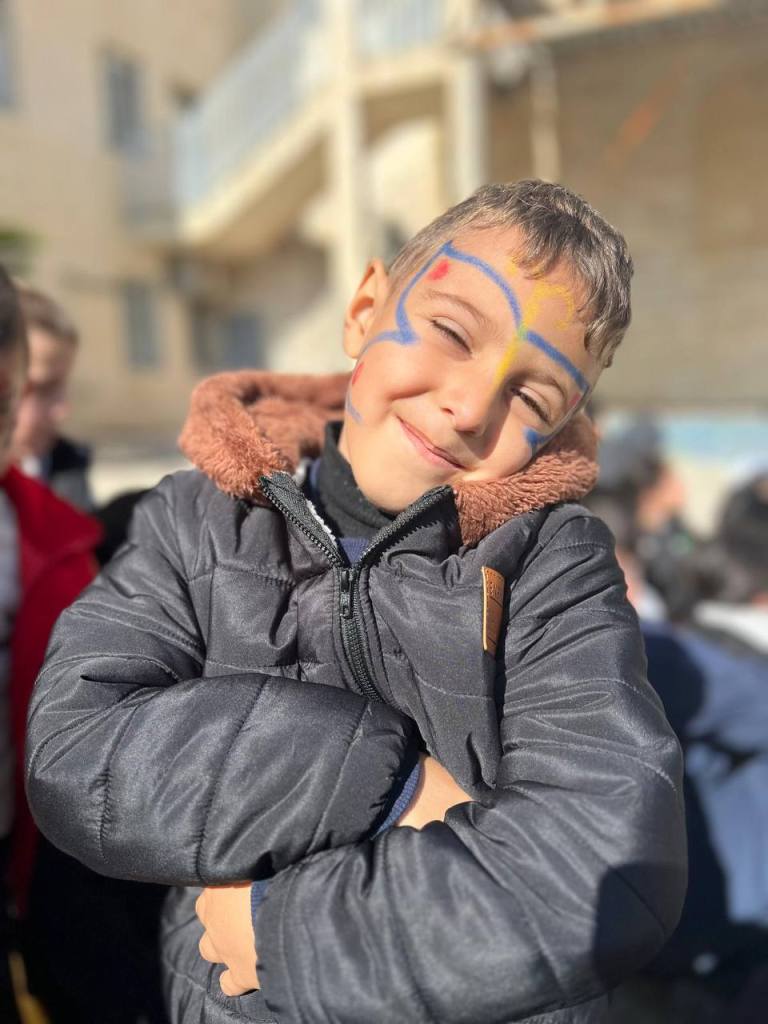


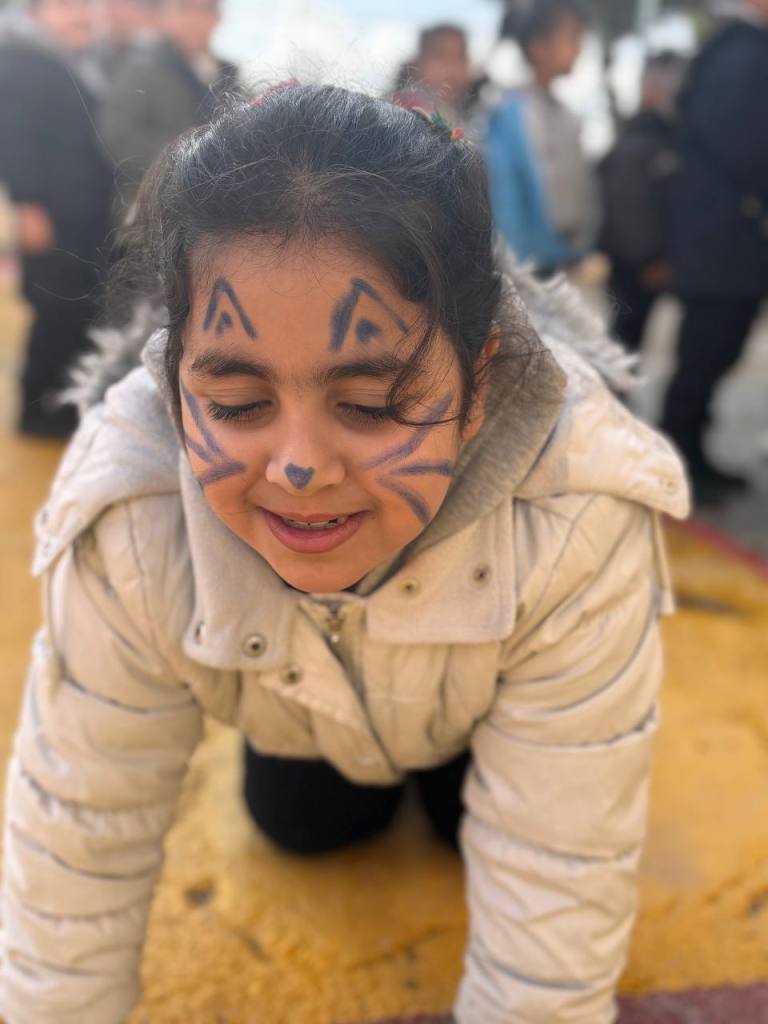


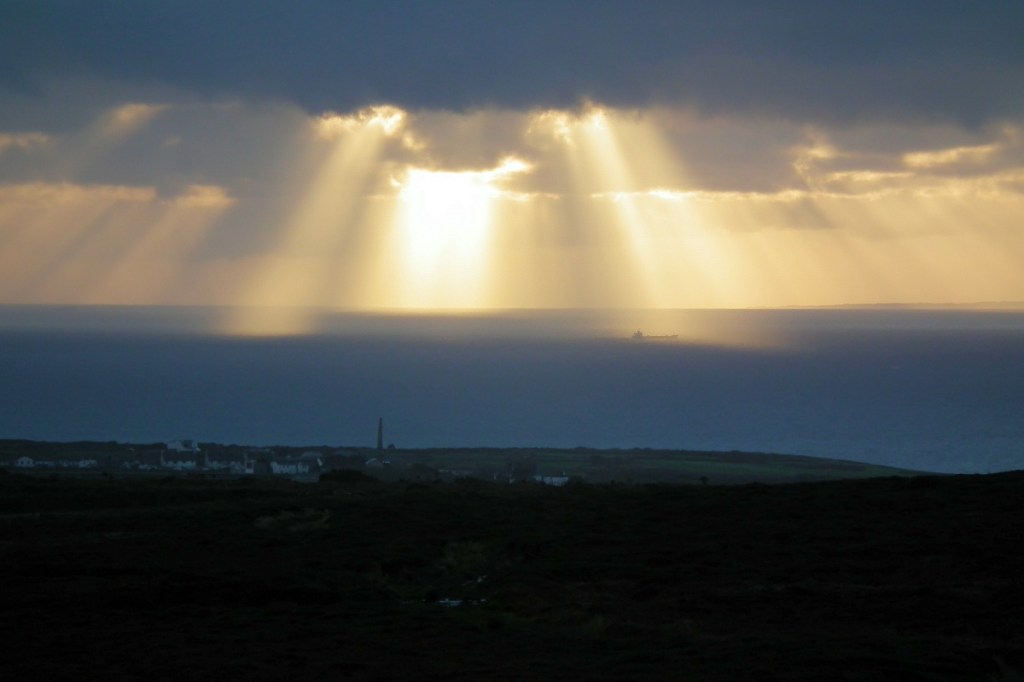


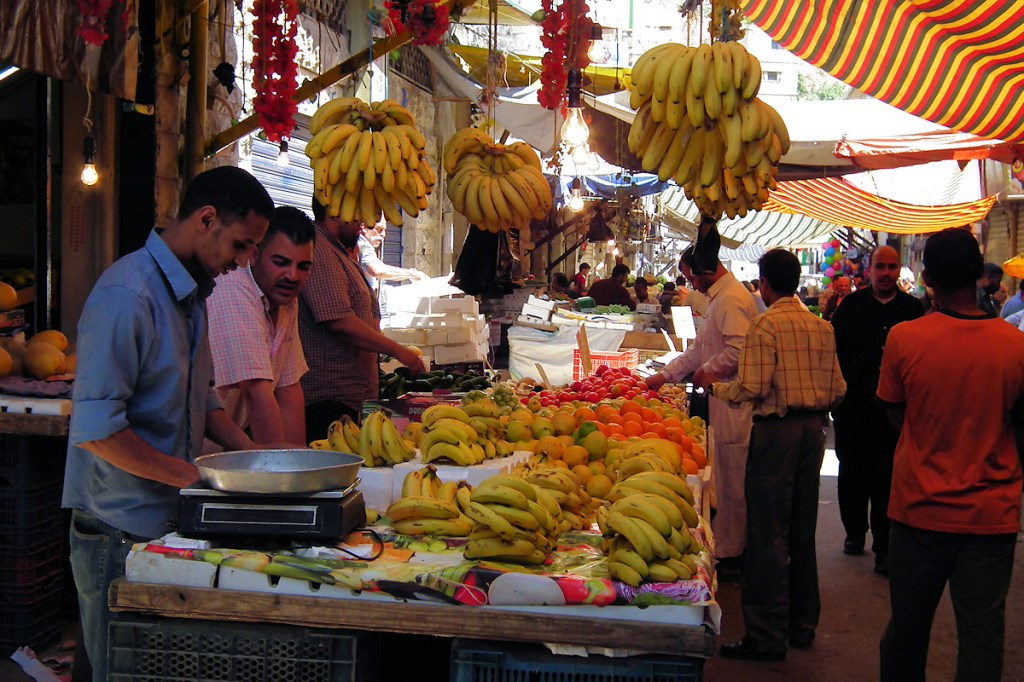
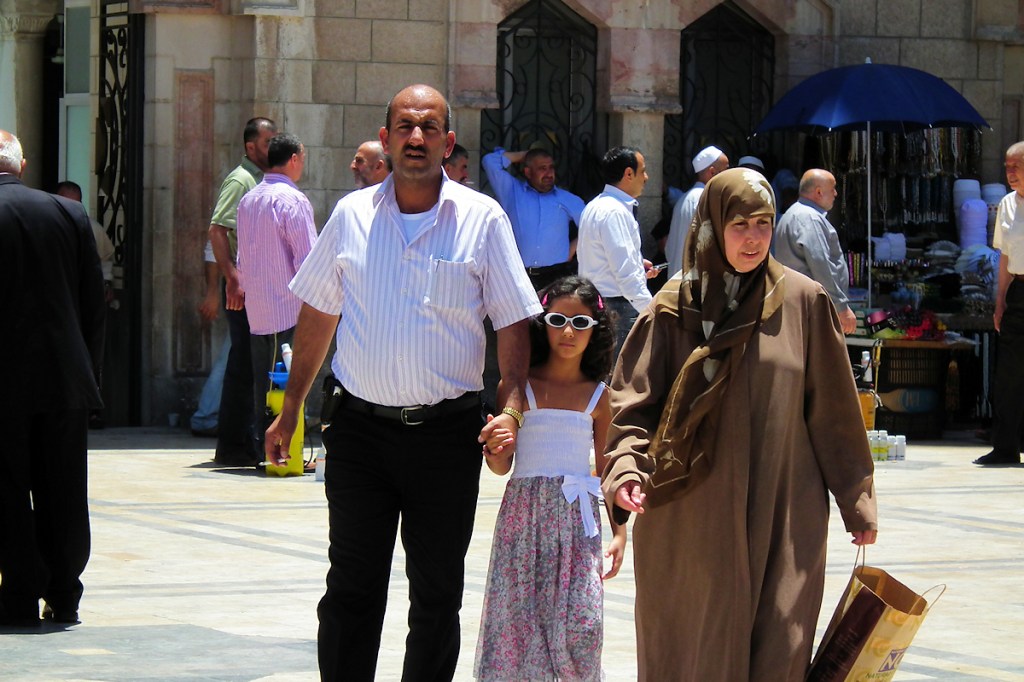
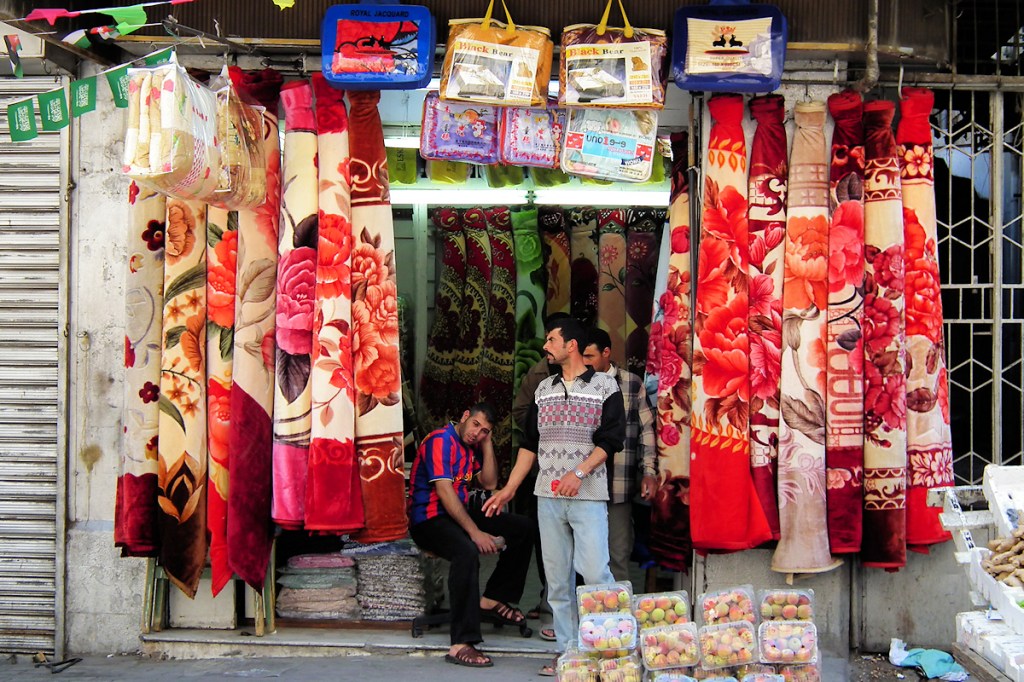
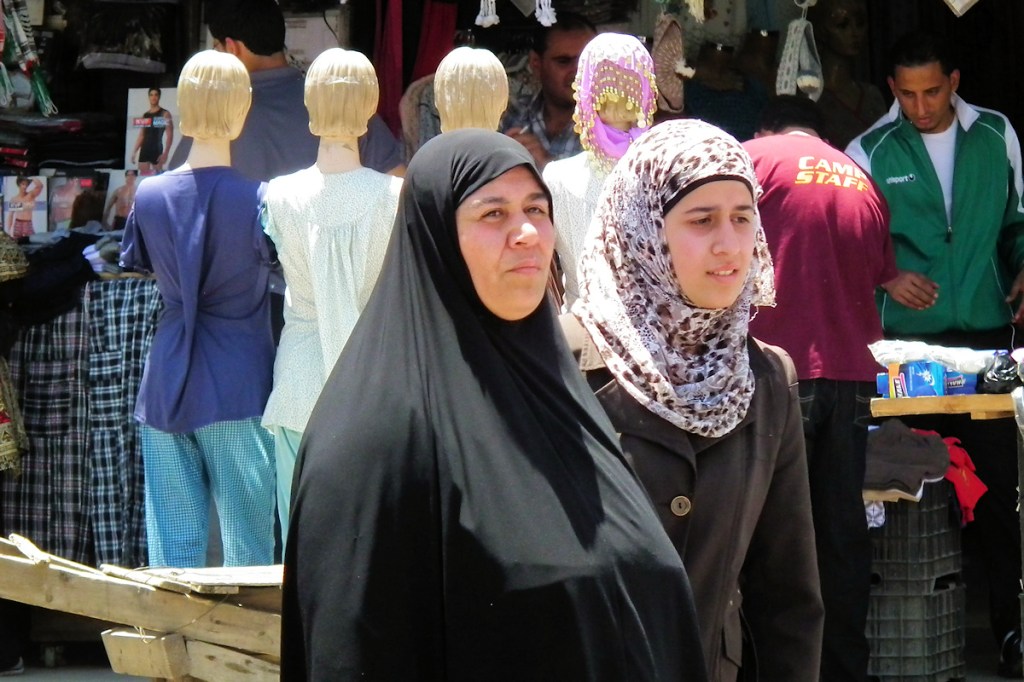


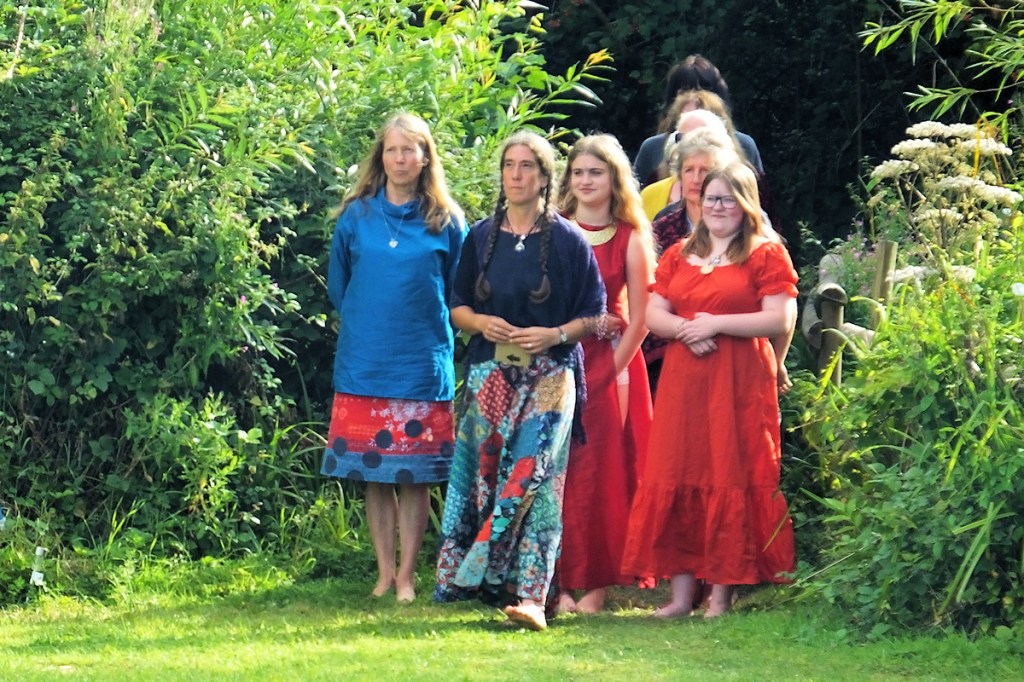

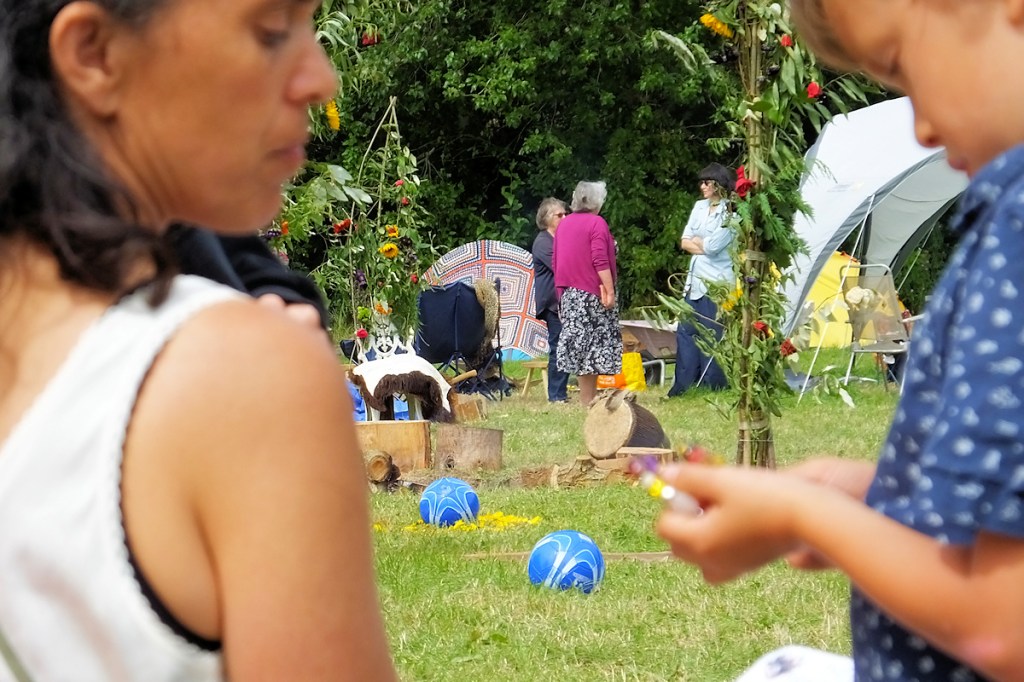

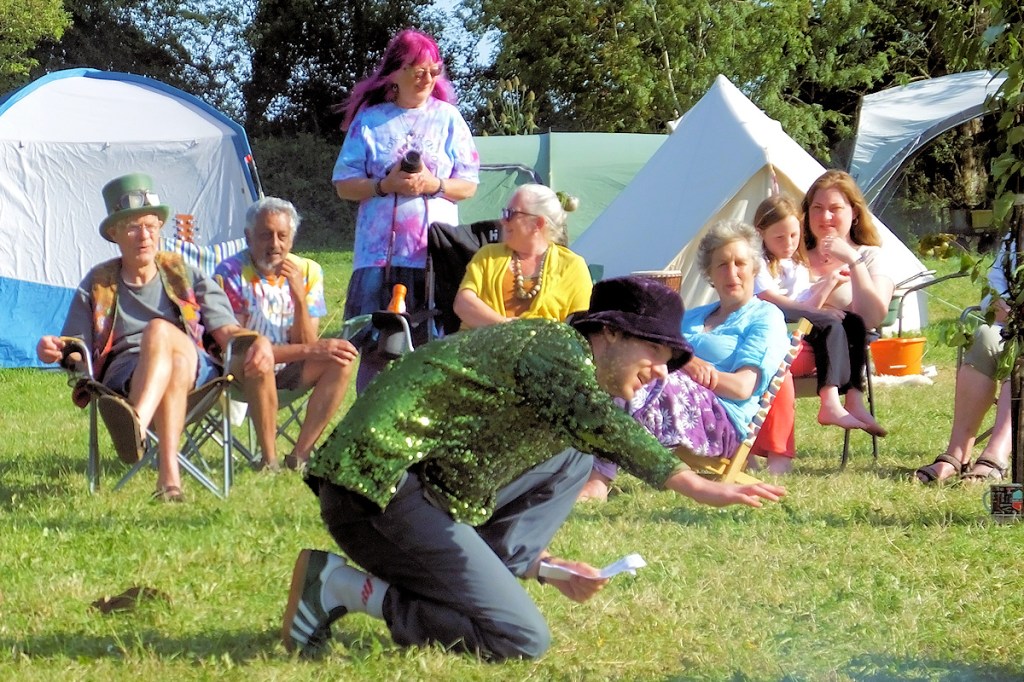

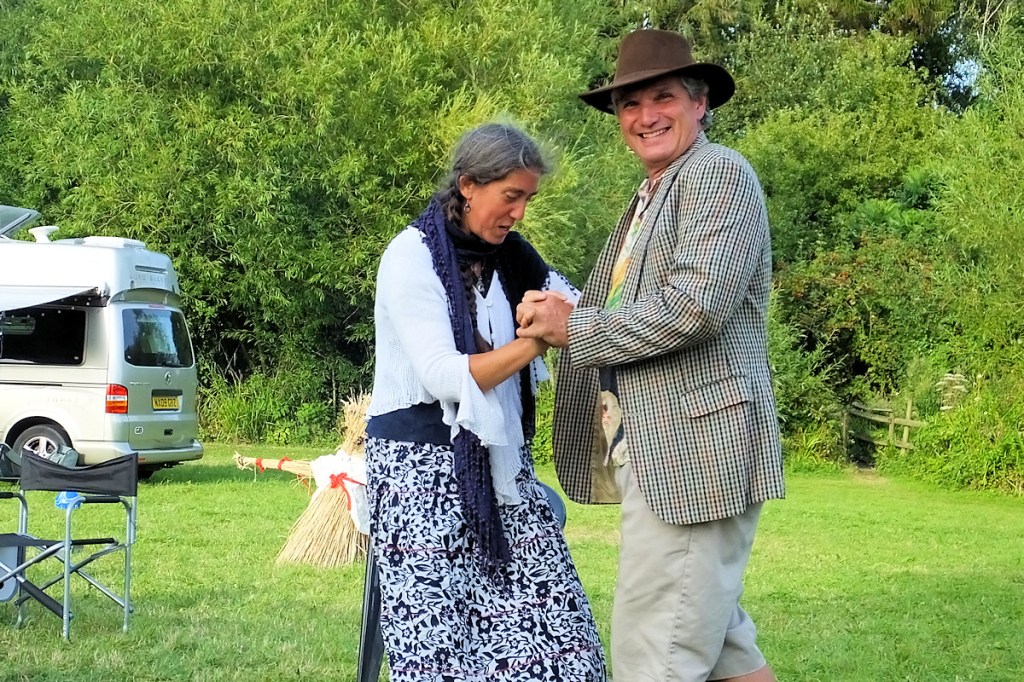
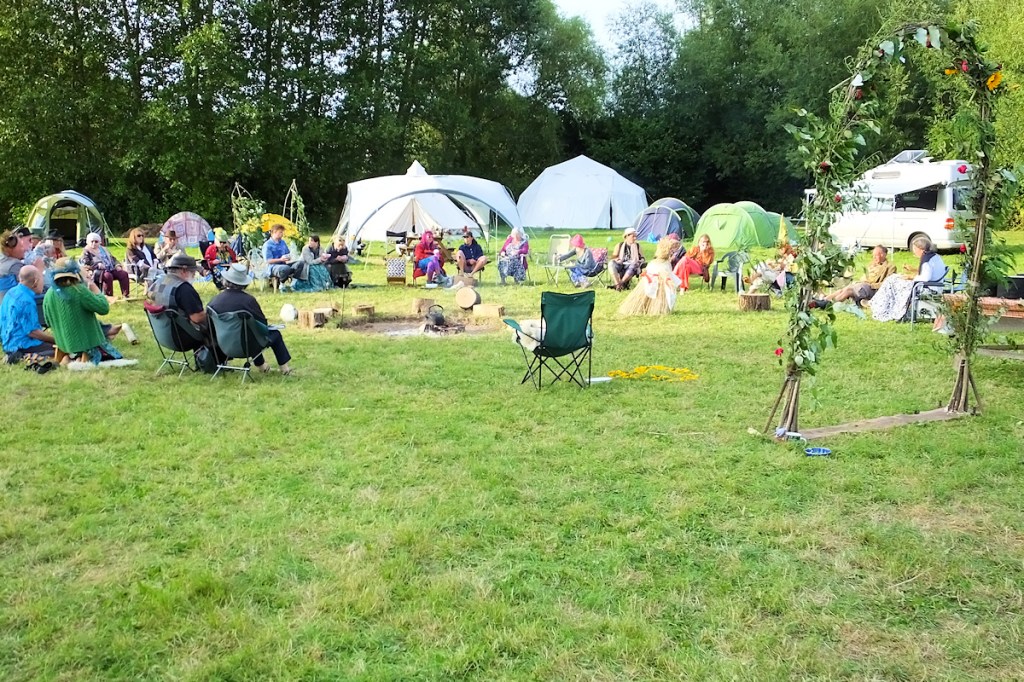
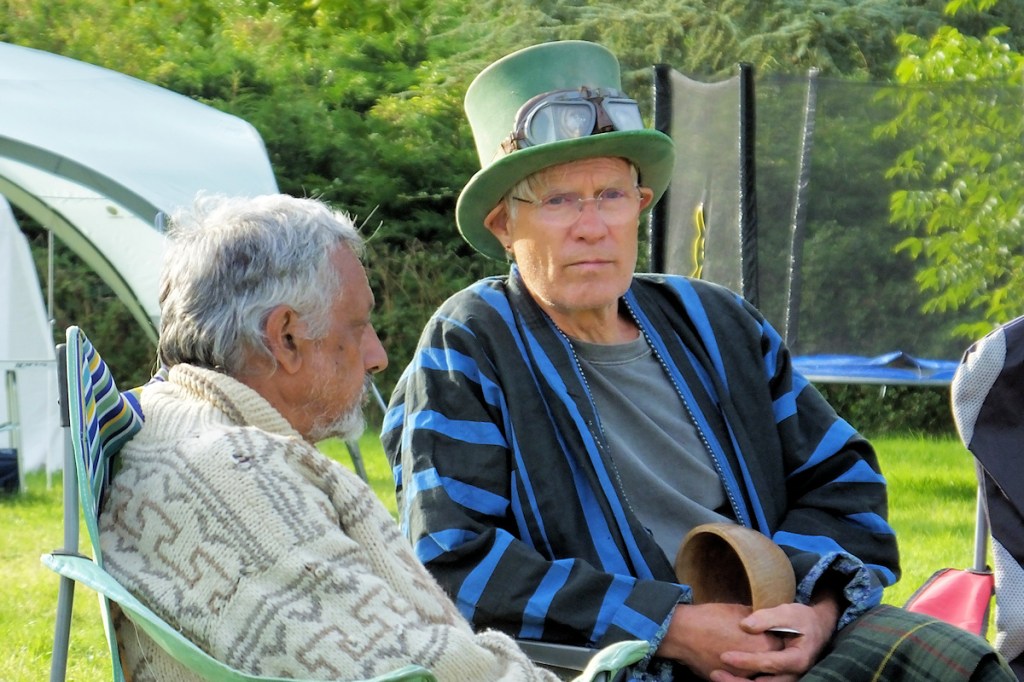


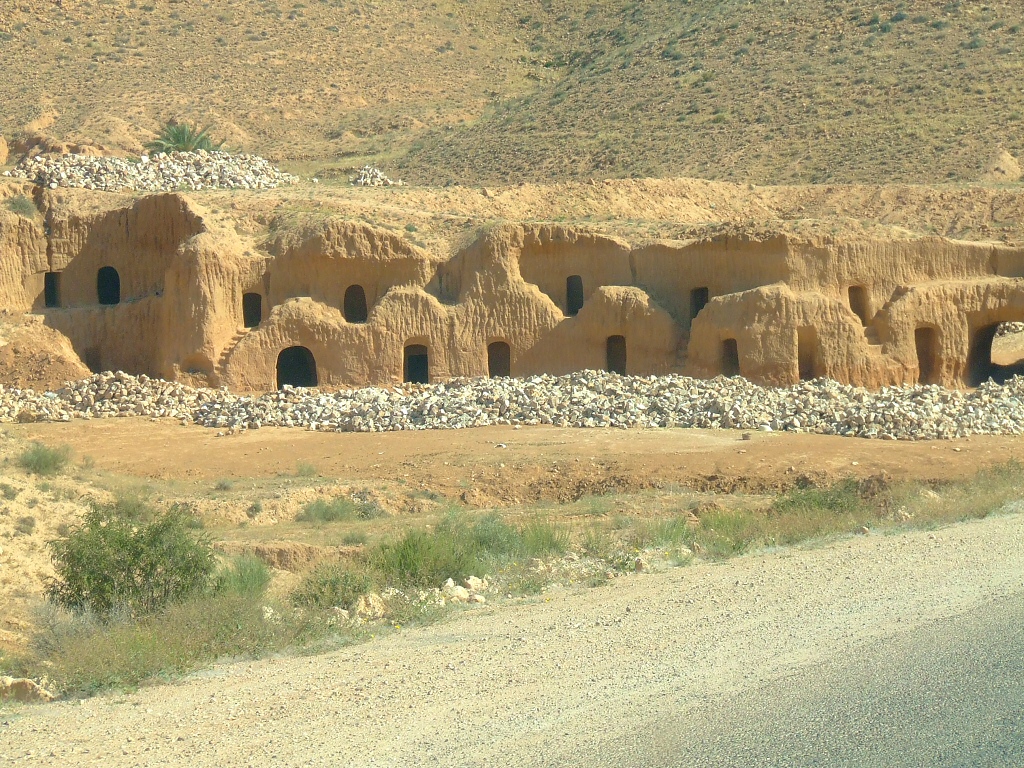

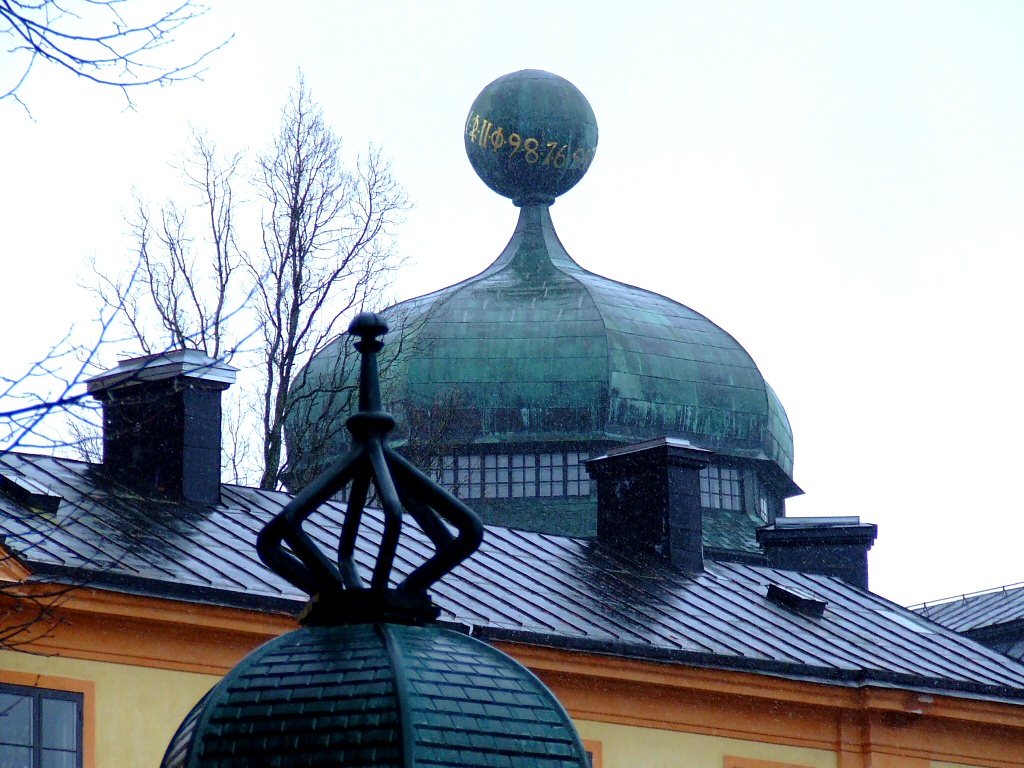

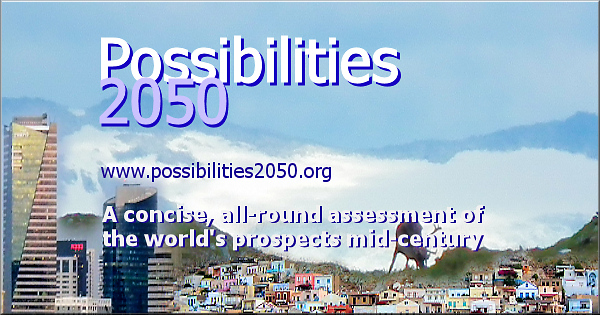
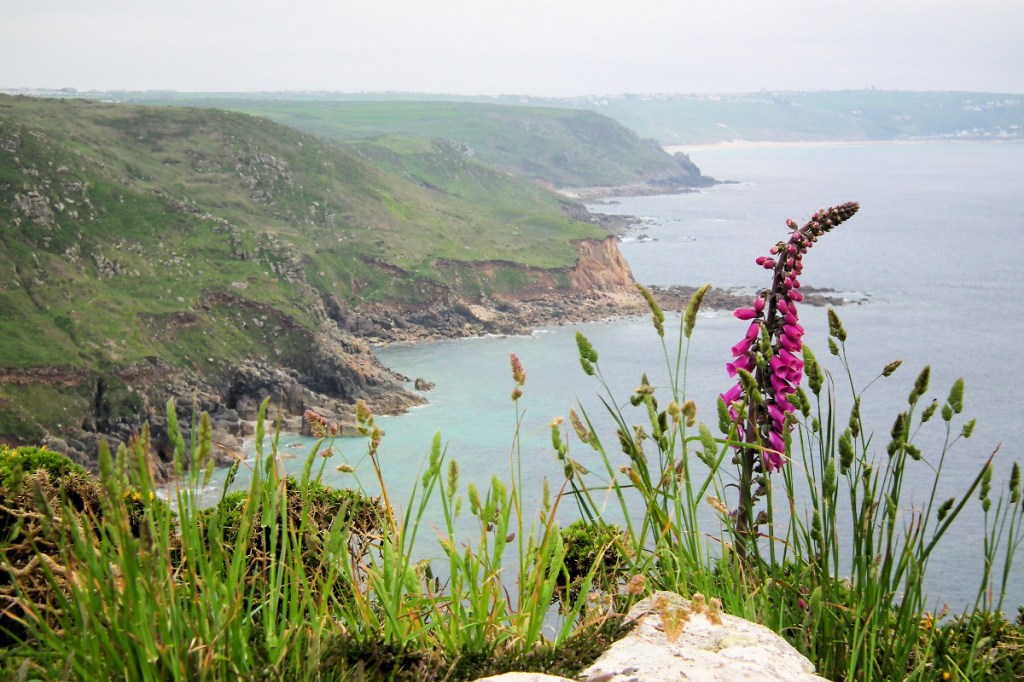

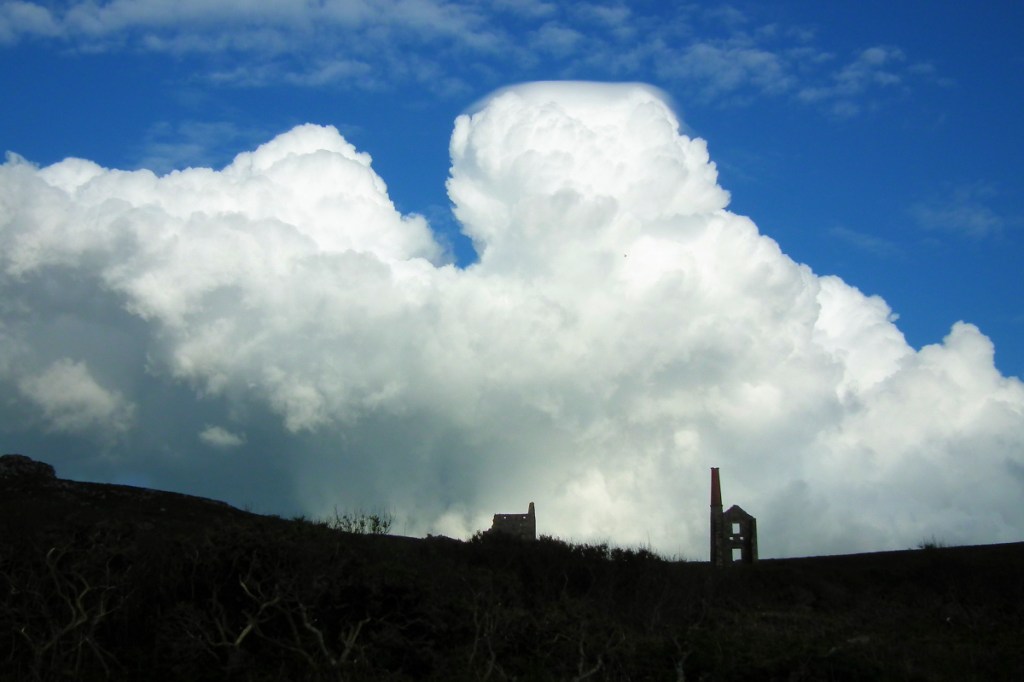



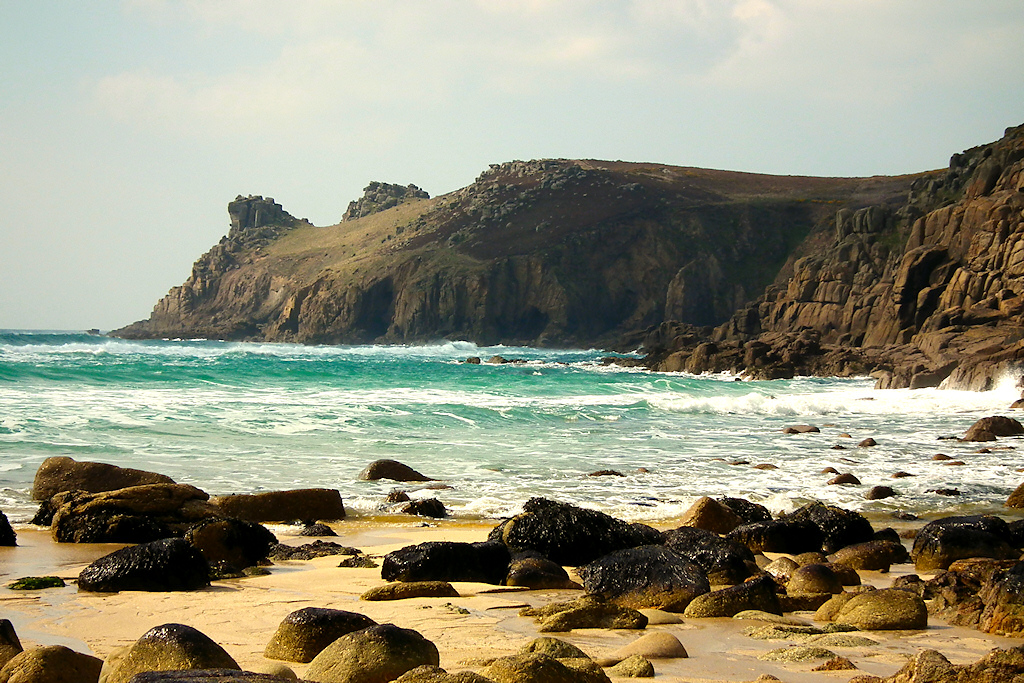


 Notes from the Far Beyond
You must be logged in to post a comment.