Social Capital: Syria

It’s amazing to be part of a revolution – even if it’s temporary. The relief of getting rid of an oppressive regime creates an expanded nowness, a special moment of intensified significance, before the serious stuff that follows inevitably sets in. There’s a shedding of a deep sense of social burden and self-suppression, of unwilling, shoulder-shrugging complicity with something that few were happy with. In Syria, those who took the regime’s side did so because they saw it as the lesser of two evils, or they made a living or gained advantage through it.

But when the cork pops, a deep collective-emotional eruption bursts out, spreading like wildfire around the country, even spreading around the world. It reminds people everywhere, on a deep, hardly-conscious level, that it is possible to change things from the bottom up, that society has power.

It’s also emotionally tragic to be part of a failed revolution – a dashing of hope and faith, a reimposition of fear and oppression, a paroxysm of despair. It can crush spirits. It nearly did so with me – I was part of flower power and a student uprising at the LSE in London – but after a lot of pain and process the experience ended up making me more resilient.

Forty years later in 2011 in Amman, Jordan, I met some Egyptians and Syrians, fresh from their uprisings, proud and uplifted to have been part of them, yet fearful. They were in Amman because they had been chased out of their own countries, regarded as dangerous. The repression of both uprisings had polluted the joy and impetus of revolution, and these guys were vexed about what to do.

I told them that, in the case of the uprising I had been a part of, though we were beaten and broken, the flowering of issues and dynamics that emerged during that short yet long time had withered but not died. It re-emerged slowly over the years, filtering in through society’s back door. Those of us committed to change had continued quietly, developing our green ideas, healing methods, lifestyle changes, music, feminism, back-to-nature instincts and our psycho-spiritual transformations, and it was a all matter of time before these infiltrated wider society – and it still is. Here I was, four decades later, still here, still working for the change I believed in.

I reminded them that change is deep and it is not truly fulfilled by a revolution, which merely clears the way for whatever happens next. It would take time and it would be difficult, but the lava-streams of change would work under the surface, seeping out or erupting over time and over the generations. What makes the spirit of revolution survive, like a dormant seed buried in the soil? Well, whatever its faults, it was essentially right, and it constituted the direction that humanity needs to follow. History takes time to unfold, but time is on the side of change. The issues that bubble up in such change-moments are bigger and more historically-transformative than we often see at the time, and this process takes time. For me, in late life I’ve come to accept that it can take longer than a lifetime.
Now, in Syria, here we have it – the consequences of 2011. The Syrians of the Arab Spring are 12 years older and a new generation has grown into adulthood. Media outlets round the world are wrong to harp on about terrorism and Al Qaeda – they don’t see where the true roots of this lie. They suspect Islamism of malign, threatening things, when Islamism itself is simply a philosophy and social reform movement, the behaviour of which depends very much on the people doing it.

The Taliban in Afghanistan, while dominated by old Muhajedin fighters from former decades, is also stocked with thoughtful, pragmatic, younger and more travelled people who will inherit the reins. Hamas in Gaza was far more (as it goes) progressive, liberal and socially competent than outside commentators and their paymasters wish to see, and the Israeli killing of Ishmael Haniyeh a few months ago, Hamas’ leader, meant the loss of one of the world’s better political leaders. In my humble opinion.

When so-called terrorists have a constituency of local support, and when they are fighting on their own turf for the liberation of their land and people, they are freedom fighters. Terrorists lack empathy, caring little for the people they live amongst, their agenda is geopolitical and ideological and their method is to use violently dramatic actions to create fear and terror, to scoop up media attention. One well-executed bombing can set the world on edge.

HTS is not a terrorist organisation and neither are most of the other militias in Syria (though one or two might be). Other countries would be wise not to oppose or obstruct the new regime – though perhaps it will need moderating with sweeteners. The uprising in Syria is locally-driven, in distinction to the ongoing conflict in Syria since 2011, which has been a viper’s nest of external intervening powers, influencers and financiers. Now their influence is weakened, withdrawn or undermined.
When I went there in 2014 there were about seven sides to the conflict and it was terribly confusing. I went briefly to Deraa and Yarmouk Palestinian refugee camp outside Damascus. Since it was likely that I’d be thrown out of Palestine by the Israelis, under suspicion, and banned for at least ten years, I felt a need to do something else. When asked to visit Yarmouk by a Palestinian tribe with refugee relatives in Syria, I decided to help them, as a kind of courier and emissary.

But it finished me off. Things happened that deeply affected me. Perhaps also I was in denial,lready feeling burned out, with elements of PTSD accumulated over previous years. But this finished me off. I lost my hope and patience in Syria, afterward feeling lost in a smothering cloud of dismay and disappointment. It was the last humanitarian mission I did. I wasn’t happy about that. But life had other designs.

I spent the following years on a self-healing path in Cornwall, doing remote humanitarian work (such as with the Tuareg in Mali), prehistoric research and walking the cliffs and moors. A loving relationship from 2016 to 2022 brought me back to life. Only when I went down with cancer in 2019 was I healed of the clamping shadows I had been struggling with – they were subsumed by the prospect of death, which prompted an enormous inner let-go of all and everything, bringing something of a spiritual breakthrough and a rapid process of forgiveness of myself, others and life.[1]
This is deep stuff. When, as an individual, you ‘lose your fear’ and come out into the streets in an uprising, you align with a collective tidal surge of vision, emotion, ideas and spirit that feels truly like a springtime, a release. All sorts of amazing things happen. People come alive, emerging out of the woodwork, progressing a long way and finding a new mission in life. People’s lives change in bulk, and a rising tide of hope lifts up even those people who normally are sunk in a life of drudge, stuck in a state of reluctant complicity. The splintered social dissonance that allows oppressive regimes to gain and hold power melts away, and there’s an eruption of resonance, mass concurrence and shared wishes. This resonance-field fizzes and sparkles, motivating people to do quite remarkable things.

But it all depends on what happens next. It depends on the new leaderships that take power and, even more, on the wisdom, patience and fortitude of crowds. Once the change happens, eveyone wants normality to be restored – the economy, public services, reconstruction, and freedom from excessive and unnecessary obstructions in daily life – though this is not simple and fast. After the joy of change, there’s a lot of hard work to be done.
The wisdom of crowds… this is a delicate matter. After regime change in Sudan, the democratic movement did quite well for a time. There was a maturity to the way that people dealt with their tender democratising situation after a long period of dictatorship. But it was delicate, involving a lot of mutual trust, and there are people who manipulate unstable, transitional situations to their own advantage – they can act quicker and more decisively than collectivities of people. They have a contrarian need to break the magic ring of mutualised social power, aiming to restore public dissonance at any cost. In Sudan, it became a slugging match between two oligrchies, each headed by generals, each supported by different outside powers and financing. The democratic movement was killed off, tragedy ensued, and it continues today. Most of the world isn’t interested. Hope is not currently available in Sudan.

Ten years ago I was involved with a small group called the Flying Squad.[2] We did geopolitical healing work and, by 2014, the group had been working together for sixteen years – so we had some experience. It involved a weekly group meditation, wherever we were, and three or four weekend meetings each year – and membership involved committing to 100% presence and involvement in all meditations and meetings, to take group synergy to a higher level.

We did a lot of work with Syria and its uprising and civil war, even travelling to Greece to get closer. There were times when we felt we were getting somewhere in our efforts, but each time a new set of events would re-ignite the situation and make things worse – often prompted by outside intervention by state and non-state actors. Were we getting things wrong? Or was this simply an intractable situation?
This was a big learning. As a planetary healer, you have to learn and accept that sometimes it doesn’t work. There was a point where, in our inner investigations, we discovered an enormous ancient telluric ‘worm’ or dragon in the Euphrates valley in Syria and Iraq, and it was deeply upset. We tried to ease its concerns and help it clarify its aims – it was deeply unhappy about the fighting, oppression and oil extraction in its patch. After we did this work there was indeed a brief pause in events, providing a glimmer of hope, but it soon was dashed by new developments.

We had to learn that there are some things you cannot help. The reasons often emerge later, even years later. Sometimes we can be too restless, short-termist and attached to immediate outcomes. It’s unwise and even egocentric to expect results, just because you feel you’ve put your heart and soul into it and, by rights, it should work. But there can be reasons why it doesn’t work. The idea of creating a ceasefire in Gaza, for example, while desirable, doesn’t actually resolve the problem and its causes, and it might not bring a fundamental healing of a bad situation.

Deep down, countries like Syria and its neighbours are developing a social immunity to conflict and oppression. This is at street-and-village level, and it’s a semi-conscious thing fermenting underneath. The key mechanism is that a society must reach a level of exhaustion with war and oppression, to the extent that it firmly and behaviourally no longer permits it. Society stops responding to the methods that oppressors and warring factions use to divide people and set them in fear. This is pretty much the case in Lebanon nowadays – they’ve had enough of strife, havig been through many decades of it.

The seat of such social power rests a lot with women: if women collectively no longer accept a bad situation and are tired of going along with what men are doing, the violence ends, sooner or later. It’s a buildup of firm and settled emotional consensus. This was one of the key dynamics of the peace that came to Northern Ireland in the 1990s – women put pressure on men to make a change. They just stopped making sandwiches for them and washing their underpants.

There’s another force at work that generates this immunity. After a while, everyone just wants to go home, sleep in their own bed, be with their family and feel safe. This is another rather feminine feeling. When fighters get tired, conflict ends, somehow. It’s a deep tiredness with the privations and dangers of war and oppression. It’s what made the Syrian soldiers recently melt away as the militias advanced – they were fed up. They’d lost the sense of purpose that soldiers need to have if they are to put themselves in the way of danger.

So we now have a full-on situation in Syria. A lot hangs around the international community and the way it responds. A lot hangs on leaderships and their behaviour. A lot hangs on social solidarity, forgiveness of the past, de-corruption and a buildup of trust and integrity in society.

We’ve had a lot of failed uprisings in recent times – in Myanmar, Belarus, Hong Kong, Iran, Venezuela and Sudan – but something has recently changed. Astrologically, Pluto has moved from spending 16 years in Capricorn – a sign that generally hangs on to stability and convention and doesn’t like change – to spending 20 years in Aquarius. The emphasis has shifted from the prevalence of governments and institutions to the prevalence of crowds and public attitudes.

There is a possibility here of a real turning of the page. Not just the replacement of a Captagon-driven, oppressive narco-regime with an Islamist one, but also a change in Islamism itself, and a change in the behaviour of the public. All over the world, the style of governance of countries has come into focus – both democratic systems and authoritarian regimes are in trouble, and people at the top no longer sit securely in their seats. We shall see.

I’m wondering how the Palestinians in Syria (around 450,000 of them) feel about all this. Assad had treated them well, in comparison to many other countries, so they were grateful for that, but the Palestinians could not accept his violent response to the 2011 uprising, and this put them in a difficult situation. Palestinians do not like Muslim extremists either – Al Qaeda or the Islamic State – and in the last twelve years of instability they have come under attack from various directions. I hope they’re feeling some relief today.

This has stirred me quite deeply and personally – helped by the winds and storms raging here in Cornwall in the last two days. It’s a glimmer of hope. It reminds me of the Iranian Revolution of 1979. At that time I was contemplating suicide – the only time I’ve ever felt that feeling. I felt blocked by life from every direction. Everything seemed to be going wrong. But, on the weekend when I might have done it, the Iranian Revolution happened, and this suddenly gave me a spark of hope. It went bad soon after, but on that weekend it looked as if something quite big was changing. I forgot suicide. For me, amidst a dark night of the soul, it was a turning-point: my soul was asking me to make a big and deep commitment to my life’s work. It involved the end of a marriage, the loss of my children and a return to Britain after a time of exile in Sweden.

It was the beginning of a new path in life that brought me to where I am now, affecting thousands of people along the way. For better or worse, that is, since there are times when I’ve screwed up too. However, the posterity-perspective of late life seems to be telling me that it was, on balance, positive. Just above my desk is a Healing Buddha with a little sign at its feet which says ‘Time is a Healer’. Well, yes, though it’s also a decider, an accounting, a process of judgement by posterity. We ourselves can only make an accounting, but time, the wider world and other people judge the balance of benefit our lives have brought.

The same goes for revolutions and regime changes. The Assad and Makhlouf families and the deposed Syrian oligarchy have a lot of accounting to do, and history is unlikely to be sympathetic – as with Saddam Hussein, Ghaddafi and possibly, in future, Netanyahu. Together with many others, too many to name. But, in our own smaller lives, we face an accounting too since many of us are guilty of a shared crime that also needs to end: to quote 18th Century philosopher Edmund Burke, ‘For the triumph of evil it is necessary only that good people do nothing‘. That is a crime we all variously have a stake in.

However, here’s something. We need to be careful about the way we label some people as goodguys and others as badguys. We get dictators because we didn’t stop them coming. So, instead of focusing all the blame on them – or all the Trumps and Al Fayyads of the world – we ned to remember to look at our own part in the equation. As old Jesus once said: ‘Let the one who is without guilt cast the first stone‘.

The building of social capital and the amassing of power to the people involves a lot of deep forgiveness.

With love, Palden.

www.palden.co.uk

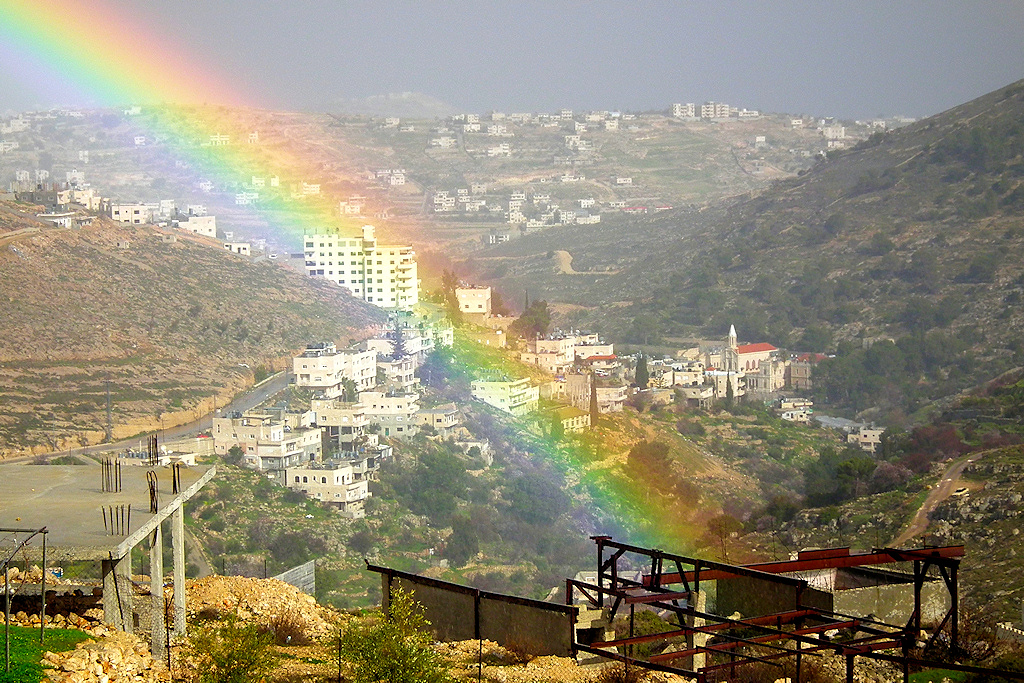
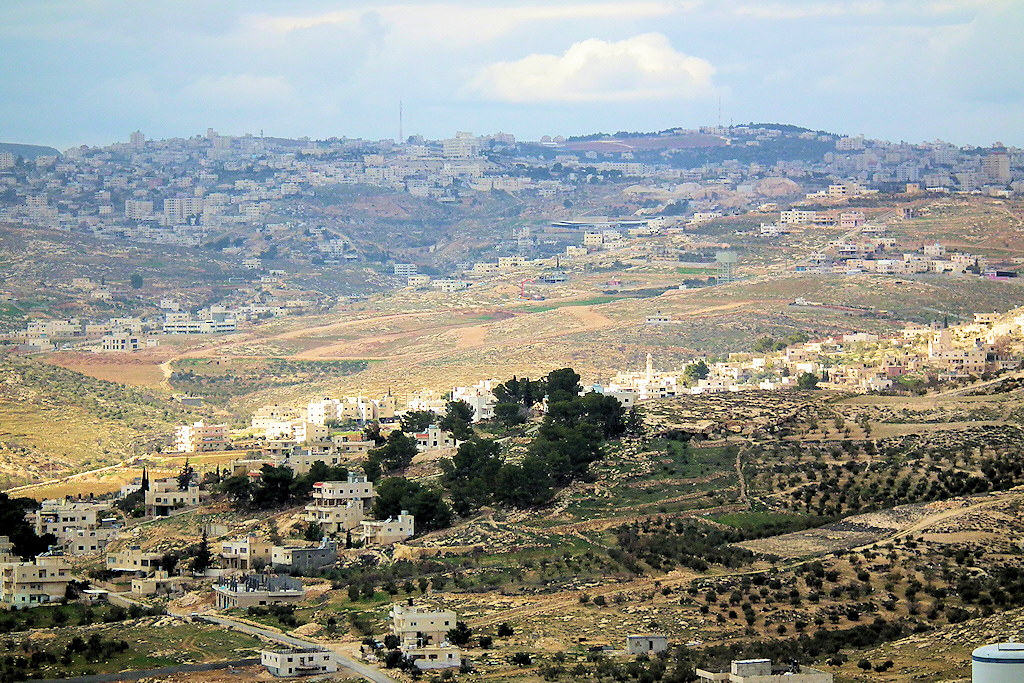
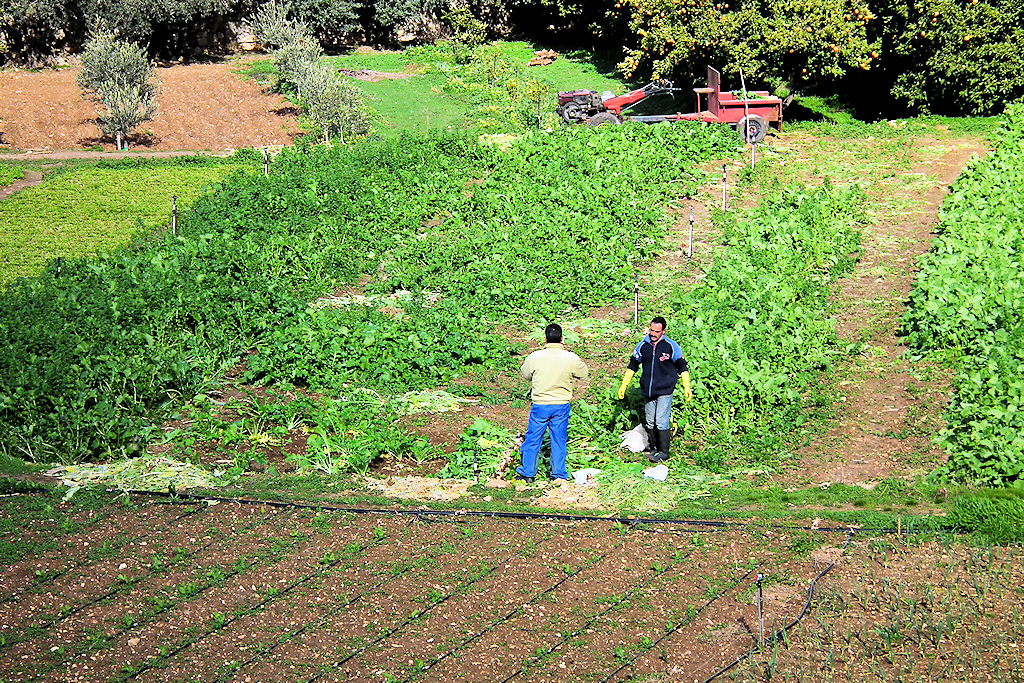
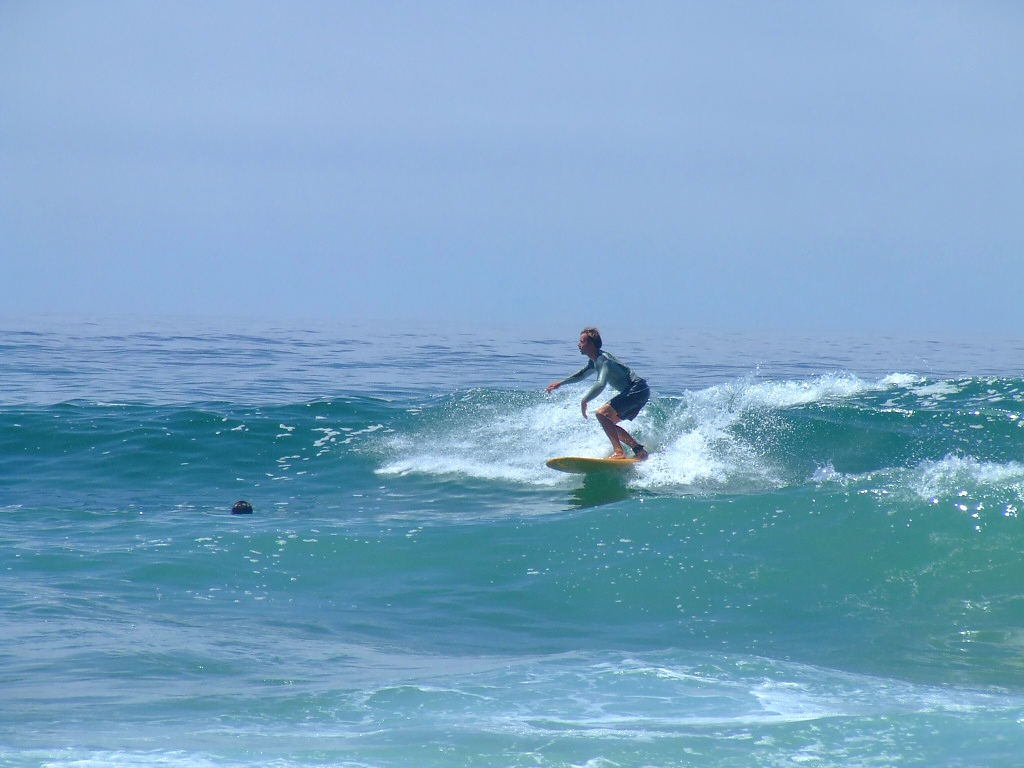
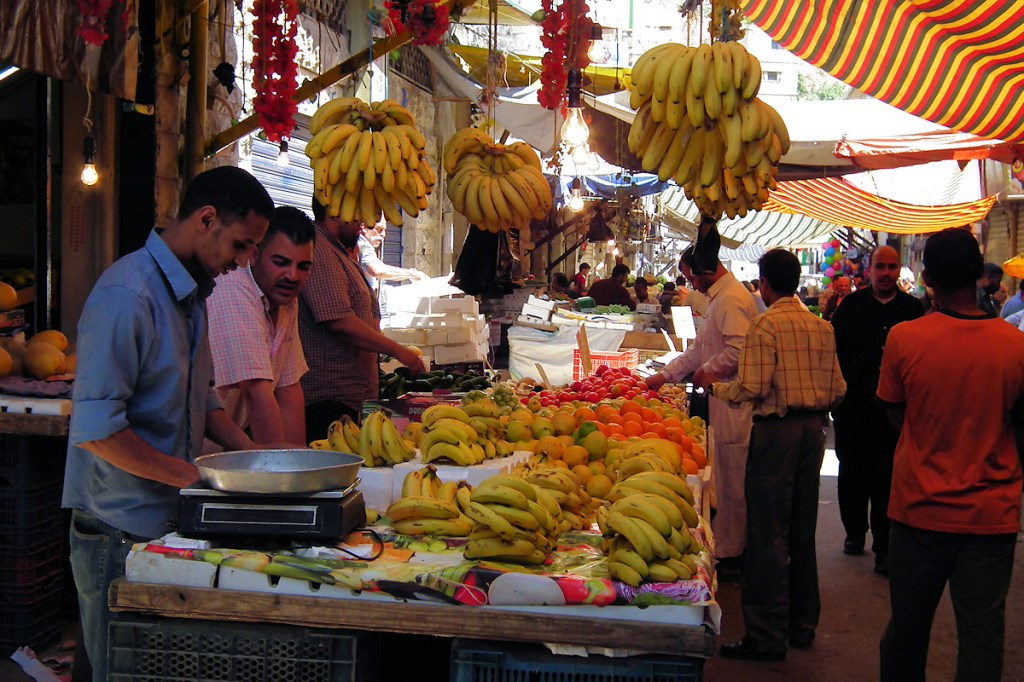
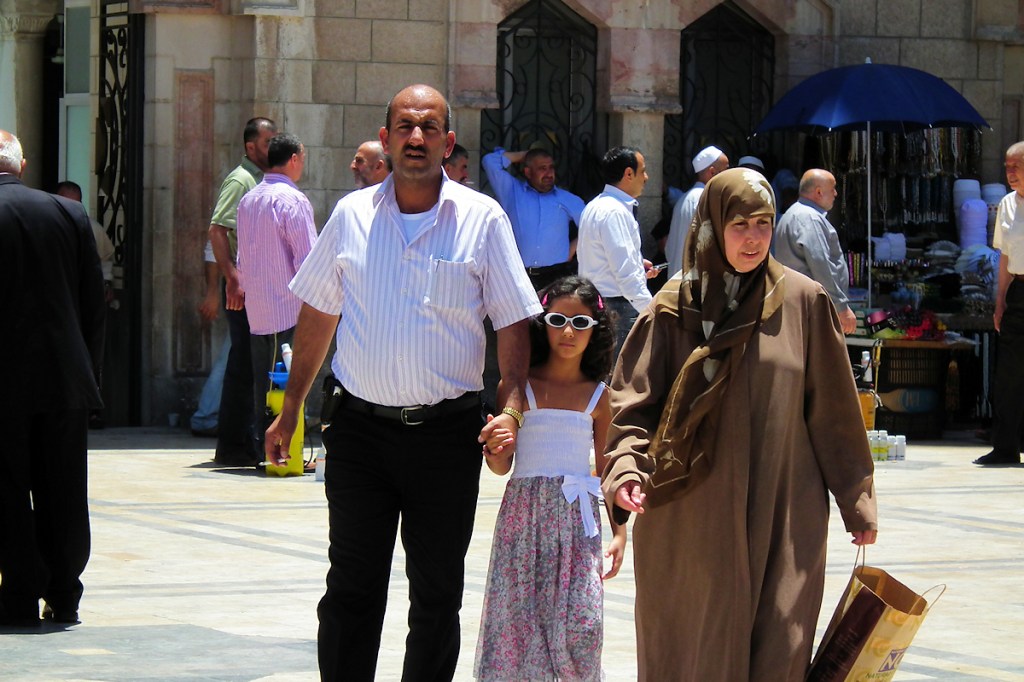
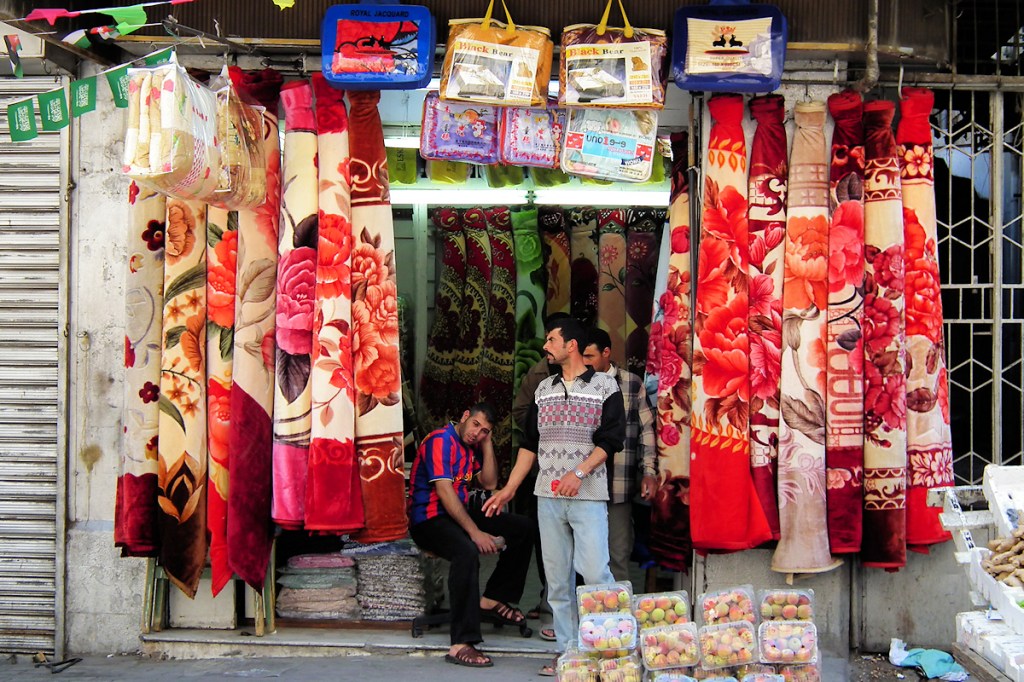
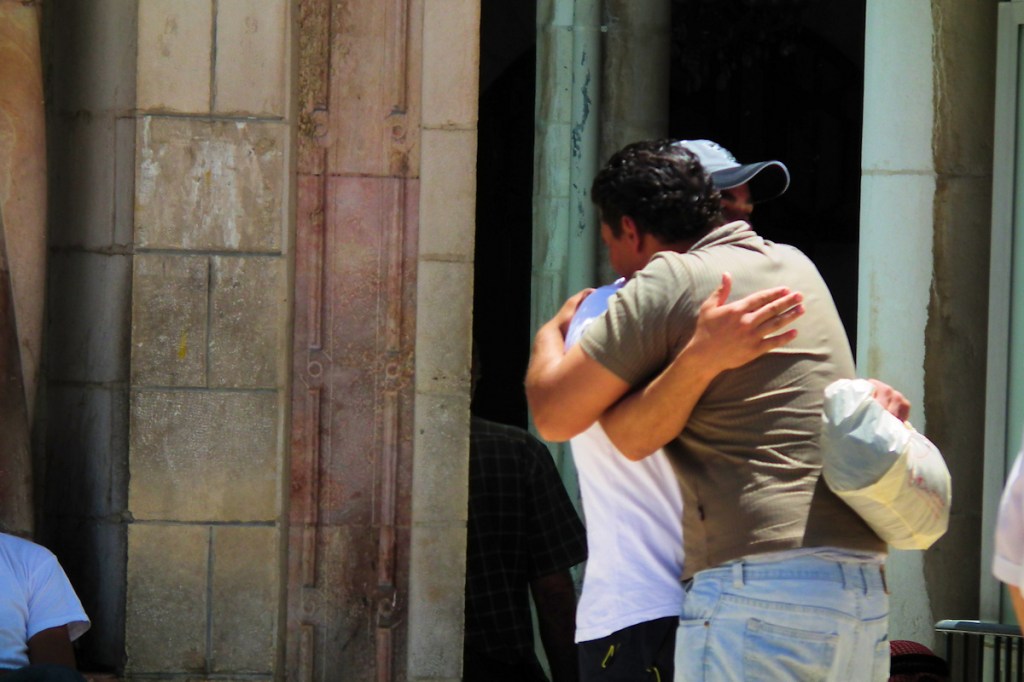
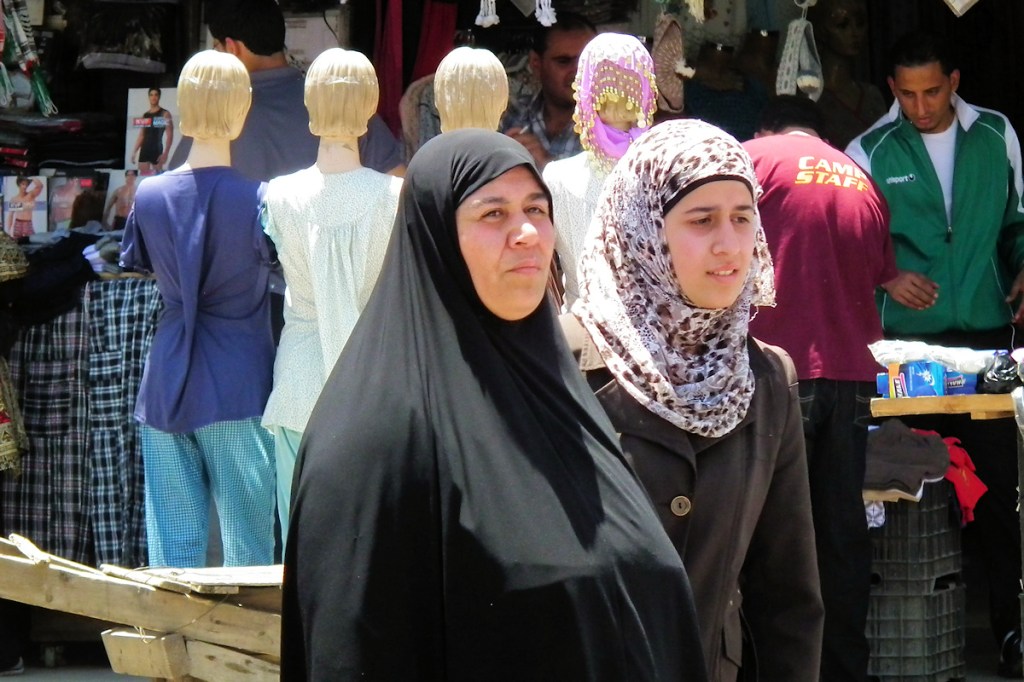
PS: It was not cool to take my camera to Syria, so the pictures here are from Amman, Jordan.

FOOTNOTES

  1. The story of my cancer process is recounted in my audiobook ‘Blessings that Bones Bring’ – it’s at www.palden.co.uk/boneblessings.html
  2. The Flying Squad is now closed, but the group worked together for twenty years – this website explains it all: www.flyingsquad.org.uk

Hope Flowers School

The Israeli army blocks the gate to the school

In my audiobook and various of my postings you’ll have heard of Hope Flowers School in Bethlehem, Palestine (here’s a brief intro). I used to work there.

Here’s a newsletter from Ibrahim Issa, the school’s director. It gives a taste of what it’s like running a school in occupied Palestine at present.

With love, Palden

—————————-

Dear Friends,

Thank you for all your support and solidarity with the Hope Flowers School (HFS). I am trying through this letter, to share with you what happened on 6 December 2023 at the HFS. It is a bit long; I believe that some of you have received a big number of pictures and videos on that day.

It is almost 21 years ago, when James Bennet wrote an article in the New York Times about HFS: “Arab Coexistence school falls victim to violence” you can read this article on: https://www.nytimes.com/…/arab-coexistence-school-falls…

Between December 2002 and December 2023, HFS battle for Peace continues.

The school-day at HFS starts early in the morning. Children and staff start arriving at 07:15 A.m. It is quite difficult to predict the day and whether clashes between Palestinians and Israeli army will erupt that day. Clashes could erupt at any moment of the day. HFS staffs have to be prepared to act in case any violence erupts at a sudden.

Elegant vehicles, huh?

On Wednesday, December 6th 2023, in my way to HFS at 7:15 AM. I have to pass Deheisha refugee camp and Al Khader village. In my way I found tens of Israeli military vehicles and armed personal carriers about to enter the refugee camp and the village. Despite military presence on the way, but I managed to reach HFS at 07:30 A.m. The neighborhood of HFS was quite. I did not see any Israeli soldiers in the neighborhood.

I started to receive calls at about 07:45 from HFS staff that they could not reach the school because of Israeli army presence and clashes between the army and Palestinians. So we decided to start the school day with the absence of two staff members who could not reach the school.

At 8:30 am, I was in my way from HFS to another meeting. On the corner of the school, I was stopped by tens of Israeli soldiers who were just arriving to the street and started to block the road with large concrete blocks using a bulldozer. The soldiers were very tense, especially I found myself with my car surrounded by big number of soldiers. The one soldier asked me to continue driving while another asked me to return backwards to HFS. I decided to stay unmoved because of unclearity in soldiers demands. Any wrong movement at this situation may be interpreted as an attack on soldiers and could kill me.

At this moment a military vehicle stopped next to me and there was apparently the commander of the unit. I talked to him in English and explained the situation that one soldier is asking to drive backwards and the other is asking me to drive forwards, I asked him if I could drive backwards (back to HFS), but he refused and asked me to continue driving forwards. He also instructed the soldiers to allow me moving forwards. I also told the army officer that I am a principle of a school located on the corner, and that I have 350 children aged 4-13 years old right now in the school with some children with special needs, and that I would appreciate if the army could give me 30 minutes to evacuate the school before they enter further in the neighborhood. The commander refused and he told me that in one hour they will finish their operation and that the army will reopen the road.

I cancelled my meeting and decided to stay nearby the HFS. I immediately called the staff at the HFS and asked them to take all measures (according to emergency plan) to protect the children and staff at the school and warned them that soldiers are in the neighborhood near the school.

At about 09:00 I received a call from vice-principle of HFS informing me that soldiers are near the school and that few armored vehicles have blocked the school parking and the main gate of the school and that leaving the school or entering the school is not possible.

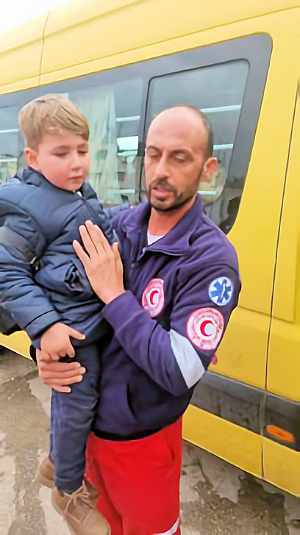
A paramedic comforts an upset boy

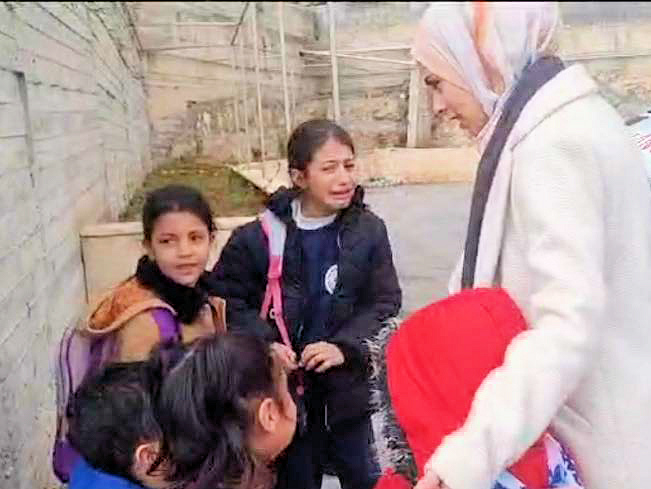
At 09:10 I received another call informing me that children with autism spectrum disorder (32 out of 358) are terrified and that social workers and staff need help to calm them down. Then I continued to receive calls from HFS informing me that children are totally in panic after soldiers started to fire teargas and heard of sounds of explosions nearby HFS due to clashing with Palestinian youth outside the HFS.

At this point I asked teachers and all staff of HFS to pay attention for the physical safety of children and to avoid sitting beside windows or even trying to look outside from the windows. I also informed the education department in Bethlehem that we have an emergency at HFS and explained the situation inside the HFS.

Everyone was concerned that the situation will get worse especially that some schools in Bethlehem and in the West Bank have encountered similar problems in the past few weeks.

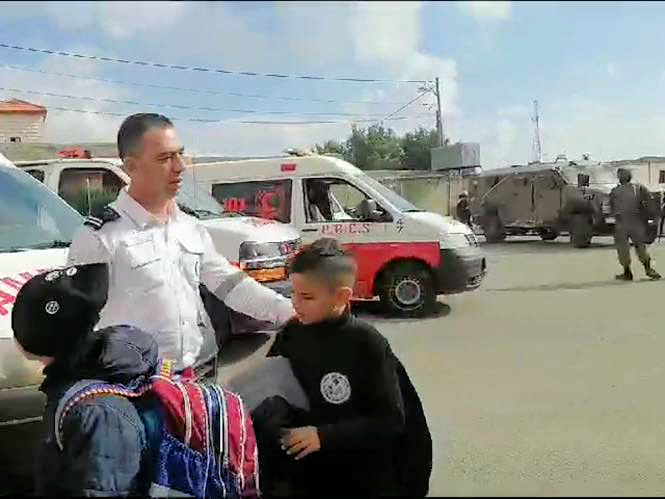
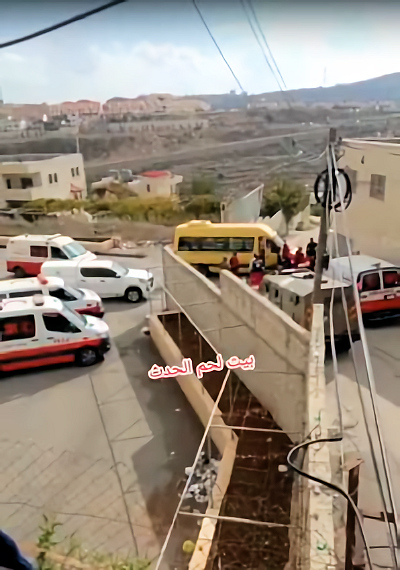
Some children have reacted strongly to fear like inability to breathe, others were crying, etc. Therefore, I asked the health department to help sending ambulances to help the staff to deal with stressed and fearful children at HFS. Indeed, 6 ambulances from Palestine Red Crescent Society arrived few minutes later, but the Israeli army prevented the ambulances to reach the HFS justifying that the area is “a military closed area”.

A teacher tries to calm the children

At this moment I started to realize the danger that children are in and started to call the Palestinian-Israeli military coordination office and asked them to speak to the Israeli military to allow the ambulances to reach the school. I decided to call other international organizations and asked them to urgently reach out for Israeli army to allow ambulances to reaching HFS.

The Israeli army has finally agreed to allow the ambulances to reach the school and finally allowed me to get back to the school in one of the ambulances. A detailed inspection of each ambulance was conducted by the army before it was allowed to move ahead. All ambulances were accompanied by an Israeli patrol.

At HFS, children were extremely fearful; in addition we were concerned that clashes between Palestinian and Israelis will erupt further.

Evacuation

Therefore, in consultation with the paramedics in the ambulances, we decided that it would be better to evacuate the whole school and take children to transport children to a safer place. The ambulances started to transport groups of children (maximum 10 in each ambulance accompanied by one teacher) to a nearby hospital.

Due to intensity of the situation, the general director of the education department arrived at HFS with one of the ambulances to support HFS’s staff and children. With the heroic work of paramedics of the Red Crescent society we managed to get all children and staff out safely.

A neighbour got shot. Well, he might have thrown stones at soldiers twenty years ago in the intifada, but he doesn’t have to die for that. He was just protecting his home.

During the evacuation, it was clear that a ‘demolition order’ was being carried out, and three neighbors’ houses right next to the school were razed to the ground by heavy demolition machines. Much violence was used by the army. Soldiers tried to prevent photos or videos from being taken, neighbors’ and teachers’ phones were roughly taken and broken. Three neighbors were injured, one seriously, he was shot in the head.

Some children have seen this happen. Hundreds of parents have heard about evacuation of the school. Parents started to reach the area of the school asking about their children. They were very scared. We asked parents to wait in hospital, you can imagine hundreds of parents were waiting every ambulance to arrive to see of their child/ren is/ are being safe. At the end of this difficult day, three families were left homeless, three people are injured, one of whom is in danger of life, and hundreds of children are further traumatized.

The impact of this violence on children, families is immense.

Teachers and counselors at HFS will have lots of extra work to do in trauma care in the weeks and months to come. It is therefore as urgent as ever that HFS work continue to provide trauma counseling for children and their families. We are very thankful for all of you who helped us on December 6th and many thanks for your solidarity and support to HFS.

The trauma counseling program at HFS aims to:

• To provide help for the children at the school and for families in Bethlehem to address the effects of the downward-spiralling cycle of violence and trauma that has arisen from violence and the occupation, and to remove the basis for future hostile behaviour.

• To create a model for wider use in Palestinian schools, to become a centre of excellence and dissemination for psychological support for people of the West Bank, and to share our accumulated knowledge and experience with the wider world.

Your support to HFS and trauma counseling program will be highly appreciated. Our battle for peace will continue!

Best regards,
Ibrahim Issa,
Director of HFS.
hopeflowers@palnet.com
www.hopeflowers.org
Cell: +972(0)599294355

Altruismics

Space. Near Falmouth, Cornwall

I woke up this morning with ‘philanthropist‘ going round my head. So I decided to look up how it was defined.

A person who seeks to promote the welfare of others, especially by the generous donation of money to good causes.” Oxford University Press. Interestingly, they found that the greatest use of the word in Britain was in the 1850s, the peak of the Victorian era and the industrial revolution, declining gradually until it sank a lot during WW1 and afterwards, and it started slightly picking up only since 2005ish.

A philanthropist is someone who donates substantial resources, often including time and expertise but always including substantial financial resource, to a particular cause, area or social issue.” That’s the Charities Aid Foundation in UK.

Anyone can be a philanthropist and be more effective at making a difference. Here’s how. A philanthropist is a person who donates time, money, experience, skills or talent to help create a better world. Anyone can be a philanthropist, regardless of status or net worth.” That’s a bit closer to where I stand. It comes from an American organisation called Fidelity Charitable.

Another source defines three types of philanthropy: relief, improvement and social reform. In my work in places like Palestine, I’ve focused mainly on social reform – a longer term perspective that builds conditions leading to improvement. This is trans-generational when it comes to questions of mass trauma-healing – which is the approach taken by the Hope Flowers School that I worked with in Bethlehem. Their motto is, ‘every act of violence begins with an unhealed wound‘ – so the task is to make progress on healing those wounds. The school originally had Muslim, Christian and Jewish children but, in 2001, during the intifada, the Jews withdrew, largely for safety reasons – understandable, though regrettable.

According to the Borgen Project, “Philanthropic people show selfless concern for the welfare of others and venture to alleviate the struggles of others without seeking anything for their own personal benefit. Truly philanthropic acts are done without expectation of compensation or recognition of one’s efforts.” This might be so, but this ‘without expectation’ bit doesn’t cover the expenses incurred, and covering my expenses has always been problematic. When in the Middle East, I still had to pay my rent and bills back home, as well as covering travel, living costs and helping needy people. I still do this with the remote work I do now from my desk at home.

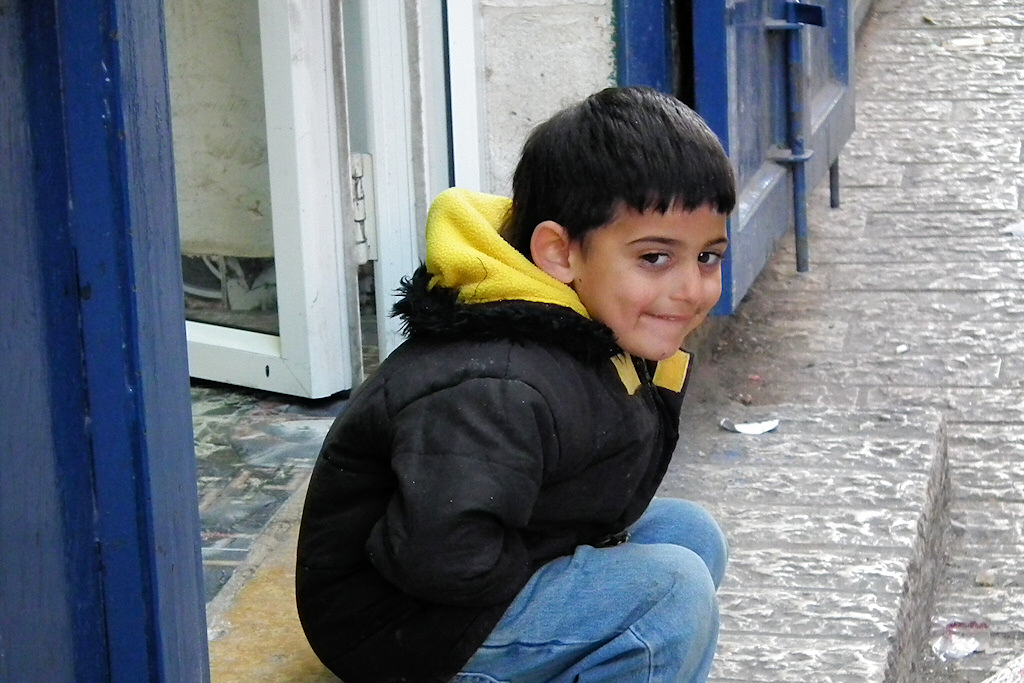
I met this guy in Bethlehem. He’s now 20ish. I wonder what he thinks right now?

In this life I have not been a financial philanthropist. Many people believe that donating money is the only form of philanthropy, but also, out in places where there is need, everyone tends to drive, elbow and oblige me to raise, funnel or fix money. They perceive this as their primary need, and that’s true in the short term and not necessarily true for the longterm background conditions I’m best at working with.

This has tended to smother and detract from what I’m best at doing – human and spiritual input and multilevel intelligence. The thinking needed for fundraising and admin is very different from that of healing and magical-spiritual work, and I cannot do everything. This has been an ongoing dilemma.

It hasn’t helped me support myself either. People tend to think that, since such work is a chosen vocation, I needed no support or already had the funds. The prevailing thinking is that, if you’re doing well financially, this enables you then to act philanthropically – and only then. For many people this point never arrives, so they don’t do it. But it needs to come from a deeper place, from a sense of calling. That’s what was the case for me and, in late life, I’m really glad I did it, even though I’m quite poor now as a result.

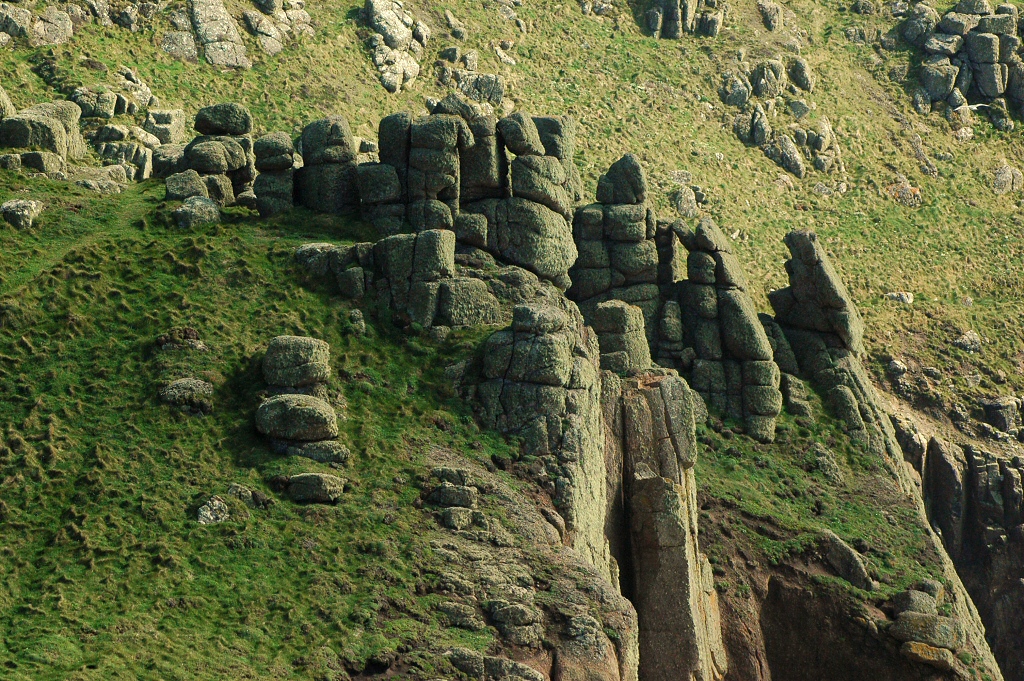
Carn Barra, West Penwith, Cornwall.

When in Palestine and Israel, there were two main age-groups of volunteers and activists from abroad, most of them self-financing. One group was around age 25-35 (and 60% female) and one was around sixty (and 60% male). The thirtysomethings were doing it out of principle, setting aside career progress for what they believed in – though for some it was a voluntary internship to help a career in the NGO sector. Some had law, business and accountancy degrees, working in ‘lawfare’ – legal improvement of the rights of Palestinians and helping Palestinian NGOs function.

The sixtysomethings were good-hearted types, often retired from careers in education, social work or healthcare, who had raised and despatched their kids, perhaps they were newly divorced, and they had the resources and long-accumulated wish to at last pursue their calling in a place like Palestine. Both of these age-groups were committed, brave and valuable people, nevertheless driven by slightly different motivations. Many of the older ones contributed to the relief and improvement areas, while many of the younger ones contributed to reform.

There’s an innate philanthropy built into Palestinian society. It’s an attitude. It’s shared by some but not all Israelis – particularly those brought up in kibbutzim or living in settlements. It’s a kind of generosity economy, where everyone is brought up with an ethic of mutual help and contribution. This is social resilience, and when society is under duress it really works. This is something we in Europe need to learn – it’s in our group memory but it has lapsed.

When a young person thinks about their future career, they don’t think of personal ambition as much as the contribution they can make, and the likely slots that will appear in their clan or neighbourhood in future – whether as a dentist, embroiderer, car mechanic or even a professor. If the local midwife is growing older, a younger one will be thinking of replacing her in ten years’ time.

The holy well on Trencrom Hill, guardian hill of West Penwith

Over the decades I’ve banged on a lot about life-purpose, helping and empowering people to identify and pursue it. Here comes a repeat quote, but it’s important. The Council of Nine (who thirty years ago jogged me into working with Israel-Palestine) were asked whether there was one thing that could change and transform the world. They simply said, “If everyone pursues their life purpose“.

This gets bigger. They didn’t say this but, by extension, omitting to pursue our life-purpose, or withholding it, for whatever reason, is a soft version of a current major concern: crimes against humanity. It is the indifferent, inherently self-serving ethic of Western and, increasingly, global culture, that permits situations such as Gaza to happen. Because we don’t stop it.

People expressed surprise and horror at the precipitate actions of the Gazans when they broke out and violated so many Israelis, starting off the current round of trouble. Anyone who actually watches anything more than the urgent splutterings of the headlines knew something like this would come. It continues a long, long story and it didn’t happen out of the blue.

The surprise arises from global indifference, which prefers stuff like this would just go away. To be fair though, there’s also a surfeit of other events, tragedies and concerns competing for attention. Israeli hubris was caught napping. The main surprise here was the strategy and audacity of it. I do not encourage violence and have been a lifelong peace-freak, but are we really to believe that the Palestinians, generally unheard, blocked and disregarded, are supposed to act like polite gentlefolk, shrugging shoulders and nobly accepting their lot without a whimper? How would you like to be a 20 year old in Gaza, with no future? Or his or her parents?

Palestinians. They’re terrorists, as you can see

Today, the Gazans are so hungry, thirsty, desperate and traumatised that it would not surprise me if there were another mass breakout, into Israel or Egypt – of mothers, families, grandparents and youngsters seeking food, water and safety. Later, Europeans will duly complain when another wave of refugees comes to our shores, but our endemic indifference has caused much of this. Refugees arrive in Europe and America to give us a gift, a gift of humanness, empathy and philanthropy. Amazingly, it has even been found scientifically that it makes us happier. Indeed, there’s more to life than comfort and security.

I am not saying ‘admit anyone who claims asylum’, but I am saying we need to be more philanthropic, to understand that changes are happening even to us, and to act longterm to deal with the sources of the problem. In the case of Gaza it concerns the historic and current issues arising for the locals from the arrival and behaviour of the state of Israel, and the wider global issues that allowed this to happen the way it did. In Britain, two key fomenters of this problem are the Foreign Office and the media.

So, life-purpose. Are we here simply to pay our bills, tread our mills, keep investors happy and, at the end, collect our pensions? This is a personal question for every single soul. We need to ask ourselves, ‘Am I rising to my full potential as a human philanthropist? Or a human anything, for that matter?’. The answer is both yes and no, and the yes bit needs acknowledging and the no bit needs some attention. [For an audio talk by me, try this.]

Here’s something interesting that I discovered. I have long known I have healing abilities but in Britain I have chosen not to work as a healer, except as an astrologer (a perceptual healer) and a community activist (a social healer). But when I went to Palestine, witnessing the needs of people there, I suddenly started doing healing work – spiritual healing, mainly, and remote healing. On people’s backs, stomachs, wounds, hearts and spirits. What surprised me was that my abilities were dramatically amplified – people were genuinely and visibly healed, and deeply so. They’d approach me later to say so, and I was much moved, rather shocked by that. It was as if the scale of need pulled out almost miraculous superpowers.

But there’s a difference. In Britain, when I’ve done such work, while people do benefit, they tend to continue with the life-patterns that caused the problem. From a healer’s viewpoint, that’s not very satisfying. But in a crisis zone, where despair, danger and dire need are big drivers, I found people really did take on board whatever I said or did, and they were so grateful, and they helped me back. Also, it was liberating to work without charging.

Sitting on the wind. Godrevy, Cornwall

I’ve never liked charging for healing or transformative work – how do you value the fixing of a major issue or the saving of a life? Twenty years ago, as an astrologer I charged £60-70 for a two-hour session but I needed £250. I did a lot for free or underpriced, because there was a need. I’d have felt happier with a salary, like a doctor, so that charging didn’t enter the equation. The ethics and politics of our time did not allow it – after all, astrologers are charlatans, aren’t we?

If you were a Palestinian in Gaza right now, you’d be enacting your life-purpose – whatever you’re best at. The same is happening for some Israelis. That’s how people survive. When the chips are down, you do what’s needed, regardless. If you can clear rubble, cook, minister to people or mind the kids, that’s what you do. No qualifications or vetting needed – just do it, if necessary till you drop.

Saturn is in Pisces: this concerns philanthropy. Without it, the world would be a much sorrier place. Philanthropy is not an option: it is a necessity, like sewage disposal. Crises such as Gaza – and they’re coming at us quite a lot nowadays, and it won’t slow down – shine a light on our life-purposes, for each and every one of us.

What am I here for, really? What am I doing about it? Our calling is programmed in us from the beginning. We know it. It is inherent, not learned in courses or demanding a qualification – it’s a natural, inbuilt gift and skill. It comes easily. Yes, we are all innately talented. If we let it out.

With love, Palden

A young Bethlehemite friend, now in his twenties

PS. I’m blogging a lot at present and it’s not really planned. It’ll die down again! If something comes up, I start blogging and, typical Aspie, I don’t stop until I’m done. There’s stuff going on in places where parts of my heart lie and, since I can’t get to Is-Pal (or West Africa), this is how I let it out. Together with psychic-spiritual work and handholding certain individuals in the thick of it.

At present, I am ‘holding’ Maa Ayensuwaa (on the right), a native healer in Ghana, who is lying in hospital, lacking painkillers and hoping money will come along to pay for an operation for fibroids – it’s wear and tear from helping people and going without. I can help her only in spirit, though our connection is such that (I hope) it works.

Site: www.palden.co.uk
Blog: https://penwithbeyond.blog
Podcasts: https://podcasters.spotify.com/pod/show/palden-jenkins

The Green Intifada and the Witches of Beit Sahour

Looking over the Judaean desert, with the Dead Sea and the montains of Jordan behind

I’m busy re-editing two of the three books I’ve written about Palestine (the first is here). Here’s a clip from the third, written in January 2012 when I was in Bethlehem on a five-month stint, and it might interest some of you. I’ll publish the second and third books online at some point soon.

On Saturday I went to a talk at the Alternative Information Centre in Beit Sahour (part of Bethlehem) about the Green Intifada. This was given by a British woman, Alice, who helps run a permaculture farm down below Beit Sahour called Bustan Qaraaqa. Here is one arena where the British and European alternative movement plays a significant role in Palestine and Jordan.

The village of Irtas, as seen from my kitchen window

Alice talked about the historic deforestation of the Middle East. It was recorded even in the Epic of Gilgamesh of 300 BCE, but it has been seriously rampant in recent times. Jordan’s forests were decimated a century ago to build the Hejaz railway from Damascus to Mecca, and Israel has focused on disabling Palestinians’ farming and food security for decades. Israel’s strategy has been to drive people off the land, especially in Area C, which is 62% of the West Bank, into the cities, ripping Palestinians away from their rural birthright.

This is happening right now in the Negev area of Israel, where Bedouin villages and lands are being destroyed and appropriated, and they’re being herded into townships to ‘civilise’ them and rip them away from their cultural roots. One Bedouin village has been destroyed by the Israelis and rebuilt by the Bedouin, helped by Israeli and international supporters, thirty times.

Palestine’s natural forests included oak, olive, cedar, pistachio, almond, fig, pine and moringa trees (moringa is both nutritional and medicinal). Many trees were domesticated and farmed long ago – figs in 9000 BCE, olives in 4000 and almonds in 3000. Sylvicultural products included frankincense, balsam and other medicinal extracts, and woodland-dependent herbs. The rise and fall of cultures in the Middle East has been intimately connected by historians with the health of forests.

Looking toward Bethlehem from the Herodeon

What’s necessary is not just a revival of farmed trees but also a propagation of shade-inducing, humus-building, land-regenerating, soil-fixing un-farmed trees. This is difficult because the Israelis deliberately oppose and destroy such work – they often plant pine and eucalyptus plantations over old Palestinian villages and farmlands to judaise and ‘redeem’ the land. In doing so they also kill the sub-soil and render land useless to further farming by Palestinians.

When forests disappear, the water table sinks and rainfall declines, increasing desertification. Israeli settlement-building, often on hilltops, many of which were previously wooded, destroys water-sources, leading to rapid run-off and soil erosion lower down and causing rain to fail to infiltrate the ground and the water table.

They take water from the West Bank highland aquifers for irrigation and modern urban water-usage, charging Palestinians high rates when the sell it back to them and using the money to subsidise water prices for Israeli settlers. The Israeli offensive focuses systematically on disabling farmers and driving them off the land into towns or, preferably, out of the country.

Irtas is Arabic, taken from the Greek word Hortas, which has the same root as ‘horticulture’. Irtas is a market-gardening village, founded 7,000 years ago.

Deforestation thus represents dispossession. But it started long ago, and one problem has been that, when armies have rampaged over the land – as in Roman times or during the Crusades – wrecking the land and destroying farming and village security, people stop investing effort in the longterm. They stop practising sylvicultural methods that would sustain the forests and farmland. Much of the hilly West Bank is festooned with ancient terracing which, if not maintained, falls apart, leading to soil erosion, land-defertilisation, loss of trees, lowering of water tables and agricultural decline.

So the revival of Palestine is intimately connected with a green intifada, a new kind of resistance movement that builds sustainability and re-fertilises the land. Except there’s a problem: Palestinians are hardly aware of the need for it. [I think this has changed quite a lot since I wrote this in 2012, especially amongst the young.] They tend to think that ecological action is superfluous to their more pressing human rights and material problems.

Ecology is something Westerners go on about which is irrelevant to them, or it’s a luxury consideration. Yet they suffer cancer from toxins, dense urban populations, land-loss, dependency on imported food, psychological damage arising from loss of emotional contact with wilderness and open space, a preponderance of litter and rubbish and a general social disempowerment which re-ruralisation could ameliorate.

So, somehow, it’s necessary to spark a new green awareness in Palestine, an awareness which gets incorporated into the resistance movement. By resistance I don’t mean warfare and polarisation but social-cultural revival amongst the Palestinian people, a strengthening of society such that, whatever is done to them, they have an increased resilience, adaptability and survival power.

Ecological revival is a core, not a peripheral issue: the whole world needs to understand this, but Palestinians in particular, with their special problem as an occupied, colonised people, need really to become leaders in this field. It is a strange yet karmic fact that both British people and Palestinians who have lived abroad and returned home become crucial catalysts of this.

This is the next level of the resistance movement in Palestine, the agenda for the coming generation. So good on you, Alice, for articulating this issue so clearly and doing your bit to spread the word – not least through the exemplary work they’re doing down at Bustan Qaraaqa.

Irtas. On the hill on the left is a Catholic monastery and in the distance on a hill is the illegal Israeli settlement of Efrat. Hope Flowers School is up the hill on the right, just outside the picture.

Before and after the lecture I met two delightful English ladies, ‘the witches of Beit Sahour’ – and Alice, a ‘green witch’ from North Wales, made a third. This was great, because suddenly I was with people with whom I could be open about things I usually remain quiet about.

Most Westerners and nearly all Palestinians don’t want to hear about my psychic work, about my being an astrologer, healer and political mystic, a dissident powered by vegetarian food, meditation and holistic attitudes, with a pedigree and a bunch of perspectives that are right off most people’s map. Not to mention the curled-copper, phi-ratio, anti-gravitational energy-harmoniser I wear round my neck, tucked under my shirt!

One of the witches asked me how I had started my involvement with Palestine. I thought a bit before answering and then came out with it. It was ETs and cosmic beings, the Council of Nine to be precise, in the early 1990s, that started the process. They put the situation on planet Earth into clear perspective, also clearly stating that I had an appointment with this land which I should follow up.

This was followed in the late 1990s by the late Pam Perry, a disabled Glastonbury astrologer, Pisces, who campaigned for Palestine by phone and laptop from her bed, who benignly tricked me into pursuing this sometimes-futile game, bless her. Together with Sheikh Bukhari, a Palestinian, and Eliyahu McLean, an observant Jew, we founded Jerusalem Peacemakers in 2002.

It was also a calling from at least three former lives involved in this region, always a as foreigner (as a Sumerian, a Nubian and a Kurd) yet playing a part in the history of the Jewish people, a jiggling of the soul and a grinding process in my heart which caused me to cut out of the bill-paying, treadmill-treading duties of a typical Westerner and to get involved with this mess. Well, my maternal grandfather was in General Allenby’s army of invasion in WW1, and my father fought in Egypt, so it’s in my genes too.

The ancient holy well at Irtas

They lit up when I told them this, and suddenly they came out with their own secrets about the consciousness and healing work they do. One of them is married to a Palestinian (a nice chap) and the other works as a legal advisor and researcher for a rights organisation in Bethlehem called Badil – but even there they keep quiet about their core beliefs. Their activities and beliefs are not deemed credible, whether from a Western-rationalist viewpoint, from a Muslim viewpoint or from a modernist-Palestinian viewpoint. So people like us keep quiet. But we had a profound sharing together, like a secret cabal, and it was refreshing.

We had a fine time in our corner at the AIC until it was time to go home – Bethlehem closes down early, and the chances of finding a taxi back to Al Khader decrease rapidly after 10pm. Nevertheless, as I wandered out, steeling myself for a long and chilly wait, a taxi drove past and stopped for me. It turned out, as is nowadays increasingly the case, this taxi-driver had carried me before in a former year, and we chattered on the way back, he in his broken English and me in my patchy Arabic, until we reached the school. The lift to the top floor was defunct, thanks to the recent electricity cuts, so I climbed the stairs. There was another electricity cut while I was writing this piece, and I gave thanks for being on a laptop with a good battery!

Hot water bottle time, and the customary shivering as my bed warmed up. Ah, I love living on Planet Earth – well, sometimes, at least. Other times, my guardian angels watch me, fascinated, as I struggle and persevere through the facts of worldly existence, and wondering what’s to come next.

Well, inshallah, I have a visitor from Glastonbury (Liz Pearson) coming to stay, and a report to write, and a load of other issues to get to grips with. Now it’s time to put the kettle on – classically bloody British behaviour. Would you care for a cup of tea in Bethlehem?

Ooops, the lights have just gone out again. The mobile phone network goes down too, at the same time. Well, one thing is for sure: it’s probably not the Israelis – it’s crummy power equipment, suffering a hangover after the wind and rain. A funny consequence of this is that many of my neighbours emerge from their houses when this happens, because their electric heaters and TVs have gone off! We really do need a green intifada, and PDQ.

Grace 2

Some additional bits

Swans, Falmouth, Cornwall

This is supplementary to my last blog entry, for those of you who are following that story. Here are some comments, thoughts and bits of further news posted on my Facebook page, which might interest you.

Jo
A heartbreaking story. I’m so sorry Paldywan. Love you. X

Palden
Jo, it’s the pathos of human life and death. Over so many lives it has been part of the human condition. I still believe we can wind it down though, over time, to make this world a happier, friendlier and safer place. Big hug, Paldywan.

Stella
Only today have I read this story in full. I’ve been putting it off as I knew it would be harrowing. It is impossible and undesirable to make any judgements as none of us are privy to the complete truth in all its details. I can only admire you, Palden, that despite your own serious health challenges you took this on and tried your utmost to help. I feel diminished and ashamed that I would not have been prepared to do the same. In trying to make no assumptions, a deadly sin in my view, I feel that although her story is unbelievably harsh, on some higher level it serves a purpose for humanity and her own sacred contract would have made this clear to her before her life began. Easy for me to say, I know, but all of us who read this story will be deeply affected by it and the wider it is known, the greater the lesson for humanity will be. Blessings to you, Palden. You did an extraordinary deed.

Palden
Stella, hello. Yes indeed, the world can be a really harsh place. These events are taking place in an unstable zone as well. In countries like Britain, with notable exceptions, we live in a zone of rights and relative comfort and decency, sort of. It can therefore be difficult to believe some of the things we hear happening elsewhere. Despite such dramas – in the Sahel it’s a mixture of criminality, smuggling, jihadism and foreign interference – normal life goes on too. In our own media-dominated countries we tend either to ignore such places or to over-exaggerate the dramas going on there, when the cameras look, so we have a rather distorted view of what goes on, and also of what doesn’t go on. It wasn’t my plan to get sucked into all this, and it has been a stirring and disruptive experience. But I understand it as part of my pattern, having been involved in similar ‘borderline’ things before in life. This kind of work – as is the case with nurses, firefighters, soldiers, first-responders, aid-workers and activists – does tend to lead to a kind of vocational dedication that many people prefer to steer clear of, and I don’t blame them. But for me it has also met up with a difficulty in being able to hand over such duties to others when I can no longer continue – and this has been the case in my work in Palestine, with the Tuareg in Mali and now with this. It works better when you work for an NGO, where employees can be hired, or they can resign or retire, but there’s a price to pay for working inside that sphere too – not the same closeness to the ground, and not quite the same deep human feeling that draws many people into this field in the first place.

Palden
Last night (Saturday 4th March) after talking to the doctor in Niamey (a good man) it was clear to me that Felicia had reached a crossing point. She was drawn to follow her daughter Phyllis, and I could feel her tiredness with everything – in a way, blocked at every turn. She had tried so hard. I felt it was important to nudge the process – not in the sense of encouraging her to die, but in the sense of helping her face that ultimate question of whether to live or to die. To get clear on it. She has been confronted with so much darkness and badness that I took her hand and led her to the light, to love, care and protection of a kind she sorely deserves. I can do this because I’ve been there myself. I gave her to the angels, asking them either to take her or to pump her up with new life and return her – but not the grey zone in between. The important thing is that, if she returns to life, she needs the strength, heart and will to make something good of it. She’s a special person, but she has been up against too much – even when a child she watched her family being killed in front of her, in the Liberian civil war. So I have handed her to the angels. I await news from the doctor as to what has happened at his end (Sunday midday).

Jennifer
Palden Jenkins I was seeing/holding the same for her: seeing her held in golden angelic light while she made her decision, telling her either way was ok, and asking the angels to give her all she needed 💛🙏💛

Liz
Thank you for sharing. So very sorry to read this – really shocking.
I hope you can focus on yourself
❤️

Palden
Liz, I wish I could but, unfortunately, it is incumbent on me to get her home and safe. If I worked for an NGO I could sent for reinforcements or be replaced, but I cannot, and this is a price you pay for being an independent humanitarian. But then, I chose to be involved and take responsibility for this, so it’s up to me. Focusing on myself is not right now very easy.

Liz
Palden, I understand the need to help, truly. I perhaps haven’t followed everything but hoped so much the money that covered the operation for the little girl would be life saving. I hoped dearly I had made that difference. Again, it’s also important you focus on yourself. Take care ❤️

Palden
Monday morning, 6th March. Latest report…. Felicia is alive and conscious and requesting food. She has returned. The doctor (he is Rwandan) reported that she has been near starvation and needs building up. So that is what needs to happen next.

Jennifer
Palden, wow, what an amazing, strong woman!

Palden
I think the reason she keeps coming back to life (third or fourth time now) is that she has a mission.

Palden
Tuesday 7th March. Felicia seems to be improving and has been discharged from hospital, now staying with a nice lady in Niamey. The doctor who has been looking after her has been helpful and good. We hope to get her a ride on a truck back to Ghana in a few days’ time. She is missing Phyllis a lot though. It’s difficult raising money to support these developments while I’m struggling for money myself, and I’m looking forward to bringing this saga to a close, but somehow we’ll get there. Prayers for her and for all of this are welcome! It’s fullmoon, and hopefully a turning-point. Love from me, Palden.

Zoey
Paldywan! I just took in the entire thread here. This is real life! So many people are plugged into screens, trying to escape thr collective despair. I don’t know how Felicia is alive,yet i will join in strong prayer for her today.

Palden
Zoey, yes indeed, very real life! There’s a lot of it going on. I shall not forget that moment some weeks ago when you and I worked together to revive Phyllis – thanks for being there at that moment, when needed. Even though eventually we did not succeed in keeping her alive, I hope that, in Phyllis’ own journey, she was helped by the intervention of helper souls who supported her. God bless her little great soul. She is being looked after by the Okomfo Ayensuwaa, the Akan native healer who was involved in December, who was killed by the gang for doing so. I miss the Okomfo – for a few days we connected deeply across space and a cultural divide that both of us were able to reach across, to work together on healing Antoinette (Dr Isaac’s daughter, who later died) and Felicia. This whole saga has been so moving and, even now, my cheeks are dripping with tears over the pathos of it all. This is, indeed, real life.

Kath
Dear Palden. A harrowing, heartbreaking read. But in its sharing, I hope that it has lightened the load…a little at least. Those who heal, in the reading of your words will pick up the threads, and in compassion and humanity, help to hold them as Felicia makes her way. Blessings to you too Palden, be gentle with yourself. ❤️🙏

Palden
Kath, hello. Doing my best, though I’m really ready now to end this saga and bring it to as good a conclusion as I can. Yes, it has been harrowing, even for one who has been involved from a distance. Wearing too. I seem to have held up better than I would have thought. But now I need less uphill grind, sailing against the wind and upstream, and more of at least a level pathway. This has not been the only challenge I’ve been facing, having manifested a number of them, the overall meaning of which I accept but don’t yet fully understand. There is meaning in it though (I can sense it), and that’s why I’ve done my best to stick with it to the end. Thanks to you and everyone else for your heartening messages.

Palden
Wednesday 8th March. Things are progressing. My hope is to bring this whole matter to a conclusion by getting Felicia home – Niamey is not a good and safe place for her. So it’s a big push now to try to fix that – involves raising 600 GBP to pay for medical bills in Niamey, for the fare back to Ghana (already paid and booked for tomorrow/Thursday) and for survival money on the journey. The journey will be on the back of a truck going west to Burkina Faso and then another south to Ghana. Today I’m focusing on that.

I shall be so relieved if we can pull this off, because I badly need to get focused back on my own life and needs – this whole saga has been a bit too much for me (though it would have been so different, and so much shorter, if the company had paid up as promised). The doctor is being very helpful, as is a lady who is a pharmacist, who has taken Felicia into her home until it’s time to leave, and thanks so much to both of them. (The doctor wishes to join our Sunday evening meditations.)

Both Felicia and I need to get our lives back, and Felicia needs to be with her friends and in known territory so that she can start rebuilding her life and getting over the loss of Phyllis, her three-year old daughter. I’m really sad about losing Phyllis, having fought so long and hard to keep her alive. Thank you so much to those of you who have sent invaluable healing and support. At some stage I shall be able to tell the whole story, but that’s quite a lot of work, and it involves some tricky issues about what is safe and good to tell and what is not. Meanwhile, the challenge now is to make that final push and pray hard that I can get Felicia home again safely and without further challenges – with luck, by Sunday or so.


So that’s where things stand today, Wednesday 8th March. I hope to report further in a few days’ time. Sometimes I wish I were better at fundraising and hustling money, but my strength is in other areas such as human- and soul-support, negotiation, counsel, remote healing and crisis-management. You can’t do everything. NGOs can be good at providing stuff and facilities for large numbers of people (such as in Turkiye-Syria right now), but they are often not quite so good at the person-to-person stuff. There’s need for both.

Sleeping seals, Godrevy, Cornwall

Thriller

with a plot still unfolding

It’s that silver lining. And can you see what I see?

Well, it’s a bit like that. For those of you who are interested, here’s the latest lowdown.

Sunday morning, wet and windy here in Cornwall. Early on, and Dr Isaac and I were dealing with an emergency, yet again, on Skype. We’ve become quite a team, he and I.

Felicia is hanging in there, just about. We had to take her back to hospital last night for intensive care, and a doctor there has allowed it on promise of payment later, bless him. Dr Isaac has sold his TV and sound system this morning to pay for oxygen and a drip. He’s such a dedicated doctor. I am sniffing around amongst contacts in the NGO sector, to see if there’s a good job waiting for him somewhere – he’s a true asset and he deserves better. He and his family risk having an Unhappy Christmas, though if I can change that, I shall. They are looking after Phyllis, who is doing well, and she’s a good kid too, and everyone loves her. We need to get her Mum Felicia back.

This is sharp-edged stuff. It’s really testing our mettle and our capacity to keep finding remarkable solutions. But we’re also both weary, fed up and in debt. Something needs to change now.

As you might imagine, this has been an enormous learning experience. It started with my doing a return favour for one of the company’s agents, to get him out of a tight scrape. Then it mushroomed from there. Quite a few people have been questioning whether I’m getting things right – to be honest, I don’t know, and we shall see. But I feel it’s right to keep these people alive.

The Moon emerges from an eclipse over Bethlehem, 2011.

So now it is a waiting game. Mercifully, my beating heart works well under pressure, and I’m not unused to being under fire. Though one thing we cancer patients have is greater sensitivity to and higher impacts from life’s buffetings, as if a layer of emotional armouring has been stripped away and we’re less protected. I’ve realised this in the last year since I became a single man again – fewer fallbacks, everything is up to me.

My response to this vulnerability has been a greater readiness to get down to the bottom line faster than before. Perhaps there’s a certain aged recklessness too, that comes when you know you’re in last-chance saloon and your time is limited. So, in a way, within the scope of the capacities I have left, I guess I’m playing for high stakes.

I’ve dealt with one-to-three crises every day for two rather long months, with no days off, unpaid, and I’m still in the running. Phew. I do want a rest and a break – even, dare I say it, some fun! But while Felicia, Phyllis and Isaac are in trouble, whatever anyone says, I’m staying with them. It means a lot to me, and I’m willing to lose friends over it – probably already have. This crunch period of the last week has really made me get down to first principles. What is my life about, really?

Burning. Sweatlodge fire at the Oak Dragon camp, 2022.

A friend in Nova Scotia, Susan, who has recently been my chief confidante, sent me a really pertinent lesson, written by someone called Paul Weinfield. Here are key lines from it.

Leonard Cohen said his teacher once told him that, the older you get, the lonelier you become, and the deeper the love you need. This is because, as we go through life, we tend to over-identify with being the hero of our stories. This hero isn’t exactly having fun: he’s getting kicked around, humiliated and disgraced. But if we can let go of identifying with him, we can find our rightful place in the universe, and a love more satisfying than any we’ve ever known. Everyone from CEOs to wellness-influencers thinks the Hero’s Journey means facing your fears, slaying a dragon, and gaining 25k followers on Instagram. But that’s not the real Hero’s Journey.

In the real Hero’s Journey, the dragon slays YOU. Much to your surprise, you couldn’t make that marriage work. Much to your surprise, you turned forty with no kids, no house and no prospects. Much to your surprise, the world didn’t want the gifts you proudly offered it.

But if you are wise, you will let yourself be shattered and return to the village, humbled, but with a newfound sense that you don’t have to identify with the part of you that needs to win, needs to be recognised, needs to know. This is where your transcendent life begins.

Gosh, well, yes. That hit me right on the nose! Yes, and that’s life. Planet Earth is a school – for some of us a real crash-course – and our purpose here is to graduate with honour.

But we do need to keep the school going, to enable our descendants to get born into a planetary body, to have a decent chance to do something with this strange privilege of life on Earth. And, you never know, we might one day have Heaven on Earth.

But today, we’re still on the case. If you are so inclined, please stay with those healing and helping thoughts, because we aren’t out of the water yet. I want these guys to have a Happy Christmas too – unlike me, they are Christians, and good Christians who do seem to live by the teachings of their master. That is, they’ll bust a gut for their fellow humans.

Meditation acts as a complement but not a replacement to action. In the Majority (‘developing’) World there is a higher proportion of spirited people who do bust guts for people and for justice.

Not that such people are lacking in the rich world, but here we play safe and stay within our comfort zones – we behave ‘properly’. It’s not very good karma, in the end.

This is one reason all those poor faceless people are coming over to Britain in flimsy boats – we are attracting them unconsciously in order to help us learn how to be more human, how to share. We are in a ‘cost of living crisis’ to teach us how to pull together and look after each other. We have problems with our politicians and bosses because we as a society have not taken life in our own hands. We have problems with race and gender because we labour under the belief that other people are deeply different from us.

Ridin’ that wave. Cape St Vincent, Portugal.

The good news is that, once the Great Correction really starts, life is going to get easier. Why? Because inequality and injustice are inefficient, energy-wasting, murderous ways of running a world. It doesn’t work. We need to make life easier. At last, increasing numbers of people are realising this. But the test lies in what we actually do. Leaving your job (or whatever) and changing your life is just the first step.

To get a country like Britain to a sustainable level, we need to reduce our consumption to 1960 conditions. Those of you who remember that time will know that, though there were problems, as there are today, life was alright. We had more time for each other. It’s doable, and we can be happy with that. It’s all to do with how everything is shared.

Bless us all. Life is tough at present, for many people. History takes a long time, and it’s grinding hard. But the Great Correction has actually already started – Covid was a tipping point and we’re now sliding inexorably into accelerated change. Now we just gotta get it over the hump, so that we achieve the necessary momentum to really crack our world problems.

Thank you so much to all those who have helped and contributed. There have been times when this has brought tears to my eyes. You’ve made a real difference – Felicia and Phyllis are still with us. However, this has become more of a marathon than a sprint, and there’s more to go.

It’s good practice. That’s how it’s going to be in coming decades. There’s no going back now. If I could hug you all, I would, but I’m down’ere in glorious isolation in Cornwall, so please feel it imaginally.

Love from Paldywan, and remember, stay human.

Blog: https://penwithbeyond.blog
Podcasts: www.palden.co.uk/podcasts.html

The mountains of Sapmi, or Lappland. Padjelanta national park, above Kvikkjokk, northern Sweden – where, right now, the sun does not rise.

Transmogrifications

and perhaps a task to do

Glastonbury Tor, from Ebbor Gorge

It was deeply moving to walk into the Assembly Rooms in Glastonbury to a hall full of amazing people. I had been there so many times over the years, organising things or performing, and now, here we were in 2022, and these people were all waiting to hear whatever I was to come up with.

Whatever, indeed. I had a rough idea of talking points, but my talk didn’t follow that track. It went deeper and further than I thought it might. It’s funny when that happens: something in me suddenly decides to change course or to go deeper or faster, and off we go, plunging into the unknown.

While I’m speaking, I see the faces of people in the audience but my normal way of assessing their responses, watching body-language, is kinda switched off. Something else is doing it. I’m strangely unaware of what I’m saying. At the end of my talk, when I stopped and saw people lit up and clapping, I got a funny feeling of relief, as if it was a surprise. Which, in a way, it was.

There came a moment when my mind interjected on the side, wondering whether the talk was dragging and drooping, but that thought evaporated as fast as it came. Next day, Caroline, whose perceptions I find worth listening to, reported that my talk kept lifting, building and covering a lot of ground. I was glad to hear that, since it’s a bit strange being the person who missed much of what went on.

I didn’t miss everything. I’m aware of the gist of what I’m saying but I’m not following it – it goes past me. This isn’t verbatim channelling – I don’t get words or word-based concepts, and it’s me who does the translation and interpretation of what they’re trying to bring forth. A sub-verbal part of my psyche is busy meta-processing. My brains process the concepts and verbiage. And I need to slip into a rather altered, hyperintuitive state to do it.

Bundles of material are dropped in and it’s for me to unravel and unpack them. There’s also plenty of stuff lodged in my psyche from years of doing this. I’ve got used to the feeling of a dropped-in bundle and what to do with it. I wouldn’t call myself an advanced psychic – it’s just that I’ve chosen to listen, take note, hear and accept what comes up inside as real and valid. Not indiscriminately, since it still goes through my filters, to make sure it makes sense.

St Michael’s Mount, from Botrea Hill

Over time, things have evolved. I went through a critical breakthrough at age 42. Up to then, something in my busy intellect was interfering. Something doubted what I was getting, trying to detach from it, check the facts or worry over the improbably crazy yet ultimately quite useful insights I sometimes came up with. Then, one day, I had a deep inner experience. I found myself walking backwards toward an abyss – and walking backwards is something we humans are built to avoid at all costs. I had a moment of panic, followed by a critical moment in which I made an act of trust.

I went over, falling backwards over the edge. Falling, falling, this was an Alice in Wonderland moment, and I didn’t know what would happen. Would I just go splat? Suddenly, in mid-fall, something inside me snapped together, I turned, spread my wings and found myself flying, and a tremendous sense of uplift and a feeling of agency followed. I was flying over a wide landscape, safe on my wings. It became clear that, in the innerworlds, I had to trust my perceptions, natural capacities and ‘inner friends’ like never before. From then on, it all worked better and clearer.

I’ve been public speaking since age 15 – and, before that, would you believe, I was quiet and shy. I became good at notes-free speaking. Up to age 35ish, I did it on thought and preparation, but then something started happening. Two weeks before an event I’d have a clear idea what to speak about and how to do it, but as the time came closer the idea would melt away. This worried me. I was suffering fear of embarassment and of screwing up in public, and I knew it. One day I was nervous and decided, for want of anything better, to entrust myself to it, let go of fear and simply get on stage, take three deep breaths and start with the first thing that entered my head. This worked brilliantly. It became my new approach. But the trade-off was that, after that time, I was no longer fully aware of what I’d said while speaking.

Palden at Avebury. Photo by Rebecca Brain.

In the last three years cancer has changed my psyche. A combination of the cancer, the chemo drugs, the deep states I entered while ill, the fatigue and long hours alone… these moved the circuitry around, changing my perspective and perceptions. My capacity to deal with facts, names, information, decisions and left-brained issues declined, and my right-brained, creative, insightful, intuitive side grew stronger. I became less concerned about life and its intricacies and more like the Fool on the Hill. Out came my blogs and podcasts, surprising me at what was coming out and the way it was doing so. Something new was starting up.

The fluent side of me is what you see in my talks. But ask me whether I want tea or coffee and I’ll probably look blankly at you. On Glastonbury High St an old friend stopped me. Joseph had changed, and it was at least fifteen years since I’d seen him. I looked blankly at him – a very Aspie response. To him it might look like nothing’s happening but, inside, I’m searching memory banks, piecing together gallons of feeling-tones and associations, often too slowly to give a decent response right then. He must have thought I didn’t recognise him – I did, but I needed five minutes to piece a hundred bits together. Sorry, Joseph.

In spring 2022, something in me started wanting to come out of hiding. I was tired of hanging around at home ‘shielding’ and getting bogged down in risk-aversion. Something new had emerged in my blogs and podcasts and people were appreciating them. I thought of doing events and ‘magic circles’, moved by a sense that I might be popping my clogs before long. I wanted to find a way of seeing many friends in a way I could manage, and pass on some gems before I went. I thought it would do me good. Besides, I had run out of interest in my own company.

It’s funny how life can trick us into things. My late aunt Hilary Bedford was closely involved with Alan Turing at Bletchley Park in 1942-3 and, at the time, they thought they were breaking Hitler’s codes. Well, yes, they were, but the significant thing for which history will more enduringly remember them is that they made big steps in inventing the computer and laying the foundations for artificial intelligence. Life is what happens when you’re busy making other plans – and that’s what happened to John Lennon too, after he wrote those words in a song for his son. In turn, when I was planning the magic circles, as a way of meeting people and sharing some insights, I wasn’t aware that something else was going to start happening. But it did.

On my trip upcountry in August 2022, I did two magic circles and attended an Oak Dragon camp. All sorts of things happened in those two weeks. The experience lit me up and a profound healing and breakthrough came with it. Something started emerging that I hadn’t been aware of. Back in May I’d got the message that “There’s something more for you to do…”, but only in August did it start revealing itself.

Photo by Rebecca Brain

When you come close to death, as I did last winter, you become acutely aware of what you haven’t done in life. Then, when you die, you have to live with that. Mashallah, it’s done and gone. In my life I’ve made some progress in the matter of consciousness, deep geopolitics, history-redemption and world healing, and I felt a kind of duty to leave some of this knowhow behind – it was a task not done. It took my illness of last winter to wring this realisation out of me, and by summer an initial vision had emerged.

The whole picture came quickly: suddenly one evening I saw how it could work. Well, theoretically. That was the 1% inspiration bit, and now we get to the 99% perspiration bit. It’s time now to mull it over and map it out a bit more. Also I must figure out my capacity to do things, how much active service I have left, what I would need, and how all this fits. Do I have what it takes? Do I need simply to suggest ideas and set a tone, or do I need to put in a few years of active engagement?

How small or big, and how discreet or how public should this be? It would need setting up so that it works well when I’m gone. There’s an extra personal twist: it’s my last chance, and getting things wrong is not really an option. Currently I might have three, five or, at a push, seven years to play with. And the best way to make the gods laugh is to tell them your plans.

On Thursday I was so unwell that I found myself wondering whether the gods indeed were laughing… I was weak, wan, clogged and weighed down, spending much of the day in bed. I wasn’t dealing as well as normal with my cancer drugs, administered on Wednesday. I think it was also a ‘healing crisis’ of sorts. Sometimes an illness comes to help us meta-process big changes in one fell swoop – some downtime and a re-boot are needed. A lot gets sorted out at once, in a kind of controlled burn or a induced churn. It was all about opening up to the future and dealing with the past and the full facts of my situation. But I was on my way back up by Friday.

I’ve gone quickly from a quiet to an active life. Something rather magical seems to be happening. It’s a possible coming together of a new constellation of people, happening rather naturally without deliberate action from me – except that people coming forward all know me or are tweaked by what I’m flagging up. This kind of thing has happened before and I recognise the symptoms.

Caroline urged me to write down my ideas, but I’m not so sure. The prospect of sitting at a computer for hours on end, writing yet another book (my thirteenth), doesn’t really light me up – though something will need recording somehow, and it might be better in audio. I feel more of a need to focus on people-foundations and processes for evolving things since, if this project is to work, it will rest on these. Perhaps I’ll assist energetically from upstairs once I’m gone, but it will be up to the living to do with it what they can and will. That’s fascinating: my obsolescence is built in. I feel rather good about that.

A member of the herd on our farm

I’m fermenting these questions, waiting for clarity. And giving other people thinking time. It’s important also to do a devil’s advocate job on myself. Why not just hang out in Cornwall and take it easy, walking the cliffs, tinkering around and writing the occasional blog? Or I could go to Sweden or Palestine – even Mali or Kirgyzstan. Or I could be a guest speaker at lots of gigs and supplement my pension talking about cancer and clog-popping. I could even join the grumbling classes and become a pain in the ass for the younger generation.

What will be will be, and it’s not really the goal but the journey that matters. And the next step. In Buckfastleigh in Devon on Saturday (24th Sept 2020) there is my last planned magic circle for a while – until something else happens. These magic circles are evolving each time, and this one will have some live music and perhaps more energy-working than before. We shall see what emerges. You’re welcome to come, though do book in advance. It’s all about soul-networks, channelling our root-source, world healing, remembering the reasons we came, and sharing something rather special.

I cannot organise future events myself, but something will unfold in future, inshallah. In future I’m likely to spend more time visiting places, but I shall stay based in Cornwall because my spiritual roots and inspiration lie here, and without them I am lost. Which wouldn’t be helpful at all. Something is happening, times are changing and all is well.

Lots of love from me. Palden.

Podcasts: www.palden.co.uk/podcasts.html
Magic Circles: www.palden.co.uk/magic-circles.html
Recording of my Glastonbury talk: www.palden.co.uk/podtalks.html

The view from my window

World Work

Inner work to aid humanity’s evolution

The Isles of Scilly from the West Penwith mainland, Cornwall

I’m not a lightworker or a conventional prayer-circle type. But I believe we need to take a multi-pronged approach to ‘world work’ – meditative, religious, psychic and process work to assist the world. I’m esoterically more activist and gutsy – it’s born out of a political background, humanitarian experience and an aged-hippy approach to life.

If you do psychic work over a period of time, in conjunction with inner friends or ‘guides’, then you’ll tend to develop an operating style between you – and that’s what happened to me. It’s not that I’m an advanced psychic. It’s more that I’ve been at it for a long time, with formative and defining inner experiences along the way.

An example: when I was 41, in an inner process I found myself walking backwards toward the abyss – a vulnerability we humans just aren’t happy with. I had tremors of fear but just had to go over the edge anyway. Tipping backwards, I fell into the void, falling, falling… until an instinct made me turn, spread my arms like wings and fly… Since that moment, I’ve been able to set my mind more free, and my busy brains don’t interfere so much.

One bizarre benefit of cancer has been the inner experiences that have come with it. Forced to spend time in bed, I went on adventures. It gave me a sense of usefulness at a time when I was wondering whether it was all worth it. But no, the management clearly said “Don’t ring us – we’ll ring you“. Well, you do get some comedy sometimes!

I’m of the opinion that, if you give a flower to an asshole or shower them with light, it will likely be a turn-off and inappropriate, with the opposite effect to what was intended. Billionaires and terrorists don’t change just because you want them to, and you wouldn’t either. You have to get in there, make friends, gain trust and work it out, as if there, relating to a real person – albeit perhaps to their wiser, more feelingful self.

Sometimes I’ll give a backrub to a mountain jihadi, or sympathise with the rigours of a politician’s life, or make an etheric cup of tea for an old lady – ‘confidence building measures’. It goes on from there. Dialogue with them as a guest in their space. When someone can see it’s in their own best interests to change, they’ll change (though not always). Typically for stroppy humans, if you push them around, they’ll resist.

If you want to penetrate a computer, work with climate issues, deal with a natural disaster, do longterm work with ‘megatrends’ (like population growth or deforestation), it’s a question of getting right inside the matter, stepping into people’s shoes, seeing what life looks like to them, getting into the back office, ferreting through the datachips or feeding helpful ideas to people in need.

One key thing is social attitudes and particularly the freeing up of groupthink, cover-ups and polarised positions. These can involve societal resistance or oligarchies who like to believe they’re in control. Changes in attitudes form the basis of world change. A valid notion here is unconcealment, the exposure of things people should know of and think about – whether withheld, or people don’t want to know, or it is simply thitherto not known.

This is not about steering things in ways we want to see things go: it’s about helping humanity accelerate its evolution. Humanity’s group soul knows what it’s doing even if we humans don’t. Sometimes the ‘wrong’ thing seems to have to happen in order to catalyse a wholesome and fundamental change. This concerns defining moments – events embodying big issues and forcing critical shifts or decisions. By this means the collective unconscious and force majeure leak into real life.

In 1995 a circle of eighty or so of us worked with Bosnia – a powerful and moving session lasting some six hours. We heard later that, while in session, some drunken Serbs had bombed a marketplace in Sarajevo, killing 60. This was sobering, shocking – definitely not our intention. What had gone wrong? Yet, a week or so later, this defining event made NATO go in, ending the war within a short time. Something ‘bad’ led to something ‘good’ – though we couldn’t and wouldn’t have designed it that way. We can’t say we made NATO go in, and that wasn’t our thought, but the synchronicities, considering the war had gone on for three years, were too close. We must assume some involvement, even if but to oil the works or connect some dots.

One of the big lessons here is: carefully consider what you pray for. Also, only take on doable challenges, and be willing to follow them through later on.

The main idea is to help foster forwardness and a sense of progress – it’s like midwifery. We cannot force progress but we can do our best to facilitate it. Deep change doesn’t happen overnight, and sometimes we must work at it over time. Humanity’s problem is that it feels blocked, jaded and discouraged, as if nothing will make any difference. So the key issue is to help people gain a sense of relief and momentum – get a taste of the benefits of accelerating evolution.

It’s a matter of getting our politics, cultural judgements, ideologies, values and comfort-zones out of the way. This isn’t easy. It helps to have travelled outside the rich world to see things from another angle. Be aware of the way the media and your education shape your thinking, and listen more closely to events than to what people say. Study a little history, background and smallprint. Step over your beliefs and conditioning, using sensitivity, imagination and intuition to experience things from the inside, to see the dynamics going on underneath. It’s a challenge to set ourselves aside – though just for half an hour or so.

There are many ways to do world work, and if you resonate with what’s written here, then give attention to feeling your way forward, developing your own path. Use the inner tricks, tools and background you already have.

Here’s a crucial, human bit: we need to connect our own issues, pain and challenges into this, to power it up emotionally. We know what our own pain is like, and plenty of people round the world are in similar or worse situations. So they can act as a psychic entry-point. You can see life through their eyes. In recent months I’ve experienced heartbreak, and plenty of people in Ukraine, or Palestine and Yemen (the two main places I regularly focus on), have heartbreak too, and we all need a bit of there-there, and thus we can serve each other well.

With cancer, I tune into cancer patients, because it means something personal to me and I know what it’s like. The feeling-tones around this gives the work more grace, astuteness and firepower. If you’re a nurse, a truck-driver, a gardener or a pensioner, tune in through your own situation and its problems and joys and use this empathically to connect with others.

There are holistic and surgical/pharma treatments for disease. In this context, disease can encompass riots, volcanoes, storms, wars, famines, insecurity, collapses and ‘black swans’ – events no one expected. Holistic treatment works best for building conditions for good health and immunity, while surgery and pharma are best when it’s too late or too serious. This kind of meditation is more surgical, applicable when deep matters of principle are at stake.

But it depends really on whether this is your thing. Or perhaps you might be best continuing with what you already do, with a new slant to it.

There are all sorts of methods and procedures, such as mopping up dead souls after disasters, working to raise the level of the collective mood, inwardly supporting threatened species, love-bombing and truth-mining a conflict zone, or working with whatever comes up in the news that really gets to you. If it’s Ukraine, work with Ukraine because you will also assist other places and situations where similar issues apply. One longterm aim is to remove enough problems from the overall system so that its inherent, homoeostatic self-healing capacity can revive.

Sometimes it’s an A&E and intensive care job, and cutting out a tumour or infected organ can save the whole body, if that is the only option left. That’s how focusing on specific acute issues and crises can help the world as a whole. Don’t forget to support the helpers too: the on-the-ground activists, good-hearted people, dedicated public servants, people who hold society up and do the donkey-work, and people who take brave initiatives. I’ve even found myself sitting with an abandoned dying person in an apartment block in Sian, China, and it was good for both of us. He found a comforting welcome on the other side.

If you do this once a week for a year, out of fifty meditations, ten will be really worth it. When done in a group (three upwards), even if remotely at a chosen time, it powers it up. Stick with it. Don’t seek results – just do it. Give it time. This is a life-long work. It can empower other stuff you’re doing or give meaning to what you might believe to be a meaningless, insignificant life.

Based on earlier experiences in the 1970s-80s, in the 1990s I started a large-group project doing ‘inner aid’, the Hundredth Monkey Project, which pioneered much of this approach, and later a smaller group, the Flying Squad, continued in this work for twenty years. They’re both closed now, but the meditation time-slot, agreed with the Council of Nine thirty years ago, is still open every week on Sundays at 7-7.30 GMT (8-8.30 BST). I’m there, every week, wherever I am, dead or alive, and with a number of others (I know not how many). Tune in on that channel if you wish. If you continue over time the management will give you a direct line.

In my experience there is more personal growth in ‘world work’ than in personal growthwork. You find that out by doing it. The more you do it, the better you get. So just work at it, don’t make a big deal, keep motivation simple and intelligent and, remember, it is for the highest good, for the wide, longterm benefit of humanity, our planet home and all who live in her.

Thanks for reading. We’ll be covering this in my forthcoming ‘magic circles‘.

Love from me, Palden


If this subject interests you, here is an article and a report I wrote in the 1990s. My thoughts have developed and changed in some respects but it all still holds. I’ll revise them sometime. Or not, as the case may be.
www.palden.co.uk/consciousness-work.html
www.palden.co.uk/psychic-work.html

The Flying Squad site is worth a look:
www.flyingsquad.org.uk

My podcasts: www.palden.co.uk/podcasts.html

Carn Les Boel and its seal caves. This cliff sanctuary sits at the western end of the Michael Line

Emergence

and scraping myself off the floor of life

Bluebells in the woods down below the farm

My Mum taught me not to be a problem. As a quiet Virgo, I wasn’t much of a problem – it didn’t take a lot of doing. But her and my concepts of ‘problem’ were different – mine didn’t encompass spotlessly white collars on my school shirt or holding my knife and fork properly. This pattern has at times itself been in itself a problem – not putting myself forward when I should, or accepting loss more than was right. But it’s also an asset which has helped me in my peacemaking work and generally makes people believe I’m a good guy, and this has got me through some mighty scrapes.

It’s an important thing for the 21st Century. We all have to scale things down that we reduce the extent to which we are other people’s problem or can become one. This is tricky. For me, I’ve often been a problem for others in terms of the way they see things, but not necessarily a problem in an ultimately real way. This is common in all sorts of social and intercultural interactions – we project stuff on each other. I’ve been in many situations where the worse option, not the one I present, has been chosen, just to cover people’s asses or allow them to avoid facing something that is important. I’ve sat in clink, been an exile and lost my kids over this. There have been times when I’ve been plain wrong too – and it’s important to own up to these.

It’s all about attentiveness to others. I’m very attentive in certain ways, though sometimes I seem deficient too, on the personal front. My attention is taken up quite a lot with the world and at times with things not of this world. Perhaps as a psychic type I tend to forget some of the more outward niceties and considerations others need, and they don’t necessarily register the support I might be giving them inwardly. Generous in certain ways, though spontaneously, I forget birthdays and little behaviours that matter to others but I don’t really register in my lexicon. I guess this is an Aspie issue.

Since my life encompasses a large number of people, those close to me can sometimes wonder how much I care specifically for them. This can be reinforced by my at times dispassionate and inscrutable demeanour, or an absentmindedness when I’m focusing on work or innerwork that looks like I don’t care. Or perhaps I’m lost in space, processing situational intricacies, or keeping a presence in the Donbas, or monitoring someone who is ill or dying. Or just floating off. Mad professor stuff. I do change, but I’m slow, sure and thorough in it, especially when on a major Saturn transit like recently, and sometimes people can’t wait. Sometimes I change further than others were expecting.

I’ve had a time of scrangly challenges for the last year – the duration of a Neptune opposition Saturn transit, starting in May 2021 and completing in February this year. It has taken 3-4 months since then to surface and survey the new landscape. In February I felt I had perhaps one year left, and now I feel I have longer – it’s important not to try to pin down how much. For me there’s an extra calculation of two things: the time I can stay in active service and the time to drop it and focus on staying alive, or departing well. I don’t want to drag things out though, because I’m also rather tired in my soul and I want to go home for a while.

One of the transformative gifts here is that everything is so much more provisional than it was before, or than it is for most people. We usually have a sense of a roadmap, plans, expectations and logical steps to our lives, whether it’s framed in terms of things feared or things loved and hoped for. But now, in every arrangement I make I must calculate whether and how much I’ll be able to actually do it when the time comes. It helps to be an astrologer, though much of the decision-making I do intuitively. For important arrangements I tend to take a rather military, or a performer’s attitude, managing my energy to make sure I’m alright on the night whatever state I’m in. It’s the before and after that matter more – and nowadays it’s during those times I need a minder.

I always used to say to astrological clients that, when they had a major Saturn transit, they would get a download and a re-purposing of their life and mission, a new chapter in their work. Or (I’d tell them this carefully) they would get consequences from not doing so. On the approach to the transit two years ago I was going through my cancer struggle and reckoned, well, there’s not a lot more for me to do, so I can’t see how it could work that I’d get a new mission. But on the other hand, before cancer came along, something in me had been saying ‘There’s one more major mission to do’. But I could not see what that might be. When cancer came along I packed away that idea.

But cancer gave it back to me. It changed my life. It aged me, putting me up against the wall. It forced me to look at hard truths. It is now yielding fruits I did not expect – yet, the way it feels now, in a funny sort of way, all my life I’ve been unwittingly preparing for this. It shows how taking a hard path can sometimes shift things much more than following a seemingly easier or safer path. I peeped into hell during the depths of last winter, struggling with demons in the desolate places of my soul. But it shifted a pile of crap too. It’s strange to say, in my condition, that I’ve been given a new life, but there’s some truth to it, even if it lasts only a few years.

On the cliffs with the sheikh and friend Julia Aisha

This week I was visited by the Green Sheikh Saad Iddeen AlMaghrebi AlQudsi. He came with a dear Palestine soul-sister, Julia Aisha, with whom I worked in Bethlehem, and by his minder Said Julia Adams. Both Julias are very English, yet Muslims and well versed in Middle Eastern ways, and the Green Sheikh lives in London and goes regularly to Jerusalem, where he was born. He’s involved with many of the spiritual peacemakers I’ve worked with out there, on both sides of the conflict, nowadays calling themselves the Abrahamic Reunion (though formerly they were Jerusalem Peacemakers – it was founded in Glastonbury).

Julia Aisha played the oudh and sang some lovely Palestinian songs, and we formed a little bubble of Palestine here under the cloudy skies of Cornwall. Transfixed, we were. Then I took them to Carn Gloose, a dramatic clifftop nearby, and they made prayer there, facing Makkah. Cornwall weaved its oceanic magic on them and they were shining. We came back and the sheikh said prayers for me, giving me the healing of Allah. He lit up as he was chanting. I was being blessed and felt it. Allah was giving permission to move forward. Alhamdulillah – thanks be to That Which Cannot be Named.

So I want to create some magic spaces and invite you in. I’ll be doing some talks too, captivating in their own way, but this is different – this is circle-working. I’ve always been a good teacher, threading things together and causing a lot of lightbulb moments, but this isn’t primarily about teaching. It’s more about what Tibetans call transmission. Not from me but through me, and through the rather amazing people working with me and through those who are present. This will take some input and focus by everyone for the duration of each event (lasting perhaps 5-6 hours altogether). Something special becomes possible when it’s all well engineered and everyone’s in there with it. I cannot tell you exactly what this will be, but you’ll know it when it comes. I feel I’m in a position now to bring such a thing through, with your help.

At present, there are three areas where I feel I can contribute something. The first is about life and death and our lives and paths, the second is about ‘inner aid’ work to help the world, and the third concerns connecting with the source of our souls and the places and soul-tribes we come from.

I’m not interested in converting anyone or starting a following – I’m not around for long, and that kind of stuff really doesn’t matter any more. This is a series of one-offs – they are not going to get routine. I’m interested in drawing together people who feel a resonance with me and the signal I put out, because in some way that makes us soul-relatives or soul-friends, and we thus have a resonance between us. The coming together of a group of souls with such a connection means that energy-levels can be upstepped to a higher voltage. It means that everyone present needs to be a bit stretchy, willing to overcome reservations and swim in deeper water, but if we hold the circle well, everyone will be safe and the outcomes can be memorable. I and many of you have experience in this and we can do it.

The overall aim of this is to help everyone get connected up better, within yourself and with some good people and beings. I hope it will encourage you to follow your path and pursue your mission, whatever it is. My personal aim here is to fulfil one of the major threads of my life and hopefully to do something of assistance to The Management and to you. Those that I work for don’t seek believers and followers and they are not important in themselves: they want us as souls to rise to our full stature and to do what we’re here for and what we need to do. They’ll support anyone who does, and I want to strengthen in you ways in which this may be done.

Get this. One of the greatest crimes against humanity of today is withholding. We all do it – me too. It’s embedded in our cultures and it’s quite a heave to pull out of its clutches. With it go self-doubt, not-good-enough little-me syndrome, fear of risk or shame and that creepy feeling that the holy spirit somehow left us behind, or that we’re not up to it. Withholding involves setting aside and even forgetting the reason we came, and the true gifts and purpose we have. We get on with other things that seem important at the time, but when we approach the end of life, the money, property and success we’ve had and the chocolate we’ve eaten matter little, while the enduring truths of what we have been and what we have become stare us in the face.

Withholding lies at the root of our planetary problem today. If everyone increasingly got on with their true calling, things on Earth would start resolving quite rapidly. It’s amazing what comes out when the channels start getting unblocked. And yes, the toilets would get cleaned, because there’s a way of making even cleaning toilets a divine act of soul-enriching service.

Climate change, war, systems disintegration, injustice, poverty, toxicity – all these we can resolve. It’s going to take more effort, time, energy, sacrifice and change than we currently believe, but we’re going to do it and we can’t not. There will be payoffs, good news and miracles amidst the crises and crunches. What’s interesting here is that the drift of events in the world is forcing us to face big questions and do something about them for our own survival. There’s an urgency to it. It’s becoming clear that it is in our self-interest to work together and prioritise collective interest. We have to devise a way of coexisting on Earth in a way that fosters diversity and cultural variegation while becoming one planetary people, consensually cooperating in maintaining our world, rendering it safe and decent, and building a new world out of the structures and rubble of the old.

Here’s a question worth addressing, regarding death and what happens afterwards. Do you choose to return to live out one or more further lives on Earth, to contribute toward that planetary resolution, and perhaps to be here when the breakthrough happens or afterwards? It’s hard and risky work though it has its rewards, as you probably know. Or would you opt for heading off to other realms and leaving the Earth issue to those of us who remain? This has its validity too, and this life might be designed to be your last. Consider this carefully because you will face it sometime. Sorting out this question can help you refocus your current life so that, whatever your choice, you do it well while you’re alive.

Because once death comes, there’s no going back. There’s no delete or undo button. That’s when you set sail for other horizons and, if indeed you are to come back or move on, that will be finalised later on, once you’ve gone through the full post-death process. You’ll have a conference with your angels and members of your soul tribe.

I awoke at six this morning with a cacophony of thoughts that permitted me only to make a round of tea before getting on with them. That’s what I’m like. But also I’ve been on Dexamethasone for the last two days, a once-monthly part of my cancer treatment, and as a steroid it gets my mind buzzing. Something usually comes out of it – I’ve trained myself to make use of it. That’s perhaps why you got another blog thrown at you quite quickly after the last one.

I’m on antibiotics too for an osteo-necrosis infection, which I’m not happy about, but I do not see any alternative to them at present, so I’ll continue till I find one that actually works – since this is potentially a killer issue and I can’t mess around. My back is getting weaker, and exercise doesn’t necessarily help it. Cancer caused four of my lowest vertebrae to soften and collapse and my bones shrank marginally – you ought to hear my back clicking when, several times a day, I click myself back into place…

Myeloma is a blood and bones issue, and that’s pretty fundamental. It’s not tumorous, but it permanently changes your constitution. Blood is about life-force and will-to-live, and my bones hold me up, allowing my body to hang itself onto them for the purpose of functioning on a densely-gravitational planet. Myeloma is not very common but it’s one of the fastest growing cancers today – because of increasing EM radiation and use of certain neurotoxic chemicals. My functionalities are much reduced, but I manage, with a little help from my friends. Sometimes, by late afternoon, I can’t hold myself up any more, it hits my life-force tremendously and my brains conk out. I have to hit the horizontal, allowing myself to relax and float off for a regeneration session – it takes about half an hour. That’s when visitors need to get out their knitting.

A number of Paldywan events are taking shape in Glastonbury, Avebury and Totnes in the coming months and, when things are firmed up, I’ll let you know. This will be networked, not greatly advertised. For those of you who cannot come, it will be possible to devise a way of tuning in – news about that later. Other places are possible in due course, though I must pace myself and my helpers. These events will perforce be ‘limited edition’, even if I manage to continue with them for two or three years. Electrosensitivity means I cannot work in cities. Besides, everyone will be far more in contact with things with their phones switched off.

It’s time for breakfast. The sun is shining and I’m going to potter in the garden. I might or might not be alone this weekend, depending on whether anyone chooses to come visit. One other gift cancer has given me has been loss of agency – control over my circumstances. I’m in Neptune’s capable hands, and have gone through another lesson in acceptance. In life, we get what we get, and that’s the way it is, and we’re here to do the best with that. But the amazing thing is that other things happen instead, even if we don’t get what we want, and the universe does indeed look after us.

Love from me, Paldywan

Podcasts: www.palden.co.uk/podcasts.html
Website: www.palden.co.uk
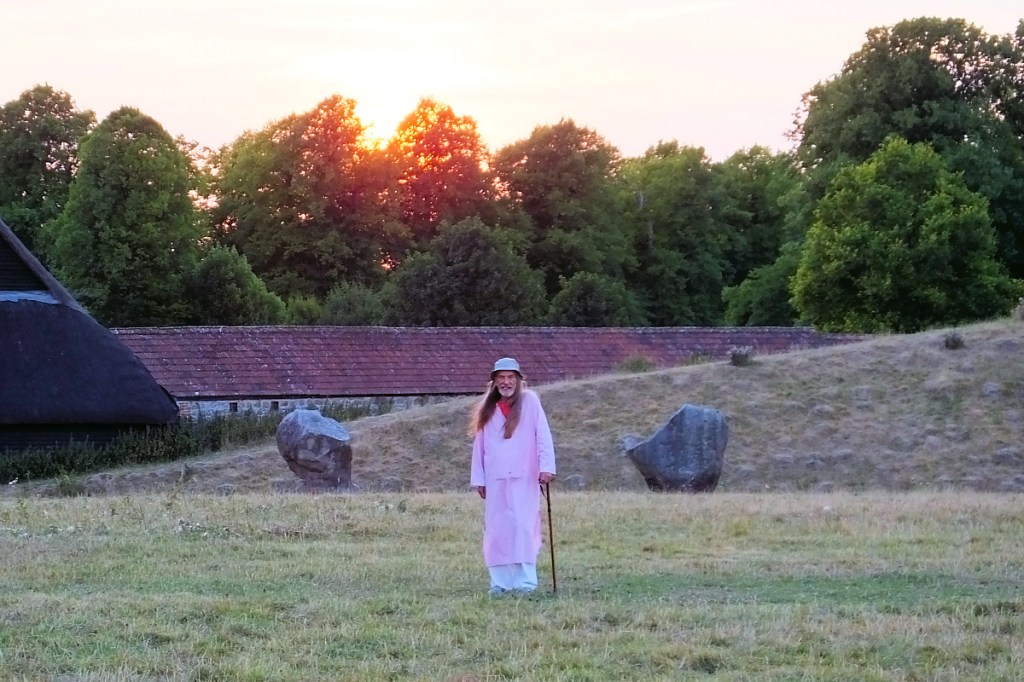
Facebook: www.facebook.com/palden.jenkins

Photos by me (in the woods), Miriam Naccache and, on the cliffs, Julia Aisha

The view from my window one early morning

Costs and Benefits

A new Paldypodcast

Here’s a new podcast. My creative mojo seems to be returning and I’m churning it out at present… erk. This is what it’s about:

In our time we’re going through an intensification of events and pressures, globally, socially and individually. We’re heading into harder times, and it’s not going to go back to normal. But there are things we can do about this. It doesn’t have to be as bad as currently it looks.

The costs and difficulties we have in life can be made a bit easier by not grinding on about it quite so much, by making things less difficult inside ourselves. Sounds easy, but it takes some work.

There are also gifts in any situation that become visible if we shift our focus, take a deep breath, own what we’re responsible for and focus on what’s really most important.

I’ve faced some stuff in recent times and seem to be gaining something from it, deep down, underneath. It’s a lot to do with finding what’s available in any situation – anything that can cheer us, lift us up and open up pathways – and going on from there. Following a path.

If your spirits have some sparkle, you’ll be alright. Though often, ‘alright’ isn’t what we originally thought.

17 minutes, with love from Palden.

Listen on Spotify:
https://open.spotify.com/episode/5W7HTEsIrryRSqs0syUK0w?si=36bw0NqbS1CFS_NnDo1Yyg

If you don’t want to use Spotify (or Apple or Google Podcasts – it’s there too), then go here: www.palden.co.uk/podcasts.html