I’ve been working with a village of Tuareg for ten years, in a small people-sized support operation. They live in the Sahara desert, a day away from the historic city of Timbuktu in Mali.
We restocked their goats and camels after a terrible drought, helped them dig a new well and build a small village school.
But now I need to pull out – I can’t continue with things I used to be able to do. But I don’t want to abandon them.
So this pod tells the story, and about the dilemma of a humanitarian with a need to pass this on.
With love, Palden
Thanks to Constanze Küppers in Germany for prompting me to make this pod
I find that, as I’m growing down, I’m going into transitional phases where things change and I have to review and revise what I can do and can’t do, and all sorts of other things in between. This get tricky when the abilities I’m losing are a deep part of my identity.
So, as a writer and communicator I’ve spent bazillions of hours, days and weeks banging away on typewriter and computer keyboards. But my fingers are losing their accuracy, and I can’t do it like I used to be able to.
It’s called peripheral neuropathy in medical speak – loss of feeling and coordination in the fingers and feet. It’s a funny sensation of non-feeling where feeling ought to be, a bit like music that’s turned down too low.
I’m getting an impression my blogs are too long for some readers – they’re a 15-minute read – and they tend to stretch synapses quite a bit.
So I think I’m going to do more podcasts. Or, in some cases, both.
Here’s my last blog, about pain, as a podcast, and you can find it on Spotify, Google and Apple Podcasts, such as here:
Here’s my latest podcast. It’s all about why the ancients built their sacred sites. Well, my perception of it.
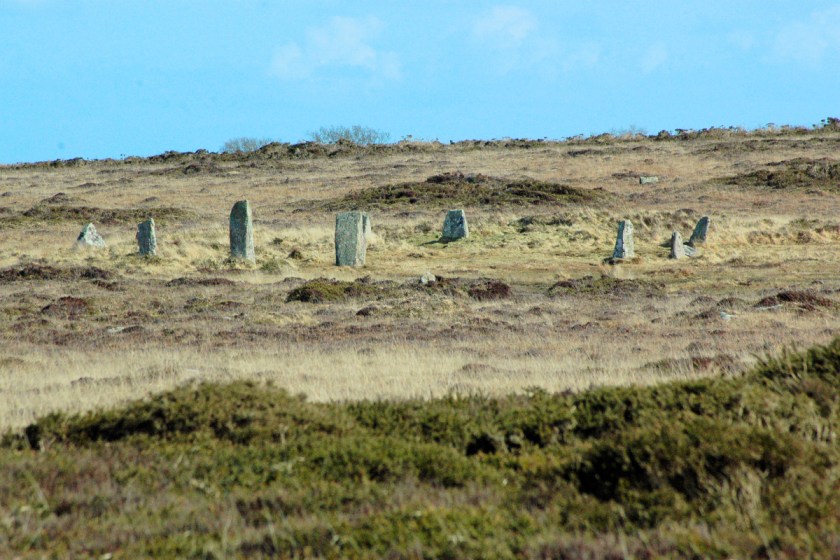
The Nine Maidens, West Penwith, Cornwall
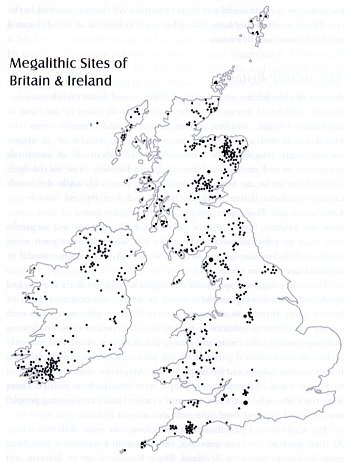
There are thousands of megalithic sites around Britain and in other lands. The ancients didn’t build them for frivolous reasons – it had to bring them definite benefit to make it worth it, however they saw that. It was a big investment with longterm payoffs, going on for many centuries.
It’s all to do with cranked-up consciousness fields and the possibilities that become available when we do focused consciousness work inside them – at power points in space and during power points in time.
Reality’s rules can change and remarkable things can be achieved, even with practical, real-life outcomes. That’s what this podcast is all about. It’s about the way reality can be changed through inner work – or inner work combined with outer work.
Also, we become changed by doing so – this helps solve problems in remarkable ways, also reducing impediments we ourselves create.
Here are some thoughts on the current vexatious world situation and some of the threads that lie behind it. It’s all about the incremental North-to-South shift of world power, about people against the Megamachine, and Gaza and Israel, the decline of the West, and a few things like that.
Are we entering the future facing forwards or facing backwards? This is a key question in our time.
Listen on Spotify (it’s also on Apple and Google Podcasts):
Should it interest you, here are two relevant articles I’ve written in former times: + An astrological article I wrote about the 2020s, written back in 2020: https://penwithbeyond.blog/2020s/ + And here’s something I wrote in 2011 when in Bethlehem during the Arab Revolutions, about Hamas and its relationship with Fateh (the Palestine Authority in the West Bank). It’s pertinent now, for those of you who are into more in-depth thinking around Palestine. www.palden.co.uk/pop/hamas-and-fatah.html
The ancients worked with a kind of consciousness technology, and they designed their sacred sites for this purpose. They located them carefully, building them over underground water and energy-vortices, orienting them to the rising and setting points of the sun and moon, constructing them to reflect and embody the fundamental principles of the universe.
They did this to create spaces – crucibles – in which to go into altered states of consciousness. Here they could generate reality-fields that enabled them to reach into things and fix them from the inside.
They lived in a very different world to ours, with no need to build cities or empires since they were advanced in a completely different way. There’s something about this that we need to re-learn in our day, because it concerns our future. And that’s what this podcast is all about.
With love, Palden
It’s an extract from my book Shining Land, which is available online. A new update of the book is coming out soon.
Following on from Inner Doctors, this is about a related issue, a pathway, a way of processing, a way of answering questions and solving problems.
Sometimes, with a wry twist, I call it intwitting – this is etymologically rooted in the Germanic word Wit, meaning intelligence or awareness.
A cultural bias in our modern world tends to regard intuitives as twits, as somehow weak, foolish and irrational, and this is unwise.
Many great inventors, entrepreneurs and even computer programmers are intuitive, whether intentionally or not. Eureka moments are big moments in history, even if many remain unrecorded.
We’ve had our intuition and instincts trained out of us by religion and education, particularly through doubt and fear, and nowadays not least by mobile phones.
In this podcast I tell a few tales about how intuition works for me, how I deal with it, and its ins and outs.
All about the warfare, strife and trouble we find ourselves in today – the thoughts of an old peace-freak.
A Palestinian Dove
It’s like a virus in the world psyche, ready to pounce on any population that’s losing its way, or damaged, or hurt, or susceptible.
Yet some societies are strong in themselves. Even if they are invaded and occupied, they are not beaten.
What stops many wars is a deep tiredness, a wish to go home and get a life. A societal consensus forms, building resistance to the virus of conflict – an unspoken immunity that decides not to go back there again.
In this episode there’s a moving contribution from two old friends, the late Jaki Whitren and John Cartwright of the Court of Miracles, the greatest rock band you never heard of. They’re making music in heaven now.
Introduced by a stream in Botrea Woods and outroduced by the wondrous birds of Grumbla, Cornwall.
A few days ago I thought out loud that I had little to say. Well, this turned out to be incorrect. Forgive me for that! Goes to show, I too have my illusions. Here’s a new Pod from the Far Beyond.
I went on a slow stagger down to the pleasantly unkempt woods below the farm where I live. I sat next to a big hazel tree that’s far older than me, where I usually go. It leans over and there’s a sitting place amidst its roots which is just right for me. It’s my outside broadcast studio, where quite a few podcasts have been made.
This one is all about the battle for the hearts and minds of humanity. This is something that is unfolding behind and beneath the torrent of worrying events that we experience today.
‘The path of excess leads to the palace of wisdom’. Thus said William Blake over two centuries ago. Well, true. But do we really need to pursue excess in order to achieve wisdom? It causes a lot of damage to our world and to hearts and minds. There is another way.
As a peacemaker (more correctly, a peacebuilder) there hasn’t been a lot of progress since the days of Vietnam and Northern Ireland – the issues I and many others of my postwar generation started out with. The warmakers are still very much at it.
But the matter is still open. We’re coming to the time. And this podcast is about that. It’s here on Spotify:
or on my podcast page, where you’ll also find 60-odd Paldy-podcasts on a range of subjects:
In the weeks and months to follow, I might well come up with further insights about the future. Despite everything, I’m still an optimist. Though we’re in a strange, perverse time of history where humanity is bring taught how not to do things, and it can seem as if everything is going wrong.
Last Saturday, at the Pathways to the Past weekend in St Just, Cornwall, organised by CASPN, I gave a rather kaleidoscopic talk with copious maps about a big idea: Penwith as one big ancient site with 600 components to it.
If you were there, you might want to peer through the maps and hear it again. If you weren’t there and it interests you, well, you can hear it whenever you wish.
It’s two hours long, so save it for a rainy day or a quiet evening.
I really enjoyed giving this talk. It was great speaking to a group with local knowledge and an understanding of the subject.
If you don’t know Cornwall but you’re into ancient sites, you’ll still get something from this. For Penwith, dense with sites, is one of the fifteen or so key megalithic regions of the Isles of Britain.
At the other end of Britain is Orkney. Penwithians and Orcadians, between us, anchor Britain and stop it floating away.
I believe we’re coming to a time now where it will help to widen and deepen the spectrum of evidence we deem to be acceptable in studying prehistory, to see what else we find and come to understand. The schism between archaeology and geomancy is something best left in the twentieth century, methinks.
For some reason, throughout life I’ve been preoccupied with Time, as an astrologer and studying both the past and the future. In 1999 I wrote a world history, and in 2017-8 I wrote a report called Possibilities 2050 – a concise assessment of the potential state of our world mid-century. It was about the mid-term future.
I was leafing through it today, and the chapter on Politics and Power jumped out at me. Partly because I’m brewing a new Aha Class, to happen in June, here in Penzance, all about the future. And this podcast is a prequel to it. There might be one or two more to come.
We’re faced with a big question: how to balance effective governance with popular participation.
Every kind of system needs to embrace everyone unless we want a world where some thrive and others suffer – the world is crowded, interdependent and networked, everything is affected by everything else and we live in a time of amplifying consequences.
This is an age of throngs. Occasionally people mass in the streets or online, swaying unpredictably between the wisdom of the majority and the madness of crowds.
A kind of democratisation and dispersal of power is re-shaping political process, causing authoritarian regimes to become more responsive to their publics (despite appearances otherwise) and democracies to become more confused by them.
This bypasses conventional party, class, local and sectoral loyalties, articulating emergent public instincts, hopes, issues or grievances more than it shapes coherent ideologies.
There’s a legitimacy struggle going on in the world’s body politic. Social trust and good governance are in poor supply.
This podcast covers power in society, governance, oligarchies, socio-political change, gender politics and artificial intelligence – big issues in our time.
You must be logged in to post a comment.