

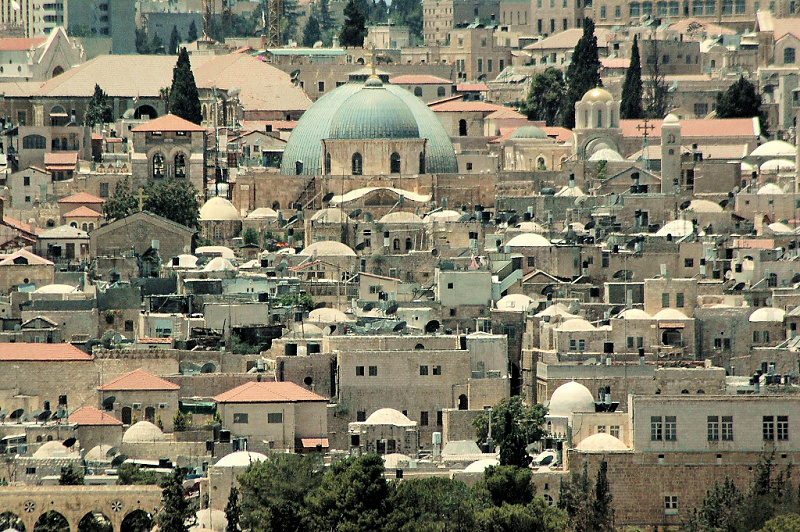
A good friend of mine rang up this morning. She’s Jewish – some Zionists might call her a self-hating Jew – who shares the collective feelings and pathos of Jewry while having grave reservations about the behaviour of the state of Israel. She’s one of those thoughtful Jews who is brave enough to talk to someone like me, who has worked a lot with Arabs.
She comes round for tea and we have great discussions, both of us enjoying the contrasting insider knowledge we each have. Of course, what we face now, in and around Gaza, puts her in a really difficult position. She struggles with it inside herself and she talks with me about that struggle. If you have any empathy and conscience as a human, whatever position you take, it’s really difficult, this stuff.
A few days ago she was with a bunch of eco-activists with whom she’d worked for ages. They were vehemently pro-Palestinian in a way that she found difficult, because they were anti-Israeli. She’s not paranoid about anti-semitism, but it still hurts when people vehemently disapprove of your own people. Her friends had taken sides.
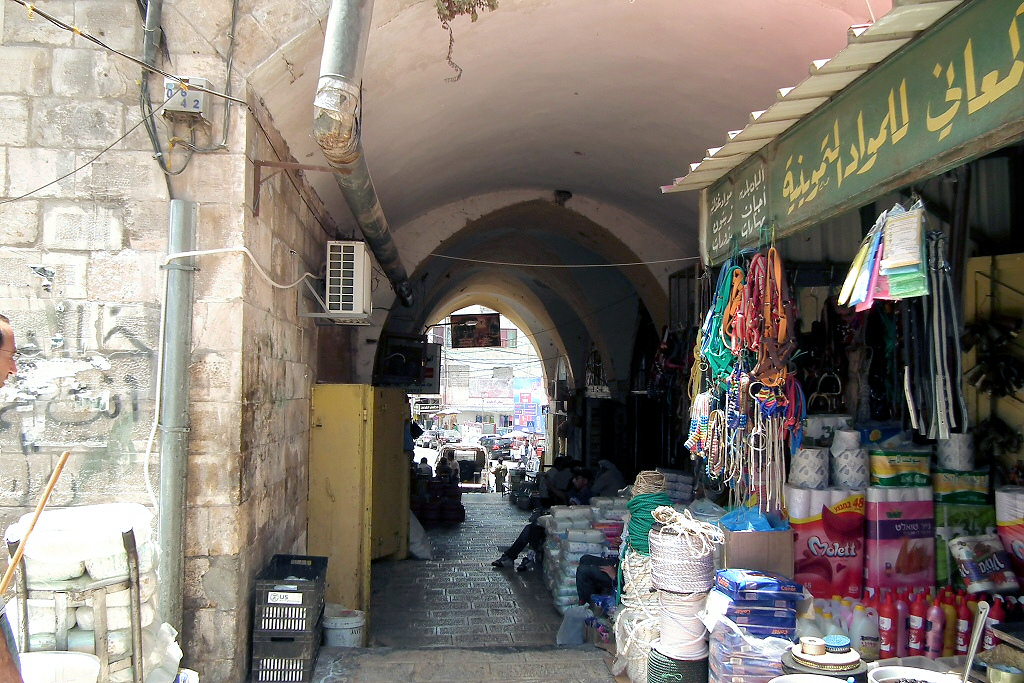
Fifteenish years ago in Palestine, I had a similar problem: I worked with Palestinians but I’m not anti-Israeli – I’m fundamentally pro-people. To me, helping Palestinians doesn’t mean opposing Israel – actually, I felt I was helping Israelis by helping Palestinians, but only a few Israelis would get what I mean by that. Seeing everything in a polarised, partisan way is, dare I say it, inherently hypocritical – it makes Them bad and Us good, as also does the current over-use and misuse of the term ‘terrorist’.
It’s a cover-up, a denial of responsibility, a projection. In my reckoning, it’s part of the problem. The partisan approach taken by the governments of UK, Europe and USA, which they believe to be a show of strength, is undermining the remaining, sagging respect that the Global South – the world’s majority – has for us, and this will lead to difficulties further down the line. We need to stop politicking and act like mature nations.

When working in Palestine I had some difficulty with zealous Palestine activists from abroad who commonly adopted a partisan position: within themselves they had declared war on Israel, even if expressing it only in the form of olive-picking and visiting frontline towns like Tulkarm, Hebron, Jenin or Nablus to witness the damage and the pain. I respect such people for their humane feelings, empathy and commitment but also I felt they needed to do more homework, to go a bit further in their understanding and feelings.
They made life more difficult for people like me – amongst other things driving Israelis against humanitarians. Many activists didn’t really like me, and my book Pictures of Palestine hasn’t been popular with many of them. In my teens in Liverpool I was wedged between Protestants and Catholics, and Mods and Rockers – I started my peacemaker education early! So this issue isn’t new.

If we take sides, we start projecting a subjective and emotive image on the Other, upon which subsequent actions and atrocities are then justified. It makes Us right and Them wrong, so that We claim legitimacy in questionably punishing Them for their crimes. In and around Israel-Palestine, as soon as conflict breaks out, most people lock into this charged mentality, setting all other considerations aside.
It’s a form of psycho-emotional slavery, and the puppet-master controlling the strings is the Lord of Division. It’s an endemic mass-psychology that needs to polarise, dehumanise and denigrate the other side so that we can overcome the guilt and shame of performing wrongs in the furtherance of our own beliefs – even when those beliefs do not support committing such wrongs.
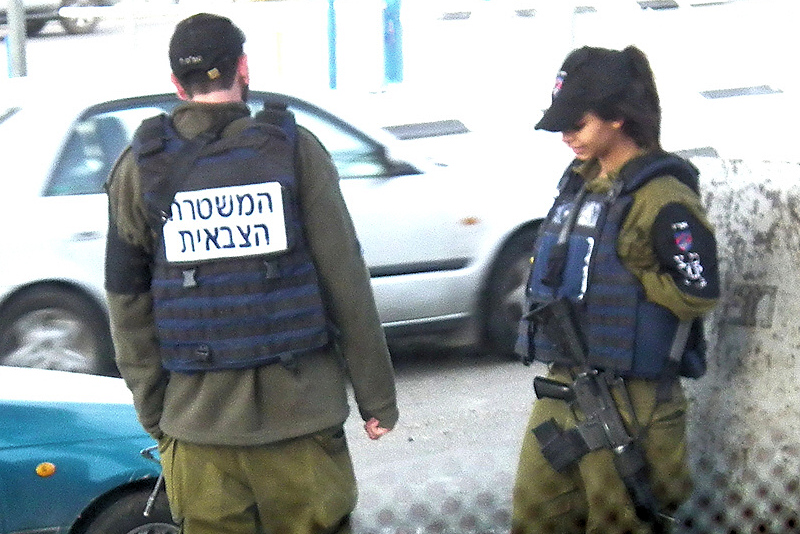
This mentality leads to consequences. As I write, Israeli forces are poised to start a ground invasion of Gaza. From the Israeli viewpoint, I can see why they are taking this approach: they need to eliminate Hamas, and they’re driven by a ‘never again’ feeling – never again do they want to be threatened and harmed in this way. Fair enough. Except there’s a problem. It’s unlikely to work.
Israelis may kill as many people as they like but they won’t be rid of the problem, because those who are left behind will be hurt. The pain passes down the generations. The cycle of uprisings has repeated itself roughly every twenty years since the 1930s, as each generation has grown up and sought to change things.
The damage done to people and to land is tragic – a ground invasion of Gaza will cost both sides very high. Innocent Palestinians will be mown down, and committed freedom-fighters will sacrifice their lives. Israeli troops will die, one by one, hit by snipers, booby-traps and innovative Gazan devices. Jewish and Palestinian mothers will rue the loss of their sons and daughters.
Israelis will not and cannot eliminate Hamas, even if, improbably, they eliminate all of its fighters and the main characters who head it up. They have not managed to do this before, and they are unlikely to achieve it now. All they can achieve is a costly delay until the next flare-up happens. The reason is this: every time Israel fires a bullet, it creates several new fighters taking up a gun – frustrated young men who seek a future and cannot have it.

Instead of getting depressed and committing suicide quietly to themselves, they join one of the militias, with the idea that their sacrifice might benefit their people. This isn’t so strange: my own father did this in WW2, volunteering his life for King and Country (except he survived, minus a leg).
Hamas was founded in the first intifada of the 1980s. Ironically, Israel secretly funded its founding, to counteract the Yasser Arafat’s PLO and divide Palestinians against each other. Well, that backfired. Hamas speaks for the embattled feelings of Palestinians and, if there were an election instead of a war, Hamas would most likely win. They won in 2006, in a free and fair election, undermined and annulled by Israel and the West – and they would win now.
To many Palestinians, Hamas represents the best of a very bad set of options – not least because it is relatively free of corruption, it has principles, and Hamas is resolute and cannot be bribed or arm-twisted into submission.
There’s a lot of maleness being displayed on both sides – a resolute, despairing, ultimately self-destructive maleness. But behind this lies a deep feminine-rooted emotion too – the urge to protect women and children from the monstrous ogres on the other side.
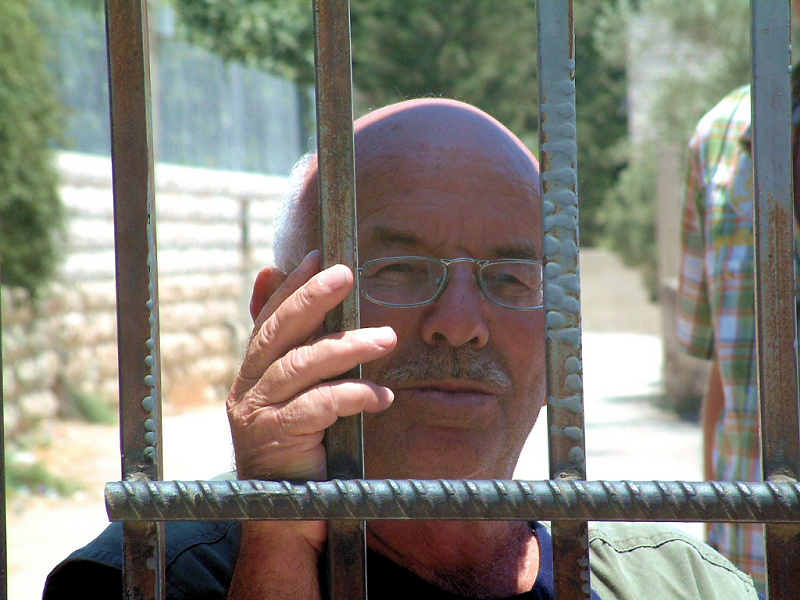
Here I wish to introduce a constructive thought and prayer, or two.
The problem with males is that, when we get worked up, we tend not to stop until we’ve achieved our objectives. It’s sexual: a man seeks a climax, through which all can be resolved and he can forget all his troubles. Except, when this orgiastic urge is driven by short-sighted urges such as control or revenge, it gets really destructive. In war and competition, masculinity doesn’t think much about the damage it might create while seeking that climax, and while we usually focus on winners, in competition most people lose.
There’s a secret here about males, to do with brinkmanship and danger. When it comes to the crunch, sometimes men go more crazy, and sometimes, when genuinely threatened, we start calculating our situation and seeing sense. Unless there is a miraculous and unusual philosophical change of heart, it needs to go up to the brink for us to get there.
Speaking astrologically, this is about the planet Mars. The lowest aspect of Mars fights to destroy – as with the Stalingrad-like scenes we’ve seen in recent decades. The default aspect of Mars fights to win – even though both sides ultimately lose, since victory is never as sweet as expected. The highest aspect of Mars is about coming to the crunch and realising there is no virtue in fighting and no enemy, because we’re all ultimately on the same side. The skillful playing of a game is more important than the winning of it. We suddenly realise we are all our own enemies, beating ourselves up.
So here’s a prayer and something to visualise. As I write we stand at a choice-point, before an expected ground invasion of Gaza. The urge to go to the brink is there, and no one will be dissuaded. This is a point of vulnerability and choice. Consequences will follow, whichever choice is made.
So visualise this crunch point as a potential breakthrough point and hold that thought, that feeling. Don’t be overcome with depression and helplessness, or get stuck on what you think ought to happen. These are of no use right now. If you were in a war zone, you’d get shot.
In war, one must take advantage of whatever situation that arises, as it arises. So apply your prayers to the situation as it stands, to help the universe twist events in a direction that somehow changes flow of the tide.

We’re at a brief point of realisation that there actually are options. Fighting it out is unlikely to achieve the objectives either side has, and the costs will probably outweigh the benefits. The pain each side experiences will not be soothed.
Here’s another thought. Even if the warring parties do fight it out – and the above prayer will thus be seen to have failed – it’s a matter of stoking up positive energy for the longterm, to build up the potential for the pattern to change. Store it up in humanity’s collective psyche, so that this option is more available next time round, even if it doesn’t work this time round.
Building up the energy-potential for de-confliction is best done by making use of actual circumstances where these issues are acutely at stake. Brinkmanship-points like today’s are junctures where the collective psyche of humanity is at its most vulnerable. It’s under pressure and surprisingly open to making a change.
The seemingly irrevocable rush to conflict sets in motion forces and consequences that seemingly cannot be stopped, and this is the pattern that needs to change. We need a new, transitional pattern where, when the risk of conflict comes close, everyone gets it that there is or must somehow be another way. It’s all to do with agreeing to disagree, and doing something to reduce the intensity of disagreement.
I say transitional because, whatever dreamers might dream, we aren’t suddenly going to have world peace tomorrow. We have to deconstruct the patterns that make for conflict, generation by generation, building new replacement habits. We can do this over the coming decades by facing high-risk situations where our true will gets tested and we are forced to get clear – if necessary, under duress.
In Israel and Palestine, repeated conflicts have not achieved either side’s objectives. This one won’t either. If nothing changes, the next conflict comes in about four years’ time. So let’s get real here. There’s another way. It does require guts to pursue it – the guts to change the pattern and step back from disaster.

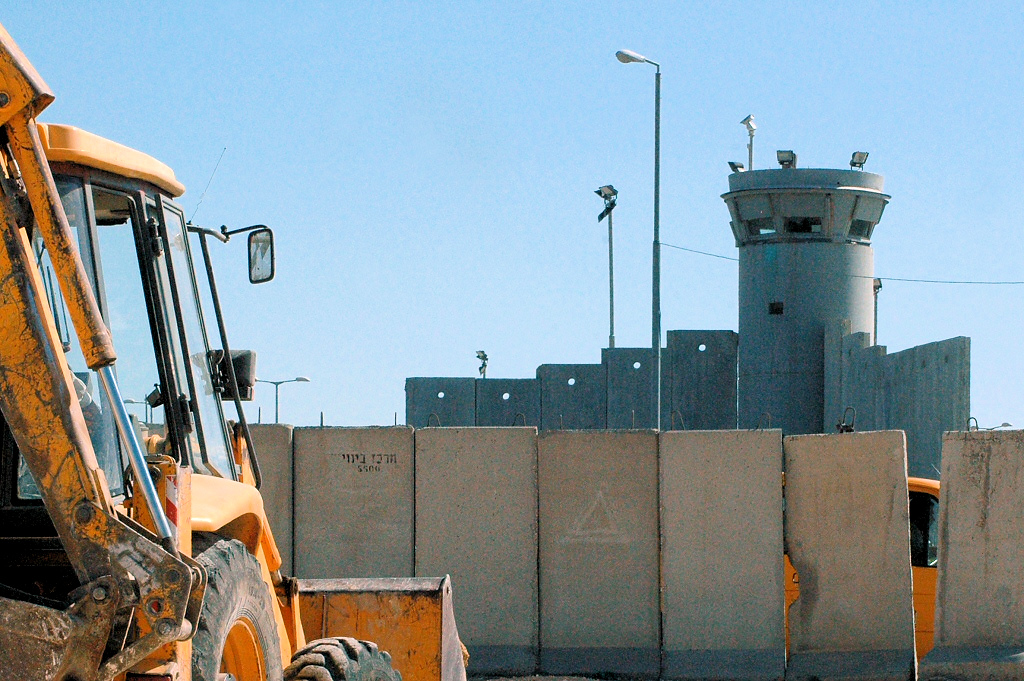
Here’s the awkward bit: though both sides are responsible for their actions, in my estimation, Israel holds around 70% of the power, with greater freedom of action than the Palestinians. Saying this doesn’t make me anti-Israeli. Palestinians hold 30%, and Hamas have recently shown how they also have power to shift the agenda. But 70-30ish is the way the odds are stacked. This makes it more difficult to flip the pattern because ceasefires come when there’s some kind of equalisation of force and influence.
Firing munitions, however impressive, is no longer manly. We need to protect women, children, and also our rights, needs and fortunes, by thinking further and bigger and wider. It’s an emotional choice, made with extra power when we stand on the brink of disaster.
What’s important here is that, whatever happens, humanity learns. Even if the worst happens, this needs to be the last time. Something has to shift – the world is fed up with this, and we have other concerns.
This means that lessons need learning now, today, in these circumstances – emotionally, in the heart, womb and gut. Lives have been lost and are being lost, and the only way to redeem those deaths and make them more meaningful is to learn from them and change things. Only then do they serve a positive purpose in the long run. If people’s sacrifices on both sides are sufficient to build up a head of energy-potential for change, then may this be so. May that change come about.
Changing history takes time. Yet it happens in intense situations like this.
With love, Palden.
Site: www.palden.co.uk
Blog: https://penwithbeyond.blog
Podcasts: https://podcasters.spotify.com/pod/show/palden-jenkins






































 Notes from the Far Beyond
You must be logged in to post a comment.