The Wisdom of Insecurity

Would you believe, this is my hundredth blog. I started the blog just a few weeks before going down with cancer, with no idea it would quickly turn into a cancer blog. That says something about intuition: it has ways of knowing things in advance that we don’t. Consciously, at least.

This is a review of my cancer story, for those of you who are interested.


Cancer was a great surprise when it was diagnosed in November 2019. Looking back, signs were appearing nearly a year beforehand, but they weren’t recognisable. Something wasn’t right, as if I were in a downward spiral, getting tired of life and losing my spark. Neither my partner nor I could figure out what it was.

Then in August 2019, while working in her garden, my back cracked and four of the lowest vertebrae in my back collapsed. At the time it seemed I had an excruciating, immobilising back problem. The pain induced a kind of enforced spirituality, which I blogged about a month later: [1]

It has been a remarkable initiation, a time of enforced stillness and interiority. Within myself I’ve been ‘back home’ with the star-nation people and have travelled the worlds in ways that ordinary life does not usually permit. Meditatively, I’ve stood alongside people around the world who experience deep suffering, supporting them with gifts of spirit I’m blessed with and finding a deep solidarity with them. I’ve dwelt on my life and what there is left to do with it…“.

A cranial osteopath recommended I get scanned in hospital – he felt something more was going on here (thanks, Simon Perks in Totnes). Getting to hospital was a long process. Eventually, in A&E, the junior doctor, in a quandary, called in a specialist, who entered, stood intently looking at me for a while, then said, “Test him for Myeloma”, and walked out. Brilliant. This man nailed it at first try. Within days I was having treatment. I had Multiple Myeloma or bone marrow cancer.

When the news of cancer hits you, it’s like a thunderbolt and soulquake. Yet it came with a strange element of relief, at last knowing what was actually happening after three months of spirit-wringing pain. For decades I had looked after myself, with a view to avoiding such things as cancer. Had I got things wrong? Seriously ill, if I had arrived in hospital a month later, I was unlikely to have survived. When cancer comes, it can come fast and strong, even if its buildup is long and slow.

After a few days I asked the specialist whether he had any clues about the causes of Myeloma. He looked at me straight and said, quite simply, “Radiation exposure”. The next day he brought a map in The Lancet showing the clustering of Myeloma cases within 40 miles of nuke stations. For 28 years I had lived 15 miles downwind of Hinckley Point nuke station, and I had had two instances of exposure in other contexts too.

Many doctors say the causes of Myeloma are unknown. Certain chemical neurotoxins may also be a cause for some. The reason for this perhaps deliberate unclarity could be the court cases and compensation claims that would erupt if such electronic or chemical toxicity became public knowledge.

The specialist’s opinion just went ‘ping’. I had known since 1975 that I was electrosensitive. This was largely not a problem until around year 2000, when mobile phones and wi-fi became commonplace.
That year I had a ‘dark night of the soul’ crisis and a long illness, going down into the Deep Dark, questioning all I had done over the previous three decades and wondering what value it had really brought. It was a deep honesty session, a struggle with Weltschmerz – the pain of the world. Aged fifty, I think my susceptibility to cancer started brewing around then.

As time went on the electrosensitivity got worse, especially after 4G and smartphones emerged around 2008. By 2014 periodic overdoses of radiation (in a restaurant, meeting, supermarket or train) were giving me rapid-onset flu symptoms, and by 2017 I was getting heart palpitations. It took until 2019 for cancer to show itself.

That year I was working on my prehistory research and mapmaking, in a rather urgent, driven way. Completing it in early August, just two weeks later my back suddenly went crack and my life changed. Well, the research was at least complete – perhaps a hidden hand of fate had known what was going to happen next.

When diagnosed in November I was now very much in the hands of doctors, my partner, my son and a few others – and way out of my depth, flat on my back. It was an exercise in surrender and acceptance.

Having been a health-conscious, vegetarian meditator for decades, and rarely getting ill, I had always assumed I would be exempt from cancer. Well, life has a way of teaching us other things! In our culture cancer is regarded as something going wrong, a failure, but it didn’t quite feel like that, to me. There was something strangely fitting about it, even though life was being hard on me. I decided to suspend all my foregoing beliefs and do my best to trust that, whatever happened, it would be alright. I did hold on to one belief though: that, whatever life presents, there is a gift in it.

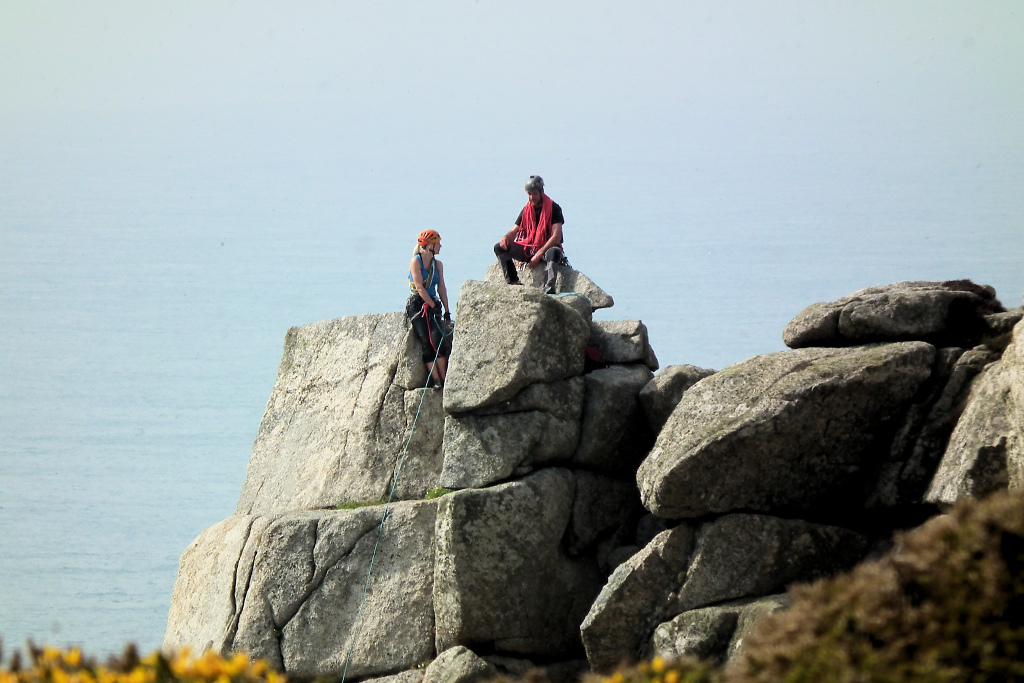
Rigorous experiences as a humanitarian, mountaineer and camper had taught me energy-management, attitude-maintenance and steadfastness. Having got through plenty of crises and having survived thus far, I felt it was possible to do so now, whether that meant living or dying.

Trusting the doctors was my only option – and most were really good people. My experience of NHS treatment has largely been positive. I had done alternative medicine for decades, yet I did not have the knowhow, energy, facility, support, time or money to take such an approach now, and already it was too late. Chemotherapy was the only doable alternative. It contravened beliefs I’d held until that moment, yet it felt right to do my best with it. If the angels wanted me alive, they’d keep me alive, and if they didn’t, they’d take me out.

I’m pretty good at handling crises and, here was I, going through a test of spirit. I had to grasp life’s reins on a deep level, since healing means fully allowing healing, fundamentally handing ourselves over to the process. This goes as far as dropping any expectation of what ‘healing’ means – it doesn’t only mean ‘getting better’. Whether I am to live or die, may it be for the best, all round – this was my prayer.

The strong pharmaceuticals shocked my system, though clearly they might also save my life. I asked for inner help in handling whatever was to come. One profound message came through: use your feelings and intuitions to proceed. My brains were not working well – I couldn’t get my head around all the medical research – though my intuitive senses were quite easy to read off. They just say ‘yes’ or ‘no’ – and then it’s up to us to figure out why, or to bear witness to how it comes to be true.

I went inside myself, connecting with the angels like never before. This might sound spurious to some readers but, believe me, when you’re in a situation like this, that’s what you tend to do, whatever your foregoing beliefs. I asked them to support my adaptation to a changed life. But when you ask, you also need to offer: I offered up my life, however it was to be. Whatever needed to happen, may it happen well and may I make it easy – that was my key prayer. I think this really helped, not just psycho-spiritually but medically too.

I used holistic supplements, CBD oil and good nutrition – judiciously, and careful not to mix them or create conflicts with the pharmaceuticals. Over time, various healers and healing circles weighed in – thank you everyone. Some of these interventions made a big difference – including, over time, an E-Lybra machine, radionics, homoeopathy, cranial osteopathy, herbs, chiropractic and prayer. And an old cat, Tomten, who would lie on my pelvis, the most painful place, giving me genuine pain-relief.

So, doctors saved my life and healers gave me a new life. I’ve written this before and it’s true.

I feel immense gratitude to my partner, who gave balm to my heart and helped me through the process – she was a true healer and a great soul. Her love, care and protection made a critical difference in a bleak time. I was a heavy weight for her to carry. There was no financial help for a ‘family carer’ like her, she had a business to keep going and a life already filled with issues and concerns. And I’m a tricky and complex character at the best of times. My son Tulki was a constant companion and support, though he could be present only sometimes. These two made a key difference.

So I followed an intuitive route through the cancer tunnel. I worked at getting the doctors on my side, showing them that I was not one of the awkward squad of ideologically rigid health-freaks, though I did have my own ways and preferences. Two things helped: they found me interesting, cooperative and lucidly descriptive of my symptoms, and, lo behold, as the weeks went by, my medical results were surprisingly good. This gave me leverage.

Still, I had to badger them about drug dosages. I didn’t need blasting with explosives. Eventually they got the message. One or two drugs were withdrawn and one was reduced – the steroid Dexamethasone, which had positive effects on my cancer and distressing behavioural side-effects, especially to people close to me. My dose was reduced and, lo behold, it started working better.

Initially I was supposed to have eight cycles of chemotherapy but they stopped treatment after five, saying I could go. Later on, one specialist said, “Mr Jenkins, I don’t know what you’re doing and I don’t want to know, but whatever you’re doing, keep doing it”.

Myeloma is a blood cancer that causes the bones to hollow out and weaken. It’s not as complex to treat as other cancers – there’s just chemo, with no radiation or surgery (since no tumours are involved). I responded well and quickly. I think the holistic practices, supplements and remedies helped greatly, together with an almost palpable influence from within, from my ‘inner doctors’. They scanned and treated me on an energy-level, and it worked. I think they worked through the hospital doctors as well, in mysterious ways.

I’ll add a few more things: walks on the hills and clifftops; a lovely place to live on a wildlife-rich farm with low EM radiation; unchlorinated springwater from just up the hill; a positive attitude; coming to peace over as many life-issues as possible, and working on the rest.

I’m on an immunotherapy maintenance treatment, Dara (Daratumamab), which flags up emergent cancer cells that my immune system then deals with itself. I have a Dara injection every four weeks – a nurse comes round to shoot me up. She takes my temperature, oxygen count and blood pressure, and every twelve weeks she takes a blood test and sends it off, and it’s from this that my condition is judged. With Myeloma, most people don’t get ‘remission’, just a ‘pause’ – some get a year of life and some get ten. In my fourth year, I’m still alive.

After decades of living a holistic life, your system evolves differently to ‘normal’ people. When you’re doing spiritual work and you have some pretty amazing healers as friends, normal medical rules get bent and broken. But still, there’s a deep karmic story that goes on underneath cancer, with a trajectory of its own. I did well at first but, after two years, I was ailing, hit a crisis and got ready for the possibility of dying within the year. Yes, more wading around in the deep dark!

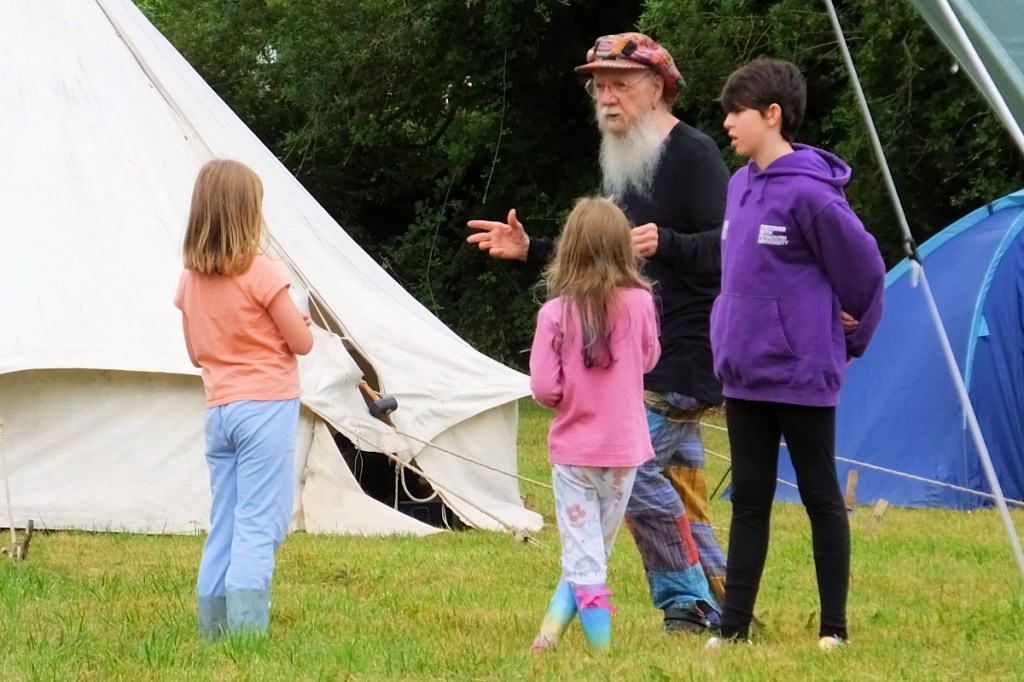
Yet by summer I was reborn, even attending a week-long Oak Dragon camp, which itself was a healing boost, as much from the people and ambience as from the camping. By now I was in a state of positive shock, realising I was alive, kicking and that there was a future. And perhaps I needed to get a new coat for the winter.

I’m doing well with the cancer, but the side-effects are problematic and these might fell me in the end. It’s all about bones (in my astrological chart I have a strong Saturn). Four of the lowest vertebrae in my back collapsed – I must use sticks to stand and walk. Reducing my height, this squeezed my stomach, leading to digestive and eliminative difficulties. It also caused the outer gluteus muscles in my backside, which do the major pulling, to lose their tension, making long walks strenuous and painful. I have osteonecrosis of the jaw – a dying jawbone – stopped by medication, but an area of susceptibility. And if I break any bones, repair and revival is likely to be difficult. These side-issues affect my life more than cancer does.

Then there is chemo-brain. Chemotherapy chemicals destroy brain-cells and nerve-endings. It has had mixed effects, reducing my left-brained ‘executive’ thinking and memory for details, yet improving my right-brained intuitive-imaginative side. It has pushed me into the present moment – my sense of time, sequence and duration has dwindled. I’ll remember something that was said by someone, but not who it was or when. I screw up easily when things get complex. Yet my creativity – channelled through writing, podcasting and websites – has never been better.

At one stage I asked myself what I would be doing if I didn’t have cancer. “Just carrying on“, was the answer. Instead I have been given a new relationship with life on Earth, an experience-rich new chapter, however long or short it is to be – miraculously paid for by the government and taxpayers. Life is twice as difficult but in compensation it has changed in shape and content. I’m focused now on staying alive more than on life’s many complexities, diversions and tensions.

I’ve had some pretty amazing spiritual initiations in my life, and this has been the next in a sequence, as if it was meant to be that way all along. Well, perhaps it was, perhaps it wasn’t. Having twice come close to dying in the last four years, it has given me some training for the inevitable transitional journey that is yet to come.

So, did I go down with cancer, or did I go up?

In recent months I’ve found that I see no future ahead of me. I’m drawing a blank, and my customary faith in life is not that bright. What does that mean? We shall see. In our time, we are all faced with so many unknowns. Most people can however safely assume they will be alive next year or later in life. Having that assumption removed has a strangely spiritualising effect – and that’s another strange gift that cancer has given. It’s what the psychedelic guru Alan Watts used to call the wisdom of insecurity. Earlier in life I knew it was good to appreciate life and all that it gives us, but cancer has taught me what that means in far more real-life terms.

It’s funny how things go.

With love, Palden

PS. My soul-brother Alan suggests my blogs are too long, and he’s right. But this is how they come out. I wish I had an editor – that might help. I’ll try to do shorter ones. Problem is, I’m a time-rich person writing for readers who are mostly time-poor. But then, if you read this far, well done, you did it!

Disclosure: the apparent paintings were done by me using a graphics program (Corel Painter Essentials 8) – they aren’t paintings. The photos they are based on are by me. The bottom photo is by Lynne Speight.

Site: palden.co.uk
Podcasts: palden.co.uk/podcasts.html
Audio Archive: palden.co.uk/podtalks.html
Pain

I thought this article was interesting, and am inclined this way myself. Current values in society tend to believe we should avoid and be free of pain and difficulty as much as possible, but this keeps us in the same place. It’s a growth-less position to take.

I was summarily dumped last year and, while it was really painful and I’m still left hanging and unresolved, it has been a remarkable gift and learning experience too, forcing me to master those things I felt I needed from my partner. It gets a bit complex when you have something like cancer and you rely on them, but even there, it’s possible to do your best with the situation as it is. So I became stronger as a result. It was a struggle, but also, seen from another viewpoint, it was a gift of love. It’s okay to let it bleed.

Some people have called me brave, for things I’ve done. But it’s not really like that. As this article mentions, you get to master life and its challenges by taking it on and going into it – the author uses the analogy of weight training and increasing the weights you lift. Former challenges become easier because you get used to bigger ones. And this is what hones the soul.

Once you’ve had a gun pointing at you, it gets easier when someone else points a gun at you again, and you realise you can get through the situation, even with a smile. That’s not really bravery – it’s just getting used to life and wading a bit deeper in. A bit like Brits’ attitudes toward British weather, or Yemenis’ or Ukrainians’ approach to life in their countries – and some people choose to go into the fray rather than to run. Or a bit like the work (‘labour’) a woman goes through to give birth – if you run from it, though that’s understandable, you might miss something, something about life itself.

In a sense, life is a preparation for the moment of our death. Death is not usually painful, but it does involve facing stuff – not least facing our incapacity to do anything much about the situation or to change anything, which is a choiceless choice to face. But even so, we have a choice to take what comes, or we can try fighting it.

Therein lies the choice. In the end, that’s where freedom resides. Because if you’ve grappled with something, you don’t have to carry the pain and fear of the prospect of having that something come at you and stop you in your tracks. That’s a kind of pain that comes even when you’re not experiencing it. It’s rooted in fear. A comfortable, safe life is not necessarily the best kind of life to have.

The author of the article provides a good strategy for dealing with the difficulties we face – about the incremental drawing of lines, and about facing the reason we’re in such a situation, rather than either letting it oppress us or running from it.

https://bigthink.com/neuropsych/no-pain-free-options-choose-most-empowering/

Silk Roads and Ocean Winds

Globalisation’s troublesome birth


This is a re-post – it might interest you.

I’m re-working a 2003 book, Healing the Hurts of Nations, as a short, thinking-points archive version, and here’s a chapter about the historic growth of globalisation.

————————–

In the Sahara with the Bedouin

Our time is the first in which it has been possible to take a literally universal view of human history, because this is the first time in which the whole human race around the globe has come within sight of coalescing into a single society. In the past, a number of empires, and a smaller number of missionary religions, have aimed at universality. None of them, so far, has ever attained to universality in the literal sense. – Arnold Toynbee, historian, 1967.

Healing the Hurts of Nations contains a few unusual underlying assumptions. One of them is that globalisation is historically inevitable. A bit like growing up. I am not suggesting that the once imperialistic and now corporate-style globalisation process we see today is the only way it could have happened – perhaps it took place this way because humanity rejected earlier-presented options. Nevertheless, globalisation was a pre-programmed potentiality from the early days of human history.

Saying that globalisation is inevitable does not mean that inevitably it should happen as it did, when it did, carried out by the people who did it and with the outcomes that resulted. But it suggests that there is an urge or secret aspiration deep in the human psyche, seeking to form a planetary civilisation, and that humans would therefore try, mostly unconsciously, to put into place the conditions to achieve it.

Humanity customarily walks into the future facing backwards, yet this does not exclude the possibility that, deep down, it secretly knows something more than it sees. Several attempts at globalisation are visible in history. Let’s look at a few.

Alexander the Great

Athens

Alexander, one of history’s finest megalomaniacs, did not invade all of Eurasia, but he made a good try. Had his conquests lasted, they could have been a platform for further extension at a later date, by the inheritors of his bequest to history. Starting from Greece in 334 BCE, he and his troops swept through Anatolia, Egypt and the Middle East, through Persia and Afghanistan to Turkestan and what is now Pakistan in eight years, by 325 BCE.

They established a capital at Babylon, Eurasia’s key meeting-place. He took on god-like status, gobbled up several major civilisations and then died prematurely in 323, aged 32. He had set in motion one of history’s biggest intentional genetic engineering experiments too – mating his men with women across his conquered territories.

His big idea was to seed Greek culture and, in his view, to upgrade humanity with Greek modernist internationalism. A flash in the pan, the social and political effects of his audacious feats all the same survived centuries after his time. Had he lived a longer life and run his affairs well, history today might look very different.

The Silk Roads

Three centuries later, in the time of the great classical empires, the world tentatively approached the possibility of unifying Eurasia. The Roman, Persian, Kushan and Han Chinese empires, between them, controlled most of the main axis of Eurasia, from Spain to Manchuria. The backbone of this civilisational axis was the Silk Road from China, through Turkestan to the Mediterranean, along which there was continual travel and trade, despite the distance. Few travelled the Silk Road in its entirety – instead, goods and ideas changed hands at caravanserais and trading cities, and trade between Rome and China reached significant levels for the time.

Chinese silks first reached the West in 500 BCE through Persian intermediaries. Chaotic forces put an end to this period of Eurasian stability: warrior nomads rampaging across Central Asia, together with the separate yet roughly synchronous collapses of imperial Rome and Han China, caused trans-Eurasian trade and interchange to collapse for some time.

The precedent of connecting civilisations and setting intercultural exchange in motion was now there, setting patterns for the future. It is suggested, with some plausibility, that Jesus, in his ‘lost years’, travelled as far east as Tibet and as far west as Britain. This sounds fantastic, yet significant international travel was not uncommon at the time. People had gained a taste for items and influences from faraway places. Imperial administrative structures also approached a scale which could, with a few more developmental steps, begin to manage global control – if subsequent human history had but followed this thread. Though this was perhaps premature.

The Muslim Ascendancy

Amman, Jordan

Then came the rapid Muslim expansion initiated by Muhammad the Prophet in 630 when he and his followers took Mecca, an ancient Arabic cult-centre. He died in 632, but his successors channelled the dynamism of their faith by invading the whole Middle East. By 670 the Islamic empire stretched from Tunisia to Afghanistan, spreading to Spain, Turkestan and northwest India by 720. They had a go at Europe too, but it was too muddy, cold and backward to bother with, and the Franks beat them back.

The Muslim empire’s success arose not only from the energy of the new Islamic dispensation, but also from the acquiescence of conquered peoples, many of whom thought the new dominators better than their predecessors. Muslims did not forcibly convert their subjects, and the relative doctrinal, social and legal clarity and coherence of Islam was attractive to many, whether or not they converted.

Political unity in the empire later broke down, but cultural unity continued, with a second zenith in the 1600s in the form of the Ottoman, Persian Safavid and Indian Mughal empires. Had Westerners not intervened, it is conceivable that a third wave might have occurred during the 20th Century. Despite the fact that globalisation is currently Western-driven, it is likely that the Muslim world will have a big influence in shaping the culture of the 21st Century world. Osama bin Laden and al Qaeda might even play a part in this: though their actions are questionable in a short-term context, the longterm effect of their impact on globalisation and its moral tone could be influential. Whether Muhammad the Prophet would approve of their actions is another question, but the fact that the centre of al Qaeda’s initiative has been Saudi Arabia, Muhammad’s home, is not insignificant.

The Crusades, Richard and Salah-ad-Din

Jerusalem

A further chance to build a proto-global fusion came during the Crusades of the 1090s-1290s – Europe’s first bout of overseas expansionism. The Crusaders made their mark with extreme courage and bravado, yet they blundered repeatedly. When they seized Jerusalem in 1099, they allegedly murdered virtually all Muslims and Jews as well as eastern Christians. The Crusaders were a strange mixture of religious visionaries and holy warriors, glory-and-booty seekers, power-maniacs, noble adventurers, outlaws and vagabonds.

Their unprincipled actions incited a pan-Arabic reaction, especially under Nureddin, Seljuk ruler of Syria 1146-74, and his successor Salah-ad-Din or Saladin, Sultan of Egypt and Syria, 1175-93. They took strong objection to Crusader atrocities and arrogance. This was a religious matter of righting wrongs rather than a purely territorial issue, since it was the stated duty of all Muslims to protect their fellows from oppression by the launching of jihad or holy war.

Nureddin and Saladin were not implacably opposed to the presence of foreigners in the Holy Land, as long as they behaved themselves. Saladin mooted the idea of sharing Palestine with the Europeans on a principle of mutual respect for each others’ people, faiths and holy places. This accorded with the highest of Muslim ideals. But he would not allow the Crusaders sole control, since they did not behave themselves and were over-ambitious. His diplomacy could have laid a basis for substantial cultural interchange between Europe and the Muslim world which, conceivably, could have created a vast world bloc with enormous potential.

The English king Richard Coeur de Lion was hesitantly partial to his proposition, tempted by Saladin’s chivalrous political challenge. Some Crusaders were relatively pacific and liberal, many of them born and living in Palestine, with Muslim friends and concubines and adopting some Middle Eastern ways. Muslim civilisation was, after all, culturally superior. But Richard was persuaded and outmanoeuvred by the belligerent lobby amongst Crusaders, mostly fresher to the Holy Land. They were backed by an unholy alliance of Papal, lordly and financial interests back in Europe, who preferred cultural separatism, booty and sole control of Palestine.

The mediating efforts of 1192 by Saladin’s brother were sabotaged. The possibility collapsed. This led to the eventual failure of the Crusades: after the collapse, Saladin knew the Crusaders must be ejected. It blew an historic opportunity to bring together two extensive cultures which, together, were potentially in a position to bring about a new international order. It was not to be.

European magnates became ever more bigoted and dogmatic during the Middle Ages: cultural cleansing and the imposition of control and uniformity were major trends underlying the period. Lordly church henchmen even sent Crusades against heretical and pagan Europeans in southwest France, Bosnia and Latvia. Islamic civilisation, which had matured by the 1100s, was multicultural, to the extent that its top level was taken over by Turkic peoples, the Seljuks, and later the Ottomans, without enormous disruption. It had little to gain from cooperation with Europeans, but the Christians nevertheless had their merits – a spunky and enterprising lot.

This failed meeting of cultures was but one entry in a catalogue of missed historic opportunities. In Israel and Lebanon to this day, much suffering might have been avoided, had this cultural hand-shaking taken place. It might have affected the many persecutions of Jews in Europe, the breaking up of the Middle East by the West in the 20th Century and the nature of European imperialism from the 1500s onwards.

The Mongols

Another window of opportunity arose under the Mongols in the 1200s. Invincible blitzkrieg warriors, they felled the Chin and Song dynasties of China and the great Abbasid Caliphate of Baghdad. They brought down the feared Assassin (Hashishiyun) Order of Syria, a Shi’a terrorist sect led by the legendary Old Man of the Mountain, whom even Saladin could not beat. But to do so they had to use massive force – this story slightly resembles America’s match with Osama bin Laden and al Qaeda.

The Mongols had an interesting style: they were herders by nature, setting themselves over their conquered lands and employing local administrations and institutions to run their empire. At first they did not take over the palaces and great cities, camping instead outside their walls. Genghiz Khan (c1167-1227) saw it as his and the Mongols’ divine destiny to rule the world, on behalf of the gods, who wanted it unified. This man had a global vision: any opposition was opposition to the will of the gods, worthy of instant death.

The Mongol empire, at its peak between the 1220s and the 1290s, stretched from China to the Middle East and Ukraine, embracing many ancient culture-areas. Rapid communications systems were developed and intercultural exchange was encouraged, knitting diverse cultures into an internationalist order controlled from Karakoram in Mongolia. They invited Buddhists, Taoists, Christians, Manichaeans, Muslims and pagans to their courts, bringing all under their umbrella. Many impressive potentials were there, but the essentially nomadic Mongols, who were not by nature civilisation-builders, only coordinators, gradually subsided in power.

Two of their biggest weaknesses related to democracy and delegation of power: whenever a Great Khan died, the hordes returned to Mongolia to elect a new one, meaning that their conquests lost momentum; additionally, regional power was delegated to khans who eventually pulled away from the centre, adopted the ways of China, Turkestan or Persia and loosened the ties of the empire. Yet the Mongols had brought a flourish of world integration. No empire was ever so extensive or all-embracing. But then, few empires created piles of skulls to the extent they did.

The Meeting of Civilisations

A further rumbling of global hegemony arose during the 1400s. Three powers were unwittingly positioning themselves for world domination, and not entirely consciously: imperial China, the Islamic bloc and the upstart Europeans, then in the early stages of their cheeky exploratory adventures led by the Portuguese. The smallest of these powers was the Europeans, a smelly, drunken, flea-ridden and voracious lot whose raucous bravado and booming cannons shocked the Muslims and sank their navy in a trice.

Civilised Islamic principles were the Muslims’ undoing when they met the Europeans – the Muslims were too gentlemanly. The Chinese had invented gunpowder, but they considered it immoral to use it in war, so they too had a problem with battle ethics – their philosophy was that it was ignoble to kill a warrior without looking them in the eyes. The Portuguese cared not a hoot about that.

The Chinese sent out embassies all over Asia during the reign of the Ming emperor Yung Lo in the early 1400s. His Chinese Muslim admiral Cheng Ho, from Yunnan in south China, led an enormous flotilla of ships to Indonesia, Australia, India, Arabia and east Africa (some say even the American west coast), furthering the grandiose interests of the Middle Kingdom. They sought ambassadorially to extend the hegemony of the Chinese emperor worldwide and render all other lands tributary – to the Chinese, the emperor was both a monarch and the embodiment on Earth of the gods.

This rare outburst of Chinese internationalism was courteous and diplomatic: Ming mandarins presumably dreamt of lording it over the world. Their big failing was that, since commerce was distasteful to the Chinese ruling class, their costly expeditions led to no significant profit. By 1433, there was a change of emperor and all embassies were called back. When Cheng Ho, who had sailed as far as Zanzibar, came home, he took giraffes and lions back with him for the imperial zoo. The succeeding emperor decided, for internal political reasons, to revert to traditional isolationism. This knocked the Chinese out of the game, by their own doing.

The Portuguese and the Muslims (the Ottomans, Safavid Persians and Indian Moghuls) met up at sea outside the Persian Gulf in 1509. The combined Islamic fleets, masters of the Indian Ocean, were quickly sunk and scattered by Portuguese cannons, giving the Europeans sudden dominance of the Indian Ocean and its trade. Muslim traders had for long plied the waves from the Red Sea and the Persian Gulf down the African coast, and past India to China and the Spice Islands (Indonesia).

The result of the European victory was that, of the three powers eligible to dominate the world at that time, the Europeans had suddenly gained the ascendancy. For the next four centuries, they were the prevalent world force, followed in the 20th Century by their successors, the Americans. The whiteskins, by force, trade and missionary activity, united the world – at least in terms of materialistic integration. By 2000 it was woven into a multi-channel telecommunications web which has turned the world into a buzzing network with a rapidly-diminishing need for a central dominating power. The conclusion of this story is yet to come.

Exploration

Cape St Vincent, Portugal

Exploration is not a European invention. Hanno the Carthaginian circumnavigated Africa around 2,500 years ago. Pytheas, a Greek, reached Britain, Iceland and the Baltic Sea around 2,300 years ago. Nearchos of Crete sailed to India, followed by Alexander the Great overland. Eudoxus of Rome visited India and East Africa around 120 BCE. Roman traders reached south China around 100 CE by boat. The monk Fa-hsien travelled from China to Afghanistan and India around 400 CE.

Much later, the Vikings sailed from Scandinavia to Baghdad and Byzantium down the rivers of Russia, over the North Sea to Britain and Ireland and across the Atlantic to Iceland and Canada between 800 and 1000. They had followed Irish monks over the Atlantic: the Irish settled Iceland around 795, themselves preceded by St Brendan, who was reputed to have reached Newfoundland in a leather and wood curragh around 550. The Polynesians canoed from the central Pacific to South America, Hawaii and New Zealand, sometimes in significant numbers. Two notable later explorers were the well-known Venetian Marco Polo, who travelled from Italy to Mongolia, China, SE Asia and India between 1271 and 1295, and the Moroccan ibn Battuta, who travelled 75,000 miles around Africa, Russia, India and China – perhaps history’s greatest traveller-chronicler.

When the Europeans started exploring the world, the globalisation process we know today truly began. One crucial person in this was Henry the Navigator, a Portuguese prince who set up a school in Algarve in 1419, teaching navigation, astronomy and cartography to selected sailors. Not long after, his sailors reached Madeira and the Azores, then travelling as far as Sierra Leone in West Africa. This set in motion a trend which led to Columbus’ voyages to the Caribbean from 1492 onwards – though he never landed on the American mainland.

By 1500, English fishermen from Bristol had reached Newfoundland, followed by an official expedition under John Cabot, and meanwhile the Portuguese Cabral reached Brazil and Vasco da Gama sailed around Africa to India. Magellan achieved the first world circumnavigation in 1519-22 – a tremendous and courageous feat and precedent, equivalent to sending a man to the Moon. Later, the pirate and naval terrorist, Francis Drake, who later achieved great honours, claimed California for the British and circumnavigated the world again in 1577-80. Also, Russian pioneers were pushing across the vastness of Siberia.

By the 1600s this period of exploration had immensely profited the Spaniards and Portuguese in South America. Overseas adventures became serious business – Spanish gold and silver from the Americas, followed by the slave trade, was instrumental in financing European economic growth. European hegemony was built on the sweat, blood and tears of many long-forgotten conquered and enslaved non-Europeans.

Trading posts, ports, depots, trade routes, plantations and towns were established worldwide; embassies were sent to exotic monarchs in India and the Far East; the slave trade was started, eventually transporting over ten million Africans to the Americas; lands and markets in Africa and Asia were penetrated; substantial European colonies and towns grew in South America, later in North America and South Africa, and later still in Australia and New Zealand; and hub port cities such as Bombay, Singapore, Jakarta and Shanghai in due course became major world cities.

In the 1700s the initial driving urge for exploration and commerce was supplemented by scientific exploration. An enormous collection and classification of species took place, together with documentation, charting and pushing out the edges of the known world. European maritime powers fought each other for control of India, the East Indies and the China trade. This was driven by the profit-seeking voyages of merchant adventurers and trading companies, and only later did governments take direct control.

The first multinational corporations were the Dutch, French and English East India Companies: the English company, chartered in 1600, came to rule much of India from the 1750s-1850s, with the British government taking control only in 1858, after the Indian Mutiny. The Dutch did similar in Indonesia.

Shanghai, Mumbai and Dubai

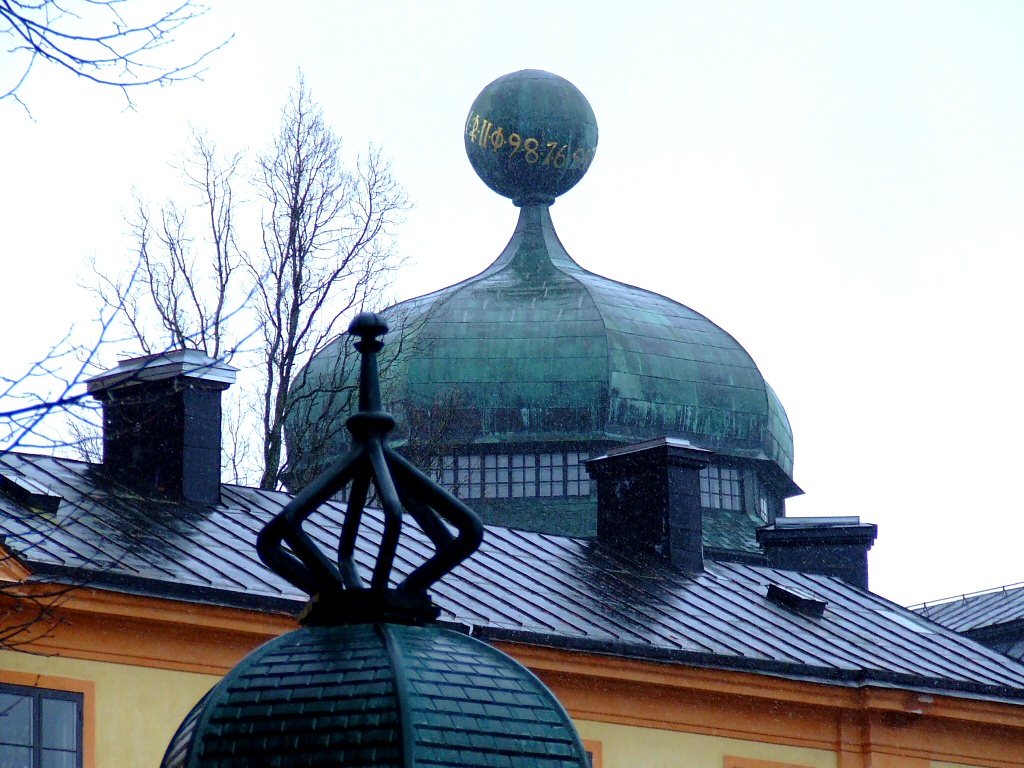
Uppsala, Sweden

Thus began European world domination, reaching its zenith by 1900. It laid the foundations for American corporate domination of the world in the 20th Century. The American period, accompanied by European decolonialisation of the 1940s-70s, laid the foundations of the global village. Then, from the 1960s onward, the momentum changed again: the initiative began slipping from America, Europe and USSR as the Japanese began to out-manufacture the West, exceeding it in quality of production from the 1980s onwards and itself becoming an inventor. In the 1990s the Asian tiger economies (Korea, Taiwan, Malaysia, Indonesia and Thailand), together with China and parts of Latin America, were growing too. They were not only cheap production sheds, but asserted a growing cultural influence.

As from 1990, Euro-American dominance began relatively to decline, though it still determines the nature of the game, while all the time losing influence. Guangdong province in south China is now the world’s biggest industrial park, and some of the world’s hottest computer programmers work in Bangalore, India. Brazil, Mexico, South Africa and Indonesia, despite uncertainties and growth-pangs, are new economic powers.

At a cost. In the colonial period, the blessings were mixed-to-catastrophic for recipient peoples. Cultures were destroyed or undermined. In some parts enormous populations were shamelessly decimated – especially in the Americas and Africa. Modernisation was thrust on disparate lands as fast as railways and telegraph wires could be laid down. Ethnic groups were played against one another, colonial puppet states were founded, resources were plundered, internal affairs interfered with, blood spilt and things were simply changed, totally, from what they had been before.

Some recipient peoples benefited by being released from the hold of ossifying traditional systems, but the balance of benefit is to this day debatable. This could have been done otherwise. Ultimately, things will go full-cycle when the cultures of the world, having absorbed Western and global ways, reach a new self-defined balance and individuality from that standpoint. Cultural variation is not dead – it is reconstituting.

The pain and consequences of Western imperialism sit with us now, expressed in various manifest forms of anti-Western feeling lurking under the surface and popping up in different contexts around the world. Around 1990 the moral pressure and tempo came from the ‘Confucian sphere’, around 2000 from the Muslim world. Africa, Central Asia and Latin America are yet to come. Antarctica speaks by jettisoning massive ice-shelves, threatening coastal areas worldwide with sea-level rise.

The former subjects of Euro-American domination have adopted the ways of the dominators, giving it their own twist, and the drive toward ‘development’ now covers the world and is no longer Western-driven. TV, cars and computers are everywhere, together with ubiquitous burger bars and all that goes with them. While Europeans and Americans clean up their cities, the smog of developing world cities grows ever thicker and more toxic. But the values driving this Western-led development are incrementally changing, and the West itself is experiencing bounce-back. There are sub-plots going on too, such as relations between China and Latin America, Indians in Africa and the Caribbean and Filipinos in Arabia. When the Dalai Lama visits the Pope, something quivers worldwide. There is much more going on than what the West thinks.

The 21st Century brings us a planetary civilisation. The means by which we got here is receding into the past. Many new problems face us – some a result of imperialism and some new. In the new global situation there lies an enormous historic opportunity, and today’s world is our starting place. We are now in a century of reassessment: everything is up for review. The true reason for which those intrepid world travellers risked life and limb is now approaching its fulfilment. We must not confuse how we got here with what happens next. This concerns global civilisation.

Sapmi – Lappland

Earth

A view from the outside

In case you need a refresher for you as a shining soul, here are some words from the Council of Nine, a bunch of people not of this Earth, about the place where we live. If you have a problem with channelled material (I do with a lot of it) or with some of the terminologies used, try to hop over that to see what they’re saying.

May we explain to you that your planet Earth is the most beautiful that exists in the universe. It has a physical variety that no other planet has. It has a varied climate that no other planet has. In all the universe there is no planet in existence that has the physical characteristics of planet Earth. It is the rarest of beauties, and it does attract souls which, once they have come, would like to come back again.

It is of a different nature from any other planet. It has aspects of all planets: it is like a composite of the universe, with all the positive and all the negative aspects, and all in between. This is what attracts souls. It has with it a gravitational pull that is different from other planets, and because of this a soul begins to feel, for the first time, a physicalness. Souls become adapted to their physical bodies, and they forget the freedom and pleasures they have without it.

The Earth was created to be a paradise. When souls achieve harmony it will become a paradise again. But when we say a para¬dise we speak of a paradise of creativity, one that brings knowledge, one that brings joy and love; a paradise in which people may heal themselves or may even experience pain, if they wish.

The Merry Maidens, Cornwall

It is not a paradise where all challenge, all growth or all pain will be removed. It will be a paradise where people, through their own experience, may evolve their own understanding of their connection with the universe, accept their own responsibility for themselves, for their fellows, for planet Earth, and therefore for the universe, and may bring all of that, including themselves, into perfection.

Humankind needs to understand the uniqueness and purpose of planet Earth, and the directness that it has in its evolution. Humankind needs to understand that it is not alone and there is no end to life. What people must begin to understand is that there is no escaping, for in future there must be payment for all escaping.

If they also knew that each of them has a quality of greatness, that they have opportunity to be uplifted in joy, and that when there is acceptance of not being alone and of no end to life, then energies of fear may be released. Energies of joy may replace fear, and planet Earth may begin to fulfil its position in the universe. It is in truth the most beautiful of all planets in the universe.

We related before that the planet Earth has the greatest of beauty, and it may also become the greatest of joy. When we say ‘beauty’, we mean the quintessence which then penetrates the external. People have confused physical beauty, what is seen with the outer shell of the eye, with the inner soul of the planet or of those that exist upon it. That is also what humanity must learn upon planet Earth.

This your planet is a planet of balance, for you to learn to balance between the physical and spiritual worlds. planet Earth is the only one of its kind, the only planet of free choice in the entire universe, the only planet created for the balancing of the spiritual with the physical, in other words, the creating of paradise.

Humanity has created corruption within, which came about because people became more involved in physicalness than in attempting to balance and understand. But now your planet Earth is at a point where it may move out of balance quicker than at any other point. This time of history that you are in is the time of change. It is time for humanity to begin to understand this, to live on this planet of great beauty with a true balance of spiritual and physical, and to live in unity with the Creator. Your purpose is to live in true balance, in manifestation of love, in connection with the Creator, in that which was created.

People in their innermost know, or have a feeling, that they are from something other than just themself, but people upon planet Earth have gone into competition with the Creator. We understand this, for people understand that there is a nature within them that may do all things, but they neglect to identify and know the Creator. They alone wish to be the Creator. It cannot be.

The problem we have had before is that many times we have been to planet Earth: we have come to help, and it was expected of us to do what we cannot do, what this planet must do for itself. You are a part of this planet because you chose it in order to help it.

In your world things are very simple, but people make them very complicated. If you approach things in a simple manner, many things can be overcome and accomplished with a great deal of acceleration, and with not too much use of energy. The worry and the concern burns up more energy than the activity of dealing with the problem.

In order for the universe to evolve it is important for planet Earth to evolve. The souls that have come to this planet have become irresponsible in their physical bodies. It has become a planet of desire. The souls that are here behave as if they were in quicksand and were being gobbled up and swallowed in this desire.

It is important for you to evolve, because without this planet being evolved, the other planets in the universe are not able to go forward. It has stopped the growth of the universe.

Staloluokta, Sapmi/Lappland, Sweden

It is important for the level of consciousness of this planet to be raised. It is the love from this planet that generates the energy that feeds God. And this planet has stopped the growth of part of the universe. In other words: instead of evolving in the manner it should, to become one with the Divine, it is going backwards.

I will explain one step further: many of these souls that live here, when they die, are trapped in the atmosphere of the planet, and then they are reborn over and over on the same world, and they seem to be going nowhere. This planet originally was created to teach balance between the spiritual and the physical world.

But in this physical world they got involved in materialism, and so these beings never evolve beyond the belt of this planet. Their desires are still in their minds and emotions, and their desires hold them to this planet, and so you have a multiplication that is going on until this planet will sink.

They cannot get beyond it because of desire, greed, hate, because of enjoying their physical pleasures. And we have no objections about their physical activities on this planet: it is when this becomes their primary concern, and they are no longer concerned with evolving the planet, their fellow humans, or finding their divinity.

The Face crop formation, Sparsholt, 2002

You explained this when we listened to you the other day when you called it a ‘bottleneck’. We just consulted and decided that if we looked in a bottle, and there were a plug, and we could not get it out, that’s exactly what this planet is. Your description was correct.

The energy that surrounds you creates a vortex that then radiates out, and then can raise the consciousness of this planet. Even though you feel it is an impossible task, it is not an impossible task.

You people chose this situation, you willingly gave yourselves to come back unto this dense, heavy Earth. People like you have reincarnated on this planet many times, often not because it was nec¬essary, but because you needed to understand and to get the feel of this planet, in order to raise its level of consciousness. With this energy, it creates a vortex of love and peace and harmony, and others will gravitate towards you, so that you may explain to them to help raise the level. Everything needs an energy base. We are energy, and through people like you this planet will be saved. We work through people.

——————-

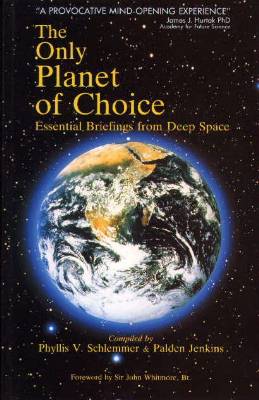
From: The Only Planet of Choice -essential briefings from deep space, by Phyllis Schlemmer and Palden Jenkins, Gateway Books, 1993. www.palden.co.uk/nine.html

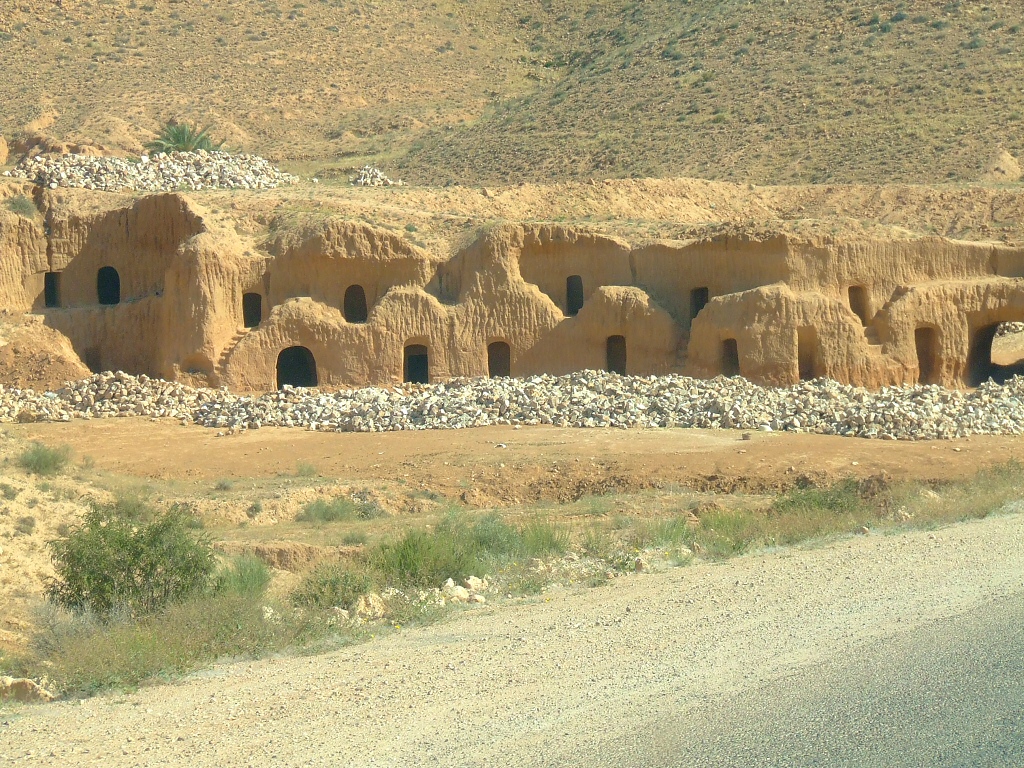
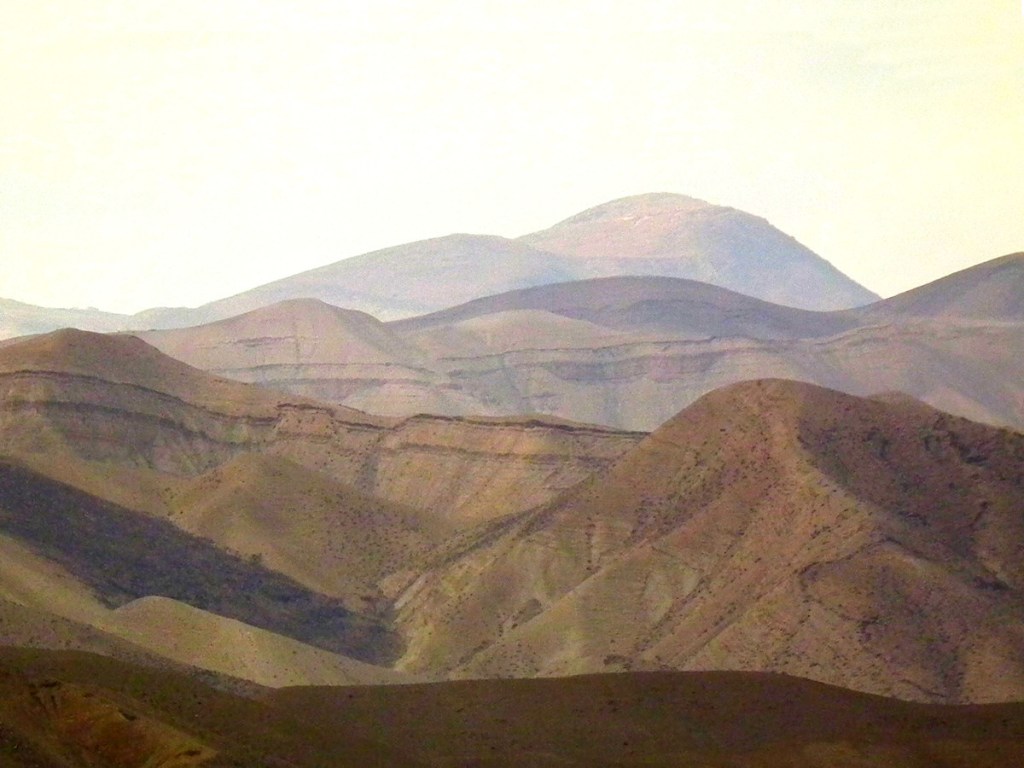
The Judaean Desert, Palestine

Conformity

and the price of locking step

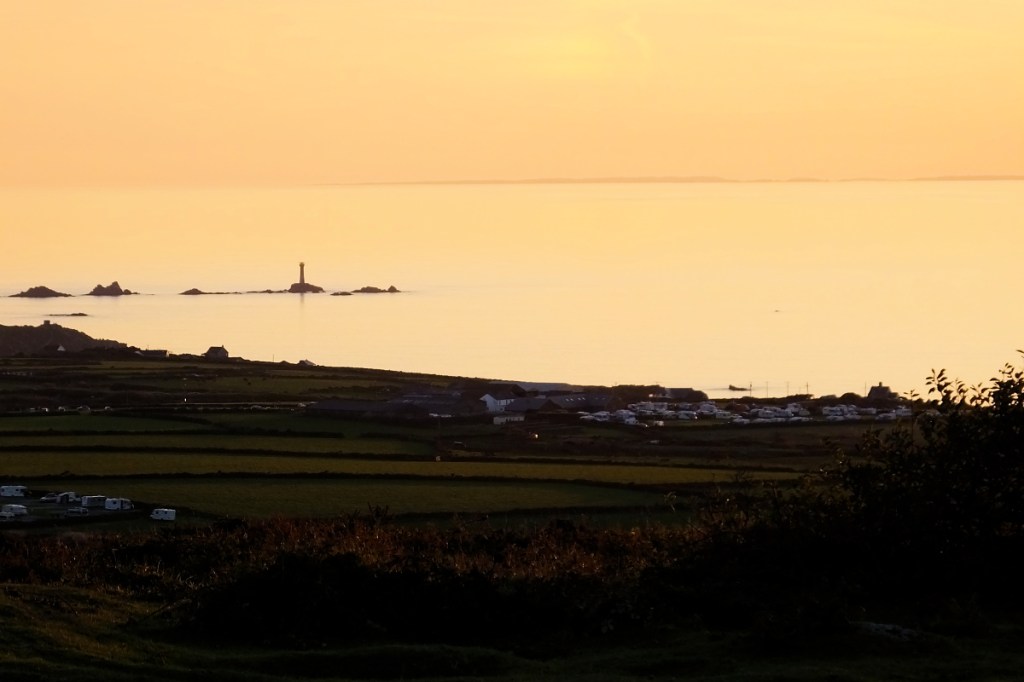
The Longships Rocks, with the Isles of Scilly Behind

There are two routes to the farm where I live, and they are shown on online maps. The problem is, one route is easy and good, and if you follow the other – as recommended on satnavs – then you’re likely to lose your exhaust pipe and damage your car, unless it’s a Land Rover.

Claudia Caolin took this

We’ve tried to get the satnav people to change the instructions, but they won’t do it. They look at a satellite photo and see a road there, without knowing what its surface is like. So they even disbelieve evidence that we, who live here, send them – because the satellite says there’s a road there. Well, at your peril.

So when people come to visit, I send a map and instructions but some rather slavishly follow their satnav. They trust it more than they should, because it tells them what to do. As a result, they arrive late, flustered, after having made a few extra phone calls to me to find out the way. That cuts down our time together.

This highlights a big problem in our time. Many people – even quite aware ones, and even those who otherwise distrust a lot of things handed down to them from the corporate and governmental world – believe and obey what we are told. We set aside our own thoughts, experience, finer judgement and intuition, because the instructions say that we ought to follow this route, not that.

Precarity at Porthmoina Cove, Penwith, Cornwall

But if the satellite system breaks down (almost inevitable sometime), and if we lose our map-reading skills and intuitions, then we’ll get lost. Not only with finding the way, but also because we’re addicted to obeying orders. We all do it, in varying degrees! Even if you are a dissenter, an ‘alternative type’, or a sensitive soul, there will be areas of life where you snap to and do what you’re told, even at a price.

Even with conspiracy thinking, there’s an element in it where people disagreeing with the ‘official line’ transfer all their need for certainties to other things they’re told by other people, who sound as if they know what they’re talking about, and uncritically they follow a new set of rules.

Move along please… Bosigran, Penwith

One of my bugbears is typical: we are told that mobile phones and wi-fi are safe and okay, and we are addicted to all that phones have brought us (it’s an amazing technology). Yet, just consult your feelings, consult your body and your psyche, and something is not right. This radiation is changing you. It changed my life – I have a cancer caused by radiation, and when I mention this to others, or when I walk out of a room because I can’t handle being in the company of six phones with humans attached to them, there’s often an awkward silence. Ooops, I’ve said something wrong. If I mention the effects this has on nature, the world’s climate and on earth energy and subtle energies, most people just don’t want to know – even if they’re nature-lovers. Yet this is suicidal. And you don’t need a PhD to understand that.

We all do this. It arises from the fear that “I do not have the knowledge, authority and whatever else it takes to cut my own line through life“. This is the way that the Megamachine retains control – through imposing a fear of what might happen if you don’t obey, through telling us what’s right and what’s wrong, infantilising us and making us conform.

Listen guys, I’m in charge, okay?

In the end, this is not about Them – it’s about Us. It’s about our deepest psychology – profoundly stilted and stunted by fear, guilt and shame, the big blockers of inner progress and of correction of the world’s ills.

We all do it – I do too.

I did this last year. I was accused of being a narcissist. Bewildered and feeling at a loss, I took it upon myself and carried that for about nine months, feeling bad. It was a burden of guilt – my own guilt from the past. Not about being a narcissist, but simply about feeling inadequate and flawed.

But I was bewildered and confused about it too. Perhaps I am a narcissist? Perhaps the person who put that on me was right.

But then, a good friend came along and grilled me – she could see I was unhappy and weighed down with it. She had experience of this, having been a ‘victim’ of a narcissist herself. Though she pointed out how a victim is part of the equation too. She questioned me about what had happened, saying in the end, “Hang on, it wasn’t you – it was the other person. The actual behaviour of a narcissist was displayed not by you but by the other person, and this was projected on you”.

The Universal Solution to Everything

Now this was a big revelation. Suddenly a weight started falling off my shoulders. It was like a forgiveness. It didn’t just dissolve the issue – it gave me a new perspective. It allowed me to look at the narcissistic tendencies within me – after all, I do like standing on stages, and I’m what Facebook would label a ‘public figure’. Part of me is shy and a hermit, and part of me loves attention. So there’s stuff to take ownership of here, and it has helped me understand much about my life.

I’ve always been something of a reluctant leader. There’s pain in my psyche over matters of power. But this has made me focus on ‘right leadership’. The world does need leaders, but of a certain kind. In my 2003 book Healing the Hurts of Nations, in a chapter about power and legitimacy, I give three quotes.

Rioters and vandals at the Oak Dragon Camp

A statesman is a politician who places himself at the service of the nation. A politician is a statesman who places the nation at his service.” – Georges Pompidou, French prime minister, in 1973.

You can erect a throne of bayonets, but you cannot sit on it for long.” – Boris Yeltsin, Russian president, in 1991 (Mr Putin, take note!).

Many forms of government have been tried, and will be tried. No one pretends that democracy is perfect or all-wise. Indeed, it has been said that democracy is the worst form of government except all those other forms that have been tried.” – Winston Churchill, Hansard, November 11, 1947.

These photos of me are by Claudia Caolin

This concerns right leadership. In my life I’ve learned a lot about this, and the question still continues. I’ve often felt like a monarch without a kingdom, a bishop without a church and a professor without a university – and this has been my karma in this life. It concerns service. It’s a big question for Virgos like me: the difference between service and slavery.

Service is willing, intentional and conscious. Slavery is reluctant, grudging and involuntary. Slavery is about resorting to type, conforming to what we feel is expected of us by those who seem to know better, and doing our best to avoid punishment.

If you’re going to be a shining star in the public firmament, then rightly or wrongly you need to fulfil what you feel are people’s needs and expectations. In this context, staying in power starts becoming more important.

The matter of staying in power is a difficult one. It’s not just a form of corruption and powermongery. It might be the case that, in a position of power, you actually are the best person for the job – it’s arguable that Mr Putin was the best for the job 10-20 years ago, and many a strongman is like that. But then your star starts falling and times start changing – Xi Jin Ping will experience this in coming years. The tide goes out on you, as it does.

But if you’re good at what you do, then you’re faced with the possibility that the person or the oligarchy that replaces you could actually be worse. I’ve faced this myself. Many people who rail at leaders are, frankly, covertly envious. Watching things that I’ve started deteriorate in others’ hands has been a big and painful lesson to me, bringing me back to a difficult truth: while holding onto power is not advisable, letting go of it can also be problematic.

It comes down to our motivation, and to being honest, often while standing in the spotlight in the ‘court of public opinion’, ruthless as it sometimes can be. Remember the British politician Paddy Ashdown? When he was caught with his pants down he owned up immediately – and everyone thought, “Good on you, Paddy – at least you’re honest”. Meanwhile, others were caught with pants down but they went into denial – they were clearly ‘in office but not in power’.

Tony Blair then came along – he looked like a clean pair of hands. But Tony, after a few years of doing some pretty good things, himself made a classic error – he sucked up to the big guys and took Britain into the Iraq war, when most people in Britain knew this wasn’t right. He sucked up to the Americans and PNAC, a cabal of believers in ‘The New American Century’, which now, chaps like Putin and Xi are showing to be empty and hubristic – America was being what Chairman Mao once called a ‘paper tiger’. Hm, fatal error, Tony – and he’s paid a price for it.

It’s all in the motivation. When I was a young acid head revolutionary in a former millennium, I realised then that it wasn’t just a question of replacing one evil system with another, whether through revolution or reform. It concerned the hearts and minds of the people actually sitting in seats of power. No one system has The Answer. No system is perfect.

Democracy has big problems, and we cannot say that our democratic governments truly represent what the people of our countries need. But autocracies like China and ‘managed democracies’ like Turkiye, though at times they can deliver the goods, have their problems too. It’s all to do with the matter of succession.

Some people moan about our king, here in Britain, but would an elected president and House of Lords really be a better solution? Hmmm, that’s questionable. King Charles III, well, you might or might not like him, but he’s okay, actually, as a person. Though his limited and mainly moral power is inherited, he happens to be an interesting person, and his son isn’t bad either – compared with what we could have.

I remember standing on stage at the Glastonbury Festival in the early 1980s, saying, as an astrologer, that Prince William, born during the festival during an eclipse, would be an interesting character as a future monarch. And he is likely to be so. Do we want to get rid of this guy and his missus?

Why do we expect perfection of our leaders? Why do Americans place so much belief in their elected presidents when they have lots of evidence that such belief is futile? Why do we continue electing the same old political parties, even when we’re disappointed in them?

I remember in 2005, many Palestinians asked me, “Why, after you had the biggest demonstrations in British history against the Iraq War, did you re-elect Tony Blair a third time?”. Well the answer was, “Because he’s still better than the other lot”. Twenty years on, that’s why quite a few people might vote for Biden or a clone of him – because of the other lot.

That’s the dilemma of democracy – it gives us second-best solutions. It is based not on consensus and agreement but on argument and dissension, meaning that 49% of the population land up dissatisfied, unhappy to support their government. Actually, through the quirks of our supposed constitution here in Britain, Margaret Thatcher only ever really achieved about 25% support of the whole electorate, even at the peak of her power. Is that democracy?

Sometimes you just have to stand on your own – a baby swallow on our farm

Well, it’s a common quirk of majoritarian democracy. In some countries, we vote for a plethora of parties, and then the biggest, or not even the biggest, cobbles together a coalition that might not at all resemble what voters wanted – as Israelis have discovered. It relies on conformity and grudging acceptance of bad political outcomes – AND we, the public, customarily disunited, then fail to support our governments wholeheartedly, even when we vote them into power.

The result is that it’s a recipe for failure, because someone somewhere is always opposing it. So this concerns the responsiveness of political systems to public need. And, besides, it isn’t democratic governments that really decide things: such governments exist to ease the cruel grating between the priorities of the Megamachine (the apparently ‘free’ market), and the needs of The People (whoever we truly are).

It’s all down to right leadership and right use of power. But that’s difficult, because sitting in the power seat is not comfortable, and it’s a 20 hour a day job, under a lot of pressure, and subject to cruel judgements from the public – witness those promising leaders, many of them women, who choose not to sit in that seat because it’s painful to get exposed to the sheer negativity of the commentariat and people on the street who land up even hating you.

You get there in the end

So, if we want good leadership, we need to treat our leaders with greater empathy and support, remembering that they actually are human beings, with sensitivities. And we need leaders with human sensitivities. But we need also to hold them to account. We need them to change when they get things wrong.

It doesn’t always work to jettison old leaders and put new leaders in place – it can lead to a cycle of deterioration where we get leaders who are either bombastic and imposing, or leaders who say one thing and do another, or they make it sound as if they’re doing things when actually nothing is changing at all.

In fact, it might be valuable sometimes to welcome back old leaders – to give Theresa May or Tony Blair a second chance. Why? Because they’ve had a period in the wilderness, a time to think things over, and they might well have a deep need, in later life, to get things right. Well, perhaps. Second-term presidents can be a bit like that. They don’t want to go down in history for the wrong thing.

Anyway, so I might well be a narcissist. It’s a convenient accusation to make, for which one is guilty unless proven innocent – but even then one might not be believed. Just to be suspected is enough to ruin a person’s life. What’s needed here is owning up, in public, and self-correction.

It gets a bit rough sometimes

Mistakes are allowed. Learn first time round and you’re doing alright. Learn second time round and you have a problem but it might be excusable. Leave it to third time round and you have a deeper issue going on, and it’s best to go – whatever his merits, Boris Johnson got to that point.

Human error. There’s accountability and there is forgiveness. Just because someone fucked up, it doesn’t necessarily mean they should be blacklisted – it means they need to self-correct, and genuinely so. And everyone, everyone, is a mixed bag – yes, even Bill Gates, who does both some questionable things and some laudable things (and, as an Aspie, he also has an exaggerated capacity to be misunderstood).

So, it might be that I’m a narcissist. To be honest, I really do not know, and it’s up to people’s own judgement. It has caused the person who accused me to completely cut off all contact and unfriend me, perhaps obeying the strictures of a famous psychologist in Canada who says that the only way to deal with narcissists is to cut off all contact.

Standing there for 2,500 years and not going anywhere

Well, I experience that to be rather cruel, actually, throwing out both the baby and the bathwater. I sincerely hope the accuser was right, because otherwise this fierce separation was a very destructive strategy. I’ve learned a lot from it and, for my sins, I now live in glorous isolation, and that’s my karma and life-lesson, and on some level there’s something good about it. Because, for better or worse, it enables me to write yardages of verbiage to you lot, and I sincerely hope it’s useful!

Life is what happens when we’re busy making other plans. In the end, there is no right or wrong – there are simply outcomes. And life is for the learning. So, whatever my fuckups, I’d like to be remembered at least for trying to redeem those fuckups and make things good. But there are some who would even question whether I’m getting anywhere with that.

In the end, it’s necessary to listen and to take in the feedback that people, life and its learning experiences give us. But not too much, because otherwise we become guilty of another crime – the crime of holding back our gifts, believing that someone else can do it better. However, if it’s a gift, it’s highly unlikely. The secret lies somewhere between taking a stand and keeping your antennae up.

With love, Palden

www.palden.co.uk
www.palden.co.uk/podtalks.html
Conundratisms

Carn Gloose, Penwith

One who Speaks does not Know.
One who Knows does not Speak.

Discuss. This issue has been rather a preoccupation for me throughout life. Not least because I’m articulate and reasonably persuasive. It took until my mid-thirties though for that articulateness to really come out.

Over the decades I’ve created yardages of verbiage in writing and sound, onstage, radio and video and in groups, so does this make me someone who does not know? Well, it could be true. I could, after all, be twisting your brains in a very nifty way, so that you don’t notice. I might be manipulating you, deluding you.

And there would be truth in it. Not the whole truth, mercifully.

Besides, I find I can’t just rattle off stuff just to fill column inches, sell something or meet a deadline. So I didn’t become a journalist or copywriter, even though I could – I can’t just write stuff to fill space. I find I have to wait until something meaningful and creative comes up, something to really write about. It has to come up and out.

Gurnard’s Head, West Penwith

One gift cancer gave me is reduced concern about my career path – a release from the ties of what I believe other people believe about me. Or, as a blogger, a compulsion to write stuff just to retain eyeballs, for fear of losing readers if I don’t. There are times when I go silent. My feeling is that, without originality, my work is second rate – and I’m a Saturnine Virgo and relentlessly self-critical in these things.

But the funny thing is, the more I’ve got used to this, the fewer the quiet times have become – what some call ‘writer’s block’.

There’s an advantage to self-criticism, in the long term – as long as you relax about it as you mature. Since self-critical people set high standards for themselves, they do actually rise to some pretty high standards. Even if, when they get there, they’re still digging away at themselves and running themselves down.

With some of my writing, I go over and over it again and again. And again. Neurotic. What often shocks me, positively, is that I post stuff online that I think is, well, good enough, when readers enjoy and appreciate it in no uncertain terms and it seems to be far better than I’d have guessed! Phew.

I have a retrograde Mercury in Libra that mulls things over a lot, attempting to reach a balanced view. So I go though periods of quietness, mulling and cogitating. Sometimes I might be having an Aspie meltdown, where everything gets terrible tangled, to the point where I’m short-circuited and go into a space of aghast inner blankitude, like a rabbit caught in headlights, a sort of void space out of which, at some point, there suddenly springs a guiding light of an idea and… ping, I’m back – I got it.

Then I’m off again. One of the little gladnesses I’ve had is that I’m a good reserve speaker – someone who can be called in last minute because another speaker dropped out. Give me ten minutes, a mug of tea, and tell me how much time I have, and I’m off. Mercifully, as rather a polymath, I have a number of subjects up my sleeve that I can rattle on about in quite a fired-up way.

I had to learn how to do that, and it broke through when I was about 32. I discovered that, no matter how much I planned my talks, the best were those where, at the beginning, I found I had no idea at all about what to say, even if I’d prepared something. I just had to set aside my fear, take three deep breaths, take in the audience, and start with the first thing that came into my head. Nowadays, it just comes naturally.

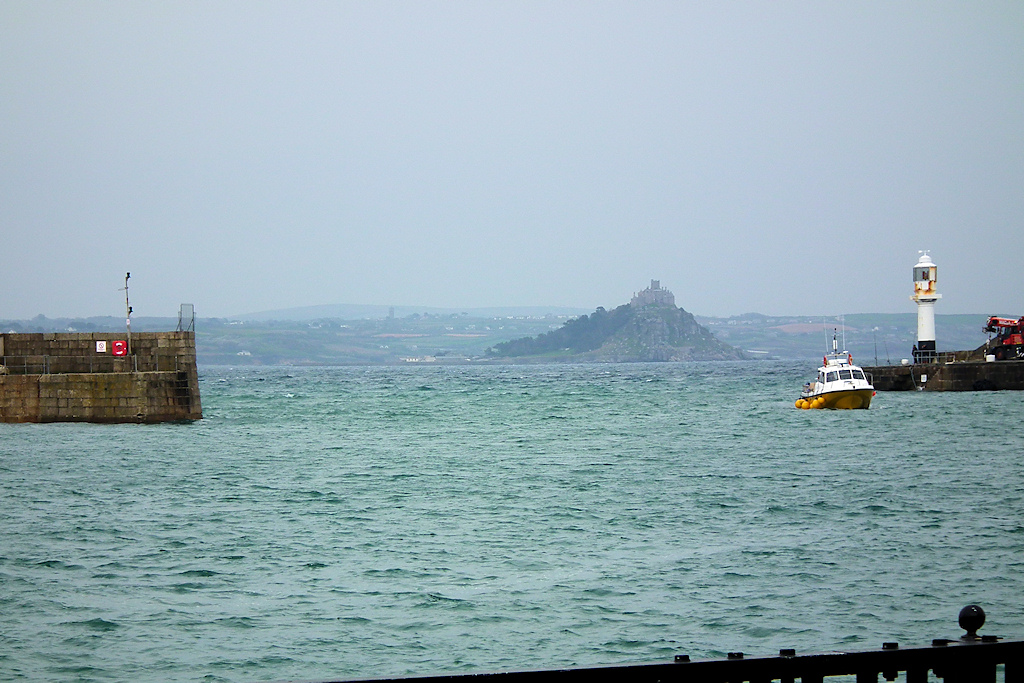
St Michael’s Mount from Penzance harbour

I wouldn’t call that channelling. It draws on my own knowledge, experience and character. But there’s something where, if Friends Upstairs want to drop something in, it’s easy for them to do so. Sometimes I get nudged, occasionally jolted. Sometimes they pull the plug on what I thought I was about to talk about, and I launch in deep, straight away, into something that feels like it’s coming out specially for the particular people in the audience. I’m always amazed that, when people tell me the clincher for them, it’s a really wide variety of my utterances that they mention. It’s fascinating.

But at the end of a talk I can feel a bit bereft because I can’t remember what happened – I’m the one that missed it.

So I’m fine about being filmed or recorded, because it helps me know what I’m actually saying to people! Not only this but, sometimes, when I’ve heard a recording afterwards, it’s as if some of the stuff I said was precisely for me – me teaching myself out loud, in public. Other people seem to like it too, which is a relief. So it balances out – Mercury in Libra.

I’m not one who repeats myself too much, and working from notes doesn’t work for me. I often have three or four talking points in reserve, and I cycle around those, but that process is still spontaneous, a wandering, a looping and a returning back to base. These anchor points kinda keep me on track amidst a wide ocean – a Gemini Mooner like me can go off sideways and add too many footnotes, so that people can’t remember what on earth I was talking about.

Gurnard’s Head again

Part of the reason for this is that it wasn’t on earth. But I have had to learn how to anchor to a few key points, to give my poor audiences a few memorable nuggets to lodge in their brains. Judging by the ramblingness of this piece, I still need to learn it, even at my age.

As a Gemini Mooner, one of the issues I had to learn was this. People remember three things. Repeat: people remember three things. In any talk, book or radio programme, I always try to look for three core points that need bringing through. I might not know how I’ll do it, but I kinda flag them up in my back-brain for covering. If I don’t do this, I go into too much intricacy and people can lose track. It was an interesting talk but they can’t remember what it was about.

What’s changed, since I had cancer 3-4 years ago, is that, more and more, I find myself anchoring back spontaneously to a wellspring inside. I clear my psyche, the process starts up, something comes up and off we go.

This very blog is an example. I was sitting there drinking rose congou tea, contemplating Lao Tzu’s saying: One who Speaks does not Know, and One who Knows does not Speak.

Well, that’s true. But there’s a way round it. The resolution of this dilemma comes spontaneously. Part of the deal is that, when it comes, it’s necessary to get down on it and write it there and then. Because that creative streak doesn’t stay. It’s a momentary thing, and part of the creative process of the universe. It speaks for that moment. If you don’t catch it, like a sailor with the wind, it comes and it’s gone.

So Lao Tzu’s statement is true. I as a voluble person need to take note, repeatedly. Yet it has something to do with the message and the vibe that’s concealed between the lines. It’s that direct mind-to-mind and heart-to-heart communication that hides behind the clattering of expressed words. Something that AI will have difficulty falsifying since AI is imitative, not originative. It doesn’t come from that wellspring.

Up to the 18th-19th Century, it was part of an author’s remit even to use flexible spellings, even on the same page – and that was part of the poesy of prose.

True authors are here to authorise authoritative authenticity. I didn’t go on a creative writing class – I just did the however-many thousand hours and years needed to gain a certain mastery in the craft of wordsmithery. That where those aspects of life that we habitually consider to be problems can become assets in disguise. I’ve been complaining of aloneness in the last two years and, well, it has given me space to create. To do so, it’s necessary to be alone and ‘antisocial’. Life has its strange compensations.

That’s a realisation that particularly comes toward the end of life. Everything has its compensations, its reason for being as it is, or was. Often it’s not at all easy to see how this is, when we’re busy struggling through life’s relentlessly tangled web of attention-seeking demands that present themselves for free on a daily basis. Until, that is, you die.

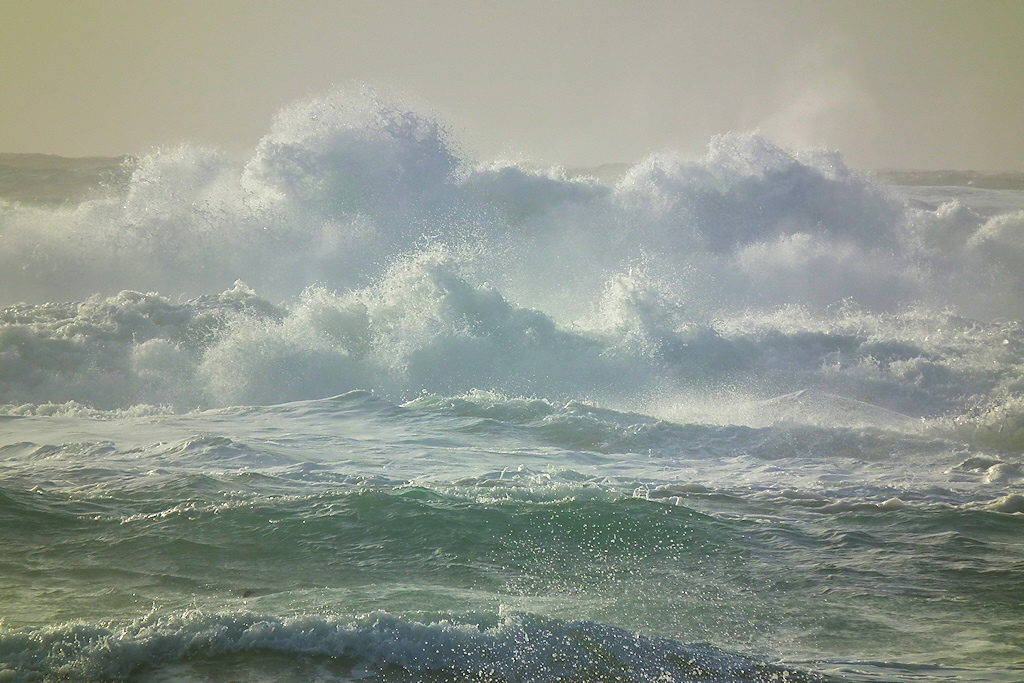
Atlantic storm at Carn Les Boel

Then other stuff starts happening and, with luck, you begin to see the real, full, all-round reasons why life needed to be the way it was. Going through this process allows us then to pass through the gate and move on.

Not going through that process tends to make us take a left turn, a quick road back to incarnate familiarity – the hope for chocolate and the fact of blizzards and droughts. We have a strange addiction to being stuck between rocks and hard places. The Council of Nine called this ‘bottlenecking’. It’s the primary reason why Earth’s population has swelled so quickly to, now, over eight billion.

Many of us have repeatedly been forgetting why we came, recycling back into life again without fully working things out. We’ve forgotten that this is a training, an initiation into dense physicality, for the deepening and broadening of the scope of our souls.

But there is the option to go on to other realms and worlds – some familiar, a few of them ‘home territory’, and a lot more that we become ready to encounter by dint of what we have already become.

The Road goes ever on and on. Out from the door where it began. Now far ahead the Road has gone. Let others follow, if they can.

There was a cuckoo on the farmhouse roof just now, making quite a cuckoo racket. But the swallows have gone to bed – busy day tomorrow. The crows and jackdaws have mostly dispersed around Penwith for the summer. And a nightjar sometimes haunts my roof late in the night, after the bats have disappeared into the dark.

Paldywan sends love from The Lookout – especially to YOU. Yes, you.

———————

https://penwithbeyond.blog

– if you sign up as a ‘follower’, my blog posts will be sent to you by e-mail, whenever they come out

www.palden.co.uk

———————

If you wish to find out more about bottlenecking, here’s a podcast: www.palden.co.uk/podcasts/PFB13-210906-SoulEducation.mp3

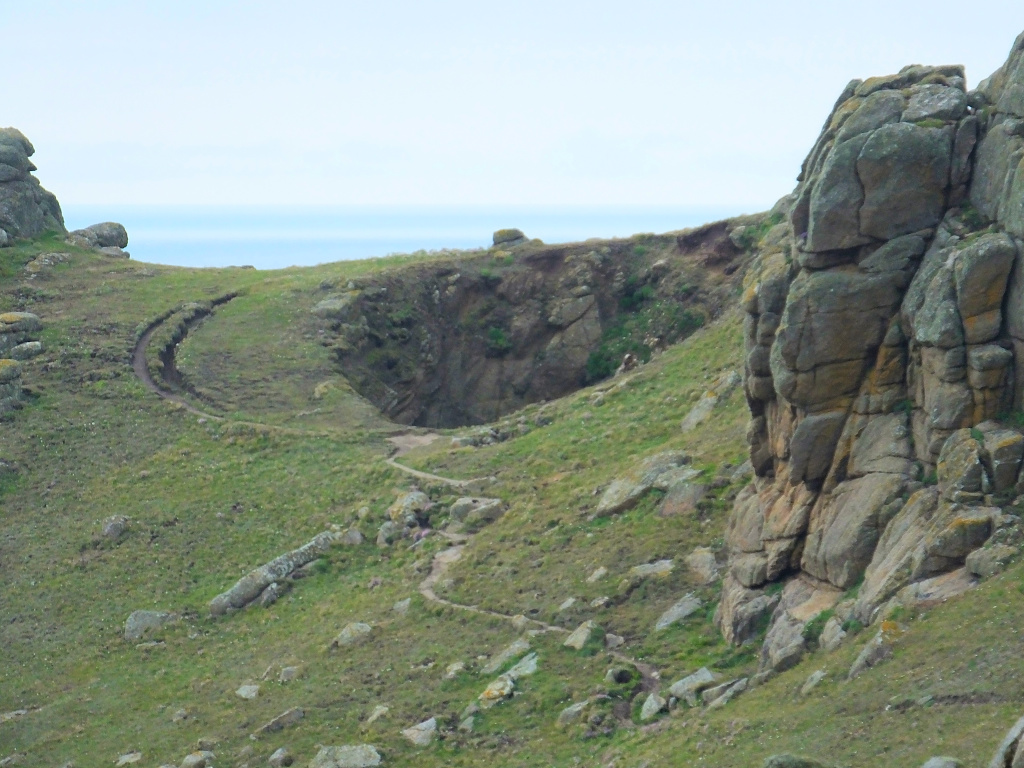
Tol Pedn Penwith – the hole at the end of Penwith

Accelerating Earth’s Evolution

Latest podcast: meet The Nine

This is me reading from a chapter from the original manuscript of the book The Only Planet of Choice – essential briefings from deep space, which I compiled and wrote in 1991-92. It contained material from the Council of Nine, a group of high-level cosmic beings who are part of the management structure of the universe, channelled by Phyllis Schlemmer during the 1970s-90s.

In this podcast, Tom, the spokesperson of the Nine, gives some interesting answers to the question “What can I do to contribute to changing the world for the better?”.

The question of fixing the planet Earth problem is taken several levels deeper, to a soul level, and several levels wider, with some mind-stretching notions that, whether or not you agree with them, certainly shed new light on our own understandings of things.

Bosiliack Barrow, West Penwith, Cornwall

It’s a series of interviews with Tom by an interesting group of people who worked with the Nine, including scientist Andrija Puharich and former racing driver Sir John Whitmore, together with others. Interspersed by commentaries written by me. This is the unexpurgated pre-publication version, containing information and some of my commentaries that were removed from the book before publication.

It was a great honour to write this book for the Nine, and hard work too. It came out in 1993. I wrote it in Glastonbury, and most people thought I had left town or gone away somewhere – no, there was a force-field around my house, and the doorbell and phone didn’t ring until the very day I handed in the manuscript.

The podcast is introduced and outroduced by the early morning birds at our farm in West Penwith, Cornwall, with a special appearance of a flight of hoarsely honking geese.

It’s 54 minute long, and you might find it gives you a good number of lightbulb moments.

With love, Palden

Get it on my website at www.palden.co.uk/podcasts.html
or listen to it here:
https://podcasters.spotify.com/pod/show/palden-jenkins/episodes/Accelerating-Earths-Evolution-e231ppjpj

Tregeseal stone circle, West Penwith

Thriller

with a plot still unfolding

It’s that silver lining. And can you see what I see?

Well, it’s a bit like that. For those of you who are interested, here’s the latest lowdown.

Sunday morning, wet and windy here in Cornwall. Early on, and Dr Isaac and I were dealing with an emergency, yet again, on Skype. We’ve become quite a team, he and I.

Felicia is hanging in there, just about. We had to take her back to hospital last night for intensive care, and a doctor there has allowed it on promise of payment later, bless him. Dr Isaac has sold his TV and sound system this morning to pay for oxygen and a drip. He’s such a dedicated doctor. I am sniffing around amongst contacts in the NGO sector, to see if there’s a good job waiting for him somewhere – he’s a true asset and he deserves better. He and his family risk having an Unhappy Christmas, though if I can change that, I shall. They are looking after Phyllis, who is doing well, and she’s a good kid too, and everyone loves her. We need to get her Mum Felicia back.

This is sharp-edged stuff. It’s really testing our mettle and our capacity to keep finding remarkable solutions. But we’re also both weary, fed up and in debt. Something needs to change now.

As you might imagine, this has been an enormous learning experience. It started with my doing a return favour for one of the company’s agents, to get him out of a tight scrape. Then it mushroomed from there. Quite a few people have been questioning whether I’m getting things right – to be honest, I don’t know, and we shall see. But I feel it’s right to keep these people alive.

The Moon emerges from an eclipse over Bethlehem, 2011.

So now it is a waiting game. Mercifully, my beating heart works well under pressure, and I’m not unused to being under fire. Though one thing we cancer patients have is greater sensitivity to and higher impacts from life’s buffetings, as if a layer of emotional armouring has been stripped away and we’re less protected. I’ve realised this in the last year since I became a single man again – fewer fallbacks, everything is up to me.

My response to this vulnerability has been a greater readiness to get down to the bottom line faster than before. Perhaps there’s a certain aged recklessness too, that comes when you know you’re in last-chance saloon and your time is limited. So, in a way, within the scope of the capacities I have left, I guess I’m playing for high stakes.

I’ve dealt with one-to-three crises every day for two rather long months, with no days off, unpaid, and I’m still in the running. Phew. I do want a rest and a break – even, dare I say it, some fun! But while Felicia, Phyllis and Isaac are in trouble, whatever anyone says, I’m staying with them. It means a lot to me, and I’m willing to lose friends over it – probably already have. This crunch period of the last week has really made me get down to first principles. What is my life about, really?

Burning. Sweatlodge fire at the Oak Dragon camp, 2022.

A friend in Nova Scotia, Susan, who has recently been my chief confidante, sent me a really pertinent lesson, written by someone called Paul Weinfield. Here are key lines from it.

Leonard Cohen said his teacher once told him that, the older you get, the lonelier you become, and the deeper the love you need. This is because, as we go through life, we tend to over-identify with being the hero of our stories. This hero isn’t exactly having fun: he’s getting kicked around, humiliated and disgraced. But if we can let go of identifying with him, we can find our rightful place in the universe, and a love more satisfying than any we’ve ever known. Everyone from CEOs to wellness-influencers thinks the Hero’s Journey means facing your fears, slaying a dragon, and gaining 25k followers on Instagram. But that’s not the real Hero’s Journey.

In the real Hero’s Journey, the dragon slays YOU. Much to your surprise, you couldn’t make that marriage work. Much to your surprise, you turned forty with no kids, no house and no prospects. Much to your surprise, the world didn’t want the gifts you proudly offered it.

But if you are wise, you will let yourself be shattered and return to the village, humbled, but with a newfound sense that you don’t have to identify with the part of you that needs to win, needs to be recognised, needs to know. This is where your transcendent life begins.

Gosh, well, yes. That hit me right on the nose! Yes, and that’s life. Planet Earth is a school – for some of us a real crash-course – and our purpose here is to graduate with honour.

But we do need to keep the school going, to enable our descendants to get born into a planetary body, to have a decent chance to do something with this strange privilege of life on Earth. And, you never know, we might one day have Heaven on Earth.

But today, we’re still on the case. If you are so inclined, please stay with those healing and helping thoughts, because we aren’t out of the water yet. I want these guys to have a Happy Christmas too – unlike me, they are Christians, and good Christians who do seem to live by the teachings of their master. That is, they’ll bust a gut for their fellow humans.

Meditation acts as a complement but not a replacement to action. In the Majority (‘developing’) World there is a higher proportion of spirited people who do bust guts for people and for justice.

Not that such people are lacking in the rich world, but here we play safe and stay within our comfort zones – we behave ‘properly’. It’s not very good karma, in the end.

This is one reason all those poor faceless people are coming over to Britain in flimsy boats – we are attracting them unconsciously in order to help us learn how to be more human, how to share. We are in a ‘cost of living crisis’ to teach us how to pull together and look after each other. We have problems with our politicians and bosses because we as a society have not taken life in our own hands. We have problems with race and gender because we labour under the belief that other people are deeply different from us.

Ridin’ that wave. Cape St Vincent, Portugal.

The good news is that, once the Great Correction really starts, life is going to get easier. Why? Because inequality and injustice are inefficient, energy-wasting, murderous ways of running a world. It doesn’t work. We need to make life easier. At last, increasing numbers of people are realising this. But the test lies in what we actually do. Leaving your job (or whatever) and changing your life is just the first step.

To get a country like Britain to a sustainable level, we need to reduce our consumption to 1960 conditions. Those of you who remember that time will know that, though there were problems, as there are today, life was alright. We had more time for each other. It’s doable, and we can be happy with that. It’s all to do with how everything is shared.

Bless us all. Life is tough at present, for many people. History takes a long time, and it’s grinding hard. But the Great Correction has actually already started – Covid was a tipping point and we’re now sliding inexorably into accelerated change. Now we just gotta get it over the hump, so that we achieve the necessary momentum to really crack our world problems.

Thank you so much to all those who have helped and contributed. There have been times when this has brought tears to my eyes. You’ve made a real difference – Felicia and Phyllis are still with us. However, this has become more of a marathon than a sprint, and there’s more to go.

It’s good practice. That’s how it’s going to be in coming decades. There’s no going back now. If I could hug you all, I would, but I’m down’ere in glorious isolation in Cornwall, so please feel it imaginally.

Love from Paldywan, and remember, stay human.

Blog: https://penwithbeyond.blog
Podcasts: www.palden.co.uk/podcasts.html

The mountains of Sapmi, or Lappland. Padjelanta national park, above Kvikkjokk, northern Sweden – where, right now, the sun does not rise.

Samhain

and the cross-quarter points of the year

This is a little late, but it might interest you. I posted it on Facebook on 29th October and then got diverted before posting it here…

One of the benefits life is bringing me nowadays is that I can read stuff I’ve written earlier in life and learn something new from it! That happened with some material on Samhain and the cross-quarters that I read this morning, having got up at 6am, suffering clock-change syndrome. So here’s something about Samhain. This comes from my book Power Points in Time.

If you’re short of time, the bit at the bottom is the best bit.

————————–

The Fire Festivals or Cross-Quarters

It takes time for solar energy to filter through into nature and actuality. The quarter points mark the inception of each of the seasons, but mainly in principle. As with everything, there’s a difference between setting out to do something and actually seeing it happen. In nature there is a 45ish-day time-lag between the quarter days and the cross-quarters, when the season in question is really in full swing, in visible, manifest terms.

Thus, the hottest part of summer is not necessarily at summer solstice but later, around the beginning of August at Lammas or Lughnasa, when the heat has gathered momentum. Likewise, the coldest, crispest part of winter can be in early-to-mid February, about six weeks after winter solstice at Candlemas or Imbolc.

Autumn really does its business in early November and spring really blossoms in early May – give or take the vagaries of weather and climate, which can vary annually and from place to place.

This is where the cross-quarters or fire festivals come in: as the midpoints between the quarter-points, they mark the times when nature and actuality respond concretely to the energy-changes initiated at the quarter points.

The zodiac is measured in terms of 360 degrees (°). The Sun moves more or less 1° per day. The quarter points are 90° from each other, and the cross-quarter points are 45° from the quarter-points (and also 90° from each other). The ancients, at least in Europe, where the seasonal changes of light and dark matter a lot, marked these cross-quarters as important festivals, celebrating and participating in the power of nature and her manifest expressions.

Historical quirks have shifted these festivals away from their original auspicious times (just as Yule has been shifted to Christmas, 3-4 days after winter solstice). The cross-quarters occur when the Sun reaches 15° (the middle) of one of the four so-called fixed signs – Aquarius, Taurus, Leo and Scorpio. The astrologically-true cross-quarter points thus take place around 2nd-7th May, August, November and February.

Tradition places these festivals a few days earlier – such as Beltane or Workers’ Day on 1st May, Candlemas or Imbolc on 2nd February, Lammas or Lughnasa at the beginning of August and All Souls or Hallowe’en at the very end of October (or Samhain on 1st November).

This said, the ancients were not as calendrically-fixated as we, and they often shifted the festivals around a little each year to coincide with a new or full moon, or any other energy-blip that was hovering around at the time, on that year. A remnant of this remains at Easter, which occurs on the fullmoon following spring equinox (nowadays on the Sunday following that fullmoon). Only later on, with the coming of the institutional church and calendrical dating systems, were such dates nailed down at regular, fixed dates.

Outwardly, there are visible seasonal changes at the four cross-quarters, and inwardly there is a quality of very real engagement in the life-process, a feeling of breakthrough in relation to the theme being explored underlyingly in each season.

The cross-quarters used to be known as Witches’ Sabbaths, when the inner intents (or spells) of witches would work through and become reality. A ‘witch’ is a person with natural, herbal, oracular and magical knowledge and training, often practising midwifery, healing, rites of passage and death rites, who acted as an adviser and spiritual friend to the people around them. By the 1500s across Europe they were often misunderstood, demonised and accused of heinous crimes, particularly by the church. The sabbaths are times of coming-to-pass, stages of manifestation and transition. The times for clarifying intent are the solstices, and those for adjusting or reaffirming intent are the equinoxes. At the cross-quarters, it is necessary to actualise those intents, or stages of them, and give thanks too. Things actually happen at the cross-quarters.

Conscious energy-working is a process of bringing things from the stage of visualisation into manifest reality, intertwining our attention, intelligence, will and activity with the natural flow of subtle energy. This is the true meaning of the Sanskrit word tantra, or interweaving (of self with universe), which is the essence of magical-spiritual work. In so doing, we engage with and enhance the natural energy-flows of the world and are supported by them.

We harmonise our lives with the energy-weather, with the deeper realms and with the karmic threads interlacing all events and developments. Nowadays, this isn’t witchcraft so much as a sense of ‘deep ecology’, the spiritual aspect of respect for nature, or perhaps even ‘magical politics’, a deeper aspect of working for social change and justice.

In ancient times, people would gather together at the quarters and cross-quarters to celebrate life and focus their collective spirit, keeping the human family moving in tune with the times – especially since, with sparse populations, people, families and clans didn’t actually cross paths with each other very much. They’d have meetings, markets, negotiations, flirting, marriages and rites of passage too. Today, people are doing this again – not for the romantic purpose of fantasising about the ancients (though this happens) but because they sense that it is auspicious and necessary in our time. It’s a form of para-politics, voting with our feet, spiritually, and communicating with the subtle worlds to say that at least some of us do care.

Tuning into these eight points of the year, the quarters and cross-quarters, we move into greater harmony with the energy-cycle of the solar year. It puts us into gear with natural cycles. Thereby are our lives enriched. Try it. It sheds new light on the seasons and the underlying learning process within them.

To repeat, there is a distinction between the quarters and the cross-quarters. The quarters represent change-points in energy-patterning, in terms of light. The cross-quarters represent change-points in manifest energy, in terms of visible seasonal changes. The peaks of the four seasons show themselves at the cross-quarters.

Autumntime

The Scorpio image here is by artist Jan Billings of Glastonbury

At autumn (fall) equinox, relationships, togetherness and belonging become important. Summer has ended and nature is beginning to close down for winter. Increasing darkness and cold encroach on nature and people – we are affected, whether we like it or not. People, animals and plants must adapt if they are to survive the winter. We’re given notice about this at autumn equinox and it gets serious at the cross-quarter day, 45ish days later.

The need to really engage with what envelops and surrounds us arises at the autumn cross-quarter. In Britain and Ireland this is called Hallowe’en or Samhain. Strictly speaking, this cross-quarter occurs when Sun is at 15° Scorpio, around 5th-7th November. In Britain 5th November is Guy Fawkes Night, celebrating a terrorist attack and attempted coup d’etat in 1605, but the tradition of bonfires, burning a ‘guy’ or straw-man and setting off fireworks is really a leftover of a much older fire festival. At this time the dark and cold is definitely coming down: leaves fall off the trees, migrating birds have gone, frosts and icy blasts impinge on us and animals go into hibernation – except climate change is nowadays changing that. In the agricultural cycle it’s time for the annual slaughter, and all the firewood must be ready and stocks laid in for winter.

Humans, animals and plants must accept that winter is intruding: together we stand, divided we fall. In the plant world a composting process ensues, to feed the ground and cover the seeds, spores and rhizomes for winter. The relative freedom and bounty of summer is gone. It’s fact-facing time, concerning me-as-part-of-something-larger. Our urges to belong to a family, to groups, society, tradition and social mores grow stronger – it’s more about a sense of heritage than a sense of future at this time of year.

The ancients held a fire ceremony at Samhain to recognise that, while the solar light is dying, the light within must be cherished, to be reborn later. This is a time of the death of the old, and within it is the eventual promise of rebirth of the new, but that’s some time ahead at Imbolc or Candlemas. Another aspect is ‘All Souls’ and ‘Hallowe’en’ – a recognition of souls and beings beyond this life and beyond visible reality, of ancestors and things that go bump in the night. It’s a time of forced adjustment – like death, it’s something we must accept when it comes, powerless as we are to do anything much about it except to work with it. Once these impinging realities are taken on board, new hitherto concealed possibilities are revealed – the power to survive and make something good of challenging circumstances. It’s a time to get out your knitting, do some woodwork or wade through thick astrology tomes!

From Samhain to the winter solstice, a dark time, we start with winter’s hard, sometimes harsh facts and end with a celebration of our social togetherness around a warming fire. At solstice comes Yule and the assembling of the clans. Yet in early winter there can be a stark beauty too: wintry gifts, with crisp air, frosts and the first snows, and warm fires to come home to. In northern Europe there were candle-lighting traditions: the christianised Santa Lucia in Scandinavia, honoured in December, is a blond maiden dressed in white and wearing a crown lit up with candles.

Samhain or Hallowe’en

What’s ending and completing here? What can you wrap up, and what is to be carried forward to another time?

What’s under the carpet or lurking in dark corners? What’s the final secret behind all that has happened throughout the year?

What has been your part in the great cosmic chessgame of life? Acknowledge the mystery, the unfathomable wonder of it all, the unknowns and the bits you sense but don’t see or understand.

Life has its tough aspects, things come and go, but something endures too. Talk to your ancestors and appreciate what has now gone. Clear the space and, even if you’re wet, lost and cold, take it with good grace. There’s something wonderful amidst all this, so light a candle to celebrate it. And tomorrow is another day.

————–

Power Points in Time – and how time passes
Ancient festivals, lunar phases, planetary line-ups and historic moments

Website: www.palden.co.uk/time/
Order the printed book from Penwith Press

Earth

A podcast and a podtalk

An old pathway at our farm, certainly centuries old, could even be four millennia old

I’ve been at it again – beavering away on quite a few things, including coddling plans for my next round of events and activities in 2023. And for however long I stay standing.

It’s a product of spending a lot of time alone – as you might imagine, it makes me find things to do I wouldn’t otherwise do, if I could run around being busy like most people.

One outcome is a new podcast, and it’s called Earth – one of a series of ET-related podcasts I’m doing at present. It’s all about my understanding of the perspective that people who don’t live on Earth have about our planet and our acute situation.

It brings into focus a big reason why dealing with our world problem is important not only to us but across the universe. Sounds like a strange and rather human-centric viewpoint, but it isn’t. This podcast explains how and why.

Food for cogitation. 33 minutes of it. Enzymes for the soul.

Download or listen to it here www.palden.co.uk/podcasts.html or on Apple, Google or Spotify (look for Pods from the Far Beyond).

Dans Meyn, or the Merry Maidens stone circle – 4,500 years old.

There’s more. If you’re really interested in this particular issue and want more, then I’ve unearthed an inspired talk I gave to the PAN conference in 1996, giving more details about the cosmic situation that Earth is in. It’s now a PodTalk, The Only Planet of Choosing.

I gave this talk not long after having written the book The Only Planet of Choice and during the time I was running the Hundredth Monkey camping retreats, working with world healing issues. It’s all about the wider reasons why world healing work is an important part of the mega-project of fixing Planet Earth.

I’ve uploaded it as a podtalk: www.palden.co.uk/podtalks.html – but this one is for those of you who are specifically interested in this (it’s 1hr 15mins long).

My aim with creating this audio output is to build up a body of material about those subjects and issues I’ve been involved in, for leaving after I’ve gone – they’ll come in useful in a future time.
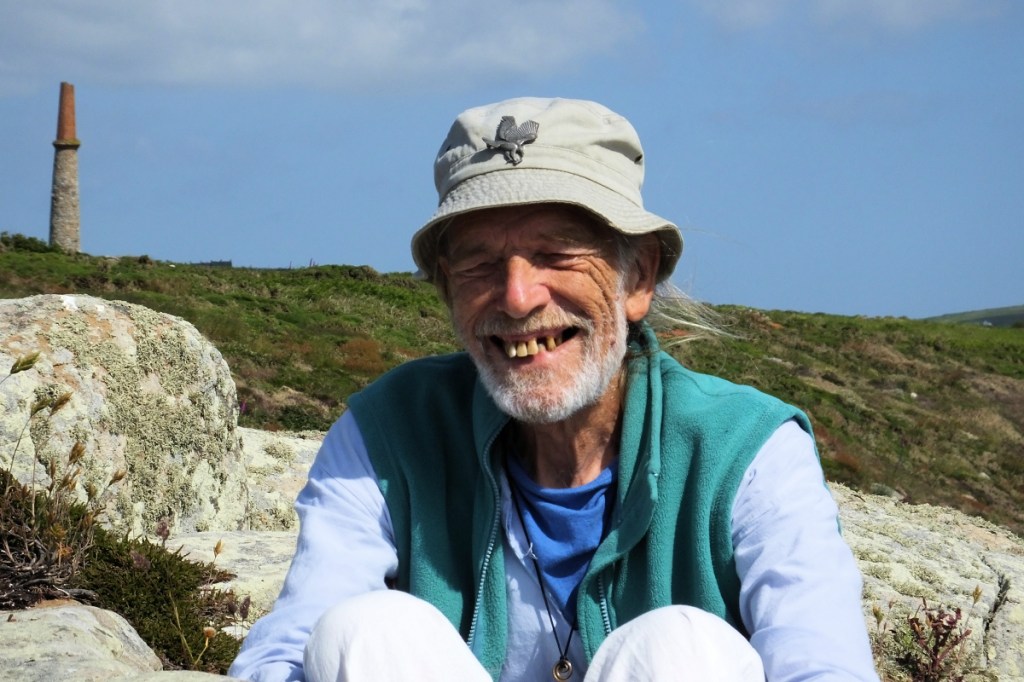
With love from me, Palden

A cloud over Zennor, here in West Penwith, Cornwall