MEDITATION today, Sunday. And every Sunday, regardless, whether or not announced.
We’re in a deep time when the hidden and not-so-hidden feelings of humanity are coming up in all sorts of ways – not just around Gaza, though it does symbolise the world’s situation.
The Scorpio newmoon comes at 9.30am GMT on Monday morning. This is an angry, restive, frustrated, oppositional time (Sun, Moon, Mars, Uranus), yet underneath it there’s an exposure of human truths and motivations, powered by pain and memory from the past and a need to make a big step into a new future.
A future where humans and our heart-sensitivities prevail over horror, disaster and grief, the cruelty of explosions and the bulldozing facelessness of the Megamachine.
‘Disaster’ means ‘out of tune with the stars’. A sustainable future involves tuning back into the stars, to nature and toward our fellow humans. A harmonisation of human feeling that incorporates uncomfortable truths, healing them and bringing a turn-around in the deepest corners of the human heart.
One member of our group is close to the volcanic eruption in Iceland – even the Earth is speaking.
There will be more of this in coming times, as we face the uncomfortable truths that stand in the way of progress on our shrinking, quaking planet.
Peace is not just about cease-fires – it’s far bigger, deeper and wider.
You’re welcome to join us for half an hour (times below). Thanks for being with.
Current times, on Sundays: UK | GMT 7-7.30pm W Europe 8-8.30pm E Europe and the Levant 9-9.30pm Brazil-Argentina 4-4.30pm EST, Cuba, Jamaica, Colombia 2-2.30pm PST North America 11-11.30am
If you wish to understand the psy-ops and propaganda war that’s going on, it’s worth reflecting on the word hasbara, a Hebrew word often translated as ‘explaining’, but it means a lot more than that. The hidden agenda behind hasbara is to say things that are the opposite to the way they actually are, and to project on the other side qualities that actually are your own, blaming them for what is happening and thus justifying any actions that are taken in response.
A classic hasbara word is ‘defence’, as in ‘defence forces’, which is only part of the truth, concealing the less popular aspect of it. Israelis ascribe ‘defence’ to themselves and ‘attack’ to its neighbours, when actually, for both, it cuts both ways.
This shadow-stuff is common in international relations – creation of often unfair images of other countries or peoples in order to bolster one’s own projected image. They are the bad guys and we are the good guys. It gets exaggerated during times of conflict – and the basis of conflict is a sundering of consensus and a dangerous polarisation between sectors of society, nations or blocs. It can be used to justify actions that otherwise are unacceptable or atrocious. Every nation does it in some way, though Israelis are really good at it, as are Americans and British.
So if you look at what you read and hear with this in mind, you’ll understand things in a new way. Sides in a conflict project negatively on each other, demonising and dehumanising each other, to justify their own offensive or outrageous actions.
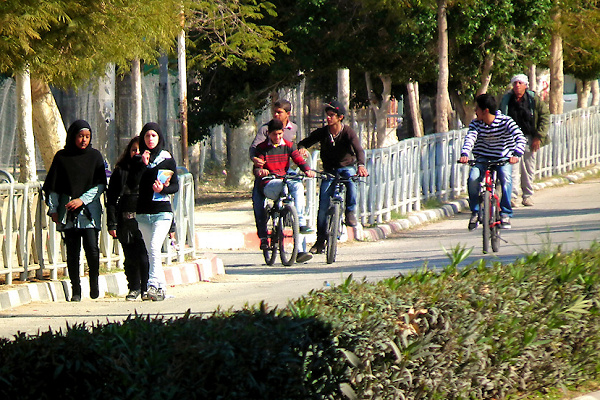
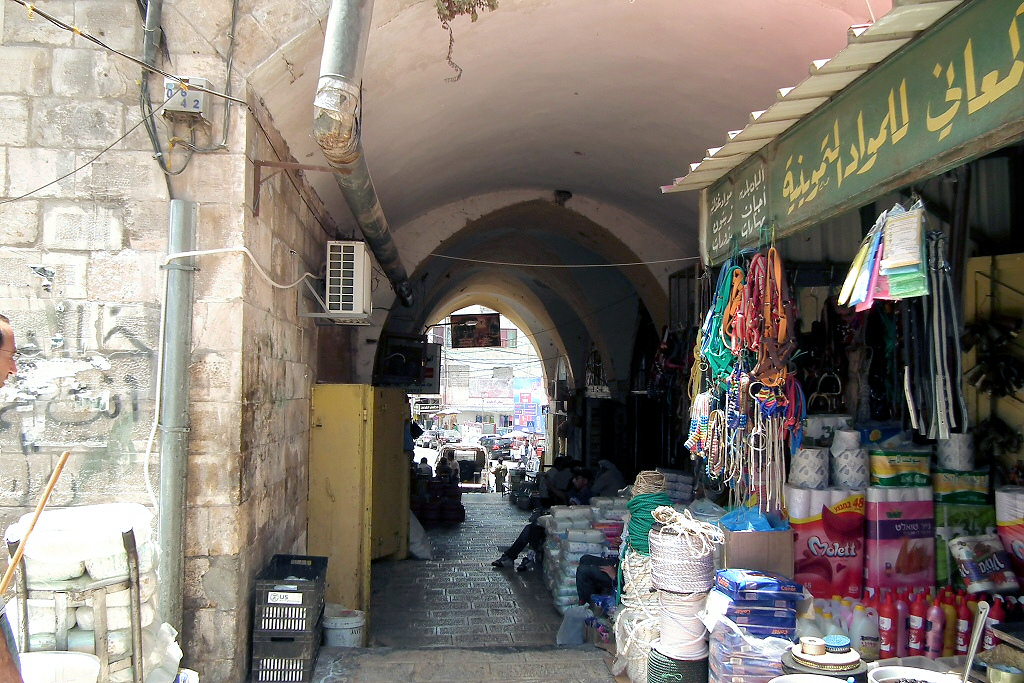
An ordinary day in peacetime Jericho
If Israel, Hamas and the ‘international community’ truly seek peace and a fulfilment of their needs, the dialogue needs to change. The terminology, the attitudes, the dehumanisation, the unreasonableness, the accusations and the anger. It starts with a change of heart. This is at present slimly possible though highly unlikely – there are too many vested interests and set agendas involved, of many kinds. So the current Gaza conflict will likely remain unresolved, as have previous conflicts. Not that it is easy or quick to resolve – incrementally, it will take generations. Recent events could serve as a turning-point, but I do not detect a necessary will to change.
However, the people with the biggest cards, regarding peacemaking, are Israel and the American bloc, closely followed by the Middle Eastern nations. It starts with a realisation amongst Israelis that they will fail to create longterm security while they are damaging new generations of Arabs and thus creating new enemies for the future. They cannot eliminate Hamas or the constituency it reflects and, in Gaza, there is no one capable of replacing Hamas as a government.
Also, Hamas have not actually been bad as a government (given that people in most countries have problems with their governments), and it needs recognising that they are an Islamist social reform party with a military wing, not a military force with an appended political wing.
A crow at Tel-es-Sultan, the remains of ancient Jericho, going back 7,000 years
But both sides need to change their views – their whole optic.
Palestinians are not extremists, though they are in an extreme situation and thus they react extremely. But they dislike Muslim fundamentalism, ISIS, Al Qaeda or even the wearing by women of the full face-covering. Most Israelis are not extremists either but, when they feel under attack, they can be overwhelmed with insecurity, fury and vengeance. This has deep historical roots and, while it’s understandable, it doesn’t help the future. It makes Israel overreact, with the longterm effect of perpetuating the insecurity that Israelis so much want to be free of.
It makes Arabs overreact too. Most Arabs accept that Israel is there, wishing it to withdraw to the 1948 borders (perhaps with a few trade-offs) and to become a good neighbour. But when they see Israel’s military actions, they become emotionally reactive and the rather over-worn and unworkable idea of driving the Israelis into the sea is reborn.
So somehow there needs to be a massive act of mutual trust and respect of a kind that very few Israelis, Palestinians or neighbouring Arabs could accept. Things are so touchy that it could break down over the slightest incident. And there are interest groups, both high-up in the geopolitical sphere and on the ground, who are dead set on perpetuating and enforcing the existing mindset they already hold.
The ancient spring at Jericho – the reason why the town is there and has been there for 10,000 years. It’s the oldest continually inhabited town in the world
At present I see only two possibilities: calming and exhaustion.
Calming means an incremental stepping back and reduction of conflict, by agreement. This could be achieved either on the ground, through the upwelling of a suppressed aspect of public sentiment on both sides, particularly amongst women, to apply deconfliction pressure from within each society. Or it could be achieved diplomatically, but this would require all those countries that matter to agree on one strategy, applying strongly both to Israel and the Palestinians. Don’t hope too hard for this, but it is always possible. As Sir Steven O’Brien, a diplomat, said on the radio (Saturday 4th Nov), “Diplomacy always fails until it succeeds“.
Then there is exhaustion. A conflict ends when there is an equalisation between forces, such that both sides perceive that they cannot win. This can happen militarily, but neither side in this conflict is likely to be able to win clearly, and there is a high price-tag to it.
Here the Palestinians have a slight advantage since their attitude of ‘sumud’ – perseverance and hanging in there – has more lasting power than Israeli rage. They lose every conflict, trying to draw down the world’s sympathy by suffering massive damage – a kind of collective martyrdom – but they also stop the Israelis from winning, every time. Meanwhile, the international community watches, fruitlessly spluttering and wringing its hands.
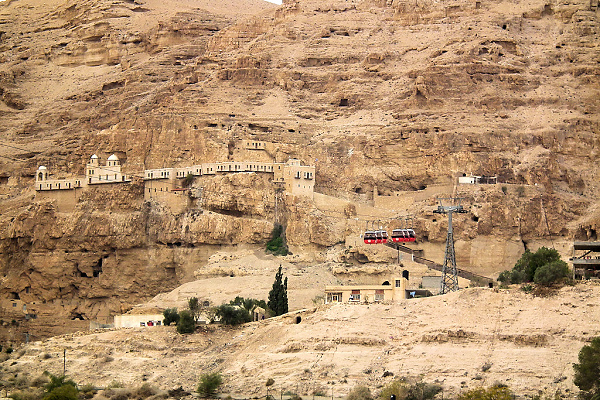
The Greek Orthodox monastery at the Mount of Temptation, Jericho (where Jesus did his forty days and forty nights).
It’s all nicely complex, and there is a counter-argument to every argument, and there are no easy answers. But it looks like we’re following the exhaustion track. This is also what’s happening in Ukraine.
The real battle lies between those who encourage polarisation and violence and those on the receiving end of them. Both sides can live together, and they shall. They do live together, even though they are strangely divided.
Palestinians aren’t angels and they’ve made mistakes but the burden of power and error weighs heavily on the Israeli side. Israel has long had superiority in weapons, money, connections, PR, chutzpah and forcefulness. Israelis don’t see things this way, seeing themselves as endangered victims. This is not unique amongst nations, but for Israel it’s extreme and the effects impact heavily on their victims and the wider world.
The Israeli project – to provide a safe haven for Jews – is a noble thing. Historically, Jews have suffered immensely, especially from the actions of Europeans. This doesn’t justify their oppressing Arabs today or doing to others many of the things that once were done to them. Israelis don’t see themselves as oppressors – they are the oppressed, busy protecting themselves.
Israelis have a lot to be proud of. They built a nation in decades. From their perspective, Arabs have attacked and menaced them and Israelis have bravely held off such threats – this was the narrative I learned as a teenager in 1967 at the time of the Six Day War, during which the Israelis occupied the Palestinian territories as if by accident, pre-emptively defending themselves (we were told).
Westerners fail to understand that this is where the power really lies in Middle Eastern society
In later life, I discovered that this, like the previous one of 1948, involved severe ethnic cleansing and uprooting of Palestinians, razing and occupying villages and parts of towns, and the killing of thousands of largely defenceless people. The awful fate visited on Jews by Europeans was visited by Jews on Palestinians. In the long arc of Jewish history this is tragic.
Only some early Israelis were perpetrators. Many were accomplices who shut their eyes, went along with things or obeyed orders, to an extent tricked by their leaders. Or they felt unable to encompass the situation, complain or do anything about it – they were simply thankful to be in Israel. Some protested but didn’t get far, others felt that the ills taking place were regrettable but unavoidable, while others just didn’t look. Zionists defined Israel’s character and future as a state, locked into an endless military vortex.
It could have been done differently. As they immigrated in the earlier 20th Century, Jews could have been integrated more with Palestinians – there would have been difficulties, though arguably fewer difficulties than actually arose. The British administration of the 1920s-1940s could have exercised less of a divide-and-rule approach. When the UN partitioned Palestine, favouring Jews, the Israelis could have made do with the territory they were allocated – they were given 56% and took 78%. They could have traded land for peace in the 1970s or 1990s.
None of these options would have been perfect, but some sort of peaceful and productive coexistence could have arisen, leading to a sounder long term future for everyone. But the path Israel chose lacks foresight, and the results come back to haunt them today.
Israeli feelings of existential threat arose from deep-seated vulnerabilities following the Jews’ terrible history in Europe. But the threat from Palestinians and other Arabs has been less a conquering aggression, more a largely ineffective response to Israeli force and expansion. A sense of threat does not have to be the case now. When Israel upsets its neighbours, or when it refuses to budge on issues crucial to Arabs, it naturally creates an unhappy response.
Thus, Israel becomes its own worst enemy: while intending to reinforce Israeli security, it generates antipathy and threats instead, undermining that security. The ethnic cleansing of 1948 would be consigned to history if it didn’t continue today. Hezbollah would be no threat if Israel hadn’t invaded Lebanon so devastatingly, not long ago. Israeli actions caused the founding of both Hamas and Hezbollah. Hamas and other militias in Gaza would not fire rockets if Israel let up on its siege of Gaza.
Zionism sees Israel’s own interests and expansion as paramount. Whatever means are used, whatever the wisdom of it, and whatever costs are incurred, Israel’s growth must go on. The notion that Israelis’ needs and security could be helped by acknowledging the needs and security of others doesn’t enter the equation, except amongst a dedicated but much shrivelled Israeli peace camp.
In the long term, if anything weakens Israel, it is Zionism, since it undermines the sympathy the world has toward Jews. Only a proportion of Israelis actively subscribe to Zionist sentiments, though acquiescence to them increases when Israel feels threatened, which happens regularly. Zionism is a norm drummed into Israelis from an early age.
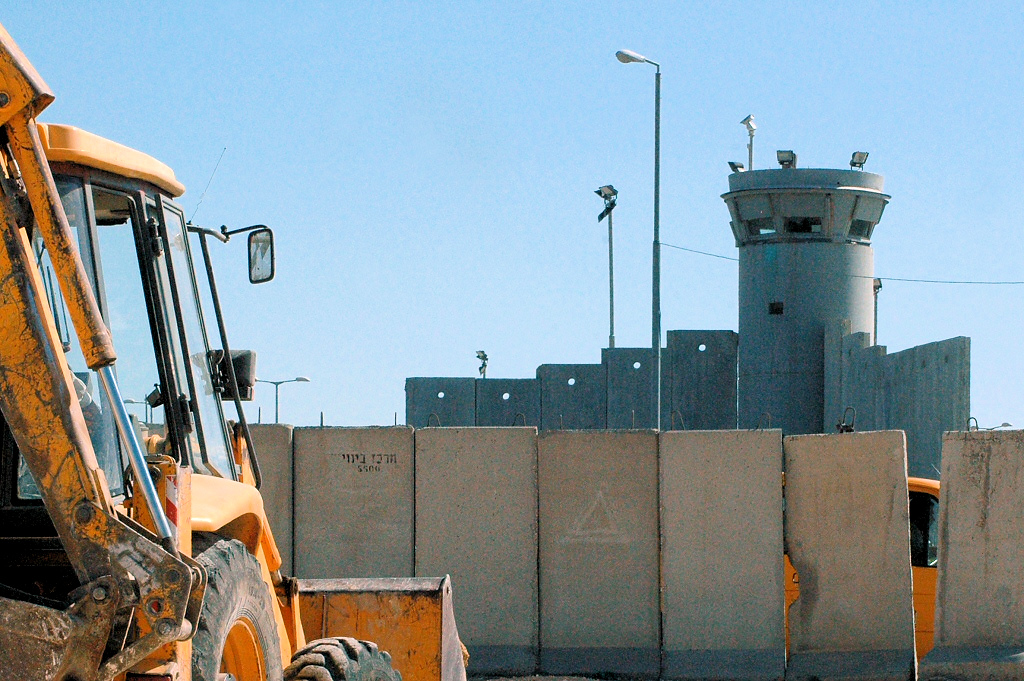
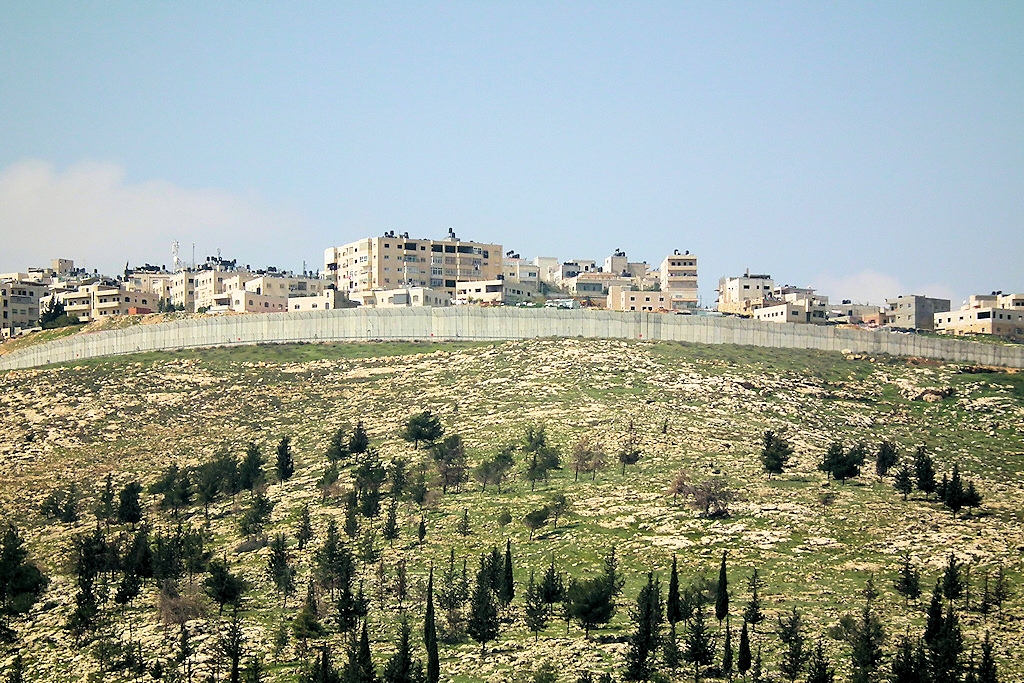
Judaism is one thing and Zionism another. The Zionist mentality builds concrete walls and fences around Israel in self-protection, and in so doing Israelis become separated from the world, increasingly failing to see the wider world’s viewpoint. Zionists accuse critics of anti-Semitism, labelling Jewish detractors as ‘self-hating Jews’. Thereby, balanced dialogue is blocked.
But here comes a key proposition. If both Israelis and Arabs saw things another way, opening up to the notion that their fellow humans sit in the same boat as they, and if Israel ramped down its military expansionism, permitting some restitution of the ills which have occurred since 1948, then, over time, threats to Israel will subside, and the country and its population will become more safe and secure.
Most Palestinians and Arabs don’t want to fight. The idea that they want to destroy Israel is nowadays somewhere between a myth and an expletive uttered by Arabs when tempers are hot. Similarly, in Britain in WW2, it was the case that ‘the only good German is a dead German’.
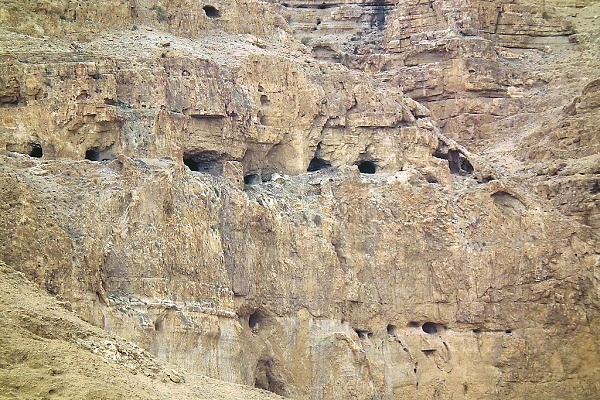
Early Christian hermits’ caves at the Mount of Temptation
Most Palestinians and Arabs accept the existence of an Israel within the pre-1967 borders – an enormous concession they signed up to thirty years ago in the 1993 Oslo Accords. Even Hamas has stated that it will recognise Israel within such boundaries. Palestinians just want a fair deal and a decent life. Peace will never be a perfect deal, but it will be better than the current situation.
Israel cannot afford to remain militarised forever: it has poor people, social problems, enormous water-shortages, a risk of coastal flooding, toxicity, pollution and all the kinds of problems that pervade most modern countries.
It claims to be the only democracy in the Middle East (that’s hasbara) yet the nation is riven with disagreement over the nature of democracy, the constitution and the purpose of the nation, reflected in a succession of demonstrations and indecisive elections. It also shares the Global North’s dwindling prestige and power. After all, Israel’s population is only one third of the Egyptian city of Cairo.
Even if Israel won every war it undertakes, this doesn’t make for a happy, healthy nation. It needs to make friends with its neighbours because it needs them, and they need Israel. They have a lot to offer each other. They share Middle Eastern space. It’s a multicultural space.
Israelis need a safe and peaceful future. Many are not fully aware of what goes on in their name, or they shruggingly accept the ‘security reasons’ they are given. Many feel powerless, or they maintain a comfortable indifference ‘living inside the bubble’. Others adopt extreme, partisan views, as if everyone is against Jews and a strident, hammer response is always needed.
Since the late 1990s, the centre of gravity of Israeli politics has headed rightwards, and a harsh minority dominates the public discourse. The rule of dominant interests, while not unique to Israel, maintains a perpetual state of near-conflict.
Israel could come to regret many aspects of the years since its founding. It soils its nest by pushing its case uncompromisingly, thus creating enemies and the opposite longterm effects to what it genuinely seeks. Its reliance on force, bombing, assassinations, land-grabs and ill-treatment of Arabs builds up new, avoidable problems, fostering new generations of opponents.
We need a new habit of peaceful coexistence. This will take a generation or even seven, but it is important.
The Holy Land is a multi-ethnic, multi-faith land and a fascinating place. Sanctity is elusive and each faith defines sanctity differently, but it’s safe to say that ongoing conflict is not one of its characteristics. Positive change matters for the whole world – Israel and Palestine form a bottleneck in the world’s process of change.
Security is developed by building up a nation’s internal feelings of alrightness, community and integrity. It is built by cultivating collective happiness and creativity, giving people a sense of a positive, mutually-beneficial future. This is the real national interest, the guarantee of Israel’s future.
Once there was an old rabbi who had been praying for peace daily at the Western (Wailing) Wall in Jerusalem, for decades. When asked by an admiring journalist what it was like, he simply replied, “It’s like talking to a stone wall“.
With love, Palden
For better or worse, written using HI (human intelligence, aka brainz)
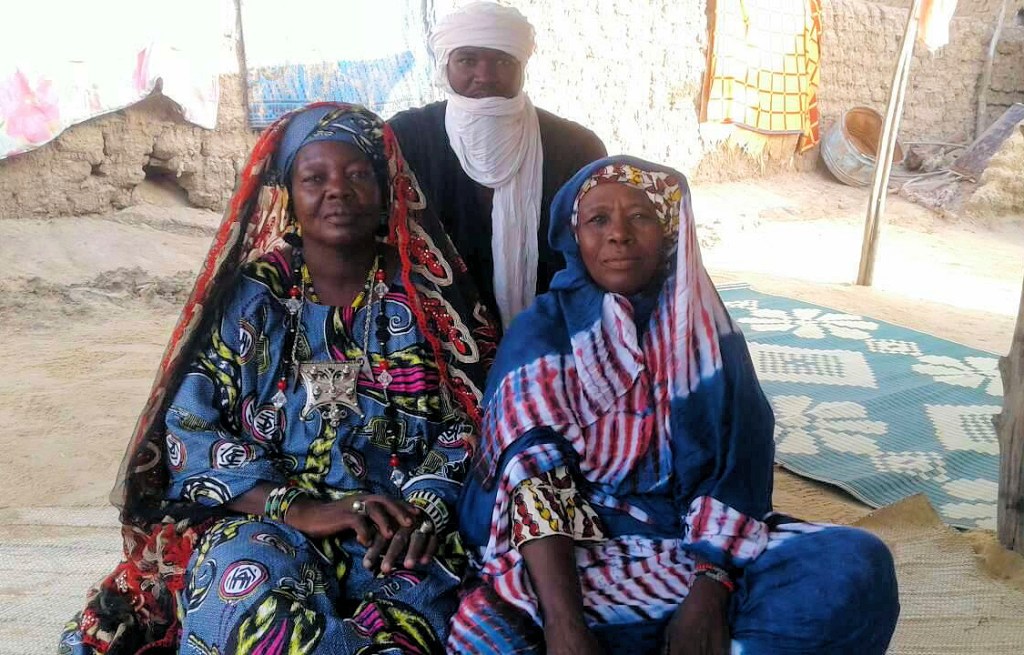
Okomfo Akua Ayensuwaa, Queen Priestess of the Ayensu River, West Africa
Those of you who know me well and have been following my story for the last year will have heard me mention the Okomfo Akua Ayensuwaa (Maa Ayensuwaa). An Okomfo is a priestess or priest. This is her.
She is a native healer in Ghana who has been working with me to save lives of people in Ghana, Togo and Niger who have been under attack from an international crime gang, since October 2022. The gang do drugs and people-smuggling over the Sahara, for the British-European market – hard, ruthless men who care little about rape, violence and crime.
She has been in hospital with fibroids, which are spreading. This arises from the privations she’s put herself through during this year – she tends to put others first and is a real heroine. I have not been able to finance her hospital treatment and aftercare (£500). So it looks as if she will die before long.
I am really sad about this. Our meeting last December was very special and, between us, we’ve pulled off some amazing miracles. The problem we have had is that the security/anti-fraud wing of the ANZ Bank in Australia, promising to pay all the expenses for this operation, have failed to fulfil their promise and pay up. Perversely, the bank has turned out to be a bigger problem than the crime gang, whom we have disabled considerably.
This debt from the bank now amounts to some £40k, for the repaying of debts incurred (£15k) and for compensation (£25k) to those ‘good samaritans’ who have sought to help and who have paid a high price as a result. This whole story started when I saved one of their men, Andrew, a Scotsman, whom I knew, from attack by the gang – and the crime gang was uncovered in the pursuit of the bank’s anti-fraud business in West Africa.
As a result of this failure to pay, I cannot pay the fees to save Maa Ayensuwaa now. In circumstances like that, hospitals simply dump people outside, since they do not want liability for them. The bank is in a state of corporate denial, yet they are indirectly responsible for the deaths of at least ten people. They owe the Okomfo and me a lot of money.
I am not appealing to you for money, and I do not like to. The best I can do is to fix for some good-hearted person in Ghana to take care of the Okomfo, so that she can at least have a noble and peaceful death, which she deserves. She is currently semi-conscious and about to be dumped. (The doctor I have been dealing with is a good man, and regrets this himself, but he is bound by the rules.)
I do however ask for prayers and inner support for her. May she manifest the support she needs and deserves, and may her likely end be filled with light and with grace. May she be blessed by the angels, gods and spirits. If she is to live, may she find healing and revival – whichever way the Universe chooses. Please surround her in love. She has given so much to so many people, risking her life for them, and she is a true heroine – rather saintly, actually.
I am working on writing the full story, for the time is now coming to tell it in public and expose the bank. Sometimes the pen is mightier than the sword.
For now, may I ask you to put in a prayer for Maa Ayensuwaa? She is 53 years old, a Gemini, and she is Queen Priestess of the Ayensu River in western Ghana. Her magic and her considerable healing powers are rare. She is is one of the most remarkable psychics I have ever met – and I’ve met a good few. She is a sincere woman who gives freely of herself and her abilities, and she is deeply committed to truth and justice. The photo of her here is the only one I have – our contact has been psychic and online only.
I am really sad that it comes to this and I shall miss her. But we shall continue communicating whether she is alive or dead, and we shall meet again. I was aware that she and I could have done so much together in the area of world healing. Whether this is to be or not to be, may the Universe make the best choice, and may Maa Ayensuwaa go well on her journey and be truly blessed. She is one of the most remarkable women I have ever known.
Jeez woz ‘ere. Looking over the Judaean Desert toward the Dead Sea and Jordan
Last night (Sunday 22nd October) I had a very profound meditation, more like trance – I was carried away and ‘out of it’, surfacing far later than the usual time, after more than an hour. I felt quite at peace. This morning I feel quite changed – a bit wobbly yet feeling alright too. A few thoughts came up this morning that might be of interest or value.
It’s important to remember that those who are killed in disasters like this are well dealt with. They are withdrawn before pain or horror cloud their passing. They are pulled out in micro-seconds and instantly taken into care, as appropriate to each soul. They don’t seem to experience the impact of whatever hits them or whatever is the cause of their death. If they do experience it, they are detached from it, without accruing psycho-emotional damage. They witness it (for the soul-learning therefrom) but they are put into a kind of state of grace and objectivity where they are not damaged by it. It’s a kind of fast-tracking transitional process.
I’m more concerned about the living and what they are going through.
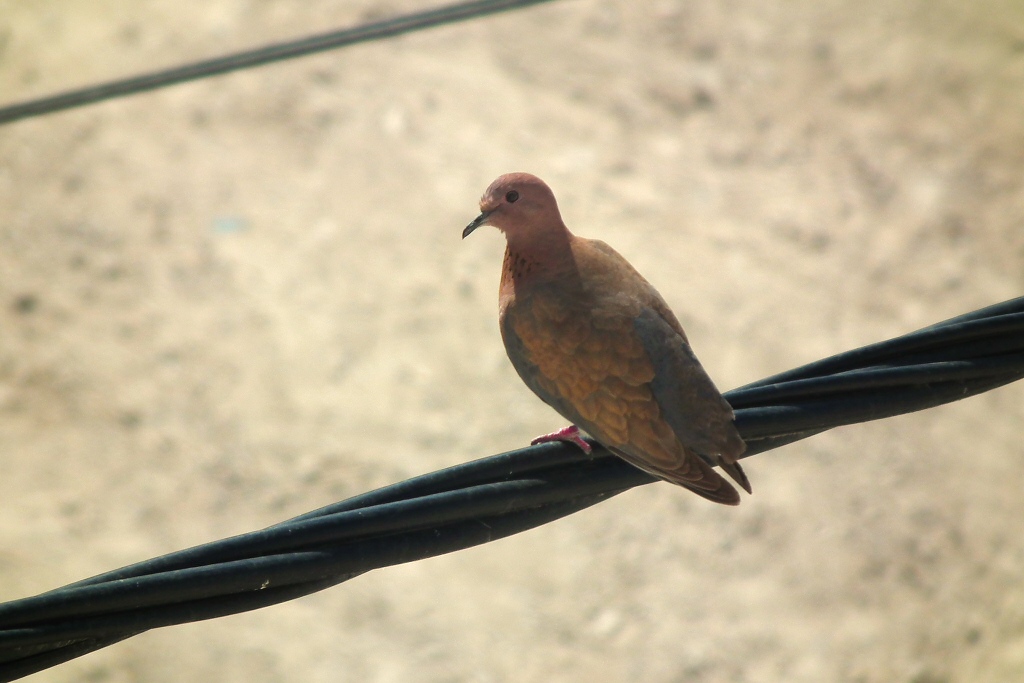
A Palestinian dove
There are Christians in Gaza as well as Muslims – and also seculars, who are often forgotten. Many of the Christians belong to ancient pre-Catholic, pre-Orthodox churches. (By the way, Arab Christians also call God Allah – which means ‘the God’, to distinguish it from a pantheon of gods.)
Yet I find Christians can have more difficulty passing over – more of a struggle – than Muslims, who seem to have a clearer sense of returning to Allah. Perhaps Christians and Jews have more of a feeling of distance and separation from God, involving more striving, more doubt, more questioning, while Muslims seem to have more inner confidence in their relationship with Allah. Not totally, yet they seem inherently more inclined that way. Hence, perhaps it is the case that they manage dying a bit more easily. In my observation. Speaking as an aged-hippy esotericist with Buddhist inclinations.
If you’re tracking Gaza inwardly, remember the people of the West Bank and the Palestinians in Israel and Jerusalem. ‘Arab Israelis’ are 20% of the population of ‘Israel proper’ and 40% of the population of Jerusalem. Some are Christians and many are Muslims – and they’re both friendly to each other. Arab Israelis aren’t dying in numbers, but they’re going through extreme discrimination and insecurity. Meanwhile, the West Bank is simmering and in danger of boiling over.
However, as an individual, while being aware of the complexity of this situation, it’s better to do small things well than big things badly, so give attention to those aspects of this situation that you are drawn to. Between us, we’ll cover a variety of things.
A boy in Jenin. He knows the sound of flying bullets.
This is big – a paroxysm of human madness where the heat gets high and the light grows dim. Negative influences are having a field day and, to some extent, we cannot stop this and must let the fire burn out. We cannot really affect what actually happens (the forces at play are big and complex), but the secret lies in seeing if we can flip, ease or assist the way it happens, so that there are glimmers of light, more opportunities for redemptive things to happen amidst a disaster.
There’s a lot of opinion and propaganda flying around. Well, in the ‘fog of war’, everyone is right and everyone is wrong. So take note of what people say and understand what lies behind it for them, while also observing your own responses, biases and predilections. Don’t necessarily block off from it, but try to avoid buying into the frenzy. Form judgements slowly. This is a battle of thoughts and feelings, intermixed with anger, and it’s good to try to hold that perspective.
It is possible to hold such a perspective while still having your own personal leanings – if, for example, you are Jewish, or you empathise with Arabs, or you have friends on one or both sides, or whatever. It is possible to run these in parallel, at least for the duration of this madness-epidemic. It’s an awareness exercise.
Barr al-Khalil or the Judaean Desert
This part of the world is often called ‘the Holy Land’. Yet holiness manifests itself there in emphatically unholy, paradoxical terms. It is a magnified microcosm of the whole planet, like a crucible, and Earth’s core issues are all present there. It’s a very small patch of land, the same size as Wales, Albania or New Jersey, in which there is immense complexity, intensity and confusion.
Still, there’s a lot of light there, and the contrast makes the issues so much starker. As a microcosm, what happens there affects everywhere else far more than its size and population would otherwise suggest. It has a similar population to Tajikistan, Togo, Sierra Leone, Laos, Austria, Portugal and Greece, Virginia or Washington state.
The situation in Is-Pal is very much affected by influences from elsewhere – not just military and economic but much deeper, more profound and hidden.
This includes positive influences too: there has been no shortage of Native American medicine wheels, Tibetan pujas, Bah’ai prayers and interfaith ‘encounters’ in this land, and while I was there I met amazing people from all over – even Siberia, Indonesia and the Amazonas. Amongst Israelis and Palestinians there are amazing people. Do not fall for the idea that this is just a simple two-sided battle of hearts and minds – it is multiplex, and the quality of souls in the ‘holy land’ is surprisingly high.
Young peacemakers from a variety of countries, with the mayor of Al Aqaba (who was injured in the first intifada in the late 1980s – he spent ten years in Israeli jail too)
To some extent we must let it play out, and to some extent we can bring some relief, space and blessing to this conflagration. This is a classic high-magnitude soulquake. Above all, stay steady. Keep returning to centre. Stay benign and well-wishing. If you get steamed up and in a mess, go take a walk, get some space and let the knots within you unravel – and take that relieving walk on behalf of those who cannot.
As Pluto enters Aquarius, we’re entering at least 15 years of ‘the battle for the hearts and minds of humanity’. This conflict is one such situation and there will be more, so get used to it and try to work with it. Because it is necessary. As is the case with Is-Pal right now, many of the world’s problems arise from issues we have not tackled and sorted out before. Chickens are coming home to roost in droves, in every department of life and every country. Issues are being brought to our awareness through the events manifesting in our time. These are the material through which we work out these issues.
There will come a point in coming decades when we get to The Big Issue. In this sense we are being given a gift, a collective training, through being given escalating waves of crisis to face. We’re being loosened up and forced to think, to see things in different ways from before, and from a larger perspective.
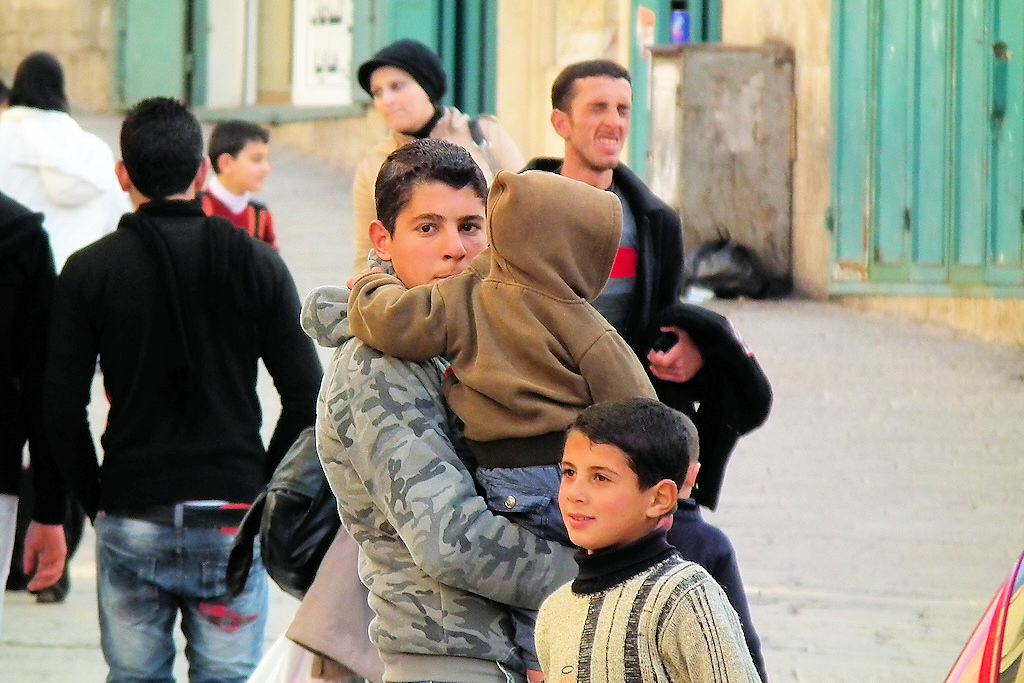
Palestinian kids on the whole have good fathers
In this sense, something right is happening here – we’re at a ‘never again’ point. This isn’t about cease-fires: this is about ending war and oppression, historically, and events like this will repeat until we get it and do it.
Oh, and by the way, put in a prayer for people in the UN and NGO sectors, from all over the world, who represent a neutral, global viewpoint in the conflict, and who take the strain in very practical ways. For some of them, it’s at great risk to themselves and, for others, it’s round the clock, every hour of the day and night. Stressful and often unthanked – they’re holy warriors.
With love, Palden.
Marwan Barghouti, regarded as Palestine’s Mandela. He’s been in Israeli jail for the last 20 years and they’re likely to keep him there. A mural on the separation wall at Qalandia, West Bank
In the 1990s I ran some meditation camping retreats called the Hundredth Monkey Project (M100). We worked in a circle of 70-80 people with world issues. We didn’t prescribe meditative methods but, to help people get oriented and give them ideas, a method was suggested as a basis to work with. If this interests you, it’s here: www.palden.co.uk/cs06-m100meditation.html
If you’re a member of a group working with issues such as these, then you might be interested in this material about talking-stick processes: www.palden.co.uk/cs07-talkingstick.html
I woke up this morning with ‘philanthropist‘ going round my head. So I decided to look up how it was defined.
“A person who seeks to promote the welfare of others, especially by the generous donation of money to good causes.” Oxford University Press. Interestingly, they found that the greatest use of the word in Britain was in the 1850s, the peak of the Victorian era and the industrial revolution, declining gradually until it sank a lot during WW1 and afterwards, and it started slightly picking up only since 2005ish.
“A philanthropist is someone who donates substantial resources, often including time and expertise but always including substantial financial resource, to a particular cause, area or social issue.” That’s the Charities Aid Foundation in UK.
“Anyone can be a philanthropist and be more effective at making a difference. Here’s how. A philanthropist is a person who donates time, money, experience, skills or talent to help create a better world. Anyone can be a philanthropist, regardless of status or net worth.” That’s a bit closer to where I stand. It comes from an American organisation called Fidelity Charitable.
Another source defines three types of philanthropy: relief, improvement and social reform. In my work in places like Palestine, I’ve focused mainly on social reform – a longer term perspective that builds conditions leading to improvement. This is trans-generational when it comes to questions of mass trauma-healing – which is the approach taken by the Hope Flowers School that I worked with in Bethlehem. Their motto is, ‘every act of violence begins with an unhealed wound‘ – so the task is to make progress on healing those wounds. The school originally had Muslim, Christian and Jewish children but, in 2001, during the intifada, the Jews withdrew, largely for safety reasons – understandable, though regrettable.
According to the Borgen Project, “Philanthropic people show selfless concern for the welfare of others and venture to alleviate the struggles of others without seeking anything for their own personal benefit. Truly philanthropic acts are done without expectation of compensation or recognition of one’s efforts.” This might be so, but this ‘without expectation’ bit doesn’t cover the expenses incurred, and covering my expenses has always been problematic. When in the Middle East, I still had to pay my rent and bills back home, as well as covering travel, living costs and helping needy people. I still do this with the remote work I do now from my desk at home.
I met this guy in Bethlehem. He’s now 20ish. I wonder what he thinks right now?
In this life I have not been a financial philanthropist. Many people believe that donating money is the only form of philanthropy, but also, out in places where there is need, everyone tends to drive, elbow and oblige me to raise, funnel or fix money. They perceive this as their primary need, and that’s true in the short term and not necessarily true for the longterm background conditions I’m best at working with.
This has tended to smother and detract from what I’m best at doing – human and spiritual input and multilevel intelligence. The thinking needed for fundraising and admin is very different from that of healing and magical-spiritual work, and I cannot do everything. This has been an ongoing dilemma.
It hasn’t helped me support myself either. People tend to think that, since such work is a chosen vocation, I needed no support or already had the funds. The prevailing thinking is that, if you’re doing well financially, this enables you then to act philanthropically – and only then. For many people this point never arrives, so they don’t do it. But it needs to come from a deeper place, from a sense of calling. That’s what was the case for me and, in late life, I’m really glad I did it, even though I’m quite poor now as a result.
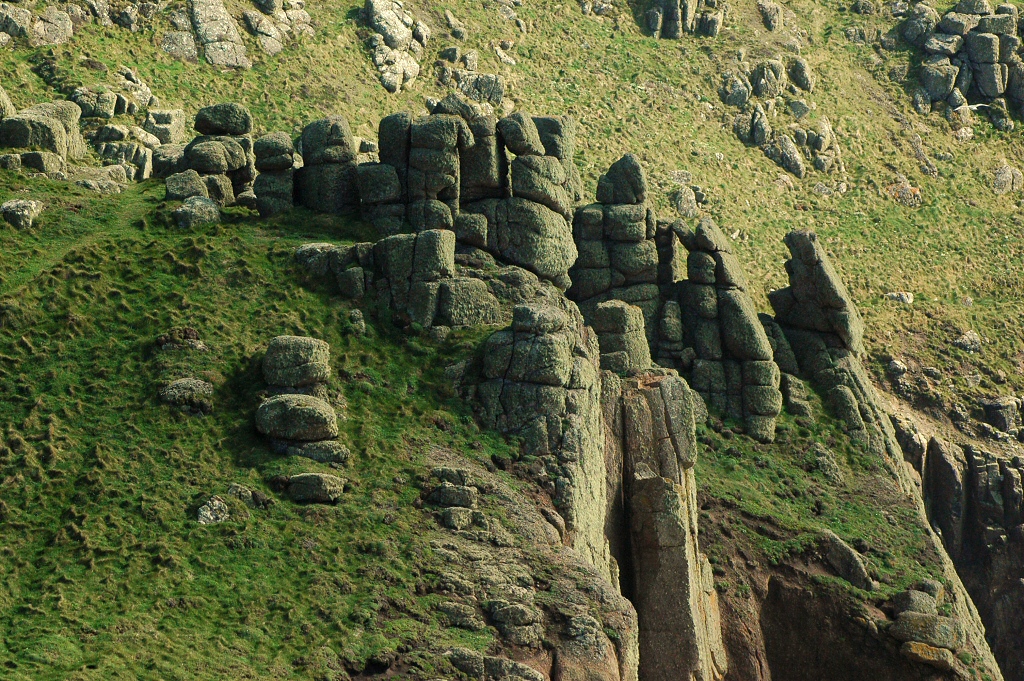
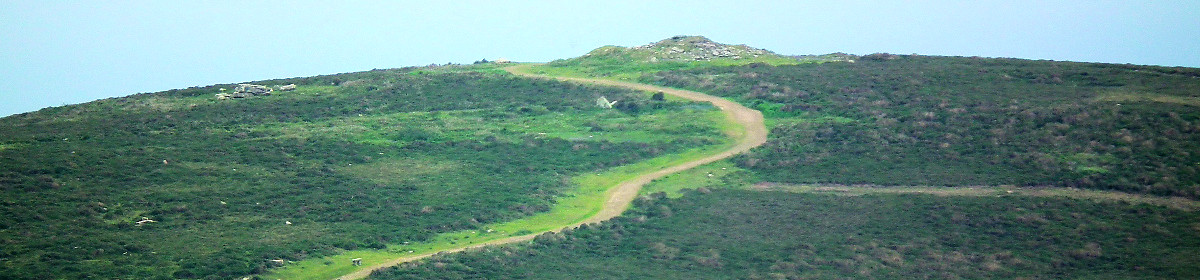
Carn Barra, West Penwith, Cornwall.
When in Palestine and Israel, there were two main age-groups of volunteers and activists from abroad, most of them self-financing. One group was around age 25-35 (and 60% female) and one was around sixty (and 60% male). The thirtysomethings were doing it out of principle, setting aside career progress for what they believed in – though for some it was a voluntary internship to help a career in the NGO sector. Some had law, business and accountancy degrees, working in ‘lawfare’ – legal improvement of the rights of Palestinians and helping Palestinian NGOs function.
The sixtysomethings were good-hearted types, often retired from careers in education, social work or healthcare, who had raised and despatched their kids, perhaps they were newly divorced, and they had the resources and long-accumulated wish to at last pursue their calling in a place like Palestine. Both of these age-groups were committed, brave and valuable people, nevertheless driven by slightly different motivations. Many of the older ones contributed to the relief and improvement areas, while many of the younger ones contributed to reform.
There’s an innate philanthropy built into Palestinian society. It’s an attitude. It’s shared by some but not all Israelis – particularly those brought up in kibbutzim or living in settlements. It’s a kind of generosity economy, where everyone is brought up with an ethic of mutual help and contribution. This is social resilience, and when society is under duress it really works. This is something we in Europe need to learn – it’s in our group memory but it has lapsed.
When a young person thinks about their future career, they don’t think of personal ambition as much as the contribution they can make, and the likely slots that will appear in their clan or neighbourhood in future – whether as a dentist, embroiderer, car mechanic or even a professor. If the local midwife is growing older, a younger one will be thinking of replacing her in ten years’ time.
The holy well on Trencrom Hill, guardian hill of West Penwith
Over the decades I’ve banged on a lot about life-purpose, helping and empowering people to identify and pursue it. Here comes a repeat quote, but it’s important. The Council of Nine (who thirty years ago jogged me into working with Israel-Palestine) were asked whether there was one thing that could change and transform the world. They simply said, “If everyone pursues their life purpose“.
This gets bigger. They didn’t say this but, by extension, omitting to pursue our life-purpose, or withholding it, for whatever reason, is a soft version of a current major concern: crimes against humanity. It is the indifferent, inherently self-serving ethic of Western and, increasingly, global culture, that permits situations such as Gaza to happen. Because we don’t stop it.
People expressed surprise and horror at the precipitate actions of the Gazans when they broke out and violated so many Israelis, starting off the current round of trouble. Anyone who actually watches anything more than the urgent splutterings of the headlines knew something like this would come. It continues a long, long story and it didn’t happen out of the blue.
The surprise arises from global indifference, which prefers stuff like this would just go away. To be fair though, there’s also a surfeit of other events, tragedies and concerns competing for attention. Israeli hubris was caught napping. The main surprise here was the strategy and audacity of it. I do not encourage violence and have been a lifelong peace-freak, but are we really to believe that the Palestinians, generally unheard, blocked and disregarded, are supposed to act like polite gentlefolk, shrugging shoulders and nobly accepting their lot without a whimper? How would you like to be a 20 year old in Gaza, with no future? Or his or her parents?
Palestinians. They’re terrorists, as you can see
Today, the Gazans are so hungry, thirsty, desperate and traumatised that it would not surprise me if there were another mass breakout, into Israel or Egypt – of mothers, families, grandparents and youngsters seeking food, water and safety. Later, Europeans will duly complain when another wave of refugees comes to our shores, but our endemic indifference has caused much of this. Refugees arrive in Europe and America to give us a gift, a gift of humanness, empathy and philanthropy. Amazingly, it has even been found scientifically that it makes us happier. Indeed, there’s more to life than comfort and security.
I am not saying ‘admit anyone who claims asylum’, but I am saying we need to be more philanthropic, to understand that changes are happening even to us, and to act longterm to deal with the sources of the problem. In the case of Gaza it concerns the historic and current issues arising for the locals from the arrival and behaviour of the state of Israel, and the wider global issues that allowed this to happen the way it did. In Britain, two key fomenters of this problem are the Foreign Office and the media.
So, life-purpose. Are we here simply to pay our bills, tread our mills, keep investors happy and, at the end, collect our pensions? This is a personal question for every single soul. We need to ask ourselves, ‘Am I rising to my full potential as a human philanthropist? Or a human anything, for that matter?’. The answer is both yes and no, and the yes bit needs acknowledging and the no bit needs some attention. [For an audio talk by me, try this.]
Here’s something interesting that I discovered. I have long known I have healing abilities but in Britain I have chosen not to work as a healer, except as an astrologer (a perceptual healer) and a community activist (a social healer). But when I went to Palestine, witnessing the needs of people there, I suddenly started doing healing work – spiritual healing, mainly, and remote healing. On people’s backs, stomachs, wounds, hearts and spirits. What surprised me was that my abilities were dramatically amplified – people were genuinely and visibly healed, and deeply so. They’d approach me later to say so, and I was much moved, rather shocked by that. It was as if the scale of need pulled out almost miraculous superpowers.
But there’s a difference. In Britain, when I’ve done such work, while people do benefit, they tend to continue with the life-patterns that caused the problem. From a healer’s viewpoint, that’s not very satisfying. But in a crisis zone, where despair, danger and dire need are big drivers, I found people really did take on board whatever I said or did, and they were so grateful, and they helped me back. Also, it was liberating to work without charging.
Sitting on the wind. Godrevy, Cornwall
I’ve never liked charging for healing or transformative work – how do you value the fixing of a major issue or the saving of a life? Twenty years ago, as an astrologer I charged £60-70 for a two-hour session but I needed £250. I did a lot for free or underpriced, because there was a need. I’d have felt happier with a salary, like a doctor, so that charging didn’t enter the equation. The ethics and politics of our time did not allow it – after all, astrologers are charlatans, aren’t we?
If you were a Palestinian in Gaza right now, you’d be enacting your life-purpose – whatever you’re best at. The same is happening for some Israelis. That’s how people survive. When the chips are down, you do what’s needed, regardless. If you can clear rubble, cook, minister to people or mind the kids, that’s what you do. No qualifications or vetting needed – just do it, if necessary till you drop.
Saturn is in Pisces: this concerns philanthropy. Without it, the world would be a much sorrier place. Philanthropy is not an option: it is a necessity, like sewage disposal. Crises such as Gaza – and they’re coming at us quite a lot nowadays, and it won’t slow down – shine a light on our life-purposes, for each and every one of us.
What am I here for, really? What am I doing about it? Our calling is programmed in us from the beginning. We know it. It is inherent, not learned in courses or demanding a qualification – it’s a natural, inbuilt gift and skill. It comes easily. Yes, we are all innately talented. If we let it out.
With love, Palden
A young Bethlehemite friend, now in his twenties
PS. I’m blogging a lot at present and it’s not really planned. It’ll die down again! If something comes up, I start blogging and, typical Aspie, I don’t stop until I’m done. There’s stuff going on in places where parts of my heart lie and, since I can’t get to Is-Pal (or West Africa), this is how I let it out. Together with psychic-spiritual work and handholding certain individuals in the thick of it.
At present, I am ‘holding’ Maa Ayensuwaa (on the right), a native healer in Ghana, who is lying in hospital, lacking painkillers and hoping money will come along to pay for an operation for fibroids – it’s wear and tear from helping people and going without. I can help her only in spirit, though our connection is such that (I hope) it works.
A good friend of mine rang up this morning. She’s Jewish – some Zionists might call her a self-hating Jew – who shares the collective feelings and pathos of Jewry while having grave reservations about the behaviour of the state of Israel. She’s one of those thoughtful Jews who is brave enough to talk to someone like me, who has worked a lot with Arabs.
She comes round for tea and we have great discussions, both of us enjoying the contrasting insider knowledge we each have. Of course, what we face now, in and around Gaza, puts her in a really difficult position. She struggles with it inside herself and she talks with me about that struggle. If you have any empathy and conscience as a human, whatever position you take, it’s really difficult, this stuff.
A few days ago she was with a bunch of eco-activists with whom she’d worked for ages. They were vehemently pro-Palestinian in a way that she found difficult, because they were anti-Israeli. She’s not paranoid about anti-semitism, but it still hurts when people vehemently disapprove of your own people. Her friends had taken sides.
Fifteenish years ago in Palestine, I had a similar problem: I worked with Palestinians but I’m not anti-Israeli – I’m fundamentally pro-people. To me, helping Palestinians doesn’t mean opposing Israel – actually, I felt I was helping Israelis by helping Palestinians, but only a few Israelis would get what I mean by that. Seeing everything in a polarised, partisan way is, dare I say it, inherently hypocritical – it makes Them bad and Us good, as also does the current over-use and misuse of the term ‘terrorist’.
It’s a cover-up, a denial of responsibility, a projection. In my reckoning, it’s part of the problem. The partisan approach taken by the governments of UK, Europe and USA, which they believe to be a show of strength, is undermining the remaining, sagging respect that the Global South – the world’s majority – has for us, and this will lead to difficulties further down the line. We need to stop politicking and act like mature nations.
Citizen peacemakers from both sides, meeting at the All Nations Cafe. This photo was 12 years ago, but it’s still going, led by a brave former Israeli soldier
When working in Palestine I had some difficulty with zealous Palestine activists from abroad who commonly adopted a partisan position: within themselves they had declared war on Israel, even if expressing it only in the form of olive-picking and visiting frontline towns like Tulkarm, Hebron, Jenin or Nablus to witness the damage and the pain. I respect such people for their humane feelings, empathy and commitment but also I felt they needed to do more homework, to go a bit further in their understanding and feelings.
They made life more difficult for people like me – amongst other things driving Israelis against humanitarians. Many activists didn’t really like me, and my book Pictures of Palestine hasn’t been popular with many of them. In my teens in Liverpool I was wedged between Protestants and Catholics, and Mods and Rockers – I started my peacemaker education early! So this issue isn’t new.
The Matrix of Control. There are hundreds of these things around the West Bank
If we take sides, we start projecting a subjective and emotive image on the Other, upon which subsequent actions and atrocities are then justified. It makes Us right and Them wrong, so that We claim legitimacy in questionably punishing Them for their crimes. In and around Israel-Palestine, as soon as conflict breaks out, most people lock into this charged mentality, setting all other considerations aside.
It’s a form of psycho-emotional slavery, and the puppet-master controlling the strings is the Lord of Division. It’s an endemic mass-psychology that needs to polarise, dehumanise and denigrate the other side so that we can overcome the guilt and shame of performing wrongs in the furtherance of our own beliefs – even when those beliefs do not support committing such wrongs.
This mentality leads to consequences. As I write, Israeli forces are poised to start a ground invasion of Gaza. From the Israeli viewpoint, I can see why they are taking this approach: they need to eliminate Hamas, and they’re driven by a ‘never again’ feeling – never again do they want to be threatened and harmed in this way. Fair enough. Except there’s a problem. It’s unlikely to work.
Israelis may kill as many people as they like but they won’t be rid of the problem, because those who are left behind will be hurt. The pain passes down the generations. The cycle of uprisings has repeated itself roughly every twenty years since the 1930s, as each generation has grown up and sought to change things.
The damage done to people and to land is tragic – a ground invasion of Gaza will cost both sides very high. Innocent Palestinians will be mown down, and committed freedom-fighters will sacrifice their lives. Israeli troops will die, one by one, hit by snipers, booby-traps and innovative Gazan devices. Jewish and Palestinian mothers will rue the loss of their sons and daughters.
Israelis will not and cannot eliminate Hamas, even if, improbably, they eliminate all of its fighters and the main characters who head it up. They have not managed to do this before, and they are unlikely to achieve it now. All they can achieve is a costly delay until the next flare-up happens. The reason is this: every time Israel fires a bullet, it creates several new fighters taking up a gun – frustrated young men who seek a future and cannot have it.
The Matrix of Control: a flying checkpoint (upper left), imposed randomly and causing long queues on the roads.
Instead of getting depressed and committing suicide quietly to themselves, they join one of the militias, with the idea that their sacrifice might benefit their people. This isn’t so strange: my own father did this in WW2, volunteering his life for King and Country (except he survived, minus a leg).
Hamas was founded in the first intifada of the 1980s. Ironically, Israel secretly funded its founding, to counteract the Yasser Arafat’s PLO and divide Palestinians against each other. Well, that backfired. Hamas speaks for the embattled feelings of Palestinians and, if there were an election instead of a war, Hamas would most likely win. They won in 2006, in a free and fair election, undermined and annulled by Israel and the West – and they would win now.
To many Palestinians, Hamas represents the best of a very bad set of options – not least because it is relatively free of corruption, it has principles, and Hamas is resolute and cannot be bribed or arm-twisted into submission.
There’s a lot of maleness being displayed on both sides – a resolute, despairing, ultimately self-destructive maleness. But behind this lies a deep feminine-rooted emotion too – the urge to protect women and children from the monstrous ogres on the other side.
An old friend, Ibrahim Abu el-Hawa, peacemaker extraordinaire – some of you might know him
Here I wish to introduce a constructive thought and prayer, or two.
The problem with males is that, when we get worked up, we tend not to stop until we’ve achieved our objectives. It’s sexual: a man seeks a climax, through which all can be resolved and he can forget all his troubles. Except, when this orgiastic urge is driven by short-sighted urges such as control or revenge, it gets really destructive. In war and competition, masculinity doesn’t think much about the damage it might create while seeking that climax, and while we usually focus on winners, in competition most people lose.
There’s a secret here about males, to do with brinkmanship and danger. When it comes to the crunch, sometimes men go more crazy, and sometimes, when genuinely threatened, we start calculating our situation and seeing sense. Unless there is a miraculous and unusual philosophical change of heart, it needs to go up to the brink for us to get there.
Speaking astrologically, this is about the planet Mars. The lowest aspect of Mars fights to destroy – as with the Stalingrad-like scenes we’ve seen in recent decades. The default aspect of Mars fights to win – even though both sides ultimately lose, since victory is never as sweet as expected. The highest aspect of Mars is about coming to the crunch and realising there is no virtue in fighting and no enemy, because we’re all ultimately on the same side. The skillful playing of a game is more important than the winning of it. We suddenly realise we are all our own enemies, beating ourselves up.
So here’s a prayer and something to visualise. As I write we stand at a choice-point, before an expected ground invasion of Gaza. The urge to go to the brink is there, and no one will be dissuaded. This is a point of vulnerability and choice. Consequences will follow, whichever choice is made.
So visualise this crunch point as a potential breakthrough point and hold that thought, that feeling. Don’t be overcome with depression and helplessness, or get stuck on what you think ought to happen. These are of no use right now. If you were in a war zone, you’d get shot.
In war, one must take advantage of whatever situation that arises, as it arises. So apply your prayers to the situation as it stands, to help the universe twist events in a direction that somehow changes flow of the tide.
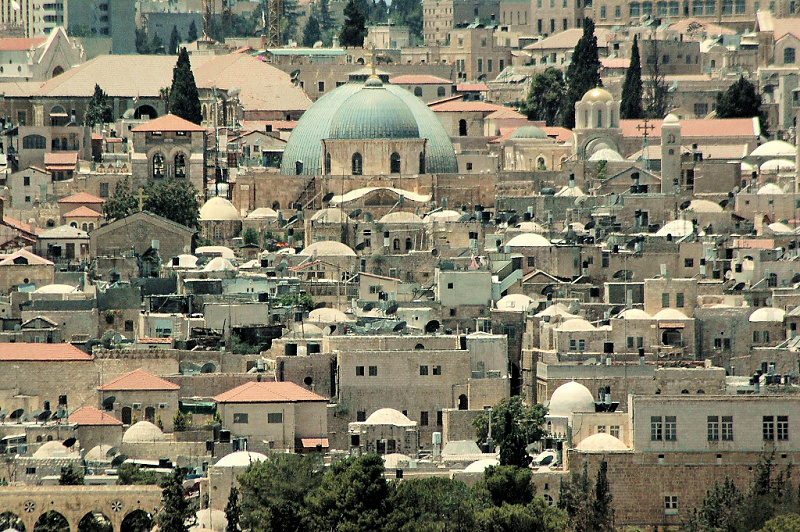
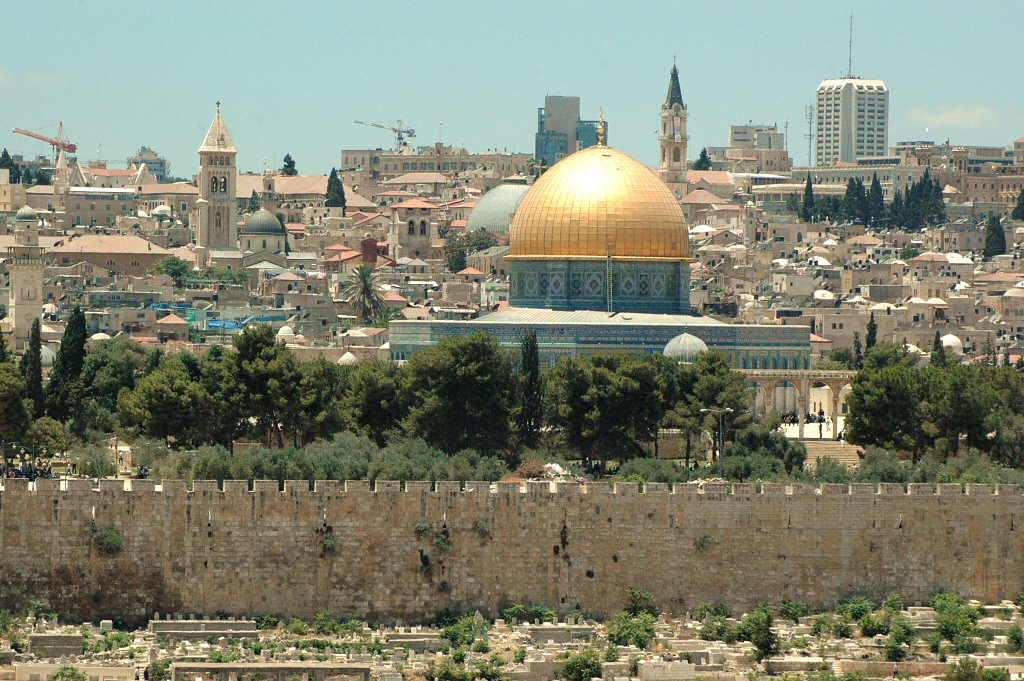
The Dome of the Rock and the Old City of Jerusalem, with Israeli West Jerusalem behind
We’re at a brief point of realisation that there actually are options. Fighting it out is unlikely to achieve the objectives either side has, and the costs will probably outweigh the benefits. The pain each side experiences will not be soothed.
Here’s another thought. Even if the warring parties do fight it out – and the above prayer will thus be seen to have failed – it’s a matter of stoking up positive energy for the longterm, to build up the potential for the pattern to change. Store it up in humanity’s collective psyche, so that this option is more available next time round, even if it doesn’t work this time round.
Building up the energy-potential for de-confliction is best done by making use of actual circumstances where these issues are acutely at stake. Brinkmanship-points like today’s are junctures where the collective psyche of humanity is at its most vulnerable. It’s under pressure and surprisingly open to making a change.
The seemingly irrevocable rush to conflict sets in motion forces and consequences that seemingly cannot be stopped, and this is the pattern that needs to change. We need a new, transitional pattern where, when the risk of conflict comes close, everyone gets it that there is or must somehow be another way. It’s all to do with agreeing to disagree, and doing something to reduce the intensity of disagreement.
I say transitional because, whatever dreamers might dream, we aren’t suddenly going to have world peace tomorrow. We have to deconstruct the patterns that make for conflict, generation by generation, building new replacement habits. We can do this over the coming decades by facing high-risk situations where our true will gets tested and we are forced to get clear – if necessary, under duress.
In Israel and Palestine, repeated conflicts have not achieved either side’s objectives. This one won’t either. If nothing changes, the next conflict comes in about four years’ time. So let’s get real here. There’s another way. It does require guts to pursue it – the guts to change the pattern and step back from disaster.
Al Aqsa Mosque in Jerusalem – Islam’s third-holiest place
Here’s the awkward bit: though both sides are responsible for their actions, in my estimation, Israel holds around 70% of the power, with greater freedom of action than the Palestinians. Saying this doesn’t make me anti-Israeli. Palestinians hold 30%, and Hamas have recently shown how they also have power to shift the agenda. But 70-30ish is the way the odds are stacked. This makes it more difficult to flip the pattern because ceasefires come when there’s some kind of equalisation of force and influence.
Firing munitions, however impressive, is no longer manly. We need to protect women, children, and also our rights, needs and fortunes, by thinking further and bigger and wider. It’s an emotional choice, made with extra power when we stand on the brink of disaster.
What’s important here is that, whatever happens, humanity learns. Even if the worst happens, this needs to be the last time. Something has to shift – the world is fed up with this, and we have other concerns.
This means that lessons need learning now, today, in these circumstances – emotionally, in the heart, womb and gut. Lives have been lost and are being lost, and the only way to redeem those deaths and make them more meaningful is to learn from them and change things. Only then do they serve a positive purpose in the long run. If people’s sacrifices on both sides are sufficient to build up a head of energy-potential for change, then may this be so. May that change come about.
Changing history takes time. Yet it happens in intense situations like this.
When I was diagnosed with cancer in late 2019 it was at first like receiving a death sentence. I was indeed close. This has a way of changing and reorienting everything inside – or it did so for me.
When it looks like your life really could be ending, it makes you reassess everything, where everything stands, what can be dropped, what means a lot to you, and what is unresolved, regretted and incomplete. It’s a rapid, factual acceptance process, prompted by a loss of ability to act on life, owing to serious illness and malfunction.
So I looked at my life. Some things I could let go of easily, some needed attention, some presented hurdles to cross and some looked impossible. This process went on over a period of weeks while I was flat on my back, struggling to stay alive. As it happened, I made it through, with the loving help of my then partner and the ministrations of the staff at Torbay hospital.
After three months, I was gradually reviving. After six months I was more or less on my feet and functioning – enough to be able to go home to Cornwall and look after myself, with a little help from my friends – and the staff at Royal Cornwall hospital at Treliske. Lucky me. I survived.
Being a writer and communicator, there were still things I could do, and it became part of my cancer therapy. If I were younger, with a job and family, or if I were in engineering or farming, I’d have been in a catastrophic situation. But as a freelance writer and broadcaster, I could carry on. My brains and the creative process changed, and my fingers weren’t as keyboard-accurate as they once were, but it worked.
Even so, part of me was left hanging – the humanitarian part. So were the people in other countries who were affected by my loss of functionality. I could no longer travel long distances and my capacity to get through such a rigorous life had collapsed. If I went to Palestine or Mali now, it might well be a one-way journey. That remains an option, though I’d also be happy for my ashes to be buried under a tree on Botrea Hill.
I made a prayer for clues suggesting how to resolve this question. Three issues came up.
One was the growing needs of the people I’d been working with. This included Hope Flowers School in Bethlehem, all sorts of individuals in Palestine and Syria and in the Tuareg village of Tinzibitane, Mali. In the 2020s, need and crisis levels were rising, and this was vexing.
The second issue was me, since doing such work had meant so much. These people, whom I had grown so close to, were some of the most valuable people in my life – I had learned so much and become so much more of a real human as a result of working with them and finding my place amongst them.
The third was finding people to take over from me. That was the biggest question.
As my old friend Sheikh Bukhari once put it, “God has a staff shortage, with plenty of eligible employees who for some reason prefer to stay unemployed“. A kind of Sufi bishop with a deep Muslim heritage, he had emigrated from Jerusalem to America, landing up flipping burgers in a California burger joint. He returned home after a decade, back into the frying pan that is Jerusalem, to become a leader in a community of spiritual peacemakers in Israel-Palestine – then called Jerusalem Peacemakers, and now called the Abrahamic Reunion.
“I finally accepted Allah’s job offer“, he said. A good man, he was. He’s now in heaven, carrying on up there, and his widow Hala carries on down here. His son Izzedin Naqshband runs a Palestinian vegan restaurant in East Jerusalem, if you’re ever over that way.
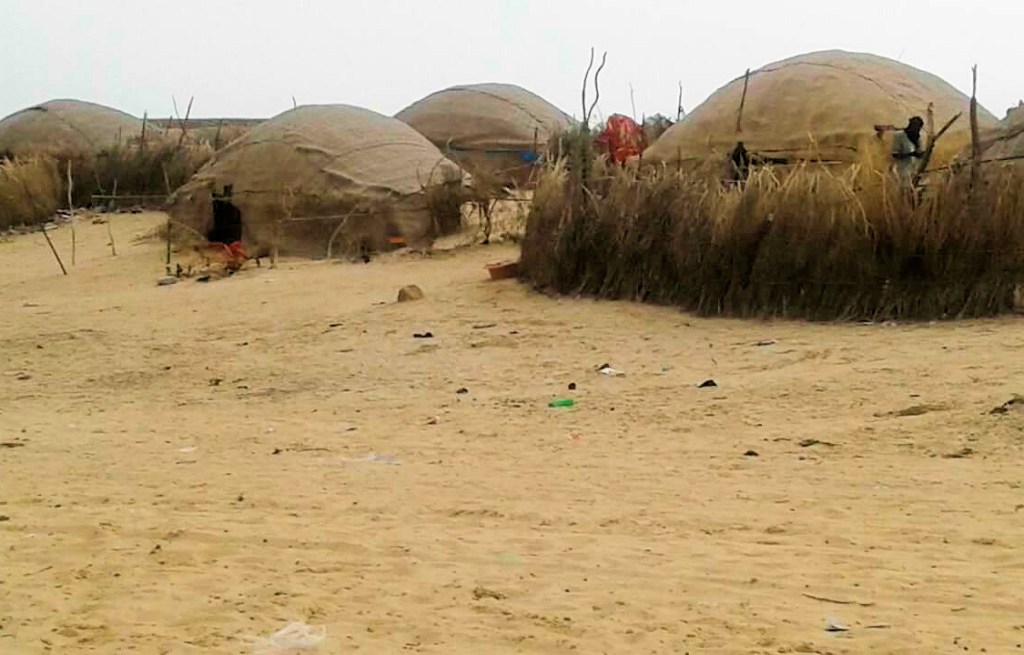
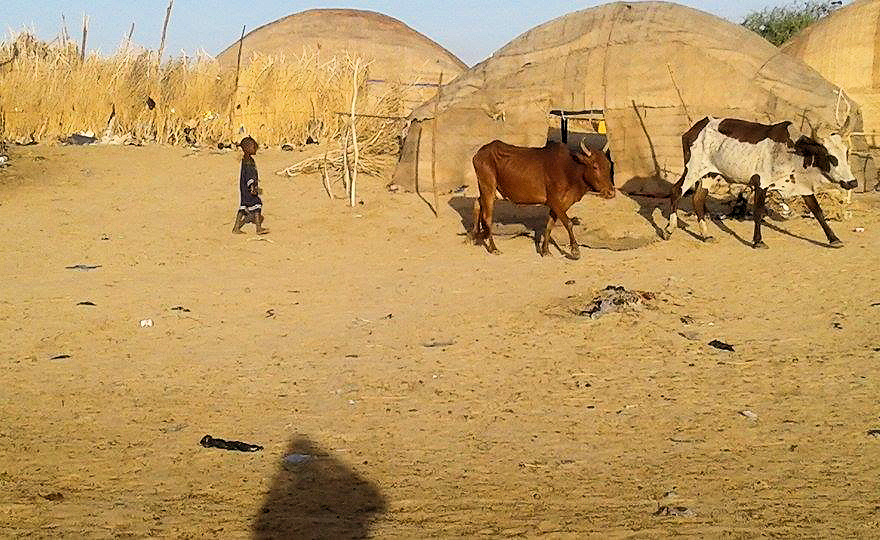
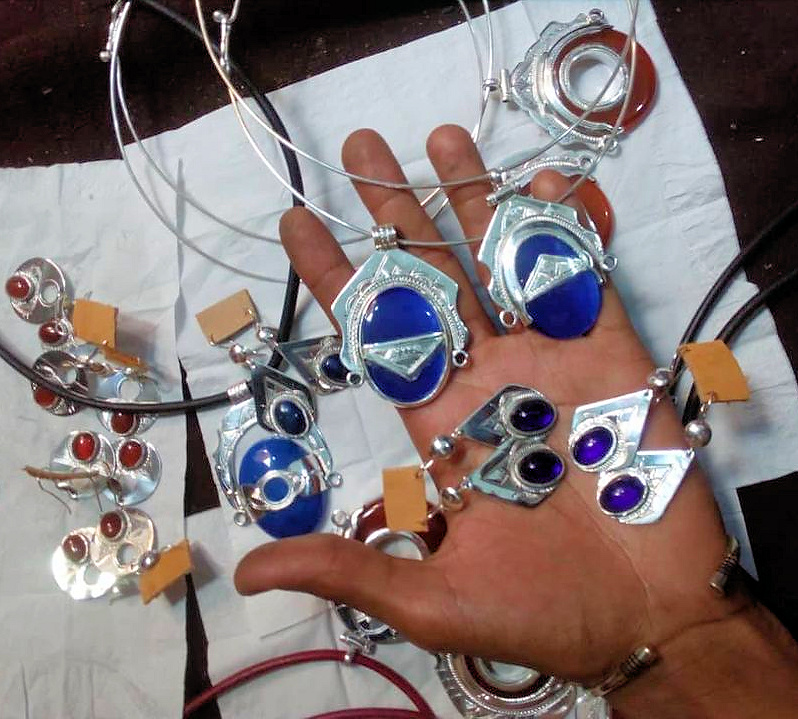
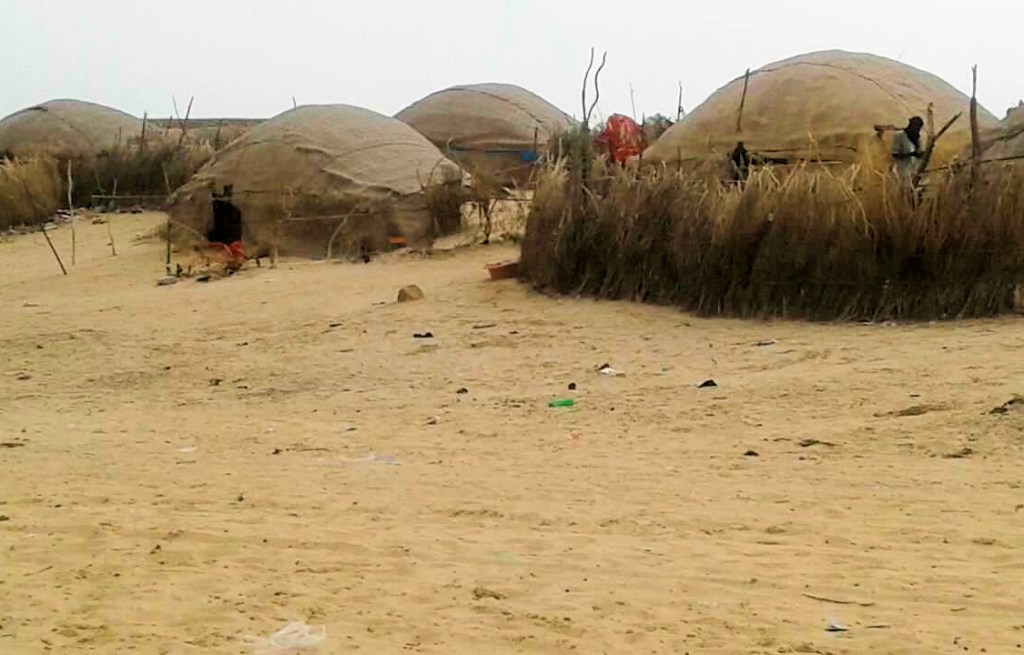
Finding people to take over helping Tinzibitane has been a challenge. The Tuareg don’t have as much PR power and experience as Palestinians do. However, they make amazing hand-made, trademark-free, talismanic jewellery and other crafts, and that’s their tradeable USP or ‘unique selling point’. Many Palestinians are educated, literate, competent, urbanised people, while the Tuareg live a simple life out in the desert, without being highly engaged in the modern world.
They are not tempted by modernity, tending to hold it at bay. From a humanitarian networking viewpoint, this is a good marketing tag to use – the Tuareg have a genuine mystique that charms and fascinates people. If it were lost, it would be a loss to the world. They don’t beg and bleat either.
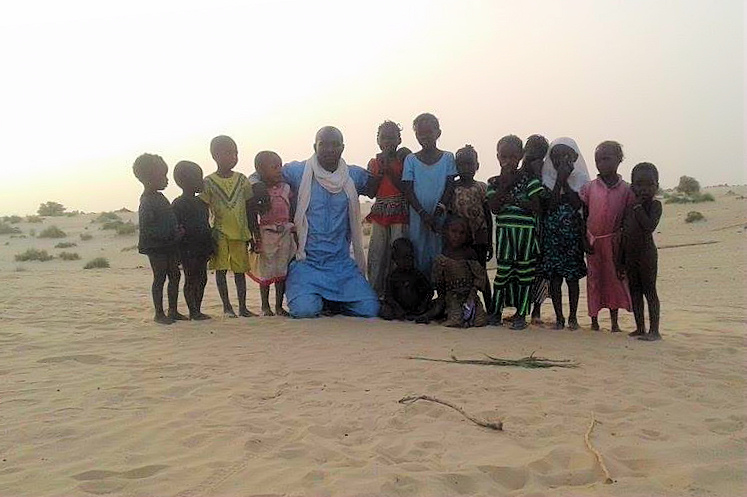
The modern world comes at them anyway. In 2016 I managed to save the life of a baby, Zeinabou, whose mother died in childbirth. I helped with other survival issues by making Facebook appeals and raising a few hundred quid to help.
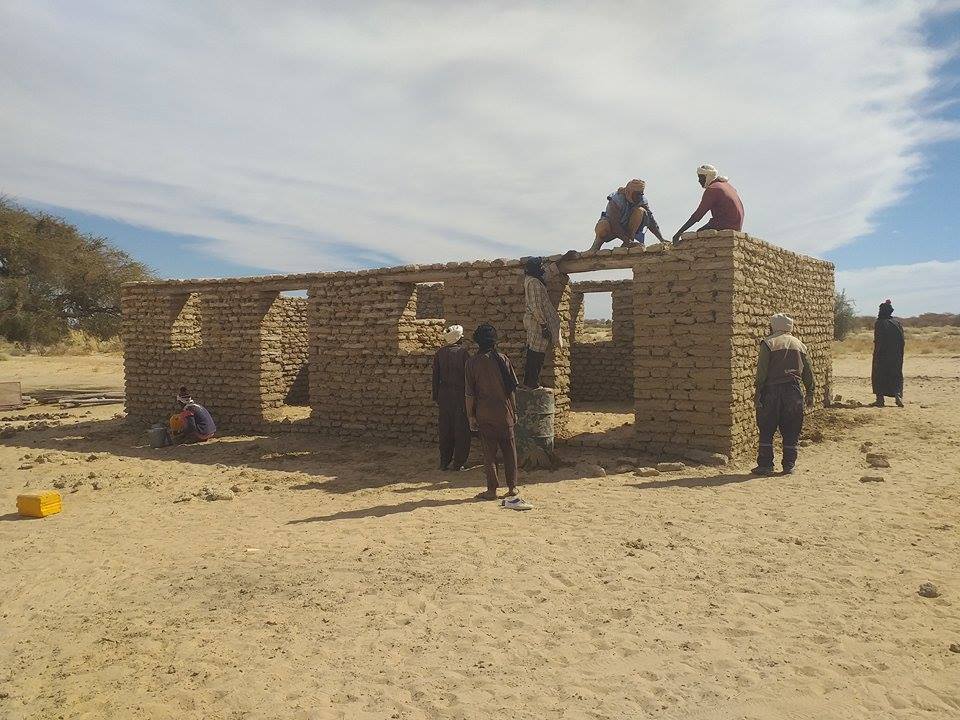
Mercifully, I was joined by two others, Eve and Jane, and we were able to fund social-reconstruction projects going into the thousands. Over a few years we restocked their camels and goats, sank a well and funded the building of a small village school, helping them regain confidence as a village after a devastating war and drought around 2011-12.
They hadn’t actively participated in the war, but it had affected them and they had been attacked by both sides – the Malian army and Al Qa’eda-related Jihadi militias spilling over into the Sahel from Libya and Syria. The Jihadis tried to establish an Islamic caliphate to lord it over the independent-minded Tuareg, and they’re still at it. I think they will blow out, get tired and go home eventually, but not anytime soon.
Testosterone does wear out after a while – and this is how many wars come to an end. Eventually, people just want to go home and sleep in a proper bed.
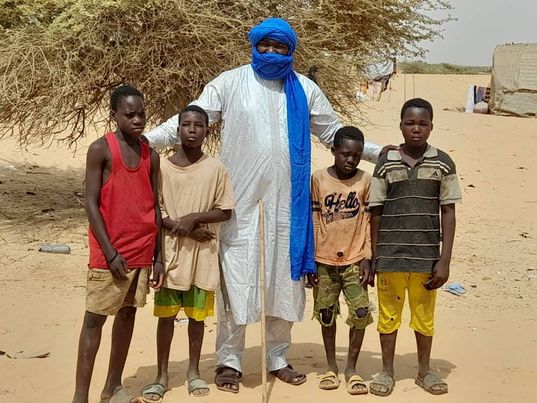
The Chief
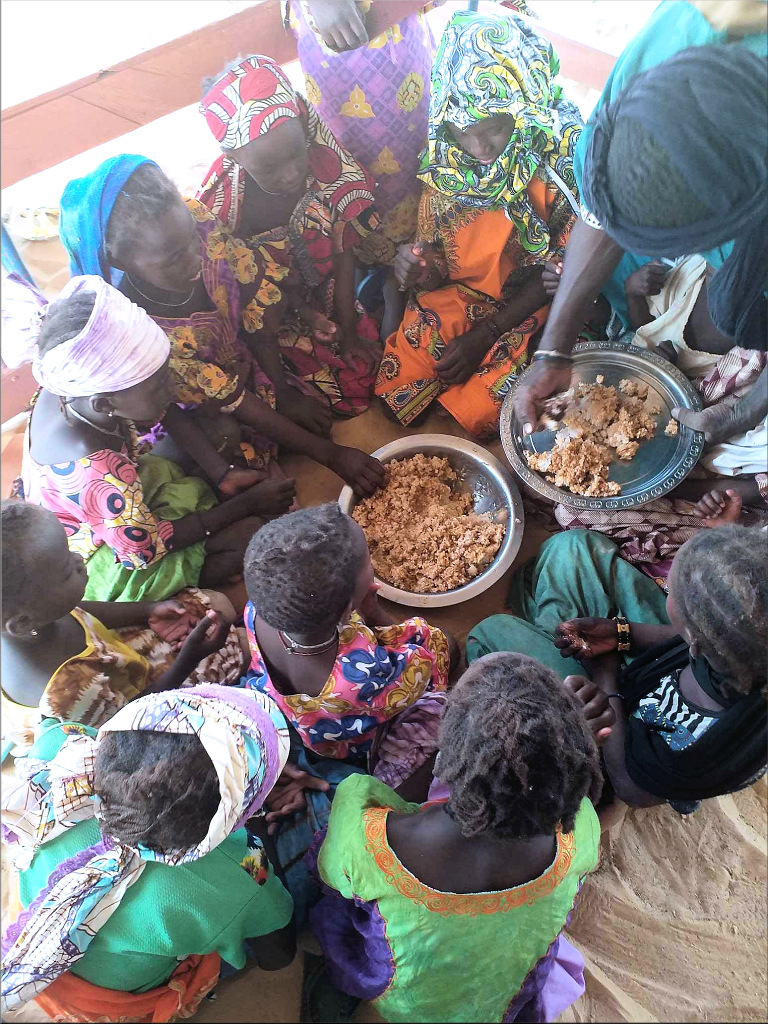
The desert village, some way west of Timbuktu, started coming together again. People returned from refugee camps in neighbouring Mauretania and new people joined from other villages, seeing how they were getting organised and taking life back into their own hands. The chief, a thoughtful man in his early seventies, with good intentions for his people, strengthened the social fabric of the village and gave it new hope, with our help.
The Tuareg are a consensual people with deep traditions going way back before the arrival of Islam in medieval times. They are independent people, with significant gender equality and a strong sense of collective solidarity. I liked working with them, and they did the right things to help us help them.
They are a desert people. For centuries they have been the camel-truckers of the Sahara, carrying goods between south and north, inhabiting the southern edge of the desert, the Sahel. Gold, salt and high-value goods were their main cargoes, plus, in medieval times, slaves to Algeria and Egypt, which they stopped doing later. These goods and people were sold in the souks of the Arab world and forwarded to Europe, Ottoman Turkey and the Middle East.
One thing I like about them is their integrity, honesty and lack of corruption, and this makes it easier to work with them. They don’t like asking for help, and they budget and spend well, and money sent for a particular purpose is usually spent on that purpose, as arranged.
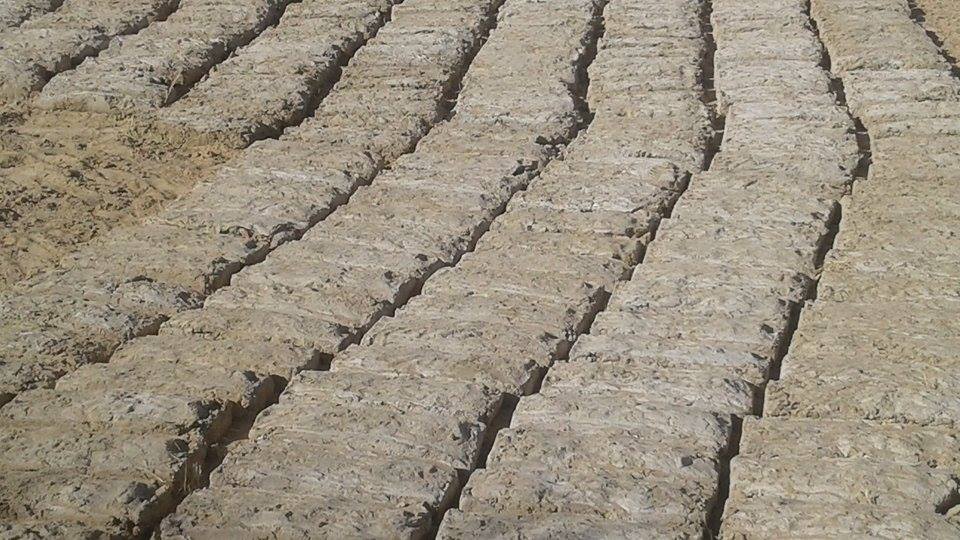
Home-made mud bricks for the school
In many crisis zones, money just gets spent on whatever urgent need comes up next – it’s understandable, a ‘firefighting’ approach, and that’s life there, but from a fundraising viewpoint in the rich world it’s difficult, because of our issues around accountability. Accountability is a polite word for post-Protestant tight-fisted control-freakery, a key quality that has made us whiteskins rich.
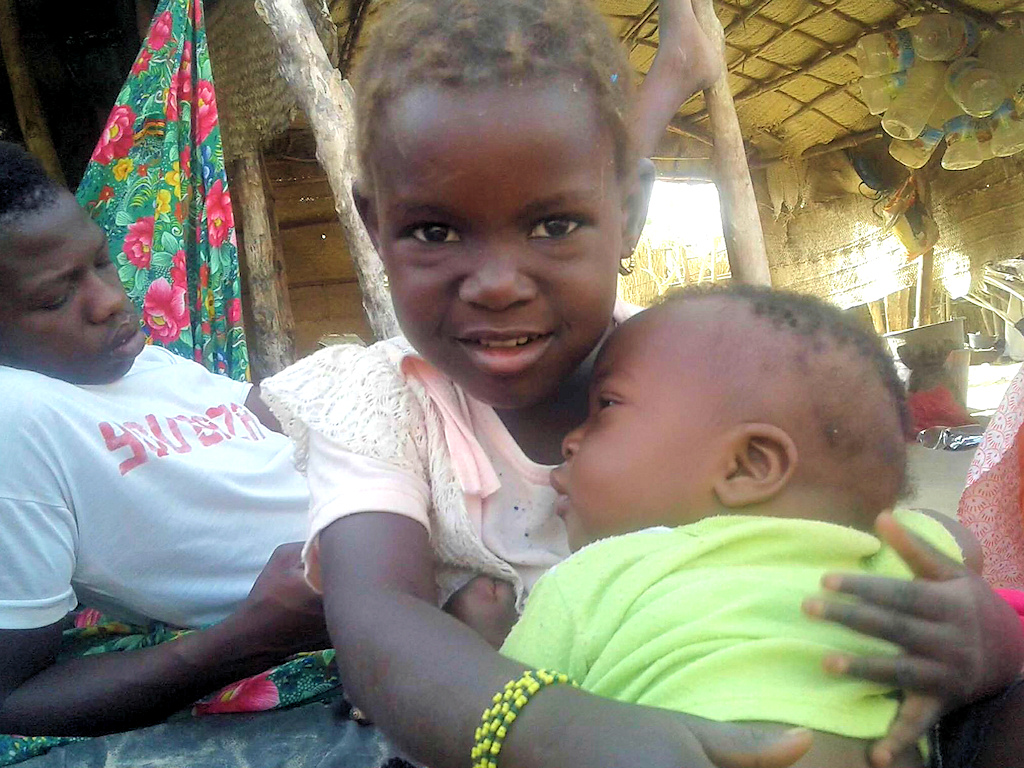
We communicated through Anim al Husseini, who first contacted me in 2015. It was his wife who had died in childbirth, and Zeinabou is now growing up in the village. Anim speaks Tamashek (the Tuareg language), Arabic, French and English, and he’s good at staying in touch and supplying information and photos – without these, support work gets difficult.
The chief has nominated Anim to be the next chief – though, whenever that happens, he will need the consensus of the villagers to step into that role. That’s the way it works amongst the Tuareg: their traditional systems of governance are consultative and confederal. As desert individualists with a self-help survival ethic, any family or tribe may take their leave and join other villages if they feel the need. Nominally the men make the decisions but, if the women disapprove, it simply doesn’t happen, and that’s that. So the women set the norms and the men do the business.
The school in construction
The village has hit new political difficulties. It’s a long story, going back to the 1880s-90s when the French took over the Sahara, dividing it into what are now Mali, Burkina Faso, Niger, Morocco, Algeria and Libya. They took the Tuaregs’ camels, goats and best lands, oppressing, conscripting and enslaving them and discouraging their nomadic lifestyle. Over time there were a few Tuareg revolts against this.
When independence came in the 1960s, power went to the Mandinka and Bambara majorities in the southern, greener part of Mali, who continued discriminating against the Tuareg, regarding them as a threat. Yes, there is black racism too, and the Tuareg are only partly black – they derive from ancient Saharan, Berber, Arabic, Nubian and West African stock.
The school in completion
By the 1990s some Tuareg wanted their own independent country of Azawad in the northern half of Mali – the desert region. The government wouldn’t have it and fought back. There were also frictions with other peoples in the area – the Dogon, Fulani, Songhai, Bambara, Soninka – as populations grew and the region became more desertified.
Recently, Anim Touareg wrote to me, and this is the first time he has ever expressed true fear over the future. This is what he wrote:
Salam Aleykoum dear Palden How are you ? All the people of the village greet you We are very scared about the situation and yes we hope everyone will be safe A lot of people already flee to Mauritania But in the village we discussed about it and we decided to stay in the village Because travelling will cost a lot of money and the last time we went to [refugee camps in] Mauritania, everybody get sick Here now the biggest problem we have is the provision [food] Things are getting very very expensive because of the war However if we get food for the people, we will stay in the village and continue education for the children The chief of the village is sending his worry and ask you to tell to your friends Because this is very emergency and we hope everything is gonna be alright Thank you so much for everything dear Palden Please receive greetings and prayers from all the village Ma’Assalam
And later he added this:
We don’t have access to a good and reliable internet connection these days I am happy to tell you we sent some families to the refugee camps In Mauritania We evacuated elder people first because they have a lot of health issues and can’t support big pressure For me I am still in the village with my family and some other families We will work hard to continue running the school so our children get educated It’s very important for us We are trying our best I know about your health issue dear friend and I don’t want you to work a lot also So take your time and share some Infos when you can Thank you so much for everything dear Palden Please take good care of you and keep in touch Maasalam Anim ❤🙏🙏🙏
Anim is a Capricorn in his early thirties – a Tuareg Millennial and single father, with camel.
The well in construction
I’m telling you this story partially for your interest and information, but also I’m sniffing around. We need about three people with a good mix of skills who would be happy and willing to work with this and – this is the important bit – stick with it. The good news is that this project is not a big one – it’s human-sized. The turnover of the Hope Flowers School in Bethlehem was over a million dollars a year, with which I could only tinker around the edges and do specific bits of hassle-busting but, with this village, our input has made a total, marked difference.
The well, completed
It’s a smaller-scale project, involving real people. We have no offices or international development degrees, though we’ve lived round campfires in tents and tipis. The involvement of an enlightened NGO might be welcome, yet there’s something special here about people-to-people, ground-to-ground connections – and not just handing it over to the charitable sector.
It feels best for there to be something like a small group of (say) three proactive energy-holders with 2-3 helpers. But it will take the shape it takes, around the people who turn up.
This isn’t about aid and development in the standard model. This is about helping the Tuareg stay Tuareg, and helping them interact constructively with the encroaching 21st Century world – and its guns, troublemakers, competing interests and geopolitics. A friend in Cornwall, Kellie Odgers-Brown, has come forward to market their jewellery here in Britain, and that’s a first step – the Tuareg want to generate their own income.
Now we need:
a good networker experienced in social media, crowdfunding and handling payments,
someone who understands cultural sensitivities and the politics of the region (who has also travelled outside the rich world without staying in hotels),
someone who is good at hustling, writing and organising,
plus a couple of people who are happy to pitch in when needed and handle special issues (such as cultivating a funder, running a website, starting a branch in another country or even going to Mali).
There’s a crisis going on in the Sahel and it is unlikely to end quickly. So this is not an easy mission, but it is doable by keeping an eye to the future. These people are a potential shining light in the post-conflict revival of the area. They stay politically neutral, focusing on their village and raising its game. By setting an example they give a model for other villages and tribes to emulate – this is a multiplier factor that is worth considering, and it’s already ‘case proven’.
But it needs resolute perseverance. It’s not full-time – it’s a spare-time thing that will go in waves and bursts. It might be good if there is one person in their 50s-60s, one in their 30s-40s and one in their teens-twenties, since each generation has its virtues. But those who turn up and make a difference are those who will run it and decide.
My dilemma is that I am no longer able to head this up and I have only a few years to live. The best I can do is advise, support and stand behind you. I no longer have what it takes to shoulder this operation. Think in terms of a minimum three-year commitment, with an added duty of finding someone to replace you if you wish to go.
If there is a gap in your life, if you seek engagement with something meaningful and out of the ordinary, and if it fits your ethical values to the extent that you can focus on it and become a trusty friend to these people, then this might be of interest to you.
If so, think about it for a few days, do some research, take a look at Anim’s Facebook page, contact him if you wish, and write to me with your thoughts (just a few paragraphs at first, please!). We’ll go on from there. Consider your realistically available time-space and your capacity to carry things through, and be clear about where your limits lie.
This is teamwork and others will rely on you to do whatever you take on. It’s unpaid, voluntary work, and it might or might not benefit your CV or resume, but it could benefit your mana – your standing as a soul. At the end of my life, I am so thankful for having been involved in this kind of work – it has been enriching in heart and soul.
That’s what this is about. To fulfil our missions on Earth, we need to get engaged with specific issues, activities and projects. We need to test ourselves with some gritty stuff, bringing light into the darkness. While this world has no shortage of crises and issues to worry about, getting involved with one thing like this is doable, and it can have wider implications longterm. It’s something where you as an individual can make an impact.
You form relationships with these people, and it’s about giving them some hope and backup, to make their lives better. They live in a very different world to us and, in our time, we need to learn to avoid imposing our ways on them and getting them to suck up to us. Instead we need to help them be themselves, stay themselves and develop themselves in their own way.
This is the way of the 21st Century. Leaders in this are the Palestinians – they are advising the Ukrainians in non-violent social survival and resistance skills. This is the stuff of the future – human, spirited aid.
It’s about building resilience, ecological, cultural and societal, about helping people face modern times, and bridgebuilding between cultures while honouring diversity. It isn’t only about helping them: it’s about an energy-exchange where they give what they are strong in, and we give what we are strong in, and it connects up, and everybody benefits.
For we, in the rich world, we need aid too. It’s just that we don’t fully know it yet. These people know a lot about survival and self-sufficiency. They understand the magic of life. They have a deep-rooted culture. They need friends, and so do we.
If this says something to you, or if you know someone who might be interested, or if you’d simply like to donate a tenner to the kitty (details from me), or rustle together tenners from your friends, or even take over the kitty, or make a prayer for protection of the village and the departed villagers, then please do. It would be great to give them some encouragement right now.
I’ve given you another long read, haven’t I? Well, congratulations in getting to the end. Happy newmoon. And Happy Birthday to Lynne too!
Here’s a story from Jenin, in happier times in 2011. It might give you a feel of the place as it is when life is more normal.
THE SPRING OF THE GARDENS, Jenin, 28-29th June
Jenin
Jenin is perched on the north-facing slopes of the West Bank plateau, on the edge of a wide, green plain stretching west from Galilee toward Haifa and north toward Nazareth. The security wall separates Jenin from the Arabic towns of Afula and Nazareth in Israel, not very far away. This is Jesus country, and Mohammed, although Muslim, is enamoured of the Jesus stories here.
Jenin is lower than most West Bank towns – except Jericho, the world’s lowest town. You can feel it in the thicker, moister, softer Mediterranean air of Jenin. A friendly town of 40,000 or so, we made stops at a workshop, then at Mohammed’s family firm’s sizable warehouses and offices. More coffee – I was beginning to get jittery and strung out on the stuff. But another special moment was coming up.
Birqin
We went to the village of Birqin, west of Jenin, to see an ancient Christian church – apparently the world’s fourth oldest church, founded by the Byzantine empress Helena. Here Jesus had healed the lepers, in a biblical story. It was lovely inside, with richly-painted icons and Greek Orthodox paraphernalia. While the caretaker talked to Mohammed, I went into meditation, perched on a wooden pew – the place was tranquil and atmospheric, imbued with radiance.
While in that state, spontaneously I became aware of my mother, who had died 18 months earlier. Something in me suddenly wished, deep in my heart, that I could have brought her here. I don’t know where that feeling came from, but tears welled up inside, trickling down my cheeks. Cleansing tears, tears of release and healing forgiveness. I had always wished to share with her some of the remarkable spiritual experiences I have had in my life, but she never allowed it. She was quite a believer and she would have loved this church. Later I thanked the caretaker, and Mohammed too, for giving me this moment. Another level of resolution with my mother had taken place, unforeseen, yet a great blessing.
Mohammed had a lovely Palestinian wife who had lived in Germany with him, and a family with two girls and a newborn boy. I had a delightful evening with them. Ismael, my taxi-driver in Bethlehem, rang to find out if I was alright – that’s kind of him. He might also have been fishing for me to ask him to come and fetch me tomorrow, but I’ll make my own way back home to Bethlehem.
The market
Being in Palestine is a perpetual process of being waylaid and sidetracked. If you try to change or resist it, or if you attempt to hold on to even the best-laid of plans, you land up worn out and frustrated. If you go along with the flow of it, remarkable things can happen.
Mohammed took me on a tour of Jenin – the market, the main street, the old town – though really the tour consisted of a series of stopovers for Mohammed to have conversations with people in the street, and with cafe owners, the director of the musical conservatory and a former Marxist running a shop next door to it. Well, I’m here to plug into real life in Palestine, and it was an interesting process. If all I can do is to be a character in people’s lives, and they in mine, something has been achieved.
People accost you in the friendliest of ways, even in the middle of a busy street. I was standing in a corner in the market, training my telephoto on people walking past, quietly taking pictures, and a steady stream of people came up asking me where I was from, where I am working, whether I come from London (as if it’s the only place in Britain) and why I didn’t bring my wife (she doesn’t exist, but sometimes I tell them she’s back home, to make it simpler).
The former Marxist was interesting, an intensely ruminative man who struggles within himself to find a new picture of the world and where it is going, after the fall of the USSR and the shift of China to capitalism. He had gone to university in Russia, as a number of older Palestinians have done. “The past is our future”, he said, “and the future is already come”. He sold old relics. He asked me what I recommended for Palestine. I thought about it, knowing he was seeking original thinking, and then told him I thought Palestinians should avoid adopting the wider world’s ways and becoming a client state of Europe and America – otherwise known as ‘economic development’. Or at least, Palestinians should be more discerning about it.
Peace and freedom are the peace that makes traffic jams possible and the freedom to sit in them – Martin Bell, war correspondent
‘Development’ involves an adoption of modern, market-oriented, high-tech, capitalist ways. It is assumed A Good Thing, but this viewpoint comes from one angle only – profit, gain and the assumption that economic growth makes people happy. Culture, society, nature, spirituality and finer human qualities are conveniently overlooked. Palestine would do better to be a cultural originator, not a slavish adopter, finding its own solutions and modifying the best of others’ to suit its own core objectives. He thought this was a good answer.
You can see the price of economic development by the plastic bags that blow around in the wind across the streets and hills of the Holy Land. Shopkeepers give them to you even if you have a cloth bag to use. My cloth bag slings over my shoulder, freeing my hands but, no, everyone carries multiplicities of plastic bags, destined to harness wind power and fly freely once they’ve been used. Or they get burned, releasing PCB toxins. The march of progress comes down to seemingly small issues such as these. Palestinians tend unthinkingly to believe that anything modern is good – it isn’t always so.
A cobbler at the market
In the women’s empowerment courses back in Bethlehem they teach about the dangers of using plastics indiscriminately. For food use, Palestinians often use plastic bags that aren’t food-grade. Thus, invisibly and insidiously, the bags shed phthalates, PCBs and all manner of nasties into people’s food. On the course they teach about the dangers of those Alzheimers-stimulating nightmares called aluminium pans, and about microwaves that can cook you as well as the food, if you’re close. Palestinians use these without knowing their dangers, then wondering why Allah awards them with cancer. I’m sure he shakes his eschatological head in dismay.
I said to the Marxist that they ought to consider banning cars from at least some streets, giving the streets back to the people. That couldn’t happen, of course, and he said so – people wouldn’t agree with it. But they won’t support the idea unless they try it first, to see the difference. Manger Square back in Bethlehem is free of parked cars on Fridays and Sundays, and it’s wonderful – on Fridays hundreds of Muslims do their prayers in the square, and on Sundays churchgoers spill out of the Nativity Church to mill around, while boys kick balls and ride their bikes and people gather in gaggles to chatter.
Ottoman architecture in the Old Town
Oh well, Westerners nagging about environmental issues don’t necessarily help either. People need to discover these things for themselves, learning the connection between baby formula and their babies’ depleted immune systems, or between cancer and the pollution generated from burning plastic.
We left the Marxist, with his visible back pain, to continue with his struggle. One form of development aid would be really valuable here: squads of osteopaths and chiropractors. So many Palestinians are out of joint. Water dowsers would also be valuable, except that the Israelis would quickly deport them because they want control of Palestinians’ access to water.
Jenin is a pleasant town. I came with an image of it as rather squalid, intense and somehow parochial, given its reputation for Israeli army incursions and Palestinian resistance. But no, it’s relaxed, friendly and not as crowded and walled-in as Bethlehem. It has a large, wide-open hinterland with nary an Israeli in sight. Even the local Israeli settlements were vacated – perhaps the Jeninis had succeeded in their resistance. The separation wall is some miles away, leaving open farmland around the town.
Jenin is populated with many refugees who originate from Haifa, on the coast of what’s now Israel. It was once the most tolerant and multicultural town in historic Palestine but it was ethnically cleansed in the 1948 Nakba when it was taken by Israel. Many were killed and the remainder escaped to Jenin.
Tolerant people, if their tolerance is seriously betrayed by sectarian or racist separatism or violence, can become deeply distrustful as a result. Sarajevo in Bosnia is like this, as is Beirut in Lebanon. People’s faith in humanity is more seriously destroyed than it is in the case of people who distrusted others anyway as a matter of course. That’s why Jenin, in the second intifada around 2000, fought ferociously against the Israelis.
I saw a sign saying ‘Dear Haifa, we are returning’. Israelis might interpret this to mean driving Jews into the sea, but it doesn’t. The Palestinian ethos is not ethnically exclusive like that of Israelis. It doesn’t stop them wanting to go back to their foreparents’ home though, to return to what had been a truly multicultural port city.
Jenin is a fertile place with many water sources, and it’s greener than much of Palestine. Its name is derived from Ayn al Janin, ‘spring of the gardens’. But ‘progress’ has had its way. Mohammed, an eco-campaigner, showed me where springs had been canalised, then to dry up, and where trees had been felled and the water table had thus sunk, and where a mosque extension had caused some old fountains to cease flowing. Then people wonder why.
The music conservatory
This ‘progress’ ethos is adopted from abroad. It’s a progress that bulldozes away key resources such as underground water, farmland, clean air and balanced societies, undermining the true and full interests of a nation and its people, ruining everything with concrete and garbage.
Mohammed took me to a bare, wide-open place outside town which, he said, was being built as a result of corruption. It was the site of a new industrial park, as yet unbuilt, where the foundations of what looks like a future eight-lane highway had been laid over rich agricultural land. In development logic, it’s industry and commerce that are priority number one. This will lead to regret one day. Development and resulting crisis go hand in hand, with but a time-gap between them. Perhaps I’ll say that again. Development and crisis go hand in hand, with just a time-gap between them.
Eventually it was time to go home to Bethlehem. Mohammed had hosted me royally. He dropped me off at the taxi station, where I caught a service taxi – a ten-seater VW van – for Ramallah. These guys drive fast, but they do indeed get you there. I sat in the front seat. A young guy behind me was fascinated at what I was photographing, watching me closely as I turned my telephoto to focus on specific scenes, calculating my shooting carefully to avoid wires and roadside obstacles. I told him I was trying to catch a wide range of classic scenes, to build a website about Palestine. He said shukran jazilan, thank you very much, and the driver agreed. Afwan, it’s my pleasure. It really is. It’s an immense honour.
The checkpoints were all open. Things were improving year by year in Palestine and travel was getting easier. Just 5-6 years earlier this journey would have been a major expedition with no guaranteed arrival time – or no guarantee of arrival at all. Travelling to Ramallah from Jenin would have involved bringing out permits and passports at least five times.
Tel Aviv from Bir Zeit
The Samaritan landscape on the way from Jenin, past Nablus and down to Ramallah, is lovely. At Bir Zeit, Palestine’s Oxford, the uplands look west over the Israeli plains with wide-open vistas to the sea – to a Mediterranean which, though not far away, few West Bank Palestinians may visit.
Architectural glories at Qalandia
On arrival at Ramallah I bundled out, with ma’assalams (goodbyes) all round, and bundled straight into a service taxi for Bethlehem – again, luckily, in the front seat. We sped off down to Qalandia, the main Ramallah checkpoint for Jerusalem – a place where queues are guaranteed – but we passed it by and headed down the Jerusalem bypass road, weaving through valleys and up and down hills, down to the Jerusalem-Jericho ‘peace road’.
One wonders why aid donors don’t feel ripped off by the lack of progress in building peace. But it was guilt money, really: on some level aid-providers know they perpetuate injustice and conflict, simply by using money to soften the blow of Israeli occupation. So, really, though it appears that they are helping Palestinians, in reality they are helping Israelis by keeping Palestinians quiet.
The boundary between East Jerusalem and the West Bank
The desert mountains east of Jerusalem are hauntingly, barrenly, dramatically stunning. High limestone ridges, starkly bare of vegetation, sit there like a rock installation of God’s geological artistry – lacking vegetation due to millennia of sheep and goats and a good dose of recent climate change.
This is the land of the prophets, the stomping ground of Jesus and John, of the Essenes, Sufis and the Magi. The road does some tortuously sharp bends which everyone takes at speed. Israeli and Palestinian cars, with different coloured number plates, vie with each other and, generally, the Palestinians, free-range in driving style, get there first. It’s not all Israeli dominance in this crazy country!
The 1990s Japanese-funded ‘peace road’. In front, the illegal Israeli settlement of Ma’ale Adumim, and in the distance, the Mount of Olives in East Jerusalem
You’re welcome to join the weekly Sunday meditation this week.
It’s at 8pm UK time, 7pm GMT, 8pm in Western Europe, and for other places, plus more details, check out times lower down this page: www.palden.co.uk/meditations.html
This week I’m going to pay attention to Israel-Palestine and also to Sudan – in both places the virus of violence is running rampage. It’s as if, as Syria and Yemen die down as conflicts, the virus has shifted. The earthquake in Syria tapped and released the conflicted feelings of people in the Syrian civil wars, taking the fire out of the conflict. Yemen, meanwhile, has demonstrated one of the most regular causes of peace – sheer exhaustion.
It’s important not just to try to impose peace – this doesn’t necessarily heal the causes of conflict. What’s important is to seek to transform the sheer expression of violence and resentment into something that does something – something to address the fundamental causes of the problem. This requires some imagination and exploration.
Palestinians in Manger Square, Bethlehem
It means that people might suffer or die, which is tragic. But if hardship and death lead us toward a realisation that resolution must happen, this is more valuable suffering – a soul-sacrifice, in a way, which might save lives and hardship further on in the future. What is most important is the collective learning experiences that build a basis for resolution.
The Elders, Mary Robinson and Ban Ki Moon, have made a strong statement about this which is worth a read (link below). What they say about the demise of the two-state solution between Palestine and Israel isn’t new – it was visible 15 years ago at least. But at least they are acknowledging that the two-state framework is now obsolete, and a more fundamental rethink is necessary – this is back now as an international issue (itself an important development).
In Sudan, the eruption of wild violence is such a sorry thing. Sudan has so many unhealed wounds, from recent decades but also it goes way back. It is by nature a mature nation which could have a steadying effect on the Middle East, where an experiment in people power had been thriving until this dual coup d’etat fomented by two fighting generals and their men, overriding the people’s movement – and this, globally, is a worrying sign of our times.
So, if you’d like to join in, please consider the thoughts above. Praying for peace can work before a conflict erupts but, once it has started, it’s necessary to make use of what is happening, seeking to turn it to a more positive direction, to create situations and openings where positive developments may emerge. Sometimes a showdown or even a tragedy is necessary in order to turn around the local and the global consensus. Sometimes a ray of light needs to come into the situation in an unexpected way.
A number of people liked my previous blog about Palestine, and here’s a related one from the same unpublished 2011 book Blogging in Bethlehem. It’s about women’s empowerment courses at the Hope Flowers adult education centre in Deheisheh, Bethlehem.
Monday 6th June 2011, Bethlehem, Palestine
“Where is your wife?” I was being asked this by a lively young lady of about eighteen who wore the full niqab. Not many women in Palestine wear them (Palestinians don’t like religious extremism), and most of them are young. “Er, I have no wife…”. It was tricky to explain further. “Oh, I am sorry.” I guess she assumed I was a widower. It was one of those situations where cultures scrape against one another, and there was no opportunity right then to reconcile the dysjunction.
Niqab and hijab – daughter and mother
She liked me and spoke good English – a thoroughly modern young woman. Her sparkly eyes shone through the narrow gap in her niqab. Her mother, wearing a normal headscarf or hijab, came up, visibly proud of her rather intelligent daughter, who was busy explaining to me how Islam is the only truth and how I ought to become a Muslim. She pointed out some verses in the Qur’an (though it was in Arabic, so I pretended to understand) and, rather touchingly, she gave me her own pocket Qur’an. This was an honour, a gift from the heart, I could tell.
In an Islamic kind of way, this young lady is a feminist. Wearing the niqab demonstrates her reservations about modern ways and the sexual and psychological pressures modern women experience. She wasn’t doing it for her parents (I checked later) – it was her own teenage life-choice. This movement of young Islamic women has some parallels to the bra-burning feminists of my generation many years ago, declaring that they are not just the appurtenances of men.
I had been at a women’s empowerment course at the Hope Flowers Centre for adult education at Deheisheh. Deheisheh is a part of greater Bethlehem (population 100,000), dominated by a large refugee camp, a community for the underprivileged. The Issa family had once lived there and worked their way out of it, and they deliberately put the centre there. The thirtyish women on the course came mainly from surrounding villages, with some from refugee camps and a number of educated women from Bethlehem. Some were illiterate and some had degrees, and Hope Flowers intentionally mixes them so that they can share the relative merits of both education and the lack of it. Apparently the educated ones initially had reservations, but these soon disappeared.
Today the subject was food hygiene. The purpose is to give women the necessary training to start cooperatives and create work for themselves. They were studying microbes, hygiene and infections, as well as nutritional issues, proteins, carbohydrates and balanced diets. They discussed the E. coli outbreak in Europe at that time, fascinated that even in hygienic, chlorinated Germany and Britain such infections could occur. I told them that this is one of the consequences of industrial-scale food production.
The lecturer, Ibrahim Afaneh, who had done his doctorate in Belfast in the late 1990s, was brilliant. He had them enthused. He knew his stuff about good practice and quality control in food production, and he had good teaching technique, eliciting the ladies’ engagement and existing knowledge, getting various of them to teach what they knew to the others. When someone made a good contribution, everyone would clap.
This is only one segment of the women’s course. Another concerns group counselling, family therapy and self-development. Tomorrow, Tuesday, I’m also going down to Yatta, south of Hebron, with Ibrahim Afaneh, to watch another course in progress. Many of these women are so poor that providing for their transport is a vital ingredient in guaranteeing attendance. But enthusiasm levels are so high that it strikes me the women don’t need much incentive, only help getting there.
Ibrahim Afaneh invited me to speak and, though I had reservations as a man about teaching on a women’s empowerment course, it was clear that, to them, this was a unique opportunity because I was behaviourally non-sexist, and they loved having me around. Ibrahim, who had lived some years in Britain and also had it in his nature, as many of the more liberal Palestinian men do, was pretty good at non-oppressive male behaviour too. He was training women to do his job.
I shared some of my knowhow acquired from being a longstanding wholefood vegetarian. They didn’t know that the best source of protein is nuts (plenteous in Palestine), or that sesame seeds and tahini, a dietary standard here, provide the full range of amino acids which themselves facilitate the absorption of other proteins. At one point I asked them what the most important ingredient in cooking is. They suggested quality sources of foodstuffs, hygiene in kitchens, balanced diets… and then, after a pause, one of the illiterate women said, in Arabic, immediately translated, “The whole of your being”. Yes! She was closest to the point I was making: love. “If you cook with love, you bring Allah into the food, you heal people and it’s just like painting a picture or making music.” They all laughed, nodded and clapped.
We had a great time. I took lots of photos. I shall write a report for the course’s UK funders, who have thus far provided 80,000 GBP over three years. A Quaker trust connected with Clark’s, the shoemakers, they fund women’s empowerment projects throughout the Muslim world. They are one of the few funding sources for Hope Flowers who have been steady, understanding, progressive and non-neurotic in their approach to funding.
Here I could see what was really happening at this course. These women aren’t fools, and they are not dazzled or easily tricked: they have a large fund of commonsense, they’re highly motivated and, were there anything spurious about these courses, they would leave like a shot. But no, they were excited, bubbling, rapt, eager to engage – and clearly their acquired knowledge would spread around their communities, leveraging the educational effect of the courses. Which is precisely what Hope Flowers sets out to do: it has a social philosophy of setting out to strengthen society.
Several women had turned up late, wanting to join, following reports from their friends. Maram (Ibrahim Issa’s wife), who runs the courses, told them the course was ending so there was no point, but they insisted and joined in. The young lady in the niqab and her mother were two of them, and later they emerged inspired. What I read from this was that observant Muslim women, while their ideas about self-development might not accord with those in the West, nevertheless are taking the modern world by the horns and striving to make something of it, but within their own context and way of seeing things. Modernity doesn’t involve just emulating the West.
Ibrahim Afaneh invited me to introduce myself. I told them I had started out in my adult life in the revolutions of the late Sixties, that I understood and supported the recent revolutions in the Arab world and, though I was British, I did not on the whole agree with the government and conventions of my own country. They loved that. So did I! I must confess that it is good to be welcomed and respected for this since, in Britain, being a dissident brings disadvantage, it’s a disqualifier and a source of disrespect. Being a dissenter here is seen as the sign of respect. But I felt duty-bound to bring them some tougher truths too.
Talking about proteins and nutrition, I mentioned how meat production uses up far more resources and land than what is involved in production of vegetable proteins. The seas are being fished out too. This is unsustainable. Something must change with protein consumption worldwide. Throughout history, most people have been 90% vegetarian and 10% meat-eating – meat and fish are dietary supplements, and their over-use today ruins the Earth. During my lifetime the world’s population had swollen from three to (in 2011) seven billion, and industrial meat-production and fishing cannot continue as they do if humanity is to survive in peace, justice and decency.
Much nodding: they knew this, but I think they appreciated someone articulating it clearly. I added that I had no stomach hanging out in front of me because of my chosen diet. Immediately there was excitement: it turned out that one-third of the women had lost weight in the last two months as a result of dietary changes they had made in connection with the course. One woman said, “Look, the happy in me!”. She had lost twelve kilos. This training had significant consequences for the ladies – and other segments of the course included counselling, family therapy and open discussion of women’s issues which, for many, was the first time they had encountered this. This was a liberation course, tailored to them.
Yatta. Here the women are generally older, re-starting their lives after being thrown off their land by settlers and army
Finally I said that they will know that peace and justice have come when men do a lot of the cooking and raising of families. This raised the roof! As a Western eccentric I can get away with saying things like this, but I’ve also been privileged to be part of an historic change in gender balances in the West, even though it has at times been hard, and men like me, only 25 years ago, were still branded as failures and wimps.
Tomorrow I go with Ibrahim Afaneh to Yatta, south of Hebron, to witness the women’s empowerment course there. Yatta is an area where there are many illegal land-appropriations by Israeli settlers, and Palestinians there feel ignored and marginalised, out of the world’s sight. The area has many Bedouin, who sit at the very bottom of the apartheid pile in this segmented land. Many of their villages are unrecognised and deemed illegal, especially when they stand in the way of Israeli expansion.
This afternoon, having only just arrived back in Bethlehem, I went around town buying pots, pans, utensils, a lamp and other bits for the apartment where I am staying. I had done this two years ago too, but they are all gone – dispersed no doubt around the building or down some community black hole. This is one of the challenges of operating in Palestine – it’s a high-level chaos zone, and if you like order, you’ve got problems. It’s partially to do with Arabic cultural elasticism, to put it politely, and partially to do with living under occupation. Conflict has thrown Palestinians into a mindset of perpetual firefighting, living quite spontaneously without plans, systems and rules. So, when someone walked into my apartment while it was empty, seeing something useful, they ‘just borrowed’ it – and perhaps someone else just borrowed it from them, and off it went and was put, no doubt, to good use somewhere else. I hope the kit that I have just bought stays in the apartment in future. I’m going to get a Bedouin rug too – make the place more comfortable.
Later I had another challenge. Arriving back home tired, it took me fifteen minutes to realise that the reason the kettle wouldn’t work was that the electric trip-switch had killed the power. Then, later, with cuppa in hand, I fired up my computer to start uploading my blog entry and found the internet router downstairs was dysfunctional too. Of course, predictably I had no key to access the router. Another exercise in existential flexibility. Hopefully I can do the uploading tomorrow morning before heading off to Yatta.
Trainee women’s empowerment teacher, Sana
We have internet apartheid here. Israel has hot fibre optics linking it with the West. But Palestinian internet goes by slower microwave transmission to Jordan – the Israelis won’t permit fibre optics or anything more than 3G mobile connectivity – then down to Dubai, where a big fibre-optic ‘pipe’ leads through Saudi Arabia to Egypt, under the Mediterranean and into Europe. Actually, it later passes just 2km from my home in Cornwall before heading out over the Atlantic to America. When President Mubarak, in his last days, shut down the Egyptian internet, you can bet there were high-level phone calls from Riyadh, Brussels and Washington DC instructing him not to shut down that pipe. Had he done so, the world could have pitched into another serious financial crisis. The Palestinians would probably have survived it better than most – survival is one of their acquired skills.
You must be logged in to post a comment.