Bearing Witness

I’m away for two weeks, at the Oak Dragon Camp (I was its founder nearly 40 years ago) and speaking at the Glastonbury Symposium – so you won’t be hearing from me for a while! Recently I’ve been rendering my cancer book Blessings that Bones Bring into audiobook format, and that’s now complete.

Just in case you were desperate for something to read, haha, here’s a chapter from my 2012 book O Little Town of Bethlehem – Christmas in God’s Holy Land (here). Compared with the situation now, Palestine in 2011 was much better but, even then, people were beset with issues to deal with, and this excerpt gives some examples. It’s also about one of the key activities a foreigner visiting Palestine needs to be willing to do – listening. Bearing witness.

In the streets of Bethlehem, December 2011

When I went to town to check out various friends, many of them were gloomy, beset with problems. It was one of those days. Each person had their own particular issues, but they all add up to a morass of collective difficulty which the customary Palestinian good humour cannot penetrate.

Naturally, our perception of life is made up of an interaction of circumstances and our feelings about them, and these are two rather different things. For Palestinians living under occupation, the circumstances side of the equation bites and scrapes harder than for most people across the world. Especially since the occupiers deliberately go about making life difficult, complex and insecure for the occupied, in military, administrative, legal and quite everyday ways. This is what Jeff Halper, a critical Israeli thinker, calls ‘the matrix of control’. The ultimate goal is to make Palestinians submit to Israeli rule, give up, go quiet and preferably leave the country.

But they don’t give up, despite the muddy mire of problems they can be beset with – or perhaps it’s a dust-storm where it’s impossible to see far and sand gets in the engine and all the moving parts. Palestinians have a life-philosophy which is admirable. But some days they go down into the doldrums and they need a good moan.

That’s one of the roles of foreigners who come here: bearing witness. This often means letting Palestinians have a good moan, describing to you with a full spectrum of feeling how difficult everything is. It can be quite challenging though if you have something in your own life that’s nagging you too – happily, this wasn’t the case for me today. So I was able to listen fully and, when a person ground to a halt, I could start up something that might change the context of things, so that they see the situation in a different way – for the difference between a situation and a problem lies in our state of heart and mind.

There’s a Christian grocer in town who stocks a lot of things I like, so I went to his place. While wandering around looking through the densely, intricately packed shelves, a guy comes in and starts up. I don’t understand much Arabic, but the tone of his voice translated easily – he was on a down day, overwhelmed. He and the grocer were so engaged in this man’s inventory of problems that I had to stand there patiently waiting to pay, listening too.

Little did he know, but in the process I did a little psychic healing on this man – smoothing out his aura, shifting the movement of his energy and the orientation of his aura from downward to upward and reconnecting him with his guardian angel. After a while, the grocer turned, noticed me, apologised and started totting up my buys. Suddenly, his friend said to him (it could have been), “And guess what…?”. The grocer grunted, to say go on, and the guy burst out laughing and said something. The grocer turns to me and said, “He tell me all these problem, and now he say his wife just got pregnant again – fifth. He say only now. Why not before, eh?”. Well, looks like the healing did something to loosen things up.

With goods in hand, I wandered off down Faraheih Street, turned left through the market, to be how-arre-youed and wherre-you-frommed by stall-keepers as I strolled past. Mid-afternoon, they were all sitting around wondering whether to close for siesta.

An elder angel in the vegetable market

I’m always amazed that being British is regarded positively by Palestinians, despite what we’ve done in the past. Announcing Britaniyya to them always seems to elicit a good response. Perhaps they think we’re less bad than others, therefore good. Just as well. A Danish guy I met a few days ago had complained that Denmark is notorious for offensive cartoons of the Prophet Mohammed, and he often had to prove to people that he didn’t agree with it.

Down the passageway and some steps leading from the market I was accosted by a sweet-seller. He asked how arre you, as they do, and I joked back hamdulillah – thanks God (I’m okay). It was a joke because, last time I was here, I couldn’t manage responses in Arabic. He has a hand-pushed cart parked at the top of the main steps down toward the Omar Mosque and Manger Square. Palestinian sweets are gooey, rich, soft cakes of honey, almond and who knows what, often eaten by dropping a cubic inch of the stuff straight into the mouth and swilling it down with coffee. I got some, in order to augment my weight-gain programme. Yes, folks, one of the ways I differ from many people is that I’m thin and bony, so I actually have to eat calorie-rich things to gain weight.

I then proceeded down the steps and met up with a shopkeeper I know who was sorely troubled by the lack of trade. The pilgrim and tourist business is down and the Israelis have creamed off most of the business. Most visitors come in shepherded groups for just a few hours in an Israeli coach from Jerusalem, visiting the Church of the Nativity and an approved souvenir shop, from which 30% of the takings are paid to the Israeli tour operators. Then they’re shuttled back to Jerusalem. The Israelis have niftily captured the income from Bethlehem’s pilgrimage tourism.

Independent travellers who arrive here – not exactly in floods – tend to run on a tight budget, so they aren’t big consumers. Norwegians seem to be the richest at present. Instead of money, these visitors mainly bring ‘witness’ and interaction, a social currency, worth perhaps more than money, if truth be known.

The shopkeeper complained that he had made only 100 shekels today – about £20 or $30. He thrust tea before me and carried on. Usually he has quite positive attitude, but this time he was struggling. I let him run with it, and it did him good. It does give them some assurance to be able to offload like this and to gain some understanding from another person – it helps them objectivise their lives.

Street scene in Bethlehem Old Town

Then I went round the corner to a café run by Adnan’s brother. I had falafel, hummus, pitta, salad and sage tea, as a late lunch. In came Adnan, plonking himself straight down and huffing. He starts up. His story is always complex, but he’s in the tourist souvenir trade too and he’s almost bankrupt. I know some of the things he could do to improve things (such as trading on eBay), and I have told him about them, but he doesn’t get it. He perpetually hopes things will work well next time, things will get better, but they don’t. Or someone else is making his life difficult and he wishes they would stop. So I usually let him blurt out his complaints, in the hope that some relief of pressure might lead him to form new conclusions.

The souvenirs he sells are lovely – especially if you’re a Christian. Lovely hand-carved olive-wood effigies of Jesus, Mary, the saints and the Nativity. Bedouin carpets, lovely Arabic dresses, inlaid boxes – all made within a few miles of here. But they don’t sell, the overheads are high, the checkpoints scare visitors away and, if your spirits are down, it’s a disaster.

Round and round in loops he goes. Adnan requires perseverance because he’s quite resistant. It’s the world that’s wrong, not him. But he appreciates the listening ear anyway, and soon we were talking about other things – mainly about the carpets his grandmother had diligently woven throughout her life, adorning the floors of many of his vast Bedouin family’s network of homes. Well, that’s that done. Now to see Jack, down in the Christian Quarter.

Jack is not a complainer, but he is in a sorry state. One year ago he had a major accident at work, fracturing his skull, haemorrhaging his brain and breaking some ribs. Then his wife, who had suffered MS, had died. Understandably, he had plummeted. His capacity to work is now much reduced, though he carries on all the same. He’s 52 and worn out. He works as a security guard for UNRWA, and he also clears out old wells and builds walls for a living. His spare-time obsession is billiards – his friends come round to play. He’s a real character – altruistic, humorous, maverick, but nowadays much faded. I cannot tell whether this is a low patch of life, or whether he’s on his way to dying. Bless him.

But he doesn’t moan. In fact, we started up a really good conversation, but it was still about his difficulties. He talked about how, at the bottom of some wells – many of them centuries old, some millennia old – there is no air and he has sometimes nearly suffocated. In a few others there are underground toxic flows of petrol or sewage, which he refuses to work with. At his work at UNRWA a few days ago, he was caught sleeping – not a good thing for a security guard – and given a warning. But they seem to like him too.

Jack, Catholic wheelchair smuggler, in happier days

But then he started up telling his stories of former days. There was one time he took his wife to an Israeli hospital without having a permit. He managed to get her in by a combination of charm, bluster and play-acting and then, having sat with her for hours, made his way home. But in the lift he had a heart attack – he was found lying there by a doctor, who rushed him to a ward and saved him. When Jack came to, the doctor came to visit him and simply said, with a wry smile, “Next time, get a permit if you’re going to have a heart attack, won’t you?” The doctor fixed him a lift to a checkpoint, to get back home. You do indeed get remarkable acts of compassion in this strangely conflicted country.

Jack’s son came in, looking really annoyed – fuming, in fact. I understood he had had an argument with his sister in his grandmother’s house next door. He’s 21 and quite a special young guy – plays Liszt and Chopin on the piano and works with computer hardware – but he had recently flunked his mathematics at college and, for reasons I couldn’t quite fathom, could not re-take the exam. Which meant he couldn’t go to university, and they couldn’t afford it anyway. So he was in a state.

He sat there listening – his English is good – and then he perked up when he told me about the free trip he had had with the Salesian Brothers (a Catholic order) to see the Pope in Spain, visiting Italy on the way. He was selected from a large crowd of applicants and he was away for three weeks. He’s a Sagittarian, our Shukry, and travelling the world is what he would love to do – but he’s imprisoned behind walls instead, living in a world-famous city, Bethlehem, that’s strangely isolated. If I could wave a magic wand I’d love to fix him three years at the Royal College of Music in London. He deserves it, and his frustration at getting nowhere in life was probably the underlying cause of his argument with his sister.

Jack was falling asleep. The drugs the doctor had given him to deal with the after-effects of his brain haemorrhage last year make him drowsy. I told him to get to bed instead of forcing himself to stay awake. “Yes, doctor”, he replied, and we parted company. I made my way out, walking back through the narrow stone streets of the Old Town to Manger Square. Another shopkeeper tried waylaying me but, by this time, I was tired and I didn’t want tea. I wanted a taxi home.

But even then, the taxi-driver, whom I knew from previous years, had a tale to tell. One of his children had died – I think about a month ago. Of what, I don’t know, because the word he gave me was in Arabic. In limited English he said he had not had enough money for the hospital. I could tell by the tone of his voice he was cut up about it, probably feeling like a failed father.

When we got to the school at Al Khader, I asked him how much he wanted for the trip. Thirty, he said – the evening rate (usually it’s twenty shekels). I only had 25 in change, and otherwise only a 200 shekel note (£40), which he couldn’t change. So I dug around in my bag, leafing through my carefully-stashed collection of Euros, Swiss Francs, Pounds, Kronor and Dinars to find him a Jordanian ten dinar note. He smiled. This was worth 50 shekels. “God bless you, Mister Balden. I like you. Thanks God. Ma’assalam.” The only trouble is, I’m not a banker or an oil sheikh, but it was worth it – even a bit of money can raise the spirits sometimes.

Sometimes I wonder what good I bring by being here. It’s as if the mountain of life-obstacles people experience in this place is too large for someone like me to make a difference. But then, as the Dalai Lama is quoted to have said: “If you think you’re too small to make a difference, try spending a night in a room with a mosquito”.
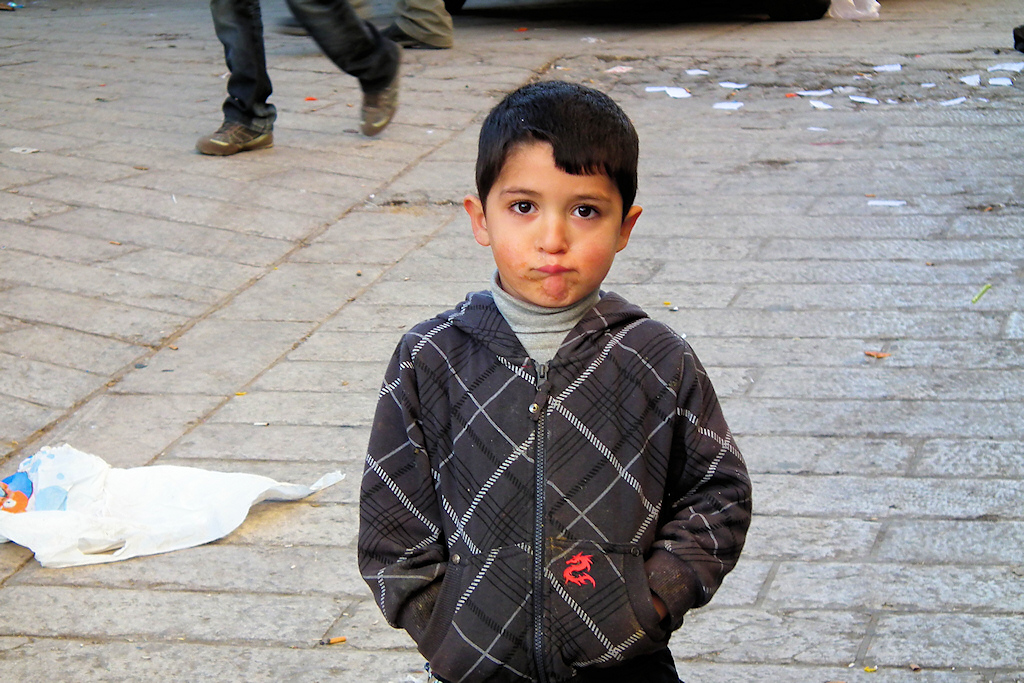
This young chap is now around 20 – as he’s grown up life has got worse, and I find myself wondering how he’s dealing with it.

With love, Palden
http://www.palden.co.uk
Compassion

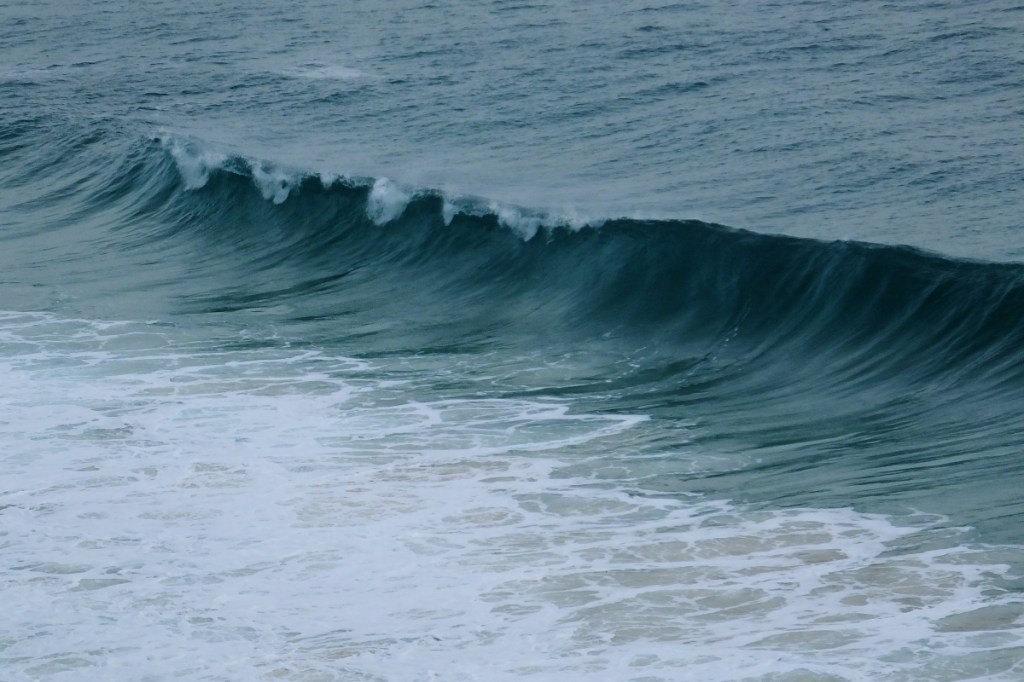
Incoming ocean wave, St Levan, Cornwall

I quite recommend not being a retired humanitarian. Or, for that matter, trying to retire from many other helping and caring roles and professions. Because people come back for more, often for very good reasons, even if they’d prefer not to, and levels of genuine need in the world are rising sharply. So pulling out isn’t as easy as in a normal job. And when it comes to helping a person find food or pay an emergency hospital bill, it’s not a matter that can wait. “Is there a doctor on board?“, “Granny’s had a fall…” and “Could you just…?“.

This presents a dilemma, because the world needs people who help. Not advisers but actual helpers – people who do things. While some people are called to do it since they are by nature server-souls, it’s often foisted and dumped on them by a society that lacks time for being human, and server souls are not remembered and honoured very often.

Capitalism is not geared to accommodate compassion and empathy: you’re supposed to look after your own interests and, if you don’t, that’s your responsibility, and tough luck. The tragedy of this is that genocides happen and we as a society regret it yet we implicitly permit them, always busy with other things. That’s one of the great tragedies of our day, and we tend to worry more about Donald Trump than people in Gaza.

It’s not that enormous sacrifices are necessary, since £10 from a thousand people does make £10,000. Theoretically, many hands make light work. But it’s easier raising money for pussycats than for humans who live far away. Part of our problem is that our societies are so privatised – everyone’s supposed to look after themselves, and that’s the way the world is supposed to work.

But it doesn’t – there are too many things such an approach fails to cover. We have delegated caring to professionals, leaving it to them, yet there aren’t enough professionals, and many are under-supported. Also it’s personal closeness and family and community involvement that often are most needed, not regulated care administered according to official guidelines, done by stressed-out, underpaid people in uniforms.

We all get genuinely overloaded with issues and concerns… another war, another famine, another hurricane, another vexatious issue, another person needing concern. Compassion and empathy grate with the heartless pressures of staying alive in a capitalist system.

One of the frustrating issues I’ve faced in my humanitarian work is that I was always pressured to raise money, and that’s not my strong point. Philanthropists are regarded as rich gits who are there to disburse money, but my wealth is rooted in healing, reconciliation, communication and concocting occasional bursts of sheer magic. Even so, money needs are critical for many people, and often these needs are urgent. So it often defaults to money.

On Monday night I attended an all-night spiritual ceremony, processing this kind of thing in my heart through the night. It was a chance to step outside such concerns and look at them from a soul level, getting focused on inner healing. At present I have a friend in Gaza, with baby, who needs rescuing, plus a village of Tuareg people who need help (they’re under attack), plus a spirit-granddaughter, Phyllis, aged about six, whom I thought was dead. She has recently been found, rescued from Niamey in Niger and has now contracted malaria while in transit. So she’s in hospital in Ghana, in a country where, if you don’t have funds to pay, they dump you outside and leave you to your fate. That’s because of privatisations that rich countries imposed on developing countries in the 1990s, as a requirement for lending them money.

But we have achieved one thing: she’s safe in Ghana with Maa Ayensuwaa, who will look after her. I always suspected Phyllis was one of those rather special kids – her dead mother Felicia was a special soul too. Eighteen months ago, Phyllis had the fingers of one hand chopped off by a drug-crazed, murderous criminal, all because her mother refused to hand over a memory-stick that his gang wanted. I hard-talked with him just before he did it but I could not dissuade him. Perhaps Maa Ayensuwaa will train her as an Okomfo, a traditional healer – she needs to pass her remarkable knowledge and gifts on to someone, and perhaps that’s why Phyllis is still alive today, to inherit the secrets of Maa Ayensuwaa’s line of healers and bring their heritage of knowledge into the future.

Lo behold, as soon as I returned from the ceremony, tired yet in good spirits, in comes an urgent request from a hospital doctor for £100 for medication for Phyllis. Which, of course, I do not have, since I’ve already paid for her rescue and that emptied me out. The doctor cares about Phyllis but, if he breaks the rules, he loses his job. Telling them to seek support elsewhere is no help at all since they have already done so (and it’s rather callous and discouraging a response too).

So I’m back in the loop, begging people for money, yet again. I used to be much better in a team, when working with my old soul-sister Pam Perry – she could get on the phone and rustle up funds and action much better than me. With only one lung, she’d sit in bed with her oxygen tank, phone and laptop, raising money for Jerusalem Peacemakers and the Hope Flowers School in Bethlehem, Palestine. We were a dynamite pair because I gave her brains, backing, online outreach and magical input, and she was great at what she did.

In magical operations I work best as a battery-backup, a reserve warrior for heavyweight situations, a standard-holder and a protector and minder for those at the frontline. Or, at least, that used to be the case – but cancer went for my lower back and bones, and I cannot carry the same weight I used to bear.

Still, as one with a conscience and a heart that some regard as too soft, and with the involvements I’ve had over the years, I’m still at it, scrabbling for money to save someone yet again. In one sense it brings gladness to my heart and meaning to what remains of my life, and in another sense it’s a weighty bane. It’s difficult finding people to replace me. I have personal relationships with the people I work with in Palestine, Mali and Ghana – I’m unhappy about just dropping them during a time when it’s getting harder for them.

So that’s the story for today: raising money for a rather special child who’s struggling to stay alive.

In September I’ll be doing an AHA workshop on this issue, in Penzance, called ‘Changing the World’. It’s for helpers, activists, meditators and change-agents of any kind, and it will cover real-life questions concerning personal risk, life-purpose, commitment, psycho-emotional issues, burn-out, energy-management, holding true to your core beliefs, staying with it despite everything, and tricks for getting through. And planetary healing too.

Not that I’m the world’s greatest expert on this (is anyone?), but I do have some real-life experience. I’m still accumulating it, even as an old crock, and today it concerns one of those small yet big hurdles you come upon: how to create a miracle and raise £100 out of thin air when you don’t feel like it and you’re already worn out.

If you’d like to contribute even just a fiver to help Phyllis get better, that’d be really welcome. Drop me a message and I’ll give details about a bank transfer in UK or PayPal from elsewhere. Alternatively, please send her and Maa Ayensuwaa a healing, supportive prayer. Thank you, and bless you.

From a personal growth viewpoint it’s common to talk about boundaries. Well, yes, that’s true, but that’s not really the goal: after all, most wars and disagreements concern boundaries and we can go on forever being anxious about what separates us. It’s really about sharing and how to do it well, for sharing is a healing thing – personal, societal and global.

We too can become refugees, fall through the net and need help – too often we forget that. Giving is a concept with problems around it – it’s sharing that is really the big issue. It’s always an energy-exchange. It’s in our mutual interests to share what we have. Recipients share too, what they have – if it’s only their humanity and efforts.

However, even then, sometimes we’re tested, especially when we seek to treat others as we would have them treat us and they don’t return it. In such a situation I just try to keep going forward in faith without giving up.

There’s a level deeper too. To survive in this game I’ve really had to learn it in my cells. As a mantra of perseverance it gets me through the difficult stuff, and I’ve quoted it before…

It’s alright in the end, and if it’s not alright, it’s not the end.

With love, Palden

Site: www.palden.co.uk
Blog: https://penwithbeyond.blog
Cancer Audiobook: www.palden.co.uk/boneblessings.html
Podcasts: www.palden.co.uk/podcasts.html

Blessings that Book-Writing Brought

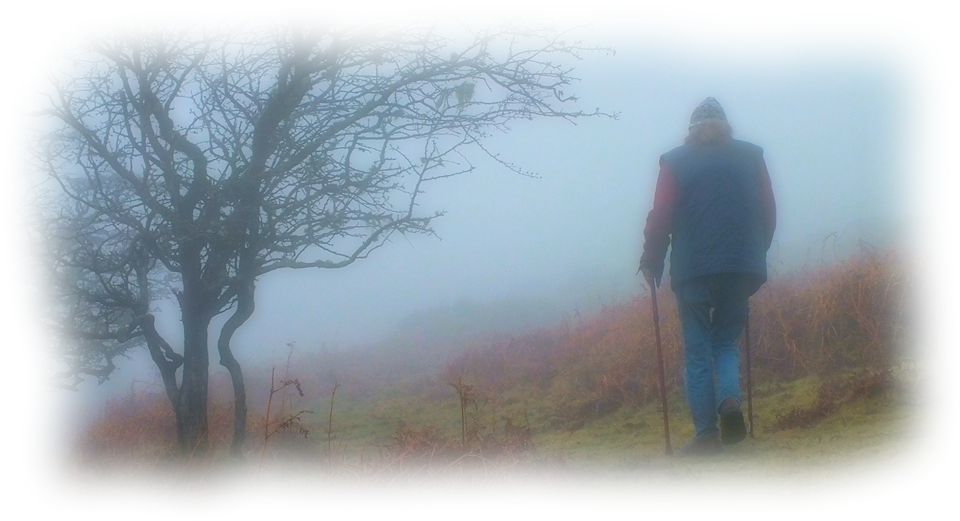
Silent Blessings on Dartmoor. Photo: Lynne Speight

I’ve just finished working on the audiobook version of my latest book, Blessings that Bones Bring. It’s done and uploaded to my site, in thirteen instalments of 40ish minutes each. Each audio instalment took around six hours to make. It’s culled from my blog over a four-year period. It’s not a how-to book but the story of a journey.

I cried at the end of it today, after doing a final listen to the last instalment – tears of relief, of discharge, of handing something over. It’s an emotional experience finishing a book, with some parallels to giving birth.

Every second of speech I listened to 4-5 times over, during the editing process – it’s strange listening to myself, but that’s the way the cookie crumbles nowadays, if you want to get something out into the public domain. The theme music is great – from a Ukrainian group called Orangery.

Whether or not ‘Blessings’ is widely read or heard, I’m happy to have done it. I’ve always had such an attitude. At the front of my book Shining Land I quote the 7th Century Indian philosopher-mathematician Bhavabhuti – the guy who conceived the number Zero – and it means a lot to me. It’s the story of my life as an author. “If learned critics publicly deride my work, then let them. Not for them I wrought. One day a soul shall live to share my thought, for time is endless and the world is wide.

This isn’t a book for everyone, or for any or every cancer patient. But for those with whom it chimes, who are willing to dive into deeper water, it could be significant. It makes me happy to be able to say that. It’s about the psycho-spiritual side of cancer, and the stuff we can grind through not only in a cancer crisis but in life too, during any experience of earth-shaking intensity. It looks at adversity, illness and dying in a different way, and without shame or reservation. I’m not quoting current groupthink but speaking from my own observations.

With those books that have been significant to us, it’s not just the book itself but the timing of its arrival in our life that makes the big difference. This will be the case here. For some people it could be a life-changer if they’re at a critical point in their lives, seeking answers, cracks in the wall and glimmers of light. While this is a cancer patient’s recounting, it’s relevant to anyone experiencing crisis – and cancer is a crisis that is falling upon ever-increasing numbers of people.

That’s partly because we’re living longer and something has to fell us, and partly because of pollution, radiation and the crazy, screwed-up nature of the civilisation we live in, and partly because of things we’ve done to ourselves and choices we’ve made (or failed to make), and partly because the world is in the midst of a spiritual crisis where cancer has become a catalyst for a great awakening.

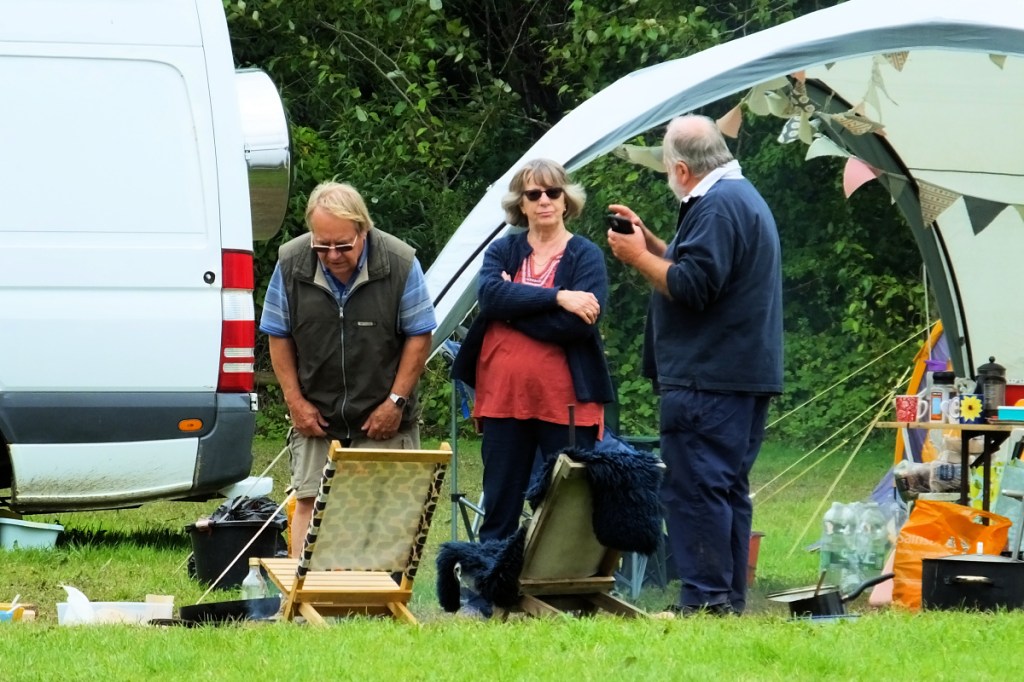
We don’t stop for rain at Oak Dragon! Pic by Chrissie Ferngrove.

There’s more to this. In my own case, the particular cancer I received, and the effect it has had on me, was tailor-made for me, karmically. It was somehow designed to hit me on all the right buttons, to force me to get to grips with issues that I, as a soul, need to grapple with. Stuff that stretches beyond the present, beyond lives. Including issues I didn’t know I had.

It has brought a wide swathe of things into new focus. But you have to choose to do the course – and it’s not a punishment but a strange kind of gift. You have to have some big honesty sessions with yourself, with your watching soul, and with ‘God’ (however you see her).

It’s not difficult when it comes down to it – when in the middle of a crater, it’s the easiest option available. What’s difficult is our resistances – our fears, guilt, shame, denial, avoidances, inhibitions and ghosts. The more willing we are to turn around and face these, when they present themselves, the easier it gets. Cancer is a crash course in this – if you choose to treat it that way.

Self-forgiveness is deep and difficult in one sense and dead easy and straightforward in another sense. It needs to be wholehearted, final and without reservation, and we need to be happy to live with the consequences.

For there is a consequence to everything. In the end this is neither good nor bad: it just is as it is. Everything creates consequences. Not doing things is no escape route because that creates consequences too. Many of the ills of our world boil down to things that were not done that needed to be done.

In my case, one of the gifts cancer has given has been an increased mindfulness of the effects of anything I do – because my energy-batteries are weak, my body is fucked, my defences are permeable and, theoretically, you could push me over quite easily.

Some talk, and others get the kettle on – that’s called ‘community’.

But there’s something funny about this too. Another strength has come up underneath, and it’s spirit-fired. I might be vulnerable but I’m not defenceless. Right now I am (still) involved with Maa Ayensuwaa in a serious altercation with a big Australian bank and, alive or dead, we’re not going to let them get away with it – and they know it. It’s about justice, and recognition by the bank that they have caused and been party to terrible consequences to which they need to own up.

Maa now has cancer too, so the bank is up against two cancer patients. Maa is a bit like Kali and I’m a bit like Obi-Wan Kenobi, and we’ve become rather a team.

The worst thing that can happen is that she or I could die. But we’re going to die before long anyway, so not a lot is lost. That gives a kind of relentless strength – something Palestinians are pretty good at.

The bottom line is that, in any show-down, winning or losing is not the primary issue. In the end things bounce back on victors and turn around for losers, and ever thus shall it be. So the objective is to make a battle yield a bigger outcome: truth, resolution and healing. That can involve taking a coolly fierce Zelensky approach, but the price might be higher if we don’t.

That is to say, it will not do the Russians good to take over Ukraine, and it will not help the Israelis to take over Palestine – there’s no victory available and chickens will sooner or later come home to roost. History doesn’t allow it, nowadays, and things have changed – though the world is yet to catch up with this small fact.

Maa Ayensuwaa and I seek justice and resolution. We want rightness to prevail. It’s two rather magical cancer patients up against an Austalian bank. Hehe, a bit like the Taliban and NATO, really.

But we do stuff too

When I started writing this blog I intended to go on about my new book. What I’ve written above is not included in the book, but it’s not a diversion either (even if I do have the Moon in Gemini). It’s part of my cancer process and the resolution of threads in my life. Other issues crop up in the book though – both blessings and challenges.

The great thing with cancer is that vulnerability makes me experience things far more fully. Life is more impactful – both the pains and the pleasures – and I feel the underlying feelings within and behind things much more than before. In a half-dead kinda way, I’m more alive.

There are quite a few cancer books around at present, and the majority of people and cancer organisations will prefer more mainstream accounts that don’t mention the virtues of inner travelling, stone circles, ETs, astrology, cannabis or colloidal silver – career-killers for most writers. However, since I don’t have a career to kill, and killing me off would probably raise my profile, it’s okay. It’s a learning experience for the soul – and not only for my soul. So all is well.

It’s the most personal book I’ve ever written. I’ve always had rather an allergy to writing an autobiography – not least because I can’t remember much about my life unless I recorded it at the time. This said, I have written a short autobiography on my site. Blogs have been useful ways of accumulating creative iterations of whatever has been going on, and this has yielded books and audiobooks on cancer and on Palestine (called Blogging in Bethlehem).

Re-editing a blog into a book does me good, since it helps me review my life. This might sound strange or perhaps narcissistic, but I have little memory of my life except what I have deliberately logged and imprinted as ‘personal history’ – and blogging has helped this. I went through big brain-changes when I had a near-death experience in 1974, when in my mid-twenties – one change involved loss of capacity to remember many but not all events in my life, and another was a rebalancing of my left and right brains to amplify the intuitive, emotional, imaginal right-brained side.

It’s nearly five years since my back cracked and my life changed – this was the first sign of cancer, though it took thee months to be diagnosed with it. It has been a very long and full five years. Not full of events – much of the time I’ve been completely alone, and I live on a farm at one of the far corners of Britain – but my life is full of life, even though I’d estimate myself to be around 70% dead.

Early morning at Oak Dragon. Pic by Chrissie Ferngrove.

So it has been cathartic to produce this book, and now I’m turning it over – for free, though donations are welcome.

It’s specifically of interest to people encountering cancer who choose an integrated medical route – conventional and complentary medicines together – and who have a spirited approach to life. Or people for whom cancer has taken away the blinkers, who want to try out new ideas. Or for people facing death and wondering what to do about it.

I’m not into giving answers, I’m no cancer expert, and I speak for myself alone, yet there’s a load of food for thought there, with a few golden nuggets hidden in and between the lines.

Phew. That’s over. Now I’ll have a few days pacing around, feeling redundant, wondering what to do next. Well, I’m off camping with a load of dragons before long, and perhaps I need to give my dear readers and listeners a break! Now that’s a thought…

With love, Palden

Blessings that Bones Bring: http://www.palden.co.uk/boneblessings.html


Palestine Audiobook: http://www.palden.co.uk/bethlehemblog.html
Short autobiography: http://www.palden.co.uk/autobiography.html
Oak Dragon Camps: https://oakdragon.org

With Brian Oliver at Oak Dragon – sorting out the ways of the universe, of course. It’s another Chrissie Ferngrove pic.

ET, go home

Getting real about switching realities

[Recycled – written in June 2022]

Pendeen Watch as seen from Bosigran Castle, Penwith, Cornwall

The amazing thing with dying is that it really is about setting sail into the Great Unknown. In aviation terms, it feels more like a landing procedure than a take-off procedure. Over the last twentyish years I’ve psychically tracked and handheld perhaps forty souls through the life-death transition – very interesting, rewarding and also wearing – and what has been striking has been the sheer variety of experiences people seem to have had while transitioning through death. For myself, the closer I come to dying, the more I find I’m needing to loosen up my preconceptions.

And my preconditions. Ultimately futile, they’re all about clinging on to the known. But it’s loss of control that is the key issue here, and it has already started. Dying is a challenge to go with the flow, to let be, to have done with it, to trust in the process and feel a way forward. Suddenly perspectives I harboured about life are changing and revealing themselves very differently. I have to ‘make a deal with God’ (as Kate Bush once sang).

It’s not binary. We aren’t either alive or dead. We’re all a mixture of both in varying proportions, all through life, and it changes slowly, sometimes in phases and sometimes suddenly. Medical thinking has it that death means clinical death, when your life-signs hit zero, but no, that’s a stage of dying. You still exist afterwards and you exist before, though you might be half-dead. When you’re on the other side, for a while you’ll see and hear people back in the land of the living whom you knew in life, though unless they are receptive to listening, they won’t see or hear you – and that can be tricky.

We’re all part-dead. I’m more dead than many of my readers, though there might be one or two who are more dead than me – hello! In February I think I went up to 95% dead – close – but by spring equinox I was down to 80%, and now I’d put myself at 70%. But only last week I had a lurch and drooped, getting older again for two days. This happens with cancer – you go up and down. Small things can have big effects.

Above Porthmoina Cove, Penwith

In the near-death experience I had at age 24 – I was unconscious for nine days – it permanently changed me. I was very different afterwards, having gone through substantial memory-loss and brain-changes. Some would call it a ‘walk-in’. When I first came to, I didn’t even recognise my parents, with no sense of where I was or the time we were in.

As I revived, the experience made me mission-driven, pushing me to do whatever it was that I had come here to do. It took about seven years after the NDE to ‘come back’ sufficiently, to be fully functional. After three more years, by 1983, my mission presented itself – I started the camps movement. Or it started through me.

The near brush I had with dying in February this year shook, squeezed and wrung me out. By April, to my surprise I was served new instructions. An astoundingly clear voice in my head said, “Ah, there’s something more we’d like you to do…” – and I both perked up and groaned at the same time. I crawled from the slough of despond in February to the beginnings of a new vision by May.

I have been presented with serving an emergent grandfather-type role in the lives of many people. Additionally, there’s something incomplete about the ‘world work’ – world healing-oriented group consciousness-work – I’ve been involved with since the 1980s. And my writing and podcasting are appreciated. So there are things to do. A few years ago I wouldn’t have anticipated this.

There’s something here about sinking into the deep dark and then reviving with an armful of light. Shaky as I am, I’m being given something new to do, even though time is not really on my side. Yet this fact is a motivator: it is urging me to do what I can do while I still can and to enjoy doing it.

It might be a swansong or the beginning of something – I cannot tell. I have osteonecrosis (a dying jawbone), peripheral neuropathy (feelingless feet), a deteriorating back, a troubled stomach, a low-level permanent ache, I’m sensitive to radiation and, even with my thin body, gravity weighs heavily. Oh, and I have a cancer of the blood and bones.

Life is hard in a way I’ve never encountered before, and sometimes it gets me down – this last six months I’ve had a bit too much of it. I nearly buckled. So, if this gets much worse, it could be a relief for me to go. Can you see how this might be a positive thing? Though it does look as if there are positive reasons to stay alive too.

If you want to meet me before I go, then I am still alive in a body and here I am – alone much of the time. I serve good tea. Leaving it to another time, another year, might not be the best thing. Yes, when I go a gap will be created by my absence, but another kind of presence is possible which, in the end, might be valuable too. After all, here on Earth time and geography keep us separate anyway. There comes a point where a soul has done enough for this lifetime. We need to be released. But we haven’t gone away.

Bosigran Castle

I had a good friend, Mike Blackwood, who died a seemingly sad death on booze, drugs and despair. Uncomfortable in this world, he was a spirited man, a solid part of our team in the camps of the 1980s – the site manager for many of them. When I heard of his death, I tracked him over to the other side and he was in the ‘holding bay’ – a buffer zone you go to initially, to process the life you’ve just left and make yourself ready to go further. In terms of Earth time, this often takes weeks, though it varies greatly. The funeral can be a key moment. But not always.

Well, in the holding bay, Mike was tripped out of his skull on acid and having a great time – he had loved happenings, festivals and raves during his life. He was blissfully happy, flowering, glowing, almost Buddha-like. This was a surprise, but that’s what you get in this game. I returned a day or two later and, unusually, he had completely gone beyond. He didn’t wait around for his funeral.

I guess he was relieved to end his life. I felt happy for him. It just goes to show how the judgements made of our behaviours and our lives on Earth don’t necessarily match who and how we actually, truly are, deep down. Sometimes, in the education of our souls, we need to plumb the depths and go where others fear to tread. Our judgements about the rightness or wrongness of others’ lives can clatter badly on the cobblestones of reality. Mike’s death was characteristic of him, and probably a relief for him. The manner of people’s deaths always seems to be true to character.

Ruth, my mother, couldn’t really handle death, even at age 92. Born during WW1, her generation trained themselves to survive, but it could not go on forever. Around death, she had that confusion many people have – an ill-considered mixture of Christian heaven-and-hell stuff and secular it-all-goes-blank stuff. Neither is very useful. She died and, not knowing how to handle it, went straight to sleep, curled up and unresponsive.

This felt okay at first because of what she’d been through, though after a while I got a feeling she wasn’t facing the fact of being dead. Her funeral was approaching and, since she was a popular figure, I wondered what to do. I wanted her to witness people’s love and regard for her. On the day of the funeral I tried waking her up but she wouldn’t surface. I made a prayer, feeling a bit clueless.

Then came a solution. Her little terrier Pepper, who had died some years earlier, came along, yapping at her. She woke up and my mother was able to witness her funeral, with Pepper on her lap. I think she was surprised at the gratitude and recognition that came her way from the crowd. Bless her, she hadn’t appreciated the value of the contribution she had made during life. “It’s only me”, she would say when she rang up or came through the door. Only you?

She and I had some leftover issues at the time she died, but the changes she went through after death allowed her to encompass her strange son and the person he was. All was forgiven between us. It happened one day when I was in Palestine. I experienced her strongly while at an ancient church at Burqin, near Jenin in the West Bank – the place where Jesus healed the lepers – and found myself deeply wishing I could have brought her there.

In her life she would never have entertained the idea of coming to Palestine, but she loved old churches. She came in spirit and I felt her there with me. I shed tears of release, and I think she did too. All that lay between us was made good and each of us came to fully understand why we had entered each other’s lives. Thank you, Jesus, for that. Ironically, it was a Muslim friend, Wael, who had brought me there to meet the Prophet Jesus – and my Mum.

What’s interesting here is that, today, I’m going through a lot of early-life patterns of vulnerability, unsupportedness and loss, and feeling like a five year old – mother stuff – while being completely at peace with my Mum. We smile to each other occasionally.

Going home. On the slopes above Bosigran Castle.

When my old philosopher friend Stanley Messenger died, he wasn’t interested in witnessing his funeral – as a mystic Christian, psychic and Anthroposophist, he didn’t like the conventional church funeral his family organised.

I sat there in a pew with Stanley gruffly urging me to take over the service, while the vicar was up there trotting out the usual stuff. I told Stanley to stay and watch, because the people present did care about him. Actually, when we were all sitting in the pub afterwards, he was happier because it was informal, and I sensed him around, communing with us.

In the weeks that followed he loitered in the ‘holding bay’, sitting enjoying a pleasant landscape and a blissful absence of worldly hassles, still looking frail. In the last few years of life he had dementia, which can dissipate a person’s selfhood, so I guess he lacked momentum to go further in the dying process. After a while I came along, took his hand and pulled him up what seemed like a lot of steps until we reached the ‘pearly gates’ – the full transition point into the after-death state. He was met by people who welcomed him and took him in – I think one was Rudolf Steiner himself, whom Stanley had known when he was a young man. Goodbye, Stanley, and thanks for being you – see you again.

My cousin Faith’s husband Albert was a good-hearted man, rather secular and empirical in viewpoint though gentlemanly and worldly-wise with it, and I think at first he thought me weird and extreme. Then he got prostate cancer and started changing, slowly becoming more open, doing tai chi and becoming more attuned to matters of spirit. Just before he died, he was clearly edging into the otherworld, far away and in a state of grace. I had been working with him remotely but came to visit in his last days.

At one point his eyes opened slightly, he saw me, and he gave me the thought, “You’re here?!” Then after a pause he thought, “But you were there”. I could sense him computing that. “Yes”, I thought back, “I went there to pull you over”.

He had seen me on the other side, and here was I on this side, with him at the hospice. That’s not supposed to happen, or is it? He had a peaceful death. My cousin Faith really did well with him – he expired with her hugging him. She felt his last breath. After a while she got up, went out into the hospice garden, and a heron flew in, did two loops round the garden and sailed off past the trees – heaven was signalling.

I had helped sort out his connection with the otherworld, making sure there was someone to meet him, and myself going over to give him a hand. Since his death we have nodded and smiled whenever he has popped up – he’s even done me a few favours that only someone on his side of reality can do.

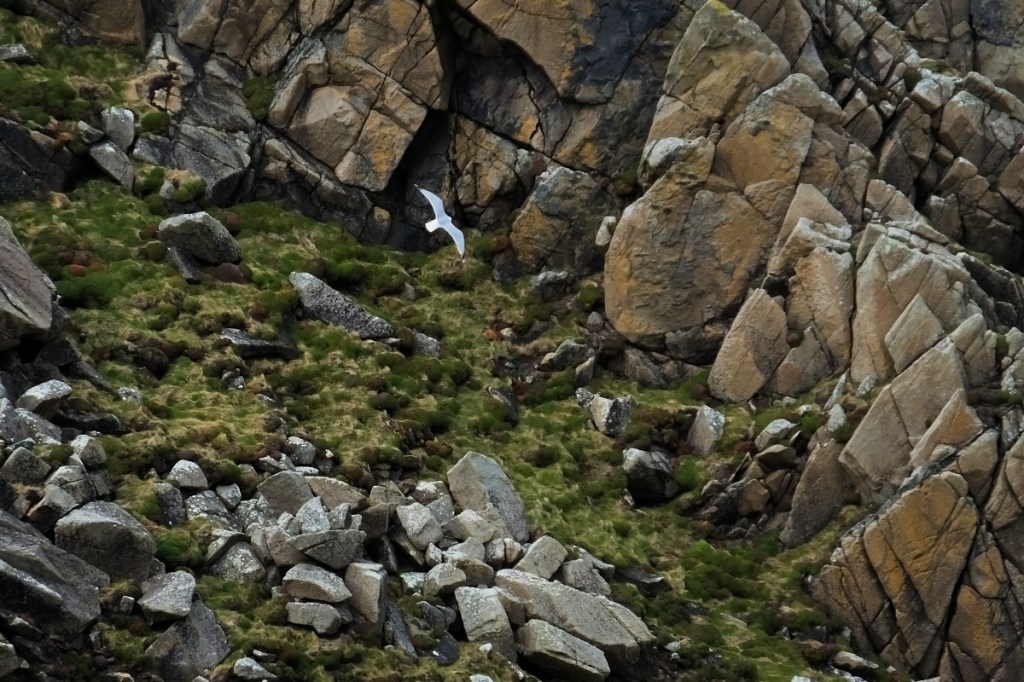
Jaggedy granite at Bosigran

Often I’ve been able to say who will be there waiting. It melts the last doubts and resistances people might have. When I told my Dad that his brother Laurie, who died in WW2, would be there, he went quiet and a tear came to his eye. Something in him knew this was true. From that moment I sensed that he felt alright about going – his long lost brother would be there.

On the day before he died he was unconscious. I held his hand, telling him all I knew about what would next happen to him, and what to do. I knew he could hear me and took it in. A while after his death he and I had a psychic chat and he thought to me, “You’ve done your duty to your father by becoming my father”.

In my twenties he had felt I had let him down by making the dissident life-choices I made at the time. My parents had done their level best but they could never quite encompass me – their strange boy who became a hippy revolutionary, a disappointment and embarrassment. In my mother’s eyes the only sins I had failed to commit were running off with a black woman and being gay – such was the moral atmosphere of the late 1960s. Poor them, they must look down on me now and think, “OMG, is he still at it, getting himself into trouble, even at his age?”. But I think they now understand why I’m like that and why I had been their son.

What happens in death has a lot to do with how we deal with life. If during life we are willing to own up when necessary, then owning up in death gets a lot easier. Life on Earth is such a screwed-up and tacky thing that we’re all damaged, up to our eyeballs in karmic cobwebs. Living in a body on Earth isn’t and cannot be about being perfect – it’s about getting through. It’s about leaving the world a slightly better place than when we started – not only because it’s good and right to do so but also in case we need to come back. Or in case other members of our soul-tribe need to come here. Or for the sake of our grandchildren and everyone else who shares our world.

At death you can’t do anything more about anything. Life was as it was, and that’s that. The task is to come to peace, to hand in your resignation without reservation – well, as much as possible. There’s a good chance an emergent feeling of relief will help with this. It involves releasing and forgiving, letting be. It’s too late to do anything. So working on at least some of the issues we’re likely to meet at death is well worth doing before we get there.

There’s more. The better we’re able to get through our life-crises and make them good during life, the more we establish a pattern of dealing well with crisis. When death comes, it makes dying easier because the ‘growth choice’ has become a habit we can latch onto at the moment of death – instead of the ‘fear choice’. The more we are centred, flexible and okay about handling life, the more we will handle death and ride the wave.

At death it matters who we truly are and what we have become – no glosses or pretences are available any more. It’s an honesty process, yet also a relieving and healing process in which a weight is lifted off us – the weight of being who we were, with our character traits, habits, stuck bits and karmic patterns. A lot of forgiveness and understanding comes. But look at this another way…

When we die we’re entering a new world. As with this world, the way we are born into that world greatly affects what happens afterwards. When we sally forth to the other world, if we die well and do our best with it, we’ll start well on the next bit. By ‘dying well’ I don’t mean the right circumstances – it could even be a car crash – but the right approach when we encounter it. Even if it is a car-crash, or you get shot, time stretches immensely in that moment, and there can even be a surprising calmness about it. In such a circumstance, your soul pops out of your body before the impact hits you and you will feel no pain. People who die in wars, shocks or tragedies get scooped up by soul-paramedics and helped quickly.

Dying is like an examination to test what we’ve truly learned and worked out in life. It affects subsequent decisions about what we’ll take on next – our next incarnate life on Earth, if that is our path, or whatever happens instead, if that is our path.

Our soul-family, soul-tribe and angels help us get things sorted out. It’s a process, and it involves referencing all of our existences and their overall storyline and purpose. It concerns the role we play in our soul-tribe and the agenda, priorities and evolution of our tribe. We aren’t solely individuals but part of something much larger. There’s bliss, relief, healing, love, rest, fellowship, education and soul-melding to be had too, in the after-death state.

A deep choice is presented. The choice lies between opening up to such a path or walling ourselves into an imaginal reality that carries us off somewhere else – if perhaps we believe that we don’t deserve better, or if we can’t let go of the identity, feelings and attachments we had in life. Then we might well get another round of life, with a bleed-through of elements from the past that can be both helpful and difficult, until a turning in the deepest seat of consciousness redirects us to our true, core path.

Above Porthmoina Cove – rock climbers love it

Part of our reason for being here on Earth is to evolve and train ourselves as super-trooper souls – souls who’ve been through the mill, shed blood, sweat and tears and learned lessons from it – experiences that aren’t available elsewhere. It’s one helluva training – a ton of both difficult and joyous stuff is to be found here on Earth, and we have a profound option to become greater souls through wrestling with it.

There’s something many ancient peoples instinctively knew: the souls of the living and the souls of the dead walk alongside each other in parallel worlds, helping each other out. We’re in the same tribes and networks, all still here. You can talk to your Mum (not anytime, but sometimes). They knock on our heads every now and then. It’s important to take note, to listen within and to answer when the souls of the dead call.

After I’ve gone, if any of you feel me twiggling the top of your head, please acknowledge it and signal back. It depends on whether you pick me up sufficiently, giving it full credence, and whether it is in your scope and growth to respond.

It’s not uncommon for anyone with a dash of intuition and receptivity to pick up on the dead – go on, own up, you’ve experienced this yourself, actually. Search back in your memory and you’ll find it. So if you get a buzz from me after I’ve gone, please work on the basis that I am actually there.

In life, it’s not primarily what we do that matters – it’s how we do it, and how much we make it good in the end. As an astrologer, there’s one prediction I can safely make, for no charge: you are all going to die. The choice lies in how we do it. That involves the full and proper exercising of free will. Whatever your faults, you’re a fine person. Don’t you forget it. I’ll try not to either. As a Virgo, I’m so bloody self-critical that I have to remind myself.

With love, Palden

Crossing the divide

I have reposted this blog from two years ago, and it’s also part of my cancer book Blessings that Bones Bring. While reading out out loud for the audiobook version of the book, it struck me as a really good piece. So here it is again.

Cancer – fighting and making peace with it

Thought is like a ripple in the void.

We manifest cancer in our lives for all sorts of reasons, and they go deep. In our day we have medicalised it, rendering cancer treatment into a physical process that can be fixed with pharmaceuticals, surgery and radiation or, for holistic types, rigorous dietary, miracle cures and other regimes. This focus on the mechanical causes of cancer – diet, lifestyle, life-conditions, stress – is often personalised and privatised to place responsibility on ourselves as individuals, or to put it down to genetics, and this is partially correct. Even so, we still tend to regard cancer as a stroke of bad luck that happens to some people and hopefully not to us.

Meanwhile, the spread of cancer is a symptom of a world that badly needs correction and of a spiritual crisis in the heart of humanity. These causes of cancer are kept quiet – pollution, radiation, poverty and, when it boils down to it, the very nature of our societies. But there’s much more to it than even these, because some people get cancer and others don’t, even when living similar lives under similar conditions. There’s a deeper meaning to it all, for each and every one of us.

Nowadays there’s a growing movement of people ‘fighting cancer’ – making it their mission to overcome this threat to their life. Many more people are succeeding in ‘beating cancer’, thanks particularly to advancement in treatments, whether medical or holistic, and this is good – the knowledge and experience around it is growing.

I myself have followed an integrated medical approach – bridging the medical divide and partaking thoughtfully in the virtues of both conventional and complementary medicine. A few things stopped me from taking an entirely holistic route:

  1. it was already too late, I was an emergency case and I could hardly move an inch;
  2. it would have cost a lot (it’s private treatment);
  3. I needed a comprehensive local service (doctors, paramedics, ambulances, nurses), which is not available in the holistic sector;
  4. and here comes the key issue… I did not have the willpower.

Some things also stopped me from taking an entirely medical route:

  1. I’ve been doing holistics all my adult life;
  2. Conventional medicine can be brutal;
  3. It fails to address psycho-spiritual issues (as does society in general);
  4. Using holistics can reduce side-effects and problems involved with pharmaceuticals.
When water crashes, froths and swirls it’s at its most beautiful. As with life.

The matter of willpower is central and critical. When cancer hits you, your situation and where you stand at the time matter a lot. But the critical question is this: what is the life-lesson that cancer, as a psycho-spiritual catalyst, is bringing you? Since cancer is life-threatening, it certainly does bring up big, fundamental questions about why we’re alive and what we’re doing about it. Some people look deep into this question and some avoid it or hope it will go away. The story varies a lot for different people. I’m one of those who went deep.

By the time I was diagnosed in November 2019, I had already exhausted much of my stock of willpower, after 2-3 months of excruciating pain which had worn me down, scraped my edges and taken me to the far boundaries of toleration. I had had a life where at times I had played for high stakes, using up a lot of my willpower credits. Approaching 70, I didn’t have enough in my batteries to face yet another full-on, miracle-working, crunchy push against the odds, doing battle with the Fates. There’s something of a warrior in me (Mars in Scorpio), but a warrior still has to choose his battles carefully.

So I had a choiceless choice, to take the treatment that was available there and then, offered by the NHS. It had taken me in, half-dead on a stretcher, diagnosed me and given me the options. It took only minutes to realise there was no option. I just had to ‘trust in Allah’ and trust myself, the doctors and the process.

And, believe me, even the most hardened atheist utters a prayer at this point.

I was helpless to do much except to fully and completely accept what was happening and do my best with it. I made a deep prayer to my ‘angels’ to regulate and modulate the process in a spiritual sense – not least because, in my rather helpless state, this was pretty much all I could do. I decided to suspend all previous positions and attitudes and to see what would happen – this was a truth moment. I would live or die, and my choice lay in doing my best with whatever happened.

There are some who are in a good position to ‘fight cancer’ and overcome it, medically and attitudinally, and there are some who must take another route. Those who fight cancer can go through a life-changing initiation in self-care and rearranging their lives to fit their new situation. They go through a change of diet and lifestyle, get into meditation, walking, helping others and all sorts of life-improvements, perhaps changing their lives significantly.

A spirited life-change like this, for someone who has lived a stressed, imbalanced life, given over to careers, family and life’s rigours, is such a boost, energywise, that it can kick the cancer. It’s a positive shock to the system, a shedding of a load, a serious course-correction. And it can work and change a person’s life.

This strategy can work first time round but, in my observation, the second time round can often be different – again, because willpower credits are more used up. Life returns to teaching us about acceptance and death. A recurrence of cancer can corner a person more seriously than before, since willpower and hope can be weaker and tiredness stronger. Heavyweight medical treatments or death often follow.

This was one reason I took an integrated medicine path and a path of acceptance from the beginning. I decided to take the hit, live with cancer and pace myself, energywise – given that I had only a certain amount of charge in my inner batteries.

And something in my heart told me that I had been given a strange kind of gift.

Abiding, watching, holding firm.

Some time ago I wrote that doctors saved my life and healers gave me a new life. In the end, I was impressed with the doctors and medical staff I encountered. There were some problems because I’m a strange guy who doesn’t obey normal medical rules, but I worked at being pleasant and cooperative because I knew they were doing their best and my life rested in their hands. This has always been my technique for getting through scrapes and it usually gets me through somehow – or at least it reduces the crunchiness of it.

I’m so grateful to the various meditators, prayer circles, healers, practitioners, spirit-gifts, remedies and inner help I have received, on top of medical treatment – and this is what has given me new life. It has also made the pharmaceutical process work better and easier. I give details in my book Blessings that Bones Bring.

‘Fighting cancer’ was not really an initiation I needed to go through, to prove that I could do it, because I’ve already proven I can pull off some miracles. Some cancer patients don’t need to fight cancer, and some would do well to consider a befriending rather than fighting approach. Some need to die as well as they can, and some, like me, need to accept cancer into our lives and live with it. I’m now partially disabled, and I can only tinker around the edges of that to make it a bit easier.

It’s likely that these seemingly peripheral issues will kill me, not the cancer itself. The well-meaning people who weekly send me information about miracle cancer cures miss the point – I’m doing fine with cancer, thank you, and the problems lie with other things.

Part of me is a holy rainbow warrior, yet I’m a peacemaker at heart and cancer is a negotiation – with the Spirit of Cancer, with Soul and with The Management. It’s a truth process, a karmic cards-on-the-table session. In some respects peacemaking takes more bravery than fighting cancer.

Some months after my cancer diagnosis I had got through chemo and a few things about my new life had clarified. I’d had time to get to grips with the situation. I was deeply weary yet I wasn’t dead, and tentative signs of revival were emerging. My life-expectancy grew from months to about three years.

I realised that decades of inner growth and an alternative-leaning life had not failed me – they were giving me strength and rebirth-potential. My chemo process was concluded after five cycles of treatment, when eight cycles had originally been planned. All the tests I went through showed good signs. This was heartening.

Acceptance and surrender are a fundamental secret in healing. In my life I’ve come close to dying several times and, each time, when I have fully yielded to it, something deep down has started reviving. Obviously this rebirth capacity will not go on forever and at some point I shall die but, even then, surrender is still the best way to go.

Dying involves a loss of control, yet another kind of balance or control emerges underneath if control – our grip on life – is released wholeheartedly and we’re willing to hand ourselves over. It’s like surfing – you have to give yourself to the wave. It’s the same in life: at times we just have to accept facts and there is no longer any point struggling against them. At that point our capacity to shift perspective and change our approach determines much of what follows.

That’s one of life’s big lessons: sometimes taking a difficult path is the easier path.

There’s another deep shift involved here. When we die, we have a choice about how to actually go. Will we wait or struggle until death takes us, squeezing us out of our earthly lives? Or will we die by making a deep choice to relax into it, let it be and enjoy the blessing? We can make these deep decisions before we reach that time – not in our heads but in our cells and bones. It’s an emotional decision, fed by tears. We do this during our lives by accepting the crises that come to us and dealing with them well.

A few months after diagnosis with cancer I made a deep decision. I decided that medical issues will not be the ultimate deciding factor for me in my death. Clearly they do play a big part in the calculus of dying, but I am not a machine.

Willpower decides it. Where there’s a will, there really is a way. Thus far, having lived with cancer for five years, I’ve gone through some crises and some miracles and I’m outliving my initial life-expectancy estimates of some years ago. But my life will not go on forever – it hurts, and daily life is twice as difficult. I shall continue for as long as I am willing and able to do so.

Then there comes a point where willpower runs down and acceptance takes over. Around that point I’m likely to pop my clogs, having reached a stage where I’ve had enough of holding myself up and keeping on going. It will be a decision.

We all have to make it. But it is possible to make it earlier, without too much avoidance, balking and fighting, rather than fighting it out to the last moment – and possibly missing some of the more beatific, grace-infused elements of the experience of dying.

There’s a chance I might go out quite quickly. Having worked on myself quite a lot, I have fewer resistances, fears and blocking issues to struggle through. I’m sure I have more to face, but feel okay about getting through them – it’s a matter of giving ourselves permission to make it easier.

It is in this sense that the story of our lives is but a preparation for death and the afterlife. I don’t feel that I shall need to struggle through a long, slow dying process – and resistance is not actually very interesting as an activity. However, this said, what actually happens at death is not something any of us is in control of. That’s the wonder of it.

The Isles of the Dead – the Scillies. In ancient British tradition, souls go to the Western Heaven when they pass on.

There’s more. Frankly, I’m fine about going home – home to where my people are, home to where I came from – for some R&R with my soul-tribe. Life on Earth has worn me out. It’s had big rewards. Since we leave life as naked as we entered it, all we take with us is what we have become as a result of being alive. I’ve made some progress on that path, and I’m happy enough with it. In some respects we learn more from our errors and inadequacies than we learn from our successes and pleasures.

Near-death experiences earlier in life and since getting cancer have had a funny outcome. Each time, I’ve come out of them with a new mission and a new reason to be alive. This is happening even in the fucked-up carcinogenic state I’m nowadays in. I’ve been given a new, shortish life, with new constraints and new advantages. Something deep inside has changed and I find myself with new instructions. Or a new iteration of the instructions I’ve always had.

It’s not as if the Voice of God comes down, booming out what you’re supposed to do. It’s just that circumstances, happenings and inner feelings lead us that way, almost like an unfolding movie-plot. There comes a point where you realise that it all clicks together and that life is prompting your thoughts and sucking you into a new mission. Or at least, that’s how it works for me.

That’s one key reason that recently I did an Ayahuasca ceremony, to make a pilgrimage to a deeper place. It’s what earlier esotericists used to call the Causal Plane, the place where the magic of life and the deeper laws of karma are rooted. I needed to clarify things and clear some impediments standing in the way. I managed to exorcise one of the ghosts that has been haunting me for the last two or more years, and that has been a relief and release. I progressed with another one but there’s more to go on that.

That’s what life is about: there’s always more to go.

Our life purpose and the way we are to carry it out do not announce themselves in advance, neither in words nor logical propositions. Yet a sense of rightness appears at each stage, if we stay on track, guiding decisions in the context of a vision or an instinctual feeling. The mission is to follow that feeling and to do whatever is needed to stay on track.

Strangely, right now I have a public role that is rooted in isolation: I spend most of my life alone, down here in a cabin on a farm in Cornwall. Yet almost every day I’m playing a part in people’s lives in multiple countries. Rather psychic, I’m at times really close to people far away – we are together in quantum space even if sundered by long distances. My psyche is a bit like a telephone exchange, even when I’m not fully conscious of it.

Though I’ve been quite isolated, and partially because of it, my work has been appreciated more than ever before. That’s funny, especially since I haven’t really been trying. Furthering my career, making money or collecting ‘likes’ don’t motivate me, though sharing some insights and experience before I go is amazingly medicinal.

I learned something from an old friend, Hamish Miller the dowser: he didn’t write down his knowledge of the geomancy of West Penwith, and it died with him. A few years after his death I’d have loved to interview those details out of him. But he’s been hovering around me while I’ve been doing my researches, so perhaps that exchange has happened anyway.

So I’m communicating as much as I can of what I’ve learned, in those subjects I’ve given focus to over the decades, since it’s useful to those following in the tracks of folks like me. I won’t be leaving money or property when I die, but I’ll leave a voluminous archive (it’s on my site).

I’ve been privileged to be involved in the origination stages of many things, having been active in an historic germination phase between the 1960s and 1980s. For me and people like me it’s our duty to hand down what we’ve learned and created, because there’s still a long way to go.

It’s your turn, and you have your own slice of human history to work within. We’re in a prolonged historic process of redeeming the complex issues of a profoundly screwed-up world, and we aren’t here solely for the chocolate, sex and tax-paying. This process takes time, and there are chapters, layers and levels to it. Our planet hosts eight billion souls, originating from across the universe, and a big global fermentation is going on, and we’re all part of it.

[For an audio talk about this fermentation, from 2013, click here.]

Back to willpower. With cancer, or with any other earth-shaking adversity or crisis, we are offered a choice. Modern medicine and current social values encourage us to ‘get better’ and fight cancer, but this is only for some people. It can serve as a powerful initiation and empowerment, though in some cases it can also be an escape, an avoidance of the bigger life-and-death questions that cancer can bring up. These questions inevitably return, sooner or later. There is also the option to learn acceptance in life, and bravely to look into the eyes of death when the opportunity arises, even if it’s not our time to go.

The paradox here is that getting friendly with death can often give us new life – it opens up channels, it makes uncanny healings or revivals possible, and life no longer needs to teach us that lesson. If it doesn’t give us new life, it leads to a more peaceable and benign death, giving us a good start in the afterworld. Death comes inescapably to all of us and it is not the end of our journey. And cancer, if it doesn’t kill us, gives us a practice run for dying – a preparation for later.

It changes the very focus of our remaining lives. I had a near-death experience at age 24 and it was a life-changer – I was unconscious for eight days, awakening with much of my memory scrubbed. I can safely say that many of the things I have done since then were sparked by that near-death experience. It made me fully aware of what I was here for. Now in my seventies, near-death has happened again, through the agency of cancer. My shelf life and possibilities are limited but cancer has sharpened my focus.

People tell me I shall live a long time yet. Living in the bodily condition I’m in, I’m not so sure. I’m not sure that I want to – I’m finding it hard work. But I’ll be alive until I’m done, and I’m not done yet. And acceptance means accepting life as much as it means accepting death.

Since a very Saturnine life-crisis of 2-3 years ago my life prospects seem to have extended, to my surprise, and I’m now on my 124th blog and 49th podcast! Gosh. But then, when in my early forties, three people separately told me I would reach my peak in late life, and now I understand what they were saying. It’s funny how life goes. In a way, I needed cancer in order to rebirth myself.

With love, Palden

Site: www.palden.co.uk
Cancer Audiobook: www.palden.co.uk/boneblessings.html
Podcasts: www.palden.co.uk/podcasts.html

Going deep has its virtues.