Antipathy

This started out as my usual weekly posting about the Sunday Meditation, but it turned into something else…

A Palestinian bagpipe band in Manger Square, Bethlehem – a leftover from British Mandate days

In Britain we currently have a kerfuffle about an anti-Semitic murder outbreak in Manchester, one of the most multicultural cities in our country. Though I’ve worked a lot with Palestinians, mercifully I’ve never been accused of anti-Semitism. Throughout my time working in the West Bank I had a lot to do with Israelis too – particularly former soldiers. A few of them helped me smuggle tofu from Tel Aviv through Checkpoint 500 outside Bethlehem – packaged tofu looks rather like Semtex, you see.

My grandfather was part of General Allenby’s British invasion force in Iraq and Palestine in WW1, and my father was in Egypt and Palestine in WW2. Some of my German ancestors were executed for opposing Hitler, probably at Sachsenhausen concentration camp for dissenters, and some of my Roma ancestors went down in the Holocaust. Jews have played a key part in my awakening, in this life and others. So I have some threads of personal involvement here.

But what matters is that all this concerns humans and the way we treat each other. We’ve reached a global-scale impasse where our mistreatment and exploitation really need to change – particularly, to start with, humanity’s self-destructive tendencies toward war and violence.

Early on in life, as I was beginning to awaken in my late teens, though I was then oriented toward ecological issues, I realised that we will not make significant progress with eco-stuff while we are committing acts of violation and warfare against each other. Such atrocities put the brakes on human and planetary evolution. Since then I have trodden a path with one foot in the spiritual sphere and one in the political – an awkward dualism if ever there was one, with deep and conflicting moral and human issues involved.

One basic thing holds universally for all people of all faiths, beliefs and inclinations, including seculars. It’s necessary to understand and to feel what it’s like being on the other side. That’s one reason I’ve been involved with Palestinians: they’re on the other side from me – or at least, from where I started in life. Stepping over that gulf has been one of the most rewarding aspects of my life. Stepping over not just in belief and viewpoint, but in practical terms and, on a few occasions, putting my life on the line.

It was Tibetans, another bunch of apparent perpetual losers, who shoe-horned me into this. They presented me with the option to take the Bodhisattva Vow, a vow to dedicate my life to the benefit of all sentient biengs. In this I cannot claim to have succeeded and I’ve made loads of errors, hurting people and getting things wrong in the process, though the centre of gravity of my life has tilted toward service as a result of taking the vow. And I’m really glad about that.

For me, there is a connection between the blood-and-thunder stuff of politics and what many might consider fluffy, useless, unrealistic stuff such as spiritual beings and extraterrestrials. It’s all about stepping over gulfs. Mentally and emotionally. Crossing that divide. ‘Going native’. Setting selfhood aside in order to open up sufficiently to empathise with those others over there, on the other side. In this, a statement by a Christian minister in Northern Ireland has had a big effect on me. It’s this…

It’s better to fail in something that ultimately will succeed, than to succeed in something that ultimately will fail.

It’s pretty profound, that. Write it on your toilet wall.

Two West Bank Palestinians chatting with an Israeli settler

Back to anti-Semitism. So, in your thoughts and beliefs and the way you structure and apply them, use your discernment. When your finger is on the trigger, you have a choice. You can kill or harm that person (even if only in your private thoughts), but the memory will stay with you forever, no matter how much you repress it. That’s an example of something that succeeds in the short term though it will fail in the longterm.

Or you can spare them and turn the occasion into a massive, pattern-changing mutual learning-situation for both of you. That’s your choice. And there are consequences to everything that we do. And there are consequences also to those things we avoid and deny, or we fail or omit to do.

We live our lives on each other’s behalf. Humanity is one being, and we are micro-cells within that being. Humankind is on a path of accelerated growth, both in population and in spirit. We’re now being faced with the future and with a choice to carry on as before, or to step over a threshold into a rather wide-open and at times scary space. This comes to a crunch when we face the Other, the person or the people over there – the people we don’t like. They test our capacity to understand, accept and forgive – and to see ourselves more clearly.

Compassion means ‘with-feeling’, standing in others’ sandals and boots and feeling what it’s like. Agreement or sympathy are not required. Just feel what it’s like.

This isn’t about giving way, losing your precious sovereignty or getting guiltily floppy. It’s about a new kind of strength that requires discernment. There are things in our world that are wrong, regrettable and ultimately flawed, and we are challenged to stand up and do something about correcting those. Not just to wring hands and grind our angst over them, but actually to do something about it – at least within our own sphere of possibilities.

And there are situations where we need to stop, look and listen – we need to be willing to review our position, our habits, preferences and patterns, and make a change. If a stranger knocks on our door seeking help and refuge, what is our choice?
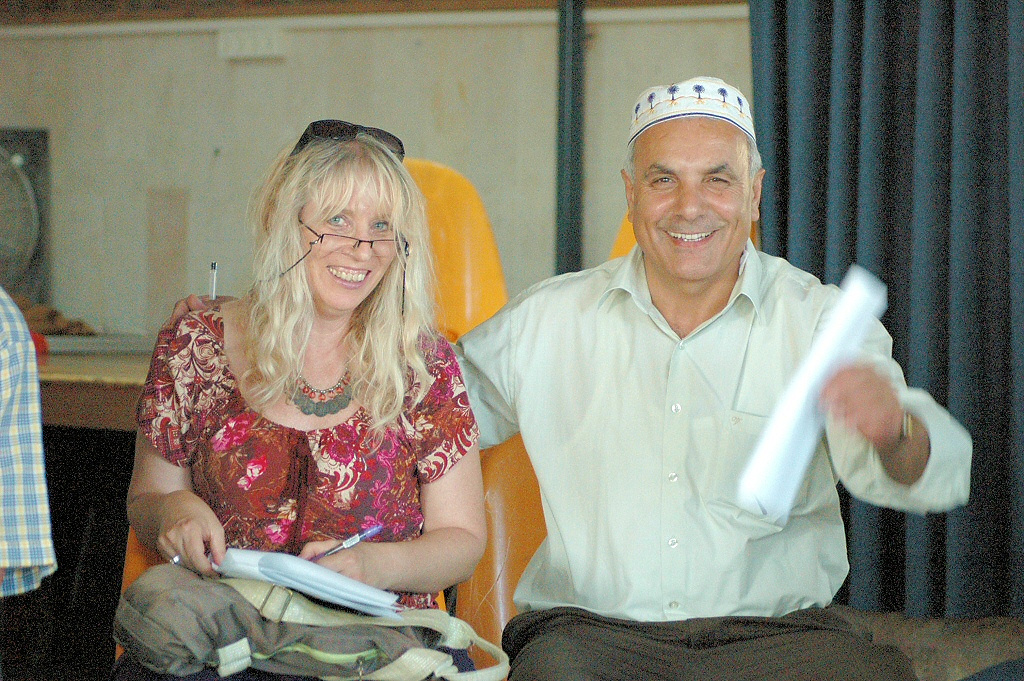
Israelis and Palestinians can and do have fun with each other

So, if you are pro-Palestinian in inclination, make a stretch and put yourself in the shoes of a variety of Israelis and international Jews. Feel what it’s like being them and being in the situation they find themselves in. And if you are pro-Israeli or Jewish, stretch over to feel what it’s like being a variety of Palestinians, whether in Historic Palestine or in the diaspora. And if you’re not bothered, feel what it’s like being bothered.

Because it’s good for you. It broadens your horizons. This is about humans – and you are one of this crazy, self-immolating species. Would you like being shot at or bombed? Would you like being hungry, having your home destroyed or seeing your father carted away at gunpoint?

Discernment is tricky to work with. Quite often I am approached for help, and I have to say No. That’s because helping them will overload my capacities and harm the people and things I am already working to help. Better to do small things well than big things badly. Guilt does not work in this context: if guilt is involved in altruism or political activism, things will go wrong. Guilt distorts true giving and sharing.

The world is polarising right now, more and more. We’re each and all faced with a question: are we ourselves adding to it, or are we bridging gulfs, whether with a smile or by giving our lives to something that builds bridges?

Jews have been victimised and persecuted for many centuries – particularly by Europeans claiming to be Christians and followers of that Jew called Jesus. Secretly, we Brits, though we righteously fought Hitler, we were quite happy to get rid of Jews and send them to Palestine, one of our colonies – though we’d have preferred them to go to Uganda. We taught those Jews all the means of oppression that we now see imposed by Israelis on their neighbours.

This doesn’t mean we should guiltily go along with what the Israeli state – Netanyahu and the Judaeans – currently do. Because this is about People and the Megamachine, and Israelis suffer this problem as much as anyone. There are young IDF soldiers who, today, are eating their hearts out over serving in Gaza or the West Bank. There are Israelis and diaspora Jews who are in a deep moral confusion and pain over this. It’s Christian fundamentalism more than Jewish extremism that is really driving the Gaza catastrophe.

John, a Palestinian Christian, outside his souvenir shop in Bethlehem, now closed by Israeli soldiers. I wonder how and where he is now?

In the West Bank, one thing that impressed me was that the majority of Palestinians didn’t dislike Israelis as such. Only a few Israeli friends would dare to visit me in the West Bank – the rest feared for their lives, and largely incorrectly. I forget the Arabic word for it, but what Arabs feel strongly about is not Jews, but assholes. They have a strong sense of the difference between a good person and an asshole. As a Brit, by rights I should have attracted the anger of some Arabs, because of history and what we were at that time doing in Iraq and Afghanistan, but I did not.

People would ask me whether I was a Christian, a Jew or a Muslim and, when I said No, they couldn’t figure out how I could be ‘a good man’. Well, the Hand of God moves in strange ways. But they were willing to rise up and stretch beyond their customary social judgements. That was a big teaching for me.

One Palestinian Christian, John, said to me that he felt pity for Israelis, despite all the wrongs they had done to him and his family, because many were Europeans, Americans and Russians who had gone through so much. “As a result, they are individuals, on their own, and they even question and defy God, while we Arabs have each other and we love Allah in ways you Europeans do not understand. We fight them because of our current pain, not because of the pain of the past – their pogroms and Holocaust. So, when the pain stops, we’ll stop. But they find it difficult stopping. If we stop, I fear that they will fight each other. So perhaps it is better they fight us.

It’s also true that in times of bloodshed and violence, Palestinians polarise against Israelis, and those who don’t polarise have to keep their heads down. But when times of relative calm come along, Arabic attitudes tend to be more forgiving.

This is the secret that many Israelis fail to understand. If they let Palestinians get on with their lives and have a decent life, all will be well, and eventually Israelis and international Jews will have the safety and security they deserve. This will take time (perhaps three generations), and there will be mishaps, but this is how endless war and jeopardy will turn into mutual appreciation and cooperation, even if it takes time.

The Manchester killings happened on the Day of Atonement, giving them extra poignancy. It’s a day of recognition, understanding and forgiveness. A day of consciousness, awareness of options. The Council of Nine, a bunch of non-earthly cosmic beings I had the priviledge of working for, thirty years ago, put it very well. They said that Jews are not the Chosen People – they are People of the Choice. The choice to ‘obey the laws of God’ and the covenant that we as humans have with God or the world of spirit, or of nature.

They also said something else. Although Jews can be clannish, separative and exceptionalist, throughout history the vast majority have melted into the wider world population, through exile, intermarriage, conversion or change over the centuries. This means that you could have Jewish genes, even if you don’t know it. Think about it. I’m part-Welsh, and the Welsh claim historic connections with Jews, going back millennia.

So, if you have strong feelings about Israel and Jews, just remember, there’s something inside you that might need facing. All the things we blame Israel for now, well… actually we all do them and we and our ancestors have all done them in the past – so own up. It helps not to carry those patterns into the future. Because this concerns humans and the future of our planet.

Thus endeth today’s sermon!

As for the Sunday Meditation, you’re welcome to join. There is no mantra, no scripture, no method, no sign-up and no obligation – it’s just a group of us in various countries meditating together for half an hour on Sundays (times below), and doing it each in our own way, together. If needed, further details are here: www.palden.co.uk/meditations.html

May all beings be blessed, whether they are upstanding citizens or horrendous terrorists, on the right or the wrong side, and whether or not they have a right or an ability to defend themselves. For we all are here on Earth anyway and, in the end, we all seek happiness. And that’s the main thing. Oh, and, if you really want to find a cure for cancer, it’s forgiveness.

Love from me, Palden


If you seek further reading, try these:

  • The Problem of Israel. (I wrote this article in 2008 for a Bangladeshi newspaper.)
  • Brinkmanship. (An extract from Healing the Hurts of Nations, a book I wrote in 2003 at the time of the Iraq war.)
  • A Palestine historic timeline. (The pages that follow it might interest you if you seek insights into Palestine’s history).

Current meditation times, on Sundays:
UK, Ireland & Portugal 8-8.30pm
W Europe 9-9.30pm
E Europe, Turkiye and the Levant 10-10.30pm
Brazil-Argentina 4-4.30pm
CST, Mexico, Jamaica, Colombia 2-2.30pm
EST, Cuba 3-3.30pm
PST North America 12noon-12.30pm

PS. In my last podcast I mentioned how I’m finding writing more difficult now, and this is still true. Normally I’d write a piece like this in 1-2 hours but this took six. But I did it. Or it did me.

A Blog about a Blog

This is interesting. It’s written by an old friend who is himself involved with helping out in a freelance-humanitarian sense with Gaza. But this is something that anyone involved in conflict resolution, or in any kind of change-bringing commitment, needs to ask themselves: what is it that drives me to do this?

https://mike-scialom.medium.com/born-and-raised-in-egypt…

It came up for me too. In my case, my maternal grandfather was in General Allenby’s British invasion force in Palestine in WW1, my father was in Egypt in WW2, and I have Roma and German (though not Jewish) ancestry – Holocaust stuff. That’s what I’ve identified in myself that hooked me into it.

But also, growing up in a polarised and violent city, Liverpool, in the 1960s, played its part – overcoming the effects in myself of being bullied in early life. We teach best what we ourselves have had to learn.

If you have a bee in your bonnet about particular issues, driving you into activism, it’s worth looking into your ancestral background and your history. It can help make it all more conscious.

Many Palestine and other activists would do well to look at the emotional source in themselves of their despair, anger and commitment, because this will help them become more effective, tactical and compassionate in pursuing their vision.

It’s important because issues like this will not be resolved overnight. Yes, a ceasefire has been needed and is still needed, but a ceasefire without resolution of fundamentals might not be the best thing. Sad to say, sometimes the horror has to get worse, until a point comes where peace and resolution are the only options left.

We need to own up to the perverse fact that many of us worry about Gaza and similar places only when blood and horror happen, impinging on our comfort-zones. But actually, the reason why blood and horror happen rests on causes that are brewed and fermented during quieter times. If we’re going to succeed in a mission such as peacemaking of conflicts that have deep roots, it has to be sustained in the longterm.

And here’s an awkward truth. If campaigning for our beliefs polarises society, then we shall fail. Because if others have different beliefs, thinking of them as nasty ‘them’ people itself lies at the root of conflict. People who are anti-anything, who wish to ban things or people, and who dehumanise people with different viewpoints, become part of the problem they’re sincerely trying to resolve.

We really are all in this together, if we wish to resolve the fundamental issues that the world faces today. Peace will not come, and ecological and societal issues will not be resolved, unless we all work together.

This is not idealistic thinking. It is a very real socio-political issue. If we don’t get through this in the coming decades – global consensus-forming – then we’re fucked, really. War arises from polarisation, and there is little value in trying to stop war or save our world by polarising society.

Working to overcome polarisation and build bridges makes things more difficult. It means we must work longer and harder on this. It means we are challenged to walk our talk more consistently and for longer.

When the shooting and dismay stop, if everyone just goes home, back to normality, then peace will not come, because the matter is not sorted. And in this century we really need to sort things out, changing and ending the patterns of centuries and millennia.

That’s my thought for the day. However, there’s something else too – a new podcast.

ARTIFICIAL INTELLIGENCE | HUMAN INTELLIGENCE

I recorded this in January and completely forgot about it! That was a memory question. And that’s why it’s coming out now. I remembered.

Jean Piaget once said that intelligence is not about what we know, but what we do when we don’t know. How we figure things out when we’re in new territory or out of our depth.

The problem with AI is that it works by drawing on data and on what is known, on memory, and on the way things have happened thus far.

That’s not true intelligence. Human intelligence is better at dealing with the unknown. That is, if we humans act intelligently – which we do only occasionally.

So AI is unlikely to be as wondrous in its problem-solving capacities as tech-bedazzled AI cultists would like us to believe.

And there’s a hidden twist here concerning human intelligence – it’s in the podcast! Recorded in January 2024, down by an old silted-up millpond in the stream below our farm. 27 mins long.

With love, Palden.

Listen to it here:
https://spotifyanchor-web.app.link/e/vSPHJFc1FJb

or go to my podcast page here:
www.palden.co.uk/podcasts.html

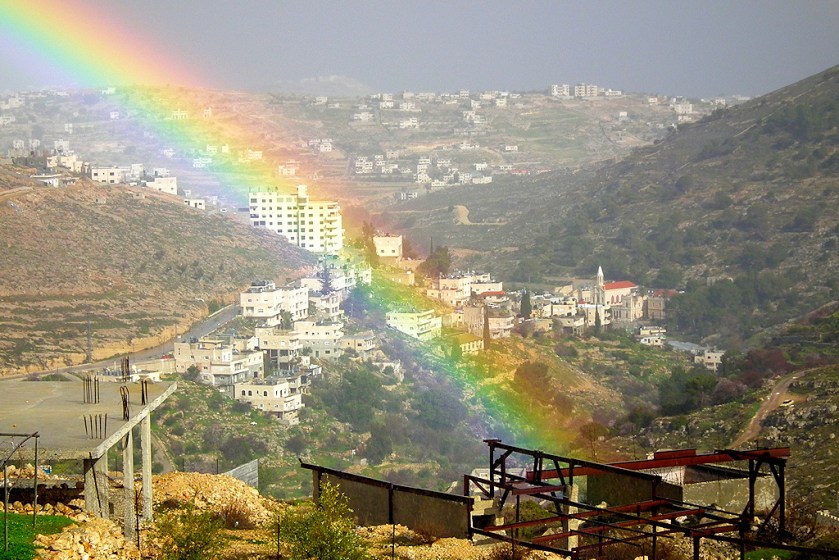
Irtas, Bethlehem, in the West Bank of Palestine

Hearts and Minds

and surviving the 21st Century

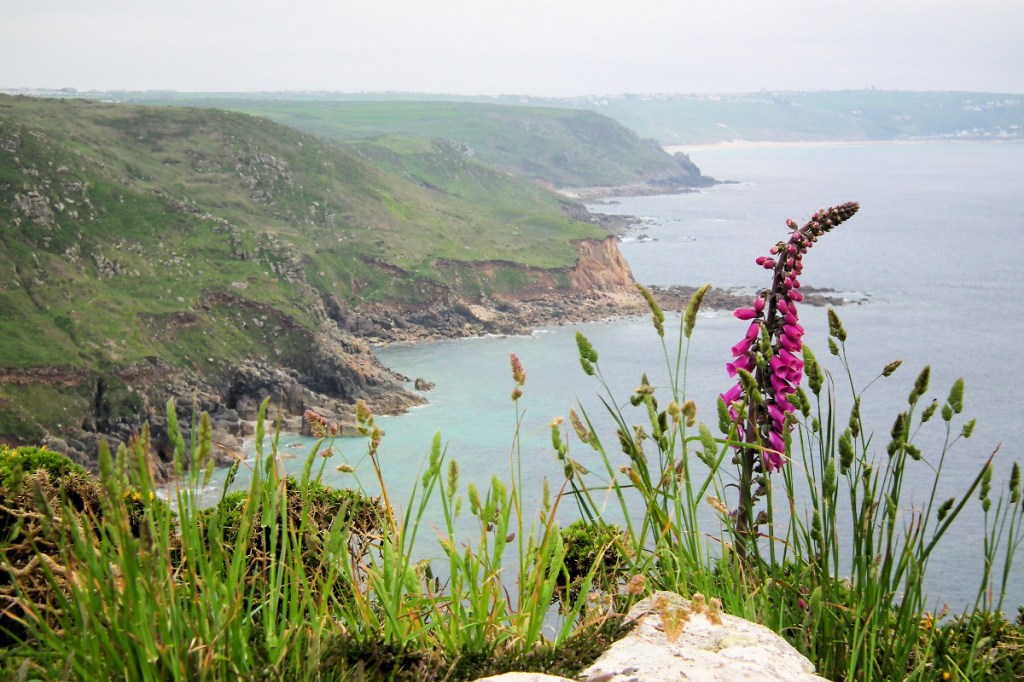
Looking south from Carn Gloose, near St Just, Cornwall, toward Sennen

The ongoing battle for the hearts and minds of humanity now approaches a crunch point in human history. I’ll start with a little astrology to flesh out this thought, though you don’t have to understand it to get what I’m referring to: it’s visible in the underlying messages and impressions that current events convey.

This year (23rd March to 11th June 2023, to be precise) and next year (21st January to 1st Sept, and finally from 20th November 2024 onwards) the planet Pluto moves into Aquarius. It will then chug slowly through Aquarius until 2043-44, for twenty years. It has been in Capricorn since 2008-9, the time of the banking crisis and a deeply historic tilt in the world’s power and wealth away from the rich West or Global North, toward the majority world, the East and the Global South.

Why doesn’t Pluto move into Aquarius just once? The reason is this. Though the planets all orbit the Sun in roughly constant orbits, and in the same direction, we see them from a moving viewing platform, Earth. This leads to a two-steps-forward, one-step-back motion of these planets as seen from Earth, rather like moving trains where a faster train, overtaking a slower train, makes the slower train look as if it is going backwards. It isn’t – it’s just their relative motion.

So Earth, orbiting faster than planets further out in our solar system, makes them seem to go backwards, or retrograde, for periods. Hence the multiple dates given above. This year Pluto enters Aquarius, stops and retreats back into Capricorn, then it edges a bit further during 2024, again backing out slightly, until finally it stays in Aquarius from November 2024.

Pluto takes 250ish years to orbit the Sun. It deals with historic-scale stuff. It’s in the same position now as it was at the time of the American declaration of independence in 1776 (which is one reason why USA has a major constitutional problem right now). This was also the buildup to the French Revolution of 1789-92. It last entered Aquarius in 1778 and left it in 1798, after the French Revolution had turned bad and the progressive dictator Napoleon took over. The industrial revolution, with its dark, satanic mills, was also lifting off.

These weren’t just big events: they marked the beginning of a long cycle of development and dominance of Western culture – an age of urbanisation, industrialisation, mass movements, voters and consumers – that, by now, has hit the sandbanks.

Meanwhile, during this time, the world’s population swelled from one to eight billion. Paradoxically, as the crowds grew, with it came the breakdown of families and communities. And, guess what, an underlying theme of Aquarius is human collectivities, our individual involvements in them and our feelings of belongingness. Our sense of identity hangs around the social groupings we identify with.

Home. Near Pendeen Watch, West Penwith, Cornwall

Together with Uranus (85ish years) and Neptune (165ish years), Pluto tends to influence underlying, history-spanning issues – the rises, transitions and declines of megatrends, nations and peoples. Except during rare moments when we see current events in a more historic perspective, we tend to ignore such critical tilts in the drift of history. But these moments do hit us. The fall of the Berlin Wall was not just an isolated dramatic event – it marked the end of a chapter and the start of a new one, a key tipping point in the tilting of wealth and power from North to South and from West to the East.

We all thought it was about the capitalist and socialist worlds. Yes, it was, but it was also a power shift from the urban-industrial-materialistic North to the South, itself part of a still larger process, levelling up the Global South and levelling down the Global North. And this, wait for it, is a preparation for something even larger, which will be relevant by the latter half of this century – the eventual global integration of humanity into one planetary people.

Out of necessity: the big issues before us are global, and humanity’s divisions and inter-tribal frictions, though still relevant, are getting in the way. In this context, the conflicts between Russia and Ukraine, or the rivalry between China and America, are already rather obsolete as a way of solving our world’s current main pressing problems.

Pluto has been dragging through Capricorn for 16 years, and this also marks the end of a 35ish year Capricornian period, beginning in the 1980s-90s when Uranus and Neptune chugged through Capricorn. The transition to Aquarius marks a shift of focus. We’re emerging from a time of the Megamachine – finance, technology, institutions, corporations, regimes, oligarchies, laws and regulations – to a time of people and crowds, of very human and societal issues. It concerns the collective wisdom and madnesses of people in our millions.

Classic symptoms of this shift are the people scenes we’ve witnessed in the Turkiye-Syria earthquakes and the Ukrainian war. Two aspects of the Aquarian dilemma present themselves: in Ukraine we’ve seen the power of social solidarity in response to man-made threat, and in Syria and Turkiye we’ve seen social disintegration and helplessness, decreed by the full force of nature. Both provided suggestive images for the future, prompts that draw our attention to a basic hard fact of public and social life.

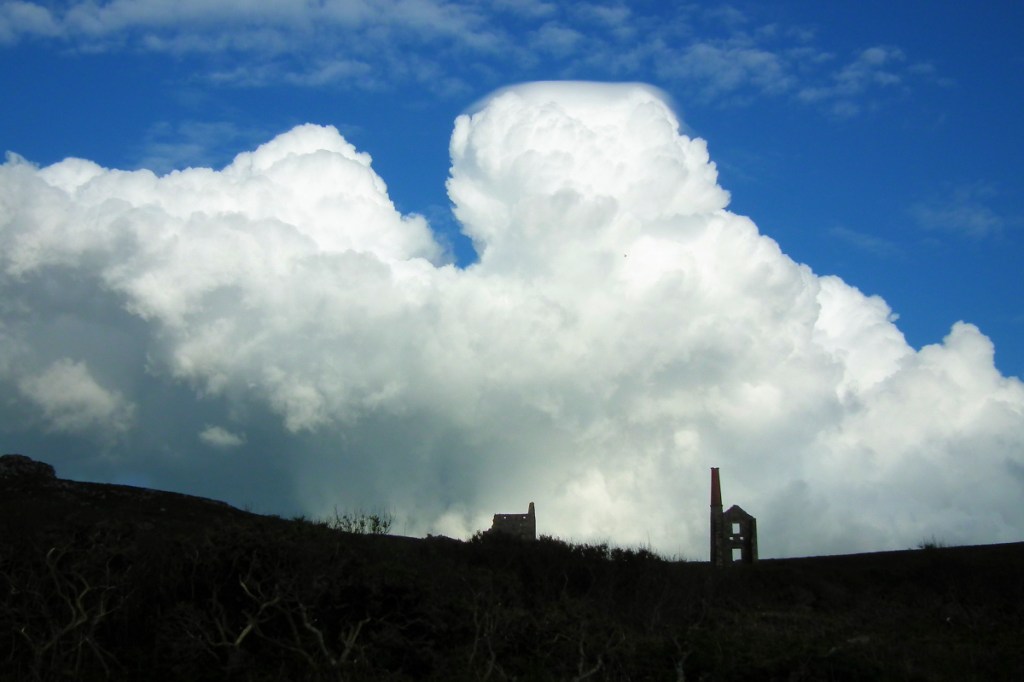
In our post-industrial age, it’s now all about a dratted cloud. Tin mines near Bosigran, Penwith.

That is: we hang together or we hang separately. The choice is ours.

It’s that simple. What matters more: shared interest or self-interest? Global or national-regional-local priorities? Where do we as sovereign individuals stand amidst an eight billion strong throng? Covid-19 and its lockdowns flagged up these issues for all to see, starting a process which will escalate over the coming decades.

The image of People-against-the-Megamachine has been symbolised in the many uprisings and protests of the last few decades, recently in Belarus, Myanmar, Hong Kong, Peru, Sudan, China and other places, and in the Arab revolutions. These were based not on high-faluting philosophies or beliefs: they were straight expressions of human need and preference. While Pluto was in Capricorn, the People lost.

But this is changing – and that change could be a mixed blessing, not only for those at the top of the Megamachine. This concerns the dynamics of public sentiment, opinion and collective action, which sometimes is inspired, sometimes brutal and unfair. We’ve seen a lot of polarisation in recent years – the opposite dynamic to what is needed right now. For in the 21st Century, together we stand and divided we fall.

Here we come to the battle for the hearts and minds of humanity. I’m not talking here about Russia against NATO, Iran against Saudi Arabia, Palestinians against Israelis or people on the streets against the army, or any other divisively oppositional scenarios that the media do love to exaggerate. It’s not about goodbuys and badguys, Us and Them, or right and wrong – though these, on a certain level, are nevertheless relevant. It goes much deeper.

It’s all to do with a deep-rooted condition that emerged millennia ago, a fundamental perception of threat – threat against which we must fight and defend ourselves. It is rooted in a belief that They, over there, are different from Us, and that We are more important, right and good than They are.

It’s a mindset, a projection, a mega-meme rooted largely in past pain and in fear. It’s a set of pre-programmed, knee-jerk reactions that can easily be manipulated by anyone with a neat narrative to spread around, if it hooks into a lurking public feeling bubbling up from underneath. It rests on a feeling of victimhood, which that lot, the badguys over there, are to blame for.

Israelis call this hasbarah – repeatedly accusing the other side of intentions and crimes that our side is itself doing. It provides cover and justification for many bad things to happen. It’s often aimed at the wrong targets too: Palestinians often say, “Why are Israelis having it out with us, when it was the Europeans who gave them such a hard time?“.

The coast between Bosigran and Pendeen Watch, West Penwith.

In any rivalry or conflict, both parties play a part in the same game. This doesn’t make them equal or relieve the primary perpetrator or the stronger party of its own responsibility. But both sides are in the same game. They see badness in the other side, believing that they themselves are not like that. But the trouble is that, at least to some extent, our side of the argument is always flawed. As Jesus said in his Sermon on the Mount: “Thou hypocrite, first cast the plank out of thine own eye, and then shalt thou see clearly to cast out the mote of dust from thy brother’s eye“.

Brits and Germans, though neighbours and of the same blood, still live under the lurking shadow of two world wars. It came up over the supply of tanks to Ukraine. The Brits were enthusiastic because we have a winners’ mentality and almost desperately want to keep it that way, to prove that we aren’t as small and insignificant as we actually are. Such victors’ bravado conveniently obscures the war crimes we committed in WW2 such as the systematic bombing of German cities – which, when the Russians are doing the same in Ukraine, we find to be abhorrent. Meanwhile, the Germans were understandably reluctant to enter another war, for historic reasons – some would say guilt, others would say a sense of responsibility.

These shadows from the past cloud our responses to real-life situatio‭ns now. They are cover-ups and avoidances. Internatio‭nal relations are riddled with this stuff.

Dig deeper down and, in Ukraine, we’re faced with a dilemma. Most people would prefer to avoid war but we don’t usually do the necessary work in advance to stop it happening. There is a current risk of civil war in USA, and not many people are doing anything about that – Reds and Blues simply think the other side is plain wrong, and that’s that.

Sting once sang, ‘The Russians love their children too‘, yet today we Brits, and NATO, are busy killing those very children, conveniently using Ukrainians as our proxies, and feeling somehow glad when lots of Russians die. Even so, there is good reason to support the Ukrainians in their plight. However, we didn’t pay attention to proper peace-building processes in the 1990s. We failed to see that NATO and EU encroachment on Russian security space would cause trouble – even though some observers, including me, raised this matter back then.

Many of us are thus caught in a dilemma: on the whole we support peace, but in this situation we support Ukrainians in fighting a war. This is problematic, but it highlights a key issue: if we wish to avoid wars, we all need to unsubscribe from the habit of projecting threat on the other side. And that lies at the core of the battle for the hearts and minds of humanity.

The underlying problem here is, to quote Mahatma Gandhi, ‘An eye for an eye turns the whole world blind‘. The end-product of most conflicts is not resolution of the issues at hand, but damage, devastation and consequences cascading from it – such as food shortages and economic disruption, in the case of the current war. Often I quote Bertrand Russell here: ‘War is not about who is right, it’s about who is left‘.

Cities can be rebuilt and battlefields can become farmland again, but the damage to people is worse and deeper. Dead people can’t be brought back, and the living bear the scars of trauma, shock, hardship, atrocity and the sheer ugliness and pain of conflict. It lasts generations, even after the memory fades.

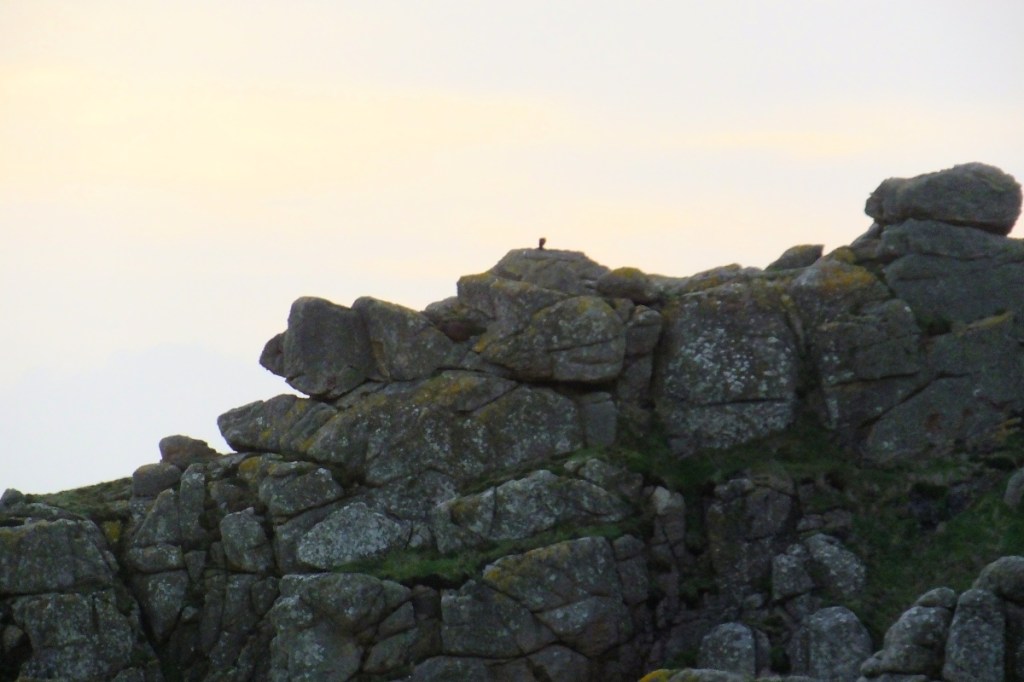
Granite, and the funny forms it takes

I’m not naively suggesting that everyone ought to just declare peace and go home – it just doesn’t work like that. Conflicts have their reasons, they can be complex, and both sides have a point. Conflicts end when both sides accept that there is no gain in carrying on. Half of all conflicts end simply because of weariness.

The main issue here is mindsets: are we against other people and their leaders, or are we all in the same boat? This same issue concerns the world’s ecological and climatic crisis. We won’t succeed with the 21st Century by continuing our ongoing war against nature, animals, enemies, competitors – and ourselves.

We’re stuck in a vortex of competitiveness, attack and defence. In our personal lives, the same mentality is cloaked in neatly ‘civilised’ ways like dressing up, pursuing careers, buying houses, insuring ourselves against risk or even, in my case, ‘fighting cancer’. It’s a mentality of us-against-the-world.

Yet it is destroying the world, making humanity even more unhappy and threatened. It’s a self-destructive momentum where, the rarer and more exhausted anything becomes, the higher its price and profitability – our economic system leads inexorably toward extinction. As natural environments are cleared and communities die off, young generations grow up without knowing they had even existed.

The emergent paradigm of the 21st Century is different. By necessity it’s one of cooperation, arising from the bottom-line observation that we are all in the same boat whether or not we like it, and we sink or swim together. This is a pragmatic, sensible, economic solution, no longer idealistic. This is being presented to us in the current drift of events. There is mighty resistance to this paradigm shift, taking the form of social and political polarisation, exceptionalism, populism and fear of being overcome by change.

In many countries we fear being flooded by migrants, whom we believe will change our societies and take away our privileges and comforts. Well, we did it to native Americans, Africans and Aboriginals, so, as Aussies would say, fair dinkum.

Such resistance can take softer forms in which we favour change as long as it doesn’t affect us. Or we make a big fuss over anything we might lose – the plenteous food and consumables, or the perceived right to assert our personal freedoms whatever the cost to others. We forget that only some of us have such privileges, while the rest pay the full price.

There’s more to this Aquarian question. It concerns social control and the capacity of masses of people to control ourselves. In the digital era new forms of social control have crept up on us while we have studiously avoided getting our heads round it.

The trouble here is that railing against people at the top is only half of the issue, and it’s rather an avoidance and escape. Collectively we permit them to do what they do by failing to stop it. The real issue here is social solidarity, vigilance and the behavioural changes we need to make if we really do believe in freedom and social-economic justice.

This issue arose in the Arab revolutions and in many uprisings since then. People come out onto the streets to protest over issues they face but, if or when the regime falls, people are often not organised to handle what follows. Or repression from above or intervention from outside squash, corrupt or divide the movement for change.

So this goes deep. Inevitably, the need for self-preservation can override the urge to sacrifice ourselves for the general good. Revolutionaries still need to pay their bills if they want a home or to support their family, unless they retreat to the jungle or escape the country, thereby marginalising themselves.

Portheras Cove

Meeting up with disillusioned young revolutionaries from Egypt and Syria twelve years ago, I found myself telling them my story. The uprising I was a part of, like theirs, didn’t succeed, and it led to a decade of pain and self-examination for its participants. Since then, to the extent I could, and with others, I’ve tried contributing toward a deeper, psycho-spiritual and behavioural change.

Standing on the top of a mountain at age 22, I made a commitment to give my life to helping the world tip into irreversible positive change. I had realised that a mass change of perception and consciousness is the key. Well, the world hasn’t tipped – yet. Now, near the end of my life, I’ve had to let go of that ‘in my lifetime’ bit, though I still believe we’ll get there. But I must still own up to a bottom-line truth: this is a belief, not a foregone conclusion, whatever I might hope for.

Yet in my life I’ve had multiple demonstrations that the new paradigm works – recently readers of this blog have shown that their remote healing efforts do indeed work. Or, larger-scale, I’ve been involved with circles of people where we have worked on a world issue, such as forest fires or the Bosnia war and, shortly afterwards, a fundamental change to such situations actually occurred. While we cannot definitely prove ‘we did that’, it nevertheless is the case that we did the consciousness work and the fires were doused and the war came to an end. Though it doesn’t happen every time.

It all boils down to a simple rule: together we stand and divided we fall. When people work together, acting with one mind, miracles can arise. A miracle is an event that no one thought possible until it happened. It’s one-mindedness that is crucial here.

Here’s the punchline. The pressure of crises, together with the Aquarian themes mentioned above, point to a likely existential crunchpoint, a time when our very existence on Earth comes into question – not just theoretically, but, like, now, this week. Even presidents and billionaires will share in such a fate. There is a possibility that such a sitation could catalyse a deep realisation, an emotionally-powered thought that, above all, and whatever it takes, we must survive and we must get through. Or we’ve all had it. Even if some people survive, it will not be a happy outcome for them.

That, ladies and gentlemen, represents a potential for a breakthrough and a miracle that no one thought possible: a global one-mindedness in which everyone everywhere – or at least, enough people – have one shared thought, and they think and feel it powerfully.

Which leads us to the bottom line. Whatever our disagreements, it is not a case of who is right and who is wrong, who will win and who will lose. For in the end we all lose. Or we all win. That’s the formula.

A little dog came to visit me.

In the last year I’ve had some crunches and battles in my own life – with cancer, with my ex-partner’s departure and with a few other issues, and in West Africa I’ve been caught between two parties battling each other and killing people in the process. A big lesson I’ve been re-learning is that true victory lies in everybody winning together. It’s a neat notion that’s not difficult to subscribe to, but carrying it out in real-life terms is another matter, and it’s taking all I’ve got to do that.

Because we do hang together, or we hang separately. That’s the way things are. So the battle for humanity’s minds and hearts goes really deep. It’s a button-presser, confronting all of us. It involves making friends with and profoundly understanding even the people that we don’t like or agree with. That’s how we’ll get through the 21st Century.

In my own life and in yours too, this is the issue. Events are shepherding us painfully in that direction. I can’t say I’ve succeeded with this in my own life but I still have thunder in my heart, running up that road, running up that hill. It’s quite a struggle, but then, that’s one reason we’re all here, isn’t it?

With love, Paldywan Kenobi.


If, like me, you have sufficient madness to be into astrology, try this chapter about the outer planets in history, from my 1987 book Living in Time.
If you’re seriously mad, try my Historical Ephemeris, an astrological resource about the way planetary motions influence the tides of history.

Caught, bent over my work (photo by Penny Cornell)