Altruismics

Space. Near Falmouth, Cornwall

I woke up this morning with ‘philanthropist‘ going round my head. So I decided to look up how it was defined.

A person who seeks to promote the welfare of others, especially by the generous donation of money to good causes.” Oxford University Press. Interestingly, they found that the greatest use of the word in Britain was in the 1850s, the peak of the Victorian era and the industrial revolution, declining gradually until it sank a lot during WW1 and afterwards, and it started slightly picking up only since 2005ish.

A philanthropist is someone who donates substantial resources, often including time and expertise but always including substantial financial resource, to a particular cause, area or social issue.” That’s the Charities Aid Foundation in UK.

Anyone can be a philanthropist and be more effective at making a difference. Here’s how. A philanthropist is a person who donates time, money, experience, skills or talent to help create a better world. Anyone can be a philanthropist, regardless of status or net worth.” That’s a bit closer to where I stand. It comes from an American organisation called Fidelity Charitable.

Another source defines three types of philanthropy: relief, improvement and social reform. In my work in places like Palestine, I’ve focused mainly on social reform – a longer term perspective that builds conditions leading to improvement. This is trans-generational when it comes to questions of mass trauma-healing – which is the approach taken by the Hope Flowers School that I worked with in Bethlehem. Their motto is, ‘every act of violence begins with an unhealed wound‘ – so the task is to make progress on healing those wounds. The school originally had Muslim, Christian and Jewish children but, in 2001, during the intifada, the Jews withdrew, largely for safety reasons – understandable, though regrettable.

According to the Borgen Project, “Philanthropic people show selfless concern for the welfare of others and venture to alleviate the struggles of others without seeking anything for their own personal benefit. Truly philanthropic acts are done without expectation of compensation or recognition of one’s efforts.” This might be so, but this ‘without expectation’ bit doesn’t cover the expenses incurred, and covering my expenses has always been problematic. When in the Middle East, I still had to pay my rent and bills back home, as well as covering travel, living costs and helping needy people. I still do this with the remote work I do now from my desk at home.
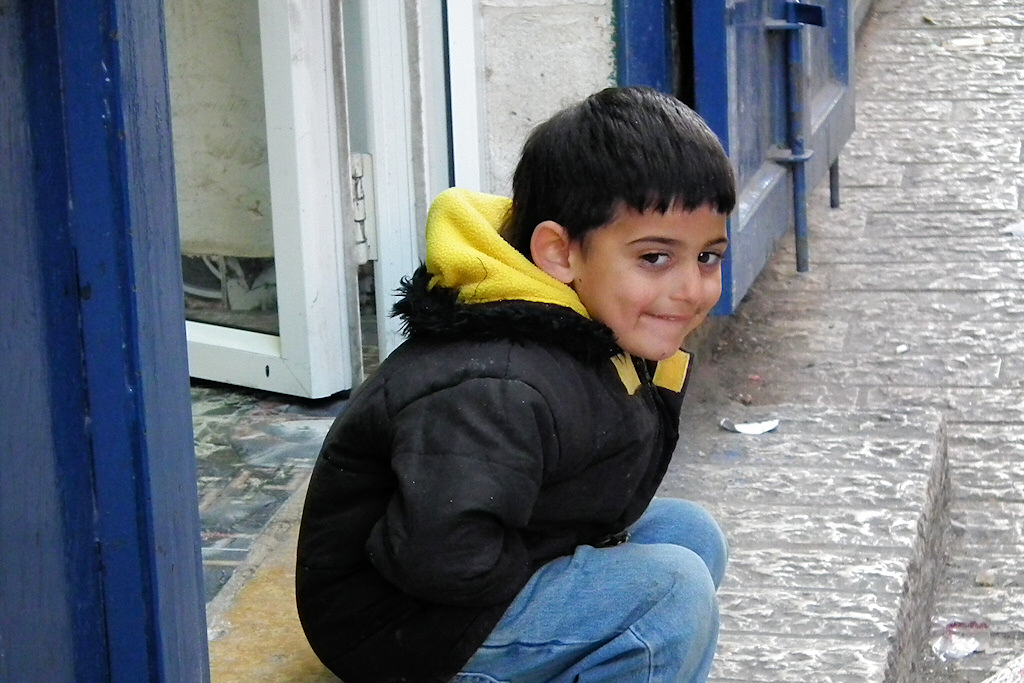
I met this guy in Bethlehem. He’s now 20ish. I wonder what he thinks right now?

In this life I have not been a financial philanthropist. Many people believe that donating money is the only form of philanthropy, but also, out in places where there is need, everyone tends to drive, elbow and oblige me to raise, funnel or fix money. They perceive this as their primary need, and that’s true in the short term and not necessarily true for the longterm background conditions I’m best at working with.

This has tended to smother and detract from what I’m best at doing – human and spiritual input and multilevel intelligence. The thinking needed for fundraising and admin is very different from that of healing and magical-spiritual work, and I cannot do everything. This has been an ongoing dilemma.

It hasn’t helped me support myself either. People tend to think that, since such work is a chosen vocation, I needed no support or already had the funds. The prevailing thinking is that, if you’re doing well financially, this enables you then to act philanthropically – and only then. For many people this point never arrives, so they don’t do it. But it needs to come from a deeper place, from a sense of calling. That’s what was the case for me and, in late life, I’m really glad I did it, even though I’m quite poor now as a result.
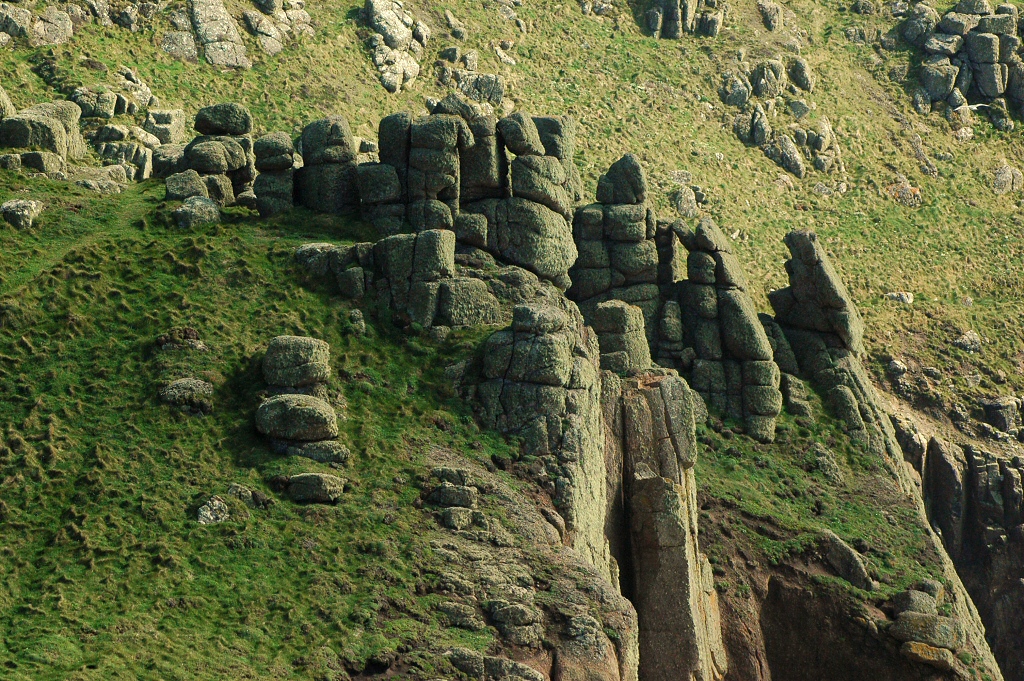
Carn Barra, West Penwith, Cornwall.

When in Palestine and Israel, there were two main age-groups of volunteers and activists from abroad, most of them self-financing. One group was around age 25-35 (and 60% female) and one was around sixty (and 60% male). The thirtysomethings were doing it out of principle, setting aside career progress for what they believed in – though for some it was a voluntary internship to help a career in the NGO sector. Some had law, business and accountancy degrees, working in ‘lawfare’ – legal improvement of the rights of Palestinians and helping Palestinian NGOs function.

The sixtysomethings were good-hearted types, often retired from careers in education, social work or healthcare, who had raised and despatched their kids, perhaps they were newly divorced, and they had the resources and long-accumulated wish to at last pursue their calling in a place like Palestine. Both of these age-groups were committed, brave and valuable people, nevertheless driven by slightly different motivations. Many of the older ones contributed to the relief and improvement areas, while many of the younger ones contributed to reform.

There’s an innate philanthropy built into Palestinian society. It’s an attitude. It’s shared by some but not all Israelis – particularly those brought up in kibbutzim or living in settlements. It’s a kind of generosity economy, where everyone is brought up with an ethic of mutual help and contribution. This is social resilience, and when society is under duress it really works. This is something we in Europe need to learn – it’s in our group memory but it has lapsed.

When a young person thinks about their future career, they don’t think of personal ambition as much as the contribution they can make, and the likely slots that will appear in their clan or neighbourhood in future – whether as a dentist, embroiderer, car mechanic or even a professor. If the local midwife is growing older, a younger one will be thinking of replacing her in ten years’ time.

The holy well on Trencrom Hill, guardian hill of West Penwith

Over the decades I’ve banged on a lot about life-purpose, helping and empowering people to identify and pursue it. Here comes a repeat quote, but it’s important. The Council of Nine (who thirty years ago jogged me into working with Israel-Palestine) were asked whether there was one thing that could change and transform the world. They simply said, “If everyone pursues their life purpose“.

This gets bigger. They didn’t say this but, by extension, omitting to pursue our life-purpose, or withholding it, for whatever reason, is a soft version of a current major concern: crimes against humanity. It is the indifferent, inherently self-serving ethic of Western and, increasingly, global culture, that permits situations such as Gaza to happen. Because we don’t stop it.

People expressed surprise and horror at the precipitate actions of the Gazans when they broke out and violated so many Israelis, starting off the current round of trouble. Anyone who actually watches anything more than the urgent splutterings of the headlines knew something like this would come. It continues a long, long story and it didn’t happen out of the blue.

The surprise arises from global indifference, which prefers stuff like this would just go away. To be fair though, there’s also a surfeit of other events, tragedies and concerns competing for attention. Israeli hubris was caught napping. The main surprise here was the strategy and audacity of it. I do not encourage violence and have been a lifelong peace-freak, but are we really to believe that the Palestinians, generally unheard, blocked and disregarded, are supposed to act like polite gentlefolk, shrugging shoulders and nobly accepting their lot without a whimper? How would you like to be a 20 year old in Gaza, with no future? Or his or her parents?

Palestinians. They’re terrorists, as you can see

Today, the Gazans are so hungry, thirsty, desperate and traumatised that it would not surprise me if there were another mass breakout, into Israel or Egypt – of mothers, families, grandparents and youngsters seeking food, water and safety. Later, Europeans will duly complain when another wave of refugees comes to our shores, but our endemic indifference has caused much of this. Refugees arrive in Europe and America to give us a gift, a gift of humanness, empathy and philanthropy. Amazingly, it has even been found scientifically that it makes us happier. Indeed, there’s more to life than comfort and security.

I am not saying ‘admit anyone who claims asylum’, but I am saying we need to be more philanthropic, to understand that changes are happening even to us, and to act longterm to deal with the sources of the problem. In the case of Gaza it concerns the historic and current issues arising for the locals from the arrival and behaviour of the state of Israel, and the wider global issues that allowed this to happen the way it did. In Britain, two key fomenters of this problem are the Foreign Office and the media.

So, life-purpose. Are we here simply to pay our bills, tread our mills, keep investors happy and, at the end, collect our pensions? This is a personal question for every single soul. We need to ask ourselves, ‘Am I rising to my full potential as a human philanthropist? Or a human anything, for that matter?’. The answer is both yes and no, and the yes bit needs acknowledging and the no bit needs some attention. [For an audio talk by me, try this.]

Here’s something interesting that I discovered. I have long known I have healing abilities but in Britain I have chosen not to work as a healer, except as an astrologer (a perceptual healer) and a community activist (a social healer). But when I went to Palestine, witnessing the needs of people there, I suddenly started doing healing work – spiritual healing, mainly, and remote healing. On people’s backs, stomachs, wounds, hearts and spirits. What surprised me was that my abilities were dramatically amplified – people were genuinely and visibly healed, and deeply so. They’d approach me later to say so, and I was much moved, rather shocked by that. It was as if the scale of need pulled out almost miraculous superpowers.

But there’s a difference. In Britain, when I’ve done such work, while people do benefit, they tend to continue with the life-patterns that caused the problem. From a healer’s viewpoint, that’s not very satisfying. But in a crisis zone, where despair, danger and dire need are big drivers, I found people really did take on board whatever I said or did, and they were so grateful, and they helped me back. Also, it was liberating to work without charging.

Sitting on the wind. Godrevy, Cornwall

I’ve never liked charging for healing or transformative work – how do you value the fixing of a major issue or the saving of a life? Twenty years ago, as an astrologer I charged £60-70 for a two-hour session but I needed £250. I did a lot for free or underpriced, because there was a need. I’d have felt happier with a salary, like a doctor, so that charging didn’t enter the equation. The ethics and politics of our time did not allow it – after all, astrologers are charlatans, aren’t we?

If you were a Palestinian in Gaza right now, you’d be enacting your life-purpose – whatever you’re best at. The same is happening for some Israelis. That’s how people survive. When the chips are down, you do what’s needed, regardless. If you can clear rubble, cook, minister to people or mind the kids, that’s what you do. No qualifications or vetting needed – just do it, if necessary till you drop.

Saturn is in Pisces: this concerns philanthropy. Without it, the world would be a much sorrier place. Philanthropy is not an option: it is a necessity, like sewage disposal. Crises such as Gaza – and they’re coming at us quite a lot nowadays, and it won’t slow down – shine a light on our life-purposes, for each and every one of us.

What am I here for, really? What am I doing about it? Our calling is programmed in us from the beginning. We know it. It is inherent, not learned in courses or demanding a qualification – it’s a natural, inbuilt gift and skill. It comes easily. Yes, we are all innately talented. If we let it out.

With love, Palden

A young Bethlehemite friend, now in his twenties

PS. I’m blogging a lot at present and it’s not really planned. It’ll die down again! If something comes up, I start blogging and, typical Aspie, I don’t stop until I’m done. There’s stuff going on in places where parts of my heart lie and, since I can’t get to Is-Pal (or West Africa), this is how I let it out. Together with psychic-spiritual work and handholding certain individuals in the thick of it.

At present, I am ‘holding’ Maa Ayensuwaa (on the right), a native healer in Ghana, who is lying in hospital, lacking painkillers and hoping money will come along to pay for an operation for fibroids – it’s wear and tear from helping people and going without. I can help her only in spirit, though our connection is such that (I hope) it works.

Site: www.palden.co.uk
Blog: https://penwithbeyond.blog
Podcasts: https://podcasters.spotify.com/pod/show/palden-jenkins

What’s it all about?

A donkey in Bethlehem, Palestine – Jesustown.

What’s it all about?

2020 has brought us all a lot to think about and, for many, a lot of time to think about it. ‘What am I here for?’ and ‘What’s it all about?’. Some folks have had big reveals and pointers, others have had to dig deeper than ever before, and some have made little or no progress, and some have been run off their feet and burned out by it.

I’ve always been rather purpose-driven. When I was about ten I wanted to be prime minister. By 15 I won a big public speaking competition with a notes-free speech about why Britain should join the European Community – seven years before it happened. Does Brexit, 55 years later, mean I’ve failed? By 18 I realised that politics was too dirty for me. So I followed another path and you got Maggie Thatcher and Tony Blair instead.

It took until I was about 34 to acknowledge that I was at last on track (when I started the Glastonbury Camps). It just had that feeling. Before that I felt like a footloose jack of all trades and master of none. When ‘received my instructions’ I quaked and resisted, but then I realised that, if I didn’t do it, it would not happen. And it needed to happen.

God doesn’t come down and say ‘This is your life-purpose‘. It’s not like that. It’s just that, when you’re more or less on it or you’re heading towards it, you feel it – you’re in the right place at the right time doing the right thing, even if others disapprove, discourage or block you. If you aren’t on it, you feel stuck in a blind alley, getting nowhere, with a meaningless life, as if you’ll stay like that forever. Depression and feeling an unfulfilled calling are closely related.

Purpose is programmed within us. It’s already there. Before getting born, we had a discussion with our angels about the purpose, the motivation, for going to the trouble of birthing ourselves, growing up and living a life on earth. Incarnation is hard work, even for people born in privileged circumstances. Two key things were covered in that discussion: what you were to learn and master, and what you were to contribute. Then you signed a contract in your soul, and it still holds.

Quite often you get clues when you’re about 8-12 years of age – visions of what we want to be when we grow up. Then, during your teenage years, this vision can be clouded and lost (often not helped by parents and careers advisers). These early-life visions can be literal or symbolic. I wanted to be an airline pilot. When I was 15 they ruled that short-sighted ginks like me couldn’t be pilots (that changed back later on, but too late for me). So that door closed. But later in life I realised that I had taken thousands of people on long journeys, up into heaven-worlds and landed them safely at the other end. Mission kinda accomplished.

By 18 I was aiming to become a diplomat, but by 20 I was involved in a life-changing near-revolution at the LSE that ended all that – yet in my adult life I’ve scored some pretty good informal diplomatic hits. So the vision and intention were symbolically correct, but the way things panned out was very different.

As life goes on, our purpose reveals itself through situations that present themselves. We find ourselves doing things we hadn’t foreseen but, when doing it, we feel remarkably fired up, or we make a difference, or we do something really meaningful, sometimes without even realising it. Even washing the dishes or cleaning the toilets can make a big difference in some situations – the chef at a peace conference can save thousands of lives without even knowing it, just by cooking good food for the delegates. So note this and follow it, because there’s your clue – even if it doesn’t make money, look realistic or gain approval, if it fires you up, why aren’t you getting on with it?

We must be willing, if necessary, to tread that path alone. In the Arab revolutions ten years ago, a big issue for people was ‘losing our fear’. Sometimes we must stand up and be counted – and if we hold back we can regret it for the rest of our lives. Like the near-revolution I was a part of fortyish years before, the Arab revolutions failed in the short term yet they started deep changes that will outlast the dictators who tried to stop them.

Here’s an interesting truth: it’s better to fail in something that ultimately will succeed than to succeed in something that ultimately will fail. This concerns posterity and holding out for what is right – and taking a bet that it’ll work, even when you’re not sure, and everyone and everything are against you. Even if you have cerebral palsy. Even if, or perhaps because, you’ve been damaged, disadvantaged and traumatised.

Three things block this coming out process: fear, guilt and shame. Too many people take the safe route in life, to please their family or fit in with the rules, or for fear of loss of security, or fear of being singled out and blamed, or fear of being exposed as unworthy or unable. Human society is riddled with such fears. Our planetary disaster is happening because billions of people are withholding their gifts, setting aside their callings and playing safe. We cook up good reasons to justify this but, in doing so, we are choosing complicity in a collective crime against humanity.

Out of fear, we hold back. This becomes a habit and institution. Then we forget what our instructions were, what the agreement was. Instead, we eat, drink, entertain, worry or work ourselves to death – unless or until a crisis shakes it up, strips our defences, propels us into unknown territory and slams the door shut behind us.

This withholding is dead serious. It means we’re omitting to make our contribution. It’s ours to make, and someone else isn’t going to replace you. Since so many are withholding, there’s a shortage of active server-souls. People have questioned my humanitarian work, believing it is dangerous (yes, occasionally it is) and encouraging me to stop and ‘be responsible’. But then, when I ask them to take my place because the work still needs doing, they wander off.

Charity begins at home‘ – sorry, for me that’s only a half-truth. Charity truly begins where the need is greatest. Need pulls the brilliance out of you.

The world is short of active altruists, and the suffering that arises from that is tremendous. It’s all about that old lady down the road who is alone and unvisited, because everyone was too busy and no one thought, no one imagined what it might be like to be that old lady. The world has a crisis of caring, and it’s all to do with withholding our gifts, callings and missions. Playing safe is a very dangerous planetary neurosis.

This brings us to a key issue. It’s not just our option to pursue our life’s calling: it is our duty. It is an imperative. If we don’t do it now, it won’t go away. This is a choiceless choice. Especially in these parlous times.

This isn’t about great and dramatic things. If you’re gifted at embroidery, do it. If you’re good at ‘just’ raising kids, or ‘only’ growing cabbages, you’re here for that. If you can bring light into the life of a hungry or lonely person, do it. Because, when you’re on your deathbed, these are the things you will remember.

And it changes. Life-purpose presents tasks but it is not a job. You can’t resign. It takes on different shapes, progressing as life goes on. One of my big life-lessons and contributions has been in ‘right leadership’ – something I did better in my fifties than in my twenties. I’ve scored a few goals, brought some benefit and made mistakes too. But I learned. It has gone from home-birth campaigns to organising biggish events to helping burned-out Palestinian social activists.

There are paradoxes. Nelson Mandela once confessed that, in his life, he had faced a deep conflict between serving his family and serving his people. He could only do one of them. After all, if you’re doing things that can endanger your family, should you stop serving your people to protect them? Or will your family also benefit if you can improve things for your people?

One of my gifts has been a capacity to struggle for, uncover and articulate insights that other people don’t quite get. I’ve been a speaker, author, editor, broadcaster and a pretty good contributor to public discourse. It didn’t make me rich or famous but I’m really glad I did it and shall continue till I drop – even possibly afterwards. Since I’ve been about 30 years ahead of the times, my work has not succeeded as much as it otherwise might, but after I’m dead it might lift off – you never know – and I’m leaving an online archive of my work just in case.

But perhaps it doesn’t matter. We can never fully see the results of our work and the part it has played in others’ lives. ‘Non-attachment to the fruits of our labours’, is how Buddhists see it. The aim is not to have an impact – it is simply to do your best. Once, when I was in Palestine I confessed to a friend that I didn’t feel I was making much of a contribution on that trip, and I might go home and come back later. She looked at me straight and said, simply: “Balden, when you are here we feel safe“. That hit me hard: sometimes, you don’t even need to do anything. I learned that what I thought was happening didn’t match what actually was happening.

Here’s another thing. Often we think this is all about giving. No, it’s all about interchange. It’s arguable that the people I’ve helped have given me so much more. If you wish to experience true generosity, go to poor people’s houses and countries.

Life purpose has its ins and outs. I’m good at thinking clearly in wider situations but I’m useless at articulating personal feelings on my own behalf – though I’ve done decades of work on myself to change this, and I’ve only made a little progress. But there are things that each of us must accept too: in my case, it’s Asperger’s Syndrome (high-function autism), and that’s what Aspies are like and what we’re good for. Greta Thunberg is a good example – and society is more open to her directness than was the case for me and my kind fifty years ago.

I’ve been nailed and hammered by so many people to be different from the way I am, yet I’ve found that trying to be what I believe others want me to be does not end up well. This has been painful – to be judged as a bad father, a failure, a fascist dictator, a goodfornothing, a criminal and even traitor. “When are you going to get a proper job?”. Something in me, rightly or wrongly, has soldiered on. I have regrets, but I don’t regret it.

There is no right or wrong: there are simply outcomes. Write that on your toilet wall. We’re called to create the best outcomes we can, and for everyone. Become an expert in making something good out of disasters. Don’t indulge in your failings, inadequacies and wrongs – they go on forever – but throttle up your gifts, assets and contribution. Don’t leave it till later, because later means never.

In my life I’ve been a philanthropist without money. My wealth has been magical, not material. Sometimes I’ve thought of myself as a healer of perceptions. People outside the rich world see me coming and they think, ‘Ah, a European – he can raise funds for us’ (Christians do this more than Muslims). No, this is not what I’m here for, and I’m not good at it. I’m here to help with magic solutions, to raise people up, and it has been a challenge to hold to that because people and projects do indeed need money, often very legitimately so.

The worst bit is that some people get so fixated on the funding bit that they accuse me of being rich, mean and selfish, and they miss what I actually can contribute. It’s better to teach someone to fish than to give them a fish – a common saying in the humanitarian world. (Another is: teach a man and you teach a man, but teach a woman and you teach a generation.) I’ve had to learn to work for a good cause not just because it’s a good cause, but because it is run by people I can work with, and because it fires me up, providing a context in which to serve and contribute best.

So, if you’re struggling with life-purpose matters, here’s a recommendation. Do whatever lifts you up, and avoid whatever weighs you down. This is radical. It’s also far more practical than you might believe. When I was 50 I had a ‘dark night of the soul’ crisis and this truth emerged from it. It doesn’t mean taking the easy option – often you must take the scariest option. A lifelong peace activist, I realised that I had to head for the heart of darkness, so I committed to working in Palestine, sensing that justice for all, not exactly peace, is the main objective there. Justice brings peace, but peace doesn’t necessarily bring justice – so more conflict will follow. If Palestine and Israel can break through, the world’s conflicts will change – and wars and violence block world progress far more than we understand. So what lifted me up was the challenge to follow a difficult path.

Twenty years later, the Palestine problem continues and assholes still prevail, but this work hasn’t been a failure. Deep historic turn-arounds take time, often longer than a lifetime. Brian Eno once said, “I have a feeling I’m part of something that should be much bigger than it is“. Yes indeed – the last fifty years have been a frustrating time for change-agents. But many of the greatest breakthroughs in history were groundlaid by forgotten people you’ve never heard of – the people who prepared the way for those that history recognises. Without these forgotten heroes, you would not have the freedoms and blessings you have today.

Getting cancer and becoming physically disabled wasn’t part of my plan. But it has given me new purpose. I might live one year or ten, and this uncertainty is an awakener: what can I lay to rest and what am I still dissatisfied with? It has reminded me that, no matter how difficult things are, everything in life is a gift. If you choose to see things that way. So even if you feel you have no purpose or you can’t find it, that’s your gift, your resource, your background, and do your best with it. That’s where it starts.

Or perhaps you’re doing it but you downplay it, or you fail to see what’s happening as a result of your being there, or you feel you’re such a rotten, godforsaken shit that you’re a no-hoper.

When I was twenty I read a book by Alan Watts, a psychedelic guru, that deeply stirred me. It was called The Wisdom of Insecurity. Yes, the wisdom of insecurity. Sorry, folks, but in 2020, normality was suspended and this is what we’re being shown. It’s time to roll up our sleeves and pitch in. Make steps. Do it. And if you don’t do it, stop beating yourself up about it. Good luck.