I’m not sure how many people join the Sunday meditations. In a way it doesn’t matter. I know and feel some people are there and joining in, including people doing it because of their own relationship with the same spiritual source as mine, the Nine.
Eitherwhichway, I’m always there, every single Sunday, whether or not I say so. Those of you who like to join in, whether often or occasionally, are welcome to continue. If you have no idea what I’m talking about, it’s all explained here:
and the meditation times for different countries are below.
As a cancer patient with my ups and downs, there are times when I cannot do my customary pep talk. However, even if I’m really unwell, I’ll still be there at the meditation. Even when I kick off my earthly clogs, you might even sense me there on the other side. It’s an inner commitment I made to the Council of Nine thirty years ago, and I just keep beavering away at it.
Whatever path you follow, it makes a difference if you stick with it for a long time, since nowadays there’s a spiritual commitment problem that itself is rather problematic for world transformation. We all need to step up, each in our own way, to contribute proactively to something much larger than ourselves – personal growth and fulfilment is only the start of the great pathless path through the gateless gate.
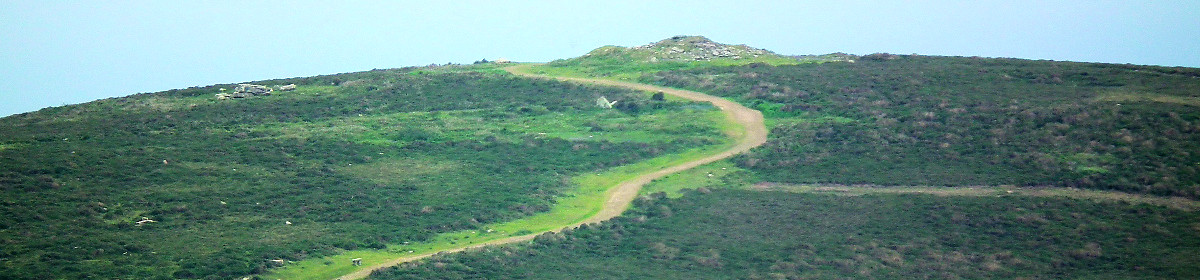
An ancient pathway on our farm, here in Cornwall
But that’s not what I wanted to write about. I want to give an astrologer’s insight. It’s all about Neptune in Aries, which started at the beginning of April 2025. It has been in Pisces since 2011 – a time of reality-slippage, geopolitical confusion, underlying transition, flailing beliefs, mental ill-health, tech dreams and military and climatic nightmares.
We have Neptune in Aries for 14-15 years until 2039. So this is a chapter, a phase, in which the world lives out Aries-type experiences, hopefully to progress them forward. On a 165 year cycle, Neptune last did this between 1861 and 1874 – the time of Abraham Lincoln, Gladstone and Disraeli, Bismarck, Queen Victoria, Karl Marx, and of roaring, steam-powered industrialisation, warfare, power battles, nationalism, early popular movements and Euro-American colonial expansion.
As Neptune trawls its way round the zodiac, chapter by chapter, it pushes us through periods of preoccupation with certain themes – the rise and fall of beliefs and perspectives which themselves influence the way the world sees things, acting out its anticipations, beliefs, fears and its light and its darkness. There’s a visionary side, a place where dreams and big ideas are born, of revelatory situations and realisations, and there’s an illusory and delusory side, mingled with fantasy, fakeness, projection, hypocrisy, glamour and horror. It’s all dreamstuff, yet it percolates into our reality, both helping and harming us and the wider world.
When Neptune is in Aries restlessness, impatience and frustration come up. Though there’s a lot of noise about freedom and identity, there’s a seeking for social-political-cultural examples to follow, align and identify with – it becomes a parade of leaders, public figures, accidental heroes/heroines (Florence Nightingale was one, last time round), who manifest the best and the worst of human possibility.
Some prominent people represent what is hoped for and dreamt of, or perhaps they represent integrity, genius or a human touch, with their finger on the pulse. Some represent what we most fear and dread, or they capture the hearts and minds of followers to promote or impose their own agenda. Either way, they have a lot of push, even of force – or also they reveal or portray themselves and their flock as victims, as the weak. This often gives rise to strong resistance and counter-measures – last time we had the rise of socialism and workers’ movements. It’s then a matter of how intelligent the wider public is in choosing what ideas and initiatives to subscribe to, and how clear their sight is to exert an influence on the strong.
I think you’ll be gtting the gist of this by now, and seeing how this is playing out round the world today. We’re seeing reformed terrorists gaining power as reformers, Popes calling out the status quo, dictators and billionaires acting out their fantasies, a massive generational change and an ongoing movie in which the best and the worst of human power-plays and moral choices process before us. This action-packed movie demands that we get off the fence to exert a moderating influence on those who lead the public discourse or precipitate evolving facts, whether helpful or harmful.
We’re getting an array of leaders and prominent figures who variously represent different aspects of these issues – and different people will see different facets of them, judging them differently. We’re getting a diversity of realities and viewpoints that partially clarifies things and partially adds confusion. It’s all a matter of perceptions and viewpoints, inspired sometimes with vision and purpose and sometimes with false hope or coloured by predisposition or prejudice. It’s a question of whether big ideas and beliefs attempt to override reality or whether reality clips them back to workable proportions.
There’s a conquering undertone to this – ranging from taking territory or power to overcoming obstacles and pioneering new possibilities. The bottom line is that, in the final analysis, there are no winners, and the idea of winning is inherently flawed. Victory is transitory, and everything turns to its opposite in the fullness of time.
Aries is ruled by Mars which, customarily seen as the God of War, in our time is showing itself also to be a God of Peace – a peace arising from stalemate and from the calculus that further conflict means that even the winner becomes a loser. There are limits to the extent to which the strong can push their agenda.
Each sign unconsciously faces its opposite – in this case, Libra, the sign of agreement-disagreement, values, fair-dinkum and relationship. Neptune was last in Libra in 1942-1956, leading to the formation of the United Nations and the ‘rules based’ order that is now disintegrating as the Global North loses its primacy and the Majority World accrues its true power in world affairs.
This has best been symbolised in Gaza, which in the end is a war between the People and the Megamachine, acting as a tipping point where the power of the Global North betrays itself and the Global South is challenged to find a unified position and agenda of its own, sufficient to replace the old order.
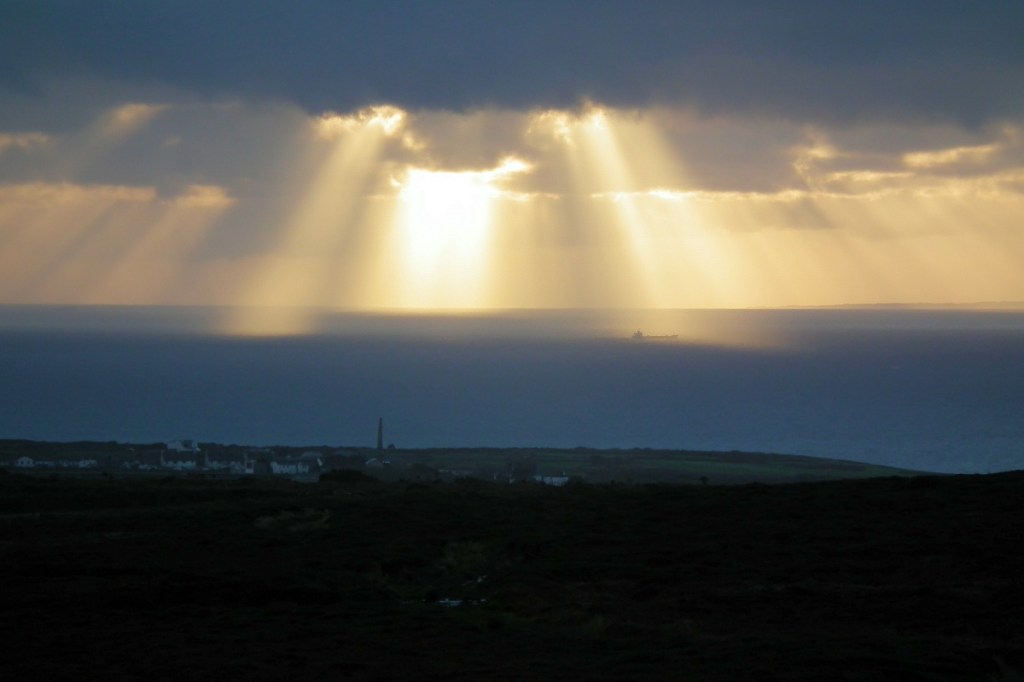
Thus spake Zarathrustra, looking over St Just toward Scilly
Underneath this lies a necessary historic tilting of all and everything, a slow and fundamental shifting from a competitive to a cooperative model in the very nature of society and civilisation. Multiplex issues are bound up with this, and we’re sliding into an avalanche of events that push those issues forward. This multiplicity of issues is pushing us out of our habits, avoidances and complacencies, demanding attention, backed up by the threat of unwanted consequences that will surely arise from inaction.
Historically, we’re surreptitiously entering a new chapter. Last year Pluto shifted into Aquarius and next year Uranus shifts into Gemini. Such shifts or ingresses create a change of themes, realities and atmospheres, which themselves indirectly prompt and colour events and developments. History moves slowly most of the time, though sometimes it moves really fast, and we’re entering such a period.
But it’s all in the way we see things and do things. We can make it easier or more difficult. Our problem is that we have a habit of entering the future facing backwards, of obeying fear, thereby complicating, undermining or blocking the very developments we deeply seek. Our own freedoms, benefits and rights can no longer impose themselves on the freedoms, benefits and rights of others or of nature, reality and the collective good. Change does not have to be as difficult as many people visualise. Its reward is eventual relief from the oppressions we already carry on our shoulders.
With love, Palden
PS. Here’s an example of a new leader who is taking on a big agenda and putting himself on the line. This man, part of the Megamachine and Old Order, is seriously acknowledging the agenda of a younger-generation military dictator who is playing a strong hand of cards. We’ll see more of these agenda-changers in coming years. https://www.youtube.com/watch?v=navBX2A37ls
———————
Current meditation times, on Sundays: UK, Ireland & Portugal 8-8.30pm GMT W Europe 9-9.30pm E Europe, Turkiye and the Levant 10-10.30pm Brazil-Argentina 4-4.30pm CST, Mexico, Jamaica, Colombia 2-2.30pm EST, Cuba 3-3.30pm PST North America 12-12.30am
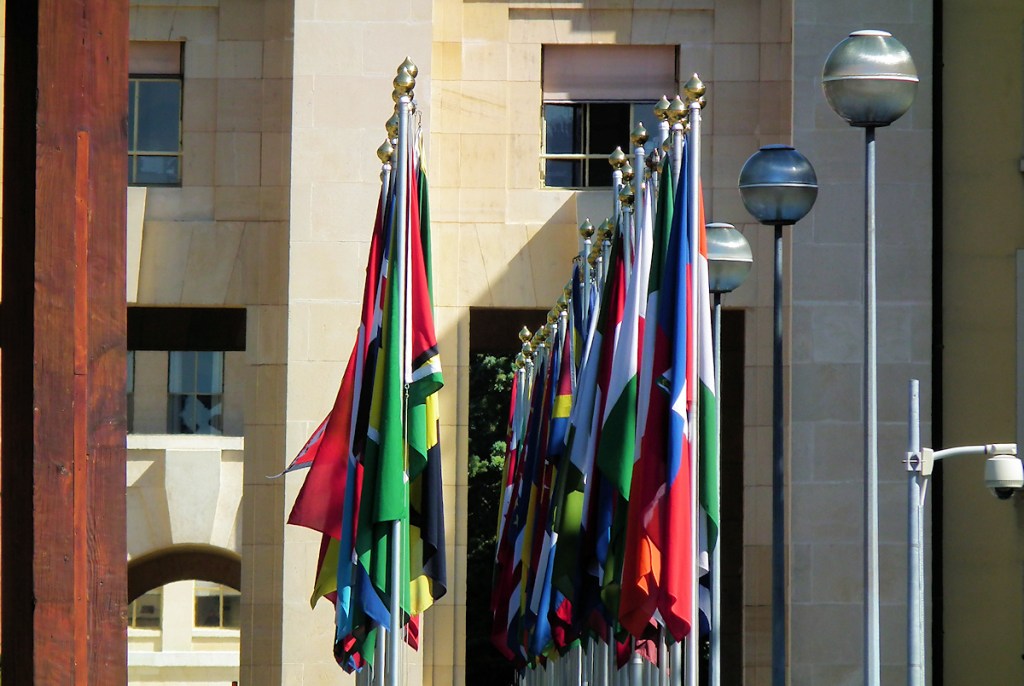
Photos from trips I made to Geneva 12-14 years ago. These are The Dispossessed
If you’re in your forties or fifties this is for you. Oh, and by the way, this is what’s nowadays called a ‘long read’, and, guess what, no AI was involved.
It’s about the care crisis and what needs to happen before you yourself grow old. I’m not going to harp on about pensions and savings, or the rights or wrongs of privileged old people currently being relatively prosperous at the expense of younger people. Neither will I repeat the implicit message that says ‘Look after yourself because no one else will’. There’s much more to it than that.
Nowadays I’m a net recipient of care and support, as a creaky old cancer patient. Similar things will probably happen to you. For Millennials and today’s younger people, it looks like you have a problem building up for when you get old, and that’s daunting. But there’s time to prepare, and magic solutions are available.
We’ve got to get real about the future. My own postwar generation has avoided much of this, and our behaviour has not necessarily matched our beliefs and ideologies. There’s a lot of hot air about growing old gracefully, but my generation still hangs on to our independence, sovereignty and property, and we have difficulty letting go (Pluto in Leo, and the Pluto in Virgos of the Sixties can be pretty control-freaky too). When we were young we had big visions of community (we have Neptune in Libra), and it hasn’t happened – not in a way that works in our old age. We have omitted to pool our financial and social capital. Here’s a tip: try not to do the same as you lot grow older!
Many of my generation have landed up on our own, stowed away in our centrally-heated, often over-sized houses or isolated in some godforsaken room somewhere. Society, in a perpetual hurry, quietly elbows us and dependents like us to the side. People largely don’t mean to do this, but they just don’t have time to be human – and this creates a social crisis. It’s the human aspect that, to children, to the chronically ill, the disabled and the old, becomes critically important: we humans have a bizarre need to feel that somebody loves and cares about us, that we matter to someone.
Geneva
Palestinians used to ask me, ‘How can you talk about human rights when you stuff your grandparents away in front of a TV in a padded prison?‘ – and they have a point.
This is a Pluto in Aquarius question – a key issue for the next twenty years. In the West we’ve gone through a period of (arguably) excessive prosperity, enabling us to venture into possibilities that otherwise wouldn’t have happened. One of these is lengthened lives – it’s now reasonable to expect reaching our eighties while, when I was young, it was the sixties or seventies. If I had contracted cancer 30-40 years ago I’d soon have been decisively dead – but not now.
Along the way we have professionalised and medicalised social care, and this is unsustainable, clunky, expensive and without limits. There’s a shortage of carers, nurses, teachers, cleaners, cooks and midwives, and we neither pay them well nor honour them properly, even though they hold up society. It’s all costing more than we are able or willing to pay, and we’re going deeper into debt, trying to maintain a lifestyle that’s already past its time. We’ve reached the end of a period in which the West got rich off everyone else, and now that we’re in an historic downward-curve, we need to get focused on a soft landing.
We’ve lapsed into a rather decadent kind of denialism: “I’m all in favour of change as long as it doesn’t affect me“. Thus we’re heading toward a likely crash landing… shock, horror… only to realise that we can’t continue living as we have lived, and our precious lifestyle has become unserviceable. Why didn’t someone warn us? Well, they did, decades ago, and no one wanted to listen.
Well, we’ll get what we get, though there are options.
Geneva has never been an imperial capital or the capital of anything, but it has a certain style to it…
In the rich world we’ve become materially wealthy while becoming socially and spiritually poorer. We’ve set aside social and community matters, even our humanness, in favour of wealth-generation and consumption, as if happiness comes from material plenty and security. But it does so only up to a point, and above that we hit diminishing happiness-returns. Just enough is good for us, and too much is definitely not. Treats are not a substitute for happiness.
This dilemma revealed itself to us during the Covid lockdowns. We became a tad more human for a month or two before grudgingly restoring normality. Meanwhile, having lectured the world about democracy in recent decades, we whiteys (or pinkies?) now find we’re an ethnic minority in a big, wide world where we’re far outnumbered and outclassed. We British think we’re different from Hungarians, but to the rest of the world we’re all Europeans and pretty much similar. Over half of the world’s population is Asian. Things are moving on.
I learned a lot when working with Palestinians – they are socially wealthier while being materially and circumstantially poorer. Their families, clans and communities pretty much hold together, even under extreme duress – and that’s what social wealth looks like. From the late 1960s to the 1990s they lived virtually without government, organising themselves so that everybody was provided for and most essential social functions were catered for from the ground up. A simple consensual rule held sway: help, support and do no harm to fellow Palestinians. Or, for that matter, to anyone deemed a ‘good person’. This included ‘good’ Jews. It’s not about ethnicity or religion – it concerns content of character. Guess what? There was little crime, pretty good road safety and a woman could walk down the street alone at night and feel safe.
A ‘generosity economy’ survives through mutual support and collective adaptation. You need no qualifications to participate or to benefit richly – you just need to do your bit, whatever you can do. It’s not perfect, but in another way it is exemplary. Even in Gaza we have not seen the kind of destitution and social disarray that we sometimes see in other places that plunge into crisis. While Palestinians are always the losers, they are not beaten.
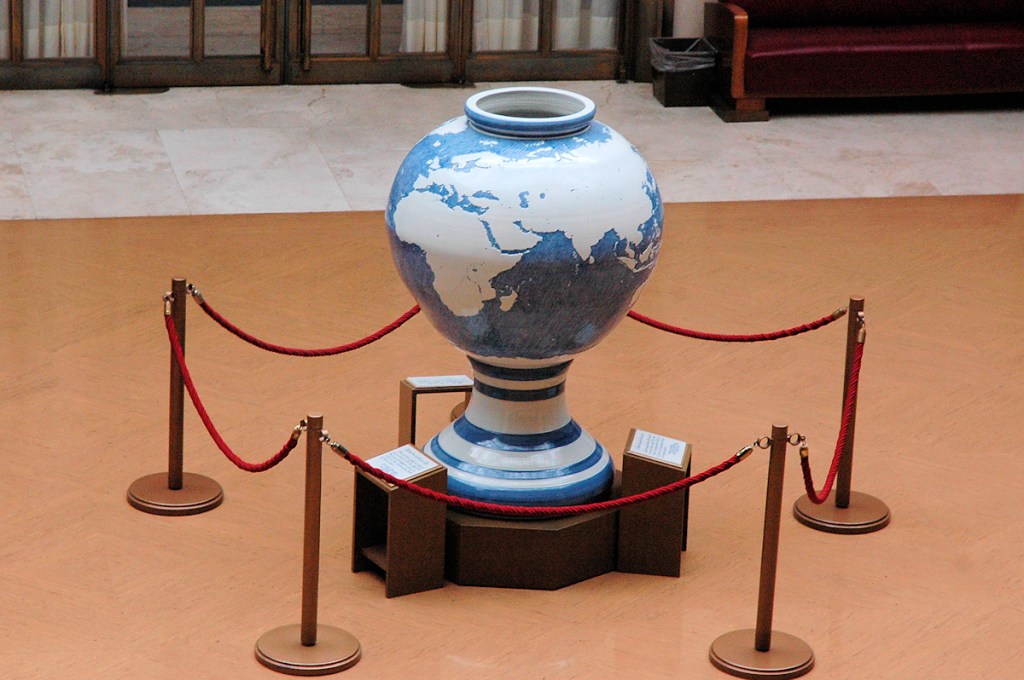
The world – the work of some famous artist whose name escapes me.
From this I learned a big lesson. It wasn’t a case of me, a well-meaning Westerner, a ‘humanitarian’, going out to Palestine to help these poor benighted folk in their dire circumstances. No, I had to get over that one. All I needed to do was to be amongst them, to add my bit when appropriate, to listen a lot and learn from these people. Being fully present was sufficient. Their generosity and sincerity was, at first, button-pressing to me as a European – we’re programmed with a neurotic need to pay for everything. But in Palestine you should never offer to pay if something is ofered or given, because you will deprive a good Muslim of giving you a gift of God – even if they’re poor, with nothing for tomorrow.
Instead, you learn to enter the cycle of mutually-circulatory social generosity and you play an active part in it – keep the benefits moving around. As a relatively rich outsider, you spend thoughtfully and you quietly drop people occasional monetary gifts of God, to help them on their way, simply because it’s good to do so.
However, I had further advantages I could offer. As a European, it was easier for me to level with an Israeli soldier than it was for a Palestinian. I could use my privileged position in the apartheid system to eyeball an Israeli, practice street-level diplomacy and improve the overall outcomes – you see, in a roughly nine-level apartheid system, foreign visitors come in third, just below Ashkenazi and Sephardic Jews, but above the Druze, four kinds of Palestinians and the Bedouin. It’s complex.
Often, the poor soldier was 30-40 years younger than me anyway, doing his or her conscription-slavery, and I pulled age on them. I used my influence as a Westerner to turn round the interaction and calmly hold the power, even though the soldier had the gun. Exploiting the hidden rules of apartheid, I projected an image of a politely self-confident, imperialistic Brit visiting one of his country’s former colonies.
After all, my grandfather was in General Allenby’s invasion force in WW1 when we took Palestine from the Ottomans, and my father fought in Egypt in WW2, and my aunt was a periodic Jew-rescuer – so it could be construed that Israel owes my family a favour, if truth be known. My ruse was that I was an historian interested in studying early Christian fonts. Yeah, me, a Christian – but it worked. Israeli border guards tend to regard Christians as rather stupid, sometimes awkward, but largely harmless.
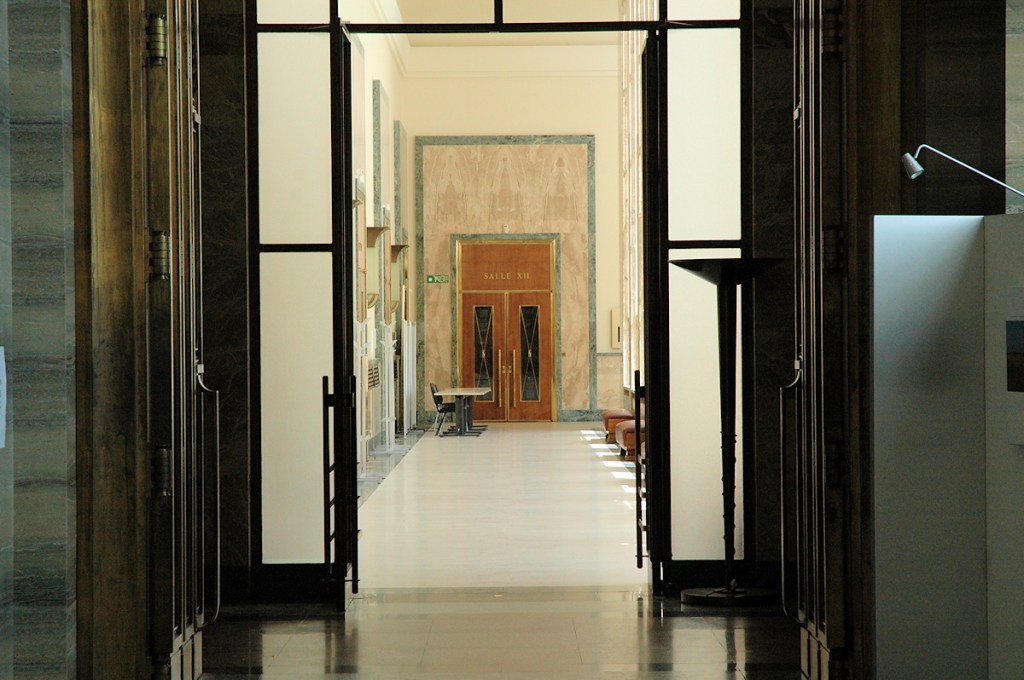
Of course, to see many of the UN buildings, you have to go on a tour. But there are security issues they do need to stay on top of.
At times these interactions were rather comical. When searching my bags once, they found some plastic-wrapped tofu I’d bought in a healthfood store in Tel Aviv, suspecting it was Semtex… well, it took a few minutes to sort that out (such as reading the Hebrew labelling) and we all landed up chuckling… and, in a better mood, they let me through, waving a load more people through after me. Bingo.
It’s all about societal energy-exchange. In that instance I used my strengths as a Brit to give both the Israelis and the Palestinians what they needed. It works best when there’s some sort of balance of benefit that can equalise both parties – however that benefit is perceived. A change of mood and spirit can make the whole situation flip quite quickly, and the all-round benefit gained often grows greater than the sum of all the individual benefits.
After all, the soldiers at Checkpoint 500 were bored shitless, and the Palestinians standing in line were equally bored, and it just needed the right thing to happen. The magic catalyst was tofu – Romanian-style and marinated. But if I’d reacted to those soldiers as ‘the enemy’, tightening up my body-language and doing oppo, trouble would have ensued and I’d have given away my power – since they did have the guns – and the Palestinians would have got home from work even later than they did.
So, here am I, older and more decrepit, in need of a few hours of help a week, and also for times of company, love and tenderness. These three matter a lot in late life – you might get hugged but real cuddles can be rare. I’m quite self-sufficient, though there are times when I go downhill and I need more intensive help and attention. In recent months a lot has come together on the support front and I am really happy about it: a group of lovely people has come together, and it’s working. Friends of Palden (FoP) – thank you all and bless you. It was a health crisis I had in September that precipitated the change.
For my part, what needed to happen was an opening of my own heart – and the illness and physical pain cracked me open. I had been in a state of emotional recoil for two years, after the sudden and, for me, reluctant end of a loving relationship early in 2022. After that, I wasn’t interested in opening up to others. I’d lost my trust and felt stuck in my hermit-like Saturnine isolation pattern – the ‘anti-social’ thinker and writer with one foot in society and the other in the mountains.
There was something I needed to face – a big and rather final, late-life change – and it took two years to adjust to it emotionally. I’d realised that this was the last close one-to-one relationship I would have in this lifetime. That sounds a bit sad, or dramatic, but no, it isn’t. It’s quite a settled feeling. I’ve had some good relationships over the last half-century, and there’s more to life too. Things have changed. Actually, don’t tell anyone, but it was Ayahuasca wot did it. The focus of my love extends now to a wider circle of people, and I’m playing a new and different role in their lives, and they in mine, whether they’re near or far.
Geneva is in a rather idyllic setting.
Here we come to energy-exchange. Caring for an new age codger like me can at times be hard work. So I’m working at making it good for everyone, if and however I can. I can’t run around servicing relationships in the way I used to in pre-cancer days, but I can do certain things. I can give a listening ear and sometimes a few astute observations – as a wizzened old retired astrologer who’s figured a few things out. I can give them an hour’s break in a warm, calm, phone-free cabin on a farm in a magical place, with springwater tea and an oakwood fire, so that they can draw a line between the last thing and the next thing, departing a little clearer and more ‘sorted’ than when they came.
There’s something deep to this. It’s about being there for people – it’s the grandfather or patriarch archetype. I don’t have to do anything, and they don’t even need to be with me to benefit from it. It’s just that I’m here, and that in itself is perceived to add something to others’ lives. Spending a lot of time on my own, I range around in my mind, pastorally thinking of people as they pop into my attention, I monitor their souls and pick up on them when they’re unconsciously signalling. They themselves feel supported, deep down. This motivates them to do things that benefit me.
This sounds terribly transactional but, actually, if you keel over with cancer or something similar, or with misfortune, you do have to think transactionally and make sure you’re getting enough of what you need. Otherwise, you won’t get it. You have to be carefully selfish, yet also understanding of others since you’re relying on their goodwill and generosity.
For what it’s worth, ‘elderhood’ is where I now find myself. I’m something of a natural at it, though I’m also somewhat reluctant (I prefer thinking of myself as a veteran). Perhaps I’ve been here and done this before in other lives. It’s all about quietly standing behind people and being there for them. It gives them a certain security whereby, if they feel they’re out of their depth, or fucked off with life, or at their wits’ end, they can anchor back to someone like me, even just in their thoughts.
To which my response is, Yes, that happens, it’s life, it’s okay, hang in there, and the world isn’t ending… though I’d put it more subtly, and much of it lies in the vibe I give out. The fact that I’m standing there is living proof that you can and do survive life’s hard knocks. Or at least, I have, thus far, and perhaps you can too.
It’s not about having opinions and telling people what’s best. There’s a challenge to overcome the reactive, self-satisfied conservatism of age and, from a rather more transcendent, slightly dementia-liberated viewpoint, to think afresh, seeing things from a new place, contributing not opinions but perspectives. But even then, only when asked. Be pleasantly surprised if younger people actually do take heed. Besides, they’re the ones making the decisions now.
So, although I depend on the help, support and company of friends, there’s something I can offer, and this is important. This is ‘social capital’ and if, like me, you haven’t been focusing on building up financial capital, then you need to work on building up social capital, on cultivating your assets, your character and transferable skills. This means that, when you too become relatively useless, with luck you’ll be liked, valued and a little bit useful, even then.
It’s him.
In my life I’ve had phases of organising volunteers to help me run projects I’ve started. While they liked doing it and it brought them benefit, it was also hard work, with a fair measure of wind and rain thrown in. I tried to help them gain a growth-payoff, a soul-payoff, from it. That is, something in them would progress, and some started a new life from that time on. There’s a certain joy in being part of something that works well and is good to be part of.
My father taught me that. He had been in industrial relations in the 1960s-80s and his philosophy was that, if your workers are happy working with you, they’ll be motivated to work well and and everyone will benefit. He’d encourage the directors to eat lunch in the canteen rather than at the golf club, and to avoid driving their Jaguar to work. Sounds obvious, and it’s true, but it was not what was happening in British workplaces at the time, and it does so only for some workers now. It’s how a generosity economy works, in which everyone is a stakeholder and beneficiary, together.
It’s about ‘we‘, not ‘I‘. However, while the relationship of ‘I’ to ‘we’ is still important, in the end ‘we’ are the overriding priority, and each of us needs to learn to do the best we can with that, as individuals.
Pluto is now in Aquarius. We need now to focus on strengthening society. Not the economy, not technology, not government, not business, but society and the mechanisms by which it works.
Do people exist to serve the system, or does the system exist to serve the people?
Pluto likes to dig out the bottom-line hard truths of things, and this is the big question for at least the next twenty years.
There’s something substructural going on. In richer countries, our time is done, our economies are subsiding and we’ve got to get real about this. It is a necessary historic adjustment of economic levels. For Britain, Europe and America real wealth-generation is sinking, overall costs, complications and debts are rising, and things are approaching a crunchpoint.
We in rich countries are not enjoying treading the mill of work and consumption as we once did. We’re supposed to be excited about the latest gizmo, scientific discovery or tech advance, but many of them arouse mainly a yawn. We’ve reached a certain level of satiation. There’s now a deep-level exhaustion, a declining motivation to bust a gut for what might anyway prove to be dubious outcomes. There’s an element of laziness and decadence to this, yes, but it’s also genuine, deep down. We’re discovering a need to become more human and for society to become more humane.
This historic shift will affect Millennials and currently younger people as you grow old. Compared with my (Pluto in Leo) postwar generation, you have more inherent social wealth than we, with a greater sense of implicit togetherness, and this is driving a deep reconstitution of society that is only now gaining momentum.
There is a fundamental law of economics that few mention, yet it’s abidingly true: when the economy goes up, society goes down, and when the economy goes down, society goes up. We’re at an inflection point in this oscillatory equation.
When you yourselves are old, there might be care-bots to help you, and there will still be people who hold society together by acting as committed care-givers, but there’s unlikely to be the capacity to finance the full care and medical facilities that we have today. So this needs tackling another way, especially by building up social wealth.
Here we return to people like Palestininans with their family survival mechanisms – and most Mediterranean cultures are (or were) like this. They have families often of fortyish people, young and old, which are part of a larger clan that can number hundreds or thousands. The old people and the kids spend a lot of time together, often at the centre of the compound where everyone lives, freeing up middle-aged people to do their daily duties. The older kids look after the younger kids, both look after the old people, and the old people oversee the kids. People come and sit for a chat and a cup of tea, then to continue on their way. It’s an integrated system with the oldsters and the youngsters at the centre. Everyone does something toward the family, to the extent that they can, and someome is usually available to step in with a solution if there is a need.
Western researchers would come to Palestine, finding unemployment levels standing at 20-30%, yet no one was hanging around looking unemployed. This was simply the generosity economy at work – lots of people had no paid job, but they had a place in the family and community economy – and it doesn’t show up in the statistics. Everyone is catered for and everyone contributes. In Bethlehem, a little boy would help me with runaround tasks and occasionally I’d give him some loose change, and he’d run home to give it to his Mum because it was more important to him to contribute to his family than to sneak off to the sweetshop to feed his face.
This is the way to go. It lies in social values. So teach your children well. To get through the future, countries like Britain need to work on social wealth and resilience. Social love and solidarity. Hanging together. Making life easier for each other. Sharing lifts. Keeping an eye out for each other.
That’s not as easy as it sounds, because it involves dealing with disagreement – what’s politely called ‘diversity’. In the 2020s we’re pretty good at arguing, disagreeing and detracting, pretty unwilling to hear others’ viewpoints, or even to acknowledge that they’re actually real, valid people, just like us. We have issues about who’s in and who’s out. There’s a lot of shadow stuff lurking in the social psyche – trust issues, historic pain and resentment, unresolved questions, pending problems.
Migration is one of those issues we have to face because it is happening anyway, and we have to get sensible about it. It is changing our societies and we need to do this well. We can’t evade the facts, pretending that we can stop it or send people home – it’s happening, and we in rich countries have been a substantial part of the cause. We cannot supply munitions to Israel and expect Palestinians to stay at home without seeking refuge in Manchester – sorry, that’s two-faced, narrow, poor thinking, and if such thinking were applied to you, you’d hate it. Yet, on the other hand, we need to take in numbers that we can realistically absorb, so that there are enough housing, teachers, facilities and space to cater for them, to give them what they need and to get what we need too – and this is a very real issue without easy answers. It brings up quite primal emotions – it’s not solely socio-logical.
My generation failed, when it reached its sixties, to pool its capital and engage in creating mutual support systems for late life. We didn’t think we would actually get old. Those of us who have done well financially do what we can to enjoy our position, and the rest of us get by as best we can. Our sense of generational fairness and equality has been compromised by incentives and bonuses that have successfully splintered us. We might disapprove of businessmen getting stinking rich, though strangely we nevertheless believe it’s kinda okay for a rock musician to own five houses, a stack of glossy, carbon-belching sports cars and an art portfolio for which the insurance can cost a quarter million. [Even so, here’s a perceptive song from one of them, Roger Waters: Is this the Life We Really Want?]
This kind of thing is not really good for the future – unless of course we permit it, allowing an oligarchy to burn up resources while we dutifully catch the battery-bus to save energy. World circumstances are changing, and if the excesses of the past are to continue into the future, then you Millennials have a problem before you. And here’s an awkward question (sorry): do you want to leave this problem to your children, as my generation has done with you? Or will changing circumstances and shifting values perhaps force the issue before you reach that point?
Strengthening society – from the bottom up. To face the future we need to build social resilience. This means looking after each other and sharing what’s available and what we have. It means pitching in together when there are floods, pandemics, economic downturns, supply-line blockages, power-brownouts and gaps on the supermarket shelves. Governments and institutions can certainly facilitate the process, but it needs to come from ordinary people.
In 2025 Neptune enters Aries for 14 years. This is about Big Men and our neurotic need, during insecure times, for leaders who will fix things for us and keep control. This is why we have Putins, Trumps, Modis and Xis dominating the world and holding it to ransom. We need to overcome this illusion. However, the real issue here is not about getting rid of leaders – that’s something we’re generations away from, realistically.
It’s about right leadership and – more important – astute, intelligent, thoughtful citizens who think a bit further than our noses, and who don’t allow populists and pranksters to capture our support and run off with the agenda. Perhaps we also need to support and respect our leaders a bit more, holding them to account but with more empathy and understanding – it’s a lonely and shitty job, with plenty of holes to fall into and minefields to navigate. The worst bit is that, even if you’re a great reformer, someone, somewhere, gets hurt and loses out.
During this Neptune in Aries period we might also see some exemplary, Mandela-esque leaders. To quote Georges Pompidou, a French politician of the 1970s (in old sexist language): “A statesman is a politician who places himself at the service of the nation. A politician is a statesman who places the nation at his service“.
One such leader I’m watching at present is the prime minister of Barbados, Mia Mottley – she’s lucid, justice-seeking, solid, with a good sense of proportion, likeable, and she’s the sort of person who, with luck, will leave a good track record behind her. [Click here to see her recent UN General Assembly speech.]
Leaders can catalyse helpful social processes – at least for their first ten years in office – but it is not for them to determine our future. Society needs to take control of itself. We need to train ourselves to form, develop and hold to social consensus, to make fair deals between competing interests, to stand back from sectoral disagreements and responsibly to keep hold of the power and influence that society itself should hold. Government is important as a coordinating influence, but placing responsibility for fixing society on government and institutions inevitably leads to a disjunction of values and aims between oligarchies and ordinary people.
Since the demographic pyramid currently favours the old, weighing quite heavily on the young, we oldies need to pull together to look after each other to lighten the load. We have resources. We don’t need a paid carer to come in to make a cup of tea and hold our hand when a friend, a neighbour or a grandchild is far better. We need professional help only in those things that we cannot do ourselves – I can keep my house in good shape on a daily basis, but I find vacuum-cleaning physically difficult. I can mostly cook for myself, but there are occasions when I’m worn out and really appreciate the application of someone else’s culinary gifts.
Being rendered into a passive recipient of care – especially in old people’s homes – is disempowering, dispiriting and it costs a bomb. It’s healthy to keep going with the daily tasks that we can do – and it’s far more healing to do it with and for others, not just for ourselves. And a single oldie doesn’t need a whole house to live in – I live in a one-room cabin where it’s just five steps from my bed to my kitchen, and it’s great! Let’s liberate our oversized homes for people who truly need them.
Social capital. The strongest social bonding force is crisis. When a society goes through a crisis, triumphing over the odds by sharing and cooperating, the social ring of power gains strength. It’s a transpersonal feeling, a feeling of being in it together and being mutually reliant and reinforcing. It is in the interests of oligarchies meanwhile to keep society splintered, dissonant and competitive. The social ring of power is activated when collective resonance and solidarity rise and hold firm – and this is why organisations like Hamas and Hezbollah are unbeatable, since you can bomb them out as much as you like but the need for such movements doesn’t go away. So they remain and revive, even when shot to pieces.
But solidarity can be dangerous if social blindness or denial is tangled up in it. When at war, Israelis have remarkable national solidarity, but the big question is, toward what ultimate end? Israelis need a safe homeland where they can pursue their lives in peace. Yet, feeling the world to be against them, they do tend to create conflict around themselves – and this is an example of the way a people can be captured by an oligarchy which harnesses and exploits their solidarity for narrow, ultimately unwise ends – in this case, it’s Zionism, but Israel is not the only place where such things happen. But for Israelis, subservience to Zionist aims and values leads to a situation where war is needed as a way of generating solidarity – national unity in an otherwise rather culturally-argumentative country. Here herd mentality fails to serve the true and lasting interests of the whole herd. Israelis will find peace when they become friends with their neighbours. Period. And so it is worldwide.
The initiative lies with people at ground level. It concerns cultivating the wisdom of crowds. Often this happens through encountering nexus-points of occasion and crisis where there are opportunities for social healing, for the airing and resolution of unprocessed social issues. In Britain we’ve just had a rumpus over ‘assisted dying’ – a rumpus because we have a cultural fear of death and an unwillingness to even think about it, so we start panicking when we’re forced to.
There’s also the possibility of a future characterised by the madness of crowds and a lack of societal connectedness, leading amongst other things to the marginalisation of the old and the unwell by the fit and the healthy. The solution to the ‘problem’ of the old and infirm is a fundamental reconstitution of society. And perhaps this escalating social crisis is a gift in disguise. The crunch will come when our economies can no longer support the standards we have become used to.
Good luck, you lot, in addressing a problem I don’t think my own generation has cracked. We need to look after each other a lot more, and to get into proportion what’s really abidingly important in life. Because, believe me, at the end of my life it’s not the pounds, shillings and pence that I earned and spent that I remember – it’s the closenesses I’ve had with fellow humans, the magic moments and the rustling of the leaves in the trees.
The pictures are from trips I made to Geneva in Switzerland (an incredibly expensive place) 12-14 years ago – one of the UN capitals. As you might gather, I’m distinctly internationalist in my geopolitics!
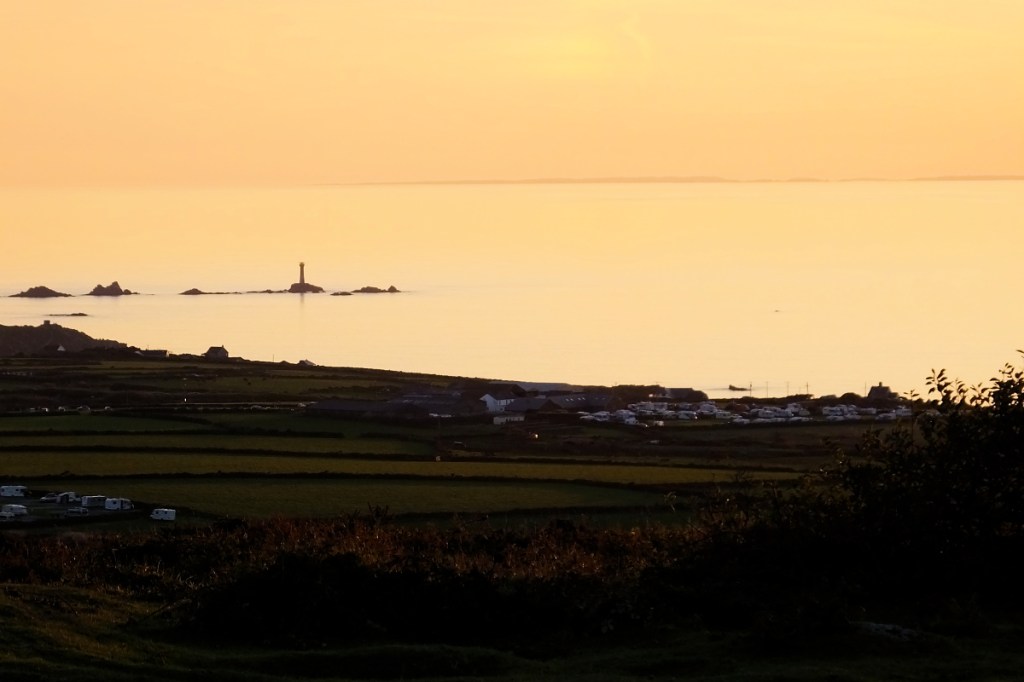
The Longships Rocks, with the Isles of Scilly Behind
There are two routes to the farm where I live, and they are shown on online maps. The problem is, one route is easy and good, and if you follow the other – as recommended on satnavs – then you’re likely to lose your exhaust pipe and damage your car, unless it’s a Land Rover.
Claudia Caolin took this
We’ve tried to get the satnav people to change the instructions, but they won’t do it. They look at a satellite photo and see a road there, without knowing what its surface is like. So they even disbelieve evidence that we, who live here, send them – because the satellite says there’s a road there. Well, at your peril.
So when people come to visit, I send a map and instructions but some rather slavishly follow their satnav. They trust it more than they should, because it tells them what to do. As a result, they arrive late, flustered, after having made a few extra phone calls to me to find out the way. That cuts down our time together.
This highlights a big problem in our time. Many people – even quite aware ones, and even those who otherwise distrust a lot of things handed down to them from the corporate and governmental world – believe and obey what we are told. We set aside our own thoughts, experience, finer judgement and intuition, because the instructions say that we ought to follow this route, not that.
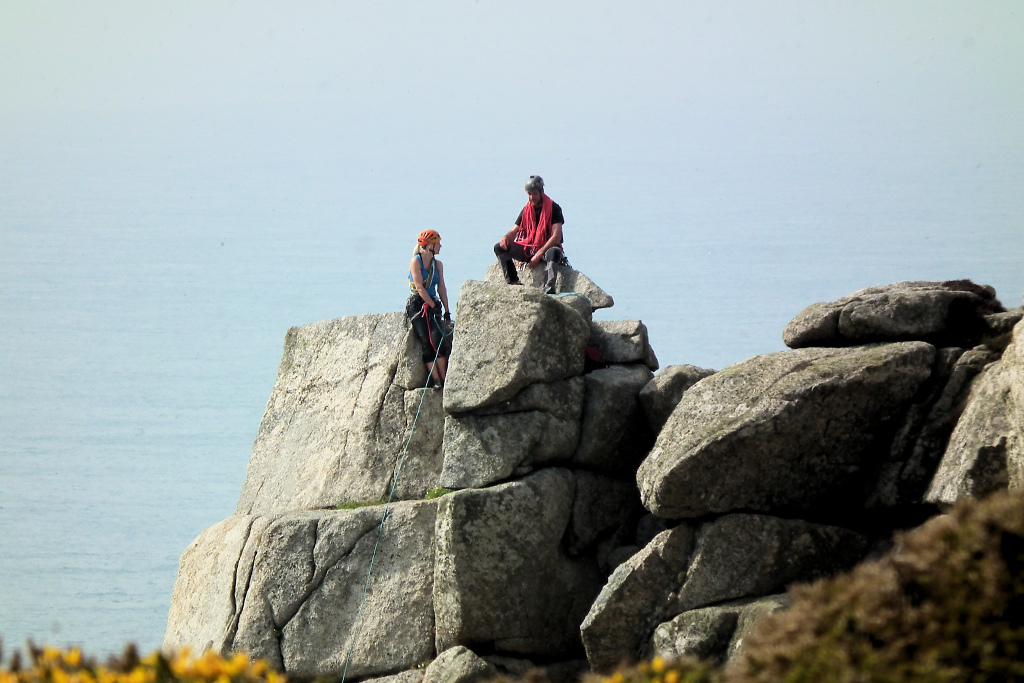
Precarity at Porthmoina Cove, Penwith, Cornwall
But if the satellite system breaks down (almost inevitable sometime), and if we lose our map-reading skills and intuitions, then we’ll get lost. Not only with finding the way, but also because we’re addicted to obeying orders. We all do it, in varying degrees! Even if you are a dissenter, an ‘alternative type’, or a sensitive soul, there will be areas of life where you snap to and do what you’re told, even at a price.
Even with conspiracy thinking, there’s an element in it where people disagreeing with the ‘official line’ transfer all their need for certainties to other things they’re told by other people, who sound as if they know what they’re talking about, and uncritically they follow a new set of rules.
Move along please… Bosigran, Penwith
One of my bugbears is typical: we are told that mobile phones and wi-fi are safe and okay, and we are addicted to all that phones have brought us (it’s an amazing technology). Yet, just consult your feelings, consult your body and your psyche, and something is not right. This radiation is changing you. It changed my life – I have a cancer caused by radiation, and when I mention this to others, or when I walk out of a room because I can’t handle being in the company of six phones with humans attached to them, there’s often an awkward silence. Ooops, I’ve said something wrong. If I mention the effects this has on nature, the world’s climate and on earth energy and subtle energies, most people just don’t want to know – even if they’re nature-lovers. Yet this is suicidal. And you don’t need a PhD to understand that.
We all do this. It arises from the fear that “I do not have the knowledge, authority and whatever else it takes to cut my own line through life“. This is the way that the Megamachine retains control – through imposing a fear of what might happen if you don’t obey, through telling us what’s right and what’s wrong, infantilising us and making us conform.
Listen guys, I’m in charge, okay?
In the end, this is not about Them – it’s about Us. It’s about our deepest psychology – profoundly stilted and stunted by fear, guilt and shame, the big blockers of inner progress and of correction of the world’s ills.
We all do it – I do too.
I did this last year. I was accused of being a narcissist. Bewildered and feeling at a loss, I took it upon myself and carried that for about nine months, feeling bad. It was a burden of guilt – my own guilt from the past. Not about being a narcissist, but simply about feeling inadequate and flawed.
But I was bewildered and confused about it too. Perhaps I am a narcissist? Perhaps the person who put that on me was right.
But then, a good friend came along and grilled me – she could see I was unhappy and weighed down with it. She had experience of this, having been a ‘victim’ of a narcissist herself. Though she pointed out how a victim is part of the equation too. She questioned me about what had happened, saying in the end, “Hang on, it wasn’t you – it was the other person. The actual behaviour of a narcissist was displayed not by you but by the other person, and this was projected on you”.
The Universal Solution to Everything
Now this was a big revelation. Suddenly a weight started falling off my shoulders. It was like a forgiveness. It didn’t just dissolve the issue – it gave me a new perspective. It allowed me to look at the narcissistic tendencies within me – after all, I do like standing on stages, and I’m what Facebook would label a ‘public figure’. Part of me is shy and a hermit, and part of me loves attention. So there’s stuff to take ownership of here, and it has helped me understand much about my life.
I’ve always been something of a reluctant leader. There’s pain in my psyche over matters of power. But this has made me focus on ‘right leadership’. The world does need leaders, but of a certain kind. In my 2003 book Healing the Hurts of Nations, in a chapter about power and legitimacy, I give three quotes.
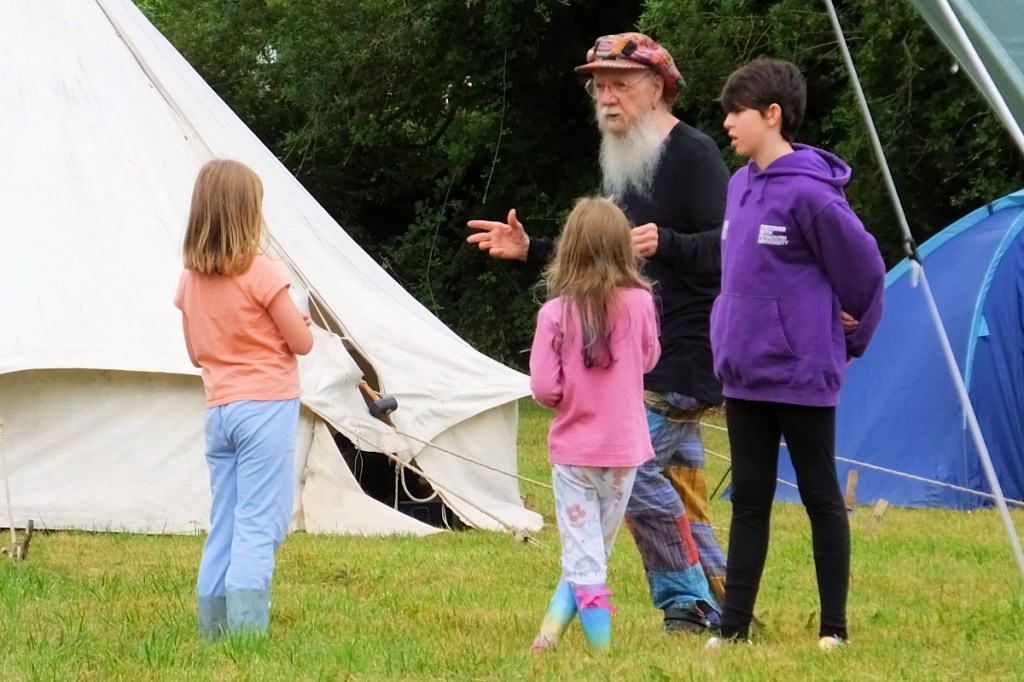
Rioters and vandals at the Oak Dragon Camp
“A statesman is a politician who places himself at the service of the nation. A politician is a statesman who places the nation at his service.” – Georges Pompidou, French prime minister, in 1973.
“You can erect a throne of bayonets, but you cannot sit on it for long.” – Boris Yeltsin, Russian president, in 1991 (Mr Putin, take note!).
“Many forms of government have been tried, and will be tried. No one pretends that democracy is perfect or all-wise. Indeed, it has been said that democracy is the worst form of government except all those other forms that have been tried.” – Winston Churchill, Hansard, November 11, 1947.
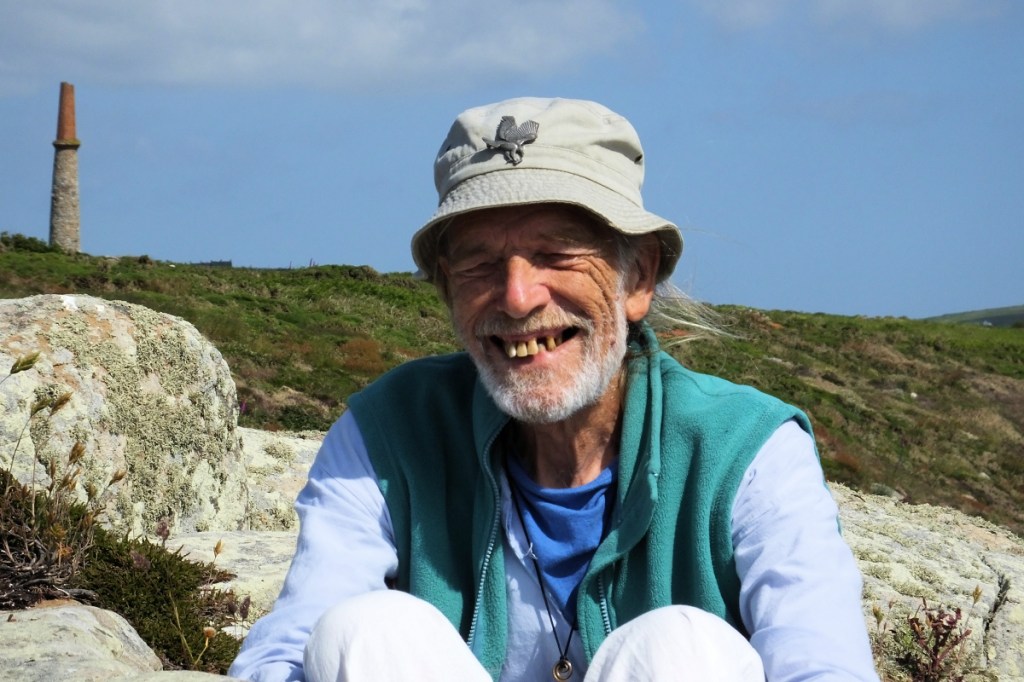
These photos of me are by Claudia Caolin
This concerns right leadership. In my life I’ve learned a lot about this, and the question still continues. I’ve often felt like a monarch without a kingdom, a bishop without a church and a professor without a university – and this has been my karma in this life. It concerns service. It’s a big question for Virgos like me: the difference between service and slavery.
Service is willing, intentional and conscious. Slavery is reluctant, grudging and involuntary. Slavery is about resorting to type, conforming to what we feel is expected of us by those who seem to know better, and doing our best to avoid punishment.
If you’re going to be a shining star in the public firmament, then rightly or wrongly you need to fulfil what you feel are people’s needs and expectations. In this context, staying in power starts becoming more important.
The matter of staying in power is a difficult one. It’s not just a form of corruption and powermongery. It might be the case that, in a position of power, you actually are the best person for the job – it’s arguable that Mr Putin was the best for the job 10-20 years ago, and many a strongman is like that. But then your star starts falling and times start changing – Xi Jin Ping will experience this in coming years. The tide goes out on you, as it does.
But if you’re good at what you do, then you’re faced with the possibility that the person or the oligarchy that replaces you could actually be worse. I’ve faced this myself. Many people who rail at leaders are, frankly, covertly envious. Watching things that I’ve started deteriorate in others’ hands has been a big and painful lesson to me, bringing me back to a difficult truth: while holding onto power is not advisable, letting go of it can also be problematic.
It comes down to our motivation, and to being honest, often while standing in the spotlight in the ‘court of public opinion’, ruthless as it sometimes can be. Remember the British politician Paddy Ashdown? When he was caught with his pants down he owned up immediately – and everyone thought, “Good on you, Paddy – at least you’re honest”. Meanwhile, others were caught with pants down but they went into denial – they were clearly ‘in office but not in power’.
Tony Blair then came along – he looked like a clean pair of hands. But Tony, after a few years of doing some pretty good things, himself made a classic error – he sucked up to the big guys and took Britain into the Iraq war, when most people in Britain knew this wasn’t right. He sucked up to the Americans and PNAC, a cabal of believers in ‘The New American Century’, which now, chaps like Putin and Xi are showing to be empty and hubristic – America was being what Chairman Mao once called a ‘paper tiger’. Hm, fatal error, Tony – and he’s paid a price for it.
It’s all in the motivation. When I was a young acid head revolutionary in a former millennium, I realised then that it wasn’t just a question of replacing one evil system with another, whether through revolution or reform. It concerned the hearts and minds of the people actually sitting in seats of power. No one system has The Answer. No system is perfect.
Democracy has big problems, and we cannot say that our democratic governments truly represent what the people of our countries need. But autocracies like China and ‘managed democracies’ like Turkiye, though at times they can deliver the goods, have their problems too. It’s all to do with the matter of succession.
Some people moan about our king, here in Britain, but would an elected president and House of Lords really be a better solution? Hmmm, that’s questionable. King Charles III, well, you might or might not like him, but he’s okay, actually, as a person. Though his limited and mainly moral power is inherited, he happens to be an interesting person, and his son isn’t bad either – compared with what we could have.
I remember standing on stage at the Glastonbury Festival in the early 1980s, saying, as an astrologer, that Prince William, born during the festival during an eclipse, would be an interesting character as a future monarch. And he is likely to be so. Do we want to get rid of this guy and his missus?
Why do we expect perfection of our leaders? Why do Americans place so much belief in their elected presidents when they have lots of evidence that such belief is futile? Why do we continue electing the same old political parties, even when we’re disappointed in them?
I remember in 2005, many Palestinians asked me, “Why, after you had the biggest demonstrations in British history against the Iraq War, did you re-elect Tony Blair a third time?”. Well the answer was, “Because he’s still better than the other lot”. Twenty years on, that’s why quite a few people might vote for Biden or a clone of him – because of the other lot.
That’s the dilemma of democracy – it gives us second-best solutions. It is based not on consensus and agreement but on argument and dissension, meaning that 49% of the population land up dissatisfied, unhappy to support their government. Actually, through the quirks of our supposed constitution here in Britain, Margaret Thatcher only ever really achieved about 25% support of the whole electorate, even at the peak of her power. Is that democracy?
Sometimes you just have to stand on your own – a baby swallow on our farm
Well, it’s a common quirk of majoritarian democracy. In some countries, we vote for a plethora of parties, and then the biggest, or not even the biggest, cobbles together a coalition that might not at all resemble what voters wanted – as Israelis have discovered. It relies on conformity and grudging acceptance of bad political outcomes – AND we, the public, customarily disunited, then fail to support our governments wholeheartedly, even when we vote them into power.
The result is that it’s a recipe for failure, because someone somewhere is always opposing it. So this concerns the responsiveness of political systems to public need. And, besides, it isn’t democratic governments that really decide things: such governments exist to ease the cruel grating between the priorities of the Megamachine (the apparently ‘free’ market), and the needs of The People (whoever we truly are).
It’s all down to right leadership and right use of power. But that’s difficult, because sitting in the power seat is not comfortable, and it’s a 20 hour a day job, under a lot of pressure, and subject to cruel judgements from the public – witness those promising leaders, many of them women, who choose not to sit in that seat because it’s painful to get exposed to the sheer negativity of the commentariat and people on the street who land up even hating you.
You get there in the end
So, if we want good leadership, we need to treat our leaders with greater empathy and support, remembering that they actually are human beings, with sensitivities. And we need leaders with human sensitivities. But we need also to hold them to account. We need them to change when they get things wrong.
It doesn’t always work to jettison old leaders and put new leaders in place – it can lead to a cycle of deterioration where we get leaders who are either bombastic and imposing, or leaders who say one thing and do another, or they make it sound as if they’re doing things when actually nothing is changing at all.
In fact, it might be valuable sometimes to welcome back old leaders – to give Theresa May or Tony Blair a second chance. Why? Because they’ve had a period in the wilderness, a time to think things over, and they might well have a deep need, in later life, to get things right. Well, perhaps. Second-term presidents can be a bit like that. They don’t want to go down in history for the wrong thing.
Anyway, so I might well be a narcissist. It’s a convenient accusation to make, for which one is guilty unless proven innocent – but even then one might not be believed. Just to be suspected is enough to ruin a person’s life. What’s needed here is owning up, in public, and self-correction.
It gets a bit rough sometimes
Mistakes are allowed. Learn first time round and you’re doing alright. Learn second time round and you have a problem but it might be excusable. Leave it to third time round and you have a deeper issue going on, and it’s best to go – whatever his merits, Boris Johnson got to that point.
Human error. There’s accountability and there is forgiveness. Just because someone fucked up, it doesn’t necessarily mean they should be blacklisted – it means they need to self-correct, and genuinely so. And everyone, everyone, is a mixed bag – yes, even Bill Gates, who does both some questionable things and some laudable things (and, as an Aspie, he also has an exaggerated capacity to be misunderstood).
So, it might be that I’m a narcissist. To be honest, I really do not know, and it’s up to people’s own judgement. It has caused the person who accused me to completely cut off all contact and unfriend me, perhaps obeying the strictures of a famous psychologist in Canada who says that the only way to deal with narcissists is to cut off all contact.
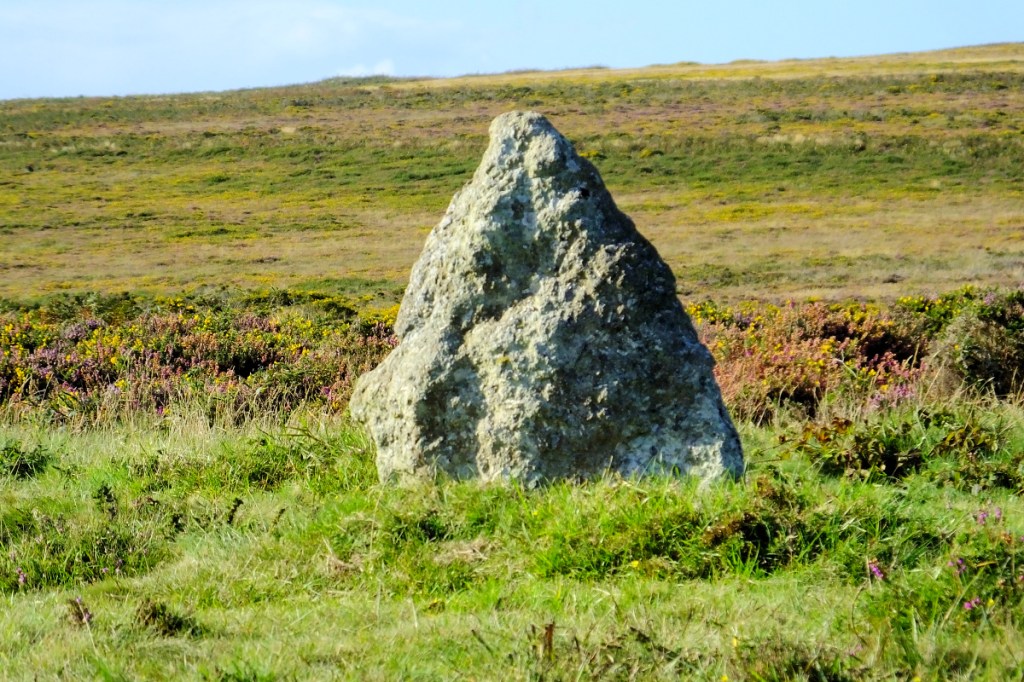
Standing there for 2,500 years and not going anywhere
Well, I experience that to be rather cruel, actually, throwing out both the baby and the bathwater. I sincerely hope the accuser was right, because otherwise this fierce separation was a very destructive strategy. I’ve learned a lot from it and, for my sins, I now live in glorous isolation, and that’s my karma and life-lesson, and on some level there’s something good about it. Because, for better or worse, it enables me to write yardages of verbiage to you lot, and I sincerely hope it’s useful!
Life is what happens when we’re busy making other plans. In the end, there is no right or wrong – there are simply outcomes. And life is for the learning. So, whatever my fuckups, I’d like to be remembered at least for trying to redeem those fuckups and make things good. But there are some who would even question whether I’m getting anywhere with that.
In the end, it’s necessary to listen and to take in the feedback that people, life and its learning experiences give us. But not too much, because otherwise we become guilty of another crime – the crime of holding back our gifts, believing that someone else can do it better. However, if it’s a gift, it’s highly unlikely. The secret lies somewhere between taking a stand and keeping your antennae up.















 Notes from the Far Beyond
You must be logged in to post a comment.