Looking Within

This time of year it’s easy to feel battered by life. Things just get to be too much. This is part of the syndrome of modern times – we get overloaded and stressed, landing up in a routine of juggling too many balls, and we lose our way. We end up wondering what it’s all about and why we’re living our lives the way we do. This is an important truth point.

When I got cancer six years ago I had to look at what I had done in my life to bring it about, or to make myself vulnerable to it. We can blame such things on this or that but, in the end, it’s us. I realised that I had been both harmed and helped by moments like this – times when I was strung out on a busy and engaged life, pushing myself, trying to keep up with everything that was required of me, trying to do my best.

I was harmed because at times like this we actually generate the seeds of future illness. These are times of vulnerability, overstretchedness, worry and, if we are honest, times when we swim around in our guilt and fear, in unconscious stuff that we never have time to look at or to process through.

So we lay it down as a pattern, a pattern of fear which becomes a bit harder to look at another time. This is where the root causes of later illnesses or disabilities arise – in those stuffed-away, shadowy segments of our psyche where we don’t want to look. This is where we have power change our futures.

I was also helped by times like this. They give moments of self-examination and soul searching, an opportunity to pay attention, at the very time when we need to do so – even in the middle of busily stressful, dissonant and portentous junctures.

One of the greatest mass self-destruction errors of today is the setting aside of essential soul matters in order to tread the mill, to pursue our important agendas, in which we carry the weight of the world, fight our loved ones and get worked up over small things (like supermarket queues).

We lose our way. We lose our sense of the real reason why we’re doing all this business of being alive on a planet. I mean, what on Earth am I doing with my life?

It is very important, amidst these times of So Many Important Things, to give ourselves proper quality time, being quiet, giving ourselves timetable-free space, relaxing, yielding, taking it easy, changing the subject inside ourselves, and letting new information, energy, healing or blessing come into us.

This is a matter of allowing. It’s not about making it happen. Unless you really want to, you don’t have to pay large amounts of money to go on retreats or to exciting places in the mountains of Turkiye: it’s a matter of giving time and space now, today, even if just for an hour.

When I was examining myself and the causes of the cancer that I was suddenly given in 2019, I came to see the roots of my cancer in moments like this. It’s to do with those times when we have stuff coming up from deeper down, changes going on, truth emerging – and, we tell ourselves, we’re too busy, and we can’t give it the attention it is due right now. Later.

We often set aside these moments, these openings of doors. Thus we lay down patterns which can lead to future regret. Or at least to future times when conscience and consciousness are squeezed and wrung out of us, by force of circumstance. Times when our souls decide to present us with hard, inescapable truths.

It’s not about being perfect. The soul is forgiving, understanding, and it sits in an eternal place. We are here to learn. As humans we are a mixture of light and darkness. We are not here to be angels. We are here to make good in a difficult and challenging situation, and to do our best with the riddle of life and the deal we are given, to struggle our way through an obstacle course and a learning journey. This is what we came for.

This is planet Earth’s special gift: you get an amazing physical life in which you meet remarkable people and situations, and in return you undertake to learn some profound lessons – lessons about balancing the physical with the spiritual, daily-life routine and inner calling, and our own and others’ needs and preferences.

We should not feel bad and guilty about our failings, our hidden bits, and the things we come to regret. These are fuel for the fire of learning. That’s what we came for.

But it certainly does us a lot of good if we pay attention to releasing whatever needs releasing as closely as possible to the time that it happens, while it is in focus. It’s good to build a habit of moving forward, seeking out truth, applying all of the different kinds of growth-tricks we come to learn as we pursue our path through life.

If we build this habit it means that when the shit really does hit the fan, we have tools and experience to resort to, because we have built a growth habit, a truth habit.

It’s not that truth is always available at the moment when we seek it. Sometimes it takes time. Someone once said, a decision is truly made only at the time when you can chuckle about it. On the other hand, in every moment there is sufficient truth available for us to do enough of the right thing in the situation we find ourselves in.

This involves intuition – listening to the signs and signals within us. It involves listening to that inner voice which at times just says, ‘Be aware, be aware in this moment’. This is what you could call conscience.

Only sometimes does it give an answer about what to do, but it certainly gives a prompt to say ‘Be aware, this is a moment of choice’. If we pay attention to these moments, these moments of proto-truth, it expands our free will, our freedom of expression, our freedom to negotiate situations in the best way we can.

Sometimes we get it all wrong. And this is life. Because there can be deeper threads, deeper meanings going on underneath, and it is not uncommon that we find ourselves out of our depth, being stretched. Life gives us these moments of choice. This is what free will is. And sometimes we get it wrong.

That’s not the end of the matter. Because revelation and times of correction do come. Be patient. Sometimes we can make it up with the people who were involved, or we can correct or improve the situation, or we can own up in some way, and sometimes we can’t. But within ourselves, it is possible to change the story.

In every scrangle, we were half of the problem, and we can change our half, even in retrospect. This shifts shadows. Balance starts returning. Forget good and bad, right and wrong: what matters is movement, forwardness and progress. Sometimes this can involve taking the difficult path – a path of confrontation, pain, tears or apology. But this lands up becoming the easiest path.

Sometimes we cannot shift the shadow or resolve the situation. It might be too late, or the other party might refuse to forgive, or resolution might not be possible. But we can still look at our own side of the equation and get that bit right.

There is a simple rule by which to judge situations: treat others as you would like them to treat you.

If there are instances in the past that you regret, where you didn’t do your best, you can own up and rework them. It’s a de-guilting, forgiving process. And perhaps the judgements of rightness and wrongness made at the time were themselves incorrect.

In whatever proportions, you were both at fault and you were both right too. Remarkably, if you move on your side, sooner or later there will be movement on the other side. But don’t sit around waiting for it.

There can be resolution for the other person, or the other people who were involved, even if you don’t know whether it’s happening, or even after their death or yours. But in the fullness of time, if we release our side of the equation, then it loosens up the whole tangled cycle of co-bondage that lies behind and beneath the whole situation.

Some situations just cannot be understood or explained. But things happened that way. The world, as we have made it, is an incomprehensible place. So-called ‘mental illness’ is a simple consequence of living an a screwed-up, contradictory, insensitive world.

This is particularly important for those of us in late life. It’s about forgiving other people for what they did or they omitted to do, or that they did in ways which could have been different. It’s about forgiving world and societal situations because some, such as an earthquake, might have hurt a lot, but these are part of the formula, the equation, the deal we took on by being born, when we decided to have a life on Earth.

There’s also the matter of forgiving ourselves. Because in forgiving ourselves it loosens up the whole cobweb, the whole network of shared error, since we are not as separate as individuals as we frequently believe. We are all so intertwined. We breathe each other’s air.

There are various dimensions to this. There are things we definitely got wrong, and there are things other people judged were wrong which perhaps were not so, when seen from further away.

Then there are cultural issues where social judgments are implicitly made and accepted which, in the fullness of time, turn out to be to be very different. For me, for example, 900 years ago I believed in holy war, yet in this life I do not believe in war at all.

Then there are matters where we were wronged, yet we took on the guilt, the wrongness, because we were surrounded by unavoidable situations or people who misjudged us. Quite complex gestalts and constellations of human feeling can cause us to carry a psychological burden when in fact we might not have needed to carry it.

Some people spend their whole lives carrying far more guilt than indeed they should do, but in another way they mop up the free-flowing projections of other people and of society, absorbing it like sponges – sometimes with an ability to transform it, as nurses, carers, humanitarians or even inadvertent social healers, and sometimes they become victims of society and its ills and madnesses – the special needs cases.

In fact, the way things are going, the whole population of the world, currently around 8.2 billion, is becoming a special needs case. Help!

So if you’re feeling rather beat up at the moment, and if you’ve had enough, and if you’re feeling physically or emotionally vulnerable, it’s well worth staking out some time for yourself. Just tell everyone else to go away. Switch off your phone. It is to others’ advantage to support you in becoming a better person.

Whatever their dependencies and needs, these will be better fulfilled if you are in a good state. But if you are struggling inside with ghosts and demons, your generosity and good-natured side doesn’t shine genuinely and wholeheartedly.

If you’re lying in bed feeling unwell or wobbly right now, you might try listening to one of my podcasts about the inner doctors. Working on things like this can be really helpful, but often it’s only at these moments of vulnerability where we really perceive the need to pay attention to this kind of thing.

Also, it’s winter solstice – at least, here in the northern hemisphere – and a time for contemplation and reflection. Many people make this into a time of stress, spending vast amounts of money and overconsuming even if they don’t want to – all out of a sense of obligation to fulfil needs which were relevant in former, poorer times, when a feast was good and necessary, but which have lost so much relevance today. If gifts and treats are expected and taken for granted, they are not a gift, and the money might have been better spent supporting a family in Gaza.

There’s a big case of cognitive dissonance around all this. It is symbolised on Christmas Day when the day starts in a very human and open hearted kind of way, but then most people in countries like Britain start assaulting themselves with alcohol and overeating, also going through social situations which perhaps they might not want to go through, though they might feel obliged to do so. Don’t upset your grandmother, darling.

This sense of obligation to be happy, and to do all the right things, is, deep down, guilt-driven. Yet in order to have peace and goodwill on Earth, and every day of the year, and for evermore, which is surely what we all genuinely want, we need to free up all this guilt.

As you might by now tell, I don’t do Christmas, so unfortunately you will not be receiving a Christmas card from me. It’s not Scrooge mentality – it’s just a divergent Aspie’s preference. Before Christmas I am Scrooge, and after Christmas quite a few people, burping, tell me I’m lucky to have bypassed all that.

Here is a greeting to those who concur with me, and who will be spending Christmas mostly on their own – for perhaps you are the ones who can do some forgiving, pumping up the peace and the goodwill to all people, with an extra dollop of collective release and public mercy, without burying it in fats, and carbs and alcohols.

Here is a greeting to those who love Christmas too. It can be such a wonderful time of family and neighbourly gathering, and do it well. It’s special. Unplug the TV and get everyone to pile their phones in a box for the time you’re together. And get the kids doing the washing up – or, alternatively, making a valuable contribution of their choice. After all, we live in anti-authoritarian days, so options must be available, though I have not heard of a human right that entitles us to avoid earning our ticket.

Savour the Christmas plenty. I mean that. Because we’re coming into times when there might not be so much plenty, and it will be necessary to enjoy that too, and the gifts of grace that come with it. For when the economy goes up, society goes down, yet when the economy goes down, society goes up.

I think that was an economics and life lesson that the Prophet Jesus, peace be upon him, was trying to teach. It is likely that peace and goodwill in our world will rise as the global economy adjusts to the facts of its situation, and as humanity goes through an inner change that causes it to stop gulping up our world and shitting on it.

Not only that, but we will enjoy the new situation. There will be elements of relief to it. And defence expenditure, malware and security cameras will be things of the past, like holy war.

The world is in a process of acceleration and thawing, and it’s complex, and the bits are all bumping up against one another, and it looks as if things are getting worse with each passing year. No, they are getting better, though it is a painful and intricate process. Things are just starting up.

And the way they look now is not how it is going to be in the fullness of time. All things shall pass. All will be well, and in ways we cannot currently imagine. Hold that thought. All will be well.

Love, Palden

#followers #everyone #forgiveness #worldcrisis #mentalhealth #socialhealing #healingtheworld
The Christ Mass

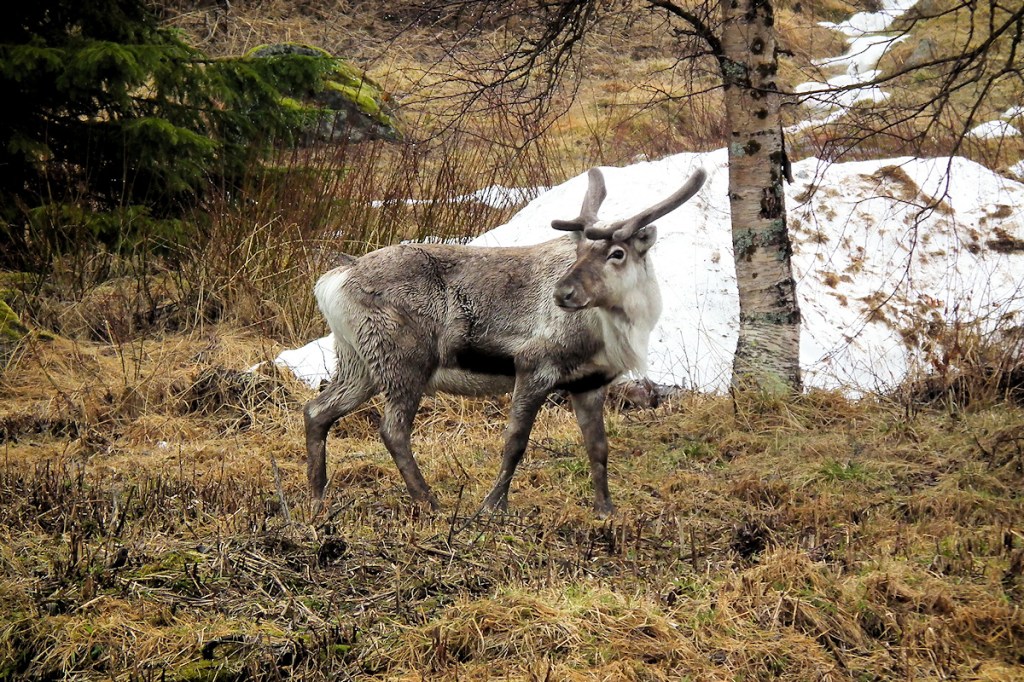
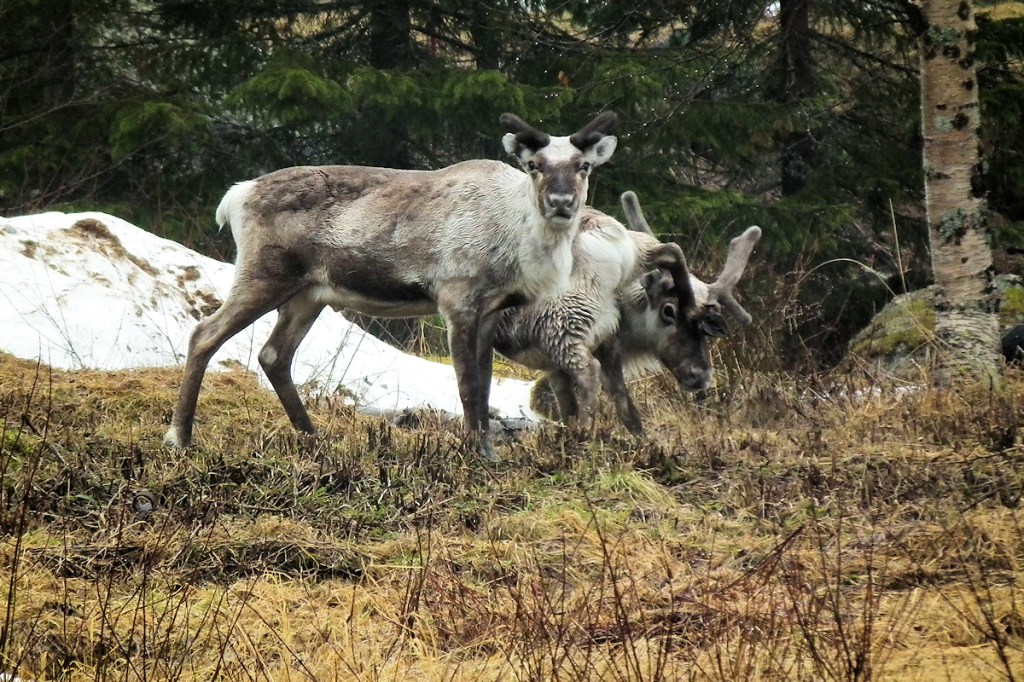
Reindeer, Kvikkjokk, Sapmi (Swedish Lappland)

It’s funny. I’ve always had a strange allergy to Christmas. In recent weeks I’ve been looking into this issue. What is bizarre is that I have lived in the Baltic region – the source of Father Christmas and sleighbells – and also in Bethlehem – the source of the Christ-is-born part of the package. So I’ve lived in the source-places of Christmas but I’m not particularly into it. Well, we all have our weird pathologies.

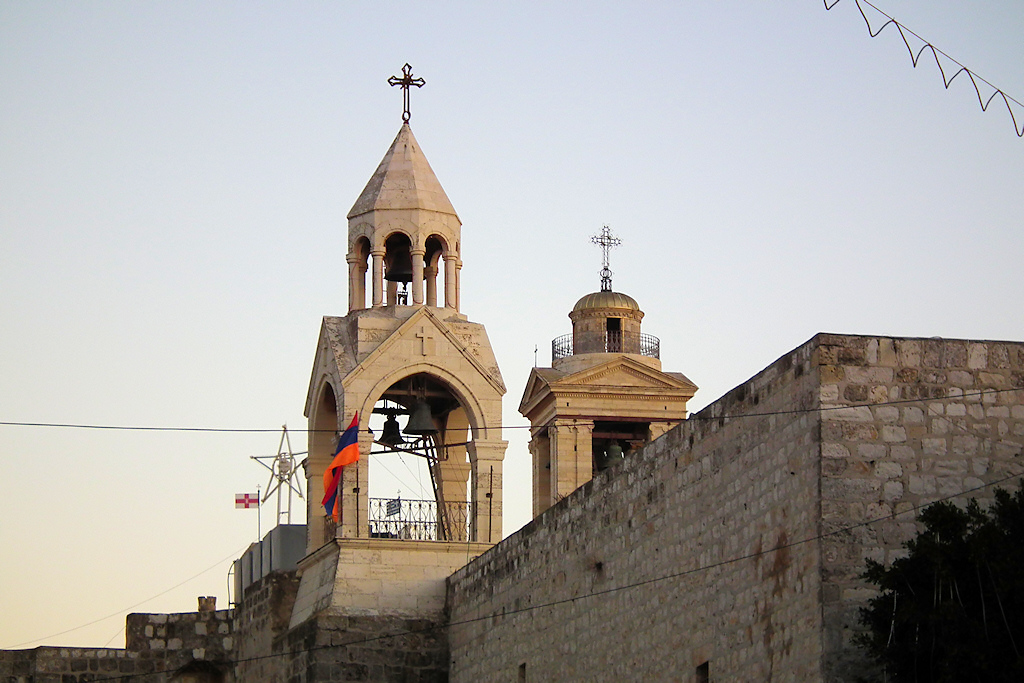
I have fond memories of both places – of genuine sleighbells (except on horses pulling sledges through the snow-bedecked forest), and of crowds of the devout in Manger Square, Bethlehem, during the three Christmases they have (Catholic, Orthodox and Armenian) at roughly two-week intervals. When I was in Bethlehem one Christmas I wrote a blog about it all. The town customarily welcomes 100,000 visitors for the Christmas Pilgrimage, and often it’s utter madness in town. It’s not happening this year: Palestinians are really downhearted, in no mood for celebrating the birth of a holy child, or celebrating anything.

I’ve asked myself why I have this Yuletide allergic reaction. In my case, part of the answer is Asperger’s Syndrome – ‘Wrong Planet Syndrome’. It’s an inherent feeling of outsideness, and it brings both benefits and problems. It’s a bit like the day you land in a foreign country: you understand nothing of the language and you experience the funky quirks of that country with the eye of an outsider – like the smelly toilets in Austria, the crooked telegraph poles in USA, or the way that Australian wildlife is busily noisy in the night and quiet during the day, or the sheer colourful intensity and olfactory richness of India, or the foot-washing places outside mosques in Jordan.

Another factor was the Christmases we had in our rather dysfunctional family. I couldn’t stand the pressure to ‘behave myself’ and to eat food I didn’t really like. Things got more interesting when I was around age eleven, when my parents started inviting three or four foreign students from the School of Tropical Medicine in Liverpool to our house for Christmas Day. Suddenly I was meeting people from Uganda, India, Hong Kong, Egypt and Barbados. But even then I was frustrated because we had to enact the Christmas rituals and suffer the stomachic consequences instead of getting into far more interesting things… and meanwhile my mother worked her socks off, not enjoying Christmas at all, and getting annoyed with my father, my brother or me for reasons I never fully understood.

I’d stand there thinking ‘Why can’t we make this easier and have a good time together without all this fuss and bother?‘. But relentlessly, each year, it had to be done. I never quite figured out why. So perhaps that’s a cause of my allergy.

In Bethlehem, as a lifelong vegetarian, it was always a bit difficult passing the meat market – another rich olfactory experience. I turned vegetarian long ago in 1971 and, for fortyish years, people would regard folks like me as strange and awkward, missing something important in life. In Palestine I got away with it by saying it was part of my religion – and that’s something they easily accept and oblige. However, to a vegetarian, being vegetarian is a perfectly logical and sound way of behaving and conducting one’s life. Being an Aspie is rather like that – you’re regarded as strange, abnormal and in need of correction, while from your own minority viewpoint the world around you is incomprehensible and crazy.

An Indonesian Christian rock band, Manger Square, Bethlehem

Yet Aspergers is not a programming error – it’s a different operating system. I believe it’s not really a ‘spectrum’ issue either – to me, that’s a neurotypical excuse for not really understanding what’s going on. The way I see it, you’re either an Aspie or you aren’t, since this concerns operating systems, and the spectrum bit relates to an Aspie’s capacity to adjust, or not, to the world around – what’s called the ‘Aspie mask’. How well we adjust depends a lot on how we were brought up – whether we were encouraged to grow into being ourselves or whether we had to conform to imposed behaviours that weren’t our own. That adjustment factor is what gives the appearance of a continuous ‘autistic spectrum’.

It seems that the proportion of Aspies, Autistics, ADHDs and others in society is increasing, and this is an evolutionary change for humanity. It’s the direction the world is heading in and it’s happening for a reason. It’s not a problem, and Aspies and Auties generally aren’t ill or malfunctioning. Actually, there is cause for us to feel sympathy for ordinary, neurotypical people and the templated, frameworked world they live in.

It has a fascinating side to it, inasmuch as, not seeing life in the same way as most other people, your perceptions are inherently out-of-the-box. So it means that you can come up with solutions that seem mad to some and brilliant to others – depending largely on whether their primary optic looks forwards or backwards. It also has a problematic side because it’s then a matter of whether it’s possible for that perspective to be expressed and accepted in society, for our strengths to be taken up and valued. This is slowly changing as society notes a growing variety of interesting public figures with this ‘condition’.

This was my problem. At Christmas, it was the implicit social requirement to behave in certain prescriptive ways, irrespective of how I felt inside myself, and the indulgence, waste and pretence of the relentlessly rolling bulldozer of Christmas behaviours. It grated for me and still does, and my own Xmas-avoidance can grate for other people.

In the 1980s, when I was in my thirties, I decided to clarify things, come out with it and just stop doing Christmas. If I was unclear I’d get drawn back into it, so I got clear and became ‘antisocial’ instead. In the later 1980s I started doing non-Christmas retreats for about ten people in the mountains of Snowdonia, which were fully booked. There would be no Xmas rigmarole, no presents, no special food or boozing, and we’d have silence and personal time up to 2pm each day and then hanging out together after that. The people who came to the retreats would rest, recharge and have some genuine human togetherness, without all the ritual. We had a great time!

Even though I’ve played a significant part in encouraging ceremony and ritual in Glastonbury, in the camps movement and elsewhere, and I’ve designed and led a good number of ceremonies myself, I’m not really into ceremony and ritual very much. I prefer to act spontaneously, picking up on and acting out the drama of the moment without making plans or imposing structures. I think this arises from a psychic sense of participating in a much broader and deeper reality-landscape and dialogue than many non-psychics perceive. If you’re in the right inner state, the spirits of the four directions will come and be there with you without needing much invitation. Like perceptive humans, they get a sense of where the action is and they go there.

I used to have problems when attending funerals. The vicar would be standing there leading the funeral service, while the hovering soul, looking for someone receptive, would find me sitting there in the pews. In some cases they would want me to lead the service, since I would be able more properly to speak on their behalf. But this was not to be, and I had to tell them so, secretly in my thoughts – the formalities had to be adhered to during such a solemn occasion.

The dead and the beings of the otherworlds run their own realities in parallel to ours, and the objective in ceremony is to bring those worlds closer. However, a direct psychic connection renders formalised ceremony less necessary – the action happens in ‘deep thought’. Formalised ceremony can indeed truly entrance people, enacting something that genuinely helps the interaction between worlds but, in my judgement, many ceremonies don’t do this as much as they could. The soul-quality of it can be obscured by the script. While many participants might wish to believe the gods are present, only sometimes do they seem to really feel it in their hearts and through their antennae. So there can be an element of pious game-playing to it. I hope I don’t offend by saying that. One of the things I’ve had to learn is how to say awkward things in an acceptable way – it took until my mid-thirties – and I’m not sure whether I’ve succeeded in that.

So, at funerals I have run, I asked people to address the departed soul directly, not as him or her but as you – since that soul was actually there (well, most times – there can be exceptions). It can be quite upsetting to someone who has just died to hear yourself being talked about and ignored by old friends and family, as if you no longer exist. I’d invite people to participate in a talking-stick process, each giving a short anecdote of their interaction with the deceasing person, addressing them personally as you – we were talking to that person about their life, and this is an important life-review process to help a departing soul understand nuances of their life that they’d perhaps never seen before. People were really moved by this. But I haven’t noticed such a method being widely adopted.

Bethlehem. But do they need to import north European pagan imagery such as sleighbells? Most Arabs don’t even understand what a sleigh is.

Winter Solstice and Christmas are important times for connecting with and reflecting on ancestry, origins, custom and tradition, but their importance lies not so much in ritual observance or cringeing Christmas habits as it lies in shared feeling and togetherness. It’s a time of social love and mutual support. The past is not important in itself, except inasmuch as it has some relevance to the present as a stabilising though not as a constraining factor.

There’s something wonderful about Christmas – the gathering of clans, the giving of gifts and the feasting. But for much of human history there has been a different context to these: today, in affluent societies, the feasting isn’t really necessary or good for us, and we already mostly have what we need so gifts have acquired hyper-consumption undertones, and while the gathering of families and friends can be wonderful, it can also be mixed in atmosphere, landing up with the TV, alcohol and niggly narrow-mindedness controlling the occasion.

Over the years I’ve found that, before Christmas, I get a slightly humbug, silent-to-disapproving response from many people when I tell them I’m not interested in it. Then after Christmas I’m told I’m lucky, or even envied. Most strange. We live in a very schizoid world. Some years, such as this year, with the devastation of Gaza, or back in 2004 with the Tsunami, the contradictions get quite stark, with people hungry in one place and over-filled in another, and both having a hard time over it. Sorry, but this doesn’t strike me as a good way to design the world of the future.

Anyway, that’s just me – though perhaps I’m articulating something for a few others too. Plenty of people are alone or lonely at Christmas. I am happy for those who are happy celebrating Christmas – it’s good for society to do things like this. And also I think about people who are unhappy about it, either because they’re left out or because they feel obliged to play along with something they don’t really feel right about. Perhaps Christmas needs a redesign to fit the reality of our current time. Less of the consumption, profiteering and excess, and more of the human aspect of things – the peace and the goodwill.

The Church of the Nativity (on the site of an Apollo temple and a Canaanite Goddess temple)

This is important. On the run-up to Christmas, one issue that has been bugging me is that I’m getting too many requests for help from people in many places and situations around the world, and it’s getting to be too much. Human need on Planet Earth is rising. My own sense of peace and goodwill has been under test. I’m currently working on three missions and I have the capacity for one. I’m having to remind people not to depend too much on me, because one day they won’t get an answer – I’ll be incapacitated or dead. I can’t find people to take on these people and their needs for help, all of which are genuine and legitimate. So that presents a problem. They need to get sorted out and back on their feet, and it’s good for us, for our souls, to take on karma-yogic responsibilities such as these. Well, that’s what I have found, at least.

So I’ve been experiencing compassion fatigue. Too many people asking for help. I have to remind them I am not a public-service help agency – I’m an old crock running on three cylinders. This fatigue has been accentuated by a need to re-focus on my own life – after all, living with cancer is a wee bit challenging – and on keeping my own head above water. If I don’t do this, I might well have a shorter life, meaning that I won’t be here any more for these people to contact. But then, to be ruthlessly honest, perhaps I need them as much as they need me.

But then, after I pop my clogs I’ll be Upstairs, accessible at least to those who attune their inner devices sufficiently and sign in to the dialogue. It’s certainly possible for me to tap on the top of people’s heads, or to walk into one of their dreams but, even then, it’s a toss-up whether they will notice or respond.

If you see things from the viewpoint of the ancestors, it’s difficult for them when the majority of people disregard them, or think of them as fantasy, as imaginary or even hauntingly disturbing. Or people shut off their receptivity by ‘just’ having another drink, or rushing off to spend money in shopping malls and bowling alleys, or arguing with each other over unresolved issues or trivialities. It can be frustrating being an ancestor in modern times, especially if there’s some wisdom to impart during moments of Christmastide reflection. Wisdoms such as…

Sometimes the young are wiser than the old. Sometimes adversity is really helpful. Or no matter how close you get to someone, there can still be light-years between you. Or that many hands make light work. Or that you can have the world’s greatest army but you still don’t win your wars. Or that the people who are regarded as winners are often very alone, even when they’re popular.

So I spent Christmas Day with a friend I met in 2022 who seems like an old friend already – Brian Abbot from Devon (he of the Invisible Opera Company of Tibet). Two aged hippies having a deep dialogue over all that has changed and all that has not changed, in our own lives, in the wider world and in the cosmos. One an author and the other a musician, both of us having started on our spirit-paths by consorting with Lucy in the Sky with Diamonds, in her blotter and microdot format, fiftysomething years ago in another millennium. He cooked a nut roast.

That was our Christmas. The wind blew, the rain came down, the woodstove burned bright with aromatic birchwood, and no animals died to feed us with Christmas dinner. All was well down’ere in West Penwith, at the end of the world – well, the end of the small British part of our world. And the Atlantic rollers crashed against the rocks on the coast with not a single care for human beliefs such as Christmas. As for Jesus, he was in Khan Younis, not Bethlehem, busy ministering to people in need. Good on him – we need a few more people like him around.

With love, Paldywan.

Written using GHI (genuine human intelligence).

Website: www.palden.co.uk
Podcasts: www.palden.co.uk/podcasts.html and on Spotify, Apple and Google.

Winter

and winter solstice

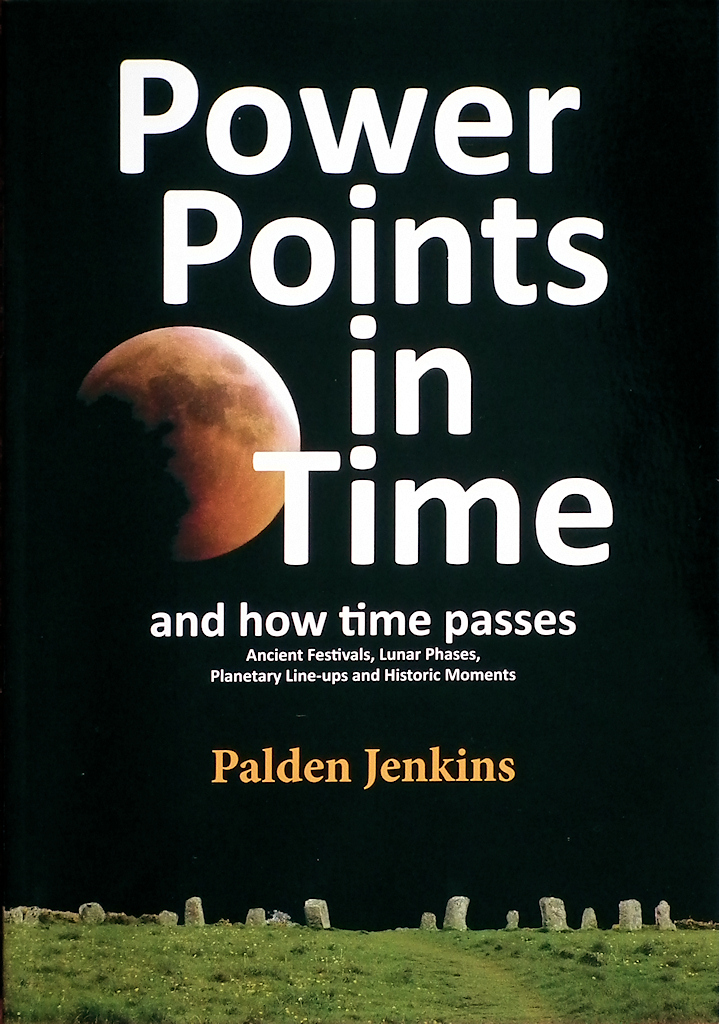
Here’s a timely excerpt from my book Power Points in Time, all about winter solstice.

With love from me, and Happy Everythings. Paldywan.

———————-

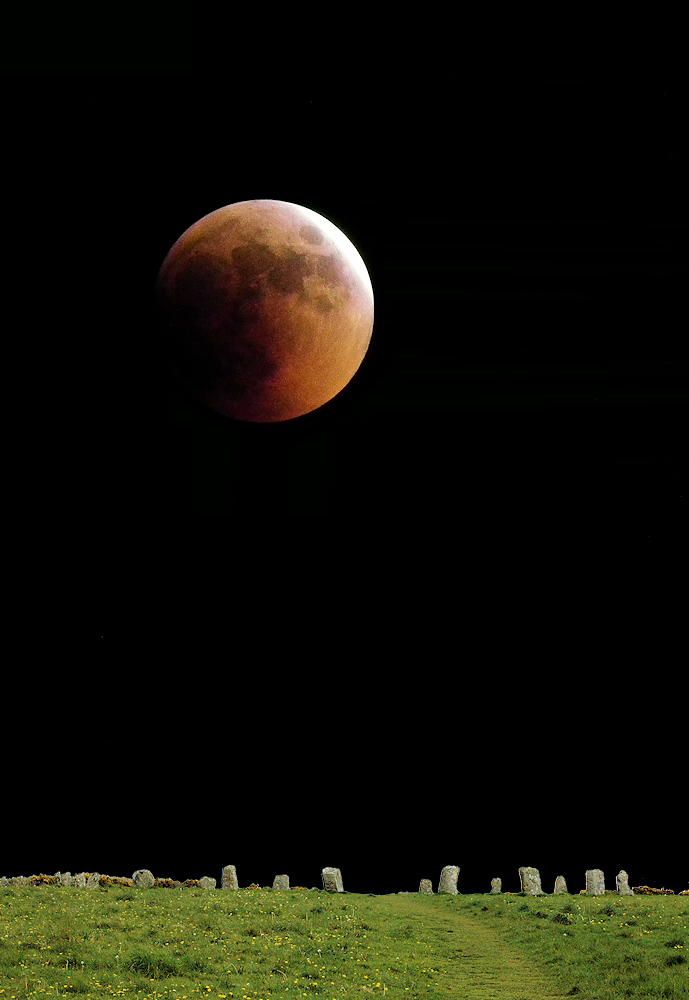
An experimental design for the back cover that wasn’t used

To deal with winter we must consolidate, come together and work at it. This shift happens fully at winter solstice, when the darkness is maximal and everything stands still. It’s a time for celebration around the fire, eating and making merry – or perhaps sorting out some of the family stresses that no one had time to work through before!

We have made it through the changes and challenges of life and we find ourselves still here, together once again as a kinship group of blood, soul or commonality – and it’s a time for grandparents, for harking back and reflecting on a sense of posterity.

This is our family. Ultimately our family is humanity, but our emotional security needs require something more local and personal, made up of people whose names we know, with whom we have common history and/or genetics. We are capable of feeling a personal connection with and looking into the eyes of perhaps 50-80 people at any time – beyond this things get impersonal, no matter how friendly we might be. This is the basis of extended families, whether genetic or of the soul.

A front cover design that was used

The fruits of the past year are shared and eaten, even to excess, after a solsticial pause for awareness or prayer, or for moments of wonder and goodwill. The seeds of the coming year are laid here in the relative quietness of this time of contemplation and rest. In former days when resources were meagre, the Yule feast represented a necessary stocking up of fat and nutrition to help everyone survive the winter. Modern affluence has turned this into an orgy of consumerist excess, sozzled stupor and TV overdoses, but it wasn’t always so.

To get through winter we must engage in regularised routines, fulfil our social obligations, act sensibly, pace ourselves and stay within the bounds of socially-acceptable behaviour. It’s time to be low-key, sleeping and recharging our batteries at the opposite end of the year to frenetic summertime, with its work and activity. Summer gives meaning to winter and vice versa. While autumn was a time of becoming, winter is a time for living with what we have and what we are. That’s what you get, and that’s that. If last year’s harvest was insufficient, you go hungry and hide in bed, lying low until a better time.

An illustration I did for the 1986 predecessor to this book, Living in Time

Forty-five days after winter solstice the ascending light is clearly evident. It’s still cold, perhaps even colder, but a change is apparent. This is the winter cross-quarter, Candlemas or Imbolc, when the Sun is around 15° Aquarius. By this time winter has been with us long enough to become tiresome, and something in us starts looking forward to a change. We relish the growing light. The first signs of growth will come in the weeks that follow – in Britain, that’s snowdrops followed by daffodils. In colder climes this is a snow-covered period of light and crispness, good for getting out the skis or skates, bringing in the felled logs on sledges from the forest, or breaking holes in the ice to drop a line through for fishing.

Acceptance of winter realities gives way to an urge for something different, a hankering for springtime. Yet the winter quarter is not done – not yet. The coming change is so great that we must be held awhile in arrested progress to help us put things on the right footing. Gardeners must dig the earth, spread compost and prepare seed-beds. Tools need fixing, houses need cleaning, things need sorting out – it’s a necessary time of preparation.

The back end of winter, leading up to spring equinox, is spent fulfilling our obligations to the situation we’re in, accepting that everything has its time. Something is stirring deep down – the hope, the aspiration, the necessary understanding that will act as a foundation for what is to come. By now we’re tired enough of winter to generate the will to wrench ourselves free of winter habits and move forward. A time of reality-adjustment is here, starting after Candlemas and peaking just before spring equinox.

———————-

You can get the book here, from Penwith Press

Aloneness and Loneliness

This is for people who are alone or feel themselves to be alone. This issue is frequently framed in the terms and perspective of the peopled, while many of the alone tend to be outblasted on this subject by the beliefs of the peopled – the idea that aloneness is something to be rescued from.

Here’s the rub: being alone is not a bad thing. Feeling lonely is difficult, though it also has its gifts. Aloneness and loneliness are two different things: one is a fact and one is a feeling.

Part of me has always been a hermit (the other part public), so I’ve been here, in that aloneness place, many times throughout life, sometimes willingly, sometimes not, and loss has been a big life-issue for me. At present I am alone for about two-thirds of the time and I live in an isolated place, remote from the madding crowd, a place of buzzards, jackdaws and gulls.

Loneliness has various components. One is the feeling of lack of company and closeness – missing people. This is exacerbated when it’s unwilling (as with refugees, people separated by fate or by difficult choices, and the bereaved or alienated). But it can be hard even when chosen. When I moved to the far end of Cornwall I knew that old friends were unlikely to visit me and I miss them, but it was my choice – instead I talk to them in my thoughts or online.

The issue is not just to look at the hard side and judge aloneness in terms of what is lost. Everything in life has its compensations. Sometimes it’s difficult figuring out what we’re gaining from adversity, but it’s important to look at it. A lot of the hardship that we feel involves judgements we impose on ourselves and others’ judgements we take on our shoulders. This has been my story and one consequence is that now, in late life, my backbone has literally given way (as a result of bone marrow cancer) yet this experience has really helped me shed a lot of that psychological load.

I’ve long been an author, editor and online content-creator. To do what I feel called to do, I’ve had to put myself under lockdown many times. When I wrote The Only Planet of Choice in 1992 I was out of sight for 20 months – some people thought I’d moved away! Generally, my self-imposed lockdowns have been regarded as anti-social – as if I’m uninterested in and don’t care about people. But no, if I don’t lock down, how can I do what I’m here for, that people like me for and seem to benefit from? The funny thing is that, writing another book in 2020, suddenly I haven’t been anti-social but doing exactly the right thing! My 2020 lockdown started in October 2019, due to cancer, not Covid.

There’s another aspect to aloneness. Lack of stimulus and interaction can lead to a literal slowing of the psyche. This helps if one needs to unwind from a busy life, but after a longer period it leads to a crisis of energy and orientation. This is happening for many aloners, and it affects the old particularly, and those with long-Covid and fatigue – and prisoners too. I’ve noticed it in myself. I’m pretty creative, and I don’t just sit there, yet I’ve been drying up recently. By degrees. Talking to myself too much.

I overcome this in three main ways: inner journeying, pursuing an interest and going out in nature. Recently I’ve been wading through history books about the Ottomans and the conflicts of the Britons with the Saxons 1,500 years ago – that’s how I get through long hours in bed.

I think inner journeying is important for people who are bedridden or fatigued – and we do it anyway, in our woozy inner meanderings. But it can be done more proactively, and there are methods and ways to encourage it. Make it into a project. You have been given a gift of aloneness that gives you space to do this, and for much of your life you have not had such opportunities. Make a project of your inner musings and wanderings – put it to use.

When you’re alone, it’s really good to get on with activity projects too. I usually have some things that demand thought and focus and some things that are easier or more druderous, some that are creative and some that need some discipline. This is something you can do with your life that has little or nothing to do with other people: it’s yours, and no one can change that.

A solitary time can be the birthplace of something new. All of the big projects I’ve set in motion throughout my life have been conceived when I’m alone. The quiet isolation has given me vision time, inspiration space, healing, resolution, exploration and enrichment of the human in me. This is a choice – a personal one. It’s what Buddhists call a turning in the deepest seat of consciousness.

It often involves coming to peace over many issues. We need to stop beating ourselves up, running ourselves down, diverting ourselves with fear, guilt, shame and self-doubt. These blockers cause us to withhold our talents and gifts. Get this: if you care about this planet and about humanity, then activating your talents and gifts is not a choice but a duty. It’s what you’re here for, to rise to the best of your potential and to make a contribution. Forget should. Do what you can, and creatively, and your way. Whatever that is. That can include things that society or the people around you don’t necessarily deem productive or advisable.

Even if accepting aloneness doesn’t lead to dramatic outcomes, or even if we’re slowly dying, there’s something profound here about coming to peace. We all have regrets, painful memories, shadows from the past. I do too. We need to recognise them, even cherish them, and release them. They do little good, except to teach us what not to do again. Sometimes we can act to redeem these issues with the people concerned and sometimes we cannot.

Even if we cannot, releasing them still, in a funny and mysterious way, relieves the situation with people we no longer even have contact with, or we cannot face, or they might even be dead. In all interactions and conflicts it always, always, takes two to tango, and we can do something about our bit – the emotional tangles within ourselves that have complicated the issue for us and for them. Shed that load. Forgive and be forgiven. Move on.

Then there’s the fear of madness, deep in the Western psyche. Fear that you’re losing the plot, disengaging too much from groupthink and from that safe set of deeply embedded, culturally-defined judgements that were hammered into us as we grew up, about what’s right and wrong. Well, here’s a thought: in my life I have led and been part of hundreds of sharing circles, and it has been clear that many of the most insightful contributions in such circles have come from the quiet ones, the ones who struggle to articulate themselves. The ones who anticipated that they’d be misjudged or they’d say it wrong. But they can bring forth gems that they’ve mulled over very carefully, and sometimes quiet people hold the ace cards.

Quietness and disengagement are not madness, and just because society harps on endlessly about ‘mental health’, it doesn’t mean you ‘have a condition’. You see, society is mad, absolutely insane, and everything is seriously upside-down. Madness simply means that you differ from a mad consensus. You might be on your own with that, except for people who understand you, but that’s not the main issue. The main issue is that our world today is steered by people who are so busy and peopled that they don’t know themselves well enough. They don’t have time and space to look at what’s really going on. There’s something in aloneness that allows us to anchor to deeper verities, and the majority or the dominant consensus in society can be based more in hearsay than in reality. This is a global problem. And rural areas (most of the world) are being governed by people in big city buildings.

There’s more to say on all this, but I’ll stop here (my brains are giving out). But here’s a message from old Paldywan Kenobi to friends and strangers out there who are on their own: be alone well. Do your best with it. Exploit its possibilities. This transforms loneliness into an aloneness that is at peace with itself.

Oh, and one more thing. Absence makes the heart grow fonder. Lynne, my partner, and I, are together about one-third of the time (she lives two hours’ drive away), and sometimes we miss each other. Yet, sincethis is so, we have an amazing relationship that works really well. For me, aloneness makes those relationships that I do have so much more meaningful. You can be close to people even when you’re far apart, even when you don’t know where they are and what they’re doing.

Sometimes I find myself thinking of a faraway or long-lost friend, having good inner discussions with them, and then, later, I find out they’re already dead! So, with people you love, even if distant or gone, listen, and talk to them inside yourself, because you are together at that time. If anyone accuses you of being mad, just remember, they’re afraid. Afraid of their aloneness, afraid of getting caught out, exiled to the far-off realms of ‘mental illness’.

For the truth is, together or apart, there are light years between all of us. Yet we’re all here together, and this is it. No one is here by accident, and this is what we came for. So if you find yourself alone nowadays, remember, do it well. There are probably a billion souls on Earth who are alone, whether stuffed away in a high-rise or hidden away up a mountain, so you’re in good company.

Okay, I’ll leave you alone now. Time to put the kettle on. Love, Palden.

Forgiveness

loebar_14378

Staggering around with a zimmer frame at the age of 69 wasn’t part of my plan. But then, I’m being taught a new level of acceptance: what is, is, and that’s that. Simple. It’s fascinating, because this process brings up issues, issues about the acceptance I’ve faced in life.

I’ve been searching inside myself for the causes of my bone marrow cancer. There are the obvious causes such as radiation exposure, environmental toxins, vaccines, fillings… though I’ve had a reasonably good diet and lifestyle for fifty years, for what it’s worth. But there are deeper causes too.

I’ve been going through a deep forgiveness process with my late mother. I don’t think she really wanted me or felt ready to have me when I came along. During pregnancy my father went far away to start a new job and she was, in effect, a single mother at my birth and for the first 4-5 months until she, my elder brother and I moved to join my father in our new home. Things had not been at all easy after WW2, but my parents made sacrifices, worked hard and did their best in a hard situation, and bless them for that.

I was reluctant to be born. I knew I had to do it, but it was a teeth-gritting thing. I didn’t come for the chocolate and rewards: I came because my soul knew there was a job to be done. In my birth chart the Moon squares Saturn and the Sun conjuncts it – a lot of rock-and-hard-place stuff. So my mother and I matched each other, and we did what we had to do. Don’t complain. Don’t make a fuss. Think how lucky you are. So we did. We made do. Throughout my life I’ve accepted many things that weren’t easy. Not least having loads of shit dumped on me and terrible dishonesties, and dealing with it.

This has made me good at working in war zones and other challenging situations, and without this gritty attitude a lot of things wouldn’t have happened and a lot of people wouldn’t have been inspired to break through in their lives. So it has paid off and I’m happy about that. I’m grateful too for a heart and a conscience that is relatively clean – as they go. This cancer experience allows me to drop stuff, forgive the past and draw a line on it, starting a new life. It has been my story – starting over again and again.

So cancer, for me, is a gift in disguise. Right now, I’m filled up with chemicals, my hands shake, I’m behaving weirdly on steroids, yet I’m growing stronger. I can now get out of bed to fetch something or go to the toilet! This is a big achievement. Sounds funny. But it gives me more freedom and relieves Lynne of some of her carer’s duties. So the chemicals are beginning to work. They’re doing so partly because of the compensatory holistic remedies I’m taking and also, I believe, because of attitude.

This is a core issue around healing: spirit, belief and will-to-live. Without these, the healing juncture I’m in becomes more empty. What am I doing this for? What is there to live for? What will I do differently with a possible five, ten or fifteen years? If my spirits are infused with hope and a reason to keep going, I shall stay alive as long as I need – this I believe, and I’m betting on it. I’m also starting to write a book – my eleventh.

I’m writing down all that I understand about the prehistory of West Cornwall, dense as it is with ancient sites. To me, these ancient sites represent a neolithic and bronze age geoengineering project working with the very issues of climate, biodiversity and human society that we face today. There’s even a chance that the bronze age megalith-building project was a response to an earlier climate catastrophe or a plague that severely reduced the people of neolithic Cornwall around 3000 BCE.

For fifty years I’ve been confronting sceptics, in the form of archaeologists, academics and people who believe they’re being rational when actually they’re being emotionally subjective, hanging on to a worldview that lacks imagination and doesn’t really work when it comes to understanding the megalithic culture.

This came to a head in September when I published some research in a Facebook group, asking for people’s insights. What I got was a put-down, with ideological scepticism from two characters who closed down the conversation from its start. These are what astrologer Rob Hand calls ‘Saturnine brain-police types’, or people who consider it their duty to protect others’ thoughts from subversion and self-questioning.

These two shut down all debate amongst the other people in the group. So much for peer review. Then came the cancer diagnosis. After that I made a deep-seated decision: to come out with it, speaking my truth and ideas more clearly, in a well-put way, to give these quasi-rationalists a counterswipe and lay out a completely different picture. Because beliefs such as theirs are destroying the world.

It’s already part-written on the Ancient Penwith website, but I’m sharpening it and no longer hedging. This is stage one of my revival process. With other interests – parapolitics, society, humanitarian work, extraterrestrials, the world’s future – there’s more to do before I pop my clogs. If, that is, life gives me the time and grace.

Problem with mission-driven people is that we don’t let up until the job is done. It’s relentless. Meanwhile, the vision of love and peace with which I emerged into adulthood in the 1960s hasn’t happened. That’s been hard to live with, but it’s what happened anyway.

There’s a choice here to shrug shoulders and give up – resignedly getting stuffed and drunk at Christmas instead – or to beaver away endlessly toward a historic-scale goal that won’t be fulfilled quickly, though in the next life or the one after that there’s a greater chance. This motivates me now. In between cups of tea.

This is the core of our healing process, whether or not it’s cancer egging us on. What are we here for and what are we doing? Right now, a Saturn-Pluto conjunction is happening, with its peak on 6th-14th January. Last time this happened it was the Falklands War and the Polish Solidarinosz uprising in 1982. It’s about ruthlessly hard facts – not what you want, but what you get. What actually works? What’s really true? How hard are we willing to work for it? When actually will we lose our fear?

Solstice and Christmas are a time for reflection and there are things worth contemplating instead of getting blotto. Do we really want to go along with a mass-murder of turkeys or do we truly support ecological sustainability? I’m one of the awkward squad on such matters, an Aspie like Greta, who keeps bloody well stirring things up. Cancer is sharpening my wits and undermining my hypocrisies. Yet this honesty process brings a feeling of relief, an unburdening of complicity. It’s literally enlightening my weak hips, making them more able to support me.

To the extent that I can now stand up, leaning precariously on my ‘walker’ (zimmer frame), tottering into the kitchen to cheer up Lynne, who is valiantly working away at all hours to earn a living because our wondrous system of social care in Britain doesn’t actually support cancer carers like her. Saturn and Pluto are doing their business here with cringeing efficiency.

So, Happy Everythings, everybody. This is what we get! Choose your devils to blame (good old Boris), but don’t forget the devil within. We can turn this round. Everything is a gift. A clock is ticking. Now it’s time to make good. That’s what’s happening for me, at least – that itchy feeling inside that winkles out a further turning in the deepest seat of consciousness.

Forgiving first involves remembering, and not forgetting. It’s worth remembering awkward things, and things that need repeated re-forgiveness. Forgive the world. Yes, it’s hard. But forgive the world. Because it’s an uncanny kind of mirror.

With love, Paldywan