Holy Land

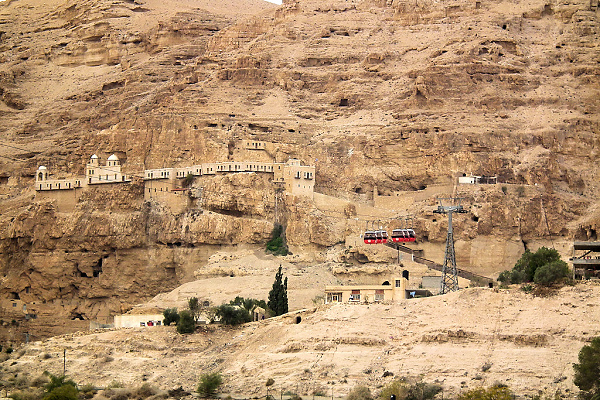
Jeez woz ‘ere. Looking over the Judaean Desert toward the Dead Sea and Jordan

Last night (Sunday 22nd October) I had a very profound meditation, more like trance – I was carried away and ‘out of it’, surfacing far later than the usual time, after more than an hour. I felt quite at peace. This morning I feel quite changed – a bit wobbly yet feeling alright too. A few thoughts came up this morning that might be of interest or value.

It’s important to remember that those who are killed in disasters like this are well dealt with. They are withdrawn before pain or horror cloud their passing. They are pulled out in micro-seconds and instantly taken into care, as appropriate to each soul. They don’t seem to experience the impact of whatever hits them or whatever is the cause of their death. If they do experience it, they are detached from it, without accruing psycho-emotional damage. They witness it (for the soul-learning therefrom) but they are put into a kind of state of grace and objectivity where they are not damaged by it. It’s a kind of fast-tracking transitional process.

I’m more concerned about the living and what they are going through.

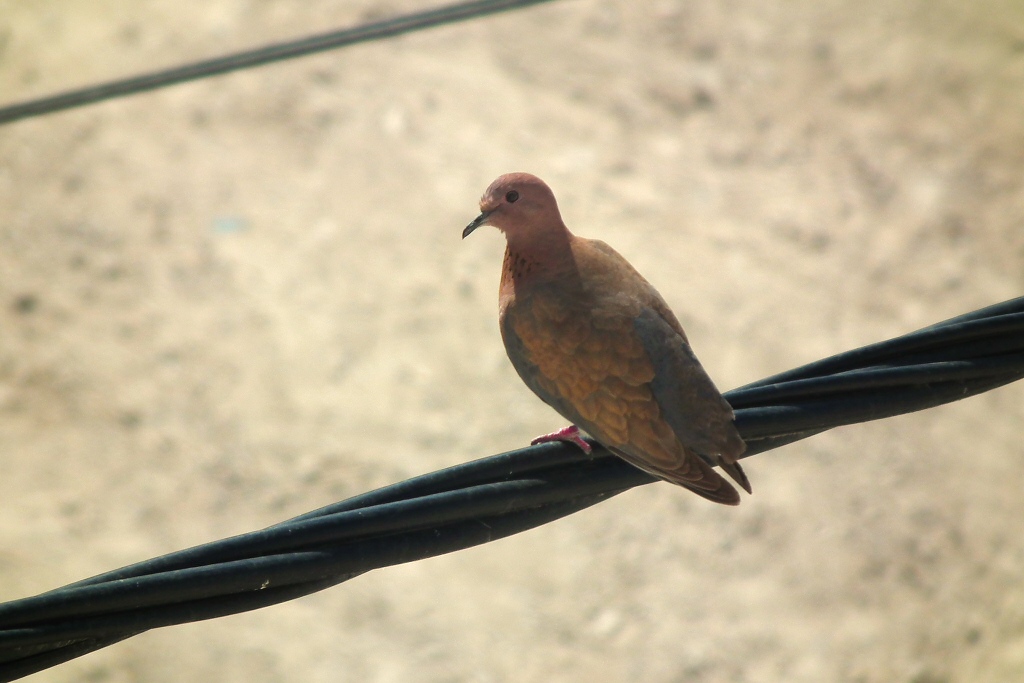
A Palestinian dove

There are Christians in Gaza as well as Muslims – and also seculars, who are often forgotten. Many of the Christians belong to ancient pre-Catholic, pre-Orthodox churches. (By the way, Arab Christians also call God Allah – which means ‘the God’, to distinguish it from a pantheon of gods.)

Yet I find Christians can have more difficulty passing over – more of a struggle – than Muslims, who seem to have a clearer sense of returning to Allah. Perhaps Christians and Jews have more of a feeling of distance and separation from God, involving more striving, more doubt, more questioning, while Muslims seem to have more inner confidence in their relationship with Allah. Not totally, yet they seem inherently more inclined that way. Hence, perhaps it is the case that they manage dying a bit more easily. In my observation. Speaking as an aged-hippy esotericist with Buddhist inclinations.

If you’re tracking Gaza inwardly, remember the people of the West Bank and the Palestinians in Israel and Jerusalem. ‘Arab Israelis’ are 20% of the population of ‘Israel proper’ and 40% of the population of Jerusalem. Some are Christians and many are Muslims – and they’re both friendly to each other. Arab Israelis aren’t dying in numbers, but they’re going through extreme discrimination and insecurity. Meanwhile, the West Bank is simmering and in danger of boiling over.

However, as an individual, while being aware of the complexity of this situation, it’s better to do small things well than big things badly, so give attention to those aspects of this situation that you are drawn to. Between us, we’ll cover a variety of things.

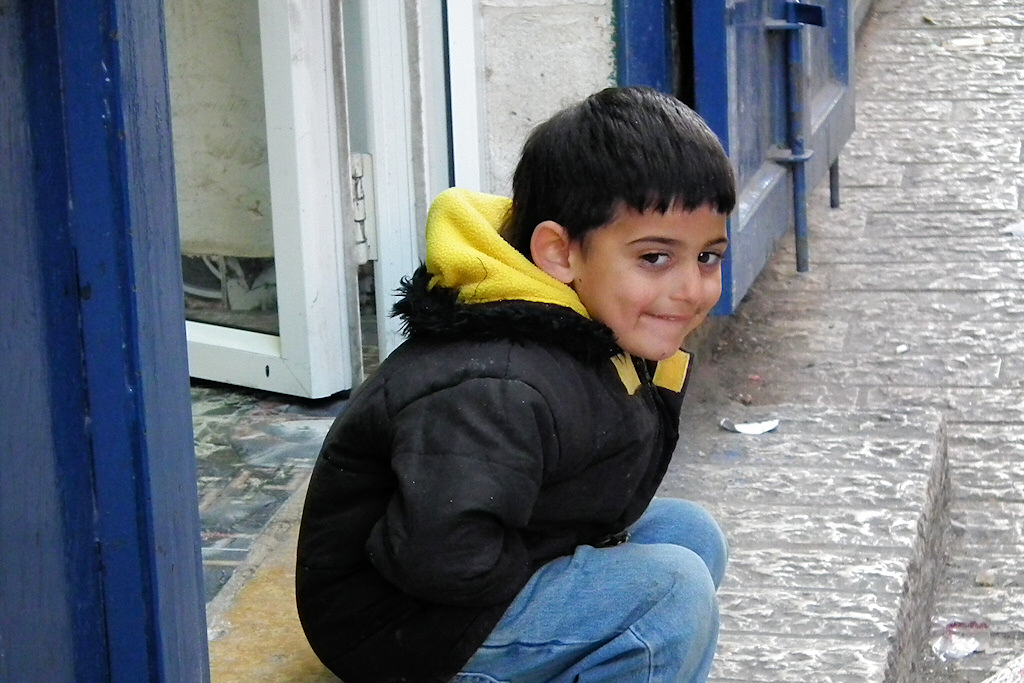
A boy in Jenin. He knows the sound of flying bullets.

This is big – a paroxysm of human madness where the heat gets high and the light grows dim. Negative influences are having a field day and, to some extent, we cannot stop this and must let the fire burn out. We cannot really affect what actually happens (the forces at play are big and complex), but the secret lies in seeing if we can flip, ease or assist the way it happens, so that there are glimmers of light, more opportunities for redemptive things to happen amidst a disaster.

There’s a lot of opinion and propaganda flying around. Well, in the ‘fog of war’, everyone is right and everyone is wrong. So take note of what people say and understand what lies behind it for them, while also observing your own responses, biases and predilections. Don’t necessarily block off from it, but try to avoid buying into the frenzy. Form judgements slowly. This is a battle of thoughts and feelings, intermixed with anger, and it’s good to try to hold that perspective.

It is possible to hold such a perspective while still having your own personal leanings – if, for example, you are Jewish, or you empathise with Arabs, or you have friends on one or both sides, or whatever. It is possible to run these in parallel, at least for the duration of this madness-epidemic. It’s an awareness exercise.

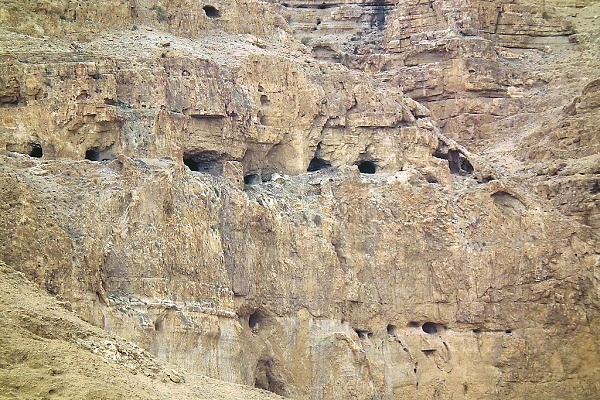
Barr al-Khalil or the Judaean Desert

This part of the world is often called ‘the Holy Land’. Yet holiness manifests itself there in emphatically unholy, paradoxical terms. It is a magnified microcosm of the whole planet, like a crucible, and Earth’s core issues are all present there. It’s a very small patch of land, the same size as Wales, Albania or New Jersey, in which there is immense complexity, intensity and confusion.

Still, there’s a lot of light there, and the contrast makes the issues so much starker. As a microcosm, what happens there affects everywhere else far more than its size and population would otherwise suggest. It has a similar population to Tajikistan, Togo, Sierra Leone, Laos, Austria, Portugal and Greece, Virginia or Washington state.

The situation in Is-Pal is very much affected by influences from elsewhere – not just military and economic but much deeper, more profound and hidden.

This includes positive influences too: there has been no shortage of Native American medicine wheels, Tibetan pujas, Bah’ai prayers and interfaith ‘encounters’ in this land, and while I was there I met amazing people from all over – even Siberia, Indonesia and the Amazonas. Amongst Israelis and Palestinians there are amazing people. Do not fall for the idea that this is just a simple two-sided battle of hearts and minds – it is multiplex, and the quality of souls in the ‘holy land’ is surprisingly high.

Young peacemakers from a variety of countries, with the mayor of Al Aqaba (who was injured in the first intifada in the late 1980s – he spent ten years in Israeli jail too)

To some extent we must let it play out, and to some extent we can bring some relief, space and blessing to this conflagration. This is a classic high-magnitude soulquake. Above all, stay steady. Keep returning to centre. Stay benign and well-wishing. If you get steamed up and in a mess, go take a walk, get some space and let the knots within you unravel – and take that relieving walk on behalf of those who cannot.

As Pluto enters Aquarius, we’re entering at least 15 years of ‘the battle for the hearts and minds of humanity’. This conflict is one such situation and there will be more, so get used to it and try to work with it. Because it is necessary. As is the case with Is-Pal right now, many of the world’s problems arise from issues we have not tackled and sorted out before. Chickens are coming home to roost in droves, in every department of life and every country. Issues are being brought to our awareness through the events manifesting in our time. These are the material through which we work out these issues.

There will come a point in coming decades when we get to The Big Issue. In this sense we are being given a gift, a collective training, through being given escalating waves of crisis to face. We’re being loosened up and forced to think, to see things in different ways from before, and from a larger perspective.

Palestinian kids on the whole have good fathers

In this sense, something right is happening here – we’re at a ‘never again’ point. This isn’t about cease-fires: this is about ending war and oppression, historically, and events like this will repeat until we get it and do it.

Oh, and by the way, put in a prayer for people in the UN and NGO sectors, from all over the world, who represent a neutral, global viewpoint in the conflict, and who take the strain in very practical ways. For some of them, it’s at great risk to themselves and, for others, it’s round the clock, every hour of the day and night. Stressful and often unthanked – they’re holy warriors.

With love, Palden.

Marwan Barghouti, regarded as Palestine’s Mandela. He’s been in Israeli jail for the last 20 years and they’re likely to keep him there. A mural on the separation wall at Qalandia, West Bank

In the 1990s I ran some meditation camping retreats called the Hundredth Monkey Project (M100). We worked in a circle of 70-80 people with world issues. We didn’t prescribe meditative methods but, to help people get oriented and give them ideas, a method was suggested as a basis to work with. If this interests you, it’s here: www.palden.co.uk/cs06-m100meditation.html

If you’re a member of a group working with issues such as these, then you might be interested in this material about talking-stick processes: www.palden.co.uk/cs07-talkingstick.html

Site: www.palden.co.uk
Podcasts: https://podcasters.spotify.com/pod/show/palden-jenkins

Book Pictures of Palestine: www.palden.co.uk/pop/

Altruismics

Space. Near Falmouth, Cornwall

I woke up this morning with ‘philanthropist‘ going round my head. So I decided to look up how it was defined.

A person who seeks to promote the welfare of others, especially by the generous donation of money to good causes.” Oxford University Press. Interestingly, they found that the greatest use of the word in Britain was in the 1850s, the peak of the Victorian era and the industrial revolution, declining gradually until it sank a lot during WW1 and afterwards, and it started slightly picking up only since 2005ish.

A philanthropist is someone who donates substantial resources, often including time and expertise but always including substantial financial resource, to a particular cause, area or social issue.” That’s the Charities Aid Foundation in UK.

Anyone can be a philanthropist and be more effective at making a difference. Here’s how. A philanthropist is a person who donates time, money, experience, skills or talent to help create a better world. Anyone can be a philanthropist, regardless of status or net worth.” That’s a bit closer to where I stand. It comes from an American organisation called Fidelity Charitable.

Another source defines three types of philanthropy: relief, improvement and social reform. In my work in places like Palestine, I’ve focused mainly on social reform – a longer term perspective that builds conditions leading to improvement. This is trans-generational when it comes to questions of mass trauma-healing – which is the approach taken by the Hope Flowers School that I worked with in Bethlehem. Their motto is, ‘every act of violence begins with an unhealed wound‘ – so the task is to make progress on healing those wounds. The school originally had Muslim, Christian and Jewish children but, in 2001, during the intifada, the Jews withdrew, largely for safety reasons – understandable, though regrettable.

According to the Borgen Project, “Philanthropic people show selfless concern for the welfare of others and venture to alleviate the struggles of others without seeking anything for their own personal benefit. Truly philanthropic acts are done without expectation of compensation or recognition of one’s efforts.” This might be so, but this ‘without expectation’ bit doesn’t cover the expenses incurred, and covering my expenses has always been problematic. When in the Middle East, I still had to pay my rent and bills back home, as well as covering travel, living costs and helping needy people. I still do this with the remote work I do now from my desk at home.

I met this guy in Bethlehem. He’s now 20ish. I wonder what he thinks right now?

In this life I have not been a financial philanthropist. Many people believe that donating money is the only form of philanthropy, but also, out in places where there is need, everyone tends to drive, elbow and oblige me to raise, funnel or fix money. They perceive this as their primary need, and that’s true in the short term and not necessarily true for the longterm background conditions I’m best at working with.

This has tended to smother and detract from what I’m best at doing – human and spiritual input and multilevel intelligence. The thinking needed for fundraising and admin is very different from that of healing and magical-spiritual work, and I cannot do everything. This has been an ongoing dilemma.

It hasn’t helped me support myself either. People tend to think that, since such work is a chosen vocation, I needed no support or already had the funds. The prevailing thinking is that, if you’re doing well financially, this enables you then to act philanthropically – and only then. For many people this point never arrives, so they don’t do it. But it needs to come from a deeper place, from a sense of calling. That’s what was the case for me and, in late life, I’m really glad I did it, even though I’m quite poor now as a result.

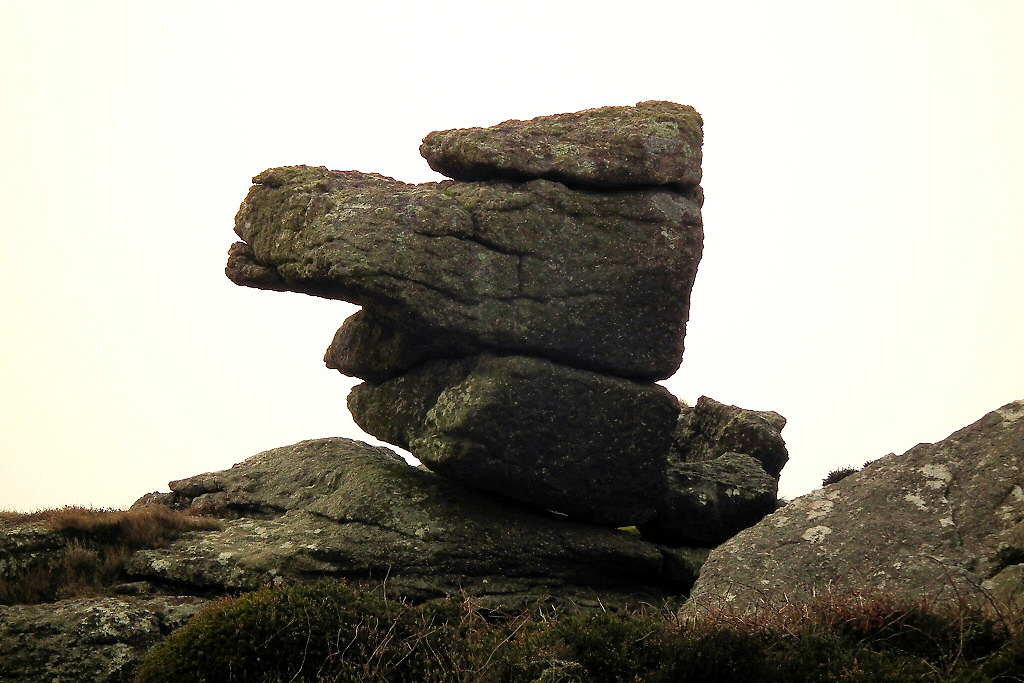
Carn Barra, West Penwith, Cornwall.

When in Palestine and Israel, there were two main age-groups of volunteers and activists from abroad, most of them self-financing. One group was around age 25-35 (and 60% female) and one was around sixty (and 60% male). The thirtysomethings were doing it out of principle, setting aside career progress for what they believed in – though for some it was a voluntary internship to help a career in the NGO sector. Some had law, business and accountancy degrees, working in ‘lawfare’ – legal improvement of the rights of Palestinians and helping Palestinian NGOs function.

The sixtysomethings were good-hearted types, often retired from careers in education, social work or healthcare, who had raised and despatched their kids, perhaps they were newly divorced, and they had the resources and long-accumulated wish to at last pursue their calling in a place like Palestine. Both of these age-groups were committed, brave and valuable people, nevertheless driven by slightly different motivations. Many of the older ones contributed to the relief and improvement areas, while many of the younger ones contributed to reform.

There’s an innate philanthropy built into Palestinian society. It’s an attitude. It’s shared by some but not all Israelis – particularly those brought up in kibbutzim or living in settlements. It’s a kind of generosity economy, where everyone is brought up with an ethic of mutual help and contribution. This is social resilience, and when society is under duress it really works. This is something we in Europe need to learn – it’s in our group memory but it has lapsed.

When a young person thinks about their future career, they don’t think of personal ambition as much as the contribution they can make, and the likely slots that will appear in their clan or neighbourhood in future – whether as a dentist, embroiderer, car mechanic or even a professor. If the local midwife is growing older, a younger one will be thinking of replacing her in ten years’ time.

The holy well on Trencrom Hill, guardian hill of West Penwith

Over the decades I’ve banged on a lot about life-purpose, helping and empowering people to identify and pursue it. Here comes a repeat quote, but it’s important. The Council of Nine (who thirty years ago jogged me into working with Israel-Palestine) were asked whether there was one thing that could change and transform the world. They simply said, “If everyone pursues their life purpose“.

This gets bigger. They didn’t say this but, by extension, omitting to pursue our life-purpose, or withholding it, for whatever reason, is a soft version of a current major concern: crimes against humanity. It is the indifferent, inherently self-serving ethic of Western and, increasingly, global culture, that permits situations such as Gaza to happen. Because we don’t stop it.

People expressed surprise and horror at the precipitate actions of the Gazans when they broke out and violated so many Israelis, starting off the current round of trouble. Anyone who actually watches anything more than the urgent splutterings of the headlines knew something like this would come. It continues a long, long story and it didn’t happen out of the blue.

The surprise arises from global indifference, which prefers stuff like this would just go away. To be fair though, there’s also a surfeit of other events, tragedies and concerns competing for attention. Israeli hubris was caught napping. The main surprise here was the strategy and audacity of it. I do not encourage violence and have been a lifelong peace-freak, but are we really to believe that the Palestinians, generally unheard, blocked and disregarded, are supposed to act like polite gentlefolk, shrugging shoulders and nobly accepting their lot without a whimper? How would you like to be a 20 year old in Gaza, with no future? Or his or her parents?

Palestinians. They’re terrorists, as you can see

Today, the Gazans are so hungry, thirsty, desperate and traumatised that it would not surprise me if there were another mass breakout, into Israel or Egypt – of mothers, families, grandparents and youngsters seeking food, water and safety. Later, Europeans will duly complain when another wave of refugees comes to our shores, but our endemic indifference has caused much of this. Refugees arrive in Europe and America to give us a gift, a gift of humanness, empathy and philanthropy. Amazingly, it has even been found scientifically that it makes us happier. Indeed, there’s more to life than comfort and security.

I am not saying ‘admit anyone who claims asylum’, but I am saying we need to be more philanthropic, to understand that changes are happening even to us, and to act longterm to deal with the sources of the problem. In the case of Gaza it concerns the historic and current issues arising for the locals from the arrival and behaviour of the state of Israel, and the wider global issues that allowed this to happen the way it did. In Britain, two key fomenters of this problem are the Foreign Office and the media.

So, life-purpose. Are we here simply to pay our bills, tread our mills, keep investors happy and, at the end, collect our pensions? This is a personal question for every single soul. We need to ask ourselves, ‘Am I rising to my full potential as a human philanthropist? Or a human anything, for that matter?’. The answer is both yes and no, and the yes bit needs acknowledging and the no bit needs some attention. [For an audio talk by me, try this.]

Here’s something interesting that I discovered. I have long known I have healing abilities but in Britain I have chosen not to work as a healer, except as an astrologer (a perceptual healer) and a community activist (a social healer). But when I went to Palestine, witnessing the needs of people there, I suddenly started doing healing work – spiritual healing, mainly, and remote healing. On people’s backs, stomachs, wounds, hearts and spirits. What surprised me was that my abilities were dramatically amplified – people were genuinely and visibly healed, and deeply so. They’d approach me later to say so, and I was much moved, rather shocked by that. It was as if the scale of need pulled out almost miraculous superpowers.

But there’s a difference. In Britain, when I’ve done such work, while people do benefit, they tend to continue with the life-patterns that caused the problem. From a healer’s viewpoint, that’s not very satisfying. But in a crisis zone, where despair, danger and dire need are big drivers, I found people really did take on board whatever I said or did, and they were so grateful, and they helped me back. Also, it was liberating to work without charging.

Sitting on the wind. Godrevy, Cornwall

I’ve never liked charging for healing or transformative work – how do you value the fixing of a major issue or the saving of a life? Twenty years ago, as an astrologer I charged £60-70 for a two-hour session but I needed £250. I did a lot for free or underpriced, because there was a need. I’d have felt happier with a salary, like a doctor, so that charging didn’t enter the equation. The ethics and politics of our time did not allow it – after all, astrologers are charlatans, aren’t we?

If you were a Palestinian in Gaza right now, you’d be enacting your life-purpose – whatever you’re best at. The same is happening for some Israelis. That’s how people survive. When the chips are down, you do what’s needed, regardless. If you can clear rubble, cook, minister to people or mind the kids, that’s what you do. No qualifications or vetting needed – just do it, if necessary till you drop.

Saturn is in Pisces: this concerns philanthropy. Without it, the world would be a much sorrier place. Philanthropy is not an option: it is a necessity, like sewage disposal. Crises such as Gaza – and they’re coming at us quite a lot nowadays, and it won’t slow down – shine a light on our life-purposes, for each and every one of us.

What am I here for, really? What am I doing about it? Our calling is programmed in us from the beginning. We know it. It is inherent, not learned in courses or demanding a qualification – it’s a natural, inbuilt gift and skill. It comes easily. Yes, we are all innately talented. If we let it out.

With love, Palden

A young Bethlehemite friend, now in his twenties

PS. I’m blogging a lot at present and it’s not really planned. It’ll die down again! If something comes up, I start blogging and, typical Aspie, I don’t stop until I’m done. There’s stuff going on in places where parts of my heart lie and, since I can’t get to Is-Pal (or West Africa), this is how I let it out. Together with psychic-spiritual work and handholding certain individuals in the thick of it.

At present, I am ‘holding’ Maa Ayensuwaa (on the right), a native healer in Ghana, who is lying in hospital, lacking painkillers and hoping money will come along to pay for an operation for fibroids – it’s wear and tear from helping people and going without. I can help her only in spirit, though our connection is such that (I hope) it works.

Site: www.palden.co.uk
Blog: https://penwithbeyond.blog
Podcasts: https://podcasters.spotify.com/pod/show/palden-jenkins

Brinkmanship

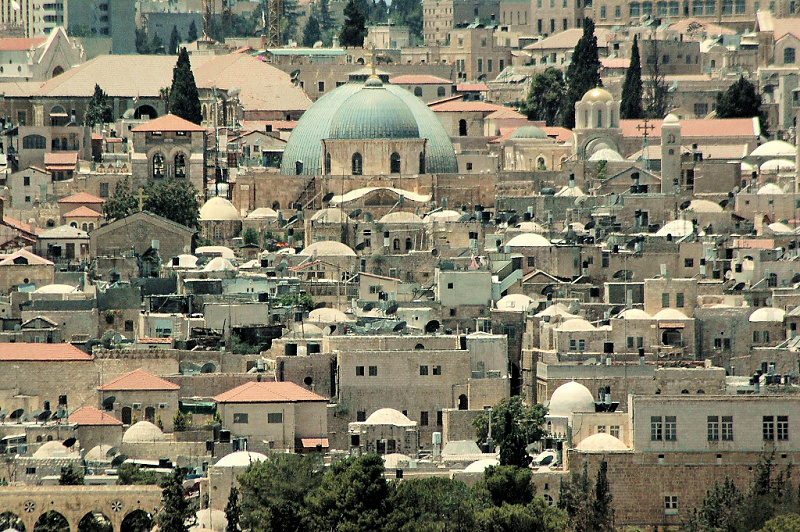
The Old City of Jerusalem

A good friend of mine rang up this morning. She’s Jewish – some Zionists might call her a self-hating Jew – who shares the collective feelings and pathos of Jewry while having grave reservations about the behaviour of the state of Israel. She’s one of those thoughtful Jews who is brave enough to talk to someone like me, who has worked a lot with Arabs.

She comes round for tea and we have great discussions, both of us enjoying the contrasting insider knowledge we each have. Of course, what we face now, in and around Gaza, puts her in a really difficult position. She struggles with it inside herself and she talks with me about that struggle. If you have any empathy and conscience as a human, whatever position you take, it’s really difficult, this stuff.

A few days ago she was with a bunch of eco-activists with whom she’d worked for ages. They were vehemently pro-Palestinian in a way that she found difficult, because they were anti-Israeli. She’s not paranoid about anti-semitism, but it still hurts when people vehemently disapprove of your own people. Her friends had taken sides.

Fifteenish years ago in Palestine, I had a similar problem: I worked with Palestinians but I’m not anti-Israeli – I’m fundamentally pro-people. To me, helping Palestinians doesn’t mean opposing Israel – actually, I felt I was helping Israelis by helping Palestinians, but only a few Israelis would get what I mean by that. Seeing everything in a polarised, partisan way is, dare I say it, inherently hypocritical – it makes Them bad and Us good, as also does the current over-use and misuse of the term ‘terrorist’.

It’s a cover-up, a denial of responsibility, a projection. In my reckoning, it’s part of the problem. The partisan approach taken by the governments of UK, Europe and USA, which they believe to be a show of strength, is undermining the remaining, sagging respect that the Global South – the world’s majority – has for us, and this will lead to difficulties further down the line. We need to stop politicking and act like mature nations.

Citizen peacemakers from both sides, meeting at the All Nations Cafe. This photo was 12 years ago, but it’s still going, led by a brave former Israeli soldier

When working in Palestine I had some difficulty with zealous Palestine activists from abroad who commonly adopted a partisan position: within themselves they had declared war on Israel, even if expressing it only in the form of olive-picking and visiting frontline towns like Tulkarm, Hebron, Jenin or Nablus to witness the damage and the pain. I respect such people for their humane feelings, empathy and commitment but also I felt they needed to do more homework, to go a bit further in their understanding and feelings.

They made life more difficult for people like me – amongst other things driving Israelis against humanitarians. Many activists didn’t really like me, and my book Pictures of Palestine hasn’t been popular with many of them. In my teens in Liverpool I was wedged between Protestants and Catholics, and Mods and Rockers – I started my peacemaker education early! So this issue isn’t new.

The Matrix of Control. There are hundreds of these things around the West Bank

If we take sides, we start projecting a subjective and emotive image on the Other, upon which subsequent actions and atrocities are then justified. It makes Us right and Them wrong, so that We claim legitimacy in questionably punishing Them for their crimes. In and around Israel-Palestine, as soon as conflict breaks out, most people lock into this charged mentality, setting all other considerations aside.

It’s a form of psycho-emotional slavery, and the puppet-master controlling the strings is the Lord of Division. It’s an endemic mass-psychology that needs to polarise, dehumanise and denigrate the other side so that we can overcome the guilt and shame of performing wrongs in the furtherance of our own beliefs – even when those beliefs do not support committing such wrongs.

This mentality leads to consequences. As I write, Israeli forces are poised to start a ground invasion of Gaza. From the Israeli viewpoint, I can see why they are taking this approach: they need to eliminate Hamas, and they’re driven by a ‘never again’ feeling – never again do they want to be threatened and harmed in this way. Fair enough. Except there’s a problem. It’s unlikely to work.

Israelis may kill as many people as they like but they won’t be rid of the problem, because those who are left behind will be hurt. The pain passes down the generations. The cycle of uprisings has repeated itself roughly every twenty years since the 1930s, as each generation has grown up and sought to change things.

The damage done to people and to land is tragic – a ground invasion of Gaza will cost both sides very high. Innocent Palestinians will be mown down, and committed freedom-fighters will sacrifice their lives. Israeli troops will die, one by one, hit by snipers, booby-traps and innovative Gazan devices. Jewish and Palestinian mothers will rue the loss of their sons and daughters.

Israelis will not and cannot eliminate Hamas, even if, improbably, they eliminate all of its fighters and the main characters who head it up. They have not managed to do this before, and they are unlikely to achieve it now. All they can achieve is a costly delay until the next flare-up happens. The reason is this: every time Israel fires a bullet, it creates several new fighters taking up a gun – frustrated young men who seek a future and cannot have it.

The Matrix of Control: a flying checkpoint (upper left), imposed randomly and causing long queues on the roads.

Instead of getting depressed and committing suicide quietly to themselves, they join one of the militias, with the idea that their sacrifice might benefit their people. This isn’t so strange: my own father did this in WW2, volunteering his life for King and Country (except he survived, minus a leg).

Hamas was founded in the first intifada of the 1980s. Ironically, Israel secretly funded its founding, to counteract the Yasser Arafat’s PLO and divide Palestinians against each other. Well, that backfired. Hamas speaks for the embattled feelings of Palestinians and, if there were an election instead of a war, Hamas would most likely win. They won in 2006, in a free and fair election, undermined and annulled by Israel and the West – and they would win now.

To many Palestinians, Hamas represents the best of a very bad set of options – not least because it is relatively free of corruption, it has principles, and Hamas is resolute and cannot be bribed or arm-twisted into submission.

There’s a lot of maleness being displayed on both sides – a resolute, despairing, ultimately self-destructive maleness. But behind this lies a deep feminine-rooted emotion too – the urge to protect women and children from the monstrous ogres on the other side.

An old friend, Ibrahim Abu el-Hawa, peacemaker extraordinaire – some of you might know him

Here I wish to introduce a constructive thought and prayer, or two.

The problem with males is that, when we get worked up, we tend not to stop until we’ve achieved our objectives. It’s sexual: a man seeks a climax, through which all can be resolved and he can forget all his troubles. Except, when this orgiastic urge is driven by short-sighted urges such as control or revenge, it gets really destructive. In war and competition, masculinity doesn’t think much about the damage it might create while seeking that climax, and while we usually focus on winners, in competition most people lose.

There’s a secret here about males, to do with brinkmanship and danger. When it comes to the crunch, sometimes men go more crazy, and sometimes, when genuinely threatened, we start calculating our situation and seeing sense. Unless there is a miraculous and unusual philosophical change of heart, it needs to go up to the brink for us to get there.

Speaking astrologically, this is about the planet Mars. The lowest aspect of Mars fights to destroy – as with the Stalingrad-like scenes we’ve seen in recent decades. The default aspect of Mars fights to win – even though both sides ultimately lose, since victory is never as sweet as expected. The highest aspect of Mars is about coming to the crunch and realising there is no virtue in fighting and no enemy, because we’re all ultimately on the same side. The skillful playing of a game is more important than the winning of it. We suddenly realise we are all our own enemies, beating ourselves up.

So here’s a prayer and something to visualise. As I write we stand at a choice-point, before an expected ground invasion of Gaza. The urge to go to the brink is there, and no one will be dissuaded. This is a point of vulnerability and choice. Consequences will follow, whichever choice is made.

So visualise this crunch point as a potential breakthrough point and hold that thought, that feeling. Don’t be overcome with depression and helplessness, or get stuck on what you think ought to happen. These are of no use right now. If you were in a war zone, you’d get shot.

In war, one must take advantage of whatever situation that arises, as it arises. So apply your prayers to the situation as it stands, to help the universe twist events in a direction that somehow changes flow of the tide.

The Dome of the Rock and the Old City of Jerusalem, with Israeli West Jerusalem behind

We’re at a brief point of realisation that there actually are options. Fighting it out is unlikely to achieve the objectives either side has, and the costs will probably outweigh the benefits. The pain each side experiences will not be soothed.

Here’s another thought. Even if the warring parties do fight it out – and the above prayer will thus be seen to have failed – it’s a matter of stoking up positive energy for the longterm, to build up the potential for the pattern to change. Store it up in humanity’s collective psyche, so that this option is more available next time round, even if it doesn’t work this time round.

Building up the energy-potential for de-confliction is best done by making use of actual circumstances where these issues are acutely at stake. Brinkmanship-points like today’s are junctures where the collective psyche of humanity is at its most vulnerable. It’s under pressure and surprisingly open to making a change.

The seemingly irrevocable rush to conflict sets in motion forces and consequences that seemingly cannot be stopped, and this is the pattern that needs to change. We need a new, transitional pattern where, when the risk of conflict comes close, everyone gets it that there is or must somehow be another way. It’s all to do with agreeing to disagree, and doing something to reduce the intensity of disagreement.

I say transitional because, whatever dreamers might dream, we aren’t suddenly going to have world peace tomorrow. We have to deconstruct the patterns that make for conflict, generation by generation, building new replacement habits. We can do this over the coming decades by facing high-risk situations where our true will gets tested and we are forced to get clear – if necessary, under duress.

In Israel and Palestine, repeated conflicts have not achieved either side’s objectives. This one won’t either. If nothing changes, the next conflict comes in about four years’ time. So let’s get real here. There’s another way. It does require guts to pursue it – the guts to change the pattern and step back from disaster.

Al Aqsa Mosque in Jerusalem – Islam’s third-holiest place

Here’s the awkward bit: though both sides are responsible for their actions, in my estimation, Israel holds around 70% of the power, with greater freedom of action than the Palestinians. Saying this doesn’t make me anti-Israeli. Palestinians hold 30%, and Hamas have recently shown how they also have power to shift the agenda. But 70-30ish is the way the odds are stacked. This makes it more difficult to flip the pattern because ceasefires come when there’s some kind of equalisation of force and influence.

Firing munitions, however impressive, is no longer manly. We need to protect women, children, and also our rights, needs and fortunes, by thinking further and bigger and wider. It’s an emotional choice, made with extra power when we stand on the brink of disaster.

What’s important here is that, whatever happens, humanity learns. Even if the worst happens, this needs to be the last time. Something has to shift – the world is fed up with this, and we have other concerns.

This means that lessons need learning now, today, in these circumstances – emotionally, in the heart, womb and gut. Lives have been lost and are being lost, and the only way to redeem those deaths and make them more meaningful is to learn from them and change things. Only then do they serve a positive purpose in the long run. If people’s sacrifices on both sides are sufficient to build up a head of energy-potential for change, then may this be so. May that change come about.

Changing history takes time. Yet it happens in intense situations like this.

With love, Palden.

Site: www.palden.co.uk
Blog: https://penwithbeyond.blog
Podcasts: https://podcasters.spotify.com/pod/show/palden-jenkins

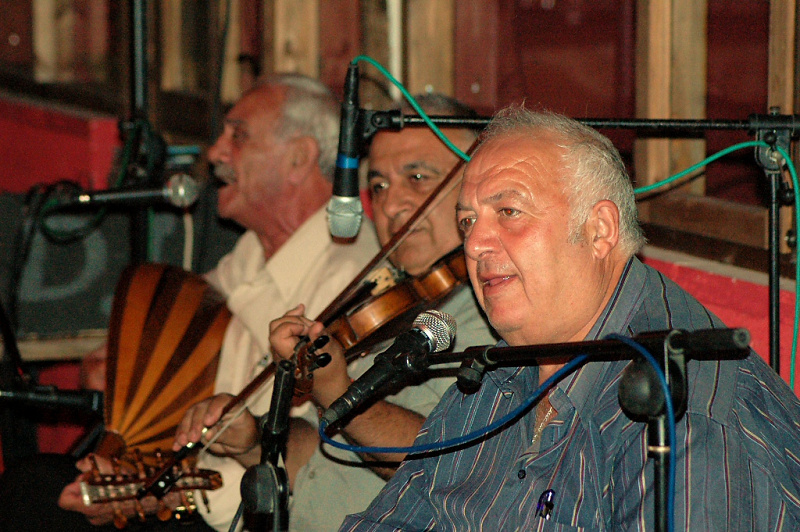
Three Palestinian Christians playing Arabic classic music

Fences and Walls

Tel Aviv, from Jaffa

We Brits straddle a strange hypocrisy. In Ukraine our government supports the people (Ukrainians) against the Megamachine (Russia, as we currently perceive it). In Israel it supports the Megamachine, the Israeli government, against the people, the Palestinians (as many of us see it).

Though it’s not as simple as that, since there are real people on both sides of both conflicts. And while the British support for Ukrainians is pretty solid, our support for Israelis and Palestinians is equivocal, mixed and changeable – when people bother to pay attention. For most Brits, sympathies currently extend to people on both sides, with only a degree of rigid partisanship on either side of the spectrum.

Such partisanship is largely because of personal connections. Or it depends on which media people follow. Older people tend to sympathise with Israel (their reference point goes back to WW2 and the 1967 Six Day War), while younger people tend toward sympathising with Palestinians (their reference point goes back to the intifadas and repeated Gaza bombings).

My prayer is that the vengeful aspect of the Israeli psyche does not exceed itself. Israelis need to understand how to create peace and security around them without feeling a need for an iron wall mentality – those days are going, and painfully slowly. Actually, we all need to learn that lesson, but in Israel the iron wall mentality is exemplified.

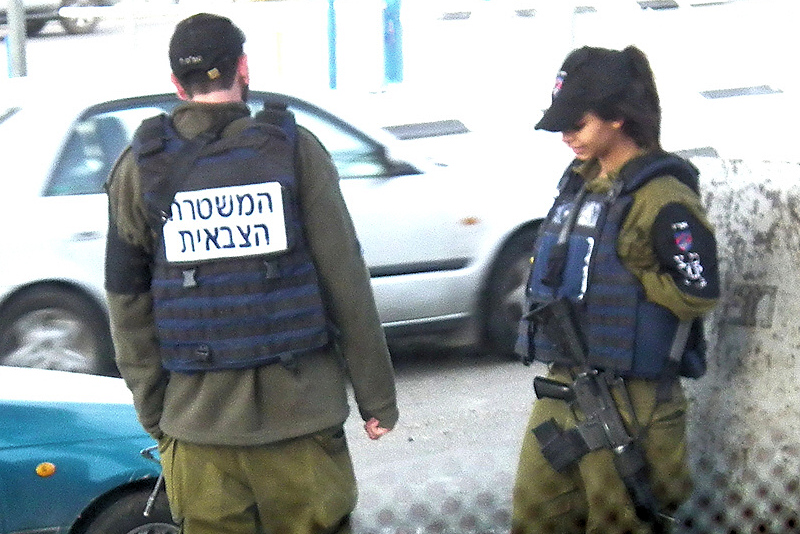
Many Israeli soldiers are quite okay people – and they like rock festivals too

The trouble is that, in a country surrounded with walls, fences and missile defences, supposedly to keep enemies and threats out, it imprisons Israelis themselves, inside their own bubble. Pretty much the only way out of the country is through Ben Gurion airport near Tel Aviv. It’s built on land owned up to 1948 by the Issa family, a refugee family who now run the Hope Flowers School in Bethlehem.

Regarding that, here’s a report from Ibrahim Issa, the school director, where I lived and worked in Bethlehem. Though in the West Bank, it is only about 45 miles from Gaza – three minutes in a warplane. In Bethlehem they can probably hear and even smell what’s going on over in Gaza.

Here’s Ibrahim (he’s around 40 in age now)…


AROUND THE SCHOOL
It is extremely sad to see this escalation of violence and associated human suffering on both sides. We are safe until now, despite escalation in the area. Two days ago we had to evacuate the school. Hope Flowers School is located in Area C, which is Palestinian land under Israeli control – in the southwest part of Bethlehem. The school is located about 150 meters away from [the edges of] an Israeli settlement (Efrat).

One of the Palestinian rockets fired from Gaza fell about 50 meters from the school building and injured two boys from the neighborhood. One of them is already declared dead. Yesterday, Israeli settlers have been attacking Palestinians near the school. This situation is extremely scary for children at Hope Flowers, for teachers and certainly for families.

IN OUR FAMILY
Fourteen members of my extended family have been killed today in Gaza. The grandparents, sons, daughters and grandsons are all killed in an airstrike.

ON THE WESTBANK
Most schools have turned to online education. Hope Flowers School is doing that also for children who cannot reach the building anymore. Bethlehem is a totally closed-off area. We do not have fuel coming in; we do not have diesel to operate the school buses. I think it is a matter of days before everything stops totally, unless Israelis release the siege on Palestinian areas here in the West Bank. Food is also running out in the supermarkets. No food supplies are coming. It may be just a few days before people start to feel the shortage.

The view from my apartment at the school – over the valley you can see the security wall, an observation tower and, to the right, an ‘outpost’ that has now become a settlement

Palestinians are regrettably accustomed to adversity and crisis – that’s why a squad of Palestinians is advising the Ukraine government on social resilience and resistance. Over the decades many Palestinians went to university in Ukraine and Russia, so they know the deal there – about 6,000 Palestinians were in Ukraine at the outbreak of war in 2021.

MY OWN INNER CONNECTION

My Palestinian journey has been one where I have had to examine my biases and the contradictions in my viewpoints. They are very mixed.

My maternal grandfather was in Allenby’s invading force in WW1 in Iraq and Palestine, and my father fought in Egypt in WW2. I have Roma ancestry, and the Roma experienced holocaust tragedy as much as the Jews. I also have German (and Welsh) ancestry, and when my father was younger, ‘the only good German was a dead German’, according to the mad logic of war-thinking at that time. It’s not that long ago that towns and cities this country were blitzed like Gaza – my mother hid under the table nightly in Walthamstow, East London. So it’s in my genes and those of many of us.

Amidst the damage of urban war, ordinary life goes on. This is Hebron.

Here’s comes a seriously woo-woo bit, which some readers might not like. It’s something you can take either literally or metaphorically since, whether or not it’s true, I carry similar issues to those of a similar character to me, back in history. It is a past-life thing, going back to the time when I was working for the Council of Nine in 1991-93. At one stage, I asked them why they called me ‘Paladin Saladin’ – I had thought it was a kind of jocular rhyming name. They did after all crack jokes! They simply said, “You were he“.

This was like a bolt of lightning. As a historian I immediately knew what they were throwing at me. For some years afterwards I had a resistance to the idea. I recounted this to a close friend, Jean Gardner, a Glaswegian aged hippy, now in heaven, who had been a friend of R D Laing in the Sixties. She looked at me intently, got up, went to the bookshelf, leafed through a history book and gave it to me, pointing at a picture.

“Palden, you sit exactly like this. And look at the simple diet he had – exactly like yours, minus the tofu… and how he could be tough and also show mercy… and the way he was always giving away the money he had to people in need, and he was personally perpetually broke, even though he was the Sultan of Egypt and Syria.” When Jean spoke like this, her words had that deep, no-bullshit Glaswegian firmness. Woo. I had to acknowledge this and take it on.

The Nine also said I had been the slave to Abraham’s pagan father, Terach, back in Ur, around 1900 BCE. Abraham had a big argument with his father and smashed all his idols, at the time when he was adopting the idea of a One God – and presumably I was in on that moment. Servants are often privy to all sorts of stuff.

Then, they said I was a Nubian slave to Moses – yes, I waited for him at the bottom of the mountain. They finished by saying, “You have been involved with the Jews three times, always as a foreigner, and this is your fourth”. In this they were implying, ‘And what are you going to do now?‘. Five years later I was getting involved with Israel and Palestine, starting by being a co-founder of Jerusalem Peacemakers.

On my first visit to Jerusalem in 1991 I cried my eyes out in the back of a taxi driving along under the medieval city walls. I’d been here before, and I was all stirred up. We had walked out of the Church of the Holy Sepulchre, entranced by the strong atmosphere there, straight into a soldier situation – and that’s what’s really weird and intense in Jerusalem. The best and the worst in human experience can come at you in quick succession. Actually, Glastonbury is a bit like that, minus the guns. Both holy places are somehow deeply connected as places where light meets dark. You have to get used to the extreme ups and downs. Glastonbury trained me for Jerusalem.

The Old City of Jerusalem

THE NINE’S THOUGHTS ON ISRAEL

Here’s a simple quote from the Nine [1]: “Do you have the understanding that Abraham was the father of two nations?” Biblical and Quranic tradition have it that the Arabs were descended from Ishmael and the Jews from Isaac, both sons of Ibrahim/Abraham. “Then you also understand that Allah is what those of Israel call Yehovah.

The Nine didn’t regard the Jews as ‘the Chosen People’. They saw them as the People of a (big) Choice.

“They [as souls] came from a planet of strength. They came from [another world called] Hoova. They had strength within their character, and also the planet from which they came was a warlike planet – and in their seeding here [on Earth], they were asked to be at peace. But they have factors of doubt and questioning, which cause us difficulty. They have doubt, suspicion and deception – because of the place they come from [Hoova]. Part of the reason for their existence on this planet was to overcome that factor.

“It began when they left Ur [heading to Palestine]. Before that, they listened. But the descendants of Abraham lost their internal knowledge: they only kept the knowledge of who they were. In their need for survival, they did not accept total obedience [to the Covenant]. They were always making deals. Where one group would be in awe of Creation, the Hoovids would look at Creation as something to be utilised.

“The nation is fierce with pride, and from this grew the desire to help their own nation only – in the times before the man Jesus. So in effect our plan [the Covenant] was turned around. The people of Israel will eventually accept their responsibility. And yet in effect this is their salvation, because it shows the nations of planet Earth that they are a nation that will not be conquered. Also, even though they made an error, every nation has made an error.

“There were only two commandments for the nation of Hoova. Those two are: Thou shalt not worship false gods; Do unto others as you want others to do unto you. Those are the only two commandments given to the nation of Hoova.

“The nation of Israel has forgotten its heritage, its choosing and its Covenant. Abraham was told to go and spread his seed through all the planet Earth. Abraham was told to populate and to go forth, and yet this Covenant was not kept. The Hebrews did not go forth and mingle. If this nation had gone forth and mingled with the peoples of the world, then this the planet Earth would not be in such a serious state as it is at this time.”

There are peace-freaks in Israel too – many have done military service and know what they’re talking about when it comes to peace-building

In one of the interviews I had with the Nine, I asked this:

“The people of the north of Israel, the lost tribes, were taken away and dispersed by invaders. Were these people eliminated, or did they mix with the peoples of other lands?”

“They are all over the world and, as examples, some are in Afghanistan. There are some in Ethiopia, in the Phoenicians [Lebanese and Tunisians], in the people of the musical language written of by Caesar [the Celts], and in the Orientals [such as Kashmiris and Uighurs].”

I then asked, “You have said that the Hoovids came in order to mix with the people of planet Earth.”

“That is a truism, but they that stayed together did so because the others had been dispersed. If I would have a word of my own to say, would you like to hear? I will ask the Council if I may say it. They said I may say, but you may not be pleased with it. It is this. We would have one warning to people who are working with higher consciousness, to be very cautious about your attitudes toward the Hoovids: for it may very well be that you are a Hoovid also, yes. What we are attempting to say is that the majority of people that are involved in spiritual elevation contain the genes of Hoovids – so look upon what I say. How do you then place yourself in that?

“Look at all the world, in every nation, and see which negative characteristics developed that made that nation feel different to others. In your nation [Britain] you believed you were superior to other nations, and that your rightness was the rightness of rightness. And as you have now evolved beyond that, you give to others that same understanding [of seeing beyond tribal perspectives]. When people come to gather as many, and the clapping goes all around the world [across borders], all will be free of the bondage of their bringing forth [of their tribes, nationalities and cultures].

“The people of the nations of Ishmael [Arabs] are brothers and sisters with the nation of Israel. It is important that brothers not fight brothers, but in your world it seems to be your system. It is important for this message to be given to the nation of Israel, for they need to have the understanding that the powers of their mind create trouble when mixed with their fears. Your mind brings to you not what you want – it brings to you what you fear.

“The nation of Israel must look closely at what they fear. They want peace, but may we ask why they do not have peace? For what are their fears? It is what is in the hearts of the men and women of the nation of Israel that is most important. When the nation of Israel begins to fear less, then also it will begin to change.”

It’s really boring, spening a long shift inside one of those spy towers

HISTORY AND THE FUTURE: NOT A STRAIGHT LINE

Arabs have a different history to Jews. Arabs are not one people – they are mixed in origin, encompassing thousands of years, and some Palestinians are of Jewish origin. Multi-cultural and multi-ethnic by nature, they are united by speaking Arabic and sharing certian core beliefs. But after the diasporas, the Jews, having been decimated, dispersed and, in medieval-to-modern Europe, persecuted, have different shadows to contend with to Arabs. It even goes into depth-psychology: Arabs suffer shame while Jews suffer guilt. As do Europeans. And all of us suffer fear – big doses of it.

The Middle East has always been a crossing-point of the Old World, between Africa, Asia and Europe. Many peoples of the Old World have ranged across it over the millennia (even the Roma, coming from India). Nations with borders do not suit the region – it has usually come under large empires. It was the Europeans – the Brits and French – who sectioned up the Middle East around 1920, setting in motion much of the trouble that is happening today.

To solve the endemic insecurity and power problems of Israel, Egypt, Lebanon, Syria and Iraq, the whole region needs reuniting as a community of peoples without borders. This process is slowly, painfully starting, as the oil industry and its over-powered oligarchies begin to decline. A sign of this was the pan-Arabic revolutions around 2011 – suppressed, essentially, by oil money and the vested interests invested in it. The ‘Arab Street’ made its voice heard – sparked by a young vegetable-seller in Tunisia. The voice of The Street will return.

Middle Eastern administrative tradition involves ‘Millets’, a multicultural interlocking of peoples, each with their own customs and laws, who all lived in neighbouring communities across the same wide territory – in city quarters, villages and local areas. So the Jews, the Druze, Maronites, Copts, Kurds, Armenians, Alawites, Turkmen, Yazidis, the Shi’a and the Sunnis all rubbed shoulders, living within their own communities under their own laws. To some extent, whenever a new invader arrived, these millets survived and, as long as everyone paid their taxes, the imperialists left things that way. Until the British and French came along.

We British carry much historic responsibility for what’s happening in Palestine and Israel today.[2] I am rather disappointed that His Majesty’s Government has opted to side with Netanyahu’s Israeli government rather than taking a more humane, humanitarian approach, pressurising not only for a cease-fire but for a longterm resolution, backed with some muscle and sticking power.

The issue is the future, not the past. The core issue is the future of planet Earth and the global challenges before us. A crux issue amongst these is an end to war all over the world. That’s the only likely way the Israeli wars will end. War is no longer an appropriate way to settle our many differences. It’s swords to ploughshares time. Otherwise, there’s trouble. Speaking as an astrologer, probably that trouble comes in the 2030s.

If I’ve pressed anyone’s buttons by writing this stuff, please forgive me. I don’t insist on your believing either me or the Nine. I submit it for your consideration. It might give a few helpful perspectives.

With love. Palden

NOTES:
[1] The Only Planet of Choice – essential briefings from deep space. Various editions from 1993. www.palden.co.uk/nine.html
[2] The British Mandate – the inter-war years, written by me, from Pictures of Palestine. www.palden.co.uk/pop/british-mandate.html

Paldywan’s website: www.palden.co.uk
Blog: https://penwithbeyond.blog (‘follow’ it to get blogs delivered by e-mail, hot off the keyboard)
Podcasts: https://podcasters.spotify.com/pod/show/palden-jenkins

Deep Disappointment

With humans, and the way we behave.

These women have seen many wars

I’m deliberately making few statements at this time, even though people ask me what I think. There’s no point.

To re-quote Bertrand Russell: ‘War is not about who is right, it is about who is left‘. The coin is spinning in the air. It has already been flipped.

Corresponding with an old friend in Tel Aviv, who is Jewish, of Romanian origin, she told me this morning that she and her friends are standing together with Arabs in Jaffa (an ancient Arab town next door to Tel Aviv), and, for better or worse, I replied like this…

The pics are from Bethlehem in the West Bank, 2011

Stand together, sister. This is about humans and the Megamachine – Pluto in Aquarius, astrologically. I think it might eventually be a turning point.

I hope everyone on both sides thinks twice before acting. And I hope the Gazans treat their prisoners according to true sharia – in which case they will be as well cared for as possible, under the circumstances.

Indeed, God is great, though he makes his own decisions, and he doesn’t necessarily think what we humans want to think he thinks, and all of us are equally his little children.

I have a young friend in Gaza, Basma, who’s popping a baby in the next few days. Life on Earth becomes incredibly bizarre sometimes.

I have been doing some psychic work on the other side, working with people who have died, and here’s an interesting observation: the ‘angelic operation’ to deal with the influx of hurt, deceased souls is one operation, and the deceased are all being treated together.

And when you listen to the news propaganda, remember that there are plenty of good humans here in Britain and around the world who watch this, and who care, and who form their own conclusions.

This lady’s eyes have seen things humans shouldn’t witness

If I were fitter and had the funds, I wouldn’t go to Is-Pal right now. I would wait, because it’s the abiding damage, psycho-emotional and concrete, that matters. It’s what happens next, with those who are left, that matters.

Those who pass away, they will be cared for, and they will come to peace in their hearts. It’s those who remain who have an uphill climb ahead of them.

This outbreak of war is caused by the damage that has already been done. Every act of violence begins with an unhealed wound – this is the motto of the school where I used to work in Beit Lahem (Bethlehem).

Beware a rush to judge, and be aware of your tendency to take sides. Take both sides, and see each side’s viewpoint(s) – each ‘side’ has a range of viewpoints, actually. Because, strangely, each side is right. From its own adopted viewpoint. And each side is wrong.

Yet there is not right or wrong in this game: there are simply outcomes. And what exactly are the chosen outcomes?

Remember that, when war breaks out, there is a polisation of anger-driven awareness and attitudes into simplistic, black-and-white terms (‘terrorists’, ‘genocide’, etc) and this does no good at all.

Are you a victim of this mentality? This is the psychosis that drives war, and this kind of psychosis needs to end if we are to get through the 21st Century in one piece.

This is about humans against the Megamachine. It’s not really about humans against humans – that’s the psychosis.

I’ll come up with further observations in due course. But for now, silence works best. Bear witness. This is Planet Earth. This is humanity in action. Across the universe, we are frightening, dangerous beings.

True holy war, jihad, concerns the struggle and conflict within ourselves to find the bottom-line truth of our lives. To come to peace within ourselves. By doing this we come closer to what many humans call ‘God’. What arises from this is a deep urge to do good in the world, to make the world a place of justice, peace, safety and basic happiness. That’s what holy war is, and it needs no weapons.

With love. Palden.

A World of Appearances

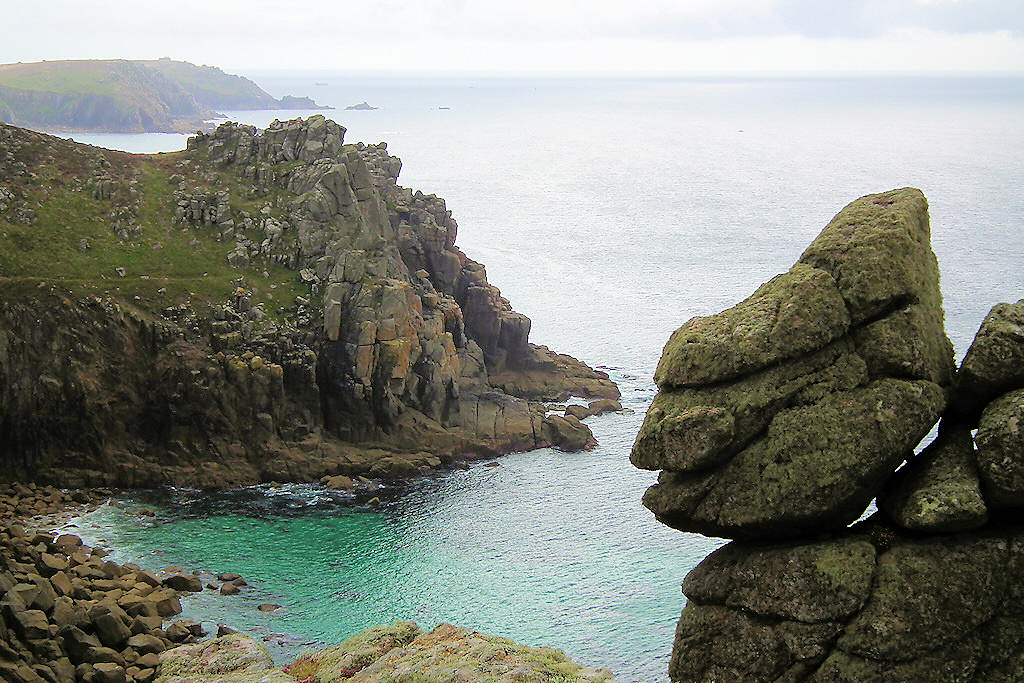
Pordenack Point, West Penwith, Cornwall

Finally I’ve written an autobiography. It’s online and shortish, the equivalent of ten pages. I was reluctant to write an autobiography, partially because I feel it’s not greatly important and partially because my memory of past events is foggy. In it I explain why this is so. Lots of people have said I ought to write one. I dragged my feet. Standing on stages in front of people comes naturally to me, but I’m also a quietish, Saturnine Virgo who’s happy beavering away behind the scenes and not making a big deal about it.

Yet writing it has been therapeutic. I did it in two rounds. In the first, a year or so ago, I wrote down all I could remember. Letting time pass and recently reading it again, I remembered more events, details and issues. Though really, it’s not life’s events that matter: it’s what goes on inside, prompted partially by those events and partially by stuff coming up from within.

There are general, lifelong issues and patterns too, which are difficult to weave into a short autobiography without making it lengthy. Even so, while working on it I’ve been reminded of something that has been important throughout my life. I’m not sure what to call it. It’s all to do with working with contradiction and paradox. In a way I’m a radical extremist in my spiritual-political views and, to some people, I’m right off the map, not even a decently normal left-winger, conspiracy buff, new age glitteratum or a proper anything. But in another way I have always been measured, considered, anchored in lived experience and seeking balance in my thinking.

My politics – particularly in international relations – comes from my heart. Being with Tibetan Lamas in the 1970s clarified this. They showed me how everyone suffers, rich or poor, privileged or deprived, and that we need to practice compassion and loving kindness toward each and every person and living being. The secret here is to put ourselves in others’ shoes, to see what life looks like from where they stand. You don’t have to agree, just to bear witness and comprehend their situation. I firmly disagree over a lot of things, though I’m not into pointing fingers or demonising people. Such a non-polarised approach isn’t complacency but a way of seeing life that can unlock doors to effective activism or concrete action.

Revolution, to me, involves building the future while letting the past dwindle of its own accord and in its own time, perhaps with an occasional strategic shove. I’ve always been focused not so much with rousing people to rise up as with looking beyond the next perceived horizon and laying the ground for what happens afterwards.

Of course, everyone needs to do whatever they’re moved to do, and to do the best they can with it, preferably without harming others. In the end we all learn from what life has taught us. It’s all part of a bigger, wider movie with a cast encompassing the whole of humanity. If people die in war or by starvation, it is indeed tragic and wrong – one young friend in Gaza has just been killed – yet it is also a sad part of humanity’s learning process, its aversion therapy. It happens because we humans have not remembered the main agenda and what the endgame is.

It’s both a personal and a collective process and, today, the pendulum is swinging toward collective priorities. Our attention is being drawn to the collective dynamics involved in facing the future, which are incrementally overriding the personal preferences and envisionings we all variously might have. In the Global North there’s a lot of braying about personal rights and sovereignty, but much of this is the sad complaining of affluent Westerners, scared of losing the power, advantages and comforts we have had. The future no longer lies with us whiteskins, though we do have a place in it. Around 15% of the world’s population, having banged on about democracy and human rights for decades, to our surprise we’re faced with being but a minority, with equal, not superior, rights to everyone else.

Porthmoina Cove, West Penwith

For better or worse, I’m seriously moderate. I regard Bilderbergers as humans. They do things that are beneficial and things that aren’t. They’re like you and me, really – thoroughly imperfect beings. Yes, they have a certain power to swing things their way, though not as much as some of their critics believe. We need to help them change their thinking, their hearts and their behaviour, since no system of social-political organisation will work well without people’s hearts being in the right place.

If we see those at the top of society as Them, by implication making Us into their underdogs, we tend to reinforce the masters-and-slaves mentality. Even so, we apparent slaves far outnumber them, and we aren’t always stupid sheeple who obey our masters, so ‘the Cabal’ doesn’t control everything. We are co-responsible.

It’s all to do with how we choose to see things. Personally, I see a transformation of the current system to be inevitable and unavoidable. It’s taking longer than many of us first thought, but it is happening. It’s up to us to do what we can to nurture and channel that inevitability, in order not to prolong the agony, since what’s really at stake is the amount, the depth and intensity of suffering and damage that people and the world must go through before we reach a breakthrough point.

Seen in this light, the latest outbreak of violence between Israelis and Palestinians, or between rival factions in Sudan, is a tragic saga of the thrashing of the tail of a slowly dying dragon. In WW2 we had an example of dying dragons: the greatest destruction in the war took place after 1942, when its course had already pretty much been decided at Stalingrad, Alamein and Midway – yet it took a lot of further destruction to confirm that inevitability. Mainly because of masculine bull-headedness. But the matter was eventually harrowingly resolved amongst the ruins of Berlin and Hiroshima.

Carn Kenidjack, West Penwith

In the last thirty years, on top of other projects and activities, I’ve worked with meditation and psychic work. Many political types and rationalists think this is woo-woo, a joke, or peripheral or impractical, and they may hold that view if they wish. The way I see things, a tide is turning, nothing is permanent and we’re working with the historic trends of centuries and millennia. We’re working with the underlying thoughts, feelings and beliefs of people, and that’s what shapes the future.

Those of us who elevate our individual freedoms as benchmarks upon which everything else should be judged are having to swim against a growing tide moving the other way. Individualised self-interest, though indeed relevant and part of life’s equation, is not actually in everyone’s best interest – and the endangered state of our world demonstrates that. Our world problem derives from self-interest. We’re at a stage in history where the survival and benefit of humanity and of the natural environment as a whole have become the top priority. Global circumstances push things this way, and the big question is how fast and fully we respond and adapt. The future is nowadays having a greater causative influence on the present than the past has. We’re being sucked toward the future.

So I don’t rail against the banksters, the billionaires and the secretive manipulators, though I do twiddle their knobs while they aren’t looking, when I can. I do my bit. In my innerwork I sometimes penetrate the backrooms of Davos, or tweak the energy-fields around certain cloud computers, or drop thoughts into prominent people from afar. This probably sounds like fantasy or even megalomania, and there’s truth in that observation too, but feeding and seeding the collective psyche with such perspectives is the beginning of change. All man-made change begins in the psyches of people.

I tend not to see things in black-and-white, good/bad, right/wrong terms – that, to me, is a prejudicial, blinkered comfort-zone allowing us to avoid seeing clearly. When working in Palestine I was not really like many of the other activists. I believed in staying in Palestine for long periods and participating personally in people’s lives, rather than visiting in an activist group for an exhausting and short week picking olives, doing conflict tours and leaning on the copious hospitality of Palestinians.

I wasn’t anti-Israeli either, even though I found some Israelis difficult to relate to, especially if politics came up. Also I don’t agree with the agendas of the state of Israel. But I don’t agree either with the minority of Palestinians who wish, at least in heated moments, to eliminate Israel or drive the Israelis out. To me, it’s not about Palestinians and Israelis – it’s about people, and I worked with those who sought my kind of input.

So when I went through Israeli checkpoints, I regarded the soldiers scrutinising me as real humans, and my behaviour and body-language reflected that – and I got through, often by simply brightening up their day and being a nice guy. I wasn’t there to do battle with the poor grunts on whose shoulders it fell to protect a screwed-up system.

It is easy, popular and sexy to bang on about the badguys at the top of the pile and to dish out neatly packaged certainties about the solution to the problems we face. It gets the hits, royalties and votes, but those who do it then become part of the psychosis of the divisive system that they oppose. Yes, it’s easy to regard Them as the reptilians, the child-molesters, the evil ones, the exploiters, and this neatly places Us in a position of being the pure, the innocent and deserving – and anyone who disagrees with this is clearly on the side of The Cabal.

Near Carn Boel, West Penwith

For me it all started at the London School of Economics in 1969, when I was a student. A situation was brewing where quite a few students were getting confrontative, hurt by the treatment the police and authorities were meting out to us. But I did not believe in confrontation or violence – this would not get the people of Britain on our side. Even if we, the goodguys, won, violence wouldn’t simply subside since it would already be baked into the character of the revolution itself, leading to new atrocities and the subsequent rise of Napoleons and Stalins. So I advocated working toward creating a new future rather than fighting the agents and symbols of the past – a fight we would not win, given the circumstances we were in. I and people like me lost that argument, and eventually the revolution sadly exhausted itself, mainly by tilting at windmills.

I’ve always held a gap-straddling line. Only as I grew older did I come to understand why. I came to see the situation on Earth as part of a larger, deeper, wider scenario. Here comes the button-pressing extremist in me: I fundamentally believe we are not alone and isolated here on Earth – though we are to an extent quarantined. Many people who are into ETs focus on galactic locals such as Pleiadians, Arcturians or Zetas, but it gets bigger, wider and deeper than that. [Here’s an audio talk of mine about this: Life on Earth, Life off Earth.] This has big implications for us on Earth. Bizarrely, the only public figure of recent times to mention this was Ronald Reagan, who once said, “I occasionally think how quickly our differences worldwide would vanish if we were facing an alien threat from outside this world“.

Beings from other worlds are mostly not ‘aliens’, and our origins as human-type souls lie amongst them. But we earthlings do like to see things in polarised terms, and we need to understand that we also are rather daunting to ETs since we’re fitful, unpredictable, inconsistent and we even have divided selves.

It’s a matter of how we choose to see things, and how much fear we weave into it. If you want to see lizard beings and regard them as dangerous, that’s what you’ll tend to see. The same goes for our relationships with all ‘others’, including foreigners, criminals or simply people who share our planet while living in different worlds. It applies also to creepy-crawlies and sharks, or cancer cells, Covid viruses, refugees or lightning strikes.

It’s time to step beyond the judgemental constraints of good and bad, right and wrong. There’s more to life than this. We need also to look carefully at the notion of ‘evil’, which is so easily bandied around – again, to make ourselves look like goodguys. I’ve been accused of being a criminal, traitor, toxic male, dictator and asshole myself, but that doesn’t make me so unless I buy into it. However, it’s still my duty as a human to work on those aspects of myself where I do fuck up.

The way I see things, evil doesn’t exist in itself – it is simply poisoned, blocked, polluted, diverted life and naturalness. The Tibetan story of Padmasambhava is instructive. When he took the Buddha-dharma to Tibet, he did not cast out the old gods and render them into evil entities, as Christians did over in Europe. He made friends and, as a teacher, he raised their perspective so that they could see beyond their situation. He co-opted them to become wrathful protectors of truth – scary, yes, but embodying the fears and defilements that we must face in the process of progressing spiritually. They were given a bigger, broader and deeper job.

This is similar to the legend of Lucifer, the angelic bringer of light, who sheds light on our darker sides, obliging us to learn through hard but necessary lessons. Except the notion of Lucifer got twisted, he was made into a badguy, the light and awareness bit was removed and his badness was made permanent. Poor chap, he’s misunderstood.

Yet there is always redemption, and we can do things to further it. I’m not at all perfect in this, and there are issues I need to sort out before I’m gone. But the main thing is to work at it. The Council of Nine were emphatic about this. [The Nine was a group of cosmic beings I compiled a book for thirty years ago and continue to work with.] They didn’t prescribe an ideal world or state of enlightenment that we should strive to attain – because there’s always further to go, and this is what evolution is all about. They spoke instead of simply creating forwardness and a feeling of progress, because the more it happens, the more it grows in momentum.

That in itself, in any situation big or small, is all that is needed. Whether it’s gardening your allotment, bringing up your kids, doing your work, being socially active or weighing in on large-scale issues, creating forwardness is what we’re here for, as souls. It all adds magnitude to a growing current. It’s about making Earth a good, safe and happy place to live.

In our time, our big advantage is this. Amidst darkness, one candle makes a big difference. In the sunshine, a candle is hardly noticed. We’re in a time when small things matter more than we tend to believe, even though it sometimes feels like the darkness is overwhelming. Yet keeping our eyes on an aged neighbour, changing nappies (diapers), fishing plastic from a river, cooking a nourishing meal for hungry people, or even joining a meditation once a week can make a difference in a beshadowed world.

On Pordenack Point, looking toward Carn Boel and, behind, Tol Pedn Penwith

I have not done well in terms of money or status, though toward the end of my life I’m happy about what I’ve done in other spheres. I’m aware also of times I’ve failed or omitted to step up, but the net balance is, I hope, positive. It feels that way, and in recent years this feeling has helped me deal with cancer: I chose to treat cancer as a crash course in being alive and making the best of what I’m given. Over many years I had gathered a quiverful of growth-tools that have served me well in my cancer journey, and I’m glad I did that. Because cancer and, later, dying, involve a loss of control, and our success in handling them rests on where we’re really at, not in what we’re trying to be. It’s our actual spiritual fitness and muscle-tone that matter here.

This gives us access to a miracle zone where it’s possible to bend, break or bypass the constraints of normality and expectation. Life is a strange dance and, if the one we are dancing with doesn’t dance to the same tune, or seems to oppress or constrain us, then the secret is to step out of the way, out of the set patterns and moulds in ourselves that render us into being victims. The degree to which we feel oppressed, and what we do about it, is something we can change. It can take time and it can be a struggle, but that’s the direction to go in.

A good friend wrote to me as I was writing this. She was concerned about the new outbreak of violence between Palestinians and Israelis. It’s happening yet again. It’s terrible, and it’s easy to get locked into hand-tied consternation about it. Peace will indeed come to the Holy Land, and many people there already subscribe to it. But the dragon’s tail is still thrashing, and it’s tragic and painful for those who are personally affected and involved. Sadly for Israelis, it’s also shutting down an enormous domestic dialogue about the future of their divided nation – predictably, that suppression will charge a high price later on. Yet step back from this conflict and look at it another way, and this is not a war between Israelis and Palestinians so much as a war between the dehumanising drivers of conflict on both sides and ordinary people of both sides.

We can do things about this. We can visit Palestine or Israel to add our bit, or we can make friends with an Israeli or a Palestinian online, or we can donate money, or in meditation we can work at creating a vibe where the people involved are raised up to see things another way, to see the futility of their situation and get a clearer sense of what is genuinely best for the future. It’s not for us to prescribe what that might be, but it is for us to help create a psychic field in which they might progress with what’s genuinely right for them.

Once a conflict starts, it’s not helpful simply to oppose it – it’s too late and, as is often the case, the opportunity for preventing conflict came earlier and we missed it. The trick is to take the situation as it stands, working to twist and weave it another way, to introduce new, unlocking factors, to help those who are suffering, to work with wider public awareness, and even to conduct direct dialogues with generals and fighters in our inner universe.

It’s not a matter of taking sides: we need to step beyond our preferences and biases. No matter how much we believe that past history is important in this or any conflict, it’s the future that really matters.

A young friend in Gaza, Basma, is going to have a baby any day now. What a way for a child to be born. Her brother Moh, a male nurse, escaped Gaza in 2015 and was one of the boat people crossing from Turkey to Greece. He landed up in Belgium, working as a nurse, and died of Covid in 2022. What a life these people have. He had been the hope of the family.

In this week’s meditation, if you join it, I encourage paying some attention to this issue. However, this world is full of worrying problems, and good-hearted people can get overwhelmed with it all. To deal with this, it’s advisable to do small things well rather than big things badly – that is, to focus on the particular issues that mean a lot to you, and to stay with them and proactively do something with them. If we all do that, we’ll cover things better.

It’s also true that everything is interrelated. What’s happening in the Holy Land affects other people and places. Each time something like this breaks out, the collective psyche of the world becomes more disappointed, dismayed and depressed. Explosions and bloodbaths make sensitive, delicate, human issues seem irrelevant, and the problem with this is that empathic sensitivity is a key ingredient in making the world a better place. Wars, meanwhile, are useful to the status quo – they suppress not only the people in war zones, but also the spirits and hopes of humanity as a whole. They make the public jaded, accepting conflict as a given, shrugging shoulders and turning away.

We’re faced with many paradoxes and knife-edge choices in our day. It isn’t simple. This has been the saga of my own life, and many of you might share a similar story. Yet it’s what we’re faced with, and we can fret and worry about it or we can do something, within the scope of our lives and possibilities, and at times beyond it. That is our choice.

Back in 2011 I gave a speech at a conference called ‘Will they still serve tea in 2023?‘. This was the moderate in me, speaking. Some people thought the world might end, or at least radically change, in 2012. Well, life went on after 2012 passed. So, apparently nothing happened. The catastrophists were proven wrong and the normality-freaks seemed to win. But this was a lot to do with the dramatic utterings of advocates who desperately wished to be the one who got a big prediction right. Things did happen. Discreetly, the tide turned. Before 2012 we had a future global problem and, after 2012, we had an actual problem, and as the decades roll on, we’re going deeper into it.

In Britain there’s a legend that King Knut (Canute) tried to demonstrate his power by turning back the tide – and he got wet feet. No, historians are now seeing this differently. He sought to demonstrate that even he, with all his worldly power, could not turn back the tide. He didn’t write an autobiography either.

With love, Palden

Autobiography: www.palden.co.uk/autobiography.html


Website: www.palden.co.uk
Blog: https://penwithbeyond.blog
Podcasts: www.palden.co.uk/podcasts.html
Audio Archive: www.palden.co.uk/podtalks.html

Ancient Protector of the Isles of Britain. Pordenack Point, near Land’s End, Cornwall.

The Wisdom of Insecurity

Would you believe, this is my hundredth blog. I started the blog just a few weeks before going down with cancer, with no idea it would quickly turn into a cancer blog. That says something about intuition: it has ways of knowing things in advance that we don’t. Consciously, at least.

This is a review of my cancer story, for those of you who are interested.


Cancer was a great surprise when it was diagnosed in November 2019. Looking back, signs were appearing nearly a year beforehand, but they weren’t recognisable. Something wasn’t right, as if I were in a downward spiral, getting tired of life and losing my spark. Neither my partner nor I could figure out what it was.

Then in August 2019, while working in her garden, my back cracked and four of the lowest vertebrae in my back collapsed. At the time it seemed I had an excruciating, immobilising back problem. The pain induced a kind of enforced spirituality, which I blogged about a month later: [1]

It has been a remarkable initiation, a time of enforced stillness and interiority. Within myself I’ve been ‘back home’ with the star-nation people and have travelled the worlds in ways that ordinary life does not usually permit. Meditatively, I’ve stood alongside people around the world who experience deep suffering, supporting them with gifts of spirit I’m blessed with and finding a deep solidarity with them. I’ve dwelt on my life and what there is left to do with it…“.

A cranial osteopath recommended I get scanned in hospital – he felt something more was going on here (thanks, Simon Perks in Totnes). Getting to hospital was a long process. Eventually, in A&E, the junior doctor, in a quandary, called in a specialist, who entered, stood intently looking at me for a while, then said, “Test him for Myeloma”, and walked out. Brilliant. This man nailed it at first try. Within days I was having treatment. I had Multiple Myeloma or bone marrow cancer.

When the news of cancer hits you, it’s like a thunderbolt and soulquake. Yet it came with a strange element of relief, at last knowing what was actually happening after three months of spirit-wringing pain. For decades I had looked after myself, with a view to avoiding such things as cancer. Had I got things wrong? Seriously ill, if I had arrived in hospital a month later, I was unlikely to have survived. When cancer comes, it can come fast and strong, even if its buildup is long and slow.

After a few days I asked the specialist whether he had any clues about the causes of Myeloma. He looked at me straight and said, quite simply, “Radiation exposure”. The next day he brought a map in The Lancet showing the clustering of Myeloma cases within 40 miles of nuke stations. For 28 years I had lived 15 miles downwind of Hinckley Point nuke station, and I had had two instances of exposure in other contexts too.

Many doctors say the causes of Myeloma are unknown. Certain chemical neurotoxins may also be a cause for some. The reason for this perhaps deliberate unclarity could be the court cases and compensation claims that would erupt if such electronic or chemical toxicity became public knowledge.

The specialist’s opinion just went ‘ping’. I had known since 1975 that I was electrosensitive. This was largely not a problem until around year 2000, when mobile phones and wi-fi became commonplace.

That year I had a ‘dark night of the soul’ crisis and a long illness, going down into the Deep Dark, questioning all I had done over the previous three decades and wondering what value it had really brought. It was a deep honesty session, a struggle with Weltschmerz – the pain of the world. Aged fifty, I think my susceptibility to cancer started brewing around then.

As time went on the electrosensitivity got worse, especially after 4G and smartphones emerged around 2008. By 2014 periodic overdoses of radiation (in a restaurant, meeting, supermarket or train) were giving me rapid-onset flu symptoms, and by 2017 I was getting heart palpitations. It took until 2019 for cancer to show itself.

That year I was working on my prehistory research and mapmaking, in a rather urgent, driven way. Completing it in early August, just two weeks later my back suddenly went crack and my life changed. Well, the research was at least complete – perhaps a hidden hand of fate had known what was going to happen next.

When diagnosed in November I was now very much in the hands of doctors, my partner, my son and a few others – and way out of my depth, flat on my back. It was an exercise in surrender and acceptance.

Having been a health-conscious, vegetarian meditator for decades, and rarely getting ill, I had always assumed I would be exempt from cancer. Well, life has a way of teaching us other things! In our culture cancer is regarded as something going wrong, a failure, but it didn’t quite feel like that, to me. There was something strangely fitting about it, even though life was being hard on me. I decided to suspend all my foregoing beliefs and do my best to trust that, whatever happened, it would be alright. I did hold on to one belief though: that, whatever life presents, there is a gift in it.

Rigorous experiences as a humanitarian, mountaineer and camper had taught me energy-management, attitude-maintenance and steadfastness. Having got through plenty of crises and having survived thus far, I felt it was possible to do so now, whether that meant living or dying.

Trusting the doctors was my only option – and most were really good people. My experience of NHS treatment has largely been positive. I had done alternative medicine for decades, yet I did not have the knowhow, energy, facility, support, time or money to take such an approach now, and already it was too late. Chemotherapy was the only doable alternative. It contravened beliefs I’d held until that moment, yet it felt right to do my best with it. If the angels wanted me alive, they’d keep me alive, and if they didn’t, they’d take me out.

I’m pretty good at handling crises and, here was I, going through a test of spirit. I had to grasp life’s reins on a deep level, since healing means fully allowing healing, fundamentally handing ourselves over to the process. This goes as far as dropping any expectation of what ‘healing’ means – it doesn’t only mean ‘getting better’. Whether I am to live or die, may it be for the best, all round – this was my prayer.

The strong pharmaceuticals shocked my system, though clearly they might also save my life. I asked for inner help in handling whatever was to come. One profound message came through: use your feelings and intuitions to proceed. My brains were not working well – I couldn’t get my head around all the medical research – though my intuitive senses were quite easy to read off. They just say ‘yes’ or ‘no’ – and then it’s up to us to figure out why, or to bear witness to how it comes to be true.

I went inside myself, connecting with the angels like never before. This might sound spurious to some readers but, believe me, when you’re in a situation like this, that’s what you tend to do, whatever your foregoing beliefs. I asked them to support my adaptation to a changed life. But when you ask, you also need to offer: I offered up my life, however it was to be. Whatever needed to happen, may it happen well and may I make it easy – that was my key prayer. I think this really helped, not just psycho-spiritually but medically too.

I used holistic supplements, CBD oil and good nutrition – judiciously, and careful not to mix them or create conflicts with the pharmaceuticals. Over time, various healers and healing circles weighed in – thank you everyone. Some of these interventions made a big difference – including, over time, an E-Lybra machine, radionics, homoeopathy, cranial osteopathy, herbs, chiropractic and prayer. And an old cat, Tomten, who would lie on my pelvis, the most painful place, giving me genuine pain-relief.

So, doctors saved my life and healers gave me a new life. I’ve written this before and it’s true.

I feel immense gratitude to my partner, who gave balm to my heart and helped me through the process – she was a true healer and a great soul. Her love, care and protection made a critical difference in a bleak time. I was a heavy weight for her to carry. There was no financial help for a ‘family carer’ like her, she had a business to keep going and a life already filled with issues and concerns. And I’m a tricky and complex character at the best of times. My son Tulki was a constant companion and support, though he could be present only sometimes. These two made a key difference.

So I followed an intuitive route through the cancer tunnel. I worked at getting the doctors on my side, showing them that I was not one of the awkward squad of ideologically rigid health-freaks, though I did have my own ways and preferences. Two things helped: they found me interesting, cooperative and lucidly descriptive of my symptoms, and, lo behold, as the weeks went by, my medical results were surprisingly good. This gave me leverage.

Still, I had to badger them about drug dosages. I didn’t need blasting with explosives. Eventually they got the message. One or two drugs were withdrawn and one was reduced – the steroid Dexamethasone, which had positive effects on my cancer and distressing behavioural side-effects, especially to people close to me. My dose was reduced and, lo behold, it started working better.

Initially I was supposed to have eight cycles of chemotherapy but they stopped treatment after five, saying I could go. Later on, one specialist said, “Mr Jenkins, I don’t know what you’re doing and I don’t want to know, but whatever you’re doing, keep doing it”.

Myeloma is a blood cancer that causes the bones to hollow out and weaken. It’s not as complex to treat as other cancers – there’s just chemo, with no radiation or surgery (since no tumours are involved). I responded well and quickly. I think the holistic practices, supplements and remedies helped greatly, together with an almost palpable influence from within, from my ‘inner doctors’. They scanned and treated me on an energy-level, and it worked. I think they worked through the hospital doctors as well, in mysterious ways.

I’ll add a few more things: walks on the hills and clifftops; a lovely place to live on a wildlife-rich farm with low EM radiation; unchlorinated springwater from just up the hill; a positive attitude; coming to peace over as many life-issues as possible, and working on the rest.

I’m on an immunotherapy maintenance treatment, Dara (Daratumamab), which flags up emergent cancer cells that my immune system then deals with itself. I have a Dara injection every four weeks – a nurse comes round to shoot me up. She takes my temperature, oxygen count and blood pressure, and every twelve weeks she takes a blood test and sends it off, and it’s from this that my condition is judged. With Myeloma, most people don’t get ‘remission’, just a ‘pause’ – some get a year of life and some get ten. In my fourth year, I’m still alive.

After decades of living a holistic life, your system evolves differently to ‘normal’ people. When you’re doing spiritual work and you have some pretty amazing healers as friends, normal medical rules get bent and broken. But still, there’s a deep karmic story that goes on underneath cancer, with a trajectory of its own. I did well at first but, after two years, I was ailing, hit a crisis and got ready for the possibility of dying within the year. Yes, more wading around in the deep dark!

Yet by summer I was reborn, even attending a week-long Oak Dragon camp, which itself was a healing boost, as much from the people and ambience as from the camping. By now I was in a state of positive shock, realising I was alive, kicking and that there was a future. And perhaps I needed to get a new coat for the winter.

I’m doing well with the cancer, but the side-effects are problematic and these might fell me in the end. It’s all about bones (in my astrological chart I have a strong Saturn). Four of the lowest vertebrae in my back collapsed – I must use sticks to stand and walk. Reducing my height, this squeezed my stomach, leading to digestive and eliminative difficulties. It also caused the outer gluteus muscles in my backside, which do the major pulling, to lose their tension, making long walks strenuous and painful. I have osteonecrosis of the jaw – a dying jawbone – stopped by medication, but an area of susceptibility. And if I break any bones, repair and revival is likely to be difficult. These side-issues affect my life more than cancer does.

Then there is chemo-brain. Chemotherapy chemicals destroy brain-cells and nerve-endings. It has had mixed effects, reducing my left-brained ‘executive’ thinking and memory for details, yet improving my right-brained intuitive-imaginative side. It has pushed me into the present moment – my sense of time, sequence and duration has dwindled. I’ll remember something that was said by someone, but not who it was or when. I screw up easily when things get complex. Yet my creativity – channelled through writing, podcasting and websites – has never been better.

At one stage I asked myself what I would be doing if I didn’t have cancer. “Just carrying on“, was the answer. Instead I have been given a new relationship with life on Earth, an experience-rich new chapter, however long or short it is to be – miraculously paid for by the government and taxpayers. Life is twice as difficult but in compensation it has changed in shape and content. I’m focused now on staying alive more than on life’s many complexities, diversions and tensions.

I’ve had some pretty amazing spiritual initiations in my life, and this has been the next in a sequence, as if it was meant to be that way all along. Well, perhaps it was, perhaps it wasn’t. Having twice come close to dying in the last four years, it has given me some training for the inevitable transitional journey that is yet to come.

So, did I go down with cancer, or did I go up?

In recent months I’ve found that I see no future ahead of me. I’m drawing a blank, and my customary faith in life is not that bright. What does that mean? We shall see. In our time, we are all faced with so many unknowns. Most people can however safely assume they will be alive next year or later in life. Having that assumption removed has a strangely spiritualising effect – and that’s another strange gift that cancer has given. It’s what the psychedelic guru Alan Watts used to call the wisdom of insecurity. Earlier in life I knew it was good to appreciate life and all that it gives us, but cancer has taught me what that means in far more real-life terms.

It’s funny how things go.

With love, Palden

PS. My soul-brother Alan suggests my blogs are too long, and he’s right. But this is how they come out. I wish I had an editor – that might help. I’ll try to do shorter ones. Problem is, I’m a time-rich person writing for readers who are mostly time-poor. But then, if you read this far, well done, you did it!

Disclosure: the apparent paintings were done by me using a graphics program (Corel Painter Essentials 8) – they aren’t paintings. The photos they are based on are by me. The bottom photo is by Lynne Speight.

Site: palden.co.uk
Podcasts: palden.co.uk/podcasts.html
Audio Archive: palden.co.uk/podtalks.html

Pain

I thought this article was interesting, and am inclined this way myself. Current values in society tend to believe we should avoid and be free of pain and difficulty as much as possible, but this keeps us in the same place. It’s a growth-less position to take.

I was summarily dumped last year and, while it was really painful and I’m still left hanging and unresolved, it has been a remarkable gift and learning experience too, forcing me to master those things I felt I needed from my partner. It gets a bit complex when you have something like cancer and you rely on them, but even there, it’s possible to do your best with the situation as it is. So I became stronger as a result. It was a struggle, but also, seen from another viewpoint, it was a gift of love. It’s okay to let it bleed.

Some people have called me brave, for things I’ve done. But it’s not really like that. As this article mentions, you get to master life and its challenges by taking it on and going into it – the author uses the analogy of weight training and increasing the weights you lift. Former challenges become easier because you get used to bigger ones. And this is what hones the soul.

Once you’ve had a gun pointing at you, it gets easier when someone else points a gun at you again, and you realise you can get through the situation, even with a smile. That’s not really bravery – it’s just getting used to life and wading a bit deeper in. A bit like Brits’ attitudes toward British weather, or Yemenis’ or Ukrainians’ approach to life in their countries – and some people choose to go into the fray rather than to run. Or a bit like the work (‘labour’) a woman goes through to give birth – if you run from it, though that’s understandable, you might miss something, something about life itself.

In a sense, life is a preparation for the moment of our death. Death is not usually painful, but it does involve facing stuff – not least facing our incapacity to do anything much about the situation or to change anything, which is a choiceless choice to face. But even so, we have a choice to take what comes, or we can try fighting it.

Therein lies the choice. In the end, that’s where freedom resides. Because if you’ve grappled with something, you don’t have to carry the pain and fear of the prospect of having that something come at you and stop you in your tracks. That’s a kind of pain that comes even when you’re not experiencing it. It’s rooted in fear. A comfortable, safe life is not necessarily the best kind of life to have.

The author of the article provides a good strategy for dealing with the difficulties we face – about the incremental drawing of lines, and about facing the reason we’re in such a situation, rather than either letting it oppress us or running from it.

https://bigthink.com/neuropsych/no-pain-free-options-choose-most-empowering/

Gifts of Presence

Summer solstice sunset, as seen from Trencrom Hill, Cornwall

One thing I like about doing a regular, weekly, ‘booked’ meditation is that I do it regardless of whatever is happening or how I am feeling. I just do it – no question, no struggle. Over time this has created a parallel space in my life with a life of its own, and it has a tremendously steadying effect. It pulls me back on track, helping me step outside the ‘wheel of life’ a bit, to remind me of the main issue or the heart of the matter.

So, whatever’s happening, and however I’m doing, I just do it anyway. That’s a bit different from doing meditation by choice, or doing it daily. Doing it daily is a distinct choice and, certainly at some stages of life, it can be really good, if life allows it. And sometimes it can be made to fit in with life: I often used to go into meditation while sitting with my kids as they went to sleep – and we’d all mutually benefit from the vibe-change. It was a moment of special closeness.

The weekly meditation is very doable. It’s not a relentless habit and it doesn’t require a disciplined or diligent attitude. At minimum it’s a half-hour deeper-relaxation space, once a week, and at best it can sometimes be a game-changing shift, or a blast of insight, or a healing, or an inner journey.

At times I get into some really remarkable inner experiences – for example, when visiting a disaster zone or a world situation, or when communing with people dealing with life. Other times, I just have a quiet meditation. Or I have two or three parts to it, one of which might involve letting my inner doctors scan and work on me, or inwardly being with a friend who needs standing alongside, or simply working over the events of the time, to release them or lift the clamps they’ve put on me.

It varies a lot. It’s a kind of extra dimension in life that goes on anyway, whatever else is happening.

It has certainly been valuable to me as a cancer patient – especially getting involved with ‘inner doctors’. When I had a lot of fatigue a few years ago I found I progressed a long way in meditation. I didn’t have a lot of available focus, but I had time, allowing myself to float and glide, to let be. If you have Longcovid or disability or something similar, I suggest taking a positive approach inwardly and looking for the gift that is available in fatigue or immobilisation.

It’s currently at 8-8.30pm UK time (other times elsewhere – see link below), and quite a few of us are doing it, including people who aren’t aware of these postings – they started doing this ages ago, or because they read the Nine book, or through other connections.

It’s especially good for folks who are doing it on their own, perhaps because of geographical or social isolation, or just because they can and do do it that way. It’s not complex, you don’t have to go anywhere or do anything for it, it’s free and it’s a gift of the present and The Presence.

Love from me. Palden.

www.palden.co.uk/meditations.html

Chun Quoit. Still there after around 5,700 years

Tinzibitane Elabdach

The village of Tinzibitane

When I was diagnosed with cancer in late 2019 it was at first like receiving a death sentence. I was indeed close. This has a way of changing and reorienting everything inside – or it did so for me.

When it looks like your life really could be ending, it makes you reassess everything, where everything stands, what can be dropped, what means a lot to you, and what is unresolved, regretted and incomplete. It’s a rapid, factual acceptance process, prompted by a loss of ability to act on life, owing to serious illness and malfunction.

So I looked at my life. Some things I could let go of easily, some needed attention, some presented hurdles to cross and some looked impossible. This process went on over a period of weeks while I was flat on my back, struggling to stay alive. As it happened, I made it through, with the loving help of my then partner and the ministrations of the staff at Torbay hospital.

After three months, I was gradually reviving. After six months I was more or less on my feet and functioning – enough to be able to go home to Cornwall and look after myself, with a little help from my friends – and the staff at Royal Cornwall hospital at Treliske. Lucky me. I survived.

Being a writer and communicator, there were still things I could do, and it became part of my cancer therapy. If I were younger, with a job and family, or if I were in engineering or farming, I’d have been in a catastrophic situation. But as a freelance writer and broadcaster, I could carry on. My brains and the creative process changed, and my fingers weren’t as keyboard-accurate as they once were, but it worked.

Even so, part of me was left hanging – the humanitarian part. So were the people in other countries who were affected by my loss of functionality. I could no longer travel long distances and my capacity to get through such a rigorous life had collapsed. If I went to Palestine or Mali now, it might well be a one-way journey. That remains an option, though I’d also be happy for my ashes to be buried under a tree on Botrea Hill.

I made a prayer for clues suggesting how to resolve this question. Three issues came up.

One was the growing needs of the people I’d been working with. This included Hope Flowers School in Bethlehem, all sorts of individuals in Palestine and Syria and in the Tuareg village of Tinzibitane, Mali. In the 2020s, need and crisis levels were rising, and this was vexing.

The second issue was me, since doing such work had meant so much. These people, whom I had grown so close to, were some of the most valuable people in my life – I had learned so much and become so much more of a real human as a result of working with them and finding my place amongst them.

The third was finding people to take over from me. That was the biggest question.

As my old friend Sheikh Bukhari once put it, “God has a staff shortage, with plenty of eligible employees who for some reason prefer to stay unemployed“. A kind of Sufi bishop with a deep Muslim heritage, he had emigrated from Jerusalem to America, landing up flipping burgers in a California burger joint. He returned home after a decade, back into the frying pan that is Jerusalem, to become a leader in a community of spiritual peacemakers in Israel-Palestine – then called Jerusalem Peacemakers, and now called the Abrahamic Reunion.

I finally accepted Allah’s job offer“, he said. A good man, he was. He’s now in heaven, carrying on up there, and his widow Hala carries on down here. His son Izzedin Naqshband runs a Palestinian vegan restaurant in East Jerusalem, if you’re ever over that way.

Finding people to take over helping Tinzibitane has been a challenge. The Tuareg don’t have as much PR power and experience as Palestinians do. However, they make amazing hand-made, trademark-free, talismanic jewellery and other crafts, and that’s their tradeable USP or ‘unique selling point’. Many Palestinians are educated, literate, competent, urbanised people, while the Tuareg live a simple life out in the desert, without being highly engaged in the modern world.

They are not tempted by modernity, tending to hold it at bay. From a humanitarian networking viewpoint, this is a good marketing tag to use – the Tuareg have a genuine mystique that charms and fascinates people. If it were lost, it would be a loss to the world. They don’t beg and bleat either.

The modern world comes at them anyway. In 2016 I managed to save the life of a baby, Zeinabou, whose mother died in childbirth. I helped with other survival issues by making Facebook appeals and raising a few hundred quid to help.

Mercifully, I was joined by two others, Eve and Jane, and we were able to fund social-reconstruction projects going into the thousands. Over a few years we restocked their camels and goats, sank a well and funded the building of a small village school, helping them regain confidence as a village after a devastating war and drought around 2011-12.

They hadn’t actively participated in the war, but it had affected them and they had been attacked by both sides – the Malian army and Al Qa’eda-related Jihadi militias spilling over into the Sahel from Libya and Syria. The Jihadis tried to establish an Islamic caliphate to lord it over the independent-minded Tuareg, and they’re still at it. I think they will blow out, get tired and go home eventually, but not anytime soon.
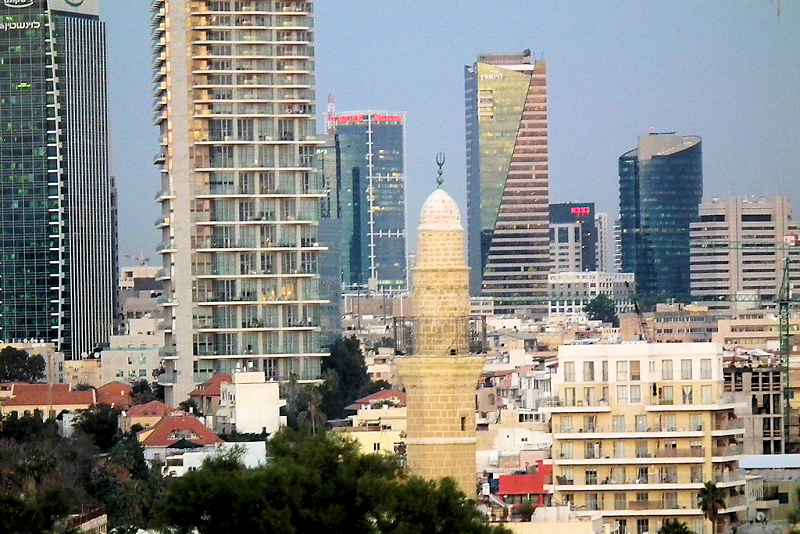
Testosterone does wear out after a while – and this is how many wars come to an end. Eventually, people just want to go home and sleep in a proper bed.

The Chief

The desert village, some way west of Timbuktu, started coming together again. People returned from refugee camps in neighbouring Mauretania and new people joined from other villages, seeing how they were getting organised and taking life back into their own hands. The chief, a thoughtful man in his early seventies, with good intentions for his people, strengthened the social fabric of the village and gave it new hope, with our help.

The Tuareg are a consensual people with deep traditions going way back before the arrival of Islam in medieval times. They are independent people, with significant gender equality and a strong sense of collective solidarity. I liked working with them, and they did the right things to help us help them.

They are a desert people. For centuries they have been the camel-truckers of the Sahara, carrying goods between south and north, inhabiting the southern edge of the desert, the Sahel. Gold, salt and high-value goods were their main cargoes, plus, in medieval times, slaves to Algeria and Egypt, which they stopped doing later. These goods and people were sold in the souks of the Arab world and forwarded to Europe, Ottoman Turkey and the Middle East.

One thing I like about them is their integrity, honesty and lack of corruption, and this makes it easier to work with them. They don’t like asking for help, and they budget and spend well, and money sent for a particular purpose is usually spent on that purpose, as arranged.

Home-made mud bricks for the school

In many crisis zones, money just gets spent on whatever urgent need comes up next – it’s understandable, a ‘firefighting’ approach, and that’s life there, but from a fundraising viewpoint in the rich world it’s difficult, because of our issues around accountability. Accountability is a polite word for post-Protestant tight-fisted control-freakery, a key quality that has made us whiteskins rich.

We communicated through Anim al Husseini, who first contacted me in 2015. It was his wife who had died in childbirth, and Zeinabou is now growing up in the village. Anim speaks Tamashek (the Tuareg language), Arabic, French and English, and he’s good at staying in touch and supplying information and photos – without these, support work gets difficult.

The chief has nominated Anim to be the next chief – though, whenever that happens, he will need the consensus of the villagers to step into that role. That’s the way it works amongst the Tuareg: their traditional systems of governance are consultative and confederal. As desert individualists with a self-help survival ethic, any family or tribe may take their leave and join other villages if they feel the need. Nominally the men make the decisions but, if the women disapprove, it simply doesn’t happen, and that’s that. So the women set the norms and the men do the business.

The school in construction

The village has hit new political difficulties. It’s a long story, going back to the 1880s-90s when the French took over the Sahara, dividing it into what are now Mali, Burkina Faso, Niger, Morocco, Algeria and Libya. They took the Tuaregs’ camels, goats and best lands, oppressing, conscripting and enslaving them and discouraging their nomadic lifestyle. Over time there were a few Tuareg revolts against this.

When independence came in the 1960s, power went to the Mandinka and Bambara majorities in the southern, greener part of Mali, who continued discriminating against the Tuareg, regarding them as a threat. Yes, there is black racism too, and the Tuareg are only partly black – they derive from ancient Saharan, Berber, Arabic, Nubian and West African stock.

The school in completion

By the 1990s some Tuareg wanted their own independent country of Azawad in the northern half of Mali – the desert region. The government wouldn’t have it and fought back. There were also frictions with other peoples in the area – the Dogon, Fulani, Songhai, Bambara, Soninka – as populations grew and the region became more desertified.

Recently, Anim Touareg wrote to me, and this is the first time he has ever expressed true fear over the future. This is what he wrote:

Salam Aleykoum dear Palden
How are you ?
All the people of the village greet you
We are very scared about the situation and yes we hope everyone will be safe
A lot of people already flee to Mauritania
But in the village we discussed about it and we decided to stay in the village
Because travelling will cost a lot of money and the last time we went to [refugee camps in] Mauritania, everybody get sick
Here now the biggest problem we have is the provision [food]
Things are getting very very expensive because of the war
However if we get food for the people, we will stay in the village and continue education for the children
The chief of the village is sending his worry and ask you to tell to your friends
Because this is very emergency and we hope everything is gonna be alright
Thank you so much for everything dear Palden
Please receive greetings and prayers from all the village
Ma’Assalam

And later he added this:

We don’t have access to a good and reliable internet connection these days
I am happy to tell you we sent some families to the refugee camps In Mauritania
We evacuated elder people first because they have a lot of health issues and can’t support big pressure
For me I am still in the village with my family and some other families
We will work hard to continue running the school so our children get educated
It’s very important for us
We are trying our best
I know about your health issue dear friend and I don’t want you to work a lot also
So take your time and share some Infos when you can
Thank you so much for everything dear Palden
Please take good care of you and keep in touch
Maasalam
Anim ❤🙏🙏🙏

Anim is a Capricorn in his early thirties – a Tuareg Millennial and single father, with camel.

The well in construction

I’m telling you this story partially for your interest and information, but also I’m sniffing around. We need about three people with a good mix of skills who would be happy and willing to work with this and – this is the important bit – stick with it. The good news is that this project is not a big one – it’s human-sized. The turnover of the Hope Flowers School in Bethlehem was over a million dollars a year, with which I could only tinker around the edges and do specific bits of hassle-busting but, with this village, our input has made a total, marked difference.

The well, completed

It’s a smaller-scale project, involving real people. We have no offices or international development degrees, though we’ve lived round campfires in tents and tipis. The involvement of an enlightened NGO might be welcome, yet there’s something special here about people-to-people, ground-to-ground connections – and not just handing it over to the charitable sector.

It feels best for there to be something like a small group of (say) three proactive energy-holders with 2-3 helpers. But it will take the shape it takes, around the people who turn up.

This isn’t about aid and development in the standard model. This is about helping the Tuareg stay Tuareg, and helping them interact constructively with the encroaching 21st Century world – and its guns, troublemakers, competing interests and geopolitics. A friend in Cornwall, Kellie Odgers-Brown, has come forward to market their jewellery here in Britain, and that’s a first step – the Tuareg want to generate their own income.

Now we need:

  • a good networker experienced in social media, crowdfunding and handling payments,
  • someone who understands cultural sensitivities and the politics of the region (who has also travelled outside the rich world without staying in hotels),
  • someone who is good at hustling, writing and organising,
  • plus a couple of people who are happy to pitch in when needed and handle special issues (such as cultivating a funder, running a website, starting a branch in another country or even going to Mali).

There’s a crisis going on in the Sahel and it is unlikely to end quickly. So this is not an easy mission, but it is doable by keeping an eye to the future. These people are a potential shining light in the post-conflict revival of the area. They stay politically neutral, focusing on their village and raising its game. By setting an example they give a model for other villages and tribes to emulate – this is a multiplier factor that is worth considering, and it’s already ‘case proven’.

But it needs resolute perseverance. It’s not full-time – it’s a spare-time thing that will go in waves and bursts. It might be good if there is one person in their 50s-60s, one in their 30s-40s and one in their teens-twenties, since each generation has its virtues. But those who turn up and make a difference are those who will run it and decide.

My dilemma is that I am no longer able to head this up and I have only a few years to live. The best I can do is advise, support and stand behind you. I no longer have what it takes to shoulder this operation. Think in terms of a minimum three-year commitment, with an added duty of finding someone to replace you if you wish to go.

If there is a gap in your life, if you seek engagement with something meaningful and out of the ordinary, and if it fits your ethical values to the extent that you can focus on it and become a trusty friend to these people, then this might be of interest to you.

If so, think about it for a few days, do some research, take a look at Anim’s Facebook page, contact him if you wish, and write to me with your thoughts (just a few paragraphs at first, please!). We’ll go on from there. Consider your realistically available time-space and your capacity to carry things through, and be clear about where your limits lie.

This is teamwork and others will rely on you to do whatever you take on. It’s unpaid, voluntary work, and it might or might not benefit your CV or resume, but it could benefit your mana – your standing as a soul. At the end of my life, I am so thankful for having been involved in this kind of work – it has been enriching in heart and soul.

That’s what this is about. To fulfil our missions on Earth, we need to get engaged with specific issues, activities and projects. We need to test ourselves with some gritty stuff, bringing light into the darkness. While this world has no shortage of crises and issues to worry about, getting involved with one thing like this is doable, and it can have wider implications longterm. It’s something where you as an individual can make an impact.

You form relationships with these people, and it’s about giving them some hope and backup, to make their lives better. They live in a very different world to us and, in our time, we need to learn to avoid imposing our ways on them and getting them to suck up to us. Instead we need to help them be themselves, stay themselves and develop themselves in their own way.

This is the way of the 21st Century. Leaders in this are the Palestinians – they are advising the Ukrainians in non-violent social survival and resistance skills. This is the stuff of the future – human, spirited aid.

It’s about building resilience, ecological, cultural and societal, about helping people face modern times, and bridgebuilding between cultures while honouring diversity. It isn’t only about helping them: it’s about an energy-exchange where they give what they are strong in, and we give what we are strong in, and it connects up, and everybody benefits.

For we, in the rich world, we need aid too. It’s just that we don’t fully know it yet. These people know a lot about survival and self-sufficiency. They understand the magic of life. They have a deep-rooted culture. They need friends, and so do we.

If this says something to you, or if you know someone who might be interested, or if you’d simply like to donate a tenner to the kitty (details from me), or rustle together tenners from your friends, or even take over the kitty, or make a prayer for protection of the village and the departed villagers, then please do. It would be great to give them some encouragement right now.

I’ve given you another long read, haven’t I? Well, congratulations in getting to the end. Happy newmoon. And Happy Birthday to Lynne too!
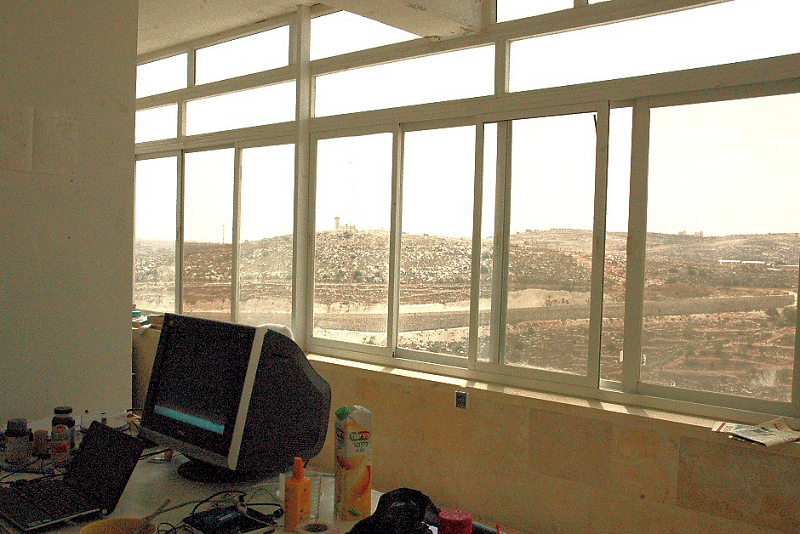
With love, Palden.
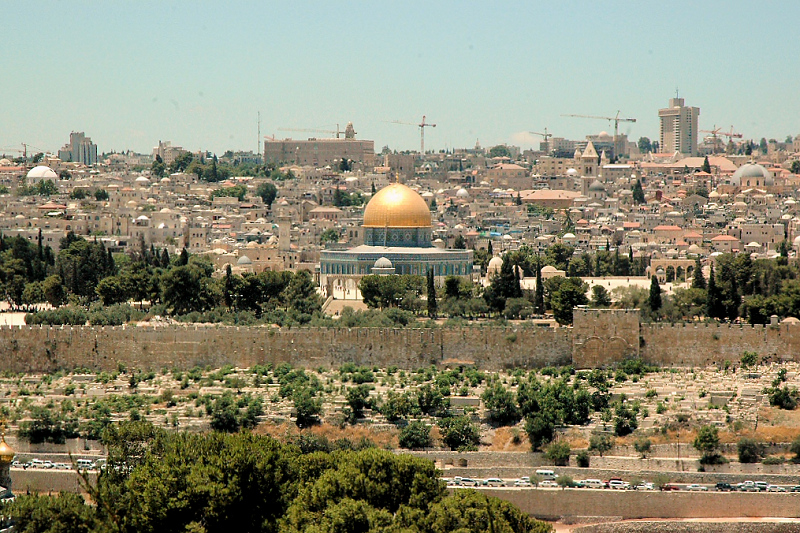
Anim Touareg in Mali: www.facebook.com/anim.touareg
Kellie Odgers-Brown in Cornwall: www.facebook.com/kellie.odgersbrown
Hala Bukhari in Jerusalem: https://www.facebook.com/sheikhbukhari
Izzedine Naqshband in Jerusalem: https://www.facebook.com/3izzdean
The Tuareg Desert People of Timbuktu (web-page): www.palden.co.uk/the-tuareg-of-mali.html
Palden on Facebook: https://www.facebook.com/palden.jenkins