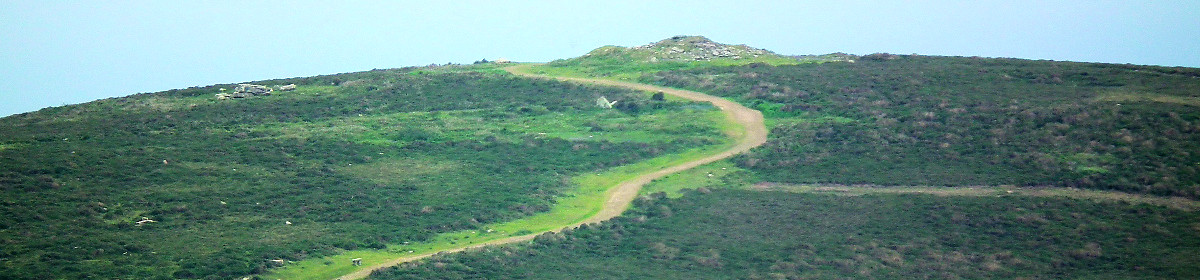
The Great Unknowable

We have to get lost. This means that things aren’t going to happen as we expect, as they should. We’re going to get other stuff instead. We’re going to go out of our depth.

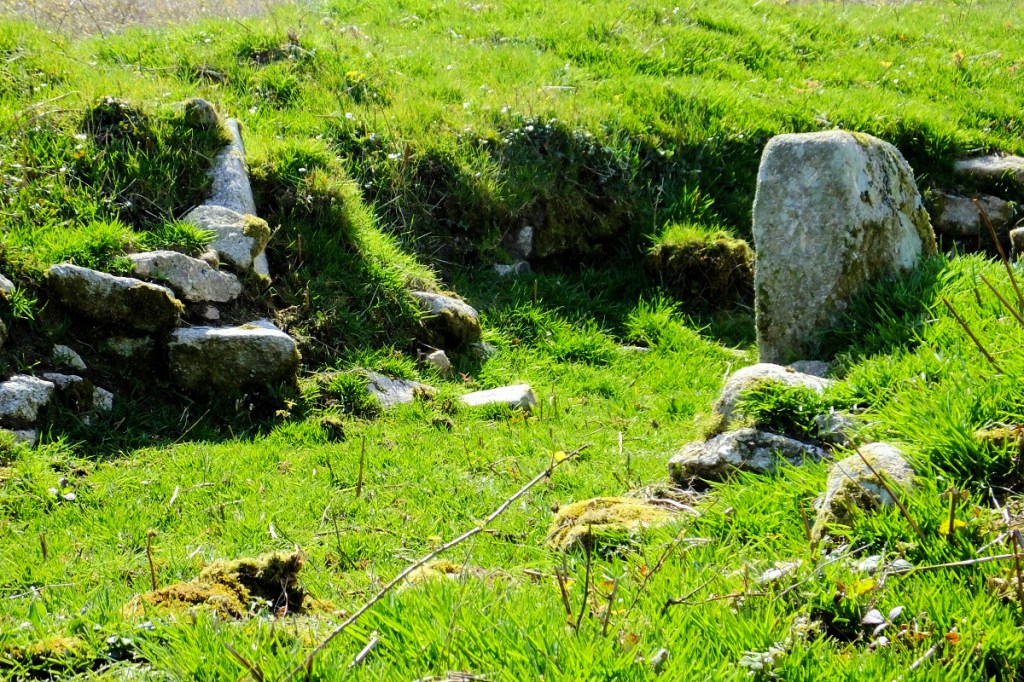
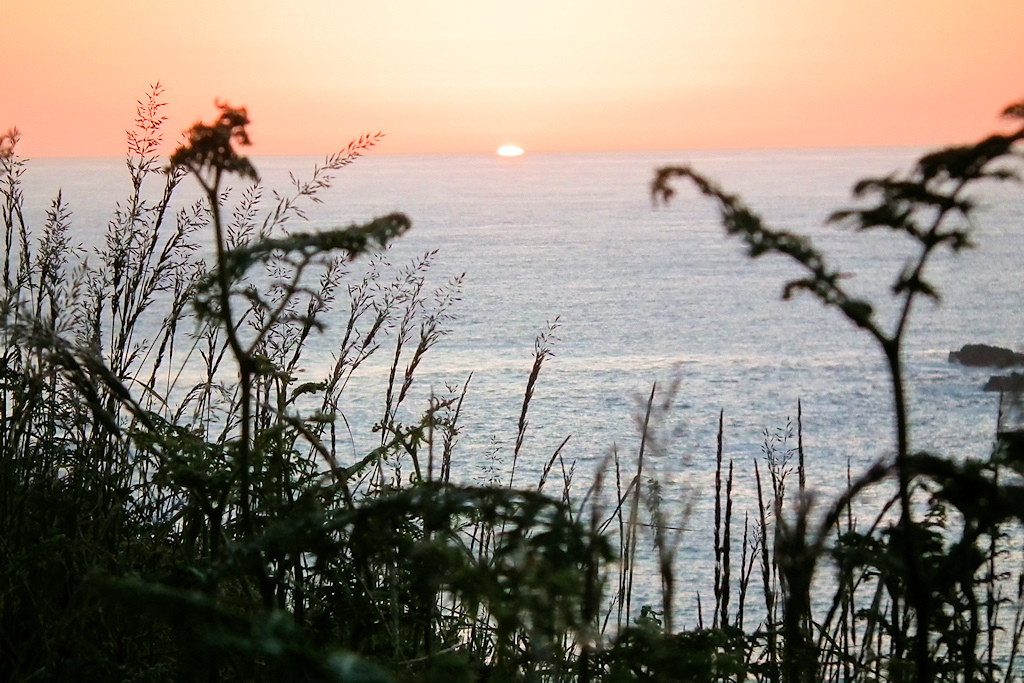
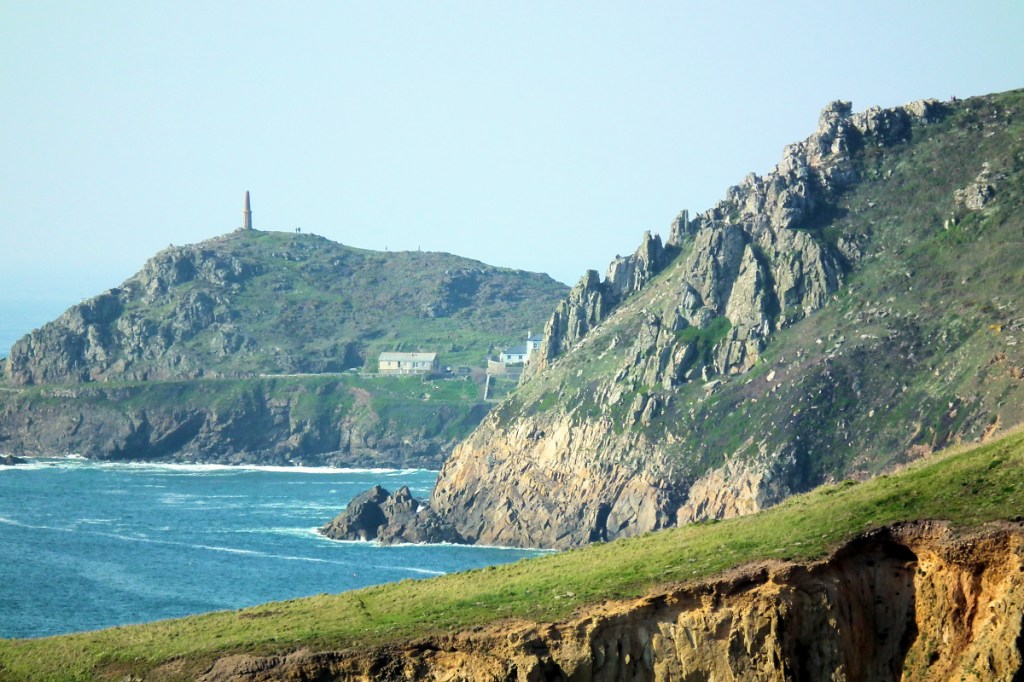
Kilgooth Ust (in English, Cape Cornwall)

The bigger implications of the Covid outbreak are now beginning to unfold. As I mentioned a few months ago, this isn’t about Covid – it’s a deeper and bigger change. Covid was the catalyst, bringing a cascade of events to force a change in the human psyche, globally. Covid itself will be forgotten, in time – it was just the trigger.

In a sense, this qualifies as a classic case of ‘divine intervention’. Imagine you’re an archangel, trying to help the people of planet Earth with their self-created problem. Previous attempts to trigger fundamental change – say, the fall of the Berlin Wall or the horrors of Syria – have not worked sufficiently. The challenge therefore is to create a trigger situation where it hits home hard enough to upend and shake out the foregoing human mindset that creates the problem, but not so hard that it knocks people back fundamentally, rendering them incapable of change, because they’re suffering, struggling and dying too much.

Et voila. It took the form of Covid 19 – a brilliant creation, sophisticated enough to outfox the brainiest of people and the most controlling of authoritarians and bureaucrats. It creates enough damage to rock things, but not enough (yet) to fundamentally disable us.

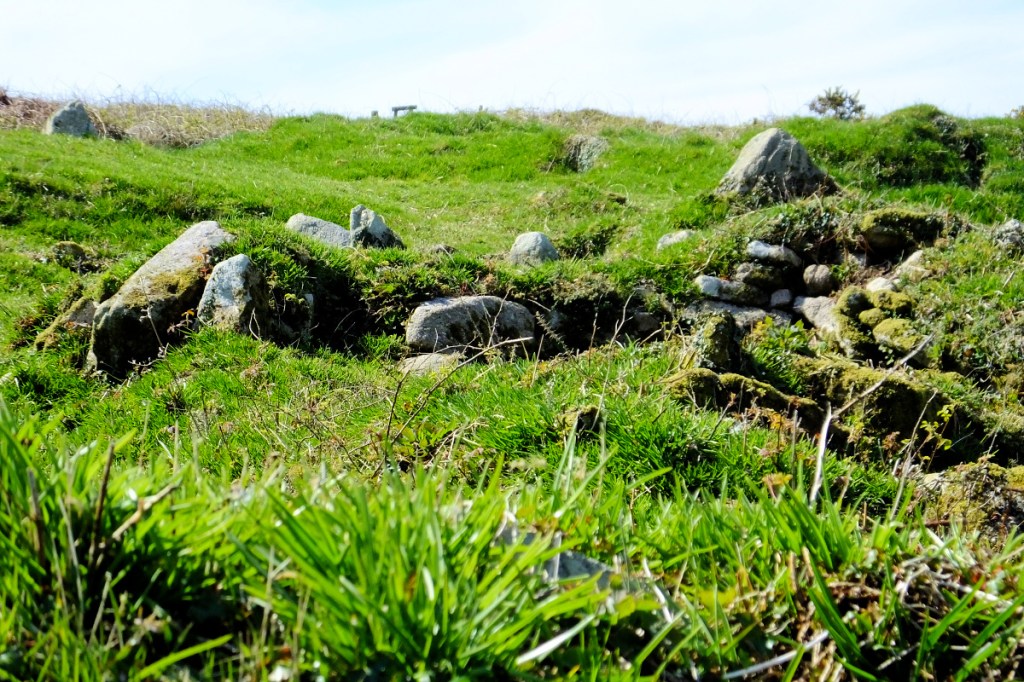
Carn Les Boel

There’s something much deeper going on than this – it’s a reality-reconfiguration. It’s so fundamental that even those of us with the loosest, widest, deepest thinking are rather lost. Yes, lost. Thoroughly disoriented.

A sure sign of this is the way that we’re all trying to map a certain vision onto the future, to restore something of the way things were before. For some people it’s all about where and when to go on holiday, and for others it’s all about who controls the world, and why, and what we ought to do about it. But the problem is that reality has shifted more than that. Even the most visionary, progressive ideas use assumptions and concepts from the past. We don’t really know what has shifted, or how exactly it happened. It’s just that we’re waking up in the morning suddenly realising that things already look very different. We’re rather lost, and getting more lost.

I’m one of the more visionary types around here. I’m well-versed in history and geopolitics, I’ve been on this path since the Sixties and have had time to think things through, I’m articulate, brainy and, guess what, to be entirely honest, I don’t have answers. Here’s the rub: anyone who proposes that they do have answers doesn’t really have them – they are projecting onto the future a framework, an understanding, that seeks to restore the past. I’d put myself amongst them: I too am doing this, in my way.

There are a lot of experts and pundits out there, advocating explanations, and recently we’ve entered a new phase in the battle of ideas and viewpoints and it’s very complicated and shifting. No one really knows what to think any more, so some of us suspend judgement or cop out, while others grasp on to sure-fire analyses of what’s happening and what happens next, megaphoning them at everyone else. As if reality is created through majoritarian agreement. No, it isn’t. Life is what happens when you’re busy making other plans. Especially now.

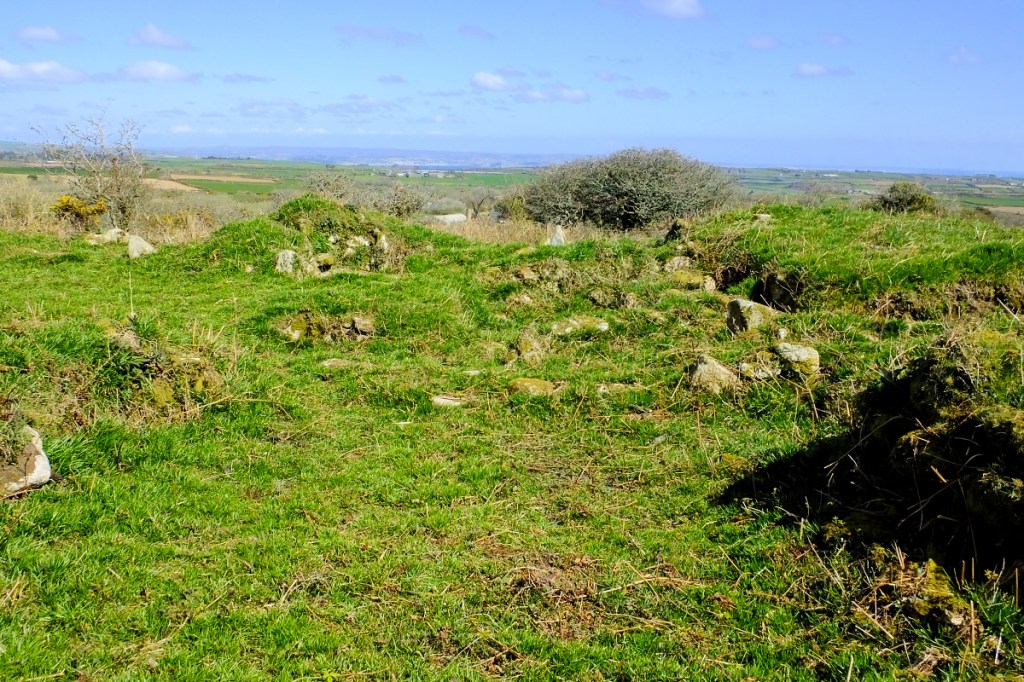
Treryn Dinas

This gets problematic, because it’s not just a simple question of right and wrong. Take conspiracy theories, a classic example of reality-projection, born out of a need to control the uncontrollable and to see the world as Big Brother’s plaything – a father complex. Well, problem is, much of the analysis that constructs this mindset is ill-interpreted and ill-founded, but there is also a lot of truth in it and some conspiratorialists are pointing at something really important. Unfortunately, their insights are obscured by a lot of loud noise, sensationalism, sales, over-analysis, misjudgement and right-wing politics. So, including in the world of smoke and mirrors, we’re lost.

Guess what, the great manipulators – those much-vaunted Illuminati, Trilaterals, Bilderbergers and Reptilians – are lost too, and we don’t have just one Big Brother – we’re also witnessing a war of the titans at the top of society. Eitherwhichway, this is an example of how it’s working at present – we’re obsessed with grasping at explanations, whether scientific, ethnic, religious or conspiratorial, or anything, as long as it sounds good and makes us feel safe.

Everything, somehow, is partially true, and ‘right’ and ‘wrong’ are obsolete concepts. There is no right or wrong: there are simply outcomes. This is one of the operational rules of the 21st Century.

Now this gets interesting. A few years ago I wrote a report about the world in 2050. I sought to map out the issues and the scope of the complete planetary problem. I did quite a good job, as it goes, given the size and scope of the situation. It was reasonably clear what needed to be done – the social, ecological and other mega-issues we all know so well by now. But how to fit them all together and how to get there was the big issue, and today we’re faced with an enormous dysjunction.

Problem is, there’s the goal. That’s one thing. Then there’s where we stand today. That’s another. The two neither match nor connect. Given where we stand today and what we’re doing, we won’t reach the goal. Yes, we’re making big changes, but electric cars are not enough. It’s our inner grasp of things that needs to change. We’re faced with cosmological change. But we’re still in a phase of trying to restore the past. This includes the visionaries, the progressives, the leading-edge people – it doesn’t only concern those un-wokes who are perceived by progressives as needing to get real and catch up.

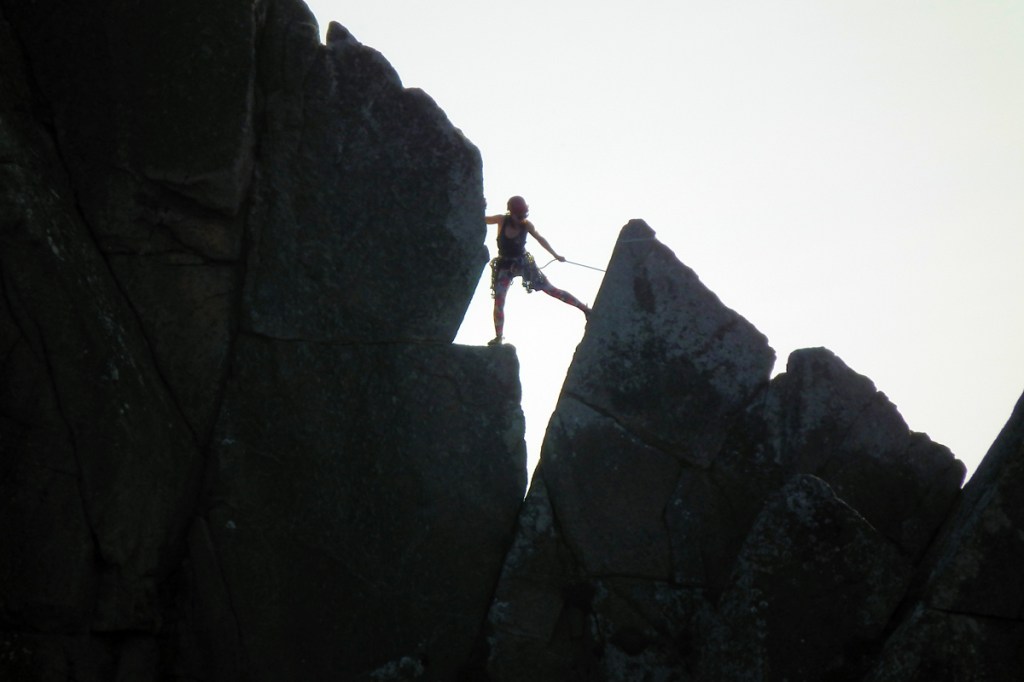
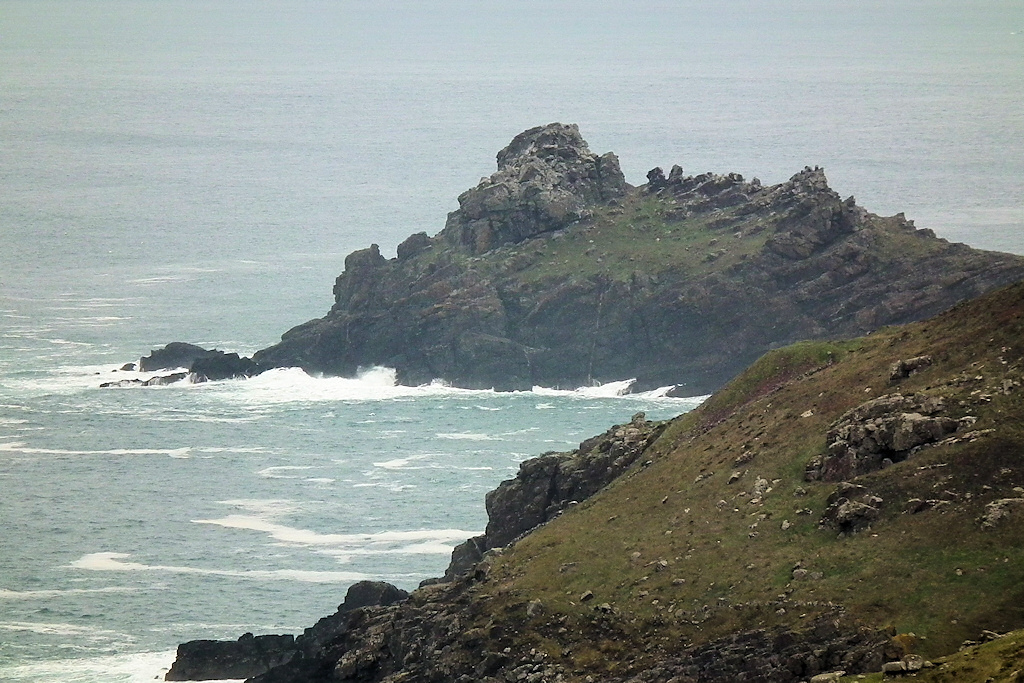
Gurnard’s Head

To get from here to there, which we cannot do with our existing sense of reality, that reality has to get shaken out in such a way that we get totally lost and disoriented. So that our fixities and structures get shaken out, on all levels. This would be a crisis and a catastrophe in one sense – a serious global mental health and organisational challenge – but the idea here is that it’s a way in which we might avoid actual, total catastrophe – such as the still-unresolved possibility of blowing up the world with nukes, or a systems breakdown or climate event so large that the majority of humans suffer and die horribly.

We have to get lost. This means that things aren’t going to happen as we expect, as they should. We’re going to get other stuff instead. We’re going to go out of our depth. It started happening last year, when we suddenly fell over a cliff we didn’t quite know was there, and we still haven’t grasped how high the cliff is. This falling sensation applies to every single one of us.

We’re falling, tipping over an edge, not sure what we’re falling into, but we’ve already lost balance. Arguably, this tipping phase began around 2008-2012, but it cracked and went critical in 2020, and now we’re on a slippery slope.

I don’t know what happens next, but here’s a key clue. We have a vastness of issues to sort out, and it all hangs around society, social choices, social justice, social power and societal healing. If these are not progressed in the next few decades, we will not handle the climatic, ecological, biosecurity, geopolitical and other issues before us. It all hangs around collective willingness, consensus, belief, consent, acceptance and cooperation. Human community. This has been put before us during the Covid crisis and this is what stands before us now.

But it isn’t about persuasion, leadership and followership, and it isn’t about recreating and replicating the past. Then comes the question: well, what should we believe? There’s an answer to this, quite well summed up by a chunk of wisdom from our old friend Jesus: by their works shall you know them.

Pendeen Watch

In other words, look at the people who are doing things. And help them. I keep quoting a Xhosa saying: listen more closely to things than to people. Don’t give so much attention to ideas, beliefs and viewpoints. Try to do today whatever is best in this situation, as it stands, using your instincts, acting creatively and moving things forward from here, in big and little ways. Because this is about spreading our wings and learning to fly. Birds don’t see the air that supports them when they fly – they feel it and sense it. They fly by trusting in the air. That’s the way to go, and there’s much more to go.

But don’t just believe me because (I hope) I sound convincing. People like me, the ones pumping ideas into the collective psyche, are part of the problem. Ideas are a problem. That’s not an anti-intellectual rant: it’s just that, the way our ideas are configured, they’ve become a problem. We do need to use our heads, but differently.

Here’s a tip: get more happy and okay about not knowing what the fuck is going on. You’re unlikely to find out.
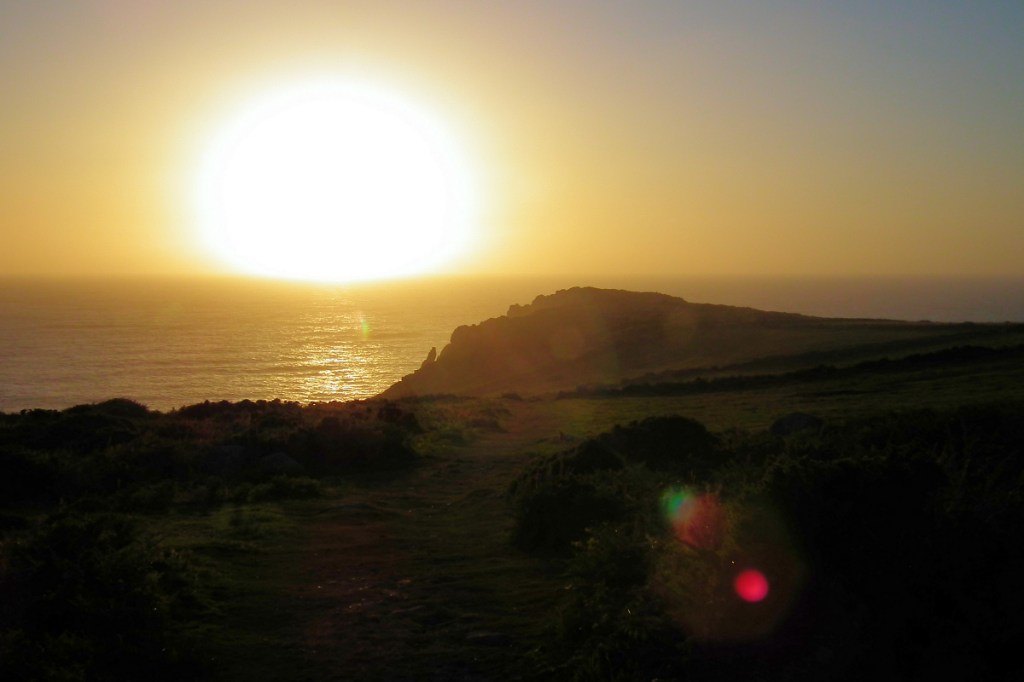
Bosigran Castle

So, if you were an archangel, seeking to effect a Great Reset even on those who believe they are doing the resetting and in control of the process, you’d spin everyone round and cause them to get thoroughly lost. So that the cards get reshuffled quicker. So that solutions can come without having to drag through a lengthy processes of change and resistance to change. So that the constraints of the past can be freed, and the assets of the past can more truly be harvested – the brilliant, amazing aspects of human history, genius and hard work that have also characterised our current civilisation. So that we actually survive, without excessive, irreparable damage done.

Here at my place, there has just been a lovely fly-past of five hooting geese. They’re off to spend the day at the pools just by Tregeseal stone circle, two miles away.

With love. All is well.

Palden
Helping

This isn’t really a question of politics or ideology any more. The word ‘crisis’ comes from ancient Greek. It means a situation prompting us to distinguish, choose and decide.

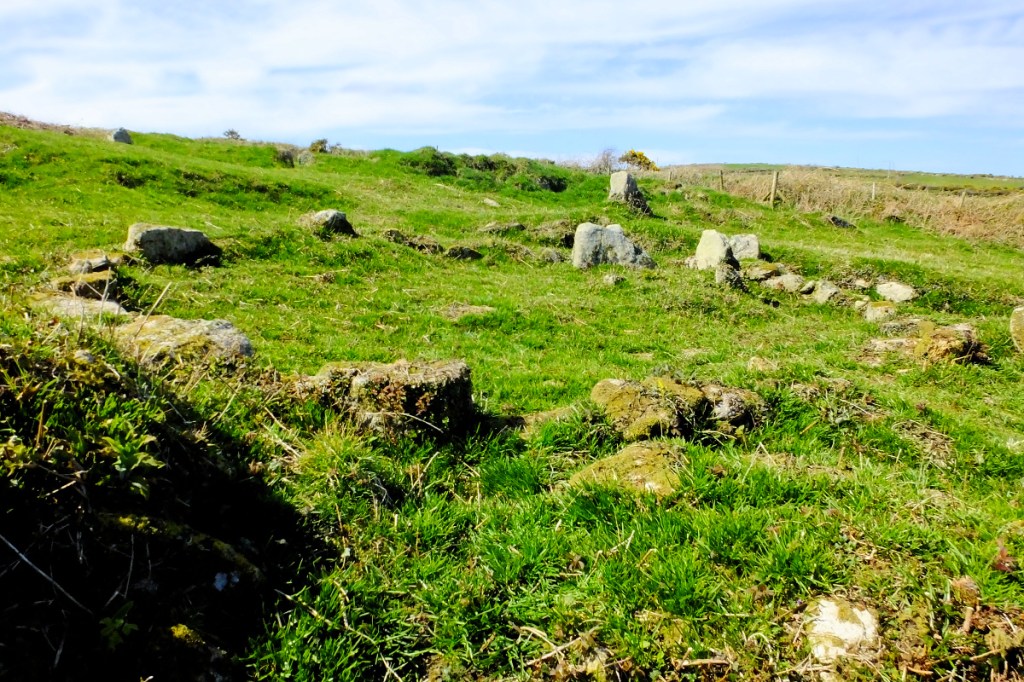
Lynne and I went adventuring, visiting a 2,000 year old iron age settlement here in West Penwith. What I love about these places is that it’s possible to get a feeling of the lives of people who once lived there, long ago – of grandparents sitting by the fire, children playing, grown-ups coming and going, busying themselves with tasks and chores.

This settlement, Goldherring, had a workplace feeling: it looked as if many of the buildings were functional workshops and stores while only some seemed to be residential.

There was a chill, rather cutting springtime wind, even in the milky sunshine, so we squatted down in the sheltered remains of a roofless iron age building, erected about a hundred generations past. Out came the tea flask and biscuits – necessary ingredients in antiquarian investigations – and we sat there chatting about life two millennia ago and life as it is now.

Goldherring was occupied in three or so phases in the late iron age, the Roman period and early medieval times. Apparently the first lot came from abroad, since items from Brittany were found in the lower archaeological layers. Later on the place seems to have been a forge, the home and workplace of a specialist craftsman. The Romans didn’t have a great impact down here, since they never invaded Cornwall – stopping at Exeter – though they influenced the place, rather like USA or China influence us now, here in Europe.

Like many people I’ve been quite shut away and mostly alone for what seems like a very long time, so when Lynne comes to stay it’s A Big Event, and when she leaves there’s rather a large gap. We aren’t unused to it: over the last five years we’ve had a hundred-ish long weekends together and we’ve developed strategies for dealing with it, but there’s still a gap, and sometimes it yawns vulnerably.

Sometimes it gets tested too. During the first lockdown in 2020 Lynne couldn’t visit for quite a while. It activated that ‘distance makes the heart grow fonder’ experience you can sometimes get when you’re a human on a planet, locked into time, geography and circumstance. This might happen again too, now. Covid has hit Lynne’s business (she’s mainly an astrologer), she’s been bumping along fending off the wolves from the door, and now her car has suddenly failed its MOT test, needing big repairs or replacement. And Covid has drained her money-pot. Uh-oh, looks like we might miss some weekends!

This is a small, personal part of an incremental, degenerative social and economic hollowing out, as the cascading impacts of Covid work their way through. We look a little too closely at the pandemic to see clearly what’s going on. In the end, the pandemic will be forgotten – it was a catalyst of a bigger process of change – and what the longterm future will reveal is that in 2020 we crossed a tipping point – though really this tilting of history started perhaps in 2008-12. Or around 1989-93. Or perhaps around 1965-70.

It concerns the scaling down of an overinflated economy running on coffee, cocaine, excess and shady dealings, the power of people to have agency and influence in that economy, the hearts and minds of crowds and publics worldwide, the willingness and consent of society to go through changes we know to be urgent and necessary, and the relationship between the world’s ecosystems and human behaviour. Big questions – quite bottomless societal, environmental and psycho-spiritual questions. We’ve gone too far, something fundamental needs to change, and there’s something very factual about that.

This isn’t really a question of politics or ideology any more. The word crisis comes from ancient Greek. It means a situation prompting us to distinguish, choose and decide. We spend a lot of our lives engaging in avoidance strategies, and of course crises are uncomfortable, threatening, often painful and cruelly indiscriminate. They present truth and facts, whether or not we like it – there’s no stopping an earthquake, hurricane or an advancing army. But a crisis is also an opportunity, an integral part of the pattern of change. There can be unpremeditated, instinct-led possibilities available, and sometimes they work, sometimes they don’t. Sometimes you get a tragedy, sometimes a miracle. For better or worse, crises tend to force and resolve multiple issues at the same time. Crunch, bang, that’s it.

I personally am not in an immediate crisis right now – I’m kinda chugging along – though I’m in an ongoing one as a cancer patient. Since I was diagnosed in Nov 2019 I’ve had three crunchy crises and others will follow, and one will cut me down one day. But it’s easy to fall into the trap of believing that my own problems are bigger than other people’s, since they involve confronting death and quite high levels of difficulty and pain. Yet, looking at Lynne and the bill-paying concerns and daily-life complications she’s labouring through, I find myself wondering what’s genuinely harder – a long, hard grind like hers or a red-flashing-lights crisis like I sometimes get?

Two thousand years ago in Goldherring they didn’t have money worries – they didn’t have money! They bartered, gifted and negotiated, and a large part of that negotiation was with nature itself. A bad harvest or a cold winter made a big difference. An Atlantic gale could rip the thatch off your roundhut roof, at the wrong season for replacing it. They faced the tough realities of living on Earth, just like we do.

But they didn’t live in our particular kind of civilisation, with its copious discontents and MOT tests. Living in their own culture and just outside the big-booted Roman empire will have had its own issues, but perhaps those issues were a little more real than ours. Not least because, in our day, simulated realities seem to be replacing manifest reality: belief seems to be overriding what’s standing in front of us. This isn’t new in human history, but the scale of it is new. There are more souls alive today than ever before, experiencing that simulation and, unfortunately, believing that it’s reality.

Philosopher Teilhard de Chardin invented the idea of the noosphere (pronounced no-osphere), the constructed world of human belief – what we think is going on. It becomes a self-programming mega-algorithm that then defines our collective reality as we perceive it. Early in prehistory the ecosphere largely conditioned people’s beliefs and behaviours, and human history since then has been one long story of the development of an ascendant cultural consensus, the noosphere. It has replicated to a point where, in our globalised, urban-industrial-digital society, it shouts louder than the ecosphere, especially to city-dwellers, who also tend to make the decisions on everyone’s behalf.

Nowadays, if the ecospheric world impacts on the noospheric world, we dynamite and bulldoze it, setting scientists, doctors, engineers and politicians on it to chase it away. But the noosphere increasingly resembles a house of cards, resting on shaky dependencies and rising so high that its foundations have cracked, and the ecosphere is impinging on us anyway.

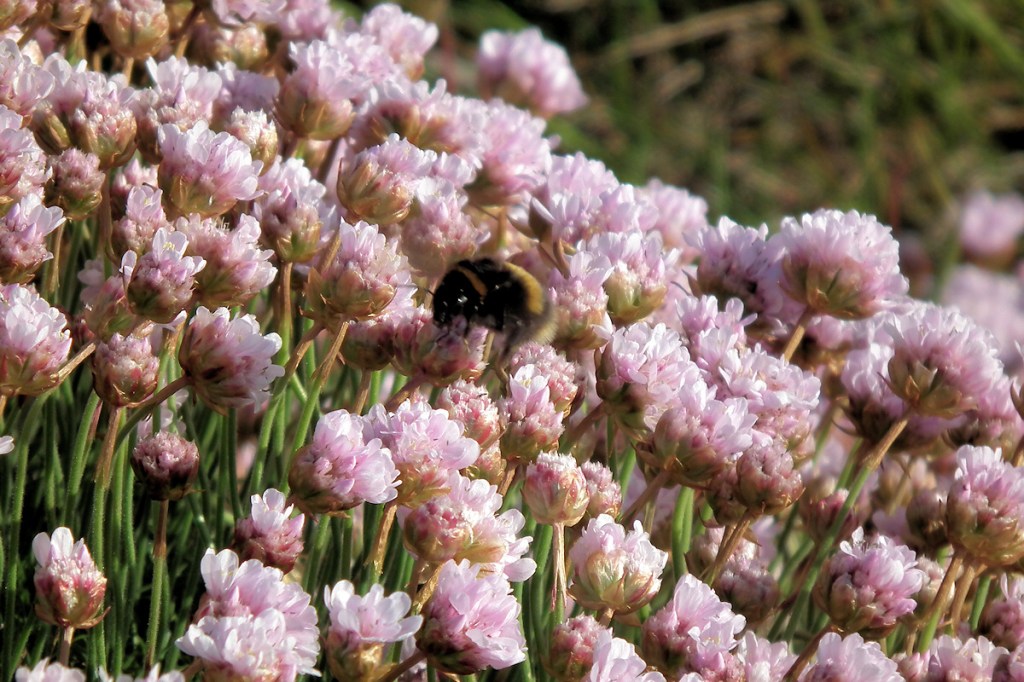
The pennyworts were poking up into the sun and a buzzard wheeled overhead as Lynne and I sat there, huddling together in the iron age with our tea and Nairn’s biscuits, reflecting on life. For the plain fact is, while Lynne is scraping along to pay the bills and my pension is modest, as inhabitants of the rich world we are still in the top 25% of wealthy people. For many people worldwide, Covid means not illness but hunger, and many of these people – farmers, favelistas, enterepreneurs, employees – were doing alright enough before Covid came along.

Yet within our own sphere of reality, each of us has our problems. Some are really dire (think of many Syrians or Yemenis, or of people keeling over with Covid in Brazil) while many people are confronting ‘grindstone mentality’, the uncomfortable feeling that we’re not doing enough to solve our problems and we must do more, setting aside our main priorities to do so – yet again. Then we worry about our ‘mental health’ when many of us, and society as a whole, are having a spiritual crisis. WTF are we here for, and is this the world we really want?

I’m psychologically quite self-sufficient but Lynne nevertheless makes a big difference in my life. She’s one of those who is willing to prioritise things that aren’t in her immediate self-interest, doing so with a lot of love and care – not only for me but for lots of people. And for the plants and microbes in her garden.

It rests on this kind of person to save the world: this has been demonstrated during the Covid crisis. It has been a case of ‘amateurs built the Ark and professionals built the Titanic’. Society has leaned heavily on dedicated people who have an altruistic bent and the skills of service. It has leaned especially on non-professionals acting out of goodwill, service and commitment – in the rich world social care and healthcare have been over-professionalised, while family and community support systems have been asphyxiated by ‘progress’ and the busyness of a demanding modern life. Lynne is one of those non-professionals, a quiet supertrooper. Though some professionals have done a heroic job too: I’ve seen this with the doctors and nurses I’ve met, and through the eyes of my son, who’s in the air ambulance business.

It’s also a joy, as a disabled cancer patient, to get up in the morning, light the stove and bring Lynne tea in bed. For in truth there is no such thing as helping: it’s an energy-exchange. Lynne brings so much goodness into my life yet mercifully she seems to feel that it’s reciprocated.

By healing we become healed. By giving what we can, even when we have limited possibilities, we do receive. It is possible for a whole economy to work like this – and I’ve seen such principles at work in Palestine, where officially there is high unemployment and a lot of destitution yet everyone is busy and more or less catered for, even under the duress of living under longterm military occupation. Sometimes, when we need help, the best thing to do is to help someone else. Help the world.

One awkward question we need to face in the coming time concerns social roles and their tendency to get fixed: whether we’re a net helper or a net recipient, male or female, black or white, progressive or resister, we mustn’t get too attached to any positions in the spectrum. Because help and support flow around society in the most miraculous and amazing of ways. If we permit it. For this to work, everyone, no matter how helpless or seemingly useless, has something to give and we need to give it. Withholding our humanity and creativity holds the world back.

Over the last month I’ve been chugging away at completing a five year research project. It’s something I can give to the world, in my reduced capacity. Its value will be appreciated only by a small number of people, but it contributes to society’s cultural capital and it’s a contribution I can make. I’ve just finished it. It’s an online map and database of the thousands of prehistoric sites in Cornwall, providing online resources for use in researching prehistoric sites and their meaning and purpose. It’s here: Map of the Prehistoric Sites of Cornwall.

If you’d like to sample some music I’m enjoying right now, try this – Trance Frendz.

All is as well as can be. Beeee goooood. Lots of love from me. Thanks for reading.

Palden

Still Kicking

Nowadays I’m rather frail, yet there’s a deep resilience in me too. I’m not unused to crisis and tend to fight back and rebirth myself through it. The more you allow crisis, the more you can use it as a launchpad for revival.

Rocks and hard places – Porthmoina Cove, Cornwall

I’m still alive. Crisis over. I spent last week coming back fully, also working with taking chemo. I seem to be taking it quite well, though it affects my brains and energy – my perceived age is now that of a perky 90 year old and I have to simplify my life and activities to match.

Since starting chemo a month ago I’ve gone into a pharma-induced weekly cycle where I’m ‘up’ on Dex (a steroid) on Mondays and Tuesdays and then I subside into what could be a ‘down’ time by Friday – except I relax into it and let it be, and I don’t get depressed as some people do. The challenge is to hang in there and go through the long tunnel.

The signs are good. Liz, the haematologist, reported last week that my results were ‘surprisingly good’. She forgets that I had said this was likely, but now at least she has some evidence.

When my cancer journey started in autumn 2019, I really didn’t know how well I would do: the shock of getting cancer obliged me to abandon previous ideas and beliefs and really get to grips with the facts of my situation. I was dying and the cancer was quite advanced – I was caught in the nick of time.

My treatment in the last month has worked well – again, to their surprise, and despite the crisis I had. I had encouraged them to set a student on me to observe and monitor me for their research, because I’ve been a meditating vegetarian for decades. But no, such knowledge wasn’t deemed necessary.

Though when the visiting nurse came on Monday this week to administer my drugs, she was fascinated with my story. She’s clearly quite interested in alternative pathways, but most people she talks to about this will tend to be relatively new to the game, and perhaps they won’t have changed and evolved as far.

She nodded, agreeing, when I said that five decades of a good diet and lifestyle and 45 years of meditation must have a significant effect, especially since I started this while young: I (and people like me) have evolved differently from many people, psychospiritually and physically, and decades of it makes a difference.

Nowadays I’m rather frail, yet there’s a deep resilience in me too. I’m not unused to crisis and tend to fight back and rebirth myself through it. The more you allow crisis, the more you can use it as a launchpad for revival. Part of me needs it since it activates my systems, and that’s one reason why I’ve tended to live quite an edgy life, involved with risky, frontline, limit-pushing activities.

If you’re part of a revolution when you’re young, even if it fails, there’s no going back – and many are the people around the world who have crossed this line in the last decade or two, yesterday in Belarus and Hong Kong, today in Myanmar.

Though I have contracted a blood cancer, this seems to arise from specific toxicities – electromagnetism and nuclear radiation – rather than from the patterns of my lifestyle. But I’ve had to face a raw fact: I have opened myself to energy and energy-fields. This has been a thirty-year theme in my talks and writings on astrology, cereology, ancient sites and the state of the world.

Perhaps I opened myself to these energy-fields a bit enthusiastically and unwisely earlier in life, or perhaps this openness made for a problem with mobile phones and wi-fi, making me undefended and increasing the effect of radiation exposure. Even so, although I have cancer, my overall body-mind system is in quite good nick, and this gives me good medical results, also helping me avoid some of the side-effects other people get during treatment.

Chapel Carn Brea, Cornwall

There’s a deep truth here: everything in life is a gift. Everything. Including those things we do not count as gifts.

Here we come to crises. Since diagnosis I’ve had three crises and it seems that, when these happen, more gets resolved than was immediately apparent at the time. Last October I contracted shingles (a side-effect of chemo drugs). But, as a result of that crisis my arthritis reduced, my fatigue disappeared and I went through quite a lift and breakthrough afterwards. The crisis mobilised a greater healing process than just dealing with the shingles.

The advantage of a crisis is that you can resolve lots of issues at once, rather than dragging them out over time and through much complexity. It raises the stakes, accelerating change.

Last week’s crisis – a total stomach explosion lasting 4-5 days – rendered me helpless and weak. I did the necessaries and dealt with it. Put me in a crisis and I am calm and collected – well, at least, in the heat of the moment. Astrologers amongst you will understand that, for a person with Sun and Saturn in Virgo, an exploding stomach is a big issue – a symptom of the transiting Neptune that is currently opposing my Saturn.

In my meditation at the time I opened myself up to my ‘inner doctors’ more than ever before. I went a level deeper than I knew I could. Most of them seem never to have had earthly bodies, but I think they’ve taken on a couple of former humans to help them get closer in – otherwise they can work only with my energy-fields without actually knowing how my body anatomy works. This sense of being closely examined was profound particularly because, for the healing to really work, you have to let these beings into your darker corners – the bits of your life you don’t want others, or even yourself, to see, and the stuff you feel guilty and ashamed about. For here is where the causes of illness lie.

Over the next day or two I felt myself getting sorted out from top down, starting at the highest level and working down through energy-body stuff to the physical issues. It’s difficult to convey how this felt, but I felt myself being pulled up and flooded with light from the centre and working outwards, while also being pulled down and re-grounded after a rather nightmarish experience, from outwards in. The crisis was resolved as the week progressed, and I feel I’ve been realigned, rewired and recharged, and that my soul is now more in the driving seat.

Here there’s a lesson in letting go. Before you ‘let go and let God’, it’s difficult knowing what that newly-opened space will be like and the way the game-plan rules will change when you step into it – and we have this cringeing habit of entering the future facing backwards. Letting go is, in a way, more about adopting the future than releasing the past. It can be hard work, sometimes, especially when you’re digging into deep patterns. But we also make it harder than it needs to be.

This is true for individuals but also, in the 2020s, this is very much the condition of the world, and it’s manifesting as a sense of urgency for change in the young: they don’t want to face the crap they’re faced with in the world as it stands, because they want to get on with the real stuff, not with the embedded illusions and attachments of former generations. But they’re faced with presented reality and legacy situations, and this is hard. Harry and Meghan have been demonstrating this in full public view.

One blessing arising from hovering close to death has been that I’m looking not only at the patterns of this life and of my life story. I find myself looking at patterns beyond this life, noticing the abiding threads, relationships and connections I have with people, and with karmic themes that go further than this life. Such a viewpoint shifts our perspective greatly – which is one reason why most people avoid it like the plague.

My son has signed up for the Army Reserves (Royal Signals), and he’s really motivated, and I know he’ll do it well. This is challenging for a wizzened old peace-freak like me, but I support him in following his path. When you’re a parent of a child joining the armed forces, you have to get used to the idea that they might get killed. In his case, I don’t think my son will, but you never know. I’ve had plenty of death-opportunities myself and I’m still here, now on my tenth life. But my response to this risk of death is, ‘Well, he and I have a contract lasting many lives, so if he dies I’ll be there to meet him on the other side, and we’ll have more to do with each other anyway, another time – this life is a chapter in a long story’.

I feel this with my three daughters too: we arrived in each other’s lives because we all have an interlocking karmic story, and we are here to enact those threads and experiences that we give each other – both intentionally and not. It has had its painful times. Here I have some regret, but in retrospect not as much as some people have judged I ought to have. This is important because, with children, though we generally want to do the best for them, we as parents are also here to give our children problems, issues and patterns. We have to give them a pile of shite to deal with. What they do with that is ultimately their choice, and it takes time to make it good and turn things around. They are new people, not just products of their heritage, and a proportion of souls alive today are new to earthly life too – some youngsters experiencing gender dysphoria are like that.

These new souls are programmed with the memories of other souls who have had earthly lives, to make them fit to face the challenges and details of life in a body on a high-gravity, spinning planet. These are not their own memories, and they don’t have the same emotional connection to them as souls would who draw on personal experience. So many of these souls seek to achieve their goals without really knowing fully how to deal with the dilemmas and screw-ups that happen on the way, or without fully developing the necessary skills. Developing patience and perseverance is a key issue.

My son is drawing on trans-life military memory – he’s inherently experienced in it, and the same has been true for me as a humanitarian and social activist. In the 1980s-90s, when I was organising gatherings and camps, I had an inherent gift of pulling people together – calling up armies – and many of them were former souls who knew me from other lives. When you’ve been a chief, a khan, a sheikh and a general, for better or worse you can be known by many thousands of souls.

This insight has helped me understand how and why, throughout life, some people have loved and been noticeably loyal while others have hated me and even taken revenge. One of life’s big lessons has been to forgive yet not to forget. Though the funny thing is that, since a near-death experience I had at age 24, I’ve had significant memory problems and I don’t actually remember my past very well, and this has helped immensely with forgiving. Our hang-ups are rooted in memory and the emotional armouring we develop as a result of pain and hardship, and I’ve had less of this than many people, owing to memory-loss.

One of life’s big lessons, for all of us, is how to make something good out of a bad situation. The Palestinians are masters at this, and they’ve taught me a lot. Life’s a pile of shit, and why do we delude ourselves otherwise and suffer so much over that delusion? Even eating chocolate causes suffering. But it’s delightful too, and you just do not get tomato ketchup up in heaven, so enjoy it while you can. But the big issue now is that enjoying life’s ketchup can no longer be done at the expense of others, and everyone deserves their fair share of ketchup, though not at the expense of our home planet.

Boscregan, looking toward Kilgooth Ust or Cape Cornwall

Another big lesson is staying true to our calling and purpose – not letting the world’s diversions get in the way too much. Sure, there are bills to pay, but this is not what we’re here for. We have to face these diversions because they’re part of life and they do lead us into places and situations we otherwise wouldn’t experience. They force us to develop life-skills. I’m a good writer but it is a developed skill, honed through mega-thousands of hours sitting at desks and computers, and it has been both a gift, a bane and at times a burden.

In my life I’ve made choices to prioritise my calling more than my security, and there has been a price to that, not only for me. I’ve made mistakes too, but I don’t fundamentally regret it. I’ve often been accused of being an unrealistic idealist, but actually I’m very much a Virgo realist, more preoccupied with working with human wrongs than with human rights, and looking further into the future than many people care to do. What in the 1960s were visionary ideals are now pragmatic policy imperatives.

One day at a time. With chemo-brain this approach is necessary. My capacity to handle complexity is much reduced. But it has its virtues. One thing in life we cannot control is the time and manner of our passing away. Paradoxically, the more we accept that lack of control, the more control we gain within that context. Life is what happens when we’re busy making other plans.

Thanks and blessings to all guardian angels. Thank you too for letting me share these thoughts. Salam alekum: peace in your soul. And what next? Time is what stops everything happening all at once.

Palden


———————
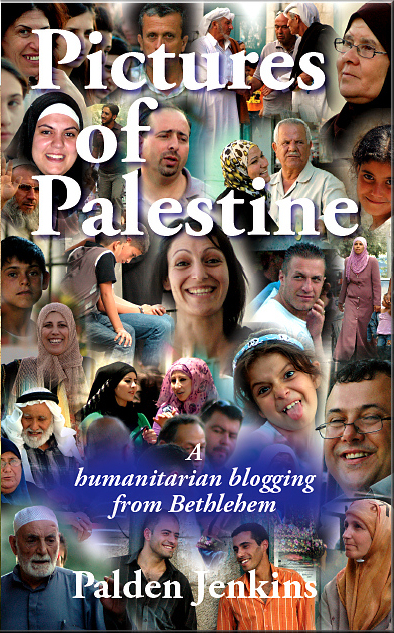
My book Pictures of Palestine | http://www.palden.co.uk/pop/order.html (free PDF download)

Human wrongs, and the future: Possibilities 2050 | www.possibilities2050.org (website and free PDF download). A visionary realist report on the world in 2050.

Soul Honing

Hours after writing the previous blog I started going downhill, and last week I went through a nightmare. I was really unwell, out of it and going through it.


Hours after writing the previous blog I started going downhill, and between Tuesday and Friday last week I went through a nightmare. I was really unwell, out of it and going through it. I think the chemo has been pitched incorrectly (especially for a meditating vegetarian of fifty years), and I have a physical stomach complication arising from the shortening of my lower spine and squeezing of my stomach, which added to it all. By Friday I felt all beat up and half-dead, and during the weekend I’ve been reconstituting myself and coming back to balance – with a little help from the sunshine.

It makes me wary of the next step – I get another dose of chemo tomorrow. But I’ve had one item of medication removed, and another (Dex) halved, and I shall do my best with that.

All this has rather undermined my confidence, though this has been helped by two nurses and one GP who have been really good – mainly by being human and tuned in. The NHS system badly needs serious review, but it has so many good souls working within it.

So I’m going to take a calculated risk with the next stage and see whether I can tough out the coming week – whether or not this is battlefield bravado, I do want to get this chemo process over with. At best I shall have quite a lot of fatigue, so I’m unlikely to be able to answer messages or even perhaps read them. But, alive or dead (I suspect the former), I’ll be back.

Thanks and blessings to all of you who have sent prayers and healing: please keep it to general support without specific intervention since my inner doctors are best to cover that. They might even be whispering into the heads of the NHS doctors too – you never know.

I get the feeling a much deeper process kicked in last week – it went down, or up, a level – or both. For the astrologers amongst you, Neptune is doing an exact opposition to my Saturn in the coming weeks – it has a kind of ‘this is it’ feeling to it and, despite everything, I’m up for it. ‘Freedom’s just another word for nothing left to lose‘.

And it’s a tad more engaging than bill-paying, driving along motorways, flattening aircraft seats or going through checkpoints…

The great blessing is that, amidst all this, it is clearer to me now than ever before that we come into this life to hone our souls. That’s the number one takeaway you get from taking on a life on Earth.

Love from me, Palden.

Chemo-daze

When this world was set up, they were creating something that hadn’t been done before. By a combination of intervention and natural evolution, they tried to make Earth into a suitable place for the cultivation of individualised free-will amongst a growing mass of volunteer souls coming from everywhere in the universe.

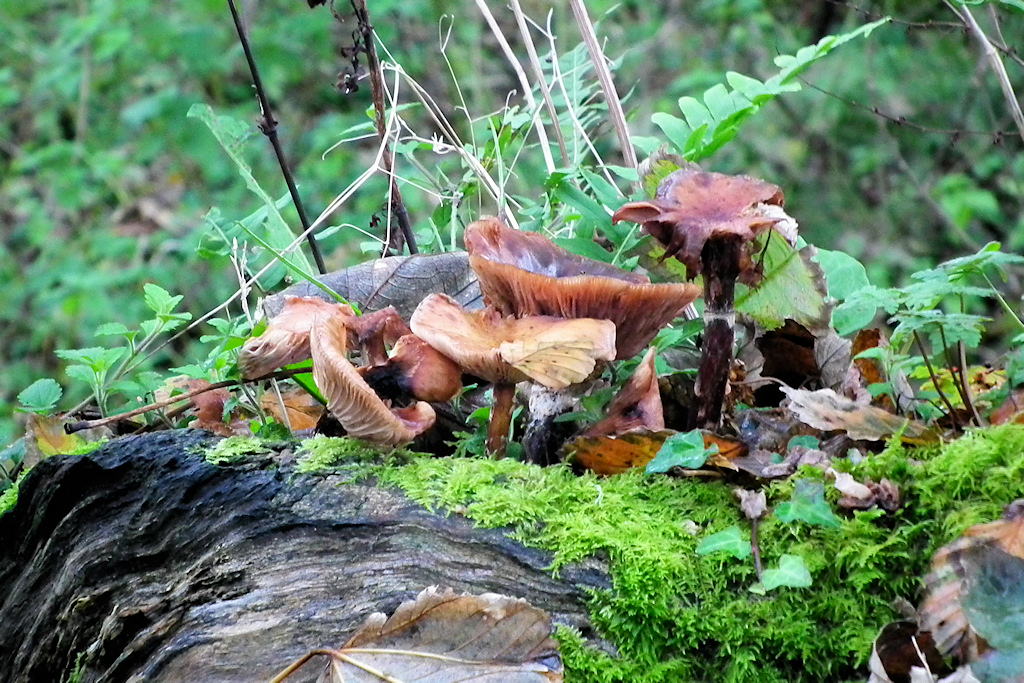
Fungiforms at St Loy, West Penwith, Cornwall

In the last few days, in my chemo-fatigued floaty reveries, I’ve thought of lots of things to write in this blog, and they all went thataway into the ethers – so if you picked up on any of them, just remember, our thoughts are less our own than we like to believe, and they might have come via me and not necessarily from me! This said, I’m reasonably good at elucidating things on the inner levels as well as in words, and throughout life I’ve often felt my psyche operates a bit like a telephone exchange, so you never really know…

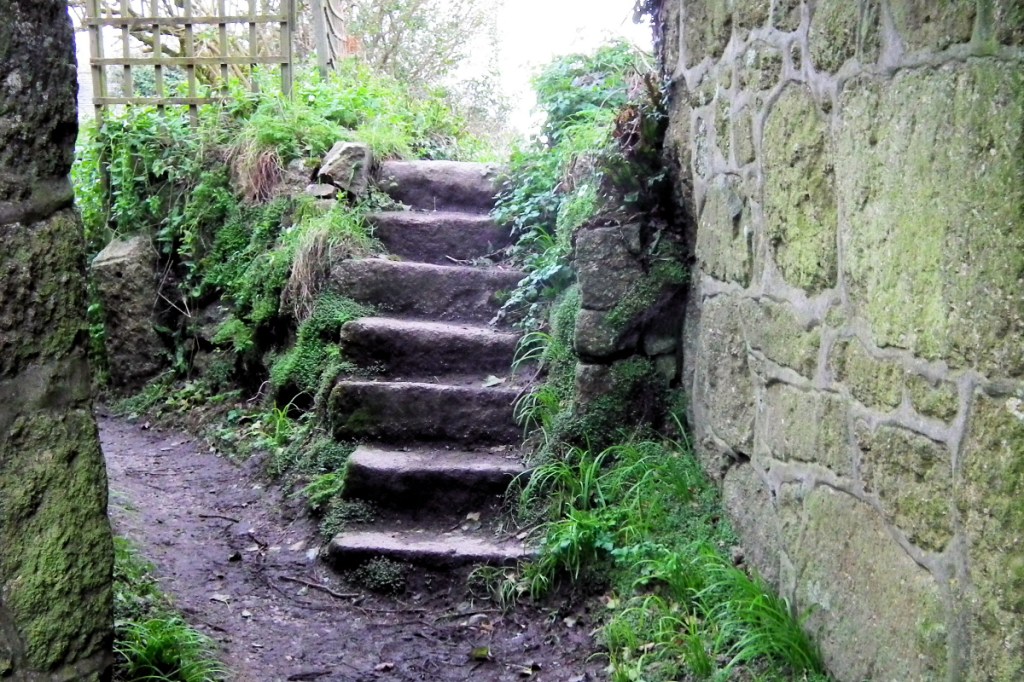
Steps on the path, St Loy.

A lot has changed in the last week or two. The new round of chemo treatment kicked in last week, and a rather nice, diligent nurse has visited me twice now to administer it. My perceived age went from 80ish to 95ish in a few days, and it has been at times difficult. But I learned a lot through last year’s chemo experiences and am much better prepared and adjusted than then. Much of the secret lies in reducing goals, simplifying, disengaging from former concerns and abilities, and keeping everything doable and within reach. I fall back on my methodical Virgo side and, that way, I can get through my daily routines quite well, and slowly, with rests in between.

I’ve stopped my creative writing (except this blog) because this draws on my bigger-brains, and they are taking a rest. Complexity, length, perseverance and big thinking aren’t available. Anyone who brings me complication or requests can wait or sort themselves out by other means. But I do manage smaller tasks when my energy is up – and I have to wait for it. I can write this blog today because I’m powered up on Dex, an anti-cancer steroid.

Cove at Morvah – Penwith is an arty place

To keep myself focused and kid myself I’m doing something useful with the remains of this incarnation, every few days, when I can, I’ve been working on the Meyn Mamvro online archive – a gradual process of scanning magazine pages, image-editing them, inserting them into a bookflip app and making PDF files of them, sorting out the web-page for each issue, and uploading. That takes 2-3 hours for each issue, and I’ve reached issue 35 out of 100. This sounds complex and long, but when you’re a natural archivist and editor with decades of drudge behind you, and if you’re a Saturnine Virgo like me, well, I can do it on autodrive – when I can.

Soon afterwards I engage in landing procedures (tea and munchies, music and, if I have the brains for it, something to read) and head for bed, flagged out. I’ve also been doing bits of work on the online ancient site maps of Cornwall that I’ve been developing since 2014. It’s good to do this, and it’s great when it ends too.

A rather magic place too

Well, we all develop our excuses for being alive. These are our chosen forms of self-punishment as the price we pay for a life on Earth – exciting and stimulus-rich as it is. If, for you, it isn’t, it might be take-off, not landing procedures, you need to develop further.

You see, when this world was set up, they were creating something that hadn’t been done before. By a combination of intervention and natural evolution, they tried to make Earth into a suitable place for the cultivation of individualised free-will amongst a growing mass of volunteer souls coming from everywhere in the universe. It is an advanced supertrooper training for those who are ready. What they didn’t then know was that strong gravitational fields of the kind that exist on this planet would have such a downward-pulling effect on consciousness, causing us to forget why we came, and to doubt that readiness. Also, they did not anticipate that we would build whole cultures and civilisations around this forgetting, such that we would lose track, locking ourselves into believing that our physical reality and our interpretation of it is the only reality that exists, that we are alone in the universe, that there is only one life we can live, and that ‘me’ is the most important thing in it.

Mysterious… (this is Gurnard’s Head, ‘the desolate one’)

What’s interesting with this is that they didn’t quite know how possible it was for beings like us to split and divide our psyches so thoroughly as we do, such that our two or our multiple sides would start operating semi-independently – our left and right sides, our conscious and unconscious. Westerners are particularly good at this, but every people has its own ways of defying its true nature. This has led to flights of possibility, genius and creativity that are utterly new (God would never have thought up the Beegees, condoms or nuclear bombs), and to a situation where we humans have developed a habit of working against our own best interests, causing ourselves and each other immense suffering in the process and even risking destroying this world, our playground, and thus even undermining our capacity to rectify the straits we’ve got into.

That’s pretty unique and very strange, and the problem is that no one else in the universe has had this kind of experience, so they’re not sure what to do. If I got my son Tulki to helicopter you over to Idlib province in Syria, or Yemen or Borno state in Nigeria, and drop you there, you wouldn’t know what to do either. Mercifully he’s in the air ambulance business, so if you’re nice to him he might fix for you to be saved! But The Management don’t interfere like that, because we came here to develop free will, and free will must develop freely. Humanity suffers a particulary psychological ailment called CSOCDS – compounded sense of consequence deficiency syndrome. This syndrome obstructs our free will, reducing us to the belief that one party or another in government, or VWs and Toyotas, or chattering on Facebook, or believing any belief you like, is what freedom means.

The view southwards from Carn Gloose

Anyway, as you can see, when I get into the right state, my crown chakra still can cough up a few gems. Please understand, you’re doing me as much a favour as I might be doing you, by being there for me to write to. I spend a lot of time alone, and there’s something special about this advanced ninetysomething age I’ve been thrust into and the perspectives it gives. It’s good to share it.

It has something to do with the loss of powers that comes with advancing age, and the question of whether we can make something positive and useful of it, for what it is. It’s part of the life-cycle, part of the completion that many souls omit to make as death approaches – the repair, the forgiveness, the releasing, the remembering, the forgetting. The dedication of one’s life to nothingness, to the fact that even we, in our self-preoccupation, will be forgotten, washed away in the ongoing tide of human history.

Bumbling at Porth Ledden

I feel strengthened by the prospect of reincarnation. This isn’t a belief – except inasmuch as the idea that tomorrow will come is a belief too. It’s a knowing, a deep knowing, a bit like knowing that you are the you that you are.

Our current incarnate lifespans are made up of quite different lives – the person I was in my teens, twenties and thirties is not who I am now. Though there’s a continuity too. In my observation, up to the age of about forty I was learning and developing new things, with a peak around ages 15-24, and after forty, in a way, it wasn’t about learning new things any more – the task was to uncover the further nuances, dimensions and intricacies of what I had already learned and developed. To really do them and work them out to a degree where, by the end of my life, I could own up to my successes and failings and come to some sort of completion, some sort of peace and balanced assessment of where I’ve really got to, and its genuine net worth.

I’m happy to say that, seen from this viewpoint, I think there’s a net positive result – but it’s not for me to mark my own homework. I’ll leave that to Yamantaka, St Peter, the Holder of the Scales and the Guardians of the Gateways. I have regrets too, and in the 16 months since I was diagnosed with cancer, starting on a different journey, there has been a lot of letting go, forgiving and self-forgiveness to do. Letting go of capacities and vitality, of my driving licence and freedom to travel, even to walk, and letting go of making plans for the future.

Grumbla

After all, in this last week I’ve already entered spaces inside myself where I’ve wondered how much it’s worth carrying on much further. Carrying my body around and being in this world has become so much more difficult. My bones are creaky and sometimes I have to push them to move. Making a cup of tea requires energy-saving procedural strategies.

But I’m a survivor too, and I’ve been granted a tenth life, alhamdulillah, and I shall be here until I am better somewhere else. I’m also blessed with such good support from Lynne and others, and it makes me happy that they seem to enjoy and benefit from doing it, as far as I can tell. Even the nurse this week – who had grown up in South Africa – was questioning me about my humanitarian work, and I felt I was saying more to her when answering than was apparent.

My commitment is that I shall recognise the moment to disengage from life when it comes and I shall make it a conscious choice made in peace and made totally, with all of my being behind it. I’ll die because I did it. If anyone starts fussing about wanting me to stay alive, or to save or heal me, just to avoid addressing their own fears or regrets, well, take the lesson, because it will knock on your door too one day, and it’s best working this one out in advance.

The good thing is the inner states I get into. I started meditating in 1975 and got serious about psychic innerwork by 1985, and somehow, years later, I didn’t expect to receive such a remarkable spiritual boost as cancer has brought me now, at physical age 70, currently leapfrogged to 95. Opening up to pharmaceutical medicine – I’ve been clear of all that for decades – has been a mixed experience of violation and revelation, trial and blessing.

When I go into these chemo-induced, fatigued, dulled-out reveries, I’ve been going a long way away. I’m so grateful that Lynne has what it takes to witness me floating off and for that to be alright – and perhaps she’s getting a ‘contact high’ which might be useful to her one day. It certainly gives her space to get through the compelling four-volume novel she’s reading! When I return I sometimes have an innocent, wide-eyed, childlike look, rather like an ET getting a first glimpse of this world through the sensual peripherals of eyes, ears and body, and I think she knows that’s also true, and that it’s not wholly the Palden she knows that she is seeing for that infinite moment of timeless seeing. Which she allows herself to see, because she can.

But then, as the Council of Nine would say: ‘No one is here by accident’. Did you really believe that your journey begins and ends on Planet Earth? If so, why honestly do you believe that, and is it worth re-examining?

Home

But now I’m losing energy and I must end here. Thank you for letting me share a few tasters of the strange life I am living now, here at the end of a long peninsula on an isolated farm in Cornwall that even trusty satnavs take people the wrong way to. When I tell people about this, they still follow their satnav and not my directions. The irony is that it’s so easy: just turn right at Penzance and left onto our farm road. But no, the satnav must be obeyed, and doubt rules okay.

I must get a drink, take my pills, sort out a few things… and if I have enough energy I’ll get out a seat and go and sit in the sun for a while, before bed. If these tasks empty my batteries, it’s straight to bed. That’s what life is like right now.

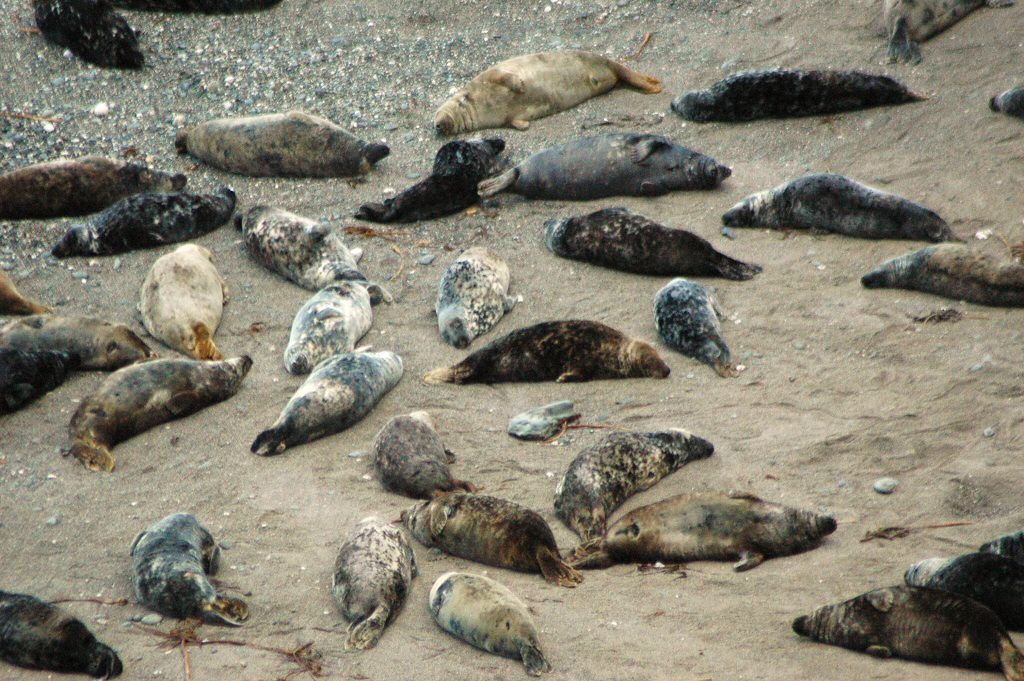
Seal tribe at Godrevy

Oh, and here’s a last throw-in – another of those insights I’m getting. It just popped up from behind. The future is not going to be as difficult as many people anticipate, and amazing solutions are coming in the 2020s-30s, and everything balances out in time. This is not a message of complacency since we do not yet have a sense of the scale of the mobilisation humanity is going to enter into in the coming decades – and it is this mobilisation that will make things easier by quite magical means, particularly by generating increased social and global resonance and the incremental overriding of dissonance – cognitive dissonance, well known by teenagers as hypocrisy and doublethink.

The cork popped when Covid came, and the fizzing is building up wave by wave, in just-more-than-digestible doses. It’s the people who find themselves at the frontline – today in Belarus and Myanmar, and just round the corner from you, and particularly in the developing world – who are pushing things forward. The main message came through ten years ago in the Arab Revolutions: it’s all about losing our fear. This is the project for the coming years: losing our fear.

Love from me. Thanks for being you and being with.

Palden.


My complete cancer blog: https://penwithbeyond.blog
Meyn Mamvro Archive: www.meynmamvro.co.uk/archive/
Ancient Sites and Alignments in Cornwall Maps: www.palden.co.uk/shiningland/maps.html

Drug and therapy list, if it interests you:
Pharma: DVD (Daratumamab, Velcade, Dexamethasone), Aciclovir, Co-trimoxazole, Zolodronic Acid.
Holistic: Quality natural-source multivits, Magnesium Citrate, Astaxanthin, blueberry powder, probiotics, cold-milled oils – mixed into breakfast. CBD oil, colloidal silver, shilajit, kombucha, Vit D+K2, lysine, unchlorinated springwater from up the hill, an E-Lybra machine, periodic homoeopathics and radionics, and a Schauberger Harmoniser. I keep a time-gap between taking holistic and pharma meds to avoid conflicts.
Spiritual: Lynne’s presence and dedication; prayers, support and healing from family, soul-family and people close and distant; adventures at the cliffs and ancient sites of West Penwith; life-lessons learned and being learned; positive thinking; and People Back Home (I open myself to their inspection and consciously let them in).

Freedom Costs

In our rich, safe countries where too much, not too little, is the problem, we live with life’s settings at three or four, but outside it the settings are pretty full-volume and tonally rich. Relationships are deeper, life is more intense, risky, edgy, uncertain and alive.

In this blog I seek to share some of the things that come up for me, as a cancer patient. This one was written while I was on the amphetamine cancer drug Dexamethasone, and perhaps it demonstrates the scatty mindset it generates – though hopefully not as disastrously as what happened with Donald Trump when he was on it. So here we go…

I was thinking back to a time thirtyish years ago when a number of us were cooking up an idea and designs for a complex in an old, deserted industrial estate outside Glastonbury, including a holistic hospital, conference centre and university. I also worked on a campaign to change Glastonbury into a county borough with special planning status – one idea was to initiate a ten-year programme to make Glastonbury into Britain’s first totally traffic-free town.

All this didn’t happen. It couldn’t. It was far too big a stretch for British people to encompass, and it grated with the politics, media-manias and vested interests of the 1990s. But I need that holistic hospital now. It doesn’t exist. I cannot resort to holistic healthcare because there is no all-round system for supporting a cancer patient – not something I can afford, that is within my limited travel range, including availability of an ambulance, paramedic or nurse if I had a need.

The best chance for this was killed off thirtyish years ago when the Bristol Cancer Help Centre was discredited, defunded and closed, for entirely political reasons. There are a few options further away (such as the Care Oncology Clinic), but these are just not doable, for me, in the state I’m in. Besides, these options didn’t appear quickly enough at the moment I needed them, when I had to make urgent life-or-death, next-day choices.

As I wrote this I was sitting once again in the cancer unit at Treliske hospital. The tea lady came round. The guy sitting next to me, with his arm hooked up to a chemo drip, requested strong coffee with three sugars in. It’s amazing that this is permitted in a cancer unit. I was sitting there surrounded by cancer patients getting pumped up with drugs, some at £1,000 per shot, and most were sitting with their mobile phone radiation-generators held just one foot from their prostate, stomach or breast, irradiating themselves.

Somehow, they don’t feel it. Somehow, the medical profession studiously ignores this, even though the figures for epilepsy, headaches, anxiety, depression, alcoholism and domestic violence have risen sharply in the last year, thanks partially to all the wi-fi radiation generated by the video-streaming so many people are doing, for hours on end.

A nurse came round who was there last week. We had had a conversation about humanitarian work – she had a wish to do something like that. Good on her. Many believe they would have to be taken on by a big NGO, and I encouraged her to think and act independently, to go as a freelance volunteer humanitarian to a country she felt drawn to in her heart. I think she was rather stirred by that conversation. As has happened so many times, I found myself appearing in a person’s life to act as a magical prompt, a timely whisper from the soul, giving a jog from The Fates.

I also mentioned to her that you don’t have to completely change your life for this: do three months every year or two and you will serve optimally as a humanitarian. Keep part of your life anchored and normal so that you can handle stirring, chaotic and emotionally challenging stuff more easily, and so that you can bring a certain calm and openness to the people you’re mixing with. Above all, follow your heart: you will fall in love with these people and they with you.

So this week I brought her a copy of Pictures of Palestine – a humanitarian blogging from Bethelehem that I wrote ten years ago. It reads like a travel book, telling of a three-month stay in 2009, talking of ordinary life in Palestine’s West Bank and the daily life of an activist humanitarian. (You can get a free online copy here.).

Such a life is not as excitingly romantic as you might imagine: there’s a lot of waiting, drudge, complexity, chaos, broken plans, roadblocks, funding problems, form-filling and plenty of assholes to deal with. You land up wondering whether you’re actually helping, whether you’re making just minuscule ripples in a vast, turbulent ocean of need, or even whether you’re part of their problem. After all, we Brits have given the world loads of problems: my own maternal grandfather was in General Allenby’s army invading Iraq and Palestine in WW1.

Working in conflict and disaster zones is deeply rewarding: life is lived more fully and intensively. In our rich, safe countries where too much, not too little, is the problem, we live with life’s settings at three or four, but outside it the settings are pretty full-volume and tonally rich. Relationships are deeper, life is more intense, risky, edgy, uncertain and alive. This said, an old friend from Devon, Gillian, was killed not in Bosnia or Palestine but in a taxi-crash in Luton, near London, on the way home from the airport – life takes strange twists.

Here am I, stuck in Britain, homesick for Bethlehem. Missing old friends there, and missing its amplified humanity. In Palestine I would not have access to the cancer medicat‭ion I’m receiving here but I would be under all-embracing human care because Bethlehem has pretty fully-functioning clans, communities and families – a family of forty can take in a cancer patient without great difficulty. The warm, dry climate of the Judaean Desert would be better for the aching arthritis I’ve acquired through my cancer treatment – a side-effect of violent pharmaceuticals I might not have needed if that holistic hospital had come into being in the 1990s.

This is why I like living at the far end of Cornwall: the people here understand the frailness of life – sometimes the storms here can be frightening, and Cornwall has long traditions of marine rescue, mining accidents and self-sufficiency. Living here is more edgy, a bit more alive, and we’re all in it together. Except we live under English colonial governance – Boris and his cronies.

Out here in the ‘Celtic Fringe’, during 2020 we left the UK in our hearts: we have better governance and more social solidarity, and Covid and Brexit have accentuated it. When Covid came along, we looked after each other. My shopping lady, Karen, who has breast cancer and osteoporosis, and who knows nothing about meditation or all the cosmic stuff I’m into, is nevertheless an amazing walking angel: she knows what it’s like being human and she’ll do anything she can to save souls while she’s still alive. She’s a good example. If she went to Palestine she’d quickly be taken in and made an ‘honorary Palestinian’.

The gift of cancer is that you start valuing life in a new way. If you so choose. You have to get straight with people too. It’s amazing how many people think they know what’s right for you. The people who don’t do that become your true friends and helpers. The English do have a habit of marking their own homework, assuming they’re right and telling everyone else what they ought to think – and this is why they are losing the Celtic Fringe.

I have this right now with a dear old English friend and brother who wanted to come and visit for some time and space in Cornwall. But while I’m on chemo, taking immuno-suppressant drugs, I can be seriously affected by the slightest infection of any kind, even a common cold. I’ve had to tell him straight that he has more likelihood of killing me than I have of killing him, and that’s not equal or true friendship, so please modify his behaviour when he comes. He’s welcome though: we’re soul-brothers.

I don’t take the same stand on Covid as many people do. I can relate to anti-maskers and anti-vaxx types. People are free to follow their conscience. But there’s something far greater here than individual freedom: you are not free to impose your values on others. You may not harm others because of your beliefs. Social and transnational solidarity is a key issue for the whole 21st Century: we will not survive the future unless we all work together.

So it is imcumbent on people who are unhappy about masks and vaccinations to take extra measures to protect their fellow humans, to avoid imposing on the vulnerable and to recognise that freedom applies to all of us. This means behavioural change, such as social distancing and emphasised thoughtful behaviour.

Who wants change?” – and everyone shouts Yes! “Who wants to change?” – silence. This attitude undermines humanity.

This pandemic is the beginning of a big, long, total, global process of social change, and every pandemic in history has lasted 30-40 years. There are more crises and crunches coming – Covid has uncorked a formerly stoppered bottle and the genie is now out. We have an intelligent virus in our midst that has come to change us because we’re reluctant to change ourselves. It’s faster than us – nature’s answer to artificial intelligence. And it raises many other questions, such as that of social control – and Covid dissenters are at least partially right on this point.

The 1920s pursuit of individual freedom, understandably born out of a legitimate breakout-reaction to the Spanish flu pandemic and WW1, brought about a political disunity that allowed Nazism to gain power by 1930 in Germany. Take a lesson from this. Today, overblown individualism is helping the rise of a privatised form of totalitarian control called Google, Facebook, Apple and Amazon, now becoming embedded in governments too – the Stalinists’ dream come true – and few people really notice.

For the triumph of evil it is necessary only that good people do nothing. That’s a quote from 18th C philosopher Edmund Burke.

As a lifelong dissenter I have exercised my personal freedom, and this has brought blessings and it has also charged a price to me and to others. I had to learn to stop being a male crusader and to wait for people to come, of their own choice, toward my way of seeing things – and only a few actually did. Who wants to learn astrology when there’s a mortgage to pay? That’s a big lesson in itself. Visiting cultures outside the rich world changed me: I saw societies that were economically deprived yet socially richer than in the materially rich world, with communities that work better, in real terms of mutual support.

This was blatantly obvious in Israel and Palestine: Israelis are by nature individualists while, as one Palestinian put it, “We have each other, but they just have themselves“. Though the Palestinians have repeatedly lost the battle, when you cross through the checkpoints from Israel to Palestine you’re entering a society that, despite everything, is strangely happier, more secure and more free. Despite everything. By social consensus.

In Israel, many people would say to me, “Why do you come here to interfere when your own country has plenty of problems?“. In Palestine people would say, “Willcome in Falastin, and why you not bring your children too?“.

Now the Celtic countries are pulling away from England, our former colonial master. We have each other, relatively speaking, while the English have themselves, and many prefer things that way. Seen from here, England seems to care more about money than people, yet in so doing they lose economically in the longterm. Brexit, born of an eruption of English exceptionalism and media-owning offshore tycoons’ profit margins, is now demonstrating the point.

I’m half-English and half-Welsh, but I have become one of the ‘new Cornish’. This isn’t just a matter of moving here and bringing English ways with you: it’s necessary to change, to become Cornish. Besides, the Cornish winter gets rid of people who think it’s a holiday paradise that’s here for their leisure. Celtic nationalism welcomes anyone who is truly here, in body and in heart – your bloodline is secondary. The Cornish are a European minority respected more by Brussels than by London.

So these issues are personal to me, as an English-Welsh new-Cornishman living closer to Dublin than to London. When I visit others’ countries I sit on the floor with them and pray with them in their mosques and temples – when invited. I’m not a big-booted Englishman, and one of my underlying purposes has been to help redeem the shadow of the British Empire.

There’s still an Englishman in me though, and here I wish to honour the human side of the English, that decent, fair-minded, broader-thinking aspect of Englishness that the rest of the world loves and respects. You find a lot of these amongst humanitarians abroad, and the carers, nurses and charitably-driven people here in Britain. The people who, when all is said and done, hold this world up. My partner Lynne is one.

She sobbed deep tears last weekend because of a new wave of realisation that, when I die, she’ll have a yawning gap in her life. She was feeling it in her heart, in advance of the event. This wasn’t self-pity – it was far deeper. After passing away I shall be with her in spirit but that will just not be the same, whatever anyone says. It has something to do with that special quality of love we humans can generate, here in this benighted world, stuck between a rock and a hard place – a kind of love that doesn’t exist up in heaven, where love and soul-melding come more naturally and easily.

We have a tremendous power to love despite everything. Paradoxically, those who have gone through it, feeling the full power of the pain and the joy of earthly life, tackling life’s questions instead of avoiding them, seem to love in a profoundly real way. It’s rather like the wise maturity that some ex-criminals, terrorists, druggies and alcoholics can gain when they pull back from the brink – a benefit gained from having visited hell and returned, much the wiser. Some of these people are the most principled, human, courageous people around. By their actions, not their words and beliefs, you will know them. And there are lots of words and beliefs flying round nowadays, including mine.

Bless you all. Be yourself. Have your beliefs. Be willing to review them and consider everyone else too, for none of us is free until we all are free. From now on, personal freedom has to balance with collective needs, worldwide, and Westerners are not the only people with big ideas on this front. We’re just 15% of the world’s population.

With love from me. Palden.

Eclipse of the Soul

I grew up into a teenager who looked at my dad, who had fought in Egypt for our freedom and lost a leg in the process, telling him we weren’t free. We were living in a totalitarian society where, at least for us but not for the Commies over there or for the starving children in Africa, our chains had been coated with carrots and cream.

Eclipse of the Moon in Bethlehem, Palestine, during the 2011 Arab revolutions of 2011

It’s strange. Everyone is busy angsting about Covid and here am I, as usual focused on something else entirely – in this case, right now, cancer. Or, more precisely, chemotherapy. I feel like I’ve aged ten years in the last week. Dragging myself around, feeling the gravitational weight of living on a dense-gravitational planet, holding up my weak back and gasping at shooting pains in my bones, feeling a deep tiredness with life, a tiredness with its daily routines, with yet another breakfast, yet another day. OMG, not again.

Throughout life I’ve always sought to light up the lives of others around me, with varying degrees of success, sometimes getting confused with the dark shadows in my heart, always picking myself up for another round, another try, another angle… and sometimes, burned out, drooping and flopping into life’s mudbath, the slough of despond, to go down, down into the murky depths of human struggle, the jihad, the holy war of inner conflict, the war with the axis of evil in the human heart… and for what?

Lying in bed in the semi-delerium of chemotherapeutic drudgery, with the BBC World Service bringing the heroic crowds of Yangon, Minsk, Santiago and all stops to Hong Kong to my bedside, ringing around in my night-bedarkened cranium… lying there hearing the complaints of my fellow countrypeople over the time spent queueing to get inoculated against a virus that is too intelligent, too agile to tamp down so that we can all return to normal, return to a comfortable purgatory, a purgatory that all makes perfect sense, expressed in dollars and cents, pounds, shillings and pence…

The normality of democratic freedom, a freedom to choose our own washing powder to dissolve the persistent criminal stains of omission, commission and perpetration that permit us our apparent freedom. A freedom to supply munitions for the bombing of faraway Yemenis so that we can pump up the employment statistics, share values and the great god GDP, just because those Yemenis are less than us, somehow less deserving of the certified serving of chocolate and tax bills that make up our cherished freedom.

I had an extended moment of revelation. One of those moments when you see something you’ve long been perfectly aware of but didn’t really dare to look at. I saw how lonely I’d been throughout my life. I was born in 1950 in a baby-boom maternity home that was about to close – the last baby to be born there. All the staff was there, watching. I wasn’t too sure I wanted to be born, to start that long trajectory of landing procedures leading into the tangly web of life and its involvements.

Up in heaven I had known I could do it, but now I was not so sure. There were all these people waiting to celebrate my birth, not because it was me but because I was the last, the last before they all got transferred somewhere else or had to find new jobs. It was the back end of a tragic baby boom when our parents tried so hard to replace the devastation of war with new hope and a constant stream of dirty nappies (diapers). Someone probably had some postwar rationing-busting plonk and munchies for that moment and they celebrated the last baby while I lay there wondering what was to happen next.

Yet I grew up into a teenager who looked at my dad, who had fought in Egypt for our freedom and lost a leg in the process, telling him we weren’t free. We were living in a totalitarian society where, at least for us but not for the Commies over there or for the starving children in Africa, our chains had been coated with carrots and cream. My parents thought something was wrong with me – after all, if I listened to that raucous, long-haired noise of 1960s pop music there must be something wrong. No, Commies weren’t like us, and any sympathy felt for them just showed what betrayal and subversion these youngsters were capable of – perhaps they were enemies in our midst, traitors to the cause, undermining freedom when, really, they ought to be grateful and get a proper job.

Like many in my time and like so many right now, I was struggling for truth. Now, half a century later, here am I, churning in bed with a war in my heart, struggling to plumb the depths of truth. Oh why, oh why do we fail to see? We’d prefer to destroy our planetary nest than to do without the security of chocolate, tax-bills and easy answers – it’s safer, it’s normal. If some dictator, some oligarchy, turns down the screws on another few million people, well, that’s life, and it all makes perfect sense, expressed in dollars and cents, pounds, shillings and pence.

Yes, struggling in a war against cancer that is being fought in the muddy battlefield of my being, in midst of that soup of fears, doubts and shadows that make me human. In that moment of seeing it became so clear how I had created this aloneness pattern myself: my pattern, my incrementally-repeated choice. In the pursuit of my percieved calling, my struggle to help humanity and shift society’s tiller in a new direction, I had walked away from so many. I had shrugged shoulders, let go and moved on. They had paid their price and I had paid mine. I’d shared so much redemptive love, care and awakening with so many people yet, in another way, I’d engaged in a life of struggle to reach across the light-years of distance, to try to reach to another human star-soul in the vastness.

Here I was, an ageing man churning in bed, wading through his demons, missing loved ones near and far, blessed with a seeing, a revelation of fact-sodden truth, a statement of futility, an audit of the enormity of the task of generating light in the muddy morass of earthly life. It’s a light that struggles even now to illuminate the stone walls of that prison of the soul that is me.

Before you rush to assure me it’s alright, send me reiki and pray for me to ‘get better’ – whatever that really is – and before you lapse into the belief that I’m indulging in negativity, please stop. Please sit and look at the phantasmagorical disaster-zone of your heart: sit with it. It’s there, it’s uncomfortable, yet here lies a key, a lost chord, a lump of gold sitting between the dragon’s paws. It invites you take a deep breath, let go of fear and pick up your birthright. It’s lonely and dark down there, but here lies the key.

Today I go into Treliske hospital for another round of pumping up with drugs. As a denizen of a rich country I am privileged to receive this, as if it’s a birthright. The Dara is already giving me the shits and the Dex is dragging me into a place where nightmares transmogrify into explosions of light and back again with bewildering rapidity. This treatment feels foreign to me, but these are times where my own vision of reality fails to accord with that which apparently is believed by the majority. What’s important to me in my own manner of perceiving is not what’s important to the medical system I have resorted – it doesn’t understand it. But this is the dilemma of being on Earth – no, of being in this civilisation at this time on Earth. We all share it. Stuck between a rock and a hard place – all of us. Serving our time. Doing what we feel is best yet making a pig’s ear of it, drowning in the disappointing pointlessness of constructed belief.

But this grinding action, this grating and milling, it generates light. Awakening before dawn, before the crows did their morningtime auditory armada of swoopy crawing in the dawny gloaming out over the farm where I live, and my demons were irking me. But now dawn has come and the sun is up, shining through the big windows of my hovelly palace – it’s called The Lookout because that’s what you do here, look out. The demons are scarpering in the dawning light. Vacating space until they can come again on another haunting mission. Perhaps it all was a nightmare. Or perhaps it’s the truth of my being. At this moment I cannot judge.

But when I was sitting there shivering, having just lit the woodstove, listening to a robin on the dog-rose outside, perkily tweeting hello, I realised, well, better to grind this stuff now than to leave it until the moment of my deathly transitioning. Better to grow while I can, to see clearly without the grey-tinted glasses of daily routine – the one that looks at the clock, telling me to get ready to be picked up for the journey to the cancer unit at Treliske. Yes, it’s now time to get normalised, to keep to the timetable no matter what. Get plugged back in to the matrix. Get ready. Take your pills. Do the business. Be responsible.

For those of you who are familiar with that quackish charlatanry called astrology, you’ve just read an unpremeditated description of a transit called Neptune opposition Saturn. For those of you who aren’t familiar with it, well, that was your choice, and that’s okay too – we all have to live with the consequences of our choices, with the particular way we arrange the furniture and wall-hangings in the prison-cell of our souls. We all share this dilemma.

Paradoxically, nearly eight billion people are alive today yet we all face an aloneness that has never in human history been achieved before. We all have our demons, believing they’re unique to us without realising that they are but minuscule variants of the demons we all share – demons to which we give power, with which we’re fully capable of polluting and destroying our planetary home. For the demons out there are demons within us and the redemption of both go hand in hand.

It’s okay, really. Everything is okay in the end, and if it’s not okay, it’s not the end. Some people tell me they’re so sorry I have cancer, but I find myself wondering why truly they feel this, or whether I should be sorry for them instead. It doesn’t matter. In the end it’s all an enormous phantasmagorical Youtube video, an epic production of illusions showing in five dimensions on the custom-made cinema-screen of our psyches. Who needs a subsription to Netflix when we have this? It’s free and it’s right here, with no need for shipping in from China.

Ee, there’s now’t so strange as folk. God must be amazed at us, at the imaginings that we in our billions can cook up. It must be distressing for him to see how we blame the Chinese for what they’re doing to the Uighurs when it is we ourselves who are doing it whenever we buy yet another packaged product in our supermarkets. Or perhaps he laughs when he sees us languishing in our beliefs, including those that construct him into a God that, as John Lennon in one of his own moments of despair, identified as a concept by which we measure our pain.

Now it’s time to put the kettle on, shower my creaky body, dress up in my togs and get my ass to Treliske, for another round of the never-ending Youtube movie that is life. Chemotherapy, sometimes a high, sometimes a low, provided for free on ‘our NHS’ so that we can spend a little more time on Earth struggling with that darkness and light. Is this the life we came for?

Don’t fall for the idea that I’m suffering more than you. This is the life. This is the playground in which we are playing it out. Here’s the ketchup to squirt over it. And there’s the kettle, ready to disgorge its contents into my teapot. Here we are. The oldies amongst us will remember this, from the back of the Whole Earth Catalog: we can’t get it together – it is together. Perfectly together. This is where we stand. All will be well. But to reach that point of calm certainty in your heart, it’s necessary to dig down in the deeps, make love with those demons and live to see another day.

Now for the next bit. Peace, sisters and brothers. Palden.

https://www.youtube.com/watch?v=jUSaO07ThmY

The picture above is of a lunar eclipse over Bethlehem, Palestine, in 2011 at the time of the Arab revolutions. The Youtube video is a song by Roger Waters called Perfect Sense, from his 1990s album Amused to Death.

Tears and Fears

Sometimes, early at dawn when it’s too dark to photograph it like the other birds shown here, a little wren flits to my window. It surveys the scene, sees a few crumbs on the breadboard, flutters down, feeds and looks around, then flutters back up and out. What a gift. It doesn’t know that it has become a healer of the highest order – or that news of this would stretch across the world. So wren and I are doing a good business in crumbs – and this morning, guess what, it had crumbs from the last of Lynne’s Christmas Cake! Bonus.

Slightly soppy Jupiter in Pisces that I am, I’ve been leaking tears recently, and it’s fascinating to discover what it’s all about. Several things seem to connect up to get it going – some are very positive, such as the little wren. One is about me, one is about people I know and have a connection with, and one is about the wider world.

I’m starting chemo on Monday 1st February and this will last 5-6 months, probably followed by a few months of fatigue and other side-effects. If I don’t do chemo, then the blood cancer I have will gradually hollow out my bones, I will get more collapses of vertebrae in my back and bones going brittle, I’ll become seriously disabled and eventually I’ll die, quicker than otherwise. I don’t have great expectations, but the chemo might give me a few more years with which to complete things, inshallah.

To holistic crusaders who think there’s a better path to follow: I’m on the same side as you, and if something had come up that was sufficiently convincing, based on real experience with my particular cancer and who and where I am, and if there had been a sufficient support system that I could afford, I would have done it. So thanks, and I know you mean well, and I have chosen this path, and here we go…

But it scares the hell out of me too. Mercifully, I’m not unused to that: before working in conflict zones or entering risky situations I’d grind through my stuff in the days and weeks preceding, though increasingly I found that, on the day, I was fine, balanced and fully present. It worked, mostly, in those things I could affect. In those things I could not affect, which are many in chaotic situations, I just had to take my chances. And here I still am.

So at times I’ve been feeling vulnerable and shaky, digging around in my fears. One big thing to overcome is lingering resentments over the way things have been in my life, that have not changed for the better, despite all that I and so many others have done over the years. This is coming up now with the doctors I’m working with. As a longterm vegetarian, meditator and consciousness-explorer, also very underweight, I believe I should be dosed with medications about 30% below the norm. In the last few days I haven’t taken a single pill or shot of chemo yet, yet my body and psyche are already going there, as if autonomically inducing it. My medical results have been pretty good: last year my chemo treatment, standardly eight cycles, was cut to six, then five. These results the medical profession just calls ‘good luck’. In this they are incorrect. I’m lucky, yes, but these outcomes arise from choices I have made and positive inputs that are way outside their zone.

Back to the fear. It is activating pain from the past, about being, or feeling, misunderstood and treated inappropriately, being judged and penalised for being who I am – and I’ve had a good load of that! But it’s still going on now to some extent, and I’m unhappy about that. On the other side, I do trust my doctors, and while they do want the best for me and to get things right, they can also make my life more difficult than it needs to be. Owing to institutionalised taboos against alternatives in medicine, and because doctors lack experience of holistic solutions and odd people like me, they don’t take seriously those things that are serious for me – particularly concerning pharmacological side-effects.

To be honest, this is also the case with some holistic practitioners too, who might be qualified, and who might think they know, and they mean well, but some of them also try teaching their grandmother to suck eggs, or they err a little too far on ideology, or they lack specific experience, incorrectly applying knowledge about tumorous cancers to my much rarer leukaemia-like blood cancer. With a rare disease and an unusual person, this can be problematic, being misjudged from both directions! Though I don’t want to seem entirely critical either, since doctors and healers are genuinely helping me too. However I am yet to find someone who is competent, experienced and unbiased in complementary and conventional medical fields together – integrated medicine.

One other thing I’ve had anticipation about is the task of training friends and people how to behave with me, as a cancer patient. Most people don’t know how, so they leave me alone, and this isn’t a solution – especially with people I’d like to see. Others get awkward, or try too much to help, or they’re so sorry or anxious for me – and I just need people to slow down, make us both a cup of tea, be a friend and act naturally!

Here’s a tip for dealing with someone with brain-fog: instead of asking me what I want, tell me what you’re proposing and let me say yes or no. Or just do it anyway – keep it simple. This gets around chemo-brain and the frontal-lobe issues it brings – making decisions, finding words, remembering details and following long explanations.

Here’s another one: please don’t ask me ‘How are you?’! I am asked this multiple times per day, and you’re requiring me to do a systems check and report this to you verbally and then to deal with your responses and concerns – and, believe me, it’s tiring and repetitive. I write these blogs to report what’s happening. If we do meet or talk, please just treat me like a ninetysomething, have a good conversation or communion with me and you’ll then find out how I am. My state can change on an hourly basis anyway.

Anyway, I was feeling vulnerable over all sorts of things. It’s good to bring it up, stir it round and get some of it out of the way – because many of the experiences we have in life are there to teach us. If we learn quickly and willingly, on or ahead of time, we unmanifest certain kinds of difficult learning experiences. Or they become testing experiences instead, where the Universe checks whether you really mean it, emotionally and in your cells and bones. Again, progress in tests depends on our capacity and willingness to go make something good out of a bad situation – and working through fear, guilt and shame in advance really helps us deal with such situations when we’re actually in them. And what we fear and what actually happens are two very different things.

So I am working on welcoming and befriending the process I’m about to go through and doing the best I can with it, on all levels of my being. Really, it’s the only option.

I get emotional over other people too. There’s a woman I know in Ghana whose child died on Friday night – Kwame was perhaps three or four years old and he died of pneumonia. I paid for some medicines but it was too little, too late. God bless Kwame, little soul – he had only a short life. His mum doesn’t even have enough money to bury him, so she’s stuck and rather overwrought. This is the case for many people in countries where health and social support systems are weak, or where paying for healthcare makes the difference between life and death. I cried not so much for Kwame, who returns to his Maker, but for his mother Grace, and for people like her (Lynne is one), who are left with a gap and a shadow of loss or regret when such things happen.

Then I get emotional about the overall world situation. Problem is, I’ve been dedicated to world transformation for fifty years and the new age hasn’t started. I could perhaps have done more, though I’ve done my best, but I’m now deeply sad for the world. The price it has paid for not getting the message fifty years ago is enormous – and there’s more to go. If necessary change leading toward ecological rebalancing, social and economic justice, peace and appropriate development had started back then, the situation we face today would be very different.

I’m a philosophical guy with a longterm sense of history, and I deeply believe things will work out better than many people fear – eventually. But I feel such grief over the way things have gone, and the pain and damage involved. Yes, there have been advances, but the fundamentals have not yet been addressed. This grief is what Germans call *weltschmerz* – the pain of the world. In my meditations I work to reduce the heat and increase the light in world situations and I’m very much a believer in the maxim ‘Don’t complain about the darkness – light a candle’.

When I go to my Maker, then to see things from that perspective, I have a feeling this innerwork, of all the things I’ve done, might be what I’m most satisfied with – even though, here on Earth, it is difficult to see what benefit it has brought, and even though, especially in the now-defunct Hundredth Monkey Project and Flying Squad, we did have definite instances where miracles happened.

Sometimes my tears come up from nowhere. I think of someone, or I hear something on the radio and, whatever I’m doing, I start wobbling, so I stop and give space to that precious and revelatory emotion that’s surfacing. Personally, this is important: I learned to cry only when I was about 30 – and it was an enormous loss that did it. Back then, it wasn’t just my own self-pity, but I felt so much regret for the others who also had lost in that situation. It cracked me up and cracked me open, affecting them a lot too. This experience was important for me as an Aspie: it taught me to look people in the eyes. Aspies are often regarded as feelingless and emotionally neutral, but actually we’re flooded with feeling, often confused where to put it and how to deal with it – so we go blank and get short-circuited.

This loss set me on a path of commitment to pursuing my purpose. It’s the case for many altruists and server-souls: intense pain and dilemma can unleash one’s superpowers, if one so chooses. One supporter of Alexei Navalny in Russia recently said, when asked why she was risking so much by demonstrating in the streets, “I could not bear the thought of not being there” – and this is what changes history. There comes a point where you lose your fear – or, at least, a crucial chunk of it.

Fear is natural. In the animal part of ourselves it warns us of danger, alerting us. But the deadening, sleep-inducing, inculcated and inherited fear we all have challenges us to use it to move forward, to do what we fear, to do it anyway. Though intelligently.

So I start on Monday, getting shot up with Dara, Velcade and Dex, and a load of other stuff to compensate. It involves three visits to Treliske hospital and multiple home visits from a nurse. I reduce my holistic treatments during this period, to minimise complication and avoid conflicts between holistics and pharma. Certain things, like CBD, Vit C, colloidal silver, basic nutrients and other things, I continue because they help the process (Lynne’s flapjacks too). There are other helpers, including an eLybra machine (radionics-like) and homoeopathy. There’s a mighty inner influence from Upstairs, from healers, meditators and well-wishers round the world, from Lynne and close-by supporters, from my adopted homeland of West Penwith and the landscape of the farm where I live. And my tears are part of my arsenal as a warrior-soul. And, fuckit, the past is past and this is today, the next stage on the path. All is forgiven that I’ve uncovered so far, and I’ll try to deal with the rest when I get to it.

I hope to report the whole process, as and when I can. If possible to the end. This said, I must be self-focused in the next few months, and I won’t be very interested in or respond to many people’s questions, concerns, worries and neuroses. Or endless Youtube videos. But personal, briefly-put, interesting thoughts are welcome – I’ll probably see it but you might or might not get a reply. My day will gradually go down to about six hours, probably.

I’ve said this before and it’s worth repeating…

Everything is okay in the end. If it’s not okay, it’s not the end.

This is one of those that’s worth writing on your toilet wall for further contemplation.

Now for the next bit.

Love, and thanks for being alive,

Palden

The pics are of birds who have visited my home in earlier years – including one wren who seemed to like hanging by a Tibetan thangka on my wall.

In Praise of Goddesses

Think about it: your partner is on a death sentence and, in anything from six months to ten years, he could be gone. It takes a heroine to stick around for that.

Palden at Faugan Round, West Penwith, Cornwall, in the buildup to a squally rainstorm
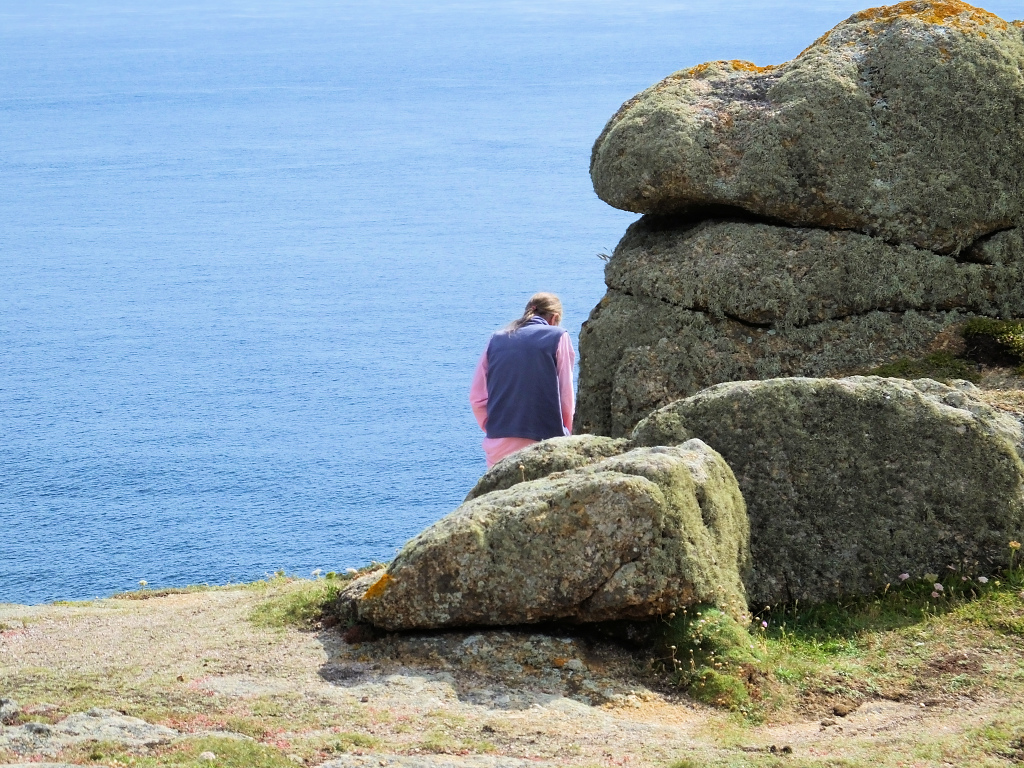
While they’re down here for the G7 conference nearby in St Ives, I was thinking of inviting Mutti Merkel, Justin Trudeau (I once met his dad) and a few of the others for kombucha and Lynne’s gluten-free flapjacks round the campfire – they’ll get an airborne dance by our swallows too. That new chap Joe can come if he wants. My son Tulki will fix a security stake-out with his army friends, and my son-in-law Perra will pick up my guests and drop them in the field in his helicopter. If that Trump guy tries to disrupt things, we’ll stuff him down an iron age fogou with one of the wrathful goddesses – good at emptying testicles in the most agonising of ways – until the summer solstice sun shines in and lets him crawl out through the creep. That’ll keep him quiet for a while. Except there’s a problem.

I’m being kept alive by a group of amazing protector-goddesses. That’s a great asset, and not the problem. Chief goddess Lynne, who minds everything from my soul to my toes, has stretched my understanding of what grace and blessing truly mean. Goddess Panacaea is embodied by Penny, who in another life probably was a first lieutenant of the highest order, and the Great Shopping Goddess is Karen, an angel who genuinely demonstrates the truth that by their works shall you know them. Sheila, Miriam, Jennifer, Faith, two Helens and my three remarkable daughters also play a part – a benign conspiracy if ever there was one.

Then comes Goddess Hygeia, my doctor Liz, whom Lynne and I had a video call with on Monday. She keeps my blood and bones going – key issues in the blood cancer I have. My readings are up: paraproteins were 3 in September, 9 in November and 13 now, and light chains have gone from 368 to 785 to 1,000. So, to intercept the returning Myeloma before it starts eating up my bones again, Liz has decided I should go back on chemo. So I can’t have contact with anyone, even if they’ve had one of the much-vaunted Covid jabs, because any infection could knock me for six. So the G7 will just have to stay in St Ives.

A year ago I decided not to have a stem cell transplant, opting for a maintenance strategy, and chemo was part of the deal. (See here.) Time’s up now, though the timing is right: I’ll go through the worst during the back end of winter and, inshallah, as I start improving, spring and summer will come. It will take five months, plus a few months’ fatigue and brain-fog, so it’s rather a long haul. I’ll tell you what it’s like when we get there. If I don’t answer messages or e-mails, please be patient and don’t take it personally. I’m starting in a few weeks from now.

Sheltering from the rain behind a standing stone at Faugan Round

I’m so fortunate. I live in a lovely place and this feeds my spirits. A saturnine workaholic till I drop, my work keeps me alight too – currently, the two main challenges are getting my book Shining Land published on paper and raising funds for the Tuareg out in the desert in Mali, to pay the three teachers at their village school (both of these tasks not as simple as you’d think). My innerwork gives me a focus too, especially during long hours stuck in bed. And yes, I’ll be hovering around the backrooms of the G7 conference twiddling etheric puppet-strings.

So I have reasons to stick around until incarnate life is no longer the best arena. It’s up to the Management, really, and though Liz (visibly worn out from overwork) is doing her best, there’s a greater medicine than this, the power of spirit and the resilience of my soul, that makes the final decision.

My tutor and companion is Lynne. While no stranger to slicing vegetables and servicing old crocks like me, and one of the most loving, caring women you ever could meet, she’s really interesting too, and she holds hands with my soul. I mean, think about it: your partner is on a death sentence and, in anything from six months to ten years, he could be gone. It takes a heroine to stick around for that. Living with an Aspie also has its challenges – when confronted with personal, emotional situations I look blank and befuddled like Commander Data, and human guile passes me by like water on fish scales. Lynne doesn’t have much of that and seems largely to handle me, but the next bit is even more trying for her…

Many people might have an image of me as a thoughtful, well-behaved, decent kinda guy, but when I’m on the steroid Dexamethasone – part of my chemo treatment – my character changes. I become argumentative, defensive, impersonal and confrontative, and my eyes take on a rather fierce, empty, heartless look. Would you like to see your old man turn on you like that? Last winter, Lynne was shocked to the core by it – and the worst bit was that I wasn’t aware I was doing it. The good bit is that, since I’m not too much of a bitter old man with a chip on his shoulder, I didn’t go as far with this as I might otherwise have done. When the treatment ended, gradually I came back, but if our relationship were less deep-rooted it would have cracked there and then. (You’ve now seen what it did to Donald Trump too – I warned you! (Here.)

There’s another thing. Cancer has prematurely aged me. Falling into the cancer abyss in November 2019, I was zooted forward to the age of 95. Recently I’ve come back to about 83 – my physical age is 70 – but in the next few months I’ll probably go back into my 90s. This is physical, affecting my movement and strength, and mental, affecting my frontal-lobe capacity to make decisions, find words and handle life’s details, and it has enormously changed my perspective. Before cancer I was ten years older than Lynne, but now, behaviourally, I’m 20-30 years older, and that must be weird for her.

Before cancer struck, I was a veteran – I’d been through deep shit and it had honed the content of my character. Well, kind of. In the 1990s and after, many long-haul veterans in the movement for change started thinking about elderhood, and I have sat in a few elders’ circles myself. But I always felt uncomfortable: I was a veteran but not an elder.

The difference clarified for me only after cancer changed everything. An elder is genuinely withdrawn, standing back – not just matured or retired but half-dead and pretty incapable. This loss of energy and engagement has a deep effect, and you start seeing things differently – a bigger agenda and perspective takes over.

Elderhood is not a status issue. One qualifies by dint of the burnishing of one’s soul, and this involves sitting with death, no longer active or competent in a worldly sense – just peeing or getting dressed becomes a big task. Your duty is to sit there, watch and see, occasionally speaking truths that lift people out of the fray, the treadmill and the madness of crowds. You have to step beyond the nowadays rather self-indulgent conservatism of old age. If you’re neither heard nor believed, you must watch quietly as the consequences unfold, in acceptance and without judgement. The only thing you can do is offer an optic to help people see more clearly. You can’t even participate in decisions – others now carry that load.

Lynne is a wise woman before her time, and unassuming with it, but she’s more involved in the fray than me, bravely juggling a lot of balls in the air, as I once did. If I last ten years, she’ll be 70 when I perform my pilgrimage to that enormous refugee camp in the sky. What then, for her? She has no shortage of assets – a brilliant astrologer, awakener and anchor to many, and a natural grandmother – but in her love and commitment to me she faces a yawning gap, and in that emptiness at such an age starting a new life isn’t easy. I’m going to leave her. This is big for her, both difficult and life-enriching.

I’m going to do my best to have a good death, and not just for my sake. No one’s going to inherit any money from me, but in this life this was not my wealth, and it gets boring being rich and powerful anyway, so this time I’m trying to engineer a different bequest. There’s something important we all must get to grips with: when we die, our body stops operating but we don’t. So whenever I pop my clogs, keep your antennae up because I’ll be sending out deviceless messages straight into your psychic inbox, but only if you keep your connection open and whitelist me on your internal spam filters.

In this sense, Lynne won’t lose me – our story doesn’t end there and our saga didn’t start here. Neither will anyone, unless you choose otherwise – we shall meet again. We still have a big task to do. We have a problem on Planet Earth, and this is not just about us and our planet. We’re holding back progress in the universe. This must end. This was fully explained in the book I wrote for the Council of Nine in the early 1990s, called The Only Planet of Choice – essential briefings from deep space.

Earth is a training ground for supertroopers – yes, you – and a hot-housing soul-hybridisation experiment for seeding the universe with possibilities that even its Creator couldn’t think up. We’ve got to get this right. It’s on us: we’re the only ones who know how to work with Planet Earth. The good news is that, if we break through on this mess we’ve created, it will be a breakthrough of cosmological proportions, never done before. If we fuck up, there will be eight billion sad, angry and lost souls for the universe to deal with, and a wasted mega-project, and the problem is that our fuckups, pain and trauma are so great and unique that others don’t really know how to sort us out – it’s beyond their experience.

I’ve worked in refugee camps and disastrous situations, but I cannot fully comprehend what it’s like being the journalist I know of in Rafah, Gaza, who returned home after writing an article to find her compound bombed and all 35 members of her family dead. Moreover, she’s chosen not to hate the Israelis for it. It’s like that. I can empathise and do what I can, but the scale of her loss and her choice is beyond my experience.

So we have to stop this war on Earth: not just the shooting, but the environmental, human and psychospiritual destruction we have built into a seemingly unstoppable institution. That’s why we must meet again, one sunny day.

There are men involved in my life too – Tulki, Anim and the Chief of Tinzibitane – even two souls in India that I’ve never met, Navin and Vishnu, who have greeted me every single day for ages, plus others like the two rather laddish fortysomethings I live next door to – but I’m now very much in womankind’s hands.

In 1968 I went to a talk by Germaine Greer and was shocked to learn of women’s oppression by men and the patriarchy – I’d never even thought of it before – and something in me clicked. It has been tricky spending fifty years as a man on the side of feminism – sometimes seemingly being blamed for all of the sins of my fellow males – but I am so happy to say that, while there’s further to go, they’re on their way, and I honour my bravely desperate sisters for that, surrounded as I am now by brilliant examples of how far things have progressed.

Lynne would not call herself a feminist but in some respects she’s well ahead of the game. She serves her family and fellow humans yet she’s no slave. Her qualifications to teach are in her bones and her smile, not on a sheet of paper. When she lights up people’s lives she’s not just glimmering. When she breaks down she’s no victim, when she’s strong she’s perceptive and empathic, and when she’s troubled she doesn’t throw a fit. She probably feels uncomfortable with my extolling her virtues in public but this isn’t starry-eyed romance – it’s really real – and if she hadn’t walked into my life I don’t think I’d be here now.

So I’ve learned a few big lessons in this last year. Healing is not just about doing medication or therapies – and I have one foot on a pharmaceutical and one on an holistic pathway. It’s about cultivation of spirit. Get real: one third of you, my readers, will get cancer – and yes, I too thought it wouldn’t happen to me. You’ll get it because you’re ready to go through that mangle and because it’s the greatest gift of your life. If you don’t get cancer you’ll have no shortage of other hurdles to jump. So do it well, live as if this day is your last, and die well too.

Apart from making a contribution to the world on the way, you came for this. So make your choice. And if you’ve already made it, what’s the next step? Because even if you’re near the end, there’s more to go. You won’t get this kind of opportunity back home on the Pleiades, or wherever you came from. They don’t have chocolate there either.

The most amazing thing about Lynne is that she knows deeply that healing and loving me doesn’t involve holding onto me: she’s chosen to walk this journey with me, whatever happens and however it needs to be. I’m so grateful for that. This matters so much to someone in the last chapter of their life. She could have taken an easier path.

So I’m in good hands.

Bless you all, and thanks for reading. Palden.

With photos by Lynne, sweater by Sheila and hat by Maya.

Aloneness and Loneliness

This is for people who are alone or feel themselves to be alone. This issue is frequently framed in the terms and perspective of the peopled, while many of the alone tend to be outblasted on this subject by the beliefs of the peopled – the idea that aloneness is something to be rescued from.

Here’s the rub: being alone is not a bad thing. Feeling lonely is difficult, though it also has its gifts. Aloneness and loneliness are two different things: one is a fact and one is a feeling.

Part of me has always been a hermit (the other part public), so I’ve been here, in that aloneness place, many times throughout life, sometimes willingly, sometimes not, and loss has been a big life-issue for me. At present I am alone for about two-thirds of the time and I live in an isolated place, remote from the madding crowd, a place of buzzards, jackdaws and gulls.

Loneliness has various components. One is the feeling of lack of company and closeness – missing people. This is exacerbated when it’s unwilling (as with refugees, people separated by fate or by difficult choices, and the bereaved or alienated). But it can be hard even when chosen. When I moved to the far end of Cornwall I knew that old friends were unlikely to visit me and I miss them, but it was my choice – instead I talk to them in my thoughts or online.

The issue is not just to look at the hard side and judge aloneness in terms of what is lost. Everything in life has its compensations. Sometimes it’s difficult figuring out what we’re gaining from adversity, but it’s important to look at it. A lot of the hardship that we feel involves judgements we impose on ourselves and others’ judgements we take on our shoulders. This has been my story and one consequence is that now, in late life, my backbone has literally given way (as a result of bone marrow cancer) yet this experience has really helped me shed a lot of that psychological load.

I’ve long been an author, editor and online content-creator. To do what I feel called to do, I’ve had to put myself under lockdown many times. When I wrote The Only Planet of Choice in 1992 I was out of sight for 20 months – some people thought I’d moved away! Generally, my self-imposed lockdowns have been regarded as anti-social – as if I’m uninterested in and don’t care about people. But no, if I don’t lock down, how can I do what I’m here for, that people like me for and seem to benefit from? The funny thing is that, writing another book in 2020, suddenly I haven’t been anti-social but doing exactly the right thing! My 2020 lockdown started in October 2019, due to cancer, not Covid.

There’s another aspect to aloneness. Lack of stimulus and interaction can lead to a literal slowing of the psyche. This helps if one needs to unwind from a busy life, but after a longer period it leads to a crisis of energy and orientation. This is happening for many aloners, and it affects the old particularly, and those with long-Covid and fatigue – and prisoners too. I’ve noticed it in myself. I’m pretty creative, and I don’t just sit there, yet I’ve been drying up recently. By degrees. Talking to myself too much.

I overcome this in three main ways: inner journeying, pursuing an interest and going out in nature. Recently I’ve been wading through history books about the Ottomans and the conflicts of the Britons with the Saxons 1,500 years ago – that’s how I get through long hours in bed.

I think inner journeying is important for people who are bedridden or fatigued – and we do it anyway, in our woozy inner meanderings. But it can be done more proactively, and there are methods and ways to encourage it. Make it into a project. You have been given a gift of aloneness that gives you space to do this, and for much of your life you have not had such opportunities. Make a project of your inner musings and wanderings – put it to use.
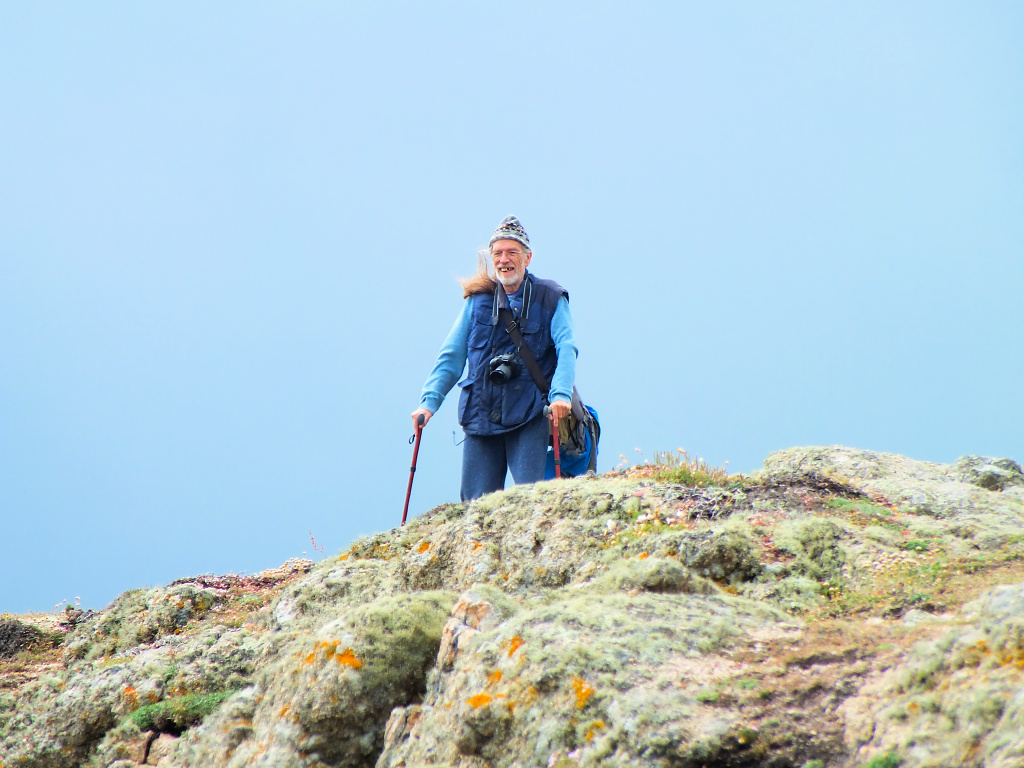
When you’re alone, it’s really good to get on with activity projects too. I usually have some things that demand thought and focus and some things that are easier or more druderous, some that are creative and some that need some discipline. This is something you can do with your life that has little or nothing to do with other people: it’s yours, and no one can change that.

A solitary time can be the birthplace of something new. All of the big projects I’ve set in motion throughout my life have been conceived when I’m alone. The quiet isolation has given me vision time, inspiration space, healing, resolution, exploration and enrichment of the human in me. This is a choice – a personal one. It’s what Buddhists call a turning in the deepest seat of consciousness.

It often involves coming to peace over many issues. We need to stop beating ourselves up, running ourselves down, diverting ourselves with fear, guilt, shame and self-doubt. These blockers cause us to withhold our talents and gifts. Get this: if you care about this planet and about humanity, then activating your talents and gifts is not a choice but a duty. It’s what you’re here for, to rise to the best of your potential and to make a contribution. Forget should. Do what you can, and creatively, and your way. Whatever that is. That can include things that society or the people around you don’t necessarily deem productive or advisable.

Even if accepting aloneness doesn’t lead to dramatic outcomes, or even if we’re slowly dying, there’s something profound here about coming to peace. We all have regrets, painful memories, shadows from the past. I do too. We need to recognise them, even cherish them, and release them. They do little good, except to teach us what not to do again. Sometimes we can act to redeem these issues with the people concerned and sometimes we cannot.

Even if we cannot, releasing them still, in a funny and mysterious way, relieves the situation with people we no longer even have contact with, or we cannot face, or they might even be dead. In all interactions and conflicts it always, always, takes two to tango, and we can do something about our bit – the emotional tangles within ourselves that have complicated the issue for us and for them. Shed that load. Forgive and be forgiven. Move on.

Then there’s the fear of madness, deep in the Western psyche. Fear that you’re losing the plot, disengaging too much from groupthink and from that safe set of deeply embedded, culturally-defined judgements that were hammered into us as we grew up, about what’s right and wrong. Well, here’s a thought: in my life I have led and been part of hundreds of sharing circles, and it has been clear that many of the most insightful contributions in such circles have come from the quiet ones, the ones who struggle to articulate themselves. The ones who anticipated that they’d be misjudged or they’d say it wrong. But they can bring forth gems that they’ve mulled over very carefully, and sometimes quiet people hold the ace cards.

Quietness and disengagement are not madness, and just because society harps on endlessly about ‘mental health’, it doesn’t mean you ‘have a condition’. You see, society is mad, absolutely insane, and everything is seriously upside-down. Madness simply means that you differ from a mad consensus. You might be on your own with that, except for people who understand you, but that’s not the main issue. The main issue is that our world today is steered by people who are so busy and peopled that they don’t know themselves well enough. They don’t have time and space to look at what’s really going on. There’s something in aloneness that allows us to anchor to deeper verities, and the majority or the dominant consensus in society can be based more in hearsay than in reality. This is a global problem. And rural areas (most of the world) are being governed by people in big city buildings.

There’s more to say on all this, but I’ll stop here (my brains are giving out). But here’s a message from old Paldywan Kenobi to friends and strangers out there who are on their own: be alone well. Do your best with it. Exploit its possibilities. This transforms loneliness into an aloneness that is at peace with itself.

Oh, and one more thing. Absence makes the heart grow fonder. Lynne, my partner, and I, are together about one-third of the time (she lives two hours’ drive away), and sometimes we miss each other. Yet, sincethis is so, we have an amazing relationship that works really well. For me, aloneness makes those relationships that I do have so much more meaningful. You can be close to people even when you’re far apart, even when you don’t know where they are and what they’re doing.

Sometimes I find myself thinking of a faraway or long-lost friend, having good inner discussions with them, and then, later, I find out they’re already dead! So, with people you love, even if distant or gone, listen, and talk to them inside yourself, because you are together at that time. If anyone accuses you of being mad, just remember, they’re afraid. Afraid of their aloneness, afraid of getting caught out, exiled to the far-off realms of ‘mental illness’.

For the truth is, together or apart, there are light years between all of us. Yet we’re all here together, and this is it. No one is here by accident, and this is what we came for. So if you find yourself alone nowadays, remember, do it well. There are probably a billion souls on Earth who are alone, whether stuffed away in a high-rise or hidden away up a mountain, so you’re in good company.

Okay, I’ll leave you alone now. Time to put the kettle on. Love, Palden.