How Many Worlds can a Planet contain?

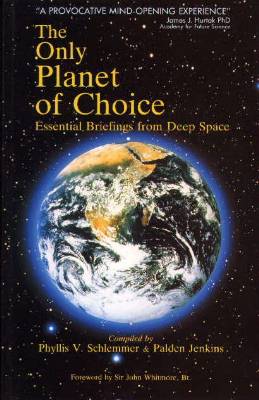
Thirtysomething years ago I had the privilege of working with a bunch of (for want of a better term) cosmic beings called the Council of Nine, compiling and editing a book for them, ‘The Only Planet of Choice‘. They dropped in loads of remarkable insights and here’s a bundle or two of them. Some readers might think this stuff far too way out, or utter garbage – so use your freedom of thought and intuitive discernment here.

Planet Earth is very different from other worlds. One factor affecting this is its gravitational density and the intense physicality of our lives on Earth. This has had a troublesome, diversionary and downward-pulling effect on human consciousness, with the result that we tend to forget why we came and what we are here for. We get lost in the daily round and in our psycho-emotional stuff, losing our connection with spirit. It has made human history into something we can be proud of and also we ought to be ashamed of it.

Over the centuries and millennia we have institutionalised this situation, making it our default behaviour, such that waking up to the heart of the matter has become an exceptional, dissenting thing to do, with difficulties and sanctions attached. This is further exacerbated by historical factors such as the control agendas of dominant elements in society and the compromised submissiveness and conformity of the majority. We’ve given power to fear, guilt and shame, clamping our spirits and clipping our wings.

There’s another issue too. As a planetary race, we did not start our evolutionary journey together as one tribe or family, originating from one single source, as is the case (according to the Nine) with many worlds, cultures and civilisations throughout the universe. Humanity has physically evolved in a Darwinian sense, with periodic non-Darwinian seedings and tweaks from outside, as part of a hybridisation project. Such discreet interventions have helped us evolve in consciousness, culture and technology too, though in quirky and sometimes dangerous ways.

The aim was to breed a new kind of conscious being that could be at home in denser and more experientially-diverse conditions than ever before. The idea was to draw influences and souls from throughout the universe, throwing us together on one planet, in the hope that we might co-create something new, different and never done before. We were to become a new kind of individualised, enspirited, dense-physical, humanoid-type being.

So Earth has become rather like a New York or a Singapore in experiential terms – naturally and intentionally multicultural. Living in different cultural realities and localised mini-worlds, we have been bumping up against one another throughout history, becoming changed in the process. The end-game of the modern phase of Earth’s history is to get all these cultures and individuals to come together as one planetary race – a race that is capable of managing its own world and making something of it.

So now, by 2025, we have created a world system, criss-crossed with cables, shipping and air lanes, and humanity now needs to catch up with all that this means. Nationalist and isolationist feelings are a symptom of a stop-the-world reaction to this historic mega-trend. As usual, we walk into the future facing backwards, more concerned about what we’re losing than what we’re gaining.

Also, life on Earth is always a mixed bag, and experiencing this is part of the grinding process that hones the soul. It faces us with choices – sometimes big and deep ones – and that’s what we came for.
They called for volunteers – this wasn’t conscription – saying that living on Earth would be difficult though potentially rewarding – a fast-track way of honing the soul. We would be given individualised free-will – a capacity to do whatever each of us feels best. As incoming souls, we felt that we could maintain consciousness sufficiently to fulfil our purposes in signing up for this project. At first we had that kind of clarity about life that you sometimes get when you’ve been on holiday, done ayahuasca or been on a meditation retreat – but then, when you get home, the pressures and complications start, and the main agenda gets set aside for another day, when there’s time… and we get lost again.

Over time, more and more souls came, as individuals and as groups, creating a population explosion in modern times. It has become a mass-migration, rising into billions, and fresh souls are still coming. (At one point the Nine said that Earth’s optimum population is around 200 million, not 8-10 billion, though they also reckoned we could manage such high numbers if we did it right.)

We now have a situation where we have billion of souls on one planet, yet in very different worlds. Multiplicities of them. This diversity happens on the same street, even within families. Diversity doesn’t have to mean dissonance yet currently dissonance is strong, and this matter is going critical. Not least because, on a deep psycho-spiritual level, dissonance makes divide-and-rule easier, and arguing has become pandemic in scale.

The consequences of dissonance have been highlighted in Gaza. Palestine/Israel is a microcosm of the whole world – divided, and not just two ways. This microcosm business is a key reason why this conflict matters so much to so many people. It holds the world down. Around 12 million people are holding 8,300 million back. Yet equally, if it is resolved, it could lift up the whole world. And this isn’t really just about Israelis and Palestinians – at root it’s about people and the Megamachine.

Neither is it a simple equation of one side as badguys and the other side as goodguys – it’s far more subtle and convoluted. Yet it polarises around Israelis and Palestinians because we have a habit of dehumanising others, lumping them together into a mass of horrible, fundamentally different people who threaten our happiness or our very existence.

Israelis and Palestinians, bless them, live in very different worlds, to the extent that people on either side just cannot see what it’s like being on the other side – except for some brave souls on both sides who are willing to step outside the confines of groupthink. We all variously do this dehumanising thing, justifying ourselves by making others wrong, but Israelis and Palestinians have an acute and persistent case of it.

They aren’t even in the same conflict, though they live close together in one small ‘holy’ land. It all boils down to the way we see things – especially when we get het up, losing our patience and tolerance.

This is why, in peacemaking, it isn’t possible to propose nice, sensible diplomatic solutions to which everyone can easily agree and comply, point by point, so that we can all go home and forget it. They’re fighting different wars, committing different suicides. This stuff, this shadow, goes so much deeper.

Plenty of shadows lurk in the collective psyche of virtually every country and social grouping worldwide – some of these ghosts are dormant, some simmer and some are heating up.

At present, globally there are few encouraging signs of mass healings and breakthroughs, and this leads to a creeping sense of disillusionment and disappointment across humanity.

If anything, the main factor currently pacifying conflicts seems to be exhaustion – sheer weariness. That’s not resolution and healing, but it can allow feelings to cool to manageable levels. Social-cultural healing can take decades, but there comes a point where both sides see that healing is cheaper than the price of continued conflict.

So it’s all a matter of what happens after open conflict ends, and whether a momentum of progress can be built up. It requires a time of confidence-building where each side has to restrain itself, even during touchy moments. In some respects this demands more bravery than in times of war, since there’s a courageously resilient madness to warfare that subsides with peace, once people get used to sleeping safely in their own beds.

Deep down, many Palestinians understand the pain Israelis feel over the pogroms and the Holocaust, but it was Europeans who did this, yet Arabs are being punished. The Arabs of Gaza, the West Bank, Jerusalem and Israel are divided by circumstance, permits and walls. There’s a tug-of-war between negotiators (Fateh) and resistance fighters (Hamas), and neither is winning or compromising. Recent events have stumped the negotiators and decimated the resisters, and many Palestinians feel rudderless and stuck in a tightening vice of diminishing options. Top to bottom, Palestinians are hurt, dismayed, upset, unsure what to do next.

Meanwhile, Israelis feel deeply hurt and shocked, and for entirely different reasons. Zionists, centred in Jerusalem, are hurt and angry since their God-given right to the land of ‘Greater Israel’ is being obstructed by an interfering world filled with Jew-haters – and Arabs ought to get out of the way. Meanwhile the ‘peace camp’ centred in Tel Aviv, themselves hurt, diminished and stumped, have lost much of their trust in everything and everyone, preferring life inside a missile-protected beachside bubble.

Historic Jewish insecurities have genuinely been reawakened, with some Israelis lashing out, others recoiling in dread and many stuck, confused and afraid. Something fundamental has dislodged in the Israeli and the international Jewish psyche, and something ill-judged and disproportionate has welled up in the attitudes of non-Jews toward Jews.

Israelis and Palestinians sit in fundamentally different worlds, each with different ways of dehumanising the other. As do those who support either side, around the world. Palestine activists need to stop belly-aching about genocide and rights and actually support real-life Palestinians directly with friendship, money and contact. Meanwhile, those who bang on about anti-Semitism need to forget it, and those who deny or ignore it need to remember it, deep in their hearts.

It’s a reality-conflict, projected on others yet reflecting what’s going on inside all of us. It’s about far more than just Palestinians and Israelis.

But there’s a flipside. Conflict and hardship can be so crazy, tough and senseless that it leads to a kind of rapid de-traumatisation, an epiphany, a deeper change of heart and optic. This happened after WW2, with the founding of the UN, the EU, the welfare state, the beginning of decolonialisation and of the urbanised modernity we now take for granted.

That ‘rules-based order’ is now getting shaken up and we have entered a slippery phase in which things are accelerating to a point where none of us really knows where we stand any more. We’re being forced to let go of past structures, habits, heroes and normalities. We’re being ground down.

The key issue is that we need to get on with each other.

Otherwise nothing else can get resolved. So, from a planetary-evolutionary viewpoint we’re at a really critical tipping point in history. We have come from very different worlds across the universe, developing very different cultures here on Earth, and we now have urbanised ourselves into multicultural melting-pots – 60% of humanity lives in artificial cities over half a million in size. This, plus increasing global migration, is humanity meeting up with itself.

The whole universe is watching, and it means a lot to them – not least because we’re their relatives. They will not intervene unless it is absolutely necessary (think of the ‘prime directive’) because intervention will override the purpose of the whole planetary project – to find out what happens in a dense-physical world run according to free-will rules.

Besides, I don’t think they really know what to do with us. They really need us to sort ourselves out.

We humans have become hyper-reactive, complex and dangerous – we even fight over toilet rolls. When they give us prompts, gifts and clues – subtle interventions – as a whole we tend to ignore, corrupt or misuse them. Or we resist. Or we create complex diversions and avoidances.

It’s all to do with seeing beyond our own little worlds, stretching ourselves and seeing things from another viewpoint. This is difficult right now, since our divisiveness has gone viral. Every society has a kind of concussion, dogged by past trauma and by the intensity of change happening now in these times. All societies have a consensus problem, a solidarity problem and a leadership problem. Old answers aren’t working, even though we keep grasping for them. Yet, strangely, this parlous situation is a necessary part of the change process – and there’s further to go.

We no longer need a rules-based order. We need an integrity-based order.

Some are moved to weaken and destroy the old rules-based order, but on the whole they do not know how to create a system based in integrity. Meanwhile, oligarchies cannot reform systems from which they themselves benefit, and which protects them from a latently angry world public.

So change needs to start from bottom up, and increasingly, fitfully, valiantly this is happening more and more. But to do so, ‘the mass of humanity’ needs to develop a certain maturity, forgiveness and a set of basic common standards. The Hindu rule of ahimsa or non-harming is one such standard.

This is why the imagery of devastation emanating from Gaza stirs so many people worldwide. Such devastation has been seen before but Gaza hits a nerve in the global psyche – especially in the Global South. Gazans have hit bottom. A fuse is close to blowing in the world psyche and in the geopolitical arena. Gaza is like a magnifying glass, exposing all sorts of agendas, shadows and cobwebs underneath.

At present there’s even a possibility of a sudden, house-of-cards tectonic change in world geopolitics – as a pragmatic and rapid adaptation to an avalanche of facts. This might lead to coffee and toilet roll shortages: it will affect everyone and force changes that, if truth be known, really need to happen.

We humans are up against the consequences of letting things pass when we know we should have drawn a line, many times throughout history. The ‘war to end all wars’ should have been like it said on the tin. We’ve got ourselves into a global-scale historic mess, imprisoned in self-created default behaviours, laws, regulations, systems and self-defeating patterns.

This has framed itself around Israel-Palestine because it’s not just about Palestinians and Israelis. It’s about the world’s capacity to decide what’s best. This hundred-year conflict would not exist without the interventions and manipulations of foreign powers that have fuelled it and failed repeatedly to address it. Too many bombs, too little wisdom.

It boils down to a touchy geopolitical question that we face in coming decades: the capacity of nations and the ‘international community’ to interfere in the sovereign affairs of individual nations, when necessary. And who decides?

Take this a level deeper, and it concerns our capacity as a planetary race to run and organise our planet. Doing so involves facing all of the big and small problems we have – an enormous task, yet it’s unavoidable. This would be a critical step in human evolution – a rite of passage and a triumph of global solidarity, based in disagreeing agreeably, bridging differences and staying focused on the main priority – getting the world back on track and making it a safe, fair and happy enough place to be.

There is a solution to all of this that the Nine mentioned quite often, and it isn’t new. It’s a simple, easy-to-understand yet profound method for achieving an integrity-based order, and it applies to everyone, at all levels of the human pyramid.

Treat other people as you wish to be treated yourself.

If we did just this, Earth would be a very different place.

With love, Paldywan
www.palden.co.uk

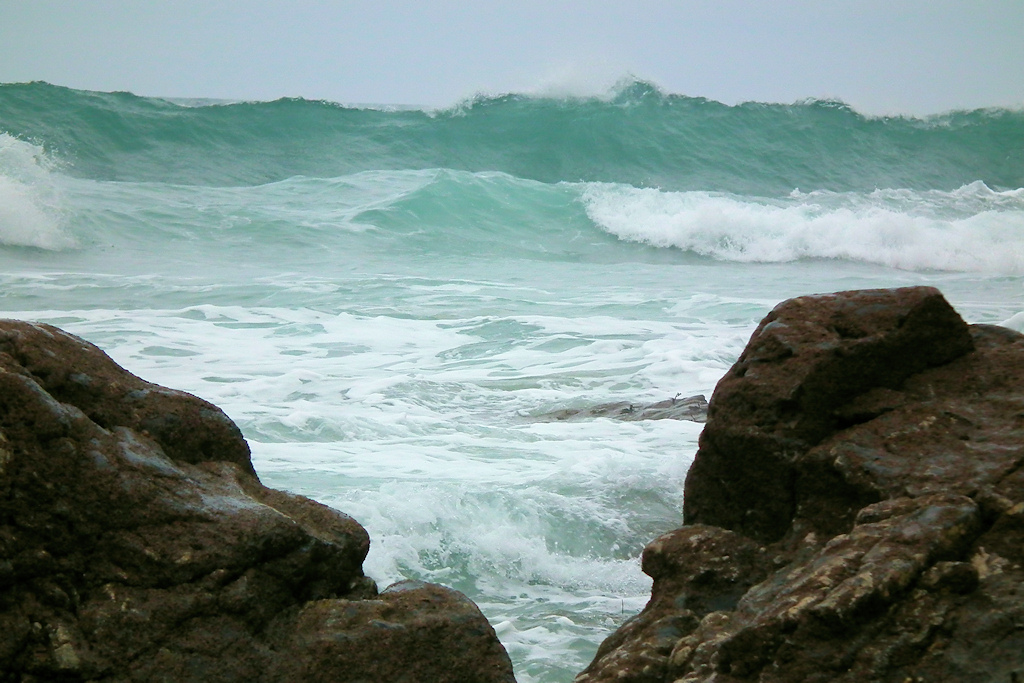
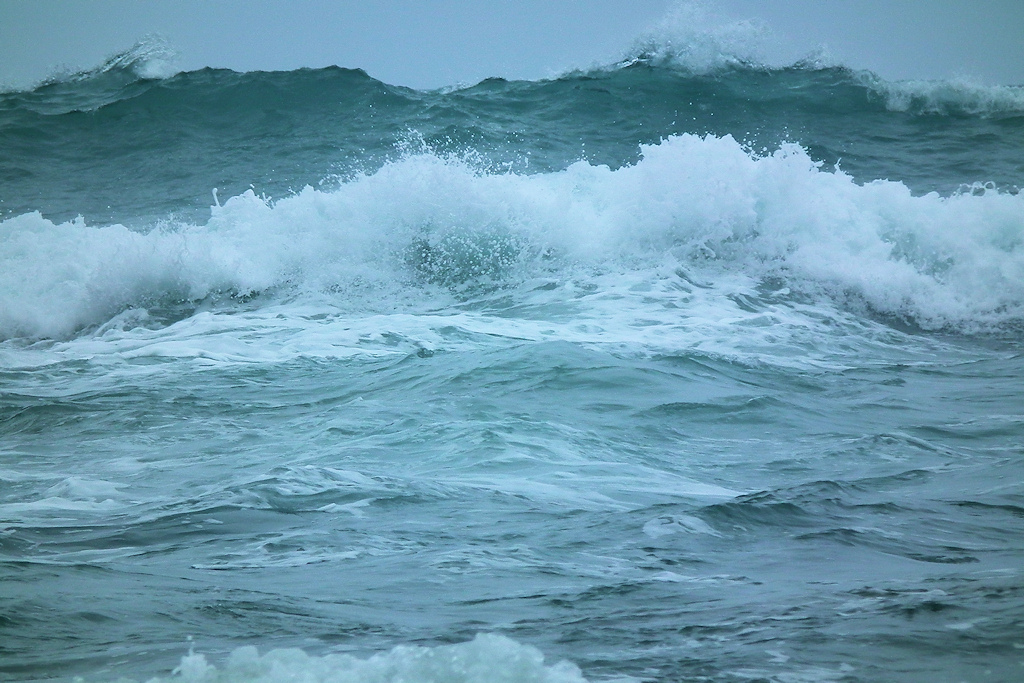
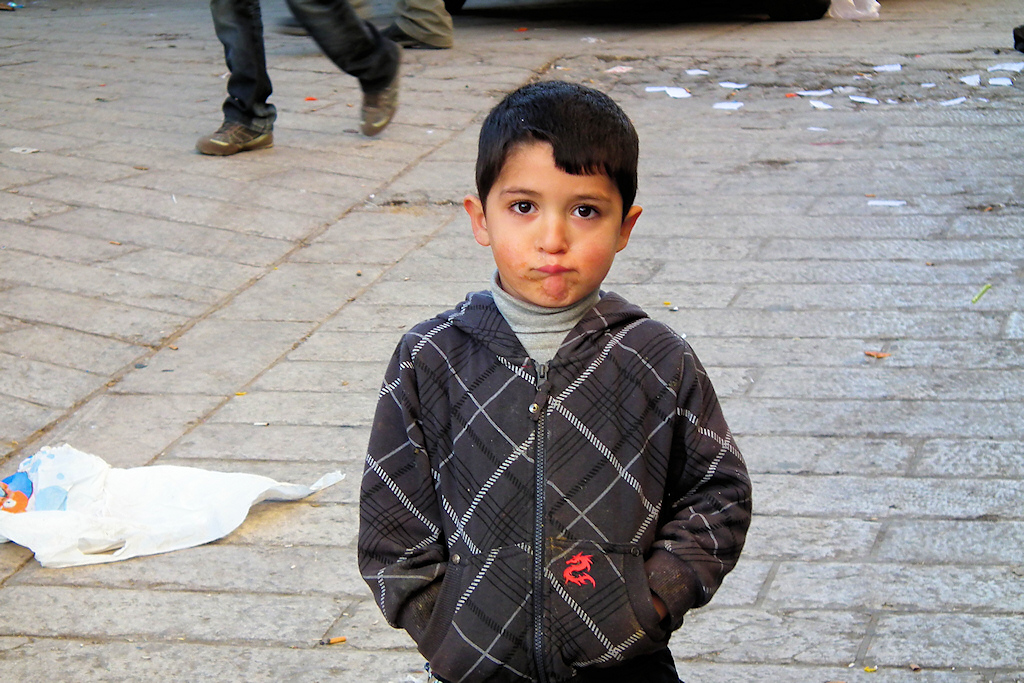
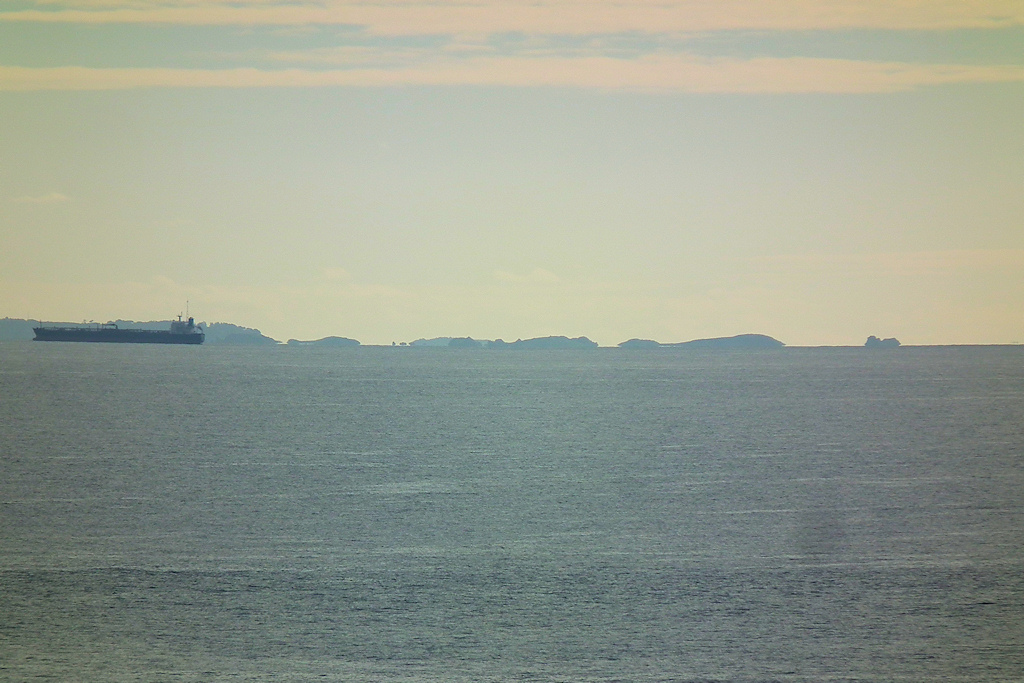
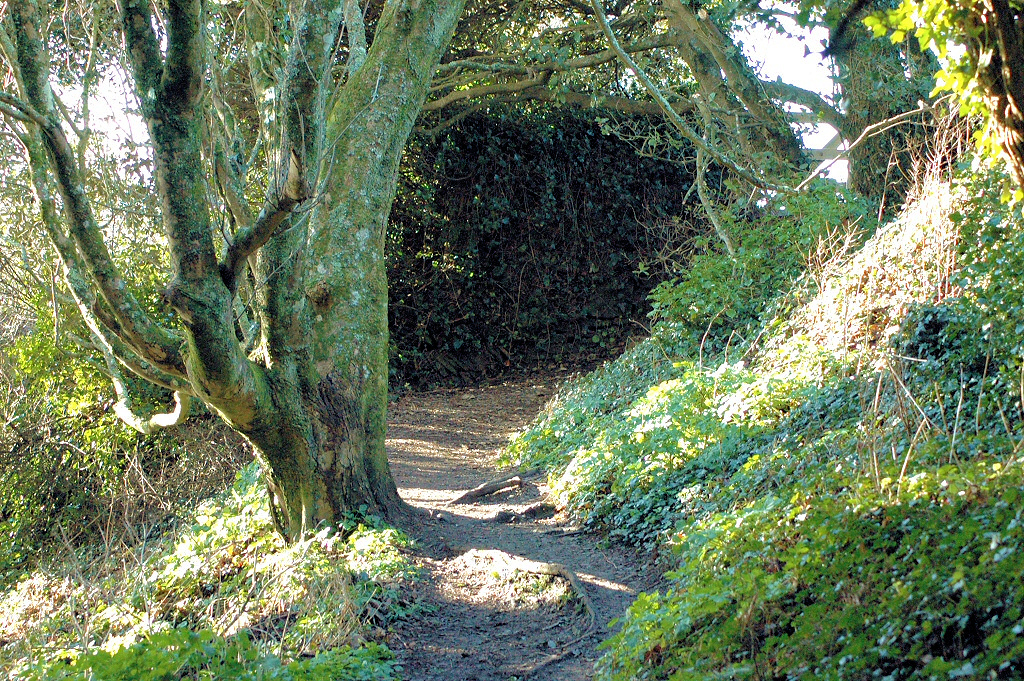
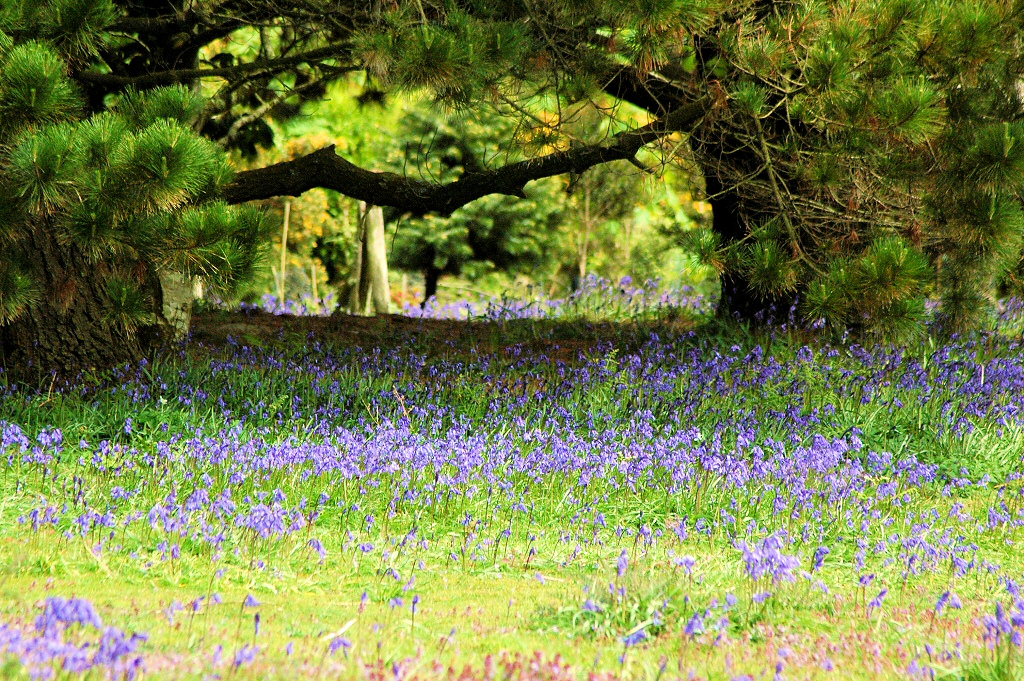
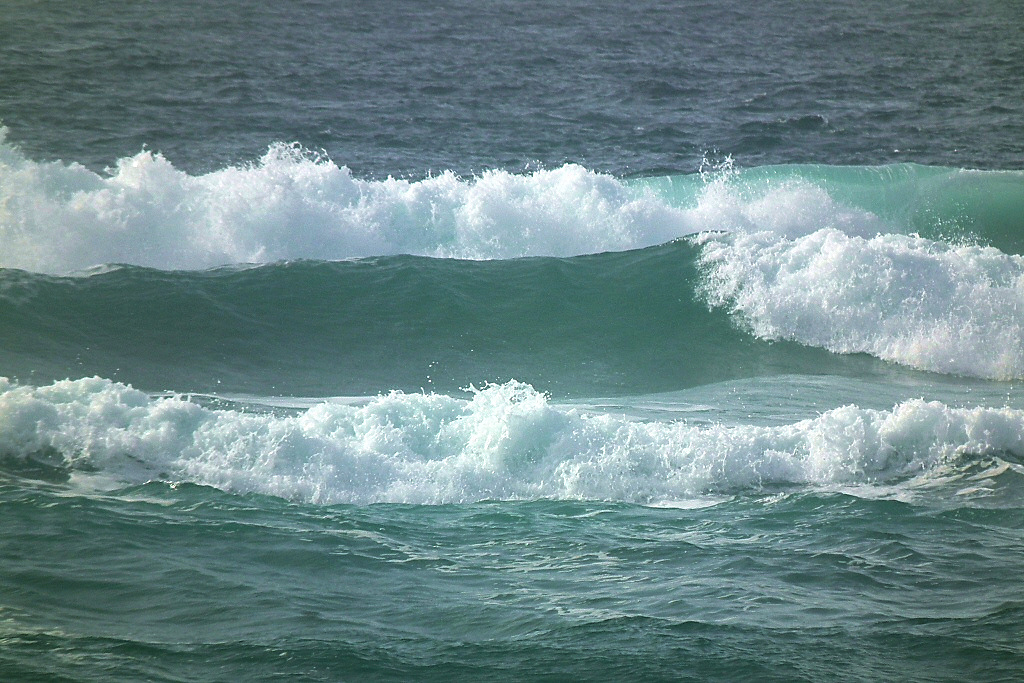
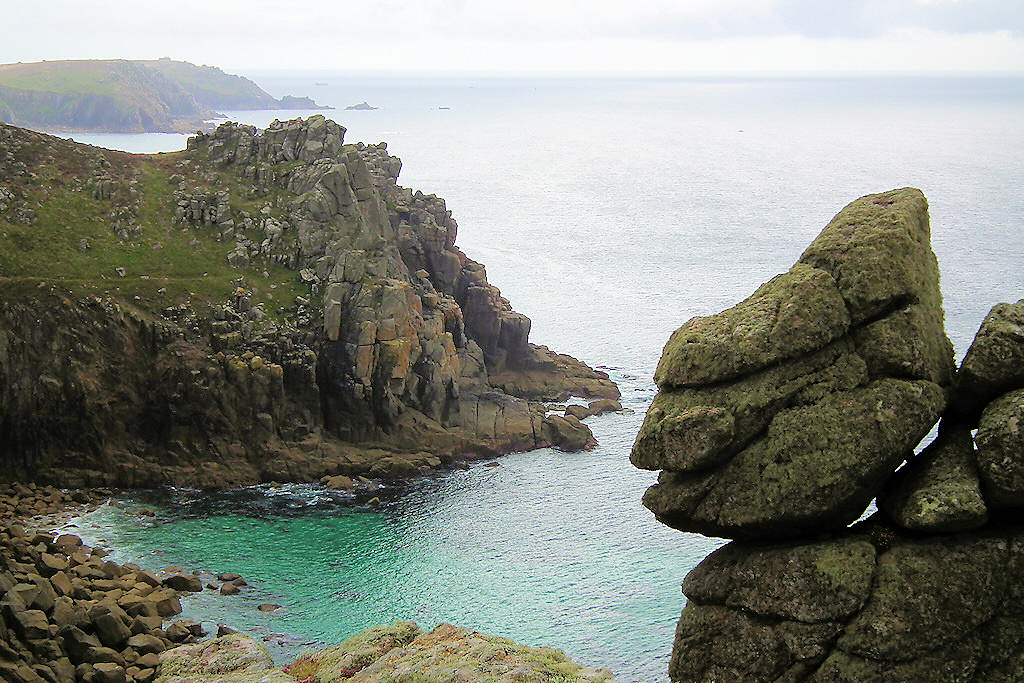
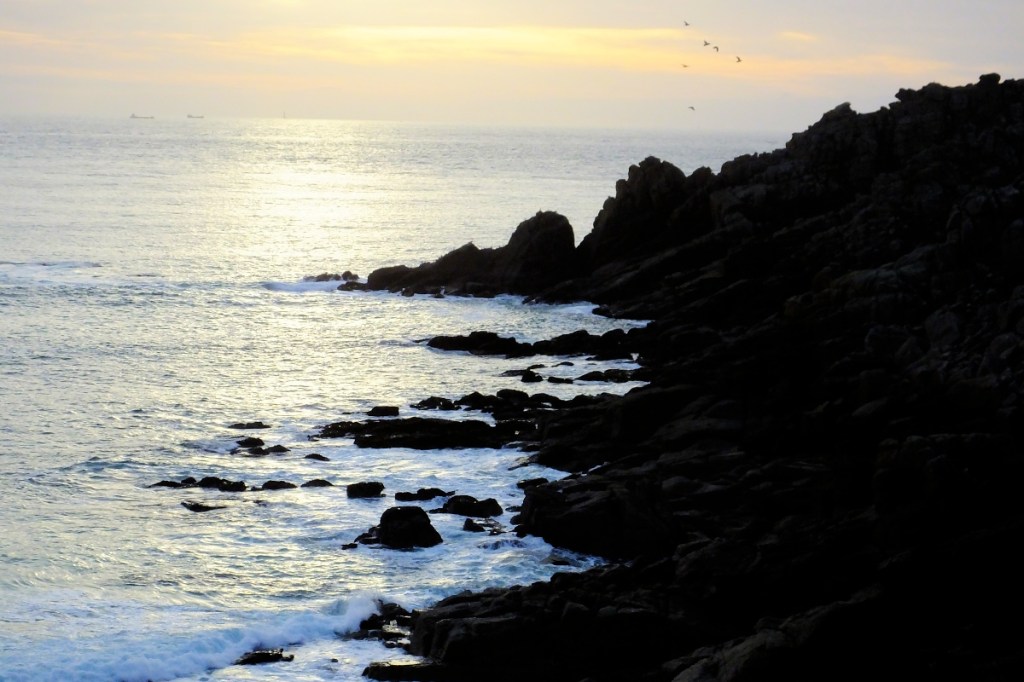
The pictures are from Planet Earth. Quite a remarkable place. Worth a visit.

Time

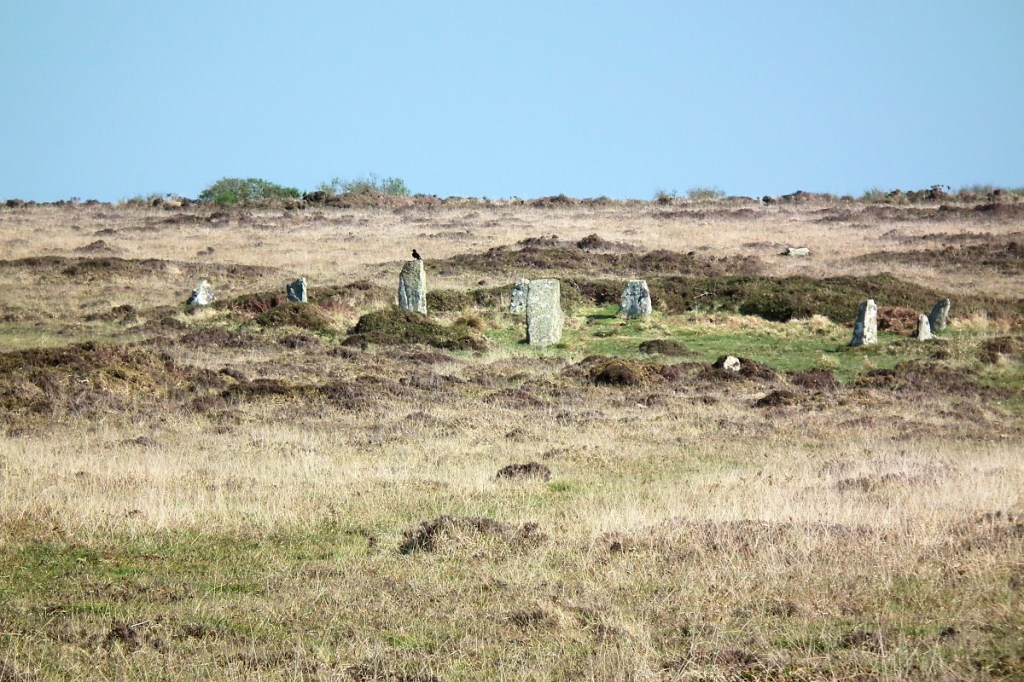
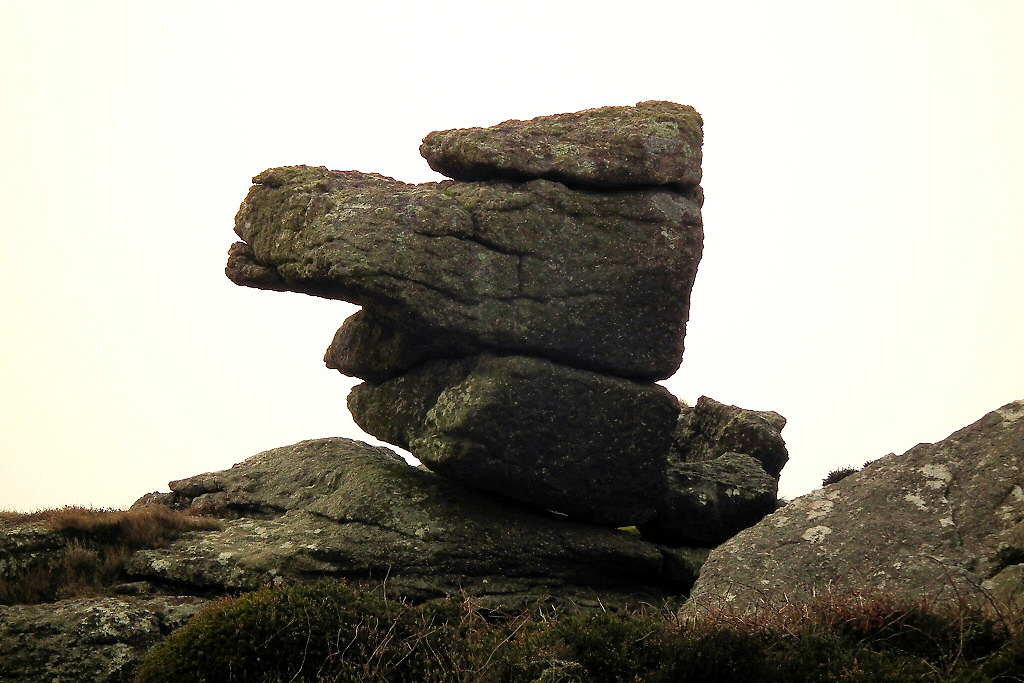
The Mên an Tol – once a stone circle, though rearranged by a zealous Victorian antiquarian

GNASHERS AND MAGIC CARPETS

We’re all stuck in an experiential grindstone called Time. Well, at least, while we’re here in a body on Earth. Actually, after we leave our bodies there are also forms of time too, but that’s different. One can be called ticktock time and the other can be called cosmo-time or psycho-time. But it’s a little more complex and variable than that too – as are all organic, natural processes.

When I was running consciousness-raising camps in the 1980s and 1990s, one of the most pleasing things was watching the children develop and grow. At the camps they would experience the magic of life, and they were allowed to be themselves and explore their possibilities in a community of souls – and they flowered. There were a lot of family healings at the camps. Experientially and evolutionarily, these kids were evolving as much in a one-week camp as they did during the whole of the rest of the year. I’ve met a number of people, now in their 30s and 40s, who have described this and the part it played in their lives. In the OakDragon, with which I’m still involved, at present the reins of power are passing to precisely this generation of former children – and they know exactly what to do because they grew up receiving the kind of treatment they now are giving to and organising for others.

So here we have a situation where, in ticktock time, a week passed, while in psycho-time a year passed. Now look back at your own life and your own formative experiences – whether they were blessed and uplifting, or boring, or hard, or traumatic. To appreciate these moments and periods of time, we have to slip into a similar psycho-time mindset. If we assess and judge them from the viewpoint of ticktock time they are meaningless and lose their power and influence – in ticktock mode we are judgemental about efficiency, compliance or time-wasting unless we label it ‘holiday’ or ‘day off’ or ‘ill’.

Illnesses are a very good way of experiencing cosmo-time/psycho-time – in fact, one of the positive purposes of illness is to slow us down and immobilise us, to switch us into inner time – often, whether or not we like it. It helps us process stuff through that’s lying underneath, that we don’t ‘have time for’ in everyday life. So occasionally our souls need to impose an override, send us to bed, give us some pain and difficulty, forcing us to doze and dream, to give space for deeper things to come through. It’s advisable, once it hits you, to give permission for this to happen – heling and resolution will come quicker that way, usually.

These times can be important, evolutionarily speaking. This is also a clue about the source of illnesses: it lies in our unconscious, in areas that are suppressed, deep and secret or only now emerging into consciousness – perhaps because we have become ready for them. Thus the secret in self-healing is to go down into those hidden recesses to work on the stuff going on in there, to open it up and let it out.

Here the Mên an Tol, the Stone of the Hole, looks more like the stone circle it once was

Time is what stops everything happening all at once. This is a key ingredient in the Earth experience. Everything takes time. Everything that begins also comes to an end, sooner or later. Impermanence is the only constant – everything else changes. We go through a life cycle, and when you’re a kid it’s very different from when you’re an old crock – not only physically but also in terms of understanding, perspective and viewpoint. And both states of being have their blessings, joys, trials, wisdom, perceptions, scrangly issues and special moments.

In my mid-seventies, I am now time-rich – mainly by dint of being strangely blessed with cancer and partial disability – but, like most readers, I was time poor through most of my adult life. I did a lot of rushing around doing important things. I had objectives, timetables, obligations, ambitions and appointments, and often I over-committed myself, always trying to keep up with a never-ending list of things to do. I achieved quite a lot too but, looking back, I could have achieved similar or better results had I known certain things I now know. But of course, now it’s too late. If I were young again I’d start a Wrong Planet Liberation Front for people with Aspergers ‘Syndrome’. Or I’d work more in Lebanon, or spend time with my Tuareg friends in Mali. Or I’d spend more time with my own children.

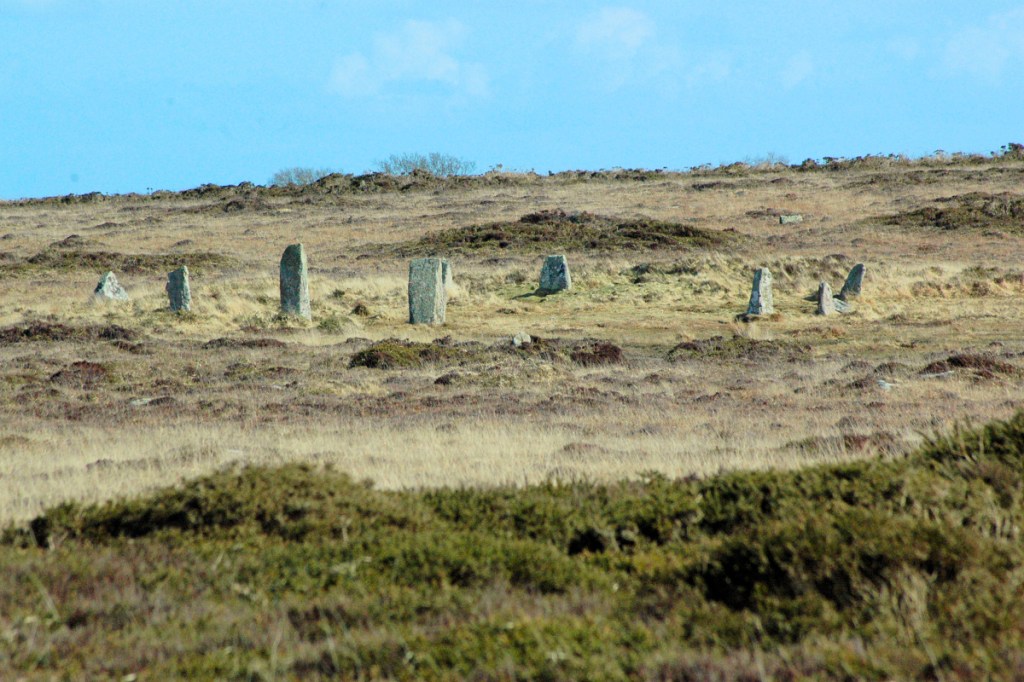
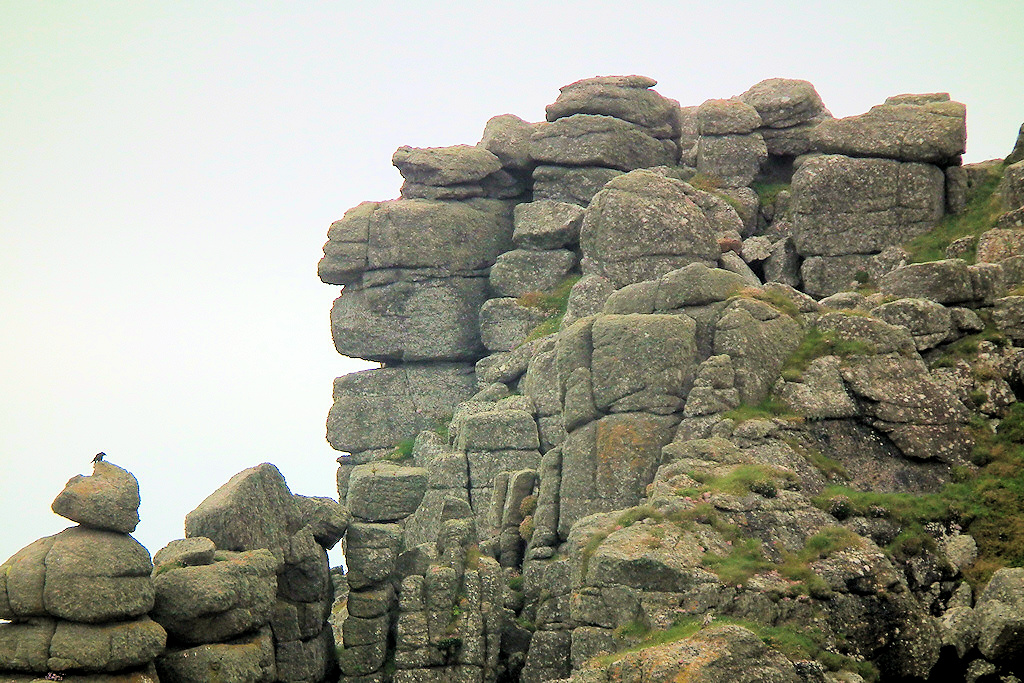
The Nine Maidens as seen from Mulfra Quoit (telephoto shot)

It’s different now – I’m in a rather timeless, dateless zone that is disturbed only when there are appointments to attend, or when someone tries to book a future date with me. The issue here is that I really don’t know what state I’ll be in on the appointed day, and I can’t drink coffee, get into gear and override it in ways I used to – so I just have to warn people to take me as I come, that day. Even so, time grinds at me as much as before, though differently – mainly because getting through each day is far more difficult than it once was. Nowadays, if I cook a meal, I get worn out and I have to have a rest before I can find the energy to eat it! Crazy. That’s aged decrepitude for you. That’s what happens. I’ve been losing my Virgoid competences, getting more useless. It opens up a very different perspective on life.

This relationship with time and our temporal conditions involves choice. We can make a big deal of it, fighting every inch of the way, or we can make it easier. This involves getting more comfortable working intuitively with the fluxings of psycho-time. It involves getting in touch with our inner senses, giving them more attention, and believing more in our subjective perceptions, without letting the censoring, constraining, explaining rational mind pass off or invalidate these perceptions. For there are things we can know about the way things will go – there are feelings, instincts and intuitions that can save us a lot of trouble if only we give them attention and act more in accord with them.

There are ways of understanding the inner secrets of time too. For me, astrology has been a major tool and influence, and I’ve done a lot of research work and written books about time and the way it moves.[1] Astrology deals with the interface between ticktock time and psycho/cosmo-time. That is, it embraces the regular cycles that give us ticktock time – the rotation of the Earth (giving us day/night) and its orbital motions around the Sun (giving us the year and the seasons) – and also the flexing-fluxing, organic changes in the nature of time, which are affected by the motions of the planets of our solar system.

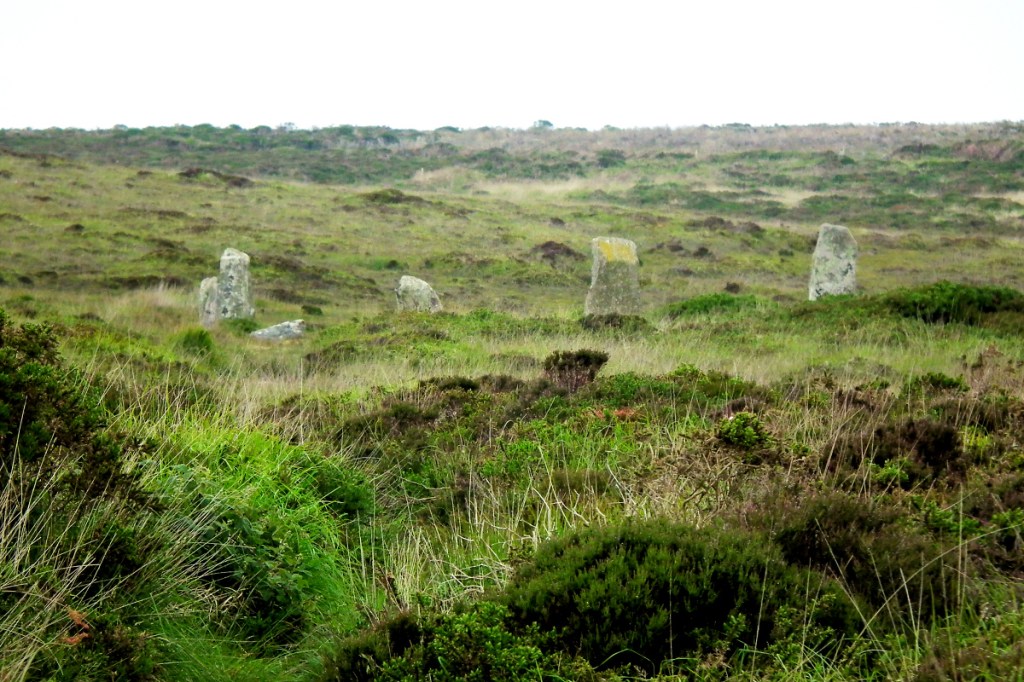
The Nine Maidens

How does this work? We live on a thrumming, vibrating planet – it rumbles and rings like an enormous bell, in terms of subtle energy. We live within the energy-field of the Earth and are completely affected by it, and it is continually changing in all sorts of subtle ways. The Earth is also part of our solar system, which itself is a thrumming, reverberating energy-system in which all planets and the Sun affect each other, influencing their energy-fields. Therefore, by observing the motions and interrelations of the planets we can understand the fluxings of subtle energy here on Earth – the ‘energy-weather’.

We can forecast rain or sunshine, but we cannot determine in advance how humans and other beings will respond to them. This is where free-will comes in. In other words, you can let fullmoons drive you nuts and keep you awake at night, or you can ride the energies more calmly, utilising such peak periods to achieve or resolve or accept or deal with whatever life throws at us.

At present, we’re in a period where Mars is hovering around in opposition to Pluto, and one option is war and devastation, and another is negotiation and forethought – these are our choices, not just for Israelis, American presidents or Sudanese generals, but for everyone. Mars is just as much a god of peace as it is a god of war – the peace that arises when both sides realise that the costs of conflict outweigh its perceived benefits.

Sometimes, to get to peace, you have to have a showdown, a crisis that forces everyone to put their cards on the table. These sub-acute crises arise simply because wisdom has failed, so we have to go through painful processes to get to the same place more slowly. As William Blake once wrote, ‘The path of excess leads to the palace of wisdom‘. Well, yes, as long as you don’t blow up the world in the process.

This process of grinding through issues, procedures, processes, crunches, slack periods and the stuff of life, both in our personal spheres and in the wider world, is precisely what we came here for. We wanted a slice of the physicalness, the passion, the pain and pleasure, and we have a way of getting lost in it, foretting why we came and what we’re here for. This is the big challenge: maintaining consciousness and perspective amidst the fray and bother of daily life. You don’t get this in other worlds – not in the way we have it here.

Here’s a quote from Tom, the spokesbeing for the Council of Nine (some cosmic beings I’ve worked with):

Your Planet Earth is the most beautiful that exists in the Universe. It has a physical variety that no other planet has. It has a varied climate that no other planet has. In all the universe there is no planet in existence that has the physical characteristics of Planet Earth. It is the rarest of beauties, and it does attract souls which, once they have come, would like to come back again. It is of a different nature from any other planet. It has aspects of all planets: it is like a composite of the universe, with all the positive and all the negative aspects, and all in between, and this is what attracts souls.

It has with it a gravitational pull that is different from other planets, and because of this a soul begins to feel a physicalness. Souls become adapted to their physical bodies, and they forget the freedom and pleasures they have without them. The Earth was created to be a paradise. When souls achieve harmony it will become a paradise again. This is your planet of balance, for you to learn to balance between the physical and spiritual worlds.

Planet Earth is the only one of its kind, the only planet of free [individualised] choice in the entire universe, the planet created for the balancing of the spiritual with the physical; in other words, the creating of paradise.” [2]

No one is here by accident. We chose to come here. It is also our choice to learn from it, to accelerate our inner evolution, with a view to graduating from this particular kind of education and moving on to other realms – or perhaps to come back to help the rest of us do similar. People who’ve graduated from Earth, having gone through so much, are like super-troopers in the wider universe. We’ve seen and experienced stuff others have not. It was gritty, painful, relentless and difficult.

But you don’t get chocolate on other worlds. When it works well, the sex is amazing too. Money can be a blessing or a burden – whatever our financial status. It’s all about how we deal with this stuff. Power is remarkable when well done and disastrous when abused. The qualities of love, understanding and forgiveness on our planet are remarkable too, when they break through. As they now must, on a planetary level, if we and our descendants are to continue to have the privilege of incarnating here in a world that’s fit to live in.

It all takes time. Not just ticktock time measured in days, months and years, but also in evolutionary time. Peace will not come until there is a world consensus for it – unless humanity has reached a stage where it realises conflict is not the best way forward, and when it acts firmly in that belief. That can take time, but it can be accelerated too, especially during power-points in time when the possibilities for fundamental change are amplified. One way to change the world, therefore, is to work more closely with the fluxings of time so that we can surf its periodic waves and not burn up too much energy when the waves aren’t coming.

It’s all a matter of time.

Now it’s time to put the kettle on. You can’t do that on Alpha Centauri, so enjoy it while you can, because one day that opportunity will no longer be present. Though other things will happen instead, and they might even be quite a relief after going through the grinding and polishing action of a life on Earth.

With love, Palden

If you’re in Cornwall, in the Aha class in Penzance on Wednesday evening 23rd October (this week) I shall be covering this topic. Info: www.palden.co.uk/aha.html

FOOTNOTES!

  1. Three books: Living in Time, 1987, www.palden.co.uk/living/, which is out of print and available as an online archive version,
    Power Points in Time, 2014, www.palden.co.uk/time/ published by Penwith Press, and
    The Historical Ephemeris www.palden.co.uk/ephem/ which is available online only.
  2. About the Council of Nine: www.palden.co.uk/nine.html

This blog is written using human intelligence – nothing artificial added, however intelligent people might believe it to be.

Acquiescence

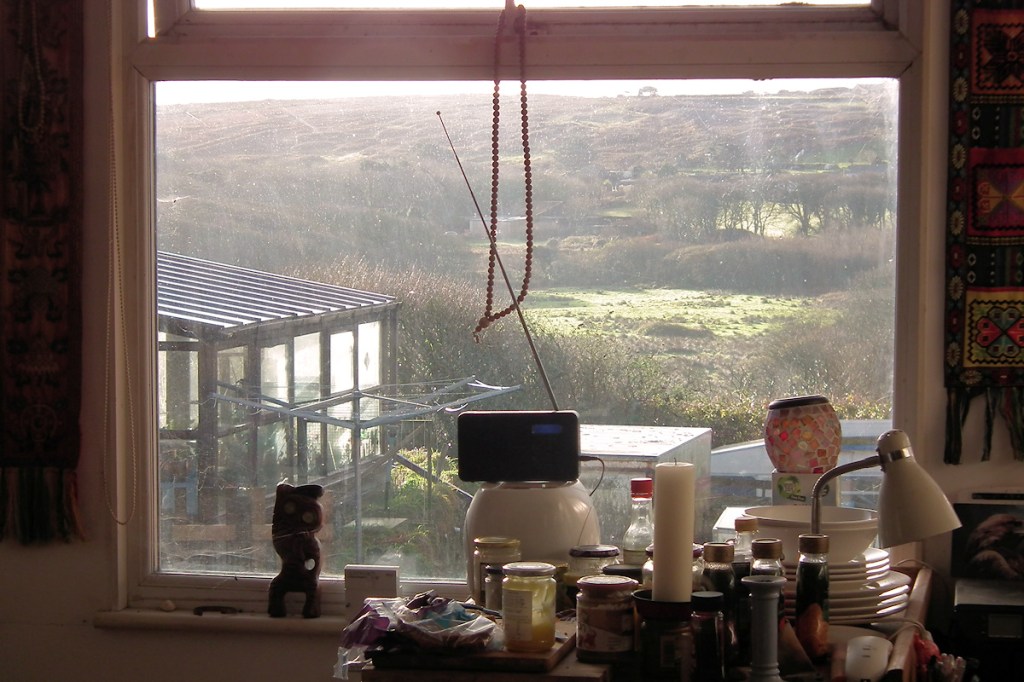
The view from my house

Where is the world?“, cried a desperate woman in Omdurman, Sudan – in ‘From Our Own Correspondent’ on BBC World Service today. Lebanese will be feeling this feeling right now, though the Sudenese perhaps have it worst. Well, the world is busy with other things. That’s where the world is.

One of the stange paradoxes of our time is that, as world population has grown – exploding to over eight billion – individuals and communities have become more isolated, alienated and dehumanised. In recent years, wars, witnessed onscreen like disturbingly realistic video games, have been stumbled into as if people, cities and landscapes were expendable and there were few consequences to worry about.

We wring our hands, feel smidgeons of the sorrow and pain, grumble and get on with our lives. Others blank it out, as a survival mechanism that allows them to keep going with a daily round of never-ending pressures. And yet others love it, as if feeding on the tensions, the bangs and flashes, and the numbers, and the power of it all.

For the triumph of evil it is necessary that good people do nothing. I keep banging away about this quote from the philosopher Edmund Burke because it sums up the world today and the tenor and background of what is to come.

When wars take place, we easily latch onto the proposition that it’s about Israelis and Palestinians, Russians and Ukrainians, rival generals, or government and rebels – and thus has it ever been. Well, yes, but here we blind ourselves. This is the way it looks, but there’s something else here.

At root it is about the battle for the hearts and minds of humanity – a well-worn phrase which describes what we have been in for a very long time. It seems now to be coming toward a crescendo. This goes right back into prehistory. There are two fundamental mindsets here.

One perceives strangers as a threat, territory and resources as possessions, people as individualised objects, power and wealth as advantages, competition as the sole mechanism by which everything operates, Earth as the universe’s only inhabited world and physicality as our baseline reality.

The other generally likes, loves and trusts fellow humans, tends to treat others as it would like to be treated, identifies with nature, thinks mutually and cooperatively, understands that there is something greater than what we know, and it tends to prefer living relatively simply, sharing resources and staying within its means.

Something like that. These mindsets are more easily felt than defined in words.

All of us hover around various places on the spectrum between these two poles of perspective and experience. We all have to establish a balance between self-interest/sovereignty, and mutuality/shared sovereignty. They both bevel into one another. They can shift quickly in crisis situations. Often the values that position us on this spectrum are formed in teenage and early adult years, though they can shift if life jogs us into it, or through periodic epiphanies.

Seen this way, many of today’s wars aren’t between the commonly-agreed sides. They are wars by people with a competitive mindset against two kinds of people: those with a cooperative mindset, and those who aren’t sure, who acquiesce in whatever situation prevails at the time.

The competitive side is also made up of two main kinds: the oligarchy that drives the mindset and cracks the whip, and those who lock step, join in, to become the executors, officers, influencers, reinforcers and beneficiaries of the oligarchy (to gain advantage or for fear of not joining in).

But it’s not simple and clear-cut. It’s not a goodguys/badguys scenario where one side can blame the other side for the world’s problems, striving then to dominate or eliminate them in order to solve those problems. It’s far deeper and it’s not fully conscious. It’s the frequencies we tune into. Even if we cleave the world into ‘woke’, ‘anti-woke’ and ‘don’t know’, within those divisions are heartless wokes, good-hearted anti-wokes, and a large number of people unwilling to takes sides when the options are presented in such a binary, with-us-or-against-us way.

This last lot is a broad majority – except perhaps temporarily at times such as the outbreaks of wars, when polarisation waxes strong. And this is one reason, deep down, why wars are fomented – to keep polarisation and dehumanisation on top of the world agenda, and to dull people’s sensibilities with scenes of tragedy and destruction.

There are different kinds of ‘don’t knows’ too, and the matter is kept confused because few people have time to think and reflect clearly on what’s happening and what they can do about it. The acquiescent are constrained in what we can do – despite all the hoohah about democracy. We have delicately-balanced, busy lives, and the cost of disruption can be high. Bills must be paid. Some people don’t want to know. Some feel helpless and frustrated. Some try hard to make a difference and don’t get far. Others simply pursue their careers or their lives as best they can.

The key thing here is that acquiescence is the source of the world’s problems. Some like to rail against the perpetrators, the oligarchies and power-structures, and there’s some relevance in this, but really this concerns a deeply-embedded tendency in humanity to shrug shoulders and go along with things it has instinctive reservations about.

This gives oligarchies operational space by which to determine the agenda and co-opt majorities into buying or accepting it. Throughout history it has allowed them to drag humanity through mass experiences they otherwise wouldn’t have chosen. The devastation going on today in Lebanon is but the latest example, and there will be more next year and the year after that.

I’ve spent my life exhorting, encouraging and facilitating people in their change processes, and by no means have I been the only one doing it. In the stretch of history in which I and my generation have participated, some progress has been made, though the fundamental issue has not been resolved. That is yet to come.

It’s the battle for the hearts and minds of humanity. In recent years we’ve had distressing instances presenting us with deep choices. Do we actually want this devastation to continue? If not, to what lengths are we willing to go to end it? If, as it seems, the future is intensifying, the disasters are getting bigger, the pain and costs are rising and we’re heading for a precipice, when will the world’s majority consensus shift sufficiently to tilt the balances and head another way?

This is the bottom-line agenda for the coming decades. Events and collective feelings are moving that way – something is fermenting underneath and, one day, it will come out. We’re approaching an historic choice-point, or a series of them, and we all know what it’s about. Evidential statistics are hardly necessary.

This question lies within all of us. It’s tempting to give a nice, easy answer that looks like a solution, so that everyone can go home and feel okay, but so many of us have done this before so many times, and it doesn’t necessarily help.

It’s the process. We have to go through the process. Globally. Everyone. And it’s a cliffhanger.

The view from my bed

I’ve been reflecting on all this as I’ve gone through what has felt like a long-dark tunnel of illness in recent weeks, as detailed in three recent blogs. I’m gradually reviving, and the muscular pain I’ve had, at 90% two weeks ago, is now around 30% and within my manageable zone. Though I haven’t been close to death medically, at times it has felt like dying, as if the pain might squeeze and pop me out of my body, leaving a curled-up pile of bones behind. Since getting cancer five years ago, I’ve visited that close-but-not-there point a number of times, and perhaps my body-soul connections are a bit loose.

It’s feelings like pain that make us more human. Times when we’re overwhelmed with our own feelings, our phantasmagorical inner dramas, locked inside our personal reality-bubble and struggling through the nettles and brambles overgrowing the path toward finding out who we are. Those bouts of suffering we impose on ourselves or which come at us, just when we were busy making other plans – they can have a humanising effect.

I guess I’m feeling a microcosmic version of what Gazans will feel when the firing at last stops. What then? Will I revive, to return to something resembling the life I had before? Or have I dropped to a new level where my possibilities have shrunk and my dependencies have grown, and that’s what I must accept? We shall see. It’s that post-devastation phase that happens after an enormous struggle. Actually, it’s the mindset that those of my age-group were born into, just after WW2 – a ‘whither the future?’ phase, experienced amongst the rubble of what used to be.

My life has reduced to the size of my cabin – and when the fog is down, as it does here in Penwith, the shrouding is complete. Even so, I’ll still be there every Sunday at the meditation, because that’s something I can do that breaks free from the physical confinement my body has given me. You’re welcome to join our little group and enter the energy-zone of the meditation. It can help greatly in the uncovering of answers. (There’s a link below, explaining more.)

The view from the hill on our farm – that’s St Michael’s Mount

Over the last few weeks, lying there in bed, dead still, propped up on pillows, at times I’ve travelled far and wide, visiting many of you, and visiting people I’ve known through my life (not least friends in the Middle East) to be with you. And to be in the world’s crisis zones, with people who are there. And to swim around in the tangly firmament of the world’s heart-mind, planting love-mines and stockpiles of psychosocial aid for people to draw on, in places I’m drawn to.

I’m not doing it all the time. Often I’ve been just lying there in an opioid-painkiller daze, wondering dreamily whether I have the energy to arise from bed to take a pee. But on occasions I’ve gone deep, through and out, visiting Darfur, Dneipro, Sidon, Bethlehem… or far further out, beyond this world, into the realms of light, timelessness and beatitude, and laying connections between the two.

Which goes to show, even in your darkest days it’s still possible to do something. A candle lit in darkness sheds far more light than a candle in sunshine. And this is what we’re here for. The first Tibetan Lama I met, Akong Rinpoche, taught me that times of enlightenment, freedom and joy are like a holiday, which heals us because it is brief and different, but the times when the real progress is being made are the times when we’re wading through the swamp, struggling to find our way. And it seems to go on and on.

In writing this, I’ve just realised that Lama Akong taught me this in November 1974, almost exactly fifty years ago. Half a century later, I’ve had a reminder of it, and I’m still learning that lesson. But it also says something also about the tribulation humanity is in. We do actually know what is needed on Planet Earth, more or less, and we now have to wade through the mud, the crossfire and the floods to get there. Hearts and minds. For the triumph of humanness, it is necessary that good people do something.

With love, Palden

PS: The next Aha Class in Penzance is re-timed to Wednesday 16th October – I’m not ready to do it on 9th. Ironically, the class is all about time.

The Aha Class: www.palden.co.uk/aha.html
Sunday Meditations: www.palden.co.uk/meditations.html
My website and archive: www.palden.co.uk
Recent public talks: www.palden.co.uk/podtalks.html

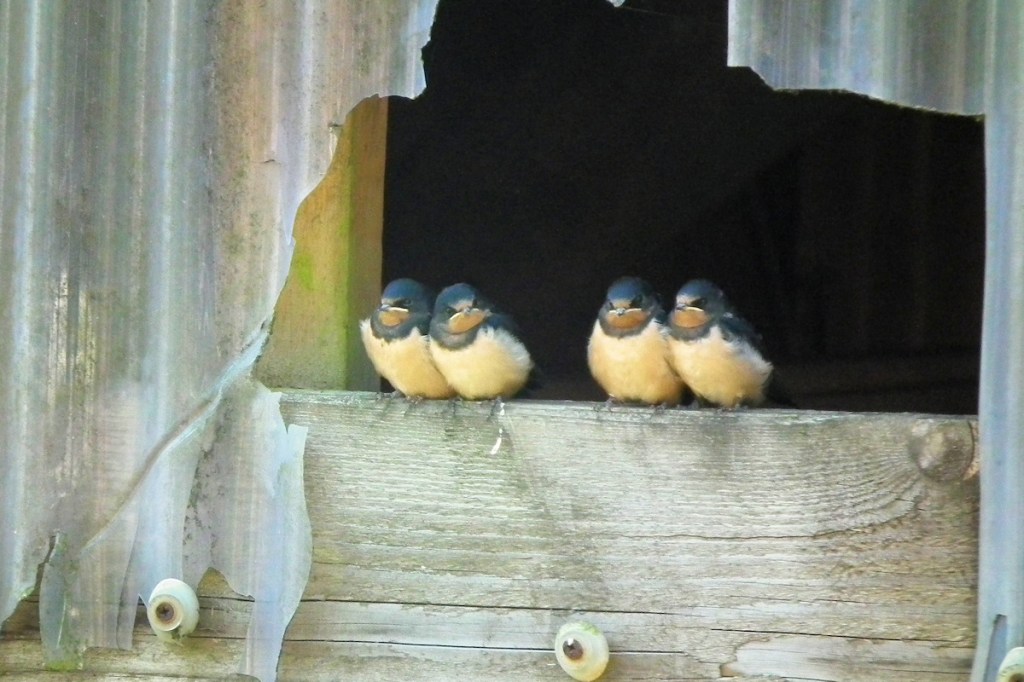
Young swallows in the barn next to my house. But, worryingly, the swallows didn’t breed young this year – probably insufficient food around (insects)

Crickets and Carcinogenicals

It’s funny. Having cancer has been a bit like a fast-track course in spiritual transformation. Well, on good days, and if I choose to see it that way. Perhaps it’s the down-payment for this course that makes a big difference: it’s not about paying money, it’s about giving up your life to a fate you have little control over. If you’re going to gain anything from the cancer process, you have to offer up your life because something greater is making the critical decisions and you are to an extent helpless. Higher powers are taking over. HP Source is placing a call.

Yet a gift can come with it: a certain strength underneath, arising from the fact that you could pop your clogs tomorrow. Or the next day. Or anytime. There’s little way of knowing. Which makes planning tricky: you have to have fallback strategies in case the preferred option – regularity and a longer life – doesn’t work. Every day plans B and C have to be treated as equally likely probabilities. Some good soul takes me out and, half-way through, I can’t handle it and need to lie down or go home, flaked out, batteries emptied. Plan B strikes again.

Recently we’ve had a lot of sea fog. West Penwith, right at the end of Cornwall, is where three sea-masses meet, from the English Channel, the Atlantic and the Celtic Sea, and their swirly interactions, plus humid air from the tropics, at times make for lots of fog. So we’ve had white-outs. The world disappears – recently, for days on end. It has been rather a struggle: I’ve been ‘under the weather’, literally. Stuck in my reality-bubble, rattling the bars of my cage. I’m obliged to deal with myself, and my shadow keeps following me around.

Yet where there’s fog, clarity can come. I found this a few years ago when I had two years of fatigue and brain-fog. Behind it was a gift, an imperceptible, emergent seepage of clarity. Things came back into focus after what seemed like a long time lost in space. Something similar happened this morning. I had a realisation, waking up at dawn to find that the fog had cleared and it was going to become a golden morning.

Neptune seems to be at work (I’m emerging from six years of Neptune transits), surreptitiously peeling off multiple layers to reveal things underneath that seem new and revelatory, yet they’ve been there all the time. It’s all a matter of seeing – and of curtains and the opening thereof. What’s behind the curtains was always there, yet it’s not there until we see it.

This is a key element in the building of the Great Illusion. We fail to see what’s actually there. Yet one of the strange gifts of life is that things such as serious or terminal illness, or other earth-shattering shocks, losses, disruptions and hard truths, reveal to us things that were always there – or perhaps visible if only we had looked ahead. We manifest them unconsciously.

Major illnesses and life’s hammer-blows derive from the unconscious, from the places we don’t see or want to see, and from the stuff we’ve tamped down or avoided. A lot of this is to do with memory – not just conscious memory of events and experiences, but emotional scars, body-armouring, touchy spots and no-go areas impressed on us through earlier-life traumas or repetitive experiences that we don’t want to remember, or we have needed to forget. But sooner or later they come up anyway.

This is what the Israelis fail to see, in their war with Gaza. By devastating the lives of Gazans they’re feeding gallons of trauma to over two million people, many of them young. This will produce a predictable crowd of new ‘terrorists’ (freedom fighters) in about 10-15 years’ time, though it will also yield a crowd of new saints – true peacemakers who have seen through the destruction game, even though they were on the losing side. Those saints could be more deeply confronting to future Israelis than fighters, because fighters are the same old thing while peacemakers in large numbers will not be easy for Israelis to deny or gainsay.

It’s exactly five years since my back cracked and my life changed in my former partner’s back garden, while clearing some tussocks and piling up logs. Three months later I was diagnosed with bone marrow cancer and, since then, life has been very different, in all sorts of ways. I used to be a night-owl and now I’m an earlybird. I used to have a really good stomach and now it’s a problem (Saturn in Virgo). I used to be a really good driver and now I cannot drive a car (Sagittarius rising and Moon in Gemini). I used to be fit and now I’m an old crock. The details are many. A lot has changed.

Something has been troubling me, and this morning I understood it, thanks partially to the clearing of the fog. I understood a contradiction in myself, and where its roots lie. It’s this: although my attitude to life has strengthened as I’ve got to grips with cancer, and it’s quite strong, and it protects me, I’m also much more vulnerable and affected by things, physically and emotionally, than I once was, and this weakens me, making me a bit like a leaf in the wind.

Many of my defences, insensitivities and fallbacks have disintegrated, and small things make a bigger impact than before. Several times a month, especially when out on walks or expeditions in the wider world, I have to go into ‘survival mode’ – a gritty ex-mountaineer’s approach to getting back home, regardless of how I feel or however worn out I am. I stagger on, running on two cylinders, totally focused on hanging in there, keeping my energy moving and getting home.

It’s an act of faith and against-the-odds, Mars-in-Scorpio determination – though in other contexts, some see this resoluteness as stubbornness. But it keeps me going and gets me home – or, at least, to the welcome car seat of whoever has taken me out adventuring.

It gets tricky, though. Quite a few people say I look really well when, underneath, I’m feeling like a turdy morass of aching, creaky detritus. I guess it’s one of the side-effects of handing my life over, to be propped up by spirit more than ever before. It can create a funny kind of deception since dealing with adversity can sharpen and brighten my spirits, even if adversity is grinding away and slowly eroding my sometimes tenuous grasp on life. Yet that vulnerability can cause a marshalling of energy that helps me through. It’s mind-control really.

The secret lies in activating levitational forces through staying focused and subscribing to positive thinking. Not the self-delusion or self-persuading wishful-thinking that denies pain and hardship, desperate to see things through rose-tinted glasses, but a deep conviction that all is well and it really is okay – even when you don’t know whether it is okay or when you don’t feel at all positive. This is not a conviction of the brain but a calm certainty of the cells and bones.

Psychologist Jean Piaget once said that intelligence is not about about what you know, it’s about what you do when you don’t know. So, when I’m faced with difficulty – I’m cold and wet, people are talking too long and my back is killing me – I’m faced with a choice. I can either have a hard time, grinding away through my pains and difficulties, or I can allow it to be as it is, accepting that the right thing is happening and it’s okay and I’ll get through it somehow. That’s the difference between gravitational and levitational thoughts and beliefs.

There are times when even this doesn’t work and I just need to lie down and give up, realising that I’ve lost the battle that day. But it’ll be okay in the long run, somehow. Inshallah, ‘if it is the will of the God’.

And if it isn’t, that’s okay too. Because everything comes for a reason. Seeing that reason can sometimes take time, but it’s quite safe to assume that it is something to do with the education of our souls. Now this is quite a belief-transformer. It changes good and bad, success and failure, ease and difficulty into something else. All experiences are fodder and vitamins for the soul, if we see them to be so.

Including dying – which all of us are irrevocably destined to do anyway, somehow, sometime. ‘Life’s a bitch, then you die‘. They didn’t quite tell you that when they called for volunteers for the Planet Earth experiment. However, they needed volunteers since, having gone along the path of overpopulation, we need to experience its consequences quickly so that we learn that lesson and get it over with. And the extra hands on deck might even persuade us to realise we are one planetary race, all stuck on the same boat and desperately needing not to rock it too much.

I realised this, about fodder for the soul, three years ago. I asked myself what I would be doing if I didn’t have cancer. The straight answer that came up was, “Just carrying on…“. I would be ticking over, continuing with everything I had been doing beforehand, and letting the clockwork of my life slowly run down. I would not be having the cancer experience which, despite the cost, the loss and the pain, had given me a new and completely changed chapter of life and a bizarre kind of spiritual boost that I hadn’t quite anticipated.

We all have to square with death sometime, and a cancer diagnosis (or similar) certainly brings that on. Many cancer patients avoid it, leaning on the medical profession to save them from facing death’s hungry jaws, and thereby delaying doing the spiritual spadework that will stay on their bucket list, whether or not they like it.

Our culture, believing we have only one life, regards death as a failure and an ending, repeatedly saying “Sorry for your loss” to the bereaved as a regret-laden default response. But actually such an attitude protects people from contemplating death, and it’s detrimental, and it costs our medical systems billions. As a culture, we’re shit scared of something that’s perfectly natural. We do this with birth too.

From clinical death onwards, a person is regarded to exist only as a memory, a reputation or a legacy, not as a person or a soul. Ashes to ashes and dust to dust – hmm, what a materialistic statement. In truth, home is what we on Earth, at a stretch, would call the Otherworld. Here on Earth we’re in foreign territory – we’re colonist occupiers, believing we own the place. Well, no, it’s not dust to dust but Heaven to Heaven, with a dusty, earthly interlude in between. During our waking hours, at least.

Earth is a dangerous place because it kills us eventually. Yet we can make the best of it. We live in parlous, vexing times, and the world coin is spinning in the air. We’re in a battle for the hearts and minds of humanity – or for what’s left of them, after all that people’s hearts and minds have gone through in recent times. We’re entering a phase that I wouldn’t exactly call decisive – that comes later, in the late 2040s – but I would call it informative, revelatory, creative and critically developmental. Laying the tracks for the next bit, up to 2050.

Informative in the sense that we’re entering a period of seeing, re-framing and discovery in the late 2020s, amidst a torrent of events that are placing many big questions on the line for us to confront and sort out. Critical developmentally because a lot of new stuff is likely to emerge, and many old realities will fade into obsolescence. We’re moving fast down some intensifying rapids, and it’s risky and dodgy. Yet by 2030 we’ll have moved a long way, probably without really realising it.

Astrologically this is something that doesn’t happen very often. The three major outer planets, Uranus, Neptune and Pluto will be co-thrumming for a few years, and the formation is shaping up now. When a thrum starts up, dead matter gets shaken out and new patterns take shape amongst the strengthened resonance fields. In the next few years Uranus in Gemini (shifts, flips and reversals of ideas) will sextile (60degs) Neptune in Aries (strong individuals and either inspired or mad initiatives), which is sextiling Pluto in Aquarius (crowds, masses, majorities, tribes and matters of belonging). A trine (120degs) links Uranus with Pluto, making a triangle.

This thrum and resonance, this signal-resolution, will shake many things through and sound the bell. It could be called ‘cultural florescence under distress’. It’s in its pre-rumbles now, and a lot is likely to happen in the next 5-6 years. Not so much dramatic events, though we’ll still get these because we do need shaking up, but a strong torrent of developments. Developments where we wake up one day to realise that a lot has suddenly changed, while we were busy doing other things.

As in ‘Life is what happens when you’re busy making other plans‘. I’m reminded of my aunt Hilary, who was closely involved with Alan Turing at Bletchley Park: they thought they were deciphering Hitler’s codes, and they were, but they’ll be remembered by history for playing a key part in the invention of the computer and the early conceptualisation of artificial intelligence. What we believe is happening and what is actually happening can be quite different things.

The last time we had something similar to this triangle was around 1771. A lot was happening in terms of new inventions (steam engines), social change (urbanisation and industrialisation), ideas (technology and the Rights of Man), empire-building (the taking of India) and the emergence of the modern world, but it hadn’t quite gone critical – it was progressing fast and heading toward a series of critical junctures that went from the American Revolution of the 1780s through to full-on industrial revolution by the 1820s. The modern world was emerging fast – with its dark satanic mills, globalising tendencies and humanity’s departure from its agricultural past.

So, unfasten your safety belts: they are attached to past knowns. Keep the anchors down and you won’t go with the tides.

I had a cricket for a teacher yesterday. It had hopped into my house the day before and I’d heard it rustling around all evening. I was unable to find it – they hide in corners and move only when you aren’t there. It went quiet next day and I thought it had died – I’d probably find its shrivelled corpse sometime. But, half way through the morning, it hopped staight onto my left shoulder! Having the sudden arrival of such a primeval critter, bright green, weird and three inches long, rather surprised me, making me jump. It hopped onto the head and shoulders of a nearby metal Healing Buddha who looks after my kitchen. And it looked at me, intently. And I looked at it.

The cricket was asking me to liberate it. It didn’t know how to get out. It addressed me personally, knowing I was probably its last resort. Now that’s intelligence. I have a jar for such occasions, since I get a number of insect and bird incursions. I managed to place the jar over the cricket and a card underneath, taking it out and depositing on a young oak tree I’m growing in a pot. Ah, freedom. Try not to do it again, Cricket!

It rather touched me that it had demonstrably asked for help. This had happened once before, a few years ago, but I didn’t quite believe it then. The cricket communicated well and got the help it needed, from an alien species – me. Thank you, Cricket, for your visit. You taught me about inter-species communication across language barriers, and ways to ask for help.

Weakness can lead to a new kind of strength. It’s the strength of despair, of dread, susceptibility and weariness. Some of the greatest of guiding intuitions can arise at such points. It’s a cards-on-the-table thing. There’s something to learn here from the people of Gaza. The poignant, painful paradox they present to the world is shifting global attitudes, deep down. They’re making a sacrifice for humanity. This kind of devastation – worst in Gaza but happening elsewhere too – is up on our screens presenting an important issue that needs sorting out. What lies beneath and behind this is an incremental shift of power from the rich minority to the world’s vast majority in Asia, Africa and South America.

It isn’t announcing itself as such, but this is what’s happening, and we’ll realise it after it has already happened. There’s further to go on this question but, before long, inshallah, it will no longer be possible for oligarchies and their armies to impose such destruction on the world and its people. That involves an historic change, affecting lots of things. And it’s the kind of surreptitious shift that’s happening in the next few years, methinks. And God bless the people of Gaza, for what they are doing for the world.

The cricket made a leap of faith onto my shoulder, and it found salvation. I’m learning more about leaps of faith. It seems to me that gifts of grace are the one of the fruits of leaps of faith.

And guess what. As I finish this blog there’s some rustling amongst the muesli packets on the shelf in my kitchen – it’s another cricket!

With love, Palden

Site hub: http://www.palden.co.uk
Blog: https://penwithbeyond.blog
Cancer audiobook: http://www.palden.co.uk/boneblessings.html
Palestine audiobook: http://www.palden.co.uk/bethlehemblog.html
Audio Archive: http://www.palden.co.uk/podtalks.html

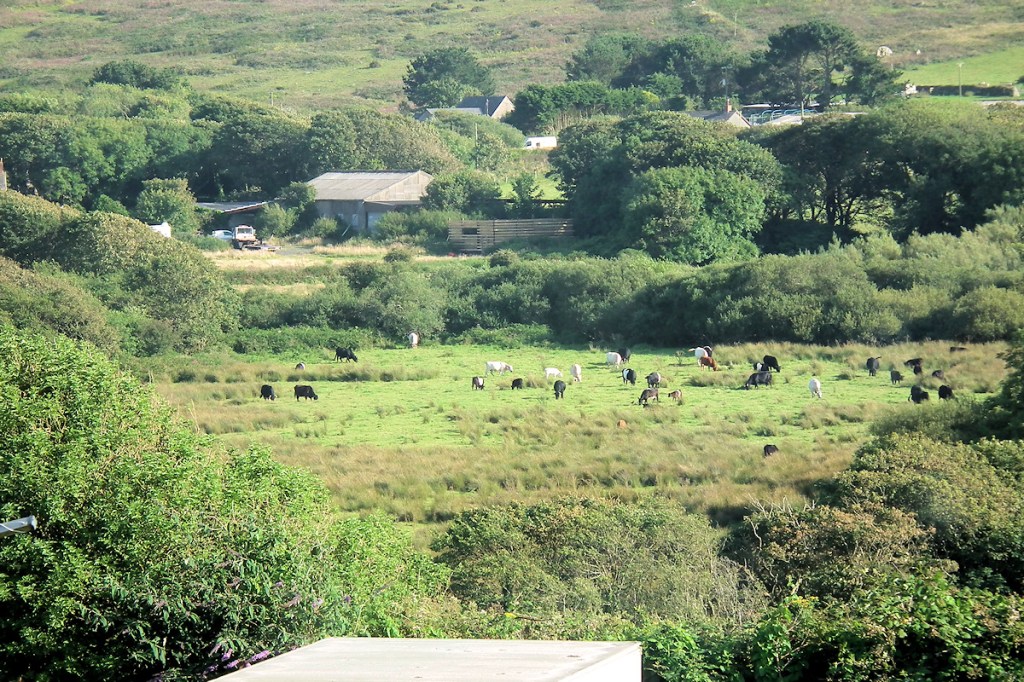
The photos are from Chapel Porth, Cornwall.

Bearing Witness

I’m away for two weeks, at the Oak Dragon Camp (I was its founder nearly 40 years ago) and speaking at the Glastonbury Symposium – so you won’t be hearing from me for a while! Recently I’ve been rendering my cancer book Blessings that Bones Bring into audiobook format, and that’s now complete.

Just in case you were desperate for something to read, haha, here’s a chapter from my 2012 book O Little Town of Bethlehem – Christmas in God’s Holy Land (here). Compared with the situation now, Palestine in 2011 was much better but, even then, people were beset with issues to deal with, and this excerpt gives some examples. It’s also about one of the key activities a foreigner visiting Palestine needs to be willing to do – listening. Bearing witness.

In the streets of Bethlehem, December 2011

When I went to town to check out various friends, many of them were gloomy, beset with problems. It was one of those days. Each person had their own particular issues, but they all add up to a morass of collective difficulty which the customary Palestinian good humour cannot penetrate.

Naturally, our perception of life is made up of an interaction of circumstances and our feelings about them, and these are two rather different things. For Palestinians living under occupation, the circumstances side of the equation bites and scrapes harder than for most people across the world. Especially since the occupiers deliberately go about making life difficult, complex and insecure for the occupied, in military, administrative, legal and quite everyday ways. This is what Jeff Halper, a critical Israeli thinker, calls ‘the matrix of control’. The ultimate goal is to make Palestinians submit to Israeli rule, give up, go quiet and preferably leave the country.

But they don’t give up, despite the muddy mire of problems they can be beset with – or perhaps it’s a dust-storm where it’s impossible to see far and sand gets in the engine and all the moving parts. Palestinians have a life-philosophy which is admirable. But some days they go down into the doldrums and they need a good moan.

That’s one of the roles of foreigners who come here: bearing witness. This often means letting Palestinians have a good moan, describing to you with a full spectrum of feeling how difficult everything is. It can be quite challenging though if you have something in your own life that’s nagging you too – happily, this wasn’t the case for me today. So I was able to listen fully and, when a person ground to a halt, I could start up something that might change the context of things, so that they see the situation in a different way – for the difference between a situation and a problem lies in our state of heart and mind.

There’s a Christian grocer in town who stocks a lot of things I like, so I went to his place. While wandering around looking through the densely, intricately packed shelves, a guy comes in and starts up. I don’t understand much Arabic, but the tone of his voice translated easily – he was on a down day, overwhelmed. He and the grocer were so engaged in this man’s inventory of problems that I had to stand there patiently waiting to pay, listening too.

Little did he know, but in the process I did a little psychic healing on this man – smoothing out his aura, shifting the movement of his energy and the orientation of his aura from downward to upward and reconnecting him with his guardian angel. After a while, the grocer turned, noticed me, apologised and started totting up my buys. Suddenly, his friend said to him (it could have been), “And guess what…?”. The grocer grunted, to say go on, and the guy burst out laughing and said something. The grocer turns to me and said, “He tell me all these problem, and now he say his wife just got pregnant again – fifth. He say only now. Why not before, eh?”. Well, looks like the healing did something to loosen things up.

With goods in hand, I wandered off down Faraheih Street, turned left through the market, to be how-arre-youed and wherre-you-frommed by stall-keepers as I strolled past. Mid-afternoon, they were all sitting around wondering whether to close for siesta.

An elder angel in the vegetable market

I’m always amazed that being British is regarded positively by Palestinians, despite what we’ve done in the past. Announcing Britaniyya to them always seems to elicit a good response. Perhaps they think we’re less bad than others, therefore good. Just as well. A Danish guy I met a few days ago had complained that Denmark is notorious for offensive cartoons of the Prophet Mohammed, and he often had to prove to people that he didn’t agree with it.

Down the passageway and some steps leading from the market I was accosted by a sweet-seller. He asked how arre you, as they do, and I joked back hamdulillah – thanks God (I’m okay). It was a joke because, last time I was here, I couldn’t manage responses in Arabic. He has a hand-pushed cart parked at the top of the main steps down toward the Omar Mosque and Manger Square. Palestinian sweets are gooey, rich, soft cakes of honey, almond and who knows what, often eaten by dropping a cubic inch of the stuff straight into the mouth and swilling it down with coffee. I got some, in order to augment my weight-gain programme. Yes, folks, one of the ways I differ from many people is that I’m thin and bony, so I actually have to eat calorie-rich things to gain weight.
I then proceeded down the steps and met up with a shopkeeper I know who was sorely troubled by the lack of trade. The pilgrim and tourist business is down and the Israelis have creamed off most of the business. Most visitors come in shepherded groups for just a few hours in an Israeli coach from Jerusalem, visiting the Church of the Nativity and an approved souvenir shop, from which 30% of the takings are paid to the Israeli tour operators. Then they’re shuttled back to Jerusalem. The Israelis have niftily captured the income from Bethlehem’s pilgrimage tourism.

Independent travellers who arrive here – not exactly in floods – tend to run on a tight budget, so they aren’t big consumers. Norwegians seem to be the richest at present. Instead of money, these visitors mainly bring ‘witness’ and interaction, a social currency, worth perhaps more than money, if truth be known.

The shopkeeper complained that he had made only 100 shekels today – about £20 or $30. He thrust tea before me and carried on. Usually he has quite positive attitude, but this time he was struggling. I let him run with it, and it did him good. It does give them some assurance to be able to offload like this and to gain some understanding from another person – it helps them objectivise their lives.

Street scene in Bethlehem Old Town

Then I went round the corner to a café run by Adnan’s brother. I had falafel, hummus, pitta, salad and sage tea, as a late lunch. In came Adnan, plonking himself straight down and huffing. He starts up. His story is always complex, but he’s in the tourist souvenir trade too and he’s almost bankrupt. I know some of the things he could do to improve things (such as trading on eBay), and I have told him about them, but he doesn’t get it. He perpetually hopes things will work well next time, things will get better, but they don’t. Or someone else is making his life difficult and he wishes they would stop. So I usually let him blurt out his complaints, in the hope that some relief of pressure might lead him to form new conclusions.

The souvenirs he sells are lovely – especially if you’re a Christian. Lovely hand-carved olive-wood effigies of Jesus, Mary, the saints and the Nativity. Bedouin carpets, lovely Arabic dresses, inlaid boxes – all made within a few miles of here. But they don’t sell, the overheads are high, the checkpoints scare visitors away and, if your spirits are down, it’s a disaster.

Round and round in loops he goes. Adnan requires perseverance because he’s quite resistant. It’s the world that’s wrong, not him. But he appreciates the listening ear anyway, and soon we were talking about other things – mainly about the carpets his grandmother had diligently woven throughout her life, adorning the floors of many of his vast Bedouin family’s network of homes. Well, that’s that done. Now to see Jack, down in the Christian Quarter.

Jack is not a complainer, but he is in a sorry state. One year ago he had a major accident at work, fracturing his skull, haemorrhaging his brain and breaking some ribs. Then his wife, who had suffered MS, had died. Understandably, he had plummeted. His capacity to work is now much reduced, though he carries on all the same. He’s 52 and worn out. He works as a security guard for UNRWA, and he also clears out old wells and builds walls for a living. His spare-time obsession is billiards – his friends come round to play. He’s a real character – altruistic, humorous, maverick, but nowadays much faded. I cannot tell whether this is a low patch of life, or whether he’s on his way to dying. Bless him.

But he doesn’t moan. In fact, we started up a really good conversation, but it was still about his difficulties. He talked about how, at the bottom of some wells – many of them centuries old, some millennia old – there is no air and he has sometimes nearly suffocated. In a few others there are underground toxic flows of petrol or sewage, which he refuses to work with. At his work at UNRWA a few days ago, he was caught sleeping – not a good thing for a security guard – and given a warning. But they seem to like him too.

Jack, Catholic wheelchair smuggler, in happier days

But then he started up telling his stories of former days. There was one time he took his wife to an Israeli hospital without having a permit. He managed to get her in by a combination of charm, bluster and play-acting and then, having sat with her for hours, made his way home. But in the lift he had a heart attack – he was found lying there by a doctor, who rushed him to a ward and saved him. When Jack came to, the doctor came to visit him and simply said, with a wry smile, “Next time, get a permit if you’re going to have a heart attack, won’t you?” The doctor fixed him a lift to a checkpoint, to get back home. You do indeed get remarkable acts of compassion in this strangely conflicted country.

Jack’s son came in, looking really annoyed – fuming, in fact. I understood he had had an argument with his sister in his grandmother’s house next door. He’s 21 and quite a special young guy – plays Liszt and Chopin on the piano and works with computer hardware – but he had recently flunked his mathematics at college and, for reasons I couldn’t quite fathom, could not re-take the exam. Which meant he couldn’t go to university, and they couldn’t afford it anyway. So he was in a state.

He sat there listening – his English is good – and then he perked up when he told me about the free trip he had had with the Salesian Brothers (a Catholic order) to see the Pope in Spain, visiting Italy on the way. He was selected from a large crowd of applicants and he was away for three weeks. He’s a Sagittarian, our Shukry, and travelling the world is what he would love to do – but he’s imprisoned behind walls instead, living in a world-famous city, Bethlehem, that’s strangely isolated. If I could wave a magic wand I’d love to fix him three years at the Royal College of Music in London. He deserves it, and his frustration at getting nowhere in life was probably the underlying cause of his argument with his sister.

Jack was falling asleep. The drugs the doctor had given him to deal with the after-effects of his brain haemorrhage last year make him drowsy. I told him to get to bed instead of forcing himself to stay awake. “Yes, doctor”, he replied, and we parted company. I made my way out, walking back through the narrow stone streets of the Old Town to Manger Square. Another shopkeeper tried waylaying me but, by this time, I was tired and I didn’t want tea. I wanted a taxi home.

But even then, the taxi-driver, whom I knew from previous years, had a tale to tell. One of his children had died – I think about a month ago. Of what, I don’t know, because the word he gave me was in Arabic. In limited English he said he had not had enough money for the hospital. I could tell by the tone of his voice he was cut up about it, probably feeling like a failed father.

When we got to the school at Al Khader, I asked him how much he wanted for the trip. Thirty, he said – the evening rate (usually it’s twenty shekels). I only had 25 in change, and otherwise only a 200 shekel note (£40), which he couldn’t change. So I dug around in my bag, leafing through my carefully-stashed collection of Euros, Swiss Francs, Pounds, Kronor and Dinars to find him a Jordanian ten dinar note. He smiled. This was worth 50 shekels. “God bless you, Mister Balden. I like you. Thanks God. Ma’assalam.” The only trouble is, I’m not a banker or an oil sheikh, but it was worth it – even a bit of money can raise the spirits sometimes.

Sometimes I wonder what good I bring by being here. It’s as if the mountain of life-obstacles people experience in this place is too large for someone like me to make a difference. But then, as the Dalai Lama is quoted to have said: “If you think you’re too small to make a difference, try spending a night in a room with a mosquito”.

This young chap is now around 20 – as he’s grown up life has got worse, and I find myself wondering how he’s dealing with it.

With love, Palden
http://www.palden.co.uk

Nine Principles

...and the weirdness of living on Earth

I wrote this as a comment to a posting on Facebook about the Sunday meditations, and part way through I realised it was worth making a full post out of it… I seem to be churning out a lot of stuff right now but, don’t worry, I’ll calm down!

Groupwork at the OakDragon Camp. Are you coming this year?

There’s a definite reason why the timing of the weekly meditation changes in terms of clock-time, though not in natural time. When I was with the Council of Nine thirty years ago (I compiled a book for them), they asked the human group involved with them to start meditating regularly in coordination with them, and they gave us a choice about when it should happen.

We decided on Sunday at 7pm GMT – the most available time that could work for everyone living between the Middle East and North America. But when we wondered about time-changes on the clock, they asked us to keep the time constant (that is, in Britain, 7pm in winter and 8pm in summer).

When asked why, they explained that, since they are beings that do not live in a world or on a planet, they have a technical challenge creating a connection between the timeless zone they’re in and the time-full zone we’re in. We live on (or in) a spinning, solar-orbiting planet where the changes involved with time (day/night and seasons) are a major part of the Earth experience.

Actually, the technicalities of fixing this up are sorted out by a hyper-civilisation called Ultima or Altea. They are one of twenty-four hyper-civilisations that work with and for The Nine, covering different aspects of the universe’s management and in a manner of speaking acting as creation and maintenance crews. The Alteans live in a timeless realm too, but they’re closer to us than the Nine, metaphysically speaking, so they have a capacity to reach into our world to set up the energy-field, the zone, around this meditation.

This allows the energy-field around this meditation to be established and ‘held’ for that half-hour time-period, as we experience it here on/in Earth.

Oak Dragon www.oakdragon.org

This matter of The Nine and the Twenty-Four is not a universal hierarchy – more a bundle of reality-bubbles of enormous proportions, with some toward the centre and others toward the periphery yet all of them interlocking and interlinked on a multidimensional basis.

What I’ve found fascinating over the years is the accuracy of timing of the meditation – it’s as if the field noticeably switches on at the beginning, dead on time, and it shuts off and closes exactly at the end.

I don’t know if anyone else has experienced this. There’s something about this half-hour time-slot which, when it ends, makes one’s meditation change back to a more ‘normal’ kind that we would experience when meditating at other times. There’s no problem with that since both kinds of meditation have their value and function.

You don’t have to ‘believe’ in The Nine to experience, benefit from and participate in this energy-field – they are not interested in picking up a throng of followers. They have spoken their truth in the book I compiled – The Only Planet of Choice – and that’s all they wish to say, because they prefer us not to follow a scripture or set of instructions – they want us to use our inner experience and inner senses to feel our way into a spirit-field that connects with the essence of what all faiths are addressing – minus the cultural claptrap that they can be encumbered with. They just want to help the people of Earth wake up and get on with the business we came here for.

Personally, I like and respect people who have their own beliefs and ways of seeing things, who can stretch beyond them to see the spirit and soul in anyone, or any culture or faith, and somehow embody their beliefs in their lives, especially in their actions – even if they’re labelled as terrorists, infidels or unworthy souls. As the Dalai Lama would say, we’re all trying to achieve happiness, each in our own ways. Though each culture and time of history has its own misconceptions of what happiness truly implies.

If you wish to read more about The Nine, start here: www.palden.co.uk/nine.html – but even this is not necessary.

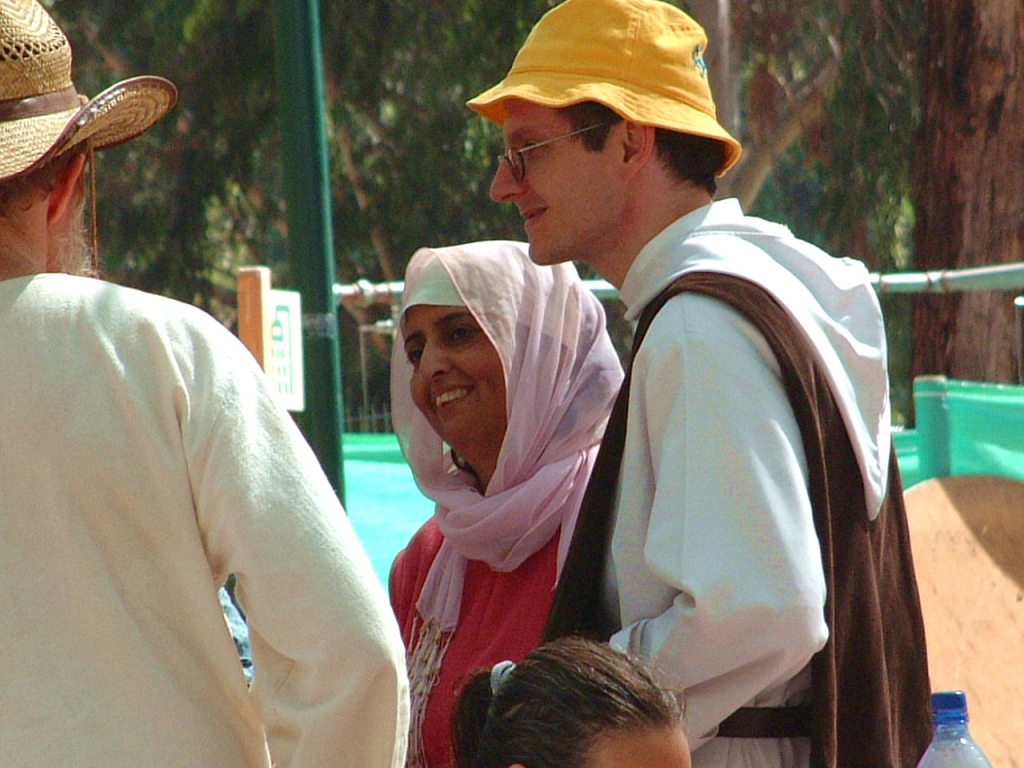
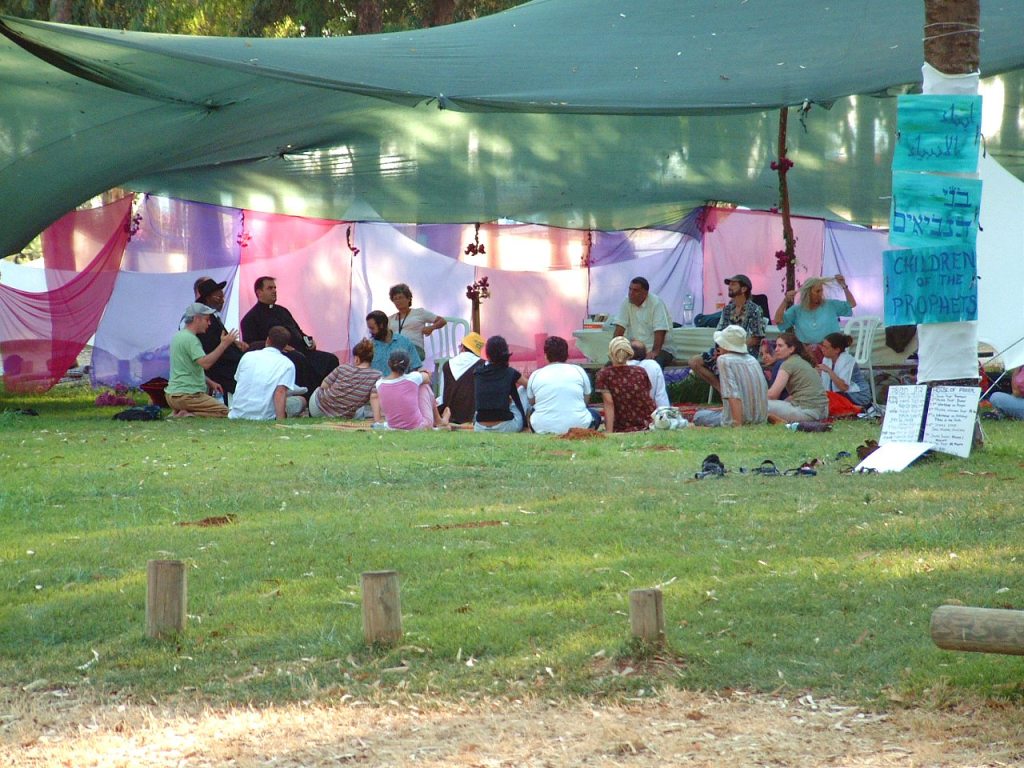
A Palestinian lady at the Sulha, a gathering of peacemakers in Israel, in 2005

I recommend you simply go by your inner sensitivities. If you resonate with the energy-field around this meditation, then that’s all that is necessary. That’s why I encourage all participants to do their meditation as they normally do it – and let it develop. What bridges us is that we all do it at the same time, with a similar basic motivation to help raise the level of the world and bring healing. It’s the motivation, not the method, that really matters – though methods can help, as long as we don’t get too stuck in them. If we get stuck in them, we narrow the vibrational frequency-range of our humanness and spirituality.

One thing we found in the Flying Squad (www.flyingsquad.org.uk) is that, if you step up to do the meditation every single week – 100% attendance – it does get easier, stronger and more fruitful. Though obviously this can only be done if it’s right for you at this stage of your life, and joining the meditation when you can, or even sporadically, is fine too. There’s no rulebook here.

For a short answer on who or what The Nine are, they’re part of what you could call the management structure of the universe, and they’re in charge of regulating the balances between polarities (light-dark, male-female, yin/yang). They refer to themselves as nine principles. But these principles each have beingness and individuality too, in a wordless kind of way. When I have experienced their presence in my inner journeys, I experience them as bodies of light and presence, without form, though they do have character and vibe-differences.

When asked about their relationship with ‘God’ they said something interesting (and this appealed to me, as someone with a Tibetan Buddhist background). They said that, when all of the consciousnesses of the universe attune to each other they become, in their words, ‘what you call God’. So when the Nine co-attune as nine beings, they are ‘God’, and when we co-attune with each other as humans, we also become ‘what you call God’. I am sure there are people reading this who have experienced that.

The Sulha, 2005

What I liked about them was that, in their communications in the 1970s-90s, they were uninterested in creating a cult or persuading people to align with their way of seeing things. They saw such a thing as part of our problem on Earth. We make a cult or religion out of our beliefs. This applies even to scientific rationalists, even to people with progressive political beliefs, the believers of which can act like a cult with a priesthood and a doctrine.

I distilled a 400-page book out of thousands of pages of channelled transcripts, working full-time for eighteen months, often for ten hours a day, six days a week – and only occasionally did it deplete me. So I’d take a break, but then I’d quiickly get fired up again. I was uplifted and much challenged by it.

Seemingly, they chose me because I have a universalist psycho-spiritual attitude. This is partially because I started on my inner path very experientially, as a hippy on psychedelics, rather than as a believer in a traditional faith. Though I am aligned somewhat with Buddhism, neo-paganism, Islam, megalthic shamanism and at least some of the whole panoply of teachings and blessing-streams available today, I’m not aligned with any of them, anchoring instead to my soul-origins and roots.

This was an advantage when working in Palestine – I could be in a mosque, church or synagogue and enter into the spirit that was present. I’ve become a kind of modern Western freebooting Imam, oscillating between being a saint and a sinner and, like everyone, struggling to reconcile the two in the way I conduct my life, fuckups’n’all.

Anyway, this is a rather long explanation for why the meditation time changes when the clocks change – we’re simply keeping to the same time-slot, as do the birds, the winds and the worms.

An ex-Islamic Jihad fighter and an ex-IDF soldier speaking peace at the Sulha

It was an immense privilege working with them. I found out later that they chose me for this work because, as a soul, they had actually placed the order for the seeding of my soul in the first place. As rather an individualist, a one-off case, I didn’t even properly fulfil what they had constructed me for – I worked as a kind of planet-fixer and morphological thought-energy engineer. For better or worse, I followed my own path.

But they found that what I became, through doing what I did, enabled me to take on certain kinds of assignment that they hadn’t anticipated. As a soul in service, I was on the edge of (in a manner of speaking) retiring, but they asked me to do one more job, please. So I came to Earth as a consultant to the sages of the time, around 5760 BCE, during a troubled period and a serious downturn in human development. And I kinda got stuck.

This karmic pattern, I guess, is repeating itself now – I was given cancer in 2019 and it has tipped me into the same pattern, of discovering a new mission just when I need to retire! In my involvement with seriously-bifurcated Israel-Palestine, I took a rather un-zealous approach, which can come when you’ve been at this kind of thing for a long time.

And there’s an important truth here: if you go to ‘the holy land’ expecting to bring peace, you will fail. It’s guaranteed. Just like Planet Earth! You have to go into the maelstrom with the simple motivation of adding your bit in whatever way you can to help people be as happy as possible in a shite bunch of circumstances. Then it works much better.

All that I have said doesn’t make me special – it’s just that I have gone into all this metaphysical claptrap more than most (I’ve got Jupiter in Pisces), so I’ve dug it up. Or bits of it, at least. Like an archaeologist, you can stand on an ancient site but you won’t learn a lot from it unless you do some digging, or at least some subtle way of seeing under the surface to find out more about what’s buried there. For me, doing past-life regression helped a lot.

But it also involved saying Yes when offered the opportunity to discover something new in the inner realms and in life’s experiences. Too often, we say No, or we block it with fear or distraction. Actually, it took me until age 42 to give myself full permission to do it – just before I worked for the Nine, as it happened.

As an inner experience, I had to allow myself to tip backwards over the edge of a cliff, the Abyss, in trust. I went over, not without trepidation, spinning and falling through infinity, only to find suddenly that I could fly! Whoooeee!!! From then on I was much more proficient in space travel.

Circle-working at the Sulha in Israel

Doing the Nine book happened like this. I was sitting working as an editor for a small publisher in 1991, Gateway Books. The phone rang, and the publisher, Alick Batholomew (bless him) answered, chatting some time with what seemed to be an old friend. Then he turned to me and asked, “Fancy editing a book of kind of ET channellings?“. No, I wasn’t interested – at that stage I’d rather had enough of a lot of the psychic claptrap that was flying around at the time. I shook my head. I returned to my work and he to the call. But suddenly there was a knocking or ringing on the top of my head. “OMG”, thought I. I told Alick to put the guy on once he’d finished.

It was Sir John Whitmore. We clicked immediately, a bit like we already knew each other. He invited me to an interview. I went to meet him and Phyllis Schlemmer in Kent, and we had the interview, and they seemed happy with me. We had lunch. Then John said, “Now for the interview“. Oh! I honestly thought we’d done it already, but no – I was to speak directly with The Nine. They were in charge.

It got all set up, and Phyllis worked herself down into a trance. It took about 20 minutes and a lot of focus – she went really deep in ways that most psychics cannot. I talked to the Nine. I can’t remember much of it, but I was concerned that I might not be the right person for the job. In the previous year my life had been an utter mess, and I didn’t feel good about myself. But the Nine simply said words to the effect of: “We know you, you know us, you need no preparation, and there is no one else“. I fell off the floor. This was a form of validation that, at the time, was a deep shock. Isn’t it funny how things go?

So I spent the next eighteen months under voluntary lockdown, out of this world, with a force-field around my house in Glastonbury (Chilkwell Street). I had just three visitors during that time. The phone stopped ringing, and people in Glastonbury thought I’d gone away. The amazing thing was that, on the very day I delivered the manuscript to the publisher, the phone started ringing and people started coming to the door saying “Where have you been?“. All I could do was smile. Yes, where had I been?

I trawled through mountains of transcripts on computer, picking out good chunks, saving them as files – using a very Virgoid filing system – and, after a year of this, I had 700 files saved and edited to make them more readable.

I had to edit the text a lot, thoughtfully and sensitively. The Nine, never having lived in a realm where words are necessary, had to raid the brains of Phyllis and all of us to find words. So it was a slow process, with a lot of seeking of terminology and phraseology, and their wordage was cumbersome… ‘that of the essence of that which you are…‘, and ‘that of what you call God‘, and things like that. A lot of searching and debating went on, both with the other eight members of The Nine and amongst us. Quite often Tom, the spokesbeing, consulted back with the Nine. We wanted to get this right, and they made sure there were no misunderstandings.

So there I was, faced with 700ish files. OMG, what do I do now? I decided to climb the Tor (I went to Brean Down too – a special place), and I slept on it. One morning I woke up with the idea, ‘Just start‘. Perfectly obvious, really, but as a brainy, educated Brit, something that simple was difficult to get to!

I sat there looking at all these files, got my mouse and just clicked the cursor on one of them. This is the edited version of what came out:

“GUEST: Tom, it’s nice to meet you. Could you define who you are, please?
TOM: I am Tom, I am the spokesman for the Council of Nine. We are the Council of Nine, we oversee what you term the universe. We are of nine principles of the universe.
GUEST: Whom do you represent – a higher authority above you that commands you and directs your ways?
TOM: This is difficult to explain to you, for the world has no similar situation, but we would say to you, yes, we are in connection with one that is higher, but in totality together we are one, as that of all the universe is one.
GUEST: Do you have any purpose in our world, any major purpose or message?
TOM: We wish you to know first that we are not physical beings. Your world is the manifestation of Creation, and of the Creator manifest in your world, in the form of humankind. You ask if we have a message to humankind?
GUEST: Yes I do.
TOM: We say to you: you have been created in the image of the Creator. This world has lost identity with Creation. What is of necessity is to understand the importance of going forth and creating action and deed that bring you to completion in who you are. It is not enough to pray, it is not enough to gather groups of humankind for meditation. What is of importance is to act.

[‘Guest’ was, if I remember rightly, someone who came for a session with the Nine with Gene Roddenbery. The ethics behind Startrek were based on Gene’s discussions with them. Tom was actually Atum, an Egyptian god. The Nine never manifested on Earth, but their existence was known in various ancient cultures. Understanding the human propensity to create glittery stars and daunting gods, Tom deliberately and wisely demystified himself by using the name Tom, to reduce the perceptual distance between him and humans.]

Wow, I’d picked a good way to start – randomly, but obviously it was not random at all. That’s how the book unfolded. If I came to a blockage, I’d sleep on it, take a walk and wait, and the answer would come, just like that. I guess you could call that ‘psychic editing’.

Note the teaching here: such things as prayer and meditation can help us and the wider world greatly, though they are not a substitute for action and stepping over the line.

Paldywan with Sir George, in the 1990s

I had the same ‘psychic editing’ thing some years later when building an online archive for Sir George Trevelyan (who died in 1996, age 96 or so). He was one of the founders of the new age movement in Britain in the 1940s-1970s, a spiritual grandfather to many people and projects. I was one of his minders in his final years. The archive is still there: https://sirgeorgetrevelyan.uk

If I couldn’t figure out a detail – where to put a photo or what colour to use – I’d just deep-think about him and say, “George, whaddya want here?“, and he’d answer – not usually in words, but I got to know what to do. He got the website he wanted by supervising me, even after death. Amazing. It was a great privilege, believe me. In fact, right now, tears have come up and they’re dribbling down my smiling face.

I wrote this in year 2000: “Sir George has been fondly referred to as ‘the Grandfather of the New Age Movement’, a title somewhat misunderstood by those who did not know him. His ‘New Age’ did not involve cult, fad and woolly notions. It involved a non-sectarian, holistic outlook, scientific and practical as well as mystical. It involved a compassionate, global humanitarianism very pertinent to our day.

Anyway, back the The Nine. If it interests you, there’s a PDF copy of the original manuscript of the Nine book here: www.palden.co.uk/nine.html – and download the second PDF offered there, the pre-publication version.

The other version is a pruned version that was prepared for translation into other languages. I submitted the pre-pub version to the publisher in November 1992, just before the Uranus-Neptune conjunction of 1993, during which year the book was published. Some bits were by necessity edited out of the first edition by John and Phyllis, partially because they might have put members of the human Nine group in danger (concerning mainly ET and geopolitical issues).

But since they are all now dead, I feel there’s no harm now in including those bits – and I get the feeling The Nine are nodding Yes. John, Andrija, Phyllis and the others are safe in another world now. I miss them, but we shall meet again.

There were a few different editions of the book, and I did the first, the 1993 edition. The first edition now has collector’s value and it can be ridiculously expensive. The second was by Mary Bennett, with her take on it. You can get a newer printed edition (with my commentaries removed, but they’ve retained much of the work I did) from USA: www.theonlyplanetofchoice.com – or try Amazon and other sources.

Making a wicker coffin at the Oak Dragon – later we put it on a pyre with all our thoughts and prayers, and up it went

Those of you who recognise the vibe, somewhere in the recesses of your soul, like a little bell tinkling, will inherently know The Nine, and they will know you. But even if you don’t recognise them, it doesn’t matter – they’re friendly, and it’s okay, diverse and inclusive.

You see, the Universe has a staff shortage on Earth – we Earthlings are so distracted with our earthly joys and woes, and we argue so endlessly about things like ceasefires or politicians’ bloopers instead of really getting in there and helping sort things out. It drives Gazans crazy, giving them the impression no one cares.

But there are things we can do within the sphere of our own lives. The main one is: be a good person and do your best with the life you have and the situation you’re in. There are gifts and specialisms we can develop too – anything from knitting to driving buses to running a business well to attending COP conferences in Baku. Wherever you’re called to go, whatever you’re called to do, the issue is to do it and not to hang back, delaying to another day. And it’s just not good enough to believe you’re not good enough!

The Universe has a staff shortage of willing and active volunteers, so any help at all is welcome, and small things make a bigger difference than we tend to believe – especially when millions do it. Such as staying human and treating each other as we would like to be treated ourselves. If there is one single formula for our future world, it’s that. I’m good at churning out yardages of verbiage, and a few other things, and that’s what I do. And the meditations are one way of tuning into a taproot within yourself, whence your inspiration and inner promptings come.

Being a good human doesn’t involve being perfect. Get real – this is Planet Earth and it’s bloody difficult. But it does involve working on ourselves and with others so that we get better at being human and at doing what we’re here for. A nuclear physicist once asked this of the Nine: if there were one thing we could do that would really change the world, what would it be? Tom answered simply, and in a unique way that I cannot imitate: “If everyone pursued their life-purpose“. It’s that simple. Do what you’re programmed up to do. It’s there in you.

Ibrahim Abu el-Hawa, a spiritual grandfather from the Mount of Olives in East Jerusalem, talking with a Native American and an Israeli hippy at the Jerusalem Hug in 2011

Oh, and there’s something else. A number of people claim to speak on behalf of or channel The Nine. Sorry, not true – though they might nevertheless be communicating with a civilisation that has connections with The Nine. Consider this: if you lived in Sudan or Palestine, if a UN representative showed up, you’d consider them to be the UN and to have a direct line into UN HQ (whether or not they do). It’s similar here. The Nine are involved with an enormous network of civilisations and beings, working with and through them, and during the meditation you’re plugging into that network.

Claims to authority are not what validates the content of channelled material: what matters is the quality of the content itself. It doesn’t matter whether the source claims to be Jesus or Lord Sananda if what is being conveyed is dazzling, weak, meaningless and it’s all been said before.

The Nine do not live on a world, or a moon of Saturn, or anywhere else. They are not at present speaking out, no matter what anyone says. There is no need: they have said all they need to say for this period of history, and things haven’t fundamentally changed since the late twentieth century, so there’s little more to say until we progress to the next stage.

In the Nine book, it’s not the words and details that are the main thing, it’s what comes between the lines, and the connection and re-wiring that we get when we read it. It jiggles our cells and reminds us of things we know, deep in our hearts. So while many of the contents of the book pertain to the 1970s-90s, with a little intelligence it’s easy to apply such insights to current events of our time. They don’t want followers – they seek simply to encourage us to get on with what we know we need to do.

One thing I like about the book is that it does not try to change our way of seeing things, and we don’t even have to believe what they say. But it’s full of winking lightbulbs. It can add to the way we see things, articulating things that many of us half-know but hadn’t quite realised yet. It has a way of extending our field of vision – but you can still continue along the path you were already on. The issue is, whatever you do, do it as well as you can, and the rest will follow.

So that’s the story of the book, and also some background to the reason why I’ve started these meditations. I continue with them whether or not anyone else is there, but it sure does make a difference when people are there. Because when we meld in consciousness, even at a distance, ‘what you call God’ is there and present. Because ‘God’ (however you wish to see it) is us. We are the creators of the universe, and the job isn’t finished yet.

Sometimes people ask me, “Do you believe in UFOs?“. To which the only good answer I can think up is: “Do you believe in cars?“.

With love, Palden.

If this stuff interests you, then there are talks I’ve done in past years about it in my audio archive.
This one in particular: www.palden.co.uk/podcasts/PPArchive-ETViewOfTerrestrials.mp3
and the whole lot is here: www.palden.co.uk/podtalks.html

Site: www.palden.co.uk
Blog: https://penwithbeyond.blog
Palestine Audiobook: www.palden.co.uk/audiobook.html
Podcasts: www.palden.co.uk/podcasts.html

The Jerusalem Hug, 2011

The Greatly Unknowable

Zarathrustra spake thus, all over the Isles of Scilly

The world was on tenterhooks. After the assassination of Trump’s vice-president by a white South African, America could no longer play off different groups of nations against each other. Netanyahu’s threat to drop nukes on Turkey had put NATO in an acutely difficult position, exposing its double standards. Trump was raging at Israel’s intransigence and Putin, looking haggard in his hospital bed, uttered boisterous words in support of him when everyone knew that, in his tenuous position, and now being undermined by the Moscow oligarchy, he could promise nothing.

The Israeli civil disturbances were brutal, with neither side willing to step back – the media were under strict instructions not to call it a civil war. The mowing down by the Judaean Settler Army of Palestinians trying to escape over the Jordan valley had variously dismayed the world, exposing the inevitable consequences of their inaction. Even Israelis were not allowed out of Israel – at Ben Gurion airport and the two remaining land crossing points, only approved Israelis could leave. There had been a full-scale call-up of reservists but they were taking different sides, taking their weaponry with them. India had at last withdrawn its support for Israel. China had remained silent, concerned as usual about its markets, oil sources and leverage in the newly denominated West Asia.

After the establishment of the Sahelian Dirham, the currency of the new Sahelian Alliance, other small countries flooded to join it, abandoning the Dollar and distancing also from the newly-minted Renminbi-Rouble bloc – after all, the Russians and Chinese were resource-gulping imperialists too. The resignation of the UN Secretary General, saying he had done his best but it had led only to this, was rejected by a uniquely united Security Council. Then Netanyahu, looking taut-faced and cornered, put the cat amongst the pigeons. He boldly declared in Hebrew that, if threats against Israel continued, he would detonate his country’s nukes and incinerate the country – by implication, a second, self-imposed holocaust, as if to prove his version of history to be correct. Chaos broke out not only in Israel but also in the steets of Damascus, Beirut, Amman and Cairo as crowds panicked.

Trump’s speech from Mar a Lago (since Washington DC had become too dangerous) had been surprisingly firm and calming – the invasion would be paused for now. Secretary Blinken, drafted from his thinktank job by Trump to deal with a situation he had played a large role in creating, was to be given a last chance to pacify the Israelis. Gaza, left with only stragglers and people unable to escape, already looked as if it had been nuked, though it hadn’t. Saudi Arabia had reluctantly opened its borders to Palestinians to relieve refugee pressure on UAE and Egypt – well, it swelled the numbers moving into Neom, the new desert city not too far from Sinai and Gaza. Meanwhile, UNHCR, backed by the first Polish and Swedish battallions in the new European army, had taken over refugee operations in Greece. Refugees were coming in big numbers. Now there was a new crowd from the Tashkent earthquake and nuclear disaster.

In the English Channel, disaster came when a container freighter and an oil tanker collided. An oil and chemical slick was spreading and most shipping through the busy Channel was blocked. Both ships had been trying to avoid refugee boats. The UK authorities were now running ferries to Calais to pick up refugees who were endangering shipping in yet another of the world’s maritime choke-points. This caused further supply-line disruptions in crisis-ridden Europe as shipping was diverted north of Scotland, exposing it to both Russian and American naval attentions. Europe was on its own, suddenly sandwiched between two big powers.

A wee visitor at my home, aspiring to do the washing up

Possible realities… Improbable, yet all the same possible.

A big problem we face is that the world approaches the future facing backwards. We see the future on the past’s terms, afraid to make a leap, afraid to acknowledge that we’re lost at sea, afraid that everything could go wrong – and in so doing, we’re making things even worse. Consequence-delivering chickens are coming home to roost, in waves. This might go on for a number of decades, because the world seems so determined to drag its feet through every single learning experience that comes to face it. Such global brinkmanship arises from a collective failure to own up to the full consequences of what we have done. A multipolar deadlock has unfolded. The powers that be are all busily making sure nothing really changes – not fundamentally.

But there is another kind of brink we’re slipping over. It started around 2012 or, further back, perhaps 1989. Or perhaps 1967-68. It’s this: even if the world decided tomorrow to mobilise humanity, wholeheartedly embracing fundamental change, we would tip into a new, anxious period of at least a few decades. Whatever we do, we would not know for some time whether and how much the solutions we attempt will actually bear fruit.

It takes time for a forest to grow, for an invention to be trialled, for society to change its values and for the fruits of systems-redesign to show themselves. Not all solutions will work, some might backfire, and the world is hamstrung, riddled with complexity, interdependence and conflicting interests. We’ve sidled into a minefield. This creates an underlyingly edgy and anxious atmosphere, stoking up an already insecure and volatile situation.

I’m happy to report that my little visitor did not lay a plonker on my bed while hopping around on it

I was reflecting on all this a few nights ago while lying in bed, listening to the owls hooting and screeching outside. It reminded me of my own cancer story. We all face an underlying, nagging issue, and cancer patients get it in a big, pressing dose, thrust in our faces.

When and how am I going to die?

And here’s the rub: you get no answer.

It could be anytime, anyhow.

Making plans gets difficult when you know there’s a good chance that anything can come along to scupper them. Whether or not you’re going to die soon, this still comes up, variously for everyone, when we’re scared enough to look at it. With cancer, I’ve found I’ve become much more sensitive to anything charged with any feeling at all. It’s not fear, exactly – it’s an insecure, creeping anticipation that hovers in the background. Worse, no one wants to talk about it.

In my own case, I’m rather surprised to be alive. I’m unsure what plans to make, and with what time-perspective. So I tend to keep my perspective open, but with the headlights shining on only the next three months, and anything beyond that is unanswerable. This has a remarkable effect on everything. It’s tenterhooky, no matter how philosophical or optimistic I might be, and no matter how much others encourage me to ‘get better’, not to dwell on morbid things – as if dying were a failure and living a success.

Sorry, dear Kate, Princess of Wales, while I understand your wish to assure everyone by saying you’re getting better, this is unwise. You do not know. It’s unwise to yield to that implicit social pressure to make everything look alright, because it isn’t alright.

When I lie in bed, drifting with fatigue, this is the view. On top of the hill in the left-hand window is an ancient site called Caer Brân (mentioned a couple of blogs back)

This is our world situation. We’ve stumbled into a mire of uncertainty and complexity. We have squads of scientists, super-forecasters and expert-texperts, and mega-millions of people with armchairs and opinions, yet we’ve become unable to accept the obvious – that the future is not as clear and fixable as we would like it to be. It’s left mostly to the young to point this out, while they’re still at an age where they are uncompromised by fear of loss and chaos.

Cancer patients, in my observation, divide into roughly three camps. Some are in denial – they take the pills, do the chemo, get the op, and do their best to appear and return to normal – it was just a bad dream and it’s over now. Some are heroic, fighting, striving to overcome and conquer cancer, and some of these will succeed while they have the willpower to do so, but it’s experienced as a fight, not a gift. And some come through to a level of acceptance and forgiveness that allows them to live and die in greater peace, whatever is to happen. To some extent all cancer patients hover between these three in different ways and proportions because cancer does indeed have a convincing way of putting the fear of God up you.

I have my struggles with this. I get fed up with all the pills, disciplines, diets and doctors’ appointments a valiant cancer patient is supposed to appreciate, to save their life and relieve others of the pain of loss, and sometimes I just want to say ‘fuckit’, to be normal, get my life, or even my ex-partner, back (fat chance). Other times I work on rising up within myself, trying to be a good human, in case God notices and gives me a reprieve – which won’t really happen since it’s a pointless, guilt-ridden belief.

Anyway, I’m doing quite well with my cancer, and I think it has something to do with full-on acceptance, yielding to The Force. I’ve lost control – yet, like a slalom skier, or when you first learn to ride a bike, or even like sex, by losing control you find a new balance.

In times of despair, hope sometimes stretches far further than it realistically should – like the vain hope that many Gazans entertain, that the decent people across the world will step in to save them. But just because something should happen, it doesn’t mean that it will.

At times I’m given deep truth-moments and gifts of spirit. I go down into the depths and up to the heaven-worlds, handing myself over in a humbled acceptance of my powerlessness and the overwhelming force of my circumstances, dependency and weakness – and the paradox is that, every time I drag myself through such a crunch-period, something in me is healed and reborn.

Here I still find myself, alive in a body and wondering what exactly for. Am I just here because I’m here? Or is there more to life? Yet my inner growth process has been ramped up to three times the speed, with a lot more depth, breath and height, and with a vulnerability that has amplified the emotional impacts, the feelingful fullness of being alive. That’s what I’ve been given.

My little house. It’s called The Lookout. That’s what you do there.

So it is with the world. The world has cancer, depression, anxiety, diabetes, fentanyl addiction, ME and a strange mixture of obesity and hunger. Part of us wants everything to return to normal, if only we could just buy an electric car, and part teeters on the edge of an abyss, flummoxed and hovering between lightbulb moments and flounderous resignation.

A nightmare is unfolding. However, while plenty of horror, injustice and destruction are going on, World War Three is now mainly a hearts-and-minds matter, not one of nuclear bombs or evil terrorists.

This is what we have been given. Or, collectively and unconsciously, it’s what we gave ourselves, to teach us something. We’ve created a situation where, kicking and screaming, we’re being arm-twisted into change. This is the great value of the Trumps, Putins, massacres, disasters and tragedies we face: they’re putting options before us. The stakes are rising until, sometime, we get it – we get the fundamental lesson, the lesson that will save us and redeem the damage and pain. So it is with cancer.

What none of the pundits in the commentariat mention is the spiritual crisis the world is in. Mental illness is not limited to those who are diagnosed with it, as if a certification of our woes would contain the crisis: it’s a disease of a psychotic world society, taking different forms in different places. All of it points to one core issue.

We have lost our way, lost our humanity. We’re deeply worried about what’s going on. We don’t know how to make it go away. Even the wisdom teachers, psychologists and solution-bringers are lost. As an astrologer I can often see when a wave is coming, but what will actually happen is at best qualified guesswork.

We’re faced with the Great Yawning Gap, like a black hole sucking us into some sort of final battle for the hearts and minds of humanity. Well, that’s what it feels like, sometimes. This presents heightened choices. These choices have been around for quite a time – I was one of those harping on about it when a Sixties teenager – but the stakes are rising with each year and decade.

It’s highly symbolic of the state of humanity, particularly for the global minority, for the one billion of us privileged to live in the rich world, that cancer has become a big issue. Because cancer hits you like a battering ram, with immediate life-changing consequences and a threat of imminent termination. Loss of control. Loss of everything. When you die you take nothing with you except what you have become.

The biggest, deepest choice we are faced with is this. Just because life doesn’t go the way we want, does this mean it’s going wrong? If we get faced with cancer or similar terminal or disabling ailments, or earth-shaking experiences such as war, disaster, loss, hardship or death, is this something going wrong or something going right?

But when I’m alive and kicking, this is where I spend a lot of my time. It’s the bane of being a pathological wordsmith.

This is a very deep question. But in it lies a solution that lies at the foundation of our situation, from personal to global.

With cancer, in my experience, the secret is to embrace it and make friends with it. I manifested it and, whether or not I understand why, it came for a reason, not by chance or bad luck, and it gives me a deep learning for the soul. It’s a life-changer of a high order. Something is going right. Similarly, it might be difficult to see this at present, what with all that’s going on around us, but something is going right in the world.

To see this, it is necessary to step out of life somewhat, out of the mill and the grindstone, to see things from another viewpoint – the viewpoint of a soul visiting Earth. We came into life to do something with it – not only to learn but also to make a contribution. Society doesn’t think that way – it encourages us to snap out of it – but in the cultural, institutional and societal mass-avoidance of our time we miss something crucial about life.

Have we each made our contribution?

In Western culture we even believe that we get only one life, and that when we die we cease existing. This belief is unthought through, ideological and deeply problematic. It’s a key part of the world’s problem today – a way of blanking out the longterm and avoiding taking responsibility for anything much more than ourselves, those close to us, our properties, concerns and beliefs, and only for the next three years.

We’ve become hyper-privatised, socially atomised. The world is crowded but we don’t even know our neighbours. It’s crowded, yet loneliness is at its historic zenith.

The world we omit to save now is the same world that many of us will wish to return to in another life – after all, we have the best chocolate in the universe, and in most worlds getting rich, being a star or a tall poppy is distasteful and antisocial – that’s best done here, if you want it. Even if we don’t come back here, it still matters – after all, once we’ve ascended to the fifth dimension, Andromeda, heaven or wherever, it’ll still be necessary to account for ourselves, to explain the incomprehensible to the souls we meet there.

Sleeping seals at Godrevy Head

Why did you lot screw up your planetary home? After all, being a distinctly desirable residence, billions of souls want to live there. And, (you might have to take my word for this) most worlds in this universe don’t host souls in billions. If I remember rightly, the Nine once said that the optimum population of planet Earth is around two hundred million.

It is a planet of amplified choice – we are each and all given a capacity to create our lives as we feel best. This isn’t just a choice between Toyotas and Mitsubishis, or between Copenhagen and Buenos Aires. It’s deeper, and when we are confronted with earth-shaking crises, we’re given the gift of amplified choice. We’re dragged into fundamentals.

Disaster – which means ‘out of sync with the stars’ – is a gift. This is what we need to get straight about. We need to meet the future facing forwards.

Me too, with my cancer, which will inevitably kill me sometime. It’s alright. My bones could disintegrate, my stomach could block up, an infection could floor me. I could die alone with nobody noticing, nobody here to hold my hand. I could be floored by a blast of phone radiation given to me by someone who loves me and didn’t mean to be so generous. If such is the case, so be it – it’s all for the learning. Soul-learning, about the true and full nature of existence as a human.

I’ll be going home. Done. Cooked. But even then, it doesn’t stop there.

I’m tempted to quote the lyrics of a song, ‘I just wanna be there’, by a late, great soul-friend, John Cartwright, and it went:

I just wanna be there / When we all start to re-pair / All the damage to our Mother / And our sisters and our brothers / All deserving to be fed / In the spirit and the body… / It is doing in my head / There is nothing to be said / Time is running out…
Seeds bursting to grow / Dying of hunger, under the snow / My need, bursting my heart… / Where do we wander? Where do we start? /
My soul… silently smiles / Laughs as the water falls from my eyes. / Each tear, spelling it out… / Rise or go under… Rise here and now!

[Glastonbury friends will know John and Jaki’s band, Court of Miracles – ‘the best band you never heard of’, to quote the late Justin Credible. I couldn’t find an online version of this song, but here’s one of their uplifting albums from the 1980s, called International Times.]

Peace, brothers and sisters. Despite everything, it’s okay – just remember that.

With love, Paldywan Kenobi.

————————
Site: www.palden.co.uk
Blog: https://penwithbeyond.blog
Audiobook: www.palden.co.uk/audiobook.html
Podcasts: www.palden.co.uk/podcasts.html

The Islands of the Dead. Sometimes the islands seem to hover above the ocean.

Arrive without Travelling

The long and winding road (near Falmouth, Cornwall)

I’ve been rather quiet recently. My energy has been under par. Nowadays I’m not good at doing winter. I’m often told that I look well, and part of me indeed is well, though this is more a matter of a grin-and-bear-it attitude than a medical reality. Since getting cancer I’ve found I give off an unintentionally deceptive appearance, looking better than I actually am, or feel. Sagittarius rising with Venus trine to it (the grin bit) and Saturn square it (the bear it bit). I’m not sure what to do about this.

Oh yes, I forgot… a health warning: beware of smatterings of astrology.

Though I’ve been relatively quiet, I’ve been at it, extracting parts of my blog from the last four years that tell my cancer story, turning them into a book for patients with cancer and other serious conditions, and their helpers – at least, for those interested in my approach. It will come out dreckly (sometime) as a free online PDF book, and possibly as an audiobook later on. I’m pleased with the way it’s developing.

In my birth chart I have Jupiter in Pisces – a dreamer perhaps, but for me the challenge has been to make dreams manifest. There’s fantasy and there’s vision, and there are doable and impossible dreams. The difference is a matter of discernment and not always clear, even if, like me, you have a forensic Saturn in Virgo, a dreadfully factual place for it. I’ve had successes and failures in this manifestation business, though a lot of things wouldn’t have happened if I hadn’t tried. Jupiter, in my case, is the handle to a bucket formation of planets – so it’s an energy-focus in my being. A bucket is a pattern where all but one of the planets in a chart are located in half of the zodiac, with a singleton on the other side acting as a handle.

In my chart the bucket tips so that it pours or perhaps spills out – all of my planets except one, Jupiter, are above the horizon (the horizontal line across the chart), in the social and public domain. But the key to that array is Jupiter, down below, in the personal, local-neighbourhood sphere. In my case it allows a certain privileged access to inner wealth – though I had to make a progression of big, sometimes difficult choices to unlock it. The Tibetans gave me the name ‘radiant merit’ and the Bedouin called me ‘always giving’, and these have been a challenge to live up to and live with. Had I oriented my life another way, I might have been a senior civil servant or an ambassador serving Tony Blair’s government. But I didn’t.

Pendower Cove, Land’s End

Life as it stands today is rather peculiar: I’m out there with my writings and podcasts, with a public presence, while in real life I’m very much on my own. That’s Jupiter in Pisces and Saturn in Virgo again. I live in an uplifting, ancient landscape, peppered with geomantic technology from millennia ago, surrounded by high granite cliffs and the wide ocean. Here lies the taproot of my being – the sense of space here nourishes my soul. Jupiter in Pisces needs a spiritual anchorage. Before this, I’ve lived under Glastonbury Tor, in Bethlehem, in the Swedish forests and the mountains of Eryri, Snowdonia.

Yet ‘No man is an island, entire of itself; every man is a piece of the continent, a part of the main‘, wrote John Donne in 1624. For me, solitude is a way of sourcing original experiences and perceptions which then I can bring to the wider world. I’m not one of those authors who can write a book for three hours a day while doing other things – instead I go into a hyperfocused voluntary lockdown for months, totally immersing myself in it.

I’ve even manifested electrosensitivity in my life, which is very isolating. I live in furthest Cornwall to be as far away as possible from the dense cloud of radiation that England emits. I’m close to other emitters instead – humpback and minke whales, dolphins, basking sharks and seals. And buzzards, geese and owls. The construction of our realities, both intentional and unconscious, has so much to do with what we tune into.

Dolphins playing in Nanjizal Bay

The funny thing is that, although West Penwith is relatively isolated, in my psychic work I find it’s easy here to reach around the whole globe. It’s geographically peripheral and psychically quite central, relatively free of etheric noise. I have Neptune in the ninth house (an eclectic spiritualist) and Chiron in Sag in the twelfth (a penchant for behind-the-scenes stuff). As George Harrison, lifting words from Lao Tzu, once sang: “Without going out of my door I can know all things on earth; without looking out of my window I can see the ways of heaven; the farther one travels, the less one knows… Arrive without travelling, see all without looking, do all without doing…” [1] This is certainly true for me now, though I’ve travelled and done plenty of things before, and this makes it easier to accept my current confinement. If cancer had come in my thirties or forties it would have been a very different story.

Currently, transiting Saturn has been sitting on my Jupiter. Normally I’d interpret this as a crisis of faith. Well, my faith is more or less intact but circumstances are having a good go at eroding it, with many disappointments, big and small. Singlehanded, I’m not keeping up with everything that’s involved in staying alive – at times the ‘to do’ list overwhelms me, and I need help with critical things like transport, shopping, laundry, lifting, specific tasks and particularly companionship. And a PA for online assistance and organising things, and a minder for travels. Ideally.

But reality is something else. No one covers my back or keeps their eye on me, and that’s the lesson of my life. Or perhaps I deserve it, or perhaps it’s a gift in disguise. One of the gifts you get when you die is that you see all these facts and nuances from an entirely objective viewpoint, and the end-chapter in life is, if we so choose, a time of revelation and release as insights like this trickle up. Life is, after all, not only about what we tell ourselves is happening.

On the other hand, I’m kinda managing, keeping many things together, as long as it doesn’t get too complex and demanding. My task pile is increasing though, not shrinking. Even so, a strange kind of peace and acceptance has settled on me. Last year I was lonely while this year I’m alone – circumstances haven’t changed though my feelings about them have.

Godrevy Head, East Penwith, Cornwall

Ironically, one issue that’s stretching me a lot is that, although I need help, quite a few people nowadays seek help from me. I even need help explaining to many of them why I can’t help them – this requires careful diplomacy. The world’s needs are rising and people from the past naturally come back hoping I can wave a magic wand once again. Mostly not, in concrete terms, though occasionally I can given them a magic key. But the human contact between us is important – it helps them plug into some sanity, perspective and encouragement, with a feeling that someone is bearing witness and feeling their pain.

It’s heart-wrenching too. I’m talking to Bashar, a young doctor in Gaza, when he can get messages through to me. I haven’t heard from him for over a week now – might have lost him. Some years ago I helped him write articles about life in Gaza, under the auspices of We Are Not Numbers.[2] It’s an NGO that trains young Gazans in writing, photography, video and social media outreach, to help them speak for themselves. One of its founders, Prof Refaat al Areer, has recently been killed in bombing.[3]

Bashar graduated as a doctor in August this year after six years study at the Islamic University in Gaza City and was plunged straight into working at Al Shifa hospital – the big one recently in the news. I asked if he could write something about it but I haven’t heard from him. He wished he could come and work in Britain, where a doctor can have the resources, drugs and equipment they need for their work – well, much more than they have in Gaza. He doesn’t want money or to immigrate here permanently – he wants to get experience and raise his game so that he can return home, where people like him are much needed.

Another friend, Aminha, had a baby a few weeks ago. I’m relieved that she and her child are still alive – well, they were, last time I heard. What a life to be born into, stuck in a devastated concentration camp with little food or security and no escape.[4] Her brother had been a nurse in Gaza – he managed to escape in 2016, got to Europe, was talent-spotted by the Belgian health service and later died of Covid while working in a frontline intensive care unit. Poor chap. Some years ago I asked him what was the most difficult job he had had to do as a nurse in Gaza. He said, “Holding down patients during surgery without anaesthetics“.

One of the reasons I’ve had a strange peoccupation with conflict zones is this. Kahlil Gibran puts it well: “Out of suffering have emerged the strongest souls; the most massive characters are seared with scars“. In conflict zones I’ve met some of the most impressive people I’ve ever met.

Sakyamuni Buddha put it another way: “The path to enlightenment begins with the experience of suffering“. That is, if shit happens, it might be a gift in disguise. It’s not fair to say that to a person in Gaza right now, but there’s truth in it – a truth better confronted in retrospect for the deepening of our understanding, at a time when we’re not actually being bombed.

Gurnard’s Head, West Penwith

I’ve been facing facts recently, regarding my health. I’m doing alright with cancer, though my current treatment, Daratumamab, is slowly losing its efficacy. So in the coming year I might have to change to Lenidalomide, which intuitively I feel nervous about. My anticipation is that I might not get on so well with it as I have with Dara. I’ll lose the visits by the nurses too, since it involves a daily pill rather than a four-weekly injection.

But my real concern is the peripheral side-effects of cancer. I have two critical issues – osteonecrosis of the jaw (my jaw is dying) and a compressed stomach (leading to difficulties digesting and eliminating food). The stomach is Virgo’s place in the body, while the jaw is critical for scrunching up the stuff of life. Experience is food too, so there’s symbolism in this. The stomach is where we assimilate the nutritional experiences that life gives us.

The osteonecrosis gives me anticipations. A specialist at the Royal Cornwall Hospital was concerned about it recently. We like each other, and he can see I’m very much alive, but the disintegration of my jaw, possibly in a year or two, could be a critical issue heralding my end – not a very happy ending either. Either this or the stomach issue are more likely to kill me than the cancer itself.

I’m not one who will struggle and fight to stay alive just for the sake of it. If I can, I’ll stick around until living becomes too difficult, but no longer. I’m okay about passing on, and I’ve had a full life. Over the last four years with cancer I’ve done my best to release regrets, accept facts, forgive and be forgiven, and to stay happy. However, without adequate support and with no one close to me in daily life, I’m concerned about what happens when I start deteriorating. I need someone who’s tuned in, an alternative type with some health knowledge and a good heart, with time available and willingness stand by me to the end – funnily, rather like my former partner, with qualities akin to hers.

She was into David Bowie and I was into John Lennon (having grown up in 1960s Liverpool). Lennon’s recent song, ‘Now and Then’, says it for me exactly.[5] Now and then I really do miss her. Nearly two years have passed and I’m moving on, gradually opening to other options. Not that options are here, but I’m opening up to them.

However, if I get close to someone or move house or join a new situation – a family or group, perhaps – this will be the last time, baby the last time, and I won’t be able to do another big change. If this can’t be the case, then it might be better to stay alone and handle things myself. This involves a promise to myself to pull out of life quickly and go home when the time comes to do so, and no later. I’ve spent my life pushing against the wind, and there’s no point doing it in death.

Life always has its compensations and our prayers are always answered – not necessarily when or how we might want them, but they’re certainly answered. When I was in the depths of cancer four years ago I was concerned about my humanitarian work. I could continue as an author and thinker, and my post-cancer blogs, podcasts and webwork are some of the best output I’ve done, but the humanitarian work died right then – I couldn’t travel and I’d be more of a liability than an asset at the frontline. Or so I thought.

But in the last two years I’ve worked with the Akan priestess Maa Ayensuwaa to disable a violent, Nigerian-led, drug-addled criminal gang, I’ve had involvement with the Tuareg in Mali, and recently I’ve been back with the Palestinians. It all happens from my desk here in Cornwall – online stuff – and in bed, or sometimes up on the bronze age barrows behind our farm – psychic stuff.

Something in me has been strangely calm about getting involved in human wrongs, death and devastation once again, even though at times it has been grief-filled and rather a strain. I’ve been given grace-time and opportunity to do it – a prayer answered. Which goes to show, there’s a gift in everything, even in disability, and even when it seems that all the wrong things possible are happening. But then, to quote a peacemaking Ulster vicar from some time back, ‘Better to fail in something that eventually succeeds than to succeed in something that ultimately fails’.

Treviscoe, West Penwith

When it comes to popping clogs, I think I might be able to fold myself up and pop out voluntarily, if necessary – though I’ll find out only when I get there. It’s a matter of shifting away from the apparent difficulty of letting go of life, toward being reborn into a new world with a sense of relief and homecoming. We don’t stop being ourselves when we die, but the location changes, you wave goodbye to your old, damaged, tired, physical self and body, and you say hello to welcoming souls who await your arrival. You get processed through a decompression, a debriefing and a healing of wounds, a few truth sessions, some re-education and recuperation, and then other options come before you.

So, I’m getting used to the possibility that my time might be shorter than otherwise it might be. My current state isn’t going to last forever. However, the conundrum is that, when you’re kept alive by spirit, anything can happen.

But I do need friends to quit trying to oblige me to stay alive for their own convenience. I’m here now, alive in incarnation, in physical form. If you wish, you may invite me places, get me to do a holy gig or two, join us at the Oak Dragon Camp in summer [6] or visit me here in Cornwall. But please don’t leave it too late. When it’s time to go, I’ll need to go, whatever anyone thinks and whether or not I fit their timetable.

After that, I’m in the hands of two Geminis – Tulki, my son, looking after my remaining affairs, bless him, and a dear soul sister, Rebecca, looking after my funeral. I’m pretty Mercurial (Sun in Virgo and Moon in Gemini) and, as you may have discovered, rather effusive with words – miles and gallons of the effing things – so being sent off by two Geminis somehow fits, and thank you, you two.

My Mum, also with a Moon in Gemini, was a prizewinning shorthand typist in the 1940s-70s and she got arthritic fingers in the end. I’ve managed to bypass that, thankfully. Instead, my fingers are losing their keyboard-accuracy and I have to go over and over everything multiple times until it’s right! We each have served the bane of being a compulsive scribe.

I’m Saturnine – it’s central in the array of my planets – and my cancer, Myeloma, is about bones (Saturn). Without treatment my bones would hollow out, crumble and break. Bones hold us up, enabling us to live in a functional planetary body with a humanoid architecture. They give us a frame to hang our body on, counteracting gravitation and the heaviness of physicality. When my energy is up, I’m more or less upright, looking bright, and when it’s down I’m stooped, dragging myself around like a corpse on double gravity, and I need putting to bed with a cuppa, some music, a hot water bottle and a cuddle – therapy for a saturnine old crock with a limited shelf life.

So it feels a bit like I’m poised at the top of a slalom slope and it could be downhill from here. We shall see – I don’t have a sense of the future right now, the gods like keeping me on tenterhooks and it’s a scary-ish seat-of-the-pants matter. Goes to show, I do get fear, in case anyone wondered. But I’m usually alright on the night – fear is more about anticipation than factual realities. One of the great things about being a senior is that, having got through many scrapes over the previous seven decades, I know that, live or die, I’ll get through the next lot too, somehow. It all lies in attitude, really. Only in certain respects can we genuinely control the circumstances of our lives, but we have much more influence over the way we respond to the circumstances we face. That’s what free will is all about.

Love from me, Happy New Moon and Happy Everythings. Palden


The next blog is half-written, and it’s a ‘Paldywan’s top tips for cancer patients’ blog. It’ll also form the final chapter of the book ‘Bones’.

NOTES:
[1]. The Inner Light, by the Beatles: https://open.spotify.com/track/379hxtlY5LvbPQa5LL6dPo
[2]. We Are Not Numbers: http://www.wearenotnumbers.org
[3]. Refaat Al Areer: https://www.aljazeera.com/program/newsfeed/2023/12/8/poet-professor-and-writer-refaat-alareer-killed-in-israeli-strike
[4]. An article about Aminha by an old friend, Mike Scialom: https://mike-scialom.medium.com/just-a-miracle-from-god-would-end-this-insane-war-gaza-city-resident-s-plea-under-attack-from-082af6b32586
[5]. Now and Then, the Beatles: https://youtu.be/AW55J2zE3N4
[6]. Oak Dragon Camps: http://www.oakdragon.org – if news of their 2024 camp is not online when you look, it’s coming soon.

Rollers in Nanjizal Bay, Land’s End

Meditation


MEDITATION today, Sunday.
And every Sunday, regardless, whether or not announced.

We’re in a deep time when the hidden and not-so-hidden feelings of humanity are coming up in all sorts of ways – not just around Gaza, though it does symbolise the world’s situation.

The Scorpio newmoon comes at 9.30am GMT on Monday morning. This is an angry, restive, frustrated, oppositional time (Sun, Moon, Mars, Uranus), yet underneath it there’s an exposure of human truths and motivations, powered by pain and memory from the past and a need to make a big step into a new future.

A future where humans and our heart-sensitivities prevail over horror, disaster and grief, the cruelty of explosions and the bulldozing facelessness of the Megamachine.

‘Disaster’ means ‘out of tune with the stars’. A sustainable future involves tuning back into the stars, to nature and toward our fellow humans. A harmonisation of human feeling that incorporates uncomfortable truths, healing them and bringing a turn-around in the deepest corners of the human heart.

One member of our group is close to the volcanic eruption in Iceland – even the Earth is speaking.

There will be more of this in coming times, as we face the uncomfortable truths that stand in the way of progress on our shrinking, quaking planet.

Peace is not just about cease-fires – it’s far bigger, deeper and wider.

You’re welcome to join us for half an hour (times below). Thanks for being with.

More information: www.palden.co.uk/meditations.html

Current times, on Sundays:
UK | GMT 7-7.30pm
W Europe 8-8.30pm
E Europe and the Levant 9-9.30pm
Brazil-Argentina 4-4.30pm
EST, Cuba, Jamaica, Colombia 2-2.30pm
PST North America 11-11.30am

A World of Appearances

Pordenack Point, West Penwith, Cornwall

Finally I’ve written an autobiography. It’s online and shortish, the equivalent of ten pages. I was reluctant to write an autobiography, partially because I feel it’s not greatly important and partially because my memory of past events is foggy. In it I explain why this is so. Lots of people have said I ought to write one. I dragged my feet. Standing on stages in front of people comes naturally to me, but I’m also a quietish, Saturnine Virgo who’s happy beavering away behind the scenes and not making a big deal about it.

Yet writing it has been therapeutic. I did it in two rounds. In the first, a year or so ago, I wrote down all I could remember. Letting time pass and recently reading it again, I remembered more events, details and issues. Though really, it’s not life’s events that matter: it’s what goes on inside, prompted partially by those events and partially by stuff coming up from within.

There are general, lifelong issues and patterns too, which are difficult to weave into a short autobiography without making it lengthy. Even so, while working on it I’ve been reminded of something that has been important throughout my life. I’m not sure what to call it. It’s all to do with working with contradiction and paradox. In a way I’m a radical extremist in my spiritual-political views and, to some people, I’m right off the map, not even a decently normal left-winger, conspiracy buff, new age glitteratum or a proper anything. But in another way I have always been measured, considered, anchored in lived experience and seeking balance in my thinking.

My politics – particularly in international relations – comes from my heart. Being with Tibetan Lamas in the 1970s clarified this. They showed me how everyone suffers, rich or poor, privileged or deprived, and that we need to practice compassion and loving kindness toward each and every person and living being. The secret here is to put ourselves in others’ shoes, to see what life looks like from where they stand. You don’t have to agree, just to bear witness and comprehend their situation. I firmly disagree over a lot of things, though I’m not into pointing fingers or demonising people. Such a non-polarised approach isn’t complacency but a way of seeing life that can unlock doors to effective activism or concrete action.

Revolution, to me, involves building the future while letting the past dwindle of its own accord and in its own time, perhaps with an occasional strategic shove. I’ve always been focused not so much with rousing people to rise up as with looking beyond the next perceived horizon and laying the ground for what happens afterwards.

Of course, everyone needs to do whatever they’re moved to do, and to do the best they can with it, preferably without harming others. In the end we all learn from what life has taught us. It’s all part of a bigger, wider movie with a cast encompassing the whole of humanity. If people die in war or by starvation, it is indeed tragic and wrong – one young friend in Gaza has just been killed – yet it is also a sad part of humanity’s learning process, its aversion therapy. It happens because we humans have not remembered the main agenda and what the endgame is.

It’s both a personal and a collective process and, today, the pendulum is swinging toward collective priorities. Our attention is being drawn to the collective dynamics involved in facing the future, which are incrementally overriding the personal preferences and envisionings we all variously might have. In the Global North there’s a lot of braying about personal rights and sovereignty, but much of this is the sad complaining of affluent Westerners, scared of losing the power, advantages and comforts we have had. The future no longer lies with us whiteskins, though we do have a place in it. Around 15% of the world’s population, having banged on about democracy and human rights for decades, to our surprise we’re faced with being but a minority, with equal, not superior, rights to everyone else.

Porthmoina Cove, West Penwith

For better or worse, I’m seriously moderate. I regard Bilderbergers as humans. They do things that are beneficial and things that aren’t. They’re like you and me, really – thoroughly imperfect beings. Yes, they have a certain power to swing things their way, though not as much as some of their critics believe. We need to help them change their thinking, their hearts and their behaviour, since no system of social-political organisation will work well without people’s hearts being in the right place.

If we see those at the top of society as Them, by implication making Us into their underdogs, we tend to reinforce the masters-and-slaves mentality. Even so, we apparent slaves far outnumber them, and we aren’t always stupid sheeple who obey our masters, so ‘the Cabal’ doesn’t control everything. We are co-responsible.

It’s all to do with how we choose to see things. Personally, I see a transformation of the current system to be inevitable and unavoidable. It’s taking longer than many of us first thought, but it is happening. It’s up to us to do what we can to nurture and channel that inevitability, in order not to prolong the agony, since what’s really at stake is the amount, the depth and intensity of suffering and damage that people and the world must go through before we reach a breakthrough point.

Seen in this light, the latest outbreak of violence between Israelis and Palestinians, or between rival factions in Sudan, is a tragic saga of the thrashing of the tail of a slowly dying dragon. In WW2 we had an example of dying dragons: the greatest destruction in the war took place after 1942, when its course had already pretty much been decided at Stalingrad, Alamein and Midway – yet it took a lot of further destruction to confirm that inevitability. Mainly because of masculine bull-headedness. But the matter was eventually harrowingly resolved amongst the ruins of Berlin and Hiroshima.

Carn Kenidjack, West Penwith

In the last thirty years, on top of other projects and activities, I’ve worked with meditation and psychic work. Many political types and rationalists think this is woo-woo, a joke, or peripheral or impractical, and they may hold that view if they wish. The way I see things, a tide is turning, nothing is permanent and we’re working with the historic trends of centuries and millennia. We’re working with the underlying thoughts, feelings and beliefs of people, and that’s what shapes the future.

Those of us who elevate our individual freedoms as benchmarks upon which everything else should be judged are having to swim against a growing tide moving the other way. Individualised self-interest, though indeed relevant and part of life’s equation, is not actually in everyone’s best interest – and the endangered state of our world demonstrates that. Our world problem derives from self-interest. We’re at a stage in history where the survival and benefit of humanity and of the natural environment as a whole have become the top priority. Global circumstances push things this way, and the big question is how fast and fully we respond and adapt. The future is nowadays having a greater causative influence on the present than the past has. We’re being sucked toward the future.

So I don’t rail against the banksters, the billionaires and the secretive manipulators, though I do twiddle their knobs while they aren’t looking, when I can. I do my bit. In my innerwork I sometimes penetrate the backrooms of Davos, or tweak the energy-fields around certain cloud computers, or drop thoughts into prominent people from afar. This probably sounds like fantasy or even megalomania, and there’s truth in that observation too, but feeding and seeding the collective psyche with such perspectives is the beginning of change. All man-made change begins in the psyches of people.

I tend not to see things in black-and-white, good/bad, right/wrong terms – that, to me, is a prejudicial, blinkered comfort-zone allowing us to avoid seeing clearly. When working in Palestine I was not really like many of the other activists. I believed in staying in Palestine for long periods and participating personally in people’s lives, rather than visiting in an activist group for an exhausting and short week picking olives, doing conflict tours and leaning on the copious hospitality of Palestinians.

I wasn’t anti-Israeli either, even though I found some Israelis difficult to relate to, especially if politics came up. Also I don’t agree with the agendas of the state of Israel. But I don’t agree either with the minority of Palestinians who wish, at least in heated moments, to eliminate Israel or drive the Israelis out. To me, it’s not about Palestinians and Israelis – it’s about people, and I worked with those who sought my kind of input.

So when I went through Israeli checkpoints, I regarded the soldiers scrutinising me as real humans, and my behaviour and body-language reflected that – and I got through, often by simply brightening up their day and being a nice guy. I wasn’t there to do battle with the poor grunts on whose shoulders it fell to protect a screwed-up system.

It is easy, popular and sexy to bang on about the badguys at the top of the pile and to dish out neatly packaged certainties about the solution to the problems we face. It gets the hits, royalties and votes, but those who do it then become part of the psychosis of the divisive system that they oppose. Yes, it’s easy to regard Them as the reptilians, the child-molesters, the evil ones, the exploiters, and this neatly places Us in a position of being the pure, the innocent and deserving – and anyone who disagrees with this is clearly on the side of The Cabal.

Near Carn Boel, West Penwith

For me it all started at the London School of Economics in 1969, when I was a student. A situation was brewing where quite a few students were getting confrontative, hurt by the treatment the police and authorities were meting out to us. But I did not believe in confrontation or violence – this would not get the people of Britain on our side. Even if we, the goodguys, won, violence wouldn’t simply subside since it would already be baked into the character of the revolution itself, leading to new atrocities and the subsequent rise of Napoleons and Stalins. So I advocated working toward creating a new future rather than fighting the agents and symbols of the past – a fight we would not win, given the circumstances we were in. I and people like me lost that argument, and eventually the revolution sadly exhausted itself, mainly by tilting at windmills.

I’ve always held a gap-straddling line. Only as I grew older did I come to understand why. I came to see the situation on Earth as part of a larger, deeper, wider scenario. Here comes the button-pressing extremist in me: I fundamentally believe we are not alone and isolated here on Earth – though we are to an extent quarantined. Many people who are into ETs focus on galactic locals such as Pleiadians, Arcturians or Zetas, but it gets bigger, wider and deeper than that. [Here’s an audio talk of mine about this: Life on Earth, Life off Earth.] This has big implications for us on Earth. Bizarrely, the only public figure of recent times to mention this was Ronald Reagan, who once said, “I occasionally think how quickly our differences worldwide would vanish if we were facing an alien threat from outside this world“.

Beings from other worlds are mostly not ‘aliens’, and our origins as human-type souls lie amongst them. But we earthlings do like to see things in polarised terms, and we need to understand that we also are rather daunting to ETs since we’re fitful, unpredictable, inconsistent and we even have divided selves.

It’s a matter of how we choose to see things, and how much fear we weave into it. If you want to see lizard beings and regard them as dangerous, that’s what you’ll tend to see. The same goes for our relationships with all ‘others’, including foreigners, criminals or simply people who share our planet while living in different worlds. It applies also to creepy-crawlies and sharks, or cancer cells, Covid viruses, refugees or lightning strikes.

It’s time to step beyond the judgemental constraints of good and bad, right and wrong. There’s more to life than this. We need also to look carefully at the notion of ‘evil’, which is so easily bandied around – again, to make ourselves look like goodguys. I’ve been accused of being a criminal, traitor, toxic male, dictator and asshole myself, but that doesn’t make me so unless I buy into it. However, it’s still my duty as a human to work on those aspects of myself where I do fuck up.

The way I see things, evil doesn’t exist in itself – it is simply poisoned, blocked, polluted, diverted life and naturalness. The Tibetan story of Padmasambhava is instructive. When he took the Buddha-dharma to Tibet, he did not cast out the old gods and render them into evil entities, as Christians did over in Europe. He made friends and, as a teacher, he raised their perspective so that they could see beyond their situation. He co-opted them to become wrathful protectors of truth – scary, yes, but embodying the fears and defilements that we must face in the process of progressing spiritually. They were given a bigger, broader and deeper job.

This is similar to the legend of Lucifer, the angelic bringer of light, who sheds light on our darker sides, obliging us to learn through hard but necessary lessons. Except the notion of Lucifer got twisted, he was made into a badguy, the light and awareness bit was removed and his badness was made permanent. Poor chap, he’s misunderstood.

Yet there is always redemption, and we can do things to further it. I’m not at all perfect in this, and there are issues I need to sort out before I’m gone. But the main thing is to work at it. The Council of Nine were emphatic about this. [The Nine was a group of cosmic beings I compiled a book for thirty years ago and continue to work with.] They didn’t prescribe an ideal world or state of enlightenment that we should strive to attain – because there’s always further to go, and this is what evolution is all about. They spoke instead of simply creating forwardness and a feeling of progress, because the more it happens, the more it grows in momentum.

That in itself, in any situation big or small, is all that is needed. Whether it’s gardening your allotment, bringing up your kids, doing your work, being socially active or weighing in on large-scale issues, creating forwardness is what we’re here for, as souls. It all adds magnitude to a growing current. It’s about making Earth a good, safe and happy place to live.

In our time, our big advantage is this. Amidst darkness, one candle makes a big difference. In the sunshine, a candle is hardly noticed. We’re in a time when small things matter more than we tend to believe, even though it sometimes feels like the darkness is overwhelming. Yet keeping our eyes on an aged neighbour, changing nappies (diapers), fishing plastic from a river, cooking a nourishing meal for hungry people, or even joining a meditation once a week can make a difference in a beshadowed world.

On Pordenack Point, looking toward Carn Boel and, behind, Tol Pedn Penwith

I have not done well in terms of money or status, though toward the end of my life I’m happy about what I’ve done in other spheres. I’m aware also of times I’ve failed or omitted to step up, but the net balance is, I hope, positive. It feels that way, and in recent years this feeling has helped me deal with cancer: I chose to treat cancer as a crash course in being alive and making the best of what I’m given. Over many years I had gathered a quiverful of growth-tools that have served me well in my cancer journey, and I’m glad I did that. Because cancer and, later, dying, involve a loss of control, and our success in handling them rests on where we’re really at, not in what we’re trying to be. It’s our actual spiritual fitness and muscle-tone that matter here.

This gives us access to a miracle zone where it’s possible to bend, break or bypass the constraints of normality and expectation. Life is a strange dance and, if the one we are dancing with doesn’t dance to the same tune, or seems to oppress or constrain us, then the secret is to step out of the way, out of the set patterns and moulds in ourselves that render us into being victims. The degree to which we feel oppressed, and what we do about it, is something we can change. It can take time and it can be a struggle, but that’s the direction to go in.

A good friend wrote to me as I was writing this. She was concerned about the new outbreak of violence between Palestinians and Israelis. It’s happening yet again. It’s terrible, and it’s easy to get locked into hand-tied consternation about it. Peace will indeed come to the Holy Land, and many people there already subscribe to it. But the dragon’s tail is still thrashing, and it’s tragic and painful for those who are personally affected and involved. Sadly for Israelis, it’s also shutting down an enormous domestic dialogue about the future of their divided nation – predictably, that suppression will charge a high price later on. Yet step back from this conflict and look at it another way, and this is not a war between Israelis and Palestinians so much as a war between the dehumanising drivers of conflict on both sides and ordinary people of both sides.

We can do things about this. We can visit Palestine or Israel to add our bit, or we can make friends with an Israeli or a Palestinian online, or we can donate money, or in meditation we can work at creating a vibe where the people involved are raised up to see things another way, to see the futility of their situation and get a clearer sense of what is genuinely best for the future. It’s not for us to prescribe what that might be, but it is for us to help create a psychic field in which they might progress with what’s genuinely right for them.

Once a conflict starts, it’s not helpful simply to oppose it – it’s too late and, as is often the case, the opportunity for preventing conflict came earlier and we missed it. The trick is to take the situation as it stands, working to twist and weave it another way, to introduce new, unlocking factors, to help those who are suffering, to work with wider public awareness, and even to conduct direct dialogues with generals and fighters in our inner universe.

It’s not a matter of taking sides: we need to step beyond our preferences and biases. No matter how much we believe that past history is important in this or any conflict, it’s the future that really matters.

A young friend in Gaza, Basma, is going to have a baby any day now. What a way for a child to be born. Her brother Moh, a male nurse, escaped Gaza in 2015 and was one of the boat people crossing from Turkey to Greece. He landed up in Belgium, working as a nurse, and died of Covid in 2022. What a life these people have. He had been the hope of the family.

In this week’s meditation, if you join it, I encourage paying some attention to this issue. However, this world is full of worrying problems, and good-hearted people can get overwhelmed with it all. To deal with this, it’s advisable to do small things well rather than big things badly – that is, to focus on the particular issues that mean a lot to you, and to stay with them and proactively do something with them. If we all do that, we’ll cover things better.

It’s also true that everything is interrelated. What’s happening in the Holy Land affects other people and places. Each time something like this breaks out, the collective psyche of the world becomes more disappointed, dismayed and depressed. Explosions and bloodbaths make sensitive, delicate, human issues seem irrelevant, and the problem with this is that empathic sensitivity is a key ingredient in making the world a better place. Wars, meanwhile, are useful to the status quo – they suppress not only the people in war zones, but also the spirits and hopes of humanity as a whole. They make the public jaded, accepting conflict as a given, shrugging shoulders and turning away.

We’re faced with many paradoxes and knife-edge choices in our day. It isn’t simple. This has been the saga of my own life, and many of you might share a similar story. Yet it’s what we’re faced with, and we can fret and worry about it or we can do something, within the scope of our lives and possibilities, and at times beyond it. That is our choice.

Back in 2011 I gave a speech at a conference called ‘Will they still serve tea in 2023?‘. This was the moderate in me, speaking. Some people thought the world might end, or at least radically change, in 2012. Well, life went on after 2012 passed. So, apparently nothing happened. The catastrophists were proven wrong and the normality-freaks seemed to win. But this was a lot to do with the dramatic utterings of advocates who desperately wished to be the one who got a big prediction right. Things did happen. Discreetly, the tide turned. Before 2012 we had a future global problem and, after 2012, we had an actual problem, and as the decades roll on, we’re going deeper into it.

In Britain there’s a legend that King Knut (Canute) tried to demonstrate his power by turning back the tide – and he got wet feet. No, historians are now seeing this differently. He sought to demonstrate that even he, with all his worldly power, could not turn back the tide. He didn’t write an autobiography either.

With love, Palden

Autobiography: www.palden.co.uk/autobiography.html


Website: www.palden.co.uk
Blog: https://penwithbeyond.blog
Podcasts: www.palden.co.uk/podcasts.html
Audio Archive: www.palden.co.uk/podtalks.html

Ancient Protector of the Isles of Britain. Pordenack Point, near Land’s End, Cornwall.