Every Sunday at 7-7.30pm GMT I and a morphing collection of people meditate together at the same time, wherever we live. The different times in different countries are below.
You’re welcome to join us. There’s no prescribed method or mantra: just do the kind of meditation, innerwork, prayer or mindfulness you usually do.
What connects us us that we’re doing it together and we’re all motivated to contribute to raising the energy and awareness level of our world, to aid in resolution of its compound issues.
Should it interest you, I’ve recently done a 30-min podcast sharing some thoughts on meditation, and that’s found here.
Come and join us, from a sitting place in your world, to be together in the zone. It happens once a week without fail, same time, same space. Join us whenever you can, and if you’re able to do it regularly you’ll find that something starts lifting off…
Saturn is currently in Pisces for two years – it returns here once every 28 years. The last times were 1965-66 and 1994-5. At these times terrible wars were going on (Vietnam and Bosnia) yet these were also times for the seeding of new things. Similar is the case today. These wars show humanity how not to do things, and they oblige deep-level decisions of principle.
In the Mid-1960s, today’s modern ‘global village’ period started, and in the Mid-90s was born the digital era and mass travel. Now we stand on the edge of another cycle taking us to 2053-54, when the Millennials will be old and today’s teenagers will be running around being busily middle-aged.
Pisces concerns the vision and the principles by which future developments will unfold. Saturn in Pisces is about doing the prep work before the action starts. It’s about seeds and their pre-germination arousing. It’s also about the matter of war and peace.
It’s a time for firming up the possibilities and groundrules for the next phase.
Perhaps the international figure who at present gives the most valuable running commentary on the state of the world and its prospects is Antonio Guterres, the UN Secretary General. His pleas frequently fall on closed ears, but he’s the one who is spelling it out globally, speaking for Saturn in Pisces.
With love, Palden.
Current meditation times, on Sundays: UK 7-7.30pm GMT W Europe 8-8.30pm E Europe and the Levant 9-9.30pm Brazil-Argentina 4-4.30pm EST, Cuba, Jamaica, Colombia 2-2.30pm PST North America 11-11.30am
Pictures: looking out into the void from safe territory. Porthgwarra, West Penwith, Cornwall, looking out into the Atlantic. Look closely in the top picture, and you’ll see a seal there, and here it is, below.
A quick preen at Porthmoina Cove, Penwith, Cornwall
Greetings, King Charles, from that far-off Duchy down’ere at the other end of the A30, out past Windsor. Welcome to the Honourable Company of Cancer Patients. By appointment with Divinity.
Some people want to be astronauts, yet there’s another way of visiting other worlds, and it’s called ‘cancer’. From what I’ve heard thus far on the news, you’re taking the right approach to it. Good on you. Your life has just become a whole lot more difficult, yet moments like this open the curtains – something gets released and empowered too.
You’ve started a new life and, as a king and public figure, and with your background, you’ve had a training in public fortitude. So (pls don’t read this wrongly), when I heard you’d got cancer and cancer has got you, it felt that it fits. In some way it fits with the story of your life. There’s something good and right about it. As was the case with me – speaking as one with bone marrow cancer, and two years younger than you.
This is not a punishment but a challenge, and many of us are getting it. The reasons why we get cancer are many and intricate – it’s not just about ‘bad lifestyle’. The main reason is simple: we humans are living longer and this is the pricetag. But there’s something bigger and deeper too: it’s about facing the core reason why we are alive.
Cancer prompts a major review of the story of our lives, giving us an opportunity to realign, to do a course-correction. Even if not a lot can be done about our lives after cancer hits us, it is at minimum a time of understanding, re-computing, acceptance, reconciliation and choice. A choice between making something of it or being a victim of it. You can go down in glory or you can go down in sorrow.
Though, as I have discovered, you can also go up, not just down, with cancer, and it outclasses all of the workshops, trainings and pilgrimages you could possibly imagine.
Our civilisation has based itself on setting aside life-purpose in order to conform to the demands and requirements of keeping the show on the road, earning its rewards and avoiding its punishments. We get jobs, get debts and tread the mill, only some of us following something akin to our true vocation. This kind of life has its stresses and strains, causing many people to lose their way. They get stuck in it. Then they need an earthquake like cancer to change everything.
Choughs and a gull at Kenidjack Castle
I have done a lot throughout my life to follow my vocation, though after I got cancer I realised I’d been missing something important. Cancer gave me a gift. It partially disabled me, making life, even just dressing and cooking, far more difficult. Yet it caused me to review my life, to do the best I could with it. It re-focused me. In a strange kind of way I stepped into a truer version of myself. Actually, I didn’t have a lot of option.
Yet this was a choice. It happened in the first few hours and days following diagnosis. There I was in hospital, immobilised, in pain, dependent on others, helpless to do much except fully accept the situation. The shock of it all actually gave me rocket-fuel: it was too big to handle, so I did the only thing I could do – handing myself over to ‘HP Source’. Surrender to ‘The Management’.
I had suddenly entered a test of all my beliefs and all that I stood for. The chop had come down and I was helpless, except to make that choice. It was a choice to trust that, whatever happened, everything would be alright.
Quickly I got to a point where I realised that, if there was a purpose in my staying alive, my angels, or the powers of regeneration inside me, would keep me alive. If it was time to go, that would be alright too. This is an important moment. This is where the big choice is made. It’s a choiceless choice, deep and multidimensional. It’s all to do with reconnecting with the true reason why we came to Earth.
Before entering this life we made an agreement.
To be given the gift of life we had to have a reason, a purpose, a task and a storyline, a particular bundle of joys and sorrows that we wished or needed to go through. Vacancies on Earth are in short supply, and no one is here by accident. Perhaps the choice had been made earlier, implicitly, as a result of things done or not done before this life, and it’s a matter of committing to a crash course in dealing with the karmic consequences. Some consequences can be testing and others can be a gift.
How we see things is critical here. Is cancer a gift or a burden, a life-giver or a killer? What matters more – longevity or meaning in life?
We made an agreement before coming and, the way that life is nowadays, the world has discouraged most of us from fulfilling it – for each of us in different ways, depending on our story as a soul. We went through growing-up and we lost our way. Some go through an awakening in youth (I did), some have a life-crisis in middle age or around age 60, and some awaken toward the end of their lives.
Gorse-perching demonstration, Carn Gloose
Life on Earth is challenging and thorough in the way it grinds and sieves us, to the extent that, even if we don’t lose our way, we still lose our way. For me, as an author, I was doing okay before cancer, yet cancer has propelled me into the most creative period of my life. I didn’t anticipate this, though now it has happened, I’m glad it happened. I had to lose some of my mind – to get ‘chemo-brain’ – to gain this benefit. Well, you win some and you lose some.
I was also given a gift of time, literally and psychospiritually. For the first time in my life I fitted safely inside a category – suddenly I was ‘a cancer patient’ with eligibilities – and this entitled me to benefits. This is a relief because, although I’ve brought benefit to the world worth millions, possibly billions, I haven’t done well financially, doing what I have done. So for the first time in my life I’ve had a regular income – a lean one, but if I’m broke now I don’t have to worry about next month. I’ve always been self-employed and public-service oriented, bumping along the bottom, so this is a big and welcome change.
This time business has led to a new issue. Most people around me lack time and, although I have great friends, our times together are short – or, worse, they’re mainly digital. That gives me even more time.
This time-wealth means that, as an author, I can ruminate on things more than ever before. Often this is semi-conscious, a fermentation going on underneath. Then suddenly, I wake up one morning, up it comes and, armed with a mug of tea, my fingers start up on the keyboard. This morning’s blog was prompted by the news of Charles and his cancer – and particularly of the approach he seems to be taking. You’re doing it right, Charles – carry on, and good luck. I’m with you on this.
And lay off him! Everyone’s suddenly worried about constitutional issues and how and when he’ll get better. The answer is: it’s a process, it takes time, and nothing definite can be said about anything because, with cancer, you can easily choke on your food and blip out in three minutes flat. So give it a break. Poor chap, let him be ill.
The one thing that does concern me about Charles is this. Cancer strips away our defences, making us more vulnerable and sensitive than before. This is a core part of the course-correction mentioned above, because insensitivity, fear and defence mechanisms are how we lost our way. So to get back on track we have to lose our defences. We have to feel vulnerable, stare death in the face, quake before The Abyss, and get real inside ourselves.
Cancer patients become more highly impacted by the prejudices and micro-aggressions that others unconsciously lay on us. We find ourselves crying tears and taking emotional impacts that, to normal people, would just mean ‘a bad day’ or ‘a tiff’, or ‘joshing’. This gets difficult at times because insensitive people can trample, act dishonestly, manipulate, harm and offend without being aware of it. When you have cancer and you’re in the public eye, subject to people’s hopes, fears and expectations, it gets complex and the best thing to do is to hobble away and leave them to it.
Charles will get fed up of being asked ‘How are you?’, and the worried looks, the repeated declarations of ‘Sorry‘, as if something wrong has happened, and of the people avoiding him, and of other people coming too close, and people being neurotic. He’ll be obliged by coffee-driven people to think clearly when he has brain-fog and he’s out of his head on fatigue and chemo side-effects.
Peregrine falcon at Carn Les Boel
Though the funny thing is, this is a gift. Charles has lived with an image problem all his life, and cancer is ending all that. In a strange kind of way, cancer brings him forgiveness in the eyes of many – though what he is to be forgiven for, over and above the normal foibles of being human, is an open question. Perhaps society needs to forgive itself for being so unforgiving and judgemental toward him for too long.
Charles now has an excuse to be himself. He can create his own image as a vulnerable, human, thoughtful and life-experienced people’s king. He can open up an important role for a constitutional monarch with limited powers: the possibility of teaching and tone-setting, exercising moral sway. If he wants to retreat to Highgrove or Balmoral to potter in the garden, he may – that’s a good way of being a king, in our day. If he wants only to do rare public appearances, that’s fine. If he needs to die, that’s okay too – but I suspect he has a few years left for redeeming something and giving the nation a gift. He’ll be more on purpose, with an enhanced moral right to speak his beliefs and suggest ideas to the wider public. We need a Carolingian Renaissance, mark two.
In a funny kind of way he’ll give new leadership to a country, Britain, that is rudderless, thrashing around bombing people instead of searching its conscience, or reviewing its history and revising its currently over-inflated, arrogant self-image. It’s called being human. We’ve failed to do it in Gaza and we Brits, as a nation, do need to do it, to prove that we are true, decent humans.
We need to do something about undoing the mess we’ve played a big part in creating – my own grandfather was in General Allenby’s invading force in Iraq and Palestine in WW1, and that’s where the trouble started. That’s one reason I’ve been involved with Palestine – my grandfather inserted it into my DNA.
We Brits have a certain standing in the world – it’s our covenant as a nation – and we’re failing to rise to our full stature, to fulfil that role. It isn’t about banking, manufacturing, property or wealth-generation. It concerns creativity, content of character, ideas, music, literature, principles, decency and moral integrity. Not religion, but spirituality.
Also, the future is too big for nations like Britain (or Germany, Israel, China, Russia or USA) to puff themselves up, acting as if they own the place, possessing some supposedly God-given right to impose on others and determine their sorry fates. Sorry folks, that was the Twentieth Century.
Hawk at Carn Les Boel
This gets interesting. What I have learned from cancer is this. When I was diagnosed and flat on my back in pain, I gave up. I realised that the game was up and I just had to accept reality. I realised that I’d had a pretty good life, all in all, and though I have regrets I also have joys, and it’s okay if it all comes to an end, if it must.
After about two years I went through a rebirth. I had got over the shock, learned some tricks, thought things through, screwed up several times and found some new benefits from a cancer patient’s life. Even though nowadays I have no professional aspirations, the fulfilment of my life-purpose has been going surprisingly well, without my really trying. All I’m doing is keeping my spirits up, filling time being creative, and people seem to appreciate what I churn out, getting something useful from it.
Deeper down, I guess I’ve stepped into a new archetype – the archetype of a rather beat-up old hierophant. Being an elder is not just about getting old and creaky. It’s about harvesting the value you’ve gained from life-experience, from what you’ve truly learned. It manifests in your behaviour, your manner and your vibe – what Maoris call Mana, your spiritual heft.
I’ve spent much of my life as an astrologer and speaker, volubly sharing my insights into the nature of life but, since having cancer, something has deepened. Life: it’s about what you become by living it. You take nothing with you when you die, except for what you have become. That’s what matters.
In 2022 I asked myself what I would be doing if I didn’t have cancer. The answer came straight: I’d be carrying on as before. Cancer wiped the slate pretty clean. Yet I’ve been gifted a new set of rules and parameters – I can’t drive a car, climb trees, make love, use a mobile phone, go to far-off places, earn money or do what I want. It’s almost like living on a different planet. Someone changed the rules of engagement.
And actually, I’m glad. It’s hard, and I’m unsure whether or not to recommend it, and I don’t think I’m just rationalising, but actually I’m glad.
From this viewpoint, I can safely say I’m glad for King Charles. Poor sod, he’s had to face a lot in life, including more than his fair share of antipathy from the public and a posse of judgemental hypocrites, though these experiences have prepared him for this, and it gives him a redemptive opportunity. This is the story of his life. This wasn’t part of the plan, and cancer is distinctly inconvenient for him as a king, but it authorises him to be himself and to take command of his position.
I’m not a royalist, by the way. However, I look at the different political systems we have around the world and I’m not excited by most presidents, dictators and other figureheads either – they do not convince me that another system would be better.
It comes back to something I realised after my time at the London School of Economics, where I had the opportunity to sample every kind of radical and academic political thinking that was available at the time. I realised that it’s not the type of system that matters, or laws or constitutions. It all hangs around the soul and content of character of the people who occupy the seats of power. In this, Charles is doing well. Meanwhile, most of our politicians are lightweights facing a heavyweight situation.
The problem with royalty is the matter of succession – it depends on who inherits the post. In Britain we’re doing quite well with our monarchs, at present. If you get a difficult monarch, you’re stuck with them unless you wish to engage in regicide or revolution. However, in our time, we can get stuck with apparent democrats too, and with oligarchies. So it returns to the question of the quality of people in power, not the system we live in.
If a dictator wishes to stay in power she or he still needs to keep their nose close to the wind, doing the right thing for the people and treating them well. If they fail in this then eventually they come to a sorry end. Revolutions and coups, and electoral landslides too, happen only when people feel things aren’t right.
A seal at Portheras Cove
But it’s not just about them. It’s about us. If we buy sensationalist newspapers or give clicks to online deceivers, if we pressurise leaders by expecting too much of them, or by criticising and blaming unfairly, or we fail to look at things in the round, then we’ll get leaders who ring-fence themselves for protection, distancing from and increasingly deluding the public with statements more than actions.
To quote President Georges Pompidou (in old sexist 1970s language), ‘A statesman is a politician who places himself at the nation’s service, and a politician is a statesman who places the nation at his service‘. Meanwhile, the good-hearted, well-motivated, listening, sensitive leaders – the ones who should be in the seats of power – wisely seek other jobs, or they land up in places like Cornwall.
We, the public, need to be more intelligent, aware, constructive and mature in our practice of democracy if we are to retain it. If politicians need security guards and spin-doctors they become inaccessible and democracy will not work. If the media and interest-groups engage in propaganda, manipulation and twisting the social discourse, democracy dies.
If electorates continue accepting this, we might as well also accept that we live in a ‘managed democracy’ – something we accuse Russia of having. That is, an opinion-manipulated democracy where there is no actual choice available and, even if the incumbent loses the election, nothing much really changes with the new lot, and the same oligarchy stands behind the scenes pulling strings.
To quote a 1970s bumper-sticker, ‘If democracy really changed things they’d make it illegal‘. And strangely, democracies are the most warlike nations of all. On behalf of whom?
So, Charles, hang in there. You aren’t involved in politics, and your job is to introduce some non-partisan wisdom, perspective and continuity to the equation. You’ve taken on a new mission.
Follow your intuitions, and when advice you’re given doesn’t ring true, follow your wisdom and preference. You’re in uncharted territory, but that’s not for the first time, and it’s likely that the public will think well of you if you handle this well.
Take time, don’t be pushed and don’t push yourself. Tell people that you’ll decide by tomorrow or next week. Enjoy the gardening. Be spontaneous.
When you feel up, be up, and when you’re down, be down, and teach people a new way of treating their king – more free of expectation and protocol and more happy with a happily human king. It’s okay if that crown is heavy – just take it off. We don’t mind. We don’t need the regalia and protocol – we need you.
That’s why your cancer is a gift, and I think you have the capacity to make it so.
With love, Palden.
This blog is guaranteed AI-free, crafted with Earthling-humanoid brainz and fingerz.
A bronze age chambered cairn at Treen, near Morvah, in Penwith. I think these were used for, amongst other things, conscious dying.
Dying consciously isn’t something to leave for the future. It starts now. Yes, even when we’re young. It’s about our lives now. Let me explain.
Dying is a process, a continuum. All of us are part-dead already, at least psychologically, even if we’re in good health. Most people are only 10-20% dead, and most are unconscious of it, except when we schmooze into the otherworld in our dreams or when we’re ill or facing overwhelming circumstances in which we are obliged to ‘die into the moment’, to let go of all of all that went before, as if this is our last moment or it is soon to be so.
It’s all to do with our relationship with the otherworld and how comfortably we function in it. This depends on the extent to which we trust our ‘subjective’ perceptions. When a close loved one pops their clogs, part of us goes with them as if by osmosis, and we can be in quite an altered state thereafter (for at least a month though also up to a year).
This is a form of privileged access to the otherworld, empathically piggybacking the loved one who has died. It’s a gift from them to you. If we indulge in loss, buying into the mindframe that causes people to say, for want of something better, “Sorry for your loss“, we’re missing the point. Is it a loss or a gain? Here lies a choice.
If it’s a loss, then you’re afraid of dying. Go on, be honest. You’re afraid, and you see it to be a negative thing. But wait, when it’s 150 Palestinians who pop their clogs in one night, in some respects I’m happier for the people who died than for those who survive. Bloody hellsbells, that’s a version of earthly life that it’s quite good to get out of, if that is the fate that befalls you.
If it’s a gain, something in you is open to dying. And, as it happens, you’ll tend to be more open to living too. Living fully, and switching up the risk factor to a healthier level. It means you are likely to die more easily, when your time comes, because this isn’t just a goodbye. It’s a hello. It’s an entry into a new world. You’re going home.
Some people will relax into it and float off when they come to the point of passing over – when they come to the medically critical point of taking a last breath. But even then, this is but a stage on an intensely transitional dying path. Death starts long before and continues afterwards. Even with a sudden or unexpected death there are often signs, which can be seen in retrospect, of foreknowledge of death – something was fixed in preparation, on some level.
Sometimes I’m told of someone’s death and I’m not surprised at all – I didn’t expect it, but once it came, it made sense in some way. Then there are some deaths where it doesn’t feel right. I’ve felt that about quite a few of the deaths that have occurred around me in the last year or more – not only were they avoidable, but also, in my judgement, it was not right that they happened. I felt that about a family, the Gaza branch of the Issa family in Bethlehem, who died en masse, over thirty of them, in October. My first response was, no, that shouldn’t have happened. There was something bad about that. But then, ‘the hand of God moves in strange ways’.
How you feel at the bucket-kicking critical point is greatly affected by your readiness for it. Some people experience it a bit like falling off a cliff – scary at first, but then you discover that you can fly. Some people can’t handle it at all, going off at a tangent, or to sleep, or they fight like hell. Some people relax into it, floating over the threshold with a gentle, sighing smile of recognition, release and relief. Then of course, there’s the question of what you choose to do next.
Well, the general rule is, if you’ve done reasonably well thus far, you’ll manage with the next bit. It depends a lot on how you’ve set this up, how ready you are. This might not take a vastness of preparation: it’s mainly about forgiveness and releasing, and how easily we do it. Letting things be.
Summer sunset over the Isles of Scilly, as seen from Tregeseal stone circle
Recently I’ve been finding out about things in my own life that I haven’t found easy to let go of. So it isn’t easy, even for one who is quite used to it.
One gift I’ve had from cancer has been the advance notice I’ve been given. I’ve been given time to pre-process dying. I’m willing to do so – and that makes a difference. Becoming disabled and debilitated started me on a change-process, and I’m grateful for having been given a time of debriefing and unwinding from life. At times it has been lonely and bleak, but that’s a necessary part of the process, part of the full spectrum of life-experience. Especially for someone who has had quite a public life.
One aspect of this is that, as an author and broadcaster, a communicator, I’ve been very productive since getting cancer. Being given notice of death gave me impetus to write and record things I haven’t said, to finalise and bring to completion many of the different threads I’ve followed in my work. It’s all going up on my growing online archive.
Completion is important because, to die consciously, we need to be reasonably at peace with things. Successful dying involves letting letting ourselves float off, and that requires that we feel okay doing so. We need to feel finished and done, with no major regrets that divert our energy and attention at death, making us struggle when it’s already too late. There will be regrets, but they need to have been dug over and sifted through, to uncover the abiding truth of them. Often these regrets come from judgements, tropes and memes of the time we’ve lived in and, ‘in the eyes of God’, they tend to look a bit different.
In recent years, as part of a self-forgiveness process, I’ve become aware of guilt and shame I have carried for things that quite often were other people’s projections – projections I had taken on – and they were not quite as big and real and bad as they had been made out to be. In some cases, though I was deemed to be wrong, I was right, or at least more right than I was judged to be – though sometimes it takes decades. I realised that my own responsibility for what happened was different from the responsibility people had laid on me – often to cover their own asses. Even so, I am responsible inasmuch as I manifested these experiences, and they’re my responsibility and creation. And it always, always, always takes two to tango.
When you die, you can’t do anything more about life – you’ve had it, and that was it. You can’t fix anything, correct anything, re-run the movie or click the ‘undo’ button. Not that you could do so earlier in life, but at least you could delude yourself you could. You can do so to some extent while you have some life left, since there are things you can correct, reconcile, heal or re-work. But as you approach death, especially if disablement and disability are involved, your capacity to do things reduces, your world grows smaller and it becomes too late to do anything. You just have to accept that that is that. Bombs that were thrown cannot be unthrown, even when the craters are covered over.
It’s still possible to come to peace about things inwardly, without reconciliation having to come from outside. We have to accept what we did and what we omitted to do – especially the latter – and own up, examine our regrets, say sorry at least within ourselves, accept that we could have done things differently, understand what it was like being affected by the things we did or omitted to do, look at the true, enduring outcomes, engage in self-forgiveness and forgiving others, and then let things be. It was as it was, and that’s that.
My old friend Charley Barley, roaming around Carn Kenidjack. We dropped out of university together, fifty years ago.
There are wider and greater significances to things, and it helps to start seeing them. A friend, Mike, died of despair, drugs and alcohol and, of course, everyone deemed that this was not good. Well, from the viewpoint of the living and the default judgements of society, this might be so. But I followed him over to the other side to check him out, and he was happy, radiant, relieved to have died and actually having a lot of fun – and I was happy for him when I found out. Those who prefer to stay with the default judgement of his seemingly regrettable death see his death as a sad thing, and I do not. I’m glad for him. It’s all in how we see and judge things.
I’m sure we’ll meet again, upstairs, Mike and I. As is the case with a good soul-brother, Terry, who unexpectedly blipped out during a hernia operation – he was the caterer at the Hundredth Monkey Camps in the mid-1990s. At the very first of the Glastonbury Camps in the mid-1980s, the camp cafe was called ‘Pie in the Sky’ and, guess what, we’ll revive it on the other side, and you’re welcome to come along when your time comes. It’s free. For the good souls who ran it back then – people like Diana and Bron – the good news is that no washing up will be needed and the food will be self-cooking!
I’ve come to the end of my ‘second line’ cancer treatment (of five). I’m receiving no more treatment of Dara, the immunotherapy drug that has kept me alive for three years. It has worked well and now it’s losing efficacy and my readings are rising. Right now, I’m on nothing – this is an eight-week ‘wait and watch’ phase, to see what happens, before I start a new treatment called Lenidalomide, or Len. This is probably what will happen, though it depends on further blood samples and observations. I’m in rather a limbo.
I can feel the cancer right now. My bones are beginning to twinge with stripes of pain. My spirits are sagging. I feel the dying process accelerate.
However, I’m better off than before because I’ve learned a lot in the last four years about living with a blood cancer. (It’s Myeloma, a form of radiation sickness). In the six-ish months before my first clear symptoms appeared (my lower back collapsed), technically I was in good health, but something was not right. A dark cloud was settling on me. I was feeling constrained, tied and weighed down. My hope and light were fading. Something in me felt desperate, despairing, as if something was wrong, though I couldn’t put my finger on what it was.
Well, right now I’m getting those feelings again. Except the difference is that, this time, I can recognise the feeling and I know more about what to do, and not to do. I’m not pushing against it or trying to ‘get better’, or trying to prove that everything is alright and normal when it isn’t. I’m not anxiously looking for remedies and escape routes (though actually I’m on some new holistics), because I’ll die at the right time, in the right way, if I have anything to do with it, and that’s the way it’s going to be. The angels will take me out at the right time. It’s necessary to entrust myself to this process. It’s an act of will.
So yesterday I went to bed with my hot water bottle, a mug of tea and some munchies and I lay there, out of my head, unable to marshall myself, feeling wan and weepy, missing company and watching the jackdaws sitting on the wind.
I was stuck in a loop. Problem is, people say to me, “Just give me a ring if there’s a need”. But then, when I ring, I have to explain how I’m feeling, discussing the matter at some length, then to have to make more calls when I find out that they’re not available right now, though please feel free to ring me if ever there’s a need – which I just did.
I’ve instituted a new rule of dropping it when I’ve made three attempts. Sometimes I just have to look after myself. Problem is, nowadays, everyone is so busy, and since they’re volunteering to help out of the goodness of their hearts, I cannot complain about the quality of service! I tend to get lots of advice, and sometimes I have to say, “But I need actual help!“. “Oh, perhaps you ought to ring social services…”. The tricky bit here is that I’m often in a state of mind where due diplomacy and tact are not easy, and I cannot talk at length or discuss grand philosophisms, miracle cures or lists of things I should do.
“Would it work if I came next Thursday?“. Well, the way I’m going, I have no idea what next Thursday will be like, and life doesn’t go according to plan when your body-mind are shutting down and you’re heading for a big, yawning chasm of unwellness. The best remedy is a hot water bottle, a bit of ‘there there’ and someone to sit with you. Just the sound of those knitting needles clacking away can be very comforting when you’re in a highly altered state and hovering on the edge.
Anyway, the feeling I have right now is a bit like that point in an airplane flight where, 200 miles from landing, the pilot powers down the engines and you go into a long glide. It feels like that. There’s something rather relaxing about it. It’s a bit more effortless. Internally, it has caused me to lapse into greater levels of forgiveness and acceptance, to accelerate the flow of letting-go.
Yet something else in me wants to do a few things before I go. I want to share a few outstanding issues, to complete the story. One of these is local to me: I’ve proposed a series of three workshops on the ancient sites of West Penwith. We shall see whether the venue I’ve approached is interested. But something is different now: if someone says to me, ‘not this year, but perhaps next year’ they’re not getting it. I’m unsure I shall be on good form, or even alive, next year. People say, “Oh, don’t be pessimistic – of course you’ll be around, and besides, we need you!“. Well, perhaps, but if you need me, please get me while I’m here – and that could well mean this year.
Alternatively, please do not express regret and loss when I pop my clogs, because I was indeed here and then the angels took me out. I think I’ll manage one more Oak Dragon camp, this year, and one reason I’m inviting friends to come to the camp is not just because I want to bring the Oak Dragon tribe (a lovely bunch) a few new members. It’s because we can be together for a week in the same magic space, and it could well be the last time this is possible. This is why I invite you to consider coming.
If you can’t, then a second option is that I’ll be speaking at the Glastonbury Symposium (in Glastonbury Town Hall) on Sunday 28th July. With luck I’ll be doing a few, but not many, gigs in Glastonbury and elsewhere – this year, while I still can, and if there are organisers for it. Next year, 2025 – that’s in the lap of the gods and I don’t get the feeling my head, heart and soul will be good for it. We’ll have to wait and see. But it’s not so cool if I forget my lines half way through a talk, staring blankly at you, as if to ask, “Where am I? And why am I standing here?“.
The Pathless Path to the Gateless Gate. Near Zennor, Penwith.
This kind of stuff is important. When I ‘went up’ with cancer, I made a prayer. At the time it looked like I might have one year to live. I was a ragged pile of bones. I prayed that I might be able to bring as many things to completion as I could. In my last blog I told of how one issue – my unfinished humanitarian work – bugged me at the time, and I made a prayer for resolution. Well, BAM, it came to me in Sept-Oct 2022 and afterwards – the Ghana mission I wrote about last time, the Tuareg, about whom I’ve also written, and then in October 2023, the Palestine disaster. I can’t say I’ve resolved those issues, and none are looking good for the future. But something has been happening inside. A cleansing and releasing.
For it’s not the specific worldly issues that need completing – they can’t, and each of these three missions will resolve themselves after, not before, my death. But it’s the inner stuff. It’s not just about the worldly outcomes of the work I’ve done – much of which has on the surface been undone in recent months – but it’s the inner process of engagement with these issues, and the pain and the satisfaction, the dilemmas and truths and the intensity and pathos of it all, which is the important stuff. How to forgive myself and release it when someone in my care dies.
Just before she died, a year ago, Felicia Otoo thanked me deeply for all I had done for her and for her child Phyllis. We cried together, thousands of miles apart. She was dead the next day. Two months earlier I had adopted Phyllis, to give Felicia a sense that at least someone cared. Phyllis was renamed Phyllis Kenobi Otoo. I had saved their lives at least four times in the preceding months. I told her that I shall be joining them soon. And I shall.
There are two former students in Gaza from whom I have not heard for over two months. They’re now in the ‘missing, presumed dead’ category. I’ve been talking to them inwardly. There’s a great gift here that wasn’t there before. I can assure these dying people that I shall be joining them soon – and this gives them some comfort. Yes, a dead (psychic) humanitarian worker can still be useful, even after death!
Life always has its compensations. To be honest, though I can feel death creeping closer – I’d estimate myself to be 75% dead and rising – there’s some relief that comes with it. I’ve found the last few years difficult, facing much of it alone, and while this has had worthy rewards and I’m not complaining, I shall also be relieved when it ends, when I can drop it all, consign these matters to history and go home.
Cloud beings at Praa Sands
I’m finding life in the 2020s to be more complex than I can handle. I got scammed by an Indian guy online in December. He was part of a really neat scamming operation, pretending to be a BT engineer. Usually I’m really astute with things like this and rumble them quickly, but this time I was tired and not thinking clearly. I found my PayPal account quickly being raided for £300, sent to some address in China – but I got there just in time to stop another £1,200 following after it. Though I managed to save the day, it was costly and I can’t handle this kind of stuff any more. I was a tech pioneer thirty years ago, and look at me now.
Even so, this spacing-out process has its virtues. It causes me to pull back, excluding increasing swathes of things from my life – things that are too much to handle. Such as train journeys where I can’t trust whether the train will actually come. Or shopping trips in busy supermarkets where I have to stand in a queue with ten mobile phones around me, killing me slowly. Or long conversations where I can’t keep up with long-winded diversions, footnotes and appendices when I just need to get to the punchline while I still remember what the story was all about.
This pulling back is part of the conscious dying process. It starts now. It’s a winding-down process, and I feel I’m somewhere around the age of seven, growing down. I can still stand though!
It involves setting up circumstances, if I can, where I won’t be plagued with people asking favours of me when I just need to go to bed and be left in peace. It involves setting up head-spaces where I’m feeling reconciled even with people who don’t want to reconcile (or they don’t have time, or they’re afraid, or they’re leaving it till a ‘later’ that never comes).
It involves laying things to rest, applying the ‘Fuck-it‘ mantra, putting stuff down and letting things be. Dropping the burdens. Forgetting my fucking pills. Making a mandala of the life that I have had. Enjoying the semi-weightlessness of lying on my back in bed, listening to the Desert Dwellers and the raindrops on the skylight.
Usually, today I’d be buzzing on steroids and cancer drugs, and quite often I would write a blog or record a podcast on that day – it channels the buzzing into something productive. But I’m not buzzing on steroids any more. Instead, two friends over in Botallack took me to the Dog and Rabbit in St Just and I had coffee and pear cake, and that set me buzzing instead. That, and what we talked about there, is what produced this sudden, unpremeditated blog.
Penwith is bathed in sea fog. The woodstove is burning aromatic silver birch. Dinner is warming up on the stove. And the Atlantic winds are whooshing through the bare tree branches to the occasional hooting of owls.
Thanks for reading. With love, Palden.
PS. For those of you who listened to my audiobook, remember the allegations of corruption that were used to discredit the school where I worked, leading to the withdrawal of foreign funding at exactly the wrong moment? And remember what I wrote some blogs back about hasbarah – the telling of stories that are the opposite to what is actually happening? Well, in the recent accusations against UNRWA, which has 30,000 employees, exactly the same tactic is being used again, twelve years later. This is classic dirty hasbarah. The nations that have withdrawn funding should be ashamed of themselves – and my own nation, Britain, is one of them.
An eclipse over Penwith. The Earth and Moon are a co-orbiting double planet. The only other one in our solar system is Pluto-Charon.
Chapel Carn Brea, the last hill in Britain, topped by bronze age and neolithic cairns
I’ve just started a job that I’ve been putting off for six months. I wasn’t clear about what I needed to do, and it’s a lot of work. And I’m supposed to be retired. But it came clear a few days ago, amidst a down-time when I was sitting here alone, feeling rather rudderless and wondering what to do. I decided to do a complete revision of a rather big website I wrote and created 6-9 years ago, Ancient Penwith. It’s about the ancient sites of West Penwith, here in Cornwall.
In some respects it’s more difficult to revise a website than to create a new one, because you have to take the existing material and re-shape it along completely new lines. But there’s a tendency to simply recycle the old stuff and stay in the same mind-frame as before. So each page is taking time for me to revise – one a day, and forty to go. I’m going to make the site briefer, more to-the-point, with more maps, pics and straight statements about the geomantic issues my research of the last ten years has aroused.
The detailed stuff has gone into a book, written and not yet published, called Shining Land. I can’t self-publish it – brain issues, and I want it to stay available after I die. So I’ll try finding a publisher when I get brain-space to focus on it.
That’s what it’s like. My psyche doesn’t process stuff like it once did. I can’t multitask and hop from thing to thing any more. When faced with memory issues I have to give myself full permission to utilise and trust my intuitive brain – intuition works by faster, more direct neural pathways than logic does, and that matters in ageing brains.
In this sense, being an educated Westerner is one of the causes of many old peoples’ brain-processing issues: we have been trained to disable and constrain a significant part of our brains, in order to fit into the requirements of the system we live in. Though, frankly, many people with dementia and Alzheimer’s are simply brain-tired, worn out, and we ought to recognise this instead of deluding ourselves that we can extend our busy lives forever.
It’s not just about slow brainz. It’s about a slowing psyche – the whole lot. It’s part of the life-cycle and a wonderful way of rounding out a life. Instead of facts and figures, you get understanding and you see things in a different light.
Here’s the summit cairn on the top of Chapel Carn Brea, a chambered cairn about 4,000 years old, for retreat, conscious dying and the energy-treatment of seeds and other items (many archaeologists would probably disagree)
Right now I am celebrating the second anniversary of the sudden separation of my partner and me, after six years together. I’ve been surprised how slowly I’ve moved through the stages of coming back to myself. It has been a struggle. On the other hand, since in a late-life context I’m in the last-chance zone, there has been far more stuff to get through, for this concerns all my relationships. My very first girlfriend, Jane, is dying too, in Northumberland. It’s all about finalising a life in which I’ve been involved with some amazing women and we’ve shared remarkable experiences. But I’m happy to say that, though I regret what happened two years ago, I made it through and I live to see another day.
I’m rather surprised I got through that. But then, that’s another gift of a lapsing memory: life and its experiences become more of a surprise. Well, I’ve got through 90% of releasing my partner and seem to have crossed a critical threshold in the last month or so. When a person refuses to talk and to debrief openly after a major life-crunch together, it opens up a new level of soul-searching, understanding, guesswork and forgiveness. It’s necessary to understand and release, regardless of whether the other person responds, helps or cares – otherwise it’s a weight around your own neck and emotionally a killer. It has been painful getting through this stuff but, in the end, something has cleared and a weight of bereavement has lifted. I’m happy about that, and I hope it’s happening for her too.
When a single issue such as relationship breakdown comes up, it widens out into other areas of life – those areas that remain unreconciled and which perhaps cannot be reconciled. One recent example, for me, has been watching much of my work in Palestine come to pretty much nothing. There’s something of it still there, but really it’s a matter of writing off this chunk of life and its efforts – letting it be. It’s in the ‘life’s a bitch, then you die’ department of reality.
In a way, all our big ideas, our plans, ambitions and efforts, come to nothing. It’s a fart in the void. This is not entirely true, but it’s an aspect of life that we do need to face. We’re locked in a groove of exaggerated, self-generated meaningfulness, desperate to explain our lives and justify our existences, when often the true meaning of our lives is completely different from what we believe. Quite often our track record is better than we ourselves tend to judge. After all, we’re all useless, error-prone shits, really, and it has taken us thousands of years to get to this point – and look where we’ve got to! We humans are the kinds of people our parents warned us about – or they should have done.
Fifty years ago I might have become a professor, but I became an independent polymath instead, covering quite a wide range of seemingly disparate subjects. I mean, what’s the connection between humanitarian work in Palestine and the geomancy of stone circles? What’s the connection between astrology and geopolitics, between ETs and the history of the Crusades, or between group circle-working and leylines?
For me, it’s all about reaching across rather large gaps and seemingly irreconcilable contradictions. I guess that’s one thing that drew me toward Israelis and Palestinians – if your aim is to bring peace to these poor people, that’s noble, but it’s highly unlikely to happen in your lifetime, so get used to it and soldier on anyway. That’s what I needed to learn. It took a few years, and my work out there lifted off as soon as I learned it.
Even so, things haven’t been working out well for me in recent years. Life has been an uphill struggle and I’ve had some rather earth-shaking experiences. In the last year, quite a few people under my care have died and I’ve faced some ridiculous challenges. Some think I ought to avoid such things but, in a way, for better or worse, this is my chosen life-path. It all hangs around the question of how deep into the water you’re prepared to go, and whether you trust that you can swim. Once you go deeper, you find out that you survive, so you go a bit deeper next time, and on it goes. Having someone shoot at you for the third time is not the same as the first.
Since October 2022 I’ve been involved in another irreconcilable problem that has weighed heavily. Recent news about the Post Office scandal here in UK has been heartening because I’ve been caught in a smaller but similar scandal. It’s a bank in Australia which, through corporate negligence, has caused the deaths of at least twelve people under my care. It is in denial of its responsibilities and has broken its promises. Like the PO scandal, the story sounds improbable and incredible. Even the consultant the bank brought in to help them with this problem recommended in our favour.
The short story is that, in October 2022, I got involved in a rescue operation in Ghana to save one of the company’s men, a Scotsman whom I knew. At the time I agreed to do it, it should have lasted 2-3 weeks. The anti-fraud security arm of the bank he worked for promised to pay all expenses if I acted as handler for this part of a larger operation – for them it was a confrontation with a large multinational crime gang. I have the right skills and experience, so I did it, in good faith.
In a crisis, there’s no time for written agreements: you either trust or you don’t trust the person, make a handshake deal and get on with it, since minutes matter. Despite repeated assurances of payment over twelve months up to September 2023, the bank has not paid. Twelve people have died as a result – some of you will remember Felicia and her child Phyllis, who died a year ago. And I am financially down. They owe Maa Ayensuwaa, me and a number of others £40,000 to help compensate all the damage done – not a vast amount.
During this time I met up with Maa Ayensuwaa, a native healer in Ghana with whom I’ve been working for the last year. Since December 2022 she and I have been alone on this, working to rescue people and both of us paying a high price for it. But we’re topping out now – the company has not managed to kill us, and neither has the crime gang.
The bank might not have intended to kill anyone, but its lack of integrity and its corporate dishonesty have killed people, and they’re continuing to err in this way even now, when a simple settle-up would not be difficult. Had they paid up as agreed at an early stage, many bad things would not have needed to happen – including Felicia’s and Phyllis’ deaths and the circumstances leading up to them.
Maa Ayensuwaa is now in Kumasi, Ghana, slowly reviving from a series of hospital operations for fibroids. Papa Nkum, her former student, and I are at present trying to find funds to get her home to her shrine at Nzema, to recuperate (£150). I’ve grown tired of fundraising. We need to get her home. It has been a long grind, keeping her alive, but we’ve done it. Gods bless her, she’s a tough cookie who seems to be able to hover around in the near-death state quite well without dying, and she’s made it through. If you feel any kind of connection with her, please send her supportive, healing vibes.
We’ve got through a crisis that neither Papa Nkum nor I reckoned we’d get through. He’s a good man. He has stood by her when others didn’t care – West Africans can be hard toward one another. But we’re quite a team, she, him and I, grossly underfunded yet resourceful and enduring. It’s quite an interaction too, between two native healers and one aged hippy – an esoteric bridge across cultures. We’ve learned a lot from each other.
The Mên an Tol, the Stone with the Hole
The issue here is about crossing gaps, reaching across cultural chasms and bridgebuilding between disparate realities that talk different languages and see things in fundamentally different ways.
The connection between humanitarian work in Palestine and the geomancy of stone circles is this. It’s about bridging gulfs. When you’re in a stone circle, you are communicating with an intelligence, genius loci, the spirit of the place. It has a very different viewpoint from you, and it’s a whole lot bigger and older than you. It’s a stretch, but the interaction is really helpful in both directions. Meanwhile, in Palestine: when in quick succession you find yourself in the company of a right-wing Israeli settler and a Muslim radical, you’re straddling a gap where the two live in very different worlds, even if living only a mile apart. It’s the same thing. It’s the vulnerability of doing the splitz.
What’s the connection between astrology and geopolitics? Well, astrology provides a way of seeing things that sheds light on the course of events, and it’s a source of hidden intelligence on the trends, tracks and timings that such events are likely to follow. It helps us understand the threads that move through history and the way they move and evolve. If astrology were used in international relations and intel gathering, diplomacy would work far better.
What’s the connection between ETs and the history of the Crusades? Well, the Crusades, for Europe, were a pattern-setting colonial adventure that have defined the history of the last thousand years, and we’re watching the latest round in Gaza and the West Bank right now. At the time of the Crusades, there was a choice between cultural interchange or cultural rivalry between the Muslim and Christian worlds, and rivalry and misunderstanding were chosen. If one person were responsible for that, it was Richard the Lionheart.
It created a gap not only between Muslims and Christians but a separatist mindset in Europeans. That is, we choose to call Hamas terrorists rather than freedom fighters. We call ETs ‘aliens’, with the expectation that they are hostile. We again say the word ‘Russia’ with an intonation and undertone that portrays Russians as ‘them’ – it’s a return to the safe hostile territory of the Cold War. Having an enemy helps us feel better about ourselves.
There’s another connection too, observed by none other than Ronald Reagan in Reykjavik nearly 40 years ago: if ETs suddenly presented themselves to us, our differences here on Earth would quickly dissolve. We’d have to change our mindset overnight. If we put up a fight, we’d lose, instantaneously – they wouldn’t even allow us to get to that point. Because it’s not about a winning-and-losing, threat-based mindset or expectation. At that very moment we as Earthlings would be challenged to do what we’ve long needed to do – cooperate and stand together. Standing against things is not the way to go.
I’ll say that again. Standing against things is not the way to go.
What’s the connection between group circle-working and leylines? Well, leylines constitute a subtle energy-system spanning the world, concentrated in certain areas (Britain and Palestine being two) and they act as network channels that pump up energy-centres dotted around the world. Group circle-working involves people sitting in a circle, using a talking stick and other methods of entering into a synergistic group-mind state. It is ancient, archetypal and very modern, the basis of deep, para-political democracy. In such a situation, a group can generate an amplified energy-field which can at times have pattern-changing effects around the world, somehow aiding or influencing events to turn in certain directions.
This is a shamanic principle that is a key principle today in the resolution of the world’s multiplex ills. ‘When three or more people are gathered in my name, there shall I be‘ – that’s ‘God’ talking in the Bible, and it’s true, and every single reader of this blog will have experienced this in some way, however you perceive divinity. This is what people did at power-centres, and that’s why they were built – to enter into advanced mass-consciousness states, to go into deep thought and to engage with the core intelligence of nature and the universe.
Spirit operates beyond the framework of time, space and dimension. We all have sisters and brothers of the soul, dotted around the world and the universe, with whom we are in regular communication on an inner level. We’re part of networks, lineages and soul-families and, consciously or not, energy passes through these connections. That’s one reason I like to run the Sunday Meditations – it’s not necessary even to do anything in the meditation. It’s more a matter of making ourselves meditatively available for whatever need there is, and much of it operates on a very deep level, of which sometimes we only get glimmers.
On Earth, we’re at a critical time where we need to understand that we really are all one. Sounds easy, but it involves a painful, drawn-out transition. We’re one human family living on one small world. We face a big emotional transition in which we shall have to learn to trust and agree more than ever before. Or, at least, we need to find ways of disagreeing and cooperating at the same time, and feeling good about each other. This concerns identities, nations, cultures and also species.
The iron age fogou at Carn Euny – a women’s space inside the heart of the village
It’s the bridging of gaps. Not only seeing and understanding those gaps, but stepping over them. We people in the rich world hold back more than is wise for us. We stay in our comfort zone, where we won’t be confronted with big moral issues that actually we need to confront, for the good of our souls. That’s why people are sailing to our shores on flimsy boats, sacrificing their lives to bring us this question.
I’ve repeatedly been faced with a question like this: “Is it better to give my last money to save a person’s life, or should I play safe and side-step the issue (and let them suffer or die)?”. The fear that causes us to turn away from facing such a question turns out to be unjustified, in my experience. It’s a question of undertaken risk and commitment – and such heat-of-the-moment choices introduce a new magic that is otherwise unavailable. I’ve found that, having faced this edgy question quite a few times over the years, I’ve managed intuitively to make good decisions, with but a few mistakes, and while it has involved making personal sacrifices, I survived – and so did they. And that’s the main thing.
It’s not what we get for doing things. It’s what we become by doing them.
Kilgooth Ust or Cape Cornwall, a neolithic cliff sanctuary
Wednesday was a bad-news day. I cried myself to sleep afterwards. I’m crossing a threshold. My cancer readings are beginning to rise. My medication is going to be changed. There are five options available, and this is the third. Part of me wants my Mummy to hold my hand while I go through the next stage. I shall lose my four-weekly nurses’ visits – the next phase involves pills, Lenidalomide (a form of Thalidomide). I lasted well for three years on the last form of medication, Dara, but it’s now losing efficacy.
I’ll have to go to hospital in Truro once a month. There will be medical side-effects, apparently. I’m feeling similar warning signs to those I had ten months before I was diagnosed with cancer – a feeling of being up against it, drizzled with feelings of hopelessness and garnished with a creeping tiredness – and a strange manic drivenness to work on creative projects. I’m doing Reishi, Astragalus, Vits C, D3, multivits, blueberries, cider vinegar, grapefruit seed extract, beansprouts and my friend Kellie’s multicoloured carrots, and took a break from blogging for some sun-medicine too.
This is the life of an eccentric cancer patient. Who knows how the next stage will develop? This year I would certainly love resolution of the bank issue and the ex-partner issue. It’s time, and life doesn’t have to be so difficult. I would love to help Maa Ayensuwaa to get back on her feet and do something for the Tuareg too (I need to find people to replace me). The Tuareg have had to send their young and their old people to a refugee camp over the border, since they are under threat from government troops, Wagner Group mercenaries and Jihadis. This isn’t the World War Three that some people seem to want, but things are escalating. Need is rising.
And here’s my quote of the day. It cropped up on a new friend’s FB page (shukran, Selina). It’s by Austrian psychologist Carl Jung. It applies to the whole of humanity as well as to individuals or nation peoples.
“Nobody can fall so low unless they have a great depth. If such a thing can happen to a person, it challenges their best and highest on the other side; that is to say, this depth corresponds to a potential height, and the blackest darkness to a hidden light.”
We live in a strange world where its inhabitants, called humans, have a weird tendency to believe that other humans are fundamentally different to them and opposed to them. Don’t go to Planet Earth – the inhabitants there are dangerous, mainly to themselves. This is a bizarre aspect of this particular world.
That’s a paragraph from my book Blogging in Bethlehem. I woke up this morning with the idea to serialise it as an audio book.
But then I wondered whether enough people would be interested to justify the effort. It’s not a very long book (unusually for me). At a guess it would land up as three hours of listening, sectioned into 30ish minute segments.
So I’m wondering about that. Any views?
I can’t start today anyway, because the wind is rattling around too much for sound recording! But I have my cancer treatment tomorrow/Weds – a nurse comes round and it takes just 45 mins. I might well be buzzing on that sufficiently in the following two days to start recording – you never know. Depends on the winds.
My life goes in four-week cycles and treatment affects my psyche, stomach and daily life for around a week. That’s weird for an astrologer who has lived life attuned to natural cycles of a more elastic kind, rather than to a calendrically-regularised grinding cog of time, with a periodicity determined by medication.
Down’ere at the end of Cornwall, stuck out in the Atlantic, we’re getting a lot of high wind and storming. It’s a bit reminiscent of the stormy winter of 2014. The birds are lying low.
Dolphins playing the waves at Nanjizal Bay, Cornwall
And talking of calendars – specifically Gregorian ones – may the rest of your year remain happy. In the end, happiness is a decision of the heart, not an ideal set of circumstances that only occasionally crop up – then they go again. Happy times.
Rather like Greenwich Mean Time, the Gregorian calendar is a vestige of European imperialism. Nowadays it’s neatly called the ‘Common Era’, as if to conceal its origins, and GMT is re-named UT, or ‘universal time’ – except the universe doesn’t follow it.
It might be one of those post-colonial vestiges that stick around for some time. Perhaps the only situation to change this will come when we finally adjust our lives on Earth to the wider universe.
Watching intently. Portheras Cove, West Penwith, Cornwall
Until such a time, since we’re dangerous, we’re under a form of quarantine. Dangerous to the universe and dangerous to ourselves. Most strange.
It sounds simple, but the solution is happiness (as a decision of the heart). The way things are now, though, it looks really complex. Especially with vexatious warring and all manner of dissonances going on.
It needs modelling and shoving through supercomputers because we believe we can sort things out mentally, if only we have enough data. But mentality simply sorts data, even if intelligently. Decisions are made in the heart, the womb and the gut – the parts that AI can only imitate, though it cannot reach.
At this juncture of history, we have a lot of rather big decisions to make. We humans need to get more happy and become less dangerous. Less dissonance, more resonance.
It will affect climate change in a big way, with instantaneous results.
Think about it. But not too much. And I won’t either.
It’s funny. I’ve always had a strange allergy to Christmas. In recent weeks I’ve been looking into this issue. What is bizarre is that I have lived in the Baltic region – the source of Father Christmas and sleighbells – and also in Bethlehem – the source of the Christ-is-born part of the package. So I’ve lived in the source-places of Christmas but I’m not particularly into it. Well, we all have our weird pathologies.
I have fond memories of both places – of genuine sleighbells (except on horses pulling sledges through the snow-bedecked forest), and of crowds of the devout in Manger Square, Bethlehem, during the three Christmases they have (Catholic, Orthodox and Armenian) at roughly two-week intervals. When I was in Bethlehem one Christmas I wrote a blog about it all. The town customarily welcomes 100,000 visitors for the Christmas Pilgrimage, and often it’s utter madness in town. It’s not happening this year: Palestinians are really downhearted, in no mood for celebrating the birth of a holy child, or celebrating anything.
I’ve asked myself why I have this Yuletide allergic reaction. In my case, part of the answer is Asperger’s Syndrome – ‘Wrong Planet Syndrome’. It’s an inherent feeling of outsideness, and it brings both benefits and problems. It’s a bit like the day you land in a foreign country: you understand nothing of the language and you experience the funky quirks of that country with the eye of an outsider – like the smelly toilets in Austria, the crooked telegraph poles in USA, or the way that Australian wildlife is busily noisy in the night and quiet during the day, or the sheer colourful intensity and olfactory richness of India, or the foot-washing places outside mosques in Jordan.
Another factor was the Christmases we had in our rather dysfunctional family. I couldn’t stand the pressure to ‘behave myself’ and to eat food I didn’t really like. Things got more interesting when I was around age eleven, when my parents started inviting three or four foreign students from the School of Tropical Medicine in Liverpool to our house for Christmas Day. Suddenly I was meeting people from Uganda, India, Hong Kong, Egypt and Barbados. But even then I was frustrated because we had to enact the Christmas rituals and suffer the stomachic consequences instead of getting into far more interesting things… and meanwhile my mother worked her socks off, not enjoying Christmas at all, and getting annoyed with my father, my brother or me for reasons I never fully understood.
I’d stand there thinking ‘Why can’t we make this easier and have a good time together without all this fuss and bother?‘. But relentlessly, each year, it had to be done. I never quite figured out why. So perhaps that’s a cause of my allergy.
In Bethlehem, as a lifelong vegetarian, it was always a bit difficult passing the meat market – another rich olfactory experience. I turned vegetarian long ago in 1971 and, for fortyish years, people would regard folks like me as strange and awkward, missing something important in life. In Palestine I got away with it by saying it was part of my religion – and that’s something they easily accept and oblige. However, to a vegetarian, being vegetarian is a perfectly logical and sound way of behaving and conducting one’s life. Being an Aspie is rather like that – you’re regarded as strange, abnormal and in need of correction, while from your own minority viewpoint the world around you is incomprehensible and crazy.
An Indonesian Christian rock band, Manger Square, Bethlehem
Yet Aspergers is not a programming error – it’s a different operating system. I believe it’s not really a ‘spectrum’ issue either – to me, that’s a neurotypical excuse for not really understanding what’s going on. The way I see it, you’re either an Aspie or you aren’t, since this concerns operating systems, and the spectrum bit relates to an Aspie’s capacity to adjust, or not, to the world around – what’s called the ‘Aspie mask’. How well we adjust depends a lot on how we were brought up – whether we were encouraged to grow into being ourselves or whether we had to conform to imposed behaviours that weren’t our own. That adjustment factor is what gives the appearance of a continuous ‘autistic spectrum’.
It seems that the proportion of Aspies, Autistics, ADHDs and others in society is increasing, and this is an evolutionary change for humanity. It’s the direction the world is heading in and it’s happening for a reason. It’s not a problem, and Aspies and Auties generally aren’t ill or malfunctioning. Actually, there is cause for us to feel sympathy for ordinary, neurotypical people and the templated, frameworked world they live in.
It has a fascinating side to it, inasmuch as, not seeing life in the same way as most other people, your perceptions are inherently out-of-the-box. So it means that you can come up with solutions that seem mad to some and brilliant to others – depending largely on whether their primary optic looks forwards or backwards. It also has a problematic side because it’s then a matter of whether it’s possible for that perspective to be expressed and accepted in society, for our strengths to be taken up and valued. This is slowly changing as society notes a growing variety of interesting public figures with this ‘condition’.
This was my problem. At Christmas, it was the implicit social requirement to behave in certain prescriptive ways, irrespective of how I felt inside myself, and the indulgence, waste and pretence of the relentlessly rolling bulldozer of Christmas behaviours. It grated for me and still does, and my own Xmas-avoidance can grate for other people.
In the 1980s, when I was in my thirties, I decided to clarify things, come out with it and just stop doing Christmas. If I was unclear I’d get drawn back into it, so I got clear and became ‘antisocial’ instead. In the later 1980s I started doing non-Christmas retreats for about ten people in the mountains of Snowdonia, which were fully booked. There would be no Xmas rigmarole, no presents, no special food or boozing, and we’d have silence and personal time up to 2pm each day and then hanging out together after that. The people who came to the retreats would rest, recharge and have some genuine human togetherness, without all the ritual. We had a great time!
Even though I’ve played a significant part in encouraging ceremony and ritual in Glastonbury, in the camps movement and elsewhere, and I’ve designed and led a good number of ceremonies myself, I’m not really into ceremony and ritual very much. I prefer to act spontaneously, picking up on and acting out the drama of the moment without making plans or imposing structures. I think this arises from a psychic sense of participating in a much broader and deeper reality-landscape and dialogue than many non-psychics perceive. If you’re in the right inner state, the spirits of the four directions will come and be there with you without needing much invitation. Like perceptive humans, they get a sense of where the action is and they go there.
I used to have problems when attending funerals. The vicar would be standing there leading the funeral service, while the hovering soul, looking for someone receptive, would find me sitting there in the pews. In some cases they would want me to lead the service, since I would be able more properly to speak on their behalf. But this was not to be, and I had to tell them so, secretly in my thoughts – the formalities had to be adhered to during such a solemn occasion.
The dead and the beings of the otherworlds run their own realities in parallel to ours, and the objective in ceremony is to bring those worlds closer. However, a direct psychic connection renders formalised ceremony less necessary – the action happens in ‘deep thought’. Formalised ceremony can indeed truly entrance people, enacting something that genuinely helps the interaction between worlds but, in my judgement, many ceremonies don’t do this as much as they could. The soul-quality of it can be obscured by the script. While many participants might wish to believe the gods are present, only sometimes do they seem to really feel it in their hearts and through their antennae. So there can be an element of pious game-playing to it. I hope I don’t offend by saying that. One of the things I’ve had to learn is how to say awkward things in an acceptable way – it took until my mid-thirties – and I’m not sure whether I’ve succeeded in that.
So, at funerals I have run, I asked people to address the departed soul directly, not as him or her but as you – since that soul was actually there (well, most times – there can be exceptions). It can be quite upsetting to someone who has just died to hear yourself being talked about and ignored by old friends and family, as if you no longer exist. I’d invite people to participate in a talking-stick process, each giving a short anecdote of their interaction with the deceasing person, addressing them personally as you – we were talking to that person about their life, and this is an important life-review process to help a departing soul understand nuances of their life that they’d perhaps never seen before. People were really moved by this. But I haven’t noticed such a method being widely adopted.
Bethlehem. But do they need to import north European pagan imagery such as sleighbells? Most Arabs don’t even understand what a sleigh is.
Winter Solstice and Christmas are important times for connecting with and reflecting on ancestry, origins, custom and tradition, but their importance lies not so much in ritual observance or cringeing Christmas habits as it lies in shared feeling and togetherness. It’s a time of social love and mutual support. The past is not important in itself, except inasmuch as it has some relevance to the present as a stabilising though not as a constraining factor.
There’s something wonderful about Christmas – the gathering of clans, the giving of gifts and the feasting. But for much of human history there has been a different context to these: today, in affluent societies, the feasting isn’t really necessary or good for us, and we already mostly have what we need so gifts have acquired hyper-consumption undertones, and while the gathering of families and friends can be wonderful, it can also be mixed in atmosphere, landing up with the TV, alcohol and niggly narrow-mindedness controlling the occasion.
Over the years I’ve found that, before Christmas, I get a slightly humbug, silent-to-disapproving response from many people when I tell them I’m not interested in it. Then after Christmas I’m told I’m lucky, or even envied. Most strange. We live in a very schizoid world. Some years, such as this year, with the devastation of Gaza, or back in 2004 with the Tsunami, the contradictions get quite stark, with people hungry in one place and over-filled in another, and both having a hard time over it. Sorry, but this doesn’t strike me as a good way to design the world of the future.
Anyway, that’s just me – though perhaps I’m articulating something for a few others too. Plenty of people are alone or lonely at Christmas. I am happy for those who are happy celebrating Christmas – it’s good for society to do things like this. And also I think about people who are unhappy about it, either because they’re left out or because they feel obliged to play along with something they don’t really feel right about. Perhaps Christmas needs a redesign to fit the reality of our current time. Less of the consumption, profiteering and excess, and more of the human aspect of things – the peace and the goodwill.
The Church of the Nativity (on the site of an Apollo temple and a Canaanite Goddess temple)
This is important. On the run-up to Christmas, one issue that has been bugging me is that I’m getting too many requests for help from people in many places and situations around the world, and it’s getting to be too much. Human need on Planet Earth is rising. My own sense of peace and goodwill has been under test. I’m currently working on three missions and I have the capacity for one. I’m having to remind people not to depend too much on me, because one day they won’t get an answer – I’ll be incapacitated or dead. I can’t find people to take on these people and their needs for help, all of which are genuine and legitimate. So that presents a problem. They need to get sorted out and back on their feet, and it’s good for us, for our souls, to take on karma-yogic responsibilities such as these. Well, that’s what I have found, at least.
So I’ve been experiencing compassion fatigue. Too many people asking for help. I have to remind them I am not a public-service help agency – I’m an old crock running on three cylinders. This fatigue has been accentuated by a need to re-focus on my own life – after all, living with cancer is a wee bit challenging – and on keeping my own head above water. If I don’t do this, I might well have a shorter life, meaning that I won’t be here any more for these people to contact. But then, to be ruthlessly honest, perhaps I need them as much as they need me.
But then, after I pop my clogs I’ll be Upstairs, accessible at least to those who attune their inner devices sufficiently and sign in to the dialogue. It’s certainly possible for me to tap on the top of people’s heads, or to walk into one of their dreams but, even then, it’s a toss-up whether they will notice or respond.
If you see things from the viewpoint of the ancestors, it’s difficult for them when the majority of people disregard them, or think of them as fantasy, as imaginary or even hauntingly disturbing. Or people shut off their receptivity by ‘just’ having another drink, or rushing off to spend money in shopping malls and bowling alleys, or arguing with each other over unresolved issues or trivialities. It can be frustrating being an ancestor in modern times, especially if there’s some wisdom to impart during moments of Christmastide reflection. Wisdoms such as…
Sometimes the young are wiser than the old. Sometimes adversity is really helpful. Or no matter how close you get to someone, there can still be light-years between you. Or that many hands make light work. Or that you can have the world’s greatest army but you still don’t win your wars. Or that the people who are regarded as winners are often very alone, even when they’re popular.
So I spent Christmas Day with a friend I met in 2022 who seems like an old friend already – Brian Abbot from Devon (he of the Invisible Opera Company of Tibet). Two aged hippies having a deep dialogue over all that has changed and all that has not changed, in our own lives, in the wider world and in the cosmos. One an author and the other a musician, both of us having started on our spirit-paths by consorting with Lucy in the Sky with Diamonds, in her blotter and microdot format, fiftysomething years ago in another millennium. He cooked a nut roast.
That was our Christmas. The wind blew, the rain came down, the woodstove burned bright with aromatic birchwood, and no animals died to feed us with Christmas dinner. All was well down’ere in West Penwith, at the end of the world – well, the end of the small British part of our world. And the Atlantic rollers crashed against the rocks on the coast with not a single care for human beliefs such as Christmas. As for Jesus, he was in Khan Younis, not Bethlehem, busy ministering to people in need. Good on him – we need a few more people like him around.
The long and winding road (near Falmouth, Cornwall)
I’ve been rather quiet recently. My energy has been under par. Nowadays I’m not good at doing winter. I’m often told that I look well, and part of me indeed is well, though this is more a matter of a grin-and-bear-it attitude than a medical reality. Since getting cancer I’ve found I give off an unintentionally deceptive appearance, looking better than I actually am, or feel. Sagittarius rising with Venus trine to it (the grin bit) and Saturn square it (the bear it bit). I’m not sure what to do about this.
Oh yes, I forgot… a health warning: beware of smatterings of astrology.
Though I’ve been relatively quiet, I’ve been at it, extracting parts of my blog from the last four years that tell my cancer story, turning them into a book for patients with cancer and other serious conditions, and their helpers – at least, for those interested in my approach. It will come out dreckly (sometime) as a free online PDF book, and possibly as an audiobook later on. I’m pleased with the way it’s developing.
In my birth chart I have Jupiter in Pisces – a dreamer perhaps, but for me the challenge has been to make dreams manifest. There’s fantasy and there’s vision, and there are doable and impossible dreams. The difference is a matter of discernment and not always clear, even if, like me, you have a forensic Saturn in Virgo, a dreadfully factual place for it. I’ve had successes and failures in this manifestation business, though a lot of things wouldn’t have happened if I hadn’t tried. Jupiter, in my case, is the handle to a bucket formation of planets – so it’s an energy-focus in my being. A bucket is a pattern where all but one of the planets in a chart are located in half of the zodiac, with a singleton on the other side acting as a handle.
In my chart the bucket tips so that it pours or perhaps spills out – all of my planets except one, Jupiter, are above the horizon (the horizontal line across the chart), in the social and public domain. But the key to that array is Jupiter, down below, in the personal, local-neighbourhood sphere. In my case it allows a certain privileged access to inner wealth – though I had to make a progression of big, sometimes difficult choices to unlock it. The Tibetans gave me the name ‘radiant merit’ and the Bedouin called me ‘always giving’, and these have been a challenge to live up to and live with. Had I oriented my life another way, I might have been a senior civil servant or an ambassador serving Tony Blair’s government. But I didn’t.
Pendower Cove, Land’s End
Life as it stands today is rather peculiar: I’m out there with my writings and podcasts, with a public presence, while in real life I’m very much on my own. That’s Jupiter in Pisces and Saturn in Virgo again. I live in an uplifting, ancient landscape, peppered with geomantic technology from millennia ago, surrounded by high granite cliffs and the wide ocean. Here lies the taproot of my being – the sense of space here nourishes my soul. Jupiter in Pisces needs a spiritual anchorage. Before this, I’ve lived under Glastonbury Tor, in Bethlehem, in the Swedish forests and the mountains of Eryri, Snowdonia.
Yet ‘No man is an island, entire of itself; every man is a piece of the continent, a part of the main‘, wrote John Donne in 1624. For me, solitude is a way of sourcing original experiences and perceptions which then I can bring to the wider world. I’m not one of those authors who can write a book for three hours a day while doing other things – instead I go into a hyperfocused voluntary lockdown for months, totally immersing myself in it.
I’ve even manifested electrosensitivity in my life, which is very isolating. I live in furthest Cornwall to be as far away as possible from the dense cloud of radiation that England emits. I’m close to other emitters instead – humpback and minke whales, dolphins, basking sharks and seals. And buzzards, geese and owls. The construction of our realities, both intentional and unconscious, has so much to do with what we tune into.
Dolphins playing in Nanjizal Bay
The funny thing is that, although West Penwith is relatively isolated, in my psychic work I find it’s easy here to reach around the whole globe. It’s geographically peripheral and psychically quite central, relatively free of etheric noise. I have Neptune in the ninth house (an eclectic spiritualist) and Chiron in Sag in the twelfth (a penchant for behind-the-scenes stuff). As George Harrison, lifting words from Lao Tzu, once sang: “Without going out of my door I can know all things on earth; without looking out of my window I can see the ways of heaven; the farther one travels, the less one knows… Arrive without travelling, see all without looking, do all without doing…” [1] This is certainly true for me now, though I’ve travelled and done plenty of things before, and this makes it easier to accept my current confinement. If cancer had come in my thirties or forties it would have been a very different story.
Currently, transiting Saturn has been sitting on my Jupiter. Normally I’d interpret this as a crisis of faith. Well, my faith is more or less intact but circumstances are having a good go at eroding it, with many disappointments, big and small. Singlehanded, I’m not keeping up with everything that’s involved in staying alive – at times the ‘to do’ list overwhelms me, and I need help with critical things like transport, shopping, laundry, lifting, specific tasks and particularly companionship. And a PA for online assistance and organising things, and a minder for travels. Ideally.
But reality is something else. No one covers my back or keeps their eye on me, and that’s the lesson of my life. Or perhaps I deserve it, or perhaps it’s a gift in disguise. One of the gifts you get when you die is that you see all these facts and nuances from an entirely objective viewpoint, and the end-chapter in life is, if we so choose, a time of revelation and release as insights like this trickle up. Life is, after all, not only about what we tell ourselves is happening.
On the other hand, I’m kinda managing, keeping many things together, as long as it doesn’t get too complex and demanding. My task pile is increasing though, not shrinking. Even so, a strange kind of peace and acceptance has settled on me. Last year I was lonely while this year I’m alone – circumstances haven’t changed though my feelings about them have.
Godrevy Head, East Penwith, Cornwall
Ironically, one issue that’s stretching me a lot is that, although I need help, quite a few people nowadays seek help from me. I even need help explaining to many of them why I can’t help them – this requires careful diplomacy. The world’s needs are rising and people from the past naturally come back hoping I can wave a magic wand once again. Mostly not, in concrete terms, though occasionally I can given them a magic key. But the human contact between us is important – it helps them plug into some sanity, perspective and encouragement, with a feeling that someone is bearing witness and feeling their pain.
It’s heart-wrenching too. I’m talking to Bashar, a young doctor in Gaza, when he can get messages through to me. I haven’t heard from him for over a week now – might have lost him. Some years ago I helped him write articles about life in Gaza, under the auspices of We Are Not Numbers.[2] It’s an NGO that trains young Gazans in writing, photography, video and social media outreach, to help them speak for themselves. One of its founders, Prof Refaat al Areer, has recently been killed in bombing.[3]
Bashar graduated as a doctor in August this year after six years study at the Islamic University in Gaza City and was plunged straight into working at Al Shifa hospital – the big one recently in the news. I asked if he could write something about it but I haven’t heard from him. He wished he could come and work in Britain, where a doctor can have the resources, drugs and equipment they need for their work – well, much more than they have in Gaza. He doesn’t want money or to immigrate here permanently – he wants to get experience and raise his game so that he can return home, where people like him are much needed.
Another friend, Aminha, had a baby a few weeks ago. I’m relieved that she and her child are still alive – well, they were, last time I heard. What a life to be born into, stuck in a devastated concentration camp with little food or security and no escape.[4] Her brother had been a nurse in Gaza – he managed to escape in 2016, got to Europe, was talent-spotted by the Belgian health service and later died of Covid while working in a frontline intensive care unit. Poor chap. Some years ago I asked him what was the most difficult job he had had to do as a nurse in Gaza. He said, “Holding down patients during surgery without anaesthetics“.
One of the reasons I’ve had a strange peoccupation with conflict zones is this. Kahlil Gibran puts it well: “Out of suffering have emerged the strongest souls; the most massive characters are seared with scars“. In conflict zones I’ve met some of the most impressive people I’ve ever met.
Sakyamuni Buddha put it another way: “The path to enlightenment begins with the experience of suffering“. That is, if shit happens, it might be a gift in disguise. It’s not fair to say that to a person in Gaza right now, but there’s truth in it – a truth better confronted in retrospect for the deepening of our understanding, at a time when we’re not actually being bombed.
Gurnard’s Head, West Penwith
I’ve been facing facts recently, regarding my health. I’m doing alright with cancer, though my current treatment, Daratumamab, is slowly losing its efficacy. So in the coming year I might have to change to Lenidalomide, which intuitively I feel nervous about. My anticipation is that I might not get on so well with it as I have with Dara. I’ll lose the visits by the nurses too, since it involves a daily pill rather than a four-weekly injection.
But my real concern is the peripheral side-effects of cancer. I have two critical issues – osteonecrosis of the jaw (my jaw is dying) and a compressed stomach (leading to difficulties digesting and eliminating food). The stomach is Virgo’s place in the body, while the jaw is critical for scrunching up the stuff of life. Experience is food too, so there’s symbolism in this. The stomach is where we assimilate the nutritional experiences that life gives us.
The osteonecrosis gives me anticipations. A specialist at the Royal Cornwall Hospital was concerned about it recently. We like each other, and he can see I’m very much alive, but the disintegration of my jaw, possibly in a year or two, could be a critical issue heralding my end – not a very happy ending either. Either this or the stomach issue are more likely to kill me than the cancer itself.
I’m not one who will struggle and fight to stay alive just for the sake of it. If I can, I’ll stick around until living becomes too difficult, but no longer. I’m okay about passing on, and I’ve had a full life. Over the last four years with cancer I’ve done my best to release regrets, accept facts, forgive and be forgiven, and to stay happy. However, without adequate support and with no one close to me in daily life, I’m concerned about what happens when I start deteriorating. I need someone who’s tuned in, an alternative type with some health knowledge and a good heart, with time available and willingness stand by me to the end – funnily, rather like my former partner, with qualities akin to hers.
She was into David Bowie and I was into John Lennon (having grown up in 1960s Liverpool). Lennon’s recent song, ‘Now and Then’, says it for me exactly.[5] Now and then I really do miss her. Nearly two years have passed and I’m moving on, gradually opening to other options. Not that options are here, but I’m opening up to them.
However, if I get close to someone or move house or join a new situation – a family or group, perhaps – this will be the last time, baby the last time, and I won’t be able to do another big change. If this can’t be the case, then it might be better to stay alone and handle things myself. This involves a promise to myself to pull out of life quickly and go home when the time comes to do so, and no later. I’ve spent my life pushing against the wind, and there’s no point doing it in death.
Life always has its compensations and our prayers are always answered – not necessarily when or how we might want them, but they’re certainly answered. When I was in the depths of cancer four years ago I was concerned about my humanitarian work. I could continue as an author and thinker, and my post-cancer blogs, podcasts and webwork are some of the best output I’ve done, but the humanitarian work died right then – I couldn’t travel and I’d be more of a liability than an asset at the frontline. Or so I thought.
But in the last two years I’ve worked with the Akan priestess Maa Ayensuwaa to disable a violent, Nigerian-led, drug-addled criminal gang, I’ve had involvement with the Tuareg in Mali, and recently I’ve been back with the Palestinians. It all happens from my desk here in Cornwall – online stuff – and in bed, or sometimes up on the bronze age barrows behind our farm – psychic stuff.
Something in me has been strangely calm about getting involved in human wrongs, death and devastation once again, even though at times it has been grief-filled and rather a strain. I’ve been given grace-time and opportunity to do it – a prayer answered. Which goes to show, there’s a gift in everything, even in disability, and even when it seems that all the wrong things possible are happening. But then, to quote a peacemaking Ulster vicar from some time back, ‘Better to fail in something that eventually succeeds than to succeed in something that ultimately fails’.
Treviscoe, West Penwith
When it comes to popping clogs, I think I might be able to fold myself up and pop out voluntarily, if necessary – though I’ll find out only when I get there. It’s a matter of shifting away from the apparent difficulty of letting go of life, toward being reborn into a new world with a sense of relief and homecoming. We don’t stop being ourselves when we die, but the location changes, you wave goodbye to your old, damaged, tired, physical self and body, and you say hello to welcoming souls who await your arrival. You get processed through a decompression, a debriefing and a healing of wounds, a few truth sessions, some re-education and recuperation, and then other options come before you.
So, I’m getting used to the possibility that my time might be shorter than otherwise it might be. My current state isn’t going to last forever. However, the conundrum is that, when you’re kept alive by spirit, anything can happen.
But I do need friends to quit trying to oblige me to stay alive for their own convenience. I’m here now, alive in incarnation, in physical form. If you wish, you may invite me places, get me to do a holy gig or two, join us at the Oak Dragon Camp in summer [6] or visit me here in Cornwall. But please don’t leave it too late. When it’s time to go, I’ll need to go, whatever anyone thinks and whether or not I fit their timetable.
After that, I’m in the hands of two Geminis – Tulki, my son, looking after my remaining affairs, bless him, and a dear soul sister, Rebecca, looking after my funeral. I’m pretty Mercurial (Sun in Virgo and Moon in Gemini) and, as you may have discovered, rather effusive with words – miles and gallons of the effing things – so being sent off by two Geminis somehow fits, and thank you, you two.
My Mum, also with a Moon in Gemini, was a prizewinning shorthand typist in the 1940s-70s and she got arthritic fingers in the end. I’ve managed to bypass that, thankfully. Instead, my fingers are losing their keyboard-accuracy and I have to go over and over everything multiple times until it’s right! We each have served the bane of being a compulsive scribe.
I’m Saturnine – it’s central in the array of my planets – and my cancer, Myeloma, is about bones (Saturn). Without treatment my bones would hollow out, crumble and break. Bones hold us up, enabling us to live in a functional planetary body with a humanoid architecture. They give us a frame to hang our body on, counteracting gravitation and the heaviness of physicality. When my energy is up, I’m more or less upright, looking bright, and when it’s down I’m stooped, dragging myself around like a corpse on double gravity, and I need putting to bed with a cuppa, some music, a hot water bottle and a cuddle – therapy for a saturnine old crock with a limited shelf life.
So it feels a bit like I’m poised at the top of a slalom slope and it could be downhill from here. We shall see – I don’t have a sense of the future right now, the gods like keeping me on tenterhooks and it’s a scary-ish seat-of-the-pants matter. Goes to show, I do get fear, in case anyone wondered. But I’m usually alright on the night – fear is more about anticipation than factual realities. One of the great things about being a senior is that, having got through many scrapes over the previous seven decades, I know that, live or die, I’ll get through the next lot too, somehow. It all lies in attitude, really. Only in certain respects can we genuinely control the circumstances of our lives, but we have much more influence over the way we respond to the circumstances we face. That’s what free will is all about.
Love from me, Happy New Moon and Happy Everythings. Palden
The next blog is half-written, and it’s a ‘Paldywan’s top tips for cancer patients’ blog. It’ll also form the final chapter of the book ‘Bones’.
I woke up this morning with ‘philanthropist‘ going round my head. So I decided to look up how it was defined.
“A person who seeks to promote the welfare of others, especially by the generous donation of money to good causes.” Oxford University Press. Interestingly, they found that the greatest use of the word in Britain was in the 1850s, the peak of the Victorian era and the industrial revolution, declining gradually until it sank a lot during WW1 and afterwards, and it started slightly picking up only since 2005ish.
“A philanthropist is someone who donates substantial resources, often including time and expertise but always including substantial financial resource, to a particular cause, area or social issue.” That’s the Charities Aid Foundation in UK.
“Anyone can be a philanthropist and be more effective at making a difference. Here’s how. A philanthropist is a person who donates time, money, experience, skills or talent to help create a better world. Anyone can be a philanthropist, regardless of status or net worth.” That’s a bit closer to where I stand. It comes from an American organisation called Fidelity Charitable.
Another source defines three types of philanthropy: relief, improvement and social reform. In my work in places like Palestine, I’ve focused mainly on social reform – a longer term perspective that builds conditions leading to improvement. This is trans-generational when it comes to questions of mass trauma-healing – which is the approach taken by the Hope Flowers School that I worked with in Bethlehem. Their motto is, ‘every act of violence begins with an unhealed wound‘ – so the task is to make progress on healing those wounds. The school originally had Muslim, Christian and Jewish children but, in 2001, during the intifada, the Jews withdrew, largely for safety reasons – understandable, though regrettable.
According to the Borgen Project, “Philanthropic people show selfless concern for the welfare of others and venture to alleviate the struggles of others without seeking anything for their own personal benefit. Truly philanthropic acts are done without expectation of compensation or recognition of one’s efforts.” This might be so, but this ‘without expectation’ bit doesn’t cover the expenses incurred, and covering my expenses has always been problematic. When in the Middle East, I still had to pay my rent and bills back home, as well as covering travel, living costs and helping needy people. I still do this with the remote work I do now from my desk at home.
I met this guy in Bethlehem. He’s now 20ish. I wonder what he thinks right now?
In this life I have not been a financial philanthropist. Many people believe that donating money is the only form of philanthropy, but also, out in places where there is need, everyone tends to drive, elbow and oblige me to raise, funnel or fix money. They perceive this as their primary need, and that’s true in the short term and not necessarily true for the longterm background conditions I’m best at working with.
This has tended to smother and detract from what I’m best at doing – human and spiritual input and multilevel intelligence. The thinking needed for fundraising and admin is very different from that of healing and magical-spiritual work, and I cannot do everything. This has been an ongoing dilemma.
It hasn’t helped me support myself either. People tend to think that, since such work is a chosen vocation, I needed no support or already had the funds. The prevailing thinking is that, if you’re doing well financially, this enables you then to act philanthropically – and only then. For many people this point never arrives, so they don’t do it. But it needs to come from a deeper place, from a sense of calling. That’s what was the case for me and, in late life, I’m really glad I did it, even though I’m quite poor now as a result.
Carn Barra, West Penwith, Cornwall.
When in Palestine and Israel, there were two main age-groups of volunteers and activists from abroad, most of them self-financing. One group was around age 25-35 (and 60% female) and one was around sixty (and 60% male). The thirtysomethings were doing it out of principle, setting aside career progress for what they believed in – though for some it was a voluntary internship to help a career in the NGO sector. Some had law, business and accountancy degrees, working in ‘lawfare’ – legal improvement of the rights of Palestinians and helping Palestinian NGOs function.
The sixtysomethings were good-hearted types, often retired from careers in education, social work or healthcare, who had raised and despatched their kids, perhaps they were newly divorced, and they had the resources and long-accumulated wish to at last pursue their calling in a place like Palestine. Both of these age-groups were committed, brave and valuable people, nevertheless driven by slightly different motivations. Many of the older ones contributed to the relief and improvement areas, while many of the younger ones contributed to reform.
There’s an innate philanthropy built into Palestinian society. It’s an attitude. It’s shared by some but not all Israelis – particularly those brought up in kibbutzim or living in settlements. It’s a kind of generosity economy, where everyone is brought up with an ethic of mutual help and contribution. This is social resilience, and when society is under duress it really works. This is something we in Europe need to learn – it’s in our group memory but it has lapsed.
When a young person thinks about their future career, they don’t think of personal ambition as much as the contribution they can make, and the likely slots that will appear in their clan or neighbourhood in future – whether as a dentist, embroiderer, car mechanic or even a professor. If the local midwife is growing older, a younger one will be thinking of replacing her in ten years’ time.
The holy well on Trencrom Hill, guardian hill of West Penwith
Over the decades I’ve banged on a lot about life-purpose, helping and empowering people to identify and pursue it. Here comes a repeat quote, but it’s important. The Council of Nine (who thirty years ago jogged me into working with Israel-Palestine) were asked whether there was one thing that could change and transform the world. They simply said, “If everyone pursues their life purpose“.
This gets bigger. They didn’t say this but, by extension, omitting to pursue our life-purpose, or withholding it, for whatever reason, is a soft version of a current major concern: crimes against humanity. It is the indifferent, inherently self-serving ethic of Western and, increasingly, global culture, that permits situations such as Gaza to happen. Because we don’t stop it.
People expressed surprise and horror at the precipitate actions of the Gazans when they broke out and violated so many Israelis, starting off the current round of trouble. Anyone who actually watches anything more than the urgent splutterings of the headlines knew something like this would come. It continues a long, long story and it didn’t happen out of the blue.
The surprise arises from global indifference, which prefers stuff like this would just go away. To be fair though, there’s also a surfeit of other events, tragedies and concerns competing for attention. Israeli hubris was caught napping. The main surprise here was the strategy and audacity of it. I do not encourage violence and have been a lifelong peace-freak, but are we really to believe that the Palestinians, generally unheard, blocked and disregarded, are supposed to act like polite gentlefolk, shrugging shoulders and nobly accepting their lot without a whimper? How would you like to be a 20 year old in Gaza, with no future? Or his or her parents?
Palestinians. They’re terrorists, as you can see
Today, the Gazans are so hungry, thirsty, desperate and traumatised that it would not surprise me if there were another mass breakout, into Israel or Egypt – of mothers, families, grandparents and youngsters seeking food, water and safety. Later, Europeans will duly complain when another wave of refugees comes to our shores, but our endemic indifference has caused much of this. Refugees arrive in Europe and America to give us a gift, a gift of humanness, empathy and philanthropy. Amazingly, it has even been found scientifically that it makes us happier. Indeed, there’s more to life than comfort and security.
I am not saying ‘admit anyone who claims asylum’, but I am saying we need to be more philanthropic, to understand that changes are happening even to us, and to act longterm to deal with the sources of the problem. In the case of Gaza it concerns the historic and current issues arising for the locals from the arrival and behaviour of the state of Israel, and the wider global issues that allowed this to happen the way it did. In Britain, two key fomenters of this problem are the Foreign Office and the media.
So, life-purpose. Are we here simply to pay our bills, tread our mills, keep investors happy and, at the end, collect our pensions? This is a personal question for every single soul. We need to ask ourselves, ‘Am I rising to my full potential as a human philanthropist? Or a human anything, for that matter?’. The answer is both yes and no, and the yes bit needs acknowledging and the no bit needs some attention. [For an audio talk by me, try this.]
Here’s something interesting that I discovered. I have long known I have healing abilities but in Britain I have chosen not to work as a healer, except as an astrologer (a perceptual healer) and a community activist (a social healer). But when I went to Palestine, witnessing the needs of people there, I suddenly started doing healing work – spiritual healing, mainly, and remote healing. On people’s backs, stomachs, wounds, hearts and spirits. What surprised me was that my abilities were dramatically amplified – people were genuinely and visibly healed, and deeply so. They’d approach me later to say so, and I was much moved, rather shocked by that. It was as if the scale of need pulled out almost miraculous superpowers.
But there’s a difference. In Britain, when I’ve done such work, while people do benefit, they tend to continue with the life-patterns that caused the problem. From a healer’s viewpoint, that’s not very satisfying. But in a crisis zone, where despair, danger and dire need are big drivers, I found people really did take on board whatever I said or did, and they were so grateful, and they helped me back. Also, it was liberating to work without charging.
Sitting on the wind. Godrevy, Cornwall
I’ve never liked charging for healing or transformative work – how do you value the fixing of a major issue or the saving of a life? Twenty years ago, as an astrologer I charged £60-70 for a two-hour session but I needed £250. I did a lot for free or underpriced, because there was a need. I’d have felt happier with a salary, like a doctor, so that charging didn’t enter the equation. The ethics and politics of our time did not allow it – after all, astrologers are charlatans, aren’t we?
If you were a Palestinian in Gaza right now, you’d be enacting your life-purpose – whatever you’re best at. The same is happening for some Israelis. That’s how people survive. When the chips are down, you do what’s needed, regardless. If you can clear rubble, cook, minister to people or mind the kids, that’s what you do. No qualifications or vetting needed – just do it, if necessary till you drop.
Saturn is in Pisces: this concerns philanthropy. Without it, the world would be a much sorrier place. Philanthropy is not an option: it is a necessity, like sewage disposal. Crises such as Gaza – and they’re coming at us quite a lot nowadays, and it won’t slow down – shine a light on our life-purposes, for each and every one of us.
What am I here for, really? What am I doing about it? Our calling is programmed in us from the beginning. We know it. It is inherent, not learned in courses or demanding a qualification – it’s a natural, inbuilt gift and skill. It comes easily. Yes, we are all innately talented. If we let it out.
With love, Palden
A young Bethlehemite friend, now in his twenties
PS. I’m blogging a lot at present and it’s not really planned. It’ll die down again! If something comes up, I start blogging and, typical Aspie, I don’t stop until I’m done. There’s stuff going on in places where parts of my heart lie and, since I can’t get to Is-Pal (or West Africa), this is how I let it out. Together with psychic-spiritual work and handholding certain individuals in the thick of it.
At present, I am ‘holding’ Maa Ayensuwaa (on the right), a native healer in Ghana, who is lying in hospital, lacking painkillers and hoping money will come along to pay for an operation for fibroids – it’s wear and tear from helping people and going without. I can help her only in spirit, though our connection is such that (I hope) it works.
A good friend of mine rang up this morning. She’s Jewish – some Zionists might call her a self-hating Jew – who shares the collective feelings and pathos of Jewry while having grave reservations about the behaviour of the state of Israel. She’s one of those thoughtful Jews who is brave enough to talk to someone like me, who has worked a lot with Arabs.
She comes round for tea and we have great discussions, both of us enjoying the contrasting insider knowledge we each have. Of course, what we face now, in and around Gaza, puts her in a really difficult position. She struggles with it inside herself and she talks with me about that struggle. If you have any empathy and conscience as a human, whatever position you take, it’s really difficult, this stuff.
A few days ago she was with a bunch of eco-activists with whom she’d worked for ages. They were vehemently pro-Palestinian in a way that she found difficult, because they were anti-Israeli. She’s not paranoid about anti-semitism, but it still hurts when people vehemently disapprove of your own people. Her friends had taken sides.
Fifteenish years ago in Palestine, I had a similar problem: I worked with Palestinians but I’m not anti-Israeli – I’m fundamentally pro-people. To me, helping Palestinians doesn’t mean opposing Israel – actually, I felt I was helping Israelis by helping Palestinians, but only a few Israelis would get what I mean by that. Seeing everything in a polarised, partisan way is, dare I say it, inherently hypocritical – it makes Them bad and Us good, as also does the current over-use and misuse of the term ‘terrorist’.
It’s a cover-up, a denial of responsibility, a projection. In my reckoning, it’s part of the problem. The partisan approach taken by the governments of UK, Europe and USA, which they believe to be a show of strength, is undermining the remaining, sagging respect that the Global South – the world’s majority – has for us, and this will lead to difficulties further down the line. We need to stop politicking and act like mature nations.
Citizen peacemakers from both sides, meeting at the All Nations Cafe. This photo was 12 years ago, but it’s still going, led by a brave former Israeli soldier
When working in Palestine I had some difficulty with zealous Palestine activists from abroad who commonly adopted a partisan position: within themselves they had declared war on Israel, even if expressing it only in the form of olive-picking and visiting frontline towns like Tulkarm, Hebron, Jenin or Nablus to witness the damage and the pain. I respect such people for their humane feelings, empathy and commitment but also I felt they needed to do more homework, to go a bit further in their understanding and feelings.
They made life more difficult for people like me – amongst other things driving Israelis against humanitarians. Many activists didn’t really like me, and my book Pictures of Palestine hasn’t been popular with many of them. In my teens in Liverpool I was wedged between Protestants and Catholics, and Mods and Rockers – I started my peacemaker education early! So this issue isn’t new.
The Matrix of Control. There are hundreds of these things around the West Bank
If we take sides, we start projecting a subjective and emotive image on the Other, upon which subsequent actions and atrocities are then justified. It makes Us right and Them wrong, so that We claim legitimacy in questionably punishing Them for their crimes. In and around Israel-Palestine, as soon as conflict breaks out, most people lock into this charged mentality, setting all other considerations aside.
It’s a form of psycho-emotional slavery, and the puppet-master controlling the strings is the Lord of Division. It’s an endemic mass-psychology that needs to polarise, dehumanise and denigrate the other side so that we can overcome the guilt and shame of performing wrongs in the furtherance of our own beliefs – even when those beliefs do not support committing such wrongs.
This mentality leads to consequences. As I write, Israeli forces are poised to start a ground invasion of Gaza. From the Israeli viewpoint, I can see why they are taking this approach: they need to eliminate Hamas, and they’re driven by a ‘never again’ feeling – never again do they want to be threatened and harmed in this way. Fair enough. Except there’s a problem. It’s unlikely to work.
Israelis may kill as many people as they like but they won’t be rid of the problem, because those who are left behind will be hurt. The pain passes down the generations. The cycle of uprisings has repeated itself roughly every twenty years since the 1930s, as each generation has grown up and sought to change things.
The damage done to people and to land is tragic – a ground invasion of Gaza will cost both sides very high. Innocent Palestinians will be mown down, and committed freedom-fighters will sacrifice their lives. Israeli troops will die, one by one, hit by snipers, booby-traps and innovative Gazan devices. Jewish and Palestinian mothers will rue the loss of their sons and daughters.
Israelis will not and cannot eliminate Hamas, even if, improbably, they eliminate all of its fighters and the main characters who head it up. They have not managed to do this before, and they are unlikely to achieve it now. All they can achieve is a costly delay until the next flare-up happens. The reason is this: every time Israel fires a bullet, it creates several new fighters taking up a gun – frustrated young men who seek a future and cannot have it.
The Matrix of Control: a flying checkpoint (upper left), imposed randomly and causing long queues on the roads.
Instead of getting depressed and committing suicide quietly to themselves, they join one of the militias, with the idea that their sacrifice might benefit their people. This isn’t so strange: my own father did this in WW2, volunteering his life for King and Country (except he survived, minus a leg).
Hamas was founded in the first intifada of the 1980s. Ironically, Israel secretly funded its founding, to counteract the Yasser Arafat’s PLO and divide Palestinians against each other. Well, that backfired. Hamas speaks for the embattled feelings of Palestinians and, if there were an election instead of a war, Hamas would most likely win. They won in 2006, in a free and fair election, undermined and annulled by Israel and the West – and they would win now.
To many Palestinians, Hamas represents the best of a very bad set of options – not least because it is relatively free of corruption, it has principles, and Hamas is resolute and cannot be bribed or arm-twisted into submission.
There’s a lot of maleness being displayed on both sides – a resolute, despairing, ultimately self-destructive maleness. But behind this lies a deep feminine-rooted emotion too – the urge to protect women and children from the monstrous ogres on the other side.
An old friend, Ibrahim Abu el-Hawa, peacemaker extraordinaire – some of you might know him
Here I wish to introduce a constructive thought and prayer, or two.
The problem with males is that, when we get worked up, we tend not to stop until we’ve achieved our objectives. It’s sexual: a man seeks a climax, through which all can be resolved and he can forget all his troubles. Except, when this orgiastic urge is driven by short-sighted urges such as control or revenge, it gets really destructive. In war and competition, masculinity doesn’t think much about the damage it might create while seeking that climax, and while we usually focus on winners, in competition most people lose.
There’s a secret here about males, to do with brinkmanship and danger. When it comes to the crunch, sometimes men go more crazy, and sometimes, when genuinely threatened, we start calculating our situation and seeing sense. Unless there is a miraculous and unusual philosophical change of heart, it needs to go up to the brink for us to get there.
Speaking astrologically, this is about the planet Mars. The lowest aspect of Mars fights to destroy – as with the Stalingrad-like scenes we’ve seen in recent decades. The default aspect of Mars fights to win – even though both sides ultimately lose, since victory is never as sweet as expected. The highest aspect of Mars is about coming to the crunch and realising there is no virtue in fighting and no enemy, because we’re all ultimately on the same side. The skillful playing of a game is more important than the winning of it. We suddenly realise we are all our own enemies, beating ourselves up.
So here’s a prayer and something to visualise. As I write we stand at a choice-point, before an expected ground invasion of Gaza. The urge to go to the brink is there, and no one will be dissuaded. This is a point of vulnerability and choice. Consequences will follow, whichever choice is made.
So visualise this crunch point as a potential breakthrough point and hold that thought, that feeling. Don’t be overcome with depression and helplessness, or get stuck on what you think ought to happen. These are of no use right now. If you were in a war zone, you’d get shot.
In war, one must take advantage of whatever situation that arises, as it arises. So apply your prayers to the situation as it stands, to help the universe twist events in a direction that somehow changes flow of the tide.
The Dome of the Rock and the Old City of Jerusalem, with Israeli West Jerusalem behind
We’re at a brief point of realisation that there actually are options. Fighting it out is unlikely to achieve the objectives either side has, and the costs will probably outweigh the benefits. The pain each side experiences will not be soothed.
Here’s another thought. Even if the warring parties do fight it out – and the above prayer will thus be seen to have failed – it’s a matter of stoking up positive energy for the longterm, to build up the potential for the pattern to change. Store it up in humanity’s collective psyche, so that this option is more available next time round, even if it doesn’t work this time round.
Building up the energy-potential for de-confliction is best done by making use of actual circumstances where these issues are acutely at stake. Brinkmanship-points like today’s are junctures where the collective psyche of humanity is at its most vulnerable. It’s under pressure and surprisingly open to making a change.
The seemingly irrevocable rush to conflict sets in motion forces and consequences that seemingly cannot be stopped, and this is the pattern that needs to change. We need a new, transitional pattern where, when the risk of conflict comes close, everyone gets it that there is or must somehow be another way. It’s all to do with agreeing to disagree, and doing something to reduce the intensity of disagreement.
I say transitional because, whatever dreamers might dream, we aren’t suddenly going to have world peace tomorrow. We have to deconstruct the patterns that make for conflict, generation by generation, building new replacement habits. We can do this over the coming decades by facing high-risk situations where our true will gets tested and we are forced to get clear – if necessary, under duress.
In Israel and Palestine, repeated conflicts have not achieved either side’s objectives. This one won’t either. If nothing changes, the next conflict comes in about four years’ time. So let’s get real here. There’s another way. It does require guts to pursue it – the guts to change the pattern and step back from disaster.
Al Aqsa Mosque in Jerusalem – Islam’s third-holiest place
Here’s the awkward bit: though both sides are responsible for their actions, in my estimation, Israel holds around 70% of the power, with greater freedom of action than the Palestinians. Saying this doesn’t make me anti-Israeli. Palestinians hold 30%, and Hamas have recently shown how they also have power to shift the agenda. But 70-30ish is the way the odds are stacked. This makes it more difficult to flip the pattern because ceasefires come when there’s some kind of equalisation of force and influence.
Firing munitions, however impressive, is no longer manly. We need to protect women, children, and also our rights, needs and fortunes, by thinking further and bigger and wider. It’s an emotional choice, made with extra power when we stand on the brink of disaster.
What’s important here is that, whatever happens, humanity learns. Even if the worst happens, this needs to be the last time. Something has to shift – the world is fed up with this, and we have other concerns.
This means that lessons need learning now, today, in these circumstances – emotionally, in the heart, womb and gut. Lives have been lost and are being lost, and the only way to redeem those deaths and make them more meaningful is to learn from them and change things. Only then do they serve a positive purpose in the long run. If people’s sacrifices on both sides are sufficient to build up a head of energy-potential for change, then may this be so. May that change come about.
Changing history takes time. Yet it happens in intense situations like this.
We Brits straddle a strange hypocrisy. In Ukraine our government supports the people (Ukrainians) against the Megamachine (Russia, as we currently perceive it). In Israel it supports the Megamachine, the Israeli government, against the people, the Palestinians (as many of us see it).
Though it’s not as simple as that, since there are real people on both sides of both conflicts. And while the British support for Ukrainians is pretty solid, our support for Israelis and Palestinians is equivocal, mixed and changeable – when people bother to pay attention. For most Brits, sympathies currently extend to people on both sides, with only a degree of rigid partisanship on either side of the spectrum.
Such partisanship is largely because of personal connections. Or it depends on which media people follow. Older people tend to sympathise with Israel (their reference point goes back to WW2 and the 1967 Six Day War), while younger people tend toward sympathising with Palestinians (their reference point goes back to the intifadas and repeated Gaza bombings).
My prayer is that the vengeful aspect of the Israeli psyche does not exceed itself. Israelis need to understand how to create peace and security around them without feeling a need for an iron wall mentality – those days are going, and painfully slowly. Actually, we all need to learn that lesson, but in Israel the iron wall mentality is exemplified.
Many Israeli soldiers are quite okay people – and they like rock festivals too
The trouble is that, in a country surrounded with walls, fences and missile defences, supposedly to keep enemies and threats out, it imprisons Israelis themselves, inside their own bubble. Pretty much the only way out of the country is through Ben Gurion airport near Tel Aviv. It’s built on land owned up to 1948 by the Issa family, a refugee family who now run the Hope Flowers School in Bethlehem.
Regarding that, here’s a report from Ibrahim Issa, the school director, where I lived and worked in Bethlehem. Though in the West Bank, it is only about 45 miles from Gaza – three minutes in a warplane. In Bethlehem they can probably hear and even smell what’s going on over in Gaza.
Here’s Ibrahim (he’s around 40 in age now)…
AROUND THE SCHOOL It is extremely sad to see this escalation of violence and associated human suffering on both sides. We are safe until now, despite escalation in the area. Two days ago we had to evacuate the school. Hope Flowers School is located in Area C, which is Palestinian land under Israeli control – in the southwest part of Bethlehem. The school is located about 150 meters away from [the edges of] an Israeli settlement (Efrat).
One of the Palestinian rockets fired from Gaza fell about 50 meters from the school building and injured two boys from the neighborhood. One of them is already declared dead. Yesterday, Israeli settlers have been attacking Palestinians near the school. This situation is extremely scary for children at Hope Flowers, for teachers and certainly for families.
IN OUR FAMILY Fourteen members of my extended family have been killed today in Gaza. The grandparents, sons, daughters and grandsons are all killed in an airstrike.
ON THE WESTBANK Most schools have turned to online education. Hope Flowers School is doing that also for children who cannot reach the building anymore. Bethlehem is a totally closed-off area. We do not have fuel coming in; we do not have diesel to operate the school buses. I think it is a matter of days before everything stops totally, unless Israelis release the siege on Palestinian areas here in the West Bank. Food is also running out in the supermarkets. No food supplies are coming. It may be just a few days before people start to feel the shortage.
The view from my apartment at the school – over the valley you can see the security wall, an observation tower and, to the right, an ‘outpost’ that has now become a settlement
Palestinians are regrettably accustomed to adversity and crisis – that’s why a squad of Palestinians is advising the Ukraine government on social resilience and resistance. Over the decades many Palestinians went to university in Ukraine and Russia, so they know the deal there – about 6,000 Palestinians were in Ukraine at the outbreak of war in 2021.
MY OWN INNER CONNECTION
My Palestinian journey has been one where I have had to examine my biases and the contradictions in my viewpoints. They are very mixed.
My maternal grandfather was in Allenby’s invading force in WW1 in Iraq and Palestine, and my father fought in Egypt in WW2. I have Roma ancestry, and the Roma experienced holocaust tragedy as much as the Jews. I also have German (and Welsh) ancestry, and when my father was younger, ‘the only good German was a dead German’, according to the mad logic of war-thinking at that time. It’s not that long ago that towns and cities this country were blitzed like Gaza – my mother hid under the table nightly in Walthamstow, East London. So it’s in my genes and those of many of us.
Amidst the damage of urban war, ordinary life goes on. This is Hebron.
Here’s comes a seriously woo-woo bit, which some readers might not like. It’s something you can take either literally or metaphorically since, whether or not it’s true, I carry similar issues to those of a similar character to me, back in history. It is a past-life thing, going back to the time when I was working for the Council of Nine in 1991-93. At one stage, I asked them why they called me ‘Paladin Saladin’ – I had thought it was a kind of jocular rhyming name. They did after all crack jokes! They simply said, “You were he“.
This was like a bolt of lightning. As a historian I immediately knew what they were throwing at me. For some years afterwards I had a resistance to the idea. I recounted this to a close friend, Jean Gardner, a Glaswegian aged hippy, now in heaven, who had been a friend of R D Laing in the Sixties. She looked at me intently, got up, went to the bookshelf, leafed through a history book and gave it to me, pointing at a picture.
“Palden, you sit exactly like this. And look at the simple diet he had – exactly like yours, minus the tofu… and how he could be tough and also show mercy… and the way he was always giving away the money he had to people in need, and he was personally perpetually broke, even though he was the Sultan of Egypt and Syria.” When Jean spoke like this, her words had that deep, no-bullshit Glaswegian firmness. Woo. I had to acknowledge this and take it on.
The Nine also said I had been the slave to Abraham’s pagan father, Terach, back in Ur, around 1900 BCE. Abraham had a big argument with his father and smashed all his idols, at the time when he was adopting the idea of a One God – and presumably I was in on that moment. Servants are often privy to all sorts of stuff.
Then, they said I was a Nubian slave to Moses – yes, I waited for him at the bottom of the mountain. They finished by saying, “You have been involved with the Jews three times, always as a foreigner, and this is your fourth”. In this they were implying, ‘And what are you going to do now?‘. Five years later I was getting involved with Israel and Palestine, starting by being a co-founder of Jerusalem Peacemakers.
On my first visit to Jerusalem in 1991 I cried my eyes out in the back of a taxi driving along under the medieval city walls. I’d been here before, and I was all stirred up. We had walked out of the Church of the Holy Sepulchre, entranced by the strong atmosphere there, straight into a soldier situation – and that’s what’s really weird and intense in Jerusalem. The best and the worst in human experience can come at you in quick succession. Actually, Glastonbury is a bit like that, minus the guns. Both holy places are somehow deeply connected as places where light meets dark. You have to get used to the extreme ups and downs. Glastonbury trained me for Jerusalem.
The Old City of Jerusalem
THE NINE’S THOUGHTS ON ISRAEL
Here’s a simple quote from the Nine [1]: “Do you have the understanding that Abraham was the father of two nations?” Biblical and Quranic tradition have it that the Arabs were descended from Ishmael and the Jews from Isaac, both sons of Ibrahim/Abraham. “Then you also understand that Allah is what those of Israel call Yehovah.“
The Nine didn’t regard the Jews as ‘the Chosen People’. They saw them as the People of a (big) Choice.
“They [as souls] came from a planet of strength. They came from [another world called] Hoova. They had strength within their character, and also the planet from which they came was a warlike planet – and in their seeding here [on Earth], they were asked to be at peace. But they have factors of doubt and questioning, which cause us difficulty. They have doubt, suspicion and deception – because of the place they come from [Hoova]. Part of the reason for their existence on this planet was to overcome that factor.
“It began when they left Ur [heading to Palestine]. Before that, they listened. But the descendants of Abraham lost their internal knowledge: they only kept the knowledge of who they were. In their need for survival, they did not accept total obedience [to the Covenant]. They were always making deals. Where one group would be in awe of Creation, the Hoovids would look at Creation as something to be utilised.
“The nation is fierce with pride, and from this grew the desire to help their own nation only – in the times before the man Jesus. So in effect our plan [the Covenant] was turned around. The people of Israel will eventually accept their responsibility. And yet in effect this is their salvation, because it shows the nations of planet Earth that they are a nation that will not be conquered. Also, even though they made an error, every nation has made an error.
“There were only two commandments for the nation of Hoova. Those two are: Thou shalt not worship false gods; Do unto others as you want others to do unto you. Those are the only two commandments given to the nation of Hoova.
“The nation of Israel has forgotten its heritage, its choosing and its Covenant. Abraham was told to go and spread his seed through all the planet Earth. Abraham was told to populate and to go forth, and yet this Covenant was not kept. The Hebrews did not go forth and mingle. If this nation had gone forth and mingled with the peoples of the world, then this the planet Earth would not be in such a serious state as it is at this time.”
There are peace-freaks in Israel too – many have done military service and know what they’re talking about when it comes to peace-building
In one of the interviews I had with the Nine, I asked this:
“The people of the north of Israel, the lost tribes, were taken away and dispersed by invaders. Were these people eliminated, or did they mix with the peoples of other lands?”
“They are all over the world and, as examples, some are in Afghanistan. There are some in Ethiopia, in the Phoenicians [Lebanese and Tunisians], in the people of the musical language written of by Caesar [the Celts], and in the Orientals [such as Kashmiris and Uighurs].”
I then asked, “You have said that the Hoovids came in order to mix with the people of planet Earth.”
“That is a truism, but they that stayed together did so because the others had been dispersed. If I would have a word of my own to say, would you like to hear? I will ask the Council if I may say it. They said I may say, but you may not be pleased with it. It is this. We would have one warning to people who are working with higher consciousness, to be very cautious about your attitudes toward the Hoovids: for it may very well be that you are a Hoovid also, yes. What we are attempting to say is that the majority of people that are involved in spiritual elevation contain the genes of Hoovids – so look upon what I say. How do you then place yourself in that?
“Look at all the world, in every nation, and see which negative characteristics developed that made that nation feel different to others. In your nation [Britain] you believed you were superior to other nations, and that your rightness was the rightness of rightness. And as you have now evolved beyond that, you give to others that same understanding [of seeing beyond tribal perspectives]. When people come to gather as many, and the clapping goes all around the world [across borders], all will be free of the bondage of their bringing forth [of their tribes, nationalities and cultures].
“The people of the nations of Ishmael [Arabs] are brothers and sisters with the nation of Israel. It is important that brothers not fight brothers, but in your world it seems to be your system. It is important for this message to be given to the nation of Israel, for they need to have the understanding that the powers of their mind create trouble when mixed with their fears. Your mind brings to you not what you want – it brings to you what you fear.
“The nation of Israel must look closely at what they fear. They want peace, but may we ask why they do not have peace? For what are their fears? It is what is in the hearts of the men and women of the nation of Israel that is most important. When the nation of Israel begins to fear less, then also it will begin to change.”
It’s really boring, spening a long shift inside one of those spy towers
HISTORY AND THE FUTURE: NOT A STRAIGHT LINE
Arabs have a different history to Jews. Arabs are not one people – they are mixed in origin, encompassing thousands of years, and some Palestinians are of Jewish origin. Multi-cultural and multi-ethnic by nature, they are united by speaking Arabic and sharing certian core beliefs. But after the diasporas, the Jews, having been decimated, dispersed and, in medieval-to-modern Europe, persecuted, have different shadows to contend with to Arabs. It even goes into depth-psychology: Arabs suffer shame while Jews suffer guilt. As do Europeans. And all of us suffer fear – big doses of it.
The Middle East has always been a crossing-point of the Old World, between Africa, Asia and Europe. Many peoples of the Old World have ranged across it over the millennia (even the Roma, coming from India). Nations with borders do not suit the region – it has usually come under large empires. It was the Europeans – the Brits and French – who sectioned up the Middle East around 1920, setting in motion much of the trouble that is happening today.
To solve the endemic insecurity and power problems of Israel, Egypt, Lebanon, Syria and Iraq, the whole region needs reuniting as a community of peoples without borders. This process is slowly, painfully starting, as the oil industry and its over-powered oligarchies begin to decline. A sign of this was the pan-Arabic revolutions around 2011 – suppressed, essentially, by oil money and the vested interests invested in it. The ‘Arab Street’ made its voice heard – sparked by a young vegetable-seller in Tunisia. The voice of The Street will return.
Middle Eastern administrative tradition involves ‘Millets’, a multicultural interlocking of peoples, each with their own customs and laws, who all lived in neighbouring communities across the same wide territory – in city quarters, villages and local areas. So the Jews, the Druze, Maronites, Copts, Kurds, Armenians, Alawites, Turkmen, Yazidis, the Shi’a and the Sunnis all rubbed shoulders, living within their own communities under their own laws. To some extent, whenever a new invader arrived, these millets survived and, as long as everyone paid their taxes, the imperialists left things that way. Until the British and French came along.
We British carry much historic responsibility for what’s happening in Palestine and Israel today.[2] I am rather disappointed that His Majesty’s Government has opted to side with Netanyahu’s Israeli government rather than taking a more humane, humanitarian approach, pressurising not only for a cease-fire but for a longterm resolution, backed with some muscle and sticking power.
The issue is the future, not the past. The core issue is the future of planet Earth and the global challenges before us. A crux issue amongst these is an end to war all over the world. That’s the only likely way the Israeli wars will end. War is no longer an appropriate way to settle our many differences. It’s swords to ploughshares time. Otherwise, there’s trouble. Speaking as an astrologer, probably that trouble comes in the 2030s.
If I’ve pressed anyone’s buttons by writing this stuff, please forgive me. I don’t insist on your believing either me or the Nine. I submit it for your consideration. It might give a few helpful perspectives.


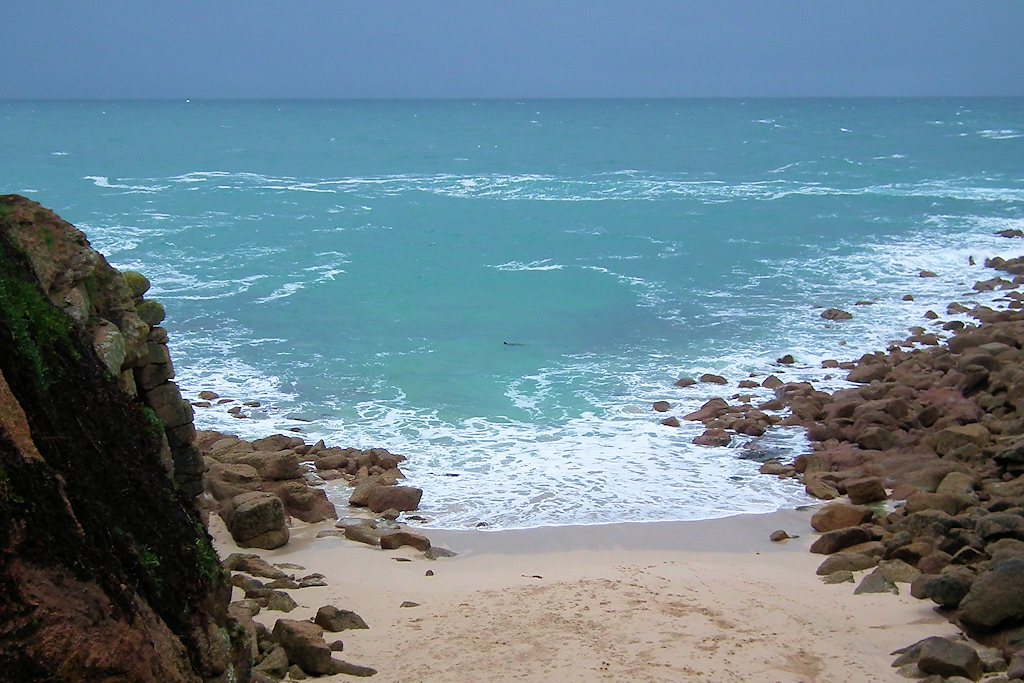
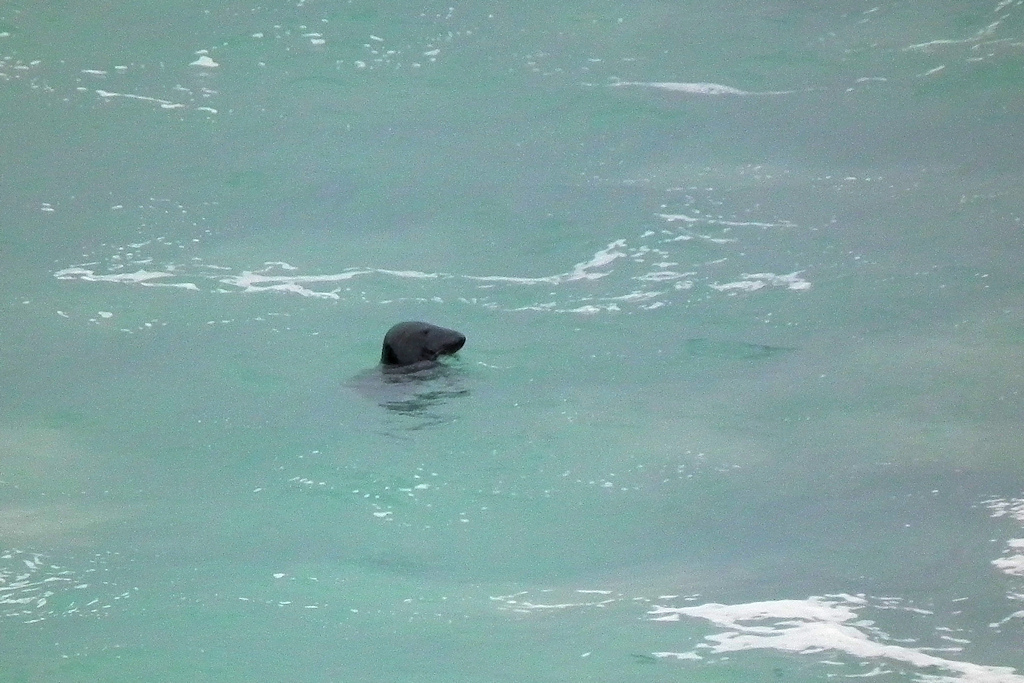

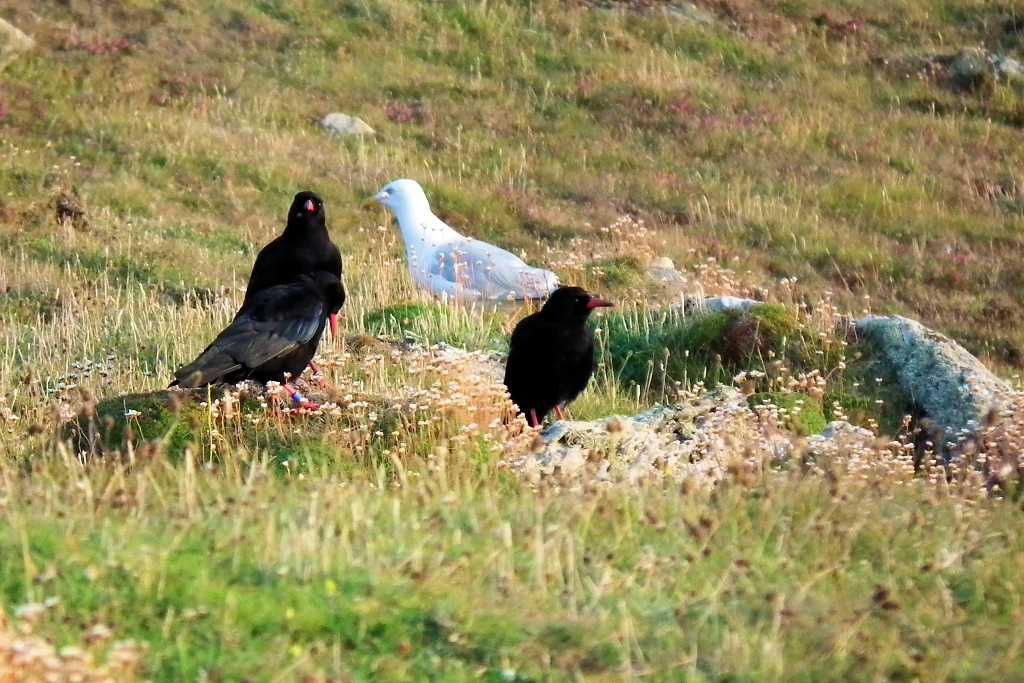
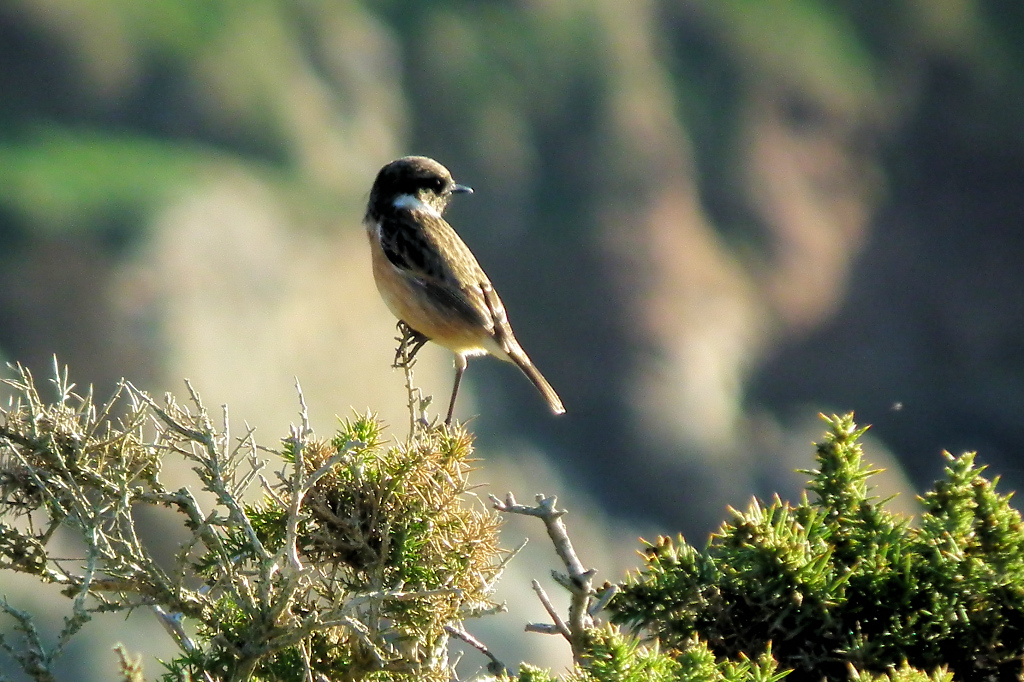


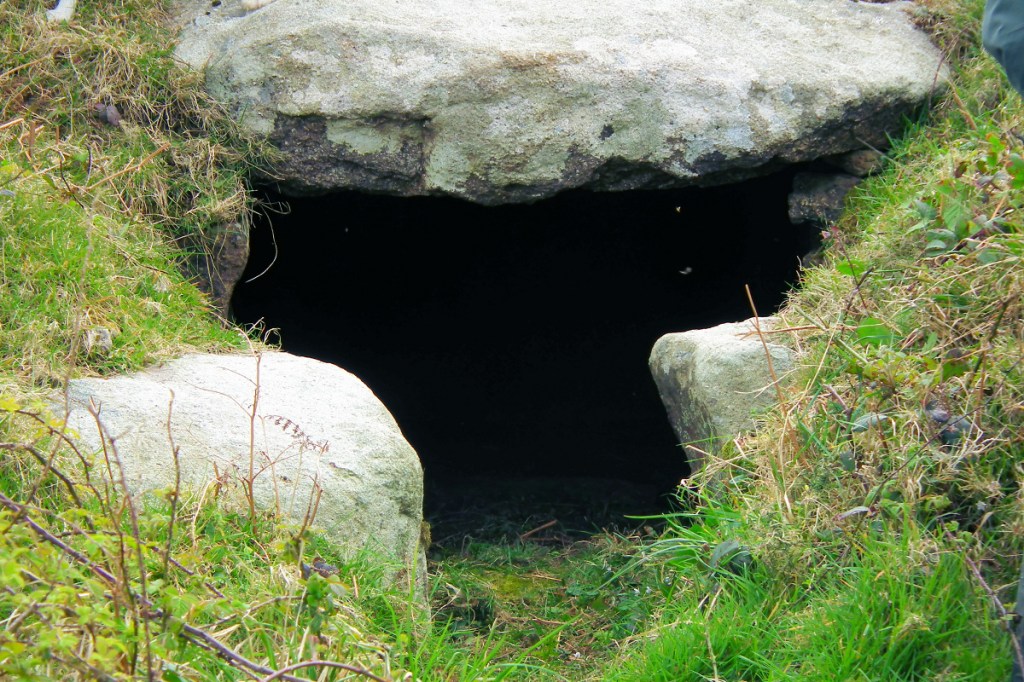
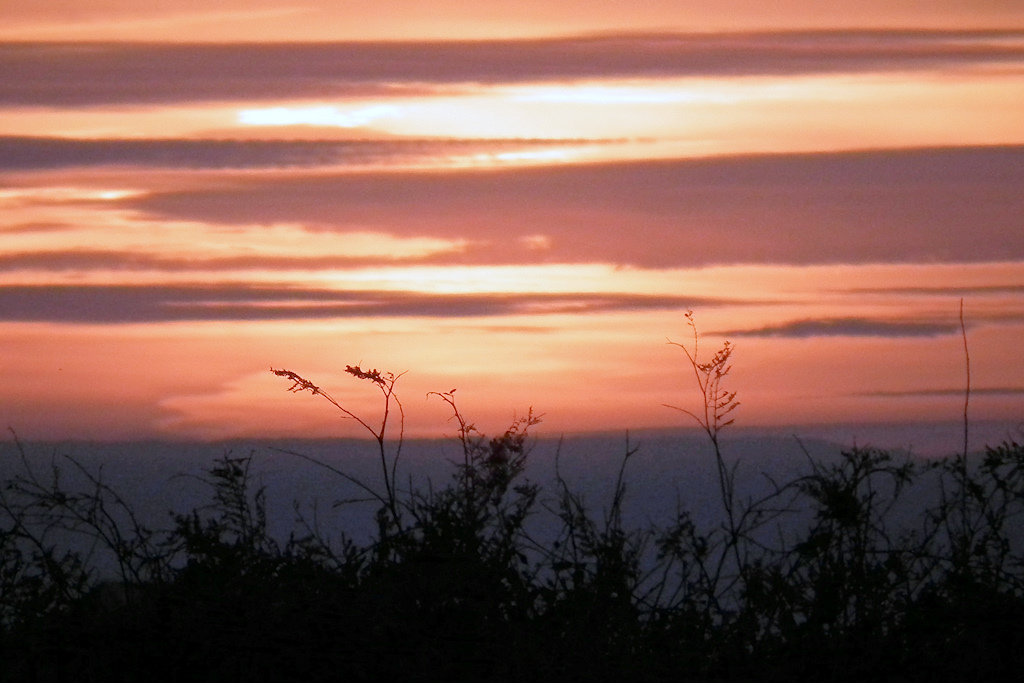

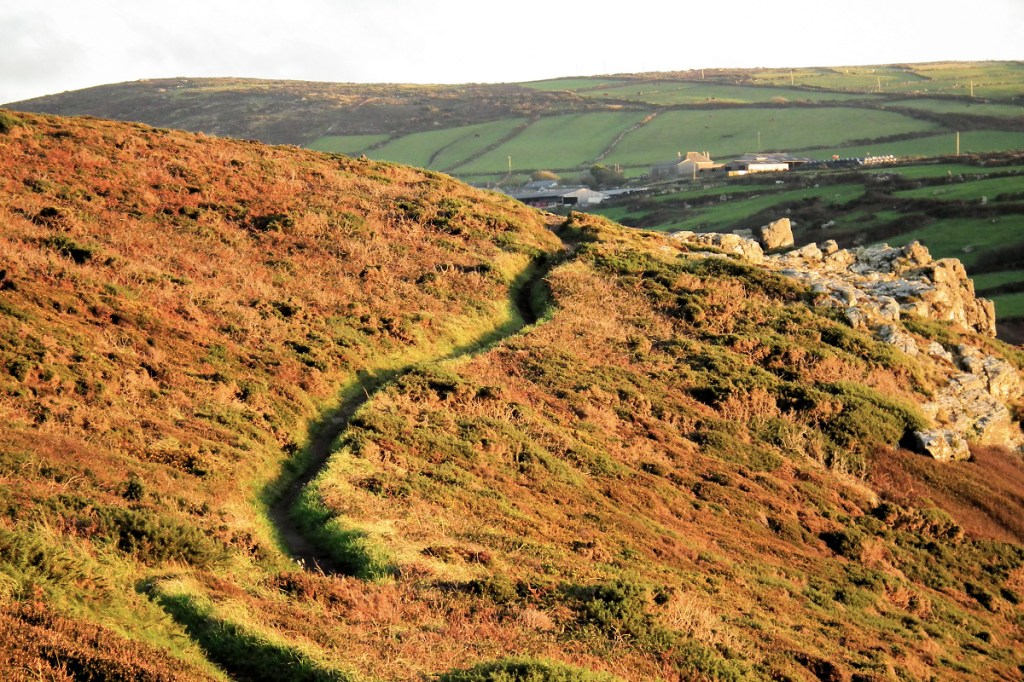


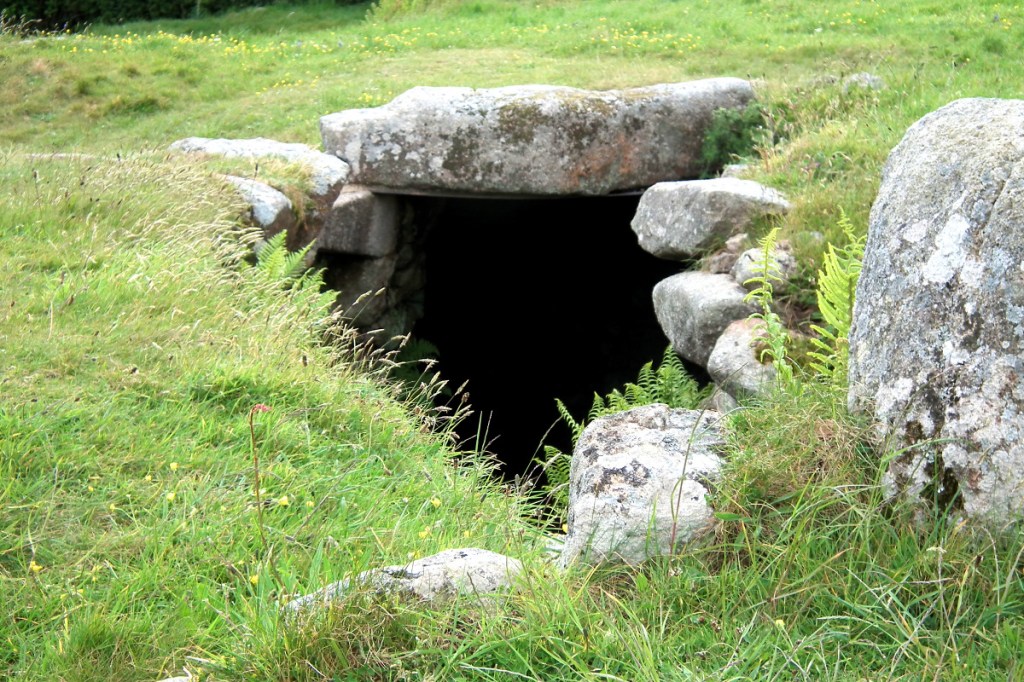
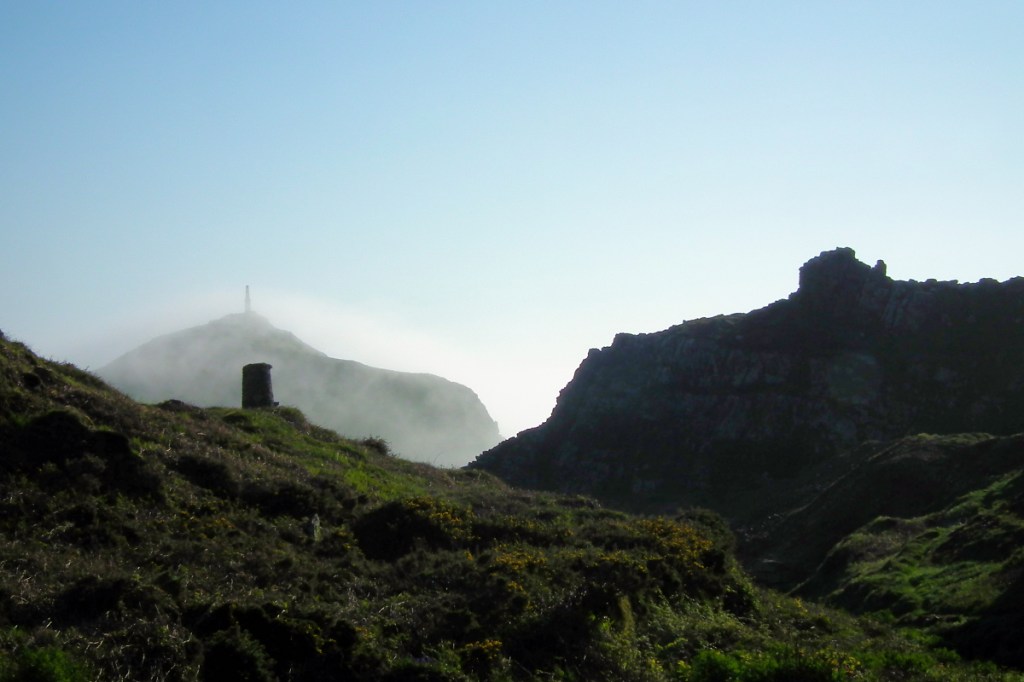
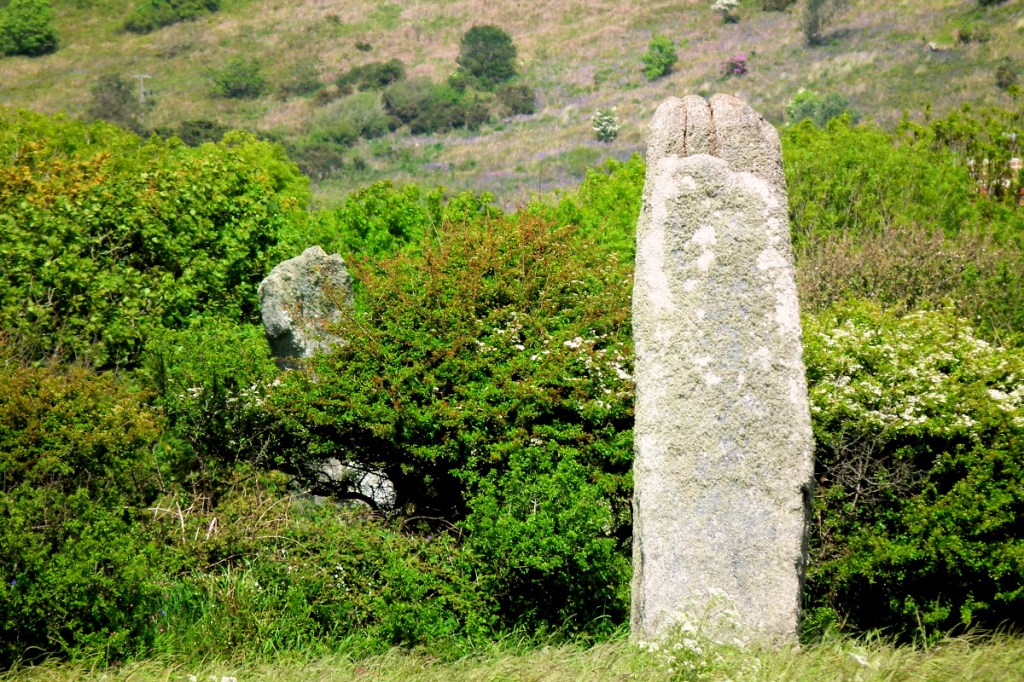
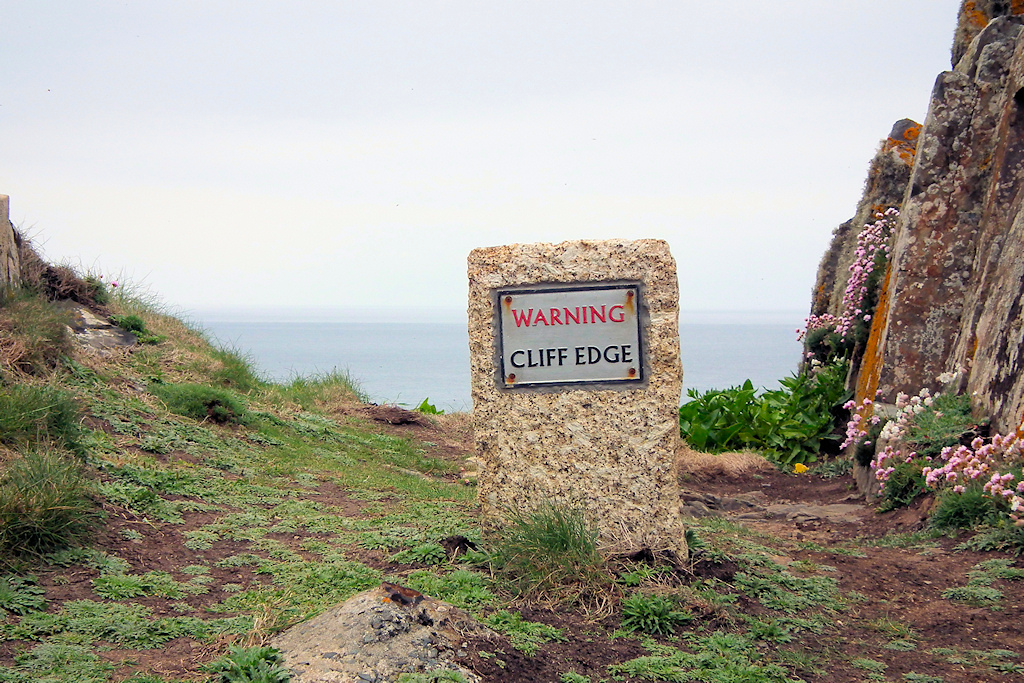

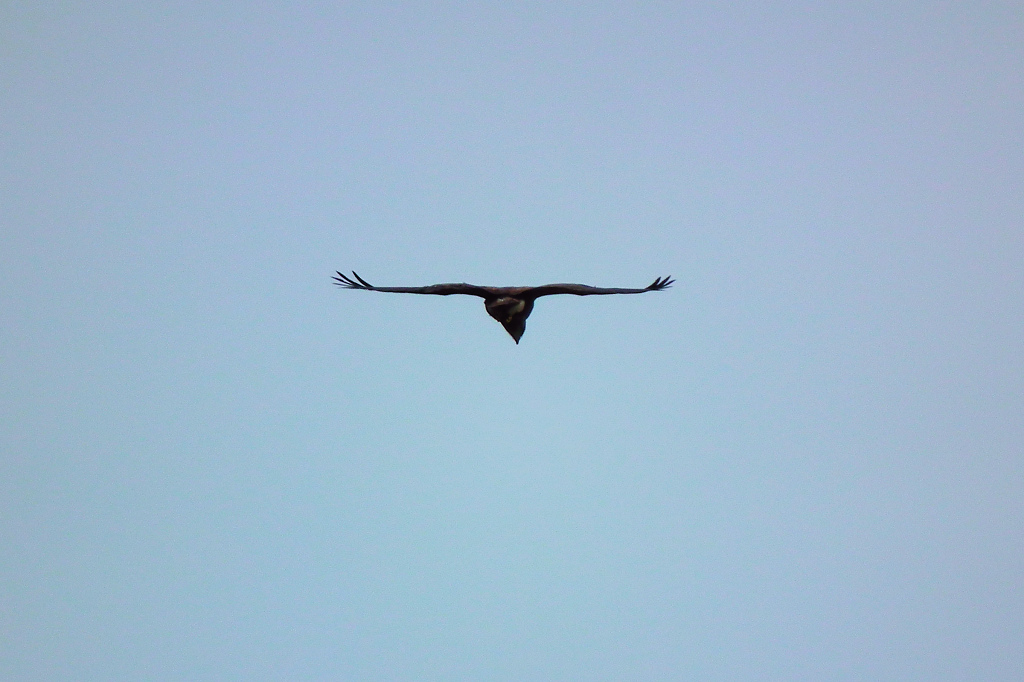

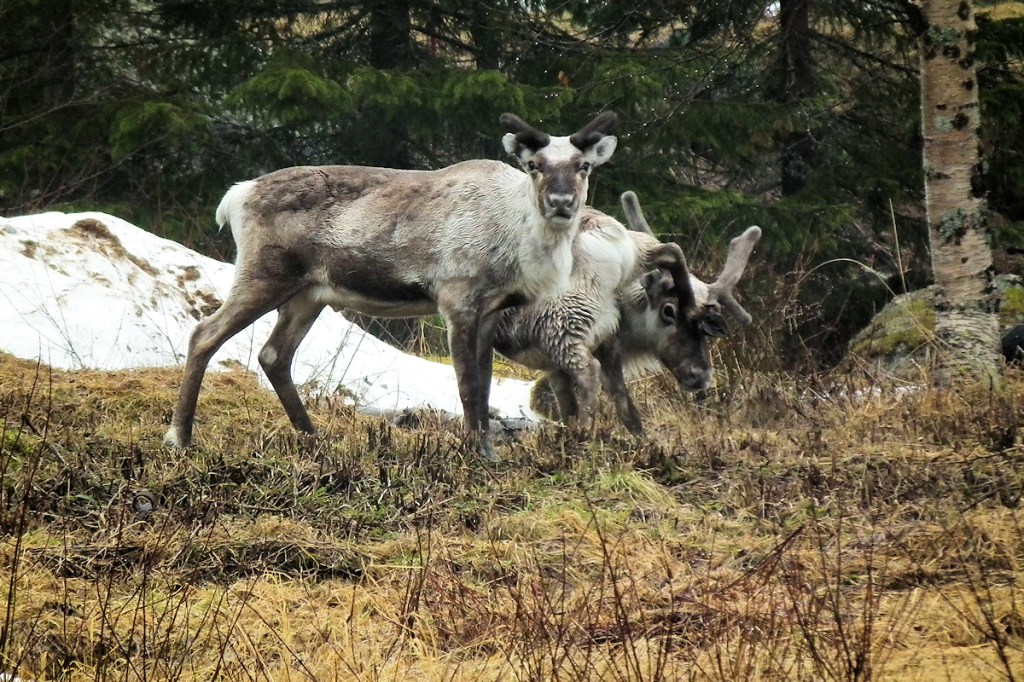


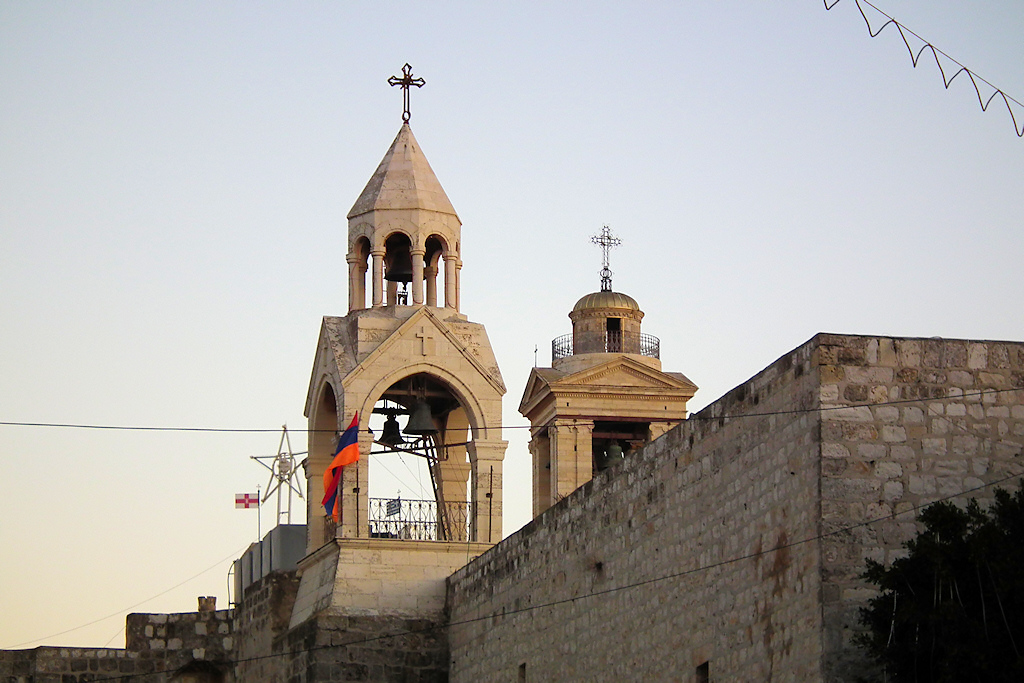

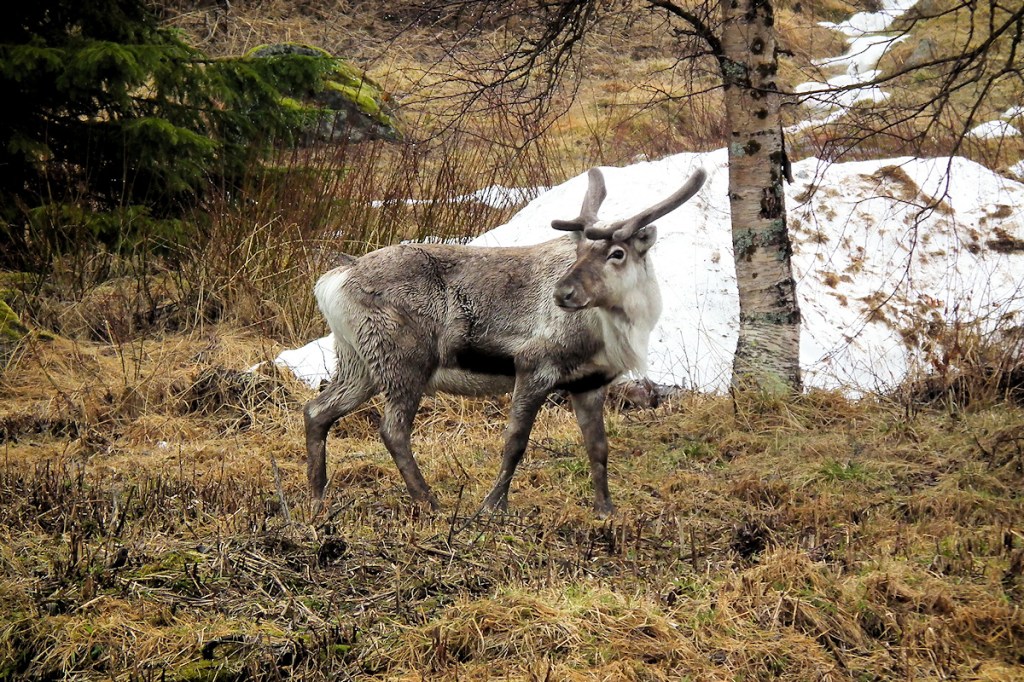
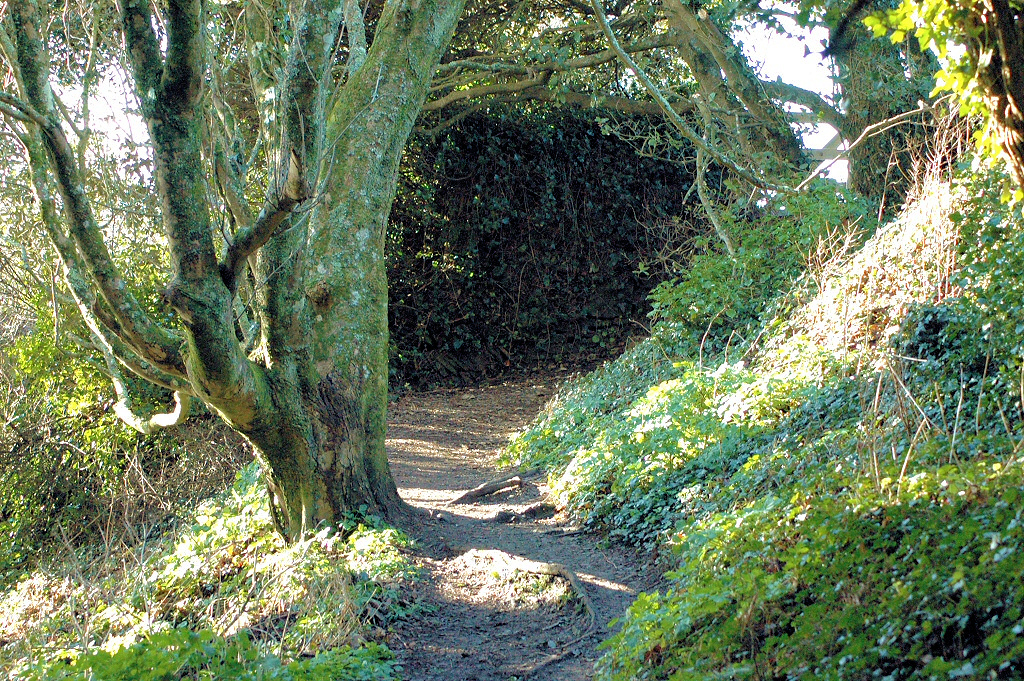


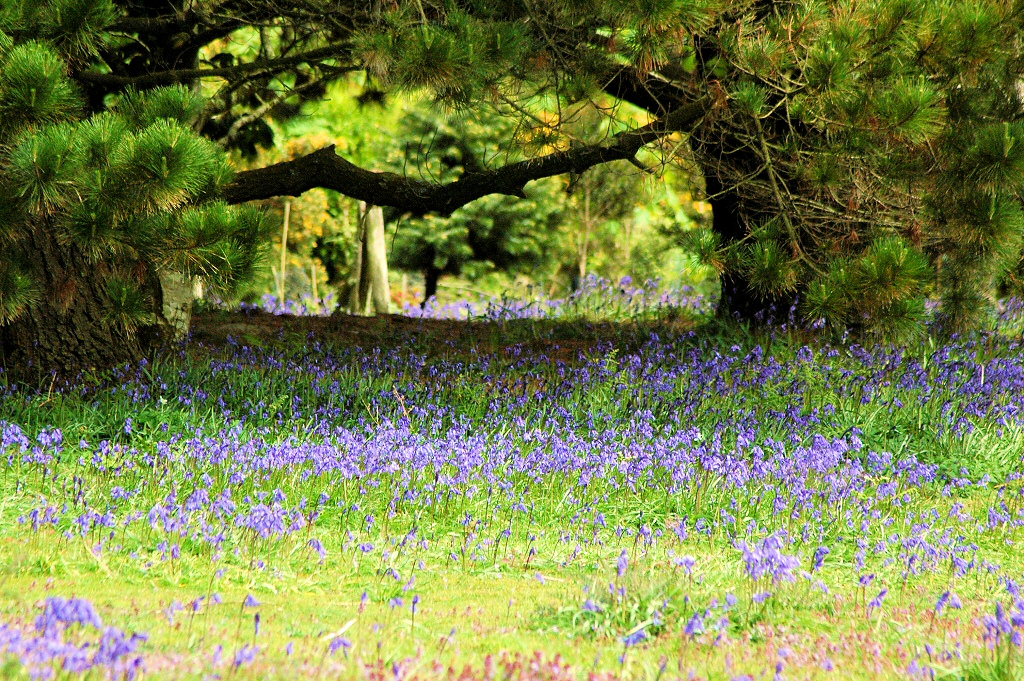
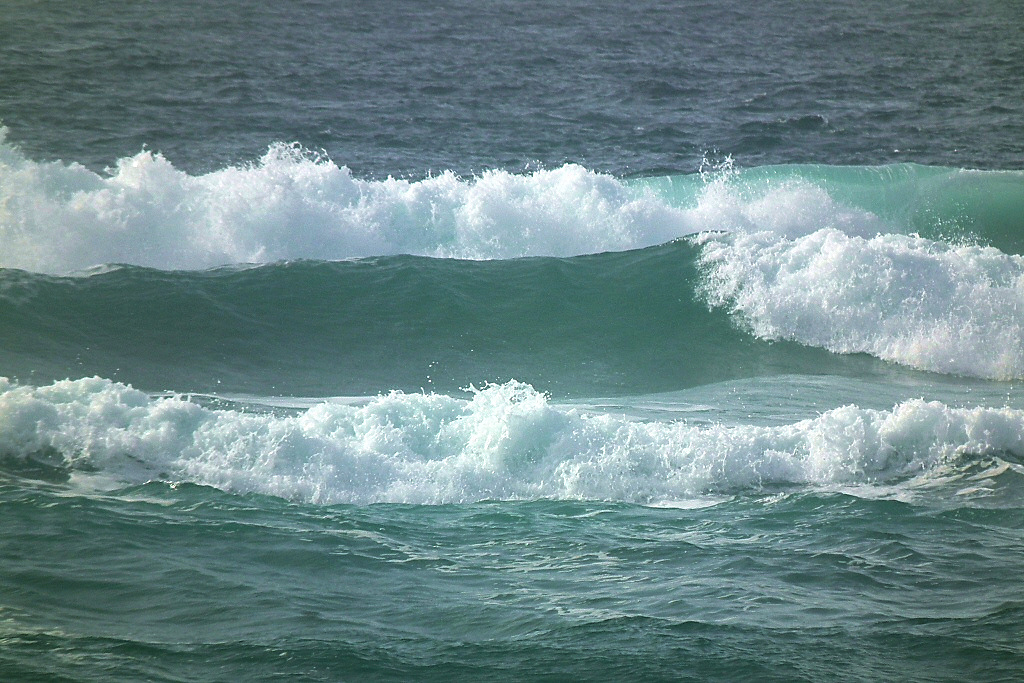

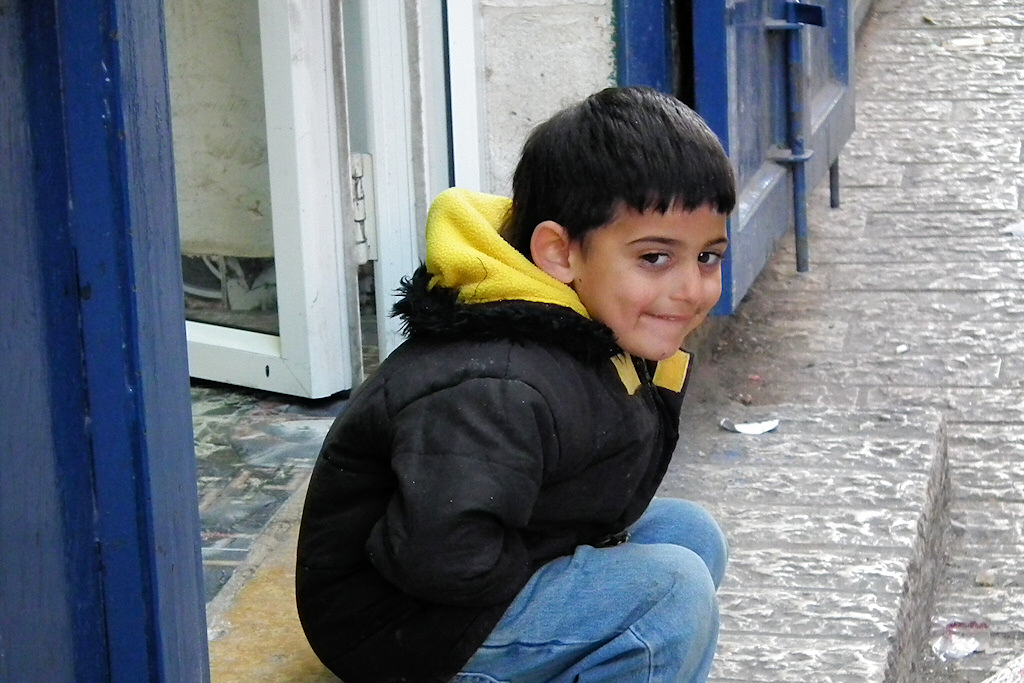
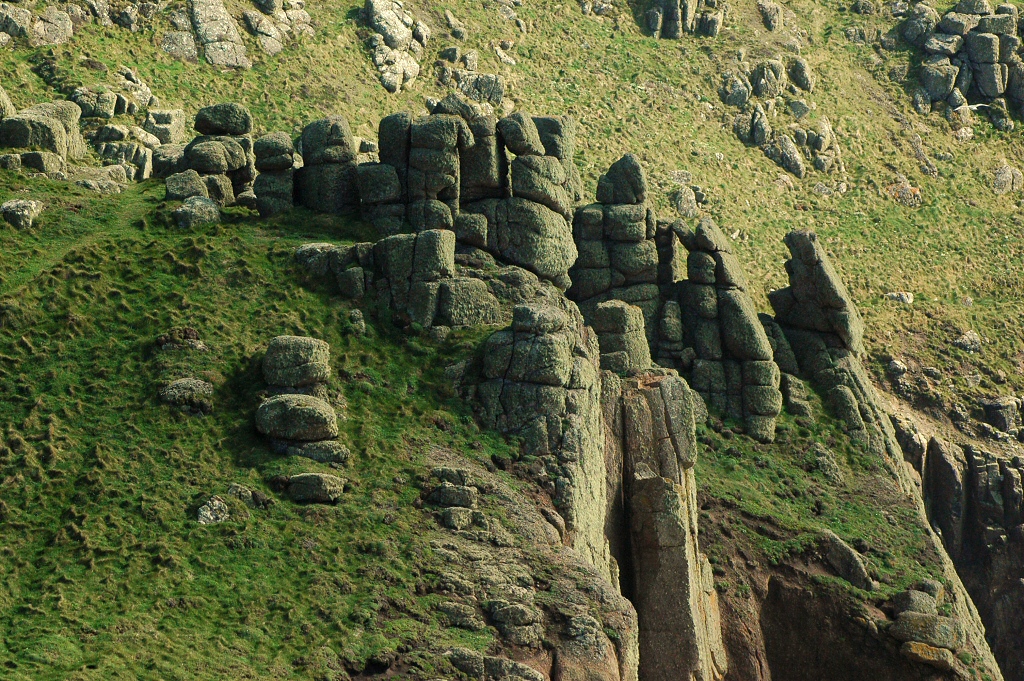


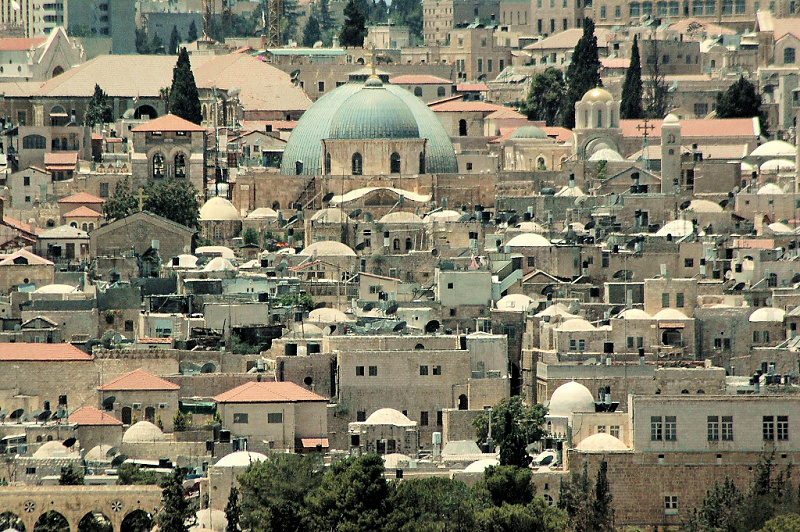




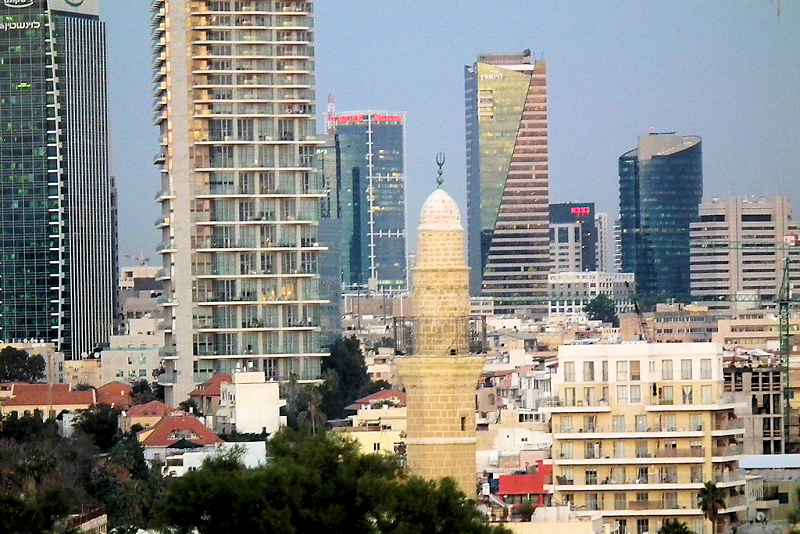
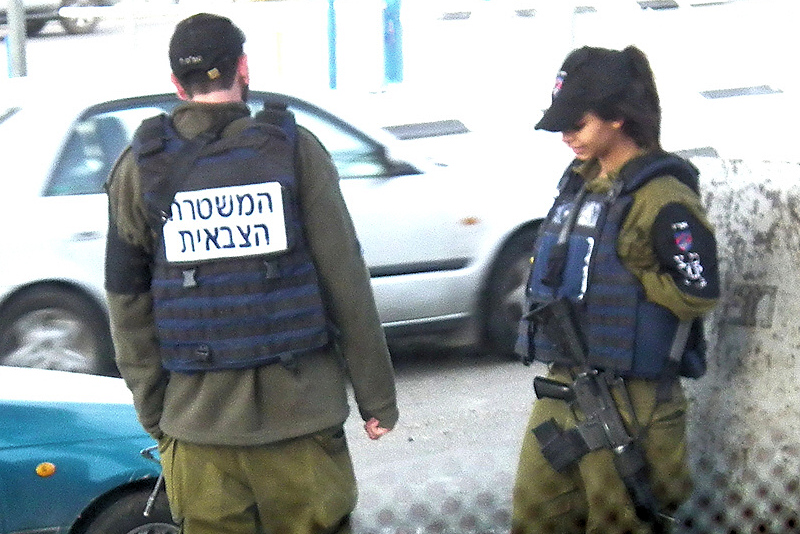
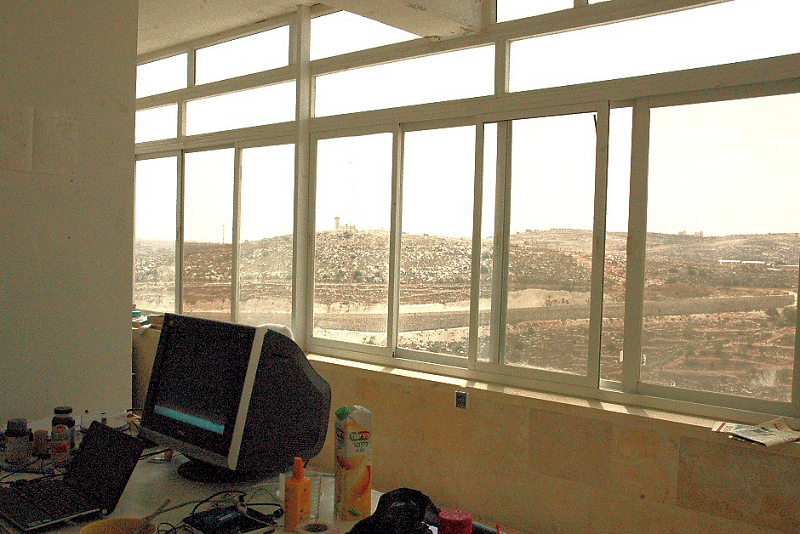

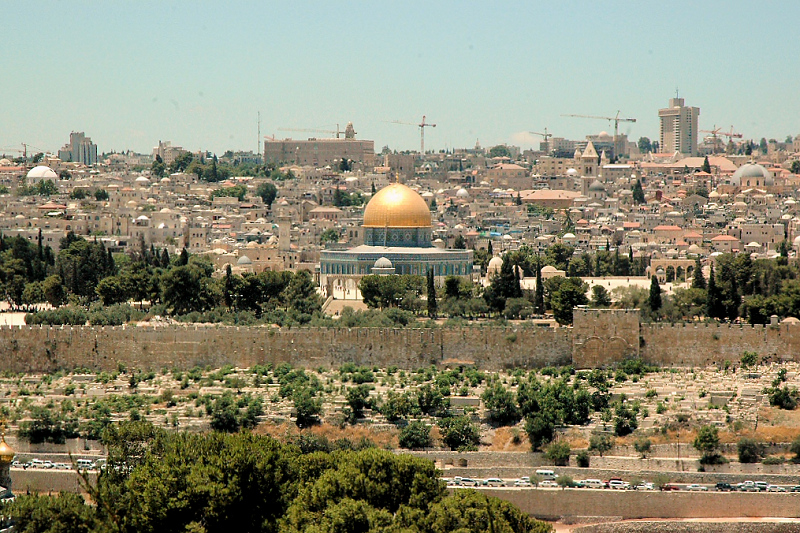


 Notes from the Far Beyond
You must be logged in to post a comment.