Times of Intensity

…and not the last.

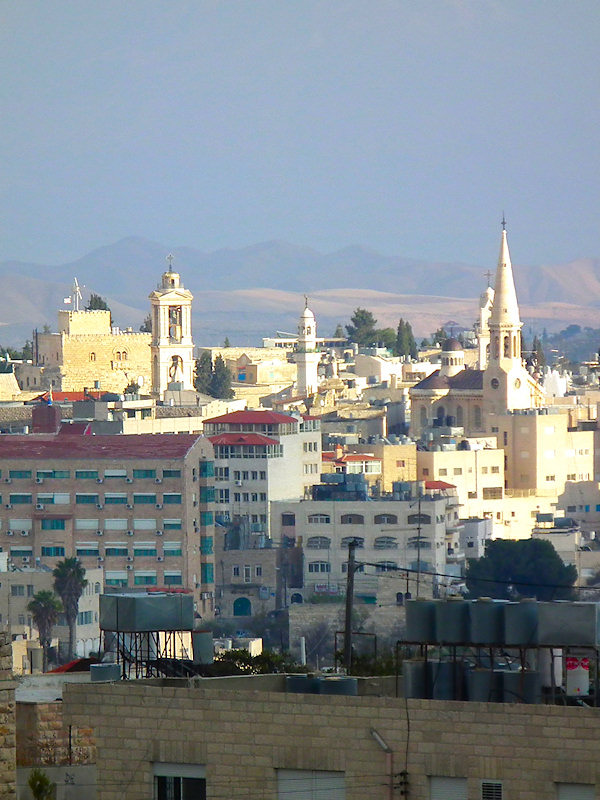
Hebron, Palestine, but it could be anywhere

I grew up in what in the 1960s was a violent and polarised city, Liverpool, learning in my teens that, in any conflict, it always, always takes two to tango – even when one side is the victim and another the oppressor. This can be a difficult issue to see and to own, whether or not one is involved in a conflict, and especially when people suffer horribly. There’s a natural tendency to take sides – and taking sides is important because issues and principles are involved in situations like Ukraine today, or in any conflict, big or small.

It is possible to take sides, or to stand up for one’s own interests, while also acknowledging that it takes two to tango. This is a key element in war strategy too: right now it is not good strategy for Russia and NATO to provoke each other too far, since they risk starting an action-reaction escalation reaching levels that fundamentally self-harm each side and everyone.

This has a restraining influence – deterrence. It can happen in the personal sphere too, in our own arguments, even with ourselves. It is a key element in peacemaking: both sides are in some way responsible – even if the balance is 80-20 or 70-30. We can support one side for entirely valid reasons, while ‘tango’ holds true nonetheless. War is filled with paradoxes.

There’s an ugly reality getting acted out in Ukraine, the ‘theatre of war’ for today: to quote Bertrand Russell, ‘War is not about who is right, it’s about who is left‘. This looks likely to prove true in coming months or years. So a miracle solution is needed here.

Talking of viruses, have you noticed how, when one war (such as Afghanistan) comes to an end, another seemingly unconnected war (such as Ukraine) can quickly start up? The issue here is that we have allowed the war virus to be firmly rooted in the human psyche, such that it becomes default behaviour. When the host population is worn out, the virus hops to another vulnerable population, until we change the default pattern.

So, immunologically, by addressing the factors that feed the war virus and the vectors of its transmission, and giving extra support to ‘medical interventions’ such as peacebuilding, diplomacy, de-traumatisation and citizen contact across the lines over a period of time, so that a new immunity can be built up. But to do this the media need to focus on peacemaking, not the excitement of conflict, and at least half of negotiators and peacemakers should be women, and the voices of the young should be heard.

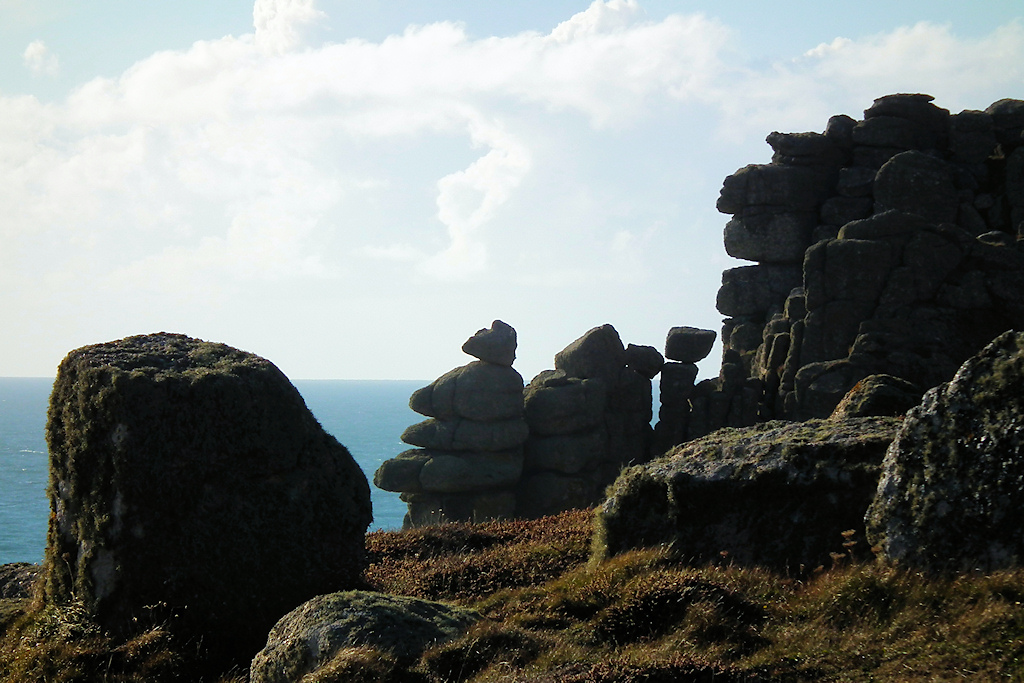
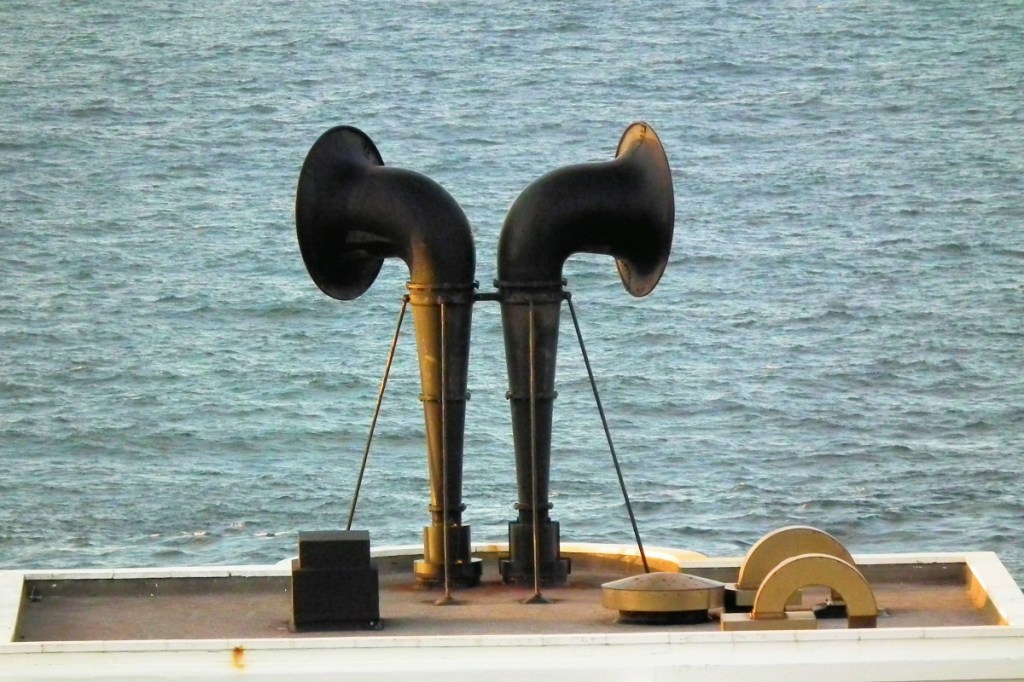
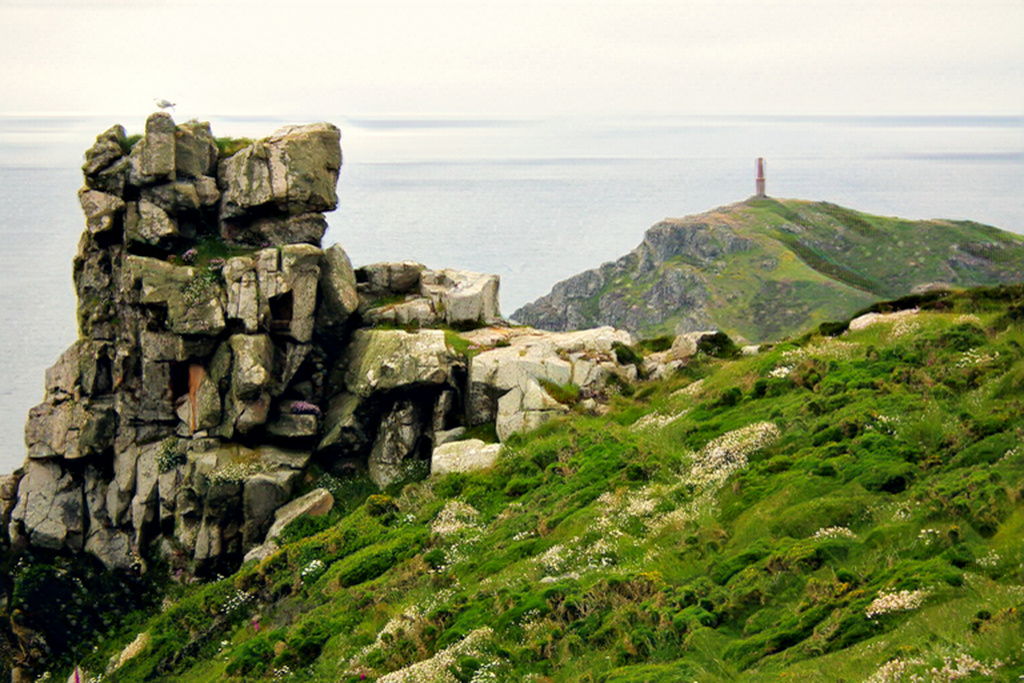
Foghorns at Pendeen Watch, Cornwall

One of the most dangerous things in our time is polarisation, during a time when, to address the main issues in the world, cooperation is more necessary now than ever – globally and, despite Brexit, Europe-wide. Social consensus, cooperation and human care are so much needed – this was demonstrated during the Covid lockdowns. Environmental, climatic, population, social and justice issues will make little progress without care, pluralism and inclusivity. This means consensus not only amongst our lot, but also with that lot over there – even with banksters, extremists and other demons.

There’s a further thing: when people and nations are getting on with explosions and atrocities, they are not getting on with the essential questions that, in the end, harm us all. They are blasting out the subtle, tender, human aspects of life with noise and violence. War is a tragic diversion, a terrible habit of humanity that is used unconsciously, and by elites, as a way of evading the big questions. It’s ingrained in all of us.

This applies in our personal relationships: each party in an argument might consider the other wrong or flawed, feeling justified in standing up for itself, yet both parties together fail to fulfil the core purpose of their relationship unless their argument progresses toward resolution. This doesn’t mean everything has to be peaceful and smoothed over: differences of position need sorting out at an earlier stage, before they get complex and damaging, in the knowledge that fighting charges a higher price to both parties than reconciliation. Fighting rarely sorts out the fundamental causes of conflict, instead laying down further historic pain and trauma for future eruption and processing. It goes on and on.

Teenagers get used to it quickly

This said, I honour, respect and support the choice of Ukrainians to resist, now that we are where we are. I would too, in their situation. I’ve spent years working with Palestinians, and I feel their resistance is justified, not because I believe Israelis are wrong but because, ultimately, what the Israeli state has been doing is not right for Palestinians, Israelis or anyone. If I were in Ukraine, I’d be in the resistance – in my case, doing furtive and dangerous things in the background (I have Mars in Scorpio).

Would you keep your head down, be a refugee or join the resistance? It’s quite important to be honest with ourselves about questions like this, at this time.

One strange thing about war situations is this: it gives people a tremendous, if tragic, opportunity to discover their true gifts. It’s a free-for-all in many different senses, and some of the acts of humanity I’ve seen in conflict situations are unforgettable. And people quickly find out what they’re really good at.

Polarisation, a virus of the psyche, has no simple vaccination. It oversimplifies things when a conflict escalates and breaks out, even if it is but a conflict of ideas or values. Conflicts are a complex calculus, often going way back into histories and threads that otherwise have been forgotten. When they break out, the rules change drastically and damage and pain escalate horrendously as a result. Referring to the past to justify one’s position becomes less and less relevant because, in war, the past few days’ damaging events can override them.

In the end, apart from fighting to exhaustion, the only way to resolve a conflict is to focus on the present and future needs of all concerned parties, because that’s what’s being forged and the outcome is longterm or permanent. To some extent, everyone is right and everyone is wrong, and this needs recognising. If we cannot establish these as global norms, we will not really resolve the bigger issues we face in the 21st Century. It’s that simple.

Ideas and sentiments replicate virally and, although some folk, and some countries like Britain, see themselves as scions of freedom, they can also be obedient carriers and sufferers of the polarisation virus without really knowing or owning up to it. The same applies to people who buy into conventional public groupthink, which settles so easily around simple catchphrases, formulae, heroes or villains, denying wider perspectives, tending to see things one-sidedly and seeking to pre-decide issues. Driven by an urge for comfort in numbers, individuals can suspend consideration, subscribing instead to verified and authorised rationales made official by the loudest pundits, or by convention, or by authorities or corporates with the power to persuade or control, both in the foreground or the background.

When social control mechanisms rear their heads, as we’ve seen in recent years, we tend to blame governments, corporations, Big Brother, Reptilians, foreigners or whatever, yet thereby we confirm our own infection by the virus, helping to replicate it. People accused of wrongs are too easily demonised, stripping them of humanity, so that others can feel they’re right. Poor thinking, often befogged by reverberating public sentiment, is so easily captured and trained, and our media and social media excel in it.

The virus arises from a kind of separation trauma deep in the heart of humanity. It emerged as competitiveness, warlordism, stratified social power, a sense that others are a threat and that nature is there for conquest, accompanied by an increasingly cultish elevation of self-interest. In Britain I think it took hold around 1200 BCE, at the end of the megalithic era. Different people are differently affected by the polarisation and groupthink, and to step outside their thralldom can be quite traumatic because all our beliefs, our world, can disintegrate – which is why many people don’t do it. Best done in youth, though it’s a struggle then, too.

Bedouin women in Sinai, Egypt

In this respect, I recommend spending time outside the developed world, not as a tourist but in the villages and streets, and not just for a week, and running on economy – things look and feel very different. Learn how to sleep on the ground, cook with one pan on a fire or how to accept the generosity of quite poor people.

I’m writing all this not only as a geopolitics and history buff, but because I’m personally in a deep and moving conflict of my own in my life right now, and the challenge is to remember all the above in my dealings. This is difficult – stepping outside myself sufficiently to be as objective and fair as possible, yet standing up for and successfully communicating my own position and terms at the same time. It’s a matter of feeling my pain, guilt and fear while, as much as possible, not being dominated by them. Sometimes I succeed, sometimes I don’t, and when I fail it adds to the hurt I cause.

It’s strange too since, as a cancer patient, I have to be more attentive to my needs and interests than ever before, and I’m in new territory. It presents a dilemma. I need others’ support like never before, though I’m not up for playing the victim cancer sufferer either – an attitude that has a downward bearing on my health and spirits. I have no right to expect others to make sacrifices for me, only a hope. I’m at risk of getting mashed even by others’ often quite normal, acceptable actions and ways, bless them, and particularly by their non-actions or omissions. Yet, up to the right level at least, I do need my minimum needs met, without lapsing into a stuck constellation of relationships where I’m asking favours and demanding support of a time-pressed circle of rushed helpers, neighbours, friends and family, most of whom are doing their very best, and for whose inputs I’m genuinely grateful.

Yet in our society helping others is seen as a choice, carried out when we have time or inclination, when in many societies it is a natural obligation and priority. In war, it’s all hands on deck or get out of the way. Indeed, it’s likely to be all hands on deck in coming decades, though not necessarily because of war. Evolving a balance between freedom and obligation is one of the great tasks of coming decades: the balance of private preference and wider benefit, local and global, and human needs and ecosystem priorities. And it has to work, otherwise it’s hard times.

So in my heart, the war in Ukraine (also in Sahel and Palestine) and the difficult personal conflict I am in, are digging over similar ground. It’s literally heart-rending. In moments of despair, part of me even wants to go to Ukraine, not to fight, but to weigh in on making people happier and doing some backchannel work – I have the experience, and an old cripple on sticks like me is quite good cover when hobbling through checkpoints and handling scrapes. I’m likely to die before too long anyway, which means that, though I do have fear, it doesn’t impact quite the same as it usually would – and you gotta go somehow.

But I don’t have it in me to go, really, physically and financially. My time for that is past, and sometimes I go through pangs about that. So, I’m doing what I can from here, re-engaging in a new level of psychic work, from my eyrie here on the farm, and from occasional hilltops and headlands in West Penwith. I find the Kremlin is psychically not as well guarded as the White House or even Number Ten.

This confluence of personal feeling and war in Ukraine is interesting because, while currently experiencing my own pain and loss patterns, my geopolitical inner efforts are able to come from a more deep and feelingful place, and both are somehow inwardly connected. Many Ukrainians, like cancer patients, have death hovering close to them, and there’s a deep vulnerability and a bizarre openness to that. This is what part of me has deeply sought, in my involvement in conflicts in the past – a sensitivity and emotional permeability that makes me more human, and it comes up in risky, edgy situations.
I’ve sought this in loving and caring relationships too, only to come up against my own limitations, pain and switched-downness. I’ve made some progress, but in truth I can’t say I’ve resolved the matter at all. I look and sound pretty sussed out, but really, I’m both happy and unhappy with the way I’ve handled life and its ins and outs. I haven’t fitted easily into the world. It’s good to be honest about that because, when we come to dying, the whole story of our lives show themselves in a new and different way, and it’s better facing awkward truths beforehand. It’s not self-pity, it’s straight old reality-as-it-is being revealed, and ultimately that’s relieving, helping with karmic untangling.

And life goes on. In health I am kinda okay, with room for improvement and a few problem issues that trouble me, but I’ll get there. In spirits I am soldiering on and holding up, and I’ve been having some lovely adventures out in nature – and I keep looking for the gift in situations. Astrologically I’m on a few big Saturn transits, so whaddya expect?

Springtime is coming here in Cornwall, and some bonny days have appeared since newmoon, and the plants are yawning open, and the geese will probably head north soon, and the tweety birds are chomping birdseed and fatballs at a rate of knots, and it’s no longer dark when I wake up, and Saturday was the first day I didn’t light my woodstove in the morning. And I enjoy blueberry porage for breakfast.

Amidst the hurricane of flying crap happening now, above all hold steady – and I shall too. This is the second of quite a few big crises in the 2020s, and it’s best to forget ‘normal’ and to develop new ways to find our ground. Here’s a re-tweet: I sense that the future is having an increasingly causative effect on the present – the past is getting wiped away faster than we would like. We’re getting sucked forward into successive cliffhanger situations where we, as humans, are obliged to make bottom-line decisions – kinda last-chance saloon stuff. Perhaps this applies to my personal affairs too, or perhaps to yours. Such brinkmanship is a way to prepare us for change, because guaranteeing the future involves making a quantum leap where absolutely everything is up for review and change, and we’re all involved. It’s hair-raising and gives no security, and it’s what we’re being confronted with now, in the 2020s.

Love from me, down’ere in Cornwall. Palden.

My podcasts are at www.palden.co.uk/podcasts.html
And all my stuff can be found here: www.palden.co.uk

Having Cancer

Here’s my latest podcast

I’ve got cancer and it has me.

It’s full-on and it has been a big life-changer. I have myeloma or bone marrow cancer. I’ve had it over two years and am through the worst stage, I hope, but it’s still hard work.

Every now and then I still get quite ill, not from the cancer but from the secondary issues in my spine and stomach and with infections. You can’t get rid of myeloma – you can only manage it. I probably have a few years left. I’m 71.

So this podcast is for anyone who has cancer or who is involved with someone who has it. It’s about some of the real aspects of keeping your spirits up – the core issue whether you seek to stay alive or to have a good dying process. If you’re feeling kinda okay inside, your whole process will work better, or you’ll handle it better. Failing all else, you’ll be a bit happier.

We have to come to terms with dying, come to peace about it, and about the life we have had, and all its ups and downs. So this is about all that.
Recorded during a howling gale down’ere in Cornwall, Storm Eunice, in late February 2022. The waves are at Portheras Cove in West Penwith, Cornwall, near where I live.

24 mins. One of two podcasts on cancer.

With love, Palden.

Get it on Spotify
Or on Apple Podcasts
Or on Google Podcasts
Or on Palden’s website

Ancestral Passages

Age doesn’t mean the learning stops

Carn Lês Boel

So what happens next? This question hovers around me now. It’s not unique to me: even though I’m spending most of my time alone and rather disconnected from society, the whole world is in a similar state and I’m very tuned into it. But the fascinating thing about living with cancer, at least in my case, is that, while death is a prospect facing all of us and it can come at any moment, it comes closer when you have cancer. So, in the last two months or so, I’ve been wondering whether I’ll get to the end of 2022 or whether I have longer.

This was prompted by a new health crisis that started in late October, prompted not by the cancer itself but by its side-effects and the vulnerabilities it and cancer treatments create. In November and December, at times I felt I was losing strength and spirit, deeply worn out. My spirits hold up well if I’m feeling reasonably clear inside, but if my psyche is befogged by illness I labour through a tiredness of spirit that makes me wonder how much longer I can carry on. It was becoming a question of whether to fight for life or hand myself over.

Well, I’ll be wherever is best and wherever I’m most needed. The time and manner of our passing is not in our gift to control. Even so, many of the more awakened souls I know who are currently leaving Earth seem mostly not to have a long illness and a slow decline – their angels pull them out with a quick heart attack or an accident, or they die in their sleep or their armchair and, whoosh, they’re gone.

I’ve had a number of near-death experiences and I know that, when I ‘let go and let God‘, I have, thus far, quite quickly bounced back. It’s not a genuine let-go to do this in order to bounce back, because that’s all about setting conditions, and that doesn’t work with death. The releasing needs to be wholehearted and complete. You just gotta be willing to pass through that door. This permits something else to take over. It takes things deeper onto a soul or a ‘causal’ level, which then can then override the rules and norms of body and psyche, and decisions are made that lie far beyond what we humans are aware of. But, us humans, we struggle for control. We’re addicted to life and, in the modern West, we’ve even persuaded ourselves that being alive in a body is the only reality there is – so we have a bias against dying.

The problem with this is, it’s not like that. And we miss a trick. There’s more to life than this.

A frosty field below the farm, today, at dawn on a magical fullmoon morning

The releasing I went through in late December was in no way dramatic or quick. I just got fed up with holding myself up and keeping going. So I stopped worrying about it and got on with life as it then was – feeling like a 95-year old crock on his last legs. Yet gradually, things picked up and, in early January, I began to see glimmers of a future. Hope tends to keep me going, and somehow my hope had faded. But here, amongst the ashes, something was germinating. Not a roadmap or a sense of how long I have left, but more a sense that there’s something more to do before I go. There’s reason to carry on. As far as I can tell.

It’s funny how the world magically responds to an inner change like this. In the preceding months, Lynne and I had not been able to see each other much – me, because of my immobility and state of ongoing lockdown, and she because of overwork and life-struggles, followed by two months wiped out with Longcovid. She really went through it, last year. By November, both of us were flat out in bed with fatigue and illness, a hundred miles apart. Messaging and phone contact got difficult. But eventually she started reviving and her reappearance was a bit like what it must be like for my eldest daughter Maya and her family, who live north of the polar circle in Swedish Lappland, when the sun first comes up in mid-January after a month or so of darkness. Suddenly life lit up and started looking very different.
That wasn’t all. Maya contacted me to say she was coming over from Sweden – we haven’t seen each other for about six years. Despite Covid restrictions and plane cancellations, and with the help of Tulki, my son, who ferreted out solutions, met her at Heathrow and brought her down here, she came to visit. Wierdly, here in cold, midwinter Britain, the temperature was 20-30 degrees warmer than in Lappland, and on one day we even had sunshine!

On that day we did a clifftop walk from Porthgwarra to Carn Lês Boel, a dramatic headland looking out over the Atlantic, and my favourite pilgrimage place in West Penwith. It’s where, in spirit at least, I’ll probably dance my last dance. I had anticipations about getting back from the Carn to Porthgwarra, nearly two miles, but my spirits were up and antigravity drives were humming, and my legs and sticks teleported me back. Plus the old mountaineer’s trick of avoiding thinking about how far there is yet to go. And the company.

Maya, Tulki and I had some close and meaningful sharings, huddled around the stove while it rained and blew dismally outside. It lifted up my heart, and I think and hope it was the same for them too. Though I have brought together hundreds of people into groups, communities and tribes, I’ve never done well with family and often I’ve been judged as the one at fault in relationships, so this was a healing on a very deep level – or the beginning of one. It felt ancestral as well: I grew up in a dysfunctional nuclear family that was an offshoot of a wider family that had become alienated and atomised in the earlier 20th Century, and it felt to me like this was a cross-generational turning of the tide, a healing of ancestral hurts. Maya’s and Tulki’s generation feel to me as if they’ll bring family back together in a new way.

It’s a new kind of family too: my four grown up ‘children’ are born of three different mothers. In case you think I’m some sort of toxic pervert male, two of those mothers had also had children by multiple fathers, and Lynne has four ‘kids’ by three fathers! So either they are toxic property too, or there’s something new and different going on here. Something transformative and tribal. They and their peers are the founders of the new families, communities and clans that will constitute an answer for the future. As I often say, we’ll only get the the other end of the 21st Century by working together – something my generation made some progress with, but changing the course of human history takes more time than we’d like.

I mention these two events because, late in 2021, I felt there was nothing much to hope for or look forward to. I was feeling leaden, redundant and uncreative – hence that it has been a month since my last blog. Surreptitiously, things changed. Also, I realised that there’s one more writing project to do, which partially I dread (since I’ve sat at so many typewriters and computers for so long that it’s no thrill at all), and partially it gives me a feeling of relief and release, to think of finally getting it out. The added bit is that, at the end of life, I don’t care too much about what others will think – it’s quite liberating for a long-distance author, that. Whether I’ll manage to actually do it, I do not know. I need to write down a good smattering of my inner experiences and extraterrestrial contacts – a story I haven’t told. For the record. And, well, it’s not the first time I’ve broken a cultural taboo or been shat upon for doing it.

As a Virgo I’m rather attached to making a contribution and being useful. Being on Earth hasn’t been a great pleasure, even though I’ve had loads of amazing experiences. It has been a bit like a duty and a mission, a bit like holding your breath underwater while trying to get to the other end of the pool – and it’s further than you thought. So I’ve always had a feeling that, to justify continuing, I must contribute something, to make it worth it. Lots of people have given me lectures about getting over this pathology and about being more realistic and responsible. But from another viewpoint, though such a view conforms to the comfortable groupthink-consensus of our majoritarian society, that’s rather a complacent position. We’re all getting on with our own lives while the world is going down. In the end it’s the reason why we have dictators, hunger, injustice and environmental destruction – we allow it. We’re too busy to worry about it. For some reason, throughout life I’ve felt a strange need to do something about this, driven by Edmund Burke’s enduring statement: for the triumph of evil it is necessary only that good people do nothing. This presents dilemmas that hit anyone with a conscience.

Six months ago I learned that one factor affecting many or even all cancer patients is that we have spent our lives tuned in to the needs and emotions of others. Cancer comes to pull us back to ourselves. This is true: I’ve had to draw new boundaries and look after myself like never before. But the funny thing is, my soul is still oriented toward service, even as a crippled old cancer-freak. Problem is, this service has benefited others but not my close family. My mother was like this too: at her funeral she was much loved and honoured for all she had done in public, but for me and my brother, while she did her best in a 1940s-50s way, she wasn’t a good mother. If I was hungry she would tell me to go away and play because it wasn’t teatime yet. Thanks. Looking back, I wonder whether she, like me, had Asperger’s Syndrome, with its attendant relationship issues. She channelled her feelings and love into public service, and so do I. To the cost of some and the benefit of others.

Lynne is admirable in this regard. She just about manages to bridge the contradictions here. I’m a very loving man, and I do try, but I don’t and can’t do many of the things in relationship that most ‘neurotypical’ people apparently do. I don’t see and judge life in the same way. I’m programmed up differently, very much in my own bubble-world, and while I’m locked away on a remote farm having cancer treatment, she’s out there in the world, doing battle with its swirling challenges and very much experiencing the ‘too busy’ syndrome that so much plagues our society. As a counsellor and life-wisdom teacher she needs to maintain inner clarity, but mortgage-paying and modernity’s complex pressures pull the other way, and this is a struggle even for the best of souls.

That’s where I was at two decades ago and, bizarrely, as a pensioner and cancer patient, for the first time I have a consistent though modest income, and am more or less released from all that grind. Well, sort of – I’m doing a different kind of grind instead. So Lynne and I have to bridge that wide gap at present, and she also has to deal with the weird Aspie in me, and the possibility that I might pop my clogs any day, and she deserves a medal for all that. All I can give her is delightful chocolate-and rose flavoured tea lovingly brewed in springwater from up the hill – well, I have some pleasant quirks.

Lynne and Maya have made me aware how, through relationships and family, I have unconsciously tried to bridge a gaping chasm between two parts of myself – the mad-professor hermit and the former philosopher-king with no kingdom. I have not succeeded. The only consolation is that there have been benefits in other ways. Nelson Mandela had this problem: a conflict between his allegiance to his family and to his people that he never quite resolved. But in the end it was better for everyone that he did what he did, and perhaps he was supporting his great-grandchildren better than his own children. And life takes many strange turns.

I don’t know how long I shall live. Every estimate of how I shall be tomorrow, in a month’s time or next year is provisional and guesswork. Should I buy a new winter coat or put the money into financing my funeral? Well, there’s only one answer: live day to day, do my best and find out. And be grateful for small things.

The big event yesterday was a hobble down the old trackway into the valley, turning right into the field, balancing my way through a muddy, tractor-ripped gateway and down to where Paget, Andrew and Jon were digging out the old pool by the woods in the low afternoon sun. This will create a revived habitat for pond and stream plants, geese and waders, dragonflies and allsorts. It was great to see, even if at this stage it’s mainly mud and unfinished fencing to keep the cattle out. But then, it’s January, and the right time for it. Capricorn: a time for carrying on regardless and getting on with the digging. And the tax returns. And the daily grind. But underneath, hidden away, something is moving, taking shape.

The corvids are massing and krarking around in the clear, cold sky above the farm, ready for bedding down in the trees down below. They’ve been out and about around Penwith and they gather together to sleep in the woods. The geese will come in soon, settling on the lake shores down the valley. I think it’s time to finish this blog and post it. Time to light the stove and get some dinner on. Thank you to Teri in Australia for prompting me to write this. And bless you all for being you.

Love, Paldywan Kenobi.

Down’ere in Cornwall, right at the far end
www.palden.co.uk

St Michael’s Mount, as seen from the iron age courtyard house on the hill on our farm – probably eight miles away

Heaven Forfend

Stumbling on the Path

I wasn’t ready for it. The crows in the woods below the farm were on form. Each morning they wake up just before dawn and chatter in hundreds, working themselves up and suddenly taking to the air together, swooping around over the fields, doing crazy tribal manoeuvres, crarking and grating, settling and then swooping again as a mass before landing on the rooftops and trees of the farm and the big house next door, to sit there awhile and begin their day as individual crows, each with a life to live.

It shows the power of synergy, when they interlock minds to fly as one being, with no visible leadership, making a deep rumbling as hundreds of wings thrash the air in harmony. Meanwhile, waking up in pain and feeling unwell, I had missed an opportunity to sound-record one of the best dawn crow displays of late (for my next podcast). Oh well. That’s what happens when your life is humiliatingly falling apart and all your well-learned human capabilities start failing you.

Plus some dilemmas. On Thursday afternoon I landed up sitting there crying my eyes out, unable to get help after four days of trying, following a stream of unreturned calls, answering machines, referrals to other numbers, and promises unkept. Yet again I was landing up at the end of the day having got nowhere. I was in pain and going down. The dilemma is that, when I do get someone at the other end, they’re really good – but somehow, the system just isn’t working, and a clock was ticking on me.

Come Saturday morning, I got through to an emergency number and the nurse was really helpful and attentive, assuring me she would ring back within an hour – and she did. “I hate to do this to you, Palden, but I must refer you to yet another service”. OMG. Eventually, by afternoon I was down in the Urgent Care Unit at West Cornwall Hospital in Penzance. By evening I was at last fixed with the medication I had been promised five days before. Penny, busy helping another of her care clients move house, came to pick me up in an enormous van and dropped me home. Staggering around on autodrive, I lit the woodstove, made tea and then had what my mother in her later years used to call ‘a good sit down’. Thus ended a nightmare week during which I had squared with a few rather hard things.

Medically, my prospects are not good – I’m doing alright with the cancer but not with its side-effects, and the prospects are ‘risky’. I’m at a choice-point. It all boils down to a matter of will-to-live. A decision in my soul, in my bones, not my head. Will this crisis be followed by an upswing or a downward slide? This isn’t just about health conditions. Getting through each day has become more difficult and I’ve started getting tired of it, wondering how much it’s worth struggling on.

It’s a bit like climate change: a question of mitigation (trying to solve the problem) or adaptation (getting used to the idea that you can’t). Do I have what it takes to break medical expectations? Or shall I let myself decline in peace, perhaps during the coming year? If I revive, for what and for whom? I am on my own almost all of the time and, recently with diminished creative inspiration, there isn’t a lot to do except talk to myself and deal with a succession of difficulties in a muddle-through kind of way.

Yes, that’s honing to the soul, and there’s always something to learn. But fighting to stay alive is not all there is to life, and there comes a point where it gets a bit stupid resisting a tide that currently seems to want to carry me back home. I’m leaving the question open for now, but it’s sitting with me.

‘Heaven…’, sang Talking Heads a few decades ago, ‘Heaven is a place, where nothing, nothing ever happens…’. I don’t agree. That’s an earthbound perspective arising from the forgetting process we went through around birth and in early life. Forgetting who we are and why we came. So going back to where we came from becomes a scary issue that few wish to face, because it involves remembering who we are, or were, or could be, and why we came. But the rub is, everyone will face it. And things do happen after death, and there’s more to life than what we’ve experienced thus far.

Astrologers amongst you will probably recognise the symptoms: I’m on a Neptune opposition Saturn. I’ve been given cancer to give my life a new focus. The last two years have been like ten. Struggles have changed me a lot, for better and worse, but there comes a point where a new hurdle hoves into view: letting be, letting go and ‘letting God’.

We get these let-gos throughout life, and the more experience of them that we gain, the more we position ourselves well for the final one. But there are some biggies to get to grips with – particularly regrets. Things we did, or didn’t do, that we could have done differently.

If we’ve done something with our lives, if we have at least tried, other things come around too, to show us where we got things more or less right. For me, as I slowly pull out of my temporal life-slot, things are coming to pass that I got used to accepting as unchangeable. World transformation is not an easy thing, and we’re in a painful period, but things are starting to wrench themselves out of their stuckness – also known as ‘normality’. The mechanism by which change is happening is not one that anyone could have forecast. It’s getting us from behind and underneath.

It started with Covid and its cascading consequences, and we’re heading for the next big wave. Again, it will be something that few visualised or expected. It’s a raking-out of all and everything, very thorough, corroding and eroding many things, all separately, and building up into an enormous slow, drawn-out quake, an avalanche of issues that will come to a scrunch-point – and then something else starts happening.

We’re not used to insecurity and uncertainty but we’re being forced to get used to it. Covid, with its consequential effects, was just the start. There’s more (see here). In the end, all will be well, but it’s really difficult now – my 25ish futile telephone calls of the last week were a minuscule example of the cumulative systems breakdown that is coagulating at present. The exception has become the rule, and relative chaos is becoming the new order.

After a life of going against the grain, I’ll be leaving a world where the logjams are at last beginning to free up. In a way, it’s a time of tribulation, but in another way it’s a time of solutions and breakthroughs, goaded by crisis and necessity. But if we truly want a new world, we must truly let go of the old one – and that’s what the coming decades are about.

Hence we see such daunting attempts at social control today. Humanity has started sliding down a ski-slope and it’s shit scared of losing control. Stamp out the virus, rescue the economy, maintain normality, control the future, blame it all on others. Change whatever you like as long as it doesn’t affect me.

This is not all that there is to life. Even fighting against it is not all there is to life. There’s more. Humanity is struggling to figure out why we are here, and what exactly for. It’s an endless process. It’s the Universe trying to find out who it is, by scraping the accumulated experience of billions of struggling humans into an enormous databank of universal experience, fiddling with models and algorithms to find out what it’s here for. And whether the telling of the story really was worth it. Or whether, as my Tibetan teacher HH Gyalwa Karmapa XVI once put it, it was all simply a fart in the void.

Meanwhile, now on medication, I’m beginning to feel ‘better’ and out of danger, but I’ve been knocked down a rung, and this is a different place. Another fullmoon has passed. Here’s sending a hug to those who will be alone at Christmas, and best wishes to all of you, whatever you are or aren’t celebrating, with a reminder and a smile: it’s all okay in the end, and if it’s not okay, it’s not the end.

Love, Palden.


A new podcast is coming soon when my production team (me) gets its act together. Meanwhile, an optional extra: some music, Pink Floyd’s On the Turning Away

Back Roads

A place I love that I can’t return to

Recently I haven’t been in the best of health and spirits and I shall write a blog about that soon, when my energy is right. But if you want clues, listen to my last podcast Popping Clogs and Kicking Buckets.

Meanwhile, I’ve begun a kind of preliminary goodbyeing process, and in the last 24 hours I’ve been wishing I could be back in Palestine, with friends and ‘family’ there. So I was moved this morning to post a chapter from Pictures of Palestine, to share this feeling with you.

(If you like this chapter, you can download a free PDF or e-book version on the site, or order the print version.)

It was written in 2009 but, while details in Palestine have changed, the situation has not, and this chapter in essence has not dated.


The Back-Roads of Palestine – arriving in Bethlehem

“Where you want go?” “Beit Lahem”.

“Where you from?” “Britaniyya.”

“Ah, my son, he in Leicester, doctor in hospital.” I’m never sure whether to be happy or sad when they say things like this, but most Palestinians seem quite happy that at least someone in the family is chasing a future abroad. It’s their family insurance policy.

I was the first to the yellow eight-seater VW service bus, so I would have to wait for more passengers to appear. That was fine – I wanted to assimilate being in Jericho again. Everyone was friendly. If ever you come to Palestine, be ready to be overwhelmed with hospitality – it’s quite moving and takes a while to get used to. It’s not a front. People come up and shake your hand, saying “Wilcome, wilcome to Falastin”, and they really mean it. They know it takes some resolve to get here.

I went off and found some Egyptian mango juice and Jericho springwater to guzzle. The dense Jordan valley heat was like an engulfing blanket but, being thin, I’m fine with that – it’s chilly, damp British weather I have a problem with! I went over to some guys standing around talking. The usual friendly questions. Where you from? What your name? Where you going? How many children you have? What you doing here? They’re often interested in my age, and eyebrows raise when I tell them – Palestinian men of my age often look older and more worn than I do.

I took photos of some of them – they seemed to love it. But some didn’t want it, gesticulating ‘No’ with a quick wave of the finger, and I knew why. It’s politics and security: they or their family have had trouble with the Israelis, or they supported Hamas or another faction, or they had a history, or their brother was in jail, or… Long ago I had been in similar straits and I know what it’s like: it’s not just that you want to avoid the gaze of the powers that be, but also that you don’t want to keep reminding your friends or even yourself that, rightly or wrongly, you’re toxic property.

Eventually the service taxi-van was full and we were off through the streets of Jericho, an ancient city with an 8,000 year history. We left the town, driving some miles up to the main Jerusalem highway and then turning right, following the road as it ascends through the Judean desert hills. It sweeps through the valleys, climbing up and up just to reach sea level, marked by a sign in Hebrew, Arabic and English. After making good progress, still uphill, we suddenly slowed down and pulled off near the Ma’ale Adumim interchange onto a bumpy, crowded road and into a scrappy Palestinian township near Al Azariya.

Ma’ale Adumim is one of the biggest Israeli West Bank settlements, a Jerusalem orbital town and an asset Israel is unlikely to abandon, whatever foreign politicians want. This new town and the roads servicing it, built on confiscated Palestinian land, split the West Bank into northern and southern halves, rendering Palestine territorially sub-functional as a nation.

But we were not going to Ma’ale Adumim. Instead, we hit a bumpy side-road which, for Palestinians, is a key trunk road linking the northern and southern West Bank. It weaves through a small town, then weaving along valleys and up and down the high hills, with sharp switchbacks, steep inclines and loads of traffic. In Britain we’d regard it as a back-country ‘B’ road, but actually it is ‘Palestine Route One’. Nowadays it is being modernised but in 2009 the only sign of its trunk road status was the density of traffic.

Some of the areas it drives through are poor and dilapidated, the houses quite scrappy, the land stony and dry. Garbage, wrecks and piles of rubble are heaped here and there – an alienated landscape where the locals have lost their care and pride. They’re probably rural refugees, thrown off land the Israelis have taken, such as at Ma’ale Adumim. It’s one of the tragic aspects of this country. But then, many Palestinians harbour little hope, so they’re unlikely to invest in longterm improvements. They half-expect the Israelis to come in some day, wreck everything again or drive them out, and they do have reason to anticipate that.

Yet there are some pretty nice houses along the road too, in other locations. Palestinians who are go-getters or beneficiaries of the PA or foreign agencies take great pride in their new-builds, many of which have a fine vista and attractive courtyards with flowering trees and bushes. It’s as if their optimism compensates for their others’ lack of it. It also reveals an emerging class divide between those who benefit from foreign subsidies and advantages and those who do not. Palestine has its haves and have-nots and they nowadays live in quite distinct economies.

The road is exciting to travel as it climbs up steep hills and tips into deep valleys, weaving through an impressive limestone upland landscape, passing through hilltop villages with prominent mosques and affording views stretching many miles. Yes, this is a trunk road – but it’s heartbreaking too. Privileged Israelis drive along their fast, wide highways while Palestinians have to heave up, down and around on side-roads like this: transportation apartheid. Although the West Bank is occupied by Israel, its cars have different number-plates from those of Israelis, conferring different driving and access rights. Go up the wrong road and you could, on a bad day, experience a sudden hail of bullets at worst, or interrogation at best.

It’s not easy, living under military occupation

We passed through only one checkpoint, which today was open. The Israeli soldiers leaned against their booths and bollards, talking to each other and idly gazing at passing traffic. Poor guys – what a job. There they stood sweating, posted in an unfriendly spot next to a Palestinian hilltop village, perpetually on guard against a foe who nowadays rarely materialises and might hardly exist.

In the distance I could see the Herodeon, near Bethlehem, a prominent conical hill and ancient site going back millennia. It looks like a volcano but it was shape-enhanced in ancient times and contains, allegedly, the tomb of Herod the king. Naturally, we didn’t head straight toward it – our route was still sinuous and tortuous. After another twenty minutes we pulled into Beit Sahour – Shepherds’ Fields, referring to the Christmas story – near Bethlehem. The family that made up most of the passengers in the bus was dropped off right outside their gate. The remaining woman asked me, on behalf of the driver, where I wanted to be dropped. I decided to go to Manger Square in central Bethlehem to catch some food, take a rest and ascertain where Ibrahim Issa was to be found.

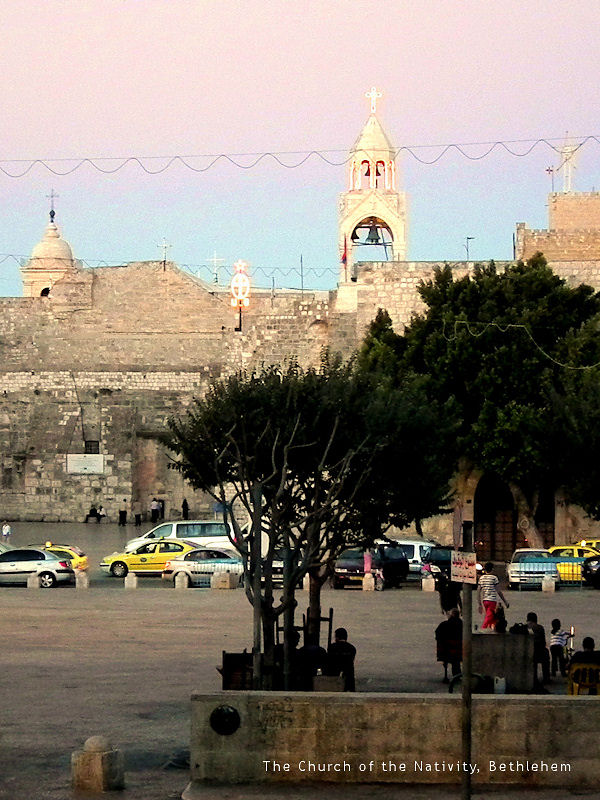
Church of the Nativity, Bethlehem

There I bundled out of the bus dragging my wheeled bag, my precious technology bag over my shoulder. Containing a netbook computer, camera and lenses, digital sound recording equipment, DVD and card readers, cables, plugs and adaptors, with room for travel papers, passport and a bottle of water, this technology bag is neat – but rather a wrench on the shoulder muscles.

The Christian taxi-drivers near the Nativity Church, seeing a Westerner – who of course must be rich – started hollering at me for my custom. You learn how to gesticulate ‘No’. One bright young driver with a pleasant face got my attention, though I still said no to him. I wanted to sit down and have something to eat. He shepherded me to a nearby café and within seconds a pitta stuffed with salad and falafel was set in front of me, along with fresh carrot juice. What a relief! All the taxi-drivers stood round asking questions and smiling, all very amiable once they’d realised I was no source of business for them right now.

I rang Ibrahim, but no answer. Did I have the right number? Hmmm, what next? Leaving my bag at the café, I went wandering. As I returned, the young taxi-driver signalled me: “I help you. What your name?”

He took me to the Hope Flowers School at the far end of Al Khader, west of Bethlehem, but it was locked and deserted. On the way I noticed that the town was in visibly better shape than on my last trip in 2005, just after the second intifada, during which the Israelis had wrecked Bethlehem and still then staged periodic incursions and searches. But now the separation wall had been built and Bethlehem, imprisoned behind it, was safer and more relaxed. The security wall protects Palestinians from Israelis as well as vice versa. This relaxation of tension was visible on the streets. Another sign of progress was the condition of the trees in the central reservation of the Hebron road leading to Al Khader.

These trees, planted in 2005 by the Earth Stewards, were all intact and growing! I had joined them – mostly Dutch, German and Austrian green activists – in a tree-planting project organised by Hope Flowers. Ibrahim had known the Earth Stewards when he lived in Holland in the 1990s and he had organised PeaceTrees as a joint project with them in Bethlehem, not just as an ecological but also as a social empowerment project. The trees’ continued existence showed that something had worked – the locals had got the message.

During the intifada people had lost hope. It had followed a period in the 1990s when peace and progress came close and then ebbed away, prompting the uprising, a mass expression of sheer frustration. Israeli measures taken against Palestinians were terrible and Bethlehem had been an epicentre of conflict – remember the shoot-out at the Church of the Nativity in 2002? By 2005, when the intifada had subsided, the locals needed jump-starting with initiatives to help them improve their lives and encourage them to invest energy in the future. The regular experience of seeing houses demolished, parts of town wrecked, buildings shelled and people carted off had given Bethlehemites a feeling of futility and pointlessness.

By planting a large number of trees in a very visible place – the main road’s central reservation – we caused mild fascination at first, followed by interest and questions. Then people joined in, then energy and enthusiasm grew. We wrapped up the project by saying, “If you don’t look after these trees, they will die, so it’s up to you” – and we left. The trees survived: someone had made sure they were watered and cared for. PeaceTrees had worked.

The Old Town of Bethlehem

As the young taxi-driver and I returned to central Bethlehem, he told me that he was a student of accountancy in Hebron and drove his uncle’s taxi to pay his way. He wanted to be my friend and I promised I would find him again. Subsequently I had a number of lifts with him, and only half the time did he charge me. He dropped me off and I headed up to Manger Square, standing there awhile, taking it all in. A wide, large square, milling with people.

A man approached, asking in quite good English whether he could help me. Adnan took me to his shop near the square, where he sold souvenirs – olive-wood religious objects, Arabic dresses, Bedouin rugs, decorative inlaid boxes and allsorts. Some of the woodwork was exquisitely carved and the rugs and clothing came in lovely colours, all with a very hand-made feel to them. Mint tea appeared and people came and went as we talked. Adnan discovered I was a webmaster and asked if I would help him make a website – I said I would consider it. He rang a friend who knew Ibrahim – an answer would come soon about where to find him.

I got out my computer and skyped my cousin, then my son and then my ladyfriend back in England, to tell them I’d got here. I wanted to share it with them. A small crowd gathered round, goggling at this visitor’s neat technology, and they said hello on Skype, all very thrilled. My son just said, “Cool”, and carried on tapping on his computer. Then he looked up and suddenly saw several faces looking at him through the screen.

“Who’re they?” “I’ve finally got to Bethlehem, and these are some of the kids here”. “Cool”, he repeated, in his perpetually unfazed way, still tapping keys.

My ladyfriend was dumbstruck at talking live to some real Palestinians. Palestinians are people you hear about on the news, you don’t expect to talk personally with them on Skype. Everyone helloed, and she helloed back. While I was talking to her, the calling to prayers started up – really loud, since we were right next to the Omar Mosque. She was visibly moved at the sound, as it hit her that I was really there. She and my cousin were serving as ‘ground control’ back in England, and it was fitting to share with them my first taste of returning.

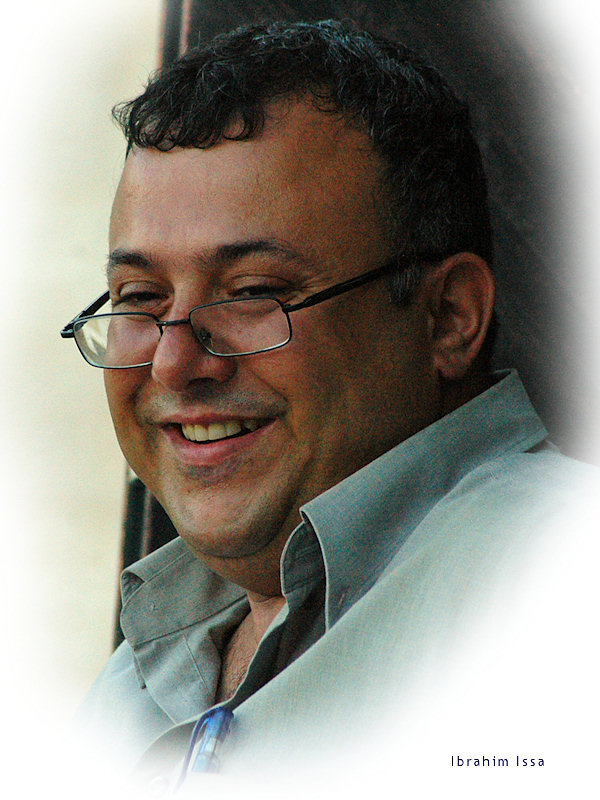
Eventually the grapevine worked and Ibrahim Issa came to fetch me. I’d last seen him five months earlier in England during one of his speaking tours. He had looked tired, not really wanting to stand on stages giving speeches, and I was concerned about him, wondering whether he was burning out. But today he was his sprightly self, at ease, smiling. He’s rotund, like a cuddly bear, with a character-filled face and a bright countenance.

I feel brotherly toward him, as if we had made some mutual contract way back in the mists of time, yet I’m old enough to be his father. We hugged in the middle of the street – much to the interest of onlookers – and looked at each other for a long moment. I knew he felt some relief that I was back and had probably wondered whether he would see me here again. Foreigners come and go, saying they will return, but only a few reappear.

Hope Flowers had started as a kindergarten in 1984 and by the late 1990s it was a school with 500 pupils. It shrank after 2000 during the second intifada, as the Palestinian economy tanked and hardship set in, but now the school is growing again and a community development centre was started in 2004. I’d been working with the school from Britain, running its website, writing and editing grant proposals, newsletters and outreach material. Now, one aim of my trip to the school was to re-work the website, then perhaps to edit some teacher-training manuals, possibly even help Ibrahim start writing a book about peace education. That was the idea.

The story of the Issa family and Hope Flowers is poignant. Ibrahim’s father Hussein, an advocate of non-violence, found himself in a dilemma some years ago when Ibrahim narrowly escaped paralysis, shot through the back by Israeli soldiers. Later, Ibrahim saw Palestinian radicals accuse his father of treason because of his commitment to reconciliation. The family was under attack from both Israeli troops and Palestinian radicals. Ibrahim knew the situation was complex but, to quote him, “The most painful thing for me as a child was that I couldn’t recognise the difference between a peace activist and a collaborator – it took years until I did. Palestinian radical groups also couldn’t recognise it. When I grew up I started to see the difference”. But some Palestinian radicals and Israeli Zionists still don’t see that difference, and this makes life risky for people who work for reconciliation.

In 1991 Ibrahim moved to Holland to get out of harm’s way. He studied engineering, got a job and became a permanent émigré. He attended courses on ecology, non-violence, community-building and psychotherapy too, mixing with interesting people, some of whom later came to do stints as volunteers at the school in Palestine. Then his father died unexpectedly in 1999 and Ibrahim was asked to return. This involved leaving a secure, promising Dutch life to jump back into the Palestinian frying pan, taking on a burden most sane people would turn down flat. I greatly admire his steadfastness.

Hope Flowers

Returning to Bethlehem in the midst of the second intifada, Ibrahim joined his sister and his mother in running the school. Later another sister, a teacher, joined them, as did Ibrahim’s new wife, once a kid at the kindergarten. They run the school with a remarkable team of teachers, managers and supporters. It felt right to work with these people – I like them all very much.

Now Ibrahim and I went to a café, had a drink and munched nuts, smoking apple-flavoured hubble-bubble from an ornate water pipe. We discussed what I would do during my three months’ stay. There was certainly a lot to be done and three months might not be long enough.

Ibrahim told me of difficulties he currently had with a faction in the Palestine Authority (PA). It was the product of an awkward public debate concerning the value of negotiating with the Israelis. Ibrahim, a committed peacemaker and bridge-builder who had had regular contact with peace-oriented Israelis, was under suspicion as a collaborator, and this was complex. The PA, seeking to establish control over an ungoverned non-country, had applied a mixture of Western regulations and Arabic bureaucracy, with not a few personal fiefdom issues thrown in, making life difficult for ordinary people. A peacemaker in a conflict-polarised society is susceptible to accusations of collaboration.

The discussion in Palestine about how to relate to the Israelis was heated and ongoing. Palestinians had bent over backwards to comply with international agreements as part of the 1990s peace process, and yet in Palestinians’ perception the Israelis hadn’t budged an inch on crucial issues such as settlement-building, land-seizures, Jerusalem or refugees. The result had been continued losses for Palestinians and a growing number of them were now convinced that negotiation and accommodation were pointless, even though very few wanted any return to conflict. Negotiation had been worth trying in the 1990s, but it had not delivered. It’s a tragic predicament: if you neither want to negotiate nor to fight, what do you do?

Hope Flowers had been teaching the kids Hebrew to help them understand the Israeli mindset. When the kids were older, this would help them deal with Israeli people and officials. The school set out to help the kids understand the perspectives of the very people who had killed or jailed their own fathers, uncles and relatives. This was not a matter of agreeing with or sucking up to the Israelis, as some suspected. It was a matter of following the old military adage, ‘know your enemy’. It was a key issue in preparing Palestinian children for a time when the nightmare of conflict ends – which it shall and must do one day. But in 2009 that day was receding and there was simmering frustration in the air.

Some Palestinian officials didn’t like what the school was doing and didn’t want Palestinians having connections with Israelis. Ibrahim, who had learned to be patient with Israeli arbitrariness and obstructionism, even having been arrested by them for allegedly harbouring terrorists, understood this viewpoint well. But as an educationalist and peace-builder, he stood up for dialogue with people on the other side just as his father had done.

Westerners, with a tendency to see things in black-and-white terms, oversimplify the intricacies of this situation, failing to understand such sharp dilemmas. “Why don’t Israelis and Palestinians just make peace?” Well, as Rabbi Lerner, a Jewish-American thinker, once pointed out, both sides suffer from PTSD, post-traumatic stress disorder – they’re super-touchy, super-reactive and suspicious – and untangling this mess isn’t as simple as outsiders would like it to be.

It had taken me some 20 years to understand the intricacies of the Israel-Palestine situation, and only visiting the place had brought better comprehension. I started as a peacemaker working on both sides, with the best of neutral intents, but found myself gravitating to the Palestinian cause. I was not turning against Israel, but I felt that they shot themselves in the foot by the hostile attitude they took toward Palestinians. I work where I can most assist, and while Palestinians seemed to appreciate my input many Israelis didn’t seem to think there was a need for me to be there. So I ended up working with Hope Flowers.

That’s also why I had sobbed from the soul when I arrived in Jericho earlier that day – there was something personal and emotional about all this. As a British dissident, I had had nonsensical and painful experiences that would shock many people, so I could empathise with the Palestinians’ dilemma. I saw Ibrahim’s dilemma too – that of a peace-bringer whose work is regularly screwed up, not just by Israelis but also by the double-standards of Westerners and the militancy of some Palestinians.

Perhaps Palestinians embody something that exists within many of us when we are repeatedly let down by forces beyond our control, when Murphy’s Law applies itself over and over, or when the narrow interests of the powerful few prevail incessantly over the needs of the majority. It’s a futile feeling that, whatever one does, nothing will really progress. This kind of thing happens everywhere but, in Palestine, people have internalised it and adapted to it more than is healthy for them.

I stayed at the Issa family’s place that night and next day Ibrahim took me to the school, where I was to stay in the volunteers’ accommodation on the top floor. Back again – and now to work.


Things don’t change a lot in Palestine, but one good thing that has changed is that Hope Flowers’ methods and philosophy is now being replicated across the Palestinian school system in the West Bank – this was a major breakthrough a few years ago. However, the school still struggles on financially under, as always, difficult constraints.

The book’s website is here: www.palden.co.uk/pop

Popping Clogs & Kicking Buckets

All about transitioning

As a cancer patient, for me it’s the complications that are now more problematic than the cancer itself. Recently I had some potentially bad medical news about a new complication, and this of course brought up a lot of stuff, provoking some deep processing and cogitation.

So this podcast is about dying – something that is optional for none of us, though more pressing for some than for others. If you get born, you’ll die, and that’s that.

But there’s a bit more to this too, and this podcast ranges around in some of the nooks and crannies of an area of life we don’t look at very much.

Recorded in the woods down below where I live, and introduced by the sound of the stream in the woods.

With love, Palden

Being in the World

And out of it too

Carn Gloose and, behind, Kilgooth Ust or Cape Cornwall

I’m lucky to be a writer. With my cancer-derived disabilities I can still more or less carry on with my work. If I were a farmer, work would be mostly impossible and my life would fall apart. There’s another side to this though: I get fed up with sitting at the computer – being nerdy and scholastic, I’ve done a lot of that over the last fifty years! My major hurdle at present is fatigue, though even that has its compensations because the rest and the floating-off that fatigue induces gives me space to cogitate things more than I’ve ever done before.

So my current book is taking time, but I’m now on the finishing touches – checking footnotes, indexing and sorting out pictures and maps – ready to send to a printer and publisher I do not yet have. That’s the next hurdle. Fatigue means I have to take things one thing at a time – handling complexity, arrangements and details is distinctly difficult. But I’m really pleased with the book.

The ‘council circle’ at Bosigran cliff sanctuary

In some respects it’s rather obscure – about the ancient sites of West Penwith, here in Cornwall, and what they show us about ‘megalithic geoengineering’ – but in other respects I’ve never been able to give a book so much thought and consideration. It might be one of my best (it’s my eleventh). There has always been a rush to meet a deadline or before other things start happening. But I don’t have a lot happening, and I’m no longer striving to be a successful author – I’m seeking simply to pass on my knowledge to whomever will benefit from it, before I go.

A dear soul-sister, Sophia, suddenly went recently. She was about to stage a big exhibition of her remarkable art and ceramics when she died quietly in her sleep, in her early seventies. It’s one of those deaths that was a surprise – she was in good enough health and spirits, with good prospects. Yet there’s a feeling it was not actually wrong that she passed away there and then. Sophia is a deep and sensitive lady who has done consistent spiritual practice (Subud Latihan) for a long time. We worked together on local and world healing in the 1980s, with an occultist called Gareth Knight and others. Her angels clearly, cleanly and calmly took her out at what they consider exactly the right time.

It’s stirring, when someone suddenly blips out like that. But we’ll probably meet in heaven when I blip out too. It doesn’t bother me the way it seems to bother a lot of people who, in their confusion over death, seem to experience such loss and regret when a person dies. Some people judge that I don’t care when I say this, but they misunderstand me. Yes, there’s an enormous gap, a silence, and it raises big questions about life, bringing up mysterious feelings, and the person is no longer physically present, but why do people stop talking to a person when they die, as if they no longer exist? I’ve sat at funerals where the departed soul says to me, “But can’t anyone see I’m here?“, so I talk to them. Then they, and the attendant angels and beings, seem to wonder why I am not running the funeral myself.

At times in the past I have done so, encouraging the living, standing around the grave, to address the person directly in their thoughts and words. We’d do a talking-stick circle where everyone could say their bit and recount their chunk of the life-story of the walked-out person and their abiding impressions. I’d encourage everyone, silently to themselves, to say all they needed to say to the person, to round out their relationship, and to hear the departed person’s truth, and thank them for their presence and for whatever, knowingly or not, they taught us while they were alive.

Anyway, Sophia is now very much at peace and in good hands, and she is going home, and the quiet manner of her departing was true to form, for her. A death like hers leaves the rest of us in an altered state because part of us goes with her, drawing attention to the wider and deeper meaning of life and what we are doing about it. This leads me to my latest podcast about Soul Education – recorded in early September. It’s not about death but about life. My starting premise is that we as souls did not begin our evolutionary journeys here on Earth, and that we come here for two primary reasons: to learn and to make a contribution.

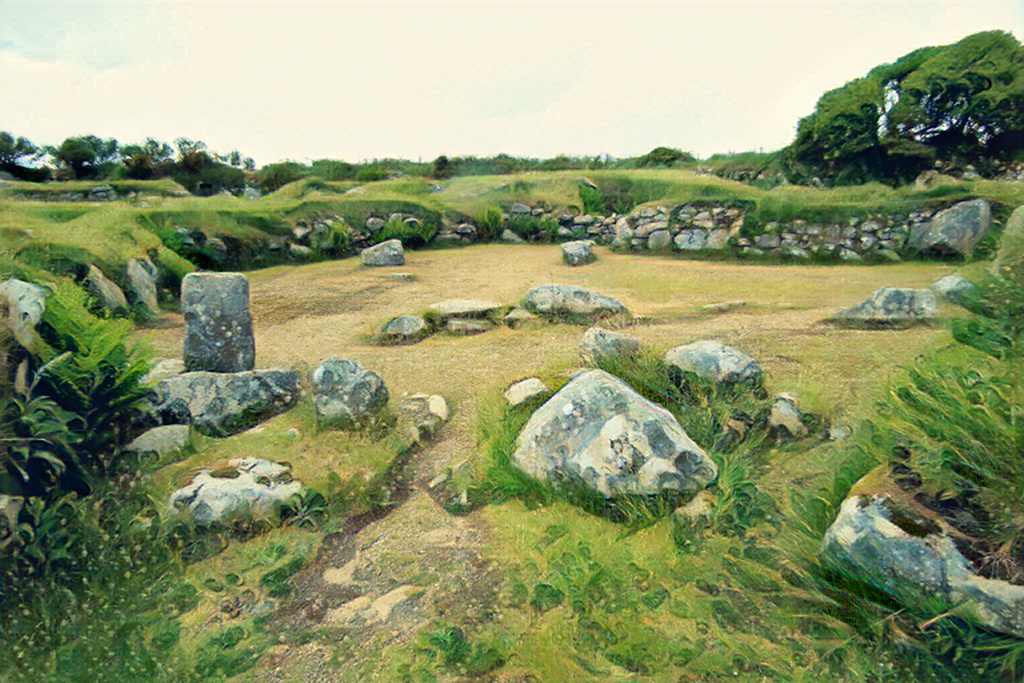
Carn Euny iron age village, 2,000 years old

Cancer has been something of a gift because it gave me an indefinite though possibly imminent death sentence, which has brought forward this question of the contribution I have made and still make. It sharpens me up, in my constrained and slightly helpless state. Soon after getting diagnosed, in mid-November two years ago, on my back fighting for my life and amidst my pain, I was moved to write down all I knew about prehistoric culture – something I had not properly done before. This knowledge would be lost and wasted if I didn’t get it down. It gave me a focus through the next two years, and now it is virtually complete and ready to ‘put to bed’.

I now face a new question. My life might (or might not) be longer than the few years I expected. But I do not know what will happen, especially since, just two weeks ago, I was again not far from death’s door. I need to face the world and to supplement my income, since my pension and allowances no longer cover all my needs and costs and I have nothing to fall back on. But I cannot make arrangements, keep timetables, remember details and deal with the intricacies and obligations of conducting business – I don’t even know what state I’ll be in next Thursday, next month or next year, so making promises and agreements is just not realistic.

Working for a living (such as editing books or doing astrological sessions) is not easy now, even though I’m a solid workaholic. You see, when I fall ill, I cannot sit at the computer renegotiating arrangements with multiple people and giving them a reliable answer when they ask when I’ll be better and back to normal! If I died suddenly, lots of threads could be left untied. My recent health encounter took three weeks and I’m worn out, running on three cylinders. I’m destined to fail in dealing with the details of working for a living, and I know it, and I’ve had instances already where I have let people down or forgotten something, because I’m in an altered state with chemo-brain and fatigue. Or they’re in more of a hurry than I can keep up with.

I’m just not ‘up to speed’ or ‘in the loop’, and neither should I be. I’m still shielding. But I’m a Virgo with an inbuilt need to do my bit. I need to focus on what actually I can do, such as writing this cancer blog until I no longer can, or churning out podcasts and my forthcoming book, or doing psychic work and playing a part in the lives of people close by and far away. I do these not just for self-entertainment, though they do keep me occupied, but because I believe they bring some value.

Neolithic Chun Quoit as seen from bronze age Boswens menhir

Last week Lynne picked me up and I went to stay in Devon with her. That worked well, and the change and being with her after a too-long pause was good. But while I was there I encountered another issue: electrosensitivity. It has increased since I got cancer. It’s a blood cancer, and iron-rich blood is electronic and magnetic. Lynne is herself electrosensitive, so this is not what otherwise could be a difficult issue between us. But it affects my and our social life a lot.

Most people don’t understand radiation, and many think they are exempt from its effects when this is incorrect. Problem is, it takes me just three seconds of close exposure to mobile phone or wi-fi radiation to set me off for 36 hours. I go through a sequence of cumulative symptoms, depending on the amount of exposure. It starts with an agitated, embattled, uncentred, inarticulate, locked-in kind of feeling, progressing to a high-pitched whine in the centre of my skull, then some sharp, pulsing, show-stopping headaches, then a thumping, irregular heartbeat, then distinct feelings of flu-like illness lasting about 24 hours after exposure has stopped. This is upsetting, especially when it’s friends, loved ones and interesting people killing you. No one understands what they’re doing because it is not recognised as a problem.

From my own perspective, I think that EM and nuclear radiation probably account for at least 20% of the environmental damage, climate change, social stresses and health problems happening right now, globally. The world doesn’t want to know. Many people groan when I come up with things like this, and I have been criticised many times for awkward utterances, only to watch them come true in the longterm. I’m not right every time, but I’m correct enough times for it to matter. It’s the price of being a seer and choosing to live ahead of our time – I’m sure a lot of you know that one.

I turned vegetarian-vegan in 1971, but now is it no longer regarded as a deficiency or weakness, but that took 40-50 years. Twenty years ago I was involved with ‘talking to terrorists’ (Hamas) at a time when it was risky and taboo. But now, British soldiers tell us we should have talked more to the Taliban in Afghanistan – ahem, yes, precisely. It’s painful, living with this wilful blindness and watching the wider costs and hardships rise so high. This is the case now with the question of EM radiation – it is nicely invisible and deniable, and mobiles and wi-fi are so useful, but it’s harming us and our world. Even Extinction Rebellion and the Green Party have a blockage over this issue, and I do wonder why.

Caer Bran, the possible bronze age parliament site for Penwith, as seen from Grumbla in the valley below

It’s past lunchtime and time to go to bed. Fatigue is funny: when it comes, it’s like pushing through treacle. The law of gravity gets switched up, my mind dulls out and it’s like being muffled in wool. It can arrive quite suddenly, often in the afternoon or following a lot of activity. The secret is to accept it and not grind myself up feeling guilty or inadequate. I’ve pushed energy writing this blog, and now I need to put my body-mind system into freewheel for a recharge. Besides, it’s a grotty, rainy, grey, blustery day, and bed is the best place to be. With a cuppa, a few munchies, music by Brian Eno, and a good case of metaversal megaflop.

Thanks for being with. This time you get a podcast too, introduced by a nightingale.

With love from me, Palden.

www.palden.co.uk/podcasts.html – for the latest podcast from the far beyond
www.palden.co.uk/shiningland/ – about my book Shining Land
www.facebook.com/palden.jenkins – my Facebook page

And the pics here are made for but not included in my book.

Royal Cornwall

Going through the Grinder

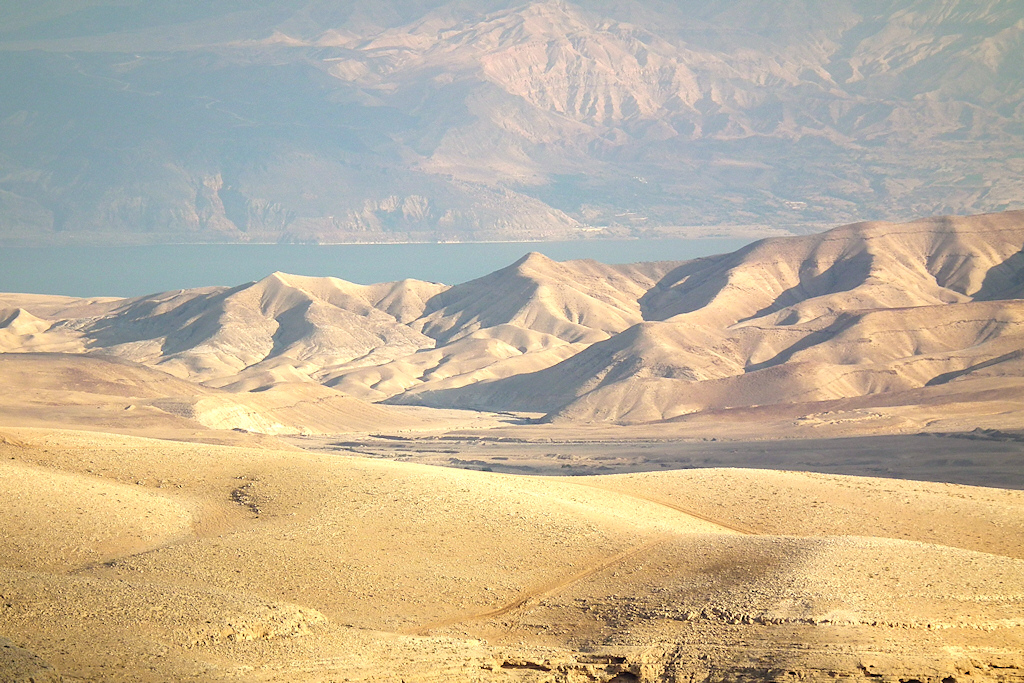
The Judaean Desert, Palestine

I was in hospital yesterday, Monday. I’ve been ill for two weeks, and four days ago it got a lot worse. I was exhausted, in pain, fatigued and raked out. My stalwart helper Penny took me down to Penzance hospital on Sunday evening where, after the customary endurance test of waiting too long, a rather brilliant young doctor prescribed me antibiotics. Although I really dislike antibiotics, and have had to rebuild my biotic system over the last year since the last load, I knew I was in real danger, and it would be necessary to nuke it. Modern medicine is good in crises.

For me, it’s a matter of strength of spirit too. Recently I’ve been getting worn out, and my survival capacity has been flagging. In recent months I’ve been struggling somewhat with circumstances around me, and when the illness started I wasn’t strong. As the two weeks of illness progressed, I was getting exhausted. As it happened, Lynne was ill at her home too (much from overwork, and if there were a proper allowance for family and friend carers, such as £500 per month, down from the £1,500 that professional care would cost, it would make such a difference for her and for me).

In post-lockdown Britain we’ve gone back to the ‘no time’ syndrome – the basic psychosocial cause of the care crisis – which, for many people needing care and support, means we just have to sort ourselves out quite a lot, whether or not we actually can or should.

I am still shielding – being on immunosuppressants, I have to avoid infection. Some people don’t respect this, and one person who is most likely to have given me the infection is one of those. But, on the other hand, people who are more mindful of infection tend not to visit at all. Then, some people over-care and want to help too much, and this is awkward, when all I need is friendship – and if I need anything I shall say so. Some people chatter too much, and when they see me get tired they suddenly leave – when really I just need them to slow down, accept my different states of being, and simply be here with me, or even bring their knitting. Much of the time I don’t need fixing, healing or helping – I’d just like some company.

But as an astrologer, I know this is part of my deeper process too. Those of you who are astrologically literate will probably chuckle when you hear the major transit I’m on: Neptune opposition Saturn. It’s a test of spirit, a state of adversity, a loss of control, an uphill grind, and… you’re on your own with it, whether you like it or not. The fascinating thing is that, even though I was quite well set up in my life circumstances, in the end, and at the time I needed help, circumstances had it that I had to go through it alone. And here’s the rub: on a deep level, I manifested this. It’s me, my pattern. Realising this instead of complaining about it, I began to make a turn-around.

Hebron

Within a day I was in the hands of the young doctor in Penzance, probably Indian, who referred me to the Royal Cornwall hospital at Treliske, Truro, 45 miles away. Yesterday, when I told the doctors at Treliske (one Irish and one Russian) what he had prescribed for me, their eyebrows rose, and they said he’d done exactly the right thing. This is the other side of the Neptune transit: my guardian angels were with me.

Although it was hard (mostly involving waiting, again) at Treliske, some quite remarkable things happened. In hospitals, there are a lot of people in pain or an altered state, and to some extent they are helpless. Some of the conversations I had were remarkable, and I was able to bring some people something to think about, or a smile, or a shift of mood – and they to me. The nurses and doctors were amazing too. The Nigerian x-ray technician was surprised when I asked where in Nigeria he came from. “No one ever asks me that”, he said, pensively, “They just think, ‘Ah, he comes from Africa'”. He came from Kano in the north, so I greeted him in the Islamic way. Here’s this lovely black guy in Cornwall, an overwhelmingly white region, and his face lit up.

There was a guy in the A&E waiting room who was under guard of two police. They’d brought him in for a post-arrest injury check. The guy couldn’t handle it – he was a laddish guy, physically quite powerful, who solves every issue with a fag and a can of beer, or a flailing fist. He was really in difficulty – he couldn’t face himself and his situation. Others moved away but I didn’t. Eventually, after an outburst, I eyeballed him with my rather penetrating eyes and said, “I’m a smoker too”. He was surprised. I had him nailed. “And I’d like a smoke too. But it’s not going to happen.” He went quiet.

Then I said: “I sat in jail once and it was a real shock. But, d’you know what? It was a turning point in my life. It made me make promises to myself about how my future was going to be.” Pause. “And good luck, matey, and I really hope this is a turning point for you.” At that very moment a nurse came out, calling my name, and I hobbled off with her for a walk down a few endless corridors.

Later, one of the police asked me, “So what have you been doing in your life to be able to do that?”. I told him this guy was easy compared to some Israeli settlers. I also said that meditators like me would say this guy had a restless monkey-mind – he couldn’t face himself, couldn’t just sit. So I addressed his monkey-mind and the guy was stunned that this stranger was giving him attention and speaking to him sympathetically. It changes the agenda and shifts the monkey-mind into a different gear. “My wife says things like that – she does yoga”, said the policeman.

Tuwani, a settler-harassed village south of Hebron

So, I’ve been going through another chapter of soul-education. On the one side, life has been really hard, and my batteries were getting low, and I was in danger. On the other, I was being given some really meaningful interactions that lit me up. Particularly concerning one thing: I’m an inbuilt social activist and humanitarian and I’ve been really missing it. I miss the engagement, the interactions, the risks, the full-on challenges. But now I cannot mix with people easily and I cannot travel. I’ve been crying tears over this recently. Yet here I was being reminded that, although in recent years I’ve been focused on Palestine and the Tuareg in Mali, humanity is everywhere in need. In our society, hospitals, police and first-responder situations form the frontline. And from a soul-education viewpoint, the people involved, as victims or as rescuers, are at the deep end of human experience.

And here’s another rub: we all have our stories, but every one of us will visit this frontline personally, sooner or later. This place of vulnerability and dependency. How we deal with it very much affects our experience of it and what we gain from it as an evolving soul. Ultimately, it concerns dying. It concerns facing our stuff. It’s best to do this ahead of need. But if we don’t, when we’re faced with it, it’s good to roll with it and use the experience to clarify something deep and profound – life-secrets that we often don’t get until we’re really flat on our backs and helpless.

So today I am back home, still fatigued, still quite unwell, though something is turning round. I must return to Treliske next Monday for an assessment. The last two weeks have been really hard. You’ll get a sense of this in my next podcast, recorded from bed in the depths of this crisis a few days ago. My hope and intention is to keep blogging and podding until I no longer can. After that, it will depend either on your psychic capacities or on someone doing some blogging and podding for me.

Two old Bedouin meet a Palestinian Christian, Bethlehem

But there’s more life to be lived first. I’ve been reminded that I’m in the lap of the gods, and all plans and statements about the future are provisional. Lynne and I have both been floored and bedded, 100 miles from each other – a strange solidarity of such kindred souls. And Penny has been a star: driving to Truro twice in one day is not the greatest of pleasures. As for me, I seem to have got through another crunch – though there were times I began to wonder.

God bless the doctors and nurses: they’re overstretched and they handle it well, but once they get to your case they can be brilliant. I really liked the Irish doctor. Once he’d done his doctoring duties he voiced concerns over Brexit. I told him that, on behalf of my fellow countrypeople, I wished to apologise to him and his fellow Irishfolk for the way we have seriously let them down. Again. He took it with a smile.

One thing I found interesting was that, though they all practiced due diligence, the doctors and nurses did not seem anxious about Covid. In fact, as I was leaving in the late afternoon, I was asked, almost in passing, whether I’d had the jab or not, and the nurse who asked seemed quite unworried when I said I hadn’t.

As I say in my podcasts: thanks for being with – there’s more to come.

Love from me. Palden.

Out Of It

Inner journeys in the far beyond. And back.

I was awake at 4.30 this morning, listening to the wind rattling in from the Atlantic and wondering which would be better – stay in bed, lost in hypnopompic wanderings, or get up, light the woodstove and start my day? I got up. I’ve been ill this week with a weird infection. Trouble is, when you’re on cancer immunosuppressants, this is to be expected, and I was due to get something sometime. Still shielding after two years, my immune system hasn’t had much exercise. And I’ve been in bed.

But my immune system, though under test, seems to be in good enough shape – I seem not to be under serious threat. I’m so lucky to be able to lie on a raised, built-in bed from which I can look out of my big windows, even though today I’m watching the wind strafing the trees and the birds getting blustered. I’m on Vit C, antioxidants, homoeopathics and allsorts. I lie there with a porage-head, aching body and swollen glands, though I have a normal temperature. I watch the world outside and at times get a feeling as if the folks back home are using my psyche like a camera to get a look at it.

There’s always something to gain from an illness. In the previous weeks I’d been feeling scrambled, dealing with the intricacies of being semi-disabled and mentally constrained in a busy world that has no time for folks in my state. But this illness has zeroed all those concerns. It took the past and future away, dumping me in the moment. And I’ve been travelling again. After all, I’ve lost my driving licence and I’m rather a traveller-soul, so I’ve substituted wings for wheels.

One of the Boscregan Cairns, Nanquidno, West Penwith – a paltry 4,000ish years old

Someone wrote a while ago, asking me to talk more about my meditation methods. Thanks for that, and I’d love to. But there’s a problem. I don’t follow a method. I just follow my well-worn, habituated ways on a pretty spontaneous basis. I do what comes up. That doesn’t answer the question, but in a way it does.

You see, I started exploring consciousness on acid and other psychedelics in the late 1960s. This was a form of direct access to deeper realms, and that’s where I started. My first experience of meditation was when I was sitting in jail (as a student protester), sharing a cell with three Sikh immigrants. I asked them what they were doing when they were praying and muttering to themselves. They taught me something close to Vipassana, mindfulness. Bless them – I never saw them again. They were probably chucked out of Britain.

Then, by age 25 I was doing Buddhist meditation with the Tibetans. This is far more magical than mindfulness meditation, involving visualising the deity sitting on top of your head (in detail), repeating the mantra and making prayer, then letting the deity dissolve into light, which floods into you, so that you become the deity. Then you stay there, in stillness, being the deity. This trained up my inner sensitivities, and the lamas’ blessings, company and teaching really helped. They healed me after the trauma of being in a failed revolution and being hounded and exiled. I had also had a near-death experience at age 24 which had scrubbed much of my memory and identity, and their protection truly saved me. What memory I have of my life before age 24 is reconstructed, not direct – except, interestingly, for glimpses of spiritual and deeply moving experiences earlier in my life. Those memories seemed to have been stored in a different part of memory.

But then, later, one of the Lamas said I was not here in this life to be a Buddhist. This was a shock but, within a few days, I knew this was one of the greatest gifts they had given me. I had always been eclectic, and my psychedelic past had given me a direct experience of the world of spirit. The Lamas had plucked me from the jaws of disaster, put me back on my feet and sent me forth.

The situation in the early 2020s

By then I had realised I was quite psychic. This isn’t special – any more than, say, making music or cooking food. There’s a burdensome side to it too. Everyone can do it, but some are brilliant at it. I wouldn’t call myself brilliant, but I’ve made deep choices to pay attention to and increasingly trust my inner promptings, funny feelings and periodic inspirations. The more you listen, the more you get it. But here’s the key bit, and this applies to meditation too. You have to choose to give yourself over to it, to learn how to set yourself aside. You have to give permission to energies and entities bigger than you to participate in your life. You have to learn to trust the capacity of your soul to learn, and trust that all will be well. You have to lose your fear. All this happens bit by bit, as you cross various thresholds. It’s a life’s work.

To get back to the question… at present, therefore, I practice a number of things. I do quiet meditation when needed – it’s important to come home to myself, escape the complex spider’s webs of human concern and see things more as they actually stand. As a cancer patient, I do a healing session with my ‘inner doctors’, once every few weeks. I let them examine me and my energy-bodies, and operate on me. I find it really works.

Sometimes I just sit there with booming brains and a never-ending stream of neuroses – though giving proper space to them can also be healing, to a point. Sometimes I do world-healing work, bringing light and healing to other cancer patients worldwide (what Tibetans call tong-len), or to trouble-spots, or I visit crisis places and surround them in light and protection (similar to lightworking), also working to unblock and unconceal things that bring darkness, pain and obstruction to the world.

Sometimes I do inner aid work, where I carry out more specific humanitarian-type work in crisis zones I’m focused on, or I pay attention to a particular issue – mainly global (I tend not to get involved in British politics with this, because of risk of personal bias). Afghanistan has had my attention recently, but I also pay a lot of attention to ignored places such as Yemen, Syria, Myanmar and the Sahel. I do not take my cues from the mass-media. Before this I do some inner prep to get myself in the right state, and if I’m not right, I don’t do it. Afterwards I try to round it up and review it. We used to have a group doing this together, and we’d send in notes of our experiences, so see what common threads were appearing and to observe our work on it.

Sometimes I practice ‘meditative availability’ – I hand myself over to ‘the management’ to let them use my psyche, to give them access to this planet, and to let them do their business through me. Sometimes I go into a stream-of-consciousness, a kind of channelling where I get occasional ‘downloads’ – a bundle of insight that suddenly comes, that sometimes can take weeks or even years to unpack.

One of the stones at Boscawen-un stone circle – a stripling at 4,300 years

And sometimes I sit or lie there feeling utterly useless and uninspired, but I generally keep on with it, because that’s what happens, and it’s part of the game. And sometimes more is going on underneath than we’re aware of. Either way, over a period of years you start notching up loads of inner experience, which interlocks to an extent with daily life, but also it runs independently of it. And there are paradoxes to it: for example, when I’m ill, I sometimes have particularly rich experiences.

Sometimes I scan the consciousness that lies within incoming Atlantic weather systems – in Cornwall we get them full-on, and they carry messages. Sometimes I become aware of old soul-friends, or I spend time with my family, whom I cannot meet in real life. Sometimes I talk with the ancient spirits of West Penwith, the area where I live – sort of inner research. Sometimes I float off, to have completely unexpected experiences. Yesterday, in my illness-delerium, I found myself pulled out and taken back to my home world. That hasn’t happened for a few years. It chirped me up no end to be with my people again – they’re so far away, in consciousness-reality terms.

These are the kinds of things that go on in my so-called, for want of a better word, ‘meditations’.

There’s something important here. When doing innerwork, it is crucial to avoid imposing biases and preferences on others. It’s important also to ask permission – ‘May I?‘ and ‘Can I?‘. If the answer is ‘No’, or ‘Try another approach’, then take note. This isn’t about projecting our own judgements on situations, and it isn’t about ‘right’ and ‘wrong’. The primary orientation is ‘the greatest good’, and sometimes that can mean difficult stuff. For those of you interested in this question, there are two links below that discuss the issues more fully (stuff I wrote in 1994 and 2002).

It’s time to end and I must return to bed before my energy-batteries run down. I’m quite unwell, but it’s funny how the psychoactive component in some illnesses can churn up interesting things. Besides, lying in bed all day isn’t hyper-interesting, so taking a break from it now and then, to dodder around my home doing basic chores, can be welcome. This morning, at 7am, I managed to sort out all my monthly payments – phew. The worst bit is answering those anxious messages asking why I hadn’t answered the previous message. When you read this blog you might get a different impression, but the true and short answer to the inevitable how-are-you messages is, ‘Half dead, and still alive!’. But I did manage to write a blog.

Bless us all. We need it. Then spread it around. Lots of people need it. Especially the people we don’t think of so often.

Love, Paldywan

Two articles on consciousness work and psychic work:
About doing consciousness work
Psychic conflict resolution work

Truth Time

A personal podcast about seeing and struggling through the bogs and brambles

We choose what we want to see

Here’s my latest podcast, recorded on Saturday 28th August.

Truth time.

It’s a personal one, this, and it concerns revelation. Uncovering. Curtains opening. Seeing things as they actually are and show themselves to be.

And pain, the pain of the soul, and of being a growing soul struggling through the bogs and brambles of evolving truth.

That’s me. That’s you. It’s here:

palden.co.uk/podcasts.html

With love.

Palden