

It’s funny. I’ve always had a strange allergy to Christmas. In recent weeks I’ve been looking into this issue. What is bizarre is that I have lived in the Baltic region – the source of Father Christmas and sleighbells – and also in Bethlehem – the source of the Christ-is-born part of the package. So I’ve lived in the source-places of Christmas but I’m not particularly into it. Well, we all have our weird pathologies.
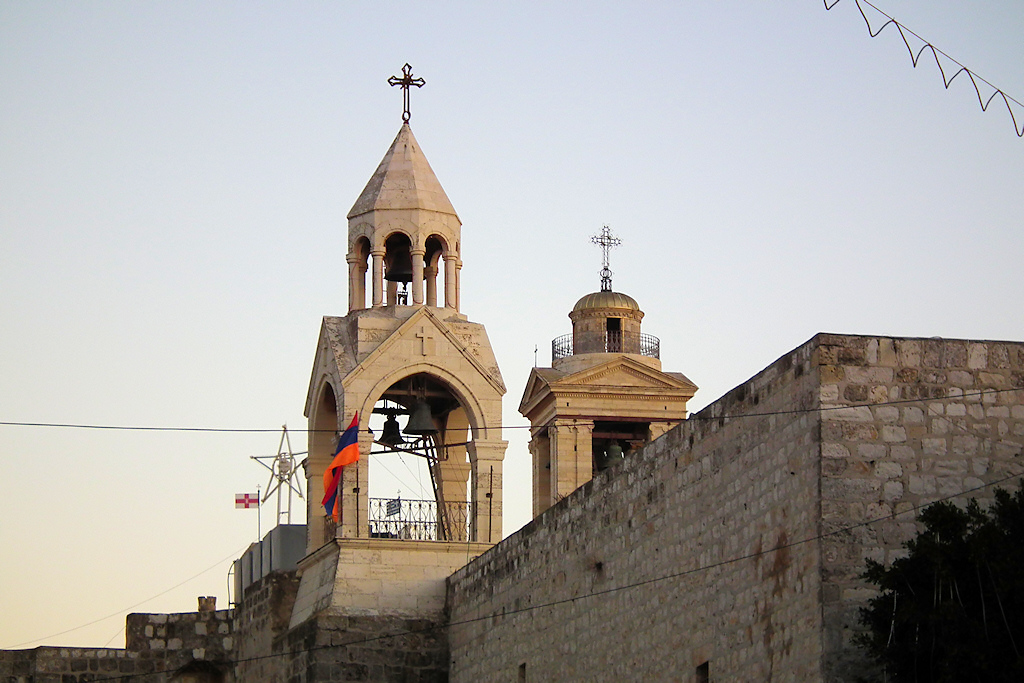
I have fond memories of both places – of genuine sleighbells (except on horses pulling sledges through the snow-bedecked forest), and of crowds of the devout in Manger Square, Bethlehem, during the three Christmases they have (Catholic, Orthodox and Armenian) at roughly two-week intervals. When I was in Bethlehem one Christmas I wrote a blog about it all. The town customarily welcomes 100,000 visitors for the Christmas Pilgrimage, and often it’s utter madness in town. It’s not happening this year: Palestinians are really downhearted, in no mood for celebrating the birth of a holy child, or celebrating anything.
I’ve asked myself why I have this Yuletide allergic reaction. In my case, part of the answer is Asperger’s Syndrome – ‘Wrong Planet Syndrome’. It’s an inherent feeling of outsideness, and it brings both benefits and problems. It’s a bit like the day you land in a foreign country: you understand nothing of the language and you experience the funky quirks of that country with the eye of an outsider – like the smelly toilets in Austria, the crooked telegraph poles in USA, or the way that Australian wildlife is busily noisy in the night and quiet during the day, or the sheer colourful intensity and olfactory richness of India, or the foot-washing places outside mosques in Jordan.
Another factor was the Christmases we had in our rather dysfunctional family. I couldn’t stand the pressure to ‘behave myself’ and to eat food I didn’t really like. Things got more interesting when I was around age eleven, when my parents started inviting three or four foreign students from the School of Tropical Medicine in Liverpool to our house for Christmas Day. Suddenly I was meeting people from Uganda, India, Hong Kong, Egypt and Barbados. But even then I was frustrated because we had to enact the Christmas rituals and suffer the stomachic consequences instead of getting into far more interesting things… and meanwhile my mother worked her socks off, not enjoying Christmas at all, and getting annoyed with my father, my brother or me for reasons I never fully understood.
I’d stand there thinking ‘Why can’t we make this easier and have a good time together without all this fuss and bother?‘. But relentlessly, each year, it had to be done. I never quite figured out why. So perhaps that’s a cause of my allergy.
In Bethlehem, as a lifelong vegetarian, it was always a bit difficult passing the meat market – another rich olfactory experience. I turned vegetarian long ago in 1971 and, for fortyish years, people would regard folks like me as strange and awkward, missing something important in life. In Palestine I got away with it by saying it was part of my religion – and that’s something they easily accept and oblige. However, to a vegetarian, being vegetarian is a perfectly logical and sound way of behaving and conducting one’s life. Being an Aspie is rather like that – you’re regarded as strange, abnormal and in need of correction, while from your own minority viewpoint the world around you is incomprehensible and crazy.

Yet Aspergers is not a programming error – it’s a different operating system. I believe it’s not really a ‘spectrum’ issue either – to me, that’s a neurotypical excuse for not really understanding what’s going on. The way I see it, you’re either an Aspie or you aren’t, since this concerns operating systems, and the spectrum bit relates to an Aspie’s capacity to adjust, or not, to the world around – what’s called the ‘Aspie mask’. How well we adjust depends a lot on how we were brought up – whether we were encouraged to grow into being ourselves or whether we had to conform to imposed behaviours that weren’t our own. That adjustment factor is what gives the appearance of a continuous ‘autistic spectrum’.
It seems that the proportion of Aspies, Autistics, ADHDs and others in society is increasing, and this is an evolutionary change for humanity. It’s the direction the world is heading in and it’s happening for a reason. It’s not a problem, and Aspies and Auties generally aren’t ill or malfunctioning. Actually, there is cause for us to feel sympathy for ordinary, neurotypical people and the templated, frameworked world they live in.
It has a fascinating side to it, inasmuch as, not seeing life in the same way as most other people, your perceptions are inherently out-of-the-box. So it means that you can come up with solutions that seem mad to some and brilliant to others – depending largely on whether their primary optic looks forwards or backwards. It also has a problematic side because it’s then a matter of whether it’s possible for that perspective to be expressed and accepted in society, for our strengths to be taken up and valued. This is slowly changing as society notes a growing variety of interesting public figures with this ‘condition’.
This was my problem. At Christmas, it was the implicit social requirement to behave in certain prescriptive ways, irrespective of how I felt inside myself, and the indulgence, waste and pretence of the relentlessly rolling bulldozer of Christmas behaviours. It grated for me and still does, and my own Xmas-avoidance can grate for other people.
In the 1980s, when I was in my thirties, I decided to clarify things, come out with it and just stop doing Christmas. If I was unclear I’d get drawn back into it, so I got clear and became ‘antisocial’ instead. In the later 1980s I started doing non-Christmas retreats for about ten people in the mountains of Snowdonia, which were fully booked. There would be no Xmas rigmarole, no presents, no special food or boozing, and we’d have silence and personal time up to 2pm each day and then hanging out together after that. The people who came to the retreats would rest, recharge and have some genuine human togetherness, without all the ritual. We had a great time!

Even though I’ve played a significant part in encouraging ceremony and ritual in Glastonbury, in the camps movement and elsewhere, and I’ve designed and led a good number of ceremonies myself, I’m not really into ceremony and ritual very much. I prefer to act spontaneously, picking up on and acting out the drama of the moment without making plans or imposing structures. I think this arises from a psychic sense of participating in a much broader and deeper reality-landscape and dialogue than many non-psychics perceive. If you’re in the right inner state, the spirits of the four directions will come and be there with you without needing much invitation. Like perceptive humans, they get a sense of where the action is and they go there.
I used to have problems when attending funerals. The vicar would be standing there leading the funeral service, while the hovering soul, looking for someone receptive, would find me sitting there in the pews. In some cases they would want me to lead the service, since I would be able more properly to speak on their behalf. But this was not to be, and I had to tell them so, secretly in my thoughts – the formalities had to be adhered to during such a solemn occasion.
The dead and the beings of the otherworlds run their own realities in parallel to ours, and the objective in ceremony is to bring those worlds closer. However, a direct psychic connection renders formalised ceremony less necessary – the action happens in ‘deep thought’. Formalised ceremony can indeed truly entrance people, enacting something that genuinely helps the interaction between worlds but, in my judgement, many ceremonies don’t do this as much as they could. The soul-quality of it can be obscured by the script. While many participants might wish to believe the gods are present, only sometimes do they seem to really feel it in their hearts and through their antennae. So there can be an element of pious game-playing to it. I hope I don’t offend by saying that. One of the things I’ve had to learn is how to say awkward things in an acceptable way – it took until my mid-thirties – and I’m not sure whether I’ve succeeded in that.
So, at funerals I have run, I asked people to address the departed soul directly, not as him or her but as you – since that soul was actually there (well, most times – there can be exceptions). It can be quite upsetting to someone who has just died to hear yourself being talked about and ignored by old friends and family, as if you no longer exist. I’d invite people to participate in a talking-stick process, each giving a short anecdote of their interaction with the deceasing person, addressing them personally as you – we were talking to that person about their life, and this is an important life-review process to help a departing soul understand nuances of their life that they’d perhaps never seen before. People were really moved by this. But I haven’t noticed such a method being widely adopted.

Winter Solstice and Christmas are important times for connecting with and reflecting on ancestry, origins, custom and tradition, but their importance lies not so much in ritual observance or cringeing Christmas habits as it lies in shared feeling and togetherness. It’s a time of social love and mutual support. The past is not important in itself, except inasmuch as it has some relevance to the present as a stabilising though not as a constraining factor.
There’s something wonderful about Christmas – the gathering of clans, the giving of gifts and the feasting. But for much of human history there has been a different context to these: today, in affluent societies, the feasting isn’t really necessary or good for us, and we already mostly have what we need so gifts have acquired hyper-consumption undertones, and while the gathering of families and friends can be wonderful, it can also be mixed in atmosphere, landing up with the TV, alcohol and niggly narrow-mindedness controlling the occasion.
Over the years I’ve found that, before Christmas, I get a slightly humbug, silent-to-disapproving response from many people when I tell them I’m not interested in it. Then after Christmas I’m told I’m lucky, or even envied. Most strange. We live in a very schizoid world. Some years, such as this year, with the devastation of Gaza, or back in 2004 with the Tsunami, the contradictions get quite stark, with people hungry in one place and over-filled in another, and both having a hard time over it. Sorry, but this doesn’t strike me as a good way to design the world of the future.
Anyway, that’s just me – though perhaps I’m articulating something for a few others too. Plenty of people are alone or lonely at Christmas. I am happy for those who are happy celebrating Christmas – it’s good for society to do things like this. And also I think about people who are unhappy about it, either because they’re left out or because they feel obliged to play along with something they don’t really feel right about. Perhaps Christmas needs a redesign to fit the reality of our current time. Less of the consumption, profiteering and excess, and more of the human aspect of things – the peace and the goodwill.
This is important. On the run-up to Christmas, one issue that has been bugging me is that I’m getting too many requests for help from people in many places and situations around the world, and it’s getting to be too much. Human need on Planet Earth is rising. My own sense of peace and goodwill has been under test. I’m currently working on three missions and I have the capacity for one. I’m having to remind people not to depend too much on me, because one day they won’t get an answer – I’ll be incapacitated or dead. I can’t find people to take on these people and their needs for help, all of which are genuine and legitimate. So that presents a problem. They need to get sorted out and back on their feet, and it’s good for us, for our souls, to take on karma-yogic responsibilities such as these. Well, that’s what I have found, at least.
So I’ve been experiencing compassion fatigue. Too many people asking for help. I have to remind them I am not a public-service help agency – I’m an old crock running on three cylinders. This fatigue has been accentuated by a need to re-focus on my own life – after all, living with cancer is a wee bit challenging – and on keeping my own head above water. If I don’t do this, I might well have a shorter life, meaning that I won’t be here any more for these people to contact. But then, to be ruthlessly honest, perhaps I need them as much as they need me.
But then, after I pop my clogs I’ll be Upstairs, accessible at least to those who attune their inner devices sufficiently and sign in to the dialogue. It’s certainly possible for me to tap on the top of people’s heads, or to walk into one of their dreams but, even then, it’s a toss-up whether they will notice or respond.
If you see things from the viewpoint of the ancestors, it’s difficult for them when the majority of people disregard them, or think of them as fantasy, as imaginary or even hauntingly disturbing. Or people shut off their receptivity by ‘just’ having another drink, or rushing off to spend money in shopping malls and bowling alleys, or arguing with each other over unresolved issues or trivialities. It can be frustrating being an ancestor in modern times, especially if there’s some wisdom to impart during moments of Christmastide reflection. Wisdoms such as…
Sometimes the young are wiser than the old. Sometimes adversity is really helpful. Or no matter how close you get to someone, there can still be light-years between you. Or that many hands make light work. Or that you can have the world’s greatest army but you still don’t win your wars. Or that the people who are regarded as winners are often very alone, even when they’re popular.

So I spent Christmas Day with a friend I met in 2022 who seems like an old friend already – Brian Abbot from Devon (he of the Invisible Opera Company of Tibet). Two aged hippies having a deep dialogue over all that has changed and all that has not changed, in our own lives, in the wider world and in the cosmos. One an author and the other a musician, both of us having started on our spirit-paths by consorting with Lucy in the Sky with Diamonds, in her blotter and microdot format, fiftysomething years ago in another millennium. He cooked a nut roast.
That was our Christmas. The wind blew, the rain came down, the woodstove burned bright with aromatic birchwood, and no animals died to feed us with Christmas dinner. All was well down’ere in West Penwith, at the end of the world – well, the end of the small British part of our world. And the Atlantic rollers crashed against the rocks on the coast with not a single care for human beliefs such as Christmas. As for Jesus, he was in Khan Younis, not Bethlehem, busy ministering to people in need. Good on him – we need a few more people like him around.
With love, Paldywan.
Written using GHI (genuine human intelligence).
Website: www.palden.co.uk
Podcasts: www.palden.co.uk/podcasts.html and on Spotify, Apple and Google.

 Notes from the Far Beyond