


I woke up this morning with ‘philanthropist‘ going round my head. So I decided to look up how it was defined.
“A person who seeks to promote the welfare of others, especially by the generous donation of money to good causes.” Oxford University Press. Interestingly, they found that the greatest use of the word in Britain was in the 1850s, the peak of the Victorian era and the industrial revolution, declining gradually until it sank a lot during WW1 and afterwards, and it started slightly picking up only since 2005ish.
“A philanthropist is someone who donates substantial resources, often including time and expertise but always including substantial financial resource, to a particular cause, area or social issue.” That’s the Charities Aid Foundation in UK.
“Anyone can be a philanthropist and be more effective at making a difference. Here’s how. A philanthropist is a person who donates time, money, experience, skills or talent to help create a better world. Anyone can be a philanthropist, regardless of status or net worth.” That’s a bit closer to where I stand. It comes from an American organisation called Fidelity Charitable.
Another source defines three types of philanthropy: relief, improvement and social reform. In my work in places like Palestine, I’ve focused mainly on social reform – a longer term perspective that builds conditions leading to improvement. This is trans-generational when it comes to questions of mass trauma-healing – which is the approach taken by the Hope Flowers School that I worked with in Bethlehem. Their motto is, ‘every act of violence begins with an unhealed wound‘ – so the task is to make progress on healing those wounds. The school originally had Muslim, Christian and Jewish children but, in 2001, during the intifada, the Jews withdrew, largely for safety reasons – understandable, though regrettable.
According to the Borgen Project, “Philanthropic people show selfless concern for the welfare of others and venture to alleviate the struggles of others without seeking anything for their own personal benefit. Truly philanthropic acts are done without expectation of compensation or recognition of one’s efforts.” This might be so, but this ‘without expectation’ bit doesn’t cover the expenses incurred, and covering my expenses has always been problematic. When in the Middle East, I still had to pay my rent and bills back home, as well as covering travel, living costs and helping needy people. I still do this with the remote work I do now from my desk at home.
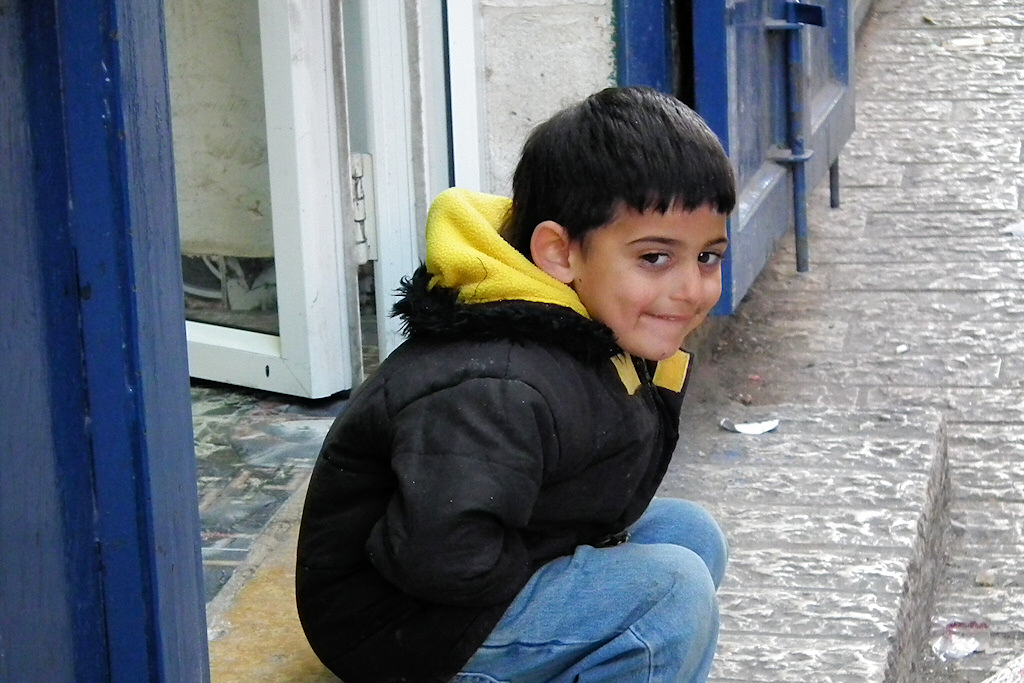
In this life I have not been a financial philanthropist. Many people believe that donating money is the only form of philanthropy, but also, out in places where there is need, everyone tends to drive, elbow and oblige me to raise, funnel or fix money. They perceive this as their primary need, and that’s true in the short term and not necessarily true for the longterm background conditions I’m best at working with.
This has tended to smother and detract from what I’m best at doing – human and spiritual input and multilevel intelligence. The thinking needed for fundraising and admin is very different from that of healing and magical-spiritual work, and I cannot do everything. This has been an ongoing dilemma.
It hasn’t helped me support myself either. People tend to think that, since such work is a chosen vocation, I needed no support or already had the funds. The prevailing thinking is that, if you’re doing well financially, this enables you then to act philanthropically – and only then. For many people this point never arrives, so they don’t do it. But it needs to come from a deeper place, from a sense of calling. That’s what was the case for me and, in late life, I’m really glad I did it, even though I’m quite poor now as a result.

When in Palestine and Israel, there were two main age-groups of volunteers and activists from abroad, most of them self-financing. One group was around age 25-35 (and 60% female) and one was around sixty (and 60% male). The thirtysomethings were doing it out of principle, setting aside career progress for what they believed in – though for some it was a voluntary internship to help a career in the NGO sector. Some had law, business and accountancy degrees, working in ‘lawfare’ – legal improvement of the rights of Palestinians and helping Palestinian NGOs function.
The sixtysomethings were good-hearted types, often retired from careers in education, social work or healthcare, who had raised and despatched their kids, perhaps they were newly divorced, and they had the resources and long-accumulated wish to at last pursue their calling in a place like Palestine. Both of these age-groups were committed, brave and valuable people, nevertheless driven by slightly different motivations. Many of the older ones contributed to the relief and improvement areas, while many of the younger ones contributed to reform.
There’s an innate philanthropy built into Palestinian society. It’s an attitude. It’s shared by some but not all Israelis – particularly those brought up in kibbutzim or living in settlements. It’s a kind of generosity economy, where everyone is brought up with an ethic of mutual help and contribution. This is social resilience, and when society is under duress it really works. This is something we in Europe need to learn – it’s in our group memory but it has lapsed.
When a young person thinks about their future career, they don’t think of personal ambition as much as the contribution they can make, and the likely slots that will appear in their clan or neighbourhood in future – whether as a dentist, embroiderer, car mechanic or even a professor. If the local midwife is growing older, a younger one will be thinking of replacing her in ten years’ time.

Over the decades I’ve banged on a lot about life-purpose, helping and empowering people to identify and pursue it. Here comes a repeat quote, but it’s important. The Council of Nine (who thirty years ago jogged me into working with Israel-Palestine) were asked whether there was one thing that could change and transform the world. They simply said, “If everyone pursues their life purpose“.
This gets bigger. They didn’t say this but, by extension, omitting to pursue our life-purpose, or withholding it, for whatever reason, is a soft version of a current major concern: crimes against humanity. It is the indifferent, inherently self-serving ethic of Western and, increasingly, global culture, that permits situations such as Gaza to happen. Because we don’t stop it.
People expressed surprise and horror at the precipitate actions of the Gazans when they broke out and violated so many Israelis, starting off the current round of trouble. Anyone who actually watches anything more than the urgent splutterings of the headlines knew something like this would come. It continues a long, long story and it didn’t happen out of the blue.
The surprise arises from global indifference, which prefers stuff like this would just go away. To be fair though, there’s also a surfeit of other events, tragedies and concerns competing for attention. Israeli hubris was caught napping. The main surprise here was the strategy and audacity of it. I do not encourage violence and have been a lifelong peace-freak, but are we really to believe that the Palestinians, generally unheard, blocked and disregarded, are supposed to act like polite gentlefolk, shrugging shoulders and nobly accepting their lot without a whimper? How would you like to be a 20 year old in Gaza, with no future? Or his or her parents?

Today, the Gazans are so hungry, thirsty, desperate and traumatised that it would not surprise me if there were another mass breakout, into Israel or Egypt – of mothers, families, grandparents and youngsters seeking food, water and safety. Later, Europeans will duly complain when another wave of refugees comes to our shores, but our endemic indifference has caused much of this. Refugees arrive in Europe and America to give us a gift, a gift of humanness, empathy and philanthropy. Amazingly, it has even been found scientifically that it makes us happier. Indeed, there’s more to life than comfort and security.
I am not saying ‘admit anyone who claims asylum’, but I am saying we need to be more philanthropic, to understand that changes are happening even to us, and to act longterm to deal with the sources of the problem. In the case of Gaza it concerns the historic and current issues arising for the locals from the arrival and behaviour of the state of Israel, and the wider global issues that allowed this to happen the way it did. In Britain, two key fomenters of this problem are the Foreign Office and the media.
So, life-purpose. Are we here simply to pay our bills, tread our mills, keep investors happy and, at the end, collect our pensions? This is a personal question for every single soul. We need to ask ourselves, ‘Am I rising to my full potential as a human philanthropist? Or a human anything, for that matter?’. The answer is both yes and no, and the yes bit needs acknowledging and the no bit needs some attention. [For an audio talk by me, try this.]
Here’s something interesting that I discovered. I have long known I have healing abilities but in Britain I have chosen not to work as a healer, except as an astrologer (a perceptual healer) and a community activist (a social healer). But when I went to Palestine, witnessing the needs of people there, I suddenly started doing healing work – spiritual healing, mainly, and remote healing. On people’s backs, stomachs, wounds, hearts and spirits. What surprised me was that my abilities were dramatically amplified – people were genuinely and visibly healed, and deeply so. They’d approach me later to say so, and I was much moved, rather shocked by that. It was as if the scale of need pulled out almost miraculous superpowers.
But there’s a difference. In Britain, when I’ve done such work, while people do benefit, they tend to continue with the life-patterns that caused the problem. From a healer’s viewpoint, that’s not very satisfying. But in a crisis zone, where despair, danger and dire need are big drivers, I found people really did take on board whatever I said or did, and they were so grateful, and they helped me back. Also, it was liberating to work without charging.

I’ve never liked charging for healing or transformative work – how do you value the fixing of a major issue or the saving of a life? Twenty years ago, as an astrologer I charged £60-70 for a two-hour session but I needed £250. I did a lot for free or underpriced, because there was a need. I’d have felt happier with a salary, like a doctor, so that charging didn’t enter the equation. The ethics and politics of our time did not allow it – after all, astrologers are charlatans, aren’t we?
If you were a Palestinian in Gaza right now, you’d be enacting your life-purpose – whatever you’re best at. The same is happening for some Israelis. That’s how people survive. When the chips are down, you do what’s needed, regardless. If you can clear rubble, cook, minister to people or mind the kids, that’s what you do. No qualifications or vetting needed – just do it, if necessary till you drop.
Saturn is in Pisces: this concerns philanthropy. Without it, the world would be a much sorrier place. Philanthropy is not an option: it is a necessity, like sewage disposal. Crises such as Gaza – and they’re coming at us quite a lot nowadays, and it won’t slow down – shine a light on our life-purposes, for each and every one of us.
What am I here for, really? What am I doing about it? Our calling is programmed in us from the beginning. We know it. It is inherent, not learned in courses or demanding a qualification – it’s a natural, inbuilt gift and skill. It comes easily. Yes, we are all innately talented. If we let it out.
With love, Palden


PS. I’m blogging a lot at present and it’s not really planned. It’ll die down again! If something comes up, I start blogging and, typical Aspie, I don’t stop until I’m done. There’s stuff going on in places where parts of my heart lie and, since I can’t get to Is-Pal (or West Africa), this is how I let it out. Together with psychic-spiritual work and handholding certain individuals in the thick of it.
At present, I am ‘holding’ Maa Ayensuwaa (on the right), a native healer in Ghana, who is lying in hospital, lacking painkillers and hoping money will come along to pay for an operation for fibroids – it’s wear and tear from helping people and going without. I can help her only in spirit, though our connection is such that (I hope) it works.
Site: www.palden.co.uk
Blog: https://penwithbeyond.blog
Podcasts: https://podcasters.spotify.com/pod/show/palden-jenkins

 Notes from the Far Beyond