

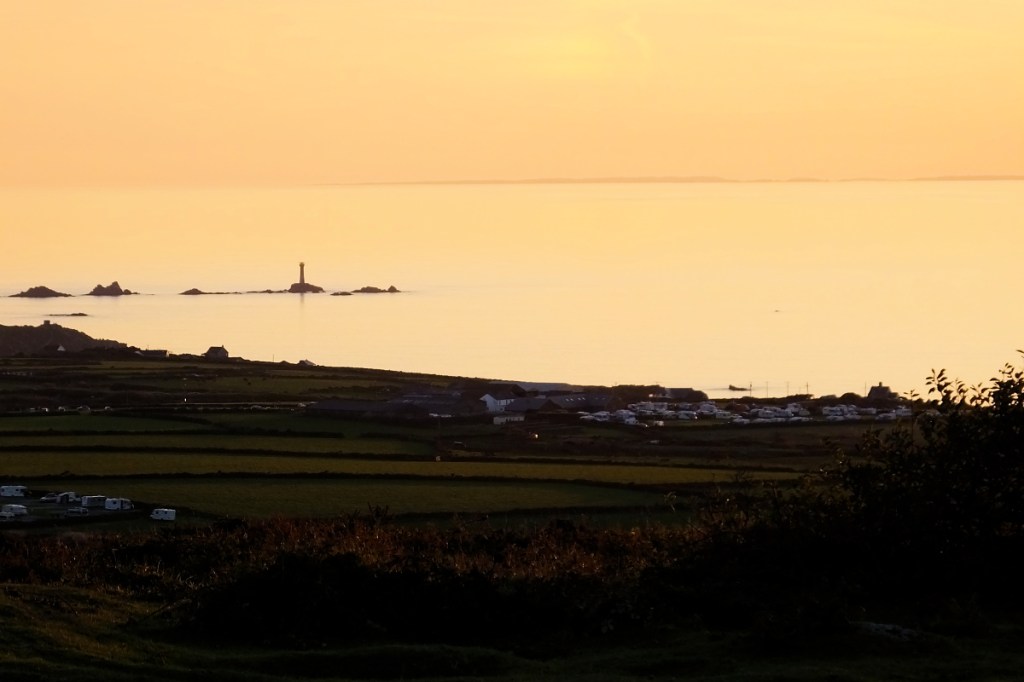
There are two routes to the farm where I live, and they are shown on online maps. The problem is, one route is easy and good, and if you follow the other – as recommended on satnavs – then you’re likely to lose your exhaust pipe and damage your car, unless it’s a Land Rover.

We’ve tried to get the satnav people to change the instructions, but they won’t do it. They look at a satellite photo and see a road there, without knowing what its surface is like. So they even disbelieve evidence that we, who live here, send them – because the satellite says there’s a road there. Well, at your peril.
So when people come to visit, I send a map and instructions but some rather slavishly follow their satnav. They trust it more than they should, because it tells them what to do. As a result, they arrive late, flustered, after having made a few extra phone calls to me to find out the way. That cuts down our time together.
This highlights a big problem in our time. Many people – even quite aware ones, and even those who otherwise distrust a lot of things handed down to them from the corporate and governmental world – believe and obey what we are told. We set aside our own thoughts, experience, finer judgement and intuition, because the instructions say that we ought to follow this route, not that.

But if the satellite system breaks down (almost inevitable sometime), and if we lose our map-reading skills and intuitions, then we’ll get lost. Not only with finding the way, but also because we’re addicted to obeying orders. We all do it, in varying degrees! Even if you are a dissenter, an ‘alternative type’, or a sensitive soul, there will be areas of life where you snap to and do what you’re told, even at a price.
Even with conspiracy thinking, there’s an element in it where people disagreeing with the ‘official line’ transfer all their need for certainties to other things they’re told by other people, who sound as if they know what they’re talking about, and uncritically they follow a new set of rules.
One of my bugbears is typical: we are told that mobile phones and wi-fi are safe and okay, and we are addicted to all that phones have brought us (it’s an amazing technology). Yet, just consult your feelings, consult your body and your psyche, and something is not right. This radiation is changing you. It changed my life – I have a cancer caused by radiation, and when I mention this to others, or when I walk out of a room because I can’t handle being in the company of six phones with humans attached to them, there’s often an awkward silence. Ooops, I’ve said something wrong. If I mention the effects this has on nature, the world’s climate and on earth energy and subtle energies, most people just don’t want to know – even if they’re nature-lovers. Yet this is suicidal. And you don’t need a PhD to understand that.
We all do this. It arises from the fear that “I do not have the knowledge, authority and whatever else it takes to cut my own line through life“. This is the way that the Megamachine retains control – through imposing a fear of what might happen if you don’t obey, through telling us what’s right and what’s wrong, infantilising us and making us conform.
In the end, this is not about Them – it’s about Us. It’s about our deepest psychology – profoundly stilted and stunted by fear, guilt and shame, the big blockers of inner progress and of correction of the world’s ills.
We all do it – I do too.
I did this last year. I was accused of being a narcissist. Bewildered and feeling at a loss, I took it upon myself and carried that for about nine months, feeling bad. It was a burden of guilt – my own guilt from the past. Not about being a narcissist, but simply about feeling inadequate and flawed.
But I was bewildered and confused about it too. Perhaps I am a narcissist? Perhaps the person who put that on me was right.
But then, a good friend came along and grilled me – she could see I was unhappy and weighed down with it. She had experience of this, having been a ‘victim’ of a narcissist herself. Though she pointed out how a victim is part of the equation too. She questioned me about what had happened, saying in the end, “Hang on, it wasn’t you – it was the other person. The actual behaviour of a narcissist was displayed not by you but by the other person, and this was projected on you”.

Now this was a big revelation. Suddenly a weight started falling off my shoulders. It was like a forgiveness. It didn’t just dissolve the issue – it gave me a new perspective. It allowed me to look at the narcissistic tendencies within me – after all, I do like standing on stages, and I’m what Facebook would label a ‘public figure’. Part of me is shy and a hermit, and part of me loves attention. So there’s stuff to take ownership of here, and it has helped me understand much about my life.
I’ve always been something of a reluctant leader. There’s pain in my psyche over matters of power. But this has made me focus on ‘right leadership’. The world does need leaders, but of a certain kind. In my 2003 book Healing the Hurts of Nations, in a chapter about power and legitimacy, I give three quotes.
“A statesman is a politician who places himself at the service of the nation. A politician is a statesman who places the nation at his service.” – Georges Pompidou, French prime minister, in 1973.
“You can erect a throne of bayonets, but you cannot sit on it for long.” – Boris Yeltsin, Russian president, in 1991 (Mr Putin, take note!).
“Many forms of government have been tried, and will be tried. No one pretends that democracy is perfect or all-wise. Indeed, it has been said that democracy is the worst form of government except all those other forms that have been tried.” – Winston Churchill, Hansard, November 11, 1947.

This concerns right leadership. In my life I’ve learned a lot about this, and the question still continues. I’ve often felt like a monarch without a kingdom, a bishop without a church and a professor without a university – and this has been my karma in this life. It concerns service. It’s a big question for Virgos like me: the difference between service and slavery.
Service is willing, intentional and conscious. Slavery is reluctant, grudging and involuntary. Slavery is about resorting to type, conforming to what we feel is expected of us by those who seem to know better, and doing our best to avoid punishment.

If you’re going to be a shining star in the public firmament, then rightly or wrongly you need to fulfil what you feel are people’s needs and expectations. In this context, staying in power starts becoming more important.
The matter of staying in power is a difficult one. It’s not just a form of corruption and powermongery. It might be the case that, in a position of power, you actually are the best person for the job – it’s arguable that Mr Putin was the best for the job 10-20 years ago, and many a strongman is like that. But then your star starts falling and times start changing – Xi Jin Ping will experience this in coming years. The tide goes out on you, as it does.

But if you’re good at what you do, then you’re faced with the possibility that the person or the oligarchy that replaces you could actually be worse. I’ve faced this myself. Many people who rail at leaders are, frankly, covertly envious. Watching things that I’ve started deteriorate in others’ hands has been a big and painful lesson to me, bringing me back to a difficult truth: while holding onto power is not advisable, letting go of it can also be problematic.

It comes down to our motivation, and to being honest, often while standing in the spotlight in the ‘court of public opinion’, ruthless as it sometimes can be. Remember the British politician Paddy Ashdown? When he was caught with his pants down he owned up immediately – and everyone thought, “Good on you, Paddy – at least you’re honest”. Meanwhile, others were caught with pants down but they went into denial – they were clearly ‘in office but not in power’.
Tony Blair then came along – he looked like a clean pair of hands. But Tony, after a few years of doing some pretty good things, himself made a classic error – he sucked up to the big guys and took Britain into the Iraq war, when most people in Britain knew this wasn’t right. He sucked up to the Americans and PNAC, a cabal of believers in ‘The New American Century’, which now, chaps like Putin and Xi are showing to be empty and hubristic – America was being what Chairman Mao once called a ‘paper tiger’. Hm, fatal error, Tony – and he’s paid a price for it.

It’s all in the motivation. When I was a young acid head revolutionary in a former millennium, I realised then that it wasn’t just a question of replacing one evil system with another, whether through revolution or reform. It concerned the hearts and minds of the people actually sitting in seats of power. No one system has The Answer. No system is perfect.
Democracy has big problems, and we cannot say that our democratic governments truly represent what the people of our countries need. But autocracies like China and ‘managed democracies’ like Turkiye, though at times they can deliver the goods, have their problems too. It’s all to do with the matter of succession.
Some people moan about our king, here in Britain, but would an elected president and House of Lords really be a better solution? Hmmm, that’s questionable. King Charles III, well, you might or might not like him, but he’s okay, actually, as a person. Though his limited and mainly moral power is inherited, he happens to be an interesting person, and his son isn’t bad either – compared with what we could have.

I remember standing on stage at the Glastonbury Festival in the early 1980s, saying, as an astrologer, that Prince William, born during the festival during an eclipse, would be an interesting character as a future monarch. And he is likely to be so. Do we want to get rid of this guy and his missus?
Why do we expect perfection of our leaders? Why do Americans place so much belief in their elected presidents when they have lots of evidence that such belief is futile? Why do we continue electing the same old political parties, even when we’re disappointed in them?
I remember in 2005, many Palestinians asked me, “Why, after you had the biggest demonstrations in British history against the Iraq War, did you re-elect Tony Blair a third time?”. Well the answer was, “Because he’s still better than the other lot”. Twenty years on, that’s why quite a few people might vote for Biden or a clone of him – because of the other lot.
That’s the dilemma of democracy – it gives us second-best solutions. It is based not on consensus and agreement but on argument and dissension, meaning that 49% of the population land up dissatisfied, unhappy to support their government. Actually, through the quirks of our supposed constitution here in Britain, Margaret Thatcher only ever really achieved about 25% support of the whole electorate, even at the peak of her power. Is that democracy?

Well, it’s a common quirk of majoritarian democracy. In some countries, we vote for a plethora of parties, and then the biggest, or not even the biggest, cobbles together a coalition that might not at all resemble what voters wanted – as Israelis have discovered. It relies on conformity and grudging acceptance of bad political outcomes – AND we, the public, customarily disunited, then fail to support our governments wholeheartedly, even when we vote them into power.
The result is that it’s a recipe for failure, because someone somewhere is always opposing it. So this concerns the responsiveness of political systems to public need. And, besides, it isn’t democratic governments that really decide things: such governments exist to ease the cruel grating between the priorities of the Megamachine (the apparently ‘free’ market), and the needs of The People (whoever we truly are).
It’s all down to right leadership and right use of power. But that’s difficult, because sitting in the power seat is not comfortable, and it’s a 20 hour a day job, under a lot of pressure, and subject to cruel judgements from the public – witness those promising leaders, many of them women, who choose not to sit in that seat because it’s painful to get exposed to the sheer negativity of the commentariat and people on the street who land up even hating you.
So, if we want good leadership, we need to treat our leaders with greater empathy and support, remembering that they actually are human beings, with sensitivities. And we need leaders with human sensitivities. But we need also to hold them to account. We need them to change when they get things wrong.
It doesn’t always work to jettison old leaders and put new leaders in place – it can lead to a cycle of deterioration where we get leaders who are either bombastic and imposing, or leaders who say one thing and do another, or they make it sound as if they’re doing things when actually nothing is changing at all.
In fact, it might be valuable sometimes to welcome back old leaders – to give Theresa May or Tony Blair a second chance. Why? Because they’ve had a period in the wilderness, a time to think things over, and they might well have a deep need, in later life, to get things right. Well, perhaps. Second-term presidents can be a bit like that. They don’t want to go down in history for the wrong thing.
Anyway, so I might well be a narcissist. It’s a convenient accusation to make, for which one is guilty unless proven innocent – but even then one might not be believed. Just to be suspected is enough to ruin a person’s life. What’s needed here is owning up, in public, and self-correction.

Mistakes are allowed. Learn first time round and you’re doing alright. Learn second time round and you have a problem but it might be excusable. Leave it to third time round and you have a deeper issue going on, and it’s best to go – whatever his merits, Boris Johnson got to that point.
Human error. There’s accountability and there is forgiveness. Just because someone fucked up, it doesn’t necessarily mean they should be blacklisted – it means they need to self-correct, and genuinely so. And everyone, everyone, is a mixed bag – yes, even Bill Gates, who does both some questionable things and some laudable things (and, as an Aspie, he also has an exaggerated capacity to be misunderstood).
So, it might be that I’m a narcissist. To be honest, I really do not know, and it’s up to people’s own judgement. It has caused the person who accused me to completely cut off all contact and unfriend me, perhaps obeying the strictures of a famous psychologist in Canada who says that the only way to deal with narcissists is to cut off all contact.
Well, I experience that to be rather cruel, actually, throwing out both the baby and the bathwater. I sincerely hope the accuser was right, because otherwise this fierce separation was a very destructive strategy. I’ve learned a lot from it and, for my sins, I now live in glorous isolation, and that’s my karma and life-lesson, and on some level there’s something good about it. Because, for better or worse, it enables me to write yardages of verbiage to you lot, and I sincerely hope it’s useful!
Life is what happens when we’re busy making other plans. In the end, there is no right or wrong – there are simply outcomes. And life is for the learning. So, whatever my fuckups, I’d like to be remembered at least for trying to redeem those fuckups and make things good. But there are some who would even question whether I’m getting anywhere with that.
In the end, it’s necessary to listen and to take in the feedback that people, life and its learning experiences give us. But not too much, because otherwise we become guilty of another crime – the crime of holding back our gifts, believing that someone else can do it better. However, if it’s a gift, it’s highly unlikely. The secret lies somewhere between taking a stand and keeping your antennae up.
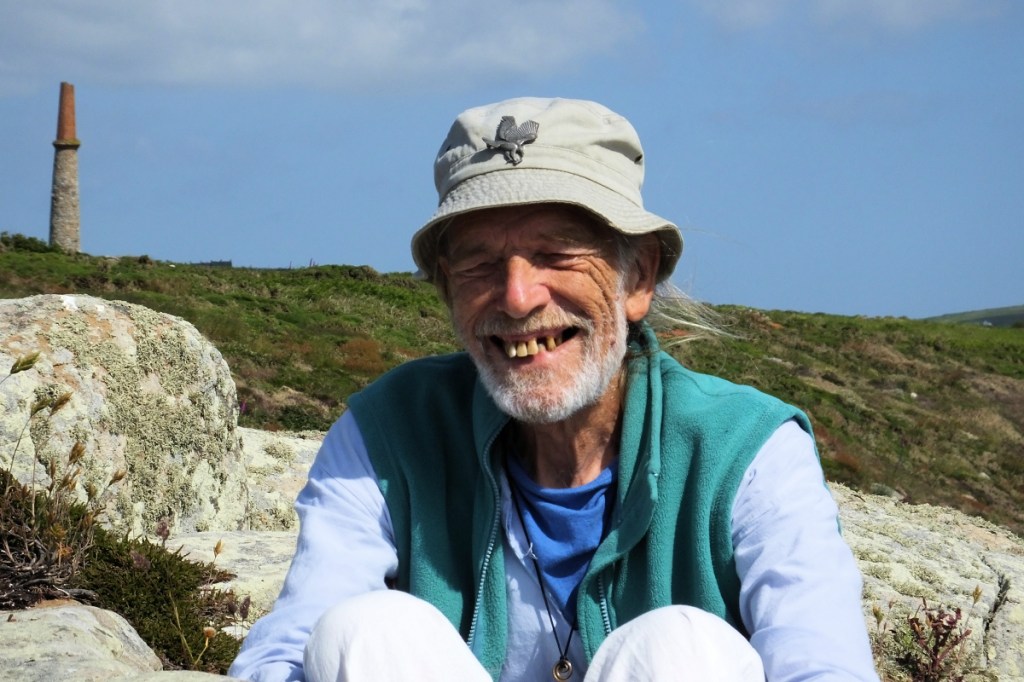
With love, Palden
www.palden.co.uk
www.palden.co.uk/podtalks.html

 Notes from the Far Beyond