
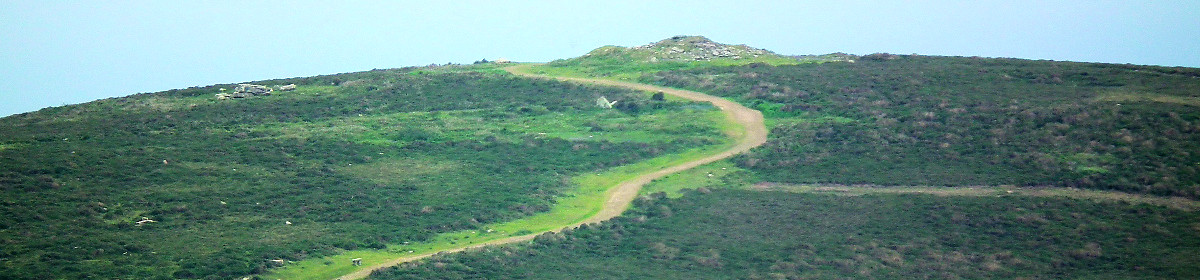
Here’s a story from Jenin, in happier times in 2011. It might give you a feel of the place as it is when life is more normal.
THE SPRING OF THE GARDENS, Jenin, 28-29th June

Jenin is perched on the north-facing slopes of the West Bank plateau, on the edge of a wide, green plain stretching west from Galilee toward Haifa and north toward Nazareth. The security wall separates Jenin from the Arabic towns of Afula and Nazareth in Israel, not very far away. This is Jesus country, and Mohammed, although Muslim, is enamoured of the Jesus stories here.
Jenin is lower than most West Bank towns – except Jericho, the world’s lowest town. You can feel it in the thicker, moister, softer Mediterranean air of Jenin. A friendly town of 40,000 or so, we made stops at a workshop, then at Mohammed’s family firm’s sizable warehouses and offices. More coffee – I was beginning to get jittery and strung out on the stuff. But another special moment was coming up.

We went to the village of Birqin, west of Jenin, to see an ancient Christian church – apparently the world’s fourth oldest church, founded by the Byzantine empress Helena. Here Jesus had healed the lepers, in a biblical story. It was lovely inside, with richly-painted icons and Greek Orthodox paraphernalia. While the caretaker talked to Mohammed, I went into meditation, perched on a wooden pew – the place was tranquil and atmospheric, imbued with radiance.
While in that state, spontaneously I became aware of my mother, who had died 18 months earlier. Something in me suddenly wished, deep in my heart, that I could have brought her here. I don’t know where that feeling came from, but tears welled up inside, trickling down my cheeks. Cleansing tears, tears of release and healing forgiveness. I had always wished to share with her some of the remarkable spiritual experiences I have had in my life, but she never allowed it. She was quite a believer and she would have loved this church. Later I thanked the caretaker, and Mohammed too, for giving me this moment. Another level of resolution with my mother had taken place, unforeseen, yet a great blessing.
Mohammed had a lovely Palestinian wife who had lived in Germany with him, and a family with two girls and a newborn boy. I had a delightful evening with them. Ismael, my taxi-driver in Bethlehem, rang to find out if I was alright – that’s kind of him. He might also have been fishing for me to ask him to come and fetch me tomorrow, but I’ll make my own way back home to Bethlehem.

Being in Palestine is a perpetual process of being waylaid and sidetracked. If you try to change or resist it, or if you attempt to hold on to even the best-laid of plans, you land up worn out and frustrated. If you go along with the flow of it, remarkable things can happen.
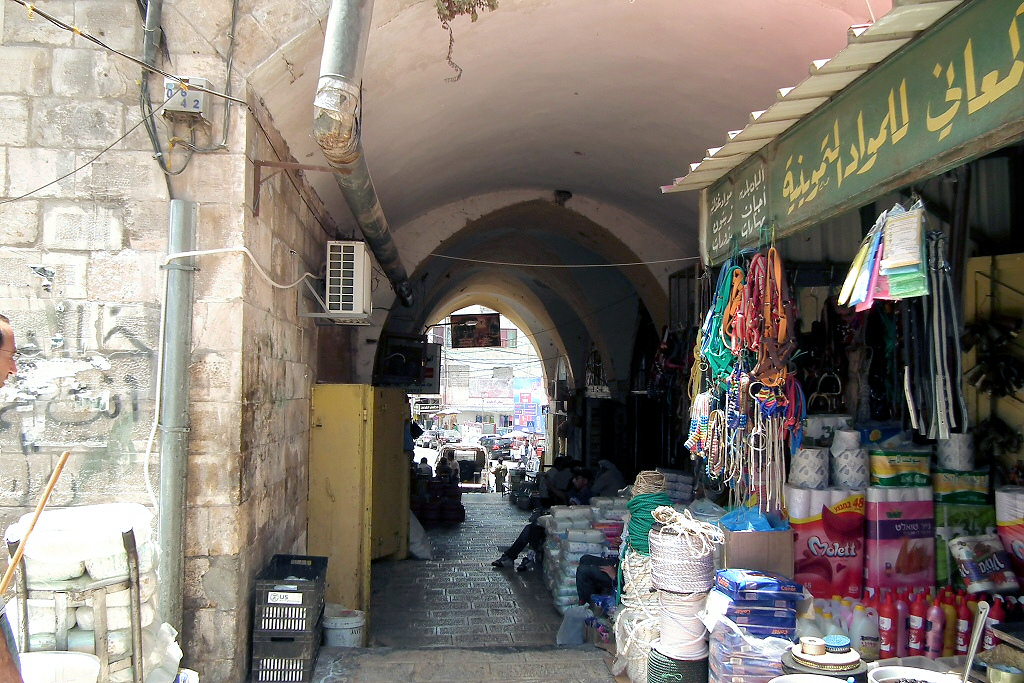
Mohammed took me on a tour of Jenin – the market, the main street, the old town – though really the tour consisted of a series of stopovers for Mohammed to have conversations with people in the street, and with cafe owners, the director of the musical conservatory and a former Marxist running a shop next door to it. Well, I’m here to plug into real life in Palestine, and it was an interesting process. If all I can do is to be a character in people’s lives, and they in mine, something has been achieved.

People accost you in the friendliest of ways, even in the middle of a busy street. I was standing in a corner in the market, training my telephoto on people walking past, quietly taking pictures, and a steady stream of people came up asking me where I was from, where I am working, whether I come from London (as if it’s the only place in Britain) and why I didn’t bring my wife (she doesn’t exist, but sometimes I tell them she’s back home, to make it simpler).
The former Marxist was interesting, an intensely ruminative man who struggles within himself to find a new picture of the world and where it is going, after the fall of the USSR and the shift of China to capitalism. He had gone to university in Russia, as a number of older Palestinians have done. “The past is our future”, he said, “and the future is already come”. He sold old relics. He asked me what I recommended for Palestine. I thought about it, knowing he was seeking original thinking, and then told him I thought Palestinians should avoid adopting the wider world’s ways and becoming a client state of Europe and America – otherwise known as ‘economic development’. Or at least, Palestinians should be more discerning about it.

‘Development’ involves an adoption of modern, market-oriented, high-tech, capitalist ways. It is assumed A Good Thing, but this viewpoint comes from one angle only – profit, gain and the assumption that economic growth makes people happy. Culture, society, nature, spirituality and finer human qualities are conveniently overlooked. Palestine would do better to be a cultural originator, not a slavish adopter, finding its own solutions and modifying the best of others’ to suit its own core objectives. He thought this was a good answer.
You can see the price of economic development by the plastic bags that blow around in the wind across the streets and hills of the Holy Land. Shopkeepers give them to you even if you have a cloth bag to use. My cloth bag slings over my shoulder, freeing my hands but, no, everyone carries multiplicities of plastic bags, destined to harness wind power and fly freely once they’ve been used. Or they get burned, releasing PCB toxins. The march of progress comes down to seemingly small issues such as these. Palestinians tend unthinkingly to believe that anything modern is good – it isn’t always so.

In the women’s empowerment courses back in Bethlehem they teach about the dangers of using plastics indiscriminately. For food use, Palestinians often use plastic bags that aren’t food-grade. Thus, invisibly and insidiously, the bags shed phthalates, PCBs and all manner of nasties into people’s food. On the course they teach about the dangers of those Alzheimers-stimulating nightmares called aluminium pans, and about microwaves that can cook you as well as the food, if you’re close. Palestinians use these without knowing their dangers, then wondering why Allah awards them with cancer. I’m sure he shakes his eschatological head in dismay.
I said to the Marxist that they ought to consider banning cars from at least some streets, giving the streets back to the people. That couldn’t happen, of course, and he said so – people wouldn’t agree with it. But they won’t support the idea unless they try it first, to see the difference. Manger Square back in Bethlehem is free of parked cars on Fridays and Sundays, and it’s wonderful – on Fridays hundreds of Muslims do their prayers in the square, and on Sundays churchgoers spill out of the Nativity Church to mill around, while boys kick balls and ride their bikes and people gather in gaggles to chatter.
Oh well, Westerners nagging about environmental issues don’t necessarily help either. People need to discover these things for themselves, learning the connection between baby formula and their babies’ depleted immune systems, or between cancer and the pollution generated from burning plastic.
We left the Marxist, with his visible back pain, to continue with his struggle. One form of development aid would be really valuable here: squads of osteopaths and chiropractors. So many Palestinians are out of joint. Water dowsers would also be valuable, except that the Israelis would quickly deport them because they want control of Palestinians’ access to water.
Jenin is a pleasant town. I came with an image of it as rather squalid, intense and somehow parochial, given its reputation for Israeli army incursions and Palestinian resistance. But no, it’s relaxed, friendly and not as crowded and walled-in as Bethlehem. It has a large, wide-open hinterland with nary an Israeli in sight. Even the local Israeli settlements were vacated – perhaps the Jeninis had succeeded in their resistance. The separation wall is some miles away, leaving open farmland around the town.
Jenin is populated with many refugees who originate from Haifa, on the coast of what’s now Israel. It was once the most tolerant and multicultural town in historic Palestine but it was ethnically cleansed in the 1948 Nakba when it was taken by Israel. Many were killed and the remainder escaped to Jenin.
Tolerant people, if their tolerance is seriously betrayed by sectarian or racist separatism or violence, can become deeply distrustful as a result. Sarajevo in Bosnia is like this, as is Beirut in Lebanon. People’s faith in humanity is more seriously destroyed than it is in the case of people who distrusted others anyway as a matter of course. That’s why Jenin, in the second intifada around 2000, fought ferociously against the Israelis.

I saw a sign saying ‘Dear Haifa, we are returning’. Israelis might interpret this to mean driving Jews into the sea, but it doesn’t. The Palestinian ethos is not ethnically exclusive like that of Israelis. It doesn’t stop them wanting to go back to their foreparents’ home though, to return to what had been a truly multicultural port city.
Jenin is a fertile place with many water sources, and it’s greener than much of Palestine. Its name is derived from Ayn al Janin, ‘spring of the gardens’. But ‘progress’ has had its way. Mohammed, an eco-campaigner, showed me where springs had been canalised, then to dry up, and where trees had been felled and the water table had thus sunk, and where a mosque extension had caused some old fountains to cease flowing. Then people wonder why.

This ‘progress’ ethos is adopted from abroad. It’s a progress that bulldozes away key resources such as underground water, farmland, clean air and balanced societies, undermining the true and full interests of a nation and its people, ruining everything with concrete and garbage.
Mohammed took me to a bare, wide-open place outside town which, he said, was being built as a result of corruption. It was the site of a new industrial park, as yet unbuilt, where the foundations of what looks like a future eight-lane highway had been laid over rich agricultural land. In development logic, it’s industry and commerce that are priority number one. This will lead to regret one day. Development and resulting crisis go hand in hand, with but a time-gap between them. Perhaps I’ll say that again. Development and crisis go hand in hand, with just a time-gap between them.
Eventually it was time to go home to Bethlehem. Mohammed had hosted me royally. He dropped me off at the taxi station, where I caught a service taxi – a ten-seater VW van – for Ramallah. These guys drive fast, but they do indeed get you there. I sat in the front seat. A young guy behind me was fascinated at what I was photographing, watching me closely as I turned my telephoto to focus on specific scenes, calculating my shooting carefully to avoid wires and roadside obstacles. I told him I was trying to catch a wide range of classic scenes, to build a website about Palestine. He said shukran jazilan, thank you very much, and the driver agreed. Afwan, it’s my pleasure. It really is. It’s an immense honour.
The checkpoints were all open. Things were improving year by year in Palestine and travel was getting easier. Just 5-6 years earlier this journey would have been a major expedition with no guaranteed arrival time – or no guarantee of arrival at all. Travelling to Ramallah from Jenin would have involved bringing out permits and passports at least five times.

The Samaritan landscape on the way from Jenin, past Nablus and down to Ramallah, is lovely. At Bir Zeit, Palestine’s Oxford, the uplands look west over the Israeli plains with wide-open vistas to the sea – to a Mediterranean which, though not far away, few West Bank Palestinians may visit.
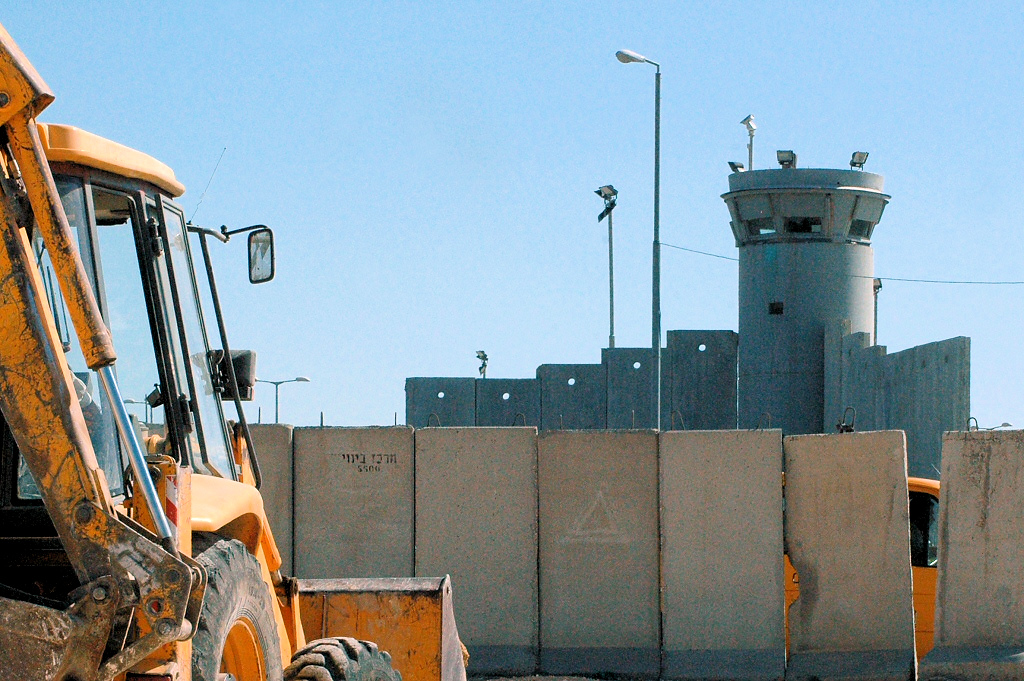
On arrival at Ramallah I bundled out, with ma’assalams (goodbyes) all round, and bundled straight into a service taxi for Bethlehem – again, luckily, in the front seat. We sped off down to Qalandia, the main Ramallah checkpoint for Jerusalem – a place where queues are guaranteed – but we passed it by and headed down the Jerusalem bypass road, weaving through valleys and up and down hills, down to the Jerusalem-Jericho ‘peace road’.
One wonders why aid donors don’t feel ripped off by the lack of progress in building peace. But it was guilt money, really: on some level aid-providers know they perpetuate injustice and conflict, simply by using money to soften the blow of Israeli occupation. So, really, though it appears that they are helping Palestinians, in reality they are helping Israelis by keeping Palestinians quiet.
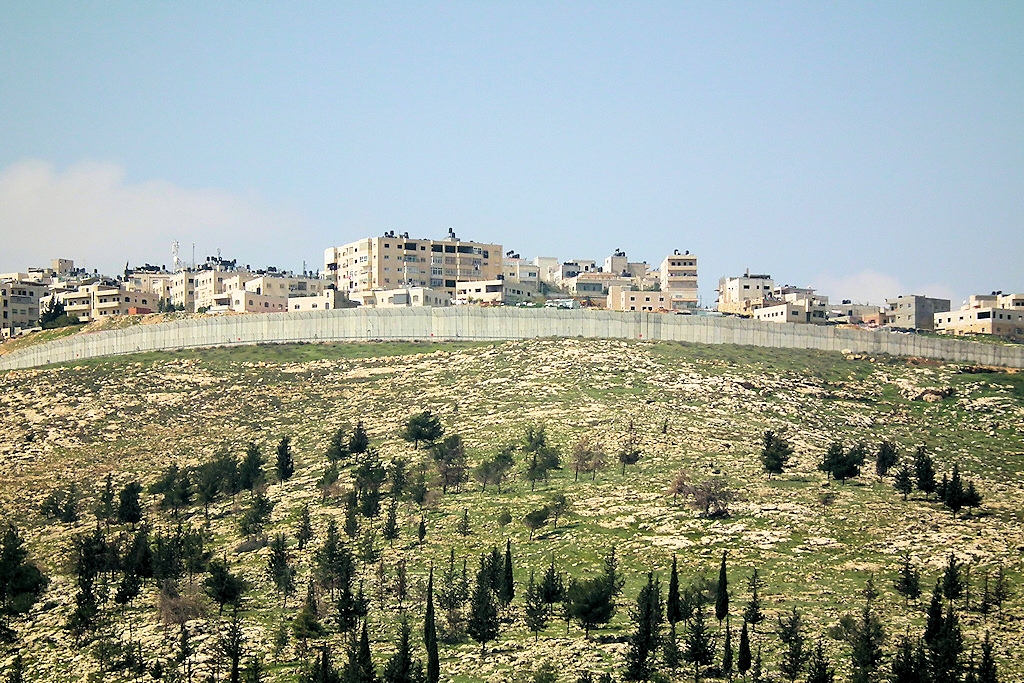
The desert mountains east of Jerusalem are hauntingly, barrenly, dramatically stunning. High limestone ridges, starkly bare of vegetation, sit there like a rock installation of God’s geological artistry – lacking vegetation due to millennia of sheep and goats and a good dose of recent climate change.
This is the land of the prophets, the stomping ground of Jesus and John, of the Essenes, Sufis and the Magi. The road does some tortuously sharp bends which everyone takes at speed. Israeli and Palestinian cars, with different coloured number plates, vie with each other and, generally, the Palestinians, free-range in driving style, get there first. It’s not all Israeli dominance in this crazy country!

 Notes from the Far Beyond
You must be logged in to post a comment.