How Many Worlds can a Planet contain?

Thirtysomething years ago I had the privilege of working with a bunch of (for want of a better term) cosmic beings called the Council of Nine, compiling and editing a book for them, ‘The Only Planet of Choice‘. They dropped in loads of remarkable insights and here’s a bundle or two of them. Some readers might think this stuff far too way out, or utter garbage – so use your freedom of thought and intuitive discernment here.

Planet Earth is very different from other worlds. One factor affecting this is its gravitational density and the intense physicality of our lives on Earth. This has had a troublesome, diversionary and downward-pulling effect on human consciousness, with the result that we tend to forget why we came and what we are here for. We get lost in the daily round and in our psycho-emotional stuff, losing our connection with spirit. It has made human history into something we can be proud of and also we ought to be ashamed of it.

Over the centuries and millennia we have institutionalised this situation, making it our default behaviour, such that waking up to the heart of the matter has become an exceptional, dissenting thing to do, with difficulties and sanctions attached. This is further exacerbated by historical factors such as the control agendas of dominant elements in society and the compromised submissiveness and conformity of the majority. We’ve given power to fear, guilt and shame, clamping our spirits and clipping our wings.

There’s another issue too. As a planetary race, we did not start our evolutionary journey together as one tribe or family, originating from one single source, as is the case (according to the Nine) with many worlds, cultures and civilisations throughout the universe. Humanity has physically evolved in a Darwinian sense, with periodic non-Darwinian seedings and tweaks from outside, as part of a hybridisation project. Such discreet interventions have helped us evolve in consciousness, culture and technology too, though in quirky and sometimes dangerous ways.

The aim was to breed a new kind of conscious being that could be at home in denser and more experientially-diverse conditions than ever before. The idea was to draw influences and souls from throughout the universe, throwing us together on one planet, in the hope that we might co-create something new, different and never done before. We were to become a new kind of individualised, enspirited, dense-physical, humanoid-type being.

So Earth has become rather like a New York or a Singapore in experiential terms – naturally and intentionally multicultural. Living in different cultural realities and localised mini-worlds, we have been bumping up against one another throughout history, becoming changed in the process. The end-game of the modern phase of Earth’s history is to get all these cultures and individuals to come together as one planetary race – a race that is capable of managing its own world and making something of it.

So now, by 2025, we have created a world system, criss-crossed with cables, shipping and air lanes, and humanity now needs to catch up with all that this means. Nationalist and isolationist feelings are a symptom of a stop-the-world reaction to this historic mega-trend. As usual, we walk into the future facing backwards, more concerned about what we’re losing than what we’re gaining.

Also, life on Earth is always a mixed bag, and experiencing this is part of the grinding process that hones the soul. It faces us with choices – sometimes big and deep ones – and that’s what we came for.
They called for volunteers – this wasn’t conscription – saying that living on Earth would be difficult though potentially rewarding – a fast-track way of honing the soul. We would be given individualised free-will – a capacity to do whatever each of us feels best. As incoming souls, we felt that we could maintain consciousness sufficiently to fulfil our purposes in signing up for this project. At first we had that kind of clarity about life that you sometimes get when you’ve been on holiday, done ayahuasca or been on a meditation retreat – but then, when you get home, the pressures and complications start, and the main agenda gets set aside for another day, when there’s time… and we get lost again.

Over time, more and more souls came, as individuals and as groups, creating a population explosion in modern times. It has become a mass-migration, rising into billions, and fresh souls are still coming. (At one point the Nine said that Earth’s optimum population is around 200 million, not 8-10 billion, though they also reckoned we could manage such high numbers if we did it right.)

We now have a situation where we have billion of souls on one planet, yet in very different worlds. Multiplicities of them. This diversity happens on the same street, even within families. Diversity doesn’t have to mean dissonance yet currently dissonance is strong, and this matter is going critical. Not least because, on a deep psycho-spiritual level, dissonance makes divide-and-rule easier, and arguing has become pandemic in scale.

The consequences of dissonance have been highlighted in Gaza. Palestine/Israel is a microcosm of the whole world – divided, and not just two ways. This microcosm business is a key reason why this conflict matters so much to so many people. It holds the world down. Around 12 million people are holding 8,300 million back. Yet equally, if it is resolved, it could lift up the whole world. And this isn’t really just about Israelis and Palestinians – at root it’s about people and the Megamachine.

Neither is it a simple equation of one side as badguys and the other side as goodguys – it’s far more subtle and convoluted. Yet it polarises around Israelis and Palestinians because we have a habit of dehumanising others, lumping them together into a mass of horrible, fundamentally different people who threaten our happiness or our very existence.

Israelis and Palestinians, bless them, live in very different worlds, to the extent that people on either side just cannot see what it’s like being on the other side – except for some brave souls on both sides who are willing to step outside the confines of groupthink. We all variously do this dehumanising thing, justifying ourselves by making others wrong, but Israelis and Palestinians have an acute and persistent case of it.

They aren’t even in the same conflict, though they live close together in one small ‘holy’ land. It all boils down to the way we see things – especially when we get het up, losing our patience and tolerance.

This is why, in peacemaking, it isn’t possible to propose nice, sensible diplomatic solutions to which everyone can easily agree and comply, point by point, so that we can all go home and forget it. They’re fighting different wars, committing different suicides. This stuff, this shadow, goes so much deeper.

Plenty of shadows lurk in the collective psyche of virtually every country and social grouping worldwide – some of these ghosts are dormant, some simmer and some are heating up.

At present, globally there are few encouraging signs of mass healings and breakthroughs, and this leads to a creeping sense of disillusionment and disappointment across humanity.

If anything, the main factor currently pacifying conflicts seems to be exhaustion – sheer weariness. That’s not resolution and healing, but it can allow feelings to cool to manageable levels. Social-cultural healing can take decades, but there comes a point where both sides see that healing is cheaper than the price of continued conflict.

So it’s all a matter of what happens after open conflict ends, and whether a momentum of progress can be built up. It requires a time of confidence-building where each side has to restrain itself, even during touchy moments. In some respects this demands more bravery than in times of war, since there’s a courageously resilient madness to warfare that subsides with peace, once people get used to sleeping safely in their own beds.

Deep down, many Palestinians understand the pain Israelis feel over the pogroms and the Holocaust, but it was Europeans who did this, yet Arabs are being punished. The Arabs of Gaza, the West Bank, Jerusalem and Israel are divided by circumstance, permits and walls. There’s a tug-of-war between negotiators (Fateh) and resistance fighters (Hamas), and neither is winning or compromising. Recent events have stumped the negotiators and decimated the resisters, and many Palestinians feel rudderless and stuck in a tightening vice of diminishing options. Top to bottom, Palestinians are hurt, dismayed, upset, unsure what to do next.

Meanwhile, Israelis feel deeply hurt and shocked, and for entirely different reasons. Zionists, centred in Jerusalem, are hurt and angry since their God-given right to the land of ‘Greater Israel’ is being obstructed by an interfering world filled with Jew-haters – and Arabs ought to get out of the way. Meanwhile the ‘peace camp’ centred in Tel Aviv, themselves hurt, diminished and stumped, have lost much of their trust in everything and everyone, preferring life inside a missile-protected beachside bubble.

Historic Jewish insecurities have genuinely been reawakened, with some Israelis lashing out, others recoiling in dread and many stuck, confused and afraid. Something fundamental has dislodged in the Israeli and the international Jewish psyche, and something ill-judged and disproportionate has welled up in the attitudes of non-Jews toward Jews.

Israelis and Palestinians sit in fundamentally different worlds, each with different ways of dehumanising the other. As do those who support either side, around the world. Palestine activists need to stop belly-aching about genocide and rights and actually support real-life Palestinians directly with friendship, money and contact. Meanwhile, those who bang on about anti-Semitism need to forget it, and those who deny or ignore it need to remember it, deep in their hearts.

It’s a reality-conflict, projected on others yet reflecting what’s going on inside all of us. It’s about far more than just Palestinians and Israelis.

But there’s a flipside. Conflict and hardship can be so crazy, tough and senseless that it leads to a kind of rapid de-traumatisation, an epiphany, a deeper change of heart and optic. This happened after WW2, with the founding of the UN, the EU, the welfare state, the beginning of decolonialisation and of the urbanised modernity we now take for granted.

That ‘rules-based order’ is now getting shaken up and we have entered a slippery phase in which things are accelerating to a point where none of us really knows where we stand any more. We’re being forced to let go of past structures, habits, heroes and normalities. We’re being ground down.

The key issue is that we need to get on with each other.

Otherwise nothing else can get resolved. So, from a planetary-evolutionary viewpoint we’re at a really critical tipping point in history. We have come from very different worlds across the universe, developing very different cultures here on Earth, and we now have urbanised ourselves into multicultural melting-pots – 60% of humanity lives in artificial cities over half a million in size. This, plus increasing global migration, is humanity meeting up with itself.

The whole universe is watching, and it means a lot to them – not least because we’re their relatives. They will not intervene unless it is absolutely necessary (think of the ‘prime directive’) because intervention will override the purpose of the whole planetary project – to find out what happens in a dense-physical world run according to free-will rules.

Besides, I don’t think they really know what to do with us. They really need us to sort ourselves out.

We humans have become hyper-reactive, complex and dangerous – we even fight over toilet rolls. When they give us prompts, gifts and clues – subtle interventions – as a whole we tend to ignore, corrupt or misuse them. Or we resist. Or we create complex diversions and avoidances.

It’s all to do with seeing beyond our own little worlds, stretching ourselves and seeing things from another viewpoint. This is difficult right now, since our divisiveness has gone viral. Every society has a kind of concussion, dogged by past trauma and by the intensity of change happening now in these times. All societies have a consensus problem, a solidarity problem and a leadership problem. Old answers aren’t working, even though we keep grasping for them. Yet, strangely, this parlous situation is a necessary part of the change process – and there’s further to go.

We no longer need a rules-based order. We need an integrity-based order.

Some are moved to weaken and destroy the old rules-based order, but on the whole they do not know how to create a system based in integrity. Meanwhile, oligarchies cannot reform systems from which they themselves benefit, and which protects them from a latently angry world public.

So change needs to start from bottom up, and increasingly, fitfully, valiantly this is happening more and more. But to do so, ‘the mass of humanity’ needs to develop a certain maturity, forgiveness and a set of basic common standards. The Hindu rule of ahimsa or non-harming is one such standard.

This is why the imagery of devastation emanating from Gaza stirs so many people worldwide. Such devastation has been seen before but Gaza hits a nerve in the global psyche – especially in the Global South. Gazans have hit bottom. A fuse is close to blowing in the world psyche and in the geopolitical arena. Gaza is like a magnifying glass, exposing all sorts of agendas, shadows and cobwebs underneath.

At present there’s even a possibility of a sudden, house-of-cards tectonic change in world geopolitics – as a pragmatic and rapid adaptation to an avalanche of facts. This might lead to coffee and toilet roll shortages: it will affect everyone and force changes that, if truth be known, really need to happen.

We humans are up against the consequences of letting things pass when we know we should have drawn a line, many times throughout history. The ‘war to end all wars’ should have been like it said on the tin. We’ve got ourselves into a global-scale historic mess, imprisoned in self-created default behaviours, laws, regulations, systems and self-defeating patterns.

This has framed itself around Israel-Palestine because it’s not just about Palestinians and Israelis. It’s about the world’s capacity to decide what’s best. This hundred-year conflict would not exist without the interventions and manipulations of foreign powers that have fuelled it and failed repeatedly to address it. Too many bombs, too little wisdom.

It boils down to a touchy geopolitical question that we face in coming decades: the capacity of nations and the ‘international community’ to interfere in the sovereign affairs of individual nations, when necessary. And who decides?

Take this a level deeper, and it concerns our capacity as a planetary race to run and organise our planet. Doing so involves facing all of the big and small problems we have – an enormous task, yet it’s unavoidable. This would be a critical step in human evolution – a rite of passage and a triumph of global solidarity, based in disagreeing agreeably, bridging differences and staying focused on the main priority – getting the world back on track and making it a safe, fair and happy enough place to be.

There is a solution to all of this that the Nine mentioned quite often, and it isn’t new. It’s a simple, easy-to-understand yet profound method for achieving an integrity-based order, and it applies to everyone, at all levels of the human pyramid.

Treat other people as you wish to be treated yourself.

If we did just this, Earth would be a very different place.

With love, Paldywan
www.palden.co.uk

The pictures are from Planet Earth. Quite a remarkable place. Worth a visit.

Silk Roads and Ocean Winds

Globalisation’s troublesome birth


This is a re-post – it might interest you.

I’m re-working a 2003 book, Healing the Hurts of Nations, as a short, thinking-points archive version, and here’s a chapter about the historic growth of globalisation.

————————–

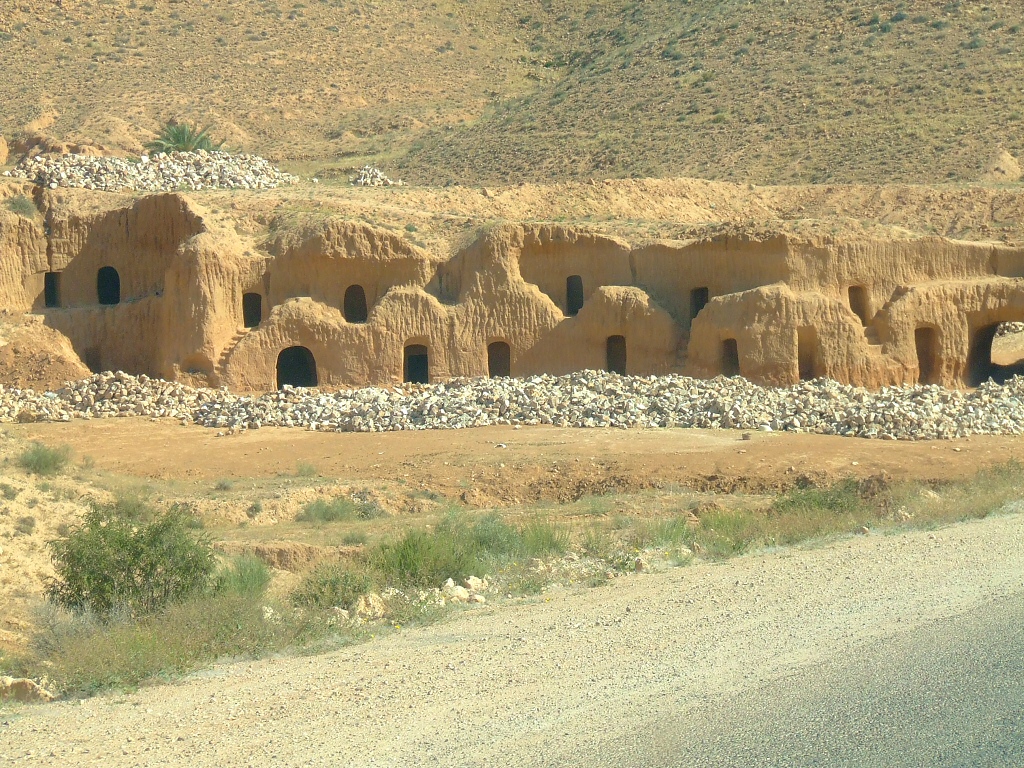
In the Sahara with the Bedouin

Our time is the first in which it has been possible to take a literally universal view of human history, because this is the first time in which the whole human race around the globe has come within sight of coalescing into a single society. In the past, a number of empires, and a smaller number of missionary religions, have aimed at universality. None of them, so far, has ever attained to universality in the literal sense. – Arnold Toynbee, historian, 1967.

Healing the Hurts of Nations contains a few unusual underlying assumptions. One of them is that globalisation is historically inevitable. A bit like growing up. I am not suggesting that the once imperialistic and now corporate-style globalisation process we see today is the only way it could have happened – perhaps it took place this way because humanity rejected earlier-presented options. Nevertheless, globalisation was a pre-programmed potentiality from the early days of human history.

Saying that globalisation is inevitable does not mean that inevitably it should happen as it did, when it did, carried out by the people who did it and with the outcomes that resulted. But it suggests that there is an urge or secret aspiration deep in the human psyche, seeking to form a planetary civilisation, and that humans would therefore try, mostly unconsciously, to put into place the conditions to achieve it.

Humanity customarily walks into the future facing backwards, yet this does not exclude the possibility that, deep down, it secretly knows something more than it sees. Several attempts at globalisation are visible in history. Let’s look at a few.

Alexander the Great

Athens

Alexander, one of history’s finest megalomaniacs, did not invade all of Eurasia, but he made a good try. Had his conquests lasted, they could have been a platform for further extension at a later date, by the inheritors of his bequest to history. Starting from Greece in 334 BCE, he and his troops swept through Anatolia, Egypt and the Middle East, through Persia and Afghanistan to Turkestan and what is now Pakistan in eight years, by 325 BCE.

They established a capital at Babylon, Eurasia’s key meeting-place. He took on god-like status, gobbled up several major civilisations and then died prematurely in 323, aged 32. He had set in motion one of history’s biggest intentional genetic engineering experiments too – mating his men with women across his conquered territories.

His big idea was to seed Greek culture and, in his view, to upgrade humanity with Greek modernist internationalism. A flash in the pan, the social and political effects of his audacious feats all the same survived centuries after his time. Had he lived a longer life and run his affairs well, history today might look very different.

The Silk Roads

Three centuries later, in the time of the great classical empires, the world tentatively approached the possibility of unifying Eurasia. The Roman, Persian, Kushan and Han Chinese empires, between them, controlled most of the main axis of Eurasia, from Spain to Manchuria. The backbone of this civilisational axis was the Silk Road from China, through Turkestan to the Mediterranean, along which there was continual travel and trade, despite the distance. Few travelled the Silk Road in its entirety – instead, goods and ideas changed hands at caravanserais and trading cities, and trade between Rome and China reached significant levels for the time.

Chinese silks first reached the West in 500 BCE through Persian intermediaries. Chaotic forces put an end to this period of Eurasian stability: warrior nomads rampaging across Central Asia, together with the separate yet roughly synchronous collapses of imperial Rome and Han China, caused trans-Eurasian trade and interchange to collapse for some time.

The precedent of connecting civilisations and setting intercultural exchange in motion was now there, setting patterns for the future. It is suggested, with some plausibility, that Jesus, in his ‘lost years’, travelled as far east as Tibet and as far west as Britain. This sounds fantastic, yet significant international travel was not uncommon at the time. People had gained a taste for items and influences from faraway places. Imperial administrative structures also approached a scale which could, with a few more developmental steps, begin to manage global control – if subsequent human history had but followed this thread. Though this was perhaps premature.

The Muslim Ascendancy

Amman, Jordan

Then came the rapid Muslim expansion initiated by Muhammad the Prophet in 630 when he and his followers took Mecca, an ancient Arabic cult-centre. He died in 632, but his successors channelled the dynamism of their faith by invading the whole Middle East. By 670 the Islamic empire stretched from Tunisia to Afghanistan, spreading to Spain, Turkestan and northwest India by 720. They had a go at Europe too, but it was too muddy, cold and backward to bother with, and the Franks beat them back.

The Muslim empire’s success arose not only from the energy of the new Islamic dispensation, but also from the acquiescence of conquered peoples, many of whom thought the new dominators better than their predecessors. Muslims did not forcibly convert their subjects, and the relative doctrinal, social and legal clarity and coherence of Islam was attractive to many, whether or not they converted.

Political unity in the empire later broke down, but cultural unity continued, with a second zenith in the 1600s in the form of the Ottoman, Persian Safavid and Indian Mughal empires. Had Westerners not intervened, it is conceivable that a third wave might have occurred during the 20th Century. Despite the fact that globalisation is currently Western-driven, it is likely that the Muslim world will have a big influence in shaping the culture of the 21st Century world. Osama bin Laden and al Qaeda might even play a part in this: though their actions are questionable in a short-term context, the longterm effect of their impact on globalisation and its moral tone could be influential. Whether Muhammad the Prophet would approve of their actions is another question, but the fact that the centre of al Qaeda’s initiative has been Saudi Arabia, Muhammad’s home, is not insignificant.

The Crusades, Richard and Salah-ad-Din

Jerusalem

A further chance to build a proto-global fusion came during the Crusades of the 1090s-1290s – Europe’s first bout of overseas expansionism. The Crusaders made their mark with extreme courage and bravado, yet they blundered repeatedly. When they seized Jerusalem in 1099, they allegedly murdered virtually all Muslims and Jews as well as eastern Christians. The Crusaders were a strange mixture of religious visionaries and holy warriors, glory-and-booty seekers, power-maniacs, noble adventurers, outlaws and vagabonds.

Their unprincipled actions incited a pan-Arabic reaction, especially under Nureddin, Seljuk ruler of Syria 1146-74, and his successor Salah-ad-Din or Saladin, Sultan of Egypt and Syria, 1175-93. They took strong objection to Crusader atrocities and arrogance. This was a religious matter of righting wrongs rather than a purely territorial issue, since it was the stated duty of all Muslims to protect their fellows from oppression by the launching of jihad or holy war.

Nureddin and Saladin were not implacably opposed to the presence of foreigners in the Holy Land, as long as they behaved themselves. Saladin mooted the idea of sharing Palestine with the Europeans on a principle of mutual respect for each others’ people, faiths and holy places. This accorded with the highest of Muslim ideals. But he would not allow the Crusaders sole control, since they did not behave themselves and were over-ambitious. His diplomacy could have laid a basis for substantial cultural interchange between Europe and the Muslim world which, conceivably, could have created a vast world bloc with enormous potential.

The English king Richard Coeur de Lion was hesitantly partial to his proposition, tempted by Saladin’s chivalrous political challenge. Some Crusaders were relatively pacific and liberal, many of them born and living in Palestine, with Muslim friends and concubines and adopting some Middle Eastern ways. Muslim civilisation was, after all, culturally superior. But Richard was persuaded and outmanoeuvred by the belligerent lobby amongst Crusaders, mostly fresher to the Holy Land. They were backed by an unholy alliance of Papal, lordly and financial interests back in Europe, who preferred cultural separatism, booty and sole control of Palestine.

The mediating efforts of 1192 by Saladin’s brother were sabotaged. The possibility collapsed. This led to the eventual failure of the Crusades: after the collapse, Saladin knew the Crusaders must be ejected. It blew an historic opportunity to bring together two extensive cultures which, together, were potentially in a position to bring about a new international order. It was not to be.

European magnates became ever more bigoted and dogmatic during the Middle Ages: cultural cleansing and the imposition of control and uniformity were major trends underlying the period. Lordly church henchmen even sent Crusades against heretical and pagan Europeans in southwest France, Bosnia and Latvia. Islamic civilisation, which had matured by the 1100s, was multicultural, to the extent that its top level was taken over by Turkic peoples, the Seljuks, and later the Ottomans, without enormous disruption. It had little to gain from cooperation with Europeans, but the Christians nevertheless had their merits – a spunky and enterprising lot.

This failed meeting of cultures was but one entry in a catalogue of missed historic opportunities. In Israel and Lebanon to this day, much suffering might have been avoided, had this cultural hand-shaking taken place. It might have affected the many persecutions of Jews in Europe, the breaking up of the Middle East by the West in the 20th Century and the nature of European imperialism from the 1500s onwards.

The Mongols

Another window of opportunity arose under the Mongols in the 1200s. Invincible blitzkrieg warriors, they felled the Chin and Song dynasties of China and the great Abbasid Caliphate of Baghdad. They brought down the feared Assassin (Hashishiyun) Order of Syria, a Shi’a terrorist sect led by the legendary Old Man of the Mountain, whom even Saladin could not beat. But to do so they had to use massive force – this story slightly resembles America’s match with Osama bin Laden and al Qaeda.

The Mongols had an interesting style: they were herders by nature, setting themselves over their conquered lands and employing local administrations and institutions to run their empire. At first they did not take over the palaces and great cities, camping instead outside their walls. Genghiz Khan (c1167-1227) saw it as his and the Mongols’ divine destiny to rule the world, on behalf of the gods, who wanted it unified. This man had a global vision: any opposition was opposition to the will of the gods, worthy of instant death.

The Mongol empire, at its peak between the 1220s and the 1290s, stretched from China to the Middle East and Ukraine, embracing many ancient culture-areas. Rapid communications systems were developed and intercultural exchange was encouraged, knitting diverse cultures into an internationalist order controlled from Karakoram in Mongolia. They invited Buddhists, Taoists, Christians, Manichaeans, Muslims and pagans to their courts, bringing all under their umbrella. Many impressive potentials were there, but the essentially nomadic Mongols, who were not by nature civilisation-builders, only coordinators, gradually subsided in power.

Two of their biggest weaknesses related to democracy and delegation of power: whenever a Great Khan died, the hordes returned to Mongolia to elect a new one, meaning that their conquests lost momentum; additionally, regional power was delegated to khans who eventually pulled away from the centre, adopted the ways of China, Turkestan or Persia and loosened the ties of the empire. Yet the Mongols had brought a flourish of world integration. No empire was ever so extensive or all-embracing. But then, few empires created piles of skulls to the extent they did.

The Meeting of Civilisations

A further rumbling of global hegemony arose during the 1400s. Three powers were unwittingly positioning themselves for world domination, and not entirely consciously: imperial China, the Islamic bloc and the upstart Europeans, then in the early stages of their cheeky exploratory adventures led by the Portuguese. The smallest of these powers was the Europeans, a smelly, drunken, flea-ridden and voracious lot whose raucous bravado and booming cannons shocked the Muslims and sank their navy in a trice.

Civilised Islamic principles were the Muslims’ undoing when they met the Europeans – the Muslims were too gentlemanly. The Chinese had invented gunpowder, but they considered it immoral to use it in war, so they too had a problem with battle ethics – their philosophy was that it was ignoble to kill a warrior without looking them in the eyes. The Portuguese cared not a hoot about that.

The Chinese sent out embassies all over Asia during the reign of the Ming emperor Yung Lo in the early 1400s. His Chinese Muslim admiral Cheng Ho, from Yunnan in south China, led an enormous flotilla of ships to Indonesia, Australia, India, Arabia and east Africa (some say even the American west coast), furthering the grandiose interests of the Middle Kingdom. They sought ambassadorially to extend the hegemony of the Chinese emperor worldwide and render all other lands tributary – to the Chinese, the emperor was both a monarch and the embodiment on Earth of the gods.

This rare outburst of Chinese internationalism was courteous and diplomatic: Ming mandarins presumably dreamt of lording it over the world. Their big failing was that, since commerce was distasteful to the Chinese ruling class, their costly expeditions led to no significant profit. By 1433, there was a change of emperor and all embassies were called back. When Cheng Ho, who had sailed as far as Zanzibar, came home, he took giraffes and lions back with him for the imperial zoo. The succeeding emperor decided, for internal political reasons, to revert to traditional isolationism. This knocked the Chinese out of the game, by their own doing.

The Portuguese and the Muslims (the Ottomans, Safavid Persians and Indian Moghuls) met up at sea outside the Persian Gulf in 1509. The combined Islamic fleets, masters of the Indian Ocean, were quickly sunk and scattered by Portuguese cannons, giving the Europeans sudden dominance of the Indian Ocean and its trade. Muslim traders had for long plied the waves from the Red Sea and the Persian Gulf down the African coast, and past India to China and the Spice Islands (Indonesia).

The result of the European victory was that, of the three powers eligible to dominate the world at that time, the Europeans had suddenly gained the ascendancy. For the next four centuries, they were the prevalent world force, followed in the 20th Century by their successors, the Americans. The whiteskins, by force, trade and missionary activity, united the world – at least in terms of materialistic integration. By 2000 it was woven into a multi-channel telecommunications web which has turned the world into a buzzing network with a rapidly-diminishing need for a central dominating power. The conclusion of this story is yet to come.

Exploration

Cape St Vincent, Portugal

Exploration is not a European invention. Hanno the Carthaginian circumnavigated Africa around 2,500 years ago. Pytheas, a Greek, reached Britain, Iceland and the Baltic Sea around 2,300 years ago. Nearchos of Crete sailed to India, followed by Alexander the Great overland. Eudoxus of Rome visited India and East Africa around 120 BCE. Roman traders reached south China around 100 CE by boat. The monk Fa-hsien travelled from China to Afghanistan and India around 400 CE.

Much later, the Vikings sailed from Scandinavia to Baghdad and Byzantium down the rivers of Russia, over the North Sea to Britain and Ireland and across the Atlantic to Iceland and Canada between 800 and 1000. They had followed Irish monks over the Atlantic: the Irish settled Iceland around 795, themselves preceded by St Brendan, who was reputed to have reached Newfoundland in a leather and wood curragh around 550. The Polynesians canoed from the central Pacific to South America, Hawaii and New Zealand, sometimes in significant numbers. Two notable later explorers were the well-known Venetian Marco Polo, who travelled from Italy to Mongolia, China, SE Asia and India between 1271 and 1295, and the Moroccan ibn Battuta, who travelled 75,000 miles around Africa, Russia, India and China – perhaps history’s greatest traveller-chronicler.

When the Europeans started exploring the world, the globalisation process we know today truly began. One crucial person in this was Henry the Navigator, a Portuguese prince who set up a school in Algarve in 1419, teaching navigation, astronomy and cartography to selected sailors. Not long after, his sailors reached Madeira and the Azores, then travelling as far as Sierra Leone in West Africa. This set in motion a trend which led to Columbus’ voyages to the Caribbean from 1492 onwards – though he never landed on the American mainland.

By 1500, English fishermen from Bristol had reached Newfoundland, followed by an official expedition under John Cabot, and meanwhile the Portuguese Cabral reached Brazil and Vasco da Gama sailed around Africa to India. Magellan achieved the first world circumnavigation in 1519-22 – a tremendous and courageous feat and precedent, equivalent to sending a man to the Moon. Later, the pirate and naval terrorist, Francis Drake, who later achieved great honours, claimed California for the British and circumnavigated the world again in 1577-80. Also, Russian pioneers were pushing across the vastness of Siberia.

By the 1600s this period of exploration had immensely profited the Spaniards and Portuguese in South America. Overseas adventures became serious business – Spanish gold and silver from the Americas, followed by the slave trade, was instrumental in financing European economic growth. European hegemony was built on the sweat, blood and tears of many long-forgotten conquered and enslaved non-Europeans.

Trading posts, ports, depots, trade routes, plantations and towns were established worldwide; embassies were sent to exotic monarchs in India and the Far East; the slave trade was started, eventually transporting over ten million Africans to the Americas; lands and markets in Africa and Asia were penetrated; substantial European colonies and towns grew in South America, later in North America and South Africa, and later still in Australia and New Zealand; and hub port cities such as Bombay, Singapore, Jakarta and Shanghai in due course became major world cities.

In the 1700s the initial driving urge for exploration and commerce was supplemented by scientific exploration. An enormous collection and classification of species took place, together with documentation, charting and pushing out the edges of the known world. European maritime powers fought each other for control of India, the East Indies and the China trade. This was driven by the profit-seeking voyages of merchant adventurers and trading companies, and only later did governments take direct control.

The first multinational corporations were the Dutch, French and English East India Companies: the English company, chartered in 1600, came to rule much of India from the 1750s-1850s, with the British government taking control only in 1858, after the Indian Mutiny. The Dutch did similar in Indonesia.

Shanghai, Mumbai and Dubai

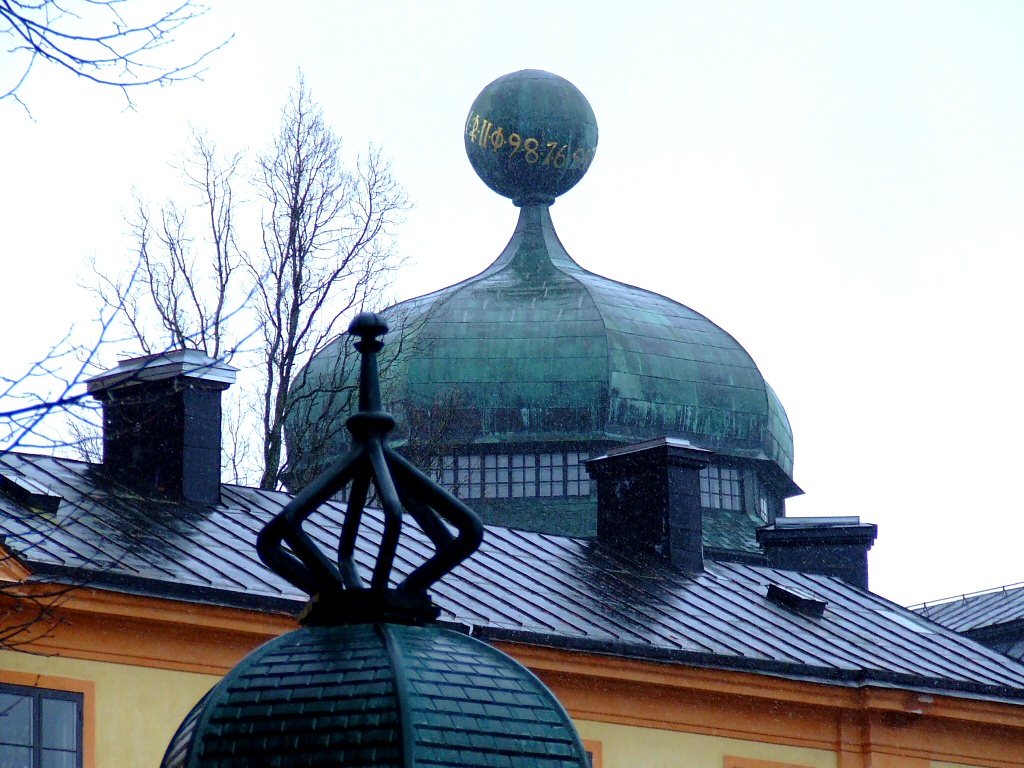
Uppsala, Sweden

Thus began European world domination, reaching its zenith by 1900. It laid the foundations for American corporate domination of the world in the 20th Century. The American period, accompanied by European decolonialisation of the 1940s-70s, laid the foundations of the global village. Then, from the 1960s onward, the momentum changed again: the initiative began slipping from America, Europe and USSR as the Japanese began to out-manufacture the West, exceeding it in quality of production from the 1980s onwards and itself becoming an inventor. In the 1990s the Asian tiger economies (Korea, Taiwan, Malaysia, Indonesia and Thailand), together with China and parts of Latin America, were growing too. They were not only cheap production sheds, but asserted a growing cultural influence.

As from 1990, Euro-American dominance began relatively to decline, though it still determines the nature of the game, while all the time losing influence. Guangdong province in south China is now the world’s biggest industrial park, and some of the world’s hottest computer programmers work in Bangalore, India. Brazil, Mexico, South Africa and Indonesia, despite uncertainties and growth-pangs, are new economic powers.

At a cost. In the colonial period, the blessings were mixed-to-catastrophic for recipient peoples. Cultures were destroyed or undermined. In some parts enormous populations were shamelessly decimated – especially in the Americas and Africa. Modernisation was thrust on disparate lands as fast as railways and telegraph wires could be laid down. Ethnic groups were played against one another, colonial puppet states were founded, resources were plundered, internal affairs interfered with, blood spilt and things were simply changed, totally, from what they had been before.

Some recipient peoples benefited by being released from the hold of ossifying traditional systems, but the balance of benefit is to this day debatable. This could have been done otherwise. Ultimately, things will go full-cycle when the cultures of the world, having absorbed Western and global ways, reach a new self-defined balance and individuality from that standpoint. Cultural variation is not dead – it is reconstituting.

The pain and consequences of Western imperialism sit with us now, expressed in various manifest forms of anti-Western feeling lurking under the surface and popping up in different contexts around the world. Around 1990 the moral pressure and tempo came from the ‘Confucian sphere’, around 2000 from the Muslim world. Africa, Central Asia and Latin America are yet to come. Antarctica speaks by jettisoning massive ice-shelves, threatening coastal areas worldwide with sea-level rise.

The former subjects of Euro-American domination have adopted the ways of the dominators, giving it their own twist, and the drive toward ‘development’ now covers the world and is no longer Western-driven. TV, cars and computers are everywhere, together with ubiquitous burger bars and all that goes with them. While Europeans and Americans clean up their cities, the smog of developing world cities grows ever thicker and more toxic. But the values driving this Western-led development are incrementally changing, and the West itself is experiencing bounce-back. There are sub-plots going on too, such as relations between China and Latin America, Indians in Africa and the Caribbean and Filipinos in Arabia. When the Dalai Lama visits the Pope, something quivers worldwide. There is much more going on than what the West thinks.

The 21st Century brings us a planetary civilisation. The means by which we got here is receding into the past. Many new problems face us – some a result of imperialism and some new. In the new global situation there lies an enormous historic opportunity, and today’s world is our starting place. We are now in a century of reassessment: everything is up for review. The true reason for which those intrepid world travellers risked life and limb is now approaching its fulfilment. We must not confuse how we got here with what happens next. This concerns global civilisation.

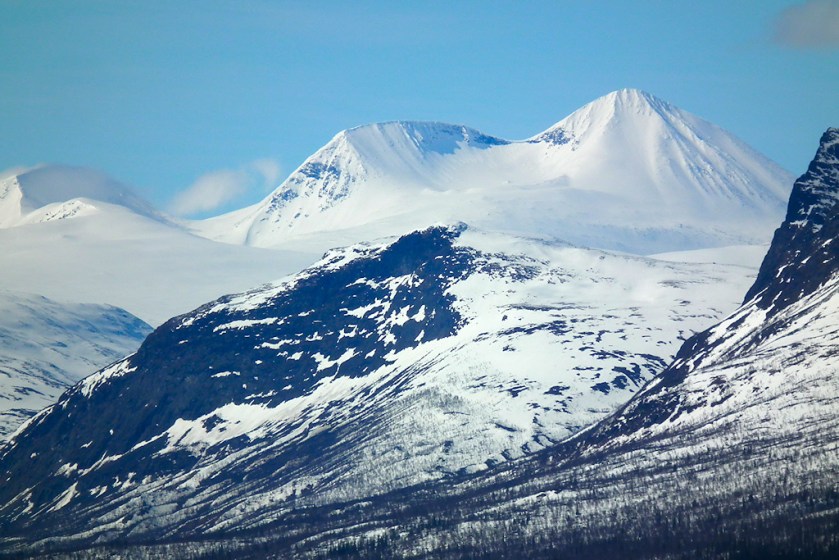
Sapmi – Lappland