What’s it all about?

A donkey in Bethlehem, Palestine – Jesustown.

What’s it all about?

2020 has brought us all a lot to think about and, for many, a lot of time to think about it. ‘What am I here for?’ and ‘What’s it all about?’. Some folks have had big reveals and pointers, others have had to dig deeper than ever before, and some have made little or no progress, and some have been run off their feet and burned out by it.

I’ve always been rather purpose-driven. When I was about ten I wanted to be prime minister. By 15 I won a big public speaking competition with a notes-free speech about why Britain should join the European Community – seven years before it happened. Does Brexit, 55 years later, mean I’ve failed? By 18 I realised that politics was too dirty for me. So I followed another path and you got Maggie Thatcher and Tony Blair instead.

It took until I was about 34 to acknowledge that I was at last on track (when I started the Glastonbury Camps). It just had that feeling. Before that I felt like a footloose jack of all trades and master of none. When ‘received my instructions’ I quaked and resisted, but then I realised that, if I didn’t do it, it would not happen. And it needed to happen.

God doesn’t come down and say ‘This is your life-purpose‘. It’s not like that. It’s just that, when you’re more or less on it or you’re heading towards it, you feel it – you’re in the right place at the right time doing the right thing, even if others disapprove, discourage or block you. If you aren’t on it, you feel stuck in a blind alley, getting nowhere, with a meaningless life, as if you’ll stay like that forever. Depression and feeling an unfulfilled calling are closely related.

Purpose is programmed within us. It’s already there. Before getting born, we had a discussion with our angels about the purpose, the motivation, for going to the trouble of birthing ourselves, growing up and living a life on earth. Incarnation is hard work, even for people born in privileged circumstances. Two key things were covered in that discussion: what you were to learn and master, and what you were to contribute. Then you signed a contract in your soul, and it still holds.

Quite often you get clues when you’re about 8-12 years of age – visions of what we want to be when we grow up. Then, during your teenage years, this vision can be clouded and lost (often not helped by parents and careers advisers). These early-life visions can be literal or symbolic. I wanted to be an airline pilot. When I was 15 they ruled that short-sighted ginks like me couldn’t be pilots (that changed back later on, but too late for me). So that door closed. But later in life I realised that I had taken thousands of people on long journeys, up into heaven-worlds and landed them safely at the other end. Mission kinda accomplished.

By 18 I was aiming to become a diplomat, but by 20 I was involved in a life-changing near-revolution at the LSE that ended all that – yet in my adult life I’ve scored some pretty good informal diplomatic hits. So the vision and intention were symbolically correct, but the way things panned out was very different.

As life goes on, our purpose reveals itself through situations that present themselves. We find ourselves doing things we hadn’t foreseen but, when doing it, we feel remarkably fired up, or we make a difference, or we do something really meaningful, sometimes without even realising it. Even washing the dishes or cleaning the toilets can make a big difference in some situations – the chef at a peace conference can save thousands of lives without even knowing it, just by cooking good food for the delegates. So note this and follow it, because there’s your clue – even if it doesn’t make money, look realistic or gain approval, if it fires you up, why aren’t you getting on with it?

We must be willing, if necessary, to tread that path alone. In the Arab revolutions ten years ago, a big issue for people was ‘losing our fear’. Sometimes we must stand up and be counted – and if we hold back we can regret it for the rest of our lives. Like the near-revolution I was a part of fortyish years before, the Arab revolutions failed in the short term yet they started deep changes that will outlast the dictators who tried to stop them.

Here’s an interesting truth: it’s better to fail in something that ultimately will succeed than to succeed in something that ultimately will fail. This concerns posterity and holding out for what is right – and taking a bet that it’ll work, even when you’re not sure, and everyone and everything are against you. Even if you have cerebral palsy. Even if, or perhaps because, you’ve been damaged, disadvantaged and traumatised.

Three things block this coming out process: fear, guilt and shame. Too many people take the safe route in life, to please their family or fit in with the rules, or for fear of loss of security, or fear of being singled out and blamed, or fear of being exposed as unworthy or unable. Human society is riddled with such fears. Our planetary disaster is happening because billions of people are withholding their gifts, setting aside their callings and playing safe. We cook up good reasons to justify this but, in doing so, we are choosing complicity in a collective crime against humanity.

Out of fear, we hold back. This becomes a habit and institution. Then we forget what our instructions were, what the agreement was. Instead, we eat, drink, entertain, worry or work ourselves to death – unless or until a crisis shakes it up, strips our defences, propels us into unknown territory and slams the door shut behind us.

This withholding is dead serious. It means we’re omitting to make our contribution. It’s ours to make, and someone else isn’t going to replace you. Since so many are withholding, there’s a shortage of active server-souls. People have questioned my humanitarian work, believing it is dangerous (yes, occasionally it is) and encouraging me to stop and ‘be responsible’. But then, when I ask them to take my place because the work still needs doing, they wander off.

Charity begins at home‘ – sorry, for me that’s only a half-truth. Charity truly begins where the need is greatest. Need pulls the brilliance out of you.

The world is short of active altruists, and the suffering that arises from that is tremendous. It’s all about that old lady down the road who is alone and unvisited, because everyone was too busy and no one thought, no one imagined what it might be like to be that old lady. The world has a crisis of caring, and it’s all to do with withholding our gifts, callings and missions. Playing safe is a very dangerous planetary neurosis.

This brings us to a key issue. It’s not just our option to pursue our life’s calling: it is our duty. It is an imperative. If we don’t do it now, it won’t go away. This is a choiceless choice. Especially in these parlous times.

This isn’t about great and dramatic things. If you’re gifted at embroidery, do it. If you’re good at ‘just’ raising kids, or ‘only’ growing cabbages, you’re here for that. If you can bring light into the life of a hungry or lonely person, do it. Because, when you’re on your deathbed, these are the things you will remember.

And it changes. Life-purpose presents tasks but it is not a job. You can’t resign. It takes on different shapes, progressing as life goes on. One of my big life-lessons and contributions has been in ‘right leadership’ – something I did better in my fifties than in my twenties. I’ve scored a few goals, brought some benefit and made mistakes too. But I learned. It has gone from home-birth campaigns to organising biggish events to helping burned-out Palestinian social activists.

There are paradoxes. Nelson Mandela once confessed that, in his life, he had faced a deep conflict between serving his family and serving his people. He could only do one of them. After all, if you’re doing things that can endanger your family, should you stop serving your people to protect them? Or will your family also benefit if you can improve things for your people?

One of my gifts has been a capacity to struggle for, uncover and articulate insights that other people don’t quite get. I’ve been a speaker, author, editor, broadcaster and a pretty good contributor to public discourse. It didn’t make me rich or famous but I’m really glad I did it and shall continue till I drop – even possibly afterwards. Since I’ve been about 30 years ahead of the times, my work has not succeeded as much as it otherwise might, but after I’m dead it might lift off – you never know – and I’m leaving an online archive of my work just in case.

But perhaps it doesn’t matter. We can never fully see the results of our work and the part it has played in others’ lives. ‘Non-attachment to the fruits of our labours’, is how Buddhists see it. The aim is not to have an impact – it is simply to do your best. Once, when I was in Palestine I confessed to a friend that I didn’t feel I was making much of a contribution on that trip, and I might go home and come back later. She looked at me straight and said, simply: “Balden, when you are here we feel safe“. That hit me hard: sometimes, you don’t even need to do anything. I learned that what I thought was happening didn’t match what actually was happening.

Here’s another thing. Often we think this is all about giving. No, it’s all about interchange. It’s arguable that the people I’ve helped have given me so much more. If you wish to experience true generosity, go to poor people’s houses and countries.

Life purpose has its ins and outs. I’m good at thinking clearly in wider situations but I’m useless at articulating personal feelings on my own behalf – though I’ve done decades of work on myself to change this, and I’ve only made a little progress. But there are things that each of us must accept too: in my case, it’s Asperger’s Syndrome (high-function autism), and that’s what Aspies are like and what we’re good for. Greta Thunberg is a good example – and society is more open to her directness than was the case for me and my kind fifty years ago.

I’ve been nailed and hammered by so many people to be different from the way I am, yet I’ve found that trying to be what I believe others want me to be does not end up well. This has been painful – to be judged as a bad father, a failure, a fascist dictator, a goodfornothing, a criminal and even traitor. “When are you going to get a proper job?”. Something in me, rightly or wrongly, has soldiered on. I have regrets, but I don’t regret it.

There is no right or wrong: there are simply outcomes. Write that on your toilet wall. We’re called to create the best outcomes we can, and for everyone. Become an expert in making something good out of disasters. Don’t indulge in your failings, inadequacies and wrongs – they go on forever – but throttle up your gifts, assets and contribution. Don’t leave it till later, because later means never.

In my life I’ve been a philanthropist without money. My wealth has been magical, not material. Sometimes I’ve thought of myself as a healer of perceptions. People outside the rich world see me coming and they think, ‘Ah, a European – he can raise funds for us’ (Christians do this more than Muslims). No, this is not what I’m here for, and I’m not good at it. I’m here to help with magic solutions, to raise people up, and it has been a challenge to hold to that because people and projects do indeed need money, often very legitimately so.

The worst bit is that some people get so fixated on the funding bit that they accuse me of being rich, mean and selfish, and they miss what I actually can contribute. It’s better to teach someone to fish than to give them a fish – a common saying in the humanitarian world. (Another is: teach a man and you teach a man, but teach a woman and you teach a generation.) I’ve had to learn to work for a good cause not just because it’s a good cause, but because it is run by people I can work with, and because it fires me up, providing a context in which to serve and contribute best.

So, if you’re struggling with life-purpose matters, here’s a recommendation. Do whatever lifts you up, and avoid whatever weighs you down. This is radical. It’s also far more practical than you might believe. When I was 50 I had a ‘dark night of the soul’ crisis and this truth emerged from it. It doesn’t mean taking the easy option – often you must take the scariest option. A lifelong peace activist, I realised that I had to head for the heart of darkness, so I committed to working in Palestine, sensing that justice for all, not exactly peace, is the main objective there. Justice brings peace, but peace doesn’t necessarily bring justice – so more conflict will follow. If Palestine and Israel can break through, the world’s conflicts will change – and wars and violence block world progress far more than we understand. So what lifted me up was the challenge to follow a difficult path.

Twenty years later, the Palestine problem continues and assholes still prevail, but this work hasn’t been a failure. Deep historic turn-arounds take time, often longer than a lifetime. Brian Eno once said, “I have a feeling I’m part of something that should be much bigger than it is“. Yes indeed – the last fifty years have been a frustrating time for change-agents. But many of the greatest breakthroughs in history were groundlaid by forgotten people you’ve never heard of – the people who prepared the way for those that history recognises. Without these forgotten heroes, you would not have the freedoms and blessings you have today.

Getting cancer and becoming physically disabled wasn’t part of my plan. But it has given me new purpose. I might live one year or ten, and this uncertainty is an awakener: what can I lay to rest and what am I still dissatisfied with? It has reminded me that, no matter how difficult things are, everything in life is a gift. If you choose to see things that way. So even if you feel you have no purpose or you can’t find it, that’s your gift, your resource, your background, and do your best with it. That’s where it starts.

Or perhaps you’re doing it but you downplay it, or you fail to see what’s happening as a result of your being there, or you feel you’re such a rotten, godforsaken shit that you’re a no-hoper.

When I was twenty I read a book by Alan Watts, a psychedelic guru, that deeply stirred me. It was called The Wisdom of Insecurity. Yes, the wisdom of insecurity. Sorry, folks, but in 2020, normality was suspended and this is what we’re being shown. It’s time to roll up our sleeves and pitch in. Make steps. Do it. And if you don’t do it, stop beating yourself up about it. Good luck.

Risen from the Half-Dead

Normally I’m the kind of person who gets ill only once every twenty years. When people were getting colds and flu, I’d have one-third symptoms for twelve hours and it would be over. In my life I’ve been in some pretty dangerous situations, and amazingly I’m still alive. So incurring bone marrow cancer, or myeloma, last year, has meant a new life. Lynne is continually amazed at my calm in the face of adversity, but I just reply, “Yes, but no one is shooting at us and the world isn’t ending, so all is well“.

This said, a year ago, when I was diagnosed, I went through a week of anger. I had been a meditating wholefood vegetarian since my twenties and had looked after myself well, precisely to avoid issues like cancer. So I felt frustrated, even let down by my beliefs. But then I learned how this particular kind of cancer is caused by toxicity – electromagnetic or chemical – and in my case it has been electromagnetic. This became a problem for me from 2000 onwards as mobile phones and wi-fi came in, though I think I’ve had some nuclear exposure too. This toxicity issue helped me get over the anger, and at that moment I entered the self-healing process fully. I gave myself full permission to make the best of a disaster.

Recently I’ve been wondering how much of a future I have. I’ve had a lot of fatigue – it comes on in the afternoon, sometimes quite suddenly. It’s not just tiredness – it hits the central controls of your bodymind and halves the power. Everything except the force of gravity gets switched down – brain activity, physical strength – and with it can come some pretty downward-facing thoughts. Such as ‘Is all this struggle worth it?‘ and ‘Will it ever end?‘. I’m rather addicted to being an asset to the world and now I find myself wondering, in my down moments, how much of a liability I’ve become. We Westerners are very expensive humans to keep alive.

In my last blog, I told the story of a crisis I had a few weeks ago. It was sciatica, which triggered an outbreak of shingles. The sciatica arises from myeloma, which eats away at the bones. John Tillyard, a gifted and experienced chiropractor in Hayle, who treated me recently, said that the gaps between my back vertebrae are very large. When I lie down flat I can click myself in 3-5 different places – it’s rather shocking to anyone who hears it!

The sciatica arose from this issue – the bottom few vertebrae in my back had collapsed or compressed last year and I cannot fully support my back for more than a few minutes without resting on walking sticks. So my back clicked out, very painfully. The shingles is a side-effect of the chemo drugs of last winter. It’s the chickenpox virus, that hides in a corner of our nervous system and erupts in later life when prompted – the sciatica prompted it.

So I’ve been pretty wiped out by that. My active day lasts 6-8 hours only – and that includes doing housekeeping or indulging in small pleasures such as just sitting. Which is why I don’t chat on Messenger or answer messages quickly or at all – sorry about that. Writing this blog will finish me off for today. Oh, and I sincerely recommend that you don’t get shingles, if you can help it!

So I was worried that I might slowly be going downhill. I had a blood test and, yes, my readings were slowly going up. Liz, the haematologist at Treliske hospital in Truro, started preparing me for the possibility of another round of chemotherapy, but booked me for a PET scan to check if damage was being done. Lynne took me to Truro for the PET scan on Monday – and that was a fullmoon adventure in its own right (her car broke down)! But we’re a good team, she and I, and magic happened, and we got home, and all was well.

The next day, Liz rings up sounding happy, saying that my scan results were really good and that the two things that had worried them were no cause for concern. That was heartening – I needed some good news! But, to me, it had extra meaning. A year ago, when I was lying there in hospital, assimilating my situation, I realised, “Well, Palden, you’ve been given a challenge, and that is, ‘healer, heal thyself’!“.

Throughout my life I haven’t been a healer in the normal sense, but as an astrologer I’ve seen myself as a perceptual healer, and in my community and humanitarian work I’ve seen myself as a social healer, and at times, in crisis situations, I’ve used laying-on-of-hands and psychic healing to amazing effect – but none of these has been my primary focus. Now I have been challenged to apply healing power to myself and, not only that, but to demonstrate it to the doctors.

The primary issue for me has been meditative – opening myself up fully to the spiritual and medical attention of my ‘angels’, and opening up my cells to the medications I’ve been given, asking my body-mind intelligence to regulate the process to best effect. I’ve allowed myself to be held in the upturned palms of the Goddess, showered with light by my ‘friends upstairs’, included in the prayers and meditations of all sorts of people in a range of countries and cultures, and helped by the humans in my life and by the wonderful landscape I live in – the magic land of Belerion, the Shining Land, in West Cornwall. Thanks and many blessings for that, to all of you. It means so much.

What happened? Well, my six-cycle chemo last winter was stopped at five – job done. Although side-effects of treatments have been an issue for me, they are not as much an issue as they are for many other people. And now there are the latest results, causing some eyebrow-raising in the haematology department at Treliske. So, thus far I have managed to demonstrate, at least to myself, that innerwork like this, plus the beliefs, diet and lifestyle habits I have had for decades, seem to have a discernable positive effect on my medical outcomes. What disappoints me, though, is that the doctors are not interested in finding out why and how. To them, my results are just ‘good luck’ – that’s a very scientific evaluation, if ever there was one.

When death is tapping you on the shoulder it makes you review your life and look hard at what you’re happy and unhappy with. Two big life lessons for me (and for a good few of my friends) have been ‘the pain of history’ and ‘living behind enemy lines syndrome’. As a radical and pioneer, I’ve had to learn that changing history takes time, and it can take longer than a lifetime – especially during periods when the world is, on the whole, in denial and blocking, messing around with phantasms like Donald Trump or the latest iPhone rather than addressing the major matters at hand – ‘amused to death’, as Roger Waters (formerly of Pink Floyd) would put it.

So, in the projects I’ve undertaken throughout my life, there has been success in some cases, but not as much as there could have been, and many project failures have been the fault not of the project itself but of the politics, economics and social values around it. Despite our exertions over the decades against war, war has not ended and my own country is still a leading arms exporter. The situation in Palestine has not improved at all since I first got involved in 1997. The Tuareg village I work with in Mali could still get wiped out in one afternoon, either by jihadi extremists or by French troops. Has there been progress? No, but in the longterm, yes – though it should be happening quicker. This has been difficult to live with and, in my later years, I’m deeply tired of it – rather deeply exhausted with the fact that things have not changed as much as they have needed to change.

‘Living behind enemy lines syndrome’ – hm, that’s a tricky one. It’s all to do with having ways and values that are not in line with the majority of people and the dominant culture we live in. If you don’t play along with the rules, you could get busted, anytime, and for ridiculous, trumped-up reasons. I was busted, criminalised, exiled, scapegoated, disrespected and robbed of my rights – and I’m not the only one. And things that should have happened were blocked and obstructed for stupid and, in the end, destructive, selfish reasons.

In the mid-1990s I worked with a doctor who, with Prince Charles, was seeking to develop Integrated Medicine – a fusion of conventional and complementary therapies in healthcare. Has there been progress? No, not really – because government, Big Pharma, the medical profession and even the BBC are against it. And, worse, this affects me now because, more than anything, I now need the supervision of a doctor with full knowledge of both health sectors, who does not suffer from the ideological, political and business biases that are definitely not in humanity’s best longterm interests.

We’ve had fifty years of this enormous cover-up and I’m tired of it. I’m tired of having to try to persuade doctors to give me lower dosages, because unlike many people I don’t need hitting with a medical sledgehammer. I’m tired of doctors’and nurses’ distrust of my intuitions whereby, with some drugs, I ask them to change it or reduce the dosage while with other drugs I’m fine, and when they ask why, I simply say “It doesn’t feel right“. But they fail to remember that it is I who pays the price of medical sledgehammering, and that dealing with the side-effects of previous treatments is half of the problem I face today, and that it is possible for a person to have accurate and practical internal feelings and intuitions.

I must finish now – the clock is ticking. I wanted to say something, because I’ve been silent recently. I have more to say about the coming decade and the state of the world, but that must wait, and Lynne and I have been recording material for some ‘Podcasts from the Far Beyond’ too, which will come online whenever they’re ready.

But here’s a hint: the distresses and difficulties of the Covid experience of 2020 mark the beginning of a longer process, and it represents a turning of the tide in human history: it’s all about the rehumanisation of life on Earth. And this is the agenda from now until the early 2040s.

Now it’s time to climb back into bed and stare at the crows wheeling around over the fields outside my window.

Beeee goooood. ET right here. Thanks for lending me your eyeballs. Bless you. All is well, Palden.

Aching

I woke up this morning with a tune in my head – Steve Winwood’s ‘Somebody help me, yeah’. Must be fifty years old. It was dark. I was wet with sweat. In the last 3-4 days something new seems to have been happening, with a variety of new symptoms suddenly coming up. My hips are aching deeply with a new kind of arthritis. It gnaws at me. It aches deep in my bones. I lay there, stewing in my sweat. I needed a pee but I couldn’t move. The wind was rattling the barn doors.

With first light came the cawing of the hundreds of crows down in the woods below the farm. I love those crows – they assemble in the woods in autumn, gathering from all over West Penwith, to stay together through the winter. Samhain is their time. But this morning their crowing was eerie, echoing around in my psyche and reverberating against its walls.

The aching was invading me, spreading up my back, through my pelvis and down my legs. I don’t often feel self-pity nowadays, but this morning I did. Somebody help me. I wanted to ring up a magic doctor who would come to my aid and rescue me – but when I ring the doctors, all they do is question me, rattle notes down on the computer, and that’s it. Or perhaps they prescribe something I don’t really want, or they might arrange yet another scan in two weeks’ time. I want to be examined, looked at and touched – however wondrous and diagnostically revealing they might be, I don’t want yet another faceless scan.

OMG, I’ve got to get up. My bed’s wet. I’ve got to loosen my bones somehow but they won’t move. I’m stuck. Something inside me disintegrates. I’m desperate for a pee. I heave myself up and get down off my bed. My shirt is wet and cold – I struggle it off and it lies there, limp on the floor. I’m standing there naked, shivering.

Groping around for a new shirt, I pull one out and, wobbling in my heart, I struggle it on and stagger to the toilet. I can’t do this any more. That’s the feeling. Shooting pains go down my legs. I’m standing there peeing, and my heart collapses. Tears well up and I’m standing there, holding myself up, peeing and crying, feeling helpless like a little boy who’s lost in space and can’t find the way home. The tears roll down my face into my beard, my stomach quivers, my legs are working hard to hold me up. I’ve never experienced arthritis like this before – I’ve had arthritis only since last winter as my cancer chemotherapy drew toward its end.

I finish peeing and stand there, holding myself up. My crying is just crying, not about anything, just emotion, tears, weakness, lostness. I stagger back to bed but it’s wet – I can’t get back in. Just as well Penny’s coming later to clean my house – she changes the sheets, makes my bed and takes my dirties away to wash them, bless her. I stand there looking at the bed, my brains slowly computing that the relentless procedure of getting up is about to grind into action, whether I like it or not. Well, at least I’ll be able to move my bones around and loosen up this aching stiffness.

I’m standing there, mindless, helpless, and the sound of the crows is echoing around my psyche. Somebody help me, yeah. But I’m an old warrior: when they’re firing at you, don’t stand there – do something, anything. Do something to pull yourself out of this nightmare. Well, at least no one is actually shooting at me. I’m fixed to the spot, with my feelings erupting and leaking all over the place.

Suddenly I’m with that family of Kurdish Iranians who, a couple of days ago, were gulped up by the fierce waters of La Manche, the English Channel, as winter comes down – the family who sold everything to come to Britain to find a new life, who drowned and were taken into Neptune’s arms and away to heaven. Alhamdulillah, God bless you, you people: you wanted a better life and you got this.

A good friend had sent me a copy of The Afterlife of Billy Fingers – I finished it last night. It’s the story of a man who died, who communicated back to his sister to tell her what it was like on the other side. There’s a kind of sweet relief to it, to his after-death release, and part of me is there in that realm, leaving my pain behind, while another part of me is standing here shivering, aching, crying uncontrollably as the pain eats at me, reminding me so cogently that I’m still here on Earth, still here, witnessing the aching in the hollows of my bones, watching, crying, wobbling, witnessing, experiencing.

Palden, pull yourself together. Don’t just stand there bloody shivering! I get my jalabiya (an Arabic robe) and put it on. Uh, it’s the wrong way round. I’m struggling it round and eventually get my arms through the right holes. Put the kettle on – yes, the universal solution to everything. So very British. Put that kettle on, Palden.

My bones won’t move but I force myself. Fill that kettle, put it on. What next? Light the fire. I light the kindling and pile on two logs and there I am, on all fours, staring at the licking flames. It’s a good position though: my backbone clicks in four places – ah, relief. But the relief just unleashes another flood of helpless tears. Dripping tears, licking flames, crarking crows, lashing rain, Atlantic gusts, rattling doors, aching bones.

The kettle boils. Oh fuck, now it’s the next bit. Tip yesterday’s dregs out on the fern outside my door. A clutch of China Keemun goes into the pot. Water on top. Aah, I’ve achieved something! I’m crying less now. The words of the I Ching ring out: perseverance furthers – it furthers to have something to do. But I find myself just staring at the tea cosy hugging the teapot and a memory comes up.

I was at a checkpoint and there was a queue of Palestinians standing there, waiting to be let through. The Israeli soldiers, twentysomethings, were, I think, slightly enjoying the power they had over these poor sods, who were standing there just wanting to go home after work. The soldiers wave me forward. One looks at my passport. Yes, you can go. But hang on, what about them? They can wait, says he. Then I shall wait too. He looks at me: hm, an awkward fucking foreigner. I refuse to go through until they let the Palestinians through. I’m tired and want to go home too, after a long day in Jerusalem, but no.

They lock me in a room and I sit there for an hour. Later, a soldier comes in, stands there. I’m sitting there, looking at him. He’s American – probably an enthusiastic recent immigrant who has performed aliyah, return, fulfilling his own dreams of a new life. Suddenly he says, “You know what? We were talking yesterday and wondered how you English make tea”. “Excuse me?”. “Yeah, make tea – how do you English make tea?”.

Well, within twenty minutes I’d got them to assemble the bits and I showed them how we Brits make tea. This is what happens sometimes, in the bizarre movie of conflict. All the soldiers were in with me now and we were all drinking tea and chatting. “Okay, you can go now”, says the officer – he’s twenty years younger than me. “But what about them?”, I say, pointing to the Palestinians, still queueing. He looks at me, looks at them. I can see his mind, calculating.

A bit pissed off, he goes out, opens the turnstile and shouts at the Palestinians – “Go!“. They look surprised and start trooping through, wondering whether it’s a trick. By now there must have been two hundred of them. It took a while. They all troop off into no-man’s land, toward the gap in the further security wall, heading for home. “Okay?” say the officer, looking at me. “You’re a good man”, I say, “But you could have done it earlier”. “Get outta here”. “Enjoy the tea – pity I couldn’t bring you some of my Mum’s fruit cake.”

As I walk out I wonder whether a bullet might follow me, but no, I’m a privileged Brit and it would cause an incident, and this is apartheid and this is how it works. I walk alone through no man’s land, watched by young, bored soldiers imprisoned in their watchtower, all busily doing their military service and probably wishing they were in a nightclub in Tel Aviv.

I go through the gap and twenty or so Palestinians are there, waiting. I recognise a few of them. They take my bag, grab me and lift me up on the shoulders of two of them, jibbering together in Arabic and carrying me like a caliph to a waiting taxi. As we drive away, we all wave. The taxi driver takes me to a cafe in Bethlehem. “My father, my mother, my brothers, you have tea with us – you good man.”

Tea. It must be ready by now. Has much time passed? The stove is warming up. My eyes have dried. I go wash my hands and face, pour the tea and drop down, exhausted, in my seat. Somebody help me, yeah. It’s getting light. A bevvy of crows is now sitting, blown in the wind, on top of the farmhouse roof. My back is aching.

And so begins another day. ‘A bad day’. This is what you get sometimes, with cancer – bad days. But Lynne is coming tomorrow – this makes me cry again. She’s so good to me. The aching is easing now. I’m coming back. It’s a Thursday, I think.

UPDATE

Thank you, everyone, for your lovely comments. I’m sitting here the day after, drinking kombucha, the fogs of Penwith are drippily enveloping the farm, and I’m still alive and getting there. Penny, who comes every Thursday, gave me a revelation: it’s not arthritis but sciatica! Though I might have arthritis too. Goes to show, the trade-off we have medically: modern pharmaceutic drugs undoubtedly do save lives when it’s a dire emergency, which it was for me last year, but they also can charge their price in side-effects. If my cancer diagnosis in Nov 2019 had been one month later there’s a good chance I wouldn’t be here now. But then, holistic treatments have problems: too many specialists and no complete all-round healthcare, and it can cost a bomb, so it benefits the relatively privileged only.

Anyway, from an awareness viewpoint, I had a revelation yesterday. I found I was able to be completely involved in the process but also the Watcher within was witnessing it simultaneously, and this was a great gift.

It’s bizarre saying this, but cancer has been a gift – though obviously it’s difficult too. But then, for the astrologers amongst you, I’m on a Neptune opposition Saturn, and this whole journey was triggered a year ago while Saturn-Pluto were doing a trine to my Saturn. So this is a lesson in turning Saturnine experiences into something good: Saturn is a Teacher you cannot run away from, and its beneficence lies in wringing us out, shoving us through the mangle and breaking our bones, metaphorically or literally.

The sciatica comes from the fact that bone marrow cancer eats your bones and, in my case, it caused some of the bottom vertebrae of my back to collapse – and now my sciatic nerve is getting squeezed. I’m going to visit John, my chiropractor in Hayle, and also discuss this with Liz, the haematologist at Treliske hospital.

I wrote this piece unpremeditatedly, while still in the process. As a writer I have five decades’ experience, but something more has emerged since cancer entered my life. I wasn’t actually seeking your sympathy – I sought simply to share a situation that is not uncommon, but many of those who experience it aren’t as articulate as I. I was aware I was channelling not only my own pain but that of many others out there in the world, many of suffering alone and uncared for.

While writing this, Lynne arrived for our customary fortnightly long weekend – it’s such a relief when she comes. While talking to her just now, I was saying that beyond all the treatments and therapies that can be done, the key issue in healing is happiness. I’m fundamentally happy, despite everything. There’s a key also in the word ‘suffer’, which means ‘allow’ – permission, acceptance, taking things on board.

But the great asset I draw on too – and I say this for folks younger than me who are trying their best to follow a path of change and spirit – is the fruits of fifty years of psychospiritual work, and reasonably good diet and lifestyle. In my case, I’ve nevertheless incurred cancer, but my immunity and my psyche are pretty robust as a result of my history and attitude, so I encourage you to keep on your path of growth, however you do it, because it does pay dividends. Keep it up, you good souls out there. But there’s always a twist to everything in life: my cancer is caused by toxicity, seemingly not by lifestyle issues – in my case radiation and electromagnetic exposure (phone, wifi and nuclear).

Bless you all. Thanks for being with. I’ll be offline for the weekend – and that’s part of my therapy too! Love, Paldywan Kenobi.

Plumbing the Void

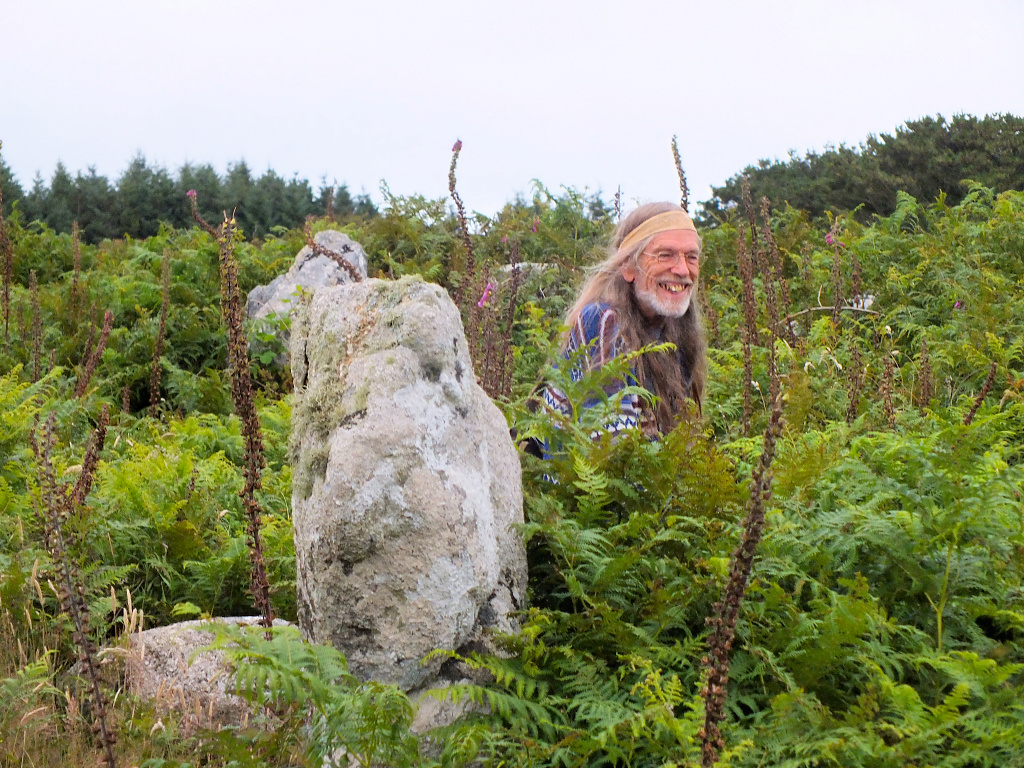
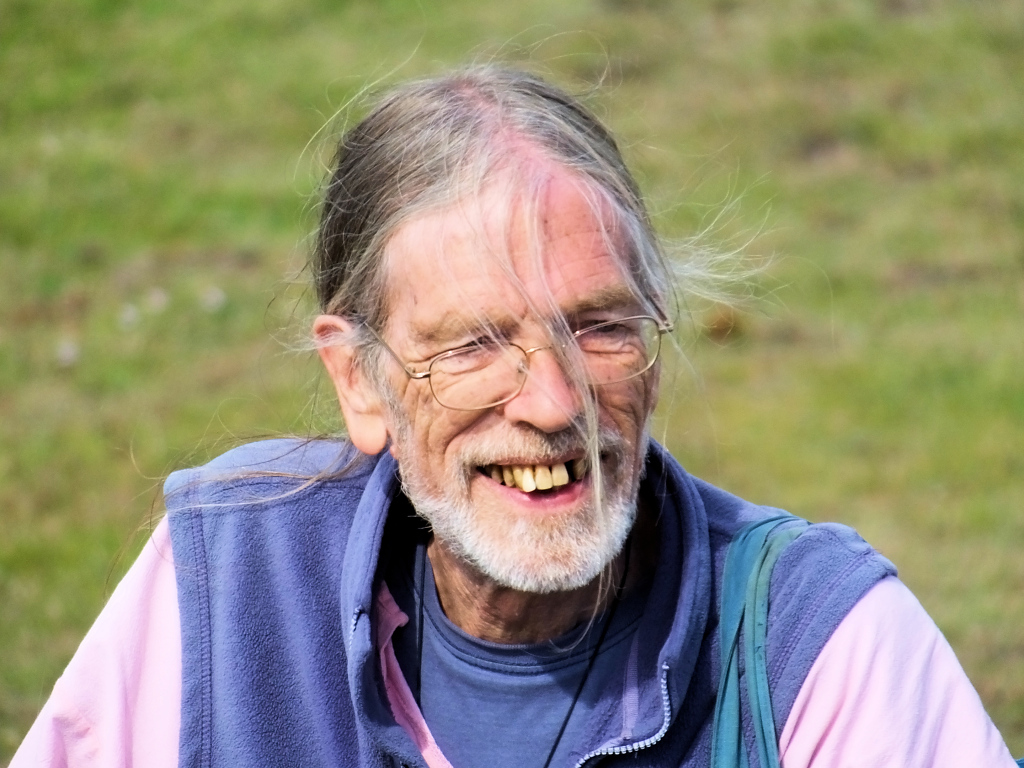
Palden at Bodrifty ancient village, West Penwith

At times I give out the wrong impression. When I write my blog or talk to people, I’m usually in an up state, so people get an up impression. But at present I am up for only about 5-6 hours each day, then I start drooping. The rest of the time I’m fatigued, flumped in bed, watching the birds outside my window or floating in the ethers. I didn’t know what fatigue was like until I got it. It’s not just serious tiredness: it’s a helpless, leaden megaflop. Time slows down and disappears. Brains clog up, and lifting an arm or keeping up a conversation becomes an act of will. But when I flop, it’s bliss. I float into faraway realms that, forty years ago, I strove hard to enter.

Cancer is a strange gift. It focuses you and rearranges all your priorities. You have to work at being alive. You find out what’s important. Things that used to worry you just evaporate. You have to focus on being with the cancer and also with the side-effects of medication. You find out who your real friends are. Some people you just can’t deal with any more – like those whose opening gambit is the inevitable ‘How are you?’ (for the umpteenth time today) or, rushing in and asking ‘Anything I can do to help?’, without realising that I’ll remember what I needed just after they’ve rushed away again! (Advisory: just observe the person, and take thoughtful initiatives.)

Talking of side-effects, I had reservations when the doctors gave Dexamethasone to Donald Trump – Dex is rather like cocaine. It has its virtues – it reduced my cancer, helped my back and was strengthening in effect. But I also became insensitive, detached, mental, badly behaved, retaliatory and prone to misjudging situations. This was upsetting to Lynne, who saw my glazed eyes and was shocked at my evasive unreceptivity, but at least I didn’t have the keys to a nuclear arsenal or the power to affect too many people. Giving Dex to Trump is a security risk. He says he ‘feels great’ – but he won’t when he comes off Dex. He’ll sink into post-Dex despond – equally dangerous.

Palden at Bodrifty, wondering about the flask of tea

I had a phone consultation with the haematologist. My results are good, better than expected – after all, I’ve been drooping and struggling recently. But I won’t need to go back on chemo and steroids for a while. There’s no remission with bone marrow cancer: you have to live with it and manage it until you pop your clogs. I’ve been helped by positive attitude, inner openness, exercise, rest, the love and care of Lynne (who comes every other weekend), Tulki (my son), a clutch of other goodly souls and the prayers of many people and beings (bless you all). I have twelve pill bottles next to my desk – antioxidants, vits, CBD oil and allsorts. I’m guzzling blueberry powder, ginseng, oils, beansprouts, colloidal silver, cider vinegar… it goes on.

But I never thought I’d get bored. This is weird. Usually I’m thinking, creating, churning out stuff – one of those who has no time for TV or gaming. Writing a book has helped immensely, except it’s finished and I’m now unexcitedly dragging through amendments and finding a publisher – and my usual strategy of going travelling or on a lecture tour after finishing a book is a thing of the past. I’ve been in confinement for a year now and I’m drying up.

Even so, it’s wonderful here on the farm and it nourishes me. I can prop myself up in bed and watch the buzzards through the big windows. I live in The Lookout, and that’s precisely what you do here. Insights come up while doing so. Lying in bed one day, I was doing my usual psycho-trick of looking for the gift in my situation and suddenly realised that I was, in a way, channelling collective fatigue. People are worn out and fed up, deep down. The Covid crisis was triggered on a Jupiter-Saturn-Pluto conjunction in Capricorn in late January, and this has dug up much deeper stuff than we’re aware of even now.

Doubts, guilt, fear, anticipation, insecurity about the past and future, and everything, really – personal, social and national issues. Astrologically, the lurking fear of the Great Unknown is a symptom of Neptune, the main driver of Covid as a global experience. It gives us a deep collective sense of vulnerability because we can’t nail down solutions, control the virus, find the escape hatch and restore normality. Neptune in Pisces wants us to see, to reconsider reality and reconfigure our perspective and roadmaps.

Worn out and wan at Boscawen-un stone circle

A spiritual crisis is going on (they call it ‘mental health’). What is my life for? What are we here for? What are, or were, truth and reality? Such questions have been studiously avoided for generations. There’s a stored-up reservoir of dread down there: perhaps everything has been in vain, perhaps we got it all wrong, perhaps it’s all going wrong. To avoid facing this, society deflects into blame, rebellion, compliance, complaint, argument, depression and desperately grasping for solutions that aren’t actually there.

Or at least, we aren’t finding what we think ought to be the solution. A solution where we don’t have to really change – others should change instead, not me, not us. But reality has changed. We’re faced with our fear of the Great Yawning Precipice. Things aren’t going back to normal. The situation we’re in is providing solutions we need, but we see it as a problem. This is an acceleration. We’re moving into a time where the future is causing the present more than the past is.

Covid is the first of many crises, and secretly we know it and need to get used to it. Change will come through a growing avalanche of events and conjunctures that no one thought possible, against which we are undefended. Like Covid. Totally unexpected situations are the mechanism by which radical change is likely to happen.

Not long ago I posted a video on FB in which a bunch of smiling Palestinians were saying ‘World, we know you’re going through a hard time – we understand you, and welcome to the club!‘. Palestinians, despite everything, are a bizarrely happy people compared to us. They’re not at all happy with their circumstances but, inside, they’ve accepted something about life that we have not. They’re still there despite everything. Meanwhile, in richer, declining countries like Britain, we stand on the edge of a precipice, complaining, and we’re scared shitless, pretending to be alright.

The Palestinian secret is sumud: stay on the case, tough it out and never give up. That’s how they lose battles while stopping their oppressors from winning the war. By degrees they have less fear, guilt and shame than people in countries like Britain. Here, we wet our knickers over face-masks, lockdowns and freedoms but we ain’t seen nothin’ yet. Covid forces us to face a dilemma that was creeping up on us anyway. Society was permitting it – surveillance, regulation, compliance, slavery to the megamachine, fear of rocking the boat, taking risks, losing income. The dilemma is about control, a primary issue in coming decades.

We have a choice: to get through the future, we humans need solidarity and cooperation from ground level up, and anyone who doesn’t join is, in effect, sabotaging humanity (sounds terrible, but there’s truth in it); on the other hand, Covid and digital technology are being used to curtail social and political freedoms, ramping up the matrix of control from the top down. Rebellious exceptionalism undermines the first option, and the second option, though Orwellian, is undermined by competition at a high level between clashing ideas and a splintered oligarchy. The world is rudderless, stuck in a logjam which only an overwhelming flood of stirring events can shake out. Covid is a practice run.

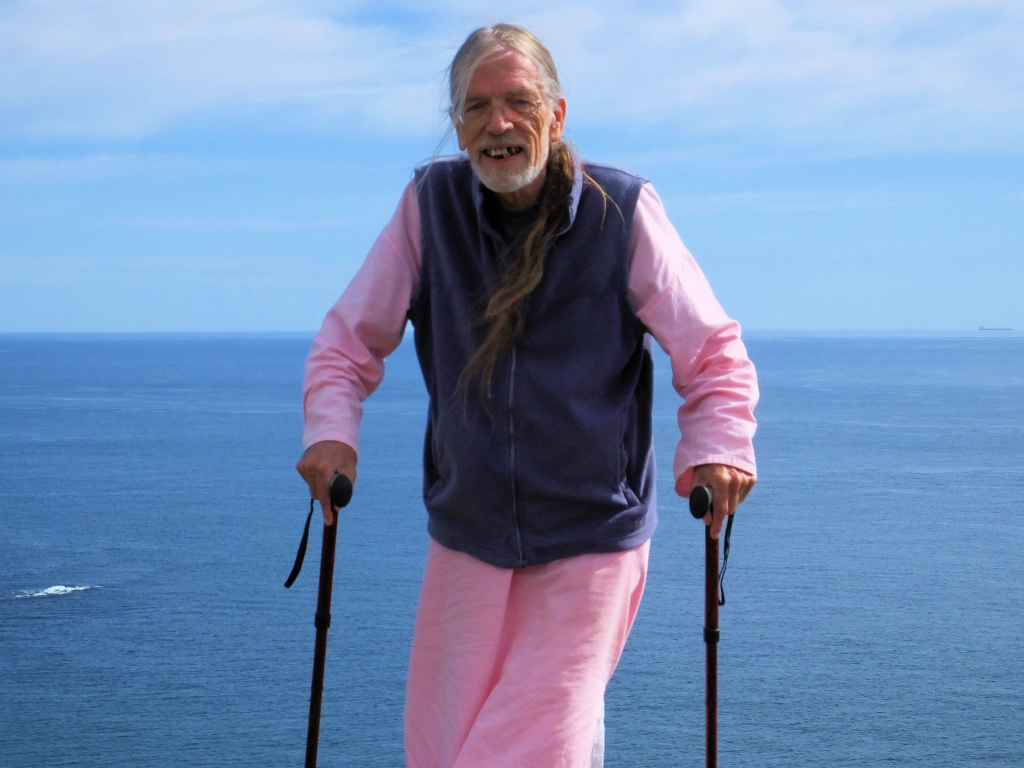
Fatigued and far away

I find my confinement manageable yet difficult, though it’s also fruitful. Alone (mostly) in a wooden cabin in paradise, watching and feeling the world, listening more closely to things than to people, I’m grateful to be alive. In my fatigued dream-states I tune into people who have it worse than me, like a man I know in Gaza who has cancer, no medicine and is getting bombed. I sit with people like him in the innerworlds.

Back in early August I woke up one day with a feeling that ‘if I hadn’t had treatment, this is the day I would have died’. The baby swallows from the barn, fluttering around outside, made me smile – today is the beginning of the rest of my life.And for all of us, today is the beginning of a new world. It doesn’t look like that, but remember: the computer you’re looking at has its origins in a disaster called World War Two. My late aunt Hilary was in Alan Turing’s team and she was one of the world’s first ever computer operators. They thought they were fighting Hitler – well, yes, but they were inventing the computer too, and in the fullness of history, that’s bigger. We think we’re ‘fighting Covid’ – well, yes, but something else is happening underneath, though it might take seventy years to realise what it has become.

Everything is okay in the end. If it’s not okay, it’s not the end. So hang in there. We’re on a mission and it’s gonna take a while. We’re working on historic matters, a turn-around in the very nature of civilisation. Everyone has a bit-part to play. Everyone is right and nobody is wrong, because we’re all playing parts in an enormous chessgame that is bigger than any of us can see. All of us, together, will decide the future of the world, whatever anyone thinks about elites, controllers, billionaires, conspiracies, reptilians… or fathers.

If, like me, you’re not that far from passing away, do you plan to leave this world behind when you go, or will you come back to see this planetary change-process through to its conclusion? One day, when the world is rendered safe and sound, there’s going to be a big, global party and, having come this far, I want to be there. Then, I’ll be happy to leave the future to others and go my way, relieved. Job done.

May the light of spirit bless us and keep us, and cause its light to shine through us and guide our way home.

Love you all, Paldywan Kenobi.

Photos by Lynne Speight, astrologer, photographer and handholder extraordinaire

Still here, Amazingly

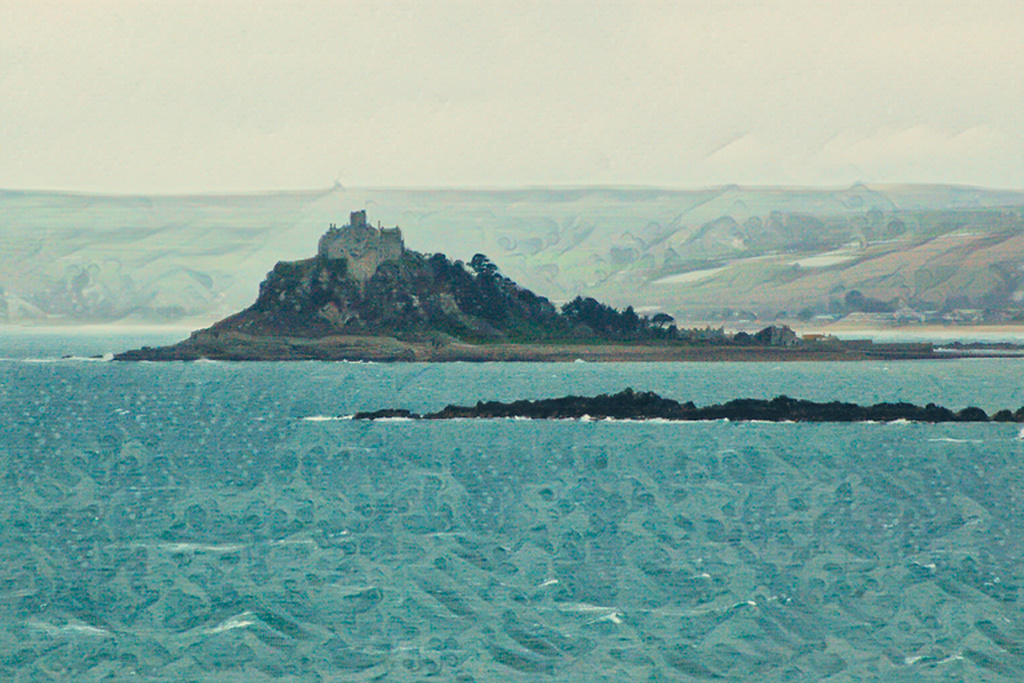
St Michael’s Mount – 5,500 years ago a Neolithic Tor Enclosure. Picture from my book.

The deed is done. I finished writing my book Shining Land. Been writing it since December. So now it will go out to a few readers for checking – I present quite a few radical ideas, and I want to make sure they make sense. It’s all about the ancient sites of West Penwith and ‘megalithic geoengineering’. Phew, so that’s done. Now I can pay more attention to family, friends and people.

After my cancer treatment in November to March I landed up with a lot of fatigue and brain-fog, so in the last six months I haven’t been very functional. I’ve been alive and active for only 6-8 hours each day, with a need to do my daily tasks, cook food and run my house as well as write the book and live a life. All in a slow and doddery way.

I’ve had a lot of trouble with making decisions, complexity and problem-solving, and yet, when I’ve been clear enough to write, my brains have done well. Obviously it concerns different parts of the brain. But one advantage of the fatigue has been that, when I go to bed in the afternoon, lying there in a strange heavy stupour with my leaden body totally flumped, my psyche floats around the subtle worlds in a hypnopompic, dreamlike state, and in that time I’ve mulled sluggishly over things and given each proposition and paragraph far more thought than I’ve done in the ten previous books I’ve written.

It’s strange, writing books. You can’t show anyone until long after it’s finished. It’s hidden away in a computer file, and I can’t hold it, prod it or wave it around. As far as you lot are concerned, I’ve been quiet, seemingly doing nothing. But I’ve been doing lots. It’s now ready – apart from a final review after a few readers have vetted it.

Lockdown hasn’t been a problem. Every time I write a book I go into lockdown, so I’m well practiced. When I did The Only Planet of Choice in 1992 I was locked down for 18 months. The main difference has been that, usually, people think I’m being antisocial. But during Covid I’ve suddenly not been antisocial. Nothing changed for me – it was others’ attitudes that changed! But if ‘normality’ returns, I’ll be antisocial again, haha.

Meanwhile, healthwise I have been improving 5-10% each month. As Victoria, a nurse heroine, warned me back in March, I won’t return to the same place where I was before I was diagnosed with bone marrow cancer. Back at winter solstice I felt like a 95 year old. Now I feel like an 80 year old – getting younger! But I don’t think I’ll get a lot younger. My body is getting older – I’ve just reached what my old friend Sig Lonegren, the dowser, called the Big-Seven-Oh. He reached it ten years before me.

You ought to see all the supplements and remedies I’m taking. Most of them are capsuled in those funny plasticky capsules, and I don’t want to swallow 15 of those every day. So religiously I break open these dratted things, mix them together, add a dash of top-grade local runny honey, let it soak in, and then I take this superpowered spludge on a teaspoon. I’m no longer on pharmaceuticals, thanks be.

One of the weird things has been that, during my treatment since November, only one doctor has actually touched me – that was a poor registrar who had to stick his finger up my bum to see whether I had prostate cancer (I don’t). It has been ‘bloods’, x-rays, PET scans, CT scans and MRI scans and, sure, they’re amazing. But not a soul has actually listened to my heart, looked at my tongue or touched me. This is modern medicine.

So when I went to John Tillyard, a brilliant chiropractor in Hayle, he actually touched me, and it was amazing! His hands were so firm, and he was so good at what he was doing – he hit me on the spot first time and every time. Three treatments and I was standing and moving so much better. Bless you, John – you’re a good man. Soul-sister Miriam has been giving me remote healings on Zoom too – I am much blessed.

My back will never return to its former strength and straightness – I’ll probably be using sticks for the rest of my life. It’s useful having four legs though. I can stagger around the house without sticks for up to three minutes, and that’s it. Three vertebrae in my lower back collapsed a year ago – that was the first sign of the cancer. My bones have lost substance: I click my back in at least five places when I lie down. You can hear it – it’s quite shocking first time. Bone marrow cancer erodes your bones, and though this has been stopped by the chemo treatment, my bones aren’t what they were.

For astrologers out there, guess what, I’m on a Neptune opposition Saturn right now, and it’s all about bones. Bones that have lost their firmness. I’ve had teeth falling out too. But I’m still here and, despite this, when my energy is up I can walk a mile or two – slowly and dodderily – especially in inspiring places, of which there is no shortage around here.

Thanks be to three amazing ladies. First is Lynne, who cares for my heart, spirits and soul, second is Penny, a fine soul who cleans my house and does tasks, and third is Karen, a Brummie angel who does my shopping each Thursday. I am held in the hands of the Goddess. Also Helen, my homoeopath, who gave me a radioactive lanthanide Curium 1M remedy recently, and that really pulled me together. Oops, was it legal to say that?

The doctors are happy with my cancer – the readings are good – but they think I might have lung cancer. I don’t. When I said this to the specialist I could see her thinking, “Uh-oh, he’s one of those”. She politely called my response ‘conservative’. Then, just this morning, a lung cancer nurse rang me, following a recent CT scan – a really nice chap – to tell me that the suspected lung cancer has not got worse and might even have got a bit better. They’ll test me again in a year. I told him that, all my life, I’ve been something of a healer, especially in my humanitarian work, and this is a case of Healer, heal thyself. “Interesting attitude”, he said. “You might be right”.

I’ve been rather shocked though at the extent to which the NHS hasn’t been caring much for me – and I’m glad I have holistic treatments and practitioners to resort to. But there’s a problem with both doctors and holistic practitioners: they are all specialists, all stuck in silos. It’s a completely non-integrated system, both in the NHS and the holistic sector. No one except Lynne is watching my overall condition. I’ve even had difficulty getting advice and appointments from my GP. When I ring them they take copious notes and… nothing happens.

That’s weird. I understand their situation with Covid, but I’m feeling ignored. But then, that simply means it’s for me to self-manage and do whatever I feel best, and that suits me fine. Kind of. I’d appreciate more knowledge and advice, especially (here comes a pipedream) from someone who understands both pharma and holistic medicine.

So now I’m a seventysomething. I never thought I’d get this far. In my life I’ve had at least ten opportunities to die, and I’m still here! Hello world. I’ll live until my angels decide it’s no longer worth keeping me here, and I get the feeling they have a few more tasks lined up. The book I’ve just written was the first. Since having cancer I’ve moved into a new archetype within – which many might see, for better or worse, as a ‘wise old man’ archetype. I’m becoming a voice calling from the far beyond (well, down’ere near Land’s End, it does feel like that). That’s what ‘Penwith’ means – the end of the beyond.

The ancient name for this Land’s End area is Belerion – the shining land. And it does.

Some time ago, when fire-walking was all the rage, people nagged me to join in and I just wasn’t taken with it. Perhaps they thought I was weak-willed – me, with Mars in Scorpio? No, if you want a test of the will, try cancer. It’ll get you where expensive new age trainings just don’t reach. It’ll confront you with all your fears. It’ll give you the biggest choice you ever made. It’s gloriously unromantic. It’ll truly test your will to live. It will hone your spirit – if, that is, you choose that route. It’ll prepare you for joining the Ancestors. It’s a bizarre kind of Gift of God. I don’t recommend it, but if it comes to you, do your best with it.

I’ve done acid, been with Tibetan Lamas, swamis, shamans, sheikhs and so many wondrous people, I’ve communed with ETs and transdimensional beings, hobnobbed with magnates, hippies, monarchs and Gazans, and cancer is another stage on that enlightenment path. Before any of us came here, we were, after all, warned that it was not going to be easy on Earth. We thought, “That’s okay, I’ll manage it, and besides, I want the chocolate”. And here we are, on this Earth – and you ought to find out about the crimes, injustices and near-slavery that are involved in providing you with that chocolate too.

This is the time and the future is here, now. This is it. Forget returning to normality: too much in this world needs to change and we can’t afford normality – it’s a killer. Normality is eating out the heart of the Mother.

Now that I’ve finished the book, I might muster up some further utterances on the state of the world, as I see it. Might even do some podcasts from stone circles and clifftops, far beyond, with not a surveillance camera in sight. We shall see. One day at a time.

And bless you all for being you. Thanks for reading this.

Palden

Pilgrimage

palden-carnlesboel-55431

Jupiter and Saturn have been sailing majestic and low in the sky around midnight. Jupiter is the really bright one – at its brightest right now at the time of the sun’s annual opposition to it – and Saturn is the less bright one about ten moon-widths to the left. During the Jupiter-Pluto-Sun-Saturn period of conjunctions back around January, the whole Covid thing started lifting off, and now we are at a junction point where things could get better or worse, or different for different countries and people. Plus the wider reverberations that arise from all this which, in a way, are more important than Covid itself – there are social quakes coming, as we grasp the full emergent implications of all this.

Later, at winter solstice 2020, we’ll have a conjunction of Jupiter and Saturn. That’s to say, the process we’re in is going to continue and normality won’t return. Longer term, in a 5-10 year perspective, things are hotting up for major shifts and changes, and we’ve already, since January, seen the starting symptoms of an escalating lanslide of issues that will unfold in the coming decade as things accelerate. This is not just about Covid – which historically is but a catalyst – but it’s about the wider and deeper social-economic-ecological changes afoot.

The issue that drives this, really, is ecological, and the way it is now reaching into human society. Covid is caused by human incursion on nature, and nature is coming back at us. Other things are going on too – just yesterday Lynne and I were down in the field below the farm, and the quietness, the lack of insects on a balmy, warm summer’s day, was noticeable. This is big. And that’s just one thing.

But this ecological starting point then reverberates through the social and economic realms, this time through the agency of Covid, but in future it will be other catalysts. They will be unpredictable even though foreseen – anything from megastorms and droughts to invasive species, extinct species, toxic events, social or political madnesses, or anything. I’ve covered the full range of foreseeable issues in my Possibilities 2050 report. These will impact on us in multifarious and intricate ways, just as Covid has done.

Here I’ve been, locked down in the far beyond, watching. ‘Far beyond’ is the literal meaning of the name ‘Penwith’, where I live. But in another sense I watch from the far beyond, listening closely to things more than people. I watch and listen for the underlying threads, and in my long hours wooning in bed in my fatigued post-chemo stupours, it moves around in my psyche, turning over and, occasionally, out comes a big ‘Aha’. If I had time I would write it down or record it, but my plate is full already, and I’m active and serviceable only 6-8 hours each day.

palden-carnlesboel-55443
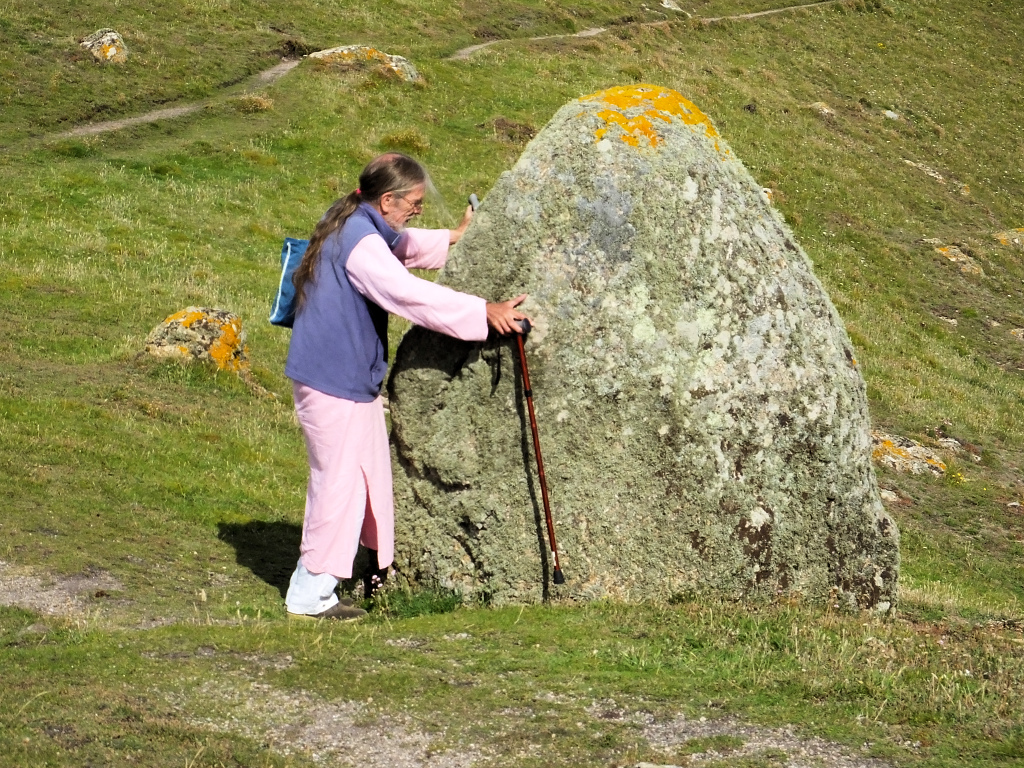
This is how you make love with a bronze age menhir

Besides, most of my focus is on finishing the book I’m writing. Home stretch now. I’m being careful with it, trying to make sure everything I write holds up, because I’m saying a lot and it will rattle a few cages. Most of my books are about three books in terms of density of ideas. This book, Shining Land, is both about the ancient sites of West Penwith (which has more per square mile than anywhere in Britain) and it’s also about ‘megalithic geoengineering’ and its relationship with consciousness. I reckon the people of the neolithic and bronze ages knew how to engineer consciousness, how to build it into the mechanisms of their civilisation and how to work with the inner component of nature in ways that we, in coming decades, need to learn more about.

So, I’m making good use of the situation I’m now in – leaving behind some ideas while I’m still here to leave them. Which goes to show, there can be virtues in having cancer – or in anything we customarily regard as adverse. It has been hard over the last month or so: things have been changing but I am not, overall, getting better. I seem to have cracked the myeloma itself, at least for now, but my back and bones are not good, and I have achey, naggy arthritis. At least, I was told it was arthritis, but I am not sure, and no one is giving it attention.

What’s most troubling is that I do not have overall guidance and supervision from any doctor or practitioner who is knowledgeable in both conventional and complementary medicine. Someone to help me understand and assess the whole picture. I have loads of disparate specialists, doctors and practitioners, bless them, each saying their own bit and recommending their own strategies, and some of the things they get excited about are not my most pressing concerns. So I have to think and feel my way through all this very carefully, and I get an interesting conflict sometimes between what I am told and what intuitively I actually feel. Hardly anyone actually touches me, looks in my eyes or listens to my heart – it’s all remote. It’s MRIs, CTs, PETs, or I even have a radionics genius in Canada or another on an E-Lybra machine in Devon.

The paradox is that, throughout life, I’ve had good health, so few doctors and practitioners actually know me. This is tricky because I’m a one-off odd-bod, and I don’t seem to conform to the normal rules of health and medicine. So doctors and healers take a while to figure out how this guy works. I’ve had several instances in recent months where I have healed or responded far faster and easier than was expected. I do seem to have good medicine-buddhas. But I have also paid a high price in after-effects from some of the drugs I’ve imbibed in the last six months. And I’m the sort of person who can’t easily be shoved through the system in the allotted forty minutes.

Tomorrow I’m going to a chiropractor. He knows me from the time before I was diagnosed with cancer, and that’s a great advantage. He’s also very experienced. I’m in such a state skeletally that I’m not sure how much even he can help, but I need to have a new template for my twisted bodily frame to align to. I’m working on my posture and movements but I feel so out of sync that I need re-setting, to have a design or standard to work to. My bones click on an hourly basis, and when I lie down on my back at night (it’s painful at first), I can click myself in four or five places. It’s a relief to do so, but it’s troubling to be so flexible and frail.

So the doctors think my biggest risk is lung cancer, while I think that, if I’m going to kick the bucket anytime soon, it will more likely be from complications arising from broken bones. My bones have been eaten away by the cancer, a blood and bone marrow condition, so I am susceptible to impacts, and I am yet to find out how many such instances I can take before it’s better to check out.

So things are progressing, and also they aren’t progressing, and it’s a labyrinth to stagger though – walking sticks flying as I totter my way through life. Yesterday we made pilgrimage to my favourite place, Carn Les Boel. It was a mile each way and we took it slowly. Pity the poor person who walks with me, but Lynne said yesterday that she’s observing small things in nature that she didn’t give attention to before, because we walk so slowly. This is one of the gifts of doddery old age – you see and bear witness to things others don’t!

I’m not that old – hitting 70 in September – but my body is around 85 and my psyche has had to change to get used to that, to become somewhat like the psyche of a distinctly old man. It’s easy to get annoyed or upset over things I can no longer do, but what’s the point? It just makes life more difficult, for me and for those helping me. The gift here is that being threatened with death makes me very grateful for each day, no matter how low things go. And no one is bombing my house, and a hurricane isn’t on its way: some people have to face stuff like this even when they have cancer, and in this I am lucky. People ask me how I am, and mostly I say, and really mean, “I’m still alive“! Problem is, apart from this, my answer can change hourly, depending on what’s happening right then. Sometimes I’m glowing and sometimes I’m like a lead weight.

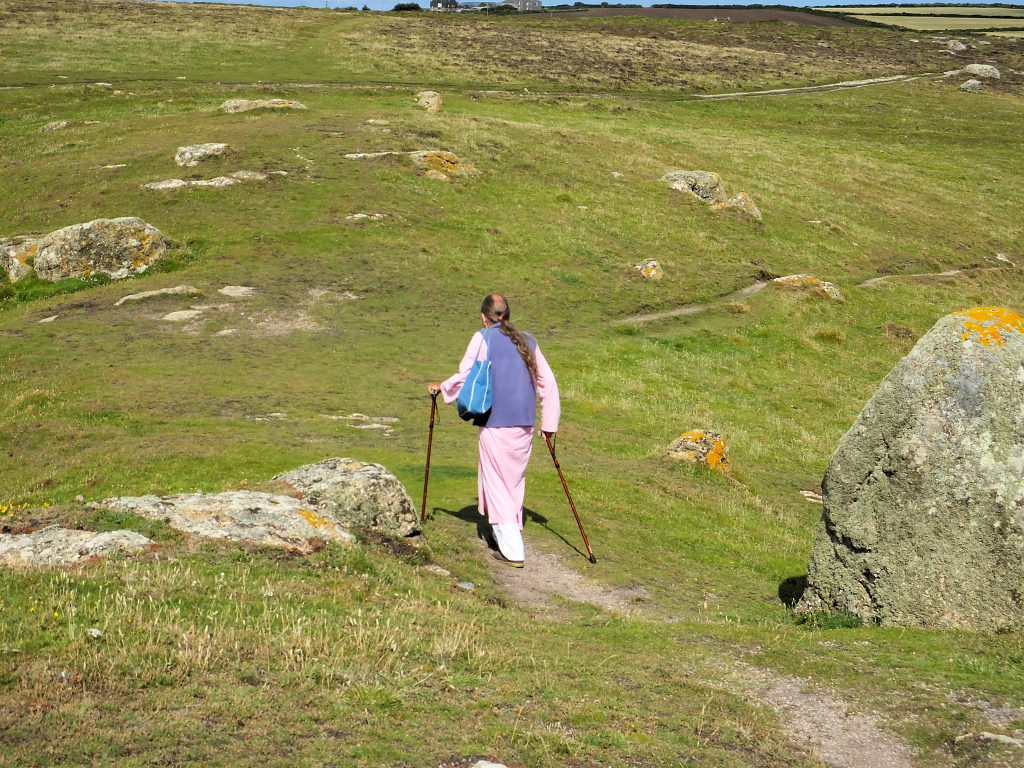
palden-carnlesboel-55437Yesterday, at Carn Les Boel, I was glowing. I love looking out over the ocean, and the spirit-beings on the carn are ancient and benign, like old friends, holding me in their upstretched hands. My soul grows and I get stronger in spirit, and this lies at the core of this process. I asked for healing and wholing and offered up my life, to be where I’m most needed and to do what best I can do. I listened to the linguistics of the waves, visited infinity and felt my way round the world, blessing people I know and people I don’t. It was a holy day, and certainly a good change from the rather quiet, shut-in life I’ve been living recently. And God bless Lynne for making this pilgrimage with me – and it’s her pilgrimage too.
Planet Earth is a strange yet beautiful place, and humanity is in such a mess yet so full of promise. I feel so engaged in my heart yet so distant from people and places. I wish I could return to Palestine, to be with old friends there – they are really going through it, both with Covid and with current politics (Palestine’s annexation by Israel and indifferent sabotage by so many countries, including Britain), and their economy is stumbling more than it usually stumbles, and they really don’t deserve this.

palden-carnlesboel-55445I’d love to go to Mali to visit Tinzibitane, the Tuareg village I’ve worked with since 2014. Talking of which, I’m going to try to organise a whip-round to support them soon, so please consider scraping together what you can. In general, the village has been doing well, but Covid has drained their finances. They want to do more to sell their crafts abroad, since tourism in Mali has collapsed. They’re perhaps 70% self-sufficient but when they interact with the wider world they need money. They now have no capital to invest in materials, so I want to try to help them get capitalised so that they can start work on this. More about this soon.
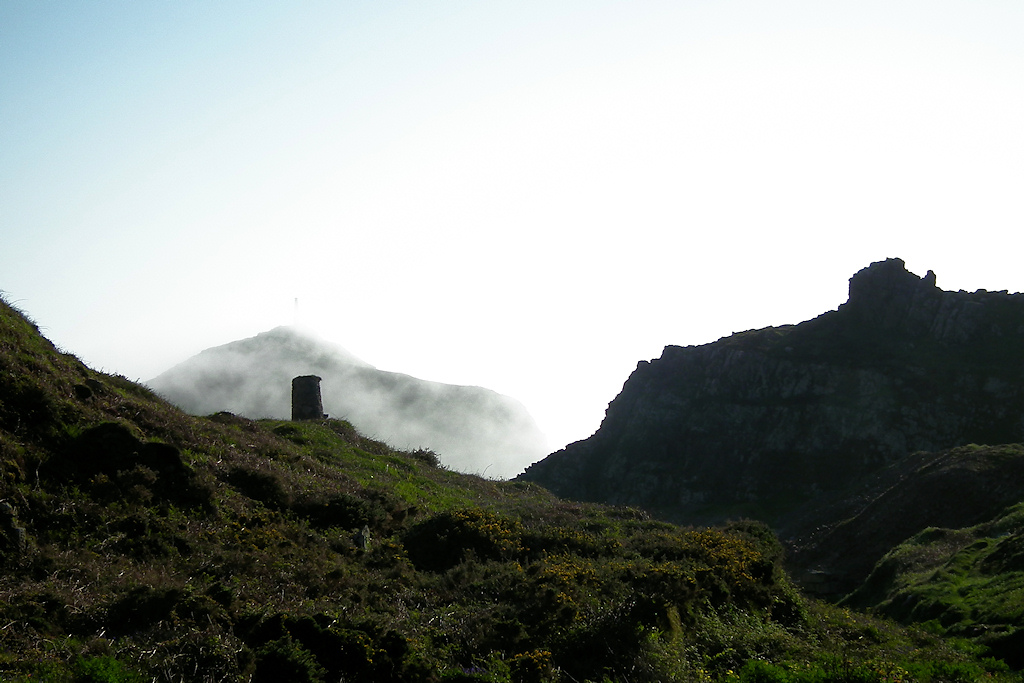
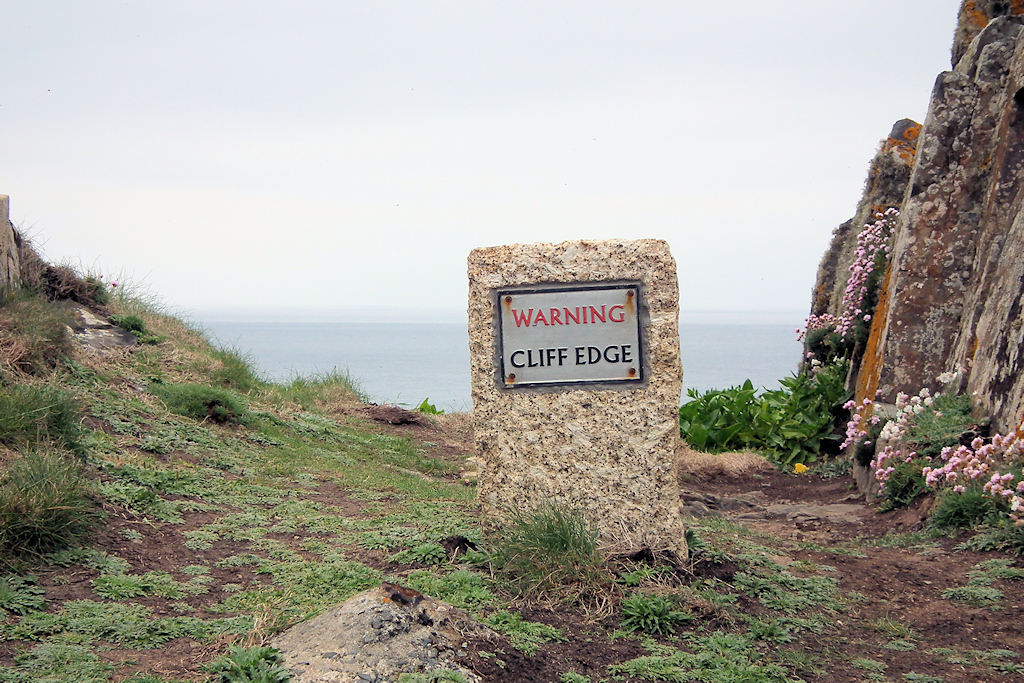
Even here on the farm, far from the madding crowd, there’s a sense of things hotting up around us. The prop planes that take off for the Scilly Isles have been flying in and out. Go out on the roads and the big, black, shiny cars of the English are here. There’s more of a buzzing in the air. But it’s motors, not insects – and one consequence will be fewer birds, like the swallows and bats that swoop around outside my window, who feed on flies.

Bless you all. All will be well. But so much of the secret lies in the way we see things. Life is a problem or life is a gift, and the choice we make about the way we see things is where our free will truly lies – whatever our situation.

Love, Palden

Carry that Weight

Cape Cornwall as seen from the Nancherrow valley

I keep on falling into eureka-traps. This has been a lifelong blessing and a bane. They usually come late in the evening and, from that moment on, I’m compelled to pursue them. It starts with a brainwave, a prompt to look a things through a certain optic, often to overcome my own resistances too, and then it relentlessly unfolds from there. Currently fuelled by rose congou tea, interspersed with sips of a homoeopathic remedy made of potentised lava from the Hekla volcano in Iceland.

Or perhaps it came when Lynne and I recently visited Bosiliack Barrow, a late-neolithic chambered cairn. That’s a great place for fetching insights. Sometimes it’s as if the spirits of the place almost want to blurt them out, excited that at last they have a receptive ear. Many of my archaeological revelations have originated there, and Lynne seems to ‘get’ stuff too, and she’s always glowing afterwards. I struggled along on my sticks, with Lynne patiently following, to ensure I wouldn’t fall – but having four legs is pretty stable, to be honest, even when the world is wobbling.

Anyway, I’d been resisting this because I somehow knew it would open up a line of work that would proliferate endlessly, and part of me is tired of these eureka moments. I love them too, and it’s my life, but I’m on a major Neptune opposition Saturn transit at present and I’m feeling the weight of it. Feeling the weight of my patterns. Feeling the weight of my back – it hurts continually – and I’m gravitationally compromised.

This new project started actually because I realised there was a gap in my book concerning sacred geometry. I’m not good at it, you see. I’m good at visual pattern recognition but not at numbers – azimuths, angles, proportions, pi and phi ratios. So I was holding back, putting up a prayer that a geometry expert might appear – and they didn’t. Spontaneously, last night, fullmoon as it happened, I sat down, shrugged shoulders and started playing around on the map.

Within two hours I had a load of significant geometric triangles. It was quite a shock, how easily it came. Now I have to measure angles and distances and try to figure out the meaning and significance of all this. The 1% inspiration bit is over and 99% perspiration bit is yet to come. I’ve just started this map and it’s unfinished, an experimental draft map at this stage.

It’s here: https://www.google.com/maps/d/u/0/viewer…

This’ll probably provoke a torrent of e-mails, messages, YouTube videos, most of which I can’t reply to, and requests to make maps of Northumberland or Essex, to which the answer is No, please do it yourself and show me what you come up with!

You see, I might sound vigorous and in good shape, but I’m not. Recently I’ve been labouring, achingly holding myself up, experiencing difficulty looking after my house and cooking, and I get terrible fatigue. My former neighbour Penny has just started helping me though, which is an immense relief. I’m a domesticated Virgo who usually runs a good house, but I can’t keep up now. My bathroom is spotless and she’s attacking the kitchen next.

Never in my life have I expected to be cut down like this. I never knew what fatigue or cancer could be like until I started experiencing them personally. Early on in my cancer treatment I felt I suddenly aged to about 95, and I assumed I’d grow back down again to my current bodily age (70 in September), but it’s hardly happening. Well, perhaps I’m 88 now. I’ve got chemo side-effects to deal with, such as arthritis (aching hips) and neuropathy (feet filled with chilli-pepper, it feels like). I can no longer tell how much I’m young at heart and how much I’m a grumbly old codger.

At least in body. I’m such an incorrigibly positive fucking optimist, and my heart, mind and soul are doing just fine, in a way – if anything, cancer-riddled self-examination has been a gift, an uplift amidst the grinding pain and the threat of early death. But I have my down moments, and recently I’ve been wading around in the underworld, dredging my fears, grinding my stuff and talking to myself too much.

I let it out through the keyboard. Only some of this is visible to you folks – much of it is accumulating in the book I’m writing, hidden away on my computer. It’s not available except for a sample chapter and contents list for publishers. Or it’s longterm projects that emerge gradually, like the Meyn Mamvro archive. I spend endless hours on these things.

I get dual feelings. I love my work yet I’m tired of keyboards. Been a keyboard-slave since about 1964, when I started annoying my mother by using her clackety old mechanical typewriter. By 1971 I started out on the world’s then fourth largest computer: it had a memory of 64k! It was all Fortran IV, punchcards and dot-matrix printouts.

This said, with the last of the money that you people on Facebook kindly donated to help me in my cancer process, I’ve bought a new computer – a laptop called a Toughbook (military grade, no less). I got £350 off the price! My old computer died, after 11 years’ stalwart service in deserts, airports and on Cornish farms. I’ve also bought a studio quality sound recorder (£150 off). At some point podcasts will emerge through it. I used to do radio in the Seventies and Naughties, so I’m no stranger to it.

This is the kind of thing I’m doing with my new life. I can’t travel, hobnob, teach, agitate or organise things, so I’m keyboarding a lot, doing that blessing and bane business. At great length. There’s nothing much else to do – I’ve been locked down since November, when I was diagnosed with cancer. But then, half of me is a hermit, and I live in a lovely place, so I’m okay about that.

And the fool on the hill sees the sun go down, and the eyes in his head see the world spinning round…

One of the banes of astrologers is that we’re always asked, “What does a Mars square Jupiter mean?“. Well, at least that’s better than being required to guess some stranger’s sun sign, as if that’s a test of how good an astrologer we might be, or as if getting it wrong constititutes proof that astrology is a load of bunkum.

Here in these words you’ve had an exposition of what a Neptune opposition Saturn ‘means’ – the kind of issues that can come up. In one sense it’s a time of uplift and in another sense it’s about carrying that weight.

The doctor has suddenly remembered I’m here, and tells me that she thinks something more might be wrong with me. They want to fill me with radioactivity and do a PET scan, in the back of a truck in the car park at Trelliske hospital in Truro. I have strong reservations. About the scan, not the truck.

Staying alive takes on strange twists and turns. But at last it’s raining, and nature is drinking it up. Yesterday we had multiple rainbows – perhaps somewhere in the world a great being was being born.

Amazingly, life continues another day.

Please forgive me for (mostly) not answering e-mails and messages. You see, I’m not as active and capable as most people, and if I spent time chatting I wouldn’t be getting on with what I’m called to do. Like the above crazy map-making.

Love from me in Cornwall

Paldywan Kenobi


Willful Ignorance

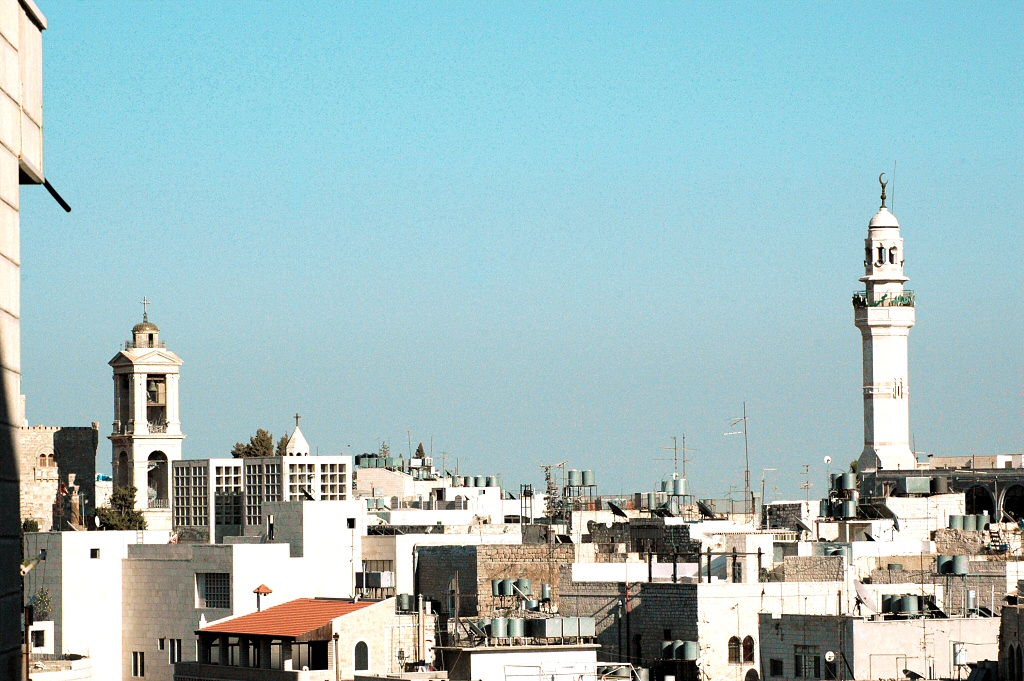
Bethlehem, Palestine
The Church of the Nativity and the Omar Mosque, Bethlehem, Palestine.

Not many things make me angry, but some do. Working with conflict has, strangely, helped me come to peace over many things, mainly by forcing me to face facts.

And anger transforms. I’ve got a deeply smouldering Mars-in-Scorpio righteous kind of anger. I get steamed up over indifference, mindless groupthink-compliance and willful ignorance – sadly flourishing syndromes in our day. Mercifully, society’s covidisation process is seemingly beginning to change things.

Groupthink indifference gives rise to all sorts of situations. Here’s one. It’s the very British ‘perhaps you should…‘ hyper-suggestion syndrome. It appears helpful but actually it is obstructive, a discreet withholding strategy. I get roughly five requests for financial help every week, mainly from Asia and Africa but even from Britain. These sincere requests come from people who genuinely are hungry or destitute, right now, and feeling it. Many of them don’t deserve to be in this situation – they were caught on the hop.

In many countries the lockdown is weighing heavily on people lower down the pile who, in turn, battle with their self-esteem and dignity over asking for support. When you’re hungry, patience is not easy and the end of your life lurks before you like a stealthy ghost that’s coming to take you away.

I have cancer and sit in the needy and vulnerable group that everyone makes so much fuss about. And, in the default Western way, my friends, who do genuinely care for me, recommend me to pull back from helping people and to ‘look after number one’. Well, yes, I agree. This isn’t news to me!

But there’s a problem. If I step down, few step up to take over. The consequences are systemic. It means that a person like me unwittingly takes on a responsibility: the burden of consigning a person to possible death by saying ‘No’ to them. Because I’m busy ‘looking after number one’ and doing what most people do. The burden doesn’t go away by ignoring it.

And, a footnote. I’m not so hot at fixing money, but I do always try to assist a person magically, if I can. In many cases it’s a matter of helping them overcome fear, or fixing them a good contact, or helping them go through an inner change that unlocks solutions, or dropping them a quick tenner for some food. It’s necessary to do something – not just to turn away. I’m much better at magic solutions than fixing funds. But it does require sticking with people in spirit, praying for their souls, giving them full attention, standing in their flipflops. In some respects, such solidarity of the soul can be a greater boost than money.

Server syndrome has subtle ways of presenting itself. In Syria in 2013 I had one of my premonitions, waking up in the night with a feeling that a neighbouring village was in danger. I reported this and was told, “No chance – that village is safe – don’t worry“. I raised it again next evening, getting the same response. So I did my polite Englishman bit and went quiet. Next week, back in Jordan, I heard that around 100 people were killed in a regime attack on the village.

It was the biggest humanitarian failure of my life. Yes, I know, everyone will say, “It wasn’t your responsibility – don’t take it on yourself“. True. In a way.

But if I had made more noise and fuss, those people would probably be alive today. I landed up an inadvertent killer. We do this. We commit crimes against humanity through simple omission.

Even in the pursuit of good intention, things can fuck up. Here’s another issue that sets me smouldering. In Bethlehem, where I’ve spent a lot of time, the world’s Christian churches have been rescuing Palestinian Christians. I would not begrudge a Christian the right and need to move to USA, Sweden, Germany or Chile (their main destinations) and I completely understand their reasons for leaving. They want to get a life!

But this has consequences. Bethlehem is increasingly binary-polarised. A century ago it had three faiths and now it has two, Judaism and Islam, with a wall between them. This is fatal to basic peacebuilding. Bethlehem’s Muslims are lovely, hospitable people, and they don’t want the Christians to go either. The Muslims keep the Christmas Pilgrimage going, not only to swell Christians’ numbers and keep Bethlehem on the map, but also because Jesus is a prophet of Islam.

But in all their intended goodness in rescuing Christians, the churches are sabotaging Palestine and the multifaith, multi-ethnic nature of the Middle East. The Israelis exploit this as part of their longterm takeover strategy. Europeans and Americans aid and abet it, quietly supporting the Israelis partially out of WW2 guilt, partially to control the oil-soaked, geostrategic Middle East, partially to keep trouble and refugees at arm’s length, and partially to create a market for armaments.

I really think the Christian churches should look long and hard at their part in this. This said, I support and admire the brave and radical work of a small number of activist Christians – Italians, Irish, Basques and Greeks particularly – who go to Palestine to rebuild demolished houses, accompany women and children past aggressive settlers, minister to refugees, help on farms and run services for the needy.

This is not a blame game. It’s a serious collective issue that we all need to own up to and change. We avoid facing such moral dilemmas by ‘looking after number one’.

As it happens, I do reject most appeals for money support. It’s a fact of the game and the philanthropist’s nightmare – we have to say ‘No‘ 90% of the time. Why? Because money and energy are finite and everything always takes twice as much and twice as long as first reckoned. You can’t just scatter funding and support everywhichway. Aid is karmic and, to create positive outcomes, everything must be carefully engineered and monitored.

I learned this from Richard Branson in the early 1990s. I asked him for funding for the Hundredth Monkey Project. He wrote back, saying “Looks interesting. Do it. No time. Good luck“. Just like that. It said it all. And I did find a way forward, utilising an algorithm called going forward in faith.

But the main problem here is that giving, sharing and helping are done by insufficient people insufficiently. So it falls on those who have large dollops of the necessary empathic foolishness to carry the world’s load, sometimes at risk of criticism, jail, bullets or, at minimum, continual admonitions to ‘be sensible’.

The big paradox here is that the best way to pursue self-interest is to practice altruism. But for the energy to circulate, everyone must do it.

This is why we have extremes of wealth and poverty on our home planet. It’s societal, national and global, not just personal. It’s ‘one planet, different worlds’. In Britain, even benefits claimants are in the world’s wealthiest 30% (on GDP terms).

The power lies mainly with the affluent: a country like Britain needs to reduce its consumption by a whole 60% to achieve some sort of sustainability. But the drift of Covid events is suggesting that we relatively rich gits are likely to make this change more by necessity than by choice. Unwise, but that’s the way it goes here on Earth.

In the end, such a reduction of consumption will properly be achieved not by regulation and decree but by a psycho-emotional transformation across society. It’s a matter of the heart, and how to catalyse such a change has vexed progressives for centuries.

Reduction of the desperate need to consume. Reduction of the need to cushion our pain through avocados, ice creams and indifference. Discovery that a simpler life brings a smile to our faces and a dawning relief in our hearts. Revelation that things will work out okay.

To achieve this, we need to share. That’s what lies before us. The agenda concerns cooperation and sharing as a pragmatic response to evolving events.

Greetings and love from The Lookout.

Paldywan

NovaCovidity

Gurnard's Head, Cornwall
A sign at Gurnard’s Head in West Penwith, Cornwall.

I’m not in the habit of giving speeches at seven in the morning on a Sunday. But this happened this morning – I spoke at an online medical conference in India about the potential social and economic outcomes of NovaCovid19.

There was quite a lot of academic waffle, but it was interesting. There were dogs and children in the background and a nice lot of chaos too. I’m so glad that I am extra-academic in my work, not least because, in my experience, academics have a problem stretching beyond their current viewpoint. Right now we see a truimphal science riding high, but the problem is that science is in partial denial of the full scope of the issue.

To give an example, one of the speakers mentioned that susceptibility to NovaCovid is related particularly to air pollution – evidence of this is now emerging. Yes, true, and there’s more. It is related to internal pollution by antibiotics, vaccines, chlorine, poor diet and a modern cocktail of toxins. This is partially why Africa is not as badly hit as Europe and USA.

This narrowband approach I found when compiling my Possibilities 2050 report on the future – all experts and available reports to draw on avoided many of the big questions, particularly psycho-social issues, holding fast to to the data, to knowns, to what is held important now and in the past, not in the future – which is valuable but it is not everything. And then of course there are those with an agenda, seeking to reinforce convention or to impose ideologies or questionable perspectives, however redemptive, on others.

I was the only speaker to stay within my allocated eight-minute slot. That says something about an aged hippy thinker amongst a load of academics! A German scientist gave a long ramble about the use of the Hindu Agnihotra ritual in reducing susceptibility to Covid – yes, interesting, but it deserved two, not twelve minutes.

I was looking at the longer term effects of NovaCovid (which is what they call it in India, the pharmaceutical and Ayurvedic centre of the universe). The first is the reality shake-out that has hit us, loosening up people’s thoughts and feelings which, in the end, will improve psychosocial resilience – inasmuch as societal resistance to change and the urge to re-normalise is harmful and constraining. I mentioned how this is the first of possibly three or four crises that are likely to come in the next 15 or so years.

Covid is not primarily a health crisis – the primacy of the virus will fade. The core issue is ecology, economics and human society, and Covid is the catalyst. This is one of the evolving ecological crises of our time, caused primarily in this case by deforestation and human encroachment on nature. Future crises will similarly be catalysed by specific events and causes, but they will still mainly concern wider, deeper issues.

This is about the rehumanising of society, particularly in the West. This is the third crisis adding to the West’s decline in global influence – the first was around 1990, the second around 2008-9 and the third is now. The next is to come. Each time, the West declines by 10% and, relatively, The Rest rises. A key reason why the West is declining is that it has prioritised business over society and, in truth, continues doing so – as in Maggie Thatcher’s much-vaunted statement “There is no such thing as society”. Well, we have found otherwise in the last few months.

Longterm revival is more likely in Asia, Africa and eventually Latin America than in developed countries, since there is a global readjustment going on in which Western consumption levels, production and geopolitical weight are reluctantly in decline. This reluctance is mainly because of our vested interests and the addiction of us Westerners to our comforts and excess consumption. We need to cut consumption by over half in order to achieve sustainability. We are being overtaken on the outside by The Rest, the majority, who are more resolutely oriented toward change and who have less to protect and more to gain from change.

I see this amongst contacts in East Africa, who are now more advanced in such things as permaculture than we – they are beginning to lead the way and the West is running out of steam and initiative, no matter how wonderful and deserving of leadership we believe ourselves to be. This is important.

I was impressed by the degree to which Indian researchers were following international research, especially from Asia. But in Britain, when we talk about ‘scientific’ we don’t read others’ academic papers since we define ‘scientific evidence’ to be valuable only when it’s British, American or, at a push, European. But the people who know their stuff most are the Indians, Chinese, Koreans, Taiwanese and Singaporeans. It shows up in the evidence.

One of the key issues of the 2020s will be sovereign insolvency – state and systemic bankruptcy, especially in countries borrowing heavily to maintain economic levels through the pandemic. This insolvency will be bad for Brexit, bad for nationalism, bad for Great America, bad for Hindu nationalism, bad for Bolsonaro. This growing indebtedness and artificial money-creation is a fatal move, bringing up the next question.

This NovaCovid issue will define a new globalism, since increased national self-sufficiency and resilience, while apposite, only go so far, and then we’re back to global issues. Viruses, people, money and ecology know no boundaries, and many boundaries are obsolete anyway. When the world economy stutters, only something akin to a new Bretton Woods economic reform will allow nations truly to revive.

Yes, the World Bank, the IMF, financial hubs and particularly the shadow and offshore banking sectors. Many nations will go down, either to be taken over, break up and regionalise or to reconstitute in other ways. This is likely to happen by the early 2030s. Sovereign insolvency will be the agent of this change.

How much will things actually change after NovaCovid? Probably by 10% initially and 20% in 5-7 years. I think we’ll see a ‘VU’ recovery. That is, a quick initial bounce-back, then another fall owing to systemic structural weaknesses, followed by a slow and incomplete revival, though not to previous levels. Then other crises will follow to prune things more. Next one 2024?

Here I’m very aware of the symbolism of the bone marrow cancer I am experiencing. It’s a disease of the life-blood, the very life-giving essence that keeps me alive, and it leads to a rotting of the bones, which become shot through with cavities, weakening the bones and the structure of what holds me up. If I fall, my bony frame’s resilience to impacts will be the big question.

Which goes to show, yet again, it’s not what you do (since falling down will happen), it’s the way you do it. This is what’s happening in society – a collective bone marrow cancer. We don’t have a tumour – although top-level structures in society could be regarded as tumorous – we have a condition of the life-blood and a big immunity issue. Lack of immunity to the inevitable, to the passage of change and transformation.

We have a collective blood condition – not just economic but infusing the psychosocial and motivating structure of society. A lot of people are using NovaCovid to think again about their lives. A disadvantage of this will be that many of the best people for engineering change will leave the heart of the system to bring change to their personal lives, leaving behind people inside the system who are less able to bring about change – this was one of the causes of the fall of the Soviet system around 1990. The people who create the problem cannot resolve it.

Universal, comprehensive healthcare in those countries lacking it and increased global equality have been global priorities for years, but they have only now come properly into focus. However, the capacity of governements, investors and the system to invest properly in these is in question, owing to the probability of sovereign insolvency and economic downturn. This means a deeper social transformation if the care and health crisis that has been revealed by NovaCovid is to be acted upon.

We shall need to stop leaning on and looking to governments for leadership: we’ll need social consensus and collective self-discipline if top-down governance is going to weaken and if social healthcare and care in general are to grow. Back in the 1970s a bumper-sticker used to say, ‘If the people lead, the leaders will follow’. Well, now the people need to lead, but we are also very inexperienced in that, we lack solidarity, consensus and social steadfastness – what the Palestinians call sumud, the capacity to hang in there regardless.

This is all very well, but it means a voluntary sacrifice of individualism, exceptionalism and personal freedom. Many of my friends won’t like this bit – it constrains their oh so important personal freedom. Well, get over it, because it’s coming. This is why countries like Sweden and Palestine are doing quite well with the virus – they already have this mutualised societal self-discipline. They do it despite government, not because of it. It also means that volunteerism will be on the rise.

The core issue here concerns strengthening society and its psychosocial resilience. There’s more to go on this question. An initial majority urge to restore normality will obstruct progress until we lurch into the second Covid-related downturn, which is likely to be U-shaped, slower to sink and slower to rise. And the bounceback will rise only to about 80% of previous levels. Structural change is afoot too.

There’s going to be a humdinger of a social and political crisis in coming years. Existing political parties and leaderships are not sufficiently up to the job of good, effective governance. As people realise the full implications of the personal and community changes they are undergoing, a proportion will not wish to return to the good old days. They don’t want to race rats any more – they want to Get A Life. But there’s also the question of social disagreement – it does not work to look at the folk over there and say they’re wrong. They aren’t wrong, they are themselves, fully valid humans who are part of the social process. Blaming those over there for our situation is weak, weak, weak, to quote our dear old friend Tony Blair.

Much now depends on people at the top. But it depends greatly on the mass of the people. Especially in one area: social control, particularly digital. A battle is afoot: our lives will either be controlled by corporations like Amazon, governments and background powers, or we increase social freedoms. But into these social freedoms we must incorporate collective self-discipline.

In other words, people need to learn how to form a consensus incorporating everybody. Without this, goodbye democracy. Democracy isn’t the answer to everything and, to quote Churchill, it’s the least worst option of all those that have been tried, but two qualities of democracy do hold true: the people need to be able to express an opinion when we have one, and we need to be able to change our leaders when necessary. Authoritarian systems have a succession and duration problem and, in times of change, this is critical.

This is perhaps the biggest question of our time. Getting through the 21st Century and its challenges will be done either through increased top-down control or through collective consensus and social strengthening, and it looks at present as if the former is winning. But the matter is not yet decided. It gets decided in the late 2020s and the 2030s, and it’s big. And, guess what, some of the biggest potential contributors to this new phase, owing to their long-established collective experience in making something good out of a bad situation, are Palestinians. Followed by Africans, Iranians, Cubans, Vietnamese…

And now I’m going back to bed. I’m active only a few hours each day – my energy is lower than it was, and I’ve begun wondering how much willpower I have to continue holding myself up and looking after myself in this care-poor nation of ours. Here you can be awarded a grant for hiring home help but it is not delivered at the time when you actually need it. My house is slowly becoming a wreck and I need help with it. Is anyone in St Just or Penzance interested? I am rung weekly by social service types who give me lists of phone numbers to ring but say they cannot help. Ah, thanks.

This is one microscopic aspect of the decline of the West, and also of the decline of Paldywan Kenobi. I do hope my family will come visit me while I’m still alive. I’m dead glad I didn’t take the blood transplant route I mentioned a few months ago – this was intuitively inappropriate and it would have meant I’d have needed 3-6 months extra care. Which is not available. So it’s back to bed for me. Byee!!

Love from the ancient realm of Cornwall, Palden.

Chiselling Tablets

Staloluokta, Lappland
Staloluokta in Sapmi in 2011, 90km from the road and 200km from the shops. Sapmi, the land of the Sami people, is known to many of us as Lappland, northern Sweden

Today I reached a point where it was down to thinking up the final humdinger of a paragraph for my forthcoming book ‘Shining Land’. It’s nearly there.

The great thing about this book, my eleventh, is that I’ve given a lot of time and consideration to every thought and proposition while lodged in the cosmological cocoon of my bed, looking out over the fields and woods at the jackdaws, swallows and buzzards.

With plenty of timespace to think. The book is all about time, space and consciousness. It’s going to annoy the hell out of some sceptics and rationalists, not least during this triumphal period of all-embracing Science.

Now I must review the whole 100,000 word manuscript again, submit it to two ‘expert readers’ to check through the ideas, compile the online appendices, enter the illustrations and maps into the manuscript, and it’s done. Phew. The book will come out, regardless, in digital format: the main issue is whether it comes out in print (the costliest and most complex option).

Then it’s two months of sitting around, kinda fallow, thumb twiddling, wondering what to do with myself. The creative vacuum creeps up afterwards. It does give time and space for things I ignored before, and for dwelling on nothing in particular.

Writing books is a self-imposed lockdown – most of the time an anti-social activity but now transcovidated into responsible self-isolation and social distancing. I’m doing the same thing as before but not, this time, anti-socially. Apparently. These twists of judgement are always strange for Aspies to get our heads around.

I’ve been on lockdown since mid-November, when diagnosed with myeloma. Approaching six months. So there was little change when Covid slunk in like a voracious Neptunian mist, taking over everyone’s lives and tenuous sense of reality. I just carried on – out of my head on chemotherapy and steroids.

It gets a bit boring, this lockdown, even though I have stuff I can get on with, in my slowly ponderous six-hours-per-day, wiped out, struggling way, stumbling around like a 96 year old. I’ve been on my own quite a lot throughout life and get a bit fed up of myself, my own cooking, my repetitive, stuck Virgo patterns and ossified daily methodologies. Why people want to prolong their lives and achieve immortality beats me. But then, ‘You were a strange little child’, my mother once said, and ‘You’re not like the child I brought up’.

Tomorrow, I am appearing on an Indian social psychologists’ online conference on the overall social effects of Covid, giving them a prescribed ten minutes on the psychodynamics of accelerated social-cultural change. Me, a global health expert, hobnobbing with people bearing doctorates…

This is one of the unexpected outcomes of having cancer. Lots of things have changed. Here’s one. People who want to hear me are now predominantly in Africa, the Middle East and Asia, not Europe and America. Growing for years, suddenly it shifted critically, recently. My last book Possibilities 2050 I wrote with them in mind. I made it available for free, so that expense and availability would not be barriers. They can read it on their mobiles, and it uses little bandwidth. Now I’m hearing from really interesting folk in Gambia, Malawi, Uganda, and Afghanistan, Iran, Turkey, Bangladesh, Tuvalu and Cuba. Magic.

What I like most about this is that, if I’m delivering something people really find useful, it draws something out of me. I’m quite accustomed to being part of something that ought to be much bigger than it is, but it’s good having people gladly soaking up this stuff – and making it their own, doing it their way. Fuck the royalties and getting famous – I just want to get on with what I’m here for before I no longer am here.

These people are not emulating the West; they’re overtaking us. They’re the world’s future and the majority are under 30. Many ideas coming from the back-alleys and the underground in the West have become useful to them. They’ve seen the impositional side of us but there are fertile outpourings from the unofficial culture in the West that are invaluable too. Permaculture being one. Talking stick. Herbalism. Astrology. Holism. Homoeopathy. Anything interesting, stimulating and new.

We Westerners need to listen up. Our majority culture has become sclerotic, stuck in a groove, constrained by its vested interests and comfortaable habits. Yet it has much of value. Especially a lot of the things we haven’t given enough attention to. We were too busy making money, or trying to.

We still want to be the leaders, the teachers. The mission to civilise is still alive and well, as is the hypocrisy. No, we’re the minority and being outclassed. Declining without appropriate grace. But most of us are goodguys and mean well – that’s our asset.

It’s time for us to rejoin the human race. Exceptionalism no longer works. Wanting to be the leaders blocks the flow. Lecturing obstructs hearing.

Yet, as a cancer experiencer, I’m so fortunate to be undergoing treatment here in UK. I have access to the best of conventional and holistic medicine, healers and advisers, people praying and reiki-ing me too, and I’m grateful for that.

I’ve offered myself for research and observation, having had some of the best results seen for years. But no, no interest. Oh well, it saves me being poked, prodded and sent to London!

The Management has recently been doing a little fixing. Normal service is unlikely to be resumed. Apologies for the disruption. Please recycle all used containers and clear up your litter after you.

God bless everyone. Palden.