Willful Ignorance

Bethlehem, Palestine
The Church of the Nativity and the Omar Mosque, Bethlehem, Palestine.

Not many things make me angry, but some do. Working with conflict has, strangely, helped me come to peace over many things, mainly by forcing me to face facts.

And anger transforms. I’ve got a deeply smouldering Mars-in-Scorpio righteous kind of anger. I get steamed up over indifference, mindless groupthink-compliance and willful ignorance – sadly flourishing syndromes in our day. Mercifully, society’s covidisation process is seemingly beginning to change things.

Groupthink indifference gives rise to all sorts of situations. Here’s one. It’s the very British ‘perhaps you should…‘ hyper-suggestion syndrome. It appears helpful but actually it is obstructive, a discreet withholding strategy. I get roughly five requests for financial help every week, mainly from Asia and Africa but even from Britain. These sincere requests come from people who genuinely are hungry or destitute, right now, and feeling it. Many of them don’t deserve to be in this situation – they were caught on the hop.

In many countries the lockdown is weighing heavily on people lower down the pile who, in turn, battle with their self-esteem and dignity over asking for support. When you’re hungry, patience is not easy and the end of your life lurks before you like a stealthy ghost that’s coming to take you away.

I have cancer and sit in the needy and vulnerable group that everyone makes so much fuss about. And, in the default Western way, my friends, who do genuinely care for me, recommend me to pull back from helping people and to ‘look after number one’. Well, yes, I agree. This isn’t news to me!

But there’s a problem. If I step down, few step up to take over. The consequences are systemic. It means that a person like me unwittingly takes on a responsibility: the burden of consigning a person to possible death by saying ‘No’ to them. Because I’m busy ‘looking after number one’ and doing what most people do. The burden doesn’t go away by ignoring it.

And, a footnote. I’m not so hot at fixing money, but I do always try to assist a person magically, if I can. In many cases it’s a matter of helping them overcome fear, or fixing them a good contact, or helping them go through an inner change that unlocks solutions, or dropping them a quick tenner for some food. It’s necessary to do something – not just to turn away. I’m much better at magic solutions than fixing funds. But it does require sticking with people in spirit, praying for their souls, giving them full attention, standing in their flipflops. In some respects, such solidarity of the soul can be a greater boost than money.

Server syndrome has subtle ways of presenting itself. In Syria in 2013 I had one of my premonitions, waking up in the night with a feeling that a neighbouring village was in danger. I reported this and was told, “No chance – that village is safe – don’t worry“. I raised it again next evening, getting the same response. So I did my polite Englishman bit and went quiet. Next week, back in Jordan, I heard that around 100 people were killed in a regime attack on the village.

It was the biggest humanitarian failure of my life. Yes, I know, everyone will say, “It wasn’t your responsibility – don’t take it on yourself“. True. In a way.

But if I had made more noise and fuss, those people would probably be alive today. I landed up an inadvertent killer. We do this. We commit crimes against humanity through simple omission.

Even in the pursuit of good intention, things can fuck up. Here’s another issue that sets me smouldering. In Bethlehem, where I’ve spent a lot of time, the world’s Christian churches have been rescuing Palestinian Christians. I would not begrudge a Christian the right and need to move to USA, Sweden, Germany or Chile (their main destinations) and I completely understand their reasons for leaving. They want to get a life!

But this has consequences. Bethlehem is increasingly binary-polarised. A century ago it had three faiths and now it has two, Judaism and Islam, with a wall between them. This is fatal to basic peacebuilding. Bethlehem’s Muslims are lovely, hospitable people, and they don’t want the Christians to go either. The Muslims keep the Christmas Pilgrimage going, not only to swell Christians’ numbers and keep Bethlehem on the map, but also because Jesus is a prophet of Islam.

But in all their intended goodness in rescuing Christians, the churches are sabotaging Palestine and the multifaith, multi-ethnic nature of the Middle East. The Israelis exploit this as part of their longterm takeover strategy. Europeans and Americans aid and abet it, quietly supporting the Israelis partially out of WW2 guilt, partially to control the oil-soaked, geostrategic Middle East, partially to keep trouble and refugees at arm’s length, and partially to create a market for armaments.

I really think the Christian churches should look long and hard at their part in this. This said, I support and admire the brave and radical work of a small number of activist Christians – Italians, Irish, Basques and Greeks particularly – who go to Palestine to rebuild demolished houses, accompany women and children past aggressive settlers, minister to refugees, help on farms and run services for the needy.

This is not a blame game. It’s a serious collective issue that we all need to own up to and change. We avoid facing such moral dilemmas by ‘looking after number one’.

As it happens, I do reject most appeals for money support. It’s a fact of the game and the philanthropist’s nightmare – we have to say ‘No‘ 90% of the time. Why? Because money and energy are finite and everything always takes twice as much and twice as long as first reckoned. You can’t just scatter funding and support everywhichway. Aid is karmic and, to create positive outcomes, everything must be carefully engineered and monitored.

I learned this from Richard Branson in the early 1990s. I asked him for funding for the Hundredth Monkey Project. He wrote back, saying “Looks interesting. Do it. No time. Good luck“. Just like that. It said it all. And I did find a way forward, utilising an algorithm called going forward in faith.

But the main problem here is that giving, sharing and helping are done by insufficient people insufficiently. So it falls on those who have large dollops of the necessary empathic foolishness to carry the world’s load, sometimes at risk of criticism, jail, bullets or, at minimum, continual admonitions to ‘be sensible’.

The big paradox here is that the best way to pursue self-interest is to practice altruism. But for the energy to circulate, everyone must do it.

This is why we have extremes of wealth and poverty on our home planet. It’s societal, national and global, not just personal. It’s ‘one planet, different worlds’. In Britain, even benefits claimants are in the world’s wealthiest 30% (on GDP terms).

The power lies mainly with the affluent: a country like Britain needs to reduce its consumption by a whole 60% to achieve some sort of sustainability. But the drift of Covid events is suggesting that we relatively rich gits are likely to make this change more by necessity than by choice. Unwise, but that’s the way it goes here on Earth.

In the end, such a reduction of consumption will properly be achieved not by regulation and decree but by a psycho-emotional transformation across society. It’s a matter of the heart, and how to catalyse such a change has vexed progressives for centuries.

Reduction of the desperate need to consume. Reduction of the need to cushion our pain through avocados, ice creams and indifference. Discovery that a simpler life brings a smile to our faces and a dawning relief in our hearts. Revelation that things will work out okay.

To achieve this, we need to share. That’s what lies before us. The agenda concerns cooperation and sharing as a pragmatic response to evolving events.

Greetings and love from The Lookout.

Paldywan

NovaCovidity

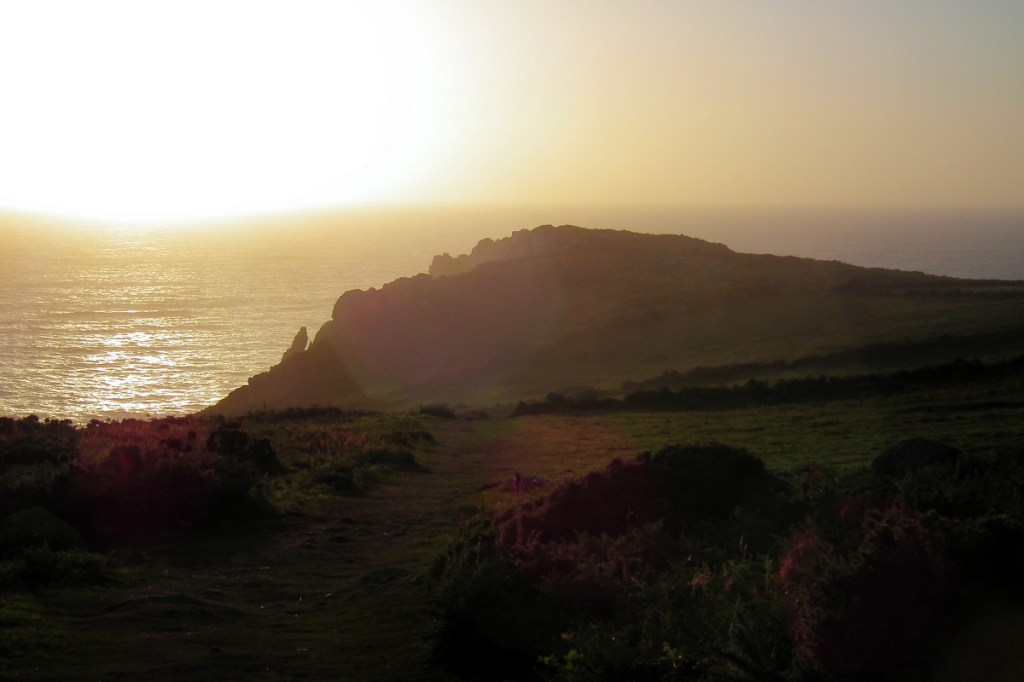
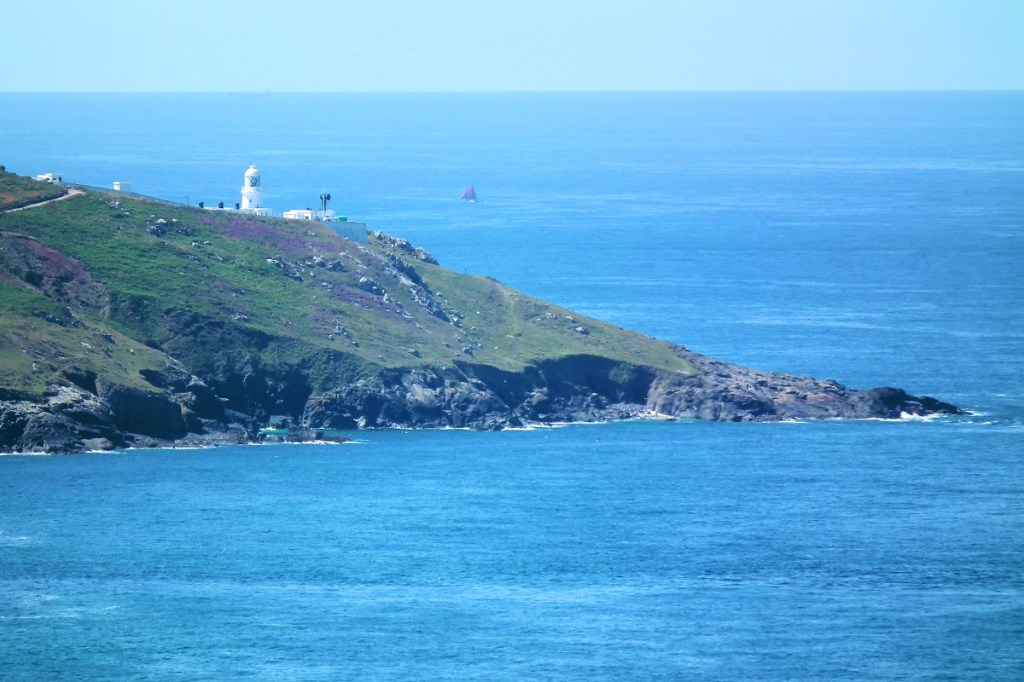
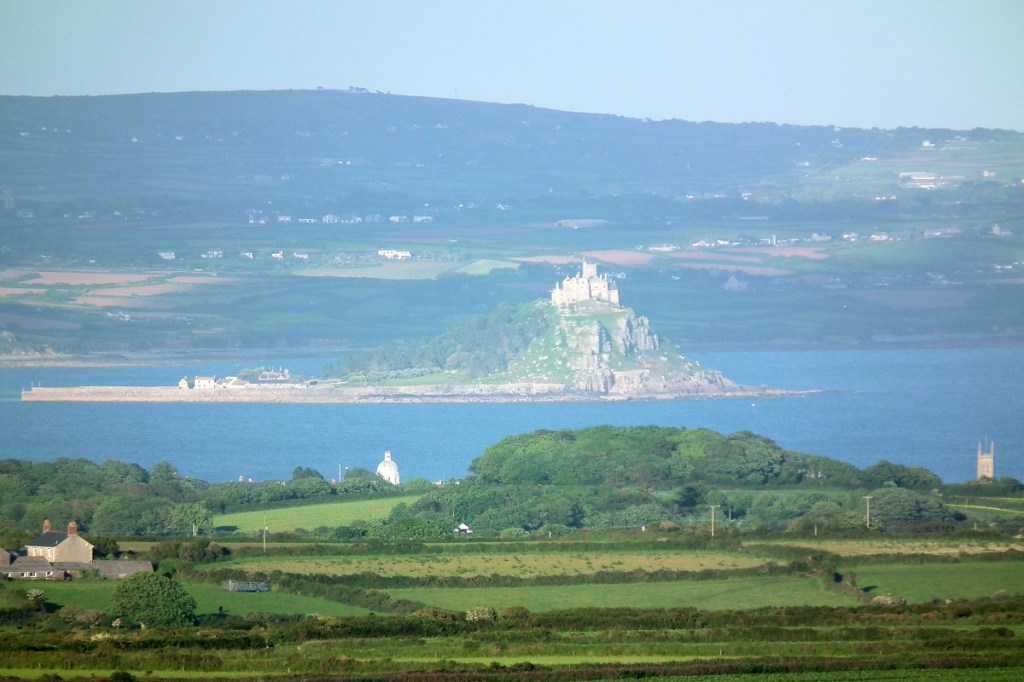
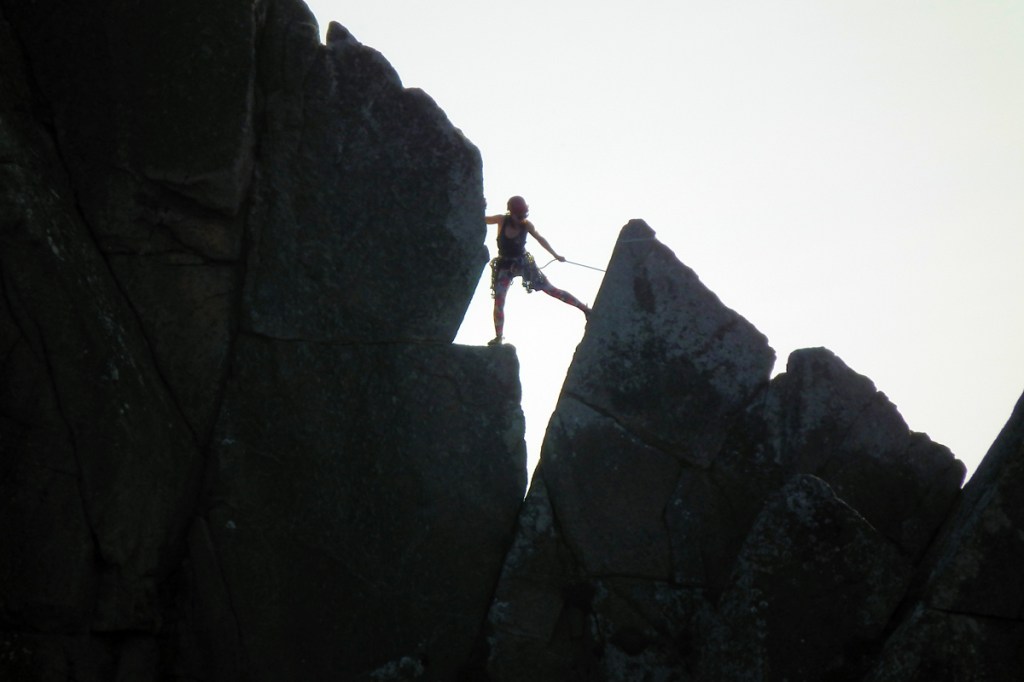
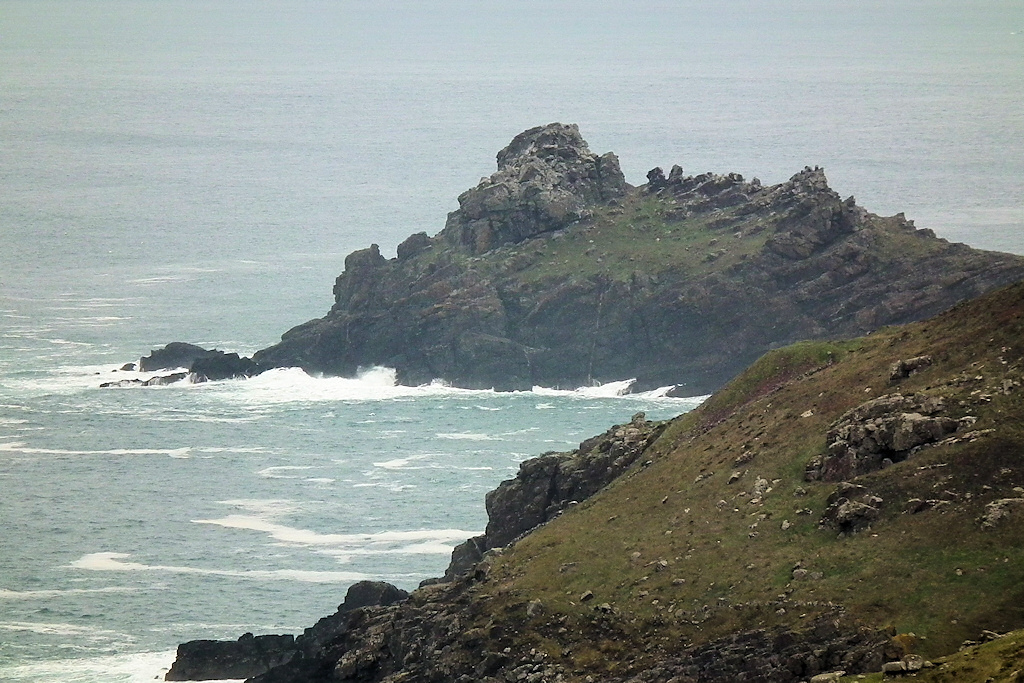
Gurnard's Head, Cornwall
A sign at Gurnard’s Head in West Penwith, Cornwall.

I’m not in the habit of giving speeches at seven in the morning on a Sunday. But this happened this morning – I spoke at an online medical conference in India about the potential social and economic outcomes of NovaCovid19.

There was quite a lot of academic waffle, but it was interesting. There were dogs and children in the background and a nice lot of chaos too. I’m so glad that I am extra-academic in my work, not least because, in my experience, academics have a problem stretching beyond their current viewpoint. Right now we see a truimphal science riding high, but the problem is that science is in partial denial of the full scope of the issue.

To give an example, one of the speakers mentioned that susceptibility to NovaCovid is related particularly to air pollution – evidence of this is now emerging. Yes, true, and there’s more. It is related to internal pollution by antibiotics, vaccines, chlorine, poor diet and a modern cocktail of toxins. This is partially why Africa is not as badly hit as Europe and USA.

This narrowband approach I found when compiling my Possibilities 2050 report on the future – all experts and available reports to draw on avoided many of the big questions, particularly psycho-social issues, holding fast to to the data, to knowns, to what is held important now and in the past, not in the future – which is valuable but it is not everything. And then of course there are those with an agenda, seeking to reinforce convention or to impose ideologies or questionable perspectives, however redemptive, on others.

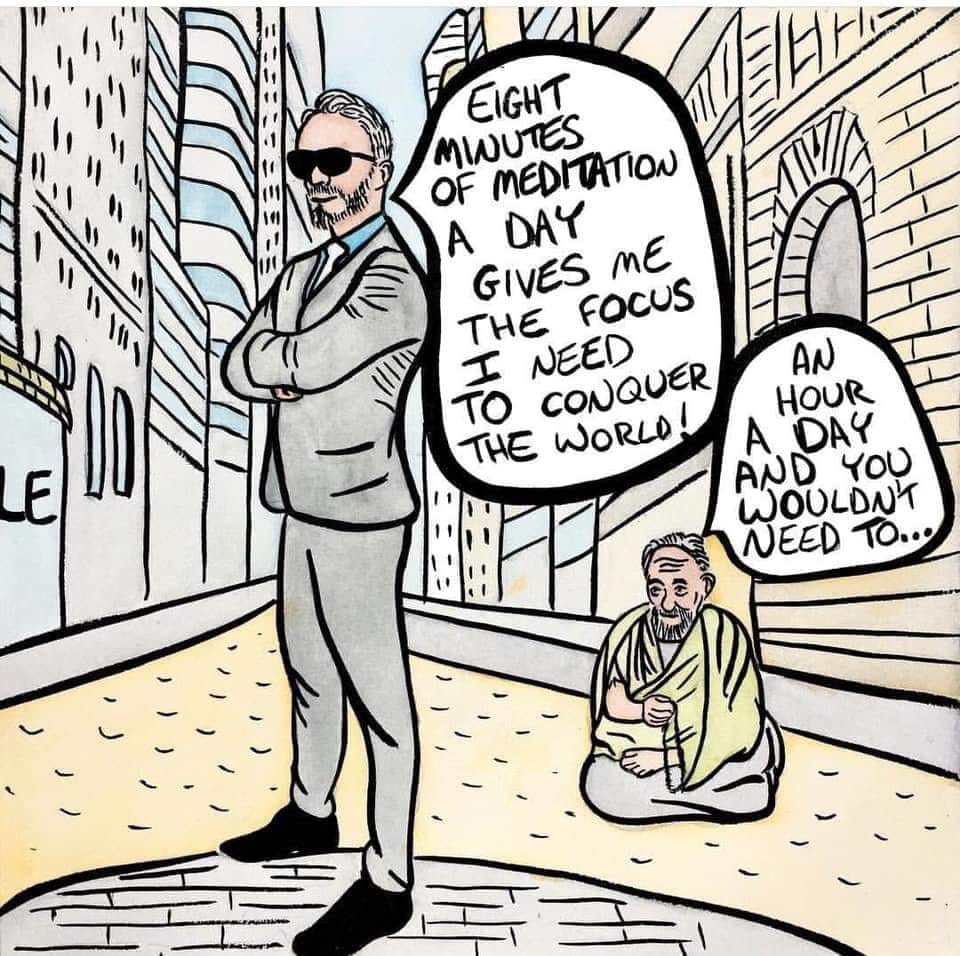
I was the only speaker to stay within my allocated eight-minute slot. That says something about an aged hippy thinker amongst a load of academics! A German scientist gave a long ramble about the use of the Hindu Agnihotra ritual in reducing susceptibility to Covid – yes, interesting, but it deserved two, not twelve minutes.

I was looking at the longer term effects of NovaCovid (which is what they call it in India, the pharmaceutical and Ayurvedic centre of the universe). The first is the reality shake-out that has hit us, loosening up people’s thoughts and feelings which, in the end, will improve psychosocial resilience – inasmuch as societal resistance to change and the urge to re-normalise is harmful and constraining. I mentioned how this is the first of possibly three or four crises that are likely to come in the next 15 or so years.

Covid is not primarily a health crisis – the primacy of the virus will fade. The core issue is ecology, economics and human society, and Covid is the catalyst. This is one of the evolving ecological crises of our time, caused primarily in this case by deforestation and human encroachment on nature. Future crises will similarly be catalysed by specific events and causes, but they will still mainly concern wider, deeper issues.

This is about the rehumanising of society, particularly in the West. This is the third crisis adding to the West’s decline in global influence – the first was around 1990, the second around 2008-9 and the third is now. The next is to come. Each time, the West declines by 10% and, relatively, The Rest rises. A key reason why the West is declining is that it has prioritised business over society and, in truth, continues doing so – as in Maggie Thatcher’s much-vaunted statement “There is no such thing as society”. Well, we have found otherwise in the last few months.

Longterm revival is more likely in Asia, Africa and eventually Latin America than in developed countries, since there is a global readjustment going on in which Western consumption levels, production and geopolitical weight are reluctantly in decline. This reluctance is mainly because of our vested interests and the addiction of us Westerners to our comforts and excess consumption. We need to cut consumption by over half in order to achieve sustainability. We are being overtaken on the outside by The Rest, the majority, who are more resolutely oriented toward change and who have less to protect and more to gain from change.

I see this amongst contacts in East Africa, who are now more advanced in such things as permaculture than we – they are beginning to lead the way and the West is running out of steam and initiative, no matter how wonderful and deserving of leadership we believe ourselves to be. This is important.

I was impressed by the degree to which Indian researchers were following international research, especially from Asia. But in Britain, when we talk about ‘scientific’ we don’t read others’ academic papers since we define ‘scientific evidence’ to be valuable only when it’s British, American or, at a push, European. But the people who know their stuff most are the Indians, Chinese, Koreans, Taiwanese and Singaporeans. It shows up in the evidence.

One of the key issues of the 2020s will be sovereign insolvency – state and systemic bankruptcy, especially in countries borrowing heavily to maintain economic levels through the pandemic. This insolvency will be bad for Brexit, bad for nationalism, bad for Great America, bad for Hindu nationalism, bad for Bolsonaro. This growing indebtedness and artificial money-creation is a fatal move, bringing up the next question.

This NovaCovid issue will define a new globalism, since increased national self-sufficiency and resilience, while apposite, only go so far, and then we’re back to global issues. Viruses, people, money and ecology know no boundaries, and many boundaries are obsolete anyway. When the world economy stutters, only something akin to a new Bretton Woods economic reform will allow nations truly to revive.

Yes, the World Bank, the IMF, financial hubs and particularly the shadow and offshore banking sectors. Many nations will go down, either to be taken over, break up and regionalise or to reconstitute in other ways. This is likely to happen by the early 2030s. Sovereign insolvency will be the agent of this change.

How much will things actually change after NovaCovid? Probably by 10% initially and 20% in 5-7 years. I think we’ll see a ‘VU’ recovery. That is, a quick initial bounce-back, then another fall owing to systemic structural weaknesses, followed by a slow and incomplete revival, though not to previous levels. Then other crises will follow to prune things more. Next one 2024?

Here I’m very aware of the symbolism of the bone marrow cancer I am experiencing. It’s a disease of the life-blood, the very life-giving essence that keeps me alive, and it leads to a rotting of the bones, which become shot through with cavities, weakening the bones and the structure of what holds me up. If I fall, my bony frame’s resilience to impacts will be the big question.

Which goes to show, yet again, it’s not what you do (since falling down will happen), it’s the way you do it. This is what’s happening in society – a collective bone marrow cancer. We don’t have a tumour – although top-level structures in society could be regarded as tumorous – we have a condition of the life-blood and a big immunity issue. Lack of immunity to the inevitable, to the passage of change and transformation.

We have a collective blood condition – not just economic but infusing the psychosocial and motivating structure of society. A lot of people are using NovaCovid to think again about their lives. A disadvantage of this will be that many of the best people for engineering change will leave the heart of the system to bring change to their personal lives, leaving behind people inside the system who are less able to bring about change – this was one of the causes of the fall of the Soviet system around 1990. The people who create the problem cannot resolve it.

Universal, comprehensive healthcare in those countries lacking it and increased global equality have been global priorities for years, but they have only now come properly into focus. However, the capacity of governements, investors and the system to invest properly in these is in question, owing to the probability of sovereign insolvency and economic downturn. This means a deeper social transformation if the care and health crisis that has been revealed by NovaCovid is to be acted upon.

We shall need to stop leaning on and looking to governments for leadership: we’ll need social consensus and collective self-discipline if top-down governance is going to weaken and if social healthcare and care in general are to grow. Back in the 1970s a bumper-sticker used to say, ‘If the people lead, the leaders will follow’. Well, now the people need to lead, but we are also very inexperienced in that, we lack solidarity, consensus and social steadfastness – what the Palestinians call sumud, the capacity to hang in there regardless.

This is all very well, but it means a voluntary sacrifice of individualism, exceptionalism and personal freedom. Many of my friends won’t like this bit – it constrains their oh so important personal freedom. Well, get over it, because it’s coming. This is why countries like Sweden and Palestine are doing quite well with the virus – they already have this mutualised societal self-discipline. They do it despite government, not because of it. It also means that volunteerism will be on the rise.

The core issue here concerns strengthening society and its psychosocial resilience. There’s more to go on this question. An initial majority urge to restore normality will obstruct progress until we lurch into the second Covid-related downturn, which is likely to be U-shaped, slower to sink and slower to rise. And the bounceback will rise only to about 80% of previous levels. Structural change is afoot too.

There’s going to be a humdinger of a social and political crisis in coming years. Existing political parties and leaderships are not sufficiently up to the job of good, effective governance. As people realise the full implications of the personal and community changes they are undergoing, a proportion will not wish to return to the good old days. They don’t want to race rats any more – they want to Get A Life. But there’s also the question of social disagreement – it does not work to look at the folk over there and say they’re wrong. They aren’t wrong, they are themselves, fully valid humans who are part of the social process. Blaming those over there for our situation is weak, weak, weak, to quote our dear old friend Tony Blair.

Much now depends on people at the top. But it depends greatly on the mass of the people. Especially in one area: social control, particularly digital. A battle is afoot: our lives will either be controlled by corporations like Amazon, governments and background powers, or we increase social freedoms. But into these social freedoms we must incorporate collective self-discipline.

In other words, people need to learn how to form a consensus incorporating everybody. Without this, goodbye democracy. Democracy isn’t the answer to everything and, to quote Churchill, it’s the least worst option of all those that have been tried, but two qualities of democracy do hold true: the people need to be able to express an opinion when we have one, and we need to be able to change our leaders when necessary. Authoritarian systems have a succession and duration problem and, in times of change, this is critical.

This is perhaps the biggest question of our time. Getting through the 21st Century and its challenges will be done either through increased top-down control or through collective consensus and social strengthening, and it looks at present as if the former is winning. But the matter is not yet decided. It gets decided in the late 2020s and the 2030s, and it’s big. And, guess what, some of the biggest potential contributors to this new phase, owing to their long-established collective experience in making something good out of a bad situation, are Palestinians. Followed by Africans, Iranians, Cubans, Vietnamese…

And now I’m going back to bed. I’m active only a few hours each day – my energy is lower than it was, and I’ve begun wondering how much willpower I have to continue holding myself up and looking after myself in this care-poor nation of ours. Here you can be awarded a grant for hiring home help but it is not delivered at the time when you actually need it. My house is slowly becoming a wreck and I need help with it. Is anyone in St Just or Penzance interested? I am rung weekly by social service types who give me lists of phone numbers to ring but say they cannot help. Ah, thanks.

This is one microscopic aspect of the decline of the West, and also of the decline of Paldywan Kenobi. I do hope my family will come visit me while I’m still alive. I’m dead glad I didn’t take the blood transplant route I mentioned a few months ago – this was intuitively inappropriate and it would have meant I’d have needed 3-6 months extra care. Which is not available. So it’s back to bed for me. Byee!!

Love from the ancient realm of Cornwall, Palden.

Chiselling Tablets

Staloluokta, Lappland
Staloluokta in Sapmi in 2011, 90km from the road and 200km from the shops. Sapmi, the land of the Sami people, is known to many of us as Lappland, northern Sweden

Today I reached a point where it was down to thinking up the final humdinger of a paragraph for my forthcoming book ‘Shining Land’. It’s nearly there.

The great thing about this book, my eleventh, is that I’ve given a lot of time and consideration to every thought and proposition while lodged in the cosmological cocoon of my bed, looking out over the fields and woods at the jackdaws, swallows and buzzards.

With plenty of timespace to think. The book is all about time, space and consciousness. It’s going to annoy the hell out of some sceptics and rationalists, not least during this triumphal period of all-embracing Science.

Now I must review the whole 100,000 word manuscript again, submit it to two ‘expert readers’ to check through the ideas, compile the online appendices, enter the illustrations and maps into the manuscript, and it’s done. Phew. The book will come out, regardless, in digital format: the main issue is whether it comes out in print (the costliest and most complex option).

Then it’s two months of sitting around, kinda fallow, thumb twiddling, wondering what to do with myself. The creative vacuum creeps up afterwards. It does give time and space for things I ignored before, and for dwelling on nothing in particular.

Writing books is a self-imposed lockdown – most of the time an anti-social activity but now transcovidated into responsible self-isolation and social distancing. I’m doing the same thing as before but not, this time, anti-socially. Apparently. These twists of judgement are always strange for Aspies to get our heads around.

I’ve been on lockdown since mid-November, when diagnosed with myeloma. Approaching six months. So there was little change when Covid slunk in like a voracious Neptunian mist, taking over everyone’s lives and tenuous sense of reality. I just carried on – out of my head on chemotherapy and steroids.

It gets a bit boring, this lockdown, even though I have stuff I can get on with, in my slowly ponderous six-hours-per-day, wiped out, struggling way, stumbling around like a 96 year old. I’ve been on my own quite a lot throughout life and get a bit fed up of myself, my own cooking, my repetitive, stuck Virgo patterns and ossified daily methodologies. Why people want to prolong their lives and achieve immortality beats me. But then, ‘You were a strange little child’, my mother once said, and ‘You’re not like the child I brought up’.

Tomorrow, I am appearing on an Indian social psychologists’ online conference on the overall social effects of Covid, giving them a prescribed ten minutes on the psychodynamics of accelerated social-cultural change. Me, a global health expert, hobnobbing with people bearing doctorates…

This is one of the unexpected outcomes of having cancer. Lots of things have changed. Here’s one. People who want to hear me are now predominantly in Africa, the Middle East and Asia, not Europe and America. Growing for years, suddenly it shifted critically, recently. My last book Possibilities 2050 I wrote with them in mind. I made it available for free, so that expense and availability would not be barriers. They can read it on their mobiles, and it uses little bandwidth. Now I’m hearing from really interesting folk in Gambia, Malawi, Uganda, and Afghanistan, Iran, Turkey, Bangladesh, Tuvalu and Cuba. Magic.

What I like most about this is that, if I’m delivering something people really find useful, it draws something out of me. I’m quite accustomed to being part of something that ought to be much bigger than it is, but it’s good having people gladly soaking up this stuff – and making it their own, doing it their way. Fuck the royalties and getting famous – I just want to get on with what I’m here for before I no longer am here.

These people are not emulating the West; they’re overtaking us. They’re the world’s future and the majority are under 30. Many ideas coming from the back-alleys and the underground in the West have become useful to them. They’ve seen the impositional side of us but there are fertile outpourings from the unofficial culture in the West that are invaluable too. Permaculture being one. Talking stick. Herbalism. Astrology. Holism. Homoeopathy. Anything interesting, stimulating and new.

We Westerners need to listen up. Our majority culture has become sclerotic, stuck in a groove, constrained by its vested interests and comfortaable habits. Yet it has much of value. Especially a lot of the things we haven’t given enough attention to. We were too busy making money, or trying to.

We still want to be the leaders, the teachers. The mission to civilise is still alive and well, as is the hypocrisy. No, we’re the minority and being outclassed. Declining without appropriate grace. But most of us are goodguys and mean well – that’s our asset.

It’s time for us to rejoin the human race. Exceptionalism no longer works. Wanting to be the leaders blocks the flow. Lecturing obstructs hearing.

Yet, as a cancer experiencer, I’m so fortunate to be undergoing treatment here in UK. I have access to the best of conventional and holistic medicine, healers and advisers, people praying and reiki-ing me too, and I’m grateful for that.

I’ve offered myself for research and observation, having had some of the best results seen for years. But no, no interest. Oh well, it saves me being poked, prodded and sent to London!

The Management has recently been doing a little fixing. Normal service is unlikely to be resumed. Apologies for the disruption. Please recycle all used containers and clear up your litter after you.

God bless everyone. Palden.

Equanimity

tregeseal-35138
Tregeseal stone circle, 4,500ish years old, West Penwith


It’s all about the law of opposites. We can’t get it together: it is together. That was the Whole Earth Catalog 50 years ago. There is always balance. Everything compensates out. We don’t see this – we get occasional glimpses of it and it comes clear when we’re dying.

You might think that, lying propped up on pillows much of the day, I’m doing fuckall. But I haven’t worked harder in my life. Believe me, I’m a Grade A workaholic, so my work-narcomania settings are set high. Mercifully it has mostly been meaningful stuff, though not as widely seen or read as it might have been. Nevertheless, lounging in bed has been very fruitful, and I’ve remarkable global outreach without really trying.

Cancer has changed me more than I thought it was possible to change. I’m not sure who I am any more, while I’m stuck with the same old me, yet in a new life where the game has thoroughly changed. Most of the day I’m in a strange, mindless, undermotivated stupour, yet I’ve done more inner journeying, both consciously and semiconsciously, in the five months since I keeled over with cancer than I have done in a lifetime. At times it feels as if I’m being utilised as a remote consciousness drone by higher powers. I’ve been seeing things from the viewpoint of the universe experiencing itself, beholding another microfacet of creativity’s coalface. Read that again. Right now I can’t encapsulate it any better.

Life is really hard. For me and for so many. Perceived hardship levels have suddenly parachuted millions of people into a reality-mire. All of a sudden, us cancer types have more company. It was rather like that for the Palestinians when the Arab revolutions broke out in 2010 and dictators fired into the crowds in Syria, Egypt, Yemen and Bahrain – suddenly the Palestinians had company.

Yet hardship is a position, a judgement that is adopted and assumed. Truth is, everything charges its price and yields its benefits, and a certain equanimity is called for. Everything always compensates. It can stretch out over time but it is inbuilt into the situation we find ourselves in. Better situations, such as affluence, can be worse, and worse situations, such as deprivation and underprivilege, can be better. Revelation: the uncovering of truths that always were there. It all depends how we see things.

This compensation has been the case for me. Exhausted with life and in a severe cancer droop, I feel uncannily inspired. Neptune is doing an opposition to my Saturn – first pass is right now. A symptom of this is that, in my vacuousness, I’ve become strangely capable. Some days I can’t cook my dinner and concerned voices endlessly ask me how I am… but it raises a vexed Commander Data look from me.

What to report? My life is happy and productive, thank you, and I’m hardly lifting a finger. My body aches like… well, the Swedes have a perfect description… helvetes djävla skit (hell’s devilish shit). I think Lynne used to wonder whether I’d lost my marbles when was chuckling at the ridiculousness of being creased up with searing pain.

Everything compensates. Reality is an agreement, a form of groupthink defined mostly by influencers and soapboxers. It has been stacked with moderntimes aspirational hyperactivity that has spun out of control. This has led to seizure, and we’re now faced with enforced inactivity. The engines have stalled, and we have opportunity to stop and look at our lives. A sudden compensatory reality-subsidence has crept up on us. Both Covid and cancer are great gifts – depends how we see things – though this needs stating with a compassionate heart.

My aunt Hilary worked with Alan Turing at Bletchley Park. They thought they were cracking Hitler’s codes. Actually, they were inventing computers and artificial intelligence, without really knowing how the future would unfold. Life is what happens when you’re busy making other plans. Today we have a pandemic but coronavirus will be forgotten. The virus was carrying an information upgrade for the collective psyche. in the fullness of time this is a good thing. Things are shifting radically from bottom up, and those at the top are reduced to responding rather than leadership and control, and they’re getting struck down too.

Meanwhile, under the surface, geopolitically the initiative has tipped from West to East. A small sign of this is that the world leader in dealing with today’s Covid crisis has been… Taiwan. We thought this was a health crisis but it’s a global game change with new, clear, as yet unspoken rules. Coronavirus is just the carrier.

For me, the lockdown started in November, though my cancer journey has been reframed by Covid. Utter change, for me individually and for the world, eachn in our own ways. Tulki my son said, “Well Dad, you were sitting at your desk before and you’re sitting at your desk after”. Yes indeed: everything changes. Before enlightenment, chopping wood and carrying water, and after enlightenment, chopping wood and carrying water. This is simply the law of paradox, of opposites.

During the late-60s attempted revolution at LSE I came to see that bringing down the elite is not the answer. Absolutely everything has to change. Or it won’t change. Yeah, this ‘change everything’ approach is taken to be a classic new age pipedream or perhaps an evangelically-inspired apocalyptic madness. A bit like UFOs. Yet here we have it – we’re now on a practice run. Force majeure is proliferating. Anyone can get ill, anything can happen.

People keep telling me to get well soon. Has this noble wish genuinely been thought through? Similarly, will a post-Covid restoration of normality lift up our hearts?

I’ve been home on the farm in Cornwall for over a month now. It has done me a world of good, coming home. Glad to be out of England too. I’m more or less keeping it together here. No more pills to take. But I’m zonked, wondering why I’m here. Even where ‘here’ is. Yet when I think of you all, you’re right here with me.

Coronavirus gives humanity a ripple of grace. It’s an update preparing for an upgrade, and it had to subvert our well-armed virus protection to do it. DNA is more about informational algorithms than it is about stuff, and hereby groupthink is being reprogrammed. There’s more to go on this process, taking at least thirty years, but I think it will go faster and easier than is expected. We have a demonstration of the kind of mechanisms involved going on right now.

The cancer specialist at Trelliske hospital rang me today saying she was amazed at my test results. No surprise there, thought I, and I told her so. Why? One reason I’ve had cancer is that, as an Aspie, I’ve never felt understood. This has engendered antipathies and misunderstandings that have led to painful consequences and have finally worn me out. And here I am, and my cancer process has involved an enormous forgiving of the past.

Yet my results are good, I think, because of the way I’ve looked after myself throughout my adult life. I’ve offered my services to the doctors to use me as a guinea-pig for research, but no, they aren’t interested. Looking after myself has given me a spirit-rooted robustness and a deep-level immunity that makes life and death more of a choice of the soul. If I’m needed here on Earth I shall stay, and if I’m needed Upstairs, that’s where I’ll go. It’s okay.

Some might believe that I have a case of one of today’s much-vaunted mental health problems. Well, lots of people are suffering anxiety and depression, and there’s a simple therapy for this: a month in Gaza, without money, making you dependent on the goodwill of the Gazans to help you survive. That’ll put things into perspective and remove many mental health problems rapidly. People in conflict zones have taught me that the world doesn’t end and the sky doesn’t fall in. We have a situation, that’s all. It’s hard, but it’s here.

That approach has helped me face cancer. It’s not the end of the world – it’s the universe on a growth path, exploring its full range of possibilities through me. Even so, I’m reaching age 70 and at last my hair is slowly beginning to turn silver. And I’m still guzzling CBD, cider vinegar, beansprouts, selenium and vits. But the greatest of medicines is the gift of helping others. We become healed by healing others, and I’m still at it.

When my brainz are clear, I’m getting on with my book Shining Land. A sample chapter is available here. I guess it’ll be out by the end of 2020, if I can find a publisher. If not I shall place it online with a number of my other books – see here. Knowledge needs to be free: I’m a great believer in that. But obviously, the cost of printing and distribution of physical books costs money, so these need paying for.

Time to go. Bless you all, and see you again. And remember: everything is alright in the end, and if it’s not alright, it’s not the end.

Palden

Oh, and…

I posted this on my Facebook page and it’s relevant here…

landsend-26785

I have cancer and I cannot answer your messages, neither can I make a hundred exceptions to this! Similarly, if I tell you I cannot chat, this means that sending me another message in response does not help, no matter how much you care. Sorry, but energy-wise I am half-dead.

Also, many times per day I am asked how I am and whether I’m getting better – do you think it’s pleasant answering? I am unwell, and I go up and down on a daily basis – that’s my answer.

When I post material online, it means I am on a rare energy-upswing, and the next one will be four or more days later!

As for Youtube videos, especially conspiracy ones, I cannot watch them. In addition, concerning conspiracy information, please think carefully about these since the net effect of circulating such information publicly tends mainly to build public resistance against such ideas.

Secrets are intended to stay secret for good reasons, and they need spreading secretly, not publicly, because publicly they are not necessarily understood and they get distorted and sensationalised. It’s good to understand this. As a person who has been in war and disaster situations and on the edge of the intel community, I know this, from real-life experience. Did you really think I’ve told you everything I have seen and been involved with?

People (of all persuasions) don’t believe what they need to believe – they believe what they want to believe. This includes conventional mainstreamers. They tend to believe things that are convincingly or sensationally argued more than those things that actually are true or correctly interpreted.

I tend to write convincing things, but you still need to apply your filters to anything I write too!

I love you all and appreciate your presence in my life and your good wishes, but writing to me is counterproductive. It’s all too much to get a hundred mssages per day, only ten of which are genuinely person-to-person. It means I have to wade through all this stuff to find the stuff that matters.

Which is around 3-5 messages per day – many of the ppl sending such messages know who they are. So please please think twice about sending me messages! Thank you so much.

You see, cancer patients need to be straight with people. This can appear to be abrupt or self-centred. No, it is psychological survival – cancer patients are psychologically as well as physically vulnerable, even to well-meaning random bursts of healing and prayer from well-meaning people like you. Your vibes affect us.

Yes, ppl like me do need help, but we do not need verbal suggestions or offers of sympathy – we need ppl to actually do useful things with no fuss. I do actually need a locally-based home help – I can’t keep up with household chores.

Or there’s also the option of not doing things – that’s okay too if you’re straight and simple about it, mainly with yourself. I don’t feel bad toward people who do nothing – so leave the guilt somewhere else, please! It’s okay!

Bless you all. Happy fullmoon. Paldywan.

Hang on a minute…

capekenidjack-40211

Being wiped out from cancer like I am is strangely political. Pls let me explain.

You who are ‘healthy’ and ‘normal’ are busy rushing around doing things you ought to be doing, according to your lists and timetables. You’re time-poor and living with guilt. Doing things because you feel you should, ought or have to do them, for this, that or the other reason. It’s really sensible and responsible, that. Or is it?

This is a political issue. How? Because, if you’re busy rushing around, shopping in supermarkets, using the internet and doing so many other things, you’re also busy not doing what you came here to do. You’re living distractedly. You’re busy doing things that go against your own core beliefs.

I’m not recommending you get cancer to be like me and other cancer patients. But the lesson of Covid is that we need to slow down and pare everything down to essentials. We need to be human for each other. Restoring normality is not the solution.

So, pls forgive me for pointing this out, but while I might be unwell, there’s something happening for me that is very healthy. I’ve started being 100% human, and cleaving to my true path as a result. I recommend it! And this is what will change the world.

If there is one single thing that will change the world, it is this: everyone needs to start getting on with what they truly cam here to do, uncompromisingly, without too much hedging. Take risks. Follow your calling. The only efficiency and productivity you really need to worry about is that with which you are pusuing your life purpose. All else is secondary.

I’ve needed to learn this too, and cancer has helped me with it. A key reason why I contracted cancer is that I’ve rushed around for the whole of my life. They were worthy things to do and they created on the whole good outcomes, but I got cancer as a result. Not because I did them, but because of the speed, the manner and the in order to learn this lesson. Please: learn it now, voluntarily, without needing to invoke misfortune.

With love, Paldywan

Back down on the Farm

palden-boscawenun-45648

Recently my emotions have been really close to the surface. I quite easily burst into tears over the slightest thing – a piece of music or even just a feeling of simple gratitude for being alive. Meanwhile, I’m being presented with lists of things to do, while beset with ‘chemo-brain’ and feeling unready to do them – sometimes this feels like an overload bringing up more tears! My immune system, close to zero as part of my cancer treatment, seems to bring an emotional permeability too.

I’m fed up of being unwell, and tired out, of spilling things, missing the toilet when peeing, of early morning aches, being so bloody helpless and dependent. Sometimes I can’t handle it any more and it’s more wet cheeks.

I’ve felt the grief of my parents’ and grandparents’ generations, from two world wars. Grief from the ‘wrong’ deaths I have seen and helped to deal with in the Middle East, in my humanitarian work. Regret over an avoidable incident I was involved with in 2014, killing 200-odd Syrian villagers, that deeply hit my humanitarian instincts. Grief over two previous lives in which I have been a general. Grief remembering my chronologically last life, ending in Austria in WW2 – the memory of an aristocratic altruist in such a ridiculously big humanitarian crisis in war that only small acts of goodness could be done, only some people could be saved, and only some good sense could be inculcated into the madness.

botrea-grumbla-35860

I’m back home on the farm in Cornwall. It feels safer down here, pandemic-wise – for now. The farm is quite isolated. I was supposed to return to Devon next week for a hospital consultation, blood tests and new medication but I’m staying here – we’ll have to fix things in other ways. The farm is the best place to be: I’m fortunate to be here.

Lynne is at her home in Devon, picking up the pieces after the enormous task of caring for me for the last few months. Bless her: she has saved my life and gone many extra miles for me. I was lucky that someone like her saved me in my time of need. It’s good now to give her space, and for me to sort out the details of living independently – we might not see each other for a while. As an astrologer she has clients and students to deal with, and teenagers at home.

I’m used to a hermit’s life and can look after myself most of the time. I’ll need a local helper for an hour a day, and it will take time for me to build up strength and establish a new normal. With the crowd-funded money you people have kindly donated I am kitting myself up with necessaries: the first items are a fridge, a new work chair and a mattress.

The ‘care crisis’ in Britain and similar countries derives particularly from the death of the community and the extended family. A Palestinian family of forty could take in a person like me with no great change to its routines. Often the old people sit at the centre of the compound, with the kids playing around them and people coming and going, though ‘social distancing’ – something that East Asians and Westerners might find more easy than Arabs – will prove difficult there.

An old friend from Leeds, Sian, is with me for two weeks. She’s heading home on Thursday. We used to work together in the Hundredth Monkey Project in the mid-1990s and the Flying Squad that followed after it.  These geopolitical healing projects used group process, meditation and other pressure-cooking techniques to work with events and trends in the world. It’s good to spend time together again since we and the others in the group spent a lot of time pressure-cooking, and it bonded us as souls even though we’ve now closed the project – we could not find new recruits with sufficient commitment.

boscawenun-38585

On Saturday we went to Boscawen-un stone circle, which is 4,500 years old. We did the usual things you do, circumambulating, visiting the stones, being quiet, and sitting by the quartz stone drinking tea. After a while a couple came along. We started talking. Before long I was undergong a profound healing given by the woman, who spoke in tongues, looked me straight in the eyes, grasped and shook my hands, bringing through a very strong energy from beings that seemed to be definitely of the not-of-Earth kind. I let them examine me from the inside. They told me that shadows of grief were around me. I felt energy rippling through me – I was being energy-massaged and manipulated. Since then I’ve been leaking tears by the gallon. Thank you Estelle, whoever you are, for bringing a gift of God in a stone circle.

Cancer opens a doorway to karmic clearing, pattern-changing and a sharpening of life-purpose. Amongst cancer people I have met, a proportion seem particularly to be taking on a deep challenge of the soul. In my own case, there are shadows of the past to clear, murky things I have touched, errors I have made and things I could have done better, but this soul-challenge now seems to come more from the future than from the past.

Being dealt a bucketload of uncertainty is one of the ways this inner challenge reveals itself. I don’t know how long I’ll live – it could be just weeks. This issue variously faces everyone, but cancer has a way of bringing it to the surface, reminding us how vulnerable we are as humans. We need to talk about this more, to address a cultural taboo around death: one of coronavirus’ many gifts is a reminder of our mortality and insecurity. We need this.

Ironically, I’m on this vulnerability-trip at a time when the whole world is suddenly wobbling with uncertainty. Whenever this pandemic ends, things will not go back to normal. Values are changing. Everything that was safe is now questionable. We’re being levelled out. The consequences of this shared mass experience are far greater and deeper than anyone can see. Society, community and the human family are on the mend.

Here’s a simple rule that they don’t teach in university: when the economy rises, society falls, and when the economy falls, society rises. The next crisis, or the one after that, will concern ‘sovereign insolvency’ – government bankruptcy. That’ll be a shock – gilt-edged guarantees going belly-up. Our current economic crisis in 2020 is, I reckon, the first of three or four to come.

The good news is this: these are mechanisms by which the global economic system is correcting and adjusting itself. To function, it must reflect the ecological and human needs of the time. It’s overdue. Capitalism is plummeting into transformation, stumbling from a competitive, exploitative model toward a cooperative model of operation. Is the system here to serve the people or are the people here to serve the system? This change will be painful. You might have to clean your ass without toilet paper. But working together and looking after each other is the societal model of the future.

Here we go, into the unknown. Saturn is entering Aquarius, heralding a period lasting until 2043 where the emphasis is on society. Not the economy and markets. Not gizmos. People and society: the social contract, its freedoms, benefits, controls and responsibilities. The capacity of humans to live and work together. Exceptionalism. Solidarity. New politics. Equality. Justice. Many hands make light work. These are important because the other major issues of our time will not progress well if social-political issues fail to progress. It’s all a question of human willingness to do whatever it takes to change the world.

The ill, the old and the infirm have been forgotten and sidelined in recent decades. There’s tragedy to this inasmuch as, now and in future, we might have to accept being culled by circumstances such as coronavirus. In wealthy countries we’ve had the luxury of long lives and medical support for the ill and disabled, and this won’t be as possible in future. The therapy for this is to address the question of dying, and the meaning of life. It’s easier to pass away if you’ve fulfilled at least some of the reason why you came – the contract you signed up to before birth.

For Death is lurking on our streets and fear is the wrong response. Coronavirus brings us a taste of reality. It brings gifts: a chance for society to reconstitute. A new political expediency that cares more for people. A need to cooperate and care. A change of values regarding consumption, production and the true worth of many social and economic activities – is arms production really what we want? Are cruise holidays, throw-away fashions, flashy cars and sumptuous restaurants really necessary? Is it more important to earn money or care for our families? And how will we deal with the subterranean rage that lies in the collective psyche?

If you don’t hear from me again, I’ve probably kicked the bucket. In which case, stay tuned and you’ll hear from me sometime, from Upstairs. If this happens, it releases me to help out on the other side – a humanitarian’s work is never done! I’ll be wherever I’m most useful. If I stay on Earth, I’ll write again in due course and keep you posted. Bless you for being with me on this journey.

May you be safe and well. I wish upon you something that the Palestinians have mastered: making the best out of a bad situation and staying happy under duress. When a Palestinian smiles, it shows that they have not lost and cannot lose the war, for they retain their humanity and live to see another day.

If misfortune strikes, ask yourself ‘Where is the gift?‘ – and therein lie answers and avenues of progress. The world is changing and, amidst the tragedy, good things are unfolding – humanity is coming back after decades of cruel, destructive economism with far more losers than winners. This nightmare is beginning to end. But it will take time and many crunchpoints.

Everything is okay in the end. If it’s not okay, it’s not the end. We all came here to bring light to a benighted world, and we’ve just been given a big opportunity.

Greetings from West Penwith, Cornwall, the shining land of Belerion.

Love, Paldywan Kenobi.

Coming up for air

grumbla-41392

I’m beginning to see the light at the end of the tunnel. My cousin Faith visited recently, bless her, pointing out how my life has become one of super-concentrated uncertainty. It’s funny, when you’re caught up in the intricacies and subjectivities of your own life-bubble, how a simple observation like that really helps see things more clearly.

I’m on cycle five of a planned six cycles of chemo and steroids and am expected to plateau at a stable level when all the intense treatments I’ve been having end in April. My readings are still improving.

At the three-weekly meeting with the haematological specialist, Deborah, I asked whether there would be follow-up drugs and she said No, none at all. That was a surprise, but it now frees me up to design my own myeloma self-management regime, so it feels like a release. But into what? Swimming in a sea of uncertainty, hazard and possibility.

It’s a challenge to maintain a good state of being and spirits. There will be periodic blood checks to make sure my myeloma levels haven’t risen and, if they do, I’ll go back on chemo and steroids if necessary and if it feels right. I hope to delay that through good self-management – and we’ll see how that pans out in real life.

Bone marrow cancer doesn’t go away – you just get minimisation. Myeloma or a related issue will eventually do me in. If I’m one of those unfortunates to catch coronavirus and kick the bucket, then there will be work to do Upstairs with others who die, who are perhaps struggling, unready for death-transition – helping them get their relationship with their soul sorted out. So all is not lost.

But then, every one of us gets done in somehow, sooner or later. So, when Life does you in, do it well! It’s one of the great breakthrough opportunities Life gives us. Screw the workshops, trainings and books – this is for real and it comes for free.

I’ve treated this bone marrow cancer as a spiritual challenge, but it’s very much a human one too. I’ve been digging around in all the fears I seem to have, and they’ve been digging me out too – there will be more.

Mercifully, I don’t get depressed. When I was young I had terrible dark depressions until I realised, during an inner journey, that there’s always a lump of gold down there in the dark depths. I met the dragon guarding the treasure, knowing it would annihilate me if I were afraid. Yet somehow my depressions had made me more fearless, making me give up on many customary defences and attachments since they seemed to do no good. Suddenly I saw depression as an asset. Since then, things have been different: depressions have transformed into times of interiority where I go quiet – unsociable and shut off to some – and it’s often a creativity-cooking period. A time for meta-processing, preparing the ground for breakthrough.

This chemo-induced tunnel I’ve been drifting through recently has been weird and difficult. I would have been depressed if I were inclined that way. Fatigue, spaced-outness, a kind of dementia, feeling I was getting nowhere, feeling of lack of progress and perspective… but the end is now coming into sight. When this intense phase of chemo ends in April or May I shall move back down to Cornwall.

And start again. Again. Much of my preceding life has been zeroed, and now I need to find a new level that works, for whatever time I have left. A life-redesign.

Guess, what, after that down period, my body has made a breakthrough. I can now stand unsupported for a longer time and walk short distances. It’s like going back to toddlerhood – the moment when you start standing up. It’s not a gradual process – it’s a sudden overnight activation of circuitry that allows you to do all the necessaries to make you stand and walk. It’s suddenly there, as if you’d always been doing it.

Talking of uncertainty, I’ve been thrown into it and now I’m watching the world getting pushed that way too. Despite the best efforts of those addicted to the status quo and striving to preserve it, things are slipping out of control, and this is symbolised by the coronavirus outbreak. We’re helpless whatever we throw at it, in the hands of fate. We actually need this – collectively at least. Blessings to those individuals, particularly doctors, nurses and helpers, who pass away – they make this sacrifice for us all, though it is meaningful only if we actually change and learn lessons.

We need this loss of control. There’s too much feigned certainty in our world and it’s a defence mechanism, a wall of groupthink denial. It needs to melt and break up faster than the icecaps of the Arctic and Antarctic. We need to lose our fear: and the fear epidemic is growing larger than the coronaviral epidemic. Fear, guilt and shame: in these three big blockers of global progress, the personal and the collective interlock through groupthink.

But we humans… we have a determined need to stage a “Final Clearance Sale – Everything Must Go!” orgy. It’s a perverse unconscious wish for what Mahatma Gandhi called satyagraha, truth force, the power of consequence, of inevitably, unavoidably changing facts. Something to stop us in our tracks, giving us an epiphany opportunity. To get through the 21st Century, we need this to go viral. It needs to rock the hearts and souls of billions, at the same time and with one underlying, shared thought and priority. That’s how the world will change.

Some of us have worked with this question for decades and we haven’t yet pulled it off. How it will happen has, in the last decade, looked more difficult than it did in, say, the late 1960s or around 1989-93. Another window opens in the later 2020s, driven largely by a younger generation – whom my generation would be well advised either to assist or to get out of the way of. We oldies have to get used to less comfort. We don’t actually need chocolate and holidays in Tenerife to be happy.

The astrological conditions of the late 2020 (a mutual sextile of Uranus in Gemini, Neptune in Aries and Pluto in Aquarius) could be given the description ‘florescence‘, a flowering of ideas whose time has really come and an overdue rising to the surface of what was underneath. The past suddenly becomes visibly obsolete. This could go either way – toward social control or mass-empowerment – but there’s a window of opening soon.

It’s getting rehearsed right now with coronavirus: the issue here is firm, appropriate, good governance and leadership under conditions of duress, and the key issue is public trust, discipline and intelligent behaviour. Accountability applies in every direction – we must give leaders the power they need while we, the human crowd, retain the power to determine key issues. But we must do it wisely, pulling power back also from extremists, spoilers, corrupters, fighters and advantage-takers. Public wisdom is the big question.

It’s rather like that toddler standing up for the first time, as if it were a habit that always had been there. It will be like that. We saw it in the Velvet and the Arab revolutions – remarkable acts of crowd bravery, discipline and good behaviour. It was damaged and corrupted only by the tear gas and bullets of the authorities – and this can be stopped only when satyagraha, the truth-force of what is really happening, overwhelms the habit of repression.

Dare I say a politically unwelcome truth, we have a well-habitualised addiction to being repressed – the threat of loss of this addiction gives us our fear, the fear of being unable to pay our bills and so being exiled from normality and security, all alone, shunned, helpless and wrong, a sinner who failed.

It’s in those darkest times that the buildup of truth-force happens – and that’s the meaning of our time. The Trumps, the conservatives, the warmongers, the toxic males and rampant capitalists have won. But they haven’t. They stand on precarious ground. It’s in the balance, right now. Something is building up.

When I was young, I made a vow that I’d do my best to help bring the world to an irreversible tipping-point of change in my lifetime – only then would I feel ‘mission accomplished’ and the release it brings. Since around 2000, growing older and seeing how the world wasn’t really, fully changing, I let go of this, transferring my efforts to work that might bear fruit posthumously.

But while I’ve recently been facing cancer a glimmer of hope has revived in my heart. It gives reason to stay alive. I want to see it and contribute to it. An ageing old crock of a dissident can do it just as well as a youngster. Come brothers and sisters throughout the land, the times they are a-changing.

An old friend and soul-sister, Sian, is taking me home to Cornwall next weekend for nine days, on a reality-testing mission to see how well I cope on the farm. Lynne can have a break from me. Sian and I have worked together for over 20 years in a tight group called the Flying Squad, doing ‘world work’ – consciousness work and group process to work with the underlying issues behind world events. We’ve been through a lot together, and her offer to take me home and through a reality-initiation is a magic initiative.

That’s what happens next. In gradual jumps, I’m coming back to life, returning from the bardo.

Thank you all so much, who have sent me healing and good vibes to help me on my way. I really appreciate that. Thanks also to Tomten the cat, who has slept dedicatedly on my bed, at times lying on my most painful parts and acting as an amazing pain reliever. Thanks to the amazing nurses and doctors in Torbay – remarkable people working within a very complex and rather screwed up health system.

Above all, thanks to Lynne, who has busted a gut for me, borne a heavy load and worn herself out looking after me. That’s amazing. She has been a star. Something like that can never be repaid. There’s an enormous life-lesson in that, for both of us.

With love, Paldywan.

Another Fullmoon

nanjizal_7316

It was the nurse Victoria who delivered a valuable truth. When I asked the doctor about my prospects – and whether and when I’ll get my brains back – he fudged. But Victoria, sitting behind him, came in to say I shall return to a new level and it will be different, and I must accept this. It will take a few months after completing chemotherapy for my brains to return, and they won’t return to what they were before.

I’ve been getting a secondary wave of realisation that my life has really, really changed – and the extent to which this is so. It has brought a sense of loss, but something else has been coming up in its place. I’ve made a decision. I’m taking life in my hands, and I’m going to take on a self-management strategy rather than have a stem cell transplant – the default treatment that seems to work for many people, mainly younger than me.

In my own case, a strong intuition tells me a transplant will either not work or it will bring no advantage. After such a transplant – where they take stem cells from your bone marrow, clean them and pump them back in – it also involves 3-6 months of dependency on relatively intensive care to get over it. In many cases it gives some years of remission. In my case I don’t get the feeling I shall have that payoff. Some people just get six months, and some people die from the procedure. Besides, I can’t realistically manage up to six months of dependency on care – I want to get on with life to the extent that I can.

So I’m choosing another route, an integrative medical route that is partially medical and partially holistic. This has its risks, but so does anything, and it seems to me I can do at least just as well with it as with a transplant. It will be a challenge to monitor and look after myself, drawing healing through my soul, and to be willing to go back on chemo and steroids if necessary.

Few people take this choice voluntarily. Most people take a self-management route only if their condition prevents them from having the transplant.

I have between one and ten years to live, I guess. I want to die well, whenever and however that happens. I’ll stay around until my useful life is done – and then I shall go in grace, inshallah, if life permits this! Since shit also happens. But I think my chances of doing this are greater if I take life in my hands, and it will be my own choice and responsibility.

I shall not be returning to where I was before. For both Lynne and I, my contracting bone marrow cancer was not part of our plan, but it has happened anyway. Facts have overruled everything else. To some extent this is harder on Lynne than on me – it’s really hard being a voluntary carer and there is little support for them.

But I now have a new life: it brings new possibilities amongst the constraints I’m served with. Not least the threat of death, of accepting the Great Unknown like I’ve ever accepted it before. But that opens up possibilities. The edginess of mortality sharpens life’s issues, making every moment a bit more poignant.

Life is a preparation for the moment of our passing.

This said, I’m becoming a bit more capable every few weeks. It’s a long, slow process. My back still cannot support me for more than a minute – enough time to get an item of clothing over my head before I need to hold myself up again! It’s amazing how an experience like this renders small issues, such as going to the toilet, into a big event. It has made me feel grateful for small things – a biscuit, a walk on the moors, a close time with Lynne, a phone chat with my son or hearing about what’s happening with my faraway daughters and their families.

My readings are good. I’m not sure exactly what these mean, but my light-chain readings have gone from 2,000 to 350 to 134 to 103, and my paraproteins have gone from 13 to 7 to 4.9. So in haematological terms, I’m doing well. But the hospital is tending to ignore the other aspect of my condition, physical disablement – this side-effect of myeloma derives from the collapse of two lower-back vertebrae. Unless stopped, myeloma eats up your bones, and this is what has happened. Luckily, I have a really good cranial osteopath, Simon, who is helping me with my back.

I’ve been learning about fatigue. I just can’t manage sometimes to follow through on a conversation. I can shower myself but drying and clothing myself is a step too far. I have new limits. I get totally worn out. There comes a point where I just zone out with exhaustion, having crossed that limit. There’s nothing much I can do about it. It’s a big lesson in acceptance.

My goal, to be able to walk to my favourite power-point, Carn Les Boel, over three miles of rough though inspiring clifftops, might never be achieved, but at least I have a goal to aim for. It’s a place where, as the Yaqui sorcerer Don Juan once said, I could dance my last dance, with the ancient spirits and the Atlantic winds as my witness. But I’ve been there enough times to be able to dance that dance by inner visualisation. I’m still determined to get there though.

It’s funny how, in some respects, I learned everything I need to know in my formative young-adult years as a young hippy and student revolutionary, aged 16-23ish, reading books like Carlos Castaneda’s about Don Juan, forming profound values and making life-decisions that have enacted themselves ever since in the karmic threads of my life.

Everything that has happened since then has simply illustrated the point, testing my capacity to integrate the lessons I learned – on acid trips, particularly – and to manifest those learnings in real, workable terms. Life has been a series of clarifications of lessons learned then, which have remained generally true over the spread of the decades. So do we really learn much as life goes on? Well, yes and no.

I’ve succeeded in some things and not in others – and this is what life on Earth is about. It’s a place to manifest our dreams, knowing that only some will be permitted. We as souls came here to learn such lessons and to make a contribution on the basis of what we have become. I think it was Jefferson who said, ‘it’s not what you get for doing it, it’s what you become by doing it’.

Isn’t it an amazing planetary situation we find ourselves in? Life is a predicament, yet a path of light leads through its intricacies. We’re challenged to stay true to the indwelling spirit within. Falling asleep, the default human pattern in our time, is so easy. But in the end it is the difficult path, a path of self-destruction.

As the 18th Century philosopher Edmund Burke once said, ‘For the triumph of evil it is necessary only that good people do nothing’. This sums up our global situation today. The world is sleepwalking into a big crunch of its own making. A great awakening is due. It has taken longer than my friends and I foresaw fifty years ago. And what and when is ‘too late’?

I’m thankful for the gift that cancer has given. The looming challenge of death sharpens life’s contrasts, offering an opportunity live a bit more fully. My relative disability presents a challenge but it’s doable, and I still hope I’ll be able to walk reasonably freely sometime soon. This will enable me to go home to Cornwall, and I’m so much looking forward to that.

It’s time to go – my energy is flagging, even though I’m writing this in bed. Bless you. Thanks for reading. See you again.

But then, who knows? Life is what happens when you’re busy making other plans.

Your friend, Paldywan.

Dartmoor

palden-DSCF1824

Paldywan on safari on a foggy Dartmoor two weeks ago. On last weekend’s expedition to Berry Head near Brixham I managed to walk nearly a mile – though I was shagged out afterwards!

Poor old Lynne doesn’t get much exercise though, walking along at my slow pace… but we enjoyed tea and biscuits back at the car.

More of my story follows soon, when the time is right. My brainz are suffering a chemo-fuelled brain-fog.

But on clearer moments I’m busy writing my book about the ancient sites of West Penwith (trouble coming for archaeologist friends!), and I’m really pleased with what’s unfolding.

Berry Head is a cliff sanctuary (usually known as a cliff castle, but I don’t think they are defensive), of which there are quite a few in Cornwall and Devon. It sits on a 157km long ‘backbone alignment’ that starts at Bartinney Castle and Lesingey Round in West Penwith, passing through the Dodman Point cliff sanctuary near Mevagissey and Rame Head near Plymouth. Impossible, sceptics will say – and this is why I’m writing this book. I rate cliff sanctuaries much higher than most prehistorians, dating them back to at least the Neolithic 3000s BCE (customarily they are dated to the iron age around 400 BCE – CE 100).

Love, Palden

Photos by Lynne.