
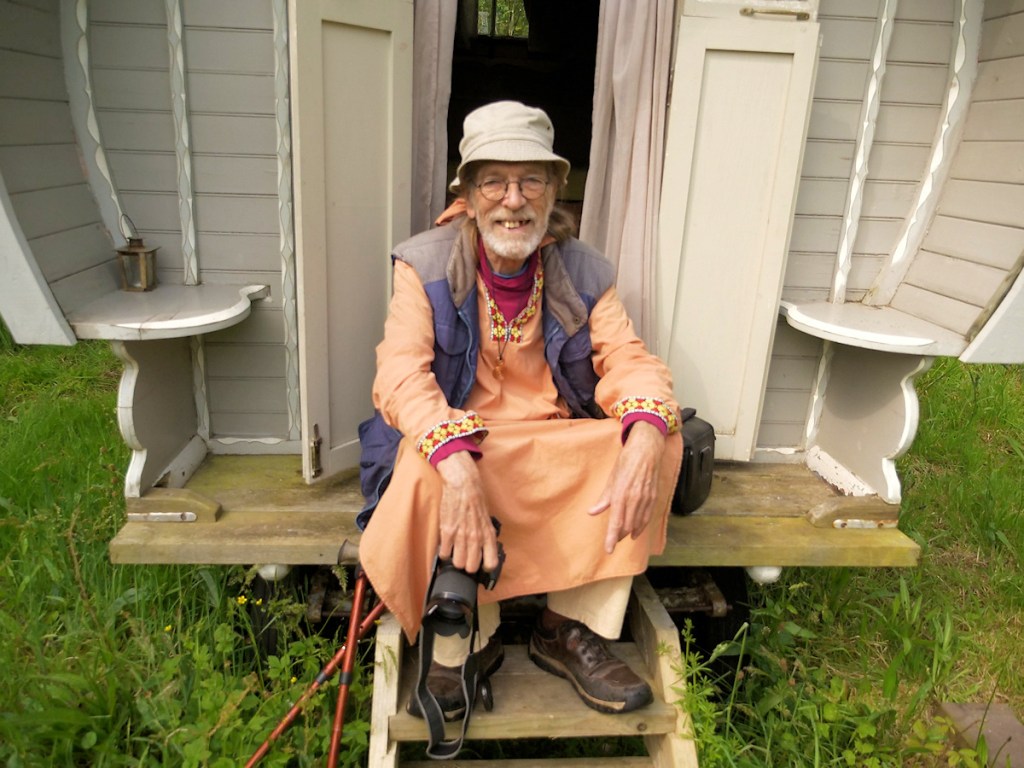
If you ever get a serious late life illness such as cancer (and there’s a good chance you will, even if you’ve looked after yourself, as I had), or simply if you’re growing older and more decrepit, you come to a stage where you need help. You just can’t do all the things you used to be able to do.
When I was younger I could open every jar, reach things down from high places, safely drive everyone home after a party when they were tired and stoned, and overcome many challenges that now are well beyond my scope. Nowadays I don’t have the strength to open stuck jars, some logs I can’t chop, and if I took the lead of my neighbour’s sweet dog it would pull me over. Sometimes I’m really useless. I can’t drive any more either – what, me, a traveller-soul with Gemini Moon and Sagittarius rising?
Yesterday was like that. I’m on a new drug which is supposed to help with peripheral neuropathy – it’s called Amitriptyline and I’m not getting on well with it. It’s draining my energy, my head is befogged, I’m losing my balance and I’m just sitting here in an armchair like a sackful of manglewurzels.
On days like that I really appreciate some help, often just with small things – things to make life a bit easier because, in my situation, life is twice as difficult as it once was, and more painful too. Just standing upright is strenuous, and going for a walk for half a mile takes a lot of focus and willpower.
People often ask, “Anything I can get you?” This doesn’t work – my brain blanks out. Writing a shopping list isn’t easy: that’s left-brained stuff that I’m no longer good at. So, often, I’ll say No, when actually I should say Yes, but I can’t in that moment think of anything I need. Five minutes later, my intuitive right-brain will start working, and I’ll remember. But it’s already too late. That’s tricky.
Managing this process can at first be quite confronting, because it requires opening up to the generosity of others. You can’t complain if they get the wrong thing or turn up late when you’re stuck in a rainstorm – after all, they’re doing this out of the goodness of their hearts. The secret is to hold your silence and appreciate the gifts you’ve been given, even if it’s raining – then you mention it diplomatically at a later moment. Don’t complain.
There are different kinds of help, and it’s necessary to clarify this. Some people try too hard to help and fuss too much, or they might not have the right skills, or they might not be emotionally sensitive, or they might be a dodgy driver – so it’s important to find the right kinds of people, and sometimes one must be frank with people about this.
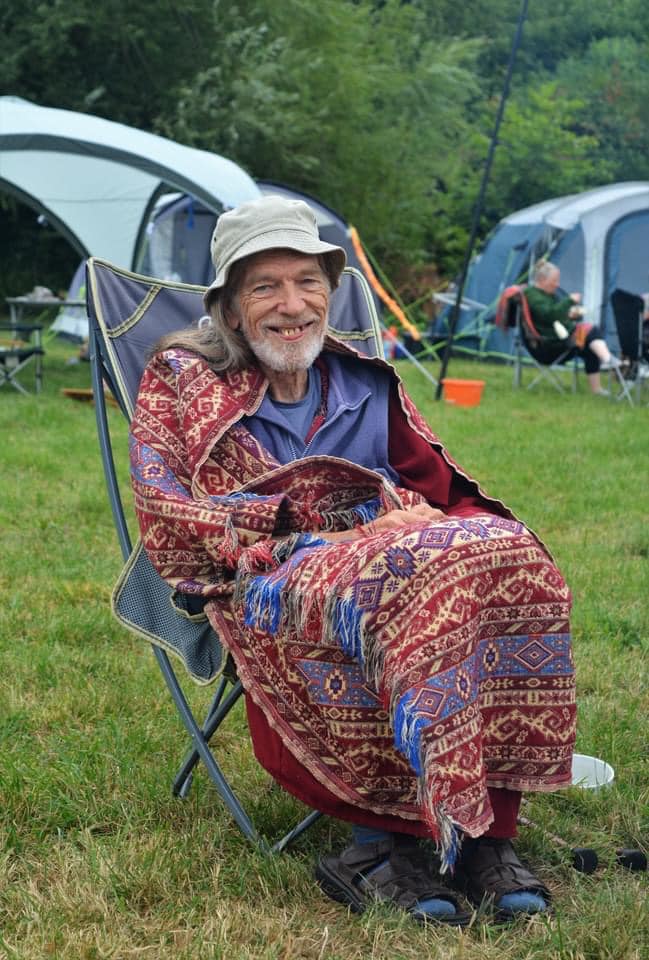
You get quite close to your helpers. I have a new helper who has been with me for a few weeks, and it’s working well, but it is still taking her time to figure out where everything is in my little house, and how I like things to be. She’s attentive to that, and that’s good, and we have interesting discussions too, because part of the benefit she brings me is some company (since I spend most of my time alone).
But it’s not just that. I have a wider group of friends, FoP – Friends of Palden. They help me in all sorts of big and little ways. But most of them don’t see me very often. So the first thing they do, and sincerely, is to ask me “How are you?”. That’s not the right thing to do. I need you to look at me, watch and witness me and tell me what you observe. If you ask me “How are you?” at different times of day, I will give quite different answers too.
Besides, it’s not easy being asked how I am five or six times a day. I have to assess myself and give some sort of answer, and there are times when that works fine and other times when it’s actually rather difficult. Instead, you could tell me how you are. So, sometimes, when someone asks me “How are you?”, I just say, “I’m like this!”, opening out my arms. I invite you to make your own assessment, because your observations of me are more useful than my own observations of me.
Special qualities… well, one key quality is reliability. You see, if someone rings me up just before they’re due to come, saying “Oh, sorry, I’m too busy, can we make it next Tuesday instead?”, that can be tricky too. Well, yes, we can, and that’s kinda okay, but actually it makes quite a big difference, even if I can’t at this very moment say why, or give a list of things that needed doing. So it is good to have people coming along reasonably regularly. Not least because the number of e-mails and messages that can otherwise be generated can be staggering, when things lapse into ball-juggling flexi-territory.
Also, there’s the matter of the computer and phone. If I don’t respond, what does this mean? Am I in bed, gone out, sitting on the toilet or dead? Should someone check me out? Or perhaps they decide not to bother me. A helper who knows me well, with a little intuition on top, can usually figure this out. But if I am dead, then it helps to discover this before I start smelling too much.
Regularity also helps because of memory issues. It can be quite challenging and complicated managing a group of four, five or six people who are all in changeable states. So recently I’ve managed to sort things out rather differently. I’ve now got two ‘reliable regulars’ and then a number of occasionals and reservists, and that works well.
The two regulars cover me three days a week – they come for an hour or two on Tuesdays, Thursdays and Saturdays – and then the occasionals come when they can, or drive me to Treliske hospital (thirtyish miles), or take me out somewhere… or things like that, on a more flexible basis.
The funny thing is that one of my reliable regulars is called Claire, and the other is called Clare – just to confuse things! Perhaps my Anima is telling me something, though I’m not sure what.
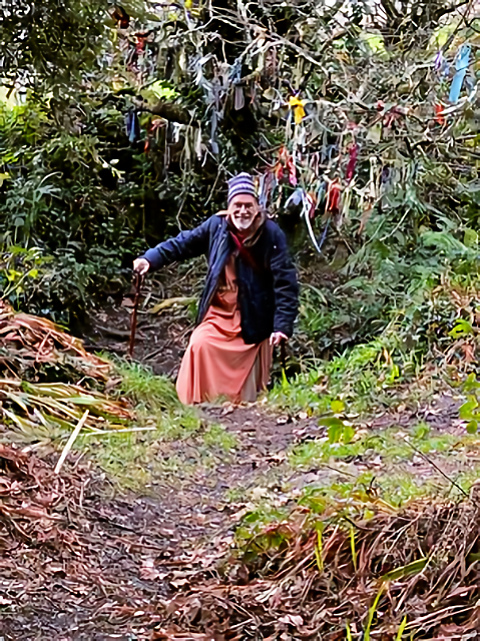
But actually, for it to really work, it’s necessary for a person to get to know me more closely than they normally would. This includes seeing me in my weak states, at times when I’m quite helpless, and I might need tenderness of a kind that wouldn’t usually happen with friends who come to socialise. Other times, I’m quite bright, cheerful and able, and there isn’t much for my helper to do, so we sit, drink tea and chat, and that’s really good too.
There’s something nice about this because I’m no longer seeking one-to-one relationship (been there, done that), which in this era of toxic maleness, makes me a reasonably safe bet. I’m not going to try it on. There’s also a difference between depending on help and emotional dependency – something that can get confused and tangly in close relationships.
Claire, who has worked with me for eighteen months now, has really got me sussed. When we go shopping she knows what I’m looking for, so she wanders off, comes back and puts things in the basket, with a knowing smile, and that’s really useful. She points things out to me and helps with the most difficult part at the end when we’re checking out.
She packs the bags and keeps the cashier entertained while I fumble around with cards, lists and last-minute memory-eruptions. I find that last bit really exhausting. Then she drives me home, puts stuff in the fridge, unpacks the bags, makes some tea and leaves me to rest and defragment. I’m happy with that. But that arises from the fact that she’s got to know me. She can read me off.
This matters a lot because my brains have been affected by chemotherapy – they call it chemo-brain. My executive functions – the left-brain stuff – are a lot weaker now. So although I’m quite brainy, I have difficulty figuring out certain things. It helps to have someone around who’s like a second brain, who will remind me to take my pills, or to be ready to go, or to remember to take something with me, or perhaps to tell me that my complexion is not very good today, or making useful observations and suggestions.
So if you’re in a situation rather like mine, as a net recipient of help, it’s worth giving some thought to the different kinds of help you might need, and the different kinds of people who will be good at giving it – and enjoying doing so. One male friend of mine, Kai, loves going shopping for me and he’s really good at it, and I can say to him, “Oh, just use your commonsense…” when he asks whether I’d prefer this or that, because I know he’ll get the right thing and, if he doesn’t, that’ll be interesting and useful too. On the other hand, he’s not so good at making tea, so I don’t expect it of him – I enjoy making tea for him instead. After all, this is about energy-exchange. I only get to see him occasionally (he’s a Gemini, travelling a lot), but this works well because both of us have identified how we slot into each other, given the circumstances we each have.
There’s a big sociological problem going on here. It’s this. Everyone is busy rushing around, racing timetables and to-do lists. They are time-poor. It’s a deep cultural and psychological thing in our society. This time-poverty sometimes makes things difficult. Occasionally I need a person to slow down to my speed, and at times it’s really good for them to do that, and they are grateful for it – it’s something I can give.
But people who are just fitting me into their busy timetable… well, that can be difficult. I remember, I did this once to a soul-sister with breast cancer – I’m sorry, Lily, but I was up to my neck in stuff and felt unable to stretch into your space. I realised this only when I got cancer and experienced others doing it to me. Us men, it can take us a while to realise these things, but we do get there in the end. Well, a lot of us do: toxic males make a lot of noise, but new men are more numerous than we appear to be.
This is to do with the way our society is today. We have become alienated and atomised as a society, and many of our family and community energy-saving mechanisms have deteriorated or disappeared. My own family is a case in point. I have four grown up children and seven grandchildren, and they’re all lovely people, and they do care, and they’ve got busy lives to pursue, and we live quite a long distance from each other and in two different countries. In truth, that’s mainly my fault, not theirs, since it was I who chose to live at the far end of Cornwall, a long way from everyone else!
Living and working in Palestine taught me a lot. I’d been brought up in a NW European Protestant environment, where you’re supposed to pay for all that you receive and deserve all that you get. If you go to any Muslim country (including Iran), you quickly find out that it is offensive to try to pay for other people’s generosity or to return the favour. You are depriving them of the right to give. To them, everything comes from God and returns to God, so they’re just channelling the infinite beneficence of Allah. Hindus do this too. So you have to develop other ways of circulating the energy, and this has nothing to do with returning the favour or paying your way.
These are guilt-driven, obsolete Christian beliefs – all about indebtedness and original sin. The result is that we live in a mean-hearted, capitalist society made up of a few winners and lots of losers, which doesn’t really care for the weak and needy, because everyone is busy pursuing our own paths through life and, in the end, we don’t have enough time for each other!
Arabs taught me how to receive. This opens up channels of sharing and mutuality. It creates an inherently supportive society, a generosity economy where there is little need for professional carers or babysitters because the extended family or the community can handle it. I learned something about the Christian virtue of giving without counting the cost – a practice that works well in a society where everyone does it. But it’s more difficult in a society where only some do.
I might need help, but even in my needy condition, it’s also a matter of what I can offer. Support is a two-way thing. I can’t do a lot now, but the funny thing is that some of my helpers simply enjoy coming to sit in my nice, warm, radiation-free cabin, drinking tea, chatting and doing nothing much at all. They can slow down for a while before they have to return to the madding crowd or to shepherd their elusive teenagers around.
On a good day they might also have a lightbulb moment, arising from a conversation that we have over tea and biscuits. Yes, one thing that useless old codgers like me can still deliver is the occasional gem of insight and perspective, helping people remember that this is not the end of the world and that everything turns full circle in the course of time. It’s all alright, really, even when you don’t quite know why or how.
There’s some sort of energy-circulation going on with FoP and with friends and acquaintances further afield. I have soul-sister, Jo, in Oz, and we haven’t seen each other for thirty years, yet we’re still close. In some respects I feel a bit like a cosmic-energy server, operating in a psychic network of souls near and far that functions of its own accord, on a mysterious level where we get only faint intimations of what’s really going on between us.
Perhaps that’s why I spend a lot of time alone nowadays, to give space to tune in to all those people, dead or alive, who resonate on a similar soul-network to the one I’m on. Twenty years ago I lived at the bottom of Glastonbury Tor – a distinctly noisier kind of energy-place in comparison with West Penwith, where I live now, sitting on a granitic pile of crystals in the wild Atlantic.
I’ve said enough. I might return to this theme another time. There’s more to say, but I can’t think what it might be. Except for this…
At age fifty I realised that I had no capital or savings. So I chose to trust in building up my social and spiritual capital, and to work at it. I decided to make it as easy, pleasant and rewarding as I could for people to help me, when the time came that I would need help, and to stay useful right to the very end. Us Virgos, we need to feel useful. I’ve screwed up a good few times with this but, since cancer came to me in 2019, I’ve been much blessed with fine helpers and minders, and I’m really grateful for that. Including Lynne. I mean, really, really grateful, and thank you all for that. And the funny thing is that it all ends with a funeral!
Love, Palden

 Notes from the Far Beyond